

The role of cellular reactive oxygen species in cancer chemotherapy
Open accessThe DOI matches its Crossref record; 75 of the 75 references it cites were found in a registry or an index.
Abstract
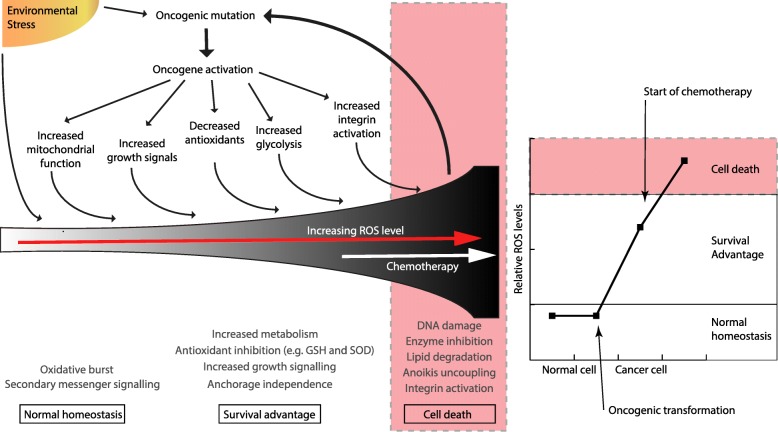
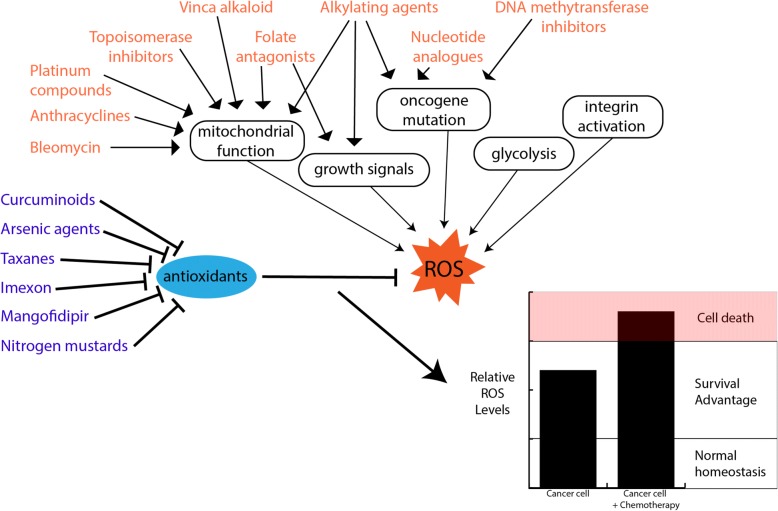
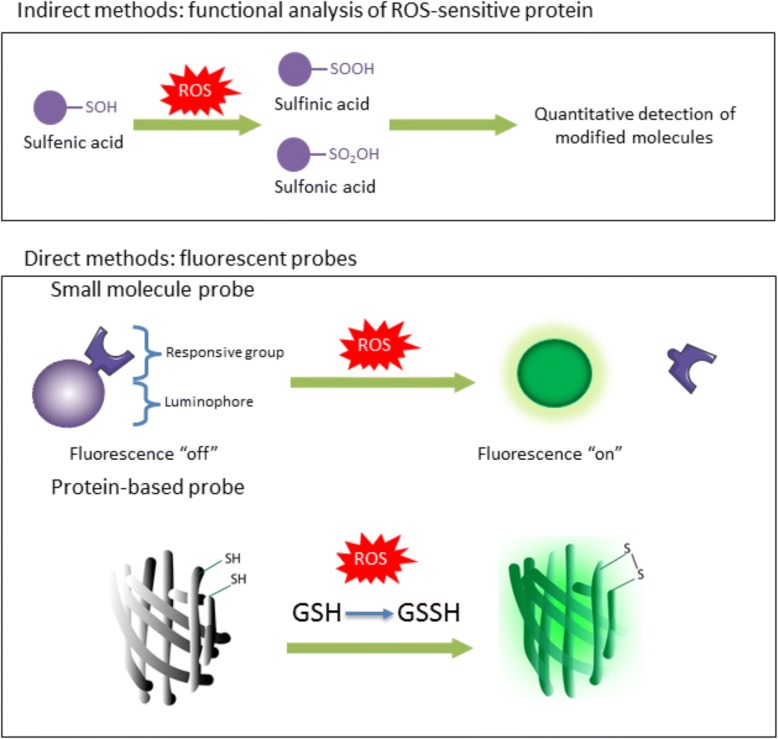
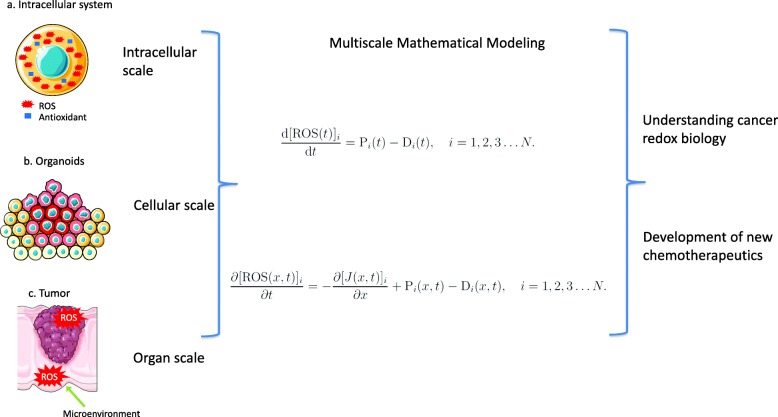
Most chemotherapeutics elevate intracellular levels of reactive oxygen species (ROS), and many can alter redox-homeostasis of cancer cells. It is widely accepted that the anticancer effect of these chemotherapeutics is due to the induction of oxidative stress and ROS-mediated cell injury in cancer. However, various new therapeutic approaches targeting intracellular ROS levels have yielded mixed results. Since it is impossible to quantitatively detect dynamic ROS levels in tumors during and after chemotherapy in clinical settings, it is of increasing interest to apply mathematical modeling techniques to predict ROS levels for understanding complex tumor biology during chemotherapy. This review outlines the current understanding of the role of ROS in cancer cells during carcinogenesis and during chemotherapy, provides a critical analysis of the methods used for quantitative ROS detection and discusses the application of mathematical modeling in predicting treatment responses. Finally, we provide insights on and perspectives for future development of effective therapeutic ROS-inducing anticancer agents or antioxidants for cancer treatment.
Overview
The claims and statistics of this paper haven’t been checked yet.
Free: it reads the open-access text and checks the first 5 claims that cite a source we can check. Create a free account to check every claim.
Integrity signals
Registry
Cites
Statistics
Figures
Verification
Claims the paper makes
The claims and statistics of this paper haven’t been checked yet.
Free: it reads the open-access text and checks the first 5 claims that cite a source we can check. Create a free account to check every claim.
Claims other papers make about this one
Each is checked against this paper’s own text: does it say what the citing paper says it does?
In the citing paper
“Most chemotherapeutic agents produce ROS, and many can alter redox homeostasis in cancer cells.4”
From Reactive Oxygen Species in Cancer: Current Findings and Future Directions (2021) · cites this paper as [4]
Self-check
Percentages, sums and reported differences re-computed from the paper’s own numbers.
The self-check needs the paper’s full text.
Citations
Cites
Ferroptosis: An Iron-Dependent Form of Nonapoptotic Cell Death
Dixon, S. J., Lemberg, K. M., Lamprecht, M. R., Skouta, R., Zaitsev, E. M., Gleason, C. E., Patel, D. N., Bauer, A. J., Cantley, A. M., Yang, W. S., et al. (2012) · Cell · doi:10.1016/j.cell.2012.03.042 · Cited by 18,691
Reactive oxygen species: Metabolism, oxidative stress, and signal transduction
Apel, K., & Hirt, H. (2004) · Annual Review of Plant Biology · doi:10.1146/annurev.arplant.55.031903.141701 · Cited by 11,723
Activation of apoptosis signalling pathways by reactive oxygen species
Redza-Dutordoir, M., & Averill-Bates, D. A. (2016) · Biochimica et Biophysica Acta (BBA) - Molecular Cell Research · doi:10.1016/j.bbamcr.2016.09.012 · Cited by 3,731
Tumour evolution inferred by single-cell sequencing
Navin, N., Kendall, J., Troge, J., Andrews, P., Rodgers, L., McIndoo, J., Cook, K., Stepansky, A., Levy, D., Esposito, D., et al. (2011) · Nature · doi:10.1038/nature09807 · Cited by 2,598
Halliwell, B., & Whiteman, M. (2004) · British Journal of Pharmacology · doi:10.1038/sj.bjp.0705776 · Cited by 2,238
Antioxidants Maintain Cellular Redox Homeostasis by Elimination of Reactive Oxygen Species
He, L., He, T., Farrar, S., Ji, L., Liu, T., & Ma, X. (2017) · Cellular Physiology and Biochemistry · doi:10.1159/000485089 · Cited by 2,127
ROS stress in cancer cells and therapeutic implications
Pelicano, H., Carney, D., & Huang, P. (2004) · Drug Resistance Updates · doi:10.1016/j.drup.2004.01.004 · Cited by 2,006
Mitochondrial metabolism and ROS generation are essential for Kras-mediated tumorigenicity
Weinberg, F., Hamanaka, R., Wheaton, W. W., Weinberg, S., Joseph, J., Lopez, M., Kalyanaraman, B., Mutlu, G. M., Budinger, G. R. S., & Chandel, N. S. (2010) · Proceedings of the National Academy of Sciences · doi:10.1073/pnas.1003428107 · Cited by 1,742
Free-radical chemistry of cigarette smoke and its toxicological implications.
Church, D. F., & Pryor, W. A. (1985) · Environmental Health Perspectives · doi:10.1289/ehp.8564111 · Cited by 1,441
Oxidative stress inhibits distant metastasis by human melanoma cells
Piskounova, E., Agathocleous, M., Murphy, M. M., Hu, Z., Huddlestun, S. E., Zhao, Z., Leitch, A. M., Johnson, T. M., DeBerardinis, R. J., & Morrison, S. J. (2015) · Nature · doi:10.1038/nature15726 · Cited by 1,269
Cited by
Items 301–400 of 795
Next-Generation Cell-Active Inhibitors of the Undrugged Oncogenic PTP4A3 Phosphatase
Lazo, J. S., Blanco, I. K., Tasker, N. R., Rastelli, E. J., Burnett, J. C., Garrott, S. R., Hart, D. J., McCloud, R. L., Hsu, K., Wipf, P., et al. (2019) · Journal of Pharmacology and Experimental Therapeutics · doi:10.1124/jpet.119.262188 · Cited by 21
Zhu, J., Li, X., Liang, C., Zhou, X., Ge, M., Chen, Y., Jin, J., Yin, J. J., Xu, H., Xie, C., et al. (2021) · Cell Death Discovery · doi:10.1038/s41420-021-00480-6 · Cited by 21
Targeting mitochondrial dysfunctions in pancreatic cancer evokes new therapeutic opportunities
Ammar, S., Zhu, M., Su, Q., Zhu, Z., Yang, T., Chen, Y., Peng, X., & Zhang, Y. (2022) · Critical Reviews in Oncology/Hematology · doi:10.1016/j.critrevonc.2022.103858 · Cited by 22
Zhou, L., Mao, L., Li, X., Wang, Q., Chen, S., Chen, Z., Lei, J., Liu, H., Liao, S., Ran, T., et al. (2022) · Cancer Science · doi:10.1111/cas.15648 · Cited by 20
Barciszewska, A., Belter, A., Gawrońska, I., Giel-Pietraszuk, M., & Naskręt-Barciszewska, M. Z. (2022) · Frontiers in Oncology · doi:10.3389/fonc.2022.1033035 · Cited by 20
AGASSI, S. F. T., Yeh, T.-M., Chang, C., Hsu, J., & Shih, W. (2020) · Anticancer Research · doi:10.21873/anticanres.14655 · Cited by 21
Lin, H., Lim, S.-W., Hsu, T., Yang, W., Huang, C., Tsai, Y.-T., Chang, W., & Ko, C. (2022) · Oxidative Medicine and Cellular Longevity · doi:10.1155/2022/4081380 · Cited by 19
Kalyane, D., Polaka, S., Vasdev, N., & Tekade, R. K. (2022) · Pharmaceutics · doi:10.3390/pharmaceutics14122734 · Cited by 20
Zhan, L., Yin, X., Zhang, Y., Ju, J., Wu, Y., Ding, L., Li, C., Chen, X., & Wang, Y. (2023) · Biomaterials Advances · doi:10.1016/j.bioadv.2023.213306 · Cited by 20
Kumar, N., Delu, V., Ulasov, I. V., Kumar, S., Singh, R. K., Kumar, S., Shukla, A., Patel, A. K., Yadav, L., Tiwari, R., et al. (2024) · Cell Biochemistry and Biophysics · doi:10.1007/s12013-024-01238-4 · Cited by 21
Adekiya, T. A., Hudson, T., Bakare, O., Ameyaw, E. E., Adebayo, A. S., Olajubutu, O., & Adesina, S. K. (2024) · Biomedicine & Pharmacotherapy · doi:10.1016/j.biopha.2024.117125 · Cited by 23
Sharifalhoseini, M., Es‐haghi, A., Vaezi, G., & Shajiee, H. (2021) · IET Nanobiotechnology · doi:10.1049/nbt2.12062 · Cited by 18
Glorieux, C., Enriquez-Lara, C., & Calderón, P. B. (2024) · Biochemical Pharmacology · doi:10.1016/j.bcp.2024.116729 · Cited by 23
Tang, G., Cao, X., Chen, J., Hui, F., Xu, N., Jiang, Y., Lu, H., Xiao, H., Liang, X., Ma, M., et al. (2025) · Cell Death and Disease · doi:10.1038/s41419-025-07770-2 · Cited by 20
Self-citationOxoisoaporphines and Aporphines: Versatile Molecules with Anticancer Effects
Arce, E. R., Cancino, P., Arias‐Calderón, M., Silva‐Matus, P., & Saldías, M. (2019) · Molecules · doi:10.3390/molecules25010108 · Cited by 18
Pal, A., Sengupta, S., & Kundu, R. (2021) · Journal of Ethnopharmacology · doi:10.1016/j.jep.2020.113686 · Cited by 18
Nayak, S., Caz, N., Derveaux, E., Smeets, S., Cardeynaels, T., Wolfs, E., Adriaensens, P., Maes, W., & Ethirajan, A. (2025) · Carbohydrate Polymers · doi:10.1016/j.carbpol.2025.123375 · Cited by 17
Konstantinidis, I. K., Tsokkou, S., Gavriilaki, E., Delis, G. A., & Papamitsou, T. (2025) · Nutrients · doi:10.3390/nu17172838 · Cited by 17
Alvina, F. B., Gouw, A. M., & Le, A. (2021) · Advances in experimental medicine and biology · doi:10.1007/978-3-030-65768-0_12 · Cited by 20
Yang, J., Liu, Y., Lu, S., Sun, X., Yin, Y., Wang, K., & Liu, S. (2022) · Molecular Biology Reports · doi:10.1007/s11033-022-07371-8 · Cited by 17
Quero, J., Royo, J. C., Fodor, B., Gimeno, M. C., Osada, J., Rodriguez‐Yoldi, M. J., & Cerrada, E. (2022) · Biomedicines · doi:10.3390/biomedicines10061437 · Cited by 17
Alam, R., Kabir, M. F., Kim, H., & Chae, H. (2022) · Cells · doi:10.3390/cells11233773 · Cited by 17
Kumar, N., Kumar, S., Shukla, A., Kumar, S., Singh, R. K., Ulasov, I. V., Kumar, S., Patel, A. K., Yadav, L., Tiwari, R., et al. (2024) · Discover Oncology · doi:10.1007/s12672-023-00829-6 · Cited by 17
Effect of punicalagin on the autophagic cell death in triple-negative breast cancer cells
Bhutta, Z. A., Go, R., & Choi, K. (2024) · Toxicological Research · doi:10.1007/s43188-024-00246-z · Cited by 19
Sahoo, S., Kumari, S., Pulipaka, S., Chandra, Y., & Kotamraju, S. (2024) · Molecular Carcinogenesis · doi:10.1002/mc.23809 · Cited by 20
Sánchez‐Castillo, A., & Kampen, K. R. (2024) · Discover Oncology · doi:10.1007/s12672-024-01544-6 · Cited by 19
Park, D. (2019) · Biological and Pharmaceutical Bulletin · doi:10.1248/bpb.b19-00474 · Cited by 17
Garcia‐Gil, M., Turri, B., Gabriele, M., Pucci, L., Agnarelli, A., Lai, M., Freer, G., Pistello, M., Vignali, R., Batistoni, R., et al. (2021) · Pharmaceuticals · doi:10.3390/ph14020090 · Cited by 19
Metformin and Aspirin: Anticancer effects on A549 and PC3 cancer cells and the mechanisms of action
Motafeghi, F. S., Shahsavari, R., Mortazavi, P., Babaei, A., Mojaveri, P. S., Khojasteh, O. A., & Shokrzadeh, M. (2023) · Toxicology Research · doi:10.1093/toxres/tfad060 · Cited by 19
Chen, J., Jin, X., Shen, Z., Mei, Y., Zhu, J., Zhang, X., Liang, G., & Zheng, X. (2021) · Medical Oncology · doi:10.1007/s12032-021-01505-x · Cited by 16
Oxoplatin‐Based Pt(IV) Lipoate Complexes and Their Biological Activity
Liu, X., Barth, M., Cseh, K., Kowol, C. R., Jakupec, M. A., Keppler, B. K., Gibson, D., & Weigand, W. (2022) · Chemistry & Biodiversity · doi:10.1002/cbdv.202200695 · Cited by 18
Salim, E. I., Khalik, E. A. M. A. E., Shalaby, T. I. A., & Ali, E. M. M. (2020) · Archives of Physiology and Biochemistry · doi:10.1080/13813455.2020.1742165 · Cited by 15
Mai, X., Li, J., Ma, P., Song, D., & Fei, Q. (2025) · Talanta · doi:10.1016/j.talanta.2025.128449 · Cited by 17
Cytotoxicity mechanisms of plumbagin in drug-resistant tongue squamous cell carcinoma
Xue, D., Zhou, X., & Qiu, J. (2021) · Journal of Pharmacy and Pharmacology · doi:10.1093/jpp/rgaa027 · Cited by 16
Novel Strategy for Optimized Nanocatalytic Tumor Therapy: From an Updated View
Li, Z., Wu, H., Zhu, J., Sun, L., Tong, X., Huang, D., & Yang, T. (2022) · Small Science · doi:10.1002/smsc.202200024 · Cited by 18
Zhou, Y., Liu, J., Li, X., Wang, L., Hu, L., Li, A., & Zhou, J. (2022) · Antioxidants · doi:10.3390/antiox11061067 · Cited by 15
Rerouting the drug response: Overcoming metabolic adaptation in KRAS-mutant cancers
Moss, D., McCann, C. K., & Kerr, E. M. (2022) · Science Signaling · doi:10.1126/scisignal.abj3490 · Cited by 19
Reductive damage induced autophagy inhibition for tumor therapy
Wang, Y., Huang, Y., Fu, Y., Guo, Z., Chen, D., Cao, F., Ye, Q., Duan, Q., Liu, M., Wang, N., et al. (2022) · Nano Research · doi:10.1007/s12274-022-5139-z · Cited by 16
Zhang, C., Zhang, X., & Zhou, Z. (2024) · Spectrochimica Acta Part A Molecular and Biomolecular Spectroscopy · doi:10.1016/j.saa.2024.124064 · Cited by 15
Kim, J. A., Yoon, D. Y., & Kim, J. (2020) · Cancers · doi:10.3390/cancers12010180 · Cited by 15
Ciccarone, F., Falco, P. D., & Ciriolo, M. R. (2020) · Biochemical Pharmacology · doi:10.1016/j.bcp.2020.114202 · Cited by 16
Chang, H. W., Lee, M., Lee, Y. S., Kim, S. H., Lee, J. C., Park, J. J., Nam, H. Y., Kim, M. R., Han, M. W., Kim, S. W., et al. (2020) · Cellular Signalling · doi:10.1016/j.cellsig.2020.109820 · Cited by 16
Ağca, C. A., Kırıcı, M., Nedzvetsky, V. S., Gündoğdu, R., & Tykhomyrov, A. A. (2020) · Chemistry & Biodiversity · doi:10.1002/cbdv.202000441 · Cited by 14
Hansel, C., Hlouschek, J., Xiang, K., Melnikova, M., Thomale, J., Helleday, T., Jendrossek, V., & Matschke, J. (2021) · Cells · doi:10.3390/cells10113040 · Cited by 16
Ruggieri, L., Moretti, A., Berardi, R., Cona, M. S., Dalu, D., Villa, C., Chizzoniti, D., Piva, S., Gambaro, A., & Verde, N. M. L. (2023) · International Journal of Molecular Sciences · doi:10.3390/ijms24054974 · Cited by 17
Anticancer effect of umbelliferone on MKN-45 and MIA PaCa-2 cell lines
Aslantürk, Ö. S., & Çelik, T. A. (2023) · Toxicology in Vitro · doi:10.1016/j.tiv.2023.105694 · Cited by 16
Ghosh, A., Ghosh, A. K., Zaman, A., & Das, P. K. (2023) · Molecular Pharmaceutics · doi:10.1021/acs.molpharmaceut.3c00772 · Cited by 17
Imperative connotation of SODs in cancer: Emerging targets and multifactorial role of action
Panda, B., Tripathy, A., Patra, S., Kullu, B., Tabrez, S. S. M., & Jena, M. (2024) · IUBMB Life · doi:10.1002/iub.2821 · Cited by 15
Understanding the Impact of Oxidative Stress on Ovarian Cancer: Advances in Diagnosis and Treatment
Meshkovska, Y., Abramov, A., Mahira, S., & Thatikonda, S. (2024) · Future Pharmacology · doi:10.3390/futurepharmacol4030035 · Cited by 15
The anticancer potential of tetrahydrocurcumin-phytosomes against oral carcinoma progression
Raouf, N., Darwish, Z. E., Ramadan, O. R., Barakat, H. S., Elbanna, S. A., & Essawy, M. M. (2024) · BMC Oral Health · doi:10.1186/s12903-024-04856-9 · Cited by 16
Rana, J. N., Mumtaz, S., Han, I., & Choi, E. H. (2024) · Free Radical Biology and Medicine · doi:10.1016/j.freeradbiomed.2024.09.054 · Cited by 15
Cancer therapy-related interstitial lung disease
Zhou, C., Deng, H., Yang, Y., Wang, F., Lin, X., Liu, M., Xie, X., Luan, T., & Zhong, N. (2024) · Chinese Medical Journal · doi:10.1097/cm9.0000000000003149 · Cited by 18
Iglesias-Matesanz, P., Lacalle-González, C., Lopez-Blazquez, C., Otieno, M. O., García‐Foncillas, J., & Martínez‐Useros, J. (2024) · Antioxidants · doi:10.3390/antiox13111405 · Cited by 21
Ren, J., Chen, L., Du, J., Yang, Y., Liu, X., Chen, Y., & Yu, S. (2024) · Chemical Engineering Journal · doi:10.1016/j.cej.2024.157825 · Cited by 14
Banas, K. H., Rivera-Torres, N., Bialk, P. A., Yoo, B.-C., & Kmiec, E. B. (2020) · Molecular Cancer Research · doi:10.1158/1541-7786.mcr-19-1208 · Cited by 17
Thomas, M. J., Major, E., Benedek, A., Horváth, I., Máthé, D., Bergmann, R., Szász, A. M., Krenács, T., & Benyó, Z. (2020) · Cancers · doi:10.3390/cancers12123872 · Cited by 14
Pratson, C. L., Larkins, M. C., Karimian, B., Curtis, C. M., Lepera, P. A., Brodish, B. N., & Ju, A. W. (2021) · Frontiers in Oncology · doi:10.3389/fonc.2021.707418 · Cited by 14
Zhang, Z., Xu, Y., Zhu, T., Sang, Z., Guo, X., Sun, Y. F., Hao, Y., & Wang, W. (2023) · Frontiers in Bioengineering and Biotechnology · doi:10.3389/fbioe.2023.1153196 · Cited by 25
Reduced chemotherapeutic sensitivity in high glucose condition: implication of antioxidant response
Garufi, A., Traversi, G., Montani, M. S. G., D’Orazi, V., Pistritto, G., Cirone, M., & D’Orazi, G. (2019) · Oncotarget · doi:10.18632/oncotarget.27087 · Cited by 15
Aybek, H., Temel, Y., Ahmed, B. M., Ağca, C. A., & Çiftçi, M. (2020) · Protein and Peptide Letters · doi:10.2174/0929866527666200413101017 · Cited by 15
Delgado-Roche, L., González, K., Mesta, F., Couder, B., Tavarez-Santamaría, Z., Zavala, R., Hernández, I., Garrido, G., Rodeiro, I., & Berghe, W. V. (2020) · Frontiers in Pharmacology · doi:10.3389/fphar.2020.592985 · Cited by 15
RetractedZhang, Y., Chen, G., Liu, Y., Zhuang, X., & Guo, M. (2021) · Antioxidants · doi:10.3390/antiox10101559 · Cited by 16
Li, L., Li, H., Li, Y., Feng, J., Guan, D., Zhang, Y., Fu, Y., Li, S., & Li, C. (2021) · Oxidative Medicine and Cellular Longevity · doi:10.1155/2021/5594059 · Cited by 14
Dual‐Interface Nanopipette Sensor for Electrochemical Interferent Shielding
Tian, S., Gao, R., Du, Z., Qi, Y., Chen, Y., Xia, F., Zhang, X., & Huang, W. (2025) · Angewandte Chemie International Edition · doi:10.1002/anie.202504520 · Cited by 13
Oxidative Stress in the Tumor Immune Microenvironment: Mechanisms and Therapeutic Perspectives
Wang, Z., Li, B., Tang, P., Yan, F., Wang, S., Leng, G., Dawa, P., Chen, Y., Guo, Y., Yang, P., et al. (2026) · MedComm – Oncology · doi:10.1002/mog2.70068 · Cited by 18
Zaręba, N., Więcławik, K., Kizek, R., Hosnedlová, B., & Kepinská, M. (2022) · Pharmaceutics · doi:10.3390/pharmaceutics14010102 · Cited by 15
ROS Modulating Inorganic Nanoparticles: A Novel Cancer Therapeutic Tool
Amaldoss, M. J. N., & Sorrell, C. C. (2022) · Recent Advances in Drug Delivery and Formulation · doi:10.2174/2667387816666220506203123 · Cited by 16
Cytotoxic Effect Induced by Sicilian Oregano Essential Oil in Human Breast Cancer Cells
Liberto, D. D., Iacuzzi, N., Pratelli, G., Porrello, A., Maggio, A., Bella, S. L., Blasio, A. D., Notaro, A., D’Anneo, A., Emanuele, S., et al. (2023) · Cells · doi:10.3390/cells12232733 · Cited by 17
Redox System and Oxidative Stress-Targeted Therapeutic Approaches in Bladder Cancer
Dugbartey, G. J., Relouw, S., McFarlane, L., & Şener, A. (2024) · Antioxidants · doi:10.3390/antiox13030287 · Cited by 14
Sánchez-Ortega, M., Garrido, A., Cirauqui, C., Sanz-Gonzalez, L., Hernández, M. C., González-García, A., Obregon, K., Ferrer, I., Paz-Ares, L., & Carrera, A. C. (2024) · Redox Biology · doi:10.1016/j.redox.2024.103305 · Cited by 17
Exploring Oxidative Stress in Disease and Its Connection with Adenosine
Correia, A. S., & Vale, N. (2024) · Oxygen · doi:10.3390/oxygen4030019 · Cited by 14
Wang, Q., Ji, H., Hao, Y., Jia, D., Ma, H., Song, C., Qi, H., Li, Z., & Zhang, C. (2024) · Analytical Chemistry · doi:10.1021/acs.analchem.4c03824 · Cited by 13
The possible role of methylglyoxal metabolism in cancer
Alfarouk, K. O., Alqahtani, S. S., Alshahrani, S., Morgenstern, J., Supuran, C. T., & Reshkin, S. J. (2021) · Journal of Enzyme Inhibition and Medicinal Chemistry · doi:10.1080/14756366.2021.1972994 · Cited by 12
Farshori, N. N., Al-Oqail, M. M., Al-Sheddi, E. S., Al-Massarani, S. M., Alam, P., Siddiqui, M. A., Ahmad, J., & Al-Khedhairy, A. A. (2022) · Journal of King Saud University - Science · doi:10.1016/j.jksus.2022.101968 · Cited by 13
1,4-Naphthoquinone-coated black carbon nanoparticles up-regulation POR/FTL/IL-33 axis in THP1 cells
Cui, Y., Li, Z., Xiao, Q., Ge, J., Jiang, W., Wang, X., Wang, Z., Yuan, Y., Zhuang, Y., Hao, W., et al. (2022) · Ecotoxicology and Environmental Safety · doi:10.1016/j.ecoenv.2022.114381 · Cited by 13
Khamici, H. A., Sanchez, V. C., Yan, H., Cataisson, C., Michalowski, A. M., Yang, H. H., Li, L., Lee, M. P., Huang, J., & Yuspa, S. H. (2022) · Journal of Biological Chemistry · doi:10.1016/j.jbc.2022.102275 · Cited by 14
Self-citationFerrer, J. L. M., & Garcia, R. L. (2022) · Cells · doi:10.3390/cells11152277 · Cited by 14
Amaro, F., Pisoeiro, C., Valente, M. J., Bastos, M. D. L., de Pinho, P. G., Carvalho, M. C., & Pinto, J. (2022) · International Journal of Molecular Sciences · doi:10.3390/ijms23179898 · Cited by 13
İçsel, C., Yılmaz, V. T., Aygün, M., Erkısa, M., & Ulukaya, E. (2023) · Dalton Transactions · doi:10.1039/d3dt00363a · Cited by 13
Siebieszuk, A., Sejbuk, M., & Witkowska, A. M. (2023) · International Journal of Molecular Sciences · doi:10.3390/ijms242216169 · Cited by 12
Choi, S., Shin, M., & Kim, W. (2024) · Journal of Ginseng Research · doi:10.1016/j.jgr.2024.04.001 · Cited by 17
Targeting ncRNAs to overcome metabolic reprogramming‑mediated drug resistance in cancer (Review)
Li, J., Li, Y., Fu, L., Chen, H., Du, F., Wang, Z., Zhang, Y., Huang, Y. Y., Miao, J., & Xiao, Y. (2025) · International Journal of Oncology · doi:10.3892/ijo.2025.5741 · Cited by 16
Ohgino, K., Terai, H., Yasuda, H., Nukaga, S., Hamamoto, J., Tani, T., Kuroda, A., Arai, D., Ishioka, K., Masuzawa, K., et al. (2020) · Cancer Science · doi:10.1111/cas.14569 · Cited by 11
Zhong, Y., Qi, A., Liu, L., Huang, Q., Zhang, J., Cai, K., & Cai, C. (2021) · Experimental and Therapeutic Medicine · doi:10.3892/etm.2021.10552 · Cited by 12
Nowicki, M., Wierzbowska, A., Stec‐Martyna, E., Kulczycka-Wojdala, D., Nowicki, G., & Szmigielska‐Kapłon, A. (2022) · Cancers · doi:10.3390/cancers14051213 · Cited by 12
Maggi, F., Morelli, M. B., Aguzzi, C., Zeppa, L., Nabissi, M., Polidori, C., Santoni, G., & Amantini, C. (2023) · Frontiers in Molecular Biosciences · doi:10.3389/fmolb.2023.1129202 · Cited by 13
Ali, M., Kim, Y. S., Khalid, M. A. U., Soomro, A. M., Lee, J.-W., Lim, J., Choi, K. H., & Ho, L. S. (2020) · Microelectronic Engineering · doi:10.1016/j.mee.2020.111432 · Cited by 13
Geng, J., & Yang, K. (2021) · DNA and Cell Biology · doi:10.1089/dna.2020.6412 · Cited by 13
Zhu, K., Zhu, J. W., Geng, J., Zhang, Y., Yan, Q., Wang, F., & Weng, Y. (2021) · Biochemical and Biophysical Research Communications · doi:10.1016/j.bbrc.2021.06.032 · Cited by 12
Design and synthesis of β-carboline derivatives with nitrogen mustard moieties against breast cancer
Sun, J., Wang, J., Wang, X., Hu, X., Cao, H., Bai, J., Li, D., & Hua, H. (2021) · Bioorganic & Medicinal Chemistry · doi:10.1016/j.bmc.2021.116341 · Cited by 18
Saravanakumar, K., Abinaya, M., Mehnath, S., Priya, V. S., Jeyaraj, M., Al-Rashed, S. A., & Muthuraj, V. (2021) · Environmental Research · doi:10.1016/j.envres.2021.112282 · Cited by 12
Quinacrine-CASIN combination overcomes chemoresistance in human acute lymphoid leukemia
Wu, L., Chatla, S., Lin, Q., Chowdhury, F. A., Geldenhuys, W. J., & Du, W. (2021) · Nature Communications · doi:10.1038/s41467-021-27300-w · Cited by 13
Mukherjee, S., Ghosh, S., Renuga Devi, M., Roy, S., Roy, S. S., Acharya, M., Kumar, B. K., & Mukherjee, A. (2025) · Journal of Medicinal Chemistry · doi:10.1021/acs.jmedchem.5c01150 · Cited by 11
The Molecular Role of HIF1α Is Elucidated in Chronic Myeloid Leukemia
Singh, V. K., Singh, R., Kushwaha, R., Verma, S. P., Tripathi, A. K., & Mahdi, A. A. (2022) · Frontiers in Oncology · doi:10.3389/fonc.2022.912942 · Cited by 12
Mild oxidative stress protects against chemotherapy-induced hair loss
Zhang, Y., & Jimenez, J. J. (2023) · Frontiers in Oncology · doi:10.3389/fonc.2022.1078916 · Cited by 13
Raju, P., Manikandakrishnan, M., Rengarajan, R. L., & Suganthy, N. (2023) · Journal of Cluster Science · doi:10.1007/s10876-023-02434-7 · Cited by 13
Chemical biology approaches to uncovering nuclear ROS control
Zhang, J., & Bar‐Peled, L. (2023) · Current Opinion in Chemical Biology · doi:10.1016/j.cbpa.2023.102352 · Cited by 12
Kumar, R., Chhikara, B. S., Zeybekler, S. E., Gupta, D., Kaur, G., Chhillar, M., Aggarwal, A. K., & Rahdar, A. (2023) · Toxicology Research · doi:10.1093/toxres/tfad086 · Cited by 16
Ahmed, Y. W., Tsai, H., Wu, T.-Y., Darge, H. F., & Chen, Y.-S. (2023) · Materials Advances · doi:10.1039/d3ma00341h · Cited by 13
UCP2 and pancreatic cancer: conscious uncoupling for therapeutic effect
Caggiano, E. G., & Taniguchi, C. M. (2024) · Cancer and Metastasis Reviews · doi:10.1007/s10555-023-10157-4 · Cited by 14
Metadata
- Authors
- Yang, H., Villani, R. M., Wang, H., Simpson, M. J., Roberts, M. S., Tang, M., & Liang, X.
- Affiliations
- Translational Research Institute (AU)
- Queensland University of Technology (AU)
- Shanghai Jiao Tong University (CN)
- Corresponding author
- Liang, Xiaowen
- ORCID
- Venue
- Journal of Experimental & Clinical Cancer Research
- Published
- 2018-11-01
- Volume
- 37
- Issue
- 1
- Pages
- 266-266
- ISSN
- 0392-9078 (ISSN-L)
- 1756-9966
- PMC
- PMC6211502
- OpenAlex
- W2898994124
- Cited by
- 794
- References
- 75
- Citations by year
- 2026: 59 · 2025: 89 · 2024: 111 · 2023: 103 · 2022: 130 · 2021: 145 · 2020: 110 · 2019: 45
- FWCI
- 7.32
- Type
- journal article
- Language
- en
- Open access
- gold
- doi.org
- Licence
- cc-by
- creativecommons.org/licenses/by/4.0/ (tdm)
- Locations
- Journal of Experimental & Clinical Cancer Research (publishedVersion, cc-by)
- Europe PMC (PubMed Central) (publishedVersion, cc-by)
- PubMed Central (publishedVersion, cc-by)
- PubMed (publishedVersion)
- DOAJ (DOAJ: Directory of Open Access Journals) (submittedVersion, cc-by-sa)
- QUT ePrints (Queensland University of Technology) (submittedVersion, cc-by)
- Funders
- Medical Research Council
- Australian Research Council (DP170100474)
- National Health and Medical Research Council (1125794)
- Topics
- Life Sciences › Biochemistry, Genetics and Molecular Biology › Molecular Biology › Redox biology and oxidative stress
- Life Sciences › Biochemistry, Genetics and Molecular Biology › Molecular Biology › Cancer and biochemical research
- Life Sciences › Pharmacology, Toxicology and Pharmaceutics › Toxicology › Bioactive Compounds and Antitumor Agents
- Keywords
- reactive oxygen species, cancer chemotherapy, oxidative stress, redox homeostasis, treatment response prediction, antioxidants, carcinogenesis
- MeSH terms
- Humans, Neoplasms, Reactive Oxygen Species, Oxidative Stress
About these checks
Registry, retraction, Cites and statistics results are computed, not judged, with one exception: a printed reference that no index lists is read once by a model before it counts as a citation error. Claims are extracted by a model and kept only when their quote appears verbatim in the text; each cited source is then checked, with a model’s help, for whether it says what the claim relies on. Those verdicts can be wrong — read the claim’s quote and the cited source before relying on one.
Statistics and arithmetic are recomputed, not judged.
Confidence bands are shown only for fields calibrated on our annotated test set. None is calibrated yet, so no band is shown.
What counts as a claim ›How we measure confidence ›How we check this ›
Are you an author, or do you see a problem with this page? Request a review
Data sources
Bibliographic data: Semantic Scholar, OpenAlex, Crossref.
Contains information from the Semantic Scholar Academic Graph Datasets, made available under the ODC Attribution License (ODC-BY 1.0).
Semantic Scholar’s data is described in: Kinney, R., et al. (2023). The Semantic Scholar Open Data Platform. arXiv:2301.10140.
