

DeepCpG: accurate prediction of single-cell DNA methylation states using deep learning
Open accessPublished version of a preprint
The DOI matches its Crossref record; 77 of the 80 references it cites were found in a registry or an index.
Abstract
Recent technological advances have enabled DNA methylation to be assayed at single-cell resolution. However, current protocols are limited by incomplete CpG coverage and hence methods to predict missing methylation states are critical to enable genome-wide analyses. We report DeepCpG, a computational approach based on deep neural networks to predict methylation states in single cells. We evaluate DeepCpG on single-cell methylation data from five cell types generated using alternative sequencing protocols. DeepCpG yields substantially more accurate predictions than previous methods. Additionally, we show that the model parameters can be interpreted, thereby providing insights into how sequence composition affects methylation variability.
Overview
The claims and statistics of this paper haven’t been checked yet.
Free: it reads the open-access text and checks the first 5 claims that cite a source we can check. Create a free account to check every claim.
Integrity signals
Registry
Cites
Statistics
Figures
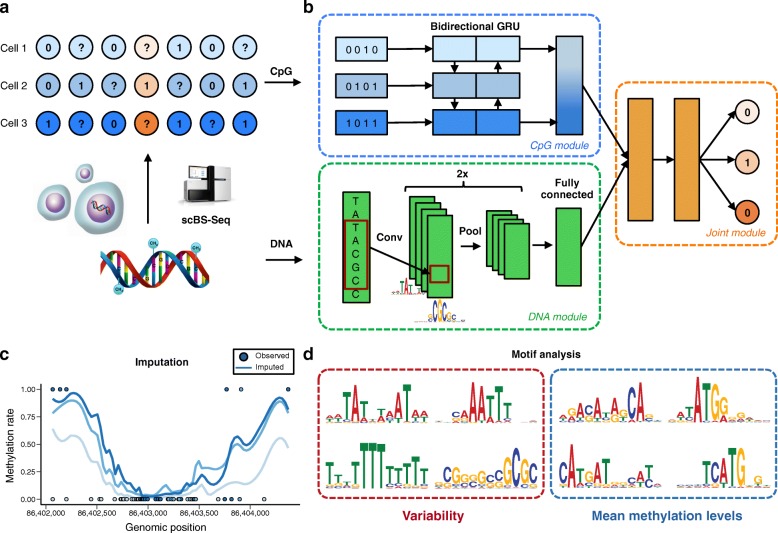
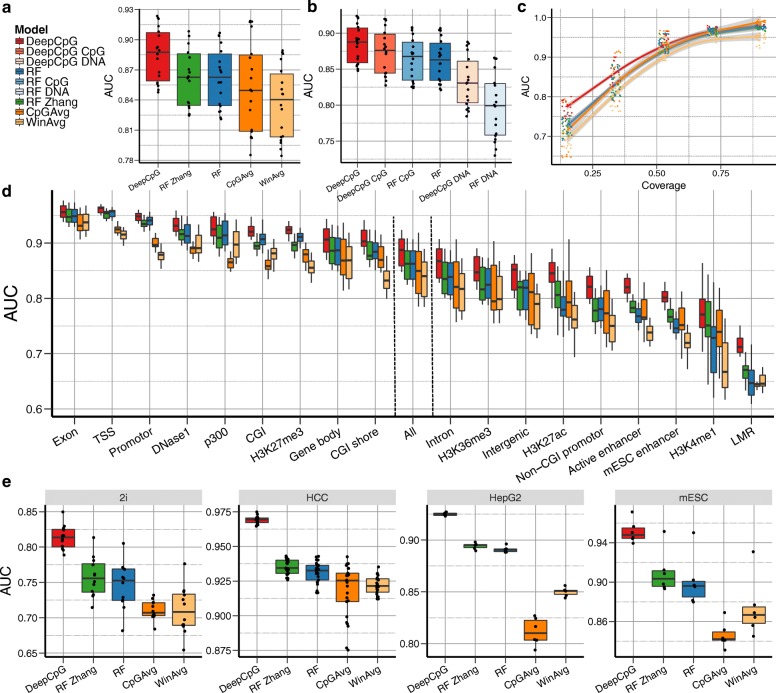
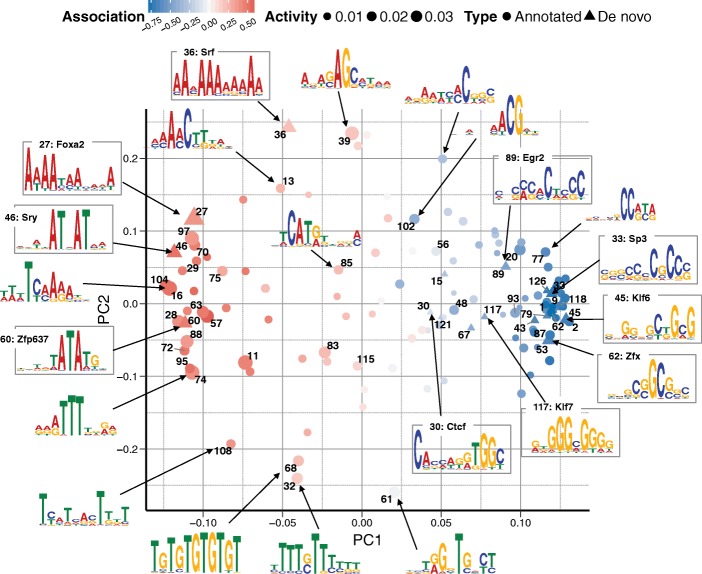
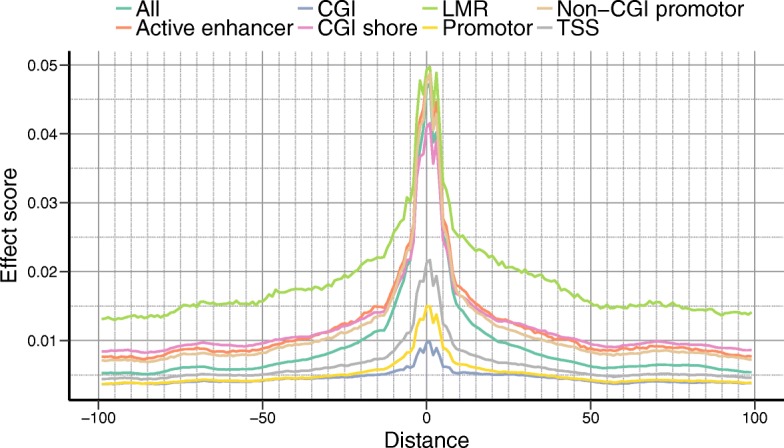
Verification
Claims the paper makes
The claims and statistics of this paper haven’t been checked yet.
Free: it reads the open-access text and checks the first 5 claims that cite a source we can check. Create a free account to check every claim.
Claims other papers make about this one
Each is checked against this paper’s own text: does it say what the citing paper says it does?
The cited source says what the claim attributes to it.
In the citing paper
“They showed that regions with increased methylation variability associate significantly more strongly to gene expression, indicating functional relevance.”
From Mapping gene regulatory networks from single-cell omics data (2018) · cites this paper as [75]
In the citing paper
“One possible way to deal with technical dropouts is proposed by Angermueller et al. [75] by developing DeepCpG, a computational approach based on deep neural networks, to predict missing methylation states and link methylation states to motifs.”
From Mapping gene regulatory networks from single-cell omics data (2018) · cites this paper as [75]
Self-check
Percentages, sums and reported differences re-computed from the paper’s own numbers.
The self-check needs the paper’s full text.
Citations
Cites
Deep Residual Learning for Image Recognition
He, K., Zhang, X., Ren, S., & Sun, J. (2016) · 2016 IEEE Conference on Computer Vision and Pattern Recognition (CVPR) · doi:10.1109/cvpr.2016.90 · Cited by 235,474
Breiman, L. (2001) · Machine Learning · doi:10.1023/a:1010933404324 · Cited by 133,538 · cited 1×
“Additionally, we compared DeepCpG to random forest classifiers [37] trained on individual cells using the DNA sequence information and neighbouring CpG states as input ( RF ).”
MethodAdam: A Method for Stochastic Optimization
Kingma, D. P., & Ba, J. (2014) · arXiv · doi:10.48550/arxiv.1412.6980 · Cited by 98,946 · cited 2×
“The learning rate was adapted by Adam [65] and decayed by a factor of 0.”
MethodInfluentialLeCun, Y., Bengio, Y., & Hinton, G. (2015) · Nature · doi:10.1038/nature14539 · Cited by 84,126
(2014) · Cited by 33,419
Neural Machine Translation by Jointly Learning to Align and Translate
Bahdanau, D., Cho, K., & Bengio, Y. (2014) · arXiv · doi:10.48550/arxiv.1409.0473 · Cited by 16,213 · cited 1×
“RNNs have been successfully used for modelling long-range dependencies in natural language [58, 59], acoustic signals [60] and, more recently, genomic sequences [61, 62].”
Method(2010) · Cited by 14,134
WebLogo: A Sequence Logo Generator: Figure 1
Crooks, G. E., Hon, G., Chandonia, J.-M., & Brenner, S. E. (2004) · Genome Research · doi:10.1101/gr.849004 · Cited by 12,386 · cited 2×
“Selected sequence windows were aligned and visualised as sequence motifs using WebLogo [69] version 3.”
MethodInfluentialBackpropagation Applied to Handwritten Zip Code Recognition
LeCun, Y., Boser, B., Denker, J. S., Henderson, D., Howard, R. E., Hubbard, W., & Jackel, L. D. (1989) · Neural Computation · doi:10.1162/neco.1989.1.4.541 · Cited by 11,891 · cited 1×
“Here, we report DeepCpG, a computational method based on deep neural networks [17 – 19] for predicting single-cell methylation states and for modelling the sources of DNA methylation variability.”
MethodRobust Locally Weighted Regression and Smoothing Scatterplots
Cleveland, W. S. (1979) · Journal of the American Statistical Association · doi:10.1080/01621459.1979.10481038 · Cited by 11,594 · cited 1×
“Trend lines were fit using local polynomial regression (LOESS [72]); shaded areas denote 95%”
Method
Research works printed but not linked: 1
- Denas O, Taylor J. Deep modeling of gene expression regulation in an erythropoiesis model. Represent. Learn. ICML Workshop. 2013
Cited by
Items 401–500 of 553
Obtaining Longevity Footprints in DNA Methylation Data Using Different Machine Learning Approaches
Kalyakulina, A., Yusipov, I., & Ivanchenko, M. (2023) · Healthy ageing and longevity · doi:10.1007/978-3-031-35176-1_4 · Cited by 2
Zafar, I., Ahmad, S. U., Rather, M. A., Khan, A. A., Ain, Q. U., Safder, A., & Sehgal, S. A. (2023) · Elsevier eBooks · doi:10.1016/b978-0-443-19413-9.00002-3 · Cited by 4
Exploring the Potential of Deep Learning in Healthcare: A perspective
Lufyagila, B., & Ruambo, F. A. (2024) · East African Journal of Interdisciplinary Studies · doi:10.37284/eajis.7.1.1947 · Cited by 2
Computational Biology and Chemistry with AI and ML
Palakurti, N. R. (2024) · International Journal of Research in Medical Sciences & Technology · doi:10.37648/ijrmst.v17i01.006 · Cited by 8
Navigating the genomic landscape: A deep dive into clinical genetics with deep learning
Kaur, M. P., Singh, V., Khan, A., Sharma, K., Mendonça, F. J. B., & Nayarisseri, A. (2024) · Elsevier eBooks · doi:10.1016/b978-0-443-27574-6.00006-0 · Cited by 2
Karami, K., Zerehdaran, S., Javadmanesh, A., Shariati, M. M., & Fallahi, H. (2019) · Journal of Animal Breeding and Genetics · doi:10.1111/jbg.12379 · Cited by 2
Application of Deep Learning in Medical Image Processing - A Comprehensive Review
Aruna, G. (2020) · IJARCCE · doi:10.17148/ijarcce.2020.9622 · Cited by 2
Assessment of Outcomes by Using Machine Learning
Venugopalan, S. R., Elnagar, M. H., Karhade, D. S., & Allareddy, V. (2021) · Springer eBooks · doi:10.1007/978-3-030-71881-7_11 · Cited by 3
Introduction to Deep Learning in Health Informatics
Jyotiyana, M., & Kesswani, N. (2021) · Wiley eBooks · doi:10.1002/9781119711278.ch9 · Cited by 2
HM-Prom: CNN based Prediction of TATA Promoters from Human and Mouse Sequences
Shujaat, M., & Chong, K. T. (2021) · International Conference on Control, Automation and Systems (ICCAS) · doi:10.23919/iccas52745.2021.9649894 · Cited by 3
Peng, J., Ochoa, I., & Milenković, O. (2019) · bioRxiv (Cold Spring Harbor Laboratory) · doi:10.1101/527044 · Cited by 2
“For this task, many learning methods are available, such as logistic regression and deep learning [9, 2].”
BackgroundMethodDeepCAGE: Incorporating Transcription Factors in Genome-wide Prediction of Chromatin AccessibilityPreprint
Liu, Q., Hua, K., Zhang, X., Wong, W. H., & Jiang, R. (2019) · bioRxiv (Cold Spring Harbor Laboratory) · doi:10.1101/610642 · Cited by 2
“Towards this concern, researchers have proposed computational models for predicting various chromatin signals, such as DNA accessibility, transcription factor binding sites (TFBSs), histone markers, DNA methylation and chromatin interaction [9-14].”
BackgroundA New Paradigm for Genome-wide DNA Methylation Prediction Without Methylation InputPreprint
Huang, X., Liu, Q., Zhao, Y., Tang, X., Zhou, Y., & Hou, W. (2025) · bioRxiv (Cold Spring Harbor Laboratory) · doi:10.1101/2025.02.05.636730 · Cited by 2
“This capability stands in contrast to prior methods like DeepCpG (Angermueller et al., 2017), CpGPT (De Lima Camillo et al., 2024), and MethylGPT (Ying et al., 2024), which all depend on some observed DNAm values during inference (imputation paradigm) and thus cannot handle entirely unlabeled…”
GIMMEcpg: Global Imputation of Mean CpG MEthylation in Real-timePreprint
Moghul, I., Chai, N., Pontikos, N., Hardcastle, A. J., Herrero, J., & Beck, S. (2025) · bioRxiv (Cold Spring Harbor Laboratory) · doi:10.1101/2025.03.17.643746 · Cited by 2
“It utilises deep learning techniques to determine associations between DNA sequence patterns (1kb) and between neighbouring CpG sites (50 CpG sites) (Angermueller et al. 2017).”
An in-depth evaluation of annotated transcription start sites in E. coli using deep learningPreprint
Clauwaert, J., & Waegeman, W. (2020) · Ghent University Academic Bibliography (Ghent University) · doi:10.1101/2020.03.16.993501 · Cited by 2
Integrated genome sizing (IGS) approach for the parallelization of whole genome analysis
Sona, P., Hong, J. H., Lee, S., Kim, B. J., Hong, W.-Y., Jung, J., Kim, H., Kim, H., Christopher, D., Herviou, L., et al. (2018) · BMC Bioinformatics · doi:10.1186/s12859-018-2499-1 · Cited by 1
“In this regard, IGS is very useful as any genomic region of interest can be easily selected and filtered by statistics, pathway-related genes, targeted genes, phenotype, sex, ethnic group and diploid-based variants [41 – 44].”
MethodDeep learning for genomics and epi-genomics in horticulture crops improvement
Küçükrecep, A., Yıldız, Ş., Tekdal, D., & Lucas, S. J. (2024) · Elsevier eBooks · doi:10.1016/b978-0-443-13229-2.00029-6 · Cited by 1
Applications of AI and Deep Learning in Biomedicine and Healthcare
Pujahari, R. M., Khan, R., & Yadav, S. P. (2024) · Advances in bioinformatics and biomedical engineering book series · doi:10.4018/979-8-3693-2426-4.ch006 · Cited by 1
Unlocking the potential of deep learning for oncological sequence analysis: A review
Shah, S. N. A., Beg, A., & Parveen, R. (2024) · Elsevier eBooks · doi:10.1016/b978-0-443-27574-6.00009-6 · Cited by 1
Kaur, J., Jit, S., & Verma, M. (2025) · Springer eBooks · doi:10.1007/978-981-96-2088-3_2 · Cited by 1
CacPred: a cascaded convolutional neural network for TF-DNA binding prediction
Zhang, S., Ma, A., Xie, X., Lian, Z., & Wang, Y. (2025) · BMC Genomics · doi:10.1186/s12864-025-11399-y · Cited by 2
Apoorva, Handa, V., Batra, S., & Arora, V. (2025) · Genes · doi:10.3390/genes16060655 · Cited by 1
A comprehensive review of computational methods for predicting DNA N4-methylcytosine sites
Wang, Z., Geng, A., Xu, J., Meng, Y., Zhang, Z., Wei, L., Zou, Q., & Cui, F. (2025) · International Journal of Biological Macromolecules · doi:10.1016/j.ijbiomac.2025.148221 · Cited by 2
Roozbehi, A., Turner, C. P., Marubayashi, A., Correia, J. A., Holdsworth, S. J., Dragunow, M., & Abbasi, H. (2025) · Annual International Conference of the IEEE Engineering in Medicine and Biology Society (EMBC) · doi:10.1109/embc58623.2025.11254222 · Cited by 1
“These methods, while effective in some applications, tend to fall short when dealing with the intricate patterns present in DNA methylation data, where the biological context is critical [10].”
Artificial intelligence approaches in biological age prediction: current status and challenges
Wang, G., Ding, P., Li, Z., Tang, Q., Tu, L., Jiang, T., Zhang, L., Su, B., Xu, J., & An, H. (2026) · British Journal of Biomedical Science · doi:10.3389/bjbs.2026.16141 · Cited by 2
“Neural architectures including convolutional neural networks (CNNs), recurrent neural networks (RNNs), and variational autoencoders (VAEs) have demonstrated strong performance in modeling nonlinear aging patterns in omics, imaging, and physiological signals [92, 93].”
Li, W., Yu, S., Cheng, Y., & Wang, S. (2026) · PLoS Computational Biology · doi:10.1371/journal.pcbi.1014476 · Cited by 1
“Angermueller et al. proposed DeepCpG, a computational method based on deep neural networks that integrated DNA sequence patterns and methylation states of neighboring CpG sites for predicting single-cell methylation states [26].”
Computational advances in epigenetic regulation databases and prediction tools
Yang, L., Yang, M., Li, X., Zhou, X., Wang, Z., Zhou, K., Xie, L., Chen, F., Chen, G., & Liu, S. (2026) · Biotechnology Advances · doi:10.1016/j.biotechadv.2026.108975 · Cited by 1
Decoding the sequence determinants of locus-specific DNA methylation across human tissues
Jin, J., Wang, D., Qiao, J., Gao, W., Liu, Y., Chen, S., Zou, Q., Wu, S., Su, R., & Wei, L. (2026) · Nature Communications · doi:10.1038/s41467-026-76744-5 · Cited by 1
“It plays critical roles in diverse biological processes such as embryonic development, cell differentiation, and ageing.”
Multi‐omics–driven precision medicine
Li, H., Zhao, Z., Zhang, Y., Ma, Y., Hu, G., Zeng, M., Yang, Z., Zhao, Z., Zhou, X., Hu, W., et al. (2026) · iMeta · doi:10.1002/imt2.70165 · Cited by 2
Applications of Machine Learning Tools in Genomics: A Review
Fracasso, J. L., & Ali, M. L. (2019) · Lecture notes in computer science · doi:10.1007/978-3-030-34139-8_33 · Cited by 1
Deep Learning of CTCF-Mediated Chromatin Loops in 3D Genome Organization
Kuang, S., & Wang, L. (2020) · Lecture notes in computer science · doi:10.1007/978-3-030-46165-2_7 · Cited by 2
Stepanyan, I. V., Lednev, M. Y., & Aristov, V. V. (2021) · Advances in intelligent systems and computing · doi:10.1007/978-3-030-67133-4_2 · Cited by 1
DNA Methylation Imputation Across Platforms
Li, G., Zhang, G., & Li, Y. (2022) · Methods in molecular biology · doi:10.1007/978-1-0716-1994-0_11 · Cited by 1
Deep Learning for Medical Informatics and Public Health
Shastry, K. A., Sanjay, H. A., Lakshmi, M., & Preetham, N. (2022) · Wiley eBooks · doi:10.1002/9781119792673.ch7 · Cited by 1
mRNA Biomarkers for Invasive Breast Cancer based on a Deep Feature Selection Approach
Alzubaidi, A., Tepper, J. A., Inden, B., & Lotfi, A. (2022) · Journal of Biomedical Research & Environmental Sciences · doi:10.37871/jbres1572 · Cited by 1
Gerges, C. A., Vessies, M. B., van de Leur, R. R., & van Es, R. (2023) · Springer eBooks · doi:10.1007/978-3-031-36678-9_12 · Cited by 1
Search for differentially methylated regions in ancient and modern genomes
Borodko, D. D., Zhenilo, S. V., & Сергеевич, Ш. Ф. (2023) · Vavilov Journal of Genetics and Breeding · doi:10.18699/vjgb-23-95 · Cited by 1
“DeepCPG is a deep learning neural network-based al-gorithm designed to predict the methylation states of low-coverage sites and uncover motifs associated with changes in methylation levels and intercellular variability (Angermueller et al., 2017).”
BackgroundCpG Island Detection Using Modified Transformer Model with Pre–trained Embedding
Hossain, M. J., Bhuiyan, M. I. H., & Abdullah, Z. R. (2023) · International Conference on Computer and Information Technology (ICCIT) · doi:10.1109/iccit60459.2023.10441209 · Cited by 1
“…in language modeling and numerous natural language processing tasks, researchers have begun to explore the use of deep learning, as discussed in [6], and specifically transformer-based architectures, in a variety of applications involving DNA sequences and other biomedical signals, as…”
BackgroundComputational discovery and modeling of novel gene expression rules encoded in the mRNA
Elitzur, S. B., & Tuller, T. (2020) · Biochemical Society Transactions · doi:10.1042/bst20191048 · Cited by 1
Generalized Method of Moments Estimation for Stochastic Models of DNA Methylation PatternsPreprint
Lück, A., & Wolf, V. (2019) · arXiv (Cornell University) · doi:10.48550/arxiv.1911.01174 · Cited by 1
“For instance, deep learning can be used to impute the methylation state at individual DNA positions if information about the state of neighboring positions is available [1].”
BackgroundTransform-Domain Classification of Human Cells based on DNA Methylation DatasetsPreprint
Zhao, X., & Pompili, D. (2019) · arXiv (Cornell University) · doi:10.48550/arxiv.1912.13167 · Cited by 1
“A hybrid deep learning network, named DeepCpG [23], has been proposed to obtain the regression results of DNA methylation states based on the single-cell profiled DNA and DNA methylation data, where the proposed structure is composed of a convolutional neural network to process DNA data, and a…”
Xu, C., Padmanabhan, R., Reinecke, F., DiCarlo, J., & Wang, Y. (2020) · bioRxiv (Cold Spring Harbor Laboratory) · doi:10.1101/2020.07.13.201558 · Cited by 1
“They have been used for analyzing how proteins bind to DNA and RNA [5], germline and somatic variant calling [6, 7], off-target prediction of CRISPR-Cas9 gene editing [8, 9], clustering T-cell receptor sequences by antigen [10], and prediction of single-cell DNA methylation states [11].”
MethodWong, W. K. M., Thorat, V., Joglekar, M. V., Dong, C. X., Lee, H., Chew, Y. V., Bhave, A., Hawthorne, W. J., Engin, F., Pant, A., et al. (2021) · bioRxiv (Cold Spring Harbor Laboratory) · doi:10.1101/2021.03.27.437353 · Cited by 1
“ADCYAP1 stimulates insulin secretion in a glucose-dependent manner 28 and genetic screening in type 2 diabetes Caucasians indicated the presence of two SNPs in exons 3 and 5 to be associated with type 2 diabetes 29 .”
BackgroundSelf-citationImputation approaches and quality standards for single-cell epigenetic age predictionsPreprint
Liu, Z., & Samee, M. A. H. (2023) · bioRxiv (Cold Spring Harbor Laboratory) · doi:10.1101/2023.12.14.571557 · Cited by 1
“Multiple first-principle imputation strategies (4,8,14) and several machine learning (ML)- based imputation methods (24-28) have been used for DNAm imputation.”
MethodSearle, R. (2025) · Kent Academic Repository (University of Kent) · doi:10.22024/unikent/01.02.108791 · Cited by 1
Topological Entropy Correlates with the Predictive Power of Multiplexed Ensemble Reservoir ComputingPreprint
Halder, S., Kim, C. M., & Periwal, V. (2026) · bioRxiv (Cold Spring Harbor Laboratory) · doi:10.64898/2026.02.04.703839 · Cited by 1
Zhou, J., Liu, C., Liu, X., Zhang, Y., Wei, Y., Shin, J. H., Maher, B. J., Liu, C., Luo, C., Wang, K., et al. (2026) · bioRxiv (Cold Spring Harbor Laboratory) · doi:10.64898/2026.03.09.710649 · Cited by 1
Liu, Q., Wang, Z., Cheng, X., Chen, Q., Zhang, Z., & Hang, H. E. (2026) · Research Square · doi:10.21203/rs.3.rs-9477401/v1 · Cited by 1
Dixon-Luinenburg, O., Bajwa, A., Vollger, M. R., Stergachis, A., Streets, A., & Ioannidis, N. M. (2026) · bioRxiv (Cold Spring Harbor Laboratory) · doi:10.64898/2026.06.02.729723 · Cited by 1
“Prior models establish that CpG methylation exhibits sequence-context-dependent dynamics [16–18] and can in some cases be predicted from sequence variants [19].”
Using Machine Learning to Predict and Better Understand DNA Methylation and Genomic Enhancers
Huska, M. R. (2018) · MPG.PuRe (Max Planck Society) · doi:10.17169/refubium-8597
“One example of this approach being applied to a biological problem is a very recent paper by Angermueller et al. (2017) which predicted per-CpG DNA methylation levels in single cells using a CNN to learn DNA motifs, and an RNN to learn dependencies between methylation levels of CpGs in the same genomic neighbourhood.”
MethodDeep Learning and Biomedical Engineering
Sawant, S. T. (2018) · Advances in bioinformatics and biomedical engineering book series · doi:10.4018/978-1-5225-4769-3.ch014
Experimental Design and Bioinformatic Analysis of DNA Methylation Data
Medvedeva, Y. A., & Shershebnev, A. (2018) · Methods in molecular biology · doi:10.1007/978-1-4939-7768-0_10
Epigenetic heterogeneity revealed through single-cell DNA methylation sequencing
Hui, Z. (2018) · cIRcle (University of British Columbia) · doi:10.14288/1.0365757
Allyn-Feuer, A. (2018) · Deep Blue (University of Michigan) · Cited by 1
Li, J.-Y., Jin, S., Tu, X.-M., Ding, Y., & Gao, G. (2018) · bioRxiv (Cold Spring Harbor Laboratory) · doi:10.1101/508242
Inference of Computational Models of Alternative Polyadenylation and Splicing
Leung, M. K. K. (2018) · TSpace (University of Toronto)
Improved Cancer Classification with Supervised Variational Autoencoder on DNA Methylation Data
Ryu, K. H., & Batbaatar, E. (2021) · Smart innovation, systems and technologies · doi:10.1007/978-981-33-6757-9_5
Computational Methods for Health Informatics
Meher, J. K. (2021) · Health information science · doi:10.1007/978-3-030-68723-6_20
Mutational Processes Modeling and Early Cancer Diagnosis
Zeng, Z. (2019) · Swiss Medical Weekly · doi:10.21985/n2-8smw-1121
Exploration of deep-learning based classification with human SNP image graphsPreprint
Chen, C.-H., Tung, K.-F., & Lin, W. (2021) · bioRxiv (Cold Spring Harbor Laboratory) · doi:10.1101/2021.10.01.462710
“In particular, DNA sequence features and closely associated biological properties using the convolutional neural network algorithm were interrogated previously [29-32].”
MethodAPPLICATION OF DEEP LEARNING IN HEALTH INFORMATICS: A REVIEW
Mehta, V., & Shrivastava, N. (2021) · International Journal of Technical Research & Science · doi:10.30780/specialissue-icrdet-2021/002
García‐Giménez, J. L., Beltrán-García, J., Osca-Verdegal, R., Pallardó, F. V., Ushijima, T., & Tollefsbol, T. O. (2021) · Elsevier eBooks · doi:10.1016/b978-0-12-823008-4.00014-7 · Cited by 1
Azar, J. (2020) · theses.fr (ABES) · doi:10.70675/0598345bzaa4dz4c45za018zb70b87dcf86e · Cited by 1
Cost-effective epigenetic age profiling in shallow methylation sequencing dataPreprint
Trapp, A., & Gladyshev, V. N. (2021) · bioRxiv (Cold Spring Harbor Laboratory) · doi:10.1101/2021.10.25.465778
Li, Y., Liu, J., & Liu, H. (2021) · ACM International Conference on Multimedia in Asia (MMAsia) · doi:10.1145/3469877.3497696
Zhang, P., & Tu, S. (2021) · IEEE International Conference on Bioinformatics and Biomedicine (BIBM) · doi:10.1109/bibm52615.2021.9669594
Innovative Computational Moulding Approach for Genomics
Sarwar, M., Malik, H., & Zahra, I. (2021) · International Conference on Innovative Computing (ICIC) · doi:10.1109/icic53490.2021.9693059 · Cited by 1
Deep Learning for Medical Informatics and Public Health
Shastry, K. A., Sanjay, H. A., Lakshmi, M., & Preetham, N. (2022) · Studies in big data · doi:10.1007/978-3-030-95419-2_13
Deep Learning and Biomedical Engineering
Sawant, S. T. (2019) · IGI Global eBooks · doi:10.4018/978-1-5225-8903-7.ch022
de Vries, D. H. (2022) · University of Groningen research database (University of Groningen / Centre for Information Technology) · doi:10.33612/diss.255266474
Tukuli, A. R. (2022) · MOspace Institutional Repository (University of Missouri) · doi:10.32469/10355/93992
RL-MD: A Novel Reinforcement Learning Approach for DNA Motif Discovery
Wang, W., Wang, J., Si, S., Huang, Z., & Xiao, J. Z. (2022) · IEEE International Conference on Data Science and Advanced Analytics (DSAA) · doi:10.1109/dsaa54385.2022.10032340 · Cited by 2
“Several deep learning-based approaches, including DeepBind [15], basset [16], HOCNN [17], DeepCpG [18], LeNup [19] and DeFine [20], have been introduced to extract sequence features by using the weights in the first convolution layers as the probabilities in PWMs.”
MethodOn the Use of Parallel Architectures in DNA Methylation Analysis
Orduña, J. M., Fernández, L., & Pérez, M. (2023) · Lecture notes in networks and systems · doi:10.1007/978-3-031-33258-6_1
Nayak, D. S. K., Das, J., & Swarnkar, T. (2023) · BENTHAM SCIENCE PUBLISHERS eBooks · doi:10.2174/9789815079005123050011 · Cited by 1
Deep learning mediated identification of the origins of cancer of unknown primary
Divate, M. D. (2023) · Queensland University of Technology · doi:10.5204/thesis.eprints.246033
Predicting locus-specific DNA methylation levels in cancer and paracancer tissues
Zhang, S., Ma, B., Liu, Y., Shen, Y., Li, D., Liu, S., & Song, F. (2024) · Epigenomics · doi:10.2217/epi-2023-0114 · Cited by 1
Application of Deep Learning in Biological Big Data Analysis
Shukla, R., Yadav, A. K., & Singh, T. R. (2023) · IGI Global eBooks · doi:10.4018/979-8-3693-3026-5.ch011
Linker, S. M., Urban, L., Clark, S. J., Chhatriwala, M., Amatya, S., McCarthy, D. J., Ebersberger, I., Vallier, L., Reik, W., Stegle, O., et al. (2020) · Figshare · doi:10.6084/m9.figshare.11981910
Self-citationWilliams, J. S., Xu, B., Putnam, D. K., Thrasher, A., Li, C., Yang, J. J. J., & Chen, X. '. (2021) · Figshare · doi:10.6084/m9.figshare.13605196
Linker, S. M., Urban, L., Clark, S. J., Chhatriwala, M., Amatya, S., McCarthy, D. J., Ebersberger, I., Vallier, L., Reik, W., Stegle, O., et al. (2020) · Figshare · doi:10.6084/m9.figshare.11981904
Self-citationLinker, S. M., Urban, L., Clark, S. J., Chhatriwala, M., Amatya, S., McCarthy, D. J., Ebersberger, I., Vallier, L., Reik, W., Stegle, O., et al. (2020) · Figshare · doi:10.6084/m9.figshare.11981901
Self-citationLinker, S. M., Urban, L., Clark, S. J., Chhatriwala, M., Amatya, S., McCarthy, D. J., Ebersberger, I., Vallier, L., Reik, W., Stegle, O., et al. (2020) · Figshare · doi:10.6084/m9.figshare.11981898
Self-citationLinker, S. M., Urban, L., Clark, S. J., Chhatriwala, M., Amatya, S., McCarthy, D. J., Ebersberger, I., Vallier, L., Reik, W., Stegle, O., et al. (2020) · Figshare · doi:10.6084/m9.figshare.11981922
Self-citationLinker, S. M., Urban, L., Clark, S. J., Chhatriwala, M., Amatya, S., McCarthy, D. J., Ebersberger, I., Vallier, L., Reik, W., Stegle, O., et al. (2020) · Figshare · doi:10.6084/m9.figshare.11981916
Self-citationLinker, S. M., Urban, L., Clark, S. J., Chhatriwala, M., Amatya, S., McCarthy, D. J., Ebersberger, I., Vallier, L., Reik, W., Stegle, O., et al. (2020) · Figshare · doi:10.6084/m9.figshare.11981925
Self-citationLinker, S. M., Urban, L., Clark, S. J., Chhatriwala, M., Amatya, S., McCarthy, D. J., Ebersberger, I., Vallier, L., Reik, W., Stegle, O., et al. (2020) · Figshare · doi:10.6084/m9.figshare.11981913
Self-citationLinker, S. M., Urban, L., Clark, S. J., Chhatriwala, M., Amatya, S., McCarthy, D. J., Ebersberger, I., Vallier, L., Reik, W., Stegle, O., et al. (2020) · Figshare · doi:10.6084/m9.figshare.11981919
Self-citationUgwuanyi, I., Oladoyin, I. A., Anazor, C. V., Dike, I. D., Ezulu, P. C., & Nwagbata, A. (2024) · African Journal of Mathematics and Statistics Studies · doi:10.52589/ajmss-4wnit6f9 · Cited by 1
Dumont, E. L., Janati, A., Bhattacharya, M., Jeannin, J.-B., & Do, C. (2024) · bioRxiv (Cold Spring Harbor Laboratory) · doi:10.1101/2024.05.23.595536
“Not directly related to our work but still relevant, Angermueller et al. [12] have used convolutional neural networks to predict the methylation status of a single CpG in single-cell analysis.”
BackgroundAdvanced Machine Learning Techniques to Improve Genomic Data Accuracy for Precision Medicine
Dhaliwal, N. (2024) · International Journal of Science and Research (IJSR) · doi:10.21275/sr24608014916 · Cited by 1
An introduction to the application of deep learning in the biomedical field
Ruisong, W. A. N. G., Shengnan, W. A. N. G., & Tieliu, S. H. I. (2024) · Scientia Sinica Vitae · doi:10.1360/ssv-2023-0297 · Cited by 1
Limitations and Enhancements in Genomic Language Models: Dynamic Selection ApproachPreprint
Qiu, S. (2024) · bioRxiv (Cold Spring Harbor Laboratory) · doi:10.1101/2024.11.25.624002
iPT-BFL: A TATA promoter prediction model based on Boundary Focus Loss
Wu, P., Huang, W., Liu, B., & Liu, Z. (2024) · International Conference on Big Data & Artificial Intelligence & Software Engineering (ICBASE) · doi:10.1109/icbase63199.2024.10762247
Radhakrishnan, S., Jagath Prasad Sreedhar, G., Binson, V. A., Akbar, R., Dhanusha, P. B., & Nair, S. G. (2024) · International Conference on Innovative Engineering Sciences and Technological Research (ICIESTR) · doi:10.1109/iciestr60916.2024.10798175 · Cited by 1
“The study produced significantly more precise forecasts than prior techniques [18] .”
Classification in Rice Genome using Artificial Intelligence
Swain, D., Kumar, M., Swain, N. K., Kulkarni, C., & Bhilare, A. (2024) · International Conference on Computational Intelligence and Networks (CINE) · doi:10.1109/cine63708.2024.10882015
CpGFuse: a holistic approach for accurate identification of methylation states of DNA CpG sites
Park, S., Chong, K. T., & Tayara, H. (2024) · Briefings in Bioinformatics · doi:10.1093/bib/bbaf063 · Cited by 1
“The resultant output provides a prediction for all the cells in an individual CpG site [19].”
Influential
Metadata
- Authors
- Angermueller, C., Lee, H. J., Reik, W., & Stegle, O.
- Affiliations
- European Bioinformatics Institute (GB)
- Babraham Institute (GB)
- Corresponding author
- Angermueller, Christof
- Stegle, Oliver
- Venue
- Genome Biology
- Published
- 2017-04-11
- Volume
- 18
- Issue
- 1
- Pages
- 67-67
- ISSN
- 1465-6906 (ISSN-L)
- 1474-760X
- PMC
- PMC5387360
- OpenAlex
- W2952935243
- Cited by
- 536
- References
- 80
- Citations by year
- 2026: 28 · 2025: 51 · 2024: 50 · 2023: 54 · 2022: 52 · 2021: 88 · 2020: 69 · 2019: 66 · 2018: 53 · 2017: 23
- FWCI
- 24.45
- Type
- journal article
- Language
- en
- Update notices
- correction (2017-05-12)
- Open access
- gold
- doi.org
- Licence
- cc-by
- Locations
- Genome biology (publishedVersion, cc-by)
- bioRxiv (Cold Spring Harbor Laboratory) (acceptedVersion, cc-by-nc-nd)
- PubMed Central (publishedVersion, cc-by)
- PubMed (publishedVersion)
- DOAJ (DOAJ: Directory of Open Access Journals) (submittedVersion, cc-by-sa)
- Apollo (University of Cambridge) (submittedVersion, cc-by)
- Zenodo (CERN European Organization for Nuclear Research) (submittedVersion, other-oa)
- Apollo (cc-by)
- Funders
- Wellcome Trust
- European Molecular Biology Laboratory
- European Commission
- Biotechnology and Biological Sciences Research Council (BBS/E/B/0000S266, BBS/E/B/0000H334, BBS/E/B/000C0403)
- Topics
- Life Sciences › Biochemistry, Genetics and Molecular Biology › Molecular Biology › Epigenetics and DNA Methylation
- Life Sciences › Biochemistry, Genetics and Molecular Biology › Molecular Biology › Single-cell and spatial transcriptomics
- Life Sciences › Biochemistry, Genetics and Molecular Biology › Molecular Biology › Genomics and Chromatin Dynamics
- Keywords
- single-cell DNA methylation, deep neural network, model interpretability, sequence composition
About these checks
Registry, retraction, Cites and statistics results are computed, not judged, with one exception: a printed reference that no index lists is read once by a model before it counts as a citation error. Claims are extracted by a model and kept only when their quote appears verbatim in the text; each cited source is then checked, with a model’s help, for whether it says what the claim relies on. Those verdicts can be wrong — read the claim’s quote and the cited source before relying on one.
Statistics and arithmetic are recomputed, not judged.
Confidence bands are shown only for fields calibrated on our annotated test set. None is calibrated yet, so no band is shown.
What counts as a claim ›How we measure confidence ›How we check this ›
Are you an author, or do you see a problem with this page? Request a review
Data sources
Bibliographic data: Semantic Scholar, OpenAlex, Crossref.
Contains information from the Semantic Scholar Academic Graph Datasets, made available under the ODC Attribution License (ODC-BY 1.0).
Semantic Scholar’s data is described in: Kinney, R., et al. (2023). The Semantic Scholar Open Data Platform. arXiv:2301.10140.
