

DeepCpG: accurate prediction of single-cell DNA methylation states using deep learning
Open accessPublished version of a preprint
The DOI matches its Crossref record; 77 of the 80 references it cites were found in a registry or an index.
Abstract
Recent technological advances have enabled DNA methylation to be assayed at single-cell resolution. However, current protocols are limited by incomplete CpG coverage and hence methods to predict missing methylation states are critical to enable genome-wide analyses. We report DeepCpG, a computational approach based on deep neural networks to predict methylation states in single cells. We evaluate DeepCpG on single-cell methylation data from five cell types generated using alternative sequencing protocols. DeepCpG yields substantially more accurate predictions than previous methods. Additionally, we show that the model parameters can be interpreted, thereby providing insights into how sequence composition affects methylation variability.
Overview
The claims and statistics of this paper haven’t been checked yet.
Free: it reads the open-access text and checks the first 5 claims that cite a source we can check. Create a free account to check every claim.
Integrity signals
Registry
Cites
Statistics
Figures
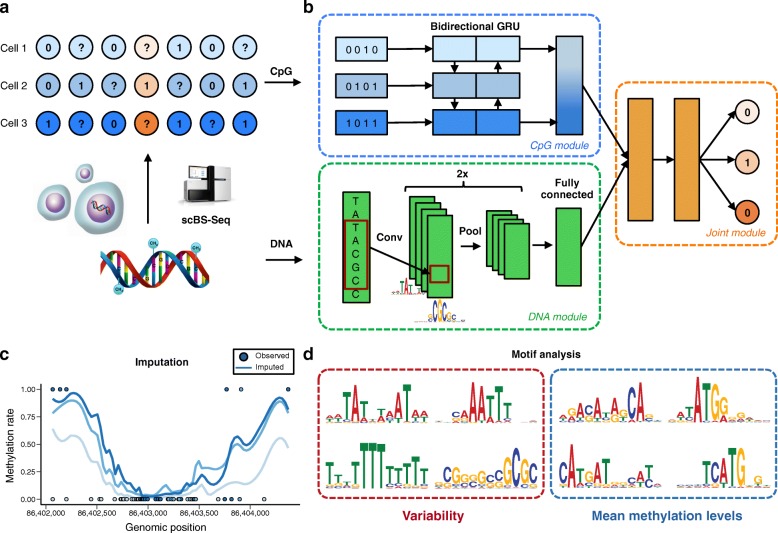
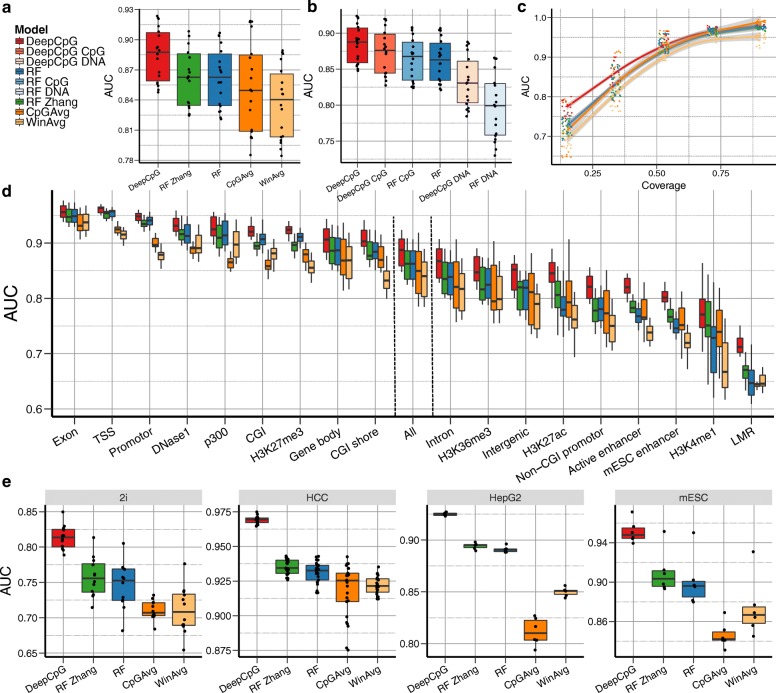
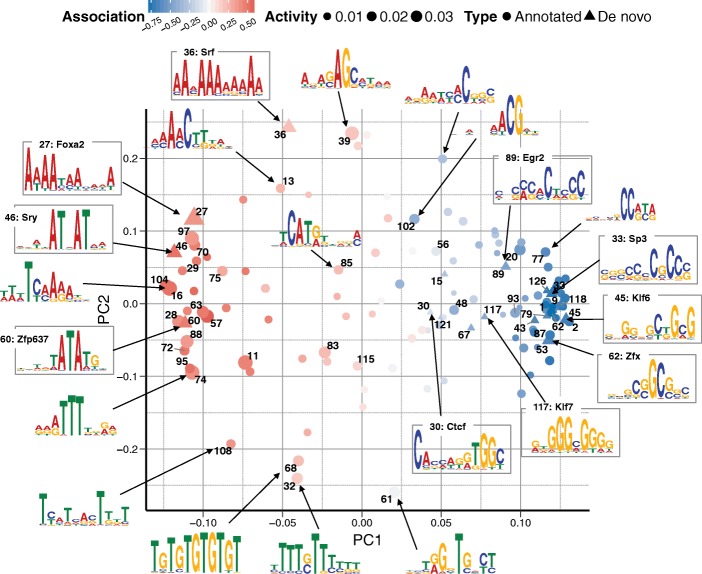
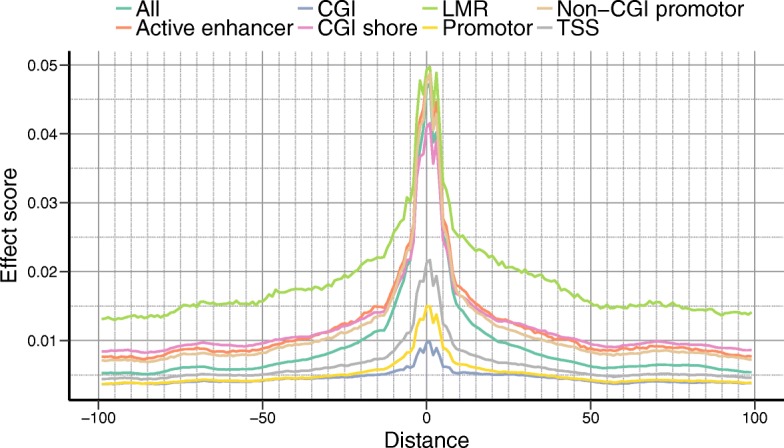
Verification
Claims the paper makes
The claims and statistics of this paper haven’t been checked yet.
Free: it reads the open-access text and checks the first 5 claims that cite a source we can check. Create a free account to check every claim.
Claims other papers make about this one
Each is checked against this paper’s own text: does it say what the citing paper says it does?
The cited source says what the claim attributes to it.
In the citing paper
“They showed that regions with increased methylation variability associate significantly more strongly to gene expression, indicating functional relevance.”
From Mapping gene regulatory networks from single-cell omics data (2018) · cites this paper as [75]
In the citing paper
“One possible way to deal with technical dropouts is proposed by Angermueller et al. [75] by developing DeepCpG, a computational approach based on deep neural networks, to predict missing methylation states and link methylation states to motifs.”
From Mapping gene regulatory networks from single-cell omics data (2018) · cites this paper as [75]
Self-check
Percentages, sums and reported differences re-computed from the paper’s own numbers.
The self-check needs the paper’s full text.
Citations
Cites
Deep Residual Learning for Image Recognition
He, K., Zhang, X., Ren, S., & Sun, J. (2016) · 2016 IEEE Conference on Computer Vision and Pattern Recognition (CVPR) · doi:10.1109/cvpr.2016.90 · Cited by 235,474
Breiman, L. (2001) · Machine Learning · doi:10.1023/a:1010933404324 · Cited by 133,538 · cited 1×
“Additionally, we compared DeepCpG to random forest classifiers [37] trained on individual cells using the DNA sequence information and neighbouring CpG states as input ( RF ).”
MethodAdam: A Method for Stochastic Optimization
Kingma, D. P., & Ba, J. (2014) · arXiv · doi:10.48550/arxiv.1412.6980 · Cited by 98,946 · cited 2×
“The learning rate was adapted by Adam [65] and decayed by a factor of 0.”
MethodInfluentialLeCun, Y., Bengio, Y., & Hinton, G. (2015) · Nature · doi:10.1038/nature14539 · Cited by 84,126
(2014) · Cited by 33,419
Neural Machine Translation by Jointly Learning to Align and Translate
Bahdanau, D., Cho, K., & Bengio, Y. (2014) · arXiv · doi:10.48550/arxiv.1409.0473 · Cited by 16,213 · cited 1×
“RNNs have been successfully used for modelling long-range dependencies in natural language [58, 59], acoustic signals [60] and, more recently, genomic sequences [61, 62].”
Method(2010) · Cited by 14,134
WebLogo: A Sequence Logo Generator: Figure 1
Crooks, G. E., Hon, G., Chandonia, J.-M., & Brenner, S. E. (2004) · Genome Research · doi:10.1101/gr.849004 · Cited by 12,386 · cited 2×
“Selected sequence windows were aligned and visualised as sequence motifs using WebLogo [69] version 3.”
MethodInfluentialBackpropagation Applied to Handwritten Zip Code Recognition
LeCun, Y., Boser, B., Denker, J. S., Henderson, D., Howard, R. E., Hubbard, W., & Jackel, L. D. (1989) · Neural Computation · doi:10.1162/neco.1989.1.4.541 · Cited by 11,891 · cited 1×
“Here, we report DeepCpG, a computational method based on deep neural networks [17 – 19] for predicting single-cell methylation states and for modelling the sources of DNA methylation variability.”
MethodRobust Locally Weighted Regression and Smoothing Scatterplots
Cleveland, W. S. (1979) · Journal of the American Statistical Association · doi:10.1080/01621459.1979.10481038 · Cited by 11,594 · cited 1×
“Trend lines were fit using local polynomial regression (LOESS [72]); shaded areas denote 95%”
Method
Research works printed but not linked: 1
- Denas O, Taylor J. Deep modeling of gene expression regulation in an erythropoiesis model. Represent. Learn. ICML Workshop. 2013
Cited by
Items 101–200 of 553
Introduction to Single-Cell DNA Methylation Profiling Methods
Ahn, J., Heo, S., Lee, J., & Bang, D. (2021) · Biomolecules · doi:10.3390/biom11071013 · Cited by 76
“It has been reported that analysis using read-level methylation patterns in a single cell is possible because single-cell and liquid biopsies share a small amount of inputs [100,101].”
BackgroundPrediction of regulatory motifs from human Chip-sequencing data using a deep learning framework
Yang, J., Ma, A., Hoppe, A. D., Wang, C., Li, Y., Zhang, C., Wang, Y., Liu, B., & Ma, Q. (2019) · Nucleic Acids Research · doi:10.1093/nar/gkz672 · Cited by 80
Deep learning for genomics using Janggu
Kopp, W., Monti, R., Tamburrini, A., Ohler, U., & Akalin, A. (2020) · Nature Communications · doi:10.1038/s41467-020-17155-y · Cited by 74
MRNDR: Multihead Attention-Based Recommendation Network for Drug Repurposing
Feng, X., Ma, Z., Yu, C., & Xin, R. (2024) · Journal of Chemical Information and Modeling · doi:10.1021/acs.jcim.3c01726 · Cited by 68
An automated framework for efficiently designing deep convolutional neural networks in genomics
Zhang, Z., Park, C. Y., Theesfeld, C. L., & Troyanskaya, O. G. (2021) · Nature Machine Intelligence · doi:10.1038/s42256-021-00316-z · Cited by 73
Derin Öğrenme Modelleri ve Uygulama Alanlarına İlişkin Bir Derleme
Doğan, F., & Türkoğlu, İ. (2019) · DÜMF Mühendislik Dergisi · doi:10.24012/dumf.411130 · Cited by 106
Evaluating deep learning for predicting epigenomic profiles
Toneyan, S., Tang, Z., & Koo, P. K. (2022) · Nature Machine Intelligence · doi:10.1038/s42256-022-00570-9 · Cited by 69
Efficient Deep Learning Approaches for Health Informatics
Navamani, T. M. (2019) · Elsevier eBooks · doi:10.1016/b978-0-12-816718-2.00014-2 · Cited by 84
Deep learning in bioinformatics
Yousef, M., & Allmer, J. (2023) · TURKISH JOURNAL OF BIOLOGY · doi:10.55730/1300-0152.2671 · Cited by 72
“Typically explainable Hard to show the reasoning process DeepCpG (Angermueller et al., 2017) is a deep-learning model that predicts methylation states in single cells using bisulfite sequencing data.”
BackgroundMethodInfluentialLiu, Z., Cui, Y., Xiong, Z., Nasiri, A., Zhang, A., & Hu, J. (2019) · Scientific Reports · doi:10.1038/s41598-018-37214-1 · Cited by 68
Melissa: Bayesian clustering and imputation of single-cell methylomes
Kapourani, C.-A., & Sanguinetti, G. (2019) · Genome biology · doi:10.1186/s13059-019-1665-8 · Cited by 71
“We delay comparisons with the deep learning method DeepCpG [24] to the next section, as DeepCpG is not applicable in the settings of this simulation (see below).”
MethodResultInfluentialDenoising genome-wide histone ChIP-seq with convolutional neural networks
Koh, P. W., Pierson, E., & Kundaje, A. (2017) · Bioinformatics · doi:10.1093/bioinformatics/btx243 · Cited by 59
Health Informatics: Engaging Modern Healthcare Units: A Brief Overview
Yogesh, M., & Karthikeyan, J. (2022) · Frontiers in Public Health · doi:10.3389/fpubh.2022.854688 · Cited by 85
A pitfall for machine learning methods aiming to predict across cell types
Schreiber, J., Singh, R., Bilmes, J., & Noble, W. S. (2020) · Genome Biology · doi:10.1186/s13059-020-02177-y · Cited by 62
Explainability in transformer models for functional genomics
Clauwaert, J., Menschaert, G., & Waegeman, W. (2021) · Briefings in Bioinformatics · doi:10.1093/bib/bbab060 · Cited by 60
“[2].”
BackgroundWang, Y., Zhang, P., Guo, W., Liu, H., Li, X., Zhang, Q., Du, Z., Hu, G., Han, X., Pu, L., et al. (2021) · New Phytologist · doi:10.1111/nph.17630 · Cited by 65
Probing infectious disease by single-cell RNA sequencing: Progresses and perspectives
Luo, G., Gao, Q., Zhang, S., & Yan, B. (2020) · Computational and Structural Biotechnology Journal · doi:10.1016/j.csbj.2020.10.016 · Cited by 66
“Angermueller et al . recently developed a calculation method DeepCpG, which is based on a deep neural network strategy and can fill gaps left by previous methods [105].”
PyComplexHeatmap: A Python package to visualize multimodal genomics data
Ding, W., Goldberg, D., & Zhou, W. (2023) · iMeta · doi:10.1002/imt2.115 · Cited by 61
Big Sensed Data Meets Deep Learning for Smarter Health Care in Smart Cities
Obinikpo, A., & Kantarci, B. (2017) · Journal of Sensor and Actuator Networks · doi:10.3390/jsan6040026 · Cited by 57
Prognostic Gene Discovery in Glioblastoma Patients using Deep Learning
Wong, K., Rostomily, R., & Wong, S. T. C. (2019) · Cancers · doi:10.3390/cancers11010053 · Cited by 64
DeepPASTA: deep neural network based polyadenylation site analysis
Arefeen, A., Xiao, X., & Jiang, T. (2019) · Bioinformatics · doi:10.1093/bioinformatics/btz283 · Cited by 59
Identification of prokaryotic promoters and their strength by integrating heterogeneous features
Tayara, H., Tahir, M., & Chong, K. T. (2019) · Genomics · doi:10.1016/j.ygeno.2019.08.009 · Cited by 62
Rodríguez‐Ubreva, J., Arutyunyan, A., Bonder, M. J., Molina, L. D. P., Clark, S. J., de la Calle‐Fabregat, C., García‐Alonso, L., Handfield, L., Ciudad, L., Andrés‐León, E., et al. (2022) · Nature Communications · doi:10.1038/s41467-022-29450-x · Cited by 71
Self-citationDeep learning for cancer type classification and driver gene identification
Zeng, Z., Mao, C., Vo, A. H., Li, X., Nugent, J. O., Khan, S. A., Clare, S. E., & Luo, Y. (2021) · BMC Bioinformatics · doi:10.1186/s12859-021-04400-4 · Cited by 62
“Recent examples of exploring the application of CNNs within raw sequencing data include DeepBind [25], DanQ [26], DeepSEA [27], DeepCpG [28].”
BackgroundChen, X., Li, C., Bernards, M. T., Shi, Y., Shao, Q., & He, Y. (2021) · Molecular Systems Design & Engineering · doi:10.1039/d0me00161a · Cited by 61
Identification of DNA motifs that regulate DNA methylation
Wang, M., Zhang, K., Ngo, V., Liu, C., Fan, S., Whitaker, J. W., Chen, Y., Ai, R., Chen, Z., Wang, J., et al. (2019) · Nucleic Acids Research · doi:10.1093/nar/gkz483 · Cited by 62
Machine Learning for Causal Inference in Biological Networks: Perspectives of This Challenge
Lecca, P. (2021) · Frontiers in Bioinformatics · doi:10.3389/fbinf.2021.746712 · Cited by 46
Deciphering the genetic code of DNA methylation
Wang, M., Ngo, V., & Wang, W. (2021) · Briefings in Bioinformatics · doi:10.1093/bib/bbaa424 · Cited by 64
“In particular, they transduced selected TFs in sub-cloned vectors to cells and evaluated the methylation levels using the HumanMethylation450 methylation array near the TF binding sites (estimated by the motif locations) with and without ectopic expression of the TFs.”
BackgroundMethodInfluentialA novel deep learning method for predictive modeling of microbiome data
Wang, Y., Bhattacharya, T., Jiang, Y., Qin, X., Wang, Y., Liu, Y., Saykin, A. J., & Chen, L. (2020) · Briefings in Bioinformatics · doi:10.1093/bib/bbaa073 · Cited by 58
Multi-Trait Genomic Prediction of Yield-Related Traits in US Soft Wheat under Variable Water Regimes
Guo, J. X., Khan, J., Pradhan, S., Shahi, D., Khan, N., Avci, M., McBreen, J. C., Harrison, S., Brown‐Guedira, G., Murphy, J. P., et al. (2020) · Genes · doi:10.3390/genes11111270 · Cited by 58
“Based on previous studies using similar types of data [35,36,72], we included three hidden layers and used the rectified linear activation unit as an activation function and the dropout type (25% dropout rate) as the regularization method.”
MethodBEND: Benchmarking DNA Language Models on biologically meaningful tasks
Marin, F. I., Teufel, F., Horlacher, M., Madsen, D., Pultz, D., Winther, O., & Boomsma, W. (2024) · International Conference on Learning Representations · doi:10.48550/arxiv.2311.12570 · Cited by 79
“DeepCpG (Angermueller et al., 2017) predicts DNA methylation via a CNN/GRU architecture.”
MethodDeep Learning Methods for Omics Data Imputation
Huang, L., Song, M., Shen, H., Hong, H., Gong, P., Deng, H., & Zhang, C. (2023) · Biology · doi:10.3390/biology12101313 · Cited by 56
“DeepCpG [11] employs a bidirectional RNN to analyze the neighboring methylation states of cells, alongside a CNN to process the DNA sequence.”
MethodSingle cell epigenome sequencing technologies
Wen, L., & Tang, F. (2017) · Molecular Aspects of Medicine · doi:10.1016/j.mam.2017.09.002 · Cited by 65
MRCNN: a deep learning model for regression of genome-wide DNA methylation
Tian, Q., Zou, J., Tang, J., Fang, Y., Yu, Z., & Fan, S. (2019) · BMC Genomics · doi:10.1186/s12864-019-5488-5 · Cited by 54
“To illustrate the model performance, we compared MRCNN with DeepCpG [7].”
BackgroundMethodInfluentialNovel Transformer Networks for Improved Sequence Labeling in genomics
Clauwaert, J., & Waegeman, W. (2022) · IEEE/ACM Transactions on Computational Biology and Bioinformatics · doi:10.1109/tcbb.2020.3035021 · Cited by 47
“Recurrent neural network architectures, featuring recurrently updated memory cells, have been successfully applied alongside convolutional layers to improve the detection of methylation states [2] and TISs [7] using experimental data.”
BackgroundMethodMachine Learning in Epigenomics: Insights into Cancer Biology and Medicine
Arslan, E., Schulz, J. E., & Rai, K. (2021) · Biochimica et Biophysica Acta (BBA) - Reviews on Cancer · doi:10.1016/j.bbcan.2021.188588 · Cited by 56
Tahir, M. A. A., Norouzi, M., Khan, S. S., Davie, J., Yamanaka, S., & Ashraf, A. B. (2024) · Computers in Biology and Medicine · doi:10.1016/j.compbiomed.2024.109302 · Cited by 56
“Angermueller et al. [142] developed, DeepCpG, a DL method for the identification of methylation states in single cells.”
Sparse Convolutional Denoising Autoencoders for Genotype Imputation
Chen, J., & Shi, X. M. (2019) · Genes · doi:10.3390/genes10090652 · Cited by 58
“Applications of deep learning in Bioinformatics include variant calling [41], functional annotation [42,43], protein structure recognition and prediction [44–50], gene expression inference [51], molecular function recognition [52], prediction of methylation states [53], and high-throughput chromosome conformation capt…”
BackgroundThe McDonnell Genome Institute, Zou, L. S., Erdos, M. R., Taylor, D. L., Chines, P. S., Varshney, A., Parker, S. C. J., Collins, F. S., & Didion, J. P. (2018) · BMC Genomics · doi:10.1186/s12864-018-4766-y · Cited by 47
“Machine and deep learning algorithms have shown promise in providing accurate beta value estimates after training on sparse data sets [14, 15].”
BackgroundMethodInfluentialRNAdegformer: accurate prediction of mRNA degradation at nucleotide resolution with deep learning
He, S., Gao, B., Sabnis, R., & Sun, Q. (2023) · Briefings in Bioinformatics · doi:10.1093/bib/bbac581 · Cited by 51
Rubas, N. C., Torres, A., & Maunakea, A. K. (2025) · International Journal of Molecular Sciences · doi:10.3390/ijms26178658 · Cited by 49
“On the computational front, deep learning frameworks such as MethylNet [124] and DeepCpG [125] have shown promise in predicting cell-type-specific methylation patterns by integrating genomic, microbial, and environmental features.”
Machine learning applications for therapeutic tasks with genomics data
Huang, K., Xiao, C., Glass, L. M., Critchlow, C. W., Gibson, G. C., & Sun, J. (2021) · Patterns · doi:10.1016/j.patter.2021.100328 · Cited by 52
“For example, given a set of cells with their available sequenced methylation status for each DNA position and the DNA sequence, Angermueller et al.51 accurately infer the unmeasured methylation statuses at a single-cell level.”
BackgroundA multimodal conversational agent for DNA, RNA and protein tasks
de Almeida, B. P., Richard, G., Dalla-Torre, H., Blum, C. F., Hexemer, L., Pandey, P., Laurent, S., Rajesh, C., Lopez, M., Laterre, A., et al. (2025) · Nature Machine Intelligence · doi:10.1038/s42256-025-01047-1 · Cited by 73
“These tasks include predicting the binding of proteins to DNA and RNA 4 , DNA methylation 5 , chromatin features 6 , regulatory elements 7 , splicing 8 , gene expression 9 , mRNA properties such as stability 10 and polyadenylation 11 , and protein properties such as melting point 12 .”
Learning the Regulatory Code of Gene Expression
Zrimec, J., Buric, F., Kokina, M., García, V., & Zelezniak, A. (2021) · Frontiers in Molecular Biosciences · doi:10.3389/fmolb.2021.673363 · Cited by 53
“A more recent alternative approach termed “ MRCNN ” (Tian et al., 2019) outperformed DeepCpG (AUC up to 0.97), and de novo discovered motifs from the trained CNN kernels were shown to match known motifs.”
BackgroundMethodInfluentialPan, G., Jiang, L., Tang, J., & Guo, F. (2018) · International Journal of Molecular Sciences · doi:10.3390/ijms19020511 · Cited by 44
“For the scBS-seq datasets, DeepCpG [27] and another method proposed by Zhang et al. [26] were used in the comparison.”
BackgroundMethodInfluentialMachine Learning Techniques for Automated Melanoma Detection
Vocaturo, E., Perna, D., & Zumpano, E. (2019) · IEEE International Conference on Bioinformatics and Biomedicine (BIBM) · doi:10.1109/bibm47256.2019.8983165 · Cited by 52
“In the field of biomedicine, successful application of CNNs is mainly focused on problems such as medical image classification and segmentation [53], [54] applied to several specific health problems [55]– [61], enabling the development of automated tools capable of unprecedented detection performance.”
BackgroundGenomics enters the deep learning era
Routhier, E., & Mozziconacci, J. (2022) · PeerJ · doi:10.7717/peerj.13613 · Cited by 52
“Zhang, Shen & Huang (2019a) proposed an improved method that leverages the internal states of a RNN to model the distributions of biased and unbiased RNA-seq reads.”
BackgroundMethodInfluentialInference of the human polyadenylation code
Leung, M. K. K., Delong, A., & Frey, B. J. (2018) · Bioinformatics · doi:10.1093/bioinformatics/bty211 · Cited by 44
Kumaravel, S. K., Subramani, R. K., Sivakumar, T. K. J., Elavarasan, R. M., Vetrichelvan, A. M., Annam, A., & Subramaniam, U. (2020) · 3 Biotech · doi:10.1007/s13205-020-02382-3 · Cited by 53
DeepHealth: Review and challenges of artificial intelligence in health informaticsPreprint
Kwak, G. H., & Hui, P. (2019) · arXiv (Cornell University) · doi:10.48550/arxiv.1909.00384 · Cited by 76
Scott, C. A., Duryea, J., MacKay, H., Baker, M. S., Laritsky, E., Gunasekara, C., Coarfa, C., & Waterland, R. A. (2020) · Genome biology · doi:10.1186/s13059-020-02065-5 · Cited by 63
Zhang, L., Xiao, X., & Xu, Z. (2020) · Frontiers in Cell and Developmental Biology · doi:10.3389/fcell.2020.00614 · Cited by 41
Modeling multi-species RNA modification through multi-task curriculum learning
Xiong, Y., He, X., Zhao, D. Y., Tian, T., Hong, L., Jiang, T., & Zeng, J. (2021) · Nucleic Acids Research · doi:10.1093/nar/gkab124 · Cited by 50
“Recently, machine learning has been applied in solving many computational biology questions, such as the identification of RNA-binding protein (RBP) targets (18), the prediction of translation stalling (19) and the detection of single-cell DNA methylation states (20).”
BackgroundApplication of deep learning in cancer epigenetics through DNA methylation analysis
Yassi, M., Chatterjee, A., & Parry, M. (2023) · Briefings Bioinform. · doi:10.1093/bib/bbad411 · Cited by 32
“DeepCpG [67] is a computational model that was developed for predicting the binary methylation states of CpG sites in single-cell DNA methylation sequencing data.”
MethodMulti-omics based and AI-driven drug repositioning for epigenetic therapy in female malignancies
Salvati, A., Melone, V., Giordano, A., Lamberti, J., Palumbo, D., Palo, L., Rea, D., Memoli, D., Simonis, V., Alexandrova, E., et al. (2025) · Journal of Translational Medicine · doi:10.1186/s12967-025-06856-x · Cited by 46
“Their ability to integrate and model complex relationships across various biological layers makes them particularly suited for epigenetic research and drug repositioning efforts [198, 199].”
Artificial intelligence in Immuno-genetics
Farzan, R. A. (2024) · Bioinformation · doi:10.6026/973206300200029 · Cited by 43
A self-attention model for inferring cooperativity between regulatory features
Ullah, F., & Ben‐Hur, A. (2021) · Nucleic Acids Research · doi:10.1093/nar/gkab349 · Cited by 42
“…networks an appealing choice for a variety of modeling tasks, including transcription factor (TF) binding prediction (2, 15, 29, 30, 42), chromatin accessibility analysis (3, 4, 18), prediction of chromatin structure and its modifications (19, 34), and identification of RNA-binding sites (24, 41).”
BackgroundAborode, A. T., Emmanuel, O. A., Onifade, I. A., Olotu, E., Otorkpa, O. J., Mehmood, M. Q., Abdulai, S. I., Jamiu, A. T., Osinuga, A., Oko, C. I., et al. (2025) · NeuroMarkers. · doi:10.1016/j.neumar.2024.100034 · Cited by 44
AI and Machine Learning in Biology: From Genes to Proteins
Hein, Z. M., Guruparan, D., Okunsai, B., Nassir, C. M. N. C. M., Ramli, M. D. C., & Kumar, S. (2025) · Biology · doi:10.3390/biology14101453 · Cited by 46
“For example, DeepCpG, developed by Angermueller et al’s (2017) [39] uses CNNs to predict methylation states across genomes, outperforming traditional methods but requiring high-quality, well-annotated data [17].”
Heterogeneity Analysis and Diagnosis of Complex Diseases Based on Deep Learning Method
Li, X., Liu, L.-Y., Zhou, J., & Wang, C. (2018) · Scientific Reports · doi:10.1038/s41598-018-24588-5 · Cited by 26
“And, many studies believe that the deep learning model can help the bioinformatics researchers to make new breakthroughs 33,34 .”
BackgroundiSS-CNN: Identifying splicing sites using convolution neural network
Tayara, H., Tahir, M., & Chong, K. T. (2019) · Chemometrics and Intelligent Laboratory Systems · doi:10.1016/j.chemolab.2019.03.002 · Cited by 38
Machine learning, the kidney, and genotype–phenotype analysis
Sealfon, R. S. G., Mariani, L. H., Kretzler, M., & Troyanskaya, O. G. (2020) · Kidney International · doi:10.1016/j.kint.2020.02.028 · Cited by 43
CpG Transformer for imputation of single-cell methylomes
De Waele, G., Clauwaert, J., Menschaert, G., & Waegeman, W. (2022) · Bioinformatics · doi:10.1093/bioinformatics/btab746 · Cited by 37
Decoding Aging Hallmarks at the Single-Cell Level
Ma, S., Chi, X., Cai, Y., Ji, Z., Wang, S., Ren, J., & Liu, G.-H. (2023) · Annual Review of Biomedical Data Science · doi:10.1146/annurev-biodatasci-020722-120642 · Cited by 35
Sağlık Alanında Kullanılan Derin Öğrenme Yöntemleri
Kaya, U., Yılmaz, A., & Dikmen, Y. (2019) · European Journal of Science and Technology · doi:10.31590/ejosat.573248 · Cited by 45
Deep learning-empowered crop breeding: intelligent, efficient and promising
Wang, X., Zeng, H., Lin, L., Huang, Y., Lin, H., & Que, Y. (2023) · Frontiers in Plant Science · doi:10.3389/fpls.2023.1260089 · Cited by 42
Deep Learning in Single-cell Analysis
Molho, D., Ding, J., Tang, W., Li, Z., Wen, H., Wang, Y., Venegas, J., Jin, W., Liu, R., Su, R., et al. (2024) · ACM Transactions on Intelligent Systems and Technology · doi:10.1145/3641284 · Cited by 51
“For the application of DNA methylation imputation, DeepCpGm [213] is a method that takes both DNA sequences and methylation states as inputs, and outputs imputed methylation states.”
MethodA multispecies foundation model for genome function prediction, gene annotation and sequence designPreprint
Boshar, S., Evans, B., Tang, Z., Adel, Y., Bornachot, Y., Sidbon, S., Lorbeer, F. K., Picard, A., Rajesh, C., Seitz, E., et al. (2025) · bioRxiv (Cold Spring Harbor Laboratory) · doi:10.64898/2025.12.22.695963 · Cited by 48
Applications of Deep Learning in Healthcare and Biomedicine
Mittal, S., & Hasija, Y. (2019) · Studies in big data · doi:10.1007/978-3-030-33966-1_4 · Cited by 39
autoBioSeqpy: A Deep Learning Tool for the Classification of Biological Sequences
Jing, R., Li, Y., Xue, L., Liu, F., Li, M., & Luo, J. (2020) · Journal of Chemical Information and Modeling · doi:10.1021/acs.jcim.0c00409 · Cited by 35
Artificial intelligence used in genome analysis studies
D’Agaro, E. (2018) · The EuroBiotech Journal · doi:10.2478/ebtj-2018-0012 · Cited by 37
Deep Splicing Code: Classifying Alternative Splicing Events Using Deep Learning
Louadi, Z., Oubounyt, M., Tayara, H., & Chong, K. T. (2019) · Genes · doi:10.3390/genes10080587 · Cited by 39
“In parallel, the use of deep neural networks (DNN) for the automatic extraction of features rather than handcrafted construction has improved the state-of-the-art performance for many genomics tasks [18,19], such as predicting transcription factor binding site [20,21], Branch point selection [22,23], RNA protein-codin…”
BackgroundThe Human Body as a Super Network: Digital Methods to Analyze the Propagation of Aging
Whitwell, H. J., Bacalini, M. G., Blyuss, O. B., Chen, S., Garagnani, P., Gordleeva, S. Y., Jalan, S., Ivanchenko, M., Игоревич, К. О., Кустикова, В. Д., et al. (2020) · Frontiers in Aging Neuroscience · doi:10.3389/fnagi.2020.00136 · Cited by 37
“However, in contrast to image processing, except for some rare examples (Angermueller et al., 2017; Putin et al., 2017), the application of deep learning neural network for the early diagnosis of cancer (and thus applications for aging), based on the analysis of proteomic and epigenetic data has…”
BackgroundThe pneumonia severity index: Assessment and comparison to popular machine learning classifiers
Wang, D., Willis, D. R., & Yih, Y. (2022) · International Journal of Medical Informatics · doi:10.1016/j.ijmedinf.2022.104778 · Cited by 36
Avsec, Ž., Barekatain, M., Cheng, J., & Gagneur, J. (2017) · Bioinformatics · doi:10.1093/bioinformatics/btx727 · Cited by 34
Jing, F., Zhang, S.-W., Cao, Z., & Zhang, S. (2019) · IEEE Transactions on Computational Biology and Bioinformatics · doi:10.1109/tcbb.2019.2901789 · Cited by 32
“More recently, convolutional neural networks [20], coupled with the one-hot coding format of DNA sequences [21], [22], [23], [24], [25], [26], [27], [28], [29], [30], [31], [32], attracted great interest in predicting TFBSs.”
BackgroundShahryary, Y., Hazarika, R. R., & Johannes, F. M. (2020) · BMC Genomics · doi:10.1186/s12864-020-06886-3 · Cited by 37
“…methylated regions (DMRs) (e.g. Methylkit [6], DMRcaller [7], Methylpy [8], metilene [9]), imputation of methylomes from bulk WGBS data (e.g. METHimpute [10]), imputation of single-cell methylomes (e.g. Melissa [11], deepCpG [12]) and dropouts in single-cell data (e.g. SCRABBLE [13]).”
BackgroundEpiclomal: Probabilistic clustering of sparse single-cell DNA methylation data
de Souza, C. P. E., Andronescu, M., Masud, T., Kabeer, F., Biele, J., Laks, E., Lai, D., Ye, P., Brimhall, J., Wang, B., et al. (2020) · PLoS Computational Biology · doi:10.1371/journal.pcbi.1008270 · Cited by 35
Hyb4mC: a hybrid DNA2vec-based model for DNA N4-methylcytosine sites prediction
Liang, Y., Wu, Y., Zhang, Z., Liu, N., Peng, J., & Tang, J. (2022) · BMC Bioinformatics · doi:10.1186/s12859-022-04789-6 · Cited by 31
“(3) Some motifs were discovered to have more significant effects on methylation levels [32], despite being able to extract the outputs of specified layers in the network (Additional file 2, Additional file 3), the traceability of important motifs in Hyb4mC remains difficult, finding available methods to backtrack to s…”
BackgroundPartitioned learning of deep Boltzmann machines for SNP data
Hess, M., Lenz, S., Blätte, T. J., Bullinger, L., & Binder, H. (2017) · Bioinformatics · doi:10.1093/bioinformatics/btx408 · Cited by 34
Unveiling the frontiers of deep learning: Innovations shaping diverse domains
Ahmed, S. F., Alam, M. S. B., Kabir, M., Afrin, S., Rafa, S. J., Mehjabin, A., & Gandomi, A. H. (2025) · Applied Intelligence · doi:10.1007/s10489-025-06259-x · Cited by 39
“[169] developed DeepCpG, which is a computational method focusing on DNN to make a prediction regarding the methylation stages of a single cell and model the origins of DNA methylation dispersion.”
Research Progress in Predicting DNA Methylation Modifications and the Relation with Human Diseases
Ao, C., Gao, L., & Yu, L. (2021) · Current Medicinal Chemistry · doi:10.2174/0929867328666210917115733 · Cited by 34
Xu, Y., Vuckovic, D., Ritchie, S. C., Akbari, P., Jiang, T., Grealey, J., Butterworth, A. S., Ouwehand, W. H., Roberts, D. J., Angelantonio, E. D., et al. (2022) · Cell Genomics · doi:10.1016/j.xgen.2021.100086 · Cited by 32
“52 As regularized versions of MLPs, CNNs construct its hidden layers using convolutional and pooling operations which are usually followed by fully connected layers and the output layer.”
BackgroundZhou, J., Chen, Q., Braun, P., Mandell, K. A. P., Jaffe, A. E., Tan, H. Y., Hyde, T. M., Kleinman, J. E., Potash, J. B., Shinozaki, G., et al. (2022) · Proceedings of the National Academy of Sciences · doi:10.1073/pnas.2206069119 · Cited by 37
Aplicaciones de las redes neuronales y el deep learning a la ingeniería biomédica
Sarmiento-Ramos, J. L. (2020) · Revista UIS Ingenierías · doi:10.18273/revuin.v19n4-2020001 · Cited by 46
Advances in measuring DNA methylation
Sun, R., & Zhu, P. (2021) · Blood Science · doi:10.1097/bs9.0000000000000098 · Cited by 35
“oligo-dT primers conjugated to the magnetic beads to separate mRNA and gDNA for single cell profiling respectively.(61) Singlecell triple omics sequencing (scTrio-seq) slightly lysed cells first, released cytoplasmic RNA while keeping the nucleus intact, and then the nucleus is recovered by centrifugation to separate…”
MethodDeep learning in biomedical informatics
Hung, C. (2023) · Elsevier eBooks · doi:10.1016/b978-0-323-85796-3.00011-1 · Cited by 37
LightCpG: a multi-view CpG sites detection on single-cell whole genome sequence data
Jiang, L., Wang, C., Tang, J., & Guo, F. (2019) · BMC Genomics · doi:10.1186/s12864-019-5654-9 · Cited by 30
Dutta, A., Dalmia, A., Athul, R., Singh, K. K., & Anand, A. (2019) · Computers in Biology and Medicine · doi:10.1016/j.compbiomed.2019.103558 · Cited by 31
scMET: Bayesian modeling of DNA methylation heterogeneity at single-cell resolution
Kapourani, C.-A., Argelaguet, R., Sanguinetti, G., & Vallejos, C. A. (2021) · Genome biology · doi:10.1186/s13059-021-02329-8 · Cited by 31
“While tailored computational imputation methods such as Melissa [13] and DeepCpG [14] might ameliorate the sparsity problem, disentangling genuine epigenetic variability from technical biases remains a formidable problem.”
MethodHu, J., & Liu, Z. (2017) · bioRxiv (Cold Spring Harbor Laboratory) · doi:10.1101/239236 · Cited by 29
“Following this success, deep CNN models have been applied to a variety of bioinformatics problems, especially in DNA/RNA motif/sequence modeling and prediction including well-know algorithms such as DeepBind [11], DeeperBind [12], and DeepCpG [13].”
BackgroundMethodDecoding biology with massively parallel reporter assays and machine learning
Fleur, A. L., Shi, Y., & Seelig, G. (2024) · Genes & Development · doi:10.1101/gad.351800.124 · Cited by 31
“3A, middle; Quang and Xie 2016; Angermueller et al. 2017).”
BackgroundEpigenetics of Aging and Longevity
Schumacher, A. (2017) · Elsevier eBooks · doi:10.1016/b978-0-12-811060-7.00023-1 · Cited by 26
Gomes, R., Paul, N., He, N., Huber, A. F., & Jansen, R. J. (2022) · Genes · doi:10.3390/genes13091557 · Cited by 28
“In a study by Angermuelle et al. [14], DNA and CpG modules from Single Cell Bisulfite Sequencing (scBS-seq) data and Single Cell Reduced Bisulfite Sequencing (scRRBS-seq) data for Mus musculus (house mouse) were trained using deep learning for prediction of methylated states in a cell.”
MethodDLm6Am: A Deep-Learning-Based Tool for Identifying N6,2′-O-Dimethyladenosine Sites in RNA Sequences
Luo, Z., Su, W., Lou, L., Qiu, W., Xiao, X., & Xu, Z. (2022) · International Journal of Molecular Sciences · doi:10.3390/ijms231911026 · Cited by 26
Levy, J., Chen, Y., Azizgolshani, N., Petersen, C. L., Titus, A., Moen, E. L., Vaickus, L. J., Salas, L. A., & Christensen, B. C. (2021) · npj Systems Biology and Applications · doi:10.1038/s41540-021-00193-7 · Cited by 29
“DNAm deep-learning frameworks, e.g., MethylNet, can accurately characterize tissue, disease states, and infer subject age and cell-type proportions through unsupervised embedding, generation, classi fi cation, and regression tasks 20 – 24 .”
Methodkaushik, S., Kaushik, S., & Sharma, D. (2018) · Elsevier eBooks · doi:10.1016/b978-0-12-809633-8.20222-7 · Cited by 27
Wang, Y., Kong, S., Zhou, C., Zhang, Y., Zhang, Y., Fang, Y., & Li, G. (2024) · Briefings in Bioinformatics · doi:10.1093/bib/bbae651 · Cited by 27
“Additionally, the DeepCpG [35] and DeepHistone [36] models accurately predict DNA methylation and histone modifications, both crucial for understanding 3D genome structure.”
Liao, Z., Pan, G., Sun, C., & Tang, J. (2021) · BMC Bioinformatics · doi:10.1186/s12859-021-04404-0 · Cited by 26
“ConvNet also has a lot of applications in the research fields of computational biology, such as non-coding gene function prediction [56], methylation sites classification on whole genome sequence [57], protein-protein interaction analysis [58], and low quality Hi-C data denoising [59].”
BackgroundA novel deep mining model for effective knowledge discovery from omics data
Alzubaidi, A., Tepper, J. A., & Lotfi, A. (2020) · Artificial Intelligence in Medicine · doi:10.1016/j.artmed.2020.101821 · Cited by 28
Metadata
- Authors
- Angermueller, C., Lee, H. J., Reik, W., & Stegle, O.
- Affiliations
- European Bioinformatics Institute (GB)
- Babraham Institute (GB)
- Corresponding author
- Angermueller, Christof
- Stegle, Oliver
- Venue
- Genome Biology
- Published
- 2017-04-11
- Volume
- 18
- Issue
- 1
- Pages
- 67-67
- ISSN
- 1465-6906 (ISSN-L)
- 1474-760X
- PMC
- PMC5387360
- OpenAlex
- W2952935243
- Cited by
- 536
- References
- 80
- Citations by year
- 2026: 28 · 2025: 51 · 2024: 50 · 2023: 54 · 2022: 52 · 2021: 88 · 2020: 69 · 2019: 66 · 2018: 53 · 2017: 23
- FWCI
- 24.45
- Type
- journal article
- Language
- en
- Update notices
- correction (2017-05-12)
- Open access
- gold
- doi.org
- Licence
- cc-by
- Locations
- Genome biology (publishedVersion, cc-by)
- bioRxiv (Cold Spring Harbor Laboratory) (acceptedVersion, cc-by-nc-nd)
- PubMed Central (publishedVersion, cc-by)
- PubMed (publishedVersion)
- DOAJ (DOAJ: Directory of Open Access Journals) (submittedVersion, cc-by-sa)
- Apollo (University of Cambridge) (submittedVersion, cc-by)
- Zenodo (CERN European Organization for Nuclear Research) (submittedVersion, other-oa)
- Apollo (cc-by)
- Funders
- Wellcome Trust
- European Molecular Biology Laboratory
- European Commission
- Biotechnology and Biological Sciences Research Council (BBS/E/B/0000S266, BBS/E/B/0000H334, BBS/E/B/000C0403)
- Topics
- Life Sciences › Biochemistry, Genetics and Molecular Biology › Molecular Biology › Epigenetics and DNA Methylation
- Life Sciences › Biochemistry, Genetics and Molecular Biology › Molecular Biology › Single-cell and spatial transcriptomics
- Life Sciences › Biochemistry, Genetics and Molecular Biology › Molecular Biology › Genomics and Chromatin Dynamics
- Keywords
- single-cell DNA methylation, deep neural network, model interpretability, sequence composition
About these checks
Registry, retraction, Cites and statistics results are computed, not judged, with one exception: a printed reference that no index lists is read once by a model before it counts as a citation error. Claims are extracted by a model and kept only when their quote appears verbatim in the text; each cited source is then checked, with a model’s help, for whether it says what the claim relies on. Those verdicts can be wrong — read the claim’s quote and the cited source before relying on one.
Statistics and arithmetic are recomputed, not judged.
Confidence bands are shown only for fields calibrated on our annotated test set. None is calibrated yet, so no band is shown.
What counts as a claim ›How we measure confidence ›How we check this ›
Are you an author, or do you see a problem with this page? Request a review
Data sources
Bibliographic data: Semantic Scholar, OpenAlex, Crossref.
Contains information from the Semantic Scholar Academic Graph Datasets, made available under the ODC Attribution License (ODC-BY 1.0).
Semantic Scholar’s data is described in: Kinney, R., et al. (2023). The Semantic Scholar Open Data Platform. arXiv:2301.10140.
