

DeepCpG: accurate prediction of single-cell DNA methylation states using deep learning
Open accessPublished version of a preprint
The DOI matches its Crossref record; 77 of the 80 references it cites were found in a registry or an index.
Abstract
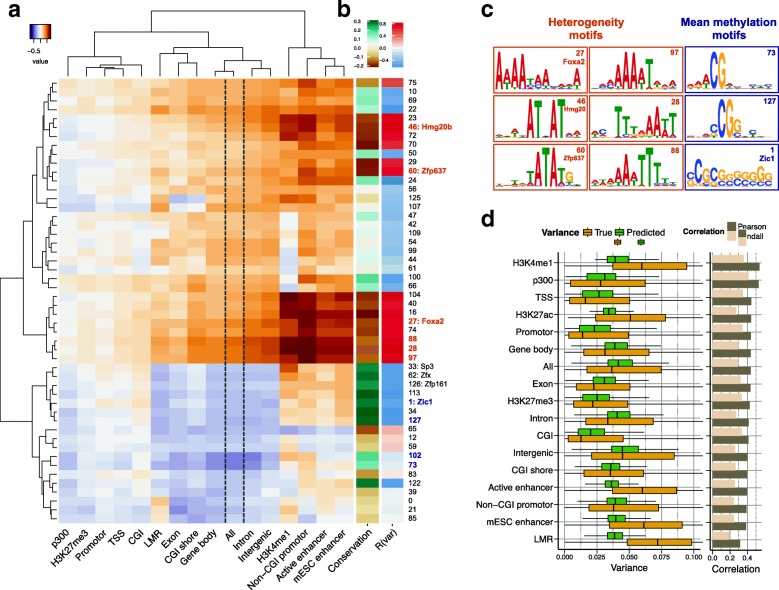
Recent technological advances have enabled DNA methylation to be assayed at single-cell resolution. However, current protocols are limited by incomplete CpG coverage and hence methods to predict missing methylation states are critical to enable genome-wide analyses. We report DeepCpG, a computational approach based on deep neural networks to predict methylation states in single cells. We evaluate DeepCpG on single-cell methylation data from five cell types generated using alternative sequencing protocols. DeepCpG yields substantially more accurate predictions than previous methods. Additionally, we show that the model parameters can be interpreted, thereby providing insights into how sequence composition affects methylation variability.
Overview
The claims and statistics of this paper haven’t been checked yet.
Free: it reads the open-access text and checks the first 5 claims that cite a source we can check. Create a free account to check every claim.
Integrity signals
Registry
Cites
Statistics
Figures
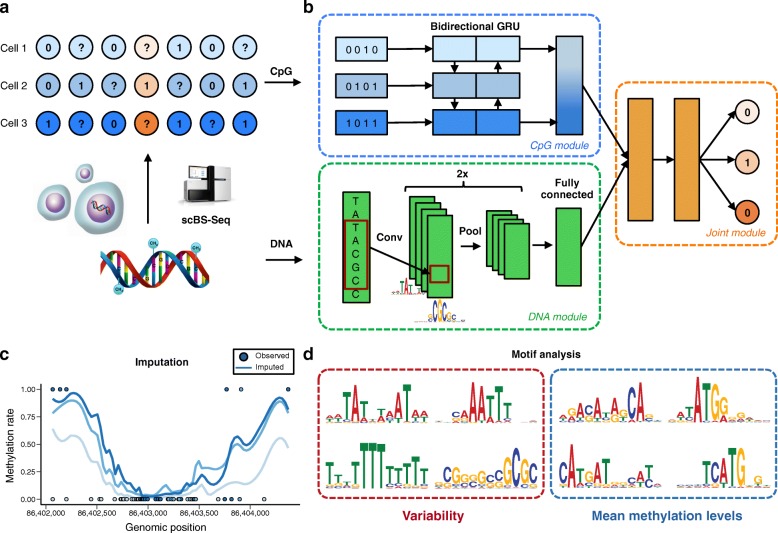
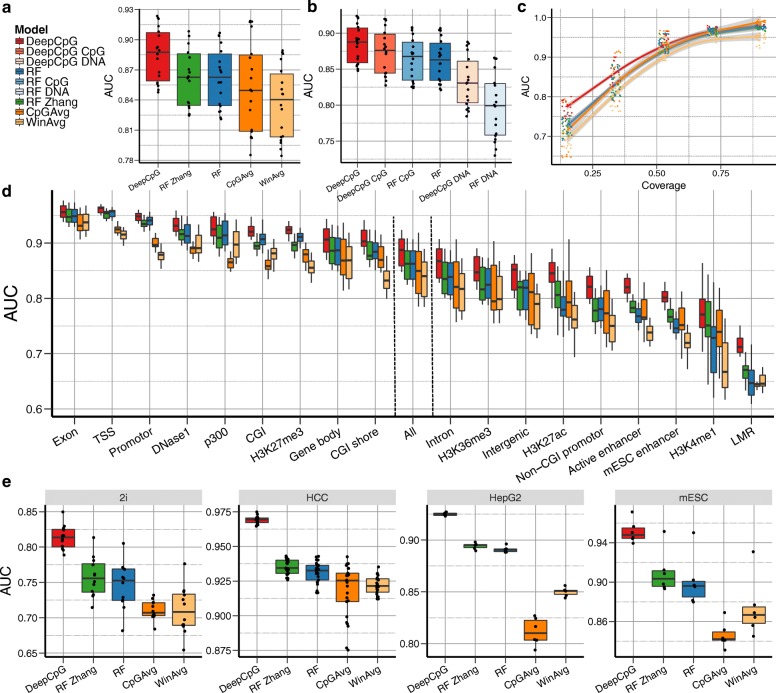
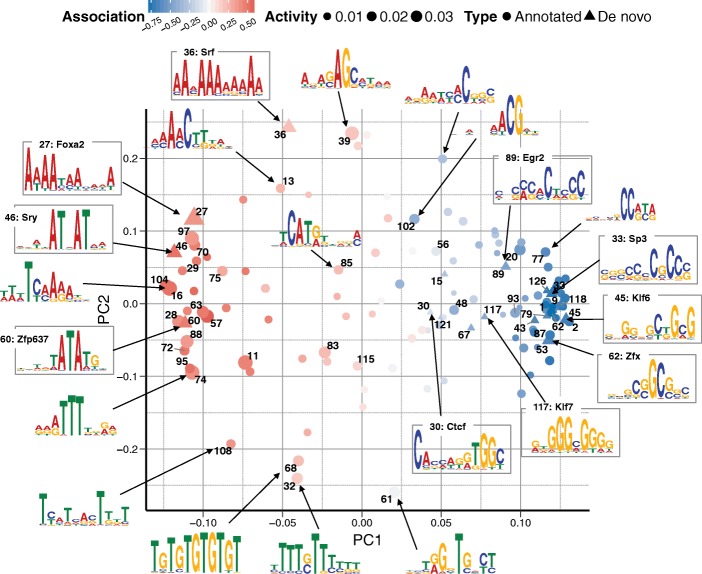
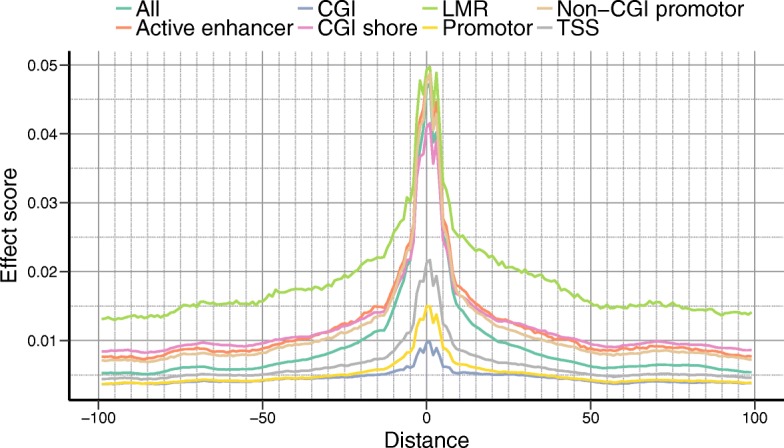
Verification
Claims the paper makes
The claims and statistics of this paper haven’t been checked yet.
Free: it reads the open-access text and checks the first 5 claims that cite a source we can check. Create a free account to check every claim.
Claims other papers make about this one
Each is checked against this paper’s own text: does it say what the citing paper says it does?
The cited source says what the claim attributes to it.
In the citing paper
“They showed that regions with increased methylation variability associate significantly more strongly to gene expression, indicating functional relevance.”
From Mapping gene regulatory networks from single-cell omics data (2018) · cites this paper as [75]
In the citing paper
“One possible way to deal with technical dropouts is proposed by Angermueller et al. [75] by developing DeepCpG, a computational approach based on deep neural networks, to predict missing methylation states and link methylation states to motifs.”
From Mapping gene regulatory networks from single-cell omics data (2018) · cites this paper as [75]
Self-check
Percentages, sums and reported differences re-computed from the paper’s own numbers.
The self-check needs the paper’s full text.
Citations
Cites
Deep Residual Learning for Image Recognition
He, K., Zhang, X., Ren, S., & Sun, J. (2016) · 2016 IEEE Conference on Computer Vision and Pattern Recognition (CVPR) · doi:10.1109/cvpr.2016.90 · Cited by 235,474
Breiman, L. (2001) · Machine Learning · doi:10.1023/a:1010933404324 · Cited by 133,538 · cited 1×
“Additionally, we compared DeepCpG to random forest classifiers [37] trained on individual cells using the DNA sequence information and neighbouring CpG states as input ( RF ).”
MethodAdam: A Method for Stochastic Optimization
Kingma, D. P., & Ba, J. (2014) · arXiv · doi:10.48550/arxiv.1412.6980 · Cited by 98,946 · cited 2×
“The learning rate was adapted by Adam [65] and decayed by a factor of 0.”
MethodInfluentialLeCun, Y., Bengio, Y., & Hinton, G. (2015) · Nature · doi:10.1038/nature14539 · Cited by 84,126
(2014) · Cited by 33,419
Neural Machine Translation by Jointly Learning to Align and Translate
Bahdanau, D., Cho, K., & Bengio, Y. (2014) · arXiv · doi:10.48550/arxiv.1409.0473 · Cited by 16,213 · cited 1×
“RNNs have been successfully used for modelling long-range dependencies in natural language [58, 59], acoustic signals [60] and, more recently, genomic sequences [61, 62].”
Method(2010) · Cited by 14,134
WebLogo: A Sequence Logo Generator: Figure 1
Crooks, G. E., Hon, G., Chandonia, J.-M., & Brenner, S. E. (2004) · Genome Research · doi:10.1101/gr.849004 · Cited by 12,386 · cited 2×
“Selected sequence windows were aligned and visualised as sequence motifs using WebLogo [69] version 3.”
MethodInfluentialBackpropagation Applied to Handwritten Zip Code Recognition
LeCun, Y., Boser, B., Denker, J. S., Henderson, D., Howard, R. E., Hubbard, W., & Jackel, L. D. (1989) · Neural Computation · doi:10.1162/neco.1989.1.4.541 · Cited by 11,891 · cited 1×
“Here, we report DeepCpG, a computational method based on deep neural networks [17 – 19] for predicting single-cell methylation states and for modelling the sources of DNA methylation variability.”
MethodRobust Locally Weighted Regression and Smoothing Scatterplots
Cleveland, W. S. (1979) · Journal of the American Statistical Association · doi:10.1080/01621459.1979.10481038 · Cited by 11,594 · cited 1×
“Trend lines were fit using local polynomial regression (LOESS [72]); shaded areas denote 95%”
Method
Research works printed but not linked: 1
- Denas O, Taylor J. Deep modeling of gene expression regulation in an erythropoiesis model. Represent. Learn. ICML Workshop. 2013
Cited by
Items 301–400 of 553
Obimba, D. C., Esteva, C., Tsicheu, E. N. N., & Wong, R. (2024) · Journal of Clinical Medicine · doi:10.3390/jcm13174979 · Cited by 10
“They face difficulties when analyzing somatic cancer mutations [64], RNA sequencing data [65], methylation [66], and single cells [67].”
BackgroundHybrid Approach for Taxonomic Classification Based on Deep Learning
Soliman, N. F., Abd-Alhalem, S. M., El‐Shafai, W., Abdulrahman, S. E. S. E., Ismaiel, N., El‐Rabaie, E. M., Algarni, A. D., Algarni, F., Alhussan, A. A., & El‐Samie, F. E. A. (2021) · Intelligent Automation & Soft Computing · doi:10.32604/iasc.2022.017683 · Cited by 8
GraphCpG: imputation of single-cell methylomes based on locus-aware neighboring subgraphs
Deng, Y., Tang, J., Zhang, J., Zou, J., Zhu, Q., & Fan, S. (2023) · Bioinformatics · doi:10.1093/bioinformatics/btad533 · Cited by 8
“With deep learning prevalent, based on deep neural networks (DNN), DeepCpG (Angermueller et al. 2017) utilizes DNA sequence patterns and methylation states to predict methylation states, namely associations between genome and methylation as well as between neighboring CpG sites.”
BackgroundMethodInfluentialReappraisal of the Concept of Accelerated Aging in Neurodegeneration and Beyond
Statsenko, Y. A., Kuznetsov, N. V., Morozova, D., Liaonchyk, K., Simiyu, G. L., Smetanina, D., Kashapov, A., Meribout, S., Gorkom, K., Hamoudi, R., et al. (2023) · Cells · doi:10.3390/cells12202451 · Cited by 11
“Although arranging epigenetic clocks at the single-cell level will be technically challenging, new emerging methods [264,265] and deep-learning-based computer algorithms [266–268] may help to construct them.”
MethodMavaie, P., Holder, L. B., Beck, D., & Skinner, M. K. (2021) · BMC Bioinformatics · doi:10.1186/s12859-021-04491-z · Cited by 9
“DeepCpG is another example of an ensemble approach for predicting a single base pair DNA methylation state [42].”
BackgroundMethodRestoring Fluorescence Microscopy Images by Transfer Learning From Tailored Data
Demircan-Türeyen, E., Akbulut, F. P., & Kamaşak, M. E. (2022) · IEEE Access · doi:10.1109/access.2022.3181177 · Cited by 10
“, [8] in histopathological image analysis, [9] in computed tomography, [10]– [13] in genome biology, [14]–[16] in microscopy imaging).”
MethodSingle-cell classification, analysis, and its application using deep learning techniques
Premkumar, R., Srinivasan, A., Devi, K., Deepika, M., Gaayathry, E., Jadhav, P., Futane, A., & Narayanamurthy, V. (2024) · Biosystems · doi:10.1016/j.biosystems.2024.105142 · Cited by 9
Deciphering enhancer sequence using thermodynamics-based models and convolutional neural networks
Dibaeinia, P., & Sinha, S. (2021) · Nucleic Acids Research · doi:10.1093/nar/gkab765 · Cited by 8
“Moreover, its reliance on pre-defined PWMs is different from previous applications of neural networks in regulatory genomics where TF motifs were learned from the data using convolutional kernels (38,39,64).”
Wong, W. K. M., Thorat, V., Joglekar, M. V., Dong, C. X., Lee, H., Chew, Y. V., Bhave, A., Hawthorne, W. J., Engin, F., Pant, A., et al. (2022) · Frontiers in Endocrinology · doi:10.3389/fendo.2022.853863 · Cited by 7
“…(5) or to build associations (6) or for predictions in several biological processes such as determining DNA methylation states in single cells (7), identifying signatures of lipid or metabolite species (8) or microRNAs (9) in predicting transition from gestational diabetes to type 2 diabetes…”
BackgroundSelf-citationGenome Functional Annotation across Species using Deep Convolutional Neural NetworksPreprint
Khodabandelou, G., Routhier, E., & Mozziconacci, J. (2018) · bioRxiv (Cold Spring Harbor Laboratory) · doi:10.1101/330308 · Cited by 11
“DeepCpG is a computational approach based on deep neural networks to predict methylation states in single cells [9].”
BackgroundLearning polygenic scores for human blood cell traitsPreprint
Xu, Y., Vuckovic, D., Ritchie, S. C., Akbari, P., Jiang, T., Grealey, J., Butterworth, A. S., Ouwehand, W. H., Roberts, D. J., Angelantonio, E. D., et al. (2020) · bioRxiv (Cold Spring Harbor Laboratory) · doi:10.1101/2020.02.17.952788 · Cited by 9
“CNNs are a specialized neural network for processing data that have a grid-like topology 28 , e.g. time-series data, image data, genome sequence data 29 .”
BackgroundLiu, Y., Li, X. C., Mehrabadi, F. R., Schäffer, A. A., Pratt, D. W., Crawford, D. R., Malikić, S., Molloy, E. K., Gopalan, V., Mount, S. M., et al. (2023) · Genome Research · doi:10.1101/gr.277608.122 · Cited by 10
“We are also familiar with one other approach to infer the methylation status of a given site, DeepCpG [1], which works through deep-learning based implicit clustering.”
BackgroundMasuda, K., Abdullah, A. A., Pflughaupt, P., & Sahakyan, A. B. (2024) · Scientific Data · doi:10.1038/s41597-024-03772-5 · Cited by 7
“…4 , splicing events 5,6 , specificities of DNA-and RNA-binding proteins 7 , effects of non-coding variants 8 , epigenomic profiles 9 , transcription factor binding 10 , regulatory code of the accessible genome 11 , DNA methylation 12 , cancer driver genes 13 , and many other biological phenomena.”
PlantDeepMeth: A Deep Learning Model for Predicting DNA Methylation States in Plants
Guo, Z., Fan, W., Cai, C., Zhang, K., Hou, X., Li, Y., & Cheng, F. (2025) · Plants · doi:10.3390/plants14111724 · Cited by 10
“For instance, DeepCpG is a deep learning-based model that uses only DNA sequences and neighboring methylation data to predict methylation states in human and animal single cells, outper-forming traditional methods such as Random Forest (RF) that rely on multiple genomic annotation information [21].”
InfluentialMambaCpG: an accurate model for single-cell DNA methylation status imputation using mamba
Zhao, Q., Li, Z., Mao, Q., Chen, T., Zhang, Y., Li, B., Zhao, Z., & Fan, X. (2025) · Briefings in Bioinformatics · doi:10.1093/bib/bbaf360 · Cited by 8
“DeepCpG [13] integrates local methylation patterns and DNA sequence data using a recurrent neural network (RNN) to capture dependencies between CpG sites within methylation patterns and a convolutional neural network (CNN) for sequence features, combining both streams at the final prediction stage.”
An approachable, flexible and practical machine learning workshop for biologists
Magnano, C. S., Mu, F., Russ, R. S., Cvetkovic, M., Treu, D., & Gitter, A. (2022) · Bioinformatics · doi:10.1093/bioinformatics/btac233 · Cited by 12
Computational Biology in the Lens of CNN
Bhardwaj, P., Guhan, T., & Tripathy, B. K. (2022) · Studies in big data · doi:10.1007/978-981-16-9158-4_5 · Cited by 7
Wagner, A. (2024) · Bioinformatics · doi:10.1093/bioinformatics/btae317 · Cited by 8
“…stability (Pancotti et al. 2021, Blaabjerg et al. 2023), protein-nucleic acid binding (Avsec et al. 2021, Alipanahi et al. 2015), DNA methylation (Angermueller et al. 2017), mutational effects on proteins and RNA (Riesselman et al. 2018), ribosomal binding site activity (H € ollerer et al.…”
BackgroundThe predictive power of profiling the DNA methylome in human health and disease
Christofidou, P., & Bell, C. G. (2025) · Epigenomics · doi:10.1080/17501911.2025.2500907 · Cited by 8
“The analysis of the DNA methylome at the single-cell (sc) level is now possible [69].”
The Image Recognition Based on Restricted Boltzmann Machine and Deep Learning Framework
Wang, R., Chen, B., Guo, J., & Zhao, J. (2019) · International Conference on Control and Robotics Engineering (ICCRE) · doi:10.1109/iccre.2019.8724337 · Cited by 7
“For the intelligence and high recognition accuracy, the deep learning network makes the recognition an easier task in lots of applications, including medicine image analysis, DNA methylation states prediction in biology [5], human body action predicting [6] and the defect detection [7].”
BackgroundKarami, K., Zerehdaran, S., Javadmanesh, A., Shariati, M. M., & Fallahi, H. (2019) · PLoS ONE · doi:10.1371/journal.pone.0217813 · Cited by 8
He, Y., Jang, H. J., Xing, X., Li, D., Vasek, M. J., Dougherty, J. D., & Wang, T. (2020) · Science Advances · doi:10.1126/sciadv.aba0521 · Cited by 7
“The DeepH&M model is derived from the DeepCpG model, which predicts single-cell DNA methylation states using deep learning ( 47 ).”
MethodBioinformatics tools with deep learning based on GPU
Hung, C., & Tang, C. Y. (2017) · IEEE International Conference on Bioinformatics and Biomedicine (BIBM) · doi:10.1109/bibm.2017.8217950 · Cited by 7
“DeepCpG [28] is a CNN for predicting DNA methylation in multiple cells.”
A deep belief network system for prediction of DNA methylation
Khwaja, M. K., Kalofonou, M., & Toumazou, C. (2017) · IEEE Biomedical Circuits and Systems Conference (BioCAS) · doi:10.1109/biocas.2017.8325078 · Cited by 7
Applying Blockchain and Artificial Intelligence to Digital Health
Ilinca, D. (2019) · Health informatics · doi:10.1007/978-3-030-12719-0_8 · Cited by 11
Wei, R., Zhang, L., Zheng, H., & Xiao, M. (2023) · Current Bioinformatics · doi:10.2174/1574893618666230508104341 · Cited by 7
Deep learning for clinical decision-making and improved healthcare outcome
Kabir, R., Syed, H. Z., Vinnakota, D., Sivasubramanian, M., Hitch, G., Okello, S. A., Sharon-Shivuli-Isigi, Pulikkottil, A. T., Mahmud, I., Dehghani, L., et al. (2023) · Elsevier eBooks · doi:10.1016/b978-0-443-19413-9.00004-7 · Cited by 7
Applications of single‐cell multi‐omics sequencing in deep understanding of brain diseases
Zhang, X., Lü, P., & Shen, X. (2022) · Clinical and Translational Discovery · doi:10.1002/ctd2.95 · Cited by 6
Convolutional Classification of Pathogenicity in H5 Avian Influenza Strains
Chadha, A., Dara, R. A., & Poljak, Z. (2019) · International Conference on Machine Learning and Applications · doi:10.1109/icmla.2019.00259 · Cited by 6
“of the art accuracy on numerous bioinformatics applications [19-26].”
BackgroundLi, J., Shen, J., Tu, X., Ding, Y., & Gao, G. (2021) · Briefings in Bioinformatics · doi:10.1093/bib/bbab233 · Cited by 7
MLACNN: an attention mechanism-based CNN architecture for predicting genome-wide DNA methylation
Bai, J., Yang, H., & Wu, C. (2023) · Theory in Biosciences · doi:10.1007/s12064-023-00402-3 · Cited by 7
Raghav, P. K., Banerjee, B., & Chadha, R. (2025) · Frontiers in Cell and Developmental Biology · doi:10.3389/fcell.2025.1589823 · Cited by 6
“Scikit-Learn, DeepCpG, and ChromNet, provide robust data integration,featureselection,modeltraining,andpredictiveanalysis capabilities (Angermueller et al., 2017; Lundberg et al., 2016; Scikit-Learn, 2016; Shannon et al., 2003).”
An Update on Neuroaging on Earth and in Spaceflight
Kuznetsov, N. V., Statsenko, Y. A., & Ljubisavljević, M. (2025) · International Journal of Molecular Sciences · doi:10.3390/ijms26041738 · Cited by 7
“A recent trend is the construction of epigenetic clocks at a single-cell level by applying novel methods [331,332] and deep-learning computer algorithms [333–335].”
Genome-wide methylome modeling via generative AI incorporating long- and short-range interactions
Yan, F., Telonis, A. G., Yang, Q., Jiang, L., Garrett-Bakelman, F. E., Sekeres, M. A., Santini, V., Ceccarelli, M., Goel, N., Garcia-Martinez, L., et al. (2025) · Science Advances · doi:10.1126/sciadv.adt4152 · Cited by 5
“Previous efforts have been made to address methylation imputation ( 12 , 16 ), with notable attempts including DeepCpG ( 13 ), an imputation tool that integrates convolutional neural network (CNN) and bidirectional gated recurrent unit (GRU) architectures, yielding commend-able outcomes.”
Maciejewski, E., Horvath, S., & Ernst, J. (2025) · Genome biology · doi:10.1186/s13059-025-03561-2 · Cited by 6
Machine learning for synthetic biology: Methods and applications
Hu, R., Zhang, S., Meng, H., Han, Y., Zhang, J., Luo, X., Si, T., Liu, C., & Qiao, Y. (2020) · Chinese Science Bulletin (Chinese Version) · doi:10.1360/tb-2020-0456 · Cited by 7
Park, S., Rehman, M. U., Ullah, F., Tayara, H., & Chong, K. T. (2023) · Bioinformatics · doi:10.1093/bioinformatics/btad474 · Cited by 5
“The first step is to collect the dataset which is obtained from the literature (Angermueller et al. 2017).”
BackgroundWojewodzic, M. W., & Lavender, J. P. (2024) · PLoS ONE · doi:10.1371/journal.pone.0307912 · Cited by 5
Completing Single-Cell DNA Methylome Profiles via Transfer Learning Together With KL-Divergence
Dodlapati, S., Jiang, Z., & Sun, J. (2022) · Frontiers in Genetics · doi:10.3389/fgene.2022.910439 · Cited by 6
Budach, S., & Marsico, A. (2017) · bioRxiv (Cold Spring Harbor Laboratory) · doi:10.1101/230086 · Cited by 6
“…general-purpose computing on Graphics Processing Units (GPUs) have enabled CNNs to outperform other machine learning methods, such as random forests and support vector machines, in terms of both classification performance and runtime performance (Kelley et al. , 2016) (Angermueller et al. , 2017).”
BackgroundMethodSparse functional data analysis accounts for missing information in single-cell epigenomicsPreprint
Madrigal, P., Dai, X., & Hadjipantelis, P. Z. (2018) · bioRxiv (Cold Spring Harbor Laboratory) · doi:10.1101/504365 · Cited by 5
“The first uses a computationally intensive machine learning to predict missing values in single-cell methylation (Angermueller et al., 2017).”
MethodNucleic Transformer: Deep Learning on Nucleic Acids with Self-attention and ConvolutionsPreprint
He, S., Gao, B., Sabnis, R., & Sun, Q. (2021) · bioRxiv (Cold Spring Harbor Laboratory) · doi:10.1101/2021.01.28.428629 · Cited by 10
“It has allowed researchers 26 to use recurrent neural networks (RNN/LSTM/GRU) to efficiently predict the function, origin, and properties of 27 DNA/RNA sequences by training neural networks on large datasets [8, 9, 10, 11, 12, 13, 14, 15, 16, 17, 18], but these 28 sequential computational approaches is difficult to pa…”
Deep Learning and Machine Learning Applications in Biomedicine
Yan, P., Liu, Y., Jia, Y., & Zhao, T. (2023) · Applied Sciences · doi:10.3390/app14010307 · Cited by 5
Advances of artificial intelligence-enabled epigenetics
Alsayaydeh, D. A. J., Narayanamurthy, V., Futane, A., Alsayaydeh, J. A. J., & Najib, S. B. M. (2025) · Health and Technology · doi:10.1007/s12553-025-00998-0 · Cited by 6
“For example, Deep-CpG leverages deep neural networks to predict single-cell DNA methylation states, integrating information from DNA sequence and neighboring sites [4].”
Artificial intelligence meets epigenetics: a new frontier in precision oncology
Srivastava, R. (2026) · Epigenetics Reports · doi:10.1080/28361512.2026.2614541 · Cited by 6
Kinnear, E., Derbel, H., Zhao, Z., & Liu, Q. (2025) · Computational and Structural Biotechnology Journal · doi:10.1016/j.csbj.2025.02.007 · Cited by 4
“The third group, including 5mC_Pred [21], iDNA-ABF [22], BERT6mA [23] and DeepCpG [24], leveraged language models to extract high-level features for classification.”
MultiCapsNet: A General Framework for Data Integration and Interpretable Classification
Wang, L., Miao, X., Nie, R., Zhang, Z., Zhang, J., & Cai, J. (2021) · Frontiers in Genetics · doi:10.3389/fgene.2021.767602 · Cited by 5
“For example, DeepCpG utilizes both DNA sequence patterns and neighboring methylation states for predicting singlecell methylation state and modeling the sources of DNA methylation variability (Angermueller et al., 2017).”
MethodBSImp: Imputing Partially Observed Methylation Patterns for Evaluating Methylation Heterogeneity
Chang, Y.-T. S., Yen, M., & Chen, P. (2022) · Frontiers in Bioinformatics · doi:10.3389/fbinf.2022.815289 · Cited by 4
Raman, R., R, R. H., Inbamalar, T. M., Subhahan, D. A., Kumar, A., Bathrinath, S., & Sarkar, S. B. (2023) · International Conference on Innovative Practices in Technology and Management (ICIPTM) · doi:10.1109/iciptm57143.2023.10118224 · Cited by 4
John, C., Sahoo, J., Sajan, I. K., Madhavan, M., & Mathew, O. K. (2024) · Computational Biology and Chemistry · doi:10.1016/j.compbiolchem.2024.108169 · Cited by 4
Jing, F., Zhang, S.-W., Cao, Z., & Zhang, S. (2018) · Lecture notes in computer science · doi:10.1007/978-3-319-94968-0_23 · Cited by 4
State of the Art and Future Direction for the Analysis of Cell-Free Circulating DNA
Heliebi, A. E., & Heitzer, E. (2019) · Elsevier eBooks · doi:10.1016/b978-0-12-814470-1.00005-8 · Cited by 5
Application of Deep Learning in Biological Big Data Analysis
Shukla, R., Yadav, A. K., & Singh, T. R. (2020) · Advances in information security, privacy, and ethics book series · doi:10.4018/978-1-7998-3444-1.ch006 · Cited by 4
Deep learning for biomedical applications
Freitas, J. D., Glicksberg, B. S., Johnson, K. W., & Miotto, R. (2021) · Elsevier eBooks · doi:10.1016/b978-0-12-820273-9.00004-x · Cited by 5
Using Artificial Neural Networks to Model Errors in Biochemical Manipulation of DNA Molecules
Guo, A. J. X., & Qi, H. (2021) · IEEE Transactions on Computational Biology and Bioinformatics · doi:10.1109/tcbb.2021.3088525 · Cited by 6
“In [18], Anger-mueller et al. used a deep learning method called DeepCpG to predict methylation states in a single cell.”
MethodXia, J., Wang, L., Zhang, G., Zuo, C., & Chen, L. (2021) · Genes · doi:10.3390/genes12121847 · Cited by 5
Human DNA/RNA motif mining using deep-learning methods: a scoping review
Chaurasia, R., & Ghose, U. (2023) · Network Modeling Analysis in Health Informatics and Bioinformatics · doi:10.1007/s13721-023-00414-5 · Cited by 6
Impact of Digitalization on the Healthcare System
Jain, A., Ray, D. K., Ranjan, S. S., Kumar, A., & Jamwal, Y. (2024) · International Journal of Pharma Professional’s Research (IJPPR) · doi:10.48165/ijppronline.2024.15104 · Cited by 5
Identification of 6-methyladenosine sites using novel feature encoding methods and ensemble models
Alromema, N. A., Suleman, M. T., Malebary, S. J., Ahmed, A., Al-Ghamdi, B. A. M. A.-R., & Khan, Y. D. (2024) · Scientific Reports · doi:10.1038/s41598-024-58353-8 · Cited by 5
“The study showed how the composition and relative position of bases in genomic and proteomic sequences affected the properties of such sequences 32 .”
Applications of Deep Learning in Biomedicine
Wang, S., & Huang, T. (2019) · Elsevier eBooks · doi:10.1016/b978-0-12-801238-3.11507-7 · Cited by 5
Alzubaidi, A., & Tepper, J. A. (2022) · Methods in molecular biology · doi:10.1007/978-1-0716-2095-3_15 · Cited by 5
Selene: a PyTorch-based deep learning library for biological sequence-level dataPreprint
Chen, K., Cofer, E. M., Zhou, J., & Troyanskaya, O. G. (2018) · bioRxiv (Cold Spring Harbor Laboratory) · doi:10.1101/438291 · Cited by 6
Review of Simulation Studies Evaluating Imputation Methods in High‐Dimensional Datasets
Varol, B., Ömürlü, İ. K., & Türe, M. (2025) · Wiley Interdisciplinary Reviews Computational Statistics · doi:10.1002/wics.70044 · Cited by 4
“In ultra- high-dimensional settings ( p = 10,000), even graphics processing unit (GPU) acceleration may not reduce runtimes to minutes (Angermueller et al. 2017; Liu et al. 2020).”
Guo, Z., Zhang, K., Cai, C., Li, X., Zhang, L., Yang, Y., Wang, X., Chen, S., Zhang, L., & Cheng, F. (2024) · The Plant Journal · doi:10.1111/tpj.16979 · Cited by 5
“DeepCpG was developed to predict DNA methylation status in single cells (Angermueller et al., 2017).”
vmrseq: probabilistic modeling of single-cell methylation heterogeneity
Shen, N., & Korthauer, K. D. (2024) · Genome biology · doi:10.1186/s13059-024-03457-7 · Cited by 6
“This approach was adopted to more accurately capture observed biological variability, as sample-to-sample variability tends to be high at intermediate methylation levels [43, 44].”
Recent advances in computational-based approaches in epigenetics studies
Joshi, A., & Romanowska, J. (2020) · Elsevier eBooks · doi:10.1016/b978-0-12-819414-0.00028-8 · Cited by 5
Deep Learning for Health Care in Disease Identification: A Review
Lingwal, S., Rauthan, J. S., & Negi, B. (2021) · Algorithms for intelligent systems · doi:10.1007/978-981-33-6307-6_65 · Cited by 3
A hybrid deep neural network for robust single-cell genome-wide DNA methylation detection
Li, R. A., & Liu, Z. (2021) · ACM International Conference on Bioinformatics, Computational Biology, and Health Informatics (ACM-BCB) · doi:10.1145/3459930.3469565 · Cited by 4
“On the other hand, in DeepCpG, “distances were transformed to relative ranges by dividing by the maximum genome-wide distance” [26].”
BackgroundMethodInfluentialComputational Assessment of the Expression-Modulating Potential for Non-Coding Variants
Shi, F., Wang, Y., Huang, D., Liang, Y., Liang, N., Chen, X., & Gao, G. (2021) · Genomics Proteomics & Bioinformatics · doi:10.1016/j.gpb.2021.10.003 · Cited by 3
“…histone marker, and DHS dataset, we firstly split reference genome with positive data excluded into 200-bp bins, and then randomly sampled these bins to match the number of positive cases; for each methylation dataset, we took sites with methylation rate lower than 50% as negative cases [29].”
MethodThe progress on the estimation of DNA methylation level and the detection of abnormal methylation
Fan, S., Wang, L., Liang, L., Cao, X., Tang, J., & Tian, Q. (2022) · Quantitative Biology · doi:10.15302/j-qb-022-0289 · Cited by 4
Augmented Intelligence: Deep Learning Models for Healthcare
Paranthaman, M., & Rajan, S. P. (2022) · Studies in computational intelligence · doi:10.1007/978-981-19-1076-0_10 · Cited by 3
Highly Scalable Task Grouping for Deep Multi-Task Learning in Prediction of Epigenetic Events
Shiri, M., & Sun, J. (2022) · IEEE International Conference on Bioinformatics and Biomedicine (BIBM) · doi:10.1109/bibm55620.2022.9994979 · Cited by 6
“The network takes as input an one-hot coded 1001bp long sequence and outputs the predicted probability of the input example being positive.”
BackgroundCpG Island Detection Using Transformer Model with Conditional Random Field
Hossain, M. J., Bhuiyan, M. I. H., & Abdullah, Z. R. (2022) · IEEE Bombay Section Signature Conference (IBSSC) · doi:10.1109/ibssc56953.2022.10037492 · Cited by 3
“Researchers have already used deep learning[20] and specifically transformer-based architectures in various tasks related to analysis of DNA sequences[21], [22] and other biomedical signals[23]–[25].”
Single-cell protein-DNA interactomics and multiomics tools for deciphering genome regulation
Xiong, H., Wang, R., & He, A. (2023) · National Science Open · doi:10.1360/nso/20220057 · Cited by 3
Rylaarsdam, L. E., Skubi, B. W., Nichols, R. V., O’Connell, B. L., Kotnik, J. H., Coleman, S. D., Yardımcı, G. G., & Adey, A. (2025) · Communications Biology · doi:10.1038/s42003-025-08859-2 · Cited by 5
Chhatbar, K., Bird, A. P., & Sanguinetti, G. (2025) · PLoS Genetics · doi:10.1371/journal.pgen.1011908 · Cited by 5
“More recently, advances in artificial intelligence (AI) using a variety of neural architectures have been brought to bear, allowing increasingly accurate prediction and imputation of gene expression as well as other molecular features [12–15].”
Review of Machine Learning Algorithms in Differential Expression Analysis
Kuznetsova, I., Karpievitch, Y. V., Filipovska, A., Lugmayr, A. R., & Holzinger, A. (2017) · UWA Profiles and Research Repository (University of Western Australia) · doi:10.48550/arxiv.1707.09837 · Cited by 5
Li, J., Zhang, J., Zuo, L., & Chang, D. (2018) · Chinese Automation Congress · doi:10.1109/cac.2018.8623382 · Cited by 3
“And that also suggests that deep learning strategy could apply to some other studies of Bioinformatics or health care domains in the future.”
BackgroundMethodInfluentialAprendizaje de máquina y aprendizaje profundo en biotecnología: aplicaciones, impactos y desafíos
Franco, E. F., & Ramos, R. T. J. (2019) · Ciencia Ambiente y Clima · doi:10.22206/cac.2019.v2i2.pp7-26 · Cited by 8
Artificial Intelligence and Common Sense: The Shady Future of AI
Tirumala, S. S. (2020) · Lecture notes on data engineering and communications technologies · doi:10.1007/978-981-15-0978-0_18 · Cited by 3
Li, G., Raffield, L. M., Logue, M. W., Miller, M. W., Junior, H. P. D. O. S., O’Shea, T. M., Fry, R. C., & Li, Y. (2020) · Epigenetics · doi:10.1080/15592294.2020.1827716 · Cited by 3
“[30] in 2017 adopted a deep learning method to provide an accurate prediction of single-cell DNA methylation states, which achieved performances similar to the previous SVM-or RF-based methods.”
MethodNoninvasive Lung Cancer Early Detection via Deep Methylation Representation Learning
Cai, X., Tao, J., Wang, S., Wang, Z., Wang, J., Li, M., Wang, H., Tu, X., Yang, H., Fan, J., et al. (2022) · Proceedings of the AAAI Conference on Artificial Intelligence · doi:10.1609/aaai.v36i11.21439 · Cited by 5
“Specifically, DeepCpG (Anger-mueller et al. 2017; Ni et al. 2019; Tian et al. 2019) proposed to employ convolutional neural networks to predict the unknown methylation status after bisulfite sequencing.”
BackgroundMultiCapsNet: a interpretable deep learning classifier integrate data from multiple sourcesPreprint
Wang, L., Miao, X., Zhang, J., & Cai, J. (2019) · bioRxiv (Cold Spring Harbor Laboratory) · doi:10.1101/570507 · Cited by 3
“For example, DeepCpG utilizes both DNA sequence patterns and neighboring methylation states for predicting single-cell methylation states and modeling the sources of DNA methylation variability[13].”
MethodDing, Y., Li, J., Wang, M., Tu, X., & Gao, G. (2017) · bioRxiv (Cold Spring Harbor Laboratory) · doi:10.1101/163220 · Cited by 4
“Recently, CNNs have also been used in the study of functional DNA/RNA elements (Alipanahi et al. , 2015; Angermueller et al. , 2017; Quang and Xie, 2016; Zhou and Troyanskaya, 2015).”
MethodDutta, A., Dalmia, A., Athul, R., Singh, K. K., & Anand, A. (2018) · bioRxiv (Cold Spring Harbor Laboratory) · doi:10.1101/451906 · Cited by 3
Cakiroglu, S. A., Steinhauser, S., Smith, J., Wei, X., & Luscombe, N. M. (2021) · bioRxiv (Cold Spring Harbor Laboratory) · doi:10.1101/2021.03.19.436198 · Cited by 3
“Motif filter visualisations and annotations The first convolutional layer of a CNN can be summarised as a conventional position frequency matrix (PFM) and visualised with a seqlogo plot as previously described (Alipanahi et al., 2015; Angermueller et al., 2017).”
BackgroundMethodInfluentialApoorva, Handa, V., Batra, S., & Arora, V. (2024) · 3 Biotech · doi:10.1007/s13205-024-04107-2 · Cited by 3
“Previous studies have shown that approach of 0.5 threshold is better suited for the methylation prediction (Zou et al. 2018; Angermueller et al. 2017; Wu et al. 2022; Pavlovic et al. 2017; Khwaja et al. 2017; Zheng et al. 2013; Pedregosa et al. 2011).”
InfluentialZou, J., Liu, W., Dai, J., & Dong, G. (2025) · BMC Genomics · doi:10.1186/s12864-025-12009-7 · Cited by 2
“…aspects of genomics, including but not limited to predicting the sequence specificity of DNA-and RNA-binding proteins [18], analyzing the impact of mutations on protein-RNA interactions [19], predicting RNA secondary structures [20], and estimating DNA methylation states in single cells [21].”
Zhang, M., Wang, H., Ding, Y., Zhu, Y., Xu, H., La, H., Wang, Z., & Zhai, Z. (2025) · Journal of Chemical Information and Modeling · doi:10.1021/acs.jcim.5c02000 · Cited by 2
Prediction of DNA Methylation With Long-Range State-Space Models
Feng, H., Chakravarty, S., & Lonardi, S. (2025) · IEEE Transactions on Computational Biology and Bioinformatics · doi:10.1109/tcbbio.2025.3634738 · Cited by 2
“These methods include (i) CpGenie, which is a classifier based on aconvolutionalneuralnetwork(CNN)[11],(ii)DeepCpG,whichusesa CNNandrecurrentneuralnetwork[12],(iii)AMPS,whichisanother CNN-basedclassifierorientedtopredictmethylationinplants[13], (iv)scGPT,whichisamodelbasedontransformersandtrainedon single-celldata[14],(…”
Reaching Software Quality for Bioinformatics Applications: How Far Are We?
Zhu, X., Xu, T., Lai, X., Lian, X., Cheng, H., & Wang, J. (2025) · IEEE Transactions on Software Engineering · doi:10.1109/tse.2025.3641225 · Cited by 2
Chang, K., Sun, J., Bao, Q., Fu, X., Ping, J. F., Yu, B., Wu, X., Song, X., Zhou, J., Wang, J.-S., et al. (2026) · Biotechnology Advances · doi:10.1016/j.biotechadv.2026.108874 · Cited by 2
Seeing and Feeling DNA Methylation: Single-Molecule Biophysics Meets Machine Learning
Agrawal, T., Pal, S., & Rakshit, T. (2026) · Nano Letters · doi:10.1021/acs.nanolett.5c06488 · Cited by 3
Oubounyt, M., Louadi, Z., & Chong, K. T. (2019) · International Conference on Wireless Technologies, Embedded and Intelligent Systems (WITS) · doi:10.1109/wits.2019.8723783 · Cited by 2
“For example, DeepBind proposed in [15] which use a sequence based deep CNN architecture to identify the RNA binding sites, DeepCpG [16], branch point selection [17], alternative splicing sites prediction [18], 2-O-methylation sites prediction [19], etc.”
MethodAdvances in single-cell epigenomics of the immune system
Schulte-Schrepping, J., Ferreira, H. J., Saglam, A., Hinkley, E. R., & Schultze, J. L. (2020) · Elsevier eBooks · doi:10.1016/b978-0-12-817964-2.00008-3 · Cited by 2
Yeung, W. K. A., Maruyama, O., & Sasaki, H. (2021) · BMC Bioinformatics · doi:10.1186/s12859-021-04272-8 · Cited by 2
Body Sensor Networks as Emerging Trends of Technology in Health Care System: Challenges and Future
Lakshmi, N. J., & Jabalia, N. (2021) · Internet of things · doi:10.1007/978-3-030-66633-0_6 · Cited by 4
Deep learning analysis of single‐cell data in empowering clinical implementation
Ma, A., Wang, J., Xu, D. H., & Ma, Q. (2022) · Clinical and Translational Medicine · doi:10.1002/ctm2.950 · Cited by 3
Methylome Imputation by Methylation Patterns
Chang, Y.-T. S., Yen, M., & Chen, P. (2023) · Methods in molecular biology · doi:10.1007/978-1-0716-2962-8_8 · Cited by 2
Deep Learning in Neural Networks and their Application in Genomics
Kanaka, K. K., Sukhija, N., Sivalingam, J., Goli, R. C., Rathi, P., Jaglan, K., & Raj, C. (2023) · Acta Scientific Veterinary Sciences · doi:10.31080/asvs.2023.05.0683 · Cited by 2
Metadata
- Authors
- Angermueller, C., Lee, H. J., Reik, W., & Stegle, O.
- Affiliations
- European Bioinformatics Institute (GB)
- Babraham Institute (GB)
- Corresponding author
- Angermueller, Christof
- Stegle, Oliver
- Venue
- Genome Biology
- Published
- 2017-04-11
- Volume
- 18
- Issue
- 1
- Pages
- 67-67
- ISSN
- 1465-6906 (ISSN-L)
- 1474-760X
- PMC
- PMC5387360
- OpenAlex
- W2952935243
- Semantic Scholar
- 837566abb925a33b33544965bbe8d9bb710af7d6
- Cited by
- 536
- References
- 80
- Citations by year
- 2026: 28 · 2025: 51 · 2024: 50 · 2023: 54 · 2022: 52 · 2021: 88 · 2020: 69 · 2019: 66 · 2018: 53 · 2017: 23
- FWCI
- 24.45
- Type
- journal article
- Language
- en
- Update notices
- correction (2017-05-12)
- Open access
- gold
- doi.org
- Licence
- cc-by
- Locations
- Genome biology (publishedVersion, cc-by)
- bioRxiv (Cold Spring Harbor Laboratory) (acceptedVersion, cc-by-nc-nd)
- PubMed Central (publishedVersion, cc-by)
- PubMed (publishedVersion)
- DOAJ (DOAJ: Directory of Open Access Journals) (submittedVersion, cc-by-sa)
- Apollo (University of Cambridge) (submittedVersion, cc-by)
- Zenodo (CERN European Organization for Nuclear Research) (submittedVersion, other-oa)
- Apollo (cc-by)
- Funders
- Wellcome Trust
- European Molecular Biology Laboratory
- European Commission
- Biotechnology and Biological Sciences Research Council (BBS/E/B/0000S266, BBS/E/B/0000H334, BBS/E/B/000C0403)
- Topics
- Life Sciences › Biochemistry, Genetics and Molecular Biology › Molecular Biology › Epigenetics and DNA Methylation
- Life Sciences › Biochemistry, Genetics and Molecular Biology › Molecular Biology › Single-cell and spatial transcriptomics
- Life Sciences › Biochemistry, Genetics and Molecular Biology › Molecular Biology › Genomics and Chromatin Dynamics
- Keywords
- single-cell DNA methylation, deep neural network, model interpretability, sequence composition
About these checks
Registry, retraction, Cites and statistics results are computed, not judged, with one exception: a printed reference that no index lists is read once by a model before it counts as a citation error. Claims are extracted by a model and kept only when their quote appears verbatim in the text; each cited source is then checked, with a model’s help, for whether it says what the claim relies on. Those verdicts can be wrong — read the claim’s quote and the cited source before relying on one.
Statistics and arithmetic are recomputed, not judged.
Confidence bands are shown only for fields calibrated on our annotated test set. None is calibrated yet, so no band is shown.
What counts as a claim ›How we measure confidence ›How we check this ›
Are you an author, or do you see a problem with this page? Request a review
Data sources
Bibliographic data: Semantic Scholar, OpenAlex, Crossref.
Contains information from the Semantic Scholar Academic Graph Datasets, made available under the ODC Attribution License (ODC-BY 1.0).
Semantic Scholar’s data is described in: Kinney, R., et al. (2023). The Semantic Scholar Open Data Platform. arXiv:2301.10140.
