

The DOI matches its Crossref record; 223 of the 224 references it cites were found in a registry or an index.
DNA methylation aging clocks: challenges and recommendations
Open accessAbstract
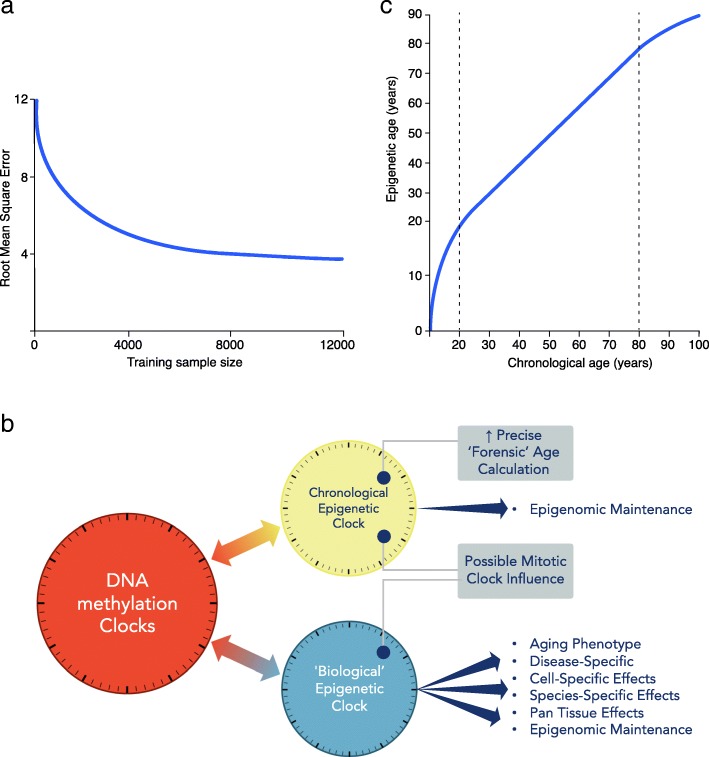
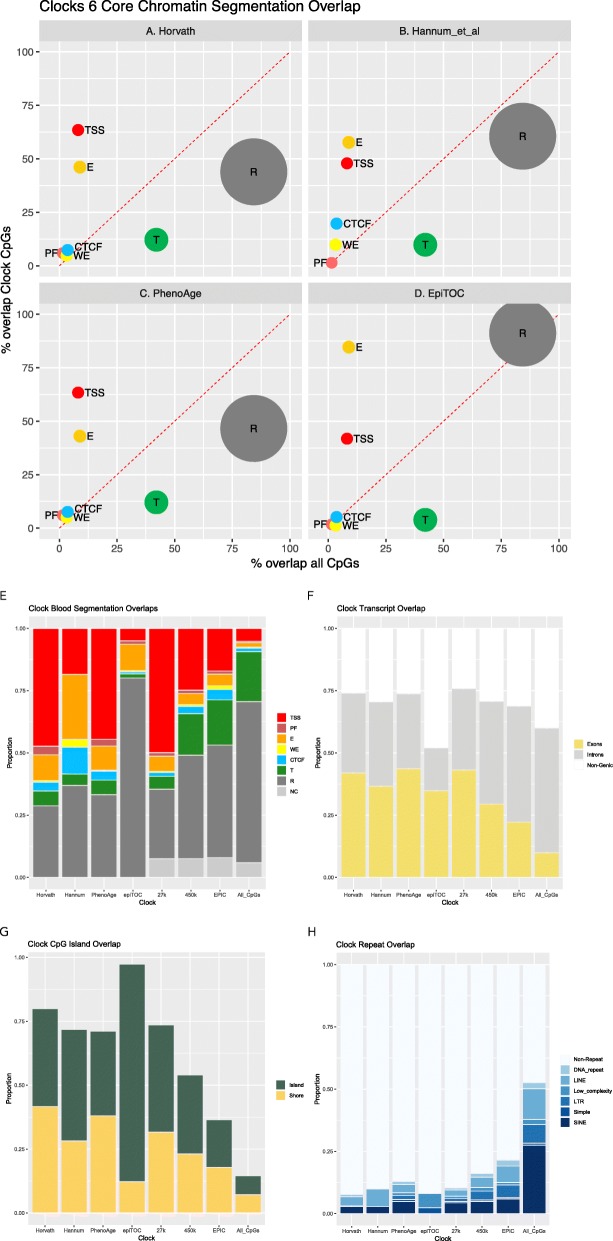
Epigenetic clocks comprise a set of CpG sites whose DNA methylation levels measure subject age. These clocks are acknowledged as a highly accurate molecular correlate of chronological age in humans and other vertebrates. Also, extensive research is aimed at their potential to quantify biological aging rates and test longevity or rejuvenating interventions. Here, we discuss key challenges to understand clock mechanisms and biomarker utility. This requires dissecting the drivers and regulators of age-related changes in single-cell, tissue- and disease-specific models, as well as exploring other epigenomic marks, longitudinal and diverse population studies, and non-human models. We also highlight important ethical issues in forensic age determination and predicting the trajectory of biological aging in an individual.
Overview
The claims and statistics of this paper haven’t been checked yet.
Run the check — free, no account needed. It reads the open-access text and checks the sources it cites.
Integrity signals
Registry
Cites
Statistics
Figures
Verification
Claims the paper makes
The claims and statistics of this paper haven’t been checked yet.
Run the check — free, no account needed. It reads the open-access text and checks the sources it cites.
Claims other papers make about this one
Each is checked against this paper’s own text: does it say what the citing paper says it does?
The cited source says what the claim attributes to it.
In the citing paper
“Nevertheless, these measures are acknowledged to be incomplete summaries of biological changes that occur with aging and to have technical limitations39,40.”
From Effect of long-term caloric restriction on DNA methylation measures of biological aging in healthy adults from the CALERIE trial (2023) · cites this paper as [39]
In the citing paper
“Methylation levels in blood cells have been observed to correlate strongly with cell composition, which may be a result of changes in chromatin state with age148.”
From Measuring biological age using omics data (2022) · cites this paper as [148]
Self-check
Percentages, sums and reported differences re-computed from the paper’s own numbers.
The self-check needs the paper’s full text.
Citations
Cites
BEDTools: a flexible suite of utilities for comparing genomic features
Quinlan, A. R., & Hall, I. M. (2010) · Bioinformatics · doi:10.1093/bioinformatics/btq033 · Cited by 27,437
López-Otín, C., Blasco, M. A., Partridge, L., Serrano, M., & Kroemer, G. (2013) · Cell · doi:10.1016/j.cell.2013.05.039 · Cited by 14,982
DNA methylation age of human tissues and cell types
Horvath, S. (2013) · Genome Biology · doi:10.1186/gb-2013-14-10-r115 · Cited by 7,075
Self-citationAge-related clonal hematopoiesis associated with adverse outcomes
Jaiswal, S., Fontanillas, P., Flannick, J., Manning, A., Grauman, P. V., Mar, B. G., Lindsley, R. C., Mermel, C. H., Burtt, N., Chavez, A., et al. (2014) · New England Journal of Medicine · doi:10.1056/nejmoa1408617 · Cited by 4,841
GENCODE: The reference human genome annotation for The ENCODE Project
Harrow, J., Frankish, A., Gonzalez, J. M., Tapanari, E., Diekhans, M., Kokocinski, F., Aken, B. L., Barrell, D., Zadissa, A., Searle, S., et al. (2012) · Genome Research · doi:10.1101/gr.135350.111 · Cited by 4,585
Genome-wide methylation profiles reveal quantitative views of human aging rates
Hannum, G., Guinney, J., Zhao, L., Zhang, L., Hughes, G., Sadda, S., Klotzle, B., Bibikova, M., Fan, J.-B., Gao, Y., et al. (2013) · Molecular Cell · doi:10.1016/j.molcel.2012.10.016 · Cited by 4,270
Self-citationAn epigenetic biomarker of aging for lifespan and healthspan
Levine, M. E., Lu, A. T., Quach, A., Chen, B. H., Assimes, T. L., Bandinelli, S., Hou, L., Baccarelli, A. A., Stewart, J. D., Li, Y., et al. (2018) · Aging · doi:10.18632/aging.101414 · Cited by 3,675
Self-citationClonal hematopoiesis and blood-cancer risk inferred from blood DNA sequence
Genovese, G., Kähler, A. K., Handsaker, R. E., Lindberg, J., Rose, S. A., Bakhoum, S. F., Chambert, K., Mick, E., Neale, B. M., Fromer, M., et al. (2014) · New England Journal of Medicine · doi:10.1056/nejmoa1409405 · Cited by 3,531
DNA methylation-based biomarkers and the epigenetic clock theory of ageing
Horvath, S., & Raj, K. (2018) · Nature Reviews Genetics · doi:10.1038/s41576-018-0004-3 · Cited by 3,095
Self-citationBird, A. (2007) · Nature · doi:10.1038/nature05913 · Cited by 3,011
Research works printed but not linked: 2
- He W, Goodkind D, Kowal P. An aging world: 2015; 2016.
- Horvath S. Epigenetic clocks: from molecular pathways to anti-aging interventions. In: Epigenomics of Common Disease 2017. Hinxton, Cambridge; 2017. p. S73.
Cited by
Sorted by citations
Biomarkers of aging for the identification and evaluation of longevity interventions
Moqri, M., Herzog, C., Poganik, J. R., Justice, J., Belsky, D. W., Higgins-Chen, A., Moskalev, A., Fuellen, G., Cohen, A. A., Bautmans, I., et al. (2023) · Cell · doi:10.1016/j.cell.2023.08.003 · Cited by 736
Self-citationBelsky, D. W., Caspi, A., Arseneault, L., Baccarelli, A., Corcoran, D. L., Gao, X., Hannon, E., Harrington, H. L., Rasmussen, L. J., Houts, R., et al. (2020) · eLife · doi:10.7554/elife.54870 · Cited by 652
Self-citationHeterogeneous aging across multiple organ systems and prediction of chronic disease and mortality
Tian, Y. E., Cropley, V., Maier, A. B., Lautenschlager, N. T., Breakspear, M., & Zalesky, A. (2023) · Nature Medicine · doi:10.1038/s41591-023-02296-6 · Cited by 618
Oblak, L., van der Zaag, J., Higgins‐Chen, A., Levine, M. E., & Boks, M. P. (2021) · Ageing Research Reviews · doi:10.1016/j.arr.2021.101348 · Cited by 610
Measuring biological age using omics data
Rutledge, J., Oh, H., & Wyss-Coray, T. (2022) · Nature Reviews Genetics · doi:10.1038/s41576-022-00511-7 · Cited by 570
Metadata
- Authors
- Bell, C. G., Lowe, R., Adams, P. D., Baccarelli, A. A., Beck, S., Bell, J. T., Christensen, B. C., Gladyshev, V. N., Heijmans, B. T., Horvath, S., Ideker, T., Issa, J.-P. J., Kelsey, K. T., Marioni, R. E., Reik, W., Relton, C. L., Schalkwyk, L. C., Teschendorff, A. E., Wagner, W., Zhang, K., & Rakyan, V. K.
- Affiliations
- Queen Mary University of London (GB)
- Sanford Burnham Prebys Medical Discovery Institute (US)
- Columbia University (US)
- University College London (GB)
- King's College London (GB)
- Dartmouth College (US)
- Brigham and Women's Hospital (US)
- Leiden University Medical Center (NL)
- University of California, Los Angeles (US)
- University of California San Diego (US)
- Temple University (US)
- Brown University (US)
- Institute of Genetics and Cancer (GB)
- Babraham Institute (GB)
- University of Bristol (GB)
- University of Essex (GB)
- Shanghai Institute of Nutrition and Health (CN)
- RWTH Aachen University (DE)
- Macau University of Science and Technology (MO)
- Corresponding author
- Bell, Christopher G.
- Lowe, Robert
- Adams, Peter D.
- Baccarelli, Andrea A.
- Beck, Stephan
- Bell, Jordana T.
- Christensen, Brock C.
- Gladyshev, Vadim N.
- Heijmans, Bastiaan T.
- Horvath, Steve
- Ideker, Trey
- Issa, Jean-Pierre J.
- Kelsey, Karl T.
- Marioni, Riccardo E.
- Reik, Wolf
- Relton, Caroline L.
- Schalkwyk, Leonard C.
- Teschendorff, Andrew E.
- Wagner, Wolfgang
- Zhang, Kang
- Rakyan, Vardhman K.
- ORCID
- Bell, Christopher G.
- Lowe, Robert
- Adams, Peter D.
- Baccarelli, Andrea A.
- Beck, Stephan
- Bell, Jordana T.
- Christensen, Brock C.
- Gladyshev, Vadim N.
- Heijmans, Bastiaan T.
- Horvath, Steve
- Ideker, Trey
- Issa, Jean-Pierre J.
- Kelsey, Karl T.
- Marioni, Riccardo E.
- Reik, Wolf
- Relton, Caroline L.
- Schalkwyk, Leonard C.
- Teschendorff, Andrew E.
- Wagner, Wolfgang
- Zhang, Kang
- Rakyan, Vardhman K.
- Venue
- Genome Biology
- Published
- 2019-11-25
- Volume
- 20
- Issue
- 1
- Pages
- 249-249
- ISSN
- 1465-6906 (ISSN-L)
- 1474-760X
- PMC
- PMC6876109
- OpenAlex
- W2990428470
- Cited by
- 1,025
- References
- 224
- Citations by year
- 2026: 123 · 2025: 155 · 2024: 200 · 2023: 164 · 2022: 142 · 2021: 153 · 2020: 80 · 2019: 6
- FWCI
- 8.52
- Type
- journal article
- Language
- en
- Open access
- gold
- doi.org
- Locations
- Genome biology (publishedVersion, cc-by)
- PubMed Central (publishedVersion, cc-by)
- PubMed (publishedVersion)
- Research Portal (King's College London) (publishedVersion, other-oa)
- Edinburgh Research Explorer (University of Edinburgh) (acceptedVersion, cc-by)
- Open Access at Essex (University of Essex) (acceptedVersion)
- eScholarship (California Digital Library) (submittedVersion, cc-by)
- Data Archiving and Networked Services (DANS) (submittedVersion)
- Leiden Repository (Leiden University) (submittedVersion)
- DOAJ (DOAJ: Directory of Open Access Journals) (submittedVersion, cc-by-sa)
- UCL Discovery (University College London) (submittedVersion)
- eScholarship (California Digital Library) (submittedVersion)
- RWTH Publications (RWTH Aachen) (submittedVersion, other-oa)
- Queen Mary Research Online (Queen Mary University of London) (submittedVersion, cc-by)
- Bristol Research (University of Bristol) (submittedVersion)
- Columbia Academic Commons (Columbia University)
- Funders
- National Institute on Aging (AG031862-12, U34AG051425-01)
- National Cancer Institute
- Glenn/AFAR
- National Institutes of Health (R01 ES025225, P30 ES009089, R01 ES027747, CA216265, AG021518, AG047745, AG047200, CA080946, CA214005, CA100632, CA221705, CA207360, CA207110, RO1AI121226, RO1MH113930, RO1MDO1430401)
- National Institute for Health Research
- UCLH Biomedical Research Centre (BRC369/CN/SB/101310)
- Economic and Social Research Council (ES/N000404/1, ESN000498/1)
- Biotechnology and Biological Sciences Research Council (BB/S020845/1, BB/K010867/1, BB/PO28187, BB/R00675X/1)
- Nederlandse Hartstichting (2017T075)
- Joint Programming Initiative A healthy diet for a healthy life (ZonMw 529051021)
- BBMRI-NL (NWO 184.021.007, NWO 184.033.111)
- National Institute of Environmental Health Sciences (R01ES014811)
- AACR (PR0125)
- Alzheimer’s Research UK (PG2017B-10)
- Medical Research Council (MC_UU_12013/5, MR/K013807/1, MR/R005176/1)
- Cancer Research UK (C18281/A19169)
- National Science Foundation of China (31571359, 31771464)
- Royal Society Newton Advanced Fellowship (164914)
- Deutsche Forschungsgemeinschaft (WA 1706/8-1)
- Bundesministerium für Bildung und Forschung (VIP + Epi-Blood-Count)
- Interdisciplinary Center for Clinical Research, RWTH Aachen University (O3-3)
- Deutsche Krebshilfe (TRACK-AML)
- Topics
- Life Sciences › Biochemistry, Genetics and Molecular Biology › Molecular Biology › Epigenetics and DNA Methylation
- Life Sciences › Biochemistry, Genetics and Molecular Biology › Aging › Genetics, Aging, and Longevity in Model Organisms
- Life Sciences › Biochemistry, Genetics and Molecular Biology › Cell Biology › Telomeres, Telomerase, and Senescence
- Keywords
- DNA methylation, epigenetic clocks, biological aging, chronological age estimation, CpG sites, longevity interventions, rejuvenation, biomarkers, forensic age estimation, biological age prediction, single-cell epigenomics
- MeSH terms
- Aging, Animals, Biological Clocks, Humans, Genome, Human, DNA Methylation, Epigenesis, Genetic, Genome-Wide Association Study
About these checks
Registry, retraction, Cites and statistics results are computed, not judged, with one exception: a printed reference that no index lists is read once by a model before it counts as a citation error. Claims are extracted by a model and kept only when their quote appears verbatim in the text; each cited source is then checked, with a model’s help, for whether it says what the claim relies on. Those verdicts can be wrong — read the claim’s quote and the cited source before relying on one.
Statistics and arithmetic are recomputed, not judged.
Confidence bands are shown only for fields calibrated on our annotated test set. None is calibrated yet, so no band is shown.
What counts as a claim ›How we measure confidence ›How we check this ›
Are you an author, or do you see a problem with this page? Request a review
