

The DOI matches its Crossref record; 32 of the 32 references it cites were found in a registry or an index; none of the 25 sources its claims cite is checked for support yet.
Leishmania infantum and Dirofilaria immitis infections in Italy, 2009–2019: changing distribution patterns
Open accessPublished version of a preprint
Abstract
Background: For long time, canine leishmaniosis (CanL) was considered endemic in the southern, central, and insular regions of Italy, whereas heartworm disease (HW) caused by Dirofilaria immitis was considered endemic in the northern region and in the swampy Po Valley. Following the reports of new foci of both diseases, in this study we update the distribution patterns and occurrence of new foci of CanL and HW discussing the main drivers for the changes in the epidemiology of these two important zoonotic canine vector-borne diseases. Methods: Based on the statistical analyses of serological assays ( n = 90,633) on L. infantum exposure and D. immitis infection performed by two reference diagnostic centres in Italy over a ten-year period (2009–2019) irrespective of the anamnesis of dogs. The distribution patterns of both parasites are herein presented along with the occurrence of new foci. Results: Results highlighted the changing distribution patterns of L. infantum vs D. immitis infection in Italy. CanL is endemic in some areas of northern regions and HW has endemic foci in central and southern regions and islands. Significant differences in L. infantum exposure and HW infection prevalence among the study macroareas were detected. The overall results of the positive tested samples were 28.2% in southern Italy and islands, 29.6% in central Italy and 21.6% in northern Italy for L. infantum and 2.83% in northern Italy, 7.75% in central Italy and 4.97% in southern Italy and islands for HW. HW positivity significantly varied over years ( χ 2 = 108.401, df = 10, P < 0.0001), gradually increasing from 0.77% in 2009 to 8.47% in 2016–2017. Conclusions: New potential epidemiological scenarios are discussed according to a range of factors (e.g. environmental modifications, occurrence of competent insect vectors, transportation of infected animals to non-endemic areas, chemoprophylaxis or vector preventative measures), which may affect the current distribution. Overall, the results advocate for epidemiological surveillance programmes, more focussed preventative and control measures even in areas where few or no cases of both diseases have been diagnosed.
Overview
AI snapshot
Written from the paper’s full text.
TL;DR
This retrospective analysis of 90,633 canine serological tests from Italy (2009–2019) documents changing distributions of *Leishmania infantum* and *Dirofilaria immitis*, with canine leishmaniosis expanding in northern Italy and heartworm showing higher prevalence in central and southern regions/islands than in the historically endemic north. The authors argue for broader epidemiological surveillance and control measures across Italy.
Key findings
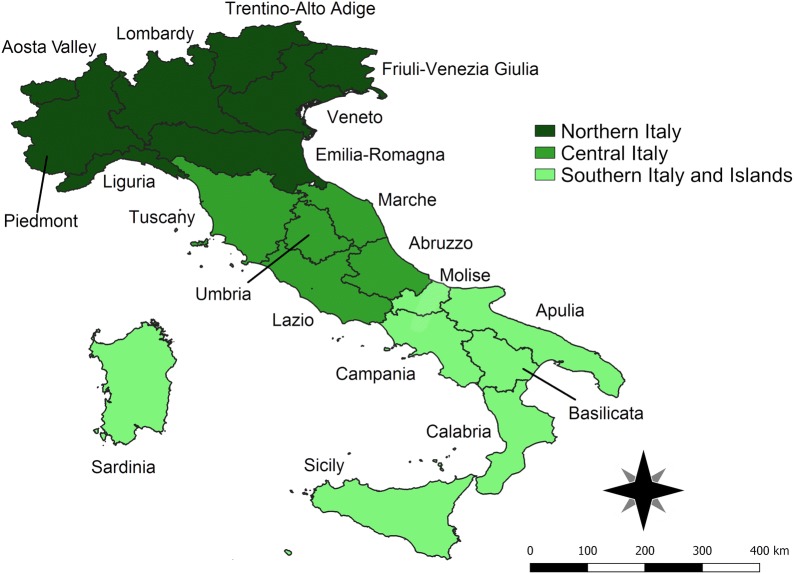
- *L. infantum* positivity by macroarea was 28.2% in southern Italy and islands, 29.6% in central Italy, and 21.6% in northern Italy (χ² = 218.564, df = 2, P < 0.0001); *D. immitis* positivity was 2.83% in northern Italy, 7.75% in central Italy, and 4.97% in southern Italy and islands (χ² = 114.879, df = 2, P < 0.0001).
- Heartworm positivity varied significantly over years (χ² = 108.401, df = 10, P < 0.0001), gradually increasing from 0.77% in 2009 to 8.47% in 2016–2017.
- In northern Italy, *L. infantum* prevalence increased from 2.1% in 1999–2009 to 21.6% in 2009–2019; in Bologna province it rose from 6.6% (2007–2009) to 17.16% in this study.
- The changing distribution patterns were not random: contingency analyses were significant for *L. infantum* (macroarea χ² = 486.62, df = 2, P < 0.0001; year χ² = 827.903, df = 10, P < 0.0001) and *D. immitis* (macroarea χ² = 104.545, df = 2, P < 0.0001; year χ² = 99.070, df = 10, P < 0.0001).
Methods
- Retrospective analysis of two diagnostic reference centre databases totaling 90,633 serum samples from dogs in Italy: database A included 64,375 records (2009–2019), and database B included 26,258 records (2015–2019); exclusions were 78 and 70 samples with uncertain origin, plus 423 northern/central samples excluded due to transportation bias, and no anamnestic data were available.
- Serological assays included ELISA tests (Novatec® for CanL, Dirocheck Zoetis® for HW; VetLine® Leishmania for CanL, Filarcheck 96® for HW) and an indirect semi-quantitative immunofluorescence test (MegaFLUO LEISH® for leishmaniosis).
- Statistical analysis used weighted generalized linear models with a binomial distribution and fixed factors for macroarea/year and region/year, plus contingency analysis; distribution maps were generated with QGIS version 3.4.4-Madeira.
Limitations
- Stated: the anamnesis of animals was not available, so travelling history from/to historically endemic areas and the effect of relocation of infected animals from southern to northern Italy could not be fully assessed.
- Stated: *D. immitis* testing was low (10.5% of all requested serological tests), especially in southern regions; in southern Italy and islands, limited samples in 2009–2014 (n = 117) versus 2015–2019 (n = 1729) likely contributed to the non-significant year effect for *D. immitis* (χ² = 16.145, df = 10, P = 0.136).
- Evident from the text: reliance on passive diagnostic databases may reflect clinician awareness and request behaviour rather than true prevalence, and uneven sample sizes plus missing data for several provinces limit geographic inference.
Model-written summary. Check it against the paper before relying on it.
Integrity signals
Registry
Cites
Statistics
Figures
Verification
Claims the paper makes
28 Own result · 13 Not checked yet · 8 Own interpretation
A result the paper reports from its own data — it cites no other source for it, so there is none to check. The quote shows it is in the paper.
In the paper
“Data showed a significant difference in L. infantum prevalence between the different study macroareas (χ2 = 218.564, df = 2, P < 0.0001)”
§ Leishmania infantum and Dirofilaria immitis infections in Italy, 2009–2019: changing distribution patterns > Results
plaincorrelational- Asserted: passes — The authors put it forward as true.
- Checkable: passes — It can be checked against evidence.
- Load-bearing: passes — The paper’s conclusions depend on it.
- Based: passes — The paper gives a reason why it holds.
- Rests on an assumption: The serological samples submitted to the two diagnostic centres are representative of the canine population in each Italian macroarea.
- Rests on an assumption: The geographical origin of the samples reflects the location where the dogs acquired L. infantum or D. immitis infection.
- Rests on an assumption: The diagnostic tests used in database A accurately detect L. infantum exposure and D. immitis infection.
A result the paper reports from its own data — it cites no other source for it, so there is none to check. The quote shows it is in the paper.
In the paper
“Dirofilaria immitis prevalence showed significant differences between the study macroareas (χ2 = 114.879, df = 2, P < 0.0001)”
§ Leishmania infantum and Dirofilaria immitis infections in Italy, 2009–2019: changing distribution patterns > Results
plaincorrelational- Asserted: passes — The authors put it forward as true.
- Checkable: passes — It can be checked against evidence.
- Load-bearing: passes — The paper’s conclusions depend on it.
- Based: passes — The paper gives a reason why it holds.
- Rests on an assumption: The serological samples submitted to the two diagnostic centres are representative of the canine population in each Italian macroarea.
- Rests on an assumption: The geographical origin of the samples reflects the location where the dogs acquired L. infantum or D. immitis infection.
- Rests on an assumption: The diagnostic tests used in database A accurately detect L. infantum exposure and D. immitis infection.
A result the paper reports from its own data — it cites no other source for it, so there is none to check. The quote shows it is in the paper.
In the paper
“Furthermore, our analyses showed that the distribution patterns of L. infantum and D. immitis in Italy are related to a significant relationship between L. infantum /D. immitis positive results of the tests, the geographical provenience (i.e. macroarea) and study years (2009–2019).”
§ Leishmania infantum and Dirofilaria immitis infections in Italy, 2009–2019: changing distribution patterns > Discussion
boostedcorrelational- Asserted: passes — The authors put it forward as true.
- Checkable: passes — It can be checked against evidence.
- Load-bearing: passes — The paper’s conclusions depend on it.
- Based: passes — The paper gives a reason why it holds.
- Rests on an assumption: The serological samples submitted to the two diagnostic centres are representative of the canine population in each Italian macroarea.
- Rests on an assumption: The geographical origin of the samples reflects the location where the dogs acquired L. infantum or D. immitis infection.
- Rests on an assumption: The diagnostic tests used in database A accurately detect L. infantum exposure and D. immitis infection.
None of the sources cited for this claim have been checked yet.
In the paper
“Indeed, the number of positive serum samples of L. infantum in northern Italy increased in the examined 10 years’ period (2009–2019) from 2.1% (1999–2009; [1, 16]) to 21.6%.”
§ Leishmania infantum and Dirofilaria immitis infections in Italy, 2009–2019: changing distribution patterns > Discussion
What the sources say
- Not checked yetcites [1] Otranto D, Capelli G, Genchi C. Changing distribution patterns of canine vector borne diseases in Italy: leishmaniosis vs. dirofilariosis. Parasit Vectors. 2009;2(Suppl. 1):S2. source
- Not checked yetcites [16] Maroli M, Rossi L, Baldelli R, Capelli G, Ferroglio E, Genchi C, et al. The northward spread of leishmaniasis in Italy: evidence from retrospective and ongoing studies on the canine reservoir and phlebotomine vectors. Trop Med Int Health. 2008;13:256–64. source
plaindirectn = 90,633- Asserted: passes — The authors put it forward as true.
- Checkable: passes — It can be checked against evidence.
- Load-bearing: passes — The paper’s conclusions depend on it.
- Based: passes — The paper gives a reason why it holds.
- Rests on an assumption: The serological samples submitted to the two diagnostic centres are representative of the canine population in each Italian macroarea.
- Rests on an assumption: The geographical origin of the samples reflects the location where the dogs acquired L. infantum or D. immitis infection.
- Rests on an assumption: The diagnostic tests used in database A accurately detect L. infantum exposure and D. immitis infection.
In the paper
“For example, in the province of Bologna (Emilia Romagna) the seroprevalence increased from 6.6% (i.e. 16 out of 245 animals examined in the period 2007–2009 [17]) up to 17.16% (i.e. 217 out of 1264 tests in this study).”
§ Leishmania infantum and Dirofilaria immitis infections in Italy, 2009–2019: changing distribution patterns > Discussion
What the sources say
- Not checked yetcites [17] Baldelli R, Piva S, Salvatore D, Parigi M, Melloni O, Tamba M, et al. Canine leishmaniasis surveillance in a northern Italy kennel. Vet Parasitol. 2011;179:57–61. source
plaindirectn = 245- Asserted: passes — The authors put it forward as true.
- Checkable: passes — It can be checked against evidence.
- Load-bearing: passes — The paper’s conclusions depend on it.
- Based: passes — The paper gives a reason why it holds.
- Rests on an assumption: The serological samples submitted to the two diagnostic centres are representative of the canine population in each Italian macroarea.
- Rests on an assumption: The geographical origin of the samples reflects the location where the dogs acquired L. infantum or D. immitis infection.
- Rests on an assumption: The diagnostic tests used in database A accurately detect L. infantum exposure and D. immitis infection.
A result the paper reports from its own data — it cites no other source for it, so there is none to check. The quote shows it is in the paper.
In the paper
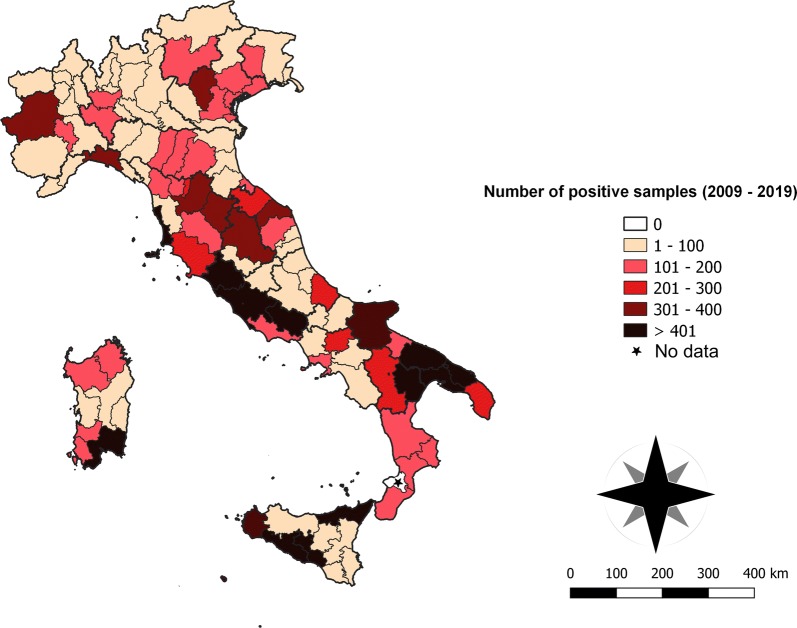
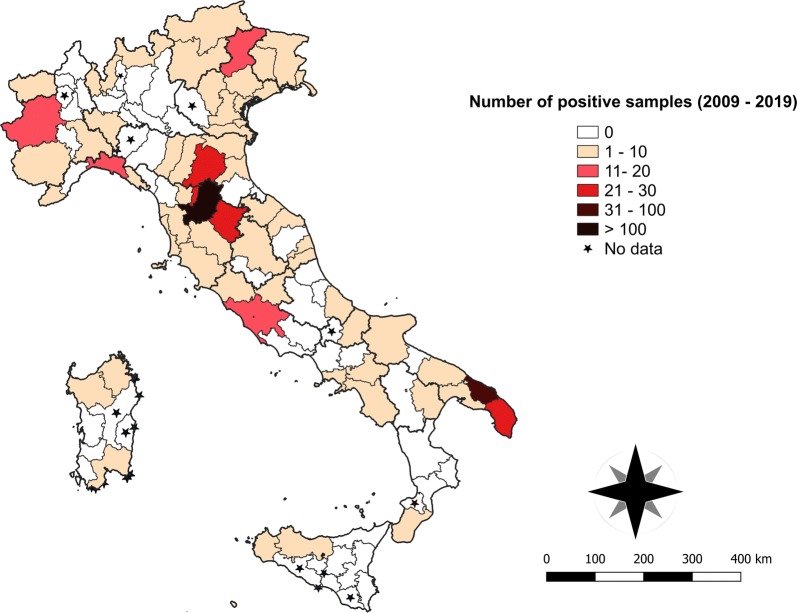
“In addition, provinces with > 300 positive samples were in the northern regions (i.e. Turin, Piedmont and Vicenza, Veneto) (Table 1, Fig. 4).”
§ Leishmania infantum and Dirofilaria immitis infections in Italy, 2009–2019: changing distribution patterns > Results
plainn = 300- Asserted: passes — The authors put it forward as true.
- Checkable: passes — It can be checked against evidence.
- Load-bearing: unclear — It is unclear whether the paper’s conclusions depend on it.
- Based: passes — The paper gives a reason why it holds.
- Rests on an assumption: The serological samples submitted to the two diagnostic centres are representative of the canine population in each Italian macroarea.
- Rests on an assumption: The geographical origin of the samples reflects the location where the dogs acquired L. infantum or D. immitis infection.
- Rests on an assumption: The diagnostic tests used in database A accurately detect L. infantum exposure and D. immitis infection.
A result the paper reports from its own data — it cites no other source for it, so there is none to check. The quote shows it is in the paper.
In the paper
“Finally, central Italy showed a distribution pattern on which both pathogens are highly prevalent.”
§ Leishmania infantum and Dirofilaria immitis infections in Italy, 2009–2019: changing distribution patterns > Discussion
plaincorrelational- Asserted: passes — The authors put it forward as true.
- Checkable: passes — It can be checked against evidence.
- Load-bearing: passes — The paper’s conclusions depend on it.
- Based: passes — The paper gives a reason why it holds.
- Rests on an assumption: The serological samples submitted to the two diagnostic centres are representative of the canine population in each Italian macroarea.
- Rests on an assumption: The geographical origin of the samples reflects the location where the dogs acquired L. infantum or D. immitis infection.
- Rests on an assumption: The diagnostic tests used in database A accurately detect L. infantum exposure and D. immitis infection.
A result the paper reports from its own data — it cites no other source for it, so there is none to check. The quote shows it is in the paper.
In the paper
“On the other hand, the study region did not play a significant role impacting D. immitis prevalence, even if a trend was observed (χ2 = 10.723, df = 6, P = 0.10, respectively).”
§ Leishmania infantum and Dirofilaria immitis infections in Italy, 2009–2019: changing distribution patterns > Results
plain- Asserted: passes — The authors put it forward as true.
- Checkable: passes — It can be checked against evidence.
- Load-bearing: unclear — It is unclear whether the paper’s conclusions depend on it.
- Based: passes — The paper gives a reason why it holds.
- Rests on an assumption: The serological samples submitted to the two diagnostic centres are representative of the canine population in each Italian macroarea.
- Rests on an assumption: The geographical origin of the samples reflects the location where the dogs acquired L. infantum or D. immitis infection.
- Rests on an assumption: The diagnostic tests used in database A accurately detect L. infantum exposure and D. immitis infection.
A result the paper reports from its own data — it cites no other source for it, so there is none to check. The quote shows it is in the paper.
In the paper
“The largest number of positive samples in southern Italy was recorded in the Apulia region (i.e. Brindisi and Lecce provinces).”
§ Leishmania infantum and Dirofilaria immitis infections in Italy, 2009–2019: changing distribution patterns > Results
plain- Asserted: passes — The authors put it forward as true.
- Checkable: passes — It can be checked against evidence.
- Load-bearing: unclear — It is unclear whether the paper’s conclusions depend on it.
- Based: passes — The paper gives a reason why it holds.
- Rests on an assumption: The serological samples submitted to the two diagnostic centres are representative of the canine population in each Italian macroarea.
- Rests on an assumption: The geographical origin of the samples reflects the location where the dogs acquired L. infantum or D. immitis infection.
- Rests on an assumption: The diagnostic tests used in database A accurately detect L. infantum exposure and D. immitis infection.
None of the sources cited for this claim have been checked yet.
In the paper
“In this macroarea, the prevalence of L. infantum was higher (29.6%) of that indicated in previous surveys (up to 10%) [32, 33].”
§ Leishmania infantum and Dirofilaria immitis infections in Italy, 2009–2019: changing distribution patterns > Discussion
What the sources say
- Not checked yetcites [32] Maresca C, Scoccia E, Barizzone F, Catalano A, Mancini S, Pagliacci T, et al. A survey on canine leishmaniasis and phlebotomine sand flies in central Italy. Res Vet Sci. 2009;87:36–8. source
- Not checked yetcites [33] Vulpiani MP, Iannetti L, Di Mattia T, Dalla Villa P. Leishmania infantum in a Central Italy dog shelter: retrospective study of serologic reactivity during a 4-year period in a confined dog population subjected to preventive and therapeutic treatment. Vet Parasitol. 2009;160:190–7. source
plain- Asserted: passes — The authors put it forward as true.
- Checkable: passes — It can be checked against evidence.
- Load-bearing: passes — The paper’s conclusions depend on it.
- Based: passes — The paper gives a reason why it holds.
- Rests on an assumption: The serological samples submitted to the two diagnostic centres are representative of the canine population in each Italian macroarea.
- Rests on an assumption: The geographical origin of the samples reflects the location where the dogs acquired L. infantum or D. immitis infection.
- Rests on an assumption: The diagnostic tests used in database A accurately detect L. infantum exposure and D. immitis infection.
- It may state two separate claims as one. 28
- Probably not a substantial claim. 5
A result the paper reports from its own data — it cites no other source for it, so there is none to check. The quote shows it is in the paper.
In the paper
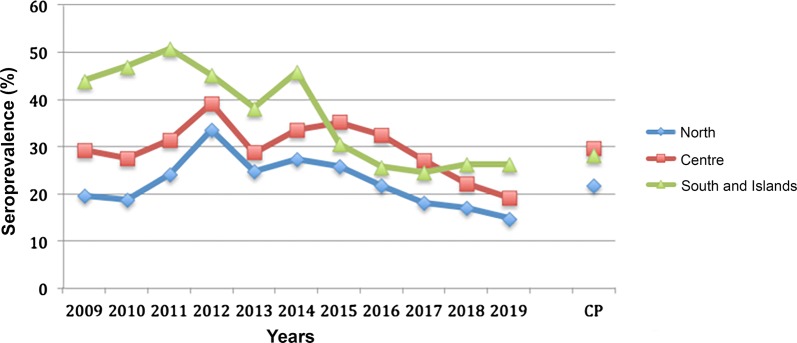
“In northern Italy, L. infantum prevalence showed significant differences over the study years (χ2 = 286.277, df = 10, P < 0.0001), being highest in 2012 and 2014 (i.e. 33.51% and 27.27%, respectively)”
§ Leishmania infantum and Dirofilaria immitis infections in Italy, 2009–2019: changing distribution patterns > Results
plaincorrelational- Asserted: passes — The authors put it forward as true.
- Checkable: passes — It can be checked against evidence.
- Load-bearing: passes — The paper’s conclusions depend on it.
- Based: passes — The paper gives a reason why it holds.
It may state two separate claims as one.
- Rests on an assumption: The serological samples submitted to the two diagnostic centres are representative of the canine population in each Italian macroarea.
- Rests on an assumption: The geographical origin of the samples reflects the location where the dogs acquired L. infantum or D. immitis infection.
- Rests on an assumption: The diagnostic tests used in database A accurately detect L. infantum exposure and D. immitis infection.
A result the paper reports from its own data — it cites no other source for it, so there is none to check. The quote shows it is in the paper.
In the paper
“The impact of the study year on L. infantum results in Italy was also significant (χ2 = 559.846, df = 10, P < 0.0001), with values > 30% in 2011, 2012, 2014 and 2015.”
§ Leishmania infantum and Dirofilaria immitis infections in Italy, 2009–2019: changing distribution patterns > Results
plaincorrelational- Asserted: passes — The authors put it forward as true.
- Checkable: passes — It can be checked against evidence.
- Load-bearing: unclear — It is unclear whether the paper’s conclusions depend on it.
- Based: passes — The paper gives a reason why it holds.
It may state two separate claims as one.
- Rests on an assumption: The serological samples submitted to the two diagnostic centres are representative of the canine population in each Italian macroarea.
- Rests on an assumption: The geographical origin of the samples reflects the location where the dogs acquired L. infantum or D. immitis infection.
- Rests on an assumption: The diagnostic tests used in database A accurately detect L. infantum exposure and D. immitis infection.
A result the paper reports from its own data — it cites no other source for it, so there is none to check. The quote shows it is in the paper.
In the paper
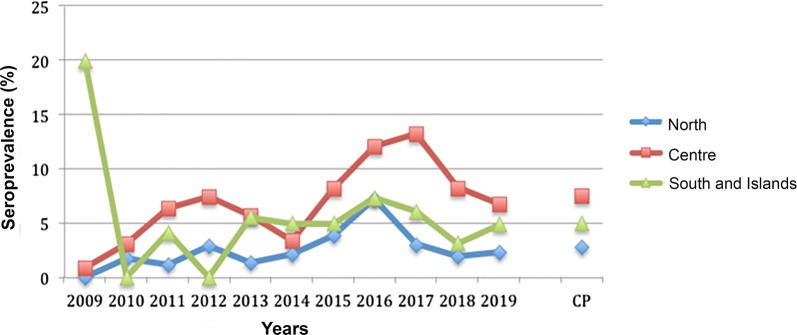
“Positive results for D. immitis were also affected by the study year (χ2 = 55.333, df = 10, P < 0.0001), showing values of > 10% in 2016 (i.e. 12.1%) and 2017 (i.e. 13.32%)”
§ Leishmania infantum and Dirofilaria immitis infections in Italy, 2009–2019: changing distribution patterns > Results
plaincorrelational- Asserted: passes — The authors put it forward as true.
- Checkable: passes — It can be checked against evidence.
- Load-bearing: unclear — It is unclear whether the paper’s conclusions depend on it.
- Based: passes — The paper gives a reason why it holds.
It may state two separate claims as one.
- Rests on an assumption: The serological samples submitted to the two diagnostic centres are representative of the canine population in each Italian macroarea.
- Rests on an assumption: The geographical origin of the samples reflects the location where the dogs acquired L. infantum or D. immitis infection.
- Rests on an assumption: The diagnostic tests used in database A accurately detect L. infantum exposure and D. immitis infection.
A result the paper reports from its own data — it cites no other source for it, so there is none to check. The quote shows it is in the paper.
In the paper
“In southern Italy and islands, L. infantum positive tests were significantly different among the study years (χ2 = 201.963, df = 10, P < 0.0001), with values ranging from 24.55% (2017) to 50.66% (2011)”
§ Leishmania infantum and Dirofilaria immitis infections in Italy, 2009–2019: changing distribution patterns > Results
plaincorrelational- Asserted: passes — The authors put it forward as true.
- Checkable: passes — It can be checked against evidence.
- Load-bearing: passes — The paper’s conclusions depend on it.
- Based: passes — The paper gives a reason why it holds.
It may state two separate claims as one.
- Rests on an assumption: The serological samples submitted to the two diagnostic centres are representative of the canine population in each Italian macroarea.
- Rests on an assumption: The geographical origin of the samples reflects the location where the dogs acquired L. infantum or D. immitis infection.
- Rests on an assumption: The diagnostic tests used in database A accurately detect L. infantum exposure and D. immitis infection.
A result the paper reports from its own data — it cites no other source for it, so there is none to check. The quote shows it is in the paper.
In the paper
“The study year and region significantly impacted the results of D. immitis in northern Italy (χ2 = 56.954, df = 10, P < 0.0001; and χ2 = 40.555, df = 7, P < 0.0001, respectively), with the highest prevalence observed in 2016 (7.20%)”
§ Leishmania infantum and Dirofilaria immitis infections in Italy, 2009–2019: changing distribution patterns > Results
plaincorrelational- Asserted: passes — The authors put it forward as true.
- Checkable: passes — It can be checked against evidence.
- Load-bearing: passes — The paper’s conclusions depend on it.
- Based: passes — The paper gives a reason why it holds.
It may state two separate claims as one.
- Rests on an assumption: The serological samples submitted to the two diagnostic centres are representative of the canine population in each Italian macroarea.
- Rests on an assumption: The geographical origin of the samples reflects the location where the dogs acquired L. infantum or D. immitis infection.
- Rests on an assumption: The diagnostic tests used in database A accurately detect L. infantum exposure and D. immitis infection.
A result the paper reports from its own data — it cites no other source for it, so there is none to check. The quote shows it is in the paper.
In the paper
“HW positivity significantly varied over years (χ2 = 108.401, df = 10, P < 0.0001), gradually increasing from 0.77% in 2009 to 8.47% in 2016–2017.”
- Also stated in: § Results · plain
“On the whole Italian territory, the number of HW positive tests significantly varied over years (χ2 = 108.401, df = 10, P < 0.0001), gradually increasing from 0.77% in 2009 to values ranging between 5.19–8.47% in 2016–2017”
§ Leishmania infantum and Dirofilaria immitis infections in Italy, 2009–2019: changing distribution patterns > Abstract > Results
plaincorrelational- Asserted: passes — The authors put it forward as true.
- Checkable: passes — It can be checked against evidence.
- Load-bearing: passes — The paper’s conclusions depend on it.
- Based: passes — The paper gives a reason why it holds.
It may state two separate claims as one.
- Rests on an assumption: The serological samples submitted to the two diagnostic centres are representative of the canine population in each Italian macroarea.
- Rests on an assumption: The geographical origin of the samples reflects the location where the dogs acquired L. infantum or D. immitis infection.
- Rests on an assumption: The diagnostic tests used in database A accurately detect L. infantum exposure and D. immitis infection.
- Also stated in: § Results · plain
A result the paper reports from its own data — it cites no other source for it, so there is none to check. The quote shows it is in the paper.
In the paper
“The highest prevalence rate of D. immitis were recorded in Aosta Valley(11.36%), Trentino Alto Adige (7.41%) and Piedmont (6.29%), while the lowest was found in Veneto (2.12%).”
§ Leishmania infantum and Dirofilaria immitis infections in Italy, 2009–2019: changing distribution patterns > Results
plain- Asserted: passes — The authors put it forward as true.
- Checkable: passes — It can be checked against evidence.
- Load-bearing: unclear — It is unclear whether the paper’s conclusions depend on it.
- Based: passes — The paper gives a reason why it holds.
It may state two separate claims as one.
- Rests on an assumption: The serological samples submitted to the two diagnostic centres are representative of the canine population in each Italian macroarea.
- Rests on an assumption: The geographical origin of the samples reflects the location where the dogs acquired L. infantum or D. immitis infection.
- Rests on an assumption: The diagnostic tests used in database A accurately detect L. infantum exposure and D. immitis infection.
A result the paper reports from its own data — it cites no other source for it, so there is none to check. The quote shows it is in the paper.
In the paper
“Leishmania infantum results in this macroarea also showed significant differences between regions (χ2 = 642.949, df = 6, P < 0.0001) with the highest values recorded in Molise (54.26%), Sicily (50.18%) and Sardinia (38.34%).”
§ Leishmania infantum and Dirofilaria immitis infections in Italy, 2009–2019: changing distribution patterns > Results
plaincorrelational- Asserted: passes — The authors put it forward as true.
- Checkable: passes — It can be checked against evidence.
- Load-bearing: passes — The paper’s conclusions depend on it.
- Based: passes — The paper gives a reason why it holds.
It may state two separate claims as one.
- Rests on an assumption: The serological samples submitted to the two diagnostic centres are representative of the canine population in each Italian macroarea.
- Rests on an assumption: The geographical origin of the samples reflects the location where the dogs acquired L. infantum or D. immitis infection.
- Rests on an assumption: The diagnostic tests used in database A accurately detect L. infantum exposure and D. immitis infection.
A result the paper reports from its own data — it cites no other source for it, so there is none to check. The quote shows it is in the paper.
In the paper
“Significant differences in the prevalence for D. immitis were noted in central Italy (χ2 = 80.975, df = 4, P < 0.0001, respectively) with the highest values recorded in Tuscany (11.48%) and Marche (7.84%).”
§ Leishmania infantum and Dirofilaria immitis infections in Italy, 2009–2019: changing distribution patterns > Results
plaincorrelational- Asserted: passes — The authors put it forward as true.
- Checkable: passes — It can be checked against evidence.
- Load-bearing: unclear — It is unclear whether the paper’s conclusions depend on it.
- Based: passes — The paper gives a reason why it holds.
It may state two separate claims as one.
- Rests on an assumption: The serological samples submitted to the two diagnostic centres are representative of the canine population in each Italian macroarea.
- Rests on an assumption: The geographical origin of the samples reflects the location where the dogs acquired L. infantum or D. immitis infection.
- Rests on an assumption: The diagnostic tests used in database A accurately detect L. infantum exposure and D. immitis infection.
A result the paper reports from its own data — it cites no other source for it, so there is none to check. The quote shows it is in the paper.
In the paper
“The overall results of the positive tested samples were 28.2% in southern Italy and islands, 29.6% in central Italy and 21.6% in northern Italy for L. infantum”
- Also stated in: § Results · plain
“with an overall positivity of 28.2% in southern Italy and islands, 29.68% in central Italy and 21.62% in northern Italy (Table 1, Fig. 2)”
§ Leishmania infantum and Dirofilaria immitis infections in Italy, 2009–2019: changing distribution patterns > Abstract > Results
plain- Asserted: passes — The authors put it forward as true.
- Checkable: passes — It can be checked against evidence.
- Load-bearing: passes — The paper’s conclusions depend on it.
- Based: passes — The paper gives a reason why it holds.
It may state two separate claims as one.
- Rests on an assumption: The serological samples submitted to the two diagnostic centres are representative of the canine population in each Italian macroarea.
- Rests on an assumption: The geographical origin of the samples reflects the location where the dogs acquired L. infantum or D. immitis infection.
- Rests on an assumption: The diagnostic tests used in database A accurately detect L. infantum exposure and D. immitis infection.
- Also stated in: § Results · plain
A result the paper reports from its own data — it cites no other source for it, so there is none to check. The quote shows it is in the paper.
In the paper
“It was more than 30% in 2012, 2014, 2015 and 2016 (Fig. 2), with the highest values in Lazio (38.52%), followed by Umbria (35.61%) and Abruzzo (34.10%).”
§ Leishmania infantum and Dirofilaria immitis infections in Italy, 2009–2019: changing distribution patterns > Results
plain- Asserted: passes — The authors put it forward as true.
- Checkable: passes — It can be checked against evidence.
- Load-bearing: unclear — It is unclear whether the paper’s conclusions depend on it.
- Based: passes — The paper gives a reason why it holds.
It may state two separate claims as one.
- Rests on an assumption: The serological samples submitted to the two diagnostic centres are representative of the canine population in each Italian macroarea.
- Rests on an assumption: The geographical origin of the samples reflects the location where the dogs acquired L. infantum or D. immitis infection.
- Rests on an assumption: The diagnostic tests used in database A accurately detect L. infantum exposure and D. immitis infection.
A result the paper reports from its own data — it cites no other source for it, so there is none to check. The quote shows it is in the paper.
In the paper
“Notably, significant variations in tests positive for L. infantum among the various northern Italy regions were recorded (χ2 = 190.657, df = 7, P < 0.0001), with the highest values in Piedmont, Trentino Alto Adige, Aosta Valley and Friuli Venezia Giulia (28.93%, 27.59%, 27.40% and 27.17%, respectively).”
§ Leishmania infantum and Dirofilaria immitis infections in Italy, 2009–2019: changing distribution patterns > Results
plaincorrelational- Asserted: passes — The authors put it forward as true.
- Checkable: passes — It can be checked against evidence.
- Load-bearing: unclear — It is unclear whether the paper’s conclusions depend on it.
- Based: passes — The paper gives a reason why it holds.
It may state two separate claims as one.
- Rests on an assumption: The serological samples submitted to the two diagnostic centres are representative of the canine population in each Italian macroarea.
- Rests on an assumption: The geographical origin of the samples reflects the location where the dogs acquired L. infantum or D. immitis infection.
- Rests on an assumption: The diagnostic tests used in database A accurately detect L. infantum exposure and D. immitis infection.
A result the paper reports from its own data — it cites no other source for it, so there is none to check. The quote shows it is in the paper.
In the paper
“2.83% in northern Italy, 7.75% in central Italy and 4.97% in southern Italy and islands for HW”
- Also stated in: § Results · plain
“being of 2.83% in northern Italy, 7.75% in central Italy and 4.97% in southern Italy and islands”
§ Leishmania infantum and Dirofilaria immitis infections in Italy, 2009–2019: changing distribution patterns > Abstract > Results
plain- Asserted: passes — The authors put it forward as true.
- Checkable: passes — It can be checked against evidence.
- Load-bearing: passes — The paper’s conclusions depend on it.
- Based: passes — The paper gives a reason why it holds.
It may state two separate claims as one.
- Rests on an assumption: The serological samples submitted to the two diagnostic centres are representative of the canine population in each Italian macroarea.
- Rests on an assumption: The geographical origin of the samples reflects the location where the dogs acquired L. infantum or D. immitis infection.
- Rests on an assumption: The diagnostic tests used in database A accurately detect L. infantum exposure and D. immitis infection.
- Also stated in: § Results · plain
A result the paper reports from its own data — it cites no other source for it, so there is none to check. The quote shows it is in the paper.
In the paper
“In central Italy, both the study year and region led to significant differences in L. infantum prevalence (χ2 = 371.252, df = 10, P < 0.0001; and χ2 = 609.769, df = 5, P < 0.0001, respectively).”
§ Leishmania infantum and Dirofilaria immitis infections in Italy, 2009–2019: changing distribution patterns > Results
plaindirect- Asserted: passes — The authors put it forward as true.
- Checkable: passes — It can be checked against evidence.
- Load-bearing: passes — The paper’s conclusions depend on it.
- Based: passes — The paper gives a reason why it holds.
It may state two separate claims as one.
- Rests on an assumption: The serological samples submitted to the two diagnostic centres are representative of the canine population in each Italian macroarea.
- Rests on an assumption: The geographical origin of the samples reflects the location where the dogs acquired L. infantum or D. immitis infection.
- Rests on an assumption: The diagnostic tests used in database A accurately detect L. infantum exposure and D. immitis infection.
A result the paper reports from its own data — it cites no other source for it, so there is none to check. The quote shows it is in the paper.
In the paper
“Leishmania infantum was widely distributed throughout the Italian Peninsula, with a number of positive animals > 400 in the central (Lazio and Tuscany) and southern (Apulia and Basilicata) regions as well as in both islands (Sardinia and Sicily).”
§ Leishmania infantum and Dirofilaria immitis infections in Italy, 2009–2019: changing distribution patterns > Results
plain- Asserted: passes — The authors put it forward as true.
- Checkable: passes — It can be checked against evidence.
- Load-bearing: unclear — It is unclear whether the paper’s conclusions depend on it.
- Based: passes — The paper gives a reason why it holds.
It may state two separate claims as one.
- Rests on an assumption: The serological samples submitted to the two diagnostic centres are representative of the canine population in each Italian macroarea.
- Rests on an assumption: The geographical origin of the samples reflects the location where the dogs acquired L. infantum or D. immitis infection.
- Rests on an assumption: The diagnostic tests used in database A accurately detect L. infantum exposure and D. immitis infection.
A result the paper reports from its own data — it cites no other source for it, so there is none to check. The quote shows it is in the paper.
In the paper
“The highest percentage of positive tests of D. immitis was registered in the central regions (i.e. Tuscany and Lazio) followed by the southern and northern regions with annual variation patterns throughout the observation period (Fig. 3).”
§ Leishmania infantum and Dirofilaria immitis infections in Italy, 2009–2019: changing distribution patterns > Results
plaincorrelational- Asserted: passes — The authors put it forward as true.
- Checkable: passes — It can be checked against evidence.
- Load-bearing: unclear — It is unclear whether the paper’s conclusions depend on it.
- Based: passes — The paper gives a reason why it holds.
It may state two separate claims as one.
- Rests on an assumption: The serological samples submitted to the two diagnostic centres are representative of the canine population in each Italian macroarea.
- Rests on an assumption: The geographical origin of the samples reflects the location where the dogs acquired L. infantum or D. immitis infection.
- Rests on an assumption: The diagnostic tests used in database A accurately detect L. infantum exposure and D. immitis infection.
None of the sources cited for this claim have been checked yet.
In the paper
“On the other hand, the cumulative prevalence of D. immitis infection greatly increased in central (7.7%) and southern Italy and islands (5%), being higher than in the North (2.8%), which was historically considered the sole endemic area [1, 20].”
§ Leishmania infantum and Dirofilaria immitis infections in Italy, 2009–2019: changing distribution patterns > Discussion
What the sources say
- Not checked yetcites [1] Otranto D, Capelli G, Genchi C. Changing distribution patterns of canine vector borne diseases in Italy: leishmaniosis vs. dirofilariosis. Parasit Vectors. 2009;2(Suppl. 1):S2. source
- Not checked yetcites [20] Genchi C, Solari Basano F, Marrone RV, Petruschke G. Canine and feline heartworm in Europe with special emphasis on Italy. In: Proceedings of the Heartworm Symposium ʼ98, 1–3 May, Tampa, Florida, USA; 1998. p. 75–82.
plaindirect- Asserted: passes — The authors put it forward as true.
- Checkable: passes — It can be checked against evidence.
- Load-bearing: passes — The paper’s conclusions depend on it.
- Based: passes — The paper gives a reason why it holds.
It may state two separate claims as one.
- Rests on an assumption: The serological samples submitted to the two diagnostic centres are representative of the canine population in each Italian macroarea.
- Rests on an assumption: The geographical origin of the samples reflects the location where the dogs acquired L. infantum or D. immitis infection.
- Rests on an assumption: The diagnostic tests used in database A accurately detect L. infantum exposure and D. immitis infection.
A result the paper reports from its own data — it cites no other source for it, so there is none to check. The quote shows it is in the paper.
In the paper
“An overall lower number of samples was positive for D. immitis compared to L. infantum, with > 10 positive cases recorded in three provinces in the northern Italy (i.e. Turin, Piedmont; Genova, Liguria; and Belluno, Veneto).”
§ Leishmania infantum and Dirofilaria immitis infections in Italy, 2009–2019: changing distribution patterns > Results
plainn = 10- Asserted: passes — The authors put it forward as true.
- Checkable: passes — It can be checked against evidence.
- Load-bearing: unclear — It is unclear whether the paper’s conclusions depend on it.
- Based: passes — The paper gives a reason why it holds.
It may state two separate claims as one.
- Rests on an assumption: The serological samples submitted to the two diagnostic centres are representative of the canine population in each Italian macroarea.
- Rests on an assumption: The geographical origin of the samples reflects the location where the dogs acquired L. infantum or D. immitis infection.
- Rests on an assumption: The diagnostic tests used in database A accurately detect L. infantum exposure and D. immitis infection.
A result the paper reports from its own data — it cites no other source for it, so there is none to check. The quote shows it is in the paper.
In the paper
“In addition, clinicians’ perception and awareness of the presence of CanL in non-endemic areas seem to be increased in the northern regions, with more than 21,545 tests performed, whereas the South remains the area with the largest number of tests requested (Table 1).”
§ Leishmania infantum and Dirofilaria immitis infections in Italy, 2009–2019: changing distribution patterns > Discussion
hedged- Asserted: passes — The authors put it forward as true.
- Checkable: passes — It can be checked against evidence.
- Load-bearing: unclear — It is unclear whether the paper’s conclusions depend on it.
- Based: passes — The paper gives a reason why it holds.
It may state two separate claims as one.
- Rests on an assumption: The serological samples submitted to the two diagnostic centres are representative of the canine population in each Italian macroarea.
None of the sources cited for this claim have been checked yet.
In the paper
“Indeed, earlier studies illustrated the islands to have a large number of diagnosed HW [31] as they are suitable for Dirofilaria spp. to thrive [13].”
§ Leishmania infantum and Dirofilaria immitis infections in Italy, 2009–2019: changing distribution patterns > Discussion
What the sources say
- Not checked yetcites [31] Genchi M, Rinaldi L, Venco L, Cringoli G, Vismarra A, Kramer L. Dirofilaria immitis and D. repens in dog and cat: a questionnaire study in Italy. Vet Parasitol. 2019;267:26–31. source
- Not checked yetcites [13] Otranto D, Brianti E, Gaglio G, Dantas-Torres F, Azzaro S, Giannetto S. Human ocular infection with Dirofilaria repens (Railliet and Henry, 1911) in an area endemic for canine dirofilariasis. Am J Trop Med Hyg. 2011;84:1002–4. source
plaindirect- Asserted: passes — The authors put it forward as true.
- Checkable: passes — It can be checked against evidence.
- Load-bearing: unclear — It is unclear whether the paper’s conclusions depend on it.
- Based: passes — The paper gives a reason why it holds.
It may state two separate claims as one.
In the paper
“In addition, other studies reported cases of CanL and human visceral leishmaniasis diagnosed in the same area, along with their vectors, P. perniciosus and P. neglectus [25].”
§ Leishmania infantum and Dirofilaria immitis infections in Italy, 2009–2019: changing distribution patterns > Discussion
What the sources say
- Not checked yetcites [25] Capelli G, Baldelli R, Ferroglio E, Genchi C, Gradoni L, Gramiccia M, et al. Monitoring of canine leishmaniasis in northern Italy: an update from a scientific network. Parassitologia. 2004;46:193–7.
plaincorrelational- Asserted: passes — The authors put it forward as true.
- Checkable: passes — It can be checked against evidence.
- Load-bearing: fails — The paper’s conclusions may not depend on it.
- Based: passes — The paper gives a reason why it holds.
Probably not a substantial claim. The paper’s conclusions may not depend on it.
In the paper
“Based on the results of this large dataset (n = 90,633) of serological assays presented herein, the positive tests for L. infantum and D. immitis varied over the last 10 years’ period (2009–2019), also in comparison with data available from the prior decade (1999–2009) [1].”
§ Leishmania infantum and Dirofilaria immitis infections in Italy, 2009–2019: changing distribution patterns > Discussion
What the sources say
- Not checked yetcites [1] Otranto D, Capelli G, Genchi C. Changing distribution patterns of canine vector borne diseases in Italy: leishmaniosis vs. dirofilariosis. Parasit Vectors. 2009;2(Suppl. 1):S2. source
plaincorrelationaln = 90,633 ·- Asserted: passes — The authors put it forward as true.
- Checkable: passes — It can be checked against evidence.
- Load-bearing: passes — The paper’s conclusions depend on it.
- Based: passes — The paper gives a reason why it holds.
It may state two separate claims as one.
- Rests on an assumption: The serological samples submitted to the two diagnostic centres are representative of the canine population in each Italian macroarea.
- Rests on an assumption: The geographical origin of the samples reflects the location where the dogs acquired L. infantum or D. immitis infection.
- Rests on an assumption: The diagnostic tests used in database A accurately detect L. infantum exposure and D. immitis infection.
A conclusion the paper draws from its own results — it cites no other source for it, so there is none to check. The quote shows it is in the paper.
In the paper
“The low prevalence of HW in Sicily and Sardinia could be explained by the small number of tests requested or no tests performed in many provinces from these islands.”
§ Leishmania infantum and Dirofilaria immitis infections in Italy, 2009–2019: changing distribution patterns > Discussion
hedgedconditional- Asserted: passes — The authors put it forward as true.
- Checkable: passes — It can be checked against evidence.
- Load-bearing: fails — The paper’s conclusions may not depend on it.
- Based: fails — The paper may give no reason why it holds.
Probably not a substantial claim. The paper’s conclusions may not depend on it. The paper may give no reason why it holds. It may state two separate claims as one.
- Rests on an assumption: The serological samples submitted to the two diagnostic centres are representative of the canine population in each Italian macroarea.
None of the sources cited for this claim have been checked yet.
In the paper
“Conversely, a major hindrance of this study could be that the anamnesis of animals was not available (e.g. their travelling history from/to historically endemic areas for both diseases) [5, 22].”
§ Leishmania infantum and Dirofilaria immitis infections in Italy, 2009–2019: changing distribution patterns > Discussion
What the sources say
- Not checked yetcites [5] Genchi C, Mortarino M, Rinaldi L, Cringoli G, Traldi G, Genchi M. Changing climate and changing vector-borne disease distribution: the example of Dirofilaria in Europe. Vet Parasitol. 2011;176:295–9. source
- Not checked yetcites [22] Brandonisio O, Carelli G, Ceci L, Consenti B, Fasanella A, Puccini V. Canine leishmaniasis in the Gargano promontory (Apulia, South Italy). Eur J Epidemiol. 1992;8:273–6. source
hedged- Asserted: passes — The authors put it forward as true.
- Checkable: passes — It can be checked against evidence.
- Load-bearing: fails — The paper’s conclusions may not depend on it.
- Based: passes — The paper gives a reason why it holds.
Probably not a substantial claim. The paper’s conclusions may not depend on it.
None of the sources cited for this claim have been checked yet.
In the paper
“The results also indicate that the number of cases positive for L. infantum has increased progressively in the past decade in the northern Italian regions, with an overall prevalence higher than that recorded in previous studies [1, 17].”
§ Leishmania infantum and Dirofilaria immitis infections in Italy, 2009–2019: changing distribution patterns > Discussion
What the sources say
- Not checked yetcites [1] Otranto D, Capelli G, Genchi C. Changing distribution patterns of canine vector borne diseases in Italy: leishmaniosis vs. dirofilariosis. Parasit Vectors. 2009;2(Suppl. 1):S2. source
- Not checked yetcites [17] Baldelli R, Piva S, Salvatore D, Parigi M, Melloni O, Tamba M, et al. Canine leishmaniasis surveillance in a northern Italy kennel. Vet Parasitol. 2011;179:57–61. source
hedgeddirectn = 90,633- Asserted: passes — The authors put it forward as true.
- Checkable: passes — It can be checked against evidence.
- Load-bearing: passes — The paper’s conclusions depend on it.
- Based: passes — The paper gives a reason why it holds.
It may state two separate claims as one.
- Rests on an assumption: The serological samples submitted to the two diagnostic centres are representative of the canine population in each Italian macroarea.
- Rests on an assumption: The geographical origin of the samples reflects the location where the dogs acquired L. infantum or D. immitis infection.
- Rests on an assumption: The diagnostic tests used in database A accurately detect L. infantum exposure and D. immitis infection.
In the paper
“Hyperendemic D. immitis infection has been recorded in sheltered dogs from Apulia region (southern Italy) with the highest prevalence of infection (i.e. 44.2%) in Europe [30].”
§ Leishmania infantum and Dirofilaria immitis infections in Italy, 2009–2019: changing distribution patterns > Discussion
What the sources say
- Not checked yetcites [30] Panarese R, Iatta R, Latrofa MS, Zatelli A, Ignjatović Ćupina A, Montarsi F, Pombi M, Mendoza-Roldan JA et al. Hyperendemic Dirofilaria immitis infection in sheltered dog population: an expanding threat in the Mediterranean regions. Int J Parasitol. 2020 in press. source
plain- Asserted: passes — The authors put it forward as true.
- Checkable: passes — It can be checked against evidence.
- Load-bearing: unclear — It is unclear whether the paper’s conclusions depend on it.
- Based: passes — The paper gives a reason why it holds.
It may state two separate claims as one.
None of the sources cited for this claim have been checked yet.
In the paper
“Endemic foci of CanL in the same provinces of Veneto [23] and Piedmont [24] confirmed the above mentioned epidemiological picture with a competent vector of L. infantum (i.e. P. perniciosus) captured in entomological surveys performed in that area [19].”
§ Leishmania infantum and Dirofilaria immitis infections in Italy, 2009–2019: changing distribution patterns > Discussion
What the sources say
- Not checked yetcites [23] Vascellari M, Natale A, Schievenin E, Miatto A, Brino A, Frangipane Di Regalbono A, et al. Descrizione di un nuovo focolaio di leishmaniosi canina nella Regione Veneto. Veterinaria. 2005;3:25–9.
- Not checked yetcites [24] Biglino A, Bolla C, Concialdi E, Trisciuoglio A, Romano A, Ferroglio E. Asymptomatic Leishmania infantum infection in an area of northwestern Italy (Piedmont region) where such infections are traditionally nonendemic. J Clin Microbiol. 2010;48:131–6. source
- Not checked yetcites [19] Signorini M, Cassini R, Drigo M, di Regalbono A, Pietrobelli M, Montarsi F, et al. Ecological niche model of Phlebotomus perniciosus, the main vector of canine leishmaniasis in north-eastern Italy. Geospat Health. 2014;9:193–201. source
plaincorrelational- Asserted: passes — The authors put it forward as true.
- Checkable: passes — It can be checked against evidence.
- Load-bearing: unclear — It is unclear whether the paper’s conclusions depend on it.
- Based: passes — The paper gives a reason why it holds.
It may state two separate claims as one.
None of the sources cited for this claim have been checked yet.
In the paper
“The southward changing pattern of HW has been detailed in previous studies [26–29].”
§ Leishmania infantum and Dirofilaria immitis infections in Italy, 2009–2019: changing distribution patterns > Discussion
What the sources say
- Not checked yetcites [26] Di Cesare A, Castagna G, Meloni S, Milillo P, Latrofa S, Otranto D, et al. Canine and feline infections by cardiopulmonary nematodes in central and southern Italy. Parasitol Res. 2011;109:87–96. source
- Not checked yetcites [27] Giangaspero A, Marangi M, Latrofa MS, Martinelli D, Traversa D, Otranto D, et al. Evidences of increasing risk of dirofilarioses in southern Italy. Parasitol Res. 2013;112:1357–61. source
- Not checked yetcites [28] Del Prete L, Maurelli MP, Pennacchio S, Bosco A, Musella V, Ciuca L, et al. Dirofilaria immitis and Angiostrongylus vasorum: the contemporaneous detection in kennels. BMC Vet Res. 2015;11:305. source
- Not checked yetcites [29] Sauda F, Malandrucco L, Macrì G, Scarpulla M, De Liberato C, Terracciano G, Fichi G, et al. Leishmania infantum, Dirofilaria spp. and other endoparasite infections in kennel dogs in central Italy. Parasite. 2018;25:2. source
plain- Asserted: passes — The authors put it forward as true.
- Checkable: passes — It can be checked against evidence.
- Load-bearing: fails — The paper’s conclusions may not depend on it.
- Based: passes — The paper gives a reason why it holds.
Probably not a substantial claim. The paper’s conclusions may not depend on it.
A conclusion the paper draws from its own results — it cites no other source for it, so there is none to check. The quote shows it is in the paper.
In the paper
“The decreased prevalence of D. immitis infection in northern Italy regions could be a consequence of clinicians’ awareness of the disease and thus of the continuous usage of chemoprophylactic programmes in this area.”
§ Leishmania infantum and Dirofilaria immitis infections in Italy, 2009–2019: changing distribution patterns > Discussion
hedgedconditional- Asserted: passes — The authors put it forward as true.
- Checkable: passes — It can be checked against evidence.
- Load-bearing: fails — The paper’s conclusions may not depend on it.
- Based: fails — The paper may give no reason why it holds.
Probably not a substantial claim. The paper’s conclusions may not depend on it. The paper may give no reason why it holds.
A conclusion the paper draws from its own results — it cites no other source for it, so there is none to check. The quote shows it is in the paper.
In the paper
“Overall, L. infantum exposure has spread progressively in the past decades from the endemic southern regions towards northern regions, making the whole Italian Peninsula endemic for this infection.”
§ Leishmania infantum and Dirofilaria immitis infections in Italy, 2009–2019: changing distribution patterns > Discussion
plaindirectn = 90,633- Asserted: passes — The authors put it forward as true.
- Checkable: passes — It can be checked against evidence.
- Load-bearing: passes — The paper’s conclusions depend on it.
- Based: passes — The paper gives a reason why it holds.
It may state two separate claims as one.
- Rests on an assumption: The serological samples submitted to the two diagnostic centres are representative of the canine population in each Italian macroarea.
- Rests on an assumption: The geographical origin of the samples reflects the location where the dogs acquired L. infantum or D. immitis infection.
- Rests on an assumption: The diagnostic tests used in database A accurately detect L. infantum exposure and D. immitis infection.
A conclusion the paper draws from its own results — it cites no other source for it, so there is none to check. The quote shows it is in the paper.
In the paper
“Moreover, given the number of tests requested, the overall clinicians’ awareness in northern Italy is increasing for CanL and diminishing for HW.”
§ Leishmania infantum and Dirofilaria immitis infections in Italy, 2009–2019: changing distribution patterns > Conclusions
plaindirect- Asserted: passes — The authors put it forward as true.
- Checkable: passes — It can be checked against evidence.
- Load-bearing: passes — The paper’s conclusions depend on it.
- Based: passes — The paper gives a reason why it holds.
It may state two separate claims as one.
- Rests on an assumption: The serological samples submitted to the two diagnostic centres are representative of the canine population in each Italian macroarea.
A conclusion the paper draws from its own results — it cites no other source for it, so there is none to check. The quote shows it is in the paper.
In the paper
“Overall, results highlighted the changing distribution patterns of CanL vs HW in Italy over a 10-year period (2009–2019) in which the number of cases of CanL has increased in the northern Italy regions, and HW has endemic foci in the central and southern Italy and in islands.”
§ Leishmania infantum and Dirofilaria immitis infections in Italy, 2009–2019: changing distribution patterns > Conclusions
plaincorrelational- Asserted: passes — The authors put it forward as true.
- Checkable: passes — It can be checked against evidence.
- Load-bearing: passes — The paper’s conclusions depend on it.
- Based: passes — The paper gives a reason why it holds.
It may state two separate claims as one.
- Rests on an assumption: The serological samples submitted to the two diagnostic centres are representative of the canine population in each Italian macroarea.
- Rests on an assumption: The geographical origin of the samples reflects the location where the dogs acquired L. infantum or D. immitis infection.
- Rests on an assumption: The diagnostic tests used in database A accurately detect L. infantum exposure and D. immitis infection.
The paper relies on this without support.
The serological samples submitted to the two diagnostic centres are representative of the canine population in each Italian macroarea.
“Databases from two diagnostic reference centres (hereafter reported as database A and B) were analysed (total number of serum samples = 90,633).”
The paper relies on this without support.
The geographical origin of the samples reflects the location where the dogs acquired L. infantum or D. immitis infection.
“Conversely, a major hindrance of this study could be that the anamnesis of animals was not available (e.g. their travelling history from/to historically endemic areas for both diseases) [5, 22].”
The paper relies on this without support.
The diagnostic tests used in database A accurately detect L. infantum exposure and D. immitis infection.
“Different serological (Novatec® kit for CanL and Dirocheck Zoetis® for HW) enzyme-linked immune sorbent assay (ELISA) tests were used.”
The paper relies on this without support.
The absence of anamnesis (e.g., travelling history) does not substantially bias the observed distribution patterns.
“However, for all included samples in both datasets no anamnestic data were available.”
Claims other papers make about this one
Each is checked against this paper’s own text: does it say what the citing paper says it does?
In the citing paper
“Finally, a study conducted by Mendoza-Roldan et al. [41] between 2009–2019 showed that the number of heartworm-infected dogs significantly varied over years, gradually increasing from 0.77% in 2009 to values ranging between 5.19–8.47% in 2016–2017.”
From What has happened to heartworm disease in Europe in the last 10 years? (2022) · cites this paper as [41]
In the citing paper
“Moreover, the results showed that prevalence in the north is decreasing, while in the centre and south of the country, it is increasing, which corroborated studies previously carried out by other authors.”
From What has happened to heartworm disease in Europe in the last 10 years? (2022) · cites this paper as [41]
Self-check
Percentages, sums and reported differences re-computed from the paper’s own numbers.
Each contradiction between two passages listed here was confirmed by an independent check.
Rated minor: it would not touch a result — a value no result rests on, a p-value that stays on the same side of the significance level, or a conflict that is clerical, resolved elsewhere in the paper, or outside its own findings.
In the paper
“being higher in southern Italy (37.7% of all tests performed)”
§ Leishmania infantum and Dirofilaria immitis infections in Italy, 2009–2019: changing distribution patterns > Results
Reported 37.7 · recomputed 40.605661
Rated minor: it would not touch a result — a value no result rests on, a p-value that stays on the same side of the significance level, or a conflict that is clerical, resolved elsewhere in the paper, or outside its own findings.
In the paper
“243 (7.5)(Total: 3119)”
§ Leishmania infantum and Dirofilaria immitis infections in Italy, 2009–2019: changing distribution patterns > Results
Reported 7.5 · recomputed 7.790959
Rated minor: it would not touch a result — a value no result rests on, a p-value that stays on the same side of the significance level, or a conflict that is clerical, resolved elsewhere in the paper, or outside its own findings.
In the paper
§ Leishmania infantum and Dirofilaria immitis infections in Italy, 2009–2019: changing distribution patterns > Discussion
“in Brindisi and Lecce (Apulia), southern Italy; Fig 4”
§ Leishmania infantum and Dirofilaria immitis infections in Italy, 2009–2019: changing distribution patterns > Results
“Figure: Fig. 4 Distribution map with number of cases (2009–2019) per province of CanL in Italy”
Rated minor: it would not touch a result — a value no result rests on, a p-value that stays on the same side of the significance level, or a conflict that is clerical, resolved elsewhere in the paper, or outside its own findings.
In the paper
“and northern Italy (24.7%).”
§ Leishmania infantum and Dirofilaria immitis infections in Italy, 2009–2019: changing distribution patterns > Results
Reported 24.7 · recomputed 26.827628
Rated minor: it would not touch a result — a value no result rests on, a p-value that stays on the same side of the significance level, or a conflict that is clerical, resolved elsewhere in the paper, or outside its own findings.
In the paper
“than in central Italy (31%)”
§ Leishmania infantum and Dirofilaria immitis infections in Italy, 2009–2019: changing distribution patterns > Results
Reported 31 · recomputed 32.534336
Rated minor: it would not touch a result — a value no result rests on, a p-value that stays on the same side of the significance level, or a conflict that is clerical, resolved elsewhere in the paper, or outside its own findings.
In the paper
§ Leishmania infantum and Dirofilaria immitis infections in Italy, 2009–2019: changing distribution patterns > Discussion
“the provinces of Turin (Piedmont) and Vicenza (Veneto), northern Italy; Fig. 3”
§ Leishmania infantum and Dirofilaria immitis infections in Italy, 2009–2019: changing distribution patterns > Results
“Figure: Fig. 3 Pattern of mean annual seroprevalence for Dirofilaria immitis in the three main macroareas of Italy. The cumulative prevalence (CP) is also shown”
Citations
Cites
Geographic Information Systems
(2020) · Advances in public policy and administration (APPA) book series · doi:10.4018/978-1-7998-1916-5.ch008 · Cited by 1,765
Phlebotomine vectors of the leishmaniases: a review
Killick‐Kendrick, R. (1990) · Medical and Veterinary Entomology · doi:10.1111/j.1365-2915.1990.tb00255.x · Cited by 808
Maroli, M., Rossi, L., Baldelli, R., Capelli, G., Ferroglio, E., Genchi, C., Gramiccia, M., Mortarino, M., Pietrobelli, M., & Gradoni, L. (2008) · Tropical Medicine & International Health · doi:10.1111/j.1365-3156.2007.01998.x · Cited by 305
Vector-borne parasitic zoonoses: emerging scenarios and new perspectives
Colwell, D. D., Dantas-Torres, F., & Otranto, D. (2011) · Veterinary Parasitology · doi:10.1016/j.vetpar.2011.07.012 · Cited by 262
Self-citationHeartworm Disease (Dirofilaria immitis) and Their Vectors in Europe – New Distribution Trends
Morchón, R., Carretón, E., González-Miguel, J., & Mellado-Hernández, I. (2012) · Frontiers in Physiology · doi:10.3389/fphys.2012.00196 · Cited by 255
Dirofilarial Infections in Europe
Genchi, C., Kramer, L. H., & Rivasi, F. (2011) · Vector-Borne and Zoonotic Diseases · doi:10.1089/vbz.2010.0247 · Cited by 214
Genchi, C., Mortarino, M., Rinaldi, L., Cringoli, G., Traldi, G., & Genchi, M. (2011) · Veterinary Parasitology · doi:10.1016/j.vetpar.2011.01.012 · Cited by 209
Canine and feline vector-borne diseases in Italy: current situation and perspectives
Otranto, D., & Dantas-Torres, F. (2010) · Parasites & Vectors · doi:10.1186/1756-3305-3-2 · Cited by 201
Self-citationOtranto, D., Capelli, G., & Genchi, C. (2009) · Parasites & Vectors · doi:10.1186/1756-3305-2-s1-s2 · Cited by 177
Self-citationBourguinat, C., Lee, A. C. Y., Lizundia, R., Blagburn, B. L., Liotta, J. L., Kraus, M. S., Keller, K., Epe, C., Létourneau, L., Kleinman, C. L., et al. (2015) · Veterinary Parasitology · doi:10.1016/j.vetpar.2015.04.002 · Cited by 152
Research works printed but not linked: 2
- QGIS Development Team. QGIS geographic information system. Open Source Geospatial Foundation Project, Versão. 2015;2:7.
- Genchi C, Solari Basano F, Marrone RV, Petruschke G. Canine and feline heartworm in Europe with special emphasis on Italy. In: Proceedings of the Heartworm Symposium ʼ98, 1–3 May, Tampa, Florida, USA; 1998. p. 75–82.
Cited by
Sorted by citations
Items 101–119 of 119
Vector-borne pathogens in dogs and in Rhipicephalus sanguineus sensu stricto ticks in Morocco
Zahri, A., Jimale, K. A., Bezerra‐Santos, M. A., Fagundes‐Moreira, R., Sauer, F. G., Allali, S. E., Allouch, A., Dantas‐Torres, F., Bourquia, M., & Otranto, D. (2025) · Acta Tropica · doi:10.1016/j.actatropica.2025.107538 · Cited by 1
Self-citationMendoza‐Roldan, J. A., Perles, L., Miuli, C., Larichiutta, P., Legrottaglie, M., Bezerra‐Santos, M. A., Samarelli, R., Berny, P. J., Beugnet, F., & Otranto, D. (2025) · International Journal for Parasitology Parasites and Wildlife · doi:10.1016/j.ijppaw.2025.101103 · Cited by 1
Self-citationIvović, V., Glasnović, P., Zupan, S., Knapič, T., Trilar, T., Korva, M., Knap, N., Biškup, U. G., Avšič‐Županc, T., & Adam, K. (2025) · Frontiers in Veterinary Science · doi:10.3389/fvets.2025.1603358 · Cited by 1
Canine vector-borne diseases: a changing world demands a new preventive strategy from veterinarians
Dantas‐Torres, F., & Otranto, D. (2026) · Parasites & Vectors · doi:10.1186/s13071-026-07331-2 · Cited by 1
Self-citationLeishmania infantum in red foxes (Vulpes vulpes): from clinical findings to cytokine expression
Alves, M. H., Carbonara, M., Palazzo, N., Gernone, F., Louzada-Flores, V. N., Camarda, A., Prioletti, M., Dantas‐Torres, F., Bezerra‐Santos, M. A., Mendoza‐Roldan, J. A., et al. (2026) · Parasites & Vectors · doi:10.1186/s13071-026-07334-z · Cited by 1
Self-citationCavalera, M. A., Uva, A., Gernone, F., Gusatoaia, O., Donghia, R., & Zatelli, A. (2024) · Veterinary Parasitology · doi:10.1016/j.vetpar.2024.110319 · Cited by 1
Self-citationGusatoaia, O., Perles, L., Cavalera, M. A., Uva, A., Gernone, F., Otranto, D., & Zatelli, A. (2025) · Parasitology Research · doi:10.1007/s00436-025-08458-4 · Cited by 1
Self-citationHeartworm Disease – Intervention and Industry Perspective 1
Noack, S., Harrington, J. L., Carithers, D. S., Kaminsky, R., & Selzer, P. M. (2022) · Wiley eBooks · doi:10.1002/9783527823413.ch9 · Cited by 1
Feo, G. D., Simčič, P., Lubas, G., & Papini, R. A. (2021) · Zoonotic Diseases · doi:10.3390/zoonoticdis1010003
Balaska, S., Khajehali, J., Mavridis, K., Akiner, M., Papapostolou, K. M., Remadi, L., Kioulos, I., Miaoulis, M., Fotakis, E. A., Chaskopoulou, A., et al. (2024) · bioRxiv (Cold Spring Harbor Laboratory) · doi:10.1101/2024.07.30.605769
Son, K.-Y., Park, G.-G., & Song, J. (2025) · Journal of Veterinary Science · doi:10.4142/jvs.24296
Juvenile Canine Leishmaniosis: A Systematic Literature Review and an Atypical Clinical Case
Dizonno, R., Gusatoaia, O., Uva, A., Gernone, F., Lia, R. P., Zatelli, A., & Cavalera, M. A. (2025) · Veterinary Sciences · doi:10.3390/vetsci12070653
Self-citationA digital repository of samples from arthropod vectors
Colombo, D., Lozada‐Chávez, A. N., Matucci, A., Luca, M. D., Magliano, A., de Martinis, C., d’Alessio, S. G., Boniotti, M. B., Capozzi, L., Gobbo, F., et al. (2025) · Pathogens and Global Health · doi:10.1080/20477724.2025.2587090
Gazzonis, A. L., Bertero, F., Moretta, I., Morganti, G., Mortarino, M., Villa, L., Zanzani, S. A., Morandi, B., Rinnovati, R., Vitale, F., et al. (2020) · Figshare · doi:10.6084/m9.figshare.13141964
Mendoza‐Roldan, J. A., Albanese, P., Spiridione, C. D., Vacca, M., Spagnuolo, M., Alves, M. H., Carbonara, M., Angelis, M. D., Vona, D., & Otranto, D. (2026) · Biological Procedures Online · doi:10.1186/s12575-026-00328-2
Self-citationParasitic surveillance in wolves of central Italy: a focus on the Abruzzo region
Defourny, S. V. P., Colombo, M., D’Amico, G., Salucci, S., Cocco, A., Cantelmi, M. C., Averaimo, D., Rulli, M., Romeo, G., Tora, S., et al. (2026) · Parasites & Vectors · doi:10.1186/s13071-026-07305-4
Gämperli, J., Crisóstomo, J., Cazzin, S., Guidi, V., Bernasconi, C., Galeandro, L., Galeandro, M., Neri, R., Olgiati, L., Juri, P., et al. (2026) · Veterinary Parasitology · doi:10.1016/j.vetpar.2026.110852
Multimodal Diagnosis of Canine Leishmaniosis in a Dog Relocated from Italy to Romania: A Case Report
ANDRONIC, L., Ivanescu, L. M., MÎNDRU, R., MARTINESCU, G.-V., & Miron, L. (2026) · Pathogens · doi:10.3390/pathogens15101018
Vismarra, A., Fozzer, M., Genchi, M., Tenga, A., Semeraro, M., Calzolari, M., Grisendi, A., Bazzocchi, C., Kramer, L., Stocchero, C., et al. (2026) · Veterinary Parasitology · doi:10.1016/j.vetpar.2026.110963
Metadata
- Authors
- Mendoza-Roldan, J., Benelli, G., Panarese, R., Iatta, R., Furlanello, T., Beugnet, F., Zatelli, A., & Otranto, D.
- Affiliations
- University of Pisa (IT)
- University of Bari Aldo Moro (IT)
- Bu-Ali Sina University (IR)
- Corresponding author
- Otranto, Domenico
- ORCID
- Venue
- Parasites & Vectors
- Published
- 2020-04-15
- Volume
- 13
- Issue
- 1
- Pages
- 193-193
- ISSN
- 1756-3305 (ISSN-L)
- PMC
- PMC7161282
- OpenAlex
- W3015911297
- Cited by
- 119
- References
- 32
- Citations by year
- 2026: 9 · 2025: 19 · 2024: 16 · 2023: 12 · 2022: 26 · 2021: 25 · 2020: 11
- FWCI
- 13.87
- Type
- journal article
- Language
- en
- Open access
- gold
- doi.org
- Locations
- Parasites & Vectors (publishedVersion, cc-by)
- Research Square (acceptedVersion, cc-by)
- PubMed Central (publishedVersion, cc-by)
- PubMed (publishedVersion)
- CINECA IRIS Institutial research information system (University of Pisa) (submittedVersion, cc-by)
- DOAJ (DOAJ: Directory of Open Access Journals) (submittedVersion, cc-by-sa)
- CINECA IRIS Institutional Research Information System (University of Bari Aldo Moro) (submittedVersion, cc-by)
- CINECA IRIS Institutional Research Information System (University of Bari Aldo Moro) (submittedVersion)
- Topics
- Health Sciences › Medicine › Public Health, Environmental and Occupational Health › Research on Leishmaniasis Studies
- Health Sciences › Medicine › Infectious Diseases › Parasitic Diseases Research and Treatment
- Life Sciences › Immunology and Microbiology › Parasitology › Vector-borne infectious diseases
- Keywords
- canine leishmaniasis, heartworm disease, Leishmania infantum, Dirofilaria immitis, disease distribution, new foci, seroprevalence, Italy, disease surveillance, environmental change
- MeSH terms
- Animals, Dirofilaria immitis, Dirofilariasis, Dog Diseases, Dogs, Insect Vectors, Italy, Leishmaniasis, Psychodidae, Serologic Tests, Zoonoses, Leishmania infantum
About these checks
Registry, retraction, Cites and statistics results are computed, not judged, with one exception: a printed reference that no index lists is read once by a model before it counts as a citation error. Claims are extracted by a model and kept only when their quote appears verbatim in the text; each cited source is then checked, with a model’s help, for whether it says what the claim relies on. Those verdicts can be wrong — read the claim’s quote and the cited source before relying on one.
A language model drew the claims from the paper on 2026-10-09, under version 3 of the claim definition (model deepseek-v4.1-flash, prompt extract-v3).
A second model labelled each claim on 2026-10-09 (model jev-1.13-20260917, definition revision gold-guideline-v0.2).
Statistics and arithmetic are recomputed, not judged.
Confidence bands are shown only for fields calibrated on our annotated test set. None is calibrated yet, so no band is shown.
What counts as a claim ›How we measure confidence ›How we check this ›
Are you an author, or do you see a problem with this page? Request a review
