

Alterations in fecal microbiota composition by probiotic supplementation in healthy adults: a systematic review of randomized controlled trials
Open accessThe DOI matches its Crossref record; 57 of the 57 references it cites were found in a registry or an index.
Abstract
BACKGROUND: The effects of probiotic supplementation on fecal microbiota composition in healthy adults have not been well established. We aimed to provide a systematic review of the potential evidence for an effect of probiotic supplementation on the composition of human fecal microbiota as assessed by high-throughput molecular approaches in randomized controlled trials (RCTs) of healthy adults. METHODS: The survey of peer-reviewed papers was performed on 17 August 2015 by a literature search through PubMed, SCOPUS, and ISI Web of Science. Additional papers were identified by checking references of relevant papers. Search terms included healthy adult, probiotic, bifidobacterium, lactobacillus, gut microbiota, fecal microbiota, intestinal microbiota, intervention, and (clinical) trial. RCTs of solely probiotic supplementation and placebo in healthy adults that examined alteration in composition of overall fecal microbiota structure assessed by shotgun metagenomic sequencing, 16S ribosomal RNA sequencing, or phylogenetic microarray methods were included. Independent collection and quality assessment of studies were performed by two authors using predefined criteria including methodological quality assessment of reports of the clinical trials based on revised tools from PRISMA/Cochrane and by the Jadad score. RESULTS: Seven RCTs investigating the effect of probiotic supplementation on fecal microbiota in healthy adults were identified and included in the present systematic review. The quality of the studies was assessed as medium to high. Still, no effects were observed on the fecal microbiota composition in terms of α-diversity, richness, or evenness in any of the included studies when compared to placebo. Only one study found that probiotic supplementation significantly modified the overall structure of the fecal bacterial community in terms of β-diversity when compared to placebo. CONCLUSIONS: This systematic review of the pertinent literature demonstrates a lack of evidence for an impact of probiotics on fecal microbiota composition in healthy adults. Future studies would benefit from pre-specifying the primary outcome and transparently reporting the results including effect sizes, confidence intervals, and P values as well as providing a clear distinction of between-group and within-group comparisons.
Overview
The claims and statistics of this paper haven’t been checked yet.
Free: it reads the open-access text and checks the first 5 claims that cite a source we can check. Create a free account to check every claim.
Integrity signals
Registry
Cites
Statistics
Figures
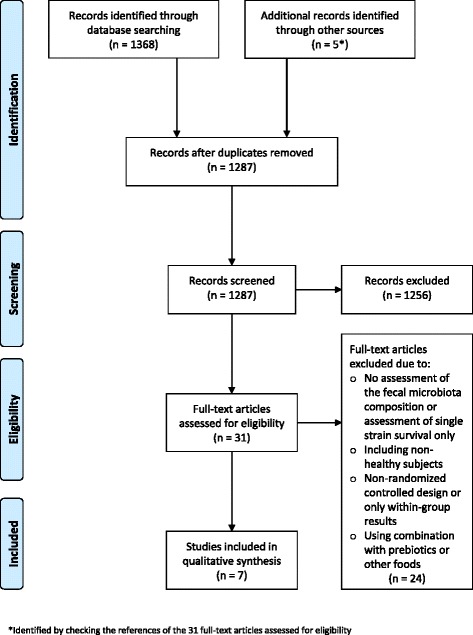
Verification
Claims the paper makes
The claims and statistics of this paper haven’t been checked yet.
Free: it reads the open-access text and checks the first 5 claims that cite a source we can check. Create a free account to check every claim.
Claims other papers make about this one
Each is checked against this paper’s own text: does it say what the citing paper says it does?
The source backs part of the claim, not all of it — or backs it for a different population, condition or comparison.
In the citing paper
“While this could align with the observed lack of efficacy of HN019, it is also commonly observed that probiotics do not change the microbiota composition in healthy adults.15”
From Eight-Week Supplementation With Bifidobacterium lactis HN019 and Functional Constipation: A Randomized Clinical Trial (2024) · cites this paper as [15]
Experimental — accuracy not yet measuredThe source backs part of the claim, not all of it — or backs it for a different population, condition or comparison.
In the citing paper
“A systematic review, including seven RCTs summarised by Kristensen et al, also demonstrated a similar negative efficacy of probiotics supplement on faecal microbiota composition in healthy participants.48”
From Efficacy in bowel movement and change of gut microbiota on adult functional constipation patients treated with probiotics-containing products: a systematic review and meta-analysis (2024) · cites this paper as [48]
Experimental — accuracy not yet measuredThe cited source says what the claim attributes to it.
In the citing paper
“However, the lack of effect of the probiotic on the stool microbiota is in agreement with the findings of a systematic review of seven RCTs,”
The cited source says what the claim attributes to it.
In the citing paper
“a systematic review of seven RCTs, which investigated the effect of probiotic supplementation on the stool microbiota and revealed that probiotics had no effects on the stool microbiota composition in terms of α -diversity, richness, or evenness when compared to placebo 45 .”
In the citing paper
“In fact, a 2016 systematic review by Kristensen et al. found that probiotics have no impact on alpha-diversity, evenness and richness in the faecal microbiota across several studies on healthy individuals, bar one which noted an effect on beta-diversity [52].”
From Effect of Diet on the Gut Microbiota: Rethinking Intervention Duration (2019) · cites this paper as [52]
1 more claim about this paper
Create a free account to see every claim other papers make about this one.
Self-check
Percentages, sums and reported differences re-computed from the paper’s own numbers.
The self-check needs the paper’s full text.
Citations
Cites
Preferred Reporting Items for Systematic Reviews and Meta-Analyses: the PRISMA statement
Moher, D., Liberati, A., Tetzlaff, J., Altman, D. G., & for the PRISMA Group (2009) · BMJ · doi:10.1136/bmj.b2535 · Cited by 83,823
Preferred reporting items for systematic reviews and meta-analyses: the PRISMA Statement.
(2009) · PubMed Central · Cited by 44,859
Preferred reporting items for systematic reviews and meta-analyses: The PRISMA statement
Moher, D., Liberati, A., Tetzlaff, J., Altman, D. G., & the PRISMA Group* (2009) · Annals of Internal Medicine · doi:10.7326/0003-4819-151-4-200908180-00135 · Cited by 37,554
Liberati, A., Altman, D. G., Tetzlaff, J., Mulrow, C., Gøtzsche, P. C., Ioannidis, J. P. A., Clarke, M., Devereaux, P. J., Kleijnen, J., & Moher, D. (2009) · PLoS Medicine · doi:10.1371/journal.pmed.1000100 · Cited by 28,164 · cited 1×
“Risk of bias was further assessed regarding concealment of randomization, early termination of trial, blinding of patients, healthcare providers, data collectors and outcome assessors, reporting of drop-out or withdrawal, selective outcome reporting, and other potential biases [32, 33].”
BackgroundNaïve Bayesian Classifier for Rapid Assignment of rRNA Sequences into the New Bacterial Taxonomy
Wang, Q., Garrity, G. M., Tiedje, J. M., & Cole, J. R. (2007) · Applied and Environmental Microbiology · doi:10.1128/aem.00062-07 · Cited by 19,885 · cited 1×
“Several studies have examined the effects of region choice when evaluating fecal microbiota composition with no current international consensus [47, 49–51].”
BackgroundPreferred Reporting Items for Systematic Reviews and Meta-Analyses: The PRISMA Statement
Moher, D., Liberati, A., Tetzlaff, J., & Altman, D. G. (2009) · Journal of Clinical Epidemiology · doi:10.1016/j.jclinepi.2009.06.005 · Cited by 19,575
Assessing the quality of reports of randomized clinical trials: Is blinding necessary?
Jadad, A. R., Moore, R. A., Carroll, D., Jenkinson, C., Reynolds, D. J. M., Gavaghan, D. J., & McQuay, H. J. (1996) · Controlled Clinical Trials · doi:10.1016/0197-2456(95)00134-4 · Cited by 17,582 · cited 1×
“clinical trials was performed independently by NBK and TB using a three-item instrument (the Jadad score) that evaluates likelihood of bias in research reports [31].”
MethodA human gut microbial gene catalogue established by metagenomic sequencing
MetaHIT Consortium, Qin, J., Li, R., Raes, J., Arumugam, M., Burgdorf, K. S., Manichanh, C., Nielsen, T., Pons, N., Levenez, F., et al. (2010) · Nature · doi:10.1038/nature08821 · Cited by 11,624 · cited 1×
“Compositional information can be achieved by mapping the reads to a microbial gene reference catalogue [34], as was done by Brahe et al.”
MethodSelf-citationZhang, Q., Wang, C., Zheng, M., Li, Y., Li, J., Zhang, L., Shang, X., & Yan, C. (2015) · Cerebrovascular Diseases · doi:10.1159/000369778 · Cited by 11,533
Diet rapidly and reproducibly alters the human gut microbiome
David, L. A., Maurice, C. F., Carmody, R. N., Gootenberg, D. B., Button, J. E., Wolfe, B. E., Ling, A. V., Devlin, A. S., Varma, Y., Fischbach, M. A., et al. (2014) · Nature · doi:10.1038/nature12820 · Cited by 10,100 · cited 1×
“animalbased, amount of dietary fibers and fat) influence the fecal microbiota composition and function [36–38].”
Background
Cited by
Items 301–400 of 565
Husein‐ElAhmed, H., & Steinhoff, M. S. (2023) · JDDG Journal der Deutschen Dermatologischen Gesellschaft · doi:10.1111/ddg.15120 · Cited by 20
Ye, H., Ghosh, T. S., Hueston, C. M., Vlčková, K., Golubeva, A. V., Hyland, N. P., & O’Toole, P. W. (2023) · Gut Microbes · doi:10.1080/19490976.2023.2282796 · Cited by 21
“Consistent with previous probiotic studies 55–57 , S7 supplementation as a live biother-apeutic consortium in frail donor recipient mice did not change the alpha-diversity.”
ResultLonstein, J. S., Meinhardt, T. A., Pavlidi, P., Kokras, N., Dalla, C., Charlier, T. D., & Pawluski, J. L. (2024) · Psychoneuroendocrinology · doi:10.1016/j.psyneuen.2024.107033 · Cited by 18
Sepp, E., Smidt, I., Štšepetova, J., Rööp, T., Hütt, P., Rätsep, M., & Mikelsaar, M. (2018) · Journal of Functional Foods · doi:10.1016/j.jff.2018.04.053 · Cited by 18
Intestinal microbiota – A modulator of the Trypanosoma cruzi-vector-host triad
Teotônio, I. M. S. N., Dias, N., Hagström, L., Nitz, N., Francisco, A. F., & Hecht, M. M. (2019) · Microbial Pathogenesis · doi:10.1016/j.micpath.2019.103711 · Cited by 22
Maternal gut microbiota displays minor changes in overweight and obese women with GDM
MULLINS, T. P., Tomsett, K. I., Gallo, L. A., Callaway, L. K., McIntyre, D. H., Nitert, M. D., & Barrett, H. L. (2021) · Nutrition Metabolism and Cardiovascular Diseases · doi:10.1016/j.numecd.2021.03.029 · Cited by 21
An insight into the health beneficial of probiotics dairy products: a critical review
He, J., Li, W., Deng, J., Lin, Q., Bai, J., Zhang, L., & Fang, Y. (2022) · Critical Reviews in Food Science and Nutrition · doi:10.1080/10408398.2022.2090493 · Cited by 22
“After supplementing with probiotics, no effects on the diversity, richness or uniformity of the fecal microflora composition of the study subjects were observed (Kristensen et al. 2016).”
MethodProbiotics in the Intensive Care Unit
Schuurman, A. R., Kullberg, R. F. J., & Wiersinga, W. J. (2022) · Antibiotics · doi:10.3390/antibiotics11020217 · Cited by 22
“A systematic review found no effect of probiotics on the fecal microbiota composition of healthy adults in six out of seven randomized controlled trials [73].”
BackgroundHuang, T., Li, Z., Tye, K. D., Chan, S. N., Tang, X., Luo, H., Wang, D., Zhou, J., Duan, X., & Xiao, X. (2022) · Frontiers in Microbiology · doi:10.3389/fmicb.2022.1042846 · Cited by 21
Martoni, C., Srivastava, S., Damholt, A. B., & Leyer, G. J. (2023) · World Journal of Gastroenterology · doi:10.3748/wjg.v29.i28.4451 · Cited by 31
Nikolova, V. L., Cleare, A. J., Young, A. H., & Stone, J. M. (2025) · Journal of Affective Disorders · doi:10.1016/j.jad.2025.01.153 · Cited by 23
The Development of Our Organ of Other Kinds—The Gut Microbiota
Liu, S. (2016) · Frontiers in Microbiology · doi:10.3389/fmicb.2016.02107 · Cited by 20
“For example, a systematic review of evidences suggests that the use of probiotics does not change the composition of fecal microbiota (Kristensen et al., 2016), suggesting that the host has an intrinsic selection mechanism.”
BackgroundJiang, H., Xu, X., Lv, L., Huang, X., Ahmed, T., Tian, Y., Hu, S., Chen, J., & Li, B. (2024) · Journal of Agricultural and Food Chemistry · doi:10.1021/acs.jafc.4c09178 · Cited by 18
Leveraging beneficial microbiome-immune interactions via probiotic use in cancer immunotherapy
Jani, C., Edwards, K., Bhanushali, C. D., Zheng, X. X., Salazar, A. S., Lopes, G. D. L., Jr., & Watson, D. C. (2025) · Frontiers in Immunology · doi:10.3389/fimmu.2025.1713382 · Cited by 21
Pharmacological Efficacy of Probiotics in Respiratory Viral Infections: A Comprehensive Review
Wahab, S., Almaghaslah, D., Mahmood, S. E., Ahmad, M. F., Alsayegh, A. A., Haddash, Y. M. A., Rahman, M. A., Ahamd, I., Ahmad, W., Khalid, M., et al. (2022) · Journal of Personalized Medicine · doi:10.3390/jpm12081292 · Cited by 21
“The capacity of a probiotic strain to outcompete another strain within a certain niche is thus required for the establishment of a probiotic in the gut to be long-lasting [170,171].”
BackgroundThe Involvement of Immune Cells Between Ischemic Stroke and Gut Microbiota
Pu, B., Zhu, H., Wei, L., Gu, L., Zhang, S., Jian, Z., & Xiong, X. (2023) · Translational Stroke Research · doi:10.1007/s12975-023-01151-7 · Cited by 16
Wu, C., Fan, Y., Chen, X., Cao, J.-W., Ye, J.-Y., Feng, M.-L., Liu, X., Sun, W.-J., Liu, R., & Wang, A. (2024) · BMC Plant Biology · doi:10.1186/s12870-024-04910-2 · Cited by 19
“In plant-microbe interactions, rich bacterial diversity is often associated with enhanced resistance to pathogen invasion, which is pri - marily achieved through competition for resources [75].”
BackgroundDaisley, B. A., & Allen‐Vercoe, E. (2024) · Annals of the New York Academy of Sciences · doi:10.1111/nyas.15237 · Cited by 20
Lee, S., Joo, N., Kim, K., & Kim, K.-N. (2018) · Gastroenterology Research and Practice · doi:10.1155/2018/8791916 · Cited by 17
“Although a few studies have shown that the consumption of multistrain probiotic results in increased diversity of intestinal bacteria in diarrhea-predominant IBS [13, 14], a recent systematic review of randomized controlled trials reported that probiotic intake did not affect the fecal microbiota composition in terms…”
BackgroundResearch Progress in Fecal Microbiota Transplantation as Treatment for Irritable Bowel Syndrome
Wang, Y., Zheng, F., Liu, S., & Luo, H. (2019) · Gastroenterology Research and Practice · doi:10.1155/2019/9759138 · Cited by 18
“Probiotics are living microorganisms that are beneficial to the human body [65].”
BackgroundGut microbiota dysbiosis in patients with preeclampsia: A systematic review
Wei, Q., Shi, Y., Zhou, H., & Chen, M. (2021) · Medicine in Microecology · doi:10.1016/j.medmic.2021.100047 · Cited by 16
Jačan, A., Kashofer, K., Zenz, G., Fröhlich, E. E., Reichmann, F., Hassan, A. M., & Holzer, P. D. (2019) · European Journal of Nutrition · doi:10.1007/s00394-019-02035-z · Cited by 20
Zhang, Z., Jin, M., Wang, K., Zhang, N., Zhang, Q., Tao, X., & Wei, H. (2021) · Food & Function · doi:10.1039/d1fo00162k · Cited by 17
Probiotics During the Therapeutic Management of Periodontitis
Furlaneto, F. A. C., Ishikawa, K., Messora, M. R., & Mayer, M. P. A. (2022) · Advances in experimental medicine and biology · doi:10.1007/978-3-030-96881-6_19 · Cited by 20
Microbiome's Universe: Impact on health, disease and cancer treatment
Réthi‐Nagy, Z., & Juhász, S. (2024) · Journal of Biotechnology · doi:10.1016/j.jbiotec.2024.07.002 · Cited by 18
Recent updates of probiotic dairy-based beverages
Taşkoparan, Ş., Altınay, C., & Özer, B. (2025) · Food & Function · doi:10.1039/d4fo06322h · Cited by 21
Safety of probiotics in humans: A dark side revealed?
Pace, F., Macchini, F., & Castagna, V. M. (2020) · Digestive and Liver Disease · doi:10.1016/j.dld.2020.04.029 · Cited by 21
Cheng, J., Gao, C., Ala-Jaakkola, R., Forssten, S. D., Saarinen, M., Hibberd, A., Ouwehand, A. C., Ibarra, A., Li, D., Nordlund, A., et al. (2024) · JAMA Network Open · doi:10.1001/jamanetworkopen.2024.36888 · Cited by 17
Eastwood, J., van Hemert, S., Stolaki, M., Williams, C. M., Walton, G., & Lamport, D. J. (2025) · American Journal of Clinical Nutrition · doi:10.1016/j.ajcnut.2025.04.002 · Cited by 24
Therapeutic implications of the gastrointestinal microbiome
Kashyap, P., & Quigley, E. M. M. (2018) · Current Opinion in Pharmacology · doi:10.1016/j.coph.2018.01.004 · Cited by 15
Kwon, A., & Park, Y. (2021) · Microorganisms · doi:10.3390/microorganisms9122437 · Cited by 15
“Probiotics stimulate and modulate the immune system of the host by activating specific genes in localized host cells [3].”
Dong, Y., Takeuchi, Y., & Nakaoka, S. (2018) · Nonlinear Analysis Real World Applications · doi:10.1016/j.nonrwa.2018.02.005 · Cited by 14
The Human Microbiome in Health and Disease
Arnold, W., Hill, E. S., Fei, N., Yee, A. L., Garcia, M. S., Cralle, L. E., & Gilbert, J. A. (2018) · Springer eBooks · doi:10.1007/978-3-319-96830-8_39 · Cited by 15
Mörschbächer, A. P., Pappen, E., Henriques, J. A. P., & Granada, C. E. (2023) · Anais da Academia Brasileira de Ciências · doi:10.1590/0001-3765202320230037 · Cited by 16
“Kristensen et al. (2016) found results similar to those of the present study.”
ResultConcepts and criteria defining emerging microbiome applications
Kostić, T., Schloter, M., Arruda, P., Berg, G., Charles, T. C., Cotter, P. D., Kiran, G. S., Lange, L., Maguin, E., Meisner, A., et al. (2024) · Microbial Biotechnology · doi:10.1111/1751-7915.14550 · Cited by 15
“Currently, there is insufficient scientific evidence to inform the determination of intake recommendations for the general population (Kristensen et al., 2016; Marco et al., 2020).”
BackgroundPeng, L., Yin, Q., Wang, X., Zhong, Y., Wang, Y., Cai, W., Zhou, R., Chen, Y., Hu, Y., Cheng, Z., et al. (2024) · Microorganisms · doi:10.3390/microorganisms12122483 · Cited by 15
“A systematic review also revealed that most human probiotic studies did not show significant changes in the microbiota composition [36].”
Liu, Y., Chen, Y., Liao, H., Sun, S., Zhang, X., Xie, L., & Liu, H. (2025) · Frontiers in Nutrition · doi:10.3389/fnut.2025.1553674 · Cited by 16
Regulating microbiome manipulation
Aagaard, K. M., & Hohmann, E. L. (2019) · Nature Medicine · doi:10.1038/s41591-019-0451-1 · Cited by 14
Longitudinal Survey of Fecal Microbiota in Healthy Dogs Administered a Commercial Probiotic
Ciaravolo, S., Martínez-López, L. M., Allcock, R. J. N., Woodward, A. P., & Mansfield, C. (2021) · Frontiers in Veterinary Science · doi:10.3389/fvets.2021.664318 · Cited by 18
“However, previous human and canine studies have also found that the use of a synbiotic caused an increase in the relative proportions of sequencing tags belonging to the phylum Fusobacteria at all phylogenetic levels down to the genus Fusobacterium when compared to baseline values (16, 40).”
BackgroundResultMechanisms and applications of probiotics in healthcare industry
Pawar, R., Dhawal, P. P., Nabar, B., Barve, S., & Zambare, V. (2022) · Elsevier eBooks · doi:10.1016/b978-0-323-90042-3.00002-5 · Cited by 15
Tendencies and Challenges in Worldwide Scientific Research on Probiotics
Aleixandre-Tudó, J. L., Castelló‐Cogollos, L., Aleixandre, J. L., & Aleixandre‐Benavent, R. (2019) · Probiotics and Antimicrobial Proteins · doi:10.1007/s12602-019-09591-0 · Cited by 16
An Insight into the Combination of Probiotics and their Implications for Human Health
Hmar, E. B. L., Paul, S., & Sharma, H. K. (2023) · Endocrine Metabolic & Immune Disorders - Drug Targets · doi:10.2174/1871530323666230502141717 · Cited by 17
The Role of the Gut Microbiome in Hematological Cancers
Hussein, N., Rajasuriar, R., Khan, A. M., Lim, Y. A. L., & Gan, G. G. (2023) · Molecular Cancer Research · doi:10.1158/1541-7786.mcr-23-0080 · Cited by 13
Lennon, S., Lackie, T., Miltko, A., Kearns, Z. C., Paquette, M. R., Bloomer, R. J., Wang, A., & van der Merwe, M. (2024) · Applied Physiology, Nutrition, and Metabolism · doi:10.1139/apnm-2023-0449 · Cited by 15
“A recent systematic review reported that there is no convincing evidence for consistent effects of probiotics on fecal microbiota in healthy adults (Kristensen et al. 2016).”
BackgroundGut microbial dysbiosis in the pathogenesis of leukemia: an immune-based perspective
Goswami, M., & Bose, P. D. (2024) · Experimental Hematology · doi:10.1016/j.exphem.2024.104211 · Cited by 14
Novel Therapies in Hepatic Encephalopathy
Alimirah, M., Sadiq, O., & Gordon, S. C. (2020) · Clinics in Liver Disease · doi:10.1016/j.cld.2020.01.009 · Cited by 14
Czajeczny, D., Kabzińska, K., & Wójciak, R. W. (2020) · Eating and Weight Disorders - Studies on Anorexia Bulimia and Obesity · doi:10.1007/s40519-020-00983-8 · Cited by 13
Khan, F. M., Morya, S., & Chattu, V. K. (2021) · Journal of Applied and Natural Science · doi:10.31018/jans.v13i2.2683 · Cited by 18
Peipert, D., Montgomery, T. L., Toppen, L. C., Lee, M. F. J., Scarborough, M., & Krementsov, D. N. (2025) · Frontiers in Immunology · doi:10.3389/fimmu.2025.1655428 · Cited by 11
Modulating the gut microbiome in non-small cell lung cancer: Challenges and opportunities
Lee, J. B., Huang, Y., Oya, Y., Nützinger, J., Ang, Y. L. E., Sooi, K. W. X., Cho, B. C., & Soo, R. A. (2024) · Lung Cancer · doi:10.1016/j.lungcan.2024.107862 · Cited by 13
Chen, Z., Liao, Y., Chai, S., Yang, Y., Ga, Q., Ge, R.-L., Wang, S., & Liu, S. (2024) · Current Issues in Molecular Biology · doi:10.3390/cimb46110756 · Cited by 13
Obayomi, O. V., & Edo, G. I. (2025) · Food Wellness · doi:10.1016/j.foodw.2025.100021 · Cited by 12
Early probiotics shape microbiota
Oliphant, K., & Claud, E. C. (2022) · Nature Microbiology · doi:10.1038/s41564-022-01230-9 · Cited by 11
Change in the Gut Microbiome and Immunity by Lacticaseibacillusrhamnosus Probio-M9
Zhang, M., Zheng, Y., Sun, Z., Cao, C., Zhao, W., Liu, Y., Zhang, W., & Zhang, H. (2023) · Microbiology Spectrum · doi:10.1128/spectrum.03609-22 · Cited by 16
“mental, genetic, and lifestyle factors) (27) and the lack of an internationally accepted”
BackgroundIloba, I., McGarry, S. V., Yu, L., Cruickshank, D., & Jensen, G. S. (2023) · Microorganisms · doi:10.3390/microorganisms11102564 · Cited by 14
“…of the symbiotic relationship between the human body and its gut microbiome results in an unhealthy alteration of the composition of the microbiota, leading to a pro-inflammatory state that can adversely affect intestinal permeability, digestion, and metabolism, as well as immune responses [2,3].”
BackgroundRapid PCR identification of Prevotella copri in an Australian cohort of pregnant women
Gray, L. E. K., Hasebe, K., O’Hely, M., Ponsonby, A., Vuillermin, P., Collier, F., & the BIS Investigator Group (2019) · Journal of Developmental Origins of Health and Disease · doi:10.1017/s2040174419000849 · Cited by 11
Validity and safety of ID-JPL934 in lower gastrointestinal symptom improvement
Shin, C. M., Choi, Y. J., Lee, D. H., Moon, J. S., Kim, T., Kim, Y.-K., Lee, W.-H., Yoon, H., Park, Y. S., & Kim, N. (2021) · Scientific Reports · doi:10.1038/s41598-021-92007-3 · Cited by 12
Czajeczny, D., Kabzińska, K., & Wójciak, R. W. (2021) · Applied Neuropsychology Adult · doi:10.1080/23279095.2021.1967155 · Cited by 12
“Kristensen et al. (2016) reviewed available randomized controlled trials on the effect of probiotic supplementation on the composition of human fecal microbiota as assessed by high-throughput molecular approaches.”
BackgroundProbiotics: The Ultimate Nutritional Supplement
Kerry, R. G., Pradhan, P., Samal, D., Gouda, S., Das, G., Shin, H., & Patra, J. K. (2018) · Springer eBooks · doi:10.1007/978-981-10-7140-9_7 · Cited by 13
Mullish, B. H., Michael, D. R., Webberley, T. S., John, D., Ramanathan, G., Plummer, S. F., Wang, D., & Marchesi, J. R. (2023) · Beneficial Microbes · doi:10.3920/bm2022.0092 · Cited by 14
Jansma, J., Chatziioannou, A. C., Castricum, K., van Hemert, S., & Aidy, S. E. (2023) · mSystems · doi:10.1128/msystems.00332-23 · Cited by 11
“However, current probiotic interventions do not take into account the functional capacity of probiotics to occupy specific niches in the gut (58), which may explain the variable effectiveness of probiotics (59).”
BackgroundPertiwi, R. B., Setiabudi, Y. C., Mayangsari, Y., Suroto, D. A., & Rahayu, E. S. (2024) · Preventive Nutrition and Food Science · doi:10.3746/pnf.2024.29.3.270 · Cited by 11
“Screening fecal samples is a method for evaluating whether probiotics have survived passage through the gastrointestinal tract (Kristensen et al., 2016).”
MethodSomers, S. E., Davidson, G. L., Mbandlwa, P., McKeon, C. M., Stanton, C., Ross, R. P., & Quinn, J. L. (2024) · Proceedings of the National Academy of Sciences · doi:10.1073/pnas.2402352121 · Cited by 10
“Single - strain off - the - shelf probiotic interventions can provide a more targeted way of changing the gut microbiome ( 27 ) but their efficacy is mixed ( 27 – 29 ) perhaps because the microbes used are not adapted to the host species and do not interact with host tissues ( 30 – 32 ).”
Dietary and Micronutrient Treatments for Children with Neurodevelopment Disorders
Taylor, M. R., Chuang, C.-C., Carrasco, K., Nagatomo, S., & Rucklidge, J. J. (2018) · Current Developmental Disorders Reports · doi:10.1007/s40474-018-0150-5 · Cited by 12
The Microbiome and Endothelial Function: An Investigative Fountain or Analytical Morass
Leslie, J. L., & Annex, B. H. (2018) · Circulation Research · doi:10.1161/circresaha.118.313813 · Cited by 13
“Overall, the findings from this study are in line with other works, which have seen minimal effects of probiotic supplementation on community structure.(15,16) Plasma levels of acetic, propionic, and butyric acid, which are derivatives of microbial-derived short-chain fatty acids, were measured as a surrogate to deter…”
ResultDwijayanti, I., Nuriannisa, F., Yamani, L. N., Wulandari, C., Utami, F. A., & Mahmudiono, T. (2025) · Nutrition · doi:10.1016/j.nut.2025.112814 · Cited by 9
Gut microbiome regulation in equine animals: current understanding and future perspectives
Li, F., Kong, X., Khan, M. Z., Lin, W., Wei, J., Zhu, M., Liu, G., Huang, B., Wang, C., & Zhang, Z. (2025) · Frontiers in Microbiology · doi:10.3389/fmicb.2025.1602258 · Cited by 12
Gut microbiota mediates the beneficial effects of exercise on autism-like behaviors
Zhong, J., Zhu, B., Zou, Z., Li, Y., Feng, Y., Ke, W., & Hou, X. (2026) · BMC Microbiology · doi:10.1186/s12866-025-04632-x · Cited by 13
“For example, a systematic review by Kristensen et al. [68] revealed that supplementation with probiotics did not seem to affect the composition of the fecal microbiota in healthy people.”
Łoniewski, I., Szulińska, M., Kaczmarczyk, M., Podsiadło, K., Styburski, D., Skonieczna‐Żydecka, K., & Bogdański, P. (2023) · Nutrition · doi:10.1016/j.nut.2023.112109 · Cited by 10
Probiotics ameliorate endocrine disorders via modulating inflammatory pathways: a systematic review
Nemati, M., Ebrahimi, B., & Montazeri‐Najafabady, N. (2024) · Genes & Nutrition · doi:10.1186/s12263-024-00743-8 · Cited by 19
Zhang, Z., Liang, Y., Mo, S., Zhao, M., Li, Y., Zhang, C., Shan, X., Liu, S., Liao, J., Luo, X., et al. (2024) · Physiological Reports · doi:10.14814/phy2.70174 · Cited by 8
Recent Advances in Gut Microbiota in Psoriatic Arthritis
Bonomo, M. G., D’Angelo, S., Picerno, V., Carriero, A., & Salzano, G. (2025) · Nutrients · doi:10.3390/nu17081323 · Cited by 10
“The most commonly used probiotic species include bacteria belonging to the genera Lactobacillus and Bifidobacteria , as well as yeasts such as Saccharomyces boulardii [133].”
Zhang, D., Zhou, M., Qiu, Y., Xu, H., Liu, H., Liu, Y., & Xie, L. (2025) · Frontiers in Aging Neuroscience · doi:10.3389/fnagi.2025.1642240 · Cited by 14
Deng, Y., Liu, X., Yao, Y., Xiao, B., He, C., Guo, S., Tang, S., & Qu, X. (2022) · Italian Journal of Animal Science · doi:10.1080/1828051x.2022.2149357 · Cited by 8
“And many studies proved that Pro could increase intestinal microbial diversity (Kristensen et al. 2016; Hu et al. 2017; Wang et al. 2021).”
BackgroundThe Human Gut Microbiota in all its States: From Disturbance to Resilience
Tap, J., Ruppé, É., & Derrien, M. (2021) · Elsevier eBooks · doi:10.1016/b978-0-12-819265-8.00039-5 · Cited by 9
Simple Energy Balance or Microbiome for Childhood Obesity Prevention?
Baranowski, T., & Motil, K. J. (2021) · Nutrients · doi:10.3390/nu13082730 · Cited by 9
Huang, Y., Lu, H., Zhang, L., Olivier, A. K., Wu, T., Hsu, C., LeGrand, C., Zeng, H., Curran, S., Wang, Q., et al. (2025) · Aging Cell · doi:10.1111/acel.70130 · Cited by 7
“Furthermore, a systematic review of randomized controlled trials found no significant effect of probiotic supplementation on gut microbiota in healthy individuals (Kristensen et al. 2016).”
Cernioglo, K., Kalanetra, K. M., Meier, A., Lewis, Z. T., Underwood, M. A., Mills, D. A., & Smilowitz, J. T. (2021) · Nutrients · doi:10.3390/nu13124392 · Cited by 8
“Several other probiotic supplementation studies have shown that the overall microbiome may not change even though the levels of specific microbes found in the probiotic formulation increase in target body environments [22,23].”
BackgroundBruse, N., Jansen, A., Gerretsen, J., Rijbroek, D., Wienholts, K., Arron, M. N. N., van Goor, H., Ederveen, T. H. A., Pickkers, P., & Kox, M. (2023) · Microbes and Infection · doi:10.1016/j.micinf.2023.105174 · Cited by 7
The athlete gut microbiota: state of the art and practical guidance
Pérez-Castillo, Í. M., Sabag-Daigle, A., Chicharro, J. L., Mihic, N., Rueda, R., & Bouzamondo, H. (2024) · Beneficial Microbes · doi:10.1163/18762891-bja00007 · Cited by 16
Hazra, R., Chattopadhyay, S., Mallick, A., Gayen, S., & Roy, S. (2024) · Medical Oncology · doi:10.1007/s12032-024-02416-3 · Cited by 8
“Few studies that have been done till date demonstrate the potential advantages of probiotics on cancer treatments and recent research has concentrated on the effects of probiotics to prevent the formation and metagenesis of tumors or on the toxicity connected to cancer therapy [79].”
Madalı, B., Parlak, L., & Dikmen, D. (2025) · Journal of the Science of Food and Agriculture · doi:10.1002/jsfa.14162 · Cited by 7
Reigada, L. C., Buchanan, E. M., Hazeltine, D., Shakil, H., & Polokowski, A. R. (2021) · Journal of Affective Disorders Reports · doi:10.1016/j.jadr.2021.100141 · Cited by 10
In inflammatory bowel disease and extraintestinal manifestations: What role does microbiome play?
Shen, Y., Zhu, H., Zhou, L., Zheng, Y.-Q., Zhang, Z., Xie, Y., Liu, Z., Peng, C., Wang, L., Zhao, C., et al. (2023) · Engineered Regeneration · doi:10.1016/j.engreg.2023.04.005 · Cited by 14
Tomaz-Morais, J., de Lima, J. A. S., de Lucena, B. T. L., Limeira, R. R. T., Silva, S. M., Alves, G. Â. D. S., Batista, A. U. D., & de Castro, R. D. (2018) · Revista CEFAC · doi:10.1590/1982-021620182032318 · Cited by 7
Microbes in food to treat and prevent disease
Reid, G. (2018) · Expert Review of Precision Medicine and Drug Development · doi:10.1080/23808993.2018.1429217 · Cited by 7
“But, if this was possible, how might it work? Intake of probiotics may [11] or may not [12] result in major changes to the microbiota, at least as measured by 16s rRNA”
BackgroundChang, Y. H., Choi, Y. J., Shin, C. M., Moon, J. S., Kim, T., Yoon, H., Park, Y. S., Kim, N., & Lee, D. H. (2024) · Journal of Neurogastroenterology and Motility · doi:10.5056/jnm23036 · Cited by 9
“43 A recent study by Shin et al, 29 which investigated the microbiota of fecal samples derived from EV and non-EV separately after ingestion of multi-strain probiotics, showed that microbial diversity did not differ significantly between their treatment groups.”
Dong, A., Ding, X., Wang, J., Zeng, Q., Bai, S., Liu, Y., Xuan, Y., Li, S., Mu, Y., Peng, H., et al. (2025) · Frontiers in Microbiology · doi:10.3389/fmicb.2025.1530319 · Cited by 10
Lewandowski, R. (2026) · FEMS Microbiology Letters · doi:10.1093/femsle/fnag035 · Cited by 8
Gush, S., Lebre, P. H., Coutinho, T. A., Cowan, D. A., & der Waals, J. E. V. (2023) · Phytobiomes Journal · doi:10.1094/pbiomes-06-23-0046-r · Cited by 7
The influence of the gut microbiome on obesity
Blanco, C. E. (2020) · Journal of the American Association of Nurse Practitioners · doi:10.1097/jxx.0000000000000480 · Cited by 8
“Probioticsmay have the ability to alter the gutmicrobiota; however, they have not been shown to alter the diversity and richness of the microbiota (Kristensen et al., 2016).”
BackgroundModern approaches to the correction of the gut microbiota
Стуров, Н. В., Popov, S. V., & Zhukov, V. A. (2021) · Meditsinskiy sovet = Medical Council · doi:10.21518/2079-701x-2021-4-136-143 · Cited by 10
Exploring the culinary and health significance of fermented foods: A comprehensive review
Gondaliya, S. M., Sheth, J., & Shah, S. (2024) · World Journal of Advanced Research and Reviews · doi:10.30574/wjarr.2024.21.3.1000 · Cited by 8
Uses of Fecal Microbiota Transplantation in Neurodegenerative Disease: A Scoping Review
Sanzone, J., Life, M., Reiss, D., May, D. S., Hartley, B., Spiddle, P., Al-Kirwi, J., Grigoryan, T., & Costin, J. M. (2024) · Cureus · doi:10.7759/cureus.62265 · Cited by 11
“These organisms can prevent the replication and adhesion of harmful bacteria, and certain species of bacteria within probiotics can even produce compounds capable of killing pathogenic bacteria [17,18].”
BackgroundOumeddour, A., Zaroure, D., Haroune, R., Zaimeche, R., Riane, K., Sifour, M., & Tahraoui, A. (2019) · Pharmaceutical Sciences · doi:10.15171/ps.2019.36 · Cited by 6
Can Gut Microbiota Modulation Be Used as a Practical Treatment for Obesity?
Paek, J. K., & Lee, S. Y. (2018) · Journal of Obesity & Metabolic Syndrome · doi:10.7570/jomes.2018.27.2.75 · Cited by 7
Host genetic and environmental factors shape the human gut resistomePreprint
Roy, C. I. L., Bowyer, R. C. E., Carr, V. R., Costeira, R., Fernandez, J. C., Martin, T. C., Spector, T. D., Steves, C. J., Moyes, D. L., Forslund, S. K., et al. (2020) · bioRxiv (Cold Spring Harbor Laboratory) · doi:10.1101/2020.05.18.092973 · Cited by 6
“Individuals are constantly exposed to new bacteria that 74 might reach the gastrointestinal track and although the ability of these bacteria to 75 colonise the large intestine is debated [5], their passage through the gut ecosystem 76”
BackgroundZhao, C., Lu, X., Deng, X., Xia, W., Sun, T., Huo, D., & Shi, L. (2025) · Journal of Diabetes and its Complications · doi:10.1016/j.jdiacomp.2025.109195 · Cited by 5
Understanding the influence of the microbiome on childhood infections
Heston, S. M., Hurst, J. H., & Kelly, M. S. (2024) · Expert Review of Anti-infective Therapy · doi:10.1080/14787210.2024.2340664 · Cited by 8
“…which generally contrast with what has been observed in studies of probiotics in adults, suggest that early life may present a unique opportunity for probiotics to have long-term effects on gut microbiota composition, although these effects are likely to differ across probiotic strains [101,102].”
Bineid, M. M., Liu, L., Ventura, E. F., Bansal, S., Curi-Quinto, K., del Valle-Mendoza, J., Walton, G., & Vimaleswaran, K. S. (2025) · Gut Microbiome · doi:10.1017/gmb.2024.12 · Cited by 9
Metadata
- Authors
- Kristensen, N. B., Bryrup, T., Allin, K. H., Nielsen, T., Hansen, T. H., & Pedersen, O.
- Affiliations
- University of Copenhagen (DK)
- Corresponding author
- Kristensen, Nadja B.
- Venue
- Genome Medicine
- Published
- 2016-05-10
- Volume
- 8
- Issue
- 1
- Pages
- 52-52
- ISSN
- 1756-994X (ISSN-L)
- PMC
- PMC4862129
- OpenAlex
- W2343150225
- Cited by
- 561
- References
- 57
- Citations by year
- 2026: 34 · 2025: 44 · 2024: 64 · 2023: 53 · 2022: 57 · 2021: 67 · 2020: 74 · 2019: 66 · 2018: 53 · 2017: 34 · 2016: 15
- FWCI
- 6.47
- Type
- journal article
- Language
- en
- Open access
- gold
- doi.org
- Licence
- cc-by
- Locations
- Genome Medicine (publishedVersion, cc-by)
- PubMed Central (publishedVersion, cc-by)
- PubMed (publishedVersion)
- Research at the University of Copenhagen (University of Copenhagen) (acceptedVersion, cc-by)
- Funders
- The Novo Nordisk Foundation
- Topics
- Life Sciences › Agricultural and Biological Sciences › Food Science › Probiotics and Fermented Foods
- Life Sciences › Biochemistry, Genetics and Molecular Biology › Molecular Biology › Gut microbiota and health
- Health Sciences › Nursing › Nutrition and Dietetics › Infant Nutrition and Health
- Keywords
- probiotics, fecal microbiota, gut microbiota composition, healthy adults, Bifidobacterium, Lactobacillus, alpha diversity, beta diversity, microbiome, placebo comparison, metagenomic sequencing
- MeSH terms
- Adult, Bacteria, Feces, Humans, Phylogeny, Randomized Controlled Trials as Topic, Probiotics, Microbiota, Healthy Volunteers
About these checks
Registry, retraction, Cites and statistics results are computed, not judged, with one exception: a printed reference that no index lists is read once by a model before it counts as a citation error. Claims are extracted by a model and kept only when their quote appears verbatim in the text; each cited source is then checked, with a model’s help, for whether it says what the claim relies on. Those verdicts can be wrong — read the claim’s quote and the cited source before relying on one.
Statistics and arithmetic are recomputed, not judged.
Confidence bands are shown only for fields calibrated on our annotated test set. None is calibrated yet, so no band is shown.
What counts as a claim ›How we measure confidence ›How we check this ›
Are you an author, or do you see a problem with this page? Request a review
Data sources
Bibliographic data: Semantic Scholar, OpenAlex, Crossref.
Contains information from the Semantic Scholar Academic Graph Datasets, made available under the ODC Attribution License (ODC-BY 1.0).
Semantic Scholar’s data is described in: Kinney, R., et al. (2023). The Semantic Scholar Open Data Platform. arXiv:2301.10140.
