

Alterations in fecal microbiota composition by probiotic supplementation in healthy adults: a systematic review of randomized controlled trials
Open accessThe DOI matches its Crossref record; 57 of the 57 references it cites were found in a registry or an index.
Abstract
BACKGROUND: The effects of probiotic supplementation on fecal microbiota composition in healthy adults have not been well established. We aimed to provide a systematic review of the potential evidence for an effect of probiotic supplementation on the composition of human fecal microbiota as assessed by high-throughput molecular approaches in randomized controlled trials (RCTs) of healthy adults. METHODS: The survey of peer-reviewed papers was performed on 17 August 2015 by a literature search through PubMed, SCOPUS, and ISI Web of Science. Additional papers were identified by checking references of relevant papers. Search terms included healthy adult, probiotic, bifidobacterium, lactobacillus, gut microbiota, fecal microbiota, intestinal microbiota, intervention, and (clinical) trial. RCTs of solely probiotic supplementation and placebo in healthy adults that examined alteration in composition of overall fecal microbiota structure assessed by shotgun metagenomic sequencing, 16S ribosomal RNA sequencing, or phylogenetic microarray methods were included. Independent collection and quality assessment of studies were performed by two authors using predefined criteria including methodological quality assessment of reports of the clinical trials based on revised tools from PRISMA/Cochrane and by the Jadad score. RESULTS: Seven RCTs investigating the effect of probiotic supplementation on fecal microbiota in healthy adults were identified and included in the present systematic review. The quality of the studies was assessed as medium to high. Still, no effects were observed on the fecal microbiota composition in terms of α-diversity, richness, or evenness in any of the included studies when compared to placebo. Only one study found that probiotic supplementation significantly modified the overall structure of the fecal bacterial community in terms of β-diversity when compared to placebo. CONCLUSIONS: This systematic review of the pertinent literature demonstrates a lack of evidence for an impact of probiotics on fecal microbiota composition in healthy adults. Future studies would benefit from pre-specifying the primary outcome and transparently reporting the results including effect sizes, confidence intervals, and P values as well as providing a clear distinction of between-group and within-group comparisons.
Overview
The claims and statistics of this paper haven’t been checked yet.
Free: it reads the open-access text and checks the first 5 claims that cite a source we can check. Create a free account to check every claim.
Integrity signals
Registry
Cites
Statistics
Figures
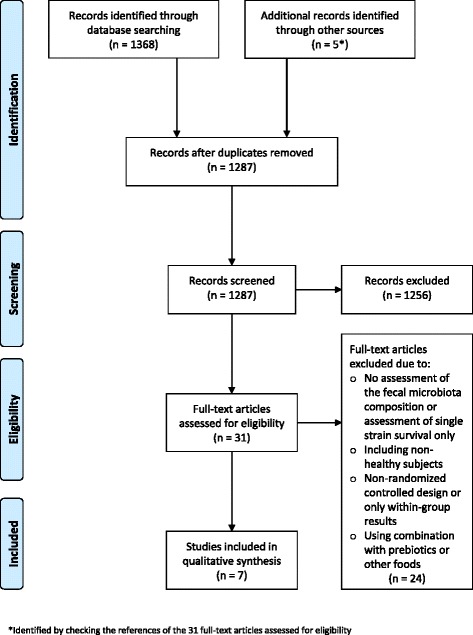
Verification
Claims the paper makes
The claims and statistics of this paper haven’t been checked yet.
Free: it reads the open-access text and checks the first 5 claims that cite a source we can check. Create a free account to check every claim.
Claims other papers make about this one
Each is checked against this paper’s own text: does it say what the citing paper says it does?
The source backs part of the claim, not all of it — or backs it for a different population, condition or comparison.
In the citing paper
“While this could align with the observed lack of efficacy of HN019, it is also commonly observed that probiotics do not change the microbiota composition in healthy adults.15”
From Eight-Week Supplementation With Bifidobacterium lactis HN019 and Functional Constipation: A Randomized Clinical Trial (2024) · cites this paper as [15]
Experimental — accuracy not yet measuredThe source backs part of the claim, not all of it — or backs it for a different population, condition or comparison.
In the citing paper
“A systematic review, including seven RCTs summarised by Kristensen et al, also demonstrated a similar negative efficacy of probiotics supplement on faecal microbiota composition in healthy participants.48”
From Efficacy in bowel movement and change of gut microbiota on adult functional constipation patients treated with probiotics-containing products: a systematic review and meta-analysis (2024) · cites this paper as [48]
Experimental — accuracy not yet measuredThe cited source says what the claim attributes to it.
In the citing paper
“However, the lack of effect of the probiotic on the stool microbiota is in agreement with the findings of a systematic review of seven RCTs,”
The cited source says what the claim attributes to it.
In the citing paper
“a systematic review of seven RCTs, which investigated the effect of probiotic supplementation on the stool microbiota and revealed that probiotics had no effects on the stool microbiota composition in terms of α -diversity, richness, or evenness when compared to placebo 45 .”
In the citing paper
“In fact, a 2016 systematic review by Kristensen et al. found that probiotics have no impact on alpha-diversity, evenness and richness in the faecal microbiota across several studies on healthy individuals, bar one which noted an effect on beta-diversity [52].”
From Effect of Diet on the Gut Microbiota: Rethinking Intervention Duration (2019) · cites this paper as [52]
1 more claim about this paper
Create a free account to see every claim other papers make about this one.
Self-check
Percentages, sums and reported differences re-computed from the paper’s own numbers.
The self-check needs the paper’s full text.
Citations
Cites
Preferred Reporting Items for Systematic Reviews and Meta-Analyses: the PRISMA statement
Moher, D., Liberati, A., Tetzlaff, J., Altman, D. G., & for the PRISMA Group (2009) · BMJ · doi:10.1136/bmj.b2535 · Cited by 83,823
Preferred reporting items for systematic reviews and meta-analyses: the PRISMA Statement.
(2009) · PubMed Central · Cited by 44,859
Preferred reporting items for systematic reviews and meta-analyses: The PRISMA statement
Moher, D., Liberati, A., Tetzlaff, J., Altman, D. G., & the PRISMA Group* (2009) · Annals of Internal Medicine · doi:10.7326/0003-4819-151-4-200908180-00135 · Cited by 37,554
Liberati, A., Altman, D. G., Tetzlaff, J., Mulrow, C., Gøtzsche, P. C., Ioannidis, J. P. A., Clarke, M., Devereaux, P. J., Kleijnen, J., & Moher, D. (2009) · PLoS Medicine · doi:10.1371/journal.pmed.1000100 · Cited by 28,164 · cited 1×
“Risk of bias was further assessed regarding concealment of randomization, early termination of trial, blinding of patients, healthcare providers, data collectors and outcome assessors, reporting of drop-out or withdrawal, selective outcome reporting, and other potential biases [32, 33].”
BackgroundNaïve Bayesian Classifier for Rapid Assignment of rRNA Sequences into the New Bacterial Taxonomy
Wang, Q., Garrity, G. M., Tiedje, J. M., & Cole, J. R. (2007) · Applied and Environmental Microbiology · doi:10.1128/aem.00062-07 · Cited by 19,885 · cited 1×
“Several studies have examined the effects of region choice when evaluating fecal microbiota composition with no current international consensus [47, 49–51].”
BackgroundPreferred Reporting Items for Systematic Reviews and Meta-Analyses: The PRISMA Statement
Moher, D., Liberati, A., Tetzlaff, J., & Altman, D. G. (2009) · Journal of Clinical Epidemiology · doi:10.1016/j.jclinepi.2009.06.005 · Cited by 19,575
Assessing the quality of reports of randomized clinical trials: Is blinding necessary?
Jadad, A. R., Moore, R. A., Carroll, D., Jenkinson, C., Reynolds, D. J. M., Gavaghan, D. J., & McQuay, H. J. (1996) · Controlled Clinical Trials · doi:10.1016/0197-2456(95)00134-4 · Cited by 17,582 · cited 1×
“clinical trials was performed independently by NBK and TB using a three-item instrument (the Jadad score) that evaluates likelihood of bias in research reports [31].”
MethodA human gut microbial gene catalogue established by metagenomic sequencing
MetaHIT Consortium, Qin, J., Li, R., Raes, J., Arumugam, M., Burgdorf, K. S., Manichanh, C., Nielsen, T., Pons, N., Levenez, F., et al. (2010) · Nature · doi:10.1038/nature08821 · Cited by 11,624 · cited 1×
“Compositional information can be achieved by mapping the reads to a microbial gene reference catalogue [34], as was done by Brahe et al.”
MethodSelf-citationZhang, Q., Wang, C., Zheng, M., Li, Y., Li, J., Zhang, L., Shang, X., & Yan, C. (2015) · Cerebrovascular Diseases · doi:10.1159/000369778 · Cited by 11,533
Diet rapidly and reproducibly alters the human gut microbiome
David, L. A., Maurice, C. F., Carmody, R. N., Gootenberg, D. B., Button, J. E., Wolfe, B. E., Ling, A. V., Devlin, A. S., Varma, Y., Fischbach, M. A., et al. (2014) · Nature · doi:10.1038/nature12820 · Cited by 10,100 · cited 1×
“animalbased, amount of dietary fibers and fat) influence the fecal microbiota composition and function [36–38].”
Background
Cited by
Gut microbiota in human metabolic health and disease
Fan, Y., & Pedersen, O. (2021) · Nature Reviews Microbiology · doi:10.1038/s41579-020-0433-9 · Cited by 4,724
Self-citationRole of the gut microbiota in nutrition and health
Valdes, A. M., Walter, J., Segal, E., & Spector, T. D. (2018) · BMJ · doi:10.1136/bmj.k2179 · Cited by 2,375
Zmora, N., Zilberman-Schapira, G., Suez, J., Mor, U., Dori-Bachash, M., Bashiardes, S., Kotler, E., Zur, M., Regev-Lehavi, D., Brik, R. B.-Z., et al. (2018) · Cell · doi:10.1016/j.cell.2018.08.041 · Cited by 1,695
“Probiotics Differentially Affect Permissive and Resistant Human Individuals Finally, as the effect of probiotics on the human GI microbiome remains inconclusive (Kristensen et al., 2016), we sought to determine probiotic impact on microbiome composition and function and the host transcriptome, and whether these follow…”
InfluentialThe pros, cons, and many unknowns of probiotics
Suez, J., Zmora, N., Segal, E., & Elinav, E. (2019) · Nature Medicine · doi:10.1038/s41591-019-0439-x · Cited by 1,398
Human gut microbiota/microbiome in health and diseases: a review
Gomaa, E. Z. (2020) · Antonie van Leeuwenhoek · doi:10.1007/s10482-020-01474-7 · Cited by 1,294
“The most commonly used probiotic species are Lactobacillus, Bifidobacteria and yeasts, such as Saccharomyces boulardii (Kristensen et al. 2016).”
BackgroundThe microbiome, cancer, and cancer therapy
Helmink, B. A., Khan, M. A. W., Hermann, A., Gopalakrishnan, V., & Wargo, J. A. (2019) · Nature Medicine · doi:10.1038/s41591-019-0377-7 · Cited by 1,200
Probiotics, gut microbiota, and their influence on host health and disease
Sánchez, B., Delgado, S., Blanco‐Míguez, A., Lourenço, A., Gueimonde, M., & Margolles, A. (2017) · Molecular Nutrition & Food Research · doi:10.1002/mnfr.201600240 · Cited by 1,104
“However, recent literature suggests that the modification of the intestinal microbiota is not strictly necessary to produce a beneficial effect [137].”
BackgroundPsychobiotics and the manipulation of bacteria–gut–brain signals
Sarkar, A., Lehto, S. M., Harty, S., Dinan, T. G., Cryan, J. F., & Burnet, P. W. J. (2016) · Trends in Neurosciences · doi:10.1016/j.tins.2016.09.002 · Cited by 1,068
Benefaction of probiotics for human health: A review
George Kerry, R., Patra, J. K., Gouda, S., Park, Y., Shin, H.-S., & Das, G. (2018) · Journal of Food and Drug Analysis · doi:10.1016/j.jfda.2018.01.002 · Cited by 898
“They evenmodulate the gastrointestinal hormone release and regulate brain behavior through bidirectional neuronal signaling, as part of the gutebrain axis [14].”
BackgroundDiet-microbiota interactions and personalized nutrition
Kolodziejczyk, A. A., Zheng, D., & Elinav, E. (2019) · Nature Reviews Microbiology · doi:10.1038/s41579-019-0256-8 · Cited by 879
The Human Gut Microbiome: From Association to Modulation
Schmidt, T. S. B., Raes, J., & Bork, P. (2018) · Cell · doi:10.1016/j.cell.2018.02.044 · Cited by 845
Effect of Diet on the Gut Microbiota: Rethinking Intervention Duration
Leeming, E. R., Johnson, A. J., Spector, T. D., & Le Roy, C. I. (2019) · Nutrients · doi:10.3390/nu11122862 · Cited by 817
“found that probiotics have no impact on alpha-diversity, evenness and richness in the faecal microbiota across several studies on healthy individuals, bar one which noted an effect on beta-diversity [52].”
BackgroundHost–microbiota interactions in inflammatory bowel disease
Caruso, R., Lo, B. C., & Núñez, G. (2020) · Nature Reviews Immunology · doi:10.1038/s41577-019-0268-7 · Cited by 780
Factors affecting the composition of the gut microbiota, and its modulation
Hasan, N., & Yang, H. (2019) · PeerJ · doi:10.7717/peerj.7502 · Cited by 755
“Probiotics Probiotics are living microorganisms that, when taken in appropriate doses, protect human health (Kristensen et al., 2016).”
BackgroundKynurenine pathway metabolism and the microbiota-gut-brain axis
Kennedy, P. J., Cryan, J. F., Dinan, T. G., & Clarke, G. (2017) · Neuropharmacology · doi:10.1016/j.neuropharm.2016.07.002 · Cited by 724
“However, a recent meta-analysis suggests that probiotics alonemay not be sufficient to significantly change the gut microbial composition (Kristensen et al., 2016).”
ResultShort chain fatty acids: Microbial metabolites for gut-brain axis signalling
O'Riordan, K. J., Collins, M. K., Moloney, G. M., Knox, E. G., Aburto, M. R., Fülling, C., Morley, S. J., Clarke, G., Schellekens, H., & Cryan, J. F. (2022) · Molecular and Cellular Endocrinology · doi:10.1016/j.mce.2022.111572 · Cited by 713
Shaping the Future of Probiotics and Prebiotics
Cunningham, M., Azcarate-Peril, M. A., Barnard, A., Benoit, V., Grimaldi, R., Guyonnet, D., Holscher, H. D., Hunter, K., Manurung, S., Obis, D., et al. (2021) · Trends in Microbiology · doi:10.1016/j.tim.2021.01.003 · Cited by 637
The role of the gut microbiome and its metabolites in metabolic diseases
Wu, J., Wang, K., Wang, X., Pang, Y., & Jiang, C. (2021) · Protein & Cell · doi:10.1007/s13238-020-00814-7 · Cited by 557
Immunomodulatory Effects of Probiotics on Cytokine Profiles
Azad, M. A. K., Sarker, M., & Wan, D. (2018) · BioMed Research International · doi:10.1155/2018/8063647 · Cited by 521
“Adhering to human intestines, probiotics stimulate, regulate, and modulate various different functions, including digestion, metabolism, epithelial innate immunity, competitive exclusion of pathogens, and brain-gut communication [3, 4].”
BackgroundMaldonado-Gómez, M. X., Martínez, I., Bottacini, F., O’Callaghan, A., Ventura, M., van Sinderen, D., Hillmann, B., Vangay, P., Knights, D., Hutkins, R. W., et al. (2016) · Cell Host & Microbe · doi:10.1016/j.chom.2016.09.001 · Cited by 517
“In most studies, the introduction of a live microbe did not result in significant alterations of the fecal microbiota (Kristensen et al., 2016).”
Probiotic Gastrointestinal Transit and Colonization After Oral Administration: A Long Journey
Han, S., Lu, Y., Xie, J., Fei, Y., Zheng, G., Wang, Z., Liu, J., Lv, L., Ling, Z., Berglund, B., et al. (2021) · Frontiers in Cellular and Infection Microbiology · doi:10.3389/fcimb.2021.609722 · Cited by 481
“Related experiments further demonstrate that probiotics cannot change intestinal microbiota community structure or diversity (Kristensen et al., 2016; Bazanella et al., 2017; Laursen et al., 2017).”
BackgroundMicrobiota-mediated colonization resistance: mechanisms and regulation
Caballero-Flores, G., Pickard, J. M., & Núñez, G. (2023) · Nature Reviews Microbiology · doi:10.1038/s41579-022-00833-7 · Cited by 474
Gut microbiota: A player in aging and a target for anti-aging intervention
Vaiserman, A. M., Koliada, A. K., & Marotta, F. (2017) · Ageing Research Reviews · doi:10.1016/j.arr.2017.01.001 · Cited by 465
Microbiota-gut-brain axis: Modulator of host metabolism and appetite
van de Wouw, M., Schellekens, H., Dinan, T. G., & Cryan, J. F. (2017) · The Journal of Nutrition · doi:10.3945/jn.116.240481 · Cited by 461
Slykerman, R. F., Hood, F., Wickens, K., Thompson, J. M. D., Barthow, C., Murphy, R., Kang, J., Rowden, J., Stone, P., Crane, J., et al. (2017) · EBioMedicine · doi:10.1016/j.ebiom.2017.09.013 · Cited by 422
“Interestingly, probiotic supplementation in adults has not been found to substantially alter their gutmicrobiota as sampled by fecal samples (Kristensen et al., 2016), although this does not exclude their potential effect higher up in the small intestine or on the adherent mucosal gut microbiome.”
BackgroundProbiotic Diversity Enhances Rhizosphere Microbiome Function and Plant Disease Suppression
Hu, J., Wei, Z., Friman, V.-P., Gu, S.-H., Wang, X.-F., Eisenhauer, N., Yang, T.-J., Ma, J., Shen, Q.-R., Xu, Y.-C., et al. (2016) · mBio · doi:10.1128/mbio.01790-16 · Cited by 411
“Such relationships are omnipresent and, in the case of microbes, play an important role also in the health of higher organisms by ensuring efficient functioning of the host-associated microbiome (3).”
Modulating the microbiome to improve therapeutic response in cancer
McQuade, J. L., Daniel, C. R., Helmink, B. A., & Wargo, J. A. (2019) · The Lancet Oncology · doi:10.1016/s1470-2045(18)30952-5 · Cited by 376
Kelly, J. R., Allen, A. P., Temko, A., Hutch, W., Kennedy, P. J., Farid, N., Murphy, E., Boylan, G., Bienenstock, J., Cryan, J. F., et al. (2017) · Brain, Behavior, and Immunity · doi:10.1016/j.bbi.2016.11.018 · Cited by 355
Liu, F., Li, J., Wu, F., Zheng, H., Peng, Q., & Zhou, H. (2019) · Translational Psychiatry · doi:10.1038/s41398-019-0389-6 · Cited by 336
Inflammation in Renal Diseases: New and Old Players
Andrade-Oliveira, V., Foresto-Neto, O., Watanabe, I. K. M., Zatz, R., & Câmara, N. O. S. (2019) · Frontiers in Pharmacology · doi:10.3389/fphar.2019.01192 · Cited by 330
Gut reactions: Breaking down xenobiotic–microbiome interactions
Clarke, G., Sandhu, K. V., Griffin, B. T., Dinan, T. G., Cryan, J. F., & Hyland, N. P. (2019) · Pharmacological Reviews · doi:10.1124/pr.118.015768 · Cited by 319
“Although probiotics are not thought to substantially change the global compositional characteristics of the gut microbiome (Kristensen et al., 2016), they do impact on functional metabolic outputs such as the production of short chain fatty acids and other pharmabiotics, which may be important in…”
BackgroundMcBurney, M. I., Davis, C., Fraser, C. M., Schneeman, B. O., Huttenhower, C., Verbeke, K., Walter, J., & Latulippe, M. E. (2019) · The Journal of Nutrition · doi:10.1093/jn/nxz154 · Cited by 282
“A systematic review of 7 randomized controlled trials testing the effects of administering probiotics to healthy adults did not find significant changes in fecal microbiota composition compared with control in any of the studies (110).”
BackgroundSanders, M. E., Merenstein, D., Merrifield, C. A., & Hutkins, R. (2018) · Nutrition Bulletin · doi:10.1111/nbu.12334 · Cited by 278
“A systematic review of studies of the impact of probiotics on faecal microbiota found no effect on a range of microbiota composition measures (alpha-diversity, richness or evenness) (Kristensen et al. 2016).”
BackgroundBorgeraas, H., Johnson, L. K., Skattebu, J., Hertel, J. K., & Hjelmesæth, J. (2018) · Obesity Reviews · doi:10.1111/obr.12626 · Cited by 278
“A few studies indicate that probiotics may exert an effect on the function of different bacterial species in the gut (15,16), but there is currently no clear evidence of compositional alterations of the faecal microbiota in response to probiotic supplementation (17).”
BackgroundMicrobiome at the Frontier of Personalized Medicine
Kashyap, P. C., Chia, N., Nelson, H., Segal, E., & Elinav, E. (2017) · Mayo Clinic Proceedings · doi:10.1016/j.mayocp.2017.10.004 · Cited by 274
“The clinical efficacy of currently available probiotics is difficult to assess given the small sample sizes limiting the power, heterogeneity in strains of bacteria used, end points, duration of treatment and molecular methods of studying the gutmicrobiota, recording of baseline measurements such as diet, and often a…”
International Society of Sports Nutrition Position Stand: Probiotics
Jäger, R., Mohr, A. E., Carpenter, K. C., Kerksick, C. M., Purpura, M., Moussa, A., Townsend, J. R., Lamprecht, M., West, N. P., Black, K., et al. (2019) · Journal of the International Society of Sports Nutrition · doi:10.1186/s12970-019-0329-0 · Cited by 277
Chahwan, B., Kwan, S., Isik, A., van Hemert, S., Burke, C., & Roberts, L. (2019) · Journal of Affective Disorders · doi:10.1016/j.jad.2019.04.097 · Cited by 256
Sanctuary, M. R., Kain, J. N., Chen, S. Y., Kalanetra, K., Lemay, D. G., Rose, D. R., Yang, H. T., Tancredi, D. J., German, J. B., Slupsky, C. M., et al. (2019) · PLOS ONE · doi:10.1371/journal.pone.0210064 · Cited by 255
“Indeed, a recent systematic review of randomized controlled trials of probiotic supplementation in healthy adults showed that numerous probiotics show beneficial health effects without concurrent changes in fecal microbial composition, including αdiversity, richness and evenness, based on high-throughput molecular app…”
BackgroundOral Delivery of Biologics for Precision Medicine
Durán‐Lobato, M., Niu, Z., & Alonso, M. J. (2020) · Advanced Materials · doi:10.1002/adma.201901935 · Cited by 246
Microbiome-based interventions to modulate gut ecology and the immune system
Hitch, T. C. A., Hall, L. J., Walsh, S. K., Leventhal, G. E., Slack, E., de Wouters, T., Walter, J., & Clavel, T. (2022) · Mucosal Immunology · doi:10.1038/s41385-022-00564-1 · Cited by 243
A review of probiotic supplementation in healthy adults: helpful or hype?
Khalesi, S., Bellissimo, N., Vandelanotte, C., Williams, S., Stanley, D., & Irwin, C. (2019) · European Journal of Clinical Nutrition · doi:10.1038/s41430-018-0135-9 · Cited by 242
Gut microbiome composition and diversity are related to human personality traits
Johnson, K. V.-A. (2020) · Human Microbiome Journal · doi:10.1016/j.humic.2019.100069 · Cited by 240
Muramyl Dipeptide-Based Postbiotics Mitigate Obesity-Induced Insulin Resistance via IRF4
Cavallari, J. F., Fullerton, M. D., Duggan, B. M., Foley, K. P., Denou, E., Smith, B. K., Desjardins, E. M., Henriksbo, B. D., Kim, K. J., Tuinema, B. R., et al. (2017) · Cell Metabolism · doi:10.1016/j.cmet.2017.03.021 · Cited by 232
Introduction to host microbiome symbiosis in health and disease
Malard, F., Dore, J., Gaugler, B., & Mohty, M. (2021) · Mucosal Immunology · doi:10.1038/s41385-020-00365-4 · Cited by 209
Torow, N., & Hornef, M. W. (2017) · The Journal of Immunology · doi:10.4049/jimmunol.1601253 · Cited by 207
“It may also allow longer persistence of probiotic bacteria and provide an explanation for the stronger effects observed after administration of probiotics in the human pediatric population (38).”
BackgroundGoyal, D., Ali, S. A., & Singh, R. K. (2021) · Progress in Neuro-Psychopharmacology and Biological Psychiatry · doi:10.1016/j.pnpbp.2020.110112 · Cited by 205
Potential Effects of Horizontal Gene Exchange in the Human Gut
Lerner, A., Matthias, T., & Aminov, R. (2017) · Frontiers in Immunology · doi:10.3389/fimmu.2017.01630 · Cited by 198
“A recent systemic review has concluded that there is not enough evidence for the impact of probiotics on the stool microbiota composition in healthy human being (93).”
BackgroundWalter, J., Maldonado-Gómez, M. X., & Martínez, I. (2018) · Current Opinion in Biotechnology · doi:10.1016/j.copbio.2017.08.008 · Cited by 194
Sharpton, S. R., Schnabl, B., Knight, R., & Loomba, R. (2021) · Cell Metabolism · doi:10.1016/j.cmet.2020.11.010 · Cited by 194
“A meta-analysis that included 7 randomized clinical trials found no effects of probiotics on microbiota composition and no evidence for persistent probiotic engraftment (Kristensen et al., 2016).”
MethodEmerging Priorities for Microbiome Research
Cullen, C. M., Aneja, K. K., Beyhan, S., Cho, C. E., Woloszynek, S., Convertino, M., McCoy, S. J., Zhang, Y., Anderson, M. Z., Alvarez-Ponce, D., et al. (2020) · Frontiers in Microbiology · doi:10.3389/fmicb.2020.00136 · Cited by 190
Microbiota and Lifestyle: A Special Focus on Diet
Redondo-Useros, N., Nova, E., González-Zancada, N., Díaz, L. E., Gómez-Martínez, S., & Marcos, A. (2020) · Nutrients · doi:10.3390/nu12061776 · Cited by 189
“Small sample sizes, the use of different probiotic strains, and the use of low-resolution methods to analyze the gut microbiota are some of the main factors that make it difficult to reach clear conclusions [100].”
BackgroundMolina, N., Sola-Leyva, A., Saez-Lara, M., Plaza-Diaz, J., Tubić-Pavlović, A., Romero, B., Clavero, A., Mozas-Moreno, J., Fontes, J., & Altmäe, S. (2020) · Biomolecules · doi:10.3390/biom10040593 · Cited by 187
El Hage, R., Hernandez-Sanabria, E., & Van de Wiele, T. (2017) · Frontiers in Microbiology · doi:10.3389/fmicb.2017.01889 · Cited by 185
“, 2014, 2017) through production of neuroactive substances (Steenbergen et al., 2015; Kristensen et al., 2016).”
BackgroundInfluentialDysbiosis Disrupts Gut Immune Homeostasis and Promotes Gastric Diseases
Toor, D., Wsson, M. K., Kumar, P., Karthikeyan, G., Kaushik, N. K., Goel, C., Singh, S., Kumar, A., & Prakash, H. (2019) · International Journal of Molecular Sciences · doi:10.3390/ijms20102432 · Cited by 177
“More than 1200 clinical trials investigating the effect of probiotics either alone or in combination, for various diseases, are listed in the clinical trials database, with several studies completed and in the data analysis stage [83,84].”
BackgroundThe Gut Microbial Bile Acid Modulation and Its Relevance to Digestive Health and Diseases
Fogelson, K. A., Dorrestein, P. C., Zarrinpar, A., & Knight, R. (2023) · Gastroenterology · doi:10.1053/j.gastro.2023.02.022 · Cited by 177
HIV and the Gut Microbiota: Composition, Consequences, and Avenues for Amelioration
Vujkovic-Cvijin, I., & Somsouk, M. (2019) · Current HIV/AIDS Reports · doi:10.1007/s11904-019-00441-w · Cited by 173
Rodrigues, R. R., Gurung, M., Li, Z., García-Jaramillo, M., Greer, R., Gaulke, C., Bauchinger, F., You, H., Pederson, J. W., Vasquez-Perez, S., et al. (2021) · Nature Communications · doi:10.1038/s41467-020-20313-x · Cited by 160
Probiotics, fibre and herbal medicinal products for functional and inflammatory bowel disorders
Currò, D., Ianiro, G., Pecere, S., Bibbò, S., & Cammarota, G. (2017) · British Journal of Pharmacology · doi:10.1111/bph.13632 · Cited by 160
“A recent meta-analysis based on seven studies suggests that probiotics do not modify the composition of gut microbiota in healthy subjects (Kristensen et al., 2016).”
MethodCan probiotics benefit children with autism spectrum disorders?
Navarro, F., Liu, Y., & Rhoads, J. M. (2016) · World Journal of Gastroenterology · doi:10.3748/wjg.v22.i46.10093 · Cited by 154
Lee, P., Yacyshyn, B. R., & Yacyshyn, M. B. (2019) · Diabetes, Obesity and Metabolism · doi:10.1111/dom.13561 · Cited by 151
“randomized controlled trials that compared probiotics with placebo and found that there were no changes in α-diversity, with only one study reporting modified β-diversity after probiotic supplement.(6)”
BackgroundMethodInfluentialIntestinal transgene delivery with native E. coli chassis allows persistent physiological changes
Russell, B. J., Brown, S. D., Siguenza, N., Mai, I., Saran, A. R., Lingaraju, A., Maissy, E. S., Dantas Machado, A. C., Pinto, A. F. M., Sanchez, C., et al. (2022) · Cell · doi:10.1016/j.cell.2022.06.050 · Cited by 151
“EcAZ-1, EcAZ-2, EcAZ-2 BSH+ , and EcAZ-2 IL10+ will be made available subject to a materials transfer agreement with the University of California, San Diego.”
BELLIKCI-KOYU, E., SARER-YUREKLI, B. P., AKYON, Y., AYDIN-KOSE, F., KARAGOZLU, C., OZGEN, A. G., BRINKMANN, A., NITSCHE, A., ERGUNAY, K., YILMAZ, E., et al. (2019) · Nutrients · doi:10.3390/nu11092089 · Cited by 144
Mizrahi, I., & Jami, E. (2018) · Animal · doi:10.1017/s1751731118001957 · Cited by 142
“This challenge is not exclusive to rumen microbiome studies and can be observed in microbiome studies of other gastrointestinal systems (Kristensen et al., 2016).”
BackgroundVegan probiotic products: A modern tendency or the newest challenge in functional foods
Pimentel, T. C., da Costa, W. K. A., Barão, C. E., Rosset, M., & Magnani, M. (2020) · Food Research International · doi:10.1016/j.foodres.2020.110033 · Cited by 190
Zhang, J., Zhao, X., Jiang, Y., Zhao, W., Guo, T., Cao, Y., Teng, J., Hao, X., Zhao, J., & Yang, Z. (2017) · Journal of Dairy Science · doi:10.3168/jds.2016-12480 · Cited by 141
Metagenomic reconstructions of gut microbial metabolism in weanling pigs
Wang, W., Hu, H., Zijlstra, R. T., Zheng, J., & Gänzle, M. G. (2019) · Microbiome · doi:10.1186/s40168-019-0662-1 · Cited by 134
Bo, T., Wen, J., Zhao, Y.-C., Tian, S.-J., Zhang, X., & Wang, D. (2020) · The Journal of Steroid Biochemistry and Molecular Biology · doi:10.1016/j.jsbmb.2020.105602 · Cited by 144
Lagoumintzis, G., & Patrinos, G. P. (2023) · Human Genomics · doi:10.1186/s40246-023-00561-w · Cited by 132
“…to manipulate the composition and activity of the microbiome, including the administration of probiotics, utilization of prebiotics, implementation of dietary modifications, application of fecal microbiota transplantation (FMT), and the utilization of targeted antimicrobial therapies [17–19].”
BackgroundToscano, M., De Grandi, R., Stronati, L., De Vecchi, E., & Drago, L. (2017) · World Journal of Gastroenterology · doi:10.3748/wjg.v23.i15.2696 · Cited by 127
Emerging pharmacotherapy for inflammatory bowel diseases
Luo, H., Cao, G., Luo, C., Tan, D., Vong, C. T., Xu, Y., Wang, S., Lu, H., Wang, Y., & Jing, W. (2022) · Pharmacological Research · doi:10.1016/j.phrs.2022.106146 · Cited by 138
Gut Microbiota as an Objective Measurement for Auxiliary Diagnosis of Insomnia Disorder
Liu, B., Lin, W., Chen, S., Xiang, T., Yang, Y., Yin, Y., Xu, G., Liu, Z., Liu, L., Pan, J., et al. (2019) · Frontiers in Microbiology · doi:10.3389/fmicb.2019.01770 · Cited by 141
Ouwehand, A. C., Invernici, M. M., Furlaneto, F. A. C., & Messora, M. R. (2018) · Journal of Clinical Gastroenterology · doi:10.1097/mcg.0000000000001052 · Cited by 127
Treating Obesity and Metabolic Syndrome with Fecal Microbiota Transplantation.
Marotz, C. A., & Zarrinpar, A. (2016) · PubMed Central · Cited by 155
Probiotic-directed modulation of gut microbiota is basal microbiome dependent
Hou, Q., Zhao, F., Liu, W., Lv, R., Khine, W. W. T., Han, J., Sun, Z., Lee, Y.-K., & Zhang, H. (2020) · Gut Microbes · doi:10.1080/19490976.2020.1736974 · Cited by 119
“Evidence supporting the health promoting effects of probiotics in healthy adults is limited and less consistent.(6,7) This may be as a result of the numerous confounding factors that exist.”
BackgroundIntestinal Microbiota: A Novel Target to Improve Anti-Tumor Treatment?
Villéger, R., Lopès, A., Carrier, G., Veziant, J., Billard, E., Barnich, N., Gagnière, J., Vazeille, E., & Bonnet, M. (2019) · International Journal of Molecular Sciences · doi:10.3390/ijms20184584 · Cited by 119
Probiotics: If It Does Not Help It Does Not Do Any Harm. Really?
Lerner, A., Shoenfeld, Y., & Matthias, T. (2019) · Microorganisms · doi:10.3390/microorganisms7040104 · Cited by 117
“Even if probiotic ingestion does not impact stool microbial composition [48], HGT between ingested probiotic and the endogenous dwellers exist [75].”
BackgroundCurrent understanding of microbiota- and dietary-therapies for treating inflammatory bowel disease
Eom, T., Kim, Y. S., Choi, C. H., Sadowsky, M. J., & Unno, T. (2018) · Journal of Microbiology · doi:10.1007/s12275-018-8049-8 · Cited by 117
Herpertz-Dahlmann, B., Seitz, J., & Baines, J. (2017) · European Child & Adolescent Psychiatry · doi:10.1007/s00787-017-0945-7 · Cited by 110
“In a systematic review by Kristensen [101] including seven studies between 2013 and 2015, no significant effect of probiotics on faecal microbiota composition in healthy adults was found when compared to placebo.”
BackgroundThe Gut Microbiome and Individual-Specific Responses to Diet
Leshem, A., Segal, E., & Elinav, E. (2020) · mSystems · doi:10.1128/msystems.00665-20 · Cited by 109
Gray, L. E. K., O’Hely, M., Ranganathan, S., Sly, P. D., & Vuillermin, P. (2017) · Frontiers in Immunology · doi:10.3389/fimmu.2017.00365 · Cited by 106
“No maternal transfer of colonization (31) (meta-analysis)”
BackgroundMoorthy, M., Chaiyakunapruk, N., Jacob, S. A., & Palanisamy, U. D. (2020) · Trends in Food Science & Technology · doi:10.1016/j.tifs.2020.03.036 · Cited by 107
Wang, G., Huang, S., Cai, S., Yu, H., Wang, Y., Zeng, X., & Qiao, S. (2020) · Nutrients · doi:10.3390/nu12082298 · Cited by 115
“A randomized controlled trial (RCT) study reported that probiotics did not significantly impact the fecal microbiota composition of healthy subjects [54].”
BackgroundOlvera-Rosales, L.-B., Cruz-Guerrero, A.-E., Ramírez-Moreno, E., Quintero-Lira, A., Contreras-López, E., Jaimez-Ordaz, J., Castañeda-Ovando, A., Añorve-Morga, J., Calderón-Ramos, Z.-G., Arias-Rico, J., et al. (2021) · Foods · doi:10.3390/foods10061261 · Cited by 94
Gut Microbiota and Complications of Liver Disease
Acharya, C., & Bajaj, J. S. (2017) · Gastroenterology Clinics of North America · doi:10.1016/j.gtc.2016.09.013 · Cited by 109
Impact of a Healthy Dietary Pattern on Gut Microbiota and Systemic Inflammation in Humans
Telle‐Hansen, V. H., Holven, K. B., & Ulven, S. M. (2018) · Nutrients · doi:10.3390/nu10111783 · Cited by 110
“To what degree probiotics may have a beneficial health effect is debated and has been reviewed elsewhere [10,20].”
BackgroundLiu, H., Hou, C., Wang, G., Jia, H., Yu, H., Zeng, X., Thacker, P. A., Zhang, G., & Qiao, S. (2017) · Nutrients · doi:10.3390/nu9060559 · Cited by 95
“Similar observations have been reported in a recent review [55], suggesting that probiotics do not significantly modify the gut microbiota composition of healthy subjects.”
ResultPulmonary Arterial Hypertension Affects the Rat Gut Microbiome
Callejo, M., Mondéjar‐Parreño, G., Barreira, B., Izquierdo-García, J. L., Morales‐Cano, D., Esquivel‐Ruiz, S., Moreno, L., Cogolludo, A. L., Duarte, J., & Pérez‐Vizcaíno, F. (2018) · Scientific Reports · doi:10.1038/s41598-018-27682-w · Cited by 100
Ng, Q. X., Lim, Y. L., Yaow, C. Y. L., Ng, W., Thumboo, J., & Liew, T. M. (2023) · Nutrients · doi:10.3390/nu15061351 · Cited by 110
“(2016) reviewed seven clinical trials investigating alterations in the microbial composition of healthy human fecal samples via high-throughput molecular approaches, and only one study reported significant changes in terms of beta diversity (compositional dissimilarity) after probiotic supplementation, compared to the…”
BackgroundResultLi, M., Wu, X., Guo, Z., Gao, R., Ni, Z., Cui, H., Zong, M., Bockstaele, F. V., & Lou, W. (2023) · Microbiome · doi:10.1186/s40168-023-01605-y · Cited by 107
Jiang, W., Ni, B., Liu, Z., Liu, X., Xie, W., Wu, I. X. Y., & Li, X. (2020) · Pediatric Drugs · doi:10.1007/s40272-020-00410-6 · Cited by 91
Gastroesophageal Reflux Disease and Probiotics: A Systematic Review
Cheng, J., & Ouwehand, A. C. (2020) · Nutrients · doi:10.3390/nu12010132 · Cited by 107
“Although their ingestion does not appear to influence gastrointestinal microbiota in healthy adults [16], the consumption of probiotics during dysbiosis can promote gastrointestinal homeostasis and stimulate the growth of beneficial indigenous gut microbes [17].”
BackgroundBifidobacterium animalis subsp. lactis HN019 Effects on Gut Health: A Review
Cheng, J., Laitila, A., & Ouwehand, A. C. (2021) · Frontiers in Nutrition · doi:10.3389/fnut.2021.790561 · Cited by 103
“Consumption of yogurt or a capsule with the strain was not found to change the intestinal microbiota, this is not unusual; the resilience of a healthy colonic microbiota is likely to resist change from one (probiotic) strain (116).”
BackgroundTherapeutic Targeting of the Respiratory Microbiome
Chotirmall, S. H., Bogaert, D., Chalmers, J. D., Cox, M. J., Hansbro, P. M., Huang, Y. J., Molyneaux, P. L., O’Dwyer, D. N., Pragman, A. A., Rogers, G. B., et al. (2022) · American Journal of Respiratory and Critical Care Medicine · doi:10.1164/rccm.202112-2704pp · Cited by 99
The Role of Diet and Nutritional Interventions for the Infant Gut Microbiome
Catassi, G. N., Aloi, M., Giorgio, V., Gasbarrini, A., Cammarota, G., & Ianiro, G. (2024) · Nutrients · doi:10.3390/nu16030400 · Cited by 116
The gut microbiome and Alzheimer’s disease: Complex and bidirectional interactions
Tarawneh, R. M., & Penhos, E. (2022) · Neuroscience & Biobehavioral Reviews · doi:10.1016/j.neubiorev.2022.104814 · Cited by 97
Žučko, J., Starčević, A., Diminić, J., Oros, D., Mortazavian, A. M., & Putnik, P. (2020) · Current Opinion in Food Science · doi:10.1016/j.cofs.2020.01.007 · Cited by 98
Wang, Y., Heng, C., Zhou, X., Cao, G., Jiang, L., Wang, J., Li, K., Wang, D., & Zhan, X. (2020) · British Journal Of Nutrition · doi:10.1017/s0007114520002755 · Cited by 96
“Kristensen et al.(80) demonstrated that probiotic supplementation significantly modifies the overall structure of the faecal bacterial community in terms of β-diversity when compared to that with the placebo.”
BackgroundChen, Y., Ou, Z., Pang, M., Tao, Z., Zheng, X., Huang, Z., Wen, D., Li, Q., Zhou, R., Chen, P., et al. (2023) · Journal of Extracellular Vesicles · doi:10.1002/jev2.12328 · Cited by 92
“Our results also revealed the preventive potential of AmEVs for PE, which is important, considering the limitation of introducing probiotic bacterial cells, and the possibility of resistance and persistent GM colonisation (Kristensen et al., 2016; Maldonado-Gómez et al., 2016; Zmora et al., 2018).”
ResultYang, G., Peng, M., Tian, X., & Dong, S. (2017) · Scientific Reports · doi:10.1038/s41598-017-05312-1 · Cited by 89
Probiotics in the next-generation sequencing era
Suez, J., Zmora, N., & Elinav, E. (2020) · Gut Microbes · doi:10.1080/19490976.2019.1586039 · Cited by 81
Metadata
- Authors
- Kristensen, N. B., Bryrup, T., Allin, K. H., Nielsen, T., Hansen, T. H., & Pedersen, O.
- Affiliations
- University of Copenhagen (DK)
- Corresponding author
- Kristensen, Nadja B.
- Venue
- Genome Medicine
- Published
- 2016-05-10
- Volume
- 8
- Issue
- 1
- Pages
- 52-52
- ISSN
- 1756-994X (ISSN-L)
- PMC
- PMC4862129
- OpenAlex
- W2343150225
- Semantic Scholar
- 81e074059d499e65e630192285b5cc797de448e2
- Cited by
- 561
- References
- 57
- Citations by year
- 2026: 34 · 2025: 44 · 2024: 64 · 2023: 53 · 2022: 57 · 2021: 67 · 2020: 74 · 2019: 66 · 2018: 53 · 2017: 34 · 2016: 15
- FWCI
- 6.47
- Type
- journal article
- Language
- en
- Open access
- gold
- doi.org
- Licence
- cc-by
- Locations
- Genome Medicine (publishedVersion, cc-by)
- PubMed Central (publishedVersion, cc-by)
- PubMed (publishedVersion)
- Research at the University of Copenhagen (University of Copenhagen) (acceptedVersion, cc-by)
- Funders
- The Novo Nordisk Foundation
- Topics
- Life Sciences › Agricultural and Biological Sciences › Food Science › Probiotics and Fermented Foods
- Life Sciences › Biochemistry, Genetics and Molecular Biology › Molecular Biology › Gut microbiota and health
- Health Sciences › Nursing › Nutrition and Dietetics › Infant Nutrition and Health
- Keywords
- probiotics, fecal microbiota, gut microbiota composition, healthy adults, Bifidobacterium, Lactobacillus, alpha diversity, beta diversity, microbiome, placebo comparison, metagenomic sequencing
- MeSH terms
- Adult, Bacteria, Feces, Humans, Phylogeny, Randomized Controlled Trials as Topic, Probiotics, Microbiota, Healthy Volunteers
About these checks
Registry, retraction, Cites and statistics results are computed, not judged, with one exception: a printed reference that no index lists is read once by a model before it counts as a citation error. Claims are extracted by a model and kept only when their quote appears verbatim in the text; each cited source is then checked, with a model’s help, for whether it says what the claim relies on. Those verdicts can be wrong — read the claim’s quote and the cited source before relying on one.
Statistics and arithmetic are recomputed, not judged.
Confidence bands are shown only for fields calibrated on our annotated test set. None is calibrated yet, so no band is shown.
What counts as a claim ›How we measure confidence ›How we check this ›
Are you an author, or do you see a problem with this page? Request a review
Data sources
Bibliographic data: Semantic Scholar, OpenAlex, Crossref.
Contains information from the Semantic Scholar Academic Graph Datasets, made available under the ODC Attribution License (ODC-BY 1.0).
Semantic Scholar’s data is described in: Kinney, R., et al. (2023). The Semantic Scholar Open Data Platform. arXiv:2301.10140.
