

Alterations in fecal microbiota composition by probiotic supplementation in healthy adults: a systematic review of randomized controlled trials
Open accessThe DOI matches its Crossref record; 57 of the 57 references it cites were found in a registry or an index.
Abstract
BACKGROUND: The effects of probiotic supplementation on fecal microbiota composition in healthy adults have not been well established. We aimed to provide a systematic review of the potential evidence for an effect of probiotic supplementation on the composition of human fecal microbiota as assessed by high-throughput molecular approaches in randomized controlled trials (RCTs) of healthy adults. METHODS: The survey of peer-reviewed papers was performed on 17 August 2015 by a literature search through PubMed, SCOPUS, and ISI Web of Science. Additional papers were identified by checking references of relevant papers. Search terms included healthy adult, probiotic, bifidobacterium, lactobacillus, gut microbiota, fecal microbiota, intestinal microbiota, intervention, and (clinical) trial. RCTs of solely probiotic supplementation and placebo in healthy adults that examined alteration in composition of overall fecal microbiota structure assessed by shotgun metagenomic sequencing, 16S ribosomal RNA sequencing, or phylogenetic microarray methods were included. Independent collection and quality assessment of studies were performed by two authors using predefined criteria including methodological quality assessment of reports of the clinical trials based on revised tools from PRISMA/Cochrane and by the Jadad score. RESULTS: Seven RCTs investigating the effect of probiotic supplementation on fecal microbiota in healthy adults were identified and included in the present systematic review. The quality of the studies was assessed as medium to high. Still, no effects were observed on the fecal microbiota composition in terms of α-diversity, richness, or evenness in any of the included studies when compared to placebo. Only one study found that probiotic supplementation significantly modified the overall structure of the fecal bacterial community in terms of β-diversity when compared to placebo. CONCLUSIONS: This systematic review of the pertinent literature demonstrates a lack of evidence for an impact of probiotics on fecal microbiota composition in healthy adults. Future studies would benefit from pre-specifying the primary outcome and transparently reporting the results including effect sizes, confidence intervals, and P values as well as providing a clear distinction of between-group and within-group comparisons.
Overview
The claims and statistics of this paper haven’t been checked yet.
Free: it reads the open-access text and checks the first 5 claims that cite a source we can check. Create a free account to check every claim.
Integrity signals
Registry
Cites
Statistics
Figures
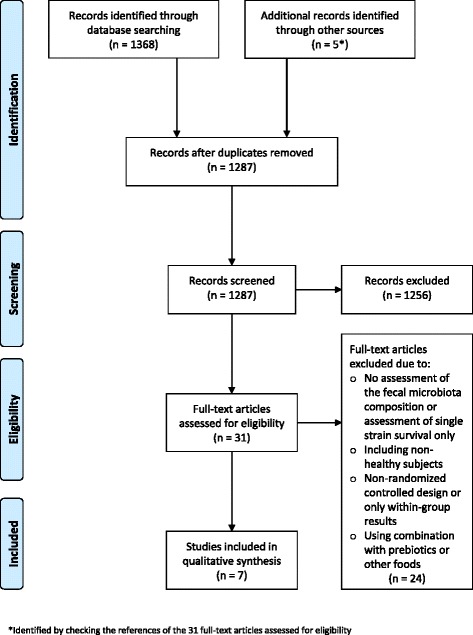
Verification
Claims the paper makes
The claims and statistics of this paper haven’t been checked yet.
Free: it reads the open-access text and checks the first 5 claims that cite a source we can check. Create a free account to check every claim.
Claims other papers make about this one
Each is checked against this paper’s own text: does it say what the citing paper says it does?
The source backs part of the claim, not all of it — or backs it for a different population, condition or comparison.
In the citing paper
“While this could align with the observed lack of efficacy of HN019, it is also commonly observed that probiotics do not change the microbiota composition in healthy adults.15”
From Eight-Week Supplementation With Bifidobacterium lactis HN019 and Functional Constipation: A Randomized Clinical Trial (2024) · cites this paper as [15]
Experimental — accuracy not yet measuredThe source backs part of the claim, not all of it — or backs it for a different population, condition or comparison.
In the citing paper
“A systematic review, including seven RCTs summarised by Kristensen et al, also demonstrated a similar negative efficacy of probiotics supplement on faecal microbiota composition in healthy participants.48”
From Efficacy in bowel movement and change of gut microbiota on adult functional constipation patients treated with probiotics-containing products: a systematic review and meta-analysis (2024) · cites this paper as [48]
Experimental — accuracy not yet measuredThe cited source says what the claim attributes to it.
In the citing paper
“However, the lack of effect of the probiotic on the stool microbiota is in agreement with the findings of a systematic review of seven RCTs,”
The cited source says what the claim attributes to it.
In the citing paper
“a systematic review of seven RCTs, which investigated the effect of probiotic supplementation on the stool microbiota and revealed that probiotics had no effects on the stool microbiota composition in terms of α -diversity, richness, or evenness when compared to placebo 45 .”
In the citing paper
“In fact, a 2016 systematic review by Kristensen et al. found that probiotics have no impact on alpha-diversity, evenness and richness in the faecal microbiota across several studies on healthy individuals, bar one which noted an effect on beta-diversity [52].”
From Effect of Diet on the Gut Microbiota: Rethinking Intervention Duration (2019) · cites this paper as [52]
1 more claim about this paper
Create a free account to see every claim other papers make about this one.
Self-check
Percentages, sums and reported differences re-computed from the paper’s own numbers.
The self-check needs the paper’s full text.
Citations
Cites
Preferred Reporting Items for Systematic Reviews and Meta-Analyses: the PRISMA statement
Moher, D., Liberati, A., Tetzlaff, J., Altman, D. G., & for the PRISMA Group (2009) · BMJ · doi:10.1136/bmj.b2535 · Cited by 83,823
Preferred reporting items for systematic reviews and meta-analyses: the PRISMA Statement.
(2009) · PubMed Central · Cited by 44,859
Preferred reporting items for systematic reviews and meta-analyses: The PRISMA statement
Moher, D., Liberati, A., Tetzlaff, J., Altman, D. G., & the PRISMA Group* (2009) · Annals of Internal Medicine · doi:10.7326/0003-4819-151-4-200908180-00135 · Cited by 37,554
Liberati, A., Altman, D. G., Tetzlaff, J., Mulrow, C., Gøtzsche, P. C., Ioannidis, J. P. A., Clarke, M., Devereaux, P. J., Kleijnen, J., & Moher, D. (2009) · PLoS Medicine · doi:10.1371/journal.pmed.1000100 · Cited by 28,164 · cited 1×
“Risk of bias was further assessed regarding concealment of randomization, early termination of trial, blinding of patients, healthcare providers, data collectors and outcome assessors, reporting of drop-out or withdrawal, selective outcome reporting, and other potential biases [32, 33].”
BackgroundNaïve Bayesian Classifier for Rapid Assignment of rRNA Sequences into the New Bacterial Taxonomy
Wang, Q., Garrity, G. M., Tiedje, J. M., & Cole, J. R. (2007) · Applied and Environmental Microbiology · doi:10.1128/aem.00062-07 · Cited by 19,885 · cited 1×
“Several studies have examined the effects of region choice when evaluating fecal microbiota composition with no current international consensus [47, 49–51].”
BackgroundPreferred Reporting Items for Systematic Reviews and Meta-Analyses: The PRISMA Statement
Moher, D., Liberati, A., Tetzlaff, J., & Altman, D. G. (2009) · Journal of Clinical Epidemiology · doi:10.1016/j.jclinepi.2009.06.005 · Cited by 19,575
Assessing the quality of reports of randomized clinical trials: Is blinding necessary?
Jadad, A. R., Moore, R. A., Carroll, D., Jenkinson, C., Reynolds, D. J. M., Gavaghan, D. J., & McQuay, H. J. (1996) · Controlled Clinical Trials · doi:10.1016/0197-2456(95)00134-4 · Cited by 17,582 · cited 1×
“clinical trials was performed independently by NBK and TB using a three-item instrument (the Jadad score) that evaluates likelihood of bias in research reports [31].”
MethodA human gut microbial gene catalogue established by metagenomic sequencing
MetaHIT Consortium, Qin, J., Li, R., Raes, J., Arumugam, M., Burgdorf, K. S., Manichanh, C., Nielsen, T., Pons, N., Levenez, F., et al. (2010) · Nature · doi:10.1038/nature08821 · Cited by 11,624 · cited 1×
“Compositional information can be achieved by mapping the reads to a microbial gene reference catalogue [34], as was done by Brahe et al.”
MethodSelf-citationZhang, Q., Wang, C., Zheng, M., Li, Y., Li, J., Zhang, L., Shang, X., & Yan, C. (2015) · Cerebrovascular Diseases · doi:10.1159/000369778 · Cited by 11,533
Diet rapidly and reproducibly alters the human gut microbiome
David, L. A., Maurice, C. F., Carmody, R. N., Gootenberg, D. B., Button, J. E., Wolfe, B. E., Ling, A. V., Devlin, A. S., Varma, Y., Fischbach, M. A., et al. (2014) · Nature · doi:10.1038/nature12820 · Cited by 10,100 · cited 1×
“animalbased, amount of dietary fibers and fat) influence the fecal microbiota composition and function [36–38].”
Background
Cited by
Items 201–300 of 565
Shinde, T., Vemuri, R., Shastri, S., Perera, A. P., Gondalia, S. V., Beale, D. J., Karpe, A. V., Eri, R. D., & Stanley, R. A. (2020) · Nutrients · doi:10.3390/nu12082380 · Cited by 38
“However, the ability of empiric probiotic supplements in relatively low dosages to impact the natural microbiome is questionable [15,16].”
BackgroundMcLean, A. E. B., Kao, S. C.-H., Barnes, D. J., WONG, K. K. H., Scolyer, R. A., Cooper, W. A., & Kohonen‐Corish, M. R. J. (2022) · Lung Cancer · doi:10.1016/j.lungcan.2022.01.011 · Cited by 38
Misera, A., Liśkiewicz, P., Łoniewski, I., Skonieczna-Żydecka, K., & Samochowiec, J. (2021) · Pharmaceuticals · doi:10.3390/ph14100952 · Cited by 34
“There is, however, no current contention on whether probiotic treatments could/should successfully alter microbiota composition [31,32].”
BackgroundMicrobiome restoration diet improves digestion, cognition and physical and emotional wellbeing
Lawrence, K., & Hyde, J. (2017) · PLOS ONE · doi:10.1371/journal.pone.0179017 · Cited by 34
“However, as yet, it is unclear whether beneficial probiotic effects (especially in healthy adults) are mediated by directly altering the state of our gut microbiota [19], [20].”
BackgroundRetractedNeurological and Cognitive Significance of Probiotics: A Holy Grail Deciding Individual Personality
Afzal, M., Mazhar, S. F., Sana, S., Naeem, M. A., Rasool, M. H., Saqalein, M., Nisar, M. A., Rasool, M., Bilal, M., Khan, A. A., et al. (2020) · Future Microbiology · doi:10.2217/fmb-2019-0143 · Cited by 35
Horigome, A., Hisata, K., Odamaki, T., Iwabuchi, N., Xiao, J., & Shimizu, T. (2021) · Frontiers in Microbiology · doi:10.3389/fmicb.2021.610080 · Cited by 39
“Recent studies have shown that the introduction of live microbes does not result in significant alterations of the fecal microbiota in healthy adults (Kim et al., 2013; Kristensen et al., 2016).”
BackgroundWang, B., Zhou, Y., Tang, L., Zeng, Z., Gong, L., Wu, Y., & Li, W. (2021) · Frontiers in Veterinary Science · doi:10.3389/fvets.2021.679368 · Cited by 43
“Previous studies have demonstrated that dietary probiotics have a positive effect in modulating the intestinal microbiota (21, 23, 64).”
BackgroundOduro-Donkor, D., Turner, M. C., Farnaud, S., Renshaw, D., Kyrou, I., Hanson, P., Hattersley, J., Weickert, M. O., Menon, V., Randeva, H. S., et al. (2020) · Expert Review of Endocrinology & Metabolism · doi:10.1080/17446651.2020.1801412 · Cited by 33
Ma, C., Huo, D., You, Z., Peng, Q., Jiang, S., Chang, H., Zhang, J., & Zhang, H. (2020) · Food Research International · doi:10.1016/j.foodres.2020.109496 · Cited by 35
Fiber-Rich Barley Increases Butyric Acid-Producing Bacteria in the Human Gut Microbiota
Akagawa, S., Akagawa, Y., Nakai, Y., Yamagishi, M., Yamanouchi, S., Kimata, T., Chino, K., Tamiya, T., Hashiyada, M., Akane, A., et al. (2021) · Metabolites · doi:10.3390/metabo11080559 · Cited by 36
“Although probiotics have been employed extensively to correct gut microbiota imbalance (dysbiosis), their effects are limited, as most probiotics only pass through the intestine without residing in and modulating the gut microbial composition [10,11].”
BackgroundGamma aminobutyric acid production by commercially available probiotic strains
Monteagudo-Mera, A., Fanti, V., Rodriguez-Sobstel, C., Gibson, G. R., Wijeyesekera, A., Karatzas, K. A. G., & Chakrabarti, B. (2022) · Journal of Applied Microbiology · doi:10.1093/jambio/lxac066 · Cited by 38
Cavallari, J. F., & Schertzer, J. D. (2017) · Journal of Obesity & Metabolic Syndrome · doi:10.7570/jomes.2017.26.3.161 · Cited by 33
Exploring the food-gut axis in immunotherapy response of cancer patients
Russo, E., Nannini, G., Dinu, M., Pagliai, G., Sofi, F., & Amedei, A. (2020) · World Journal of Gastroenterology · doi:10.3748/wjg.v26.i33.4919 · Cited by 32
Sanders, M. E., Goh, Y. J., & Klaenhammer, T. R. (2019) · ASM Press eBooks · doi:10.1128/9781555819972.ch32 · Cited by 37
The Impact of Lactobacillus Probiotics on the Gut Microbiota in Children with Short Bowel Syndrome
Piper, H. G., Coughlin, L. A., Hussain, S., Nguyen, V., Channabasappa, N., & Koh, A. Y. (2020) · Journal of Surgical Research · doi:10.1016/j.jss.2020.01.024 · Cited by 31
Tremblay, A., Fatani, A., Ford, A. L., Piano, A., Nagulesapillai, V., Auger, J., MacPherson, C. W., Christman, M. C., Tompkins, T. A., & Dahl, W. J. (2021) · Journal of Dietary Supplements · doi:10.1080/19390211.2020.1749751 · Cited by 31
“Consequently, studies assessing the effects of a variety of probiotic formulations on microbiota composition in populations described as healthy have produced mixed results so far (Kristensen et al. 2016).”
BackgroundMessage in a Bottle: Dialog between Intestine and Skin Modulated by Probiotics
Friedrich, A. D., Paz, M. L., Leoni, J., & Maglio, D. H. G. (2017) · International Journal of Molecular Sciences · doi:10.3390/ijms18061067 · Cited by 33
“Despite that probiotics may not alter the microbiota composition in healthy adults [13,14], they appear to re-establish the microbiota more rapidly after antimicrobial therapy [15].”
BackgroundGut Microbiota Alteration After Long-Term Consumption of Probiotics in the Elderly
Gao, R., Zhang, X., Huang, L., Shen, R., & Qin, H. (2018) · Probiotics and Antimicrobial Proteins · doi:10.1007/s12602-018-9403-1 · Cited by 33
The bacterial communities of the small intestine and stool in children with short bowel syndrome
Zeichner, S. L., Mongodin, E. F., Hittle, L., Huang, S.-H., & Torres, C. (2019) · PLOS ONE · doi:10.1371/journal.pone.0215351 · Cited by 31
The prophylactic effects of BIFICO on the antibiotic-induced gut dysbiosis and gut microbiota
Wu, J., Gan, T., Zhang, Y., Xia, G., Deng, S., Lv, X., Zhang, B., & Lv, B. (2020) · Gut Pathogens · doi:10.1186/s13099-020-00379-0 · Cited by 33
Pathophysiological Mechanisms in Non-Alcoholic Fatty Liver Disease: From Drivers to Targets
Santos‐Laso, Á., Gutiérrez‐Larrañaga, M., Alonso‐Peña, M., Medina, J. M., Iruzubieta, P., Arias, M., López‐Hoyos, M., & Crespo, J. (2021) · Biomedicines · doi:10.3390/biomedicines10010046 · Cited by 40
Bypassing the Gut–Lung Axis via Microbial Metabolites: Implications for Chronic Respiratory Diseases
Bulanda, E., & Wypych, T. P. (2022) · Frontiers in Microbiology · doi:10.3389/fmicb.2022.857418 · Cited by 34
Głowienka, M., Bagińska, K., Szubert, S., Hennig, E. E., Horała, A., Dąbrowska, M., Micek, M., Ciebiera, M., & Żeber‐Lubecka, N. (2024) · Cancers · doi:10.3390/cancers16020399 · Cited by 38
“The growing focus on human health has led to a rapid rise in the therapeutic and commercial interest in producing supplements, including prebiotics and probiotics, due to their association with the microbiota [83,84].”
BackgroundDong, J., Gao, H.-L., Wang, W., Yu, X., & Liu, L. (2020) · Biochimica et Biophysica Acta (BBA) - Reviews on Cancer · doi:10.1016/j.bbcan.2020.188484 · Cited by 31
Hasain, Z., Roos, N. A. C., Rahmat, F., Mustapa, M., Ali, R. A. R., & Mokhtar, N. M. (2021) · Nutrients · doi:10.3390/nu13093045 · Cited by 39
Postoperative symbiotic in patients with head and neck cancer: a double-blind randomised trial
Lages, P. C., Generoso, S. D. V., & Correia, M. I. T. D. (2017) · British Journal Of Nutrition · doi:10.1017/s0007114517003403 · Cited by 29
Bautista‐Gallego, J., Ferrocino, I., Botta, C., Ercolini, D., Cocolin, L., & Rantsiou, K. (2019) · Food Research International · doi:10.1016/j.foodres.2019.02.004 · Cited by 34
Tryptophan‐synthesizing bacteria enhance colonic motility
Legan, T. B., Lavoie, B. A., Norberg, E. S., Ley, I. C., Tack, S., Tompkins, T. A., Wargo, M. J., & Mawe, G. M. (2023) · Neurogastroenterology & Motility · doi:10.1111/nmo.14629 · Cited by 30
Zhang, P.-F., & Xie, D. (2024) · Frontiers in Immunology · doi:10.3389/fimmu.2024.1362133 · Cited by 39
Chronic Inflammatory Diseases: Are We Ready for Microbiota-based Dietary Intervention?
Viennois, É., Gewirtz, A. T., & Chassaing, B. (2019) · Cellular and Molecular Gastroenterology and Hepatology · doi:10.1016/j.jcmgh.2019.02.008 · Cited by 32
“Importantly, although patients can be stratified by their ability to be colonized, functional outcomes were not addressed in this study, and numerous reports actually suggest that a daily probiotic does not necessarily need to colonize to exert its beneficial effect.(50,51) Interestingly,”
BackgroundZeinali, F., Zarch, S. M. A., Mehrjardi, M. Y. V., Kalantar, S. M., Jahan-Mihan, A., Karimi‐Nazari, E., Fallahzadeh, H., Hosseinzadeh, M., Rahmanian, M., Fazeli, M. R., et al. (2020) · Trials · doi:10.1186/s13063-020-04236-y · Cited by 34
Understanding interactions among diet, host and gut microbiota for personalized nutrition
Li, C. (2022) · Life Sciences · doi:10.1016/j.lfs.2022.121265 · Cited by 35
Abildgaard, A. M., Kern, T., Pedersen, O. B., Hansen, T. F., Wegener, G., & Lund, S. A. (2018) · European Neuropsychopharmacology · doi:10.1016/j.euroneuro.2018.10.011 · Cited by 30
Self-citationRecent advances in clinical probiotic research for sport
Jäger, R., Mohr, A. E., & Pugh, J. N. (2020) · Current Opinion in Clinical Nutrition & Metabolic Care · doi:10.1097/mco.0000000000000686 · Cited by 31
Impact of Vitamin D Deficit on the Rat Gut Microbiome
Robles‐Vera, I., Callejo, M., Ramos, R., Duarte, J., & Pérez‐Vizcaíno, F. (2019) · Nutrients · doi:10.3390/nu11112564 · Cited by 32
“, live strains of selected bacteria, or prebiotics, food components that modulate the microbiota [6,7].”
BackgroundMicrobiome-based interventions: therapeutic strategies in cancer immunotherapy
Chervin, C. S., & Gajewski, T. F. (2020) · Immuno-Oncology Technology · doi:10.1016/j.iotech.2020.11.001 · Cited by 29
“There is some question regarding the level of engraftment afforded by probiotics in healthy individuals and the resulting effect on the host.(62) A recent study exploring the effect of an 11-strain probiotic regimen revealed differential colonization patterns (i.”
BackgroundPhytotherapy of mood disorders in the light of microbiota-gut-brain axis.
Korczak, M., Pilecki, M. W., Granica, S., Gorczynska, A., Pawłowska, K. A., & Piwowarski, J. P. (2023) · Phytomedicine · doi:10.1016/j.phymed.2023.154642 · Cited by 31
Irwin, C. G., Khalesi, S., Cox, A. J., Grant, G. D., Davey, A. K., Bulmer, A. C., & Desbrow, B. (2017) · European Journal of Nutrition · doi:10.1007/s00394-017-1437-8 · Cited by 32
“This finding is in contrast to a recent review indicating a lack of evidence for the impact of probiotics on faecal microbiota composition and richness in healthy adults [45].”
Gut microbiota modifications and weight gain in early life
Angelakis, E., & Raoult, D. (2018) · Human Microbiome Journal · doi:10.1016/j.humic.2018.01.002 · Cited by 29
Infections, antibiotic treatment and the Microbiome in relation to schizophrenia
Klein‐Petersen, A. W., Köhler‐Forsberg, O., & Benros, M. E. (2019) · Schizophrenia Research · doi:10.1016/j.schres.2019.11.033 · Cited by 30
Fermented foods affect the seasonal stability of gut bacteria in an Indian rural population
Jeyaram, K., Lahti, L., Tims, S., Heilig, H. G. H. J., van Gelder, A. H., de Vos, W. M., Smidt, H., & Zoetendal, E. G. (2025) · Nature Communications · doi:10.1038/s41467-025-56014-6 · Cited by 28
“In most cases, ingested bacteria are numerically a minority and rarely detected one week after consumption 15,25,26 .”
CRISPR–Cas therapies targeting bacteria
Benz, F., Beamud, B., Laurenceau, R., Maire, A., Duportet, X., Decrulle, A. L., & Bikard, D. (2025) · Nature Reviews Bioengineering · doi:10.1038/s44222-025-00311-8 · Cited by 32
“Donor bacteria might not reach the same niche as the target bacteria or may not achieve sufficient colonization owing to the colonization resistance of complex microbial communities 152,153 .”
Gut Microbiota: A Promising Milestone in Enhancing the Efficacy of PD1/PD-L1 Blockade Therapy
Zhou, Y., Liu, Z., & Chen, T. (2022) · Frontiers in Oncology · doi:10.3389/fonc.2022.847350 · Cited by 32
“In other words, lessregulated consumables lack definite scientific evidence, further indicating that their impact on gut flora and overall health may be pretty confined (95).”
BackgroundZhao, Y., Li, M., Wang, Y., Geng, R., Fang, J., Liu, Q., Kang, S., Zeng, W., Huang, K., & Tong, T. (2022) · Critical Reviews in Food Science and Nutrition · doi:10.1080/10408398.2022.2045895 · Cited by 31
Washburn, R. L., Sandberg, D., & Gazdik, M. A. (2022) · Human Nutrition & Metabolism · doi:10.1016/j.hnm.2022.200148 · Cited by 31
Wagh, S. K., Lammers, K. M., Padul, M. V., Rodríguez‐Herrera, A., & Dodero, V. I. (2022) · International Journal of Molecular Sciences · doi:10.3390/ijms231911748 · Cited by 26
The gut microbiota perspective for interventions in MS
Żołędziewska, M. (2019) · Autoimmunity Reviews · doi:10.1016/j.autrev.2019.03.016 · Cited by 26
Stable Colonization of Orally Administered Lactobacillus casei SY13 Alters the Gut Microbiota
Yue, Y., Xu, X., Yang, B., Lü, J., Zhang, S., Liu, L., Nassar, K. S., Zhang, C., Zhang, M., Pang, X., et al. (2020) · BioMed Research International · doi:10.1155/2020/5281639 · Cited by 34
Mitchell, L. K., & Davies, P. S. W. (2021) · European Journal of Clinical Nutrition · doi:10.1038/s41430-021-01027-9 · Cited by 30
Gómez‐Pérez, A. M., Muñoz‐Garach, A., Lasserrot-Cuadrado, A., Moreno‐Indias, I., & Tinahones, F. J. (2024) · Nutrients · doi:10.3390/nu16203491 · Cited by 31
“However, in the probiotic group, Lactobacillus fermentum was not widely observed in the volunteer samples, although this does not imply that it could be observed in the intestine mucosa [19].”
BackgroundProbiotics and Cancer: Mechanistic Insights and Organ-Specific Impact
Ahmad, M. F., Ahmad, F. A., Alsayegh, A. A., Zeyaullah, M., Babalghith, A. O., Faidah, H. S., Ahmed, F., Khanam, A., Mozaffar, B., Kambal, N., et al. (2025) · Biomolecules · doi:10.3390/biom15060879 · Cited by 33
Immunomodulatory and Anti-Inflammatory Strategies to Reduce Comorbidity Risk in People with HIV
Kettelhut, A., Bowman, E., & Funderburg, N. (2020) · Current HIV/AIDS Reports · doi:10.1007/s11904-020-00509-y · Cited by 29
Xin, L., He, F., Li, S., Zhou, Z., & Ma, X. (2020) · World Journal of Pediatrics · doi:10.1007/s12519-020-00371-3 · Cited by 30
Abildgaard, A. M., Kern, T., Pedersen, O. B., Hansen, T. F., Lund, S. A., & Wegener, G. (2020) · European Neuropsychopharmacology · doi:10.1016/j.euroneuro.2020.09.001 · Cited by 24
Self-citationMa, C., Zhang, C., Chen, D., Jiang, S., Shen, S., Huo, D., Huang, S. W., Zhai, Q., & Zhang, J. (2021) · Communications Biology · doi:10.1038/s42003-021-02724-8 · Cited by 24
Rode, J., Carlman, H. M. T. E., König, J., Repsilber, D., Hutchinson, A. N., Thunberg, P., Andersson, P., Persson, J., Kiselev, A., Stern, L. L., et al. (2022) · Frontiers in Nutrition · doi:10.3389/fnut.2022.827182 · Cited by 26
“The gut microbiota can be modulated in various ways including the intake of probiotic bacteria which typically have transient effects, gradually declining after the consumption is ended (2).”
BackgroundGai, Z., Dong, Y., Xu, F., Zhang, J., Yang, Y., & Wang, Y. (2023) · Frontiers in Nutrition · doi:10.3389/fnut.2023.1105694 · Cited by 27
“The functional characterization of a healthy gut microbial community remains elusive (42).”
BackgroundMajeed, M. A., Nagabhushanam, K., Mundkur, L., Paulose, S., Divakar, H., Rao, S., & Arumugam, S. (2023) · Medicine · doi:10.1097/md.0000000000033751 · Cited by 26
“Probiotics should have minimal influence on microbiota composition in the absence of dysbiosis.[9,10,33] On the contrary, under conditions of dysbiosis, as in IBS, probiotic supplementation is reported to restore the gut microbiome to normalcy.”
BackgroundProbiotics and Coronavirus disease 2019: think about the link
Angurana, S. K., & Bansal, A. (2020) · British Journal Of Nutrition · doi:10.1017/s000711452000361x · Cited by 33
Personalized nutrition, microbiota, and metabolism: A triad for eudaimonia
Sarfraz, M. H., Shahid, A., Asghar, S., Aslam, B., Ashfaq, U. A., Raza, H., Prieto, M. A., Simal‐Gándara, J., Barba, F. J., Rajoka, M. S. R., et al. (2022) · Frontiers in Molecular Biosciences · doi:10.3389/fmolb.2022.1038830 · Cited by 27
“However, studies have also reported that probiotic supplementation does not affect the composition of the fecal microbiota in healthy adults and infants (Kristensen et al., 2016).”
BackgroundAntagonistic effects ofStreptococcusandLactobacillusprobiotics in pharyngeal biofilms
Humphreys, G. J., & McBain, A. J. (2019) · Letters in Applied Microbiology · doi:10.1111/lam.13133 · Cited by 27
“The effect of the application of probiotics on the human microbiota has been previously investigated, with particular focus on the gut (For review, see Kristensen et al. 2016) and oral cavity, the latter with a view to preventing dental caries formation (Cagetti et al. 2013).”
BackgroundKarl, J. P. (2021) · Military Medicine · doi:10.1093/milmed/usaa261 · Cited by 25
Lihua, M. E. I., Zheng, W.-X., Zhao, Z., Meng, N., Zhang, Q., Zhu, W., Li, R.-D., Liang, X., & Li, Q.-Y. (2021) · Nutrients · doi:10.3390/nu13113891 · Cited by 25
Impact of Probiotics in Modulation of Gut Microbiome
Nourizadeh, R., Sepehri, B., Abbasi, A., Sayyed, R. Z., & Khalili, L. (2022) · Springer eBooks · doi:10.1007/978-981-16-1626-6_20 · Cited by 30
Forsgård, R. A., Rode, J., Lobenius-Palmér, K., Kamm, A., Patil, S., Tacken, M. G. J., Lentjes, M. A. H., Axelsson, J., Grompone, G., Montgomery, S., et al. (2023) · Gut Microbes · doi:10.1080/19490976.2023.2229938 · Cited by 25
Luo, Y., Zhang, Y., Yang, Y., Wu, S., Zhao, J., Li, Y., Kang, X., Li, Z., Chen, J., Shen, X. P., et al. (2023) · Journal of Dairy Science · doi:10.3168/jds.2023-23367 · Cited by 27
Huang, J., Gong, C., & Zhou, A. (2023) · Therapeutic Advances in Medical Oncology · doi:10.1177/17588359231204854 · Cited by 33
“89 As early as 2015, Sivan et al. 18 further reduced tumor volume by combining a mixture of B. breve and B. longum strains with anti-PD-L1.”
BackgroundLongitudinal microbiome profiling reveals impermanence of probiotic bacteria in domestic pigeons
Grond, K., Perreau, J. M., Loo, W. T., Spring, A. J., Cavanaugh, C. M., & Hird, S. M. (2019) · PLoS ONE · doi:10.1371/journal.pone.0217804 · Cited by 24
Qian, L., Gao, R., Huang, J., & Qin, H. (2019) · Experimental and Therapeutic Medicine · doi:10.3892/etm.2019.7801 · Cited by 29
Ding, F., Hu, M., Ding, Y., Meng, Y., & Zhao, Y. (2024) · BMJ Open · doi:10.1136/bmjopen-2023-074557 · Cited by 22
“Fei Ding http://orcid.org/0000-0002-9396-8023 Mengyang Hu http://orcid.org/0000-0001-6338-8151 Yifei Ding http://orcid.org/0000-0001-9920-2320 Yingying Meng http://orcid.org/0000-0002-8594-4734 Yanchao Zhao http://orcid.org/0000-0002-2710-0824”
Cosier, D., Lambert, K., Neale, E. P., Probst, Y., & Charlton, K. E. (2024) · Nutrition Reviews · doi:10.1093/nutrit/nuae002 · Cited by 37
“The reviews by So et al 68 and Kristensen et al 10 similarly did not find a significant change in a -diversity after prebiotic and probiotic supplementation in healthy adults, respectively.”
Lactobacillus acidophilus Antimicrobial Peptide Is Antagonistic to Aeromonas hydrophila
Akter, N., Hashim, R., Pham, H. Q., Choi, S.-D., Lee, D.-W., Shin, J., & Rajagopal, K. (2020) · Frontiers in Microbiology · doi:10.3389/fmicb.2020.570851 · Cited by 24
“…antibiotics, chemotherapy, Lactobacillus acidophilus, Ocins, outer membrane protein INTRODUCTION Gut bacteria play a major role in the maintenance of human health by participating in multiple functions that are beneficial to the host (Patel and DuPont, 2015; Kristensen et al., 2016).”
BackgroundDefined gut microbial communities: promising tools to understand and combat disease
Bayer, G., Ganobis, C. M., Allen‐Vercoe, E., & Philpott, D. J. (2021) · Microbes and Infection · doi:10.1016/j.micinf.2021.104816 · Cited by 29
Calgaro, M., Pandolfo, M., Salvetti, E., Marotta, A., Larini, I., Pane, M., Amoruso, A., Casale, A. D., Vitulo, N., Fiorio, M., et al. (2021) · Beneficial Microbes · doi:10.3920/bm2020.0137 · Cited by 21
Du, S., Chen, W., Yao, Z., Huang, X., Chen, C., Guo, H., & Zhang, D. (2021) · Animal Microbiome · doi:10.1186/s42523-021-00152-x · Cited by 20
“[21] argued that probiotics may promote the homeostasis of the gut microbiota without altering its composition.”
BackgroundDonabedian, P. L., Dawson, E. A., Li, Q., & Chen, J. (2021) · Ophthalmic Research · doi:10.1159/000519457 · Cited by 25
Gill Jenkins, P. M. (2022) · Food & Nutrition Journal · doi:10.29011/2575-7091.100245 · Cited by 45
“…the World Gastroenterology Organisation suggested that if the aim is to support digestive health, it is possible that many different probiotic preparations containing adequate amounts of single, or mixtures of well-studied, live microorganisms will be sufficient to provide a health benefit [16].”
Serine-rich repeat proteins: well-known yet little-understood bacterial adhesins
Cinar, M. S., Niyas, A. M. M., & Avci, F. Y. (2023) · Journal of Bacteriology · doi:10.1128/jb.00241-23 · Cited by 27
“Such focus on SRRP-expressing bacteria may aid in improving the efficacy of probiotic supplements and therapeutics (92, 93).”
BackgroundMicroscopic colitis—microbiome, barrier function and associated diseases
van Hemert, S., Skonieczna‐Żydecka, K., Łoniewski, I., Szredzki, P., & Marlicz, W. M. (2018) · Annals of Translational Medicine · doi:10.21037/atm.2017.03.83 · Cited by 25
“Even when the total microbiota composition is not changed so much by giving probiotics (88), the use of probiotics still has potential for MC, due to changes in microbiota activity, promoting gut microbiota homeostasis and/or immunomodulatory properties (89,90).”
BackgroundTong, J., Satyanarayanan, S. K., & Su, H. (2020) · Brain Behavior and Immunity · doi:10.1016/j.bbi.2020.08.027 · Cited by 26
Rodenes-Gavidia, A., Lamelas, A., Bloor, S., Hobson, A. R., Treadway, S., Haworth, J. J., Vijayakumar, V., Naghibi, M., Day, R. O., & Chenoll, E. (2023) · Frontiers in Cellular and Infection Microbiology · doi:10.3389/fcimb.2023.1240267 · Cited by 24
“assessed seven RCTs investigating the effect of probiotic supplementation on the gut microbiota of healthy adults and concluded that probiotic supplementation did not affect composition in healthy adults (Kristensen et al., 2016).”
BackgroundYang, H., Yang, L., Ma, Y., Li, J., Li, J., Huo, Z., Yang, P., & Zhang, C. (2024) · Foods · doi:10.3390/foods13121851 · Cited by 23
“However, the regulatory effects of probiotics on the gut microbiota [33] and their influence on fecal metabolites remain unclear.”
BackgroundThe Role of Gut Microbiota in Modulating Cancer Therapy Efficacy
Madkour, M. A., Altaf, R. A., Sayed, Z. S., Yasen, N. S., Elbary, H. A., Elsayed, R. A., Mohamed, E. N., Toema, M., Wadan, A.-H. S., Nafady, M. H., et al. (2024) · Advanced Gut & Microbiome Research · doi:10.1155/2024/9919868 · Cited by 25
Quansah, M., David, M. A., Martins, R., El-Omar, E., Aliberti, S. M., Capunzo, M., Jensen, S. O., & Tayebi, M. (2025) · Healthcare · doi:10.3390/healthcare13010074 · Cited by 21
“Although these data are valuable, current research indicates that probiotic therapies are unlikely to yield significant alterations in microbiota composition, particularly among healthy individuals, in terms of both diversity and richness [69].”
Moving microbes: the dynamics of transient microbial residence on human skinPreprint
Vandegrift, R., Fahimipour, A. K., Muscarella, M. E., Bateman, A. C., Wymelenberg, K. G. V. D., & Bohannan, B. J. M. (2019) · bioRxiv (Cold Spring Harbor Laboratory) · doi:10.1101/586008 · Cited by 22
It Is All about Probiotics to Control Cervical Cancer
Ashique, S., Faruk, A., Ahmad, F. J., Khan, T., & Mishra, N. (2023) · Probiotics and Antimicrobial Proteins · doi:10.1007/s12602-023-10183-2 · Cited by 22
“Previously, the nutritional roles of probiotics as a dietary supplement were investigated [71].”
Dietary Fiber and Gut Microbiota
Senés‐Guerrero, C., Hernandez, M. S. G., Gamboa, R. G., & García‐Cayuela, T. (2020) · Food engineering series · doi:10.1007/978-3-030-38654-2_12 · Cited by 33
Characterization of Oral and Gut Microbiota in Patients with Psoriatic Diseases: A Systematic Review
Todberg, T., Kaiser, H., Zachariae, C. O. C., Egeberg, A., Halling, A., & Skov, L. (2021) · Acta Dermato Venereologica · doi:10.2340/00015555-3882 · Cited by 28
“Notably, numerous studies in patients with other indications have shown that there is little evidence to show that probiotics can change the gut microbiota (57, 58).”
BackgroundImpact of Prebiotics, Probiotics and Gut Derived Metabolites on Host Immunity
Wu, R., Jeffrey, M. P., Johnson‐Henry, K. C., Green-Johnson, J. M., & Sherman, P. M. (2016) · LymphoSign Journal · doi:10.14785/lymphosign-2016-0012 · Cited by 24
Fecal microbiota transfer for bowel disorders: efficacy or hype?
Schmulson, M. J., & Bashashati, M. (2018) · Current Opinion in Pharmacology · doi:10.1016/j.coph.2018.08.012 · Cited by 24
Lucafò, M., Franzin, M., Lagatolla, C., Franca, R., Bramuzzo, M., Stocco, G., & Decorti, G. (2019) · Clinical and Translational Science · doi:10.1111/cts.12722 · Cited by 22
Cabral, L. Q. T., Ximenez, J. A., Moreno, K. G. T., & Fernandes, R. (2020) · Clinical Nutrition · doi:10.1016/j.clnu.2020.10.028 · Cited by 26
Probiotics in Health Care: A Critical Appraisal
Quigley, E. M. M., & Shanahan, F. (2024) · Annual Review of Medicine · doi:10.1146/annurev-med-042423-042315 · Cited by 20
Napier, B. A., Allegretti, J. R., Feuerstadt, P., Kelly, C. R., Hise, N. W. V., Jäger, R., Kassam, Z., & Reid, G. (2025) · Nutrients · doi:10.3390/nu17172734 · Cited by 29
“This is supported by a systematic review which reports probiotic supplementation in healthy adults did not reliably alter fecal microbiota composition or significantly increase butyrate levels [21].”
Éliás, A. J., Földvári-Nagy, K. C., Al-Gharati, Y. Z., Veres, D. S., Schnabel, T., Teutsch, B., Erőss, B., Hegyi, P., Lenti, K., & Földvári-Nagy, L. (2026) · BMC Medicine · doi:10.1186/s12916-025-04602-0 · Cited by 27
“Our findings align with those of the systematic review by Kristensen et al. in 2016 [104], which similarly found minimal changes in gut microbiota composition in healthy adults, while more recent studies enabled us to provide a more comprehensive and up-to-date review.”
Bonaventura, M. V. M. D., Coman, M. M., Tomassoni, D., Bonaventura, E. M. D., Botticelli, L., Gabrielli, M. G., Rossolini, G. M., Pilato, V. D., Cecchini, C., Amedei, A., et al. (2021) · International Journal of Molecular Sciences · doi:10.3390/ijms222011171 · Cited by 22
“We found no difference in the GM of rats under standard diet, treated with and without the probiotic, according to the limited evidence for the effect of probiotic supplementation when the GM is unperturbed by pathophysiological conditions or treatment, including antibiotics or chemotherapy [67,68].”
BackgroundMetabolic model-based ecological modeling for probiotic design
Brunner, J. D., & Chia, N. (2024) · eLife · doi:10.7554/elife.83690 · Cited by 25
“The effect of the micro-biome on health is now undeniable, and every year in the US over 400,000 people collectively spend $1 billion dollars on over- the-counter probiotics intended to alter their microbiome ( Kristensen et al., 2016 ).”
BackgroundThe Use of Gut Microbial Modulation Strategies as Interventional Strategies for Ageing
Siddiqui, R., Mungroo, M. R., Alharbi, A. M., Alfahemi, H. H., & Khan, N. A. (2022) · Microorganisms · doi:10.3390/microorganisms10091869 · Cited by 21
Duggan, B. M., Singh, A. M., Chan, D. Y., & Schertzer, J. D. (2022) · Physiological Reports · doi:10.14814/phy2.15439 · Cited by 18
The human microbiome and gut–liver axis in people living with HIV
Duarte, M., Tien, P. C., Somsouk, M., & Price, J. C. (2023) · Current HIV/AIDS Reports · doi:10.1007/s11904-023-00657-x · Cited by 22
Metadata
- Authors
- Kristensen, N. B., Bryrup, T., Allin, K. H., Nielsen, T., Hansen, T. H., & Pedersen, O.
- Affiliations
- University of Copenhagen (DK)
- Corresponding author
- Kristensen, Nadja B.
- Venue
- Genome Medicine
- Published
- 2016-05-10
- Volume
- 8
- Issue
- 1
- Pages
- 52-52
- ISSN
- 1756-994X (ISSN-L)
- PMC
- PMC4862129
- OpenAlex
- W2343150225
- Cited by
- 561
- References
- 57
- Citations by year
- 2026: 34 · 2025: 44 · 2024: 64 · 2023: 53 · 2022: 57 · 2021: 67 · 2020: 74 · 2019: 66 · 2018: 53 · 2017: 34 · 2016: 15
- FWCI
- 6.47
- Type
- journal article
- Language
- en
- Open access
- gold
- doi.org
- Licence
- cc-by
- Locations
- Genome Medicine (publishedVersion, cc-by)
- PubMed Central (publishedVersion, cc-by)
- PubMed (publishedVersion)
- Research at the University of Copenhagen (University of Copenhagen) (acceptedVersion, cc-by)
- Funders
- The Novo Nordisk Foundation
- Topics
- Life Sciences › Agricultural and Biological Sciences › Food Science › Probiotics and Fermented Foods
- Life Sciences › Biochemistry, Genetics and Molecular Biology › Molecular Biology › Gut microbiota and health
- Health Sciences › Nursing › Nutrition and Dietetics › Infant Nutrition and Health
- Keywords
- probiotics, fecal microbiota, gut microbiota composition, healthy adults, Bifidobacterium, Lactobacillus, alpha diversity, beta diversity, microbiome, placebo comparison, metagenomic sequencing
- MeSH terms
- Adult, Bacteria, Feces, Humans, Phylogeny, Randomized Controlled Trials as Topic, Probiotics, Microbiota, Healthy Volunteers
About these checks
Registry, retraction, Cites and statistics results are computed, not judged, with one exception: a printed reference that no index lists is read once by a model before it counts as a citation error. Claims are extracted by a model and kept only when their quote appears verbatim in the text; each cited source is then checked, with a model’s help, for whether it says what the claim relies on. Those verdicts can be wrong — read the claim’s quote and the cited source before relying on one.
Statistics and arithmetic are recomputed, not judged.
Confidence bands are shown only for fields calibrated on our annotated test set. None is calibrated yet, so no band is shown.
What counts as a claim ›How we measure confidence ›How we check this ›
Are you an author, or do you see a problem with this page? Request a review
Data sources
Bibliographic data: Semantic Scholar, OpenAlex, Crossref.
Contains information from the Semantic Scholar Academic Graph Datasets, made available under the ODC Attribution License (ODC-BY 1.0).
Semantic Scholar’s data is described in: Kinney, R., et al. (2023). The Semantic Scholar Open Data Platform. arXiv:2301.10140.
