

Alterations in fecal microbiota composition by probiotic supplementation in healthy adults: a systematic review of randomized controlled trials
Open accessThe DOI matches its Crossref record; 57 of the 57 references it cites were found in a registry or an index.
Abstract
BACKGROUND: The effects of probiotic supplementation on fecal microbiota composition in healthy adults have not been well established. We aimed to provide a systematic review of the potential evidence for an effect of probiotic supplementation on the composition of human fecal microbiota as assessed by high-throughput molecular approaches in randomized controlled trials (RCTs) of healthy adults. METHODS: The survey of peer-reviewed papers was performed on 17 August 2015 by a literature search through PubMed, SCOPUS, and ISI Web of Science. Additional papers were identified by checking references of relevant papers. Search terms included healthy adult, probiotic, bifidobacterium, lactobacillus, gut microbiota, fecal microbiota, intestinal microbiota, intervention, and (clinical) trial. RCTs of solely probiotic supplementation and placebo in healthy adults that examined alteration in composition of overall fecal microbiota structure assessed by shotgun metagenomic sequencing, 16S ribosomal RNA sequencing, or phylogenetic microarray methods were included. Independent collection and quality assessment of studies were performed by two authors using predefined criteria including methodological quality assessment of reports of the clinical trials based on revised tools from PRISMA/Cochrane and by the Jadad score. RESULTS: Seven RCTs investigating the effect of probiotic supplementation on fecal microbiota in healthy adults were identified and included in the present systematic review. The quality of the studies was assessed as medium to high. Still, no effects were observed on the fecal microbiota composition in terms of α-diversity, richness, or evenness in any of the included studies when compared to placebo. Only one study found that probiotic supplementation significantly modified the overall structure of the fecal bacterial community in terms of β-diversity when compared to placebo. CONCLUSIONS: This systematic review of the pertinent literature demonstrates a lack of evidence for an impact of probiotics on fecal microbiota composition in healthy adults. Future studies would benefit from pre-specifying the primary outcome and transparently reporting the results including effect sizes, confidence intervals, and P values as well as providing a clear distinction of between-group and within-group comparisons.
Overview
The claims and statistics of this paper haven’t been checked yet.
Free: it reads the open-access text and checks the first 5 claims that cite a source we can check. Create a free account to check every claim.
Integrity signals
Registry
Cites
Statistics
Figures
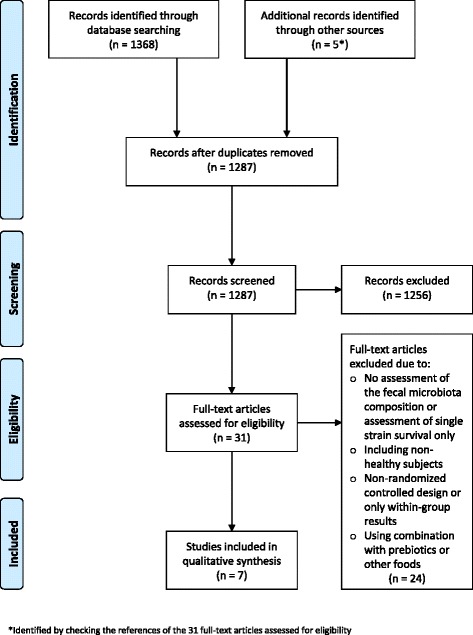
Verification
Claims the paper makes
The claims and statistics of this paper haven’t been checked yet.
Free: it reads the open-access text and checks the first 5 claims that cite a source we can check. Create a free account to check every claim.
Claims other papers make about this one
Each is checked against this paper’s own text: does it say what the citing paper says it does?
The source backs part of the claim, not all of it — or backs it for a different population, condition or comparison.
In the citing paper
“While this could align with the observed lack of efficacy of HN019, it is also commonly observed that probiotics do not change the microbiota composition in healthy adults.15”
From Eight-Week Supplementation With Bifidobacterium lactis HN019 and Functional Constipation: A Randomized Clinical Trial (2024) · cites this paper as [15]
Experimental — accuracy not yet measuredThe source backs part of the claim, not all of it — or backs it for a different population, condition or comparison.
In the citing paper
“A systematic review, including seven RCTs summarised by Kristensen et al, also demonstrated a similar negative efficacy of probiotics supplement on faecal microbiota composition in healthy participants.48”
From Efficacy in bowel movement and change of gut microbiota on adult functional constipation patients treated with probiotics-containing products: a systematic review and meta-analysis (2024) · cites this paper as [48]
Experimental — accuracy not yet measuredThe cited source says what the claim attributes to it.
In the citing paper
“However, the lack of effect of the probiotic on the stool microbiota is in agreement with the findings of a systematic review of seven RCTs,”
The cited source says what the claim attributes to it.
In the citing paper
“a systematic review of seven RCTs, which investigated the effect of probiotic supplementation on the stool microbiota and revealed that probiotics had no effects on the stool microbiota composition in terms of α -diversity, richness, or evenness when compared to placebo 45 .”
In the citing paper
“In fact, a 2016 systematic review by Kristensen et al. found that probiotics have no impact on alpha-diversity, evenness and richness in the faecal microbiota across several studies on healthy individuals, bar one which noted an effect on beta-diversity [52].”
From Effect of Diet on the Gut Microbiota: Rethinking Intervention Duration (2019) · cites this paper as [52]
1 more claim about this paper
Create a free account to see every claim other papers make about this one.
Self-check
Percentages, sums and reported differences re-computed from the paper’s own numbers.
The self-check needs the paper’s full text.
Citations
Cites
Preferred Reporting Items for Systematic Reviews and Meta-Analyses: the PRISMA statement
Moher, D., Liberati, A., Tetzlaff, J., Altman, D. G., & for the PRISMA Group (2009) · BMJ · doi:10.1136/bmj.b2535 · Cited by 83,823
Preferred reporting items for systematic reviews and meta-analyses: the PRISMA Statement.
(2009) · PubMed Central · Cited by 44,859
Preferred reporting items for systematic reviews and meta-analyses: The PRISMA statement
Moher, D., Liberati, A., Tetzlaff, J., Altman, D. G., & the PRISMA Group* (2009) · Annals of Internal Medicine · doi:10.7326/0003-4819-151-4-200908180-00135 · Cited by 37,554
Liberati, A., Altman, D. G., Tetzlaff, J., Mulrow, C., Gøtzsche, P. C., Ioannidis, J. P. A., Clarke, M., Devereaux, P. J., Kleijnen, J., & Moher, D. (2009) · PLoS Medicine · doi:10.1371/journal.pmed.1000100 · Cited by 28,164 · cited 1×
“Risk of bias was further assessed regarding concealment of randomization, early termination of trial, blinding of patients, healthcare providers, data collectors and outcome assessors, reporting of drop-out or withdrawal, selective outcome reporting, and other potential biases [32, 33].”
BackgroundNaïve Bayesian Classifier for Rapid Assignment of rRNA Sequences into the New Bacterial Taxonomy
Wang, Q., Garrity, G. M., Tiedje, J. M., & Cole, J. R. (2007) · Applied and Environmental Microbiology · doi:10.1128/aem.00062-07 · Cited by 19,885 · cited 1×
“Several studies have examined the effects of region choice when evaluating fecal microbiota composition with no current international consensus [47, 49–51].”
BackgroundPreferred Reporting Items for Systematic Reviews and Meta-Analyses: The PRISMA Statement
Moher, D., Liberati, A., Tetzlaff, J., & Altman, D. G. (2009) · Journal of Clinical Epidemiology · doi:10.1016/j.jclinepi.2009.06.005 · Cited by 19,575
Assessing the quality of reports of randomized clinical trials: Is blinding necessary?
Jadad, A. R., Moore, R. A., Carroll, D., Jenkinson, C., Reynolds, D. J. M., Gavaghan, D. J., & McQuay, H. J. (1996) · Controlled Clinical Trials · doi:10.1016/0197-2456(95)00134-4 · Cited by 17,582 · cited 1×
“clinical trials was performed independently by NBK and TB using a three-item instrument (the Jadad score) that evaluates likelihood of bias in research reports [31].”
MethodA human gut microbial gene catalogue established by metagenomic sequencing
MetaHIT Consortium, Qin, J., Li, R., Raes, J., Arumugam, M., Burgdorf, K. S., Manichanh, C., Nielsen, T., Pons, N., Levenez, F., et al. (2010) · Nature · doi:10.1038/nature08821 · Cited by 11,624 · cited 1×
“Compositional information can be achieved by mapping the reads to a microbial gene reference catalogue [34], as was done by Brahe et al.”
MethodSelf-citationZhang, Q., Wang, C., Zheng, M., Li, Y., Li, J., Zhang, L., Shang, X., & Yan, C. (2015) · Cerebrovascular Diseases · doi:10.1159/000369778 · Cited by 11,533
Diet rapidly and reproducibly alters the human gut microbiome
David, L. A., Maurice, C. F., Carmody, R. N., Gootenberg, D. B., Button, J. E., Wolfe, B. E., Ling, A. V., Devlin, A. S., Varma, Y., Fischbach, M. A., et al. (2014) · Nature · doi:10.1038/nature12820 · Cited by 10,100 · cited 1×
“animalbased, amount of dietary fibers and fat) influence the fecal microbiota composition and function [36–38].”
Background
Cited by
Items 101–200 of 565
Nguyen, T. T. T., Brody, H., Lin, G., Rangé, H., Kuraji, R., Ye, C., Kamarajan, P., Radaic, A., Gao, L., & Kapila, Y. L. (2019) · Periodontology 2000 · doi:10.1111/prd.12324 · Cited by 88
Staudacher, H. M., Rossi, M., Kaminski, T. W., Dimidi, E., Ralph, F. S. E., Wilson, B., Martin, L. D., Louis, P., Lomer, M. C. E., Irving, P. M., et al. (2021) · Neurogastroenterology & Motility · doi:10.1111/nmo.14241 · Cited by 91
Nature-derived microbiota exposure as a novel immunomodulatory approach
Nurminen, N., Lin, J., Grönroos, M., Puhakka, R., Kramna, L., Vari, H. K., Viskari, H., Oikarinen, S., Roslund, M., Parajuli, A., et al. (2018) · Future Microbiology · doi:10.2217/fmb-2017-0286 · Cited by 80
Design of synthetic microbial consortia for gut microbiota modulation
Vázquez-Castellanos, J. F., Biclot, A., Vrancken, G., Huys, G. R. B., & Raes, J. (2019) · Current Opinion in Pharmacology · doi:10.1016/j.coph.2019.07.005 · Cited by 87
The importance of airway and lung microbiome in the critically ill
Martín‐Loeches, I., Dickson, R. P., Torres, A., Hanberger, H., Lipman, J., Antonelli, M. M., PASCALE, G. D., Bozza, F. A., Vincent, J., Murthy, S., et al. (2020) · Critical Care · doi:10.1186/s13054-020-03219-4 · Cited by 90
Staudacher, H. M., Scholz, M., Lomer, M. C. E., Ralph, F. S. E., Irving, P. M., Lindsay, J. O., Fava, F., Tuohy, K. M., & Whelan, K. (2020) · Clinical Nutrition · doi:10.1016/j.clnu.2020.10.013 · Cited by 94
Gargari, G., Taverniti, V., Balzaretti, S., Ferrario, C., Gardana, C., Simonetti, P., & Guglielmetti, S. (2016) · Applied and Environmental Microbiology · doi:10.1128/aem.01753-16 · Cited by 79
“However, although numerous studies have demonstrated the efficacy of different probiotic preparations in a number of pathological conditions (3), the potential benefits associated with probiotic consumption by the general (healthy) population remain unclear (4).”
BackgroundDimidi, E., Zdanaviciene, A., Christodoulides, S., Taheri, S., Louis, P., Duncan, P. I., Emami, N., Crabbé, R., De Castro, C. A., McLean, P., et al. (2019) · Alimentary Pharmacology & Therapeutics · doi:10.1111/apt.15073 · Cited by 80
“However, the lack of effect of the probiotic on the stool microbiota is in agreement with the findings of a systematic review of seven RCTs, which investigated the effect of probiotic supplementation on the stool microbiota and revealed that probiotics had no effects on the stool microbiota composition in terms of α‐d…”
ResultA consumer’s guide for probiotics: 10 golden rules for a correct use
Toscano, M., Grandi, R. D., Pastorelli, L., Vecchi, M. L., & Drago, L. (2017) · Digestive and Liver Disease · doi:10.1016/j.dld.2017.07.011 · Cited by 81
The role of the microbiome in gastrointestinal inflammation
Sanders, D. J., Inniss, S., Sebepos‐Rogers, G., Rahman, F. Z., & Smith, A. M. (2021) · Bioscience Reports · doi:10.1042/bsr20203850 · Cited by 91
Optimizing oral delivery of next generation probiotics
Torp, A. M., Bahl, M. I., Boisen, A., & Licht, T. R. (2022) · Trends in Food Science & Technology · doi:10.1016/j.tifs.2021.11.034 · Cited by 74
Singh, R. P., Shadan, A., & Ma, Y. (2022) · Probiotics and Antimicrobial Proteins · doi:10.1007/s12602-022-09992-8 · Cited by 75
“At the molecular level, probiotics initiate the gene activation to regulate the host cells’ immune response including the regulation of brain behaviour through bidirectionalneuronal signaling [23].”
BackgroundMa, T., Suzuki, Y., & Guan, L. L. (2018) · Veterinary Immunology and Immunopathology · doi:10.1016/j.vetimm.2018.10.004 · Cited by 92
Anti-tumor activities of probiotics in cervical cancer
Jahanshahi, M., Dana, P. M., Badehnoosh, B., Asemi, Z., Hallajzadeh, J., Mansournia, M. A., Yousefi, B., Moazzami, B., & Chaichian, S. (2020) · Journal of Ovarian Research · doi:10.1186/s13048-020-00668-x · Cited by 74
Kleerebezem, M., Binda, S., Bron, P. A., Gross, G., Hill, C., van Hylckama Vlieg, J. E., Lebeer, S., Satokari, R., & Ouwehand, A. C. (2019) · Current Opinion in Biotechnology · doi:10.1016/j.copbio.2018.09.007 · Cited by 72
“In parallel, remarkable advances have been made in understanding the wide array of molecular mechanisms by which probiotic organisms can interact with host cells [6], or how they can persist in [7 ] and/or impact on the resident colonic microbiota [8,9].”
BackgroundHu, S., Cao, X., Wu, Y., Mei, X., Han, X., Wang, Y., Zhang, X., Gong, L., & Li, W. (2018) · Frontiers in Microbiology · doi:10.3389/fmicb.2018.02427 · Cited by 80
Alzheimer’s Disease and Diabetes: Role of Diet, Microbiota and Inflammation in Preclinical Models
Carranza-Naval, M. J., Vargas-Soria, M., Hierro‐Bujalance, C., Baena‐Nieto, G., García-Alloza, M., Infante‐Garcia, C., & del Marco, À. (2021) · Biomolecules · doi:10.3390/biom11020262 · Cited by 88
McCarville, J. L., Dong, J., Caminero, A., Bermudez-Brito, M., Jury, J., Murray, J. A., Duboux, S., Steinmann, M., Delley, M., Tangyu, M., et al. (2017) · Applied and Environmental Microbiology · doi:10.1128/aem.01323-17 · Cited by 71
The Microbiome in Celiac Disease
Krishnareddy, S. (2018) · Gastroenterology Clinics of North America · doi:10.1016/j.gtc.2018.09.008 · Cited by 83
“The recent evidence that probiotics do not alter the fecal microbiome of healthy subjects adds to the question of their applicability to widespread use.(60)”
BackgroundProbiotic culture supernatant improves metabolic function through FGF21-adiponectin pathway in mice
Liu, Q., Liu, Y., Li, F., Gu, Z., Liu, M., Shao, T., Zhang, L., Zhou, G., Pan, C., He, L., et al. (2019) · The Journal of Nutritional Biochemistry · doi:10.1016/j.jnutbio.2019.108256 · Cited by 80
“It is therefore unclear whether probiotic treatment will result in sustained beneficial changes in the composition of the microbiota [26].”
BackgroundChen, R., Li, R., Wei, Q., Zhang, Y., Zhou, Z., Hou, Y., Shi, Y., Zhou, H., & Chen, M. (2022) · Reproductive Health · doi:10.1186/s12978-022-01449-z · Cited by 89
“rhamnose HN001 showed the ability to regulate the composition of intestinal microbiota [49], but had no significant effect on the diversity and richness of intestinal microbiota [49, 50].”
BackgroundGut microbiota as a new target for anticancer therapy: from mechanism to means of regulation
Sun, J., Song, S., Liu, J., Chen, F., Li, X., & Wu, G. (2025) · npj Biofilms and Microbiomes · doi:10.1038/s41522-025-00678-x · Cited by 89
Probiotics and microbiota composition
Sanders, M. E. (2016) · BMC Medicine · doi:10.1186/s12916-016-0629-z · Cited by 69
“’s [6] study does suggest that an alteration in gut microbiota composition is not a primary mechanism of probiotic functionality.”
BackgroundInfluentialSmectite promotes probiotic biofilm formation in the gut for cancer immunotherapy
Han, C., Song, J., Hu, J., Fu, H., Feng, Y., Mu, R., Xing, Z., Wang, Z., Wang, L., Zhang, J., et al. (2021) · Cell Reports · doi:10.1016/j.celrep.2021.108706 · Cited by 70
Wastyk, H. C., Perelman, D., Topf, M. A., Fragiadakis, G. K., Robinson, J. L., Sonnenburg, J. L., Gardner, C. D., & Sonnenburg, E. D. (2023) · Gut Microbes · doi:10.1080/19490976.2023.2178794 · Cited by 78
“While diet directly influences microbiome composition and diversity, probiotic supplements, do not appear to have as profound an effect on the microbiome.(64,65) Similarly, we find that probiotic consumption did not alter participants’ microbiota composition or diversity as a whole.”
BackgroundSalami, M. (2021) · Frontiers in Neuroscience · doi:10.3389/fnins.2021.613120 · Cited by 67
“(2018) reported that the probiotics did not reliably colonize the mice gut and only had a limited colonization in humans, indicating that the helpful effects of probiotics on the brain may not be occurring via only changes in the composition of gut microbiome (McNulty et al., 2011; Kristensen et al., 2016).”
BackgroundMartoni, C. J., Evans, M., Chow, C. T., Chan, L. S., & Leyer, G. (2019) · Journal of Digestive Diseases · doi:10.1111/1751-2980.12797 · Cited by 67
“It should be noted that the probiotic product did not significantly disrupt the microbiota composition, in line with a recent systematic review of probiotics which reported no effects on alpha diversity, richness, or evenness.(52) In the current study, richness was maintained in the probiotic group, while simultaneous…”
ResultGut microbial changes of patients with psychotic and affective disorders: A systematic review
Vindegaard, N., Speyer, H., Nordentoft, M., Rasmussen, S., & Benros, M. E. (2021) · Schizophrenia Research · doi:10.1016/j.schres.2019.12.014 · Cited by 66
The interplay of obesity, gut microbiome and diet in the immune check point inhibitors therapy era
Spyrou, N., Vallianou, N. G., Kadillari, J., & Dalamaga, Μ. (2021) · Seminars in Cancer Biology · doi:10.1016/j.semcancer.2021.05.008 · Cited by 73
The effect of probiotics on cognitive function across the human lifespan: A systematic review
Eastwood, J., Walton, G., van Hemert, S., Williams, C. M., & Lamport, D. J. (2021) · Neuroscience & Biobehavioral Reviews · doi:10.1016/j.neubiorev.2021.06.032 · Cited by 79
De Wolfe, T. J., Eggers, S., Barker, A. K., Kates, A. E., Dill-McFarland, K. A., Suen, G., & Safdar, N. (2018) · PLOS ONE · doi:10.1371/journal.pone.0204253 · Cited by 65
Molecular Mechanisms of Lacticaseibacillus rhamnosus, LGG® Probiotic Function
Leser, T. D., & Baker, A. (2024) · Microorganisms · doi:10.3390/microorganisms12040794 · Cited by 82
Aggarwal, A., Sarangi, A. N., Gaur, P., Shukla, A. K., & Aggarwal, R. (2016) · Clinical & Experimental Immunology · doi:10.1111/cei.12900 · Cited by 71
Ford, A. L., Nagulesapillai, V., Piano, A., Auger, J., Girard, S.-A., Christman, M., Tompkins, T. A., & Dahl, W. J. (2020) · Journal of the Academy of Nutrition and Dietetics · doi:10.1016/j.jand.2019.12.009 · Cited by 63
Shinde, T., Hansbro, P. M., Sohal, S. S., Dingle, P., Eri, R., & Stanley, R. (2020) · Microorganisms · doi:10.3390/microorganisms8060921 · Cited by 61
Major Depressive Disorder and gut microbiota – Association not causation. A scoping review
Łoniewski, I., Misera, A., Skonieczna-Żydecka, K., Kaczmarczyk, M., Kaźmierczak-Siedlecka, K., Misiak, B., Marlicz, W., & Samochowiec, J. (2021) · Progress in Neuro-Psychopharmacology and Biological Psychiatry · doi:10.1016/j.pnpbp.2020.110111 · Cited by 61
Baião, R., Capitão, L. P., Higgins, C., Browning, M., Harmer, C. J., & Burnet, P. W. J. (2022) · Psychological Medicine · doi:10.1017/s003329172100550x · Cited by 71
“According to power calculations based on our primary outcome (see Methods), we required 25 participants per group which was within the range considered to be underpowered for a meaningful interpretation of faecal genomic data (Kristensen et al., 2016).”
MethodInfluentialWang, G., Wang, X., Ma, Y., Cai, S., Yang, L., Fan, Y., Zeng, X., & Qiao, S. (2022) · Microbiome · doi:10.1186/s40168-022-01336-6 · Cited by 66
“reuteri had little effect on the fecal microbiota composition in healthy adults [70].”
BackgroundThe Association Between Intestinal Bacteria and Allergic Diseases—Cause or Consequence?
Han, P., Gu, J., Li, L., Wang, X., Wang, H., Wang, Y., Chang, C. C.-C., & Sun, J. (2021) · Frontiers in Cellular and Infection Microbiology · doi:10.3389/fcimb.2021.650893 · Cited by 72
“org 11 microbiome and chronic kidney diseases (Aron-Wisnewsky and Clément, 2016; Kristensen et al., 2016).”
BackgroundHow causal are microbiomes? A comparison with the Helicobacter pylori explanation of ulcers
Lynch, K. E., Parke, E. C., & O’Malley, M. A. (2019) · Biology & Philosophy · doi:10.1007/s10539-019-9702-2 · Cited by 74
Postbiotic-Enabled Targeting of the Host-Microbiota-Pathogen Interface: Hints of Antibiotic Decline?
Puccetti, M., Xiroudaki, S., Ricci, M., & Giovagnoli, S. (2020) · Pharmaceutics · doi:10.3390/pharmaceutics12070624 · Cited by 62
The role of the bacterial microbiome in the treatment of cancer
Yu, Z., Xie, R., You, R., Liu, Y., Chen, X.-Y., Chen, M., & Huang, P.-Y. (2021) · BMC Cancer · doi:10.1186/s12885-021-08664-0 · Cited by 62
“The major methods for modulating the microbiome to date include FMT [107–109], probiotics and prebiotics [3, 57, 108, 110], and diet control [111–113].”
MethodWhelan, K., Alexander, M., Gaïani, C., Lunken, G., Holmes, A. J., Staudacher, H. M., Theis, S., & Marco, M. L. (2024) · Nature Microbiology · doi:10.1038/s41564-024-01831-6 · Cited by 69
“In contrast with prebiotics, probiotics generally do not elicit large impacts on microbiome composition 23 .”
Laursen, M. F., Laursen, R. P., Larnkjær, A., Michaelsen, K. F., Bahl, M. I., & Licht, T. R. (2017) · BMC Microbiology · doi:10.1186/s12866-017-1090-7 · Cited by 58
“However, a recent meta-analysis of seven probiotic intervention studies showed that probiotic administration did not affect the adult gut microbiota as determined by analysis of fecal samples [5].”
BackgroundNwagu, T. N., Ugwuodo, C. J., Onwosi, C. O., Inyima, O., Uchendu, O. C., & Akpuru, C. (2020) · Annals of Microbiology · doi:10.1186/s13213-020-01564-x · Cited by 70
O’Connor, L. E., Gahche, J. J., Herrick, K., Davis, C. D., Potischman, N. A., & Vargas, A. J. (2021) · Gastroenterology · doi:10.1053/j.gastro.2021.04.037 · Cited by 63
Endam, L. M., Alromaih, S., González, E., Madrenas, J., Cousineau, B., Renteria, A. E., & Desrosiers, M. Y. (2020) · Frontiers in Cellular and Infection Microbiology · doi:10.3389/fcimb.2020.00440 · Cited by 62
“Supplementation with orally administered probiotics for restoring gastrointestinal microbiome has shown varying results in the literature going from little improvement (Kristensen et al., 2016) to being beneficial (Oelschlaeger, 2010; Ferrario et al.”
BackgroundCattò, C., Garuglieri, E., Borruso, L., Erba, D., Casiraghi, M. C., Cappitelli, F., Villa, F., Zecchin, S., & Zanchi, R. (2018) · Environmental Pollution · doi:10.1016/j.envpol.2018.11.019 · Cited by 60
Forty-five-year evolution of probiotic therapy
Puebla-Barragan, S., & Reid, G. (2019) · Microbial Cell · doi:10.15698/mic2019.04.673 · Cited by 55
“Critics have argued that probiotics do not alter the gut microbiome, leading to some people then regarding them as a waste of money [26].”
BackgroundBubnov, R. V., Babenko, L. P., Lazarenko, L. M., Кривцова, М. В., Shcherbakov, A. B., Nm, Z., Golubnitschaja, O., & Spivak, M. Y. (2019) · The EPMA Journal · doi:10.1007/s13167-019-00190-1 · Cited by 56
The Intestinal Microbiota May Be a Potential Theranostic Tool for Personalized Medicine
Domenico, M. D., Ballini, A., Boccellino, M., Scacco, S., Lovero, R., Charitos, I. A., & Santacroce, L. (2022) · Journal of Personalized Medicine · doi:10.3390/jpm12040523 · Cited by 57
Ye, J., Wu, Z., Zhao, Y., Zhang, S., Liu, W.-T., & Su, Y. (2022) · Frontiers in Microbiology · doi:10.3389/fmicb.2022.1029890 · Cited by 65
“However, according to a systematic review, probiotics had no impact on the fecal microbiome composition in six of the seven studies that have been examined (Kristensen et al., 2016).”
BackgroundKleiman, S. C., Bulik-Sullivan, E. C., Glenny, E. M., Zerwas, S. C., Huh, E. Y., Tsilimigras, M. C. B., Fodor, A. A., Bulik, C. M., & Carroll, I. M. (2017) · PLOS ONE · doi:10.1371/journal.pone.0170208 · Cited by 54
The intestinal microbiota and cardiovascular disease
Katsimichas, T., Antonopoulos, A. S., Katsimichas, A., Ohtani, T., Sakata, Y., & Tousoulis, D. (2019) · Cardiovascular Research · doi:10.1093/cvr/cvz135 · Cited by 62
Kang, S., Park, M. Y., Brooks, I., Lee, J., Kim, S. H., Kim, J. Y., Oh, B., Kim, J. W., & Kwon, O. (2021) · Food Research International · doi:10.1016/j.foodres.2021.110428 · Cited by 53
Metaproteomic analysis of human gut microbiota: where are we heading?
Lee, P. Y., Chin, S., Neoh, H., & Jamal, R. (2017) · Journal of Biomedical Science · doi:10.1186/s12929-017-0342-z · Cited by 60
“In spite of some evidence for therapeutic effect shown by several probiotic studies in diseases, there are conflicting findings reported on the implications of probiotic supplementation in the healthy population [29].”
The Genomic Basis of Lactobacilli as Health-Promoting Organisms
Salvetti, E., & O’Toole, P. W. (2017) · Microbiology Spectrum · doi:10.1128/microbiolspec.bad-0011-2016 · Cited by 64
Toscano, M., Grandi, R. D., Miniello, V. L., Mattina, R., & Drago, L. (2016) · Digestive and Liver Disease · doi:10.1016/j.dld.2016.11.011 · Cited by 59
“A recent review highlighted no effects of probiotics on the gut microbiota in terms of diversity and richness of the intestinal bacterial composition [4,5].”
BackgroundInfluence of probiotic supplementation on the developing microbiota in human preterm neonates
van Best, N., Trepels-Kottek, S., Savelkoul, P., Orlikowsky, T., Hornef, M. W., & Penders, J. (2020) · Gut Microbes · doi:10.1080/19490976.2020.1826747 · Cited by 47
Nutrients for neurocognition in health and disease: Measures, methodologies and mechanisms
Scholey, A. (2018) · Proceedings of The Nutrition Society · doi:10.1017/s0029665117004025 · Cited by 49
“It is unclear to what extent probiotic supplementation achieves the primary goal of altering the microbiota composition((27)).”
BackgroundHeiss, B. E., Ehrlich, A. M., Maldonado-Gómez, M. X., Taft, D. H., Larke, J. A., Goodson, M. L., Slupsky, C. M., Tancredi, D. J., Raybould, H. E., & Mills, D. A. (2021) · Gut Microbes · doi:10.1080/19490976.2021.1986666 · Cited by 53
“While Bifidobacterium colonization of infants has been associated with positive health outcomes, results on the clinical use of specific Bifidobacterium probiotics to address human disease remains varied.(20,21) While the underlying mechanisms for seeding, expansion, and predominance of Bifidobacterium in the infant g…”
BackgroundResultMidbiotics: conjugative plasmids for genetic engineering of natural gut flora
Ruotsalainen, P., Penttinen, R. K., Mattila, S., & Jalasvuori, M. (2019) · Gut Microbes · doi:10.1080/19490976.2019.1591136 · Cited by 50
“Studies have shown that dietary supplement bacteria (probiotics) disappear from the community soon after their ingestion ceases.(1,2) This has led many teams to compile bacterial cocktails that would establish a more stable population within the gut.”
BackgroundFeng, Y., Duan, Y., Xu, Z. Z., Lyu, N., Liu, F., Liang, S., & Zhu, B. (2019) · MicrobiologyOpen · doi:10.1002/mbo3.939 · Cited by 68
“…ity Lactobacillus− Lactobacillus+ (e) 0.000 0.005 0.010 0.015 0.020 0.00 0.25 0.50 0.75 1.00 Fraction Removed N at ur al C on ne ct iv ity (f) Lactobacillus+ & Bifidobacterium– Bifidobacterium+ & Lactobacillus– of other factors, such as a high‐fat diet and antibiotics (Kristensen et al., 2016).”
InfluentialPasteurized Akkermansia muciniphila protects from fat mass gain but not from bone loss
Lawenius, L., Scheffler, J. M., Gustafsson, K. L., Henning, P., Nilsson, K. H., Colldén, H., Islander, U., Plovier, H., Cani, P. D., de Vos, W. M., et al. (2020) · American Journal of Physiology-Endocrinology and Metabolism · doi:10.1152/ajpendo.00425.2019 · Cited by 49
“Furthermore, a systematic review found that six out of seven studies where humans were treated with probiotics had no effect on the microbiota composition (16).”
BackgroundEscouto, G. S., Port, G. Z., Tovo, C. V., Fernandes, S. A., Peres, A., Dorneles, G. P., Houde, V. P., Varin, T. V., Pilon, G., Marette, A., et al. (2023) · Journal of Nutrition · doi:10.1016/j.tjnut.2023.05.019 · Cited by 59
Yang, J., Zhan, K., & Zhang, M. (2019) · Probiotics and Antimicrobial Proteins · doi:10.1007/s12602-019-09532-x · Cited by 54
Redondo, N., Gheorghe, A., Díaz, L. E., Villavisencio, B., Marcos, A., & Nova, E. (2019) · Nutrients · doi:10.3390/nu11030651 · Cited by 52
“In this sense, a large number of studies have reported dose-dependent effects of probiotic bacteria on fecal recovery of the strains [38], whereas a less clear evidence exists in healthy adults about the effects of increased doses of probiotic bacteria on the modulation of gut microbial groups different from those adm…”
BackgroundThe Future of Microbiome‐Based Therapeutics in Clinical Applications
Sharma, A., Das, P., Buschmann, M. M., & Gilbert, J. A. (2019) · Clinical Pharmacology & Therapeutics · doi:10.1002/cpt.1677 · Cited by 53
“Although probiotic therapies have been practiced for more than a century, the benefit of consuming live microorganisms is still being debated, especially as establishment and effect on the native community is variable.(70,71) However, probiotic consumption for the treatment of specific disease states and pathologies s…”
BackgroundNutraceuticals as modulators of gut microbiota: Role in therapy
Quigley, E. M. M. (2020) · British Journal of Pharmacology · doi:10.1111/bph.14902 · Cited by 52
“…a consistent body of data indicating significant impacts of an administered probiotic on the microbiota (Chua et al., 2017; Kankainen et al., 2009; Kristensen et al., 2016; Medina, Pinto, Ovalle, Thomson, & Garrido, 2017) should not be taken as indicative F IGURE 2 Interactions between the…”
BackgroundThe impact of the gut microbiome on tumor immunotherapy: from mechanism to application strategies
Guo, C., Kong, L., Xiao, L., Liu, K., Cui, H., Xin, Q., Gu, X., Jiang, C., & Wu, J. (2023) · Cell & Bioscience · doi:10.1186/s13578-023-01135-y · Cited by 48
“…dietary supplements do not need to go through strict review by drug regulatory authorities before being marketed [179], which has resulted in the absence of formulation standards and quality control, exaggerated efficacy and lack of scientific experimental data regarding probiotics [180].”
BackgroundExperimental diets dictate the metabolic benefits of probiotics in obesity
Larsen, I., Choi, B. S.-Y., Föh, B., Kristensen, N. N., Ouellette, A., Haller, R. F., Olsen, P., Saulnier, D. M. A., Sina, C., Jensen, B. A. H., et al. (2023) · Gut Microbes · doi:10.1080/19490976.2023.2192547 · Cited by 50
Self-citationPrajapati, K., Bisani, K., Prajapati, H., Prajapati, S., Agrawal, D., Singh, S., Saraf, M. S., & Goswami, D. (2023) · Systems Microbiology and Biomanufacturing · doi:10.1007/s43393-023-00208-w · Cited by 53
“…to enhance beneficial bacteria and suppress pathogens [125] Individual response variability to probiotics, not all individuals benefit equally [126] Alleviation of symptoms related to irritable bowel syndrome (IBS), inflammatory bowel disease and antibiotic-associated diarrhea [127] Unclear…”
The gut-brain axis in ischemic stroke: its relevance in pathology and as a therapeutic target
Benakis, C., & Liesz, A. (2022) · Neurological Research and Practice · doi:10.1186/s42466-022-00222-8 · Cited by 61
Therapeutic potential of natural products against atherosclerosis: Targeting on gut microbiota
Zhao, X., Oduro, P. K., Tong, W., Wang, Y., Gao, X., & Wang, Q. (2020) · Pharmacological Research · doi:10.1016/j.phrs.2020.105362 · Cited by 50
Lactobacillus: the not so friendly bacteria
Pararajasingam, A., & Uwagwu, J. (2017) · BMJ Case Reports · doi:10.1136/bcr-2016-218423 · Cited by 45
‘All disease begins in the gut’: was Hippocrates right?
Lyon, L. (2018) · Brain · doi:10.1093/brain/awy017 · Cited by 53
Jiang, Z., Su, W., Li, W., Wen, C., Du, S., He, H., Zhang, Y., Gong, T., Wang, X., Wang, Y., et al. (2022) · Animal nutrition · doi:10.1016/j.aninu.2022.09.006 · Cited by 50
The Effects of Food Nutrients and Bioactive Compounds on the Gut Microbiota: A Comprehensive Review
Zheng, Y., Qin, C., Wen, M., Zhang, L., & Wang, W. (2024) · Foods · doi:10.3390/foods13091345 · Cited by 57
The Gut Microbiota: How Does It Influence the Development and Progression of Liver Diseases
Kanmani, P., Kanmani, S., & Kim, H. (2020) · Biomedicines · doi:10.3390/biomedicines8110501 · Cited by 52
“Therefore, changes or loss of gut microbiota are associated with dysbiosis and are capable of inducing intestinal inflammation and other disorders that can be restored or ameliorated by supplementation with probiotics or prebiotics/dietary fibers [105,106].”
BackgroundRole of the gut microbiota in tumorigenesis and treatment
Liu, Q., Yang, Y., Pan, M., Yang, F., Yu, Y., & Qian, Z. (2024) · Theranostics · doi:10.7150/thno.91700 · Cited by 47
“Probiotics vary in their ability to survive gastric acid treatment and colonize the gut, just as their species, dosage, preparation method, and host microbiota also differ [228].”
BackgroundHuman microbiome acquisition and transmission
Heidrich, V., Valles‐Colomer, M., & Segata, N. (2025) · Nature Reviews Microbiology · doi:10.1038/s41579-025-01166-x · Cited by 56
“Although probiotics are widely used and frequently sold over the counter, their ability to engraft in the human microbiome is at the moment quite limited 125 .”
Wang, Y., Xu, Y., Xu, S., Yang, J., Wang, K., & Zhan, X. (2021) · Frontiers in Microbiology · doi:10.3389/fmicb.2021.723187 · Cited by 59
Wang, Y., Uffelman, C. N., Bergia, R. E., Clark, C. M., Reed, J. B., Cross, T.-W., Lindemann, S. R., Tang, M., & Campbell, W. W. (2022) · Advances in Nutrition · doi:10.1016/j.advnut.2022.10.005 · Cited by 49
“Based on our brief search on PubMed, the few systematic reviews published previously on diet and gut microbiota are mostly qualitative or have a broader scope of focus on nutrition, including diet and nutrition in general [137, 138], probiotic supplementation [139], oat intake [140], and a specific nutrient in both hu…”
BackgroundCrouzet, L., Derrien, M., Cherbuy, C., Plancade, S., Foulon, M., Chalin, B., Vlieg, J. E. T. V. H., Grompone, G., Rigottier‐Gois, L., & Serror, P. (2018) · Scientific Reports · doi:10.1038/s41598-018-23437-9 · Cited by 48
Probiotic Product Enhances Susceptibility of Mice to Cryptosporidiosis
Oliveira, B. C. M., & Widmer, G. (2018) · Applied and Environmental Microbiology · doi:10.1128/aem.01408-18 · Cited by 61
Li, J., Li, Y., Zhao, J., Li, L., Wang, Y., Chen, F., Li, Y., Cheng, R., He, F., Ze, X., et al. (2024) · European Journal of Nutrition · doi:10.1007/s00394-024-03447-2 · Cited by 56
“We also appreciate the support of Public health and Preventive Medicine Provincial Experiment Teaching Center at Sichuan evenness of the composition of the fecal microbiota [44].”
Novel meat-enriched foods for older consumers
Farouk, M. M., Yoo, M. J. Y., Hamid, N., Staincliffe, M. R., Davies, B., & Knowles, S. O. (2017) · Food Research International · doi:10.1016/j.foodres.2017.10.033 · Cited by 43
Manolis, T. A., Manolis, A. S., Apostolopoulos, E. J., Melita, H., & Manolis, A. S. (2020) · Current Vascular Pharmacology · doi:10.2174/1570161118666200325102411 · Cited by 45
Chen, M., Chen, C., Huang, Y., Tseng, C., Hsu, J.-T., Yi-fen, L., Fang, Y., Wu, M., & Liou, J. (2021) · Helicobacter · doi:10.1111/hel.12857 · Cited by 44
Convergent pathways of the gut microbiota–brain axis and neurodegenerative disorders
Gubert, C., Gasparotto, J., & Morais, L. H. (2022) · Gastroenterology report · doi:10.1093/gastro/goac017 · Cited by 45
“While they can be delivered in food as supplements or drugs, their efficacy or ability to successfully engraft has been a topic of concern [145, 210].”
Rasmussen, T. S., Mentzel, C. M. J., Danielsen, M. R., Jakobsen, R. R., Zachariassen, L. F., Castro-Mejía, J. L., Brunse, A., Hansen, L. H., Hansen, C. H. F., Hansen, A. K., et al. (2023) · Gut Microbes · doi:10.1080/19490976.2023.2208504 · Cited by 46
Whether viable and dead probiotic are equally efficacious?
Sarkar, S. (2018) · Nutrition & Food Science · doi:10.1108/nfs-07-2017-0151 · Cited by 38
Probiotics in irritable bowel syndrome: Where are we?
Barbara, G., Cremon, C., & Azpiroz, F. (2018) · Neurogastroenterology & Motility · doi:10.1111/nmo.13513 · Cited by 47
Lee, S. H., You, H. S., Kang, H., Kang, S. S., & Hyun, S. H. (2020) · Nutrients · doi:10.3390/nu12103112 · Cited by 46
Biotechnological Enhancement of Probiotics through Co-Cultivation with Algae: Future or a Trend?
Perković, L., Djedović, E., Vujović, T., Baković, M., Paradžik, T., & Čož‐Rakovac, R. (2022) · Marine Drugs · doi:10.3390/md20020142 · Cited by 41
“Moreover, as a part of the gut-brain axis, they control gastrointestinal hormone secretion and brain function via bidirectional neuronal communication [97].”
BackgroundKaczmarczyk, M., Szulińska, M., Łoniewski, I., Kręgielska-Narożna, M., Skonieczna‐Żydecka, K., Kościółek, T., Bezshapkin, V., & Bogdański, P. (2022) · Frontiers in Cellular and Infection Microbiology · doi:10.3389/fcimb.2022.815798 · Cited by 47
“Despite the encouraging clinical effects associated with probiotic intake, their mechanism of action is often unclear, and mechanistic analyses are necessary to assess the efficacy (Kristensen et al., 2016).”
BackgroundMohr, A. E., Basile, A. J., Crawford, M. S., Sweazea, K. L., & Carpenter, K. C. (2020) · Journal of the Academy of Nutrition and Dietetics · doi:10.1016/j.jand.2019.08.018 · Cited by 37
Graça, C., Edelmann, M., Raymundo, A., de Sousa, I. M. N., Coda, R., Sontag-Strohm, T. S., & Huang, X. (2021) · Journal of Functional Foods · doi:10.1016/j.jff.2021.104877 · Cited by 41
Alvarez, A.-S., Tap, J., Chambaud, I., Cools-Portier, S., Quinquis, L., Bourlioux, P., Marteau, P., Guillemard, E., Schrezenmeir, J., & Derrien, M. (2020) · Scientific Reports · doi:10.1038/s41598-020-72161-w · Cited by 36
Sanders, M. E., & Hill, C. (2025) · Cell Host & Microbe · doi:10.1016/j.chom.2025.04.017 · Cited by 45
Metadata
- Authors
- Kristensen, N. B., Bryrup, T., Allin, K. H., Nielsen, T., Hansen, T. H., & Pedersen, O.
- Affiliations
- University of Copenhagen (DK)
- Corresponding author
- Kristensen, Nadja B.
- Venue
- Genome Medicine
- Published
- 2016-05-10
- Volume
- 8
- Issue
- 1
- Pages
- 52-52
- ISSN
- 1756-994X (ISSN-L)
- PMC
- PMC4862129
- OpenAlex
- W2343150225
- Semantic Scholar
- 81e074059d499e65e630192285b5cc797de448e2
- Cited by
- 561
- References
- 57
- Citations by year
- 2026: 34 · 2025: 44 · 2024: 64 · 2023: 53 · 2022: 57 · 2021: 67 · 2020: 74 · 2019: 66 · 2018: 53 · 2017: 34 · 2016: 15
- FWCI
- 6.47
- Type
- journal article
- Language
- en
- Open access
- gold
- doi.org
- Licence
- cc-by
- Locations
- Genome Medicine (publishedVersion, cc-by)
- PubMed Central (publishedVersion, cc-by)
- PubMed (publishedVersion)
- Research at the University of Copenhagen (University of Copenhagen) (acceptedVersion, cc-by)
- Funders
- The Novo Nordisk Foundation
- Topics
- Life Sciences › Agricultural and Biological Sciences › Food Science › Probiotics and Fermented Foods
- Life Sciences › Biochemistry, Genetics and Molecular Biology › Molecular Biology › Gut microbiota and health
- Health Sciences › Nursing › Nutrition and Dietetics › Infant Nutrition and Health
- Keywords
- probiotics, fecal microbiota, gut microbiota composition, healthy adults, Bifidobacterium, Lactobacillus, alpha diversity, beta diversity, microbiome, placebo comparison, metagenomic sequencing
- MeSH terms
- Adult, Bacteria, Feces, Humans, Phylogeny, Randomized Controlled Trials as Topic, Probiotics, Microbiota, Healthy Volunteers
About these checks
Registry, retraction, Cites and statistics results are computed, not judged, with one exception: a printed reference that no index lists is read once by a model before it counts as a citation error. Claims are extracted by a model and kept only when their quote appears verbatim in the text; each cited source is then checked, with a model’s help, for whether it says what the claim relies on. Those verdicts can be wrong — read the claim’s quote and the cited source before relying on one.
Statistics and arithmetic are recomputed, not judged.
Confidence bands are shown only for fields calibrated on our annotated test set. None is calibrated yet, so no band is shown.
What counts as a claim ›How we measure confidence ›How we check this ›
Are you an author, or do you see a problem with this page? Request a review
Data sources
Bibliographic data: Semantic Scholar, OpenAlex, Crossref.
Contains information from the Semantic Scholar Academic Graph Datasets, made available under the ODC Attribution License (ODC-BY 1.0).
Semantic Scholar’s data is described in: Kinney, R., et al. (2023). The Semantic Scholar Open Data Platform. arXiv:2301.10140.
