

Alterations in fecal microbiota composition by probiotic supplementation in healthy adults: a systematic review of randomized controlled trials
Open accessThe DOI matches its Crossref record; 57 of the 57 references it cites were found in a registry or an index.
Abstract
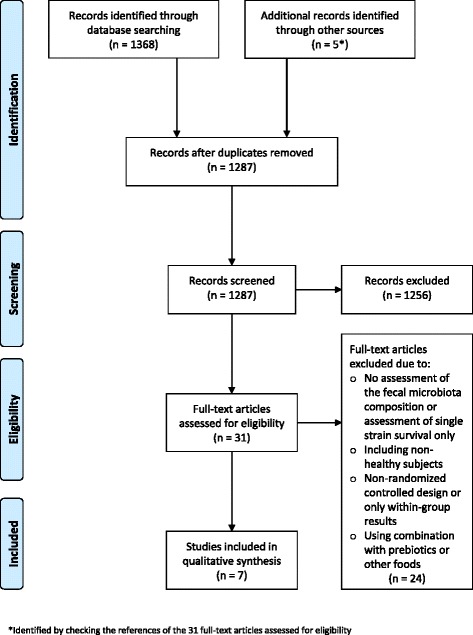
BACKGROUND: The effects of probiotic supplementation on fecal microbiota composition in healthy adults have not been well established. We aimed to provide a systematic review of the potential evidence for an effect of probiotic supplementation on the composition of human fecal microbiota as assessed by high-throughput molecular approaches in randomized controlled trials (RCTs) of healthy adults. METHODS: The survey of peer-reviewed papers was performed on 17 August 2015 by a literature search through PubMed, SCOPUS, and ISI Web of Science. Additional papers were identified by checking references of relevant papers. Search terms included healthy adult, probiotic, bifidobacterium, lactobacillus, gut microbiota, fecal microbiota, intestinal microbiota, intervention, and (clinical) trial. RCTs of solely probiotic supplementation and placebo in healthy adults that examined alteration in composition of overall fecal microbiota structure assessed by shotgun metagenomic sequencing, 16S ribosomal RNA sequencing, or phylogenetic microarray methods were included. Independent collection and quality assessment of studies were performed by two authors using predefined criteria including methodological quality assessment of reports of the clinical trials based on revised tools from PRISMA/Cochrane and by the Jadad score. RESULTS: Seven RCTs investigating the effect of probiotic supplementation on fecal microbiota in healthy adults were identified and included in the present systematic review. The quality of the studies was assessed as medium to high. Still, no effects were observed on the fecal microbiota composition in terms of α-diversity, richness, or evenness in any of the included studies when compared to placebo. Only one study found that probiotic supplementation significantly modified the overall structure of the fecal bacterial community in terms of β-diversity when compared to placebo. CONCLUSIONS: This systematic review of the pertinent literature demonstrates a lack of evidence for an impact of probiotics on fecal microbiota composition in healthy adults. Future studies would benefit from pre-specifying the primary outcome and transparently reporting the results including effect sizes, confidence intervals, and P values as well as providing a clear distinction of between-group and within-group comparisons.
Overview
The claims and statistics of this paper haven’t been checked yet.
Free: it reads the open-access text and checks the first 5 claims that cite a source we can check. Create a free account to check every claim.
Integrity signals
Registry
Cites
Statistics
Figures
Verification
Claims the paper makes
The claims and statistics of this paper haven’t been checked yet.
Free: it reads the open-access text and checks the first 5 claims that cite a source we can check. Create a free account to check every claim.
Claims other papers make about this one
Each is checked against this paper’s own text: does it say what the citing paper says it does?
The source backs part of the claim, not all of it — or backs it for a different population, condition or comparison.
In the citing paper
“While this could align with the observed lack of efficacy of HN019, it is also commonly observed that probiotics do not change the microbiota composition in healthy adults.15”
From Eight-Week Supplementation With Bifidobacterium lactis HN019 and Functional Constipation: A Randomized Clinical Trial (2024) · cites this paper as [15]
Experimental — accuracy not yet measuredThe source backs part of the claim, not all of it — or backs it for a different population, condition or comparison.
In the citing paper
“A systematic review, including seven RCTs summarised by Kristensen et al, also demonstrated a similar negative efficacy of probiotics supplement on faecal microbiota composition in healthy participants.48”
From Efficacy in bowel movement and change of gut microbiota on adult functional constipation patients treated with probiotics-containing products: a systematic review and meta-analysis (2024) · cites this paper as [48]
Experimental — accuracy not yet measuredThe cited source says what the claim attributes to it.
In the citing paper
“However, the lack of effect of the probiotic on the stool microbiota is in agreement with the findings of a systematic review of seven RCTs,”
The cited source says what the claim attributes to it.
In the citing paper
“a systematic review of seven RCTs, which investigated the effect of probiotic supplementation on the stool microbiota and revealed that probiotics had no effects on the stool microbiota composition in terms of α -diversity, richness, or evenness when compared to placebo 45 .”
In the citing paper
“In fact, a 2016 systematic review by Kristensen et al. found that probiotics have no impact on alpha-diversity, evenness and richness in the faecal microbiota across several studies on healthy individuals, bar one which noted an effect on beta-diversity [52].”
From Effect of Diet on the Gut Microbiota: Rethinking Intervention Duration (2019) · cites this paper as [52]
1 more claim about this paper
Create a free account to see every claim other papers make about this one.
Self-check
Percentages, sums and reported differences re-computed from the paper’s own numbers.
The self-check needs the paper’s full text.
Citations
Cites
Preferred Reporting Items for Systematic Reviews and Meta-Analyses: the PRISMA statement
Moher, D., Liberati, A., Tetzlaff, J., Altman, D. G., & for the PRISMA Group (2009) · BMJ · doi:10.1136/bmj.b2535 · Cited by 83,823
Preferred reporting items for systematic reviews and meta-analyses: the PRISMA Statement.
(2009) · PubMed Central · Cited by 44,859
Preferred reporting items for systematic reviews and meta-analyses: The PRISMA statement
Moher, D., Liberati, A., Tetzlaff, J., Altman, D. G., & the PRISMA Group* (2009) · Annals of Internal Medicine · doi:10.7326/0003-4819-151-4-200908180-00135 · Cited by 37,554
Liberati, A., Altman, D. G., Tetzlaff, J., Mulrow, C., Gøtzsche, P. C., Ioannidis, J. P. A., Clarke, M., Devereaux, P. J., Kleijnen, J., & Moher, D. (2009) · PLoS Medicine · doi:10.1371/journal.pmed.1000100 · Cited by 28,164 · cited 1×
“Risk of bias was further assessed regarding concealment of randomization, early termination of trial, blinding of patients, healthcare providers, data collectors and outcome assessors, reporting of drop-out or withdrawal, selective outcome reporting, and other potential biases [32, 33].”
BackgroundNaïve Bayesian Classifier for Rapid Assignment of rRNA Sequences into the New Bacterial Taxonomy
Wang, Q., Garrity, G. M., Tiedje, J. M., & Cole, J. R. (2007) · Applied and Environmental Microbiology · doi:10.1128/aem.00062-07 · Cited by 19,885 · cited 1×
“Several studies have examined the effects of region choice when evaluating fecal microbiota composition with no current international consensus [47, 49–51].”
BackgroundPreferred Reporting Items for Systematic Reviews and Meta-Analyses: The PRISMA Statement
Moher, D., Liberati, A., Tetzlaff, J., & Altman, D. G. (2009) · Journal of Clinical Epidemiology · doi:10.1016/j.jclinepi.2009.06.005 · Cited by 19,575
Assessing the quality of reports of randomized clinical trials: Is blinding necessary?
Jadad, A. R., Moore, R. A., Carroll, D., Jenkinson, C., Reynolds, D. J. M., Gavaghan, D. J., & McQuay, H. J. (1996) · Controlled Clinical Trials · doi:10.1016/0197-2456(95)00134-4 · Cited by 17,582 · cited 1×
“clinical trials was performed independently by NBK and TB using a three-item instrument (the Jadad score) that evaluates likelihood of bias in research reports [31].”
MethodA human gut microbial gene catalogue established by metagenomic sequencing
MetaHIT Consortium, Qin, J., Li, R., Raes, J., Arumugam, M., Burgdorf, K. S., Manichanh, C., Nielsen, T., Pons, N., Levenez, F., et al. (2010) · Nature · doi:10.1038/nature08821 · Cited by 11,624 · cited 1×
“Compositional information can be achieved by mapping the reads to a microbial gene reference catalogue [34], as was done by Brahe et al.”
MethodSelf-citationZhang, Q., Wang, C., Zheng, M., Li, Y., Li, J., Zhang, L., Shang, X., & Yan, C. (2015) · Cerebrovascular Diseases · doi:10.1159/000369778 · Cited by 11,533
Diet rapidly and reproducibly alters the human gut microbiome
David, L. A., Maurice, C. F., Carmody, R. N., Gootenberg, D. B., Button, J. E., Wolfe, B. E., Ling, A. V., Devlin, A. S., Varma, Y., Fischbach, M. A., et al. (2014) · Nature · doi:10.1038/nature12820 · Cited by 10,100 · cited 1×
“animalbased, amount of dietary fibers and fat) influence the fecal microbiota composition and function [36–38].”
Background
Cited by
Items 501–565 of 565
Mathanghi, S. K. (2020) · emergent Life Sciences Research · doi:10.31783/elsr.2020.626773
“It also regulates the host’s immune system response through specific gene activation by a localized response in the GI tract and also manipulates brain cells activities through bidirectional neuronal signaling over a part of gut-brain axis [7].”
BackgroundMiya, N. K. I. (2021) · Editora Omnis Scietia eBooks · doi:10.47094/978-65-88958-23-0/88-100
Ghibaudo, F. (2021) · El Servicio de Difusión de la Creación Intelectual (National University of La Plata) · doi:10.35537/10915/115957
Products of Vegan probiotics – a present time challenge or the newest demand in the functional foods
Shubham, S., a, A., & Verma, R. K. (2021) · IARJSET · doi:10.17148/iarjset.2021.8914
Dai, P., Tang, F., Gan, K., Hu, Q., Liao, J., Li, X., Shi, L., Zhang, W., Zhang, H., Zhu, Q., et al. (2022) · Research Square · doi:10.21203/rs.3.rs-1228536/v1 · Cited by 1
The role of diet and physical activity in influencing the microbiota/microbiome
Murphy, E. A., & Velázquez, K. T. (2022) · Elsevier eBooks · doi:10.1016/b978-0-12-822130-3.00017-x · Cited by 1
The nature of gut microbiota in early life: origin and impact of pioneer species
van Best, N. (2021) · Research Publications (Maastricht University) · doi:10.26481/dis.20210430nb
The Factors Influencing Gut Microbiota in Autoimmune Diseases
Ali, S. A., Panda, S. R., Dey, M., Datusalia, A. K., Naidu, V. G. M., & Singh, R. K. (2022) · Springer eBooks · doi:10.1007/978-981-19-1946-6_4
Probiotics and their use in treatment of gastrointestinal disorders
Navrátil, V. (2022) · Praktické lékárenství · doi:10.36290/lek.2022.032
Possible anti-inflammatory role of Probiotics in the treatment of Covid-19 disease
Gelen, V., & Şengül, E. (2022) · Erzurum Technical University · doi:10.54672/ejmbs.2022.12
Ruissen, M. M., Keller, J. J., & Tushuizen, M. E. (2023) · Elsevier eBooks · doi:10.1016/b978-0-12-822186-0.00010-9
Advent of Pharmabiotics as a Promising Therapeutic Tool for Human Health and Diseases Management
Mulay, V., Satav, D., Fernandes, A., Pisalwar, P., & Ahmed, S. (2023) · BENTHAM SCIENCE PUBLISHERS eBooks · doi:10.2174/9789815079609123010008
Targeting the Gut Microbiota for Health
Ishiguro, E. E., Haskey, N., & Campbell, K. (2023) · Elsevier eBooks · doi:10.1016/b978-0-323-91387-4.00005-3 · Cited by 1
Husein‐ElAhmed, H., & Steinhoff, M. S. (2023) · JDDG Journal der Deutschen Dermatologischen Gesellschaft · doi:10.1111/ddg.15120_g
Editorial: Prerequisites for a Successful Probiotic Therapy in Dysbiosis
Dolai, S., & Borody, T. J. (2022) · JOURNAL OF GASTROINTESTINAL INFECTIONS · doi:10.1055/s-0042-1759787
Identification of mucosal microbiome-host gene interactions in ulcerative colitis patientsPreprint
Kim, N., Gim, J., Lee, B. J., Choi, B. I., Yoon, H. S., Kim, W. S., Kim, S. H., Joo, M. K., & Park, J. (2024) · Research Square · doi:10.21203/rs.3.rs-3936546/v1
Subramanyam, M. N., Thanjavur, N., Viswanath, B., & Devi, M. C. (2024) · SSRN Electronic Journal · doi:10.2139/ssrn.4772035
The use of probiotic cultures in the technology of protein fermented milk products
Бояринева, И. В., & Zambalova, N. (2024) · BIO Web of Conferences · doi:10.1051/bioconf/202410300082
Gondaliya, S. M., & Bhensdadia, D. V. (2024) · International Journal of Science and Research Archive · doi:10.30574/ijsra.2024.11.2.0526
Why the need for microbiome? An updated perspective
Michael, O. S., Adetunji, J. B., Akinwale, E. O., Adetunji, C. O., & Soladoye, A. O. (2024) · Elsevier eBooks · doi:10.1016/b978-0-323-91190-0.00002-3 · Cited by 1
Ribeiro, E. A., Quincór, R. R. D. S., & Maciel, F. A. F. (2024) · Saúde com · doi:10.22481/rsc.v20i1.12934
Microbiome-Based Therapeutics for the Management of Cancer
Munir, M. U., Javed, I., Butt, M. H., Khan, Y. H., Salman, M., Rehman, Z. U., Khan, F. U., Shamsi, S. S., & Mallhi, T. H. (2024) · Springer eBooks · doi:10.1007/978-981-97-3790-1_14 · Cited by 1
The Effect of Probiotics and Microbiota on Nervous System and Mental Illnesses
Hossainpour, H., Khazaei, S., & Mahmoudi, H. (2024) · Central Nervous System Agents in Medicinal Chemistry · doi:10.2174/0118715249315760240905043415
Modulation of human gut dysbiosis by postbiotics
Chatterjee, D., & Sivashanmugam, K. (2025) · Elsevier eBooks · doi:10.1016/b978-0-443-22188-0.00018-8 · Cited by 1
Ferracini, C. B. F., Marques, C. G., Nakamoto, F. P., Carrilho, F. B. A., Magalhães, A. C. O., Silva, A. M., Nunes, C. L., de Melo, C. M., Lucin, G. A., Mendes, G. L., et al. (2025) · Journal of Nutrition · doi:10.1016/j.tjnut.2025.08.026 · Cited by 2
Gonçalves, V. S., Ramos, J. V., Conrad, N. L., Piraine, R. E. A., Santos, F. D. S., & Leite, F. P. L. (2025) · Brazilian Journal of Microbiology · doi:10.1007/s42770-025-01798-4
“Our data are in agreement with previous works that reported that probiotics do not induce significant changes in the diversity and richness of the gut microbiome [58, 59].”
Probióticos: Seguros e Eficazes?
Gomes, A. R. D., Gonçalves, C. A. F., Santos, N. M. D. S., Costa, C. D. S., & Calou, I. B. F. (2025) · Cuadernos de Educación y Desarrollo · doi:10.55905/cuadv17n11-013
Miková, E., Krčmářová, E., Černý, V., Sklenářová, L., Avramová, P., Protivová, E., Slunéčková, B., Akhtar, M., Věcek, J., Procházka, J., et al. (2025) · Probiotics and Antimicrobial Proteins · doi:10.1007/s12602-025-10814-w · Cited by 1
“However, even complex mixtures of probiotics have only a marginal effect on microbiota composition in healthy volunteers, as reviewed by Kristensen [40].”
Wu, C.-D., Fan, Y.-B., Chen, X., Cao, J.-W., Ye, J.-Y., Feng, M., Liu, X.-X., Sun, W.-J., Liu, R., & Wang, A. (2024) · Figshare · doi:10.6084/m9.figshare.26704530
Wu, C.-D., Fan, Y.-B., Chen, X., Cao, J.-W., Ye, J.-Y., Feng, M., Liu, X.-X., Sun, W.-J., Liu, R., & Wang, A. (2024) · Figshare · doi:10.6084/m9.figshare.26704539
Wu, C.-D., Fan, Y.-B., Chen, X., Cao, J.-W., Ye, J., Feng, M., Liu, X.-X., Sun, W.-J., Liu, R., & Wang, A. (2024) · Figshare · doi:10.6084/m9.figshare.25572580
Wu, C.-D., Fan, Y.-B., Chen, X., Cao, J.-W., Ye, J.-Y., Feng, M., Liu, X.-X., Sun, W.-J., Liu, R., & Wang, A. (2024) · Figshare · doi:10.6084/m9.figshare.26704551
Zeinali, F., Aghaei Zarch, S. M., Mehrjardi, M. Y. V., Kalantar, S. M., Jahan-Mihan, A., Karimi‐Nazari, E., Fallahzadeh, H., Hosseinzadeh-Shamsi-Anar, M., Rahmanian, M., Fazeli, M. R., et al. (2020) · Figshare · doi:10.6084/m9.figshare.12127590
Wu, C.-D., Fan, Y.-B., Chen, X., Cao, J.-W., Ye, J.-Y., Feng, M., Liu, X.-X., Sun, W.-J., Liu, R., & Wang, A. (2024) · Figshare · doi:10.6084/m9.figshare.26704548
Wu, C.-D., Fan, Y.-B., Chen, X., Cao, J.-W., Ye, J.-Y., Feng, M., Liu, X.-X., Sun, W.-J., Liu, R., & Wang, A. (2024) · Figshare · doi:10.6084/m9.figshare.26704554
Wu, C.-D., Fan, Y.-B., Chen, X., Cao, J.-W., Ye, J.-Y., Feng, M., Liu, X.-X., Sun, W.-J., Liu, R., & Wang, A. (2024) · Figshare · doi:10.6084/m9.figshare.26704542
Li, M., Wu, X., Guo, Z., Gao, R., Ni, Z., Cui, H., 宗敏华, Bockstaele, F. V., & Lou, W. (2023) · Figshare · doi:10.6084/m9.figshare.23714178
Wu, C.-D., Fan, Y.-B., Chen, X., Cao, J.-W., Ye, J.-Y., Feng, M., Liu, X.-X., Sun, W.-J., Liu, R., & Wang, A. (2024) · Figshare · doi:10.6084/m9.figshare.26704533
Li, M., Wu, X., Guo, Z., Gao, R., Ni, Z., Cui, H., 宗敏华, Bockstaele, F. V., & Lou, W. (2023) · Figshare · doi:10.6084/m9.figshare.23714181
Wu, C.-D., Fan, Y.-B., Chen, X., Cao, J.-W., Ye, J.-Y., Feng, M., Liu, X.-X., Sun, W.-J., Liu, R., & Wang, A. (2024) · Figshare · doi:10.6084/m9.figshare.25572714
Wu, C.-D., Fan, Y.-B., Chen, X., Cao, J.-W., Ye, J.-Y., Feng, M., Liu, X.-X., Sun, W.-J., Liu, R., & Wang, A. (2024) · Figshare · doi:10.6084/m9.figshare.26704545
Wu, C.-D., Fan, Y.-B., Chen, X., Cao, J.-W., Ye, J.-Y., Feng, M., Liu, X.-X., Sun, W.-J., Liu, R., & Wang, A. (2024) · Figshare · doi:10.6084/m9.figshare.26704536
Zhong, S., Guo, F., Chen, Q., & Zhang, S. (2026) · Intestinal failure. · doi:10.1016/j.intf.2026.100355
“As seen in trials, orally administered probiotics often do not persist in the stool or shift the overall community structure significantly [77,78].”
Cho, S.-C. (2026) · Food Engineering Progress · doi:10.13050/foodengprog.260004
“Furthermore, the multifactorial nature of metabolic diseases makes it difficult to isolate probiotic-specific effects (Kristensen et al., 2016).”
Mageswary, M. U., Lan, H., Li, P., Richmond, R. V., Azianey, Y., Tan, J. S., Liong, M., Ali, A., Vejayantheran, M., Hua, J., et al. (2026) · Frontiers in Nutrition · doi:10.3389/fnut.2026.1746679
Wang, Z., Zhu, F., Zhang, J., Feng, K., Abudourexiti, W., Li, S., Guo, Y., Chen, M., Yu, Z., Zhao, L., et al. (2026) · Materials Today Bio · doi:10.1016/j.mtbio.2026.103211 · Cited by 3
“However, the clinical efficacy of Lactobacillus supplementation has been inconsistent, largely due to poor gastrointestinal survival and colonization [12,18,19,52].”
Deusebio, G., Visciglia, A., Amoruso, A., & Pane, M. (2026) · Frontiers in Microbiology · doi:10.64898/2026.05.26.727599
“Kristensen et al. (2016) found no evidence that probiotics alter fecal microbiota composition in healthy adults across seven randomized controlled trials, suggesting that effects derive from transient metabolic activity and immune modulation rather than colonization.”
Probiotic, synbiotic effects on the gut–liver axis: omics-enabled mechanisms and therapeutic windows
Oriquat, G., El‐Sehrawy, A. A. M. A., Abdulsahib, W. K., Mustafa, W. W., Jyothi, S. R., Nayak, P. P., Janney, J. B., Singh, G., Sinha, A., & Yazdi, F. (2026) · Future Microbiology · doi:10.1080/17460913.2026.2684877
The interplay of gut microbiota and energy homeostasis in obesity-related diseases
Ruan, J., & Kao, C. (2026) · Elsevier eBooks · doi:10.1016/b978-0-443-40306-4.00009-0
Towriss, M., Dang, V., Goeres, J., Choudhary, J., Aube, A., Sanchez, J. M., Anindya, C., Morgan-Banke, K., Hamden, J. E., Whidbey, C., et al. (2026) · bioRxiv (Cold Spring Harbor Laboratory) · doi:10.64898/2026.06.30.735602
“This interpretation is consistent with previous literature demonstrating that probiotic administration often produces modest phenotypic changes in healthy individuals (Éliás et al., 2026; Kristensen et al., 2016; McFarland et al., 2018).”
Modulating the human gut microbiome-host system: a new drug discovery paradigm
Colmenarejo, G. (2026) · Frontiers in Drug Discovery · doi:10.3389/fddsv.2026.1898583
Saccharomyces cerevisea yeast mitigates the negative consequences of doxycycline abuse in broilers
Abd-Elrahman, A. M., Hafez, S., & Ali, G. H. (2026) · Beni-Suef University Journal of Basic and Applied Sciences · doi:10.1186/s43088-026-00779-2
“As illustrated by [63], probiotic treat-ment has a major impact on the overall composition of the fecal bacterial population [53].”
Gut Microbiota and Psoriatic Arthritis: From Pathogenesis to Microbiota-Targeted Therapies
Valentini, S., Lorenzini, S., Gentileschi, S., Cantarini, L., Frediani, B., & Baldi, C. (2026) · Rheumato · doi:10.3390/rheumato6030018
“The probiotic species most commonly used include bacteria belonging to the genera Lactobacillus , Bifidobacterium and Saccharomyces boulardii [133].”
Liu, R., & Wang, J. (2026) · Frontiers in Microbiology · doi:10.3389/fmicb.2026.1893259
Shaikh, S. S., & Malek, F. (2026) · Medicine · doi:10.1097/md.0000000000050435
“[25,26] Majeed et al [27] reported a significant positive change in the microbial phyla and species, which may positively affect healthy subjects.”
Otaru, N., Eckhardt, E. R. M., Hayward, M. R., Isaji, T., Kamioka, Y., Blokker, B., & Vinderola, G. (2026) · Microorganisms · doi:10.3390/microorganisms14091939
“…between-group differences in overall gut microbiome composition were observed after four weeks of intervention in the present study, this finding is consistent with previous studies using biotics indicating that functional gastrointestinal effects may occur without detectable taxonomic shifts [26].”
Effects of Lactobacillus acidophilus on hepatic and microbial dysregulation in MASLD and diabetes
Park, H. J., Park, I. G., Park, J. H., Park, H., Jung, J. J., Han, S. H., & Suk, K. T. (2026) · Gut Microbes · doi:10.1080/19490976.2026.2734705
Yin, Z., Zhang, Y., Sun, Z., Yang, Y., Ouédraogo, S. Y., Golubnitschaja, O., Grech, G., & Zhan, X. (2026) · Advances in predictive, preventive and personalised medicine · doi:10.1007/978-3-032-32838-0_2
The gut-pancreas axis: microbial dysbiosis as a pathogenic driver of diabetes and pancreatic cancer
Li, Y. (2026) · Medical Oncology · doi:10.1007/s12032-026-03421-4
“Therefore, additional high-quality clinical trials are required to implement these methods in the clinical routine [109, 110].”
Adetoye, A., Afolayan, A. O., Olatoye, I. O., Faneye, A. O., & Ayeni, F. A. (2026) · MicrobiologyOpen · doi:10.1002/mbo3.70438
Yuan, X., Shangguan, H., Zhang, Y., & Chen, R. (2026) · Frontiers in Endocrinology · doi:10.3389/fendo.2026.1970147
Metadata
- Authors
- Kristensen, N. B., Bryrup, T., Allin, K. H., Nielsen, T., Hansen, T. H., & Pedersen, O.
- Affiliations
- University of Copenhagen (DK)
- Corresponding author
- Kristensen, Nadja B.
- Venue
- Genome Medicine
- Published
- 2016-05-10
- Volume
- 8
- Issue
- 1
- Pages
- 52-52
- ISSN
- 1756-994X (ISSN-L)
- PMC
- PMC4862129
- OpenAlex
- W2343150225
- Cited by
- 561
- References
- 57
- Citations by year
- 2026: 34 · 2025: 44 · 2024: 64 · 2023: 53 · 2022: 57 · 2021: 67 · 2020: 74 · 2019: 66 · 2018: 53 · 2017: 34 · 2016: 15
- FWCI
- 6.47
- Type
- journal article
- Language
- en
- Open access
- gold
- doi.org
- Licence
- cc-by
- Locations
- Genome Medicine (publishedVersion, cc-by)
- PubMed Central (publishedVersion, cc-by)
- PubMed (publishedVersion)
- Research at the University of Copenhagen (University of Copenhagen) (acceptedVersion, cc-by)
- Funders
- The Novo Nordisk Foundation
- Topics
- Life Sciences › Agricultural and Biological Sciences › Food Science › Probiotics and Fermented Foods
- Life Sciences › Biochemistry, Genetics and Molecular Biology › Molecular Biology › Gut microbiota and health
- Health Sciences › Nursing › Nutrition and Dietetics › Infant Nutrition and Health
- Keywords
- probiotics, fecal microbiota, gut microbiota composition, healthy adults, Bifidobacterium, Lactobacillus, alpha diversity, beta diversity, microbiome, placebo comparison, metagenomic sequencing
- MeSH terms
- Adult, Bacteria, Feces, Humans, Phylogeny, Randomized Controlled Trials as Topic, Probiotics, Microbiota, Healthy Volunteers
About these checks
Registry, retraction, Cites and statistics results are computed, not judged, with one exception: a printed reference that no index lists is read once by a model before it counts as a citation error. Claims are extracted by a model and kept only when their quote appears verbatim in the text; each cited source is then checked, with a model’s help, for whether it says what the claim relies on. Those verdicts can be wrong — read the claim’s quote and the cited source before relying on one.
Statistics and arithmetic are recomputed, not judged.
Confidence bands are shown only for fields calibrated on our annotated test set. None is calibrated yet, so no band is shown.
What counts as a claim ›How we measure confidence ›How we check this ›
Are you an author, or do you see a problem with this page? Request a review
Data sources
Bibliographic data: Semantic Scholar, OpenAlex, Crossref.
Contains information from the Semantic Scholar Academic Graph Datasets, made available under the ODC Attribution License (ODC-BY 1.0).
Semantic Scholar’s data is described in: Kinney, R., et al. (2023). The Semantic Scholar Open Data Platform. arXiv:2301.10140.
