

Alterations in fecal microbiota composition by probiotic supplementation in healthy adults: a systematic review of randomized controlled trials
Open accessThe DOI matches its Crossref record; 57 of the 57 references it cites were found in a registry or an index.
Abstract
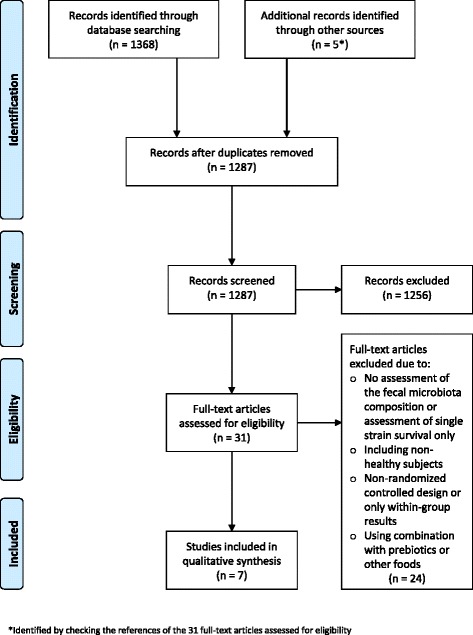
BACKGROUND: The effects of probiotic supplementation on fecal microbiota composition in healthy adults have not been well established. We aimed to provide a systematic review of the potential evidence for an effect of probiotic supplementation on the composition of human fecal microbiota as assessed by high-throughput molecular approaches in randomized controlled trials (RCTs) of healthy adults. METHODS: The survey of peer-reviewed papers was performed on 17 August 2015 by a literature search through PubMed, SCOPUS, and ISI Web of Science. Additional papers were identified by checking references of relevant papers. Search terms included healthy adult, probiotic, bifidobacterium, lactobacillus, gut microbiota, fecal microbiota, intestinal microbiota, intervention, and (clinical) trial. RCTs of solely probiotic supplementation and placebo in healthy adults that examined alteration in composition of overall fecal microbiota structure assessed by shotgun metagenomic sequencing, 16S ribosomal RNA sequencing, or phylogenetic microarray methods were included. Independent collection and quality assessment of studies were performed by two authors using predefined criteria including methodological quality assessment of reports of the clinical trials based on revised tools from PRISMA/Cochrane and by the Jadad score. RESULTS: Seven RCTs investigating the effect of probiotic supplementation on fecal microbiota in healthy adults were identified and included in the present systematic review. The quality of the studies was assessed as medium to high. Still, no effects were observed on the fecal microbiota composition in terms of α-diversity, richness, or evenness in any of the included studies when compared to placebo. Only one study found that probiotic supplementation significantly modified the overall structure of the fecal bacterial community in terms of β-diversity when compared to placebo. CONCLUSIONS: This systematic review of the pertinent literature demonstrates a lack of evidence for an impact of probiotics on fecal microbiota composition in healthy adults. Future studies would benefit from pre-specifying the primary outcome and transparently reporting the results including effect sizes, confidence intervals, and P values as well as providing a clear distinction of between-group and within-group comparisons.
Overview
The claims and statistics of this paper haven’t been checked yet.
Free: it reads the open-access text and checks the first 5 claims that cite a source we can check. Create a free account to check every claim.
Integrity signals
Registry
Cites
Statistics
Figures
Verification
Claims the paper makes
The claims and statistics of this paper haven’t been checked yet.
Free: it reads the open-access text and checks the first 5 claims that cite a source we can check. Create a free account to check every claim.
Claims other papers make about this one
Each is checked against this paper’s own text: does it say what the citing paper says it does?
The source backs part of the claim, not all of it — or backs it for a different population, condition or comparison.
In the citing paper
“While this could align with the observed lack of efficacy of HN019, it is also commonly observed that probiotics do not change the microbiota composition in healthy adults.15”
From Eight-Week Supplementation With Bifidobacterium lactis HN019 and Functional Constipation: A Randomized Clinical Trial (2024) · cites this paper as [15]
Experimental — accuracy not yet measuredThe source backs part of the claim, not all of it — or backs it for a different population, condition or comparison.
In the citing paper
“A systematic review, including seven RCTs summarised by Kristensen et al, also demonstrated a similar negative efficacy of probiotics supplement on faecal microbiota composition in healthy participants.48”
From Efficacy in bowel movement and change of gut microbiota on adult functional constipation patients treated with probiotics-containing products: a systematic review and meta-analysis (2024) · cites this paper as [48]
Experimental — accuracy not yet measuredThe cited source says what the claim attributes to it.
In the citing paper
“However, the lack of effect of the probiotic on the stool microbiota is in agreement with the findings of a systematic review of seven RCTs,”
The cited source says what the claim attributes to it.
In the citing paper
“a systematic review of seven RCTs, which investigated the effect of probiotic supplementation on the stool microbiota and revealed that probiotics had no effects on the stool microbiota composition in terms of α -diversity, richness, or evenness when compared to placebo 45 .”
In the citing paper
“In fact, a 2016 systematic review by Kristensen et al. found that probiotics have no impact on alpha-diversity, evenness and richness in the faecal microbiota across several studies on healthy individuals, bar one which noted an effect on beta-diversity [52].”
From Effect of Diet on the Gut Microbiota: Rethinking Intervention Duration (2019) · cites this paper as [52]
1 more claim about this paper
Create a free account to see every claim other papers make about this one.
Self-check
Percentages, sums and reported differences re-computed from the paper’s own numbers.
The self-check needs the paper’s full text.
Citations
Cites
Preferred Reporting Items for Systematic Reviews and Meta-Analyses: the PRISMA statement
Moher, D., Liberati, A., Tetzlaff, J., Altman, D. G., & for the PRISMA Group (2009) · BMJ · doi:10.1136/bmj.b2535 · Cited by 83,823
Preferred reporting items for systematic reviews and meta-analyses: the PRISMA Statement.
(2009) · PubMed Central · Cited by 44,859
Preferred reporting items for systematic reviews and meta-analyses: The PRISMA statement
Moher, D., Liberati, A., Tetzlaff, J., Altman, D. G., & the PRISMA Group* (2009) · Annals of Internal Medicine · doi:10.7326/0003-4819-151-4-200908180-00135 · Cited by 37,554
Liberati, A., Altman, D. G., Tetzlaff, J., Mulrow, C., Gøtzsche, P. C., Ioannidis, J. P. A., Clarke, M., Devereaux, P. J., Kleijnen, J., & Moher, D. (2009) · PLoS Medicine · doi:10.1371/journal.pmed.1000100 · Cited by 28,164 · cited 1×
“Risk of bias was further assessed regarding concealment of randomization, early termination of trial, blinding of patients, healthcare providers, data collectors and outcome assessors, reporting of drop-out or withdrawal, selective outcome reporting, and other potential biases [32, 33].”
BackgroundNaïve Bayesian Classifier for Rapid Assignment of rRNA Sequences into the New Bacterial Taxonomy
Wang, Q., Garrity, G. M., Tiedje, J. M., & Cole, J. R. (2007) · Applied and Environmental Microbiology · doi:10.1128/aem.00062-07 · Cited by 19,885 · cited 1×
“Several studies have examined the effects of region choice when evaluating fecal microbiota composition with no current international consensus [47, 49–51].”
BackgroundPreferred Reporting Items for Systematic Reviews and Meta-Analyses: The PRISMA Statement
Moher, D., Liberati, A., Tetzlaff, J., & Altman, D. G. (2009) · Journal of Clinical Epidemiology · doi:10.1016/j.jclinepi.2009.06.005 · Cited by 19,575
Assessing the quality of reports of randomized clinical trials: Is blinding necessary?
Jadad, A. R., Moore, R. A., Carroll, D., Jenkinson, C., Reynolds, D. J. M., Gavaghan, D. J., & McQuay, H. J. (1996) · Controlled Clinical Trials · doi:10.1016/0197-2456(95)00134-4 · Cited by 17,582 · cited 1×
“clinical trials was performed independently by NBK and TB using a three-item instrument (the Jadad score) that evaluates likelihood of bias in research reports [31].”
MethodA human gut microbial gene catalogue established by metagenomic sequencing
MetaHIT Consortium, Qin, J., Li, R., Raes, J., Arumugam, M., Burgdorf, K. S., Manichanh, C., Nielsen, T., Pons, N., Levenez, F., et al. (2010) · Nature · doi:10.1038/nature08821 · Cited by 11,624 · cited 1×
“Compositional information can be achieved by mapping the reads to a microbial gene reference catalogue [34], as was done by Brahe et al.”
MethodSelf-citationZhang, Q., Wang, C., Zheng, M., Li, Y., Li, J., Zhang, L., Shang, X., & Yan, C. (2015) · Cerebrovascular Diseases · doi:10.1159/000369778 · Cited by 11,533
Diet rapidly and reproducibly alters the human gut microbiome
David, L. A., Maurice, C. F., Carmody, R. N., Gootenberg, D. B., Button, J. E., Wolfe, B. E., Ling, A. V., Devlin, A. S., Varma, Y., Fischbach, M. A., et al. (2014) · Nature · doi:10.1038/nature12820 · Cited by 10,100 · cited 1×
“animalbased, amount of dietary fibers and fat) influence the fecal microbiota composition and function [36–38].”
Background
Cited by
Items 401–500 of 565
Ďásková, N., Heczková, M., Módos, I., Hradecký, J., Hudcovic, T., Kuzma, M., Pelantová, H., Buskova, I., Sticová, E., Funda, D. P., et al. (2023) · Nutrients · doi:10.3390/nu15020454 · Cited by 8
“In contrast to probiotic treatment, which does not induce an alteration in microbiota composition [14], FMT causes a structural change in the whole gut microbial community [12], and thus may convey complex beneficial effects.”
A zebrafish model to elucidate the impact of host genes on the microbiota
Thormar, E. A., Rasmussen, J. A., Mathiessen, H., Marana, M. H., Clausen, C. G., Hansen, M. A., Kodama, M., Jørgensen, L. V. G., & Limborg, M. T. (2024) · Environmental DNA · doi:10.1002/edn3.513 · Cited by 6
“probiotics, their mode of action, and differences in inter-individual responses (Bermudez-Brito et al., 2012; Kleerebezem et al., 2019; Kristensen et al., 2016; Sanders et al., 2019; Zmora et al., 2018), the potential effects of host genes on its associated microbiota deserves more attention.”
BackgroundXiong, J., Wu, J.-J., Liu, D., Yousaf, M., Liu, L.-J., Zeng, S., Li, Q., Tang, J., & Wu, Y. (2024) · Food Bioscience · doi:10.1016/j.fbio.2024.105256 · Cited by 7
Byrne, D. F., Geraghty, A. A., Yelverton, C. A., Murphy, E. F., van Sinderen, D., Cotter, P. D., & McAuliffe, F. M. (2020) · Food & Function · doi:10.1039/d0fo01727b · Cited by 5
The Genomic Basis of Lactobacilli as Health-Promoting Organisms
Salvetti, E., & O’Toole, P. W. (2018) · ASM Press eBooks · doi:10.1128/9781555819705.ch2 · Cited by 6
van Zanten, G. C., Madsen, A. L., Yde, C. C., Krych, Ł., Yeung, N., Saarinen, M., Kot, W., Jensen, H. M., Rasmussen, M. A., Ouwehand, A. C., et al. (2024) · Microorganisms · doi:10.3390/microorganisms12040796 · Cited by 7
“However, other studies and a meta-analysis conclude that, in general, probiotics do not appear to influence the GM composition to any larger extent in healthy adults [14,15].”
ResultPrebiotics, Probiotics, and Synbiotics: A Bifidobacterial View
Morelli, L., Callegari, M. L., & Patrone, V. (2017) · Elsevier eBooks · doi:10.1016/b978-0-12-805060-6.00017-x · Cited by 9
Designer Probiotics in Metabolic Disorders
Gupta, R. G., & Raghuwanshi, S. (2022) · Springer eBooks · doi:10.1007/978-981-16-8444-9_12 · Cited by 7
Microbiome and Immunotherapy for Melanoma
Haddad, A., & Holder, A. M. (2024) · Hematology/Oncology Clinics of North America · doi:10.1016/j.hoc.2024.05.010 · Cited by 5
Gut Microbiota and Exercise: A Systematic Review of Interventions and Evidence Limitations
Gaskell, S. K., Martinez, I. G., & Costa, R. J. S. (2025) · International Journal of Sports Medicine · doi:10.1055/a-2705-2210 · Cited by 12
Obrero, T., de Mier, M. V. P.-R., Gordillo-Arnaud, J. E., Moral, M. J. J., Vidal-Jiménez, V., Guerrero, F., Carmona, A., Rodríguez-Ortiz, M. E., Torralbo, A. I., Ojeda, R., et al. (2025) · Toxins · doi:10.3390/toxins18010006 · Cited by 4
“This behavior had been observed previously, as described in the review by Nadja B Kristensen and colleagues [70], where they observed how probiotic interventions in healthy adults did not show consistent effects on global diversity indices, although they did show specific changes in taxa.”
Wang, M., Monaco, M. H., Daniels, V. C., Hirvonen, J., Jensen, H. M., Ouwehand, A. C., Mukherjea, R., Christensen, N. J., Lehtinen, M. J., Hibberd, A. A., et al. (2024) · Journal of Nutrition · doi:10.1016/j.tjnut.2024.12.022 · Cited by 4
“Similar re-sults were reported when other probiotic strains were supplemented to human adults [68].”
Ahmadi‐Khorram, M., Hatami, A., Asghari, P., Esfehani, A. J., Afshari, A., Javdan, F., & Nematy, M. (2025) · Frontiers in Nutrition · doi:10.3389/fnut.2025.1615607 · Cited by 7
Cesare, F. D., Calgaro, M., Ghini, V., Squarzanti, D. F., Prisco, A. D., Visciglia, A., Zanetta, P., Rolla, R., Savoia, P., Amoruso, A., et al. (2023) · Journal of Proteome Research · doi:10.1021/acs.jproteome.3c00548 · Cited by 4
The Microbial Revolution in the World of Joint Replacement Surgery
Srikrishnaraj, A., Lanting, B. A., Burton, J. P., & Teeter, M. G. (2024) · JBJS Open Access · doi:10.2106/jbjs.oa.23.00153 · Cited by 7
Alsalemi, W., Chik, Z., & Alshawsh, M. A. (2025) · PLoS ONE · doi:10.1371/journal.pone.0324926 · Cited by 5
GIDA ETİKETLERİNDE YER ALAN BİLGİLERİN SAĞLIKLI ALGILANMA (HEALTH HALO) ETKİSİ
Bektaş, A., Ulusoy, M., & Bektaş, V. (2020) · GIDA / THE JOURNAL OF FOOD · doi:10.15237/gida.gd20045 · Cited by 8
Mechanisms of Gut Microbiota Modulation by Food, Probiotics, Prebiotics and More
Molinero, N., Sabater, C., Calvete‐Torre, I., Delgado, S., Ruas‐Madiedo, P., Ruíz, L., & Margollés, A. (2021) · Elsevier eBooks · doi:10.1016/b978-0-12-819265-8.00095-4 · Cited by 4
Li, H., Zhang, W., Gao, Y., Tian, X., Chu, Z., Cai, Y., & Wang, L. (2021) · Aquaculture Research · doi:10.1111/are.15605 · Cited by 5
Letsinger, A. C., Yang, F., Menon, R., Little, S. E., Granados, J. Z., Breidenbach, B. M., Iyer, A., Castro-Padovani, T. N., Nagel, E. C., JAYARAMAN, A., et al. (2022) · Medicine & Science in Sports & Exercise · doi:10.1249/mss.0000000000002941 · Cited by 4
“However, there is neutral to low support for the efficacy of probiotics (26,27) and fecal microbial transplants (FMT; [28]).”
BackgroundThe Influence of Protein Secretomes of Enterococcus durans on ex vivo Human Gut Microbiome
Comerlato, C. B., Zhang, X., Walker, K., Mayne, J., Figeys, D., & Brandelli, A. (2023) · Probiotics and Antimicrobial Proteins · doi:10.1007/s12602-023-10136-9 · Cited by 4
“Evidence supporting the benefits of probiotics in healthy adults is limited and less reliable [11].”
Probiotic Bacteria Used in Food: A Novel Class of Antibiofilm Agent
Husain, F. M., Al‐Shabib, N. A., Alyousef, A. A., Khan, A., Arshad, M., Hassan, I., Albalawi, T., & Ahmad, I. (2020) · Springer eBooks · doi:10.1007/978-981-15-4716-4_3 · Cited by 5
Wang, X., Dong, W., Liu, Q., Zeng, X., Liu, Y., Li, Z., Pan, Y., Xiong, Q., Lyu, N., & Zhu, B. (2025) · Microorganisms · doi:10.3390/microorganisms13071507 · Cited by 4
“…β -diversity findings, the results indicate that while probiotic supplementation promoted convergence of gut microbiota structure between the CCD/CMD and healthy groups, it did not restore patients’ microbiota to the baseline levels observed in healthy popula-Microorganisms tions [61].”
Lee, D. H., Seong, H., Kim, S.-A., & Han, N. S. (2025) · Microbiome Research Reports · doi:10.20517/mrr.2025.35 · Cited by 5
Colorectal cancer chemoprevention: Exploring the path from molecular mechanisms to available drugs
Ivy, D. M., Bordone, R., Magno, L. D., Coni, S., & Canettieri, G. (2025) · Biochimica et Biophysica Acta (BBA) - Reviews on Cancer · doi:10.1016/j.bbcan.2025.189439 · Cited by 5
Mageswary, M. U., Li, P., Richmond, R. V., Azianey, Y., Hamid, I. J. A., Taib, F., Liong, M.-T., Ali, A., Tan, J. S., & Zhang, Y. (2026) · Frontiers in Nutrition · doi:10.3389/fnut.2025.1713135 · Cited by 3
Napier, B. A., Allegretti, J. R., Feuerstadt, P., Kelly, C., Hise, N. W. V., Jäger, R., Stuivenberg, G. A., Kassam, Z., & Reid, G. (2026) · Antibiotics · doi:10.3390/antibiotics15020138 · Cited by 6
“Preclinical validation in a dynamic gut model inoculated with human microbiota demonstrated recovery of SCFA output following antibiotic or ethanol perturbation, including significant enhancement of butyrate relative to controls [27].”
Carolak, E., Czajkowska, J., Waszczuk, W., Dutkiewicz, A., Kedzierska, A. E., & Grzymajło, K. (2026) · npj Biofilms and Microbiomes · doi:10.1038/s41522-026-01011-w · Cited by 3
“Bothprobioticstrains maintainedsimilargutmicrobialcommunitieswithnomajorrestructuring followingadministration,consistentwiththeestablishedprinciplethata singleintroducedstraintypicallyproducesquantitativeshiftsinspeci fi ctaxa rather than wholesale ecological reorganization 54 .”
Opioid trail: Tracking contributions to opioid use disorder from host genetics to the gut microbiome
Duffy, E. P., Bachtell, R. K., & Ehringer, M. A. (2023) · Neuroscience & Biobehavioral Reviews · doi:10.1016/j.neubiorev.2023.105487 · Cited by 5
Fan, W. H., Tang, K., Deng, Y., Zheng, C., Pan, M., Pi, D., Zheng, L., Zhen, J., Yang, Q., & Zhang, Y. (2024) · Food Bioengineering · doi:10.1002/fbe2.12076 · Cited by 4
Zeng, Q., Luo, Y., & He, W. (2024) · Aging Research · doi:10.26599/agr.2024.9340028 · Cited by 4
Yan, Y., Dong, L., Xu, J., Zhang, Z., Jia, P., Zhang, J., Chen, W., & Gao, W. (2024) · Frontiers in Microbiology · doi:10.3389/fmicb.2024.1487978 · Cited by 3
Bifidobacterial biofilms as next-generation probiotics and their role in intestinal microbiocenosis
Aziz, K., & Zaidi, A. (2024) · Critical Reviews in Microbiology · doi:10.1080/1040841x.2024.2438119 · Cited by 5
“…can colonize also depends on the intestinal region, the strain-specific mucosal colonization resistance, and the individual’s overall constitution (Kristensen et al. 2016; Maldonado-Gómez et al. 2016; Zmora et al. 2018). to sum up, the indigenous gut microbiota of some individuals, being highly…”
Ojetti, V., Petruzziello, C., Migneco, A., Candelli, M., & Saviano, A. (2025) · Biomedicines · doi:10.3390/biomedicines13112840 · Cited by 6
“Kristensen et al. [16] conducted a systematic review to examine the impact of probiotic supplementation on the fecal microbiota of healthy subjects.”
Ladakis, D. C., & Bhargava, P. (2023) · CNS Drugs · doi:10.1007/s40263-023-00986-w · Cited by 6
“A recent systematic review of clinical trials in healthy individuals reported no difference in microbiota composition in six out of seven studies, suggesting a lack of such effect [90].”
BackgroundProbiotics in the Management of Diabetes
Kumar, A., Pramanik, J., Goyal, N., Prajapati, B. G., & Chauhan, D. (2024) · IntechOpen eBooks · doi:10.5772/intechopen.110338 · Cited by 4
dos Santos, L. A. C., Carvalho, R. D. D. O., Neto, J. P. R. C., Lemos, D. E. D. A., de Oliveira, K. Á. R., Sampaio, K. B., Freire, M. O. D. L., Aburjaile, F. F., Azevedo, V., de Souza, E. L., et al. (2024) · Microorganisms · doi:10.3390/microorganisms12040659 · Cited by 4
“It is recognized that the administration of probiotics in adequate amounts can improve the composition, diversity, and function of the gut microbiota and promote host health benefits [9,10], such as in the treatment of cardiometabolic, cancer, inflammatory, and immune diseases [11–14].”
BackgroundKrálík, P., Dušková, M., Klanica, M., & Dziedzinská, R. (2025) · Journal of Food Measurement & Characterization · doi:10.1007/s11694-025-03181-1 · Cited by 3
The Promise of Personalized Medicine
Stoll, M. L. (2018) · Springer eBooks · doi:10.1007/978-3-319-79026-8_35 · Cited by 3
The influence of dietary compounds on gut microbiota
Pogačar, M. Š., & Mičetić‐Turk, D. (2021) · Slovenian Medical Journal · doi:10.6016/zdravvestn.3005 · Cited by 2
“However, studies investigating the effects of probiotics on the human gut microbiota have inconclusive results which might be a consequence of variations in individual responses to probiotics and probiotic colonization (51-55).”
BackgroundShima, T., Kaga, C., Shimamoto, K., Sugimoto, T., Kado, Y., Watanabe, O., Suwa, T., Amamoto, R., Tsuji, H., & Matsumoto, S. (2022) · Beneficial Microbes · doi:10.3920/bm2021.0101 · Cited by 5
MAFLD under the lens: the role of gut microbiota
Sousa, P., & Machado, M. V. (2022) · Metabolism and Target Organ Damage · doi:10.20517/mtod.2022.15 · Cited by 3
The Effects of Probiotic Supplementation in Active Men and Women
António, J., Leaf, A., Evans, C., Ellerbroek, A., Axelrod, C. H., Silver, T. A., Burgess, V., & Peacock, C. A. (2018) · Journal of Exercise and Nutrition · Cited by 3
Advances in Probiotics for Health and Nutrition
Zambare, V., Din, M. F. M., Gupta, P., & Prajapati, B. G. (2023) · IntechOpen eBooks · doi:10.5772/intechopen.104299 · Cited by 6
The role of microbiome in CAR-T cell therapy
Abdel‐Wahab, R., Kerr, T. D., McGrail, D. J., Diab, A. K., & Bentebibel, S.-E. (2025) · International review of cytology · doi:10.1016/bs.ircmb.2024.12.015 · Cited by 2
Liu, T., Meng, Q., Zhang, Y., Ye, J., Shang, Y., Song, W., & Luo, Y. (2025) · Probiotics and Antimicrobial Proteins · doi:10.1007/s12602-025-10653-9 · Cited by 6
Nami, Y., Barghi, A., Sadeghi, M., Farhadi, T., Babaei, S., & Haghshenas, B. (2025) · Apmis · doi:10.1111/apm.70086 · Cited by 2
“Additionally, regulatory classification as dietary supplements, rather than pharmaceuticals, results in less stringent oversight of manufacturing consistency, purity, and label accuracy, introducing further variability that can compromise trial outcomes [302, 323, 324].”
Ma, R., Jia, B., Zhang, X., Zhao, Z., Zhao, F., Liong, M.-T., Ali, A., Hamid, I. J. A., Hasan, T. H., Taib, F., et al. (2026) · Microbial Pathogenesis · doi:10.1016/j.micpath.2026.108431 · Cited by 2
García, G. G., Campos, M. D. C., Soto, J., Diaz, A., Buchaca, E. F., Martínez, D., Bernal, M., Escobar, V., Rodríguez, L., Valdés, E., et al. (2026) · Microorganisms · doi:10.3390/microorganisms14040749 · Cited by 2
Celiac Disease, the Microbiome, and Probiotics
Krishnareddy, S., & Green, P. H. R. (2017) · Elsevier eBooks · doi:10.1016/b978-0-12-804024-9.00039-2 · Cited by 3
Reveles, K. R., Young, E. H., Zeidan, A. R., & Dong, Q. (2021) · Elsevier eBooks · doi:10.1016/b978-0-12-815962-0.00017-2 · Cited by 2
Critical Overview of Probiotics Efficacy on Health and its Safety
Deka, B., Dash, B., Saud, B., Bhattacharjee, B., & Ikbal, A. M. A. (2021) · Pharmaceutical and Biosciences Journal · doi:10.20510/pbj/9/i2/1275 · Cited by 4
High-throughput technologies in probiotics science
Stincone, P., Brandelli, A., & Angelis, M. D. (2022) · Elsevier eBooks · doi:10.1016/b978-0-323-85170-1.00010-5 · Cited by 5
Kumar, A., Singh, R., Sehrawat, R., Kumar, N., & Pratibha, N. A. (2022) · Springer eBooks · doi:10.1007/978-981-19-4796-4_14 · Cited by 3
Kirby, T. O., Sapp, P. A., Townsend, J. R., Govaert, M., Duysburgh, C., Marzorati, M., Marshall, T. M., & Esposito, R. (2024) · Journal of Functional Foods · doi:10.1016/j.jff.2024.106319 · Cited by 2
Wilson, S. M., Kang, Y., Wren, J. F., Menton, J. F., Vinay, E., Millette, M., Kelly, M. R., Xie, Z., Miller, M. J., & Swanson, K. S. (2025) · Journal of Animal Science · doi:10.1093/jas/skaf251 · Cited by 4
Hologenomics: The Interaction Between Host, Microbiome and Diet
Marsh, A. J., & Azcárate-Peril, M. A. (2020) · Elsevier eBooks · doi:10.1016/b978-0-08-100596-5.22701-7 · Cited by 2
Brown, B. I. (2019) · Gastrointestinal Disorders · doi:10.3390/gidisord1030027 · Cited by 2
“Probiotics have been proposed as an approach for improving gut microbial composition, however a meta-analysis found no effect of probiotics on measures of composition such as α-diversity, richness, or evenness [174].”
BackgroundKnysh, O. V., Pogorila, M. S., & Voyda, Y. V. (2020) · Regulatory Mechanisms in Biosystems · doi:10.15421/022013 · Cited by 4
“…fat metabolism, antitumour effects, improvement of inflammatory bowel disease, adjustment of brain-gut communication, promoting the maturation of the immune system and regulation of its activity (Kristensen et al., 2016; O’Callaghan & van Sinderen, 2016; Zitvogel et al., 2017; Kysera et al., 2018).”
BackgroundBodurska, T., Konova, E. I., Pachkova, S., & Yordanov, A. D. (2021) · Journal of Pure and Applied Microbiology · doi:10.22207/jpam.15.4.03 · Cited by 3
Understanding of Gut Microbial Ecology for New Therapeutics
Joishy, T. K., Das, S., & Khan, M. R. (2021) · Springer eBooks · doi:10.1007/978-981-16-5617-0_13 · Cited by 2
Food-gut microbiota interactions
Berding, K., Kaulmann, D., & Cryan, J. F. (2022) · Elsevier eBooks · doi:10.1016/b978-0-323-85170-1.00011-7 · Cited by 3
Zhou, J., Zhou, B., Kou, X., Jian, T., Chen, L., Lei, X., Jia, S., Xie, X., & Wu, X. (2023) · Medicine · doi:10.1097/md.0000000000032951 · Cited by 2
“[29] Therefore, gut microorganisms as the potentially modifiable causative factor in the initiation and development of diseases have gained much attention.[30] Considering the importance of gut microbiota, and the pivotal role of gut microbiota in the therapeutic effects of TCM, an increasing number of researches have…”
BackgroundNeff, A. S. (2020) · Clinical Therapeutics · doi:10.1016/j.clinthera.2020.02.002 · Cited by 2
Future Development of Probiotic Dairy Products
Saarela, M. (2017) · Wiley eBooks · doi:10.1002/9781119214137.ch10 · Cited by 4
Kostopoulos, I. (2021) · doi:10.18174/531651 · Cited by 2
The Evolution of personalised nutrition
Strauss, B., Short, S., & Lotfian, P. (2023) · doi:10.46756/sci.fsa.ean605 · Cited by 3
Protic, D. D., Bascarevic, D., Dimitrijevic, S., Pešović, J., Nikolić, V., Nikolic, S., Novicevic, V., Markovic, J., Arandjelović, I., Pavicevic, D. S., et al. (2025) · Scientific Reports · doi:10.1038/s41598-025-29896-1 · Cited by 2
“Such stability in alpha and beta diversity is not unexpected in host-associated microbiomes, particularly over relatively short intervention periods or when probiotics act through functional rather than compositional modulation 57,58 .”
Li, H., Yu, Z., Wu, Z., Lin, Y., Liu, T., Liu, Y., An, J., Zhao, J., Liu, Y., Ma, X., et al. (2026) · Genes · doi:10.3390/genes17030263 · Cited by 1
“As noted, antibiotic usage can profoundly alter microbial community structure [54].”
Penton, C. R., & Vadakattu, G. (2026) · PNAS Nexus · doi:10.1093/pnasnexus/pgag132 · Cited by 1
“Also, while there is significant data regarding the use of probiotics in diseased guts, randomized controlled trials show little evidence for a significant impact on the fecal microbiome composition in healthy adults (198).”
Hoshiba, N., Fujii, T., Yagasaki, R., Ochi, T., Shiba, K., Takahashi, H., Funasaka, K., Ono, E., Hirooka, Y., Tochio, T., et al. (2026) · Biomedicines · doi:10.3390/biomedicines14051112 · Cited by 1
“Unlike many prebiotic or probiotic interventions that produce minimal or inconsistent effects in healthy individuals [31], the present study suggested taxon-specific microbiota trends following AOS intake in healthy adults.”
Microbial metabolites as emerging Biomodulators of host function and disease susceptibility
Hunzai, H., Ansari, A. A., Ghazanfar, S., Islam, A., Elkelish, A., Das, J., Chaudhary, P., Sridhar, S. B., Panigrahy, U. P., Mantry, S., et al. (2026) · PharmaNutrition · doi:10.1016/j.phanu.2026.100523 · Cited by 2
Ishaq, W., Kasu, P. R., Bhattarai, B., & Selvaraj, R. K. (2026) · Poultry Science · doi:10.1016/j.psj.2026.107616 · Cited by 1
“A normal and stable gut microbial consortium resists the introduction of new foreign microbes and the proliferation of pathogens (Kristensen, et al., 2016), which is often referred to as the phenomenon of colonization resistance (Woelfel, et al., 2024).”
Díaz, A., García, G., & Cano, R. J. (2026) · Microorganisms · doi:10.3390/microorganisms14092001
“…treatment, or management of disease [77,78] Product characterization does not by itself predict behavior within a complex recipient community [38,39,61] Development should include measurements of ecological interactions and community-level function [77,79,85,86] Fecal microbiota…”
InfluentialDeterminants of the Gut Microbiota
Muthaiyan, A. (2020) · Springer eBooks · doi:10.1007/978-3-030-47384-6_2 · Cited by 3
Translocation of gut microbiota in liver cirrhosis: mechanisms, clinical significance, and markers
Гавриленко, Д. И., & Силивончик, Н. Н. (2021) · Clinical Microbiology and Antimicrobial Chemotherapy · doi:10.36488/cmac.2021.2.147-160 · Cited by 3
XI International Conference on Immunonutrition 2018: ISIN
(2018) · Annals of Nutrition and Metabolism · doi:10.1159/000493135 · Cited by 1
The Microbiome Theory of Aging (MTA).
Pelton, R. (2022) · PubMed · Cited by 2
Exogenous Engraftment: Host-specificity in Probiotic Administration
Long, T. J. (2023) · Current Probiotics · doi:10.2174/0126666499268615231127065836 · Cited by 1
Constipation targeted monostrain and multispecies probiotics: effects on symptoms and gut microbiota
Zeng, Y., He, P., Lyu, C., Wu, Y., Zhao, X., Gu, Q., Wu, S., Zhang, Y., Wei, X., An, R., et al. (2025) · Food Science and Human Wellness · doi:10.26599/fshw.2025.9250509 · Cited by 1
Impact of Gut Microbiota on Host by Exploring Proteomics
Angel, T. E., & Aryal, U. K. (2020) · Springer eBooks · doi:10.1007/978-3-030-47384-6_11 · Cited by 2
Microbiomes in Medicine and Agriculture
ROSENBERG, E. B. (2021) · The microbiomes of humans, animals, plants, and the environment · doi:10.1007/978-3-030-65317-0_10 · Cited by 2
DÍAZ-OROZCO, L. E., & MÉNDEZ-SÁNCHEZ, N. (2021) · Minerva Gastroenterology · doi:10.23736/s2724-5985.21.02914-4 · Cited by 1
Badilla, I. J., & Acuña-Amador, L. (2021) · Psiquiatría Biológica · doi:10.1016/j.psiq.2021.100315 · Cited by 2
Probióticos en Síndrome de Intestino Irritable: ¿Están listos para la práctica clínica?
Valdovinos-Díaz, M. A. (2021) · Acta gastroenteorológica latinoamericana/Acta gastroenterológica latinoamericana · doi:10.52787/mrrq4655 · Cited by 4
Impact of Precision Nutrition on Microbiota and Obesity
Merra, G., Gualtieri, P., LORENZO, A. D., Capacci, A., Frank, G., Dri, M., Renzo, L. D., & Marchetti, M. (2023) · Current Nutrition & Food Science · doi:10.2174/1573401319666230724112531 · Cited by 1
Probiotics enhance susceptibility of mice to cryptosporidiosisPreprint
Oliveira, B. C. M., & Widmer, G. (2018) · bioRxiv (Cold Spring Harbor Laboratory) · doi:10.1101/304956 · Cited by 1
Dysbiosis Promotes Gastric Diseases and Impede Therapies by Hijacking Gut Immune HomeostasisPreprint
Toor, D., Wasson, M. K., Goel, C., Kaushik, N. K., Kumar, P., Singh, S. K., Karthikeyan, G., Kumar, A., & Prakash, H. (2019) · Preprints.org · doi:10.20944/preprints201901.0170.v1 · Cited by 1
Naudin, C. R., Owens, J. A., Askew, L. C., Khan, R. N., Scharer, C. D., Matthews, J. D., Luo, L., Kim, J.-Y., Reedy, A. R., Barbian, M. E., et al. (2021) · bioRxiv (Cold Spring Harbor Laboratory) · doi:10.1101/2021.12.02.471025 · Cited by 1
Wülbern, J., Hansen, L., Bannon, C. C., Liebeke, M., Zimmermann, J., Bohannan, B. J. M., & Johnke, J. (2026) · bioRxiv (Cold Spring Harbor Laboratory) · doi:10.64898/2026.06.25.734446 · Cited by 1
“Therapeu’c interven’ons, including fecal microbiota transplanta’ons 38 , probio’cs 39,40 , or engineered microbial consor’a 41 oVen result in only transient effects 42,43 .”
Therapeutic Manipulation of Gut Microbiota
Ishiguro, E. E., Haskey, N., & Campbell, K. (2018) · Elsevier eBooks · doi:10.1016/b978-0-12-810541-2.00007-5
An Ecological Framework To Understand Gut Microbiota Modulation By Probiotics
Walter, J. (2018) · Science Trends · doi:10.31988/scitrends.21386
The influence of the gut microbiota on influenza vaccine-induced immunity
Mooney, A. (2018) · Open Access Victoria University of Wellington | Te Herenga Waka (Figshare) · doi:10.26686/wgtn.17131847.v1
Computational psychiatry 2.0 and implications for stress researchPreprint
Pashkov, A. A., & Беребин, М. А. (2018) · bioRxiv (Cold Spring Harbor Laboratory) · doi:10.1101/483164
“argue that in healthy humans microbiota interventions with probiotics does not result in any changes of gut microbiota composition (84).”
BackgroundYumoto, H., Uebanso, T., Shimohata, T., & Takahashi, A. (2019) · Current Oral Health Reports · doi:10.1007/s40496-019-0221-7 · Cited by 1
Biodiversity-based enhancement of rhizosphere microbiome functionality
Hu, J. (2019) · Utrecht University Repository (Utrecht University)
Bringing Truth to the Table: An Evidence Review to Dispell Common Dietary Myths
Pierce, M. (2019) · Scholar Commons (University of South Carolina)
Why microbes, not microbiomes, are better causal explanations in gut-brain research
Lynch, K. E. (2019) · Behavioral and Brain Sciences · doi:10.1017/s0140525x18002820
Treatment of Chronic Constipation (Constipation and Intestinal Flora)
Osaki, H., Jodai, Y., Kamano, T., Funasaka, K., Nagasaka, M., Nakagawa, Y., Shibata, T., & Ohmiya, N. (2019) · Nihon Daicho Komonbyo Gakkai Zasshi · doi:10.3862/jcoloproctology.72.609
Impact of probiotics on commensal and pathogenic swine intestinal microbes
Wang, W. (2019) · ERA: Education and Research Archive (University of Alberta) · doi:10.7939/r3-7akn-0y16
Metadata
- Authors
- Kristensen, N. B., Bryrup, T., Allin, K. H., Nielsen, T., Hansen, T. H., & Pedersen, O.
- Affiliations
- University of Copenhagen (DK)
- Corresponding author
- Kristensen, Nadja B.
- Venue
- Genome Medicine
- Published
- 2016-05-10
- Volume
- 8
- Issue
- 1
- Pages
- 52-52
- ISSN
- 1756-994X (ISSN-L)
- PMC
- PMC4862129
- OpenAlex
- W2343150225
- Cited by
- 561
- References
- 57
- Citations by year
- 2026: 34 · 2025: 44 · 2024: 64 · 2023: 53 · 2022: 57 · 2021: 67 · 2020: 74 · 2019: 66 · 2018: 53 · 2017: 34 · 2016: 15
- FWCI
- 6.47
- Type
- journal article
- Language
- en
- Open access
- gold
- doi.org
- Licence
- cc-by
- Locations
- Genome Medicine (publishedVersion, cc-by)
- PubMed Central (publishedVersion, cc-by)
- PubMed (publishedVersion)
- Research at the University of Copenhagen (University of Copenhagen) (acceptedVersion, cc-by)
- Funders
- The Novo Nordisk Foundation
- Topics
- Life Sciences › Agricultural and Biological Sciences › Food Science › Probiotics and Fermented Foods
- Life Sciences › Biochemistry, Genetics and Molecular Biology › Molecular Biology › Gut microbiota and health
- Health Sciences › Nursing › Nutrition and Dietetics › Infant Nutrition and Health
- Keywords
- probiotics, fecal microbiota, gut microbiota composition, healthy adults, Bifidobacterium, Lactobacillus, alpha diversity, beta diversity, microbiome, placebo comparison, metagenomic sequencing
- MeSH terms
- Adult, Bacteria, Feces, Humans, Phylogeny, Randomized Controlled Trials as Topic, Probiotics, Microbiota, Healthy Volunteers
About these checks
Registry, retraction, Cites and statistics results are computed, not judged, with one exception: a printed reference that no index lists is read once by a model before it counts as a citation error. Claims are extracted by a model and kept only when their quote appears verbatim in the text; each cited source is then checked, with a model’s help, for whether it says what the claim relies on. Those verdicts can be wrong — read the claim’s quote and the cited source before relying on one.
Statistics and arithmetic are recomputed, not judged.
Confidence bands are shown only for fields calibrated on our annotated test set. None is calibrated yet, so no band is shown.
What counts as a claim ›How we measure confidence ›How we check this ›
Are you an author, or do you see a problem with this page? Request a review
Data sources
Bibliographic data: Semantic Scholar, OpenAlex, Crossref.
Contains information from the Semantic Scholar Academic Graph Datasets, made available under the ODC Attribution License (ODC-BY 1.0).
Semantic Scholar’s data is described in: Kinney, R., et al. (2023). The Semantic Scholar Open Data Platform. arXiv:2301.10140.
