

A novel Ruminococcus gnavus clade enriched in inflammatory bowel disease patients
Open accessThe DOI matches its Crossref record; 33 of the 33 references it cites were found in a registry or an index.
Abstract
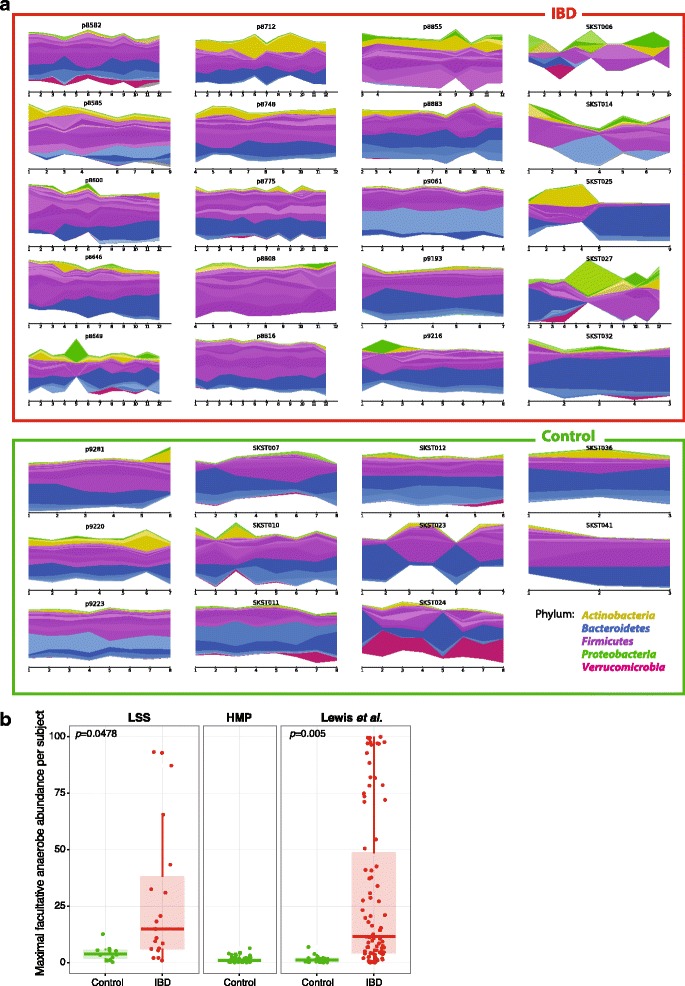
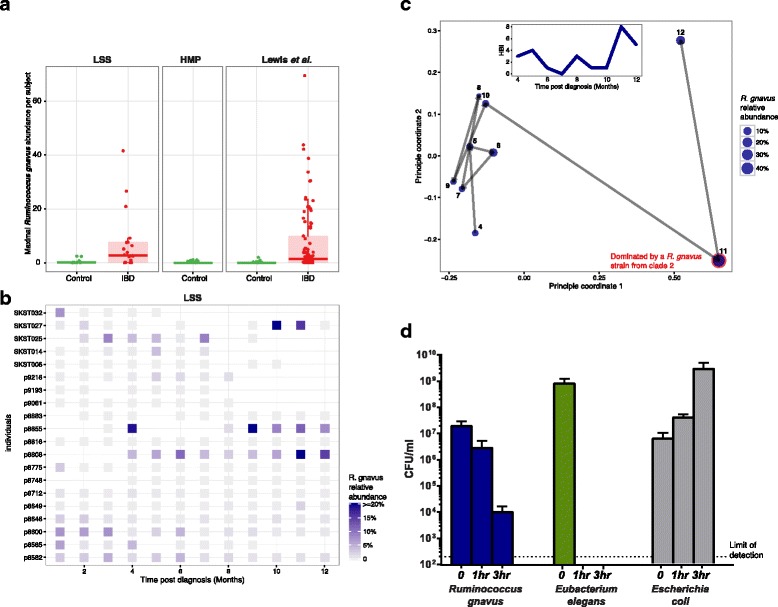
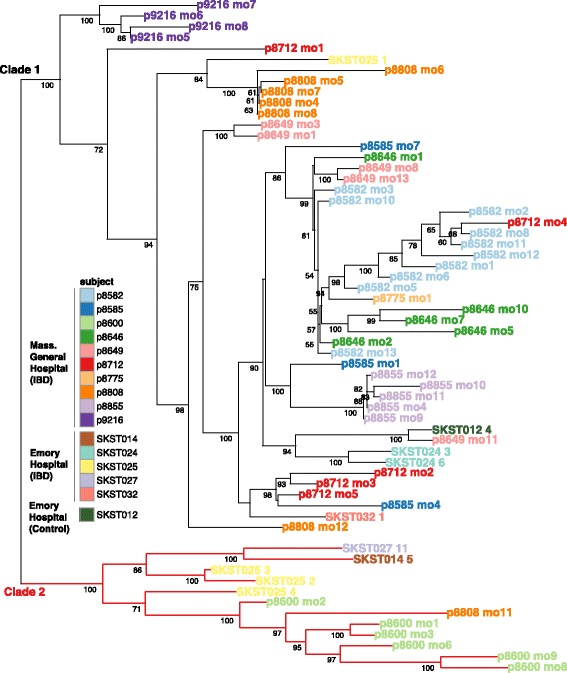
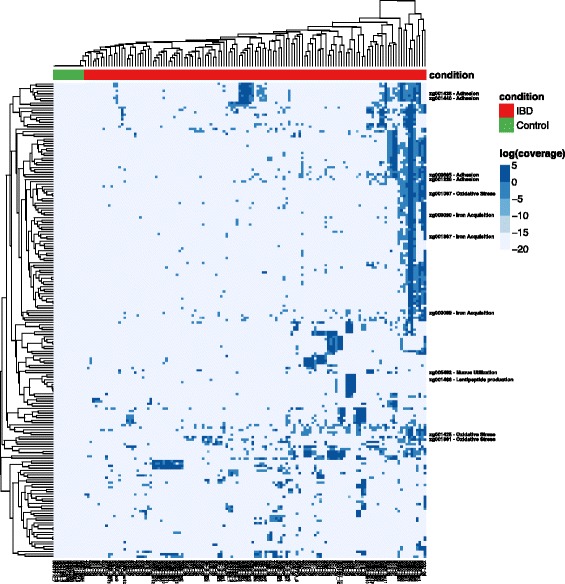
BACKGROUND: Inflammatory bowel disease (IBD) is characterized by chronic inflammation of the gastrointestinal tract that is associated with changes in the gut microbiome. Here, we sought to identify strain-specific functional correlates with IBD outcomes. METHODS: We performed metagenomic sequencing of monthly stool samples from 20 IBD patients and 12 controls (266 total samples). These were taxonomically profiled with MetaPhlAn2 and functionally profiled using HUMAnN2. Differentially abundant species were identified using MaAsLin and strain-specific pangenome haplotypes were analyzed using PanPhlAn. RESULTS: We found a significantly higher abundance in patients of facultative anaerobes that can tolerate the increased oxidative stress of the IBD gut. We also detected dramatic, yet transient, blooms of Ruminococcus gnavus in IBD patients, often co-occurring with increased disease activity. We identified two distinct clades of R. gnavus strains, one of which is enriched in IBD patients. To study functional differences between these two clades, we augmented the R. gnavus pangenome by sequencing nine isolates from IBD patients. We identified 199 IBD-specific, strain-specific genes involved in oxidative stress responses, adhesion, iron-acquisition, and mucus utilization, potentially conferring an adaptive advantage for this R. gnavus clade in the IBD gut. CONCLUSIONS: This study adds further evidence to the hypothesis that increased oxidative stress may be a major factor shaping the dysbiosis of the microbiome observed in IBD and suggests that R. gnavus may be an important member of the altered gut community in IBD.
Overview
The claims and statistics of this paper haven’t been checked yet.
Free: it reads the open-access text and checks the first 5 claims that cite a source we can check. Create a free account to check every claim.
Integrity signals
Registry
Cites
Statistics
Figures
Verification
Claims the paper makes
The claims and statistics of this paper haven’t been checked yet.
Free: it reads the open-access text and checks the first 5 claims that cite a source we can check. Create a free account to check every claim.
Claims other papers make about this one
Each is checked against this paper’s own text: does it say what the citing paper says it does?
The cited source says what the claim attributes to it.
In the citing paper
“whereas the presence of Ruminococcus gnavus as a biomarker of nonresponders in PRIMM-UK is in line with multiple reports of its association with poor cardiometabolic health20 and several diseases24–26.”
From Cross-cohort gut microbiome associations with immune checkpoint inhibitor response in advanced melanoma (2022) · cites this paper as [24]
Self-check
Percentages, sums and reported differences re-computed from the paper’s own numbers.
The self-check needs the paper’s full text.
Citations
Cites
Structure, function and diversity of the healthy human microbiome
The Human Microbiome Project Consortium (2012) · Nature · doi:10.1038/nature11234 · Cited by 11,726
Self-citationThe Treatment-Naive Microbiome in New-Onset Crohn’s Disease
Gevers, D., Kugathasan, S., Denson, L. A., Vázquez-Baeza, Y., Van Treuren, W., Ren, B., Schwager, E., Knights, D., Song, S. J., Yassour, M., et al. (2014) · Cell Host & Microbe · doi:10.1016/j.chom.2014.02.005 · Cited by 3,220 · cited 1×
“[20] cohort may be due to a combination of age (20–66 years here, 3–17 years in Gevers et al.”
BackgroundSelf-citationDysfunction of the intestinal microbiome in inflammatory bowel disease and treatment
Morgan, X. C., Tickle, T. L., Sokol, H., Gevers, D., Devaney, K. L., Ward, D. V., Reyes, J. A., Shah, S. A., LeLeiko, N., Snapper, S. B., et al. (2012) · Genome Biology · doi:10.1186/gb-2012-13-9-r79 · Cited by 2,713 · cited 1×
“Additionally, the gut microbiome in IBD shows dysbiosis characterized by increased abundance of functional pathways involved in the microbial response to oxidative stress [5].”
BackgroundSelf-citationGenetics and pathogenesis of inflammatory bowel disease
Khor, B., Gardet, A., & Xavier, R. J. (2011) · Nature · doi:10.1038/nature10209 · Cited by 2,614
Self-citationMetaPhlAn2 for enhanced metagenomic taxonomic profiling
Truong, D. T., Franzosa, E. A., Tickle, T. L., Scholz, M., Weingart, G., Pasolli, E., Tett, A., Huttenhower, C., & Segata, N. (2015) · Nature Methods · doi:10.1038/nmeth.3589 · Cited by 2,185 · cited 4×
“Community composition was calculated with MetaPhlan2 [16] using the default settings.”
MethodInfluentialSelf-citationThe Long-Term Stability of the Human Gut Microbiota
Faith, J. J., Guruge, J. L., Charbonneau, M., Subramanian, S., Seedorf, H., Goodman, A. L., Clemente, J. C., Knight, R., Heath, A. C., Leibel, R. L., et al. (2013) · Science · doi:10.1126/science.1237439 · Cited by 2,058
Metabolic Reconstruction for Metagenomic Data and Its Application to the Human Microbiome
Abubucker, S., Segata, N., Goll, J., Schubert, A. M., Izard, J., Cantarel, B. L., Rodriguez-Mueller, B., Zucker, J., Thiagarajan, M., Henrissat, B., et al. (2012) · PLoS Computational Biology · doi:10.1371/journal.pcbi.1002358 · Cited by 1,056 · cited 1×
“Functional and pathway composition was calculated with HUMANn2 [17] using the UniRef90 database with default settings.”
MethodSelf-citationYassour, M., Vatanen, T., Siljander, H., Hämäläinen, A.-M., Härkönen, T., Ryhänen, S. J., Franzosa, E. A., Vlamakis, H., Huttenhower, C., Gevers, D., et al. (2016) · Science Translational Medicine · doi:10.1126/scitranslmed.aad0917 · Cited by 1,043 · cited 4×
“(XLSX 9 kb) Additional file 6: Figure S1.”
BackgroundInfluentialSelf-citationCorrelation between intraluminal oxygen gradient and radial partitioning of intestinal microbiota
Albenberg, L., Esipova, T. V., Judge, C. P., Bittinger, K., Chen, J., Laughlin, A., Grunberg, S., Baldassano, R. N., Lewis, J. D., Li, H., et al. (2014) · Gastroenterology · doi:10.1053/j.gastro.2014.07.020 · Cited by 886 · cited 1×
“[18] and expanded for abundant genera in our samples (Additional file 2: Table S2).”
BackgroundMicrobial strain-level population structure and genetic diversity from metagenomes
Truong, D. T., Tett, A., Pasolli, E., Huttenhower, C., & Segata, N. (2017) · Genome Research · doi:10.1101/gr.216242.116 · Cited by 839 · cited 6×
“While strain-level profiling using StrainPhlAn was carried out for 72 species of the gut microbiome with sufficient coverage, R. gnavus was the only species detected to have an IBD-specific strain.”
MethodInfluentialSelf-citation
Cited by
Items 201–300 of 825
Li, J., Li, J., Ni, J., Zhang, C., Jia, J., Wu, G., Sun, H., & Wang, S. (2022) · Frontiers in Microbiology · doi:10.3389/fmicb.2021.752512 · Cited by 50
Sheng, S., Chen, J., Zhang, Y., Qin, Q., Li, W., Su, Y., Wang, Y., Li, T., Gao, X., Tang, L., et al. (2021) · Frontiers in Medicine · doi:10.3389/fmed.2021.779994 · Cited by 53
“gnavus can produce specific antigens and stimulates immune cells to produce corresponding antibodies, thus increasing inflammation (61, 62).”
BackgroundBonham, K. S., Bottino, G. F., McCann, S., Beauchemin, J., Weisse, E., Barry, F., Cano-Lorente, R., Huttenhower, C., Bruchhage, M. M. K., D’Sa, V. A., et al. (2023) · Science Advances · doi:10.1126/sciadv.adi0497 · Cited by 46
Self-citationVolkova, A., & Ruggles, K. V. (2021) · Frontiers in Microbiology · doi:10.3389/fmicb.2021.621310 · Cited by 48
Chen, F., Zuo, K., Fu, Y., Li, J., Wang, H.-J., Xu, L., & Yang, X. (2022) · Frontiers in Cardiovascular Medicine · doi:10.3389/fcvm.2022.832092 · Cited by 49
Challenges in IBD Research 2024: Preclinical Human IBD Mechanisms
Ciorba, M. A., Konnikova, L., Hirota, S. A., Lucchetta, E. M., Turner, J. R., Slavin, A., Johnson, K., Condray, C. D., Hong, S., Cressall, B. K., et al. (2024) · Inflammatory Bowel Diseases · doi:10.1093/ibd/izae081 · Cited by 47
Identification of gut bacteria reductases that biotransform steroid hormones
Arp, G., Jiang, A. K., Dufault‐Thompson, K., Levy, S., Zhong, A., Wassan, J. T., Grant, M. R., Li, Y., Hall, B., & Jiang, X. (2025) · Nature Communications · doi:10.1038/s41467-025-61425-6 · Cited by 47
Self-citationSu, Y., Ma, Z., Jiao, M., Wang, Y., Li, A., & Ding, S. (2021) · Frontiers in Cellular and Infection Microbiology · doi:10.3389/fcimb.2021.633242 · Cited by 51
Minot, S. S., & Willis, A. D. (2019) · Microbiome · doi:10.1186/s40168-019-0722-6 · Cited by 46
Microbiome-Based Biomarkers for IBD
Ananthakrishnan, A. N. (2020) · Inflammatory Bowel Diseases · doi:10.1093/ibd/izaa071 · Cited by 45
Self-citationRole of metabolites derived from gut microbiota in inflammatory bowel disease
Zheng, L., Wen, X., & Duan, S.-L. (2022) · World Journal of Clinical Cases · doi:10.12998/wjcc.v10.i9.2660 · Cited by 45
Kumar, K. P., Ooi, J. D., & Goldberg, R. (2023) · Frontiers in Microbiology · doi:10.3389/fmicb.2023.1291724 · Cited by 46
Zhang, C., Zhao, Y., Jiang, J., Yu, L., Tian, F., Zhao, J., Zhang, H., Chen, W., & Zhai, Q. (2021) · Food & Function · doi:10.1039/d1fo00017a · Cited by 44
Autoimmune diseases exhibit shared alterations in the gut microbiota
Wang, T., Sternes, P. R., Guo, X.-K., Zhao, H., Xu, C., & Xu, H. (2023) · Rheumatology · doi:10.1093/rheumatology/kead364 · Cited by 47
“Abnormalities of the gut microbiome are thought to cause inflammation in response to innate and adaptive immune responses, particularly for diseases such as IBD [26, 27].”
BackgroundSkoufou, M., Tsigalou, C., Vradelis, S., & Bezirtzoglou, E. (2024) · Microorganisms · doi:10.3390/microorganisms12010194 · Cited by 49
“Studies have shown that individuals with colorectal cancer often exhibit dysbiosis in the gut microbiota compared to healthy individuals [176].”
BackgroundWang, G., Yu, Y., García-Gutiérrez, E., Jin, X., He, Y., Wang, L., Tian, P., Liu, Z., Zhao, J., Zhang, H., et al. (2019) · Microorganisms · doi:10.3390/microorganisms8010049 · Cited by 42
“Treatment with L. acidophilus JCM 1132 also more strongly inhibited species of the pro‐inflammatory genus Ruminococcus [69].”
BackgroundInfluentialShifts in gut microbiome and metabolome are associated with risk of recurrent atrial fibrillation
Li, J., Zuo, K., Zhang, J., Hu, C., Wang, P., Jiao, J., Liu, Z., Yin, X., Liu, X., Li, K., et al. (2020) · Journal of Cellular and Molecular Medicine · doi:10.1111/jcmm.15959 · Cited by 44
Ferreira, G. D. A. H., Magnani, M., Cabral, L., Brandão, L. R., Noronha, M. F., Cruz, J. C., de Souza, E. L., & Alves, J. L. D. B. (2022) · Probiotics and Antimicrobial Proteins · doi:10.1007/s12602-021-09889-y · Cited by 43
Wang, Y., Do, T., Marshall, L. J., & Boesch, C. (2022) · Food Chemistry · doi:10.1016/j.foodchem.2022.134989 · Cited by 45
“Yet evidence from several studies indicated the robust association between Ruminococcus gnavus species and Crohn ’ s disease, as the degree of R. gnavus enrichment was positively correlated with disease progression (Hall et al., 2017; Nishino et al., 2018).”
Application of emerging technologies for gut microbiome research
Kwa, W. T., Sundarajoo, S., Toh, K. Y., & Lee, J. W. J. (2023) · Singapore Medical Journal · doi:10.4103/singaporemedj.smj-2021-432 · Cited by 43
“In the context of IBD, shotgun sequencing enabled Hall et al.[13] to conduct a pan‑genome analysis using 266 stool samples from 20 IBD patients and 16 controls sampled longitudinally, on subspecies strains of Ruminococcus gnavus, whereby a distinct clade of R. gnavus strains was identified specifically encoding for 19…”
MethodGao, Q., Tian, W., Yang, H., Hu, H., Zheng, J., Yao, X., Hu, B., & Liu, H. (2023) · Journal of Ethnopharmacology · doi:10.1016/j.jep.2023.117136 · Cited by 47
Host–pathobiont interactions in Crohn’s disease
Caruso, R., Lo, B. C., Chen, G., & Núñez, G. (2024) · Nature Reviews Gastroenterology & Hepatology · doi:10.1038/s41575-024-00997-y · Cited by 44
“For example, Ruminococcus gnavus , an aerotolerant obligate anaerobe transiently dominates the microbiota during periods of increased disease severity in patients with Crohn’s disease 131,132 .”
Oliveira, E. C. S. D., Quaglio, A. E. V., Magro, D. O., Stasi, L. C. D., & Sassaki, L. Y. (2023) · International Journal of Molecular Sciences · doi:10.3390/ijms24087176 · Cited by 41
Gao, S., Gao, X., Zhu, R., Wu, D., Feng, Z., Jiao, N., Sun, R., Gao, W., He, Q., Liu, Z., et al. (2023) · Gut Microbes · doi:10.1080/19490976.2023.2221428 · Cited by 43
“, PRJNA385949 (D2) for Hall et al.(37), PRJNA400072 (PRISM) (D3) for Franzosa et al.”
BackgroundInflammatory Bowel Disease-Associated Gut Commensals Degrade Components of the Extracellular Matrix
Porras, A. M., Zhou, H., Shi, Q., Xiao, X., Bank, J. L. C., Longman, R., & Brito, I. L. (2022) · mBio · doi:10.1128/mbio.02201-22 · Cited by 39
Remodeling of colon plasma cell repertoire within ulcerative colitis patients
Scheid, J. F., Eraslan, B., Hudak, A., Brown, E., Sergio, D., Delorey, T. M., Phillips, D., Lefkovith, A. J., Jess, A. T., Duck, L. W., et al. (2023) · The Journal of Experimental Medicine · doi:10.1084/jem.20220538 · Cited by 42
“…to single strains of a 32-strain bacterial panel that we assembled based on common members of the human microbiome and strains enriched in the microbiome of IBD patients (Franzosa et al., 2019; Ha et al., 2020; Hall et al., 2017; Lewis et al., 2015; Lloyd-Price et al., 2019; Shaw et al., 2016; Fig.”
Self-citationThe gut microbiome in systemic lupus erythematosus: lessons from rheumatic fever
Silverman, G. J., Azzouz, D. F., Gisch, N., & Amarnani, A. (2024) · Nature Reviews Rheumatology · doi:10.1038/s41584-023-01071-8 · Cited by 41
Temporal variations in the gut microbial diversity in response to high-fat diet and exercise
Imdad, S., So, B., Jang, J.-H., Park, J.-H., Lee, S., Kim, J., & Kang, C. (2024) · Scientific Reports · doi:10.1038/s41598-024-52852-4 · Cited by 41
Paediatric Inflammatory Bowel Disease and its Relationship with the Microbiome
Fitzgerald, R. S., Sanderson, I. R., & Claesson, M. J. (2021) · Microbial Ecology · doi:10.1007/s00248-021-01697-9 · Cited by 44
Best Practices for Microbiome Study Design in Companion Animal Research
Jarett, J. K., Kingsbury, D. D., Dahlhausen, K. E., & Ganz, H. H. (2021) · Frontiers in Veterinary Science · doi:10.3389/fvets.2021.644836 · Cited by 41
“These include: high relative abundances of frank or opportunistic pathogens such as Escherichia coli (134), Campylobacter (135, 136), or Clostridioides difficile (137, 138); elevated levels of bacteria typically found in the small intestine such as Streptococcus or Veillonella (139, 140); elevated levels of bacteria a…”
BackgroundCompositional Changes of the High-Fat Diet-Induced Gut Microbiota upon Consumption of Common Pulses
Lutsiv, T., Weir, T. L., McGinley, J. N., Neil, E. S., Wei, Y., & Thompson, H. J. (2021) · Nutrients · doi:10.3390/nu13113992 · Cited by 41
Lee, D. H., Seong, H., Chang, D., Gupta, V. K., Kim, J., Cheon, S., Kim, G., Sung, J., & Han, N. S. (2023) · npj Science of Food · doi:10.1038/s41538-023-00195-1 · Cited by 42
Alterations of the intestinal microbiota in age-related macular degeneration
Zhang, Y., Wang, T., Wan, Z., Bai, J., Xue, Y., Dai, R., Wang, M., & Peng, Q. (2023) · Frontiers in Microbiology · doi:10.3389/fmicb.2023.1069325 · Cited by 44
“Some researchers found that an increased relative abundance of Ruminococcus gnavus in the gut microbiota was associated with an increase in CD and various other inflammatory diseases (Hall et al., 2017; Nishino et al., 2018).”
BackgroundUnderstanding the effects of dietary components on the gut microbiome and human health
Rackerby, B., Kim, H. J., Dallas, D. C., & Park, S. H. (2020) · Food Science and Biotechnology · doi:10.1007/s10068-020-00811-w · Cited by 43
Ghosal, S., Bag, S., Rao, S. R., & Bhowmik, S. (2024) · RSC Advances · doi:10.1039/d4ra04544k · Cited by 42
Wen, N.-N., Sun, L., Qian, G., & Zheng, G.-H. (2024) · World Journal of Clinical Cases · doi:10.12998/wjcc.v12.i35.6815 · Cited by 40
Zhang, J., Liu, M., Ke, S., Huang, X., Fang, S., He, M., Fu, H., Chen, C., & Huang, L. (2021) · Frontiers in Microbiology · doi:10.3389/fmicb.2021.690091 · Cited by 43
Schierová, D., Roubalová, R., Kolář, M., Stehlíková, Z., Rob, F., Jackova, Z., Coufal, Š., Thon, T., Mihula, M., Modrák, M., et al. (2021) · Cells · doi:10.3390/cells10113188 · Cited by 43
Changes of gut microbiota in colorectal cancer patients with Pentatrichomonas hominis infection
Zhang, H., Yu, Y., Li, J., Gong, P., Wang, X., Li, X., Cheng, Y., Yu, X., Zhang, N., & Zhang, X. (2022) · Frontiers in Cellular and Infection Microbiology · doi:10.3389/fcimb.2022.961974 · Cited by 36
“The abundance of Ruminococcaceae UCG-014 increases significantly in the intestine of mice with dextran sodium sulfate (DSS)induced inflammatory bowel disease (IBD) (Hu et al., 2020).”
BackgroundYang, J., Wang, L., Liu, H., Xu, H., Liu, F., Song, H., Zhao, X., & Li, H. (2023) · Microbial Pathogenesis · doi:10.1016/j.micpath.2023.106272 · Cited by 38
Probing the functional significance of wild animal microbiomes using omics data
Worsley, S. F., Videvall, E., Harrison, X. A., Björk, J. R., Mazel, F., & Wanelik, K. M. (2024) · Functional Ecology · doi:10.1111/1365-2435.14650 · Cited by 37
Nooij, S., Plomp, N., Sanders, I. M. J. G., Schout, L., van der Meulen, A. E., Terveer, E. M., Norman, J. M., Karcher, N., Larralde, M., Vossen, R. H. A. M., et al. (2025) · Nature Communications · doi:10.1038/s41467-025-56449-x · Cited by 41
“One study divided R. gnavus into two clades based on genome sequences and noted that one was enriched in IBD patients 2 .”
InfluentialElmassry, M. M., Sugihara, K., Chankhamjon, P., Kim, Y., Camacho, F. R., Wang, S., Sugimoto, Y., Chatterjee, S., Chen, L. A., Kamada, N., et al. (2025) · Cell Host & Microbe · doi:10.1016/j.chom.2025.01.002 · Cited by 41
Elementary methods provide more replicable results in microbial differential abundance analysis
Pelto, J., Auranen, K. J., Kujala, J. V., & Lahti, L. (2025) · Briefings in Bioinformatics · doi:10.1093/bib/bbaf130 · Cited by 42
Uncovering a novel molecular mechanism for scavenging sialic acids in bacteria
Bell, A., Severi, E., Lee, M., Monaco, S., Latousakis, D., Angulo, J., Thomas, G. H., Naismith, J. H., & Juge, N. (2020) · Journal of Biological Chemistry · doi:10.1074/jbc.ra120.014454 · Cited by 36
“intestinal diseases including inflammatory bowel disease (8-16).”
Calorie restriction prevents age-related changes in the intestinal microbiota
Kurup, K., Matyi, S., Giles, C. B., Wren, J. D., Jones, K. L., Ericsson, A. C., Raftery, D., Wang, L., Promislow, D., Richardson, A. G., et al. (2021) · Aging · doi:10.18632/aging.202753 · Cited by 42
Labourel, A., Parrou, J., Deraison, C., Mercier‐Bonin, M., Lajus, S., & Potocki-Véronèse, G. (2023) · Essays in Biochemistry · doi:10.1042/ebc20220153 · Cited by 37
Yau, Y. K., Su, Q., Xu, Z., Tang, W., Ching, J. Y. L., Mak, J. W. Y., Cheung, C. P., Fung, M., Ip, M., Chan, P. K. S., et al. (2023) · Alimentary Pharmacology & Therapeutics · doi:10.1111/apt.17703 · Cited by 36
Turpin, W., Lee, S.-H., & Croitoru, K. (2025) · Gastroenterology · doi:10.1053/j.gastro.2025.01.004 · Cited by 37
Grosse, C. S. J., Christophersen, C. T., Devine, A., & Lawrance, I. C. (2020) · Expert Review of Gastroenterology & Hepatology · doi:10.1080/17474124.2020.1733413 · Cited by 38
Qiao, B., Liu, J., Deng, N., Cai, Y., Bian, Y., Wu, Y., & Tan, Z. (2023) · Food & Function · doi:10.1039/d3fo00378g · Cited by 36
MetaTransformer: deep metagenomic sequencing read classification using self-attention models
Wichmann, A., Buschong, E., Müller, A., Jünger, D., Hildebrandt, A., Hankeln, T., & Schmidt, B. (2023) · NAR Genomics and Bioinformatics · doi:10.1093/nargab/lqad082 · Cited by 40
Hong, J., Fu, T., Liu, W., Du, Y., Bu, J., Wei, G., Yu, M., Lin, Y., Min, C., & Lin, D. (2024) · Diabetes Metabolic Syndrome and Obesity · doi:10.2147/dmso.s456173 · Cited by 36
“37 38–40 A study by Christine et al, analyzing fecal samples from children under 18 years old, found that the fecal microbiota profiles differentiated between IBD and non-IBD symptomatic children when compared to healthy children.”
BackgroundAharoni-Frutkoff, Y., Плоткин, Л. Л., Pollak, D., Livovsky, J., Focht, G., Lev‐Tzion, R., Ledder, O., Assa, A., Yogev, D., Orlanski‐Meyer, E., et al. (2025) · Gastroenterology · doi:10.1053/j.gastro.2025.06.011 · Cited by 41
Self-citationTyakht, A., Manolov, A. I., Kanygina, A. V., Ischenko, D. S., Kovarsky, B. A., Popenko, A., Pavlenko, A. V., Elizarova, A., Rakitina, D. V., Baikova, I. P., et al. (2018) · BMC Genomics · doi:10.1186/s12864-018-5306-5 · Cited by 36
“2); infection with this enteropathogen is associated with a poor clinical outcome in IBD [27].”
BackgroundInfluentialLiu, F., Wang, T. T. Y., Tang, Q., Xue, C., Li, R. W., & Wu, V. C. H. (2019) · Molecular Nutrition & Food Research · doi:10.1002/mnfr.201900455 · Cited by 36
Human host status inference from temporal microbiome changes via recurrent neural networks
Chen, X., Liu, L., Zhang, W., Yang, J., & Wong, K. (2021) · Briefings in Bioinformatics · doi:10.1093/bib/bbab223 · Cited by 35
Peña‐Cearra, A., Song, D., Castelo, J., Palacios, A., Lavín, J. L., Azkargorta, M., Elortza, F., Fuertes, M., Pascual‐Itoiz, M. Á., Barriales, D., et al. (2023) · npj Biofilms and Microbiomes · doi:10.1038/s41522-023-00443-y · Cited by 34
“Strikingly, R. gnavus was previously found to be enriched in IBD patients with increased disease activity, and high abundance of this bacterium has been associated with lack of response to anti-TNF treat-ment 13,14 .”
BackgroundGut microbiome composition and metabolic activity in women with diverticulitis
Ma, W., Wang, Y., Nguyen, L. H., Mehta, R. S., Ha, J., Bhosle, A., Mclver, L. J., Song, M., Clish, C. B., Strate, L. L., et al. (2024) · Nature Communications · doi:10.1038/s41467-024-47859-4 · Cited by 36
Self-citationB lymphocytes, the gastrointestinal tract and autoimmunity
Zouali, M. (2021) · Autoimmunity Reviews · doi:10.1016/j.autrev.2021.102777 · Cited by 35
IBD-Associated Atg16L1T300A Polymorphism Regulates Commensal Microbiota of the Intestine
Liu, H., Gao, P., Jia, B., Lu, N., Zhu, B., & Zhang, F. (2022) · Frontiers in Immunology · doi:10.3389/fimmu.2021.772189 · Cited by 35
“More specifically, Ruminococcaceae were enriched in CD patients of small intestine mucosa and often co-occurring with increased disease activity (53, 54), which may also explain that the Atg16L1 T300A variant confers increased risk for the development of Crohn’s disease.”
BackgroundMuthyala, S. D. V., Shankar, S., Klemashevich, C. L., Blazier, J. C., Hillhouse, A., & Wu, C. (2022) · The Journal of Nutritional Biochemistry · doi:10.1016/j.jnutbio.2022.108999 · Cited by 38
Predictive Role of Gut Microbiota in Weight Loss Achievement after Bariatric Surgery
Gutiérrez‐Repiso, C., Garrido‐Sánchez, L., Alcaide‐Torres, J., Cornejo-Pareja, I. M., Ocaña-Wilhelmi, L., García‐Fuentes, E., Moreno‐Indias, I., & Tinahones, F. J. (2022) · Journal of the American College of Surgeons · doi:10.1097/xcs.0000000000000145 · Cited by 36
Translating Microbiome Research From and To the Clinic
Zhang, Z. J., Lehmann, C. J., Cole, C. G., & Pamer, E. G. (2022) · Annual Review of Microbiology · doi:10.1146/annurev-micro-041020-022206 · Cited by 33
Bai, J., Shen, N., & Liu, Y. (2022) · Pain Management Nursing · doi:10.1016/j.pmn.2022.06.002 · Cited by 36
Distinct colon mucosa microbiomes associated with tubular adenomas and serrated polyps
Avelar‐Barragan, J., DeDecker, L. C., Lu, Z. N., Coppedge, B., Karnes, W. E., & Whiteson, K. (2022) · npj Biofilms and Microbiomes · doi:10.1038/s41522-022-00328-6 · Cited by 33
Deep metagenomic characterization of gut microbial community and function in preeclampsia
Lv, L., Li, S., Wen, J., Wang, G., Li, H., He, T., Lv, Q., Xiao, M., Duan, H., Chen, M.-C., et al. (2022) · Frontiers in Cellular and Infection Microbiology · doi:10.3389/fcimb.2022.933523 · Cited by 36
“, 2020), inflammatory bowel disease (Hall et al., 2017), and obesity (Petriz et al.”
BackgroundPadhi, S., Sarkar, P., Sahoo, D., & Rai, A. K. (2024) · Journal of the Science of Food and Agriculture · doi:10.1002/jsfa.13313 · Cited by 36
“12,13 Other in fl ammatory conditions of the gut including Barrett's esophagus, esophageal and colorectal cancer (CRC), and IBD have also witnessed microbiota dysbiosis as a major driver of chronic in fl ammation.”
Zünd, J. N., Plüss, S., Mujezinovic, D., Menzi, C., von Bieberstein, P. R., de Wouters, T., Lacroix, C., Leventhal, G. E., & Pugin, B. (2024) · ISME Communications · doi:10.1093/ismeco/ycae035 · Cited by 35
“Further, many responses and activities are specific to donors [24–27], strains [28–31], and the physicochemical environment of the gut [9–11].”
BackgroundXing, Y., Liu, Y., Sha, S., Zhang, Y., Dou, Y., Liu, C., Xu, M., Zhao, L., Wang, J., Wang, Y., et al. (2024) · Journal of Medical Virology · doi:10.1002/jmv.29781 · Cited by 33
“48 Elevated abundance of R. gnavus has been associated with disease severity in ankylosing spondylitis 49 and SLE.”
Environment and systemic autoimmune rheumatic diseases: an overview and future directions
Choi, M. Y., Costenbader, K. H., & Fritzler, M. J. (2024) · Frontiers in Immunology · doi:10.3389/fimmu.2024.1456145 · Cited by 34
Branck, T. A., Hu, Z., Nickols, W. A., Walsh, A. M., Bhosle, A., Short, M. I., Nearing, J. T., Asnicar, F., McIver, L. J., Maharjan, S., et al. (2024) · The ISME Journal · doi:10.1093/ismejo/wrae201 · Cited by 33
“We were particularly interested in host-specific gene carriage of R. gnavus , which is core to the companion animal gut microbiome and disease relevant in both animals and humans [6, 71, 93].”
BackgroundInfluentialSelf-citationPutative Pathobionts in HLA-B27-Associated Spondyloarthropathy
Gill, T., & Rosenbaum, J. T. (2021) · Frontiers in Immunology · doi:10.3389/fimmu.2020.586494 · Cited by 34
“gnavus have been associated with other inflammatory diseases including inflammatory bowel disease (79, 80), CD (81), and pouchitis in UC patients (82).”
BackgroundChen, J., Luo, D., Lin, Y., Liu, Y., Wu, J., Yi, X.-Q., Wu, Y., Zhang, Q., Gao, C., Cai, J., et al. (2020) · Journal of Ethnopharmacology · doi:10.1016/j.jep.2020.112554 · Cited by 33
Lee, M., Lai, H., Kuo, Y., & Chen, V. C. (2022) · Journal of Personalized Medicine · doi:10.3390/jpm12101634 · Cited by 33
Xiao, H., Feng, J., Peng, J., Wu, P., Chang, Y., Li, X., Wu, J., Huang, H., Deng, H., Qiu, M., et al. (2022) · Marine Drugs · doi:10.3390/md21010016 · Cited by 32
Chen, W., Li, Y., Wang, W., Gao, S., Hu, J. X., Xiang, B., Wu, D., Jiao, N., Xu, T., Zhi, M., et al. (2024) · Cell Reports Medicine · doi:10.1016/j.xcrm.2024.101624 · Cited by 37
Lectin-Seq: A method to profile lectin-microbe interactions in native communities
McPherson, R. L., Isabella, C. R., Walker, R. L., Sergio, D., Bae, S., Gaca, T., Raman, S., Nguyen, L. T. T., Wesener, D. A., Halim, M., et al. (2023) · Science Advances · doi:10.1126/sciadv.add8766 · Cited by 34
Self-citationLaplanche, V., Armiento, S., Speciale, I., Šuligoj, T., Crost, E. H., Lamprinaki, D., Vaux, L., Gotts, K., Castro, C. D., & Juge, N. (2024) · Carbohydrate Polymers · doi:10.1016/j.carbpol.2024.122754 · Cited by 30
Impact of Acute and Chronic Amyloid-β Peptide Exposure on Gut Microbial Commensals in the Mouse
Guilherme, M. D. S., Todorov, H., Osterhof, C., Möllerke, A., Cub, K., Hankeln, T., Gerber, S., & Endres, K. (2020) · Frontiers in Microbiology · doi:10.3389/fmicb.2020.01008 · Cited by 32
Key Bacteria in the Gut Microbiota Network for the Transition between Sedentary and Active Lifestyle
Castellanos, N. P., Díez, G. G., Almagro, C. A., Bressa, C., Bailén, M., González-Soltero, R., Pérez, M., & Larrosa, M. (2020) · Microorganisms · doi:10.3390/microorganisms8050785 · Cited by 30
The Anti-Inflammatory Effect of Novel Antidiabetic Agents
Theofilis, P., Sagris, Μ., Oikonomou, E. K., Antonopoulos, A. S., Siasos, G., Tsioufis, K., & Tousoulis, D. (2022) · Life · doi:10.3390/life12111829 · Cited by 35
Anderson, S. M., & Sears, C. L. (2023) · Clinical Infectious Diseases · doi:10.1093/cid/ciad640 · Cited by 32
Zhang, Q., Xiao, X., Zheng, J., Li, M., Yu, M., Ping, F., Wang, T., & Wang, X. (2019) · Frontiers in Endocrinology · doi:10.3389/fendo.2019.00675 · Cited by 31
“Ruminococcus also acts as transient blooms of proinflammation (74).”
BackgroundKim, K. S., Tiffany, E., Lee, J., Oh, A., Jin, H., Kim, J.-S., Lee, J., Nam, M. H., Hong, S., Park, S., et al. (2023) · Gut Microbes · doi:10.1080/19490976.2023.2221811 · Cited by 29
The Parkinson’s disease drug entacapone disrupts gut microbiome homeostasis via iron sequestration
Pereira, F. C., Ge, X., Kristensen, J. M., Kirkegaard, R. H., Maritsch, K., Szamosvári, D., Imminger, S., Seki, D., Shazzad, J. B., Zhu, Y., et al. (2024) · Nature Microbiology · doi:10.1038/s41564-024-01853-0 · Cited by 30
“Taxa not found to be significantly impacted by entacapone were presumably able to grow by releasing iron from this complex, or by relying on intracellularly accumulated iron or on high-affinity surface-associated iron transporters that are common in bacteria 46 .”
Datkhayeva, Z., Iskakova, A., Mireeva, A., Seitaliyeva, A., Skakova, R., Kulniyazova, G., Shayakhmetova, A., Koshkimbayeva, G., Sarmuldayeva, C., Nurseitova, L., et al. (2025) · Medicina · doi:10.3390/medicina61050811 · Cited by 33
“Such microbial-induced inflammatory responses may drive EM lesion formation through ectopic adhesion, invasion, and proliferation [43].”
InfluentialGut Bacteria Metabolize Natural and Synthetic Steroid Hormones via the Reductive OsrABC Pathway
Jacoby, C., Scorza, K., Ecker, L., Bernardino, P. N., Little, A. S., McMillin, M., Ramaswamy, R., Sundararajan, A., Sidebottom, A. M., Lin, H., et al. (2024) · Cell Host & Microbe · doi:10.1016/j.chom.2025.09.014 · Cited by 29
Self-citationHarnessing the microbiome for cancer therapy
Hajjar, R., Mars, R. A. T., & Kashyap, P. (2026) · Nature Reviews Microbiology · doi:10.1038/s41579-025-01268-6 · Cited by 34
“functional unit in the microbiome 203 .”
Mapping microbiome-redox spectrum and evaluating Microbial-Redox Index in chronic gastritis
Panigrahi, M. K., Kaliaperumal, V., Akella, A., Venugopal, G., & Ramadass, B. (2022) · Scientific Reports · doi:10.1038/s41598-022-12431-x · Cited by 33
Wang, B., Sun, F., & Luan, Y. (2024) · Scientific Reports · doi:10.1038/s41598-024-57670-2 · Cited by 31
“These included the Hall 32 , HMP 5,70 , Ijaz 33 , Nielsen 35 , and Vila 6 datasets.”
BackgroundGut microbiome-mediated transformation of dietary phytonutrients is associated with health outcomes
Zhang, L., Marfil-Sánchez, A., Kuo, T.-H., Seelbinder, B., van Dam, L., Depetris-Chauvin, A., Jahn, L. J., Sommer, M. O. A., Zimmermann, M., Ni, Y., et al. (2025) · Nature Microbiology · doi:10.1038/s41564-025-02197-z · Cited by 32
“The studies related to IBD included (1) an IBD cohort of IBD ( N = 185) and non-IBD ( N = 74) samples 56 and (2) a cohort containing IBD ( N = 728) and non-IBD ( N = 271) samples 57 for which paired metagenomics–metabolomics data were available.”
Bao, C., Liu, S. Z., Shang, Z., Liu, Y., Wang, J., Zhang, W. X., Dong, B., & Cao, Y. (2020) · Journal of Applied Microbiology · doi:10.1111/jam.14952 · Cited by 29
“torques has been reported to be enriched in patients with bowel diseases (Hyn€ onen et al. 2016; Hall et al. 2017).”
BackgroundMetaproteomics as a tool for studying the protein landscape of human-gut bacterial species
Stamboulian, M. H., Canderan, J., & Ye, Y. (2022) · PLoS Computational Biology · doi:10.1371/journal.pcbi.1009397 · Cited by 29
Chang, L., Qiu, L., Lei, N., Zhou, J., Guo, R., Gao, F., Dong, S., Chen, M., Wu, F., & Qin, B. (2023) · Frontiers in Cellular and Infection Microbiology · doi:10.3389/fcimb.2023.1145950 · Cited by 28
“Ruminococcus is also closely related to the intestinal barrier, cellular immunity, inflammation, and metabolism (Hall et al., 2017; Schluter et al., 2020; Rangarajan et al., 2022).”
BackgroundPharmacomicrobiomics and type 2 diabetes mellitus: A novel perspective towards possible treatment
Jia, L., Huang, S., Sun, B., Shang, Y., & Zhu, C. (2023) · Frontiers in Endocrinology · doi:10.3389/fendo.2023.1149256 · Cited by 29
“Although several potential detrimental microbes, such as Fusobacterium nucleatum and Ruminococcus gnavus could increase several inflammatory cytokines in inflammatory diseases (61, 62), its similar role in T2DM remained to be further investigated.”
BackgroundLong-term simulated microgravity alters gut microbiota and metabolome in mice
Lu, Y., Zhang, R., Li, X., Gao, C., Hu, X., Hussain, S., Zhang, L., Wang, M., Ma, X., Pan, Q., et al. (2023) · Frontiers in Microbiology · doi:10.3389/fmicb.2023.1100747 · Cited by 29
“Multiple studies associate the mucinglycan foraging Ruminococcus gnavus with Crohn’s disease, IBD, allergic disease and neurological disorder (Hall et al., 2017; Chua et al., 2018; Henke et al., 2019; Coletto et al., 2022).”
BackgroundThe Characteristics of Intestinal-Barrier Damage in Rats With IgA Nephropathy
Zhou, N., Shen, Y., Fan, L., Sun, Q., Huang, C., Hao, J., Lan, J., & Yan, H. (2019) · The American Journal of the Medical Sciences · doi:10.1016/j.amjms.2019.11.011 · Cited by 28
Health Impact and Therapeutic Manipulation of the Gut Microbiome
Daliri, E. B., Ofosu, F. K., Chelliah, R., Lee, B. H., & Oh, D. (2020) · Microarrays · doi:10.3390/ht9030017 · Cited by 28
Yan, Y., Wang, Z., Zhou, Y., Gao, Z., Ning, L., Zhao, Y., Xuan, B., Ma, Y., Tong, T., Huang, X., et al. (2023) · Cell Reports Medicine · doi:10.1016/j.xcrm.2023.101153 · Cited by 34
Metadata
- Authors
- Hall, A. B., Yassour, M., Sauk, J., Garner, A., Jiang, X., Arthur, T., Lagoudas, G. K., Vatanen, T., Fornelos, N., Wilson, R., Bertha, M., Cohen, M., Garber, J., Khalili, H., Gevers, D., Ananthakrishnan, A. N., Kugathasan, S., Lander, E. S., Blainey, P., Vlamakis, H., Xavier, R. J., & Huttenhower, C.
- Affiliations
- Broad Institute (US)
- Harvard University (US)
- Emory University (US)
- Corresponding author
- Xavier, Ramnik J.
- Huttenhower, Curtis
- ORCID
- Venue
- Genome Medicine
- Published
- 2017-11-28
- Volume
- 9
- Issue
- 1
- Pages
- 103-103
- ISSN
- 1756-994X (ISSN-L)
- PMC
- PMC5704459
- OpenAlex
- W2769664962
- Cited by
- 777
- References
- 33
- Citations by year
- 2026: 74 · 2025: 115 · 2024: 134 · 2023: 110 · 2022: 106 · 2021: 96 · 2020: 69 · 2019: 55 · 2018: 16
- FWCI
- 15.64
- Type
- journal article
- Language
- en
- Open access
- gold
- doi.org
- Licence
- cc-by
- creativecommons.org/licenses/by/4.0/ (tdm)
- creativecommons.org/licenses/by/4.0/ (vor)
- Locations
- Genome Medicine (publishedVersion, cc-by)
- Europe PMC (PubMed Central) (publishedVersion, cc-by)
- PubMed Central (publishedVersion, cc-by)
- PubMed (publishedVersion)
- Digital Access to Scholarship at Harvard (DASH) (Harvard University) (submittedVersion, cc-by)
- DOAJ (DOAJ: Directory of Open Access Journals) (submittedVersion)
- ResearchSpace (University of Auckland) (submittedVersion, cc-by)
- Funders
- National Institutes of Health (U54DE023798)
- National Science Foundation (MCB-1453942)
- Crohn's and Colitis Foundation of America
- Helen Hay Whitney Foundation
- Charles A. King Trust
- Klarman Family Foundation
- National Institute of Diabetes and Digestive and Kidney Diseases (R01DK92405, P30DK43351)
- Topics
- Life Sciences › Biochemistry, Genetics and Molecular Biology › Molecular Biology › Gut microbiota and health
- Health Sciences › Medicine › Gastroenterology › Inflammatory Bowel Disease
- Health Sciences › Medicine › Infectious Diseases › Clostridium difficile and Clostridium perfringens research
- Keywords
- Ruminococcus gnavus, inflammatory bowel disease, gut microbiota, strain-specific genes, pan-genome, oxidative stress response, facultative anaerobes, iron acquisition, adhesion genes, dysbiosis, disease activity
- MeSH terms
- Gastrointestinal Microbiome, Adult, Aged, Feces, Humans, Middle Aged, Phylogeny, Species Specificity, Inflammatory Bowel Diseases, Genome, Bacterial, Oxidative Stress, Ruminococcus, Young Adult
About these checks
Registry, retraction, Cites and statistics results are computed, not judged, with one exception: a printed reference that no index lists is read once by a model before it counts as a citation error. Claims are extracted by a model and kept only when their quote appears verbatim in the text; each cited source is then checked, with a model’s help, for whether it says what the claim relies on. Those verdicts can be wrong — read the claim’s quote and the cited source before relying on one.
Statistics and arithmetic are recomputed, not judged.
Confidence bands are shown only for fields calibrated on our annotated test set. None is calibrated yet, so no band is shown.
What counts as a claim ›How we measure confidence ›How we check this ›
Are you an author, or do you see a problem with this page? Request a review
Data sources
Bibliographic data: Semantic Scholar, OpenAlex, Crossref.
Contains information from the Semantic Scholar Academic Graph Datasets, made available under the ODC Attribution License (ODC-BY 1.0).
Semantic Scholar’s data is described in: Kinney, R., et al. (2023). The Semantic Scholar Open Data Platform. arXiv:2301.10140.
