

A novel Ruminococcus gnavus clade enriched in inflammatory bowel disease patients
Open accessThe DOI matches its Crossref record; 33 of the 33 references it cites were found in a registry or an index.
Abstract
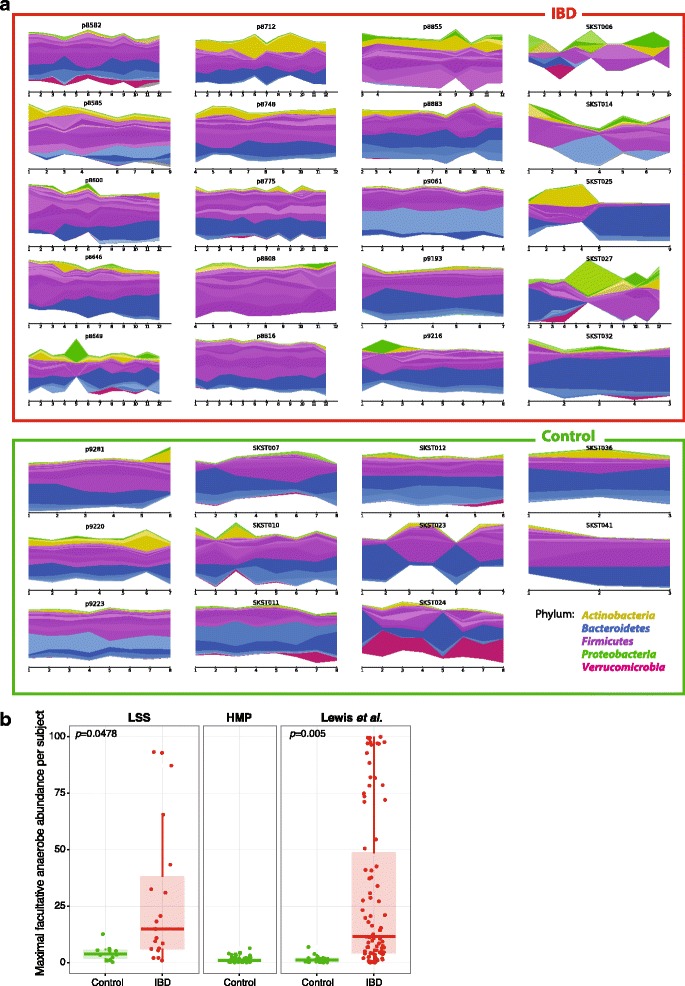
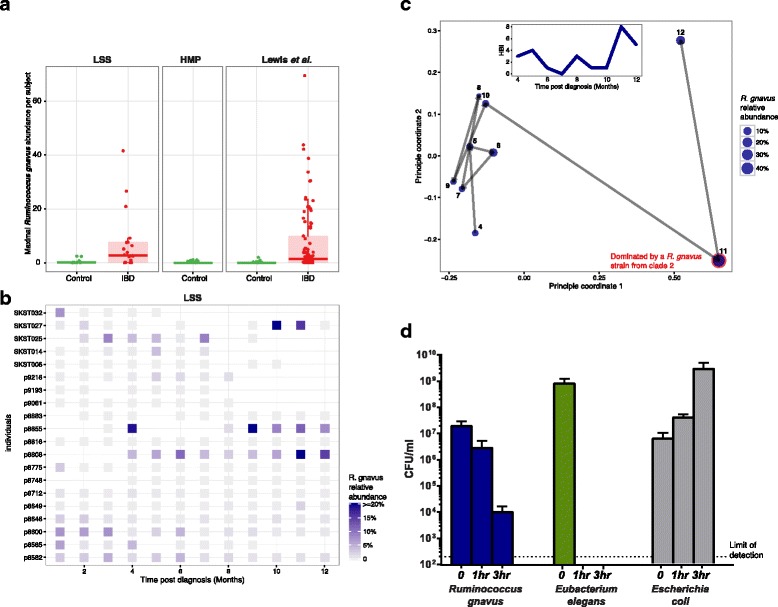
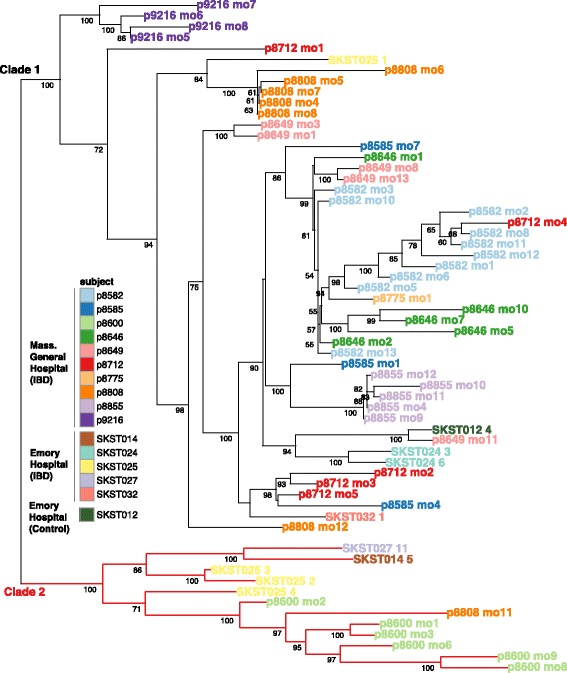
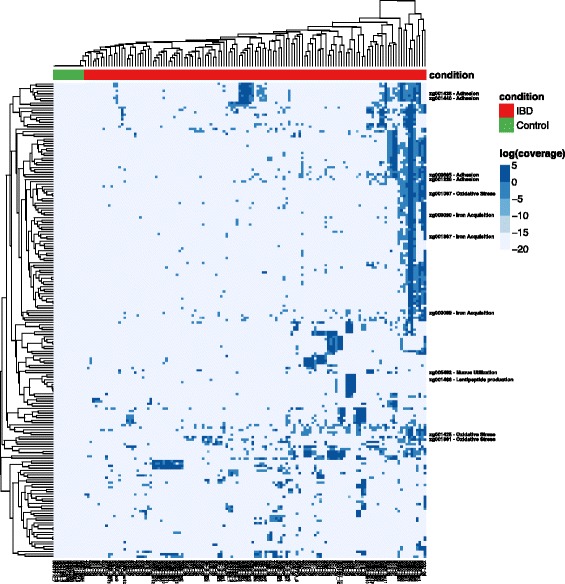
BACKGROUND: Inflammatory bowel disease (IBD) is characterized by chronic inflammation of the gastrointestinal tract that is associated with changes in the gut microbiome. Here, we sought to identify strain-specific functional correlates with IBD outcomes. METHODS: We performed metagenomic sequencing of monthly stool samples from 20 IBD patients and 12 controls (266 total samples). These were taxonomically profiled with MetaPhlAn2 and functionally profiled using HUMAnN2. Differentially abundant species were identified using MaAsLin and strain-specific pangenome haplotypes were analyzed using PanPhlAn. RESULTS: We found a significantly higher abundance in patients of facultative anaerobes that can tolerate the increased oxidative stress of the IBD gut. We also detected dramatic, yet transient, blooms of Ruminococcus gnavus in IBD patients, often co-occurring with increased disease activity. We identified two distinct clades of R. gnavus strains, one of which is enriched in IBD patients. To study functional differences between these two clades, we augmented the R. gnavus pangenome by sequencing nine isolates from IBD patients. We identified 199 IBD-specific, strain-specific genes involved in oxidative stress responses, adhesion, iron-acquisition, and mucus utilization, potentially conferring an adaptive advantage for this R. gnavus clade in the IBD gut. CONCLUSIONS: This study adds further evidence to the hypothesis that increased oxidative stress may be a major factor shaping the dysbiosis of the microbiome observed in IBD and suggests that R. gnavus may be an important member of the altered gut community in IBD.
Overview
The claims and statistics of this paper haven’t been checked yet.
Free: it reads the open-access text and checks the first 5 claims that cite a source we can check. Create a free account to check every claim.
Integrity signals
Registry
Cites
Statistics
Figures
Verification
Claims the paper makes
The claims and statistics of this paper haven’t been checked yet.
Free: it reads the open-access text and checks the first 5 claims that cite a source we can check. Create a free account to check every claim.
Claims other papers make about this one
Each is checked against this paper’s own text: does it say what the citing paper says it does?
The cited source says what the claim attributes to it.
In the citing paper
“whereas the presence of Ruminococcus gnavus as a biomarker of nonresponders in PRIMM-UK is in line with multiple reports of its association with poor cardiometabolic health20 and several diseases24–26.”
From Cross-cohort gut microbiome associations with immune checkpoint inhibitor response in advanced melanoma (2022) · cites this paper as [24]
Self-check
Percentages, sums and reported differences re-computed from the paper’s own numbers.
The self-check needs the paper’s full text.
Citations
Cites
Structure, function and diversity of the healthy human microbiome
The Human Microbiome Project Consortium (2012) · Nature · doi:10.1038/nature11234 · Cited by 11,726
Self-citationThe Treatment-Naive Microbiome in New-Onset Crohn’s Disease
Gevers, D., Kugathasan, S., Denson, L. A., Vázquez-Baeza, Y., Van Treuren, W., Ren, B., Schwager, E., Knights, D., Song, S. J., Yassour, M., et al. (2014) · Cell Host & Microbe · doi:10.1016/j.chom.2014.02.005 · Cited by 3,220 · cited 1×
“[20] cohort may be due to a combination of age (20–66 years here, 3–17 years in Gevers et al.”
BackgroundSelf-citationDysfunction of the intestinal microbiome in inflammatory bowel disease and treatment
Morgan, X. C., Tickle, T. L., Sokol, H., Gevers, D., Devaney, K. L., Ward, D. V., Reyes, J. A., Shah, S. A., LeLeiko, N., Snapper, S. B., et al. (2012) · Genome Biology · doi:10.1186/gb-2012-13-9-r79 · Cited by 2,713 · cited 1×
“Additionally, the gut microbiome in IBD shows dysbiosis characterized by increased abundance of functional pathways involved in the microbial response to oxidative stress [5].”
BackgroundSelf-citationGenetics and pathogenesis of inflammatory bowel disease
Khor, B., Gardet, A., & Xavier, R. J. (2011) · Nature · doi:10.1038/nature10209 · Cited by 2,614
Self-citationMetaPhlAn2 for enhanced metagenomic taxonomic profiling
Truong, D. T., Franzosa, E. A., Tickle, T. L., Scholz, M., Weingart, G., Pasolli, E., Tett, A., Huttenhower, C., & Segata, N. (2015) · Nature Methods · doi:10.1038/nmeth.3589 · Cited by 2,185 · cited 4×
“Community composition was calculated with MetaPhlan2 [16] using the default settings.”
MethodInfluentialSelf-citationThe Long-Term Stability of the Human Gut Microbiota
Faith, J. J., Guruge, J. L., Charbonneau, M., Subramanian, S., Seedorf, H., Goodman, A. L., Clemente, J. C., Knight, R., Heath, A. C., Leibel, R. L., et al. (2013) · Science · doi:10.1126/science.1237439 · Cited by 2,058
Metabolic Reconstruction for Metagenomic Data and Its Application to the Human Microbiome
Abubucker, S., Segata, N., Goll, J., Schubert, A. M., Izard, J., Cantarel, B. L., Rodriguez-Mueller, B., Zucker, J., Thiagarajan, M., Henrissat, B., et al. (2012) · PLoS Computational Biology · doi:10.1371/journal.pcbi.1002358 · Cited by 1,056 · cited 1×
“Functional and pathway composition was calculated with HUMANn2 [17] using the UniRef90 database with default settings.”
MethodSelf-citationYassour, M., Vatanen, T., Siljander, H., Hämäläinen, A.-M., Härkönen, T., Ryhänen, S. J., Franzosa, E. A., Vlamakis, H., Huttenhower, C., Gevers, D., et al. (2016) · Science Translational Medicine · doi:10.1126/scitranslmed.aad0917 · Cited by 1,043 · cited 4×
“(XLSX 9 kb) Additional file 6: Figure S1.”
BackgroundInfluentialSelf-citationCorrelation between intraluminal oxygen gradient and radial partitioning of intestinal microbiota
Albenberg, L., Esipova, T. V., Judge, C. P., Bittinger, K., Chen, J., Laughlin, A., Grunberg, S., Baldassano, R. N., Lewis, J. D., Li, H., et al. (2014) · Gastroenterology · doi:10.1053/j.gastro.2014.07.020 · Cited by 886 · cited 1×
“[18] and expanded for abundant genera in our samples (Additional file 2: Table S2).”
BackgroundMicrobial strain-level population structure and genetic diversity from metagenomes
Truong, D. T., Tett, A., Pasolli, E., Huttenhower, C., & Segata, N. (2017) · Genome Research · doi:10.1101/gr.216242.116 · Cited by 839 · cited 6×
“While strain-level profiling using StrainPhlAn was carried out for 72 species of the gut microbiome with sufficient coverage, R. gnavus was the only species detected to have an IBD-specific strain.”
MethodInfluentialSelf-citation
Cited by
Items 101–200 of 825
Mucosal host-microbe interactions associate with clinical phenotypes in inflammatory bowel disease
Hu, S., Bourgonje, A. R., Gaćeša, R., Jansen, B. H., Björk, J. R., Bangma, A., Hidding, I. J., van Dullemen, H. M., Visschedijk, M. C., Faber, K. N., et al. (2024) · Nature Communications · doi:10.1038/s41467-024-45855-2 · Cited by 97
Different Types of Atrial Fibrillation Share Patterns of Gut Microbiota Dysbiosis
Zuo, K., Yin, X., Li, K., Zhang, J., Wang, P., Jiao, J., Liu, Z., Liu, X., Liu, J., Li, J., et al. (2020) · mSphere · doi:10.1128/msphere.00071-20 · Cited by 92
“in the development of inflammatory bowel disease (25).”
BackgroundIllescas, O., Rodríguez‐Sosa, M., & Gariboldi, M. (2021) · Nutrients · doi:10.3390/nu13072234 · Cited by 98
Molecular and Pathophysiological Links between Metabolic Disorders and Inflammatory Bowel Diseases
Hyun, C. (2021) · International Journal of Molecular Sciences · doi:10.3390/ijms22179139 · Cited by 91
Paljetak, H. Č., Barešić, A., Panek, M., Perić, M., Matijašić, M., Lojkić, I., Barišić, A., Bender, D. V., Kelečić, D. L., Brinar, M., et al. (2022) · Gut Microbes · doi:10.1080/19490976.2022.2083419 · Cited by 96
“gnavus, which contributes to gut inflammation through production of proinflammatory polysaccharide and degradation of mucosal barrier,(61) was detected in both feces and mucosa of CD group, consistent with previous reports.(24,39) Dialister has recently emerged as a genus of potential interest in IBD, but conclusive e…”
ResultMicrobiota and IBD: Current knowledge and future perspectives
Foppa, C., Rizkala, T., Repici, A., Hassan, C., & Spinelli, A. (2023) · Digestive and Liver Disease · doi:10.1016/j.dld.2023.11.015 · Cited by 96
Microbiota therapeutics for inflammatory bowel disease: the way forward
Bethlehem, L., Estevinho, M. M., Grinspan, A. M., Magro, F., Faith, J. J., & Colombel, J. (2024) · The Lancet. Gastroenterology & hepatology · doi:10.1016/s2468-1253(23)00441-7 · Cited by 91
Vemuri, R., Gundamaraju, R., Shinde, T., Perera, A. P., Basheer, W., Southam, B., Gondalia, S. V., Karpe, A. V., Beale, D. J., Tristram, S., et al. (2019) · Nutrients · doi:10.3390/nu11061297 · Cited by 82
Kumar, M., Garand, M., & Al Khodor, S. (2019) · Journal of Translational Medicine · doi:10.1186/s12967-019-02174-1 · Cited by 75
Andreu-Sánchez, S., Blanco-Míguez, A., Wang, D., Golzato, D., Manghi, P., Heidrich, V., Fackelmann, G., Zhernakova, D. V., Kurilshikov, A., Valles-Colomer, M., et al. (2025) · Cell · doi:10.1016/j.cell.2025.04.014 · Cited by 81
Farsi, Y., Tahvildari, A., Arbabi, M., Vazife, F., Sechi, L. A., Bonjar, A. H. S., Jamshidi, P. K., Nasiri, M. J., & Mirsaeidi, M. S. (2022) · Frontiers in Cellular and Infection Microbiology · doi:10.3389/fcimb.2022.804644 · Cited by 83
“Ruminococcus gnavus and Ruminococcus torques are known as proinflammatory bacteria which previously have been shown to be associated with proinflammatory status and higher production of inflammatory mediators (Matsuoka and Kanai, 2015; Hall et al., 2017; Henke et al., 2019; Yeoh et al., 2021).”
BackgroundGut Microbiome: Profound Implications for Diet and Disease
Hills, R. D., Pontefract, B., Mishcon, H. R., Black, C. A., Sutton, S. C., & Theberge, C. R. (2022) · Kompass Nutrition & Dietetics · doi:10.1159/000523712 · Cited by 87
Mar, J. S., Ota, N., Pokorzynski, N. D., Peng, Y., Jaochico, A., Sangaraju, D., Skippington, E., Lekkerkerker, A., Rothenberg, M. E., Tan, M., et al. (2023) · Microbiome · doi:10.1186/s40168-023-01486-1 · Cited by 84
The gut–brain axis underlying hepatic encephalopathy in liver cirrhosis
He, X., Hu, M., Xu, Y., Xia, F., Tan, Y., Wang, Y., Xiang, H., Wu, H., Ji, T., Xu, Q., et al. (2025) · Nature Medicine · doi:10.1038/s41591-024-03405-9 · Cited by 87
“The antioxidant activity 56 , resistance to cholate 57 and sialic-acid-degrading ability 58 of R. gnavus might contribute to its proliferation in liver diseases.”
Connors, J., Dunn, K. A., Allott, J., Bandsma, R., Rashid, M., Otley, A. R., Bielawski, J. P., & Limbergen, J. V. (2019) · The ISME Journal · doi:10.1038/s41396-019-0560-3 · Cited by 83
“gnavus, the major source of BSH and 7α-HSDH genes in the priBAdominant samples, is implicated as a pathobiont enriched in IBD patients and especially in those patients with increased disease activity [50].”
BackgroundVemuri, R., Shinde, T., Gundamaraju, R., Gondalia, S. V., Karpe, A. V., Beale, D. J., Martoni, C. J., & Eri, R. (2018) · Nutrients · doi:10.3390/nu10091255 · Cited by 79
Shenghua, P., Zhu, Z., Shuyu, T., Zhan, H., Xianglu, R., & Jiao, G. (2019) · Biomedicine & Pharmacotherapy · doi:10.1016/j.biopha.2019.109421 · Cited by 83
Turner, D., Bishai, J. D., Reshef, L., Abitbol, G., Focht, G., Marcus, D., Ledder, O., Lev‐Tzion, R., Orlanski‐Meyer, E., Yerushalmi, B., et al. (2019) · Inflammatory Bowel Diseases · doi:10.1093/ibd/izz298 · Cited by 81
Self-citationZhao, T., Zhang, H., Yin, X., Zhao, H., Ma, L., Yan, M., Peng, L., Wang, Q., Dong, X., & Li, P. (2020) · Biomedicine & Pharmacotherapy · doi:10.1016/j.biopha.2020.110325 · Cited by 81
Qiu, X., Zhao, X., Cui, X., Mao, X., Tang, N., Jiao, C., Wang, D., Zhang, Y., Ye, Z., & Zhang, H. (2020) · Therapeutic Advances in Gastroenterology · doi:10.1177/1756284820971202 · Cited by 84
Longitudinal gut microbiome analyses and blooms of pathogenic strains during lupus disease flares
Azzouz, D. F., Chen, Z., Izmirly, P., Chen, L. A., Li, Z., Zhang, C., Mieles, D., Trujillo, K., Heguy, A., Pironti, A., et al. (2023) · Annals of the Rheumatic Diseases · doi:10.1136/ard-2023-223929 · Cited by 79
“13 Murine intestinal colonisation studies have shown that the pathologic potential of RG strains in SLE patients is tied to gut-barrier function, 33 and subclinical disturbances in intestinal permeability, found in other conditions, 34 may be common in lupus patients.”
FODMAPs, inflammatory bowel disease and gut microbiota: updated overview on the current evidence
Simões, C., Maganinho, M. G. R., & Sousa, A. S. (2022) · European Journal of Nutrition · doi:10.1007/s00394-021-02755-1 · Cited by 83
“Moreover, the species Ruminococcus gnavus, producer of an inflammatory polysaccharide, is enriched in IBD patients [36].”
BackgroundGut Microbial Antigenic Mimicry in Autoimmunity
Garabatos, N., & Santamaría, P. (2022) · Frontiers in Immunology · doi:10.3389/fimmu.2022.873607 · Cited by 79
“gnavus (67, 68), which triggers the production of inflammatory cytokines (e.”
BackgroundBerland, M., Meslier, V., Ibraim, S. B., Chatelier, E. L., Pons, N., Maziers, N., Thirion, F., Gauthier, F., Oñate, F. P., Furet, J., et al. (2022) · Arthritis & Rheumatology · doi:10.1002/art.42289 · Cited by 82
The Gut-Heart Axis: Updated Review for The Roles of Microbiome in Cardiovascular Health
Bui, T. V. A., Hwangbo, H., Lai, Y., Hong, S. B., Choi, Y.-J., Park, H., & Ban, K. (2023) · Korean Circulation Journal · doi:10.4070/kcj.2023.0048 · Cited by 83
Nagayama, M., Yano, T., Atarashi, K., Tanoue, T., Sekiya, M., Kobayashi, Y., Sakamoto, H., Miura, K., Sunada, K., Kawaguchi, T., et al. (2020) · Gut Microbes · doi:10.1080/19490976.2020.1788898 · Cited by 80
“In our analysis of SI mucosal microbiota, R. gnavus was also found to be associated with CD. R. gnavus is reportedly increased in CD, thereby being implicated in its pathogenesis.27 R. gnavus comprises at least two clades, one of which is enriched in CD patients and produces inflammatory polysaccharides, which induce…”
BackgroundDong, S., jiao, J., Jia, S., Li, G., Zhang, W., Yang, K., Wang, Z., Liu, C., Li, D., & Wang, X. (2021) · Frontiers in Cellular and Infection Microbiology · doi:10.3389/fcimb.2021.634981 · Cited by 77
“…with inflammatory bowel disease (IBD) when compared to a control group, and found to grow when IBD activity increased, which was explained as it had gene May 2021 | Volume 11 | Article 634981 families involved in protection against the oxidative stress response in IBD gut (Hall et al., 2017).”
BackgroundInfluentialPodlesny, D., Arze, C., Dörner, E., Verma, S., Dutta, S., Walter, J., & Fricke, W. F. (2022) · Microbiome · doi:10.1186/s40168-022-01251-w · Cited by 73
“The species Ruminococcus gnavus, for example, has been linked to inflammatory bowel diseases [5], but disease associations appear to be specific to only one of two described subspecies clades [6] and may be dependent on strain-specific variations in carbohydrate utilization [7] or pro-inflammatory polysaccharide produ…”
BackgroundDovrolis, N., Michalopoulos, G., Theodoropoulos, G. E., Arvanitidis, K. I., Kolios, G. C., Sechi, L. A., Eliopoulos, A. G., & Gazouli, M. (2020) · Microorganisms · doi:10.3390/microorganisms8030438 · Cited by 77
“Furthermore, LEfSe analysis implicates some IBD-associated genera such as Ruminococcus gnavus as putative disease biomarkers [47].”
BackgroundAlleviation of Intestinal Inflammation by Oral Supplementation With 2-Fucosyllactose in Mice
Grabinger, T., Garzon, J. F. G., Hausmann, M., Geirnaert, A., Lacroix, C., & Hennet, T. (2019) · Frontiers in Microbiology · doi:10.3389/fmicb.2019.01385 · Cited by 77
“Some oligosaccharides have been shown to alter epithelial and immune cell responses, leading to differential gene expression that might influence TLRmediated activation or tissue healing (Kuntz et al., 2009; He et al., 2014).”
BackgroundHome, sweet home: how mucus accommodates our microbiota
Wang, B. X., Wu, C. M., & Ribbeck, K. (2020) · FEBS Journal · doi:10.1111/febs.15504 · Cited by 76
Yang, R., Jia, Q., Mehmood, S., Ma, S., & Liu, X. (2020) · European Journal of Nutrition · doi:10.1007/s00394-020-02403-0 · Cited by 74
On-person adaptive evolution of Staphylococcus aureus during treatment for atopic dermatitis
Key, F. M., Khadka, V. D., Romo‐González, C., Blake, K. J., Deng, L., Lynn, T. C., Lee, J. C., Chiu, I. M., García‐Romero, M. T., & Lieberman, T. D. (2023) · Cell Host & Microbe · doi:10.1016/j.chom.2023.03.009 · Cited by 75
Jang, K. K., Heaney, T., London, M., Ding, Y., Putzel, G., Yeung, F., Ercelen, D., Chen, Y.-H., Axelrad, J., Gurunathan, S., et al. (2023) · Cell Host & Microbe · doi:10.1016/j.chom.2023.08.002 · Cited by 70
Borren, N. Z., Plichta, D. R., Joshi, A. D., Bonilla, G. M., Peng, V., Colizzo, F. P., Luther, J., Khalili, H., Garber, J. J., van der Woude, C. J., et al. (2020) · Clinical Gastroenterology and Hepatology · doi:10.1016/j.cgh.2020.03.013 · Cited by 72
Self-citationXiao, Y., Yang, C., Yu, L., Tian, F., Wu, Y., Zhao, J., Zhang, H., Yang, R., Chen, W., Hill, C., et al. (2021) · Microbiome · doi:10.1186/s40168-021-01108-8 · Cited by 70
Resistome expansion in disease-associated human gut microbiomes
Fredriksen, S., de Warle, S., van Baarlen, P., Boekhorst, J., & Wells, J. M. (2023) · Microbiome · doi:10.1186/s40168-023-01610-1 · Cited by 78
Yang, S., Guo, J., Kong, Z., Deng, M., Da, J., Lin, X., Peng, S., Fu, J., Luo, T., Ma, J., et al. (2024) · Journal of Translational Medicine · doi:10.1186/s12967-023-04835-8 · Cited by 78
“Some studies have found that the quantity and activity of Ruminococcus in the intestines of patients with these diseases may vary, thereby affecting intestinal health and the degree of inflammation [64].”
BackgroundKong, L., Lloyd-Price, J., Vatanen, T., Seksik, P., Beaugerie, L., Simon, T., Vlamakis, H., Sokol, H., & Xavier, R. J. (2020) · Gastroenterology · doi:10.1053/j.gastro.2020.08.045 · Cited by 69
Self-citationSystemic Lupus Erythematosus and dysbiosis in the microbiome: cause or effect or both?
Silverman, G. J., Azzouz, D. F., & Alekseyenko, A. V. (2019) · Current Opinion in Immunology · doi:10.1016/j.coi.2019.08.007 · Cited by 71
Gut Microbiota Variation With Short-Term Intake of Ginger Juice on Human Health
Wang, X., Zhang, D., Jiang, H., Zhang, S., Pang, X., Gao, S.-J., Zhang, H., Zhang, S., Xiao, Q., Chen, L., et al. (2021) · Frontiers in Microbiology · doi:10.3389/fmicb.2020.576061 · Cited by 70
Fucosidases from the human gut symbiont Ruminococcus gnavus
Wu, H., Rebello, O., Crost, E. H., Owen, C. D., Walpole, S., Bennati-Granier, C., Ndeh, D., Monaco, S., Hicks, T., Colvile, A., et al. (2021) · Cellular and Molecular Life Sciences · doi:10.1007/s00018-020-03514-x · Cited by 64
Dallari, S., Heaney, T., Rosas-Villegas, A., Neil, J. A., Wong, S.-Y., Brown, J. J., Urbanek, K., Herrmann, C., Depledge, D. P., Dermody, T. S., et al. (2021) · Cell Host & Microbe · doi:10.1016/j.chom.2021.03.015 · Cited by 72
Fernández, J., Ledesma, E., Monte, J., Millán, E., Costa, P., de la Fuente, V. G., García, M. T. F., Martínez‐Camblor, P., Villar, C. J., & Lombó, F. (2019) · Scientific Reports · doi:10.1038/s41598-019-51437-w · Cited by 70
Structure of the Mucosal and Stool Microbiome in Lynch Syndrome
Yan, Y., Drew, D. A., Markowitz, A. J., Lloyd‐Price, J., Abu-Ali, G., Nguyen, L. H., Tran, C., Chung, D. C., Gilpin, K. K., Meixell, D. A., et al. (2020) · Cell Host & Microbe · doi:10.1016/j.chom.2020.03.005 · Cited by 67
“In addition to spatiotemporal locality, early microbial contributions to the tumor microenvironment are likely strain-specific, as in conditions such as inflammatory bowel disease (IBD) (Hall et al., 2017).”
BackgroundInfluentialSelf-citationJin, H., Hu, G., Sun, C., Duan, Y., Zhang, Z., Liu, Z., Zhao, X., & Chen, W. (2021) · Nucleic Acids Research · doi:10.1093/nar/gkab973 · Cited by 66
Wu, X., Zhang, T., Zhang, T., & Park, S. (2023) · Gut Microbes · doi:10.1080/19490976.2023.2292254 · Cited by 65
“19 This may also explain the increased proportion of R. gnavus in UC.”
BackgroundInfluentialMarkers of dysbiosis in patients with ulcerative colitis and Crohn's disease
Danilova, N. A., Abdulkhakov, S. R., Grigoryeva, T. V., Markelova, M., Vasilyev, I., Boulygina, E. A., Ardatskaya, M. D., Pavlenko, A. V., Tyakht, A., Odintsova, A. K., et al. (2019) · Terapevticheskii arkhiv · doi:10.26442/00403660.2019.04.000211 · Cited by 76
“Они утилизируют гликаны, которые являются главным компонентом слизи – муцинов слизистой оболочки кишечника, и используют его в качестве источника питания, что влияет на целостность кишечного барьера и приводит к увеличению кишечной проницаемости у пациентов с ВЗК [10, 36].”
Menghini, P., Corridoni, D., Buttó, L. F., Ösme, A., Shivaswamy, S., Lam, M. C., Bamias, G., Pizarro, T. T., Rodriguez‐Palacios, A., Dinarello, C. A., et al. (2019) · Proceedings of the National Academy of Sciences · doi:10.1073/pnas.1915043116 · Cited by 66
“gnavus, which is associated with increased disease activity in IBD patients (3, 50, 51), was quantitatively reduced by FLO1 treatment.”
BackgroundFecal microbiota and bile acids in IBD patients undergoing screening for colorectal cancer
Lavelle, A., Nancey, S., Reimund, J., Laharie, D., Marteau, P. R., Tréton, X., Allez, M., Roblin, X., Malamut, G., Oeuvray, C., et al. (2022) · Gut Microbes · doi:10.1080/19490976.2022.2078620 · Cited by 62
“3, has already been linked to IBD in multiple studies.(8,35,36) Interestingly, R.”
BackgroundPorcari, S., CICCARESE, C., Heidrich, V., Rondinella, D., Quaranta, G., Severino, A., Arduini, D., Buti, S., Fornarini, G., Primi, F., et al. (2026) · Nature Medicine · doi:10.1038/s41591-025-04189-2 · Cited by 71
Molecular Insights Into O-Linked Glycan Utilization by Gut Microbes
González-Morelo, K. J., Vega, M. A., & Garrido, D. A. (2020) · Frontiers in Microbiology · doi:10.3389/fmicb.2020.591568 · Cited by 66
Zhao, T., Zhan, L., Zhou, W., Chen, W., Luo, J., Zhang, L., Weng, Z., Zhao, C., & Liu, S. (2021) · Frontiers in Pharmacology · doi:10.3389/fphar.2021.647529 · Cited by 73
“It also affects intestinal health by promoting oxidative stress (Hall et al., 2017) and inflammatory responses (Rajilić-Stojanović et al.”
BackgroundDiet-derived metabolites and mucus link the gut microbiome to fever after cytotoxic cancer treatment
Schwabkey, Z. I., Wiesnoski, D. H., Chang, C., Tsai, W.-B., Pham, D., Ahmed, S., Hayase, T., Ortega, M. R., El-Himri, R. K., Sanchez, C. A., et al. (2022) · Science Translational Medicine · doi:10.1126/scitranslmed.abo3445 · Cited by 63
“Ruminococcus gnavus is another mucin-degrading species that has been well studied ( 40 ) and has been clinically associated with inflammatory bowel disease ( 41 ).”
BackgroundSzilagyi, A. (2019) · Clinical Journal of Gastroenterology · doi:10.1007/s12328-019-01037-y · Cited by 67
Interplay of Human Gut Microbiome in Health and Wellness
Singhvi, N., Gupta, V., Gaur, M., Sharma, V., Puri, A., Singh, Y. P., Dubey, G. P., & Lal, R. (2019) · Indian Journal of Microbiology · doi:10.1007/s12088-019-00825-x · Cited by 66
The taxonomic distribution of histamine-secreting bacteria in the human gut microbiome
Mou, Z., Yang, Y., Hall, A. B., & Jiang, X. (2021) · BMC Genomics · doi:10.1186/s12864-021-08004-3 · Cited by 62
“Our result indicated the operon abundance was significantly enriched in all of the IBD studies including Franzosa et al. 2019, Hall et al. 2017, HMP2 and Nielson et al. 2014, and one of the CRC studies, namely Yu et al. 2017 (Fig.”
MethodResultSelf-citationDíaz-Perdigones, C. M., Muñoz‐Garach, A., Alvarez-Bermudez, M. D., Moreno‐Indias, I., & Tinahones, F. J. (2021) · Biomedicine & Pharmacotherapy · doi:10.1016/j.biopha.2021.112448 · Cited by 61
Battaglia, M. C., & Garrett‐Sinha, L. A. (2020) · Journal of Translational Autoimmunity · doi:10.1016/j.jtauto.2020.100078 · Cited by 66
Thompson, K. N., Bonham, K. S., Ilott, N. E., Britton, G. J., Colmenero, P., Bullers, S. J., McIver, L. J., Ma, S., Nguyen, L. H., Filer, A. D., et al. (2023) · Science Translational Medicine · doi:10.1126/scitranslmed.abn4722 · Cited by 59
Self-citationKuffa, P., Pickard, J. M., Campbell, A., Yamashita, M., Schaus, S. R., Martens, E. C., Schmidt, T. M., Inohara, N., Núñez, G., & Caruso, R. (2023) · Cell Host & Microbe · doi:10.1016/j.chom.2023.10.016 · Cited by 58
Transplant of microbiota from Crohn’s disease patients to germ-free mice results in colitis
Sheikh, I. A., Bianchi‐Smak, J., Laubitz, D., Schiro, G., Midura‐Kiela, M. T., Besselsen, D. G., Vedantam, G., Jarmakiewicz-Czaja, S., Filip, R., Ghishan, F. K., et al. (2024) · Gut Microbes · doi:10.1080/19490976.2024.2333483 · Cited by 65
Gut microbiota and inflammatory bowel disease
Chen, L., & Wang, J. (2021) · WIREs Mechanisms of Disease · doi:10.1002/wsbm.1540 · Cited by 65
Fecal microbiota transplantation in non-communicable diseases: Recent advances and protocols
Hamamah, S., Gheorghita, R. E., Lobiuc, A., Sîrbu, I. O., & Covașă, M. (2022) · Frontiers in Medicine · doi:10.3389/fmed.2022.1060581 · Cited by 61
“Ruminococcus is a mucin-degrading species that is associated with pro-inflammatory markers especially when in excess (57).”
BackgroundtRNA queuosine modification is involved in biofilm formation and virulence in bacteria
Díaz-Rullo, J., & González‐Pastor, J. E. (2023) · Nucleic Acids Research · doi:10.1093/nar/gkad667 · Cited by 59
Obesity-associated microbiota contributes to mucus layer defects in genetically obese mice
Schroeder, B. O., Birchenough, G. M. H., Pradhan, M., Nyström, E. E. L., Henricsson, M., Hansson, G. C., & Bäckhed, F. (2020) · Journal of Biological Chemistry · doi:10.1074/jbc.ra120.015771 · Cited by 60
“A member of this family, Ruminococcus gnavus has been shown to be transiently enriched in patients with IBD(27, 28) and with prediabetes(29), who have defects in intestinal barrier function, including their mucus layer(11, 30, 31).”
BackgroundHost intestinal biomarker identification in a gut leakage model in broilers
Meyer, F. D., Eeckhaut, V., Ducatelle, R., Dhaenens, M., Daled, S., Dedeurwaerder, A., Gussem, M. D., Haesebrouck, F., Deforce, D. L. D., & Immerseel, F. V. (2019) · Veterinary Research · doi:10.1186/s13567-019-0663-x · Cited by 61
Current Updates on the Role of Microbiome in Endometriosis: A Narrative Review
Ser, H., Yong, S.-J. A., Shafiee, M. N., Mokhtar, N. M., & Ali, R. A. R. (2023) · Microorganisms · doi:10.3390/microorganisms11020360 · Cited by 62
Xing, L., Liu, X., Wu, L., Wu, J., Deng, Y., Li, Q., Zhou, Z., Li, L., & Huang, Y. (2024) · Nano Today · doi:10.1016/j.nantod.2024.102155 · Cited by 55
How can microbial population genomics inform community ecology?
VanInsberghe, D., Arevalo, P., Chien, D. M., & Polz, M. F. (2020) · Philosophical Transactions of the Royal Society B Biological Sciences · doi:10.1098/rstb.2019.0253 · Cited by 59
“We reanalysed Ruminococcus gnavus genomes isolated from healthy individuals as well as patients with Crohn’s disease and ulcerative colitis [34].”
MethodDiscovery of disease-adapted bacterial lineages in inflammatory bowel diseases
Kumbhari, A., Cheng, T. N. H., Ananthakrishnan, A. N., Kochar, B., Burke, K. E., Shannon, K., Lau, H., Xavier, R. J., & Smillie, C. S. (2024) · Cell Host & Microbe · doi:10.1016/j.chom.2024.05.022 · Cited by 54
Self-citationDamianos, J., Abdelnaem, N., & Camilleri, M. (2024) · Clinical Gastroenterology and Hepatology · doi:10.1016/j.cgh.2024.09.007 · Cited by 61
Microscopic Colitis Is Characterized by Intestinal Dysbiosis
Morgan, D. M., Cao, Y., Miller, K. C., McGoldrick, J., Bellavance, D. R., Chin, S. M., Halvorsen, S. C., Maxner, B., Richter, J. M., Sassi, S. O., et al. (2019) · Clinical Gastroenterology and Hepatology · doi:10.1016/j.cgh.2019.06.035 · Cited by 57
Self-citationIntestinal Microbes in Autoimmune and Inflammatory Disease
Wu, W.-J. H., Zegarra-Ruiz, D. F., & Diehl, G. E. (2020) · Frontiers in Immunology · doi:10.3389/fimmu.2020.597966 · Cited by 58
Jarett, J. K., Carlson, A., Serao, M. C. R., Strickland, J., Serfilippi, L. M., & Ganz, H. H. (2019) · PeerJ · doi:10.7717/peerj.7661 · Cited by 56
“In humans, it is more abundant in inflammatory bowel disease (Png et al., 2010; Hall et al., 2017) and is enriched by diets low in FODMAPs (fermentable oligo-, di-, and mono-saccharides) (Halmos et al.”
BackgroundAge-related analysis of the gut microbiome in a purebred dog colony
Mizukami, K., Uchiyama, J., Igarashi, H., Murakami, H., Osumi, T., Shima, A., Ishiahra, G., Nasukawa, T., Une, Y., & Sakaguchi, M. (2019) · FEMS Microbiology Letters · doi:10.1093/femsle/fnz095 · Cited by 59
Variations in gut microbial profiles in ankylosing spondylitis: disease phenotype-related dysbiosis
Chen, Z., Qi, J., Wei, Q., Zheng, X., Wu, X., Li, X., Liao, Z., Lin, Z., & Gu, J. (2019) · Annals of Translational Medicine · doi:10.21037/atm.2019.09.41 · Cited by 53
“Ruminococcus_gnavus was reported with an association with IBD in previous study (37).”
BackgroundIP4M: an integrated platform for mass spectrometry-based metabolomics data mining
Liang, D., Liu, Q., Zhou, K., Jia, W. P., Xie, G., & Chen, T. (2020) · BMC Bioinformatics · doi:10.1186/s12859-020-03786-x · Cited by 55
“under Firmicutes are related to digestive tract diseases [49, 50].”
BackgroundSauvaitre, T., Etienne‐Mesmin, L., Sivignon, A., Mosoni, P., Courtin, C. M., de Wiele, T. V., & Blanquet‐Diot, S. (2020) · FEMS Microbiology Reviews · doi:10.1093/femsre/fuaa052 · Cited by 56
Liu, Y., Yang, C., Zhang, Z., & Jiang, H. (2021) · Frontiers in Oncology · doi:10.3389/fonc.2021.679712 · Cited by 53
“Ruminococcus was associated with inflammatory bowel disease and colon neoplasia (4, 5), but its exact role in PCa FIGURE 1 | Structure of gut microbial communities in PCa patients.”
BackgroundChu, N. D., Crothers, J. W., Nguyen, L. T. T., Kearney, S. M., Smith, M. B., Kassam, Z., Collins, C. C., Xavier, R. J., Moses, P. L., & Alm, E. J. (2021) · mBio · doi:10.1128/mbio.00975-21 · Cited by 59
Self-citationTargeting gut microbiota to alleviate neuroinflammation in Alzheimer’s disease
Nguyen, V. T. T., & Endres, K. (2022) · Advanced Drug Delivery Reviews · doi:10.1016/j.addr.2022.114418 · Cited by 61
Song, G., Gan, Q., Qi, W., Wang, Y., Xu, M., & Li, Y. (2023) · Nutrients · doi:10.3390/nu15030782 · Cited by 52
A host–microbiota interactome reveals extensive transkingdom connectivity
Sonnert, N. D., Rosen, C. E., Ghazi, A. R., Franzosa, E. A., Lowey, B., González-Hernández, J. A., Huck, J. D., Yang, Y., Dai, Y., Rice, T., et al. (2024) · Nature · doi:10.1038/s41586-024-07162-0 · Cited by 58
Self-citationThe Role of Fecal Microbiota Transplantation in IBD
Fanizzi, F., D’Amico, F., Bombassaro, I., Zilli, A., Furfaro, F., Parigi, T. L., Cicerone, C., Fiorino, G., Peyrin‐Biroulet, L., Danese, S., et al. (2024) · Microorganisms · doi:10.3390/microorganisms12091755 · Cited by 52
“R. gnavus , a common gut commensal with several strain variants, tends to proliferate in CD patients, leading to increased mucus degradation and inflammatory response through interactions with dendritic cells [36–38].”
Gut microbiota of obese subjects with Prader-Willi syndrome is linked to metabolic health
Olsson, L. M., Poitou, C., Tremaroli, V., Coupaye, M., Aron‐Wisnewsky, J., Bäckhed, F., Clément, K., & Caesar, R. (2019) · Gut · doi:10.1136/gutjnl-2019-319322 · Cited by 58
Li, W., Sun, Y., Dai, L., Chen, H., Yi, B., Niu, J., Wang, L., Zhang, F., Luo, J., Wang, K., et al. (2021) · BMC Microbiology · doi:10.1186/s12866-021-02201-6 · Cited by 58
“gnavus has been reported previously in the gut microbiome of IBD patients [19, 46, 65], as found in the present study.”
ResultColetto, E., Latousakis, D., Pontifex, M. G., Crost, E. H., Vaux, L., Santamarina, E. P., Goldson, A. J., Brion, A., Hajihosseini, M. K., Vauzour, D., et al. (2022) · Gut Microbes · doi:10.1080/19490976.2022.2073784 · Cited by 60
Human microbiome acquisition and transmission
Heidrich, V., Valles‐Colomer, M., & Segata, N. (2025) · Nature Reviews Microbiology · doi:10.1038/s41579-025-01166-x · Cited by 56
Lactate-utilizing bacteria ameliorates DSS-induced colitis in mice
Chen, L., Li, R., Wang, Z., Zhang, Z., Wang, J., Qiao, Y., Huang, Y., & Liu, W. (2021) · Life Sciences · doi:10.1016/j.lfs.2021.120179 · Cited by 49
Gut Microbial Characteristics of Adult Patients With Epilepsy
Dong, L., Zheng, Q., Cheng, Y., Zhou, M., Wang, M., Xu, J., Xu, Z., Wu, G., Yu, Y., Ye, L., et al. (2022) · Frontiers in Neuroscience · doi:10.3389/fnins.2022.803538 · Cited by 51
“It Ruminococcus gnavus has been confirmed to be closely related to irritable bowel syndrome (Hall et al., 2017), Crohn’s disease (Nagayama et al.”
BackgroundShared and Distinct Gut Microbiota in Spondyloarthritis, Acute Anterior Uveitis, and Crohn's Disease
Essex, M., Rodríguez, V. R., Rademacher, J., Proft, F. N., Löber, U., Markó, L., Pleyer, U., Strowig, T., Marchand, J., Kirwan, J., et al. (2023) · Arthritis & Rheumatology · doi:10.1002/art.42658 · Cited by 48
“42658/abstract. treatment-resistant patients with UC patients (36), as well as patients with SpA with concomitant CD (33).”
BackgroundBalakrishnan, B., Luckey, D. H., Wright, K., Davis, J. M., Chen, J., & Taneja, V. (2023) · Science Advances · doi:10.1126/sciadv.adg1129 · Cited by 48
“…significant abundance of Candidatus Arthromitus , a segmented filamentous bacteria known to induce a potent T H 17 response, and cause autoimmunity ( 17 ), Another taxon that was abundant in naïve E. lenta – gavaged mice, Ruminococcus , has been associated with inflammatory bowel disease ( 18 ).”
Mbaye, B., Wasfy, R. M., Borentain, P., Alou, M. T., Mottola, G., Bossi, V., Caputo, A., Raoult, D., Gerolami, R., & Million, M. (2023) · Frontiers in Cellular and Infection Microbiology · doi:10.3389/fcimb.2023.1279354 · Cited by 50
“…, reclassi fi ed by Togo et al. (Togo et al., 2018), has been associated with several pathologies including obesity (Chen et al., 2021; Lin et al., 2023),, intestinal in fl ammation (Hall et al., 2017), allergies in children (Chua et al., 2018) and non-alcoholic steatosis (Hullar et al., 2021).”
BackgroundRaju, S. C., Molinaro, A., Awoyemi, A., Jørgensen, S. F., Braadland, P. R., Nendl, A., Seljeflot, I., Ueland, P. M., McCann, A., Aukrust, P., et al. (2024) · Genome Medicine · doi:10.1186/s13073-024-01296-6 · Cited by 47
Jiang, J., Ma, Y., Zhou, L., Han, W., Liang, Y., Dong, J., Ding, Y., Li, W., Qi, L., Li, J., et al. (2025) · Advanced Materials · doi:10.1002/adma.202417050 · Cited by 53
Rousta, E., Oka, A., Liu, B., Herzog, J., Bhatt, A. P., Wang, J., Najafi, M. B. H., & Sartor, R. B. (2021) · Nutrients · doi:10.3390/nu13103565 · Cited by 48
Microbe-metabolite-host axis, two-way action in the pathogenesis and treatment of human autoimmunity
Meng, X. L., Zhou, H., Shen, H., Lufumpa, E., Li, X., Guo, B., & Li, B. (2019) · Autoimmunity Reviews · doi:10.1016/j.autrev.2019.03.006 · Cited by 47
Chernevskaya, E., Nv, B., Klimenko, N. S., Pautova, A. K., Shilkin, D., Геннадьевич, Г. В., & Tyakht, A. (2020) · Critical Care · doi:10.1186/s13054-020-03031-0 · Cited by 47
Dubinsky, V., Reshef, L., Rabinowitz, K. M., Yadgar, K., Godny, L., Zonensain, K., Wasserberg, N., Dotan, I., & Gophna, U. (2021) · mSystems · doi:10.1128/msystems.00984-20 · Cited by 47
Metadata
- Authors
- Hall, A. B., Yassour, M., Sauk, J., Garner, A., Jiang, X., Arthur, T., Lagoudas, G. K., Vatanen, T., Fornelos, N., Wilson, R., Bertha, M., Cohen, M., Garber, J., Khalili, H., Gevers, D., Ananthakrishnan, A. N., Kugathasan, S., Lander, E. S., Blainey, P., Vlamakis, H., Xavier, R. J., & Huttenhower, C.
- Affiliations
- Broad Institute (US)
- Harvard University (US)
- Emory University (US)
- Corresponding author
- Xavier, Ramnik J.
- Huttenhower, Curtis
- ORCID
- Venue
- Genome Medicine
- Published
- 2017-11-28
- Volume
- 9
- Issue
- 1
- Pages
- 103-103
- ISSN
- 1756-994X (ISSN-L)
- PMC
- PMC5704459
- OpenAlex
- W2769664962
- Cited by
- 777
- References
- 33
- Citations by year
- 2026: 74 · 2025: 115 · 2024: 134 · 2023: 110 · 2022: 106 · 2021: 96 · 2020: 69 · 2019: 55 · 2018: 16
- FWCI
- 15.64
- Type
- journal article
- Language
- en
- Open access
- gold
- doi.org
- Licence
- cc-by
- creativecommons.org/licenses/by/4.0/ (tdm)
- creativecommons.org/licenses/by/4.0/ (vor)
- Locations
- Genome Medicine (publishedVersion, cc-by)
- Europe PMC (PubMed Central) (publishedVersion, cc-by)
- PubMed Central (publishedVersion, cc-by)
- PubMed (publishedVersion)
- Digital Access to Scholarship at Harvard (DASH) (Harvard University) (submittedVersion, cc-by)
- DOAJ (DOAJ: Directory of Open Access Journals) (submittedVersion)
- ResearchSpace (University of Auckland) (submittedVersion, cc-by)
- Funders
- National Institutes of Health (U54DE023798)
- National Science Foundation (MCB-1453942)
- Crohn's and Colitis Foundation of America
- Helen Hay Whitney Foundation
- Charles A. King Trust
- Klarman Family Foundation
- National Institute of Diabetes and Digestive and Kidney Diseases (R01DK92405, P30DK43351)
- Topics
- Life Sciences › Biochemistry, Genetics and Molecular Biology › Molecular Biology › Gut microbiota and health
- Health Sciences › Medicine › Gastroenterology › Inflammatory Bowel Disease
- Health Sciences › Medicine › Infectious Diseases › Clostridium difficile and Clostridium perfringens research
- Keywords
- Ruminococcus gnavus, inflammatory bowel disease, gut microbiota, strain-specific genes, pan-genome, oxidative stress response, facultative anaerobes, iron acquisition, adhesion genes, dysbiosis, disease activity
- MeSH terms
- Gastrointestinal Microbiome, Adult, Aged, Feces, Humans, Middle Aged, Phylogeny, Species Specificity, Inflammatory Bowel Diseases, Genome, Bacterial, Oxidative Stress, Ruminococcus, Young Adult
About these checks
Registry, retraction, Cites and statistics results are computed, not judged, with one exception: a printed reference that no index lists is read once by a model before it counts as a citation error. Claims are extracted by a model and kept only when their quote appears verbatim in the text; each cited source is then checked, with a model’s help, for whether it says what the claim relies on. Those verdicts can be wrong — read the claim’s quote and the cited source before relying on one.
Statistics and arithmetic are recomputed, not judged.
Confidence bands are shown only for fields calibrated on our annotated test set. None is calibrated yet, so no band is shown.
What counts as a claim ›How we measure confidence ›How we check this ›
Are you an author, or do you see a problem with this page? Request a review
Data sources
Bibliographic data: Semantic Scholar, OpenAlex, Crossref.
Contains information from the Semantic Scholar Academic Graph Datasets, made available under the ODC Attribution License (ODC-BY 1.0).
Semantic Scholar’s data is described in: Kinney, R., et al. (2023). The Semantic Scholar Open Data Platform. arXiv:2301.10140.
