

A novel Ruminococcus gnavus clade enriched in inflammatory bowel disease patients
Open accessThe DOI matches its Crossref record; 33 of the 33 references it cites were found in a registry or an index.
Abstract
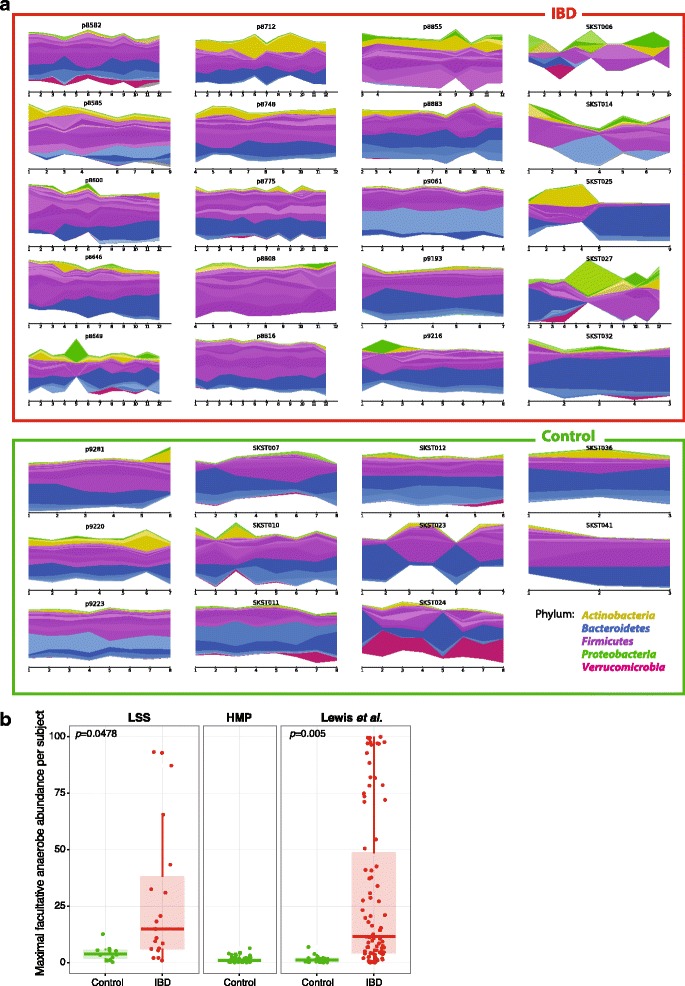
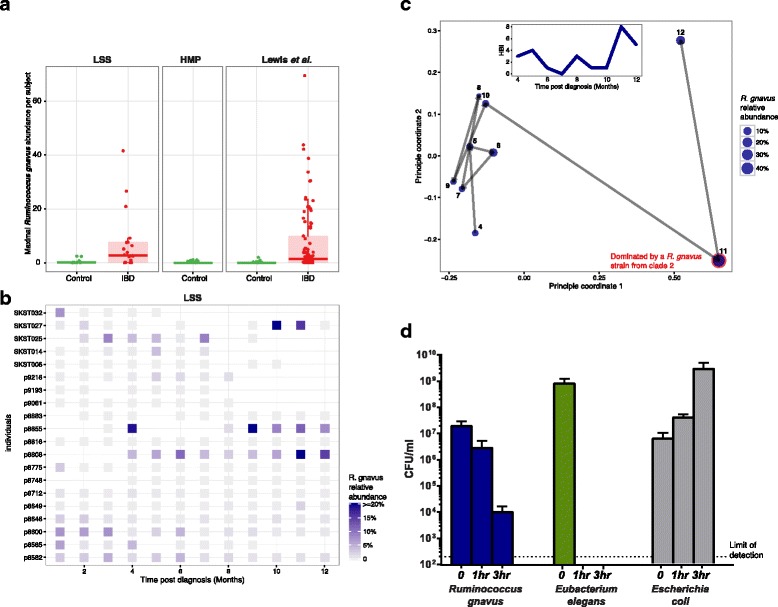
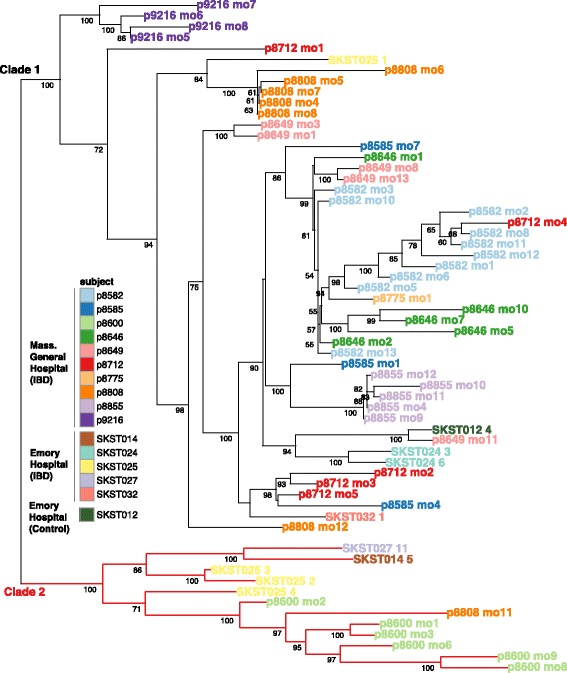
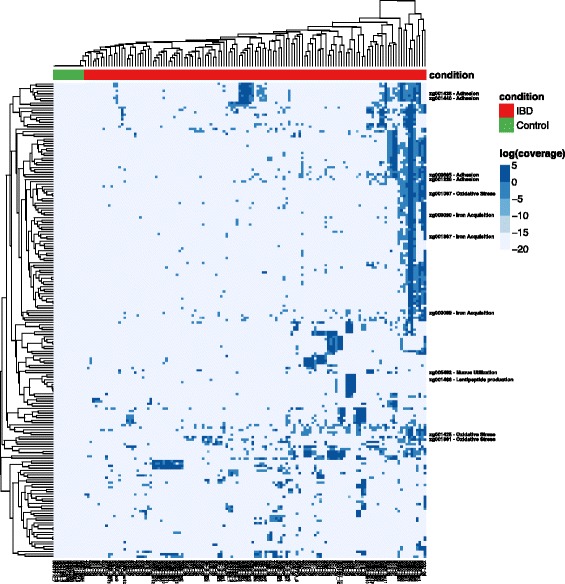
BACKGROUND: Inflammatory bowel disease (IBD) is characterized by chronic inflammation of the gastrointestinal tract that is associated with changes in the gut microbiome. Here, we sought to identify strain-specific functional correlates with IBD outcomes. METHODS: We performed metagenomic sequencing of monthly stool samples from 20 IBD patients and 12 controls (266 total samples). These were taxonomically profiled with MetaPhlAn2 and functionally profiled using HUMAnN2. Differentially abundant species were identified using MaAsLin and strain-specific pangenome haplotypes were analyzed using PanPhlAn. RESULTS: We found a significantly higher abundance in patients of facultative anaerobes that can tolerate the increased oxidative stress of the IBD gut. We also detected dramatic, yet transient, blooms of Ruminococcus gnavus in IBD patients, often co-occurring with increased disease activity. We identified two distinct clades of R. gnavus strains, one of which is enriched in IBD patients. To study functional differences between these two clades, we augmented the R. gnavus pangenome by sequencing nine isolates from IBD patients. We identified 199 IBD-specific, strain-specific genes involved in oxidative stress responses, adhesion, iron-acquisition, and mucus utilization, potentially conferring an adaptive advantage for this R. gnavus clade in the IBD gut. CONCLUSIONS: This study adds further evidence to the hypothesis that increased oxidative stress may be a major factor shaping the dysbiosis of the microbiome observed in IBD and suggests that R. gnavus may be an important member of the altered gut community in IBD.
Overview
The claims and statistics of this paper haven’t been checked yet.
Free: it reads the open-access text and checks the first 5 claims that cite a source we can check. Create a free account to check every claim.
Integrity signals
Registry
Cites
Statistics
Figures
Verification
Claims the paper makes
The claims and statistics of this paper haven’t been checked yet.
Free: it reads the open-access text and checks the first 5 claims that cite a source we can check. Create a free account to check every claim.
Claims other papers make about this one
Each is checked against this paper’s own text: does it say what the citing paper says it does?
The cited source says what the claim attributes to it.
In the citing paper
“whereas the presence of Ruminococcus gnavus as a biomarker of nonresponders in PRIMM-UK is in line with multiple reports of its association with poor cardiometabolic health20 and several diseases24–26.”
From Cross-cohort gut microbiome associations with immune checkpoint inhibitor response in advanced melanoma (2022) · cites this paper as [24]
Self-check
Percentages, sums and reported differences re-computed from the paper’s own numbers.
The self-check needs the paper’s full text.
Citations
Cites
Structure, function and diversity of the healthy human microbiome
The Human Microbiome Project Consortium (2012) · Nature · doi:10.1038/nature11234 · Cited by 11,726
Self-citationThe Treatment-Naive Microbiome in New-Onset Crohn’s Disease
Gevers, D., Kugathasan, S., Denson, L. A., Vázquez-Baeza, Y., Van Treuren, W., Ren, B., Schwager, E., Knights, D., Song, S. J., Yassour, M., et al. (2014) · Cell Host & Microbe · doi:10.1016/j.chom.2014.02.005 · Cited by 3,220 · cited 1×
“[20] cohort may be due to a combination of age (20–66 years here, 3–17 years in Gevers et al.”
BackgroundSelf-citationDysfunction of the intestinal microbiome in inflammatory bowel disease and treatment
Morgan, X. C., Tickle, T. L., Sokol, H., Gevers, D., Devaney, K. L., Ward, D. V., Reyes, J. A., Shah, S. A., LeLeiko, N., Snapper, S. B., et al. (2012) · Genome Biology · doi:10.1186/gb-2012-13-9-r79 · Cited by 2,713 · cited 1×
“Additionally, the gut microbiome in IBD shows dysbiosis characterized by increased abundance of functional pathways involved in the microbial response to oxidative stress [5].”
BackgroundSelf-citationGenetics and pathogenesis of inflammatory bowel disease
Khor, B., Gardet, A., & Xavier, R. J. (2011) · Nature · doi:10.1038/nature10209 · Cited by 2,614
Self-citationMetaPhlAn2 for enhanced metagenomic taxonomic profiling
Truong, D. T., Franzosa, E. A., Tickle, T. L., Scholz, M., Weingart, G., Pasolli, E., Tett, A., Huttenhower, C., & Segata, N. (2015) · Nature Methods · doi:10.1038/nmeth.3589 · Cited by 2,185 · cited 4×
“Community composition was calculated with MetaPhlan2 [16] using the default settings.”
MethodInfluentialSelf-citationThe Long-Term Stability of the Human Gut Microbiota
Faith, J. J., Guruge, J. L., Charbonneau, M., Subramanian, S., Seedorf, H., Goodman, A. L., Clemente, J. C., Knight, R., Heath, A. C., Leibel, R. L., et al. (2013) · Science · doi:10.1126/science.1237439 · Cited by 2,058
Metabolic Reconstruction for Metagenomic Data and Its Application to the Human Microbiome
Abubucker, S., Segata, N., Goll, J., Schubert, A. M., Izard, J., Cantarel, B. L., Rodriguez-Mueller, B., Zucker, J., Thiagarajan, M., Henrissat, B., et al. (2012) · PLoS Computational Biology · doi:10.1371/journal.pcbi.1002358 · Cited by 1,056 · cited 1×
“Functional and pathway composition was calculated with HUMANn2 [17] using the UniRef90 database with default settings.”
MethodSelf-citationYassour, M., Vatanen, T., Siljander, H., Hämäläinen, A.-M., Härkönen, T., Ryhänen, S. J., Franzosa, E. A., Vlamakis, H., Huttenhower, C., Gevers, D., et al. (2016) · Science Translational Medicine · doi:10.1126/scitranslmed.aad0917 · Cited by 1,043 · cited 4×
“(XLSX 9 kb) Additional file 6: Figure S1.”
BackgroundInfluentialSelf-citationCorrelation between intraluminal oxygen gradient and radial partitioning of intestinal microbiota
Albenberg, L., Esipova, T. V., Judge, C. P., Bittinger, K., Chen, J., Laughlin, A., Grunberg, S., Baldassano, R. N., Lewis, J. D., Li, H., et al. (2014) · Gastroenterology · doi:10.1053/j.gastro.2014.07.020 · Cited by 886 · cited 1×
“[18] and expanded for abundant genera in our samples (Additional file 2: Table S2).”
BackgroundMicrobial strain-level population structure and genetic diversity from metagenomes
Truong, D. T., Tett, A., Pasolli, E., Huttenhower, C., & Segata, N. (2017) · Genome Research · doi:10.1101/gr.216242.116 · Cited by 839 · cited 6×
“While strain-level profiling using StrainPhlAn was carried out for 72 species of the gut microbiome with sufficient coverage, R. gnavus was the only species detected to have an IBD-specific strain.”
MethodInfluentialSelf-citation
Cited by
Items 301–400 of 825
Liu, K., Yin, Y., Shi, C., Yan, C., Zhang, Y., Qiu, L., He, S., & Li, G. (2024) · Phytotherapy Research · doi:10.1002/ptr.8129 · Cited by 29
“The relative abundance of Ruminococcus in IBD patients is greatly increased as indicated by various experiments (Hall et al., 2017; Henke et al., 2021).”
BackgroundLi, N., Wang, H., Pei, H., Wu, Y., Li, L., Ren, Y., Wang, S., Ma, Y., Luo, M., Yuan, J., et al. (2024) · Frontiers in Microbiology · doi:10.3389/fmicb.2024.1373013 · Cited by 29
Jiang, H., Yang, F., Zhang, X., Fang, H., Qiu, T., Li, Y., & Peng, A. (2024) · Microbial Pathogenesis · doi:10.1016/j.micpath.2024.106888 · Cited by 27
Meadows, V., Antonio, J. M., Ferraris, R. P., & Gao, N. (2024) · FEBS Journal · doi:10.1111/febs.17327 · Cited by 30
“Further, R. gnavus virulence is suspected to be linked to its capability of adapting to the disrupted luminal environment, including oxygen tolerance, iron acquisition, and oxidative stress response [11].”
InfluentialTan, H., Huang, L., Wang, J., Huang, H. M., Lin, Z., Yang, S., Shi, Y., Li, J., Zhang, H., Zhou, Y., et al. (2025) · Gut · doi:10.1136/gutjnl-2025-335887 · Cited by 30
“The second cohort is from the Broad Institute of MIT and Harvard, with the accession number PRJNA385949, USA (figure 1A–”
Baby-to-baby strain transmission shapes the developing gut microbiome
Ricci, L., Heidrich, V., Punčochář, M., Armanini, F., Ciciani, M., Nabinejad, A., FAZAELI, F., Piperni, E., Servais, C., Pinto, F., et al. (2026) · Nature · doi:10.1038/s41586-025-09983-z · Cited by 31
Defined gut microbial communities: promising tools to understand and combat disease
Bayer, G., Ganobis, C. M., Allen‐Vercoe, E., & Philpott, D. J. (2021) · Microbes and Infection · doi:10.1016/j.micinf.2021.104816 · Cited by 29
Lee, S. Y., Hong, S. H., Kim, H. I., Ku, J. M., Choi, Y., Kim, M., & Ko, S. (2022) · Biomedicine & Pharmacotherapy · doi:10.1016/j.biopha.2022.113574 · Cited by 29
Impact of Obesity on the Course of Management of Inflammatory Bowel Disease—A Review
Michalak, A., Kasztelan‐Szczerbińska, B., & Cichoż‐Lach, H. (2022) · Nutrients · doi:10.3390/nu14193983 · Cited by 33
Gray, S. M., Moss, A. D., Herzog, J., Kashiwagi, S., Liu, B., Young, J. B., Sun, S., Bhatt, A. P., Fodor, A. A., & Sartor, R. B. (2024) · Microbiome · doi:10.1186/s40168-024-01857-2 · Cited by 28
Pascual‐Itoiz, M. Á., Peña‐Cearra, A., Martín‐Ruiz, I., Lavín, J. L., Simó, C., Rodríguez, H., Atondo, E., Flores, J. M., Carreras‐González, A., Tomás‐Cortázar, J., et al. (2020) · Scientific Reports · doi:10.1038/s41598-019-57348-0 · Cited by 27
Kundra, P., Rachmühl, C., Lacroix, C., & Geirnaert, A. (2021) · Molecular Nutrition & Food Research · doi:10.1002/mnfr.201901271 · Cited by 27
Singh, P., Rawat, A., Al‐Jarrah, B., Saraswathi, S., Gad, H., Elawad, M., Hussain, K., Hendaus, M. A., Almasri, W., Malik, R. A., et al. (2021) · International Journal of Molecular Sciences · doi:10.3390/ijms22041511 · Cited by 33
Ren, R., Gao, X., Shi, Y., Li, J., Peng, L., Sun, G., Wang, Z., Yan, B., Zhi, J., & Yang, Y. (2021) · Frontiers in Microbiology · doi:10.3389/fmicb.2021.742255 · Cited by 28
Lee, J., Kim, K. S., Koh, H., Lee, D.-W., & Kang, N. J. (2022) · Current Developments in Nutrition · doi:10.1093/cdn/nzac110 · Cited by 26
Chang, Y., Wu, X., Lu, S., Du, J., Long, Y., Zhu, Y., & Qin, H. (2023) · Frontiers in Chemistry · doi:10.3389/fchem.2023.1089775 · Cited by 27
“Additionally, abnormally high ROS levels cause oxidative stress to both host cells and the gut microbiome (Hall et al., 2017), though neutrophils kill the pathogenic bacteria via the generation of ROS (Jorgensen et al.”
BackgroundLederer, A., Rasel, H., Kohnert, E., Kreutz, C., Huber, R., Badr, M. T., Dellweg, P. K. E., Bartsch, F., & Lang, H. (2023) · Microorganisms · doi:10.3390/microorganisms11092363 · Cited by 27
“Another potentially harmful species of the same family belonging to the genus Ruminococcus , is Ruminococcus gnavus , which was found to be associated with inflammatory bowel disease and negative cardiovascular health indices [73,74].”
BackgroundZhang, J., Wang, W., Cui, X., Zhu, P.-L., Li, S., Yuan, S., Peng, D., & Peng, C. (2023) · Journal of Ethnopharmacology · doi:10.1016/j.jep.2023.117656 · Cited by 31
Chen, Z., Zhong, Y., Chen, L., Liu, W., Lin, C., Chen, Y., & Wang, X. (2025) · Biology · doi:10.3390/biology14050496 · Cited by 28
“…[40,41] were observed as abundant in HGF-Tg mice with periodontitis, we found that the pro-inflammatory bacteria g_Streptococcus , g_unclassified_f_Ruminococcaceae , Prevotellaceae_UCG-001 , and Desul-fovibrio_fairfieldensis [42–45] were upregulated by HGF when periodontitis occurred.”
Li, X., Tao, H.-Q., Zhao, J.-E., Zhu, J. L., Du, L., Gerhard, M., & Li, W. (2025) · EClinicalMedicine · doi:10.1016/j.eclinm.2025.103299 · Cited by 27
“6,85 During H. pylori infection, Prevotella spp. expansion, coupled with reduced beneficial taxa, sustains a pro-carcinogenic environment in the colon by inducing Th17 activation and advances colorectal cancer risk.”
Liu, J., Li, X., Song, F., Cui, S., Lu, W., Zhao, J., Zhang, H., Gu, Z., & Chen, W. (2021) · Food Research International · doi:10.1016/j.foodres.2021.110858 · Cited by 26
Xu, H., Tian, B., Shi, W., Tian, J., Zhang, X., Zeng, J., & Qin, M. (2022) · Frontiers in Cellular and Infection Microbiology · doi:10.3389/fcimb.2021.724142 · Cited by 29
“For instance, Ruminococcus and Escherichia-Shigella were detected in the inflammatory gut (Hall et al., 2017; Zhang et al., 2020), Peptoniphilus was detected in postoperative infected lesions in the oral cavity (Cho et al., 2015), Gardnerellawas found to be associated with biofilm formation and…”
BackgroundLiu, J., Zhen, D., Hu, C., Liu, Y., Shen, X., Fu, P., & He, Y. (2022) · Nutrients · doi:10.3390/nu14173635 · Cited by 28
Valdes, A. M., Louca, P., Visconti, A., Asnicar, F., Bermingham, K. M., Nogal, A., Wong, K. E., Michelotti, G. A., Wolf, J., Segata, N., et al. (2024) · BMC Medicine · doi:10.1186/s12916-024-03543-4 · Cited by 25
Dietary Prevention of Colitis by Aronia Berry is Mediated Through Increased Th17 and Treg
Pei, R., Martin, D., Valdez, J. C., Liu, J., Kerby, R. L., Rey, F. E., Smyth, J. A., Liu, Z., & Bolling, B. W. (2018) · Molecular Nutrition & Food Research · doi:10.1002/mnfr.201800985 · Cited by 25
The Bacterial Guide to Designing a Diversified Gene Portfolio
Innamorati, K. A., Earl, J. P., Aggarwal, S. D., Ehrlich, G. D., & Hiller, N. L. (2020) · Springer eBooks · doi:10.1007/978-3-030-38281-0_3 · Cited by 30
Shen, W., Zhao, M., Xu, W., Shi, X., Ren, F., Tu, P., Gao, N., Shan, J., & Gao, B. (2024) · Metabolites · doi:10.3390/metabo14040189 · Cited by 26
“Enrichment in Ruminococcus spp. was found in patients with inflammatory bowel disease [40].”
BackgroundLiu, X., Ma, Y., Guan, K., Liu, R., Mao, K., Xu, X., Li, Q., & Wang, R. (2024) · Food Research International · doi:10.1016/j.foodres.2024.115164 · Cited by 31
Wan, J., Yu, X., Liu, J., Li, J., Ai, T., Yin, C., Liu, H., & Qin, R. (2023) · Food & Function · doi:10.1039/d2fo03207d · Cited by 25
Li, S., Xu, K., Cheng, Y., Chen, L., Yi, A., Xiao, Z., Zhao, X., Chen, M., Tian, Y., Wei, M., et al. (2023) · Frontiers in Microbiology · doi:10.3389/fmicb.2023.1188455 · Cited by 29
“One additional evidence is that, it is known that innate immune colitis in Rag−/− mice following infection with Helicobacter hepaticus is IL-23 dependent, and IL-23R expression is controlled by transcription factor ROR-gammat, while Rag−/−Rorc−/− mice failed to develop innate colitis, suggesting that IL-23 has an posi…”
BackgroundBalasubramanian, I., Bandyopadhyay, S., Flores, J., Bianchi‐Smak, J., Lin, X., Liu, H., Sun, S., Golovchenko, N. B., Liu, Y., Wang, D., et al. (2023) · The EMBO Journal · doi:10.15252/embj.2023113975 · Cited by 25
“Ruminococcus gnavus is an IBD-associated commensal bacterium (Png et al , 2010; Willing et al , 2010; Joossens et al , 2011; Hall et al , 2017; Nishino et al , 2018), which is sensitive to PC-derived lysozyme (Yu et al , 2020).”
Huang, M., Liu, Y., Dong, W., Zhao, Q., Duan, R., Cao, X., Wan, Y., Yin, J., & Yi, M. (2021) · Chemosphere · doi:10.1016/j.chemosphere.2021.133304 · Cited by 24
Zhu, Q., & Zhang, N. (2024) · Reproductive Sciences · doi:10.1007/s43032-023-01440-4 · Cited by 24
“In addition, Prevotella has been reported to produce anti-inflammatory metabolites, which subsequently can reduce Th17 polarization and promote the differentiation of anti-inflammatory Treg/Tr1 cells in the gut [56].”
The intestinal microbiome of inflammatory bowel disease across the pediatric age range
Conrad, M. A., Bittinger, K. L., Ren, Y., Kachelries, K., Vales, J., Li, H., Wu, G. D., Bushman, F. D., Devoto, M., Baldassano, R. N., et al. (2024) · Gut Microbes · doi:10.1080/19490976.2024.2317932 · Cited by 25
“1,21,22 We also demonstrated these findings in our comparison of pediatric IBD to age matched HC (Supplemental Figure S4, Supplemental Table S1b).”
ResultMueller, K. D., Panzetta, M. E., Davey, L. E., McCann, J. R., Rawls, J. F., Flores, G. E., & Valdivia, R. H. (2024) · Microbiome Research Reports · doi:10.20517/mrr.2024.09 · Cited by 29
Gut microbiome: A revolution in type II diabetes mellitus
Jeyaraman, M., Mariappan, T., Jeyaraman, N., Muthu, S., Ramasubramanian, S., Santos, G. S., da Fonseca, L. F., & Lana, J. F. (2024) · World Journal of Diabetes · doi:10.4239/wjd.v15.i9.1874 · Cited by 24
Deciphering the personalized functional redundancy hierarchy in the gut microbiome
Jiang, Y., Che, L., & Li, S. C. (2025) · Microbiome · doi:10.1186/s40168-025-02273-w · Cited by 26
Mucosa-associated bacteria and metabolites in inflammatory bowel disease: from inside to insight
Wang, X., He, L., Dong, Y., Qin, X., Zhang, H., Wang, B., Wang, S., & Cao, H. (2026) · npj Biofilms and Microbiomes · doi:10.1038/s41522-025-00887-4 · Cited by 26
“Studieshaveobserveddramatic,albeittransient,bloomsof R gnavus inIBDpatients,oftencorrelatingwithheighteneddiseaseactivity 10,53 .”
The Role of Human Gut Microbe Ruminococcus gnavus in Inflammatory Diseases
Kandasamy, S., Letchumanan, V., Hong, K., Chua, K.-O., Mutalib, N. A., Ng, A. L. O., Ming, L. C., Lim, H. X., Thurairajasingam, S., Law, J. W., et al. (2023) · Progress In Microbes & Molecular Biology · doi:10.36877/pmmb.a0000396 · Cited by 30
Trøseid, M., Molinaro, A., Gelpi, M., Vestad, B., Kofoed, K. F., Fuchs, A., Køber, L., Holm, K., Benfield, T., Ueland, P. M., et al. (2024) · The Journal of Infectious Diseases · doi:10.1093/infdis/jiad604 · Cited by 23
“Of note, R. gnavus been linked to several inflammatory diseases [27–29], possibly through its ability to produce proinflammatory polysaccharides [30], whereas Veillonella has been linked to various fibrotic conditions, as also reported by our group in primary sclerosing cholangitis [31] and…”
BackgroundMagadán‐Corpas, P., Pérez‐Valero, Á., Ye, S., Sordon, S., Huszcza, E., Popłoński, J., Villar, C. J., & Lombó, F. (2024) · International Journal of Molecular Sciences · doi:10.3390/ijms25063236 · Cited by 26
“Meanwhile, changes exclusively associated with the luteolin cohort included increases in the genera Blautia and Lachnospiraceae NK4A136 group, both belonging to the family Lachnospiraceae , and reductions in the genus Ruminococcus (Table 3) [37,39,57,58].”
BackgroundPratt, M., Forbes, J. D., Knox, N., Bernstein, C. N., & Domselaar, G. V. (2021) · Frontiers in Cell and Developmental Biology · doi:10.3389/fcell.2021.716604 · Cited by 24
“While this review focuses on microbiome-mediated signaling specifically, metaomics can also be used to profile and predict disease-specific, location-specific, or longitudinal changes in microbial communities and many such studies have provided valuable insights into microbial community dynamics (Gevers et al., 2014;…”
BackgroundThe Gut Microbiota: Emerging Evidence in Autoimmune and Inflammatory Diseases
Zeng, L., Yang, Q., Luo, Y., Luo, Y., & Sun, L. (2026) · Research · doi:10.34133/research.1097 · Cited by 27
“…SS [ 31 ], and AS [ 29 ]; (b) enriched active Ruminococcus in SLE [ 24 ], inflammatory bowel disease (IBD) [ 32 ], and spondyloarthropathy (SpA) [ 33 ]; (c) periodontopathic bacteria correlate with anti-double-stranded DNA (dsDNA) antibody titers/complement activity in RA [ 34 ], beyond their…”
Yuan, W., Lu, W., Wang, H., Wu, W., Zhou, Q., Chen, Y., Lee, Y. K., Zhao, J., Zhang, H., & Chen, W. (2021) · International Journal of Food Sciences and Nutrition · doi:10.1080/09637486.2021.1960957 · Cited by 24
“Meanwhile, Escherichia-Shigella was confirmed to increase significantly in obese subjects (Hall et al. 2017; Gao et al. 2018; Nagayama et al. 2020).”
BackgroundHamamah, S., Hajnal, A. S., & Covașă, M. (2022) · International Journal of Molecular Sciences · doi:10.3390/ijms23147503 · Cited by 25
Peña‐Cearra, A., Castelo, J., Lavín, J. L., González-Lopez, M., Pascual‐Itoiz, M. Á., Fuertes, M., de Juan, V. G., Bárcena, L., Martín‐Ruiz, I., Pellón, A., et al. (2023) · Gut Microbes · doi:10.1080/19490976.2023.2266626 · Cited by 23
“11,19,20 On the contrary, the augmented abundance of A. muciniphila and several OTUs of the family S24–7 within the WT genotype indicated induction of a healing gut microbiota.”
BackgroundKazakevych, J., Denizot, J., Liebert, A., Portovedo, M., Mosavie, M., Jain, P., Stellato, C., Fraser, C. M., Corrêa, R. O., Célestine, M., et al. (2020) · Genome biology · doi:10.1186/s13059-020-01976-7 · Cited by 24
Hoseini, R., Rahim, H. A., Saifalddin, D. L., Kareem, D. A., & Fatah, A. M. (2025) · Journal of Translational Medicine · doi:10.1186/s12967-025-07492-1 · Cited by 23
Dietary Curdlan Enhances Bifidobacteria and Reduces Intestinal Inflammation in Mice
Rahman, S., Davids, M., van Hamersveld, P. H. P., Welting, O., Rahaoui, H., Schuren, F. H. J., Meijer, S. L., van den Wijngaard, R. M., Hakvoort, T. B. M., de Jonge, W. J., et al. (2021) · Nutrients · doi:10.3390/nu13041305 · Cited by 22
“Blautia species are associated with beneficial butyrate production [90], and blautia abundance is reduced in IBD patients [91,92].”
BackgroundDifferent Fecal Microbiota in Hirschsprung's Patients With and Without Associated Enterocolitis
Arnaud, A. P., Cousin, I., Schmitt, F., Petit, T., Parmentier, B., Levard, G., Podevin, G., Guinot, A., DeNapoli, S., Hervieux, E., et al. (2022) · Frontiers in Microbiology · doi:10.3389/fmicb.2022.904758 · Cited by 22
“Ruminococcus gnavus and Flavonifractor plautii are associated with inflammatory bowel disease or colorectal cancer (Hall et al., 2017; Ai et al., 2019; Gupta et al., 2019; Li et al., 2021).”
BackgroundHan, S., Seo, K., Lee, H. G., & Kim, H. (2023) · Food Research International · doi:10.1016/j.foodres.2023.113476 · Cited by 21
Hes, C., Desîlets, A., Tonneau, M., Ouarzadi, O. E., Sousa, M. D. F., Bahig, H., Filion, É., Nguyen‐Tan, P. F., Christopoulos, A., Benlaïfaoui, M., et al. (2023) · Oral Oncology · doi:10.1016/j.oraloncology.2023.106623 · Cited by 22
Lei, X., Cao, X., Sun, J., Bi, C.-C., Wang, X., & Li, Y. (2024) · Aquaculture · doi:10.1016/j.aquaculture.2024.740990 · Cited by 21
Unveiling the therapeutic potential and mechanism of inulin in DSS-induced colitis mice
Niu, B., Li, F., Lv, X., Xiao, Y., Zhu, J., Zhao, J., Lu, W., & Chen, W. (2024) · International Journal of Biological Macromolecules · doi:10.1016/j.ijbiomac.2024.135861 · Cited by 24
Chamorro, N., Montero, D. A., Gallardo, P., Farfán, M. J., Mauricio Contreras, G., la Fuente, M. D., Dubois‐Camacho, K., Hermoso, M. A., Quera, R., Pizarro‐Guajardo, M., et al. (2021) · Microbial Cell · doi:10.15698/mic2021.09.760 · Cited by 23
Luck, M. E., Tao, J., & Lake, E. P. (2022) · American Journal of Clinical Dermatology · doi:10.1007/s40257-022-00724-w · Cited by 23
“IBD also exhibits cutaneous manifestations of disease, including erythema nodosum and pyoderma gangrenosum.”
BackgroundInfluentialHuang, J.-K., Wu, P., Chen, Z.-F., Liu, P., Kuo, C.-C., Chuang, Y., Lu, M.-Z., Kuo, M., Chiu, Y., & Lin, Y. (2024) · Biomolecules · doi:10.3390/biom14060623 · Cited by 22
Zünd, J. N., Caflisch, M., Mujezinovic, D., Plüss, S., Lacroix, C., & Pugin, B. (2025) · FEMS Microbiology Ecology · doi:10.1093/femsec/fiaf054 · Cited by 20
“…genera such as Faecalibacterium, and an enrichment of facultative anaer-obes and specific anaerobic taxa such as Mediterraneibacter gnavus (formerly Ruminococcus ) (Joossens et al. 2011 , Morgan et al. 2012 , Ge v ers et al. 2014 , Lewis et al. 2015 , Hall et al. 2017 , Lloyd-Price et al. 2019 ).”
Liu, L., Liang, L., Liang, H., Wang, M., Zhou, W., Mai, G., Yang, C., & Chen, Y. (2025) · Journal of Advanced Research · doi:10.1016/j.jare.2025.08.017 · Cited by 22
Ruminococcus gnavus bacteraemia in a patient with multiple haematological malignancies
Gren, C., Spiegelhauer, M. R., Rotbain, E. C., Ehmsen, B. K., Kampmann, P., & Andersen, L. P. (2019) · Access Microbiology · doi:10.1099/acmi.0.000048 · Cited by 20
“Two years ago, she developed transfusion- dependent anaemia and thrombocytopenia and a new bone marrow biopsy and cytogenetic karyotyping revealed therapy- related MDS. Treatment with 5- azacytidine and recombinant erythropoietin or thrombopoietin was ineffective.”
BackgroundInfluentialLi, K., Epperly, M. W., Barreto, G. A., Greenberger, J. S., & Methé, B. A. (2021) · Frontiers in Cellular and Infection Microbiology · doi:10.3389/fcimb.2021.715396 · Cited by 20
“Changes in the abundance of specific taxa identified in the TBI experiments through the Cox proportional hazards model in this work, implicate taxa also associated with IBD, depending on disease model (Seregin et al., 2017; Hall et al., 2017; Henke et al., 2019; She et al., 2020).”
BackgroundHe, H., Sun, Y., Zhang, S., Zhang, H., Su, W., Guo, Z., Zhang, Y. L., Wen, J.-J., Li, X., Hu, J., et al. (2022) · eFood · doi:10.1002/efd2.1 · Cited by 23
Role of gut-microbiota in disease severity and clinical outcomes
Yadav, M., & Chauhan, N. S. (2022) · Briefings in Functional Genomics · doi:10.1093/bfgp/elac037 · Cited by 21
Fung, D. L. X., Li, X., Leung, C. K.-S., & Hu, P. (2023) · Bioinformatics Advances · doi:10.1093/bioadv/vbad059 · Cited by 22
Lü, Q., Lin, Y., Chen, T., Lv, H., Diao, F., Liu, C., Peng, M., Ling, X., Li, H., Wang, Y., et al. (2020) · Gut Microbes · doi:10.1080/19490976.2020.1794466 · Cited by 20
“41 The MaAslin boosting step was turned o ff to ensure all independent variables were taken into account.”
Kong, X., Wan, G., Tian, R., Liu, S., Liu, K., Clairmont, C. D., Lin, X., Zhang, X., Sherman, H. T., Zhu, J., et al. (2021) · Frontiers in Nutrition · doi:10.3389/fnut.2021.587974 · Cited by 20
“Ruminococcaceae UCG-003, associated with VLDL and metabolic syndrome, has also been implicated in inflammatory bowel diseases (38, 39).”
BackgroundIntestinal dysbiosis in spondyloarthritis – chicken or egg?
Bréban, M., Beaufrère, M., & Glatigny, S. (2021) · Current Opinion in Rheumatology · doi:10.1097/bor.0000000000000800 · Cited by 20
Subchronic Toxicity of Microcystin-LR on Young Frogs (Xenopus laevis) and Their Gut Microbiota
Li, J., Sun, H., Wang, C., Li, S., & Cai, Y. (2022) · Frontiers in Microbiology · doi:10.3389/fmicb.2022.895383 · Cited by 21
Regulation of glucolipid metabolism and gut microbiota by green and black teas in hyperglycemic mice
Zhou, H., Li, F., Wu, M., Zhu, J., Wang, Y., & Wei, X. (2023) · Food & Function · doi:10.1039/d3fo00355h · Cited by 20
Lacunza, E., Fink, V. I., Salas, M. E., Canzoneri, R., Naipauer, J., Williams, S. L., Coso, O. A., Sued, O. G., Cahn, P. E., Mesri, E. A., et al. (2023) · npj Biofilms and Microbiomes · doi:10.1038/s41522-023-00413-4 · Cited by 20
Alterations of the gut microbiota in the lupus nephritis: a systematic review
Wang, A., Zhao, J., Qin, Y., Zhang, Y., Xing, Y., Wang, Y., Yu, Z., Yan, J., Han, M., Yuan, J., et al. (2023) · Renal Failure · doi:10.1080/0886022x.2023.2285877 · Cited by 20
“R. gnavus is associated with ankylosing spondylitis and iBD [61,62].”
BackgroundLinking Inflammatory Bowel Disease Symptoms to Changes in the Gut Microbiome Structure and Function
Hassouneh, S. A.-D., Loftus, M. G., & Yooseph, S. (2021) · Frontiers in Microbiology · doi:10.3389/fmicb.2021.673632 · Cited by 22
Moxibustion may delay the aging process of Wistar rats by regulating intestinal microbiota
Ouyang, X., Duan, H., Jin, Q., Luo, X., Han, L., Zhao, B., Li, J., Chen, Y., Lin, Y., Liu, Y., et al. (2021) · Biomedicine & Pharmacotherapy · doi:10.1016/j.biopha.2021.112147 · Cited by 21
Lyu, X., Chen, J., Gao, X., & Yang, J. (2022) · Frontiers in Cellular and Infection Microbiology · doi:10.3389/fcimb.2022.973563 · Cited by 21
“In this study, we provide a summary of current clinical trials using probiotics for IBD in Table 2.”
BackgroundInfluentialGut microbiome and anti-viral immunity in COVID-19
Rossini, V., Tolosa-Enguís, V., Francés‐Cuesta, C., & Sanz, Y. (2022) · Critical Reviews in Food Science and Nutrition · doi:10.1080/10408398.2022.2143476 · Cited by 21
“…colitis, Clostridium hathewayi has been involved in various infections linked to fatal clinical cases (including sepsis) and Actinomyces viscosus has been correlated to lung infections (Eng et al. 1981; Linscott et al. 2005; Davis-Richardson, et al. 2014; Matsuoka and Kanai 2015; Hall et al. 2017).”
BackgroundInfluence of gut bacteria on type 2 diabetes: Mechanisms and therapeutic strategy
Wen, X., Qi, L., & Zhao, K. (2024) · World Journal of Diabetes · doi:10.4239/wjd.v16.i1.100376 · Cited by 22
Buttimer, C., Khokhlova, E. V., Stein, L., Hueston, C. M., Govi, B., Draper, L. A., Ross, R. P., Shkoporov, A. N., & Hill, C. (2023) · Gut Microbes · doi:10.1080/19490976.2023.2194794 · Cited by 19
“gnavus typically found among such individuals.(15,17,68) Our results indicate that there is more likely a positive rather than a negative correlation between the high prevalence and abundance of R.”
BackgroundWang, H., Song, W., Yuan, W., Zhou, Q., Sadiq, F. A., Zhao, J., Wu, W., & Lu, W. (2023) · Nutrients · doi:10.3390/nu15143101 · Cited by 19
Exclusive Enteral Nutrition Mediates Beneficial Gut Microbiome Enrichment in Acute Severe Colitis
Bajaj, A., Markandey, M., Singh, M. K., Sahu, P., Vuyyuru, S. K., Kante, B., Kumar, P., Verma, M., Makharia, G. K., Kedia, S., et al. (2023) · Inflammatory Bowel Diseases · doi:10.1093/ibd/izad232 · Cited by 19
Wang, X., Zhou, J., Jiang, T., & Xu, J. L. (2024) · Phytomedicine · doi:10.1016/j.phymed.2024.155584 · Cited by 19
Enterococcus faecalis Glucosamine Metabolism Exacerbates Experimental Colitis
Fan, T., Goeser, L. E., Lü, K., Faith, J. J., & Hansen, J. J. (2021) · Cellular and Molecular Gastroenterology and Hepatology · doi:10.1016/j.jcmgh.2021.06.017 · Cited by 20
Gao, R., Wang, C., Aricha, H., Tian, Y., Ren, S., Lv, W., Chen, A., & Zhang, J. (2021) · Animals · doi:10.3390/ani11113314 · Cited by 18
Duong, J., Hayden, H. S., Verster, A. J., Pope, C. E., Miller, C. J., Penewit, K. M., Salipante, S. J., Rowe, S. M., Solomon, G. M., Nichols, D. P., et al. (2025) · Journal of Cystic Fibrosis · doi:10.1016/j.jcf.2025.05.006 · Cited by 18
Shan, S., Yin, R., Shi, J., Zhang, L., Liu, F., Qiao, Q., & Li, Z. (2022) · Journal of Agricultural and Food Chemistry · doi:10.1021/acs.jafc.1c05747 · Cited by 17
Microbiota Composition in Diverticular Disease: Implications for Therapy
Tursi, A., Papa, V., Lopetuso, L. R., Settanni, C. R., Gasbarrini, A., & Papa, A. (2022) · International Journal of Molecular Sciences · doi:10.3390/ijms232314799 · Cited by 19
Delplanque, M., Benech, N., Rolhion, N., Oeuvray, C., Straube, M., Galbert, C., Brot, L., Henry, T., Jamilloux, Y., Savey, L., et al. (2023) · Rheumatology · doi:10.1093/rheumatology/kead322 · Cited by 19
Mantri, A., Klümpen, L., Seel, W., Krawitz, P. M., Stehle, P., Weber, B., Koban, L., Plaßmann, H., & Simon, M. (2024) · Nutrients · doi:10.3390/nu16132082 · Cited by 18
“In line with this, a decrease in several opportunistic pathogens, such as Erysipelatoclostridium [43,50] and microbes associated with Crohn’s disease, such as Ruminococcus gnavus [51,52] has been detected, highlighting the potential synbiotic effect against diseases.”
BackgroundSanwlani, R., Bramich, K., & Mathivanan, S. (2024) · Extracellular Vesicles and Circulating Nucleic Acids · doi:10.20517/evcna.2024.39 · Cited by 27
Adytia, G. J., Sutanto, H., Pratiwi, L., & Fetarayani, D. (2025) · Immuno · doi:10.3390/immuno5010006 · Cited by 19
“RA, IBD [125,126] - Supports mucosal immunity and reduces gut inflammation.”
Association of distinct microbial and metabolic signatures with microscopic colitis
Chen, S.-Y., Kim, H., Nzabarushimana, É., Shen, J., Williams, K., Gurung, J., McGoldrick, J., Burke, K. E., Yarze, J. C., Nguyen, L. H., et al. (2025) · Nature Communications · doi:10.1038/s41467-025-59566-9 · Cited by 17
Self-citationGuo, J., Yin, M., Han, X., You, Y., Huang, W., & Zhan, J. (2020) · Food Research International · doi:10.1016/j.foodres.2020.109610 · Cited by 17
Gut microbiota features associated with Clostridioides difficile colonization in dairy calves
Redding, L. E., Berry, A. S. F., Indugu, N., Huang, E., Beiting, D. P., & Pitta, D. (2021) · PLoS ONE · doi:10.1371/journal.pone.0251999 · Cited by 17
“gnavus occur in patients experiencing flares of inflammatory bowel disease, with relative abundance levels that can peak at 69% of the gut microbiota [40].”
BackgroundZhang, Q., Tan, W., Yang, L., Lu, M. P., Dong, S., Liu, X., & Duan, X. L. (2020) · Molecular Nutrition & Food Research · doi:10.1002/mnfr.201901024 · Cited by 17
Yao, Y., Pei, Z., Dai, Y., Chen, Y., Chang, Z., Wang, H., Zhao, J., Zhang, H., Zhai, Q., Lu, W., et al. (2025) · Advanced Science · doi:10.1002/advs.202506576 · Cited by 22
Jiang, T., Yang, X., Wu, B., Tao, R., Chen, R., Jin, L., Sun, D., & Weng, H. (2025) · Frontiers in Microbiology · doi:10.3389/fmicb.2025.1661211 · Cited by 19
DNA reference reagents isolate biases in microbiome profiling: a global multi-lab study
Anwar, S., Lamaudière, M. T. F., Hassall, J., Dehinsilu, J., Bhuller, R. K., Hold, G. L., Vázquez-Campos, X., Mahnert, A., Moissl‐Eichinger, C., Gallé, B., et al. (2025) · mSystems · doi:10.1128/msystems.00466-25 · Cited by 18
“This is striking as ChocoPhlAn3 is widely used and critically, Ruminococcus spp. can play a key pathological role in several human diseases, such as inflammatory bowel disease (23), metabolic syndrome (24), irritable bowel syndrome (25), and colorectal cancer (26).”
Mucin-degrading gut bacteria: context-dependent roles in intestinal homeostasis and disease
Tiffany, E., Kim, K. S., Sittipo, P., Lee, D.-W., & Lee, Y. K. (2026) · Gut Microbes · doi:10.1080/19490976.2026.2614054 · Cited by 17
“28,146 This transient bloom may be driven by its adaptability to the highly sialylated mucin observed in IBD.”
Tilves, C., Tanaka, T., Differding, M. K., Spira, A. P., Chia, C. W., Ferrucci, L., & Mueller, N. T. (2023) · Obesity · doi:10.1002/oby.23717 · Cited by 17
“Ruminococcus gnavus has been associated with other inflammatory disease states such as Crohn disease [47], and evidence showed that it can produce inflammatory polysaccharides [48].”
BackgroundAbdugheni, R., Liu, C., Liu, F.-L., Zhou, N., Jiang, C., Liu, Y., Li, L., Li, W., & Liu, S. (2023) · Microbial Genomics · doi:10.1099/mgen.0.001071 · Cited by 18
“gnavus with adiposity [18], development of inflammatory bowel disease (IBD) [19] and Crohn’s disease [20], and moyamoya disease and non- moyamoya intracranial large artery disease [21], have been reported as well; hence, this important gut inhabitant may play a pathogenic role in diarrhoea- predominant irritable bowel…”
BackgroundFan, Z., Xu, S., Deng, Y., Li, W., Yang, J., & Xing, X. (2024) · Thrombosis Research · doi:10.1016/j.thromres.2024.01.022 · Cited by 17
Metadata
- Authors
- Hall, A. B., Yassour, M., Sauk, J., Garner, A., Jiang, X., Arthur, T., Lagoudas, G. K., Vatanen, T., Fornelos, N., Wilson, R., Bertha, M., Cohen, M., Garber, J., Khalili, H., Gevers, D., Ananthakrishnan, A. N., Kugathasan, S., Lander, E. S., Blainey, P., Vlamakis, H., Xavier, R. J., & Huttenhower, C.
- Affiliations
- Broad Institute (US)
- Harvard University (US)
- Emory University (US)
- Corresponding author
- Xavier, Ramnik J.
- Huttenhower, Curtis
- ORCID
- Venue
- Genome Medicine
- Published
- 2017-11-28
- Volume
- 9
- Issue
- 1
- Pages
- 103-103
- ISSN
- 1756-994X (ISSN-L)
- PMC
- PMC5704459
- OpenAlex
- W2769664962
- Cited by
- 777
- References
- 33
- Citations by year
- 2026: 74 · 2025: 115 · 2024: 134 · 2023: 110 · 2022: 106 · 2021: 96 · 2020: 69 · 2019: 55 · 2018: 16
- FWCI
- 15.64
- Type
- journal article
- Language
- en
- Open access
- gold
- doi.org
- Licence
- cc-by
- creativecommons.org/licenses/by/4.0/ (tdm)
- creativecommons.org/licenses/by/4.0/ (vor)
- Locations
- Genome Medicine (publishedVersion, cc-by)
- Europe PMC (PubMed Central) (publishedVersion, cc-by)
- PubMed Central (publishedVersion, cc-by)
- PubMed (publishedVersion)
- Digital Access to Scholarship at Harvard (DASH) (Harvard University) (submittedVersion, cc-by)
- DOAJ (DOAJ: Directory of Open Access Journals) (submittedVersion)
- ResearchSpace (University of Auckland) (submittedVersion, cc-by)
- Funders
- National Institutes of Health (U54DE023798)
- National Science Foundation (MCB-1453942)
- Crohn's and Colitis Foundation of America
- Helen Hay Whitney Foundation
- Charles A. King Trust
- Klarman Family Foundation
- National Institute of Diabetes and Digestive and Kidney Diseases (R01DK92405, P30DK43351)
- Topics
- Life Sciences › Biochemistry, Genetics and Molecular Biology › Molecular Biology › Gut microbiota and health
- Health Sciences › Medicine › Gastroenterology › Inflammatory Bowel Disease
- Health Sciences › Medicine › Infectious Diseases › Clostridium difficile and Clostridium perfringens research
- Keywords
- Ruminococcus gnavus, inflammatory bowel disease, gut microbiota, strain-specific genes, pan-genome, oxidative stress response, facultative anaerobes, iron acquisition, adhesion genes, dysbiosis, disease activity
- MeSH terms
- Gastrointestinal Microbiome, Adult, Aged, Feces, Humans, Middle Aged, Phylogeny, Species Specificity, Inflammatory Bowel Diseases, Genome, Bacterial, Oxidative Stress, Ruminococcus, Young Adult
About these checks
Registry, retraction, Cites and statistics results are computed, not judged, with one exception: a printed reference that no index lists is read once by a model before it counts as a citation error. Claims are extracted by a model and kept only when their quote appears verbatim in the text; each cited source is then checked, with a model’s help, for whether it says what the claim relies on. Those verdicts can be wrong — read the claim’s quote and the cited source before relying on one.
Statistics and arithmetic are recomputed, not judged.
Confidence bands are shown only for fields calibrated on our annotated test set. None is calibrated yet, so no band is shown.
What counts as a claim ›How we measure confidence ›How we check this ›
Are you an author, or do you see a problem with this page? Request a review
Data sources
Bibliographic data: Semantic Scholar, OpenAlex, Crossref.
Contains information from the Semantic Scholar Academic Graph Datasets, made available under the ODC Attribution License (ODC-BY 1.0).
Semantic Scholar’s data is described in: Kinney, R., et al. (2023). The Semantic Scholar Open Data Platform. arXiv:2301.10140.
