

A novel Ruminococcus gnavus clade enriched in inflammatory bowel disease patients
Open accessThe DOI matches its Crossref record; 33 of the 33 references it cites were found in a registry or an index.
Abstract
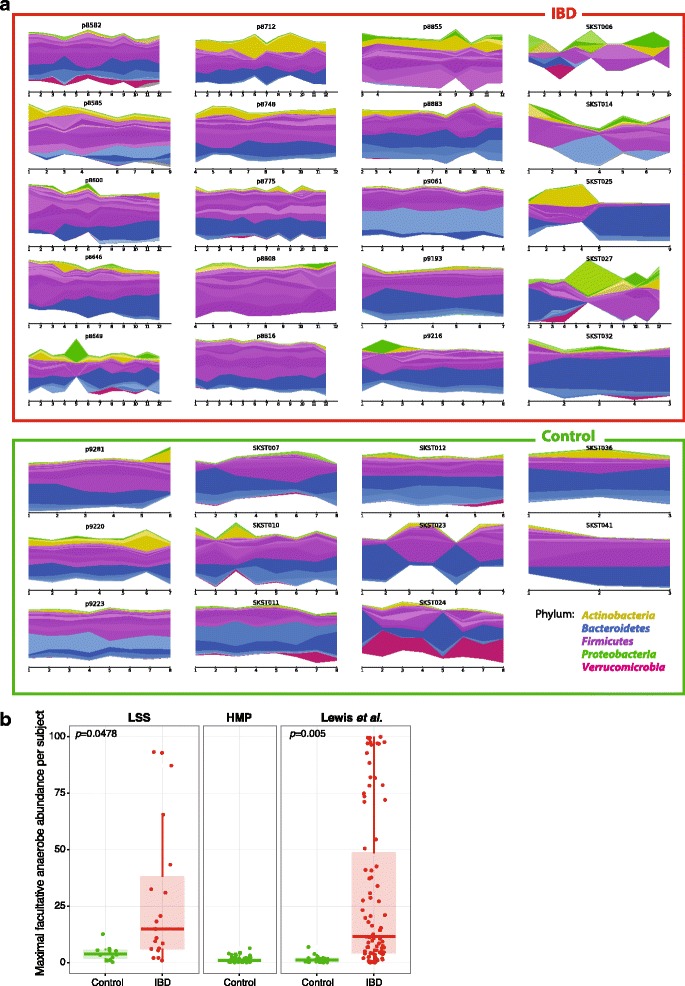
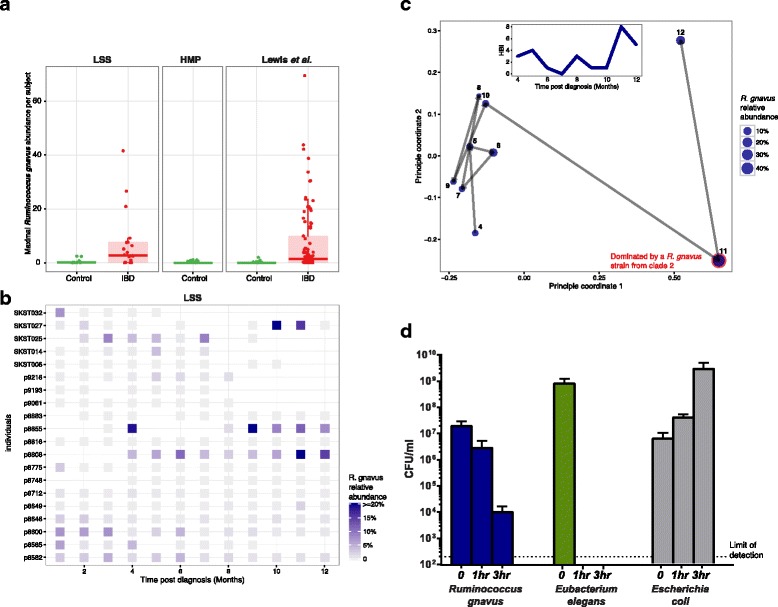
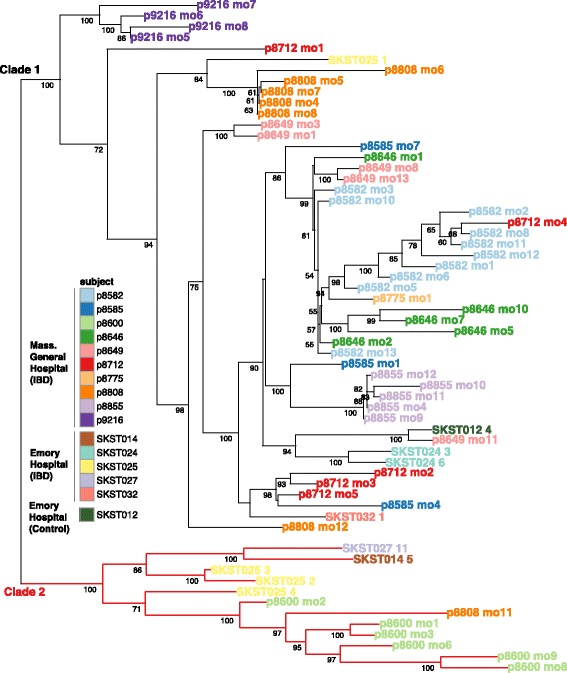
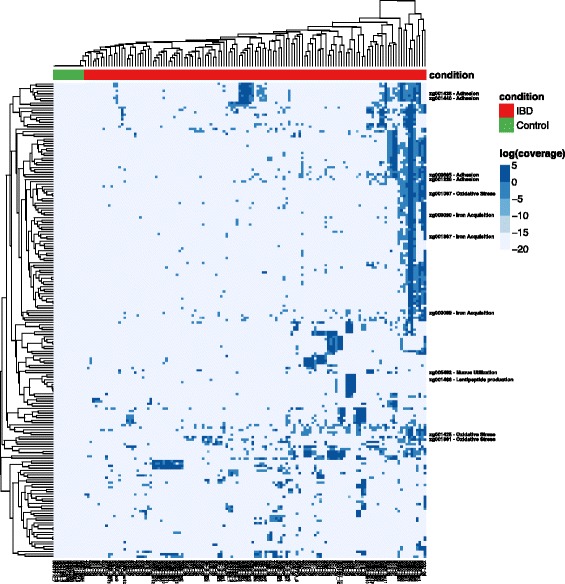
BACKGROUND: Inflammatory bowel disease (IBD) is characterized by chronic inflammation of the gastrointestinal tract that is associated with changes in the gut microbiome. Here, we sought to identify strain-specific functional correlates with IBD outcomes. METHODS: We performed metagenomic sequencing of monthly stool samples from 20 IBD patients and 12 controls (266 total samples). These were taxonomically profiled with MetaPhlAn2 and functionally profiled using HUMAnN2. Differentially abundant species were identified using MaAsLin and strain-specific pangenome haplotypes were analyzed using PanPhlAn. RESULTS: We found a significantly higher abundance in patients of facultative anaerobes that can tolerate the increased oxidative stress of the IBD gut. We also detected dramatic, yet transient, blooms of Ruminococcus gnavus in IBD patients, often co-occurring with increased disease activity. We identified two distinct clades of R. gnavus strains, one of which is enriched in IBD patients. To study functional differences between these two clades, we augmented the R. gnavus pangenome by sequencing nine isolates from IBD patients. We identified 199 IBD-specific, strain-specific genes involved in oxidative stress responses, adhesion, iron-acquisition, and mucus utilization, potentially conferring an adaptive advantage for this R. gnavus clade in the IBD gut. CONCLUSIONS: This study adds further evidence to the hypothesis that increased oxidative stress may be a major factor shaping the dysbiosis of the microbiome observed in IBD and suggests that R. gnavus may be an important member of the altered gut community in IBD.
Overview
The claims and statistics of this paper haven’t been checked yet.
Free: it reads the open-access text and checks the first 5 claims that cite a source we can check. Create a free account to check every claim.
Integrity signals
Registry
Cites
Statistics
Figures
Verification
Claims the paper makes
The claims and statistics of this paper haven’t been checked yet.
Free: it reads the open-access text and checks the first 5 claims that cite a source we can check. Create a free account to check every claim.
Claims other papers make about this one
Each is checked against this paper’s own text: does it say what the citing paper says it does?
The cited source says what the claim attributes to it.
In the citing paper
“whereas the presence of Ruminococcus gnavus as a biomarker of nonresponders in PRIMM-UK is in line with multiple reports of its association with poor cardiometabolic health20 and several diseases24–26.”
From Cross-cohort gut microbiome associations with immune checkpoint inhibitor response in advanced melanoma (2022) · cites this paper as [24]
Self-check
Percentages, sums and reported differences re-computed from the paper’s own numbers.
The self-check needs the paper’s full text.
Citations
Cites
Structure, function and diversity of the healthy human microbiome
The Human Microbiome Project Consortium (2012) · Nature · doi:10.1038/nature11234 · Cited by 11,726
Self-citationThe Treatment-Naive Microbiome in New-Onset Crohn’s Disease
Gevers, D., Kugathasan, S., Denson, L. A., Vázquez-Baeza, Y., Van Treuren, W., Ren, B., Schwager, E., Knights, D., Song, S. J., Yassour, M., et al. (2014) · Cell Host & Microbe · doi:10.1016/j.chom.2014.02.005 · Cited by 3,220 · cited 1×
“[20] cohort may be due to a combination of age (20–66 years here, 3–17 years in Gevers et al.”
BackgroundSelf-citationDysfunction of the intestinal microbiome in inflammatory bowel disease and treatment
Morgan, X. C., Tickle, T. L., Sokol, H., Gevers, D., Devaney, K. L., Ward, D. V., Reyes, J. A., Shah, S. A., LeLeiko, N., Snapper, S. B., et al. (2012) · Genome Biology · doi:10.1186/gb-2012-13-9-r79 · Cited by 2,713 · cited 1×
“Additionally, the gut microbiome in IBD shows dysbiosis characterized by increased abundance of functional pathways involved in the microbial response to oxidative stress [5].”
BackgroundSelf-citationGenetics and pathogenesis of inflammatory bowel disease
Khor, B., Gardet, A., & Xavier, R. J. (2011) · Nature · doi:10.1038/nature10209 · Cited by 2,614
Self-citationMetaPhlAn2 for enhanced metagenomic taxonomic profiling
Truong, D. T., Franzosa, E. A., Tickle, T. L., Scholz, M., Weingart, G., Pasolli, E., Tett, A., Huttenhower, C., & Segata, N. (2015) · Nature Methods · doi:10.1038/nmeth.3589 · Cited by 2,185 · cited 4×
“Community composition was calculated with MetaPhlan2 [16] using the default settings.”
MethodInfluentialSelf-citationThe Long-Term Stability of the Human Gut Microbiota
Faith, J. J., Guruge, J. L., Charbonneau, M., Subramanian, S., Seedorf, H., Goodman, A. L., Clemente, J. C., Knight, R., Heath, A. C., Leibel, R. L., et al. (2013) · Science · doi:10.1126/science.1237439 · Cited by 2,058
Metabolic Reconstruction for Metagenomic Data and Its Application to the Human Microbiome
Abubucker, S., Segata, N., Goll, J., Schubert, A. M., Izard, J., Cantarel, B. L., Rodriguez-Mueller, B., Zucker, J., Thiagarajan, M., Henrissat, B., et al. (2012) · PLoS Computational Biology · doi:10.1371/journal.pcbi.1002358 · Cited by 1,056 · cited 1×
“Functional and pathway composition was calculated with HUMANn2 [17] using the UniRef90 database with default settings.”
MethodSelf-citationYassour, M., Vatanen, T., Siljander, H., Hämäläinen, A.-M., Härkönen, T., Ryhänen, S. J., Franzosa, E. A., Vlamakis, H., Huttenhower, C., Gevers, D., et al. (2016) · Science Translational Medicine · doi:10.1126/scitranslmed.aad0917 · Cited by 1,043 · cited 4×
“(XLSX 9 kb) Additional file 6: Figure S1.”
BackgroundInfluentialSelf-citationCorrelation between intraluminal oxygen gradient and radial partitioning of intestinal microbiota
Albenberg, L., Esipova, T. V., Judge, C. P., Bittinger, K., Chen, J., Laughlin, A., Grunberg, S., Baldassano, R. N., Lewis, J. D., Li, H., et al. (2014) · Gastroenterology · doi:10.1053/j.gastro.2014.07.020 · Cited by 886 · cited 1×
“[18] and expanded for abundant genera in our samples (Additional file 2: Table S2).”
BackgroundMicrobial strain-level population structure and genetic diversity from metagenomes
Truong, D. T., Tett, A., Pasolli, E., Huttenhower, C., & Segata, N. (2017) · Genome Research · doi:10.1101/gr.216242.116 · Cited by 839 · cited 6×
“While strain-level profiling using StrainPhlAn was carried out for 72 species of the gut microbiome with sufficient coverage, R. gnavus was the only species detected to have an IBD-specific strain.”
MethodInfluentialSelf-citation
Cited by
Items 401–500 of 825
Living on the edge: Mucus-associated microbes in the colon
Joja, M., Grant, E. T., & Desai, M. S. (2025) · Mucosal Immunology · doi:10.1016/j.mucimm.2025.04.003 · Cited by 16
Haynie, T., Gubler, S., Drees, C., Heaton, T., Mitton, T. J., Gleave, Q., Bendelac, A. S., Deng, S., & Savage, P. B. (2021) · RSC Advances · doi:10.1039/d1ra01918j · Cited by 16
Metagenomic Sequencing Analysis of the Effects of Colistin Sulfate on the Pig Gut Microbiome
Guo, L. J., Zhang, D., Fu, S., Zhang, J., Zhang, X., He, J., Peng, C., Zhang, Y., Qiu, Y., Ye, C., et al. (2021) · Frontiers in Veterinary Science · doi:10.3389/fvets.2021.663820 · Cited by 17
“Microbial community taxonomic profiles were determined by MetaPhlAn2 software (28).”
MethodHu, L., Lai, C., Li, Y. H., Sun, R., Yang, H., Liu, X., & Yu, P. (2025) · npj Biofilms and Microbiomes · doi:10.1038/s41522-025-00848-x · Cited by 17
“Additionally, its proliferation is promoted by oxidative stress caused by intestinal in fl ammation in IBD patients, which may be linked to its facultative anaerobic nature 152 .”
Crosstalk between microbial biofilms in the gastrointestinal tract and chronic mucosa diseases
Wang, Y., Xu, S., He, Q., Sun, K., Wang, X., Zhang, X., Li, Y., & Zeng, J. (2023) · Frontiers in Microbiology · doi:10.3389/fmicb.2023.1151552 · Cited by 18
“gnavus from the IBD samples express strainspecific genes for oxidative stress responses, adhesion, iron acquisition, and mucus utilization, thus guaranteeing an adaptive advantage in microbiota dysbiosis (Hall et al., 2017).”
BackgroundChi, X., Cheng, D., Sun, X. L., Liu, S., Wang, R., Chen, Q., & Xing, H. (2023) · Chinese Journal of Integrative Medicine · doi:10.1007/s11655-023-3542-2 · Cited by 15
“Beneficial bacteria can produce butyrate,((66)) which has healthy and beneficial effects on body metabolism,((67)) but harmful strains have pro-inflammatory effects((68)) and are responsible for various human digestive tract diseases such as Crohn's disease,((69,70)) IBD,((71)) and liver cancer.”
BackgroundHurych, J., Mascellani, A., Lerchová, T., Hlinakova, L., Kubat, M., Malcová, H., Cebecauerová, D., Schwarz, J., Karásková, E., Hecht, T., et al. (2023) · Journal of Crohn s and Colitis · doi:10.1093/ecco-jcc/jjad126 · Cited by 16
Moutusy, S. I., & Ohsako, S. (2024) · International Journal of Molecular Sciences · doi:10.3390/ijms25063372 · Cited by 16
Wang, S., Jiang, Y., Che, L., Wang, R. H., & Li, S. C. (2024) · Nucleic Acids Research · doi:10.1093/nar/gkae515 · Cited by 16
A review of the pathogenesis of epilepsy based on the microbiota-gut-brain-axis theory
Yang, W., Cui, H., Wang, C., Wang, X., Yan, C., & Cheng, W. (2024) · Frontiers in Molecular Neuroscience · doi:10.3389/fnmol.2024.1454780 · Cited by 19
Ta, A., Ollberding, N. J., Karns, R. A., Haberman, Y., Alazraki, A. L., Hercules, D., Baldassano, R. N., Markowitz, J. F., Heyman, M. B., Kim, S. S. Y., et al. (2021) · Inflammatory Bowel Diseases · doi:10.1093/ibd/izaa339 · Cited by 16
Self-citationWu, R. T., Zhang, Y., Cheng, Q., Wu, J., Zhu, Y., Shi, X., Qiu, X., Yang, S., Wang, S., Zheng, B. J., et al. (2021) · Liver International · doi:10.1111/liv.15047 · Cited by 16
Self-citationMining the Microbiome and Microbiota-Derived Molecules in Inflammatory Bowel Disease
Bekkers, M., Stojkovic, B., & Kaiko, G. E. (2021) · International Journal of Molecular Sciences · doi:10.3390/ijms222011243 · Cited by 17
“Longitudinal metagenomic studies also support the hypothesis of increased microbial oxidative stress in IBD [112], where these gene pathways were tightly correlated with a greater abundance of facultative anaerobe species and enrichment of R.”
BackgroundJiang, R., Wang, Y., Liu, J., Wu, Z., Wang, D., Deng, Q., Yang, C., & Zhou, Q. S. (2022) · Psychopharmacology · doi:10.1007/s00213-021-06037-w · Cited by 15
Lv, H., Wang, S., Tian, M., Wang, L., Gao, J., Zhao, Q., Li, Z., Jia, X., & Yu, Y. (2022) · Mediators of Inflammation · doi:10.1155/2022/2124230 · Cited by 18
“In addition, Lactobacillus has been reported to be protective in a rat model of ischemic stroke by inhibiting neuronal apoptosis, reducing brain infarct volume, decreasing oxidative stress, and restoring neurobehavioral deficits [48].”
BackgroundJeng, T.-M., Hsieh, Y., Chang, P.-Y., Li, Y.-L., Tang, S., Jeng, J., Hu, C., & Chiou, H. (2025) · Scientific Reports · doi:10.1038/s41598-025-03068-7 · Cited by 17
“Ruminococcaceae has been known to play a role in the regulation of inflammation and related to AD 48,49 A recent study with a 2-year follow-up in 87 patients with MCI found that a decreased abundance of Ruminococcaceae , correlated with an increase in P-tau181, was significantly associated with the…”
Comparative diet-gut microbiome analysis in Crohn’s disease and Hidradenitis suppurativa
Cronin, P., McCarthy, S., Hurley, C., Ghosh, T. S., Cooney, J. C., Tobin, A., Murphy, M., O’Connor, E. M., Shanahan, F., & O’Toole, P. W. (2023) · Frontiers in Microbiology · doi:10.3389/fmicb.2023.1289374 · Cited by 14
“…with Ruminococcus gnavus and Clostridium ramosum which have been previously detected in the CD microbiota and are associated with the upregulation of the inflammatory cytokine TNF α (Joossens et al., 2011; Hall et al., 2017; Nishino et al., 2018; Lloyd-Price et al., 2019; McCarthy et al., 2022).”
BackgroundFu, C., Zhao, Y., Zhou, X., Lv, J., Jin, S., Zhou, Y., Liu, F., & Feng, N. (2024) · Frontiers in Immunology · doi:10.3389/fimmu.2024.1395580 · Cited by 14
Yi, D., Li, T., Xiao, Y., Zhang, X., Hao, Q., Zhang, F., Qiu, T., Yang, G., Sun, X., Dong, Y., et al. (2024) · Bioengineering & Translational Medicine · doi:10.1002/btm2.10728 · Cited by 16
“Furthermore, the abundance of Coprococcus and Ruminococcus , which are associated with proinflammatory markers, 42 were also cut down after FMT treatment.”
Culture-based characterization of gut microbiota in inflammatory bowel disease
Park, H., Yeo, S., Lee, T., Han, Y., Ryu, C. B., & Huh, C. S. (2025) · Frontiers in Microbiology · doi:10.3389/fmicb.2025.1538620 · Cited by 14
Andersen, S., Kennedy, G., Banks, M., Flanagan, B. M., & Henden, A. S. (2025) · Blood Advances · doi:10.1182/bloodadvances.2024015703 · Cited by 14
Gao, Y., Yuan, S., Chen, Y., Liu, F., Wei, Z., Cao, W., Li, R. W., Xu, J., Xue, C., & Tang, Q. (2022) · Food & Function · doi:10.1039/d1fo03185f · Cited by 14
Xiang, M., Zheng, L., Pu, D., Lin, F., Ma, X., Ye, H., Pu, D., Zhang, Y., Wang, D., Wang, X., et al. (2022) · Frontiers in Microbiology · doi:10.3389/fmicb.2022.909729 · Cited by 16
“is significantly associated with Crohn’s disease, IBD, and type 2 diabetes (Hall et al., 2017; Baumgartner et al., 2021; Ruuskanen et al., 2022).”
BackgroundQin, W., Yu, Z., Li, Z. Y., Liu, H., Li, W., Zhao, J., Ren, Y., & Ma, L. (2023) · Microorganisms · doi:10.3390/microorganisms11051254 · Cited by 14
Bitter Taste Receptors in Bacterial Infections and Innate Immunity
Rudolph, E., Dychtenberg, H., Pozniak, A., & Pundir, P. (2025) · Immunity Inflammation and Disease · doi:10.1002/iid3.70232 · Cited by 13
“This compartmentalization could explain why R. gnavus is associated with proximal ‐ predominant conditions like IBD, suggesting location ‐ specific host ‐ microbe crosstalk [133, 134].”
Lei, H., Yu, D., Xue, Y., Li, Y., Gong, S.-M., Peng, Y.-Y., Liu, K.-F., Buratto, D., Yang, Y.-S., Zhang, S., et al. (2023) · Frontiers in Immunology · doi:10.3389/fimmu.2023.1259521 · Cited by 14
Valido, E. M., Capossela, S., Glišić, M., Hertig-Godeschalk, A., Bertolo, A., Stucki, G., Flueck, J. L., & Stoyanov, J. V. (2024) · Scientific Reports · doi:10.1038/s41598-024-63163-z · Cited by 16
“Certain members of the family are pathobionts and are able to initiate inflammatory responses in the gut 43,44 .”
BackgroundPerruzza, L., Jost, T. R., Raneri, M., Gargari, G., Palatella, M., Conti, B. D. P., Seehusen, F., Heckmann, J., Viemann, D., Guglielmetti, S., et al. (2024) · Cell Reports Medicine · doi:10.1016/j.xcrm.2024.101639 · Cited by 15
“43 Conversely, an R. gnavus strain ameliorated the impaired growth phenotype of germ-free mice gavaged with an undernourished donor’s immature microbiota, suggesting it could beneficially condition the host metabolic machinery.”
Flores, J., Antonio, J. M., Suntornsaratoon, P., Meadows, V., Bandyopadhyay, S., Han, J., Singh, R., Balasubramanian, I., Upadhyay, R., Liu, Y., et al. (2024) · Journal of Biological Chemistry · doi:10.1016/j.jbc.2024.107614 · Cited by 15
“Nearly 90% of human microbiomes harbor R. gnavus , however, this species typically contributes to only about 0.01% of the total microbiota (3).”
BackgroundInfluentialGut microbiota, allergic rhinitis, vasomotor rhinitis, Mendelian randomization, causal association
Lin, X., Hu, X., Zhang, J., Luo, J., Qin, G., & Jiang, L. (2024) · Brazilian Journal of Otorhinolaryngology · doi:10.1016/j.bjorl.2024.101491 · Cited by 14
Wang, C.-H., Chung, K.-T., Su, L.-Y., Wu, W.-J., Wang, P.-H., Lee, M.-C., Shen, S., & Wu, C. (2024) · International Journal of Molecular Sciences · doi:10.3390/ijms252011034 · Cited by 14
“Ruminococcaceae can be better adapted to the gut with inflammatory bowel disease through mechanisms of oxidative stress responses and mucus utilization [42].”
BackgroundFeng, Y., Xiao, Y., Li, X., Guo, M., Huang, L., Lu, W., Zhao, J., & Chen, W. (2025) · Food Research International · doi:10.1016/j.foodres.2025.116673 · Cited by 13
Lactobacillus acidophilus DDS-1 Modulates the Gut Microbial Co-Occurrence Networks in Aging Mice
Vemuri, R., Martoni, C., Kavanagh, K., & Eri, R. D. (2022) · Nutrients · doi:10.3390/nu14050977 · Cited by 17
“gnavus species were found to stimulate pro‐inflammatory responses in Crohn’s disease [37].”
Backgroundde Franchis, R., Bozza, L., Canale, P., Chiacchio, M., Cortese, P., D’Avino, A., Giovanni, M. D., Iacovo, M. D., D’Onofrio, A., Federico, A., et al. (2022) · Nutrients · doi:10.3390/nu14122486 · Cited by 13
Jiang, H., Song, T., Li, Z., An, L., He, C., & Zheng, K. (2023) · Frontiers in Microbiology · doi:10.3389/fmicb.2023.1255650 · Cited by 14
Shan, X., Peng, C., Zou, H., Pan, Y., Wu, M., Xie, Q., & Lin, Q. (2024) · Nutrients · doi:10.3390/nu16142300 · Cited by 15
“Informed Consent Statement: Informed consent was obtained from all subjects involved in the study.”
MethodXu, X. Y., Dhandapani, S., Mi, X.-J., Park, H.-R., & Kim, Y.-J. (2022) · Journal of Functional Foods · doi:10.1016/j.jff.2022.105020 · Cited by 14
Novel technologies to characterize and engineer the microbiome in inflammatory bowel disease
Boix-Amorós, A., Monaco, H., Sambataro, E., & Clemente, J. C. (2022) · Gut Microbes · doi:10.1080/19490976.2022.2107866 · Cited by 14
Gupta, V. K., Bakshi, U., Chang, D., Lee, A. R., Davis, J. M., Chandrasekaran, S., Jin, Y., Freeman, M. F., & Sung, J. (2022) · mSystems · doi:10.1128/msystems.00925-22 · Cited by 14
Han, L., Sun, R., Wang, Y., Luo, J., & Peng, X. (2022) · Food & Function · doi:10.1039/d1fo04140a · Cited by 12
Zuo, Y., Xu, H., Feng, D., Shi, Y., Li, J., Wei, M., Wang, L., Zhang, Y., & Hu, P. (2023) · Food Science and Human Wellness · doi:10.26599/fshw.2022.9250186 · Cited by 13
Jangi, S., Zhao, N., Hsia, K., Park, Y. S., Michaud, D. S., & Yoon, H. (2024) · Journal of Crohn s and Colitis · doi:10.1093/ecco-jcc/jjae125 · Cited by 13
Fujii, T., Karasawa, K., Takahashi, H., Shirai, I., Funasaka, K., Ohno, E., Hirooka, Y., & Tochio, T. (2024) · Microbiology · doi:10.1099/mic.0.001510 · Cited by 13
Scarlata, G. G. M., Morano, D., Ismaiel, A., Spagnuolo, R., Luzza, F., Dumitrascu, D. L., & Abenavoli, L. (2025) · Current Issues in Molecular Biology · doi:10.3390/cimb47100847 · Cited by 13
“For example, Ruminococcus gnavus , commonly enriched in IBD, may exert either pro-or anti-inflammatory effects depending on capsular polysaccharide expression [62].”
Bile salt hydrolase activity as a rational target for MASLD therapy
Jones, E. V., Wang, Y., Wei, W., Reed, J. C., Chaudhari, S. N., Li, D. K., Boursier, J., Lang, S., Demir, M., Diehl, A. M., et al. (2026) · Gut Microbes · doi:10.1080/19490976.2025.2608437 · Cited by 14
“24,32,34 All strains were grown under anaerobic conditions in an anaerobic chamber (Coy Lab Products Airlock) with a gas mix of 5% hydrogen and 20% carbon dioxide nitrogen.”
Piazzesi, A., & Putignani, L. (2022) · Frontiers in Microbiology · doi:10.3389/fmicb.2022.958346 · Cited by 14
Warner, B. B., Rosa, B. A., Ndao, I. M., Tarr, P. I., Miller, J. P., England, S. K., Luby, J. L., Rogers, C. E., Hall-Moore, C. M., Bryant, R. E., et al. (2023) · Nature Communications · doi:10.1038/s41467-023-41421-4 · Cited by 13
Wang, J., Liu, A., Li, A., Song, H., Luo, P., Zhan, M., Zhou, X., Chen, L., Zhang, J., & Wang, R. (2023) · Food & Function · doi:10.1039/d3fo02618c · Cited by 11
Chen, L., Jiang, Q., Yao, S., Jiang, C., Lu, H., Hu, W., Yu, S., Li, M., Feng, Y., Tan, C. P., et al. (2024) · Journal of the Science of Food and Agriculture · doi:10.1002/jsfa.13271 · Cited by 12
Santiago, M. D. S. A., Avellar, M. C. W., & Perobelli, J. E. (2024) · Toxicology · doi:10.1016/j.tox.2024.153751 · Cited by 13
Wei, L., Zhang, R., Zhang, J., Li, J., Kong, D., Wang, Q., Fang, J. S., & Wang, L. (2021) · Mucosal Immunology · doi:10.1038/s41385-021-00426-2 · Cited by 14
Gut Microbiome Was Highly Related to the Regulation of Metabolism in Lung Adenocarcinoma Patients
Wang, S., Chen, H., Yang, H., Zhou, K., Bai, F., Wu, X., & Xu, H. (2022) · Frontiers in Oncology · doi:10.3389/fonc.2022.790467 · Cited by 14
“org 8 can be found in the gastrointestinal tract of animals and humans (36).”
BackgroundOlbjørn, C., Småstuen, M. C., & Moen, A. E. F. (2022) · Microorganisms · doi:10.3390/microorganisms10071273 · Cited by 13
Tagliamonte, S., Puhlmann, M.-L., Filippis, F. D., Guerville, M., Ercolini, D., & Vitaglione, P. (2023) · European Journal of Nutrition · doi:10.1007/s00394-023-03308-4 · Cited by 11
Preciado-Ortiz, M. E., Gembe‐Olivarez, G., Martínez‐López, E., & Rivera-Valdes, J. J. (2025) · Molecules · doi:10.3390/molecules30142933 · Cited by 14
“These genera harbor genes associated with oxidative stress response, adhesion, and mucus degradation, which facilitates their adaptation to an inflamed environment [105,106].”
Yu, S., Li, J., Ye, Z., Zhang, M., Guo, X., Wang, X., Liu, L., Wang, Y., Zhou, X., Fu, W., et al. (2025) · Cell Regeneration · doi:10.1186/s13619-025-00246-w · Cited by 11
“3K) (Gevers et al. 2014; Hall et al. 2017).”
The Emerging Role of Gut Microbiota in Inflammatory Skin Diseases: A Systematic Review
Malgesini, A., Marsiglia, M. D., Borghi, E., Marzano, A. V., & Nazzaro, G. (2026) · Experimental Dermatology · doi:10.1111/exd.70234 · Cited by 12
Cao, L., Zhou, S., Li, J., Chen, K., Xue, X., & Wei, Y. (2023) · Acupuncture in Medicine · doi:10.1177/09645284231207871 · Cited by 11
“29,30 A recent study showed that Clostridium coccoides levels in the gut were significantly increased in db/db mice, while fecal microbiota transplantation (FMT) could reverse the changes in this microbe.”
BackgroundDuclot, F., Wu, L., Wilkinson, C. S., Kabbaj, M., & Knackstedt, L. A. (2024) · Alcohol · doi:10.1016/j.alcohol.2024.01.006 · Cited by 12
Sun, B., Xie, W., Li, X., Liu, T., Bai, J., Yao, Y., Ma, L., & Man, S. (2024) · International Journal of Biological Macromolecules · doi:10.1016/j.ijbiomac.2024.133582 · Cited by 13
Jiang, Y., Wang, Y., Che, L., Yang, S., Zhang, X., Lin, Y., Shi, Y., Zou, N., Wang, S., Zhang, Y., et al. (2024) · Nucleic Acids Research · doi:10.1093/nar/gkae1007 · Cited by 14
Ng, C. Y. J., Zhong, L. L. D., Ng, H. S., Goh, K. S., & Zhao, Y. X. (2024) · Nutrients · doi:10.3390/nu16223935 · Cited by 12
Lederer, A., Görrissen, N., Nguyen, T. T., Kreutz, C., Rasel, H., Bartsch, F., Lang, H., & Endres, K. (2025) · Journal of Translational Medicine · doi:10.1186/s12967-024-06012-x · Cited by 12
The NIH-wide microbiome workshop writing team (2019) · Microbiome · doi:10.1186/s40168-019-0627-4 · Cited by 11
“Many investigators highlighted the strain-specificity of phenotypes in the microbiome: only some strains of Eggerthella lenta metabolize lignans (Peter Turnbaugh, UCSF; [6]), only some strains of Ruminococcus gnavus are present during inflammatory bowel disease (Curtis Huttenhower, Harvard; [8]), and only some strains…”
BackgroundCarazo, J. M. D. V., García, D. V., Sánchez, E. S.-C., Rivas, J. A. P., Rodríguez, A. J. R., & Hernández‐Quero, J. (2023) · Anaerobe · doi:10.1016/j.anaerobe.2023.102762 · Cited by 11
Quantifying Metagenomic Strain Associations from Microbiomes with AnpanPreprint
Ghazi, A. R., Thompson, K. N., Bhosle, A., Mei, Z., Yan, Y., Wang, F., Wang, K., Franzosa, E. A., & Huttenhower, C. (2025) · bioRxiv (Cold Spring Harbor Laboratory) · doi:10.1101/2025.01.06.631550 · Cited by 11
Self-citationYoyo Dieting, Post-Obesity Weight Loss, and Their Relationship with Gut Health
Phuong-Nguyen, K., McGee, S. L., Aston‐Mourney, K., McNeill, B. A., Mahmood, M. Q., & Rivera, L. R. (2024) · Nutrients · doi:10.3390/nu16183170 · Cited by 11
“Enrichment of Ruminococcus is likely unfavourable because this anaerobic Gram-positive bacteria genus [212] has been associated with an increased risk of Crohn’s disease [213,214] and metabolic syndrome [215].”
BackgroundLi, X., Xue, C., Yang, Y., Zhao, L., Chen, L., Wang, J., Yan, L., Meng, Z., Qiao, X., Liang, S., et al. (2025) · Frontiers in Immunology · doi:10.3389/fimmu.2025.1508634 · Cited by 12
“Ruminococcus , associated with active in fl ammatory bowel disease, stimulates immune system cells, such as tumor necrosis factor-alpha (TNF-a ), which mediates the differentiation of osteoclasts and osteoblasts, contributing to postmenopausal osteoporosis (45).”
Fang, X., Zhang, Y., Huang, X., Miao, R., Zhang, Y., & Tian, J. (2025) · Diabetes Obesity and Metabolism · doi:10.1111/dom.16387 · Cited by 11
Sokolovskaya, O. M., Uzunović, J., Peng, Y., Okumura, M., Wang, L. M., Zhou, Y., Lai, Z., Skippington, E., & Tan, M. (2025) · Microbiology Spectrum · doi:10.1128/spectrum.03090-24 · Cited by 11
Gut Microbiome Dysbiosis in Metabolic Syndrome: Current Evidence and Emerging Perspectives
Shehata, F., Dwyer, K. M., McGee, S. L., & Rivera, L. R. (2026) · Nutrients · doi:10.3390/nu18101540 · Cited by 12
“Ruminococcus gnavus , a species previously associated with inflammatory bowel disease, is increased in MetS cohorts and correlates with systemic inflammatory markers [68,69].”
Qu, Q., Zhao, C., Yang, C., Zhou, Q. S., Liu, X., Yang, P., Yang, F., & Shi, X. (2022) · Journal of Applied Microbiology · doi:10.1111/jam.15780 · Cited by 11
“can cause inflammatory bowel disease (Beaud et al., 2005; Hall et al., 2017).”
BackgroundDeciphering associations between gut microbiota and clinical factors using microbial modules
Wang, R., Zheng, X., Song, F., Wong, M. H., Leung, K., & Cheng, L. (2023) · Bioinformatics · doi:10.1093/bioinformatics/btad213 · Cited by 12
“The samples of “Val_Hall” and “Val_Lewis” were downloaded from NCBI SRA in the format of FASTQ files using the SRA toolkit (https://trace.ncbi.nlm.nih.gov/Traces/sra/sra.cgi?view= software) and then processed following the bioBakery workflow as the discovery set (McIver et al. 2018).”
InfluentialEffects of bathing in different hot spring types on Japanese gut microbiota
Takeda, M., Choi, J.-M., Maeda, T., & Managi, S. (2024) · Scientific Reports · doi:10.1038/s41598-024-52895-7 · Cited by 12
“For example, inflammatory bowel disease (IBD) and metabolic disease patients showed increased levels of Ruminococcus 38,39 , suggesting a negative health impact.”
BackgroundChen, T., Chen, Y., Chiu, W., Yeh, C., Tung, Y., Shirakawa, H., Liao, W.-T., & Yang, S. (2022) · Plants · doi:10.3390/plants11050607 · Cited by 10
Gut microbiome of healthy people and patients with hematological malignancies in Belarus
Akhremchuk, K. U., Skapavets, K. Y., Akhremchuk, A. E., Kirsanava, N. P., Sidarenka, A. V., & Valentovich, L. N. (2022) · Microbiology Independent Research Journal (MIR Journal) · doi:10.18527/2500-2236-2022-9-1-18-30 · Cited by 11
Hajjar, J., Voigt, A. Y., Conner, M. E., Swennes, A. G., Fowler, S., Calarge, C., Mendonca, D., Armstrong, D., Chang, C.-Y., Walter, J., et al. (2023) · Journal of Human Immunity · doi:10.70962/jhi.20250040 · Cited by 11
“Additionally, the presence of S. parasanguinis in the gut is associated with dysbiosis in inflammatory bowel disease patients, owing to oxidative stress resistance in such bacteria (63).”
Li, L., Yan, Q., Ma, N., Chen, X., Li, G., & Liu, M. (2021) · Translational Pediatrics · doi:10.21037/tp-21-168 · Cited by 12
“Most microorganisms in the small intestine are gram-positive cocci and rod-shaped bacteria, which are extremely important for intestinal functional maintenance; however, their excessive growth can lead to intestinal problems (16).”
BackgroundReiter, T. E., Irber, L. C., Gingrich, A. A., Haynes, D., Pierce‐Ward, N. T., Brooks, P., Mizutani, Y., Moritz, D., Reidl, F., Willis, A. D., et al. (2022) · bioRxiv (Cold Spring Harbor Laboratory) · doi:10.1101/2022.06.30.498290 · Cited by 11
Jiang, H., Zeng, W. G., Zhu, F., Zhang, X., Cao, D., Peng, A., & Wang, H. (2025) · Frontiers in Cellular and Infection Microbiology · doi:10.3389/fcimb.2025.1462562 · Cited by 11
Qin, F., Zhang, M., Yang, Q., Wu, L., Mao, T., Zhou, X., Li, J., & Lai, M. (2025) · iMetaOmics. · doi:10.1002/imo2.70008 · Cited by 11
“For instance, Rumi-nococcus gnavus [9, 10], Fusobacterium nucleatum [11] and Enterococcus faecium [12] promote colitis in mouse models, whereas Lactobacillus plantarum [13], Bacter-oides ovatus [14], Bifidobacterium adolescentis [15] and Bifidobacterium dentium [16] attenuate intestinal…”
Bonazzi, E., Barba, C. D., Lorenzon, G., Maniero, D., Bertin, L., Barberio, B., Facciotti, F., Caprioli, F., Scaldaferri, F., Zingone, F., et al. (2025) · Expert Review of Gastroenterology & Hepatology · doi:10.1080/17474124.2025.2495087 · Cited by 9
“In the context of IBD, shotgun sequencing enabled the identification of a unique clade of Ruminococcus gnavus strains containing 199 microbial genes specific to IBD, involved in oxidative stress response, mucus utilization, and iron acquisition [50].”
Histamine Metabolism in IBD: Towards Precision Nutrition
Kanta, D., Katsamakas, E., Gudiksen, A. M. B., & Jalili, M. (2025) · Nutrients · doi:10.3390/nu17152473 · Cited by 9
“For instance, some studies identified increased levels of Actinobacteriota and Firmicutes [134], while others reported enrichment of Firmicutes and Proteobacteria [135].”
Food as Medicine for Hypertension: Microbiota as Mediators
Kret, Z. S., Akinola, O. M., Ahlidja, W., & Joe, B. (2025) · Hypertension · doi:10.1161/hypertensionaha.125.17950 · Cited by 9
Selenium: A Key Element in Inflammatory Bowel Disease
Gorini, F., & Tonacci, A. (2025) · Antioxidants · doi:10.3390/antiox14111299 · Cited by 9
“…(the measurement of similarity between two or more samples [46]), depletion of beneficial taxa (e.g., Faecalibacterium prausnitzii , Roseburia spp., butyrate-producing bacteria) [47–54], and enrichment of opportunistic pathogens like Escherichia / Shigella and Ruminococcus gnavus [52,54–58].”
Obermüller, B., Singer, G., Kienesberger, B., Mittl, B., Stadlbauer, V., Horvath, A., Miekisch, W., Fuchs, P., Schweiger, M., Pajed, L., et al. (2023) · Nutrients · doi:10.3390/nu15163655 · Cited by 9
Acute pancreatitis is associated with gut dysbiosis in children
Dike, C. R., Ollberding, N. J., Thompson, T., Kotha, N., Minar, P., Vitale, D. S., Lin, T. K., Nasr, A., Denson, L. A., Haslam, D. B., et al. (2023) · Digestive and Liver Disease · doi:10.1016/j.dld.2023.10.011 · Cited by 10
Nishimoto, Y., Salim, F., Yamauchi, Y., Mori, Y., Murakami, S., Suzuki, A., Fukuda, S., & Yamada, T. (2023) · Frontiers in Nutrition · doi:10.3389/fnut.2023.1247683 · Cited by 9
Hamilton, T. A., Joris, B. R., Shrestha, A., Browne, T. S., Rodrigue, S., Karas, B. J., Gloor, G. B., & Edgell, D. R. (2023) · ACS Synthetic Biology · doi:10.1021/acssynbio.3c00319 · Cited by 8
Xia, Y., Chen, Z., Huang, C., Shi, L., Ma, W., Chen, X., Liu, Y., Wang, Y., Cai, C., Huang, Y., et al. (2024) · Ecotoxicology and Environmental Safety · doi:10.1016/j.ecoenv.2024.116241 · Cited by 8
Microbiota-associated mechanisms in colorectal cancer
González, A., Fullaondo, A., & Odriozola, A. (2024) · Advances in genetics · doi:10.1016/bs.adgen.2024.05.002 · Cited by 8
Liang, Y., Chen, Y., Lin, Y., Huang, W., Qiu, Q., Sun, C., Yuan, J., Xu, N., Chen, X., Xu, F., et al. (2024) · Frontiers in Nutrition · doi:10.3389/fnut.2024.1359644 · Cited by 8
“…characteristic gut microbiota in the DCAG, Bacteroides vulgatus and Ruminococcus gnavus were considered hominoxious and reported to be related to inflammatory bowel disease, metabolic syndrome, postacute COVID-19 syndrome, spondyloarthritis and type 2 diabetes mellitus and other diseases (70–75).”
BackgroundSelf-citationBajaj, A., Markandey, M., Samal, A., Goswami, S., Vuyyuru, S. K., Mohta, S., Kante, B., Kumar, P., Makharia, G., Kedia, S., et al. (2024) · Gut Pathogens · doi:10.1186/s13099-024-00654-4 · Cited by 9
Study of Microbiota Associated to Early Tumors Can Shed Light on Colon Carcinogenesis
Aspesi, A., Vecchia, M. L., Sala, G., Ghelardi, E., & Dianzani, I. (2024) · International Journal of Molecular Sciences · doi:10.3390/ijms252413308 · Cited by 8
Role and mechanism of gut microbiota-host interactions in the pathogenesis of Crohn’s disease
Xu, Y., Xie, R., Weng, Y., Fang, Y., Tao, S., Zhang, H., Chen, H., Han, A., Jiang, Q., & Liang, W. (2025) · International Journal of Colorectal Disease · doi:10.1007/s00384-025-04917-7 · Cited by 14
“R. gnavus , a gas-resistant specialized anaerobe, dominates the gut in about 25% of CD patients [18], yet its role in CD pathogenesis remains unclear [34].”
High-throughput sequencing technologies in metagenomics
Vasudeva, K., Kaur, P., & Munshi, A. (2022) · Elsevier eBooks · doi:10.1016/b978-0-323-96113-4.00005-6 · Cited by 8
Wang, M., Song, J. W., Yang, H., Wu, X., Zhang, J., & Wang, S. (2024) · Aging · doi:10.18632/aging.205532 · Cited by 10
Optimizing Precision Probiotics for Mitigating Graft-Versus-Host Disease
Ebigbo, N., Long, A., Do, P., Coughlin, L. A., Poulides, N. A., Jewell, T., Gan, S., Zhan, X., & Koh, A. Y. (2025) · Microorganisms · doi:10.3390/microorganisms13040706 · Cited by 7
Gut microbiome and metabolome profiles in renal allograft rejection from multiomics integration
Dai, X., Cao, Y., Li, L., Gao, Y.-X., Wang, J.-X., Liu, Y.-J., Ma, T., Zheng, J., Zhan, P., & Shen, Z. (2025) · mSystems · doi:10.1128/msystems.01626-24 · Cited by 7
Pinheiro, I., Bolca, S., den Bossche, L. V., Vanhove, W., Ryckeghem, S. V., Gottardi, D., Laukens, D., & Possemiers, S. (2025) · International Journal of Molecular Sciences · doi:10.3390/ijms26136167 · Cited by 7
Metadata
- Authors
- Hall, A. B., Yassour, M., Sauk, J., Garner, A., Jiang, X., Arthur, T., Lagoudas, G. K., Vatanen, T., Fornelos, N., Wilson, R., Bertha, M., Cohen, M., Garber, J., Khalili, H., Gevers, D., Ananthakrishnan, A. N., Kugathasan, S., Lander, E. S., Blainey, P., Vlamakis, H., Xavier, R. J., & Huttenhower, C.
- Affiliations
- Broad Institute (US)
- Harvard University (US)
- Emory University (US)
- Corresponding author
- Xavier, Ramnik J.
- Huttenhower, Curtis
- ORCID
- Venue
- Genome Medicine
- Published
- 2017-11-28
- Volume
- 9
- Issue
- 1
- Pages
- 103-103
- ISSN
- 1756-994X (ISSN-L)
- PMC
- PMC5704459
- OpenAlex
- W2769664962
- Cited by
- 777
- References
- 33
- Citations by year
- 2026: 74 · 2025: 115 · 2024: 134 · 2023: 110 · 2022: 106 · 2021: 96 · 2020: 69 · 2019: 55 · 2018: 16
- FWCI
- 15.64
- Type
- journal article
- Language
- en
- Open access
- gold
- doi.org
- Licence
- cc-by
- creativecommons.org/licenses/by/4.0/ (tdm)
- creativecommons.org/licenses/by/4.0/ (vor)
- Locations
- Genome Medicine (publishedVersion, cc-by)
- Europe PMC (PubMed Central) (publishedVersion, cc-by)
- PubMed Central (publishedVersion, cc-by)
- PubMed (publishedVersion)
- Digital Access to Scholarship at Harvard (DASH) (Harvard University) (submittedVersion, cc-by)
- DOAJ (DOAJ: Directory of Open Access Journals) (submittedVersion)
- ResearchSpace (University of Auckland) (submittedVersion, cc-by)
- Funders
- National Institutes of Health (U54DE023798)
- National Science Foundation (MCB-1453942)
- Crohn's and Colitis Foundation of America
- Helen Hay Whitney Foundation
- Charles A. King Trust
- Klarman Family Foundation
- National Institute of Diabetes and Digestive and Kidney Diseases (R01DK92405, P30DK43351)
- Topics
- Life Sciences › Biochemistry, Genetics and Molecular Biology › Molecular Biology › Gut microbiota and health
- Health Sciences › Medicine › Gastroenterology › Inflammatory Bowel Disease
- Health Sciences › Medicine › Infectious Diseases › Clostridium difficile and Clostridium perfringens research
- Keywords
- Ruminococcus gnavus, inflammatory bowel disease, gut microbiota, strain-specific genes, pan-genome, oxidative stress response, facultative anaerobes, iron acquisition, adhesion genes, dysbiosis, disease activity
- MeSH terms
- Gastrointestinal Microbiome, Adult, Aged, Feces, Humans, Middle Aged, Phylogeny, Species Specificity, Inflammatory Bowel Diseases, Genome, Bacterial, Oxidative Stress, Ruminococcus, Young Adult
About these checks
Registry, retraction, Cites and statistics results are computed, not judged, with one exception: a printed reference that no index lists is read once by a model before it counts as a citation error. Claims are extracted by a model and kept only when their quote appears verbatim in the text; each cited source is then checked, with a model’s help, for whether it says what the claim relies on. Those verdicts can be wrong — read the claim’s quote and the cited source before relying on one.
Statistics and arithmetic are recomputed, not judged.
Confidence bands are shown only for fields calibrated on our annotated test set. None is calibrated yet, so no band is shown.
What counts as a claim ›How we measure confidence ›How we check this ›
Are you an author, or do you see a problem with this page? Request a review
Data sources
Bibliographic data: Semantic Scholar, OpenAlex, Crossref.
Contains information from the Semantic Scholar Academic Graph Datasets, made available under the ODC Attribution License (ODC-BY 1.0).
Semantic Scholar’s data is described in: Kinney, R., et al. (2023). The Semantic Scholar Open Data Platform. arXiv:2301.10140.
