

A novel Ruminococcus gnavus clade enriched in inflammatory bowel disease patients
Open accessThe DOI matches its Crossref record; 33 of the 33 references it cites were found in a registry or an index.
Abstract
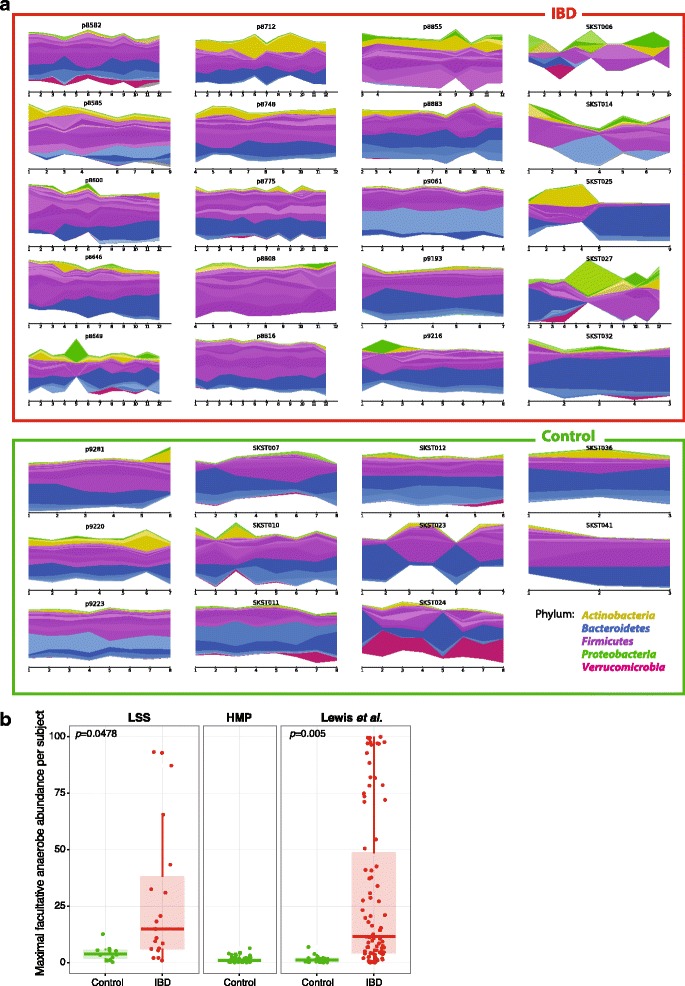
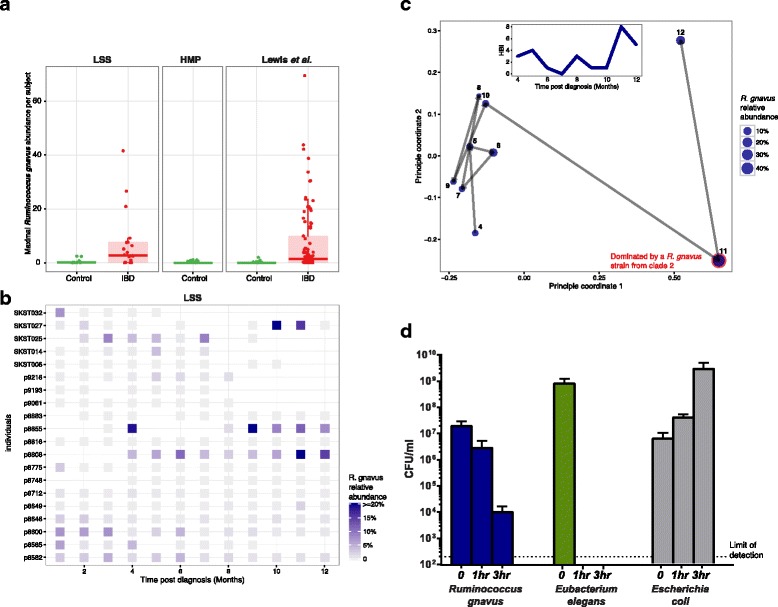
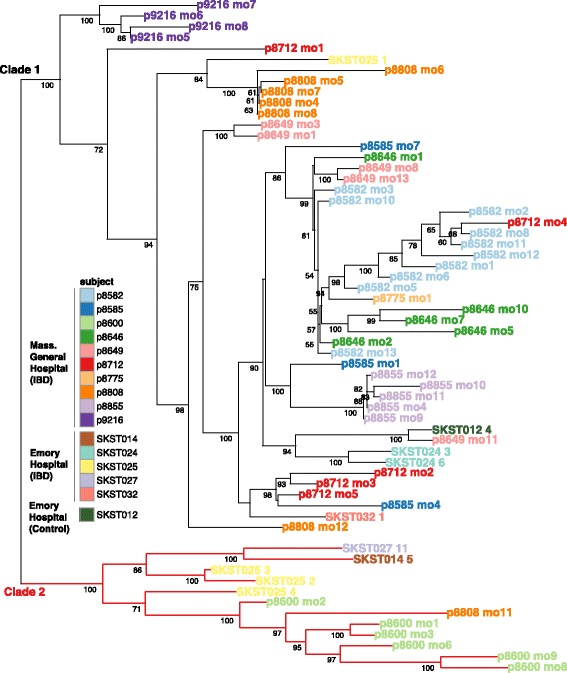
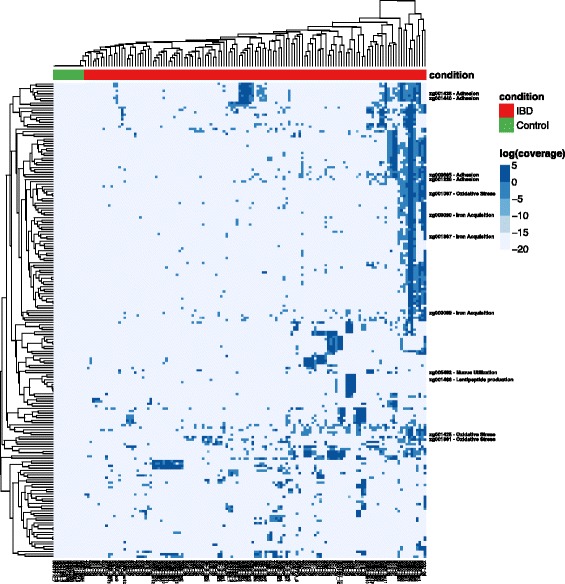
BACKGROUND: Inflammatory bowel disease (IBD) is characterized by chronic inflammation of the gastrointestinal tract that is associated with changes in the gut microbiome. Here, we sought to identify strain-specific functional correlates with IBD outcomes. METHODS: We performed metagenomic sequencing of monthly stool samples from 20 IBD patients and 12 controls (266 total samples). These were taxonomically profiled with MetaPhlAn2 and functionally profiled using HUMAnN2. Differentially abundant species were identified using MaAsLin and strain-specific pangenome haplotypes were analyzed using PanPhlAn. RESULTS: We found a significantly higher abundance in patients of facultative anaerobes that can tolerate the increased oxidative stress of the IBD gut. We also detected dramatic, yet transient, blooms of Ruminococcus gnavus in IBD patients, often co-occurring with increased disease activity. We identified two distinct clades of R. gnavus strains, one of which is enriched in IBD patients. To study functional differences between these two clades, we augmented the R. gnavus pangenome by sequencing nine isolates from IBD patients. We identified 199 IBD-specific, strain-specific genes involved in oxidative stress responses, adhesion, iron-acquisition, and mucus utilization, potentially conferring an adaptive advantage for this R. gnavus clade in the IBD gut. CONCLUSIONS: This study adds further evidence to the hypothesis that increased oxidative stress may be a major factor shaping the dysbiosis of the microbiome observed in IBD and suggests that R. gnavus may be an important member of the altered gut community in IBD.
Overview
The claims and statistics of this paper haven’t been checked yet.
Free: it reads the open-access text and checks the first 5 claims that cite a source we can check. Create a free account to check every claim.
Integrity signals
Registry
Cites
Statistics
Figures
Verification
Claims the paper makes
The claims and statistics of this paper haven’t been checked yet.
Free: it reads the open-access text and checks the first 5 claims that cite a source we can check. Create a free account to check every claim.
Claims other papers make about this one
Each is checked against this paper’s own text: does it say what the citing paper says it does?
The cited source says what the claim attributes to it.
In the citing paper
“whereas the presence of Ruminococcus gnavus as a biomarker of nonresponders in PRIMM-UK is in line with multiple reports of its association with poor cardiometabolic health20 and several diseases24–26.”
From Cross-cohort gut microbiome associations with immune checkpoint inhibitor response in advanced melanoma (2022) · cites this paper as [24]
Self-check
Percentages, sums and reported differences re-computed from the paper’s own numbers.
The self-check needs the paper’s full text.
Citations
Cites
Structure, function and diversity of the healthy human microbiome
The Human Microbiome Project Consortium (2012) · Nature · doi:10.1038/nature11234 · Cited by 11,726
Self-citationThe Treatment-Naive Microbiome in New-Onset Crohn’s Disease
Gevers, D., Kugathasan, S., Denson, L. A., Vázquez-Baeza, Y., Van Treuren, W., Ren, B., Schwager, E., Knights, D., Song, S. J., Yassour, M., et al. (2014) · Cell Host & Microbe · doi:10.1016/j.chom.2014.02.005 · Cited by 3,220 · cited 1×
“[20] cohort may be due to a combination of age (20–66 years here, 3–17 years in Gevers et al.”
BackgroundSelf-citationDysfunction of the intestinal microbiome in inflammatory bowel disease and treatment
Morgan, X. C., Tickle, T. L., Sokol, H., Gevers, D., Devaney, K. L., Ward, D. V., Reyes, J. A., Shah, S. A., LeLeiko, N., Snapper, S. B., et al. (2012) · Genome Biology · doi:10.1186/gb-2012-13-9-r79 · Cited by 2,713 · cited 1×
“Additionally, the gut microbiome in IBD shows dysbiosis characterized by increased abundance of functional pathways involved in the microbial response to oxidative stress [5].”
BackgroundSelf-citationGenetics and pathogenesis of inflammatory bowel disease
Khor, B., Gardet, A., & Xavier, R. J. (2011) · Nature · doi:10.1038/nature10209 · Cited by 2,614
Self-citationMetaPhlAn2 for enhanced metagenomic taxonomic profiling
Truong, D. T., Franzosa, E. A., Tickle, T. L., Scholz, M., Weingart, G., Pasolli, E., Tett, A., Huttenhower, C., & Segata, N. (2015) · Nature Methods · doi:10.1038/nmeth.3589 · Cited by 2,185 · cited 4×
“Community composition was calculated with MetaPhlan2 [16] using the default settings.”
MethodInfluentialSelf-citationThe Long-Term Stability of the Human Gut Microbiota
Faith, J. J., Guruge, J. L., Charbonneau, M., Subramanian, S., Seedorf, H., Goodman, A. L., Clemente, J. C., Knight, R., Heath, A. C., Leibel, R. L., et al. (2013) · Science · doi:10.1126/science.1237439 · Cited by 2,058
Metabolic Reconstruction for Metagenomic Data and Its Application to the Human Microbiome
Abubucker, S., Segata, N., Goll, J., Schubert, A. M., Izard, J., Cantarel, B. L., Rodriguez-Mueller, B., Zucker, J., Thiagarajan, M., Henrissat, B., et al. (2012) · PLoS Computational Biology · doi:10.1371/journal.pcbi.1002358 · Cited by 1,056 · cited 1×
“Functional and pathway composition was calculated with HUMANn2 [17] using the UniRef90 database with default settings.”
MethodSelf-citationYassour, M., Vatanen, T., Siljander, H., Hämäläinen, A.-M., Härkönen, T., Ryhänen, S. J., Franzosa, E. A., Vlamakis, H., Huttenhower, C., Gevers, D., et al. (2016) · Science Translational Medicine · doi:10.1126/scitranslmed.aad0917 · Cited by 1,043 · cited 4×
“(XLSX 9 kb) Additional file 6: Figure S1.”
BackgroundInfluentialSelf-citationCorrelation between intraluminal oxygen gradient and radial partitioning of intestinal microbiota
Albenberg, L., Esipova, T. V., Judge, C. P., Bittinger, K., Chen, J., Laughlin, A., Grunberg, S., Baldassano, R. N., Lewis, J. D., Li, H., et al. (2014) · Gastroenterology · doi:10.1053/j.gastro.2014.07.020 · Cited by 886 · cited 1×
“[18] and expanded for abundant genera in our samples (Additional file 2: Table S2).”
BackgroundMicrobial strain-level population structure and genetic diversity from metagenomes
Truong, D. T., Tett, A., Pasolli, E., Huttenhower, C., & Segata, N. (2017) · Genome Research · doi:10.1101/gr.216242.116 · Cited by 839 · cited 6×
“While strain-level profiling using StrainPhlAn was carried out for 72 species of the gut microbiome with sufficient coverage, R. gnavus was the only species detected to have an IBD-specific strain.”
MethodInfluentialSelf-citation
Cited by
Multi-omics of the gut microbial ecosystem in inflammatory bowel diseases
Lloyd-Price, J., Arze, C., Ananthakrishnan, A. N., Schirmer, M., Avila-Pacheco, J., Poon, T. W., Andrews, E., Ajami, N. J., Bonham, K. S., Brislawn, C. J., et al. (2019) · Nature · doi:10.1038/s41586-019-1237-9 · Cited by 3,143
Self-citationGut microbiota-derived metabolites as key actors in inflammatory bowel disease
Lavelle, A., & Sokol, H. (2020) · Nature Reviews Gastroenterology & Hepatology · doi:10.1038/s41575-019-0258-z · Cited by 2,015
Role of gut microbiota in type 2 diabetes pathophysiology
Gurung, M., Li, Z., You, H., Rodrigues, R., Jump, D. B., Morgun, A., & Shulzhenko, N. (2020) · EBioMedicine · doi:10.1016/j.ebiom.2019.11.051 · Cited by 1,708
“Potentially detrimental microbes in T2D (pathobionts), like Fusobacterium nucleatum and Ruminococcus gnavus can increase several inflammatory cytokines, albeit in other inflammatory diseases [103,104].”
BackgroundBlanco-Míguez, A., Beghini, F., Cumbo, F., McIver, L. J., Thompson, K. N., Zolfo, M., Manghi, P., Dubois, L., Huang, K. D., Thomas, A. M., et al. (2023) · Nature Biotechnology · doi:10.1038/s41587-023-01688-w · Cited by 1,442
Self-citationThe Integrative Human Microbiome Project
The Integrative HMP (iHMP) Research Network Consortium, Proctor, L. M., Creasy, H. H., Fettweis, J. M., Lloyd-Price, J., Mahurkar, A., Zhou, W., Buck, G. A., Snyder, M. P., Strauss, J. F., et al. (2019) · Nature · doi:10.1038/s41586-019-1238-8 · Cited by 1,381
Self-citationYeoh, Y. K., Zuo, T., Lui, G. C.-Y., Zhang, F., Liu, Q., Li, A. Y., Chung, A. C., Cheung, C. P., Tso, E. Y., Fung, K. S., et al. (2021) · Gut · doi:10.1136/gutjnl-2020-323020 · Cited by 1,317
“R. gnavus and R. torques in the gut have been reported to co-occur with inflammatory bowel disease, 34 35 and B. dorei and B. vulgatus are implicated in several inflammatory gut diseases such as irritable bowel disease and ulcerative colitis.”
Oliphant, K., & Allen-Vercoe, E. (2019) · Microbiome · doi:10.1186/s40168-019-0704-8 · Cited by 1,327
Gut Microbiome: Profound Implications for Diet and Disease
Hills, R., Pontefract, B., Mishcon, H., Black, C., Sutton, S., & Theberge, C. (2019) · Nutrients · doi:10.3390/nu11071613 · Cited by 1,092
Asnicar, F., Berry, S. E., Valdes, A. M., Nguyen, L. H., Piccinno, G., Drew, D. A., Leeming, E., Gibson, R., Le Roy, C., Khatib, H. A., et al. (2021) · Nature Medicine · doi:10.1038/s41591-020-01183-8 · Cited by 995
Self-citationMicrobial genes and pathways in inflammatory bowel disease
Schirmer, M., Garner, A., Vlamakis, H., & Xavier, R. J. (2019) · Nature Reviews Microbiology · doi:10.1038/s41579-019-0213-6 · Cited by 956
Self-citationHenke, M. T., Kenny, D. J., Cassilly, C. D., Vlamakis, H., Xavier, R. J., & Clardy, J. (2019) · Proceedings of the National Academy of Sciences · doi:10.1073/pnas.1904099116 · Cited by 812
“gnavus levels peak at 69% of the gut microbiota (3).”
BackgroundSelf-citationHuman gut microbiota in health and disease: Unveiling the relationship
Afzaal, M., Saeed, F., Shah, Y. A., Hussain, M., Rabail, R., Socol, C. T., Hassoun, A., Pateiro, M., Lorenzo, J. M., Rusu, A. V., et al. (2022) · Frontiers in Microbiology · doi:10.3389/fmicb.2022.999001 · Cited by 762
“nucleatum positive cancer, indicating that the gut microbiome may be a significant mediator between dietary and colorectal cancer interactions (Hall et al., 2017).”
BackgroundThe Gut Microbiota in Inflammatory Bowel Disease
Qiu, P., Ishimoto, T., Fu, L., Zhang, J., Zhang, Z., & Liu, Y. (2022) · Frontiers in Cellular and Infection Microbiology · doi:10.3389/fcimb.2022.733992 · Cited by 591
Bolte, L. A., Vich Vila, A., Imhann, F., Collij, V., Gacesa, R., Peters, V., Wijmenga, C., Kurilshikov, A., Campmans-Kuijpers, M. J. E., Fu, J., et al. (2021) · Gut · doi:10.1136/gutjnl-2020-322670 · Cited by 595
Human gut bacteria produce ΤΗ17-modulating bile acid metabolites
Paik, D., Yao, L., Zhang, Y., Bae, S., D’Agostino, G. D., Zhang, M., Kim, E., Franzosa, E. A., Avila-Pacheco, J., Bisanz, J. E., et al. (2022) · Nature · doi:10.1038/s41586-022-04480-z · Cited by 594
Self-citationParamsothy, S., Nielsen, S., Kamm, M. A., Deshpande, N. P., Faith, J. J., Clemente, J. C., Paramsothy, R., Walsh, A. J., van den Bogaerde, J., Samuel, D., et al. (2019) · Gastroenterology · doi:10.1053/j.gastro.2018.12.001 · Cited by 512
Immunological mechanisms of inflammatory diseases caused by gut microbiota dysbiosis: A review
Zhao, M., Chu, J., Feng, S., Guo, C., Xue, B., He, K., & Li, L. (2023) · Biomedicine & Pharmacotherapy · doi:10.1016/j.biopha.2023.114985 · Cited by 458
Sorbara, M. T., & Pamer, E. G. (2022) · Nature Reviews Microbiology · doi:10.1038/s41579-021-00667-9 · Cited by 468
Whole-Virome Analysis Sheds Light on Viral Dark Matter in Inflammatory Bowel Disease
Clooney, A. G., Sutton, T. D. S., Shkoporov, A. N., Holohan, R. K., Daly, K. M., O’Regan, O., Ryan, F. J., Draper, L. A., Plevy, S. E., Ross, R. P., et al. (2019) · Cell Host & Microbe · doi:10.1016/j.chom.2019.10.009 · Cited by 452
Lee, K. A., Thomas, A. M., Bolte, L. A., Björk, J. R., de Ruijter, L. K., Armanini, F., Asnicar, F., Blanco-Miguez, A., Board, R., Calbet-Llopart, N., et al. (2022) · Nature Medicine · doi:10.1038/s41591-022-01695-5 · Cited by 464
Fight them or feed them: How the intestinal mucus layer manages the gut microbiota
Schroeder, B. O. (2019) · Gastroenterology report · doi:10.1093/gastro/goy052 · Cited by 464
“12 months identified a novel Ruminococcus gnavus clade that was transiently enriched in IBD patients [91].”
BackgroundMłynarska, E., Czarnik, W., Dzieża, N., Jędraszak, W., Majchrowicz, G., Prusinowski, F., Stabrawa, M., Rysz, J., & Franczyk, B. (2025) · International Journal of Molecular Sciences · doi:10.3390/ijms26031094 · Cited by 328
“…such as Fusobacterium nucleatum and Ruminococcus gnavus , which are associated with T2DM, partake in increasing the synthesis of inflammatory cytokines, which play a role in the development of diabetes, as well as in other diseases like colorectal cancer and inflammatory bowel disease [71,72].”
The Gut Microbiome and Inflammatory Bowel Diseases
Shan, Y., Lee, M., & Chang, E. B. (2022) · Annual Review of Medicine · doi:10.1146/annurev-med-042320-021020 · Cited by 413
Lupus nephritis is linked to disease-activity associated expansions and immunity to a gut commensal
Azzouz, D., Omarbekova, A., Heguy, A., Schwudke, D., Gisch, N., Rovin, B. H., Caricchio, R., Buyon, J. P., Alekseyenko, A. V., & Silverman, G. J. (2019) · Annals of the Rheumatic Diseases · doi:10.1136/annrheumdis-2018-214856 · Cited by 436
Precision Nutrition and the Microbiome, Part I: Current State of the Science
Mills, S., Stanton, C., Lane, J., Smith, G., & Ross, R. (2019) · Nutrients · doi:10.3390/nu11040923 · Cited by 399
Sorbara, M. T., Littmann, E. R., Fontana, E., Moody, T. U., Kohout, C. E., Gjonbalaj, M., Eaton, V., Seok, R., Leiner, I. M., & Pamer, E. G. (2020) · Cell Host & Microbe · doi:10.1016/j.chom.2020.05.005 · Cited by 415
The gut microbiota and its biogeography
McCallum, G., & Tropini, C. (2024) · Nature Reviews Microbiology · doi:10.1038/s41579-023-00969-0 · Cited by 329
“Over the first 12 months of life, the appearance of new genera such as Ruminococcus , Roseburia , Coprococcus and Faecalibacterium mark the maturation of the microbiome in humans 63 .”
InfluentialRuminococcus gnavus : friend or foe for human health
Crost, E. H., Coletto, E., Bell, A., & Juge, N. (2023) · FEMS Microbiology Reviews · doi:10.1093/femsre/fuad014 · Cited by 335
“In addition, while R. gnavus ATCC 29149 is unable to grow in the presence of oxygen, it did demonstrate some tolerance to atmospheric oxygen with 10%–15% of cells remaining viable after exposure to oxygen for 1 hour, falling to around 0.05%–0.1% after 3 hours (Hall et al. 2017).”
BackgroundInfluentialGut Microbiota Regulation of T Cells During Inflammation and Autoimmunity
Brown, E. M., Kenny, D. J., & Xavier, R. J. (2019) · Annual Review of Immunology · doi:10.1146/annurev-immunol-042718-041841 · Cited by 312
Self-citationMining the microbiota for microbial and metabolite-based immunotherapies
Skelly, A. N., Sato, Y., Kearney, S., & Honda, K. (2019) · Nature Reviews Immunology · doi:10.1038/s41577-019-0144-5 · Cited by 306
A bacterial bile acid metabolite modulates Treg activity through the nuclear hormone receptor NR4A1
Li, W., Hang, S., Fang, Y., Bae, S., Zhang, Y., Zhang, M., Wang, G., McCurry, M. D., Bae, M., Paik, D., et al. (2021) · Cell Host & Microbe · doi:10.1016/j.chom.2021.07.013 · Cited by 306
Self-citationSchirmer, M., Denson, L., Vlamakis, H., Franzosa, E. A., Thomas, S., Gotman, N. M., Rufo, P., Baker, S. S., Sauer, C., Markowitz, J., et al. (2018) · Cell Host & Microbe · doi:10.1016/j.chom.2018.09.009 · Cited by 293
“Increased oxygen levels in the IBD gut may favor expansion of aerotolerant bacteria from the oral cavity and facilitate strain-specific niche adaptation (Atarashi et al., 2017; Hall et al., 2017; Lloyd-Price et al., 2017).”
BackgroundSelf-citationMolinaro, A., Bel Lassen, P., Henricsson, M., Wu, H., Adriouch, S., Belda, E., Chakaroun, R., Nielsen, T., Bergh, P.-O., Rouault, C., et al. (2020) · Nature Communications · doi:10.1038/s41467-020-19589-w · Cited by 271
Revisit gut microbiota and its impact on human health and disease
Ding, R.-X., Goh, W.-R., Wu, R.-N., Yue, X.-Q., Luo, X., Khine, W. W. T., Wu, J.-R., & Lee, Y.-K. (2019) · Journal of Food and Drug Analysis · doi:10.1016/j.jfda.2018.12.012 · Cited by 268
“Ruminococcus gnavus abundance is also found to be elevated in IBD and certain strains may have evolved to thrive in IBD gut environment through mechanisms of oxidative stress responses [51].”
BackgroundThe microbiome in inflammatory bowel diseases: from pathogenesis to therapy
Liu, S., Zhao, W., Lan, P., & Mou, X. (2021) · Protein & Cell · doi:10.1007/s13238-020-00745-3 · Cited by 263
Microbiome risk profiles as biomarkers for inflammatory and metabolic disorders
Metwaly, A., Reitmeier, S., & Haller, D. (2022) · Nature Reviews Gastroenterology & Hepatology · doi:10.1038/s41575-022-00581-2 · Cited by 264
Application of magnetic nanoparticles in nucleic acid detection
Tang, C., He, Z., Liu, H., Xu, Y., Huang, H., Yang, G., Xiao, Z., Li, S., Liu, H., Deng, Y., et al. (2020) · Journal of Nanobiotechnology · doi:10.1186/s12951-020-00613-6 · Cited by 262
Wu, Y., Jha, R., Li, A., Liu, H., Zhang, Z., Zhang, C., Zhai, Q., & Zhang, J. (2022) · Microbiology Spectrum · doi:10.1128/spectrum.01651-22 · Cited by 239
“Humann2 was used to analyze the diversity of the mouse gut microbiota and the composition of the microbiota at the species level (78).”
MethodMicrobiota in inflammatory bowel disease: mechanisms of disease and therapeutic opportunities
Iliev, I. D., Ananthakrishnan, A. N., & Guo, C.-J. (2025) · Nature Reviews Microbiology · doi:10.1038/s41579-025-01163-0 · Cited by 249
“Findings based on comprehensive analysis and leverage of such new technologies reveal that key microbial and host-related microbiome functions are maintained by multiple species and strains 36,37 .”
Self-citationLee, J. W. J., Plichta, D., Hogstrom, L., Borren, N. Z., Lau, H., Gregory, S. M., Tan, W., Khalili, H., Clish, C., Vlamakis, H., et al. (2021) · Cell Host & Microbe · doi:10.1016/j.chom.2021.06.019 · Cited by 228
Self-citationGilliland, A., Chan, J. J., De Wolfe, T. J., Yang, H., & Vallance, B. A. (2024) · Gastroenterology · doi:10.1053/j.gastro.2023.09.019 · Cited by 227
Yu, S., Balasubramanian, I., Laubitz, D., Tong, K., Bandyopadhyay, S., Lin, X., Flores, J., Singh, R., Liu, Y., Macazana, C., et al. (2020) · Immunity · doi:10.1016/j.immuni.2020.07.010 · Cited by 235
“gnavus to test this hypothesis due to its expansion in IBD patients (Hall et al., 2017; Joossens et al., 2011; Sartor and Mazmanian, 2012; Willing et al., 2010).”
BackgroundAging, Frailty, and the Microbiome—How Dysbiosis Influences Human Aging and Disease
Haran, J. P., & McCormick, B. A. (2021) · Gastroenterology · doi:10.1053/j.gastro.2020.09.060 · Cited by 216
Vatanen, T., Plichta, D. R., Somani, J., Münch, P. C., Arthur, T. D., Hall, A. B., Rudolf, S., Oakeley, E. J., Ke, X., Young, R. A., et al. (2018) · Nature Microbiology · doi:10.1038/s41564-018-0321-5 · Cited by 225
Self-citationAltered Gut Microbiome Profile in Patients With Pulmonary Arterial Hypertension
Kim, S., Rigatto, K., Gazzana, M. B., Knorst, M. M., Richards, E. M., Pepine, C. J., & Raizada, M. K. (2020) · Hypertension · doi:10.1161/hypertensionaha.119.14294 · Cited by 213
Zhai, L., Huang, C., Ning, Z., Zhang, Y., Zhuang, M., Yang, W., Wang, X., Wang, J., Zhang, L., Xiao, H., et al. (2023) · Cell Host & Microbe · doi:10.1016/j.chom.2022.11.006 · Cited by 205
De Filippis, F., Paparo, L., Nocerino, R., Della Gatta, G., Carucci, L., Russo, R., Pasolli, E., Ercolini, D., & Berni Canani, R. (2021) · Nature Communications · doi:10.1038/s41467-021-26266-z · Cited by 206
Metabolite profiling of human‐originated Lachnospiraceae at the strain level
Abdugheni, R., Wang, W., Wang, Y., Du, M., Liu, F., Zhou, N., Jiang, C., Wang, C., Wu, L., Ma, J., et al. (2022) · iMeta · doi:10.1002/imt2.58 · Cited by 188
“Increased abundances of Blautia species and Mediterraneibacter gnavus were observed in subjects with inflammatory bowel disease and primary sclerosing cholangitis [29, 32], although other studies reported contradictory results [33, 34].”
ResultA Reverse Ecology Approach Based on a Biological Definition of Microbial Populations
Arevalo, P., VanInsberghe, D., Elsherbini, J., Gore, J., & Polz, M. F. (2019) · Cell · doi:10.1016/j.cell.2019.06.033 · Cited by 200
“gnavusmay be differentially associated with IBD patients (Hall et al., 2017).”
Lamas, B., Martins Breyner, N., & Houdeau, E. (2020) · Particle and Fibre Toxicology · doi:10.1186/s12989-020-00349-z · Cited by 174
Aldars-García, L., Chaparro, M., & Gisbert, J. P. (2021) · Microorganisms · doi:10.3390/microorganisms9050977 · Cited by 178
Correlation between human gut microbiome and diseases
Madhogaria, B., Bhowmik, P., & Kundu, A. (2022) · Infectious Medicine · doi:10.1016/j.imj.2022.08.004 · Cited by 202
Faecal metabolome and its determinants in inflammatory bowel disease
Vila, A. V., Hu, S., Andreu‐Sánchez, S., Collij, V., Jansen, B. H., Augustijn, H. E., Bolte, L. A., Ruigrok, R. A. A. A., Abu-Ali, G., Giallourakis, C. C., et al. (2023) · Gut · doi:10.1136/gutjnl-2022-328048 · Cited by 206
“Next, we investigated the correlation between gut microbiota and metabolites while correcting for disease phenotypes (non-IBD, CD or UC) and dysbiotic status (yes/no) (see online supplemental methods).”
InfluentialRole of gut microbiota in intestinal wound healing and barrier function
Alam, A., & Neish, A. (2018) · Tissue Barriers · doi:10.1080/21688370.2018.1539595 · Cited by 166
“Microbial effects on the pathogenesis of intestinal inflammation and colitis Although the precise cause of IBD remains unknown, the most accepted hypothesis of IBD pathogenesis is that an aberrant immune response against the gut commensal is elicited by environmental factors in a genetically susceptible host.12,13,104…”
BackgroundInfluentialMa, S., Shungin, D., Mallick, H., Schirmer, M., Nguyen, L. H., Kolde, R., Franzosa, E., Vlamakis, H., Xavier, R., & Huttenhower, C. (2022) · Genome biology · doi:10.1186/s13059-022-02753-4 · Cited by 164
“Metadata were obtained either directly from the sequence repository/manuscript (Herfarth, Jasson-Lamendella, HMP2, MucosalIBD, PROTECT, RISK), or from collaborators (BIDMC-FMT, CS-PRISM, LSS-PRISM, Pouchitis).”
InfluentialSelf-citationLavoie, S., Conway, K. L., Lassen, K. G., Jijon, H. B., Pan, H., Chun, E., Michaud, M., Lang, J. K., Gallini, C. A., Dreyfuss, J. M., et al. (2019) · eLife · doi:10.7554/elife.39982 · Cited by 173
Self-citationNoninvasive, microbiome-based diagnosis of inflammatory bowel disease
Zheng, J., Sun, Q., Zhang, M., Liu, C., Su, Q., Zhang, L., Xu, Z., Lu, W., Ching, J. Y. L., Tang, W., et al. (2024) · Nature Medicine · doi:10.1038/s41591-024-03280-4 · Cited by 180
Impact of Microbial Metabolites on Microbiota–Gut–Brain Axis in Inflammatory Bowel Disease
Banfi, D., Moro, E., Bosi, A., Bistoletti, M., Cerantola, S., Crema, F., Maggi, F., Giron, M. C., Giaroni, C., & Baj, A. (2021) · International Journal of Molecular Sciences · doi:10.3390/ijms22041623 · Cited by 174
“Inflammation promotes mucosal oxidative stress, which may shape the indigenous microbial community favoring the growth of facultative anaerobes aerotolerant, such as Ruminococcus gnavus, which is considered an important member of the altered microbial gut community in IBD [58].”
BackgroundKarcher, N., Nigro, E., Punčochář, M., Blanco-Míguez, A., Ciciani, M., Manghi, P., Zolfo, M., Cumbo, F., Manara, S., Golzato, D., et al. (2021) · Genome Biology · doi:10.1186/s13059-021-02427-7 · Cited by 159
Microbiota and mucosal defense in IBD: an update
Stange, E. F., & Schroeder, B. O. (2019) · Expert Review of Gastroenterology & Hepatology · doi:10.1080/17474124.2019.1671822 · Cited by 159
Vervier, K., Moss, S., Kumar, N., Adoum, A., Barne, M., Browne, H. P., Kaser, A., Kiely, C. J., Neville, A., Powell, N., et al. (2021) · Gut · doi:10.1136/gutjnl-2021-325177 · Cited by 165
“perfringens) and a pathobiont associated with ulcerative colitis (Faecalicatena gnavus, previously named Ruminococcus gnavus[44]).”
Strain-level epidemiology of microbial communities and the human microbiome
Yan, Y., Nguyen, L. H., Franzosa, E. A., & Huttenhower, C. (2020) · Genome Medicine · doi:10.1186/s13073-020-00765-y · Cited by 167
Self-citationA microbial metabolite remodels the gut-liver axis following bariatric surgery
Chaudhari, S. N., Luo, J. N., Harris, D. A., Aliakbarian, H., Yao, L., Paik, D., Subramaniam, R., Adhikari, A. A., Vernon, A. H., Kiliç, A., et al. (2021) · Cell Host & Microbe · doi:10.1016/j.chom.2020.12.004 · Cited by 138
“BBL vitamin K1-hemin solution (BD), 1% trace minerals solution (ATCC), 1% trace vitamins solution (ATCC), 5% fetal bovine serum (FBS) (Hyclone), 1 g l−1 cellubiose, 1 g l −1 maltose and 1 g l−1 fructose (Hall et al., 2017).”
BackgroundSignatures within the esophageal microbiome are associated with host genetics, age, and disease
Deshpande, N., Riordan, S. M., Castaño‐Rodríguez, N., Wilkins, M. R., & Kaakoush, N. O. (2018) · Microbiome · doi:10.1186/s40168-018-0611-4 · Cited by 151
“HUMAnN2 (HMP Unified Metabolic Analysis Network) [39] was used to determine the metabolic contributions within the samples.”
MethodThe Interaction of the Gut Microbiota with the Mucus Barrier in Health and Disease in Human
Corfield, A. P. (2018) · Microorganisms · doi:10.3390/microorganisms6030078 · Cited by 133
Bell, A., Brunt, J., Crost, E., Vaux, L., Nepravishta, R., Owen, C. D., Latousakis, D., Xiao, A., Li, W., Chen, X., et al. (2019) · Nature Microbiology · doi:10.1038/s41564-019-0590-7 · Cited by 136
Nishijima, S., Stankevič, E., Aasmets, O., Schmidt, T., Nagata, N., Keller, M. I., Ferretti, P., Juel, H. B., Fullam, A., Robbani, S. M., et al. (2024) · Cell · doi:10.1016/j.cell.2024.10.022 · Cited by 148
Capsular polysaccharide correlates with immune response to the human gut microbe Ruminococcus gnavus
Henke, M. T., Brown, E., Cassilly, C. D., Vlamakis, H. C., Xavier, R. J., & Clardy, J. (2021) · Proceedings of the National Academy of Sciences · doi:10.1073/pnas.2007595118 · Cited by 149
“RJX1119 was isolated from an infant treated with antibiotics (24), RJX1120 through RJX1127 were isolated from biopsies from IBD patients, and strain RJX1128 was isolated from feces of an IBD patient (10).”
InfluentialSelf-citationMa, W., Song, J., Wang, H., Shi, F., Zhou, N., Jiang, J., Xu, Y., Zhang, L., Yang, L., & Zhou, M. (2019) · Life Sciences · doi:10.1016/j.lfs.2019.04.006 · Cited by 134
Lagoumintzis, G., & Patrinos, G. P. (2023) · Human Genomics · doi:10.1186/s40246-023-00561-w · Cited by 132
Sokol, H., Brot, L., Stéfanescu, C., Auzolle, C., Barnich, N., Buisson, A., Fuméry, M., Pariente, B., Bourhis, L. L., Tréton, X., et al. (2019) · Gut · doi:10.1136/gutjnl-2019-318719 · Cited by 139
Coronary artery disease is associated with an altered gut microbiome composition
Toya, T., Corban, M. T., Marrietta, E., Horwath, I. E., Lerman, L. O., Murray, J. A., & Lerman, A. (2020) · PLOS ONE · doi:10.1371/journal.pone.0227147 · Cited by 130
Wu, R., Xiong, R., Li, Y., Chen, J., & Yan, R. (2023) · Journal of Autoimmunity · doi:10.1016/j.jaut.2023.103062 · Cited by 126
Rodríguez-Morató, J., Matthan, N. R., Liu, J., de la Torre, R., & Chen, C.-Y. O. (2018) · The Journal of Nutritional Biochemistry · doi:10.1016/j.jnutbio.2018.08.019 · Cited by 118
Yang, H., Guo, R., Li, S., Liang, F., Cheng, T., Zhao, X., Long, Y., Liu, F., Jiang, M., Zhang, Y., et al. (2020) · npj Biofilms and Microbiomes · doi:10.1038/s41522-020-00142-y · Cited by 124
Turpin, W., Dong, M., Sasson, G., Raygoza Garay, J. A., Espin-Garcia, O., Lee, S.-H., Neustaeter, A., Smith, M. I., Leibovitzh, H., Guttman, D. S., et al. (2022) · Gastroenterology · doi:10.1053/j.gastro.2022.05.037 · Cited by 116
Lordan, C., Roche, A. K., Delsing, D. J. M., Nauta, A., Groeneveld, A., MacSharry, J. A., Cotter, P. D., & van Sinderen, D. (2024) · Microbiology and Molecular Biology Reviews · doi:10.1128/mmbr.00094-23 · Cited by 134
“The exact role of R. gnavus in the intestine has not been fully elucidated as it is often referred to as a commensal (195), while a clade purportedly linked to inflammatory bowel disease in adults was also identified in infants (196).”
Backgroundvan Soest, A. P. M., Hermes, G. D. A., Berendsen, A. A. M., van de Rest, O., Zoetendal, E. G., Fuentes, S., Santoro, A., Franceschi, C., de Groot, L. C. P. G. M., & de Vos, W. M. (2020) · Nutrients · doi:10.3390/nu12113471 · Cited by 118
Diederen, K., Li, J. V., Donachie, G. E., de Meij, T. G. J., de Waart, D. R., Hakvoort, T. B. M., Kindermann, A., Wagner, J., Auyeung, V. P. W., Velde, A. A. T., et al. (2020) · Scientific Reports · doi:10.1038/s41598-020-75306-z · Cited by 130
Gut Microbiota and Metabolic Specificity in Ulcerative Colitis and Crohn's Disease
Sankarasubramanian, J., Ahmad, R., Avuthu, N., Singh, A. B., & Guda, C. (2020) · Frontiers in Medicine · doi:10.3389/fmed.2020.606298 · Cited by 114
“These datasets were retrieved from NCBI SRA SRP108708 (24) and SRP115812 (25), which consists of 157 and 300 samples, respectively.”
MethodFornelos, N., Franzosa, E. A., Bishai, J., Annand, J. W., Oka, A., Lloyd-Price, J., Arthur, T. D., Garner, A., Avila-Pacheco, J., Haiser, H. J., et al. (2020) · Nature Microbiology · doi:10.1038/s41564-019-0655-7 · Cited by 103
Self-citationInulin as a functional ingredient and their applications in meat products
Illippangama, A. U., Jayasena, D. D., Jo, C., & Mudannayake, D. C. (2021) · Carbohydrate Polymers · doi:10.1016/j.carbpol.2021.118706 · Cited by 117
Gut microbiome in chronic rheumatic and inflammatory bowel diseases: Similarities and differences
Salem, F., Kindt, N., Marchesi, J. R., Netter, P., Lopez, A., Kokten, T., Danese, S., Jouzeau, J.-Y., Peyrin-Biroulet, L., & Moulin, D. (2019) · United European Gastroenterology Journal · doi:10.1177/2050640619867555 · Cited by 103
“et al 2012 16S rRNA Sequencing T-RFLP analysis Faecal samples 10 CD 14 UC 27 Controls (4/6) (5/9) (12/15) (8-18) (8-15) (1-5) N/A - Parabacteroides, Bacteroides, Roseburia, Coprococcus , Blautia, Dorea, Ruminococcus, Oscillospira, Eubacteria, Dialister, Sutterella, Bilophila (↓CD) - Lactobacillus…”
InfluentialOlvera-Rosales, L.-B., Cruz-Guerrero, A.-E., Ramírez-Moreno, E., Quintero-Lira, A., Contreras-López, E., Jaimez-Ordaz, J., Castañeda-Ovando, A., Añorve-Morga, J., Calderón-Ramos, Z.-G., Arias-Rico, J., et al. (2021) · Foods · doi:10.3390/foods10061261 · Cited by 94
“Similarly, the presence of pathogenic microorganisms adhered to the intestinal wall of patients with irritable bowel syndrome has been manifested [67,69,70].”
BackgroundChang, C., Liao, Y.-C., Huang, C., Lin, C.-M., Cheung, C. H. Y., Ruan, J., Yu, W.-H., Tsai, Y.-T., Lin, I.-J., Huang, C., et al. (2021) · Cell Reports · doi:10.1016/j.celrep.2021.110016 · Cited by 113
Carbohydrate-active enzymes from Akkermansia muciniphila break down mucin O-glycans to completion
Bakshani, C. R., Ojuri, T. O., Pilgaard, B., Holck, J., McInnes, R. S., Kozak, R. P., Zakhour, M. I., Çakaj, S., Kerouedan, M., Newton, E., et al. (2025) · Nature Microbiology · doi:10.1038/s41564-024-01911-7 · Cited by 111
“However, disease states of the colon, which are on the rise, are typified by the mucosal layer being disrupted and changes in the proportion of mucinolytic bacteria 4,5 .”
Effects of ursodeoxycholic acid on the gut microbiome and colorectal adenoma development
Pearson, T., Caporaso, J. G., Yellowhair, M., Bokulich, N. A., Padi, M., Roe, D. J., Wertheim, B. C., Linhart, M., Martinez, J. A., Bilagody, C., et al. (2019) · Cancer Medicine · doi:10.1002/cam4.1965 · Cited by 105
Discovery of bioactive microbial gene products in inflammatory bowel disease
Zhang, Y., Bhosle, A., Bae, S., McIver, L. J., Pishchany, G., Accorsi, E. K., Thompson, K. N., Arze, C., Wang, Y., Subramanian, A., et al. (2022) · Nature · doi:10.1038/s41586-022-04648-7 · Cited by 100
Self-citationB cell superantigens in the human intestinal microbiota
Bunker, J. J., Drees, C., Watson, A. R., Plunkett, C. H., Nagler, C. R., Schneewind, O., Eren, A. M., & Bendelac, A. (2019) · Science Translational Medicine · doi:10.1126/scitranslmed.aau9356 · Cited by 103
Kim, J., Kwok, S., Choe, J., & Park, S. (2019) · International Journal of Molecular Sciences · doi:10.3390/ijms20194871 · Cited by 113
Unraveling the Role of the Human Gut Microbiome in Health and Diseases
Khalil, M., Ciaula, A. D., Mahdi, L., Jaber, N., Palo, D. M. D., Graziani, A., Baffy, G., & Portincasa, P. (2024) · Microorganisms · doi:10.3390/microorganisms12112333 · Cited by 114
“The abundance of Ruminococcus gnavus is also found to be higher in IBD [386], a potential marker of increased oxidative stress [387].”
Nilsen, M., Madelen Saunders, C., Leena Angell, I., Arntzen, M. Ø., Lødrup Carlsen, K. C., Carlsen, K.-H., Haugen, G., Heldal Hagen, L., Carlsen, M. H., Hedlin, G., et al. (2020) · Genes · doi:10.3390/genes11111245 · Cited by 94
“gnavus has been shown to increase with age, particularly in allergic infants [22].”
BackgroundAltered Skin and Gut Microbiome in Hidradenitis Suppurativa
McCarthy, S., Barrett, M., Kirthi, S., Pellanda, P., Vlckova, K., Tobin, A.-M., Murphy, M., Shanahan, F., & O’Toole, P. W. (2022) · Journal of Investigative Dermatology · doi:10.1016/j.jid.2021.05.036 · Cited by 98
StrainGE: a toolkit to track and characterize low-abundance strains in complex microbial communities
van Dijk, L. R., Walker, B. J., Straub, T. J., Worby, C. J., Grote, A., Schreiber, H. L., Anyansi, C., Pickering, A. J., Hultgren, S. J., Manson, A. L., et al. (2022) · Genome Biology · doi:10.1186/s13059-022-02630-0 · Cited by 99
“We have shown that our novel tool suite, StrainGE, works directly from primary specimen metagenomes to enable sensitive differentiation and nucleotide-level characterization of individual bacterial strains, at coverages typical of many clinically relevant bacteria (26–28).”
Profiling of tumour-associated microbiota in human hepatocellular carcinoma
Komiyama, S., Yamada, T., Takemura, N., Kokudo, N., Hase, K., & Kawamura, Y. I. (2021) · Scientific Reports · doi:10.1038/s41598-021-89963-1 · Cited by 96
Gut microbiota in pathophysiology, diagnosis, and therapeutics of inflammatory bowel disease
Pandey, H., Jain, D., Tang, D. W. T., Wong, S. H., & Lal, D. (2023) · Intestinal Research · doi:10.5217/ir.2023.00080 · Cited by 102
Mucus, commensals, and the immune system
Zhao, Q. S., & Maynard, C. L. (2022) · Gut Microbes · doi:10.1080/19490976.2022.2041342 · Cited by 102
“gnavus) is also significantly increased in both CD and UC, sometimes transiently reaching a relative abundance of greater than 50% of patient fecal bacteria and dominated by strains capable of surviving the oxidative stressors characteristic of the inflamed gut.(43,104,105) Therefore, like AIEC,(106) the expansion of…”
BackgroundHo, N. T., Li, F., Wang, S., & Kuhn, L. (2019) · BMC Bioinformatics · doi:10.1186/s12859-019-2744-2 · Cited by 96
Structural and functional characterization of the gut microbiota in elderly women with migraine
Chen, J., Wang, Q., Wang, A., & Lin, Z. (2020) · Frontiers in Cellular and Infection Microbiology · doi:10.3389/fcimb.2019.00470 · Cited by 89
Schirmer, M., Stražar, M., Ávila-Pacheco, J., Rojas‐Tapias, D. F., Brown, E., Temple, E. R., Deik, A., Bullock, K. H., Jeanfavre, S., Pierce, K. A., et al. (2024) · Cell Host & Microbe · doi:10.1016/j.chom.2023.12.013 · Cited by 96
Self-citation
Metadata
- Authors
- Hall, A. B., Yassour, M., Sauk, J., Garner, A., Jiang, X., Arthur, T., Lagoudas, G. K., Vatanen, T., Fornelos, N., Wilson, R., Bertha, M., Cohen, M., Garber, J., Khalili, H., Gevers, D., Ananthakrishnan, A. N., Kugathasan, S., Lander, E. S., Blainey, P., Vlamakis, H., Xavier, R. J., & Huttenhower, C.
- Affiliations
- Broad Institute (US)
- Harvard University (US)
- Emory University (US)
- Corresponding author
- Xavier, Ramnik J.
- Huttenhower, Curtis
- ORCID
- Venue
- Genome Medicine
- Published
- 2017-11-28
- Volume
- 9
- Issue
- 1
- Pages
- 103-103
- ISSN
- 1756-994X (ISSN-L)
- PMC
- PMC5704459
- OpenAlex
- W2769664962
- Cited by
- 777
- References
- 33
- Citations by year
- 2026: 74 · 2025: 115 · 2024: 134 · 2023: 110 · 2022: 106 · 2021: 96 · 2020: 69 · 2019: 55 · 2018: 16
- FWCI
- 15.64
- Type
- journal article
- Language
- en
- Open access
- gold
- doi.org
- Licence
- cc-by
- creativecommons.org/licenses/by/4.0/ (tdm)
- creativecommons.org/licenses/by/4.0/ (vor)
- Locations
- Genome Medicine (publishedVersion, cc-by)
- Europe PMC (PubMed Central) (publishedVersion, cc-by)
- PubMed Central (publishedVersion, cc-by)
- PubMed (publishedVersion)
- Digital Access to Scholarship at Harvard (DASH) (Harvard University) (submittedVersion, cc-by)
- DOAJ (DOAJ: Directory of Open Access Journals) (submittedVersion)
- ResearchSpace (University of Auckland) (submittedVersion, cc-by)
- Funders
- National Institutes of Health (U54DE023798)
- National Science Foundation (MCB-1453942)
- Crohn's and Colitis Foundation of America
- Helen Hay Whitney Foundation
- Charles A. King Trust
- Klarman Family Foundation
- National Institute of Diabetes and Digestive and Kidney Diseases (R01DK92405, P30DK43351)
- Topics
- Life Sciences › Biochemistry, Genetics and Molecular Biology › Molecular Biology › Gut microbiota and health
- Health Sciences › Medicine › Gastroenterology › Inflammatory Bowel Disease
- Health Sciences › Medicine › Infectious Diseases › Clostridium difficile and Clostridium perfringens research
- Keywords
- Ruminococcus gnavus, inflammatory bowel disease, gut microbiota, strain-specific genes, pan-genome, oxidative stress response, facultative anaerobes, iron acquisition, adhesion genes, dysbiosis, disease activity
- MeSH terms
- Gastrointestinal Microbiome, Adult, Aged, Feces, Humans, Middle Aged, Phylogeny, Species Specificity, Inflammatory Bowel Diseases, Genome, Bacterial, Oxidative Stress, Ruminococcus, Young Adult
About these checks
Registry, retraction, Cites and statistics results are computed, not judged, with one exception: a printed reference that no index lists is read once by a model before it counts as a citation error. Claims are extracted by a model and kept only when their quote appears verbatim in the text; each cited source is then checked, with a model’s help, for whether it says what the claim relies on. Those verdicts can be wrong — read the claim’s quote and the cited source before relying on one.
Statistics and arithmetic are recomputed, not judged.
Confidence bands are shown only for fields calibrated on our annotated test set. None is calibrated yet, so no band is shown.
What counts as a claim ›How we measure confidence ›How we check this ›
Are you an author, or do you see a problem with this page? Request a review
Data sources
Bibliographic data: Semantic Scholar, OpenAlex, Crossref.
Contains information from the Semantic Scholar Academic Graph Datasets, made available under the ODC Attribution License (ODC-BY 1.0).
Semantic Scholar’s data is described in: Kinney, R., et al. (2023). The Semantic Scholar Open Data Platform. arXiv:2301.10140.
