

A novel Ruminococcus gnavus clade enriched in inflammatory bowel disease patients
Open accessThe DOI matches its Crossref record; 33 of the 33 references it cites were found in a registry or an index.
Abstract
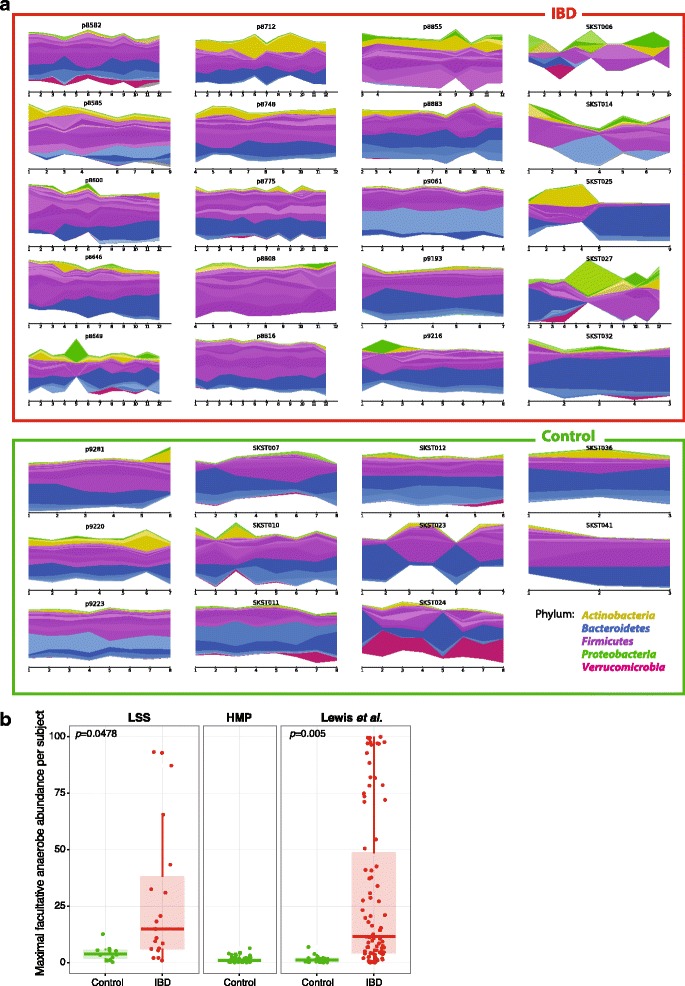
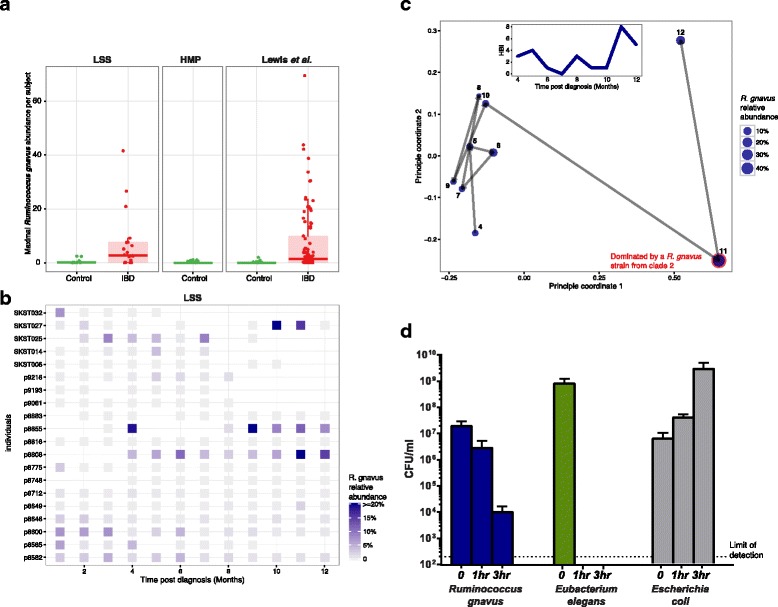
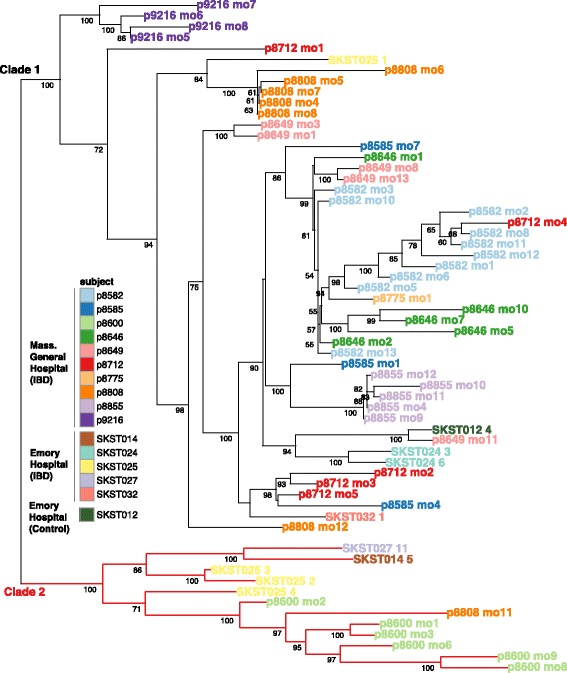
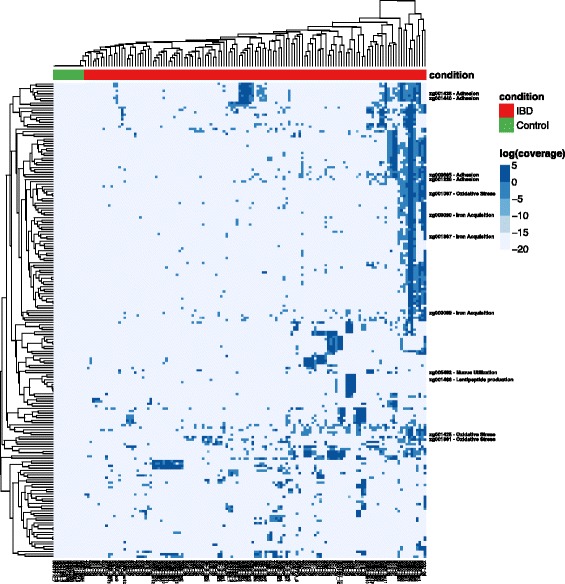
BACKGROUND: Inflammatory bowel disease (IBD) is characterized by chronic inflammation of the gastrointestinal tract that is associated with changes in the gut microbiome. Here, we sought to identify strain-specific functional correlates with IBD outcomes. METHODS: We performed metagenomic sequencing of monthly stool samples from 20 IBD patients and 12 controls (266 total samples). These were taxonomically profiled with MetaPhlAn2 and functionally profiled using HUMAnN2. Differentially abundant species were identified using MaAsLin and strain-specific pangenome haplotypes were analyzed using PanPhlAn. RESULTS: We found a significantly higher abundance in patients of facultative anaerobes that can tolerate the increased oxidative stress of the IBD gut. We also detected dramatic, yet transient, blooms of Ruminococcus gnavus in IBD patients, often co-occurring with increased disease activity. We identified two distinct clades of R. gnavus strains, one of which is enriched in IBD patients. To study functional differences between these two clades, we augmented the R. gnavus pangenome by sequencing nine isolates from IBD patients. We identified 199 IBD-specific, strain-specific genes involved in oxidative stress responses, adhesion, iron-acquisition, and mucus utilization, potentially conferring an adaptive advantage for this R. gnavus clade in the IBD gut. CONCLUSIONS: This study adds further evidence to the hypothesis that increased oxidative stress may be a major factor shaping the dysbiosis of the microbiome observed in IBD and suggests that R. gnavus may be an important member of the altered gut community in IBD.
Overview
The claims and statistics of this paper haven’t been checked yet.
Free: it reads the open-access text and checks the first 5 claims that cite a source we can check. Create a free account to check every claim.
Integrity signals
Registry
Cites
Statistics
Figures
Verification
Claims the paper makes
The claims and statistics of this paper haven’t been checked yet.
Free: it reads the open-access text and checks the first 5 claims that cite a source we can check. Create a free account to check every claim.
Claims other papers make about this one
Each is checked against this paper’s own text: does it say what the citing paper says it does?
The cited source says what the claim attributes to it.
In the citing paper
“whereas the presence of Ruminococcus gnavus as a biomarker of nonresponders in PRIMM-UK is in line with multiple reports of its association with poor cardiometabolic health20 and several diseases24–26.”
From Cross-cohort gut microbiome associations with immune checkpoint inhibitor response in advanced melanoma (2022) · cites this paper as [24]
Self-check
Percentages, sums and reported differences re-computed from the paper’s own numbers.
The self-check needs the paper’s full text.
Citations
Cites
Structure, function and diversity of the healthy human microbiome
The Human Microbiome Project Consortium (2012) · Nature · doi:10.1038/nature11234 · Cited by 11,726
Self-citationThe Treatment-Naive Microbiome in New-Onset Crohn’s Disease
Gevers, D., Kugathasan, S., Denson, L. A., Vázquez-Baeza, Y., Van Treuren, W., Ren, B., Schwager, E., Knights, D., Song, S. J., Yassour, M., et al. (2014) · Cell Host & Microbe · doi:10.1016/j.chom.2014.02.005 · Cited by 3,220 · cited 1×
“[20] cohort may be due to a combination of age (20–66 years here, 3–17 years in Gevers et al.”
BackgroundSelf-citationDysfunction of the intestinal microbiome in inflammatory bowel disease and treatment
Morgan, X. C., Tickle, T. L., Sokol, H., Gevers, D., Devaney, K. L., Ward, D. V., Reyes, J. A., Shah, S. A., LeLeiko, N., Snapper, S. B., et al. (2012) · Genome Biology · doi:10.1186/gb-2012-13-9-r79 · Cited by 2,713 · cited 1×
“Additionally, the gut microbiome in IBD shows dysbiosis characterized by increased abundance of functional pathways involved in the microbial response to oxidative stress [5].”
BackgroundSelf-citationGenetics and pathogenesis of inflammatory bowel disease
Khor, B., Gardet, A., & Xavier, R. J. (2011) · Nature · doi:10.1038/nature10209 · Cited by 2,614
Self-citationMetaPhlAn2 for enhanced metagenomic taxonomic profiling
Truong, D. T., Franzosa, E. A., Tickle, T. L., Scholz, M., Weingart, G., Pasolli, E., Tett, A., Huttenhower, C., & Segata, N. (2015) · Nature Methods · doi:10.1038/nmeth.3589 · Cited by 2,185 · cited 4×
“Community composition was calculated with MetaPhlan2 [16] using the default settings.”
MethodInfluentialSelf-citationThe Long-Term Stability of the Human Gut Microbiota
Faith, J. J., Guruge, J. L., Charbonneau, M., Subramanian, S., Seedorf, H., Goodman, A. L., Clemente, J. C., Knight, R., Heath, A. C., Leibel, R. L., et al. (2013) · Science · doi:10.1126/science.1237439 · Cited by 2,058
Metabolic Reconstruction for Metagenomic Data and Its Application to the Human Microbiome
Abubucker, S., Segata, N., Goll, J., Schubert, A. M., Izard, J., Cantarel, B. L., Rodriguez-Mueller, B., Zucker, J., Thiagarajan, M., Henrissat, B., et al. (2012) · PLoS Computational Biology · doi:10.1371/journal.pcbi.1002358 · Cited by 1,056 · cited 1×
“Functional and pathway composition was calculated with HUMANn2 [17] using the UniRef90 database with default settings.”
MethodSelf-citationYassour, M., Vatanen, T., Siljander, H., Hämäläinen, A.-M., Härkönen, T., Ryhänen, S. J., Franzosa, E. A., Vlamakis, H., Huttenhower, C., Gevers, D., et al. (2016) · Science Translational Medicine · doi:10.1126/scitranslmed.aad0917 · Cited by 1,043 · cited 4×
“(XLSX 9 kb) Additional file 6: Figure S1.”
BackgroundInfluentialSelf-citationCorrelation between intraluminal oxygen gradient and radial partitioning of intestinal microbiota
Albenberg, L., Esipova, T. V., Judge, C. P., Bittinger, K., Chen, J., Laughlin, A., Grunberg, S., Baldassano, R. N., Lewis, J. D., Li, H., et al. (2014) · Gastroenterology · doi:10.1053/j.gastro.2014.07.020 · Cited by 886 · cited 1×
“[18] and expanded for abundant genera in our samples (Additional file 2: Table S2).”
BackgroundMicrobial strain-level population structure and genetic diversity from metagenomes
Truong, D. T., Tett, A., Pasolli, E., Huttenhower, C., & Segata, N. (2017) · Genome Research · doi:10.1101/gr.216242.116 · Cited by 839 · cited 6×
“While strain-level profiling using StrainPhlAn was carried out for 72 species of the gut microbiome with sufficient coverage, R. gnavus was the only species detected to have an IBD-specific strain.”
MethodInfluentialSelf-citation
Cited by
Items 501–600 of 825
Mingolelli, G., Raherisoanjato, J., Trinh, D., Gao, Y., & Henke, M. T. (2025) · mBio · doi:10.1128/mbio.01523-25 · Cited by 7
“Mediterrocin is inhibitory to multiple M. gnavus strains but has varying sensitivity, with isolates from patients with IBD displaying the greatest susceptibility.”
InfluentialGut Microbiome Correlations in Hidradenitis Suppurativa Patients
Lelonek, E., Krajewski, P. K., & Szepietowski, J. C. (2025) · Journal of Clinical Medicine · doi:10.3390/jcm14145074 · Cited by 7
“In fact, multiple studies have highlighted that the HS gut microbiome can mirror features of IBD: R. gnavus and C. ramosum are consistently enriched in HS and Crohn’s disease alike, contributing to a Th1-polarized cytokine milieu (elevated TNF-α , IL-12) in both conditions [34].”
Gut commensal microbiota drive tailored macrophage responses
Jones, J. P., García-Martínez, K. Y., Lee, Y.-Y., Rhee, M. W., Nath, R. R., Takahashi, S., Grodner, B., Vlaminck, I. D., Leifer, C. A., & Brito, I. (2025) · Cell Reports · doi:10.1016/j.celrep.2025.116157 · Cited by 8
Zakharzhevskaya, N. B., Ильинична, Э. С., Александровна, Б. Е., Сергеевич, С. И., Manina, M. A., Kondrashova, P., Lomakina, E. Y., Kardonsky, D. A., Vorobyeva, E. A., Shagaleeva, O. Y., et al. (2025) · World Journal of Gastroenterology · doi:10.3748/wjg.v31.i48.112653 · Cited by 7
Microbial regulation of stress-associated signaling molecules and its role in health and disease
Sie, C., & Tropini, C. (2026) · npj Biofilms and Microbiomes · doi:10.1038/s41522-026-00932-w · Cited by 9
“For instance, Rumino-coccus gnavus , which has been identi fi ed as an emerging marker of interest that is enriched in the microbiotas of patients with IBD 101,102 , was recently shown to metabolize cortisol 71 .”
Yu, B., Zhao, W.-W., Tao, L., & Li, K. (2026) · Frontiers in Microbiology · doi:10.3389/fmicb.2026.1800520 · Cited by 8
“Hall et al. (2017) performed longitudinal metagenomic sequencing on 20 IBD patients and 12 controls (266 total samples), determining that Ruminococcus gnavus was significantly enriched in the IBD patients, particularly during transient blooms coinciding with increased disease activity.”
Bullard, B. M., McDonald, S. J., Cardaci, T. D., VanderVeen, B. N., Mohammed, A. D., Kubinak, J. L., Pierre, J. F., Chatzistamou, I., Fan, D., Hofseth, L. J., et al. (2024) · American Journal of Physiology-Gastrointestinal and Liver Physiology · doi:10.1152/ajpgi.00004.2024 · Cited by 7
Characteristics and prognostic value of gut microbiota in follicular lymphoma
Xu, Z., Zhao, D., Wei, C., Wang, W., Zhang, Y., Zhang, W. Y., & Zhou, D. (2024) · Oncology Letters · doi:10.3892/ol.2024.14340 · Cited by 7
“Furthermore, high abundance of Ruminococcus has been associated with several autoimmune diseases, including inflammatory bowel disease and spondylarthritis (39,40).”
Interpretable metric learning in comparative metagenomics: The adaptive Haar-like distance
Gorman, E. D., & Lladser, M. E. (2024) · PLoS Computational Biology · doi:10.1371/journal.pcbi.1011543 · Cited by 8
Chen, H., Zeng, M., Batool, S. S., Zhao, Y., Zheng, Y., Zhou, J., Liu, K., & Huang, J. (2024) · Genomics · doi:10.1016/j.ygeno.2024.110951 · Cited by 8
A Small Intestinal Helminth Infection Alters Colonic Mucus and Shapes the Colonic Mucus Microbiome
Mules, T. C., Vacca, F., Cait, A., Yumnam, B., Schmidt, A., Lavender, B., Maclean, K., Noble, S., Gasser, O., Camberis, M., et al. (2024) · International Journal of Molecular Sciences · doi:10.3390/ijms252212015 · Cited by 7
“Although present in a healthy human microbiome, R. gnavus is disproportionately represented in the microbiome of patients affected by a range of diseases including inflammatory bowel disease, irritable bowel syndrome, and metabolic syndrome [52–54].”
Zhao, Z., Zhu, Y., Nie, L., Luo, Y., Qiu, S., & Ren, T. (2024) · Journal of Functional Foods · doi:10.1016/j.jff.2024.106640 · Cited by 7
Levy, S., Jiang, A. K., Grant, M. R., Arp, G., Ndjite, G. M., Jiang, X., & Hall, B. (2025) · Nature Communications · doi:10.1038/s41467-025-56332-9 · Cited by 8
“Shiftsintaxonomiccompositionoftenincludeincreases in the relative abundance of Escherichia, Veillonella, Klebsiella, Blautia , and Lachnoclostridium spp 5 – 8 .”
Self-citationGeographic diversity in inflammatory bowel disease genetics and microbiome
Hao, F., Zhu, W., Zheng, J., Ng, S. C., & Zhang, J. (2025) · Trends in Microbiology · doi:10.1016/j.tim.2025.06.017 · Cited by 7
Intraspecies associations from strain-rich metagenome samples
Qu, E. B., Baker, J. S., Markey, L., Khadka, V. D., Mancuso, C. P., Tripp, A. D., & Lieberman, T. D. (2025) · Cell Reports · doi:10.1016/j.celrep.2025.116134 · Cited by 7
Richie, T. G., Wiechman, H., Vogt, B., Ingold, C., Heeren, L., Kamke, A., Pogranichniy, S., Monk, K., Summers, T., Ran, Q., et al. (2026) · Microbiome · doi:10.1186/s40168-026-02457-y · Cited by 7
“Some species do not produce butyrate [11], and others have a variety of virulence genes [26] including antimicrobial resistance [27] and defensive genes [28].”
Yuan, M., Lin, L., Cao, H., Zheng, W., Wu, L., Zuo, H., Tian, X., & Song, H. (2022) · Frontiers in Microbiology · doi:10.3389/fmicb.2022.905567 · Cited by 7
“Inflammatory bacteria (e.g., Ruminococcus, Bacteroides, and Erysipelotrichaceae; Kaakoush, 2015; Hall et al., 2017; Miyauchi et al., 2020; Henke et al., 2021) enhance the invasive intestinal epithelial cell response, which in turn allows LPS and a large number of bacterial metabolites to enter the portal vein.”
BackgroundLlauradó-Calero, E., Climent, E., Chenoll, E., Ballester, M., Badiola, I., Lizardo, R., Torrallardona, D., Esteve-Garcia, E., & Tous, N. (2022) · Frontiers in Microbiology · doi:10.3389/fmicb.2022.982712 · Cited by 8
“gnavus has been associated with a pro-inflammatory role (Hall et al., 2017; Henke et al., 2019).”
BackgroundMuthyala, S., Chapkin, R. S., Wu, C., & Wu, C. (2022) · International Journal of Molecular Sciences · doi:10.3390/ijms24010565 · Cited by 8
Syriani, L. A., Parsana, R., Durazo-Arvizú, R., & Michail, S. K. (2023) · Physiological Reports · doi:10.14814/phy2.15752 · Cited by 7
“Ruminoccus gnavus and Escherichia coli are among the most common species that are enriched in UC patients (Berry & Reinisch, 2013; Hall et al., 2017; Schirmer et al., 2019).”
BackgroundBacterial consortia-The latest arsenal to inflammatory bowel disease bacteriotherapy
Gupta, M., Kapoor, B., & Gulati, M. (2024) · Medicine in Microecology · doi:10.1016/j.medmic.2024.100107 · Cited by 7
Increased number of children in households may protect against inflammatory bowel disease
Cho, S., Stroup, B. M., Britto, S. L., Ruan, W. H., Schady, D. A., Hoffman, K. L., & Kellermayer, R. (2022) · Pediatric Research · doi:10.1038/s41390-022-02149-x · Cited by 7
“Likewise, Ruminococcus has been implicated as a potential contributor to GI inflammation.(39) In the young mice, decreased abundance of Family ruminococcaceae in the SH arrangement was associated with more severe DSS-induced colitis.”
BackgroundCO2 Is Beneficial to Gut Microbiota Homeostasis during Colonoscopy: Randomized Controlled Trial
Yang, X., Xiu, W.-B., Wang, J., Li, L., He, C., & Gao, C.-P. (2022) · Journal of Clinical Medicine · doi:10.3390/jcm11185281 · Cited by 7
Ravichandar, J. D., Rutherford, E. M., Chow, C. T., Han, A., Yamamoto, M. L., Narayan, N., Kaplan, G. G., Beck, P. L., Claesson, M. J., Dabbagh, K., et al. (2022) · Frontiers in Microbiology · doi:10.3389/fmicb.2022.961020 · Cited by 7
“For example, a metagenomic survey of stool from patients with IBD identified a bloom of specific Ruminococcus gnavus strains in patients but not in control subjects, and these strains were found to harbor genes that conferred them an adaptive advantage in disease (Hall et al., 2017).”
BackgroundResearch Tales from the Clardy Laboratory: Function-Driven Natural Product Discovery
Fukuda, T. T. H., Cassilly, C. D., Gerdt, J. P., Henke, M. T., Helfrich, E. J. N., & Mevers, E. E. (2020) · Journal of Natural Products · doi:10.1021/acs.jnatprod.9b01086 · Cited by 7
Personalized Nutrition in Pediatric Chronic Diseases
Escobedo-Monge, M. F., Lustig, R. H., Suchkov, S. V., Blokh, S. P., Andronova, N., Goryacheva, O., Moyseyak, M. B., Vlasov, T. D., Solís, H. A., Polyakova, V., et al. (2025) · Metabolites · doi:10.3390/metabo15100653 · Cited by 6
A structure-informed deep learning framework for modeling TCR-peptide-HLA interactions
Cao, K., Li, R., Stražar, M., Brown, E., Nguyen, P. N. U., Pust, M., Park, J., Graham, D. B., Ashenberg, O., Uhler, C., et al. (2026) · Nature Communications · doi:10.1038/s41467-026-78063-1 · Cited by 6
“…IBD including ulcerative colitis (UC, n =29) and Crohn ’ s disease (CD, n =82) as well as from healthy controls ( n =45) across IBD cohorts 48 – 50 , healthy controls from the Men ’ s LifestyleValidationStudy (MLVS) study ( n =361) 51 , and 970 patients with pathogen-con fi rmed gastroenteritis…”
Self-citationLi, J., Zhang, Y., Ni, J., Hou, W., Huang, L., Pan, H., Wang, C., Wang, K., Zuo, S., Dong, J., et al. (2025) · BMC Microbiology · doi:10.1186/s12866-025-04085-2 · Cited by 7
“In the gut microbiota of patients with inflammatory bowel disease, Ruminococcus gnavus abundance is significantly correlated with the upregulation of oxidative-stress-related gene pathways [62].”
Tang, J., & Huang, M. (2024) · Journal of Intensive Medicine · doi:10.1016/j.jointm.2023.11.006 · Cited by 6
“[40] Fae-calibacterium is one of the most abundant bacterial genera found in the gut, given its potentially important role in promoting gut health.”
BackgroundWu, Y., Zhao, S., Zheng, P., Liu, H., Qu, Z., Hou, W., Yuan, W., Feng, T., Zhan, X., Shen, J., et al. (2024) · Frontiers in Microbiology · doi:10.3389/fmicb.2024.1344905 · Cited by 7
“Ruminococcus has also been well-documented as an inducer of active inflammation in animals (Hall et al., 2017; Henke et al., 2021), and has been shown to play a role in the maintenance of homeostasis by acting as a key symbiotic component of the intestinal ecosystem (La Reau and Suen, 2018; Crost…”
BackgroundInsights from metagenomics into gut microbiome associated with acute coronary syndrome therapy
Guan, Y., Zhao, S., Li, J., Zhang, W., Guo, Z., Luo, Y., Jiang, X., Li, J., Liu, J., Chen, X., et al. (2024) · Frontiers in Microbiology · doi:10.3389/fmicb.2024.1369478 · Cited by 8
Self-citationSuntornsaratoon, P., Ferraris, R. P., Ambat, J., Antonio, J. M., Flores, J., Jones, A., Su, X., Gao, N., & Li, W. V. (2024) · Laboratory Investigation · doi:10.1016/j.labinv.2024.100330 · Cited by 6
The Gut Microbiome in Inflammatory Bowel Disease
Lavelle, A., & Sokol, H. (2019) · Springer eBooks · doi:10.1007/978-3-030-28703-0_16 · Cited by 7
Emergent survival and extinction of species within gut bacterial communitiesPreprint
van den Berg, N. I., Tramontano, M., Guan, R., Andrejev, S., Blasche, S., Kim, Y., Klünemann, M., Brochado, A. R., Kalmár, L., Telzerow, A., et al. (2024) · bioRxiv (Cold Spring Harbor Laboratory) · doi:10.1101/2024.04.29.591619 · Cited by 6
Li, Z., Lin, L., Kong, Y., Feng, J., Ren, X., Wang, Y., Chen, X., Wu, S., Yang, R., Li, J., et al. (2024) · Frontiers in Cellular and Infection Microbiology · doi:10.3389/fcimb.2024.1398756 · Cited by 5
Doran, B. A., Chen, R. Y., Giba, H., Behera, V., Barat, B., Sundararajan, A., Lin, H., Sidebottom, A. M., Pamer, E. G., & Raman, A. S. (2025) · Cell Systems · doi:10.1016/j.cels.2024.12.008 · Cited by 6
Tian, S., Zhang, M., Chen, Y., Sun, H., Li, Q., Yang, Y., & Guo, A. (2025) · Animals · doi:10.3390/ani15050655 · Cited by 5
“The intestinal microflora are important in maintaining host health, enhancing the body’s immunity, providing conducive metabolites to the host, and resisting colonisation by pathogenic bacteria [35–37].”
The Role of Beneficial Microbiota in COVID-19: Insights from Key Bacterial Genera
Rampelotto, P. H., Taufer, C. R., & da Silva, J. (2025) · Microorganisms · doi:10.3390/microorganisms13051029 · Cited by 5
“Changes in Ruminococcus populations have been observed in several diseases, including Crohn’s disease [140], IBD [141] and major depression [142], while its increased relative abundance is associated with reduced cardiovascular risk [143].”
Biagioli, M., Giorgio, C. D., Marchianò, S., Sensini, B., Urbani, G., Giannelli, E., Lachi, G., Massa, C., Sette, M. R., Paniconi, F., et al. (2026) · Gut Microbes · doi:10.1080/19490976.2026.2645125 · Cited by 6
“…of the microbiota structure, reversing intestinal dysbiosis and selectively enriching the microbiota via beneficial commensals such as B. acidifaciens , 64,65 A. muciniphila , 45 and L. vaginalis , 47 while reducing proinflammatory taxa, including Clostridium spp. and R. gnavus 66 (Figure 6).”
El‐Salhy, M., Gilja, O. H., & Hatlebakk, J. G. (2023) · Scandinavian Journal of Gastroenterology · doi:10.1080/00365521.2023.2292479 · Cited by 6
“Ruminococcus albus , Ruminococcus bromii and Ruminococcus gnavus are Gram-negative, coccoid-shaped, anaerobic, non-spore-forming bacteria [49–51] .”
BackgroundWang, L., Weng, Z., Chen, T., Li, Y., Xiong, L., Song, H., Wang, F., Tang, X., Ren, B., Liu, X., et al. (2024) · Food Science and Human Wellness · doi:10.26599/fshw.2023.9250040 · Cited by 6
Hypothesizing mechanistic links between microbes and disease using knowledge graphs
Santangelo, B. E., Bada, M. A., Hunter, L., & Lozupone, C. (2025) · Scientific Reports · doi:10.1038/s41598-025-91230-6 · Cited by 6
Hao, F., Zhu, J., Zhang, N., He, P., Miao, Q., Liu, Y., Gao, Y., Liu, X., Deng, G., Zhang, Z., et al. (2022) · Journal of Pharmaceutical and Biomedical Analysis · doi:10.1016/j.jpba.2022.114770 · Cited by 5
Cong, J., Wang, P., Gai, H., Zhou, S., Zhang, Y., & Zhao, T. (2023) · Applied Microbiology and Biotechnology · doi:10.1007/s00253-023-12453-z · Cited by 5
Banzragch, M., Sanli, K., Stensvold, C. R., Kurt, Ö., & Arı, Ş. (2023) · Scandinavian Journal of Gastroenterology · doi:10.1080/00365521.2023.2223708 · Cited by 6
Kozhakhmetov, S., Babenko, D., Nurgaziyev, M., Tuyakova, A., Nurgozhina, A., Muhanbetganov, N., Chulenbayeva, L., Sergazy, S., Gulyayev, A., Saliev, T. M., et al. (2020) · Biodiversitas Journal of Biological Diversity · doi:10.13057/biodiv/d210558 · Cited by 5
Microbiome Biomarkers: One Step Closer in NAFLD Cirrhosis
Simon, T. G., Chan, A. T., & Huttenhower, C. (2021) · Hepatology · doi:10.1002/hep.31660 · Cited by 5
Self-citationBorowska, M. T., Drees, C., Yarawsky, A. E., Viswanathan, M., Ryan, S. M., Bunker, J. J., Herr, A. B., Bendelac, A. S., & Adams, E. J. (2021) · Proceedings of the National Academy of Sciences · doi:10.1073/pnas.2023898118 · Cited by 5
Jang, H., Koh, H., Gu, W., & Kang, B. (2022) · Scientific Reports · doi:10.1038/s41598-022-25093-6 · Cited by 5
Analysis of the intestinal flora in patients with primary liver cancer*
Liu, C., Sun, G., Wang, H., Shang, G., Xiong, Y., & Zou, X. (2023) · Oncology and Translational Medicine · doi:10.1007/s10330-022-0575-5 · Cited by 5
Microbial Nourishment for Undernutrition
Garrett, W. S. (2021) · New England Journal of Medicine · doi:10.1056/nejme2104212 · Cited by 5
Liu, Y., Lin, Z., Yang, M., Chen, X., He, Y., Zheng, P., Li, M., & Lü, M. (2025) · Infectious Microbes & Diseases · doi:10.1097/im9.0000000000000187 · Cited by 4
Wei, Y., Huang, Y., Wang, S.-A., Liu, K., Zhong, Q., Fan, W., Cao, B., Chen, H.-W., Liang, Y., Li, Q., et al. (2025) · Journal of Alzheimer s Disease · doi:10.1177/13872877251372522 · Cited by 4
Obana, N., Nakato, G., Nomura, N., & Fukuda, S. (2026) · Nature Communications · doi:10.1038/s41467-026-69022-x · Cited by 5
Christensen, R. D., Wang, Y., Arnoldini, M., & Cremer, J. (2026) · ISME Communications · doi:10.1093/ismeco/ycag075 · Cited by 4
Gut microbiota and bile acids profiles study of ulcerative colitis and Crohn’s disease patients
Wang, Z., Shi, J., Yu, Y., Zhu, L., Zhu, L., Tuo, W., Ni, J., Wu, Y., Qiu, S., & Yu, Y. (2026) · Frontiers in Microbiology · doi:10.3389/fmicb.2026.1782415 · Cited by 7
“…pro-inflammatory taxa such as Escherichia-Shigella and Ruminococcus gnavus (Ahmadi et al., 2025; Vallejos et al., 2025; Gomes et al., 2024; Zhou et al., 2022; Eeckhaut et al., 2013; Kou et al., 2025; Scaldaferri et al., 2025; Kim et al., 2024; Wang et al., 2024; Hall et al., 2017; Volkmann, 2023).”
Mohr, A. E., Jasbi, P., van Woerden, I., Chi, J., Gu, H., Bruening, M. M., & Whisner, C. M. (2024) · Gut Microbes Reports · doi:10.1080/29933935.2024.2387936 · Cited by 4
“89,90 This taxon has the ability to forage host mucin, 91 potentially heightening exposure to innate immune cells in the gut wall and exacerbating inflammatory responses.”
Han, N., Li, J., Li, Y., Zhao, F., Wang, J., Ye, P., & Zeng, Z. (2024) · European Journal of Nutrition · doi:10.1007/s00394-024-03525-5 · Cited by 5
“The gut microbiota is extremely complex and diverse, containing both protective and possibly pro-inflammatory strains that must be balanced [7 ].”
Chen, S., Zhang, D., Li, D., Zeng, F., Chen, C., & Bai, F. (2025) · Medicine · doi:10.1097/md.0000000000041262 · Cited by 4
Deciphering Microbial Carbohydrate Metabolism: Unveiling Mechanistic Insights Into Type 2 Diabetes
Kumar, N., Sain, S., & Solanki, B. (2025) · Advanced Gut & Microbiome Research · doi:10.1155/agm3/4395850 · Cited by 5
“Conversely, harmful microbes (pathobionts) such as Fusobacter-ium nucleatum and Ruminococcus gnavus can increase the production of in fl ammatory cytokines, contributing to in fl ammation in T2DM and other in fl ammatory diseases [124, 125].”
Liechty, Z., Baldwin, A., Isidean, S. D., Suvarnapunya, A. E., Frenck, R. W., Porter, C. K., & Goodson, M. S. (2025) · mSphere · doi:10.1128/msphere.00906-24 · Cited by 4
“Blooms of R. gnavus in inflammatory bowel disease have been observed during symptomatic periods (54).”
Straining to define a healthy microbiome
Seekatz, A. M. (2025) · mSphere · doi:10.1128/msphere.00797-24 · Cited by 4
“Indeed, studies incorporating more refined strain-level comparisons suggest that specific strains of prevalent commensals may selectively associate with certain disease states, as observed for A. muciniphila (49, 66) or R. gnavus (51, 67) strains.”
Extensive cultivation of human gut phages revealing undescribed Bacteroidaceae phages
Liu, Z., Yang, Y., Mao, S., Wang, Z., Zhu, Q., Yuan, Y., & Xiang, Y. (2025) · Gut Microbes · doi:10.1080/19490976.2025.2597614 · Cited by 4
“Growing evidence suggests a positive association between Ruminococcus gnavus and IBD, 68,69 though a causal relationship has yet to be established.”
Alterations in the “Gut–Liver Axis” on Rats with Immunological Hepatic Fibrosis
Qi, Z., Qi, X., Xu, Y., Sun, H., Li, D., Liu, J., Cong, M., & Liu, T. (2023) · Journal of Immunology Research · doi:10.1155/2023/5577850 · Cited by 4
Shehri, D. A., Saadah, O. I., Mosli, M. H., Edris, S., Alatawy, M., Alatawi, H. A., Al-Amrah, H., Alatwi, I., Al-Hindi, R. R., & Bahieldin, A. (2023) · Informatics in Medicine Unlocked · doi:10.1016/j.imu.2023.101415 · Cited by 5
Wang, Y., Gao, S., Liu, Y., Li, Y., Yao, H., Han, Y., & Liu, X. (2024) · Medicine · doi:10.1097/md.0000000000040479 · Cited by 5
“[44] We hypothesize that Ruminococcus may play a promotive role in the inflammatory response due to its abundance in the body.”
Huang, L., Meng, J., Lin, S., Peng, Z., Zhang, R. X., Shen, X., Zheng, W., Zheng, Q., Wu, L., Wang, X., et al. (2025) · Journal of Inflammation Research · doi:10.2147/jir.s524671 · Cited by 4
Li, N., Pei, H., Luo, M., Deng, L., Zhang, X., Ma, C., Wang, F., Yang, P., Li, D., Li, L., et al. (2025) · Biochemical and Biophysical Research Communications · doi:10.1016/j.bbrc.2025.152867 · Cited by 4
Gut microbes as a therapeutic armory
Bhardwaj, N., & Geva‐Zatorsky, N. (2018) · Drug Discovery Today Disease Models · doi:10.1016/j.ddmod.2019.08.007 · Cited by 4
Hmar, E. B. L., Paul, S., Boruah, N., Sarkar, P., Borah, S., & Sharma, H. K. (2021) · Current Pathobiology Reports · doi:10.1007/s40139-020-00218-6 · Cited by 4
Fernández‐Tomé, S., Amigo, L., Martínez‐Villaluenga, C., & Hernández‐Ledesma, B. (2021) · Elsevier eBooks · doi:10.1016/b978-0-12-823482-2.00027-3 · Cited by 5
Vega, L., Bohórquez, L., Ramírez, J. D., & Muñoz, M. (2022) · Frontiers in Cellular and Infection Microbiology · doi:10.3389/fcimb.2022.918237 · Cited by 5
“In fact, Ruminococcus gnavus, a differentially abundant bacteria found herein, has been reported as a bacterium able to cope with oxidative stress in an IBD scenario (Hall et al., 2017).”
BackgroundHioki, T., Kataoka, K., & Mutoh, Y. (2023) · Access Microbiology · doi:10.1099/acmi.0.000442 · Cited by 4
“gnavus was transient, which often corresponded to increased disease activity [11].”
BackgroundQu, Y., Lyu, R., Wang, D., Dai, Y., Turcan, A., Yu, S., Xie, J., Roach, J. M., Butler, C. A., Yap, P., et al. (2025) · bioRxiv (Cold Spring Harbor Laboratory) · doi:10.1101/2025.02.17.638709 · Cited by 4
Akkermansia muciniphila – obiecujący kandydat na probiotyk nowej generacji
Markowska, E., & Kiersztan, A. (2021) · Postępy Higieny i Medycyny Doświadczalnej · doi:10.2478/ahem-2021-0036 · Cited by 4
Gut microbiota alterations and associations with nutrients in children with celiac disease
Öztürk, Y. E., Karabudak, E., Gürkan, Ö. E., & Dalgıç, B. (2024) · Food Science & Nutrition · doi:10.1002/fsn3.4337 · Cited by 4
Lin, H. Y., Chen, T., Tsai, T., Chang, H., Lai, Z.-L., Hsueh, P., Cho, D., & Hsu, J. (2025) · Phytomedicine · doi:10.1016/j.phymed.2025.157393 · Cited by 4
Zheng, L., Duan, S.-L., & Wang, W. (2025) · World Journal of Gastroenterology · doi:10.3748/wjg.v31.i42.113170 · Cited by 3
“Hall et al [35] reported that the abundance of Noctuid pests in IBD patients had increased, leading to significant upregulation of the activity of intestinal oxidative stress-related gene pathways.”
Beca, A.-M., Folescu, R., Crăciun, A. T., Olariu, L., Enătescu, I., Belei, B., & Belei, O. (2026) · Journal of Clinical Medicine · doi:10.3390/jcm15041589 · Cited by 4
“Transient blooms of Ruminococcus gnavus are frequently observed during disease flares and correlate with heightened inflammatory activity, with specific clades enriched exclusively in IBD patients [35].”
Dubois, L., Chaussard, A., Seksik, P., Nancey, S., Nachury, M., Tréton, X., Buisson, A., Carbonnel, F., Fumery, M., Peyrin‐Biroulet, L., et al. (2026) · Gastroenterology · doi:10.1053/j.gastro.2026.01.043 · Cited by 3
Bai, B., Li, F., Zheng, P., Hua, C., Li, X., Guo, D., & Zhao, W. (2026) · Scientific Reports · doi:10.1038/s41598-026-43366-2 · Cited by 5
“Conversely, supplementation with Ruminococcus exacerbated lung injury, heightened oxidative stress 39 , and amplified profibrotic 24 signaling cascades, thereby reinforcing the pathogenic role inferred from microbiome and metabolome analyses.”
Thompson, K. N., Ma, S., Bhosle, A., Nickols, W. A., Shen, J., Ghazi, A. R., Dang, N. H., Zhang, Y., Nzabarushimana, É., Kim, H., et al. (2026) · Gastroenterology · doi:10.1053/j.gastro.2026.06.023 · Cited by 4
Self-citationBar‐Yoseph, H., Krekhno, Z., Cirstea, M. S., Holani, R., Moon, K., Foster, L. J., Wieck, M. M., Piper, H. G., & Finlay, B. B. (2023) · Journal of Nutrition · doi:10.1016/j.tjnut.2023.12.020 · Cited by 3
Intestinal microbial and metabolite profile in infants with small bowel stomas after bowel resection
Piper, H. G., Bording‐Jorgensen, M., Veniamin, S., Zhang, Z., Suarez, R. G. S., Armstrong, H., Silverman, J. A., & Wine, E. (2024) · Journal of Pediatric Gastroenterology and Nutrition · doi:10.1002/jpn3.12327 · Cited by 3
Zdanowicz, K., Pietrowska, K., Lebensztejn, D. M., Ciborowski, M., Godzień, J., Kretowski, A. J., Daniluk, J., & Daniluk, U. (2024) · Archives of Medical Science · doi:10.5114/aoms/190623 · Cited by 3
Meta2DB: curated shotgun metagenomic feature sets and metadata for health state prediction
Kok, C. R., Mulakken, N., Thissen, J. B., Martí, J. M., Lee, R., Trainer, J. B., Gonçalves, A. R., Ranganathan, H., Avila-Herrera, A., Jaing, C. J., et al. (2026) · Bioinformatics · doi:10.1093/bioinformatics/btag422 · Cited by 4
“2017, Hall et al .”
Goldman, M. A., Zhao, C., & Pollard, K. S. (2025) · PLoS Computational Biology · doi:10.1371/journal.pcbi.1012277 · Cited by 3
“Consider, for example, Ruminococcus B gnavus (R. gnavus), a species that has long been associated with IBD [18,50,51].”
Yin, R., Sargsyan, D., Wu, R., Hudlikar, R. R., Li, S. N., Kuo, H. D., Sarwar, M. S., Zhou, Y., Gao, Z., Howell, A. B., et al. (2025) · Molecular Nutrition & Food Research · doi:10.1002/mnfr.70283 · Cited by 3
“…gastrointestinal tract, another Gnavu , another Ruminococcus species, was detected in larger quantities in IBD patients experiencing an increase of oxidative stress level in the guts [73]. that was positively correlated with an increase of pro-inflammatory cytokine production such as TNF-α [74].”
Powell, C. E., McCurry, M. D., Quevedo, S. F., Ventura, L., Krishnan, K., Dave, M., Mahmood, S. D., Specht, K., Bordia, R., Sargen, M. R., et al. (2025) · mSphere · doi:10.1128/msphere.00550-25 · Cited by 3
“In addition, while BHI+ is a rich medium that has been previously shown to support the growth of a diverse array of anaerobic bacteria (41–43), we only used one type of medium for bacterial isolation.”
Microbiome Diagnostics and Interventions in Health and Disease
Dasgupta, N., Srivastava, A., Rao, A., Murugkar, V., Shroff, R., & Das, G. (2021) · Springer eBooks · doi:10.1007/978-981-16-3156-6_10 · Cited by 5
Gut Microbiome and Crohn’s Disease: An Enigmatic Crosstalk
Sharma, J., Banerjee, T., Naithani, M., Kumar, N., Singh, S. K., & Basu, S. (2023) · IntechOpen eBooks · doi:10.5772/intechopen.110768 · Cited by 3
Wang, J., Wang, R., Li, A., Liu, A., Luo, P., Zhan, M., Zhou, X., Chen, L., Zhang, J., Cai, K., et al. (2023) · Food Bioengineering · doi:10.1002/fbe2.12074 · Cited by 3
Xia, D., Xu, L., Cheng, X., Li, C., Chen, S., & Zhang, Y. (2024) · African Journal of Reproductive Health · doi:10.29063/ajrh2024/v28i12.14 · Cited by 2
MetaDAVis: An R shiny application for metagenomic data analysis and visualization
Sankarasubramanian, J., & Guda, C. (2025) · PLoS ONE · doi:10.1371/journal.pone.0319949 · Cited by 2
“Multiple R packages listed in S1 [22] and whole genome sequencing reads (NCBI SRA: SRP108707) [23] from inflammatory bowel disease, which were processed using Qiime2, Diamond and MEGAN in our previous studies [24].”
Gut Mucosal Microbiome of Patients With Low-Grade Adenomatous Bowel Polyps
Welham, Z., Li, J., Tse, B. C. Y., Engel, A. F., & Molloy, M. P. (2025) · Gastro Hep Advances · doi:10.1016/j.gastha.2025.100687 · Cited by 2
“59,60 This is consistent with the idea that early adenomas may develop in an in-fl ammatory microenvironment, promoted by certain microbes and proin fl ammatory cytokine fl uxes.”
Xu, Y., Xie, R., Weng, Y., Fang, Y., Chen, H., Tao, S., Zhang, H., Ye, Y., Deng, X., Han, A., et al. (2025) · BMC Gastroenterology · doi:10.1186/s12876-025-04061-0 · Cited by 2
Tian, R., Zhang, C., Yin, P., Cui, S., Lu, W., Tian, F., Zhao, J., Zhai, Q., & Chen, W. (2025) · Food Bioscience · doi:10.1016/j.fbio.2025.107760 · Cited by 3
Zhang, T., Chen, S., Zhang, C., Chen, R., Zhou, P., Li, Z.-C., He, Q., Fu, X., Wen, W., Zhang, C.-P., et al. (2025) · Human Immunology · doi:10.1016/j.humimm.2025.111616 · Cited by 2
Maes, M. H. J., Almulla, A. F., Vasupanrajit, A., Jirakran, K., Tunvirachaisakul, C., Maes, A., Chanchaem, P., Klomkliew, P., Payungporn, S., & Zhang, Y. (2026) · Acta Neuropsychiatrica · doi:10.1017/neu.2026.10056 · Cited by 3
“This bacterium augments tight junctions, for-tifies barrier integrity, elevates IL-10 levels, and suppresses nuclear factor kappa-B, whereas its diminished abundance correlates with IBD (Fujimoto et al ., 2013; Miquel et al ., 2013; Miquel et al ., 2014).”
Fanconi anaemia as a human model of accelerated epigenetic and immune ageing
Velleuer, E., & Carlberg, C. (2026) · Ageing Research Reviews · doi:10.1016/j.arr.2026.103038 · Cited by 2
Metadata
- Authors
- Hall, A. B., Yassour, M., Sauk, J., Garner, A., Jiang, X., Arthur, T., Lagoudas, G. K., Vatanen, T., Fornelos, N., Wilson, R., Bertha, M., Cohen, M., Garber, J., Khalili, H., Gevers, D., Ananthakrishnan, A. N., Kugathasan, S., Lander, E. S., Blainey, P., Vlamakis, H., Xavier, R. J., & Huttenhower, C.
- Affiliations
- Broad Institute (US)
- Harvard University (US)
- Emory University (US)
- Corresponding author
- Xavier, Ramnik J.
- Huttenhower, Curtis
- ORCID
- Venue
- Genome Medicine
- Published
- 2017-11-28
- Volume
- 9
- Issue
- 1
- Pages
- 103-103
- ISSN
- 1756-994X (ISSN-L)
- PMC
- PMC5704459
- OpenAlex
- W2769664962
- Cited by
- 777
- References
- 33
- Citations by year
- 2026: 74 · 2025: 115 · 2024: 134 · 2023: 110 · 2022: 106 · 2021: 96 · 2020: 69 · 2019: 55 · 2018: 16
- FWCI
- 15.64
- Type
- journal article
- Language
- en
- Open access
- gold
- doi.org
- Licence
- cc-by
- creativecommons.org/licenses/by/4.0/ (tdm)
- creativecommons.org/licenses/by/4.0/ (vor)
- Locations
- Genome Medicine (publishedVersion, cc-by)
- Europe PMC (PubMed Central) (publishedVersion, cc-by)
- PubMed Central (publishedVersion, cc-by)
- PubMed (publishedVersion)
- Digital Access to Scholarship at Harvard (DASH) (Harvard University) (submittedVersion, cc-by)
- DOAJ (DOAJ: Directory of Open Access Journals) (submittedVersion)
- ResearchSpace (University of Auckland) (submittedVersion, cc-by)
- Funders
- National Institutes of Health (U54DE023798)
- National Science Foundation (MCB-1453942)
- Crohn's and Colitis Foundation of America
- Helen Hay Whitney Foundation
- Charles A. King Trust
- Klarman Family Foundation
- National Institute of Diabetes and Digestive and Kidney Diseases (R01DK92405, P30DK43351)
- Topics
- Life Sciences › Biochemistry, Genetics and Molecular Biology › Molecular Biology › Gut microbiota and health
- Health Sciences › Medicine › Gastroenterology › Inflammatory Bowel Disease
- Health Sciences › Medicine › Infectious Diseases › Clostridium difficile and Clostridium perfringens research
- Keywords
- Ruminococcus gnavus, inflammatory bowel disease, gut microbiota, strain-specific genes, pan-genome, oxidative stress response, facultative anaerobes, iron acquisition, adhesion genes, dysbiosis, disease activity
- MeSH terms
- Gastrointestinal Microbiome, Adult, Aged, Feces, Humans, Middle Aged, Phylogeny, Species Specificity, Inflammatory Bowel Diseases, Genome, Bacterial, Oxidative Stress, Ruminococcus, Young Adult
About these checks
Registry, retraction, Cites and statistics results are computed, not judged, with one exception: a printed reference that no index lists is read once by a model before it counts as a citation error. Claims are extracted by a model and kept only when their quote appears verbatim in the text; each cited source is then checked, with a model’s help, for whether it says what the claim relies on. Those verdicts can be wrong — read the claim’s quote and the cited source before relying on one.
Statistics and arithmetic are recomputed, not judged.
Confidence bands are shown only for fields calibrated on our annotated test set. None is calibrated yet, so no band is shown.
What counts as a claim ›How we measure confidence ›How we check this ›
Are you an author, or do you see a problem with this page? Request a review
Data sources
Bibliographic data: Semantic Scholar, OpenAlex, Crossref.
Contains information from the Semantic Scholar Academic Graph Datasets, made available under the ODC Attribution License (ODC-BY 1.0).
Semantic Scholar’s data is described in: Kinney, R., et al. (2023). The Semantic Scholar Open Data Platform. arXiv:2301.10140.
