

A novel Ruminococcus gnavus clade enriched in inflammatory bowel disease patients
Open accessThe DOI matches its Crossref record; 33 of the 33 references it cites were found in a registry or an index.
Abstract
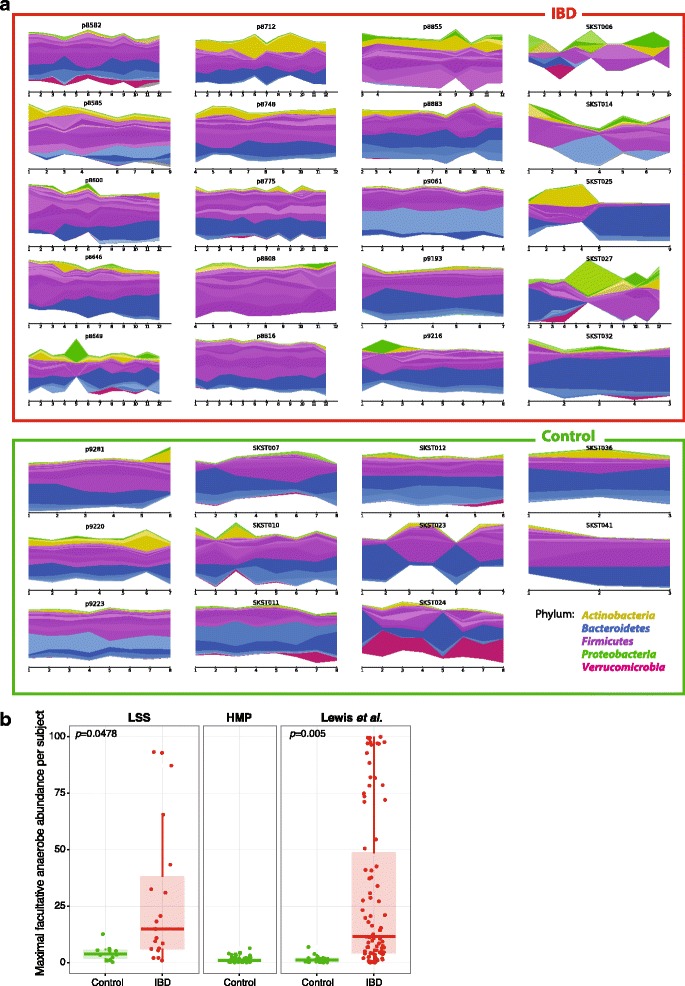
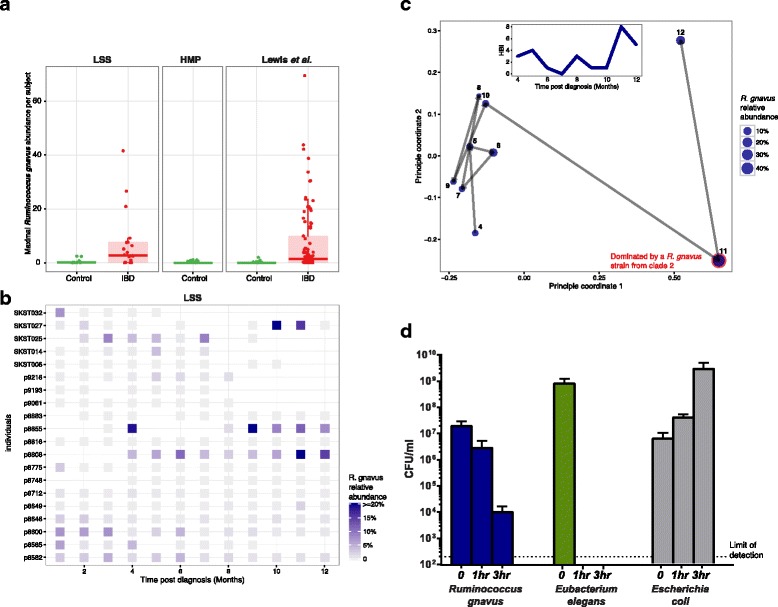
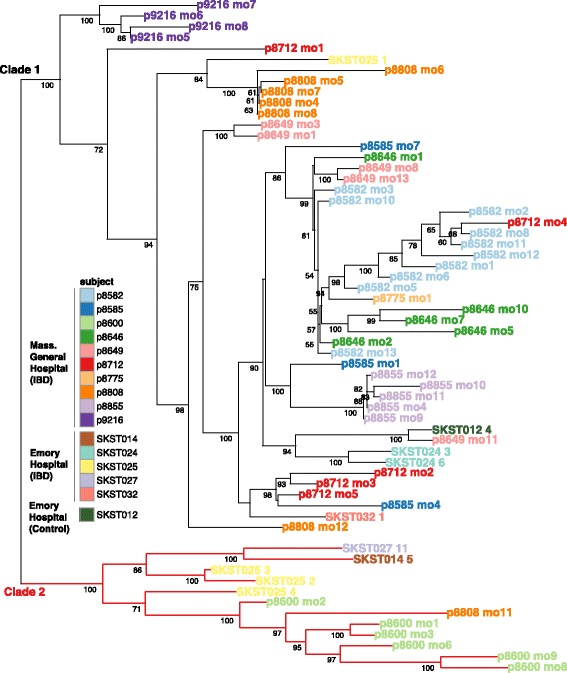
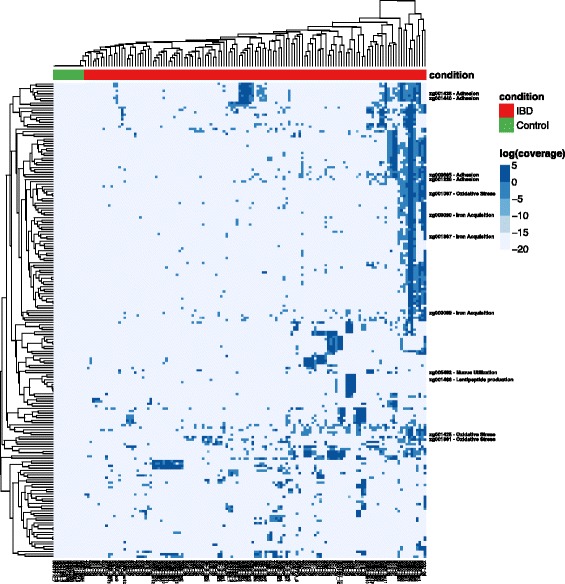
BACKGROUND: Inflammatory bowel disease (IBD) is characterized by chronic inflammation of the gastrointestinal tract that is associated with changes in the gut microbiome. Here, we sought to identify strain-specific functional correlates with IBD outcomes. METHODS: We performed metagenomic sequencing of monthly stool samples from 20 IBD patients and 12 controls (266 total samples). These were taxonomically profiled with MetaPhlAn2 and functionally profiled using HUMAnN2. Differentially abundant species were identified using MaAsLin and strain-specific pangenome haplotypes were analyzed using PanPhlAn. RESULTS: We found a significantly higher abundance in patients of facultative anaerobes that can tolerate the increased oxidative stress of the IBD gut. We also detected dramatic, yet transient, blooms of Ruminococcus gnavus in IBD patients, often co-occurring with increased disease activity. We identified two distinct clades of R. gnavus strains, one of which is enriched in IBD patients. To study functional differences between these two clades, we augmented the R. gnavus pangenome by sequencing nine isolates from IBD patients. We identified 199 IBD-specific, strain-specific genes involved in oxidative stress responses, adhesion, iron-acquisition, and mucus utilization, potentially conferring an adaptive advantage for this R. gnavus clade in the IBD gut. CONCLUSIONS: This study adds further evidence to the hypothesis that increased oxidative stress may be a major factor shaping the dysbiosis of the microbiome observed in IBD and suggests that R. gnavus may be an important member of the altered gut community in IBD.
Overview
The claims and statistics of this paper haven’t been checked yet.
Free: it reads the open-access text and checks the first 5 claims that cite a source we can check. Create a free account to check every claim.
Integrity signals
Registry
Cites
Statistics
Figures
Verification
Claims the paper makes
The claims and statistics of this paper haven’t been checked yet.
Free: it reads the open-access text and checks the first 5 claims that cite a source we can check. Create a free account to check every claim.
Claims other papers make about this one
Each is checked against this paper’s own text: does it say what the citing paper says it does?
The cited source says what the claim attributes to it.
In the citing paper
“whereas the presence of Ruminococcus gnavus as a biomarker of nonresponders in PRIMM-UK is in line with multiple reports of its association with poor cardiometabolic health20 and several diseases24–26.”
From Cross-cohort gut microbiome associations with immune checkpoint inhibitor response in advanced melanoma (2022) · cites this paper as [24]
Self-check
Percentages, sums and reported differences re-computed from the paper’s own numbers.
The self-check needs the paper’s full text.
Citations
Cites
Structure, function and diversity of the healthy human microbiome
The Human Microbiome Project Consortium (2012) · Nature · doi:10.1038/nature11234 · Cited by 11,726
Self-citationThe Treatment-Naive Microbiome in New-Onset Crohn’s Disease
Gevers, D., Kugathasan, S., Denson, L. A., Vázquez-Baeza, Y., Van Treuren, W., Ren, B., Schwager, E., Knights, D., Song, S. J., Yassour, M., et al. (2014) · Cell Host & Microbe · doi:10.1016/j.chom.2014.02.005 · Cited by 3,220 · cited 1×
“[20] cohort may be due to a combination of age (20–66 years here, 3–17 years in Gevers et al.”
BackgroundSelf-citationDysfunction of the intestinal microbiome in inflammatory bowel disease and treatment
Morgan, X. C., Tickle, T. L., Sokol, H., Gevers, D., Devaney, K. L., Ward, D. V., Reyes, J. A., Shah, S. A., LeLeiko, N., Snapper, S. B., et al. (2012) · Genome Biology · doi:10.1186/gb-2012-13-9-r79 · Cited by 2,713 · cited 1×
“Additionally, the gut microbiome in IBD shows dysbiosis characterized by increased abundance of functional pathways involved in the microbial response to oxidative stress [5].”
BackgroundSelf-citationGenetics and pathogenesis of inflammatory bowel disease
Khor, B., Gardet, A., & Xavier, R. J. (2011) · Nature · doi:10.1038/nature10209 · Cited by 2,614
Self-citationMetaPhlAn2 for enhanced metagenomic taxonomic profiling
Truong, D. T., Franzosa, E. A., Tickle, T. L., Scholz, M., Weingart, G., Pasolli, E., Tett, A., Huttenhower, C., & Segata, N. (2015) · Nature Methods · doi:10.1038/nmeth.3589 · Cited by 2,185 · cited 4×
“Community composition was calculated with MetaPhlan2 [16] using the default settings.”
MethodInfluentialSelf-citationThe Long-Term Stability of the Human Gut Microbiota
Faith, J. J., Guruge, J. L., Charbonneau, M., Subramanian, S., Seedorf, H., Goodman, A. L., Clemente, J. C., Knight, R., Heath, A. C., Leibel, R. L., et al. (2013) · Science · doi:10.1126/science.1237439 · Cited by 2,058
Metabolic Reconstruction for Metagenomic Data and Its Application to the Human Microbiome
Abubucker, S., Segata, N., Goll, J., Schubert, A. M., Izard, J., Cantarel, B. L., Rodriguez-Mueller, B., Zucker, J., Thiagarajan, M., Henrissat, B., et al. (2012) · PLoS Computational Biology · doi:10.1371/journal.pcbi.1002358 · Cited by 1,056 · cited 1×
“Functional and pathway composition was calculated with HUMANn2 [17] using the UniRef90 database with default settings.”
MethodSelf-citationYassour, M., Vatanen, T., Siljander, H., Hämäläinen, A.-M., Härkönen, T., Ryhänen, S. J., Franzosa, E. A., Vlamakis, H., Huttenhower, C., Gevers, D., et al. (2016) · Science Translational Medicine · doi:10.1126/scitranslmed.aad0917 · Cited by 1,043 · cited 4×
“(XLSX 9 kb) Additional file 6: Figure S1.”
BackgroundInfluentialSelf-citationCorrelation between intraluminal oxygen gradient and radial partitioning of intestinal microbiota
Albenberg, L., Esipova, T. V., Judge, C. P., Bittinger, K., Chen, J., Laughlin, A., Grunberg, S., Baldassano, R. N., Lewis, J. D., Li, H., et al. (2014) · Gastroenterology · doi:10.1053/j.gastro.2014.07.020 · Cited by 886 · cited 1×
“[18] and expanded for abundant genera in our samples (Additional file 2: Table S2).”
BackgroundMicrobial strain-level population structure and genetic diversity from metagenomes
Truong, D. T., Tett, A., Pasolli, E., Huttenhower, C., & Segata, N. (2017) · Genome Research · doi:10.1101/gr.216242.116 · Cited by 839 · cited 6×
“While strain-level profiling using StrainPhlAn was carried out for 72 species of the gut microbiome with sufficient coverage, R. gnavus was the only species detected to have an IBD-specific strain.”
MethodInfluentialSelf-citation
Cited by
Items 601–700 of 825
Yun, H. H., So-Heon, J. E. O. N., Ji, H. W., Kim, S., Kim, S. K., Kim, S. K., & Sohn, S.-O. (2026) · Fermentation · doi:10.3390/fermentation12030123 · Cited by 2
Mazzoni, C., Ochana, B.-L., Orlanski‐Meyer, E., Yaʼacov, A. B., Focht, G., Harpenas, E., Shmorak, S., Ledder, O., Lev‐Tzion, R., Shemer, R., et al. (2026) · Microbiome · doi:10.1186/s40168-026-02344-6 · Cited by 5
“We mentioned R . gnavus which is both an IBD-associated species [114, 115] and a known infant gut colonizer, with recently reported infant-spe-cific clades [116, 117].”
Self-citationZhao, X., Mahsa, G. C., Xiao, L., Fan, X., Jiang, W., Jia, X., Ma, K., Zhang, C., Geng, S., Ji, F., et al. (2026) · Food Bioscience · doi:10.1016/j.fbio.2026.108631 · Cited by 3
Fu, J., Zhang, J., He, R., Dong, Q., Mao, H., Shen, W., Wu, W., Chen, X., Ma, W., Zhai, Q., et al. (2026) · npj Biofilms and Microbiomes · doi:10.1038/s41522-026-00970-4 · Cited by 5
Chen, S., Feng, H., Wang, Y., Huang, J., Xu, S., Gong, Y., Liu, X., Ouyang, Y., Ye, Q., Zheng, D., et al. (2026) · Gut Microbes · doi:10.1080/19490976.2026.2665870 · Cited by 2
“15 This species-specific phenotype underscores the complexity of the IBD-associated microbiota and highlights the need to distinguish microbial functions at the strain or species level rather than relying solely on genus-level classification.”
Diop, K., Benlaïfaoui, M., Hunter, S., Méndez-Salazar, E. O., Hakozaki, T., Richard, C., Prifti, D. K., Kourtian, S., Proulx-Rocray, F., Naimi, S., et al. (2026) · Microbiome · doi:10.1186/s40168-026-02419-4 · Cited by 4
Neuroprotective effects of ursodeoxycholic acid in Parkinson's disease and Alzheimer's disease
Chong, A. E. Y., Sasmita, A. O., Koh, R. Y., & Ling, A. P. K. (2026) · Neuroprotection/Neuroprotection (Chichester, England. Print) · doi:10.1002/nep3.70039 · Cited by 2
The endogenous peptide GPR15L shapes the intestinal microbiota to counteract colitis
Leggio, M., Schramm, S., Dietz, L., Ocón, B., Wirtz, S. J., Balint, F. P., Yılmaz, B., Petzold, J., Liu, L., Dedden, M., et al. (2026) · Gut · doi:10.1136/gutjnl-2025-337619 · Cited by 2
“8 9 However, dysbiosis featured by a decrease in the overall diversity as well as an enrichment of specific bacteria is a hallmark of IBD 10–12 and it has been postulated that translocation of bacterial antigens over a leaky barrier triggers inflammation in the gut.”
The landscape of cellular immune alteration in systemic lupus erythematosus
Xiao, J., Duan, L., Yang, J., Deng, Y., 庞舒尹, Wang, H., Yin, X., Wang, H., Qiu, Y., Li, X., et al. (2026) · Frontiers in Immunology · doi:10.3389/fimmu.2026.1755310 · Cited by 2
Liang, X., Wang, Z., Shu, Q., Huang, X., Wang, J., Wu, J., Liu, N., & Xie, N. (2023) · European Journal of Gastroenterology & Hepatology · doi:10.1097/meg.0000000000002666 · Cited by 2
“For instance, family Ruminococcaceae has been found to be transiently and dramatically enriched in response to increased IBD activity and is considered as a risk factor for IBD [24,25].”
BackgroundFu, K., Shou, N., Yuan, X., Xu, W., Wu, D., Wang, Q., Gu, L., Zeng, Y., Li, Y., & Shi, Z. (2024) · Journal of Agricultural and Food Chemistry · doi:10.1021/acs.jafc.4c02243 · Cited by 2
Calderón-Romero, P., Valderrama, B., Bastiaanssen, T. F. S., Lillo, P., Thumala, D., Clarke, G. A., Cryan, J. F., Slachevsky, A., González-Billault, C. E., & Court, F. A. (2026) · PLoS ONE · doi:10.1371/journal.pone.0343493 · Cited by 2
“Noteworthy, associations between abundances of bacteria and symptoms or self-reported illnesses must be taken with care, especially when the gut microbiome is profiled with marker genes [101].”
Xu, Y., Ye, Y., Wang, J.-S., Tang, L., Ning, X., & Sun, X. (2024) · Food Bioscience · doi:10.1016/j.fbio.2024.105514 · Cited by 2
Pang, L., Liu, Y., Yuan, C., Ju, Y., Wu, J., Cheng, M., Jin, S., Fan, Y., Zhang, H., Wang, Y., et al. (2025) · International Journal of Microbiology · doi:10.1155/ijm/2273986 · Cited by 2
Beghini, F., Brito, I., Gerstein, M., & Christakis, N. A. (2025) · Cell Reports · doi:10.1016/j.celrep.2025.116724 · Cited by 2
Gut Microbiota Dysbiosis and Chronic Intestinal Inflammation
Sarmento, A., & Simões, C. (2021) · Elsevier eBooks · doi:10.1016/b978-0-12-819265-8.00057-7 · Cited by 3
Lopez, M. D. C. S., Sánchez-Somolinos, M., Igualada-Blázquez, C., Quevedo-Narciso, T., Vicente-Herrera, E., Riquelme-García, Ó., & Esparragoza-Cabrera, L. A. (2023) · Journal of Spine Surgery · doi:10.21037/jss-22-81 · Cited by 2
“Several lines of evidence have shown an increase in the presence of R. Gnavus in patients suffering from Crohn’s disease or ulcerative colitis, suggesting R. Gnavus might have an important role in modulating inflammatory activity in the bowel (10).”
Host mucin glycosylation and gut symbiosis
Juge, N., Latousakis, D., & Crost, E. H. (2024) · Elsevier eBooks · doi:10.1016/b978-0-12-819655-7.00018-7 · Cited by 2
Joris, B. R., Browne, T. S., Hamilton, T. A., Edgell, D. R., & Gloor, G. B. (2021) · Research Square · doi:10.1101/2021.04.15.440092 · Cited by 2
“Samples belonging to a North American IBD (n=50) [25] and a North American pre-term infant cohort 88 (n=51) [26] were assembled de novo (Supplemental Table 1).”
Rhythmic Bacteria as Biomarkers for Circadian-Related DiseasesPreprint
Ubilla, P., Ferrada, E., & Marquet, P. A. (2025) · Research Square · doi:10.21203/rs.3.rs-5723754/v1 · Cited by 2
D-gluconate drives Salmonella growth during acute and chronic infectionPreprint
Schubert, C., Hoos, M., Sichert, A., Näpflin, N. C., Kroon, S., Pulli, S., Kim, J., Burkhardt, L., Nguyen, B. D., von Mering, C., et al. (2026) · bioRxiv (Cold Spring Harbor Laboratory) · doi:10.64898/2026.04.07.716905 · Cited by 2
Crohn’s Disease - The Current State of the Art
Pal, P. (2023) · IntechOpen eBooks · doi:10.5772/intechopen.104329 · Cited by 3
Tian, H., Cheng, L., Liang, Y., & Ren, Y. (2024) · Future Integrative Medicine · doi:10.14218/fim.2024.00009 · Cited by 1
“29 Active IBD is usually accompanied by an increase in Ruminococcus gnavus, 30 inducing dendritic cells to secrete TNF-α.”
BackgroundMizutani, S., Tamaki, A., Shiba, S., Salim, F., Yamada, M., Takamaru, H., Nakajima, T., Yoshida, N., Ikuta, S., Yachida, T., et al. (2024) · Gut · doi:10.1136/gutjnl-2024-332381 · Cited by 1
Ruminococcus gnavus Bacteremia in a SARS-CoV-2 Patient With Diverticulosis
Flores, R., Calvo, P. A., Antunes, C., Duarte, R., & Lérias, G. (2025) · Cureus · doi:10.7759/cureus.78784 · Cited by 1
Jyoti, J., & Hütt, M. ‐. (2025) · Bioinformatics · doi:10.1093/bioinformatics/btaf095 · Cited by 1
“…human subjects with colorectal cancer (CRC) (Zeller et al. 2014, Vogtmann et al. 2016, Wirbel et al. 2019, Yachida et al. 2019), and human subjects with inflammatory bowel disease (IBD) (Nielsen et al. 2014, Hall et al. 2017, Schirmer et al. 2018, Vich Vila et al. 2018, Lloyd-Price et al. 2019).”
Ge, C., Zhu, L., Lu, Y. C., Huo, L., Sun, M. X., Zheng, J., & Song, F. (2025) · Jundishapur Journal of Microbiology · doi:10.5812/jjm-159080 · Cited by 1
Li, S., Zhang, A., Qiao, J., Yang, J., Chen, H., Shang, S., Fu, T., Zhang, B., Xu, K., Yang, G., et al. (2025) · Phytomedicine · doi:10.1016/j.phymed.2025.156995 · Cited by 1
Yang, J., Lv, X., Xu, Y., Huang, F., Yang, X., Shi, X., Zhao, L., Liang, C., Wang, D., Fang, Y., et al. (2025) · Frontiers in Cellular and Infection Microbiology · doi:10.3389/fcimb.2025.1599954 · Cited by 3
Abuqwider, J., Pasolli, E., Scidà, G., Corrado, A., Vitale, M., Filippis, F. D., Ercolini, D., Annuzzi, G., Rivellese, A. A., & Bozzetto, L. (2025) · Nutrition Metabolism and Cardiovascular Diseases · doi:10.1016/j.numecd.2025.104487 · Cited by 1
Delannoy, J., Ferraris, L., Labellie, C., Dupire, L., Ilavska, D., Butel, M., Barbut, F., & Aires, J. (2025) · FEMS Microbiology Ecology · doi:10.1093/femsec/fiaf122 · Cited by 1
“…bacteremia, bloodstream, peritonitis, joint infections, traumatic wound infections, and extra-intestinal infections (Randazzo et al. 2015 , Hall et al. 2017 , Mormeneo Bayo et al. 2020 , Cherny et al. 2021 , Karpat et al. 2021 , Milosavljevic et al. 2021 , Wilton et al. 2022 , Yoon et al.…”
The TAAR1 antagonist EPPTB ameliorates colitis via serotonin inhibition
Luo, L., Zhang, T., Liang, L., Chen, W., Wang, T., Chen, W., Xiao, H., & Zhang, G. (2026) · Biochemistry and Biophysics Reports · doi:10.1016/j.bbrep.2025.102432 · Cited by 1
“Multiple studies have consistently reported an increased abundance of certain gut bacteria, such as E. faecium and R. gnavus , in IBD patients, with levels correlating positively with disease severity [19 – 21].”
Wang, P., Yao, Y., Yan, K., Wang, S., Wang, M., Liu, X., Hu, C., Dong, Y., & Li, J. (2026) · BMC Microbiology · doi:10.1186/s12866-025-04500-8 · Cited by 1
Dysbiosis of intestinal microbiota in patients with neuromyelitis optica spectrum disorders
Du, Q., Wang, X., Shi, Z., Chen, H., Zhang, Y., Wang, R., Mou, Z., Kong, L., & Zhou, H. (2026) · Frontiers in Immunology · doi:10.3389/fimmu.2026.1747643 · Cited by 1
“Notably, IBD patients exhibit transient Ruminococcus blooms correlating with disease activity (28), and its abundance associates with pro-in fl ammatory cytokines (e.g., IL-6, TNF-a ) and LPS levels (29).”
Boix-Amorós, A., Bu, K., Blank, R. B., Cantor, A., Gutiérrez, A., Rodríguez-Lago, I., Marín‐Jiménez, I., Sanz, J., Gratacós, J., Trujillo, E., et al. (2026) · Annals of the Rheumatic Diseases · doi:10.1016/j.ard.2026.01.018 · Cited by 1
Ensemble test for microbiome data
Bu, D., Yan, J., Yang, W., Zhang, X., & Li, Q. (2026) · Microbiome · doi:10.1186/s40168-026-02367-z · Cited by 2
Cho, J., Danner, R., Kim, W. S., Lopez, L., Williams, J., Singh, A., Han, J. A., Vranken, J. G. V., Walker, A. S., Rhoads, T. W., et al. (2026) · Cell Host & Microbe · doi:10.64898/2026.03.11.711168 · Cited by 1
Current advances in restoring intestinal barrier homeostasis by natural medicines
Wang, Y., Tan, S., Huang, J., Wu, Q., Shen, X., & Bao, W. (2026) · Phytomedicine · doi:10.1016/j.phymed.2026.158144 · Cited by 3
Pelland, Z. J., Zafar, A., Ay, A. A., & Belanger, K. D. (2026) · PLoS ONE · doi:10.1371/journal.pone.0345651 · Cited by 1
Hoshiba, N., Fujii, T., Yagasaki, R., Ochi, T., Shiba, K., Takahashi, H., Funasaka, K., Ono, E., Hirooka, Y., Tochio, T., et al. (2026) · Biomedicines · doi:10.3390/biomedicines14051112 · Cited by 1
“…including the growth inhibition of Ruminococcus gnavus , a mucin-degrading species frequently associated with inflammatory bowel disease (IBD) [8], as well as Fusobacterium nucleatum , while sparing beneficial microbial groups, such as Bifidobacterium and members of the order Lactobacillales…”
Antisense transcription reveals disease-associated adaptations in the human gut microbiome
Pust, M., Mohamed, A. M., Stražar, M., Arias-Rojas, A., Cunningham-Oakes, E., Brown, E., Bumber, A., Pishchany, G., Li, C., Ananthakrishnan, A. N., et al. (2026) · Nature Microbiology · doi:10.1038/s41564-026-02442-z · Cited by 1
Self-citationWang, Y., Fan, C., Varatharajalu, K., Satila, M., Cruz, C. C., Sun, B., Lermi, N. O., Hayase, T., Thomas, A., Szymonowicz, K., et al. (2026) · Cell Reports Medicine · doi:10.1016/j.xcrm.2026.103044 · Cited by 2
Mice, Models, Microbiota: How Can We More Accurately Reflect Human Disease?
Ladak, R., & Philpott, D. J. (2021) · Journal of Undergraduate Life Sciences · doi:10.33137/juls.v15i1.36811 · Cited by 1
Role of metabolites derived from gut microbiota in inflammatory bowel disease
Zheng, L., Wen, X., & Duan, S.-L. (2022) · World Journal of Clinical Cases · doi:10.12998/wjcc.v10.i9.2658 · Cited by 1
Impact of the gut microbiome on human health and diseases
Banik, S. P., Sehgal, S., Ghosh, R. B., & Das, A. (2022) · Elsevier eBooks · doi:10.1016/b978-0-12-822238-6.00026-1 · Cited by 1
Moreno, J. G., & Pacheco‐Tena, C. (2022) · Springer eBooks · doi:10.1007/978-981-19-4800-8_23 · Cited by 1
Biosynthetic gene clusters of symbiotic gut microbiome in succession of human health
Arulprakasam, K. R., & Dharumadurai, D. (2023) · Elsevier eBooks · doi:10.1016/b978-0-323-99334-0.00007-4 · Cited by 1
Microbiome Research in Greece: A Comprehensive Bibliometric Study
Stefanis, C., Tsigalou, C., Bezirtzoglou, I., Voidarou, C. C., & Stavropoulou, E. (2025) · Microorganisms · doi:10.3390/microorganisms13040725 · Cited by 2
Zhang, J., Yan, X., Zhang, B., Zhang, H., Miao, S., Du, Q., Zhang, Q., & Du, J. (2025) · Medicine · doi:10.1097/md.0000000000044723 · Cited by 1
IMPACT OF GUT MICROBIOTA ON ANKYLOSING SPONDYLITIS EVOLUTION
Chișlari, L. (2023) · doi:10.5281/zenodo.10429202 · Cited by 1
Heidrich, V., Fackelmann, G., Ricci, L., Spadazzi, R., Baldanzi, G., Punčochář, M., Catassi, G. N., Marchi, P., Modesto, M., Piccinno, G., et al. (2026) · Cell Press Blue · doi:10.1016/j.cpblue.2026.100034 · Cited by 2
Targeting host–microbe interaction in the mucus layer: a potential treatment option for diseases
Choi, H. H., & Lee, M. (2019) · Gastroenterology report · doi:10.1093/gastro/goy054 · Cited by 1
Waterhouse, J. C. (2020) · Authorea · doi:10.22541/au.158758665.58622495 · Cited by 1
“gnavus that tolerates a high-oxygen, pro-inflammatory environment in the intestinal tract has been identified in inflammatory bowel disease[60].”
Sachdeva, A., Datta, S., & Guha, S. (2022) · arXiv (Cornell University) · doi:10.48550/arxiv.2206.10108 · Cited by 1
“In addition, microbes belonging to the genera Streptococcus [Pilla and Suchodolski, 2020], Ruminococcus gnavus [Hall et al., 2017, Boucard et al., 2021], and Alloprevotella [Boucard et al., 2021] have known associations with inflammatory bowel disease.”
BackgroundMapping the Gut Microbiome for Diseases
Samykannu, G., & Natarajan, J. (2024) · Elsevier eBooks · doi:10.1016/b978-0-323-95502-7.00267-0 · Cited by 1
Barak, N., Bhattacharya, H., Asnicar, F., Sung, J., Segata, N., & Yassour, M. (2025) · bioRxiv (Cold Spring Harbor Laboratory) · doi:10.1101/2025.06.12.658885 · Cited by 1
“The training set comprises 1,886 longitudinal samples from 123 people with IBD and 40 healthy controls across two USA cohorts[43,44] (ages 6–76, median 21).”
Self-citationDisrupted tRNA modification leads to intestinal mitochondrial dysfunction and microbial dysbiosisPreprint
Ran, D., Zhang, Y., An, Y., Hu, Y., Xia, Y., & Sun, J. (2025) · bioRxiv (Cold Spring Harbor Laboratory) · doi:10.1101/2025.11.27.690007 · Cited by 2
Boeckman, J. X. (2022) · OakTrust (Texas A&M University Libraries) · Cited by 1
Wirbel, J., Saber, W., Martens, M. J., Peled, J. U., Andermann, T. M., Fei, T., Brooks, E. F., Doyle, B., Pincus, N. B., Jenq, R. R., et al. (2026) · bioRxiv (Cold Spring Harbor Laboratory) · doi:10.64898/2026.02.19.706769 · Cited by 1
A widespread gut bacterial lineage distinguished by redox metabolism and phage defensePreprint
Noecker, C. A., Guo, L., Daté, C., Rai, N., Daramy, F., Hernandez, L. A. R., Kyaw, T. S., Trepka, K. R., Gupta, C. L., Ha, C. W. Y., et al. (2026) · bioRxiv (Cold Spring Harbor Laboratory) · doi:10.64898/2026.03.31.715625 · Cited by 1
Cosmopolitan gut bacteriophages expand the phenotype of health-related bacteriaPreprint
Rozwalak, P., Zieleziński, A., Fontalvo, M. A. D. A., Ménard, S., Auger, S., & Dutilh, B. E. (2026) · bioRxiv (Cold Spring Harbor Laboratory) · doi:10.64898/2026.05.08.723808 · Cited by 1
Shih, J. B., Zhao, C., Pollard, K. S., & Lind, A. (2026) · bioRxiv (Cold Spring Harbor Laboratory) · doi:10.64898/2026.06.24.734308 · Cited by 1
Festschrift for Ronan O’Connell: pouchitis, ulcerative colitis and the microbiome
Lavelle, A. (2018) · Irish Journal of Medical Science (1971 -) · doi:10.1007/s11845-018-1785-2
“ginning to overcome some of the shortcomings of a purely marker gene-based approach [21], and a more complete picture of changes in community composition associated with”
BackgroundInfluentialOliphant, K. (2018) · The Atrium (University of Guelph) · Cited by 1
Characterizing the Role of IL-1β in Macrophage Clearance of Citrobacter rodentium Infection
Bording‐Jorgensen, M. (2018) · ERA: Education and Research Archive (University of Alberta) · doi:10.7939/r3td9nq61
Development and dynamics of the normal gut microbiota
Olsson, L. M. (2020) · Gothenburg University Publications Electronic Archive (Gothenburg University)
Validation and development of sequence-based tools to analyse the human gut virome
Sutton, T. (2019) · Cork Open Research Archive (University College Cork, Ireland)
The Human Gut Microbiome A Focus on Health and Disease with Relevance to Neuropsychiatric Disorders
Worth, C. (2020) · doi:10.31274/cc-20240624-1443 · Cited by 2
Lin, Z. (2018) · TSpace (University of Toronto) · Cited by 1
A Link among Human Gut Microbiome and COVID-19?
Aneja, K. K. (2021) · ACTA SCIENTIFIC MICROBIOLOGY · doi:10.31080/asmi.2021.04.0845
Effects of Therapy on Host-Microbe Interactions in Pediatric Inflammatory Bowel Diseases
Dijk, S. (2020) · ERA: Education and Research Archive (University of Alberta) · doi:10.7939/r3-w5w4-2d33
Immunopathogenesis: the role of mucosal and skin microbiota in SLE
Greiling, T. M., & Kriegel, M. A. (2021) · Elsevier eBooks · doi:10.1016/b978-0-12-820583-9.00012-9
Barrett, M. (2021) · Cork Open Research Archive (University College Cork, Ireland)
The Gut Microbiota and Immunopathophysiology
Aganetti, M. A., Cruz, C. S., Galvão, I., Engel, D. F., Ricci, M. F., & Vieira, A. T. (2021) · Elsevier eBooks · doi:10.1016/b978-0-12-820472-6.00128-6
FÖRÄLDER TILL EN ÄNGEL : Upplevelser av välbefinnande och lidande efter att barn avlidit i cancer
Gunnarsson, A. B., & Nylander, L. (2011) · DiVA (Linnaeus University)
Bioetica - clonazione - tutela persona e della vita
Riz, R. (2000) · Indice penale · Cited by 2
Wang, S., Ma, X., Wu, L., Yu, H., Shan, Y.-R., Tian, Y., Liu, T., & Gu, X. (2022) · Journal of Traditional Chinese Medical Sciences · doi:10.1016/j.jtcms.2022.01.004
SnapshotDx Quiz: February 2022
Walker, A. M., & Chong, B. F. (2022) · Journal of Investigative Dermatology · doi:10.1016/j.jid.2021.11.021
“gnavus has been found to be overly abundant in patients with Crohn’s disease, and authors cite previous studies supporting its role in disease pathogenesis, including the production of a proinflammatory polysaccharide, which induces the production of TNF-a (Hall et al., 2017; Henke et al., 2019).”
BackgroundIdentification of type IV conjugative systems that are systematically excluded from metagenomic binsPreprint
Joris, B. R., Browne, T. S., Hamilton, T. A., Edgell, D. R., & Gloor, G. B. (2022) · Research Square · doi:10.21203/rs.3.rs-1428512/v1
Paying attention to minutiae: Strain level differences drive disease etiology
Newhall, K. P., & Stappenbeck, T. S. (2022) · Med · doi:10.1016/j.medj.2022.04.011
Evaluating trait-based sets for taxonomic enrichment analysis applied to human microbiome data setsPreprint
Nguyen, Q. P., Hoen, A. G., & Frost, H. R. (2022) · bioRxiv (Cold Spring Harbor Laboratory) · doi:10.1101/2022.05.16.492155
“For IBD, we utilized data from the integrative HMP [50], Gevers et al. [21], Hall et al. [25], Ijaz et al. [28], Li et al. [37], Nielsen et al. [46], and Vich Vila et al. [59].”
MethodEffects of Gut Microbiota on Cardiovascular Diseases
Nongrum, G., Kapoor, M., Prasad, A. K., Lyngdoh, W. V., Gunasekaran, A. K., Vanlalmalsawdawngliana, V. D., & Lanong, S. (2021) · Scholars Journal of Applied Medical Sciences · doi:10.36347/sjams.2021.v09i06.001
“There is also a mechanistic link between the abundance of Ruminococcus gnavus and development of CAD which involves the ability of R. gnavus to use mucin as a carbon source contributing to gut barrier dysfunction and exposure to foreign materials [32].”
Characteristics of intestinal flora of ileocecal region in pediatric patients with Crohn diseasePreprint
Wu, P., Wu, B., Liu, J., Hong, L., Ma, B., Lin, B., Wang, J., & Chen, S. (2022) · Research Square · doi:10.21203/rs.3.rs-2332398/v1
The piglet tonsillar microbiome and Streptococcus suis disease
Fredriksen, S. (2023) · doi:10.18174/582380
Rheumatic diseases: The microbiota-immunity axis in development and treatment
Niccolai, E., Bellando-Randone, S., & Amedei, A. (2023) · Elsevier eBooks · doi:10.1016/b978-0-323-85831-1.00006-1 · Cited by 1
Peña‐Cearra, A., Fullaondo, A., & Abecia, L. (2022) · EKAIA Euskal Herriko Unibertsitateko Zientzi eta Teknologi Aldizkaria · doi:10.1387/ekaia.23519 · Cited by 1
Psomas, C. K., Villar, S. S., Guery, B. P., Halfon, P., & Marchetti, G. C. (2023) · Journal of Virus Eradication · doi:10.1016/j.jve.2023.100332
Of Football, Globalization and Cross-Culture, Between Reality and Fantasy in Qatar Episode
Hamzah, D. A. (2023) · American Journal of Biomedical Science & Research · doi:10.34297/ajbsr.2023.18.002512
Zhang, H. (2023) · American Journal of Biomedical Science & Research · doi:10.34297/ajbsr.2023.18.002511
Xiao, Y., Yang, C., Yu, L., Tian, F., Wu, Y., Zhao, J., Zhang, H., Yang, R., Chen, W., Hill, C., et al. (2021) · Figshare · doi:10.6084/m9.figshare.16557281
Volkmann, E. R., & McMahan, Z. H. (2024) · Springer eBooks · doi:10.1007/978-3-031-40658-4_32
Immune, metabolic, and microbial aspects of human health and aging
Andreu‐Sánchez, S. (2024) · University of Groningen research database (University of Groningen / Centre for Information Technology) · doi:10.33612/diss.1012187248
In symphony: nutrient combinations for healthy brain ageing
van Soest, A. P. M. (2024) · doi:10.18174/652954
Rizqoh, D., Laudy, N. P., Atiqah, R. F., & Fadlika, R. (2024) · Jurnal Medika Malahayati · doi:10.33024/jmm.v8i2.14796 · Cited by 3
Liu, Y., Li, S., Liu, T., Deng, P., Dong, J., & Xu, X. (2024) · Research Square · doi:10.21203/rs.3.rs-5311059/v1
Metadata
- Authors
- Hall, A. B., Yassour, M., Sauk, J., Garner, A., Jiang, X., Arthur, T., Lagoudas, G. K., Vatanen, T., Fornelos, N., Wilson, R., Bertha, M., Cohen, M., Garber, J., Khalili, H., Gevers, D., Ananthakrishnan, A. N., Kugathasan, S., Lander, E. S., Blainey, P., Vlamakis, H., Xavier, R. J., & Huttenhower, C.
- Affiliations
- Broad Institute (US)
- Harvard University (US)
- Emory University (US)
- Corresponding author
- Xavier, Ramnik J.
- Huttenhower, Curtis
- ORCID
- Venue
- Genome Medicine
- Published
- 2017-11-28
- Volume
- 9
- Issue
- 1
- Pages
- 103-103
- ISSN
- 1756-994X (ISSN-L)
- PMC
- PMC5704459
- OpenAlex
- W2769664962
- Cited by
- 777
- References
- 33
- Citations by year
- 2026: 74 · 2025: 115 · 2024: 134 · 2023: 110 · 2022: 106 · 2021: 96 · 2020: 69 · 2019: 55 · 2018: 16
- FWCI
- 15.64
- Type
- journal article
- Language
- en
- Open access
- gold
- doi.org
- Licence
- cc-by
- creativecommons.org/licenses/by/4.0/ (tdm)
- creativecommons.org/licenses/by/4.0/ (vor)
- Locations
- Genome Medicine (publishedVersion, cc-by)
- Europe PMC (PubMed Central) (publishedVersion, cc-by)
- PubMed Central (publishedVersion, cc-by)
- PubMed (publishedVersion)
- Digital Access to Scholarship at Harvard (DASH) (Harvard University) (submittedVersion, cc-by)
- DOAJ (DOAJ: Directory of Open Access Journals) (submittedVersion)
- ResearchSpace (University of Auckland) (submittedVersion, cc-by)
- Funders
- National Institutes of Health (U54DE023798)
- National Science Foundation (MCB-1453942)
- Crohn's and Colitis Foundation of America
- Helen Hay Whitney Foundation
- Charles A. King Trust
- Klarman Family Foundation
- National Institute of Diabetes and Digestive and Kidney Diseases (R01DK92405, P30DK43351)
- Topics
- Life Sciences › Biochemistry, Genetics and Molecular Biology › Molecular Biology › Gut microbiota and health
- Health Sciences › Medicine › Gastroenterology › Inflammatory Bowel Disease
- Health Sciences › Medicine › Infectious Diseases › Clostridium difficile and Clostridium perfringens research
- Keywords
- Ruminococcus gnavus, inflammatory bowel disease, gut microbiota, strain-specific genes, pan-genome, oxidative stress response, facultative anaerobes, iron acquisition, adhesion genes, dysbiosis, disease activity
- MeSH terms
- Gastrointestinal Microbiome, Adult, Aged, Feces, Humans, Middle Aged, Phylogeny, Species Specificity, Inflammatory Bowel Diseases, Genome, Bacterial, Oxidative Stress, Ruminococcus, Young Adult
About these checks
Registry, retraction, Cites and statistics results are computed, not judged, with one exception: a printed reference that no index lists is read once by a model before it counts as a citation error. Claims are extracted by a model and kept only when their quote appears verbatim in the text; each cited source is then checked, with a model’s help, for whether it says what the claim relies on. Those verdicts can be wrong — read the claim’s quote and the cited source before relying on one.
Statistics and arithmetic are recomputed, not judged.
Confidence bands are shown only for fields calibrated on our annotated test set. None is calibrated yet, so no band is shown.
What counts as a claim ›How we measure confidence ›How we check this ›
Are you an author, or do you see a problem with this page? Request a review
Data sources
Bibliographic data: Semantic Scholar, OpenAlex, Crossref.
Contains information from the Semantic Scholar Academic Graph Datasets, made available under the ODC Attribution License (ODC-BY 1.0).
Semantic Scholar’s data is described in: Kinney, R., et al. (2023). The Semantic Scholar Open Data Platform. arXiv:2301.10140.
