

Selection bias on intellectual ability in autism research: a cross-sectional review and meta-analysis
Open accessThe DOI matches its Crossref record; 51 of the 51 references it cites were found in a registry or an index.
Abstract
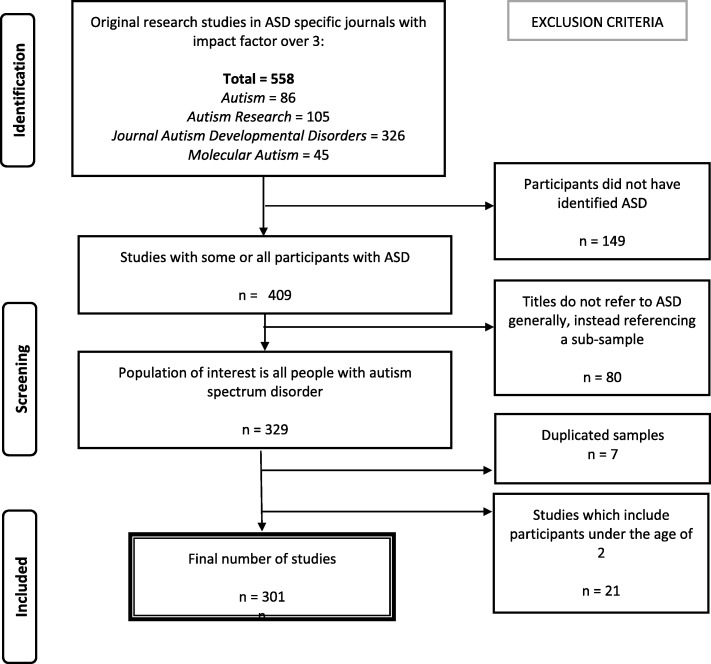
Current global estimates suggest the proportion of the population with autism spectrum disorder (ASD) who have intellectual disability (ID) is approximately 50%. Our objective was to ascertain the existence of selection bias due to under-inclusion of populations with ID across all fields of autism research. A sub-goal was to evaluate inconsistencies in reporting of findings. This review covers all original research published in 2016 in autism-specific journals with an impact factor greater than 3. Across 301 included studies, 100,245 participants had ASD. A random effects meta-analysis was used to estimate the proportion of participants without ID. Selection bias was defined as where more than 75% of participants did not have ID. Meta-analysis estimated 94% of all participants identified as being on the autism spectrum in the studies reviewed did not have ID (95% CI 0.91–0.97). Eight out of ten studies demonstrated selection bias against participants with ID. The reporting of participant characteristics was generally poor: information about participants’ intellectual ability was absent in 38% of studies ( n = 114). Where there was selection bias on ID, only 31% of studies mentioned lack of generalisability as a limitation. We found selection bias against ID throughout all fields of autism research. We recommend transparent reporting about ID and strategies for inclusion for this much marginalised group.
Overview
The claims and statistics of this paper haven’t been checked yet.
Free: it reads the open-access text and checks the first 5 claims that cite a source we can check. Create a free account to check every claim.
Integrity signals
Registry
Cites
Statistics
Figures
Verification
Claims the paper makes
The claims and statistics of this paper haven’t been checked yet.
Free: it reads the open-access text and checks the first 5 claims that cite a source we can check. Create a free account to check every claim.
Claims other papers make about this one
Each is checked against this paper’s own text: does it say what the citing paper says it does?
The source backs part of the claim, not all of it — or backs it for a different population, condition or comparison.
In the citing paper
“Russell et al. (2019), examining autism research papers published in 2016, covering 301 studies and more than 100,000 participants, estimated that 94% of all ASD participants had IQ in the average range, and 80% of studies showed selection bias against participants with intellectual disability.”
From Annual Research Review: Looking back to look forward – changes in the concept of autism and implications for future research (2020) · cites this paper as Russell et al. (2019)
Experimental — accuracy not yet measuredThe cited source says what the claim attributes to it.
In the citing paper
“Beyond specific genetic syndromes (for example, FXS), there is little research on sex/gender effects in intellectual disabilities, which is also reflected in the autism literature insofar as autistic people with intellectual disabilities are disproportionately under-represented304,305.”
From Sex and gender in neurodevelopmental conditions (2023) · cites this paper as [304]
The cited source says what the claim attributes to it.
In the citing paper
“The authors contrast this with an estimated 50 -55% of the autistic population that have intellectual disability.”
From Annual Research Review: Looking back to look forward – changes in the concept of autism and implications for future research (2020) · cites this paper as Russell et al. (2019)
Self-check
Percentages, sums and reported differences re-computed from the paper’s own numbers.
The self-check needs the paper’s full text.
Citations
Cites
Baio, J., Wiggins, L., Christensen, D. L., Maenner, M. J., Daniels, J., Warren, Z., Kurzius-Spencer, M., Zahorodny, W., Robinson, C., Rosenberg, et al. (2018) · MMWR. Surveillance Summaries · doi:10.15585/mmwr.ss6706a1 · Cited by 6,078
What Is the Male-to-Female Ratio in Autism Spectrum Disorder? A Systematic Review and Meta-Analysis
Loomes, R., Hull, L., & Mandy, W. P. L. (2017) · Journal of the American Academy of Child & Adolescent Psychiatry · doi:10.1016/j.jaac.2017.03.013 · Cited by 2,804
Self-citationGlobal Prevalence of Autism and Other Pervasive Developmental Disorders
Elsabbagh, M., Divan, G., Koh, Y., Kim, Y. S., Kauchali, S., Marcín, C., Montiel‐Nava, C., Patel, V., Paula, C. S., Wang, C., et al. (2012) · Autism Research · doi:10.1002/aur.239 · Cited by 2,636
Autism spectrum disorders: developmental disconnection syndromes
Geschwind, D. H., & Levitt, P. (2007) · Current Opinion in Neurobiology · doi:10.1016/j.conb.2007.01.009 · Cited by 1,411
Naarden Braun, K. V., Lopez, M., White, T., et al. (2023) · Carolina Digital Repository (University of North Carolina at Chapel Hill) · doi:10.17615/y3kk-5x30 · Cited by 1,381
The Epidemiology of Autism Spectrum Disorders
Newschaffer, C. J., Croen, L. A., Daniels, J., Giarelli, E., Grether, J. K., Levy, S. E., Mandell, D. S., Miller, L. A., Pinto-Martin, J., Reaven, J., et al. (2007) · Annual Review of Public Health · doi:10.1146/annurev.publhealth.28.021406.144007 · Cited by 1,228
A Systematic Review of Early Intensive Intervention for Autism Spectrum Disorders
Warren, Z., McPheeters, M. L., Sathe, N., Foss-Feig, J. H., Glasser, A., & Veenstra-VanderWeele, J. (2011) · Pediatrics · doi:10.1542/peds.2011-0426 · Cited by 790
IQ in children with autism spectrum disorders: Data from the special needs and autism project (SNAP)
Charman, T., Pickles, A., Simonoff, E., Chandler, S., Loucas, T., & Baird, G. (2011) · Psychological Medicine · doi:10.1017/s0033291710000991 · Cited by 599
“We’re tired, not sad”: Benefits and burdens of mothering a child with a disability
Green, S. E. (2007) · Social Science & Medicine · doi:10.1016/j.socscimed.2006.08.025 · Cited by 542
Cited by
Items 101–200 of 438
Longhurst, P., Aspell, J. E., Todd, J., & Swami, V. (2023) · Body Image · doi:10.1016/j.bodyim.2023.101655 · Cited by 25
Richards, N., & Crane, L. (2020) · Journal of Autism and Developmental Disorders · doi:10.1007/s10803-020-04476-6 · Cited by 26
Communication in Autistic Adults: An Action-Focused Review
de Marchena, A. B., Cuneo, N., Gürbüz, E., Brown, M., Trujillo, J. P., & Bergstrom, J. (2025) · Current Psychiatry Reports · doi:10.1007/s11920-025-01616-6 · Cited by 26
“Longitudinal studies of autistic adults followed since early childhood may provide the best data on communication outcomes, as they are less prone to sample biases that exclude participants with intellectual disabilities [9].”
The 10‐year trajectory of aggressive behaviours in autistic individuals
Laverty, C., Agar, G., Sinclair‐Burton, L., Oliver, C., Moss, J. F., Nelson, L., & Richards, C. (2023) · Journal of Intellectual Disability Research · doi:10.1111/jir.13004 · Cited by 24
“This was essential given the high co-occurrence of autism and ID (Matson & Shoemaker 2009 ) and the under-representation of people with ID in autism research (Russell et al .”
BackgroundCameron, L. A., Phillips, K., Melvin, G. A., Hastings, R. P., & Gray, K. M. (2020) · The British Journal of Psychiatry · doi:10.1192/bjp.2020.226 · Cited by 23
Edwards, G., Tarver, J., Shelley, L., Bird, M. O., Hughes, J., Crawford, H., & Waite, J. (2022) · Journal of Autism and Developmental Disorders · doi:10.1007/s10803-022-05509-y · Cited by 23
Girolamo, T. M., Shen, L., Monroe‐Gulick, A., Rice, M. L., & Eigsti, I. (2023) · Autism · doi:10.1177/13623613231216155 · Cited by 23
“Thus, addressing structural language in autism is important to improving the quality of the evidence base informing assessment and service delivery (Russell et al., 2019; Tager-Flusberg & Kasari, 2013).”
BackgroundInfluentialFerguson, E. F., Spackman, E. K., Cai, R. Y., Hardan, A. Y., & Uljarević, M. (2024) · Autism Research · doi:10.1002/aur.3269 · Cited by 23
“…or cognitive functioning (Steenfeldt-Kristensen et al., 2020), which may be due, in part, to the underrepresentation of autistic adolescents/adults and youth with co-occurring ID in autism research more broadly (Howlin & Moss, 2012; Lord et al., 2022; Russell et al., 2019; Stedman et al., 2019).”
Fenning, R. M., Steinberg-Epstein, R., Butter, E. M., Chan, J. G. M., McKinnon-Bermingham, K., Hammersmith, K. J., Moffitt, J., Shui, A. M., Parker, R. A., Coury, D. L., et al. (2020) · Journal of Autism and Developmental Disorders · doi:10.1007/s10803-020-04420-8 · Cited by 23
“Given that more than half of the children in the ATN RCBA presented with comorbid ID, our findings provide insight into the dental needs of a subpopulation that is significantly underrepresented in the research literature (Russell et al. 2019).”
BackgroundApproaches to improving mental healthcare for autistic people: Systematic review
Loizou, S., Pemovska, T., Stefanidou, T., Foye, U., Cooper, R., Kular, A., Greenburgh, A., Baldwin, H., Griffiths, J., Saunders, K. R. K., et al. (2024) · BJPsych Open · doi:10.1192/bjo.2024.707 · Cited by 22
“…on what works for autistic people with intellectual disabilities, suggesting a selection bias against participants with intellectual disabilities, 62 and evidence on supporting autistic people with severe or long-term mental health difficulties including high levels of suicidality and self-harm.”
Self-citationGirolamo, T. M., Shen, L., Monroe‐Gulick, A., Rice, M. L., & Eigsti, I. (2023) · Autism · doi:10.1177/13623613231166749 · Cited by 22
Loffi, R. G., Cruz, T. K. F., Paiva, G. M., Souto, D. O., Barreto, S. R., SANTANA, P. C. M., Nascimento, A. A. A. C., Costa, F. R. M., Cota, E. B., & Haase, V. G. (2024) · Children · doi:10.3390/children11020191 · Cited by 24
“…high intelligence was identified in research published in leading journals since 94% of participants did not present intellectual disability [117], suggesting that the needs for research on autism in association with intellectual disability may not be receiving due consideration; and,…”
BackgroundAging Well and Autism: A Narrative Review and Recommendations for Future Research
Klein, C. B., & Klinger, L. G. (2024) · Healthcare · doi:10.3390/healthcare12121207 · Cited by 23
Hersh, L., Dwyer, P., Kapp, S. K., Shevchuk-Hill, S., Gurba, A. N., Kilgallon, E., Mair, A. P. A., Chang, D. S., Rivera, S. M., & Gillespie‐Lynch, K. (2024) · Autism in Adulthood · doi:10.1089/aut.2023.0202 · Cited by 23
“…NSA people, which inadvertently reproduces the exclusion of the lived experiences, perspectives, and advocacy of autistic people with ID and NSA people from autism research, 79 and, importantly, reinforces the notion that autistic people with ID and NSA people cannot make self-determined choices.”
Teague, S. J., Newman, L. K., Tonge, B. J., Gray, K. M., & The MHYPEDD Team (2019) · Journal of Applied Research in Intellectual Disabilities · doi:10.1111/jar.12689 · Cited by 23
Quinde-Zlibut, J. M., Okitondo, C. D., Williams, Z. J., Weitlauf, A. S., Mash, L. E., Heflin, B. H., Woodward, N. D., & Cascio, C. J. (2020) · Frontiers in Human Neuroscience · doi:10.3389/fnhum.2020.00122 · Cited by 22
The Reasons for International Student Mobility
Rabenu, E., & Shkoler, O. (2020) · Springer eBooks · doi:10.1007/978-3-030-44139-5_3 · Cited by 21
Larson, C., Kaplan, D. E., Girolamo, T. M., Kover, S. T., & Eigsti, I. (2023) · Journal of Clinical Psychology · doi:10.1002/jclp.23570 · Cited by 21
Ferguson, E. F., Barnett, M. L., Goodwin, J. W., & Vernon, T. W. (2024) · Journal of Autism and Developmental Disorders · doi:10.1007/s10803-024-06451-x · Cited by 21
“…to utilize a mixed-methods approach to characterize the needs of adolescents and adults with profound autism, a population that is notably under-represented in autism research (Russell et al., 2019; Siegel, 2018; Singer et al., 2023; Stedman et al., 2019; Thurm et al., 2022; Wachtel et al., 2024 ).”
Dee-Price, B.-J. M. (2020) · Research and Practice in Intellectual and Developmental Disabilities · doi:10.1080/23297018.2020.1788418 · Cited by 21
Dwyer, P. S. R., Takarae, Y., Zadeh, I., Rivera, S. M., & Saron, C. D. (2022) · Neuropsychologia · doi:10.1016/j.neuropsychologia.2022.108340 · Cited by 21
Memory enhancements from active control of learning in children with autism spectrum disorder
Fantasia, V., Markant, D. B., Valeri, G., Perri, N., & Ruggeri, A. (2020) · Autism · doi:10.1177/1362361320931244 · Cited by 20
“Additionally, a recent meta-analysis highlights that only 2% of the ASD studies published in 2016 (301 in total) included non- or minimally verbal participants (Russell et al., 2019).”
BackgroundWalker, R., Swain, J., & Pellicano, E. (2022) · Research in Developmental Disabilities · doi:10.1016/j.ridd.2022.104289 · Cited by 20
“There is, however, a paucity of studies focusing on home reading with autistic 1 children specifically, and even fewer on autistic children with limited-to-no spoken language and/or moderate-to-severe intellectual disabilities, who are overlooked in current autism research (Russell et al., 2019).”
Fenning, R. M., Neece, C. L., Sanner, C. M., & Morrell, H. E. R. (2023) · Mindfulness · doi:10.1007/s12671-023-02250-0 · Cited by 20
Toward Empathetic Autism Research: Developing an Autism-Specific Research Passport
Ashworth, M., Crane, L., Steward, R., Bovis, M. J., & Pellicano, E. (2021) · Autism in Adulthood · doi:10.1089/aut.2020.0026 · Cited by 21
“20 Collaborative work with a broader range of autistic people and their advocates, as well as researchers, is needed to identify if/how the Research Passport could be adapted to be more accessible for this group (e.g., via the use of plain language text augmented with visual illustrations 14 ),…”
Girolamo, T. M., Castro, N. M., Hendricks, A. E., Ghali, S., & Eigsti, I. (2022) · Journal of Speech Language and Hearing Research · doi:10.1044/2022_jslhr-22-00272 · Cited by 21
Girard, D., Courchesne, V., Degré‐Pelletier, J., Letendre, C., & Soulières, I. (2021) · Autism Research · doi:10.1002/aur.2630 · Cited by 19
“Indeed, a recent meta-analysis including 301 studies in autism showed that only 6% of participants met criteria for ID (Russell et al., 2019).”
Anxiety in autistic preschool children: Phenomenology and a network analysis of correlates
Vasa, R. A., Kerns, C. M., Singh, V., McDonald, R. G., Jang, Y. S., & Keefer, A. J. (2023) · Autism Research · doi:10.1002/aur.2968 · Cited by 19
“Among the strengths of this study are the use of highquality autism and developmental assessments, and the inclusion of children with intellectual disability who are often neglected in autism research (Russell et al., 2019).”
BackgroundA systematic review of ecological momentary assessment in autism research
Chen, Y., Xi, Z., Greene, T., & Mandy, W. (2024) · Autism · doi:10.1177/13623613241305722 · Cited by 19
“…loss of data and influence participants’ responds. a Whether this challenge was reported by participants or not. in EMA studies not only results from selection bias in autism research (e.g. Russell et al., 2019) but also points to some potential challenges in implementing EMA with people with ID.”
Self-citationRoberts, R., Stacey, J., Jenner, S., & Maguire, E. (2022) · Review Journal of Autism and Developmental Disorders · doi:10.1007/s40489-022-00320-y · Cited by 18
“Limited justification is given for this and it compounds evidence that people with ID are consistently excluded from autism research (G. Russell et al., 2019).”
BackgroundLee, C.-M., Snyder, L. G., Carpenter, L. A., Harris, J. F., Kanne, S. M., Taylor, C. M., Sarver, D. E., Stephenson, K. G., Shulman, L. H., Wodka, E. L., et al. (2023) · Autism Research · doi:10.1002/aur.2934 · Cited by 18
Dwyer, P. S. R., Hersh, L. H., Kapp, S. K., Rivera, S. M., & Gillespie‐Lynch, K. (2025) · Autism in Adulthood · doi:10.1089/aut.2024.0297 · Cited by 17
Bauer, V., Bouchara, T., Duris, O., Labossière, C., Clément, M.-N., & Bourdot, P. (2022) · Lecture notes in computer science · doi:10.1007/978-3-031-16234-3_4 · Cited by 17
Language Impairment in Autistic Adolescents and Young Adults
Girolamo, T. M., & Rice, M. L. (2022) · Journal of Speech Language and Hearing Research · doi:10.1044/2022_jslhr-21-00517 · Cited by 17
“Neural Noise” in Auditory Responses in Young Autistic and Neurotypical Children
Dwyer, P. S. R., Vukušić, S., Williams, Z. J., Saron, C. D., & Rivera, S. M. (2022) · Journal of Autism and Developmental Disorders · doi:10.1007/s10803-022-05797-4 · Cited by 16
“…scores are nevertheless well-represented, in contrast to much prior autism research that excludes participants with intellectual disabilities (Russell et al., 2019), it remains possible that autistic participants excluded from the study may have systematically differed from retained…”
Five interdisciplinary tensions and opportunities in neurodiversity research
Layinka, O., Hargitai, L. D., Shah, P., Waldren, L. H., & Leung, F. Y. N. (2024) · eLife · doi:10.7554/elife.98461 · Cited by 16
“This sentiment is echoed by those considered less ‘high-functioning’ ( Singer, 2022 ), and this is also reflected in research participant demographics ( Russell et al., 2019 ).”
BackgroundTransitioning on from Secondary School for Autistic Students: A Systematic Review
White, L. M., Adams, D., Simpson, K., & Malone, S. A. (2024) · Autism in Adulthood · doi:10.1089/aut.2023.0193 · Cited by 16
“In particular, the experiences of autistic individuals with co-occurring intellectual disability are often absent in research across all autism fi elds, 42 and so, it is essential that future research on this transition includes autistic young adults with co-occurring intellectual disability.”
Walsh, C., Lydon, S., Hehir, A., & O'Connor, P. E. (2020) · Research in Autism · doi:10.1016/j.rasd.2020.101680 · Cited by 16
“This group is under-represented in research in general (Russell et al., 2019).”
Fenning, R. M., Butter, E. M., Norris, M. N., Chan, J. G. M., Macklin, E. A., McKinnon-Bermingham, K., Albright, C. M., Stephenson, K. G., Scherr, J., Moffitt, J., et al. (2022) · Journal of Autism and Developmental Disorders · doi:10.1007/s10803-022-05660-6 · Cited by 16
“We also included children with co-occurring intellectual disability to increase external validity and generalizability, and to counter documented selection bias (Russell et al., 2019).”
BackgroundPivotto, I. D., Matias, V., & Ferreira, W. D. P. (2024) · Research in Autism · doi:10.1016/j.rasd.2024.102453 · Cited by 17
Methods to reduce fraudulent participation and highlight autistic voices in research
Carey, M. E., McLean, K. J., Chvasta, K., de Marchena, A. B., & Roux, A. M. (2024) · Autism · doi:10.1177/13623613241298037 · Cited by 15
“Causes of selection bias in autism research can include difficulty in recruiting those with less access to services, potential participants having a limited cognitive capacity to consent, or only allowing for verbal consent and excluding those who are non-speaking (Russell et al., 2019).”
The autism phenotype and transdiagnostic dimensional frameworks
Chetcuti, L., Spackman, E. K., Frazier, T. W., Whitehouse, A., & Uljarević, M. (2025) · Developmental Medicine & Child Neurology · doi:10.1111/dmcn.16303 · Cited by 16
“25,26 Lastly, revisions to diagnostic constructs and corresponding criteria have introduced additional extrinsic heterogeneity into autism research, leading to significant changes in prevalence estimates and effect sizes from case–control analyses.”
Kim, S. Y., & Lecavalier, L. (2021) · Journal of Autism and Developmental Disorders · doi:10.1007/s10803-021-05323-y · Cited by 15
Girard, D., Courchesne, V., Cimon‐Paquet, C., Jacques, C., & Soulières, I. (2023) · Autism · doi:10.1177/13623613231166189 · Cited by 15
Co-opting the “neuro” in neurodiversity and the complexities of epistemic injustice
Russell, G., & Wilkinson, S. (2023) · Cortex · doi:10.1016/j.cortex.2023.09.002 · Cited by 16
Self-citationClements, C. C., Watkins, M. W., Schultz, R. T., & Yerys, B. E. (2020) · Autism Research · doi:10.1002/aur.2285 · Cited by 15
“Much autism research excludes individuals with low verbal abilities [Russell et al., 2019], and we wanted our results to generalize to this very understudied population.”
BackgroundFreschl, J., Melcher, D., Carter, A. S., Káldy, Z., & Blaser, E. (2020) · Autism Research · doi:10.1002/aur.2430 · Cited by 15
“Since at this very young age, one of the main concerns that lead families to see a specialist is language and cognitive delays, this means a large portion of our ASD sample will have low mental age (the mean mental age of our sample is a full 2 SD below the mean of the TD group), whereas most autism research is conduc…”
BackgroundResultInfluentialBauer, V., Bouchara, T., Duris, O., Labossière, C., Clément, M.-N., & Bourdot, P. (2023) · Frontiers in Virtual Reality · doi:10.3389/frvir.2023.1106061 · Cited by 14
Blasi, F. D. D., Costanzo, A. A., Finocchiaro, M., Stimoli, M. A., Zuccarello, R., Buono, S., Ferri, R., & Zoccolotti, P. (2023) · Education Sciences · doi:10.3390/educsci13101026 · Cited by 15
Interpretation and Use of Standardized Language Assessments for Diverse School-Age Individuals
Girolamo, T. M., Ghali, S., Campos, I., & Ford, A. L. B. (2022) · Perspectives of the ASHA Special Interest Groups · doi:10.1044/2022_persp-21-00322 · Cited by 14
Odermatt, S. D., Möhring, W., Grieder, S., & Grob, A. (2022) · Journal of Intelligence · doi:10.3390/jintelligence10040112 · Cited by 15
Cabrera‐Mendoza, B., Wendt, F. R., Pathak, G. A., Yengo, L., & Polimanti, R. A. (2024) · Nature Human Behaviour · doi:10.1038/s41562-024-01828-5 · Cited by 14
“In our study, we observed strong effects of household income (HI) and Townsend deprivation index (TDI) on behavioural traits and psychiatric disorders investigated by MVP and PGC GWAS (Supplementary Table 15) and on phenotypes derived from UKB MHQ (Supplementary Table 16).”
Ferguson, E. F., Drapalik, K. N., Liang, J. S., Hua, K., Feerst, H., Mallory, A. B., & Vernon, T. W. (2020) · Journal of Autism and Developmental Disorders · doi:10.1007/s10803-020-04659-1 · Cited by 15
Ferguson, E. F., Spackman, E. K., Cai, R. Y., Hardan, A. Y., & Uljarević, M. (2024) · Autism Research · doi:10.1002/aur.3207 · Cited by 13
“…most notably emotion dysregulation, in the expression of core and co-occurring characteristics of autism spectrum disorder (ASD), has primarily focused on samples without co-occurring intellectual disability (ID) or significant language delays (Cai et al., 2018b; Russell et al., 2019).”
Lockington, D. C., & Gullon-Scott, F. (2025) · Autism & Developmental Language Impairments · doi:10.1177/23969415251343850 · Cited by 13
Dwyer, P. S. R., Williams, Z. J., Lawson, W. B., & Rivera, S. M. (2025) · Journal of Attention Disorders · doi:10.1177/10870547251361226 · Cited by 14
“Our sample also appeared unusually well-educated and contained almost no participants with intellectual disabilities, contributing to under-representation of that population in autism research (Russell, Mandy, et al., 2019) and, likely, ADHD research as well.”
Baker, B. L., & Blacher, J. (2021) · Journal of Mental Health Research in Intellectual Disabilities · doi:10.1080/19315864.2020.1871451 · Cited by 13
“Of significance here is the important work of Russell et al. (2019) on selection bias leading to the under-inclusion of populations with ID across all fields of autism research.”
BackgroundLessons on Collecting Data from Autistic Children using Wrist-worn Sensors
Bell, M., Robinson, E., Day, S. E., Gilbert, T., Hamilton, A. F. D. C., & Ward, J. A. (2022) · ACM International Symposium on Wearable Computers (ISWC) · doi:10.1145/3544794.3558478 · Cited by 13
“This selection bias is present throughout all fields of autism research, with 94% of autistic research participants not having an intellectual disability [25], despite recent global estimates predicting that 50% of autistic individuals have an intellectual disability [11].”
Jenner, L., Farran, E. K., Welham, A., Jones, C., & Moss, J. F. (2023) · Journal of Neurodevelopmental Disorders · doi:10.1186/s11689-023-09506-9 · Cited by 13
Associations between Social Experiences and Psychological Health for Autistic Youth with Low IQ
Taylor, J. L., Sullivan, V., Bishop, S. L., Zheng, S., & Adams, R. E. (2024) · Journal of Autism and Developmental Disorders · doi:10.1007/s10803-024-06378-3 · Cited by 13
“These youth are often left out of research in and adulthood (Interagency Autism Coordinating Committee, September 2023; Russell et al., 2019), as well as from treatment trials (Stedman et al., 2019 ).”
Adams, D., Malone, S. A., Dargue, N., Keen, D., Rodgers, J., Simpson, K., Wicks, R., Bullot, A., & Rapee, R. M. (2024) · Journal of Autism and Developmental Disorders · doi:10.1007/s10803-024-06570-5 · Cited by 15
“…not be fully understood in autistic children with co-occurring ID, and because of an ongoing history of being excluded from autism research studies (Russell et al., 2019 ), it may be that parents of this population automatically assumed that this study would not be relevant or beneficial for them.”
Gibbs, V., Cai, R. Y., Love, A. M. A., Edwards, C., & Ansari, M. A. (2024) · Autism in Adulthood · doi:10.1089/aut.2024.0272 · Cited by 13
“8,32,33 Researchers may also be reluctant to include autistic people with intellectual disability due to concerns around informed consent that could complicate or delay ethics committee approval.”
DiCriscio, A. S., & Troiani, V. (2020) · Journal of Autism and Developmental Disorders · doi:10.1007/s10803-020-04721-y · Cited by 13
Improving Research Quality to Achieve Mental Health Equity
Moore, Q. L., Tennant, P. S., & Fortuna, L. R. (2020) · Psychiatric Clinics of North America · doi:10.1016/j.psc.2020.05.005 · Cited by 13
Holzinger, D., Weber, C., Bölte, S., Fellinger, J., & Hofer, J. (2021) · Journal of Autism and Developmental Disorders · doi:10.1007/s10803-021-05203-5 · Cited by 13
Autism at 30: Conceptualizations for adult research and clinical practice.
Clarke, E. M., Singer, H., Schiltz, H. K., & Lord, C. (2026) · American Psychologist · doi:10.1037/amp0001452 · Cited by 12
“A recent meta-analysis of all original research published in autism-speci fi c journals in 2016 found that 94% of autistic participants did not have an ID (Russell et al., 2019).”
Esteve, M. I. V., & Kossyvaki, L. (2023) · International Journal of Developmental Disabilities · doi:10.1080/20473869.2023.2173837 · Cited by 14
“However, in autism research, there is often selection bias against participants with autism and additional ID (Russell et al. 2019) and this might explain the disagreement presented above.”
Hughes, J., Roberts, R. J., Tarver, J., Warters-Louth, C., Zhang, B., Southward, E., Shaw, R. L., Edwards, G., Waite, J., & Pearson, E. (2023) · Autism · doi:10.1177/13623613231196084 · Cited by 12
“…by the lack of acceptable and evidence-based psychological interventions for autistic and ID populations (Tschida et al., 2021; Vereenooghe et al., 2018); most mental health research includes autistic people without ID or does not characterise level of ID within the sample (Russell et al., 2019).”
BackgroundGirolamo, T. M., Butler, L. K., Canale, R. R., Aslin, R. Ν., & Eigsti, I. (2023) · Neuropsychology Review · doi:10.1007/s11065-023-09618-y · Cited by 12
Robinson, E., & Crane, L. (2025) · British Journal of Special Education · doi:10.1111/1467-8578.70000 · Cited by 11
Profiling brain morphology for autism spectrum disorder with two cross-culture large-scale consortia
Fan, X.-R., He, Y., Wang, Y.-S., Li, L., Adamson, C. L., Adler, S., Alexander‐Bloch, A. F., Anagnostou, E. A., Anderson, K. M., Gonzalez, A. A., et al. (2025) · Communications Biology · doi:10.1038/s42003-025-08573-z · Cited by 12
“Inconsistencies in ASD studies may be due to altered neurodevelopmental adaptations 22 and participant selection biases 23 .”
Carthy, E. R., Ross, C. C., & Murphy, D. (2021) · BJPsych Advances · doi:10.1192/bja.2021.32 · Cited by 11
“A recent meta-analysis (Russell 2019) found that not only were people with comorbid ASDs and intellectual disability more likely to be excluded from studies, but that numerous studies failed to report information about participants’ intellectual ability.”
BackgroundBirkeneder, S., Bullen, J. C., McIntyre, N. S., Zajic, M. C., Lerro, L., Solomon, M., Sparapani, N., & Mundy, P. C. (2023) · Journal of Autism and Developmental Disorders · doi:10.1007/s10803-023-06051-1 · Cited by 11
“…to address the paucity of data reported in autism research that are specific to the group of children with co-occurring intellectual disabilities (Russell et al., 2019) and the consequent need to provide more explicit basic and clinical research information about these children (Lord et al.,…”
BackgroundFerina, J., Kruger, M., Krüger, U., Ryan, D., Anderson, C., Foster, J., Hamlin, T., & Hahn, J. (2023) · Journal of Personalized Medicine · doi:10.3390/jpm13101513 · Cited by 11
“Lastly, individuals with profound autism are generally underrepresented in clinical studies [41–44] and as such a study focusing on challenging behaviors in ASD should make use of the most relevant data available for this purpose.”
BackgroundFerguson, E. F., Russell, K. M., Licona, S., Cai, R. Y., Frazier, T. W., Vivanti, G., Gengoux, G. W., Hardan, A. Y., & Uljarević, M. (2024) · Autism Research · doi:10.1002/aur.3289 · Cited by 11
“…of a broader trend in autism research, as individuals with ID are critically underrepresented and often excluded from participating in autism research studies (Russell et al., 2019; Stedman et al., 2019), despite comprising upwards of 30% of individuals on the autism spectrum (Hughes et al., 2023).”
Current Debates on Autism Language Preferences: An Overview
Archibald, D., Dwyer, P. S. R., & Bury, S. M. (2024) · Springer eBooks · doi:10.1007/978-3-031-40858-8_88-1 · Cited by 11
Liu, F., Begeer, S., Hoekstra, R. A., Wang, C., & Scheeren, A. M. (2024) · Autism · doi:10.1177/13623613241258182 · Cited by 10
“…studies discussed here have focused on self-reporting adults with average to high intellectual abilities, leaving a knowledge gap regarding community integration and life satisfaction of adults with lower intellectual abilities and high support needs (Russell et al., 2019; Scheeren et al., 2023).”
Halder, S., & Bruyère, S. M. (2021) · International Journal of Developmental Disabilities · doi:10.1080/20473869.2021.1917111 · Cited by 10
“Despite the existence of valuable traits and abilities as recorded in autism literature, many are not manifested to the fullest and often remain unidentified and un-nurtured (Russell et al. 2019) or diagnosed very late in adulthood.”
BackgroundAge and sex differences in problem behaviours in youth with autism spectrum disorder
Graziosi, G., & Perry, A. (2022) · Research in Autism · doi:10.1016/j.rasd.2022.102075 · Cited by 10
Autism's heterogeneity in historical perspective: from challenge to opportunity
Vicedo, M. (2023) · Frontiers in Psychology · doi:10.3389/fpsyg.2023.1188053 · Cited by 10
Drahota, A., Sridhar, A., Moskowitz, L. J., Kerns, C. M., Soorya, L. V., Wainer, A., Cohn, E. G., & Lerner, M. D. (2023) · Frontiers in Psychiatry · doi:10.3389/fpsyt.2023.1212084 · Cited by 10
“Controlling for site differences, we predicted reported use of practice sets (DVs) by the following independent variables: provider discipline, educational attainment, number of years working with autistic youth, number of treatment settings, and child characteristics, including co-occurring IDD, and high and low SES.”
ResultInfluentialMusicTraces: A collaborative music and paint activity for autistic people
Bauer, V., Padovano, T., Gianotti, M., Caslini, G., & Garzotto, F. (2024) · CHI Conference Extended Abstracts on Human Factors in Computing Systems (CHI EA) · doi:10.1145/3613905.3651101 · Cited by 10
“The latter are little represented in current research [35].”
BackgroundFerreira, M. L., & Loyacono, N. (2021) · Journal of Personalized Medicine · doi:10.3390/jpm11060514 · Cited by 10
“A selection bias to study people with ASD without ID was shown [68,69].”
BackgroundWolstencroft, J., Srinivasan, R., Hall, J., van den Bree, M. B. M., Owen, M. J., Raymond, F. L., & Skuse, D. (2023) · JCPP Advances · doi:10.1002/jcv2.12128 · Cited by 10
“Historically, studies tended to ascertain those at risk based on early developmental delay (Bertrand et al., 2001; Chak-rabarti & Fombonne, 2001, 2005; Fombonne, 2005, 2009; Maenner et al., 2021) and most recent research has focussed on ASD in association with normal ‐ range Intelligence Quotient (Russell et al., 2019…”
BackgroundInfluentialKoops, I., Duckett, P., & Gerace, A. (2025) · Autism in Adulthood · doi:10.1089/aut.2024.0078 · Cited by 10
Cristescu, L., Papoudi, D., & Douglas, G. (2025) · Review Journal of Autism and Developmental Disorders · doi:10.1007/s40489-025-00508-y · Cited by 9
The healthcare experiences of middle and older age autistic women in the United Kingdom
Gillions, A., O’Nions, E., Mansour, H., Hoare, S., Mandy, W., & Stott, J. C. H. (2025) · Autism · doi:10.1177/13623613251362265 · Cited by 9
“…diagnosed autistic people have a higher prevalence of physical and mental health conditions across the lifespan (Croen et al., 2015; Lever & Geurts, 2016) and are more likely to have a learning disability (Russell et al., 2019) or attention-deficit hyperactivity disorder (Hours et al., 2022).”
Self-citationFerguson, A., Martin, D. G., & Pearson, A. (2024) · Autism in Adulthood · doi:10.1089/aut.2024.0282 · Cited by 9
Elise, F., Irvine, B., Brinkert, J., Hamilton, C., Farran, E. K., Milne, E., Scerif, G., & Remington, A. (2024) · Journal of Applied Research in Intellectual Disabilities · doi:10.1111/jar.13326 · Cited by 9
Da, F., Ma, Y., Ma, M., Mao, J., Weng, Z., Yang, C., & Wang, T. (2025) · Humanities and Social Sciences Communications · doi:10.1057/s41599-025-05292-y · Cited by 10
“The science domain showed no overlap in the 85% CI between the ASD-no ID and the ASD-ID groups.”
InfluentialAutistic People and Telehealth Practice During the COVID-19 Pandemic: a Scoping Review
Bundy, R., Mandy, W., Kenny, L., & Ali, D. (2023) · Review Journal of Autism and Developmental Disorders · doi:10.1007/s40489-023-00387-1 · Cited by 10
“While selection bias against ID is seen in surveys for autistic people (Russell et al., 2019), two surveys with caregivers did include autistic children with ID and language impairment.”
Self-citationTeixeira, M. C. T. V., Carreiro, L. R. R., Seabra, A. G., da Silva, L. A., Rossi, A. C., Tafla, T. L., Lopes, E. F. D., & Brunoni, D. (2020) · ETD - Educação Temática Digital · doi:10.20396/etd.v22i1.8655539 · Cited by 9
Horiguchi, T., Kondo, R., Miyazaki, J., Torigoe, H., & Tachikawa, S. (2004) · PubMed · Cited by 9
Botha, M., Gillespie‐Lynch, K., Onaiwu, M. G., Jones, D. R., Kim, S. Y., & Obeid, R. (2025) · Journal of Social Issues · doi:10.1111/josi.70042 · Cited by 8
Autistic and Non-Autistic Experience of the Sensory Aspects of the Church Service
Unwin, K. L., & van Ommen, A. L. (2024) · Journal of Psychology and Theology · doi:10.1177/00916471241266810 · Cited by 8
“This is a field-wide problem with Russell et al. (2019) estimating that only 6% of autistic research participants had an intellectual disability, despite around 50% of autistic people having an intellectual disability diagnosis (e.g., Charman et al., 2011; Loomes et al., 2017).”
Life After High School: The Employment Experiences of Autistic Young Adults
Kraemer, B., Rentschler, L. F., Tomaszewski, B. R., McIntyre, N. S., DaWalt, L. S., & Hume, K. (2024) · Remedial and Special Education · doi:10.1177/07419325241289534 · Cited by 8
“However, it must be noted that the current sample of young adult participants did contain the full range of abilities, including autistic youth with intellectual disability who are often excluded from autism research (Russell et al., 2019; Stedman et al., 2019).”
Moser, C., DaWalt, L. S., Burke, M. M., & Taylor, J. L. (2025) · Autism · doi:10.1177/13623613251327347 · Cited by 8
“This is particularly important because autistic individuals with ID are underrepresented in research, and generalizing findings from studies that only include autistic participants without ID can lead to erroneous conclusions and ineffective interventions for those with ID (Russell et al., 2019).”
Lecciso, F., Martis, C., & Levante, A. (2025) · Brain Sciences · doi:10.3390/brainsci15050506 · Cited by 8
“Additionally, several sample characteristics were missing, as is often the case in autism research (e.g., [100]).”
Ward, E. K., Braukmann, R., Weiland, R. F., Bekkering, H., Buitelaar, J. K., & Hunnius, S. (2021) · Neuropsychologia · doi:10.1016/j.neuropsychologia.2021.107859 · Cited by 8
Metadata
- Authors
- Russell, G., Mandy, W., Elliott, D., White, R., Pittwood, T., & Ford, T.
- Affiliations
- University of Exeter (GB)
- University College London (GB)
- Corresponding author
- Russell, Ginny
- Venue
- Molecular Autism
- Published
- 2019-03-01
- Volume
- 10
- Issue
- 1
- Pages
- 9-9
- ISSN
- 2040-2392 (ISSN-L)
- PMC
- PMC6397505
- OpenAlex
- W2927010782
- Semantic Scholar
- 8e09807ae6e9ca212c20c28b4b8b4ee1ae9485da
- Cited by
- 366
- References
- 50
- Citations by year
- 2026: 47 · 2025: 60 · 2024: 56 · 2023: 52 · 2022: 57 · 2021: 44 · 2020: 38 · 2019: 11
- FWCI
- 4.75
- Type
- journal article
- Language
- en
- Open access
- gold
- doi.org
- Licence
- cc-by
- creativecommons.org/licenses/by/4.0/ (tdm)
- Locations
- Molecular Autism (publishedVersion, cc-by)
- Europe PMC (PubMed Central) (publishedVersion, cc-by)
- PubMed Central (publishedVersion, cc-by)
- PubMed (publishedVersion)
- DOAJ (DOAJ: Directory of Open Access Journals) (submittedVersion)
- UCL Discovery (University College London) (submittedVersion)
- Figshare (submittedVersion, cc-by)
- Open Research Exeter (University of Exeter) (submittedVersion, cc-by)
- Funders
- Wellcome Trust (108676/Z/1 SfZ)
- Topics
- Life Sciences › Neuroscience › Cognitive Neuroscience › Autism Spectrum Disorder Research
- Social Sciences › Decision Sciences › Statistics, Probability and Uncertainty › Meta-analysis and systematic reviews
- Health Sciences › Medicine › Public Health, Environmental and Occupational Health › Down syndrome and intellectual disability research
- Keywords
- autism spectrum disorder, intellectual disability, selection bias, underrepresentation in research, research generalisability, marginalised populations
- MeSH terms
- Autism Spectrum Disorder, Humans, Intellectual Disability, Selection Bias, Patient Selection, Biomedical Research
About these checks
Registry, retraction, Cites and statistics results are computed, not judged, with one exception: a printed reference that no index lists is read once by a model before it counts as a citation error. Claims are extracted by a model and kept only when their quote appears verbatim in the text; each cited source is then checked, with a model’s help, for whether it says what the claim relies on. Those verdicts can be wrong — read the claim’s quote and the cited source before relying on one.
Statistics and arithmetic are recomputed, not judged.
Confidence bands are shown only for fields calibrated on our annotated test set. None is calibrated yet, so no band is shown.
What counts as a claim ›How we measure confidence ›How we check this ›
Are you an author, or do you see a problem with this page? Request a review
Data sources
Bibliographic data: Semantic Scholar, OpenAlex, Crossref.
Contains information from the Semantic Scholar Academic Graph Datasets, made available under the ODC Attribution License (ODC-BY 1.0).
Semantic Scholar’s data is described in: Kinney, R., et al. (2023). The Semantic Scholar Open Data Platform. arXiv:2301.10140.
