

Selection bias on intellectual ability in autism research: a cross-sectional review and meta-analysis
Open accessThe DOI matches its Crossref record; 51 of the 51 references it cites were found in a registry or an index.
Abstract
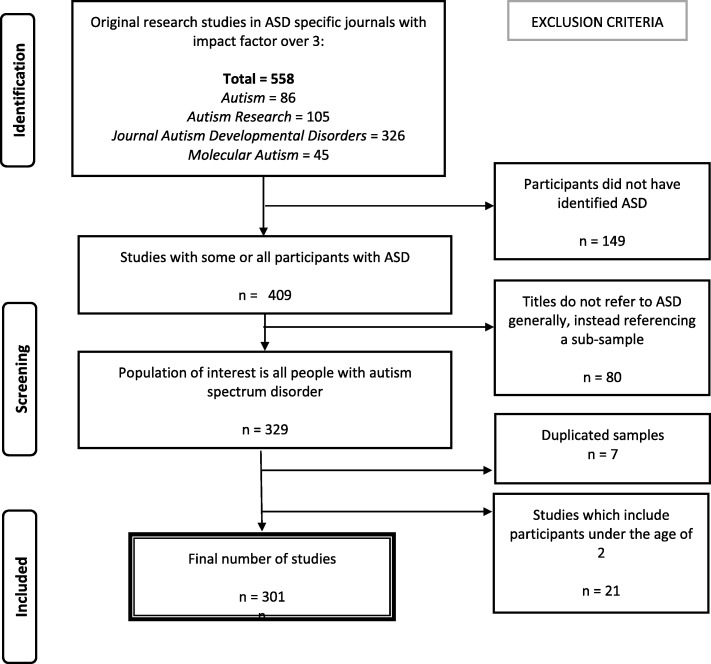
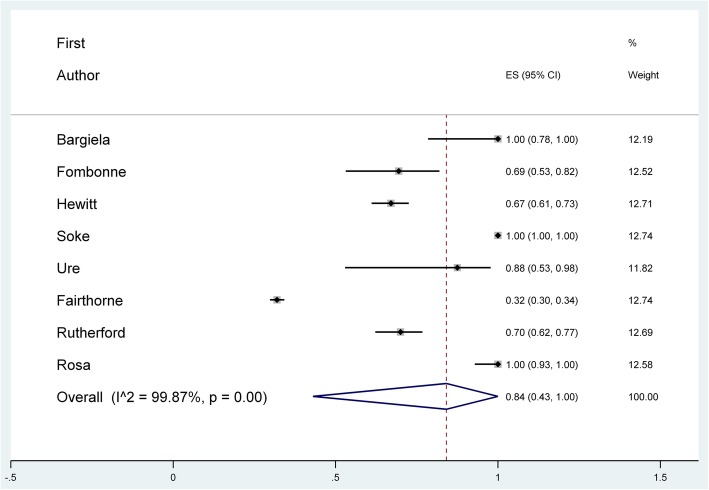
Current global estimates suggest the proportion of the population with autism spectrum disorder (ASD) who have intellectual disability (ID) is approximately 50%. Our objective was to ascertain the existence of selection bias due to under-inclusion of populations with ID across all fields of autism research. A sub-goal was to evaluate inconsistencies in reporting of findings. This review covers all original research published in 2016 in autism-specific journals with an impact factor greater than 3. Across 301 included studies, 100,245 participants had ASD. A random effects meta-analysis was used to estimate the proportion of participants without ID. Selection bias was defined as where more than 75% of participants did not have ID. Meta-analysis estimated 94% of all participants identified as being on the autism spectrum in the studies reviewed did not have ID (95% CI 0.91–0.97). Eight out of ten studies demonstrated selection bias against participants with ID. The reporting of participant characteristics was generally poor: information about participants’ intellectual ability was absent in 38% of studies ( n = 114). Where there was selection bias on ID, only 31% of studies mentioned lack of generalisability as a limitation. We found selection bias against ID throughout all fields of autism research. We recommend transparent reporting about ID and strategies for inclusion for this much marginalised group.
Overview
The claims and statistics of this paper haven’t been checked yet.
Free: it reads the open-access text and checks the first 5 claims that cite a source we can check. Create a free account to check every claim.
Integrity signals
Registry
Cites
Statistics
Figures
Verification
Claims the paper makes
The claims and statistics of this paper haven’t been checked yet.
Free: it reads the open-access text and checks the first 5 claims that cite a source we can check. Create a free account to check every claim.
Claims other papers make about this one
Each is checked against this paper’s own text: does it say what the citing paper says it does?
The source backs part of the claim, not all of it — or backs it for a different population, condition or comparison.
In the citing paper
“Russell et al. (2019), examining autism research papers published in 2016, covering 301 studies and more than 100,000 participants, estimated that 94% of all ASD participants had IQ in the average range, and 80% of studies showed selection bias against participants with intellectual disability.”
From Annual Research Review: Looking back to look forward – changes in the concept of autism and implications for future research (2020) · cites this paper as Russell et al. (2019)
Experimental — accuracy not yet measuredThe cited source says what the claim attributes to it.
In the citing paper
“Beyond specific genetic syndromes (for example, FXS), there is little research on sex/gender effects in intellectual disabilities, which is also reflected in the autism literature insofar as autistic people with intellectual disabilities are disproportionately under-represented304,305.”
From Sex and gender in neurodevelopmental conditions (2023) · cites this paper as [304]
The cited source says what the claim attributes to it.
In the citing paper
“The authors contrast this with an estimated 50 -55% of the autistic population that have intellectual disability.”
From Annual Research Review: Looking back to look forward – changes in the concept of autism and implications for future research (2020) · cites this paper as Russell et al. (2019)
Self-check
Percentages, sums and reported differences re-computed from the paper’s own numbers.
The self-check needs the paper’s full text.
Citations
Cites
Baio, J., Wiggins, L., Christensen, D. L., Maenner, M. J., Daniels, J., Warren, Z., Kurzius-Spencer, M., Zahorodny, W., Robinson, C., Rosenberg, et al. (2018) · MMWR. Surveillance Summaries · doi:10.15585/mmwr.ss6706a1 · Cited by 6,078
What Is the Male-to-Female Ratio in Autism Spectrum Disorder? A Systematic Review and Meta-Analysis
Loomes, R., Hull, L., & Mandy, W. P. L. (2017) · Journal of the American Academy of Child & Adolescent Psychiatry · doi:10.1016/j.jaac.2017.03.013 · Cited by 2,804
Self-citationGlobal Prevalence of Autism and Other Pervasive Developmental Disorders
Elsabbagh, M., Divan, G., Koh, Y., Kim, Y. S., Kauchali, S., Marcín, C., Montiel‐Nava, C., Patel, V., Paula, C. S., Wang, C., et al. (2012) · Autism Research · doi:10.1002/aur.239 · Cited by 2,636
Autism spectrum disorders: developmental disconnection syndromes
Geschwind, D. H., & Levitt, P. (2007) · Current Opinion in Neurobiology · doi:10.1016/j.conb.2007.01.009 · Cited by 1,411
Naarden Braun, K. V., Lopez, M., White, T., et al. (2023) · Carolina Digital Repository (University of North Carolina at Chapel Hill) · doi:10.17615/y3kk-5x30 · Cited by 1,381
The Epidemiology of Autism Spectrum Disorders
Newschaffer, C. J., Croen, L. A., Daniels, J., Giarelli, E., Grether, J. K., Levy, S. E., Mandell, D. S., Miller, L. A., Pinto-Martin, J., Reaven, J., et al. (2007) · Annual Review of Public Health · doi:10.1146/annurev.publhealth.28.021406.144007 · Cited by 1,228
A Systematic Review of Early Intensive Intervention for Autism Spectrum Disorders
Warren, Z., McPheeters, M. L., Sathe, N., Foss-Feig, J. H., Glasser, A., & Veenstra-VanderWeele, J. (2011) · Pediatrics · doi:10.1542/peds.2011-0426 · Cited by 790
IQ in children with autism spectrum disorders: Data from the special needs and autism project (SNAP)
Charman, T., Pickles, A., Simonoff, E., Chandler, S., Loucas, T., & Baird, G. (2011) · Psychological Medicine · doi:10.1017/s0033291710000991 · Cited by 599
“We’re tired, not sad”: Benefits and burdens of mothering a child with a disability
Green, S. E. (2007) · Social Science & Medicine · doi:10.1016/j.socscimed.2006.08.025 · Cited by 542
Cited by
The Lancet Commission on the future of care and clinical research in autism
Lord, C., Charman, T., Havdahl, A., Carbone, P., Anagnostou, E., Boyd, B., Carr, T., de Vries, P. J., Dissanayake, C., Divan, G., et al. (2022) · The Lancet · doi:10.1016/s0140-6736(21)01541-5 · Cited by 924
Camouflaging in autism: A systematic review
Cook, J., Hull, L., Crane, L., & Mandy, W. (2021) · Clinical Psychology Review · doi:10.1016/j.cpr.2021.102080 · Cited by 554
Self-citationHappé, F., & Frith, U. (2020) · Journal of Child Psychology and Psychiatry · doi:10.1111/jcpp.13176 · Cited by 438
“Russell et al. (2019), examining autism research papers published in 2016, covering 301 studies and more than 100,000 participants, estimated that 94% of all ASD participants had IQ in the average range, and 80% of studies showed selection bias against participants with intellectual disability.”
BackgroundUnderstanding Camouflaging as a Response to Autism-Related Stigma: A Social Identity Theory Approach
Perry, E., Mandy, W., Hull, L., & Cage, E. (2022) · Journal of Autism and Developmental Disorders · doi:10.1007/s10803-021-04987-w · Cited by 274
Self-citationState of the field: Differentiating intellectual disability from autism spectrum disorder
Thurm, A., Farmer, C., Salzman, E., Lord, C., & Bishop, S. (2019) · Frontiers in Psychiatry · doi:10.3389/fpsyt.2019.00526 · Cited by 267
“The systematic exclusion of individuals with ID in ASD-focused research may affect the validity of current estimates for rates of ID in ASD (20).”
BackgroundLai, M.-C., Anagnostou, E., Wiznitzer, M., Allison, C., & Baron-Cohen, S. (2020) · The Lancet Neurology · doi:10.1016/s1474-4422(20)30034-x · Cited by 250
Sex and gender in neurodevelopmental conditions
Bölte, S., Neufeld, J., Marschik, P. B., Williams, Z. J., Gallagher, L., & Lai, M.-C. (2023) · Nature Reviews Neurology · doi:10.1038/s41582-023-00774-6 · Cited by 249
Research priorities of the autism community: A systematic review of key stakeholder perspectives
Roche, L., Adams, D., & Clark, M. (2021) · Autism · doi:10.1177/1362361320967790 · Cited by 248
“…limited information was provided on participant characteristics across studies, making it difficult to evaluate whether the samples were representative of those across the autism spectrum (see Russell et al., 2019, for a review) or if factors such as ethnicity were proportionally represented.”
BackgroundA capabilities approach to understanding and supporting autistic adulthood
Pellicano, E., Fatima, U., Hall, G., Heyworth, M., Lawson, W., Lilley, R., Mahony, J., & Stears, M. (2022) · Nature Reviews Psychology · doi:10.1038/s44159-022-00099-z · Cited by 237
Kouroupa, A., Laws, K. R., Irvine, K., Mengoni, S. E., Baird, A., & Sharma, S. (2022) · PLOS ONE · doi:10.1371/journal.pone.0269800 · Cited by 153
Neurodiversity Studies: A New Critical Paradigm
(2020) · doi:10.4324/9780429322297 · Cited by 211
Russell, G., Kapp, S. K., Elliott, D., Elphick, C., Gwernan-Jones, R., & Owens, C. (2019) · Autism in Adulthood · doi:10.1089/aut.2018.0035 · Cited by 193
“2College of Sociology, Philosophy and Anthropology, Social Science and International Studies, University of Exeter, Exeter, United Kingdom. ª Ginny Russell et al., 2019; Published by Mary Ann Liebert, Inc.”
BackgroundSelf-citationDechsling, A., Orm, S., Kalandadze, T., Sütterlin, S., Øien, R. A., Shic, F., & Nordahl‐Hansen, A. (2021) · Journal of Autism and Developmental Disorders · doi:10.1007/s10803-021-05338-5 · Cited by 184
“A selection bias of participants above this threshold for ID is found in most areas of autism research (Russell et al., 2019), and it seems that social skills interventions using VR/AR are no exception.”
BackgroundAdams, D., & Young, K. (2021) · Review Journal of Autism and Developmental Disorders · doi:10.1007/s40489-020-00226-7 · Cited by 179
Loneliness in autistic adults: A systematic review
Umagami, K., Remington, A., Lloyd-Evans, B., Davies, J., & Crane, L. (2022) · Autism · doi:10.1177/13623613221077721 · Cited by 179
“Russell et al. (2019) recently reported that more than 90% of autistic participants in research studies do not have co-occurring intellectual disabilities.”
BackgroundBalasco, L., Provenzano, G., & Bozzi, Y. (2020) · Frontiers in Psychiatry · doi:10.3389/fpsyt.2019.01016 · Cited by 177
“I’m not just a guinea pig”: academic and community perceptions of participatory autism research
den Houting, J., Higgins, J., Isaacs, K., Mahony, J., & Pellicano, E. (2021) · Autism · doi:10.1177/1362361320951696 · Cited by 168
“…said, there are many groups within the autistic community – for example, non-speaking people and those with co-occurring intellectual disability – who have been underserved by both traditional and participatory research to date (Jack & Pelphrey, 2017; Russell et al., 2019; Stedman et al., 2019).”
BackgroundGuidelines for conducting research studies with the autism community.
Gowen, E., Taylor, R., Bleazard, T., Greenstein, A., Baimbridge, P., & Poole, D. (2019) · PubMed · Cited by 169
Mental health problems in children with intellectual disability
Totsika, V., Liew, A., Absoud, M., Adnams, C., & Emerson, E. (2022) · The Lancet Child & Adolescent Health · doi:10.1016/s2352-4642(22)00067-0 · Cited by 164
In Our Own Words: The Complex Sensory Experiences of Autistic Adults
MacLennan, K., O’Brien, S., & Tavassoli, T. (2022) · Journal of Autism and Developmental Disorders · doi:10.1007/s10803-021-05186-3 · Cited by 160
Thompson-Hodgetts, S., Labonte, C., Mazumder, R., & Phelan, S. (2020) · Research in Autism Spectrum Disorders · doi:10.1016/j.rasd.2020.101598 · Cited by 121
Hughes, M. M., Shaw, K. A., DiRienzo, M., Durkin, M. S., Esler, A., Hall‐Lande, J., Wiggins, L. D., Zahorodny, W. M., Singer, A., & Maenner, M. J. (2023) · Public Health Reports · doi:10.1177/00333549231163551 · Cited by 159
“13,14 Children with profound autism may have considerable medical complexity and likely may not be able to live independently or perform tasks of daily living as they age.”
BackgroundAI Fairness in Data Management and Analytics: A Review on Challenges, Methodologies and Applications
Chen, P., Wu, L., & Wang, L. (2023) · Applied Sciences · doi:10.3390/app131810258 · Cited by 155
Suicidality in autistic youth: A systematic review and meta-analysis
O'Halloran, L., Coey, P., & Wilson, C. (2022) · Clinical Psychology Review · doi:10.1016/j.cpr.2022.102144 · Cited by 146
Brede, J., Cage, E., Trott, J., Palmer, L., Smith, A., Serpell, L., Mandy, W., & Russell, A. (2022) · Clinical Psychology Review · doi:10.1016/j.cpr.2022.102131 · Cited by 139
Self-citationPrevalence and Disparities in the Detection of Autism Without Intellectual Disability
Shenouda, J., Barrett, E. S., Davidow, A. L., Sidwell, K., Lescott, C., Halperin, W., Silenzio, V., & Zahorodny, W. M. (2023) · PEDIATRICS · doi:10.1542/peds.2022-056594 · Cited by 131
Crane, L., Hearst, C., Ashworth, M., Davies, J., & Hill, E. L. (2021) · Journal of Autism and Developmental Disorders · doi:10.1007/s10803-020-04486-4 · Cited by 112
Representativeness of autistic samples in studies recruiting through social media
Rødgaard, E., Jensen, K. L., Miskowiak, K. W., & Mottron, L. (2022) · Autism Research · doi:10.1002/aur.2777 · Cited by 127
“Underrepresentation of intellectual disability is widespread in the autism literature (Russell et al., 2019), and this may thus not be a bias that is specific to autism research using online recruitment.”
BackgroundAutistic identity: A systematic review of quantitative research
Davies, J., Cooper, K., Killick, E., Sam, E., Healy, M., Thompson, G. A., Mandy, W., Redmayne, B. J. M., & Crane, L. (2024) · Autism Research · doi:10.1002/aur.3105 · Cited by 124
“…target populations were “ Autistic adults ” but either did not include information around whether participants had a co-occurring intellectual disability or excluded this group from participating (see Russell et al., 2019 for further discussion of this issue in the context of autism research).”
BackgroundSelf-citationTechnology and Sustainable Development: The Promise and Pitfalls of Techno-Solutionism
Sætra, H. S. (2023) · Routledge eBooks · doi:10.1201/9781003325086 · Cited by 120
Diemer, M. C., Gerstein, E. D., & Regester, A. (2022) · Autism · doi:10.1177/13623613221113501 · Cited by 106
“Despite children with comorbid intellectual disability making up approximately 50% of the population of persons with autism, 94% of autism research participants do not have co-occurring intellectual disability (i.e. are cognitively able; Russell et al., 2019; Shaw et al., 2021).”
BackgroundSchool participation of autistic youths: The influence of youth, family and school factors
Li, B., Heyne, D. A., Scheeren, A. M., Blijd-Hoogewys, E. M. A., & Rieffe, C. J. (2024) · Autism · doi:10.1177/13623613231225490 · Cited by 103
“A review study (Russell et al., 2019) highlighted that approximately 50% of the autistic population were estimated to have intellectual disabilities, whereas most autism research, including our study, has been conducted with participants who do not have intellectual disabilities.”
Background“It Is a Big Spider Web of Things”: Sensory Experiences of Autistic Adults in Public Spaces
MacLennan, K., Woolley, C., andsensory, E., Heasman, B., Starns, J., George, B., & Manning, C. (2023) · Autism in Adulthood · doi:10.1089/aut.2022.0024 · Cited by 96
“52 In addition, our primary recruitment method of using social media may have further limited our participant demographics, such as by not reaching older adults as the majority of our sample were below the age of 35 years.”
Enhanced rationality in autism spectrum disorder
Rozenkrantz, L., D’Mello, A. M., & Gabrieli, J. D. E. (2021) · Trends in Cognitive Sciences · doi:10.1016/j.tics.2021.05.004 · Cited by 89
“Across behavioral and neuroimaging research on ASD, there is a strong selection bias that results in an over-representation of individuals with ASD who are comparable to neurotypical individuals in their language and cognitive skills [99,100].”
BackgroundSex Differences in Age of Diagnosis and First Concern among Children with Autism Spectrum Disorder
McDonnell, C. G., DeLucia, E. A., Hayden, E. P., Penner, M., Curcin, K., Anagnostou, E., Nicolson, R., Kelley, E., Georgiades, S., Liu, X., et al. (2021) · Journal of Clinical Child & Adolescent Psychology · doi:10.1080/15374416.2020.1823850 · Cited by 69
“In addition, the majority of the children in the sample had IQ scores above 70; future research examining ASD identification among minimally verbal children or those with co-occurring ID is critical given the systematic exclusion of individuals with ID from ASD research (Russell et al., 2019).”
BackgroundA review of executive functioning challenges and strengths in autistic adults
John, T. S., Woods, S. E. O., Bode, T., Ritter, C., & Estes, A. M. (2021) · The Clinical Neuropsychologist · doi:10.1080/13854046.2021.1971767 · Cited by 83
“Autistic adults have described exceptional ability to persist in completing tasks and attending to details without distraction, particularly for areas of interest to them (Russell et al., 2019).”
BackgroundManyukhina, V. O., Prokofyev, A. O., Galuta, I. A., Goiaeva, D. E., Obukhova, T. S., Schneiderman, J. F., Altukhov, D., Stroganova, T. A., & Orekhova, E. V. (2022) · Molecular Autism · doi:10.1186/s13229-022-00498-2 · Cited by 85
“Participants with below-average IQ are heavily underrepresented in autism research (68) and most neuroimaging studies only include highfunctioning individuals with ASD (16).”
BackgroundRubenstein, E., & Furnier, S. (2021) · Autism in Adulthood · doi:10.1089/aut.2020.0031 · Cited by 65
“34 We opt for the defi-nition of selection bias used in the epidemiology literature.”
Linden, A., Best, L., Elise, F., Roberts, D., Branagan, A., Tay, Y. B. E., Crane, L., Cusack, J., Davidson, B., Davidson, I., et al. (2023) · Autism · doi:10.1177/13623613221117931 · Cited by 78
“For example, our review showed a common issue in autism research, namely that most trials only included autistic people without ID or included only a small number of autistic participants with ID (G. Russell et al., 2019).”
BackgroundInfluentialSelf-citationBundgaard‐Nielsen, C., Lauritsen, M. B., Knudsen, J. K., Rold, L. S., Larsen, M. H., Hindersson, P., Villadsen, A. B., Leutscher, P. D. C., Hagstrøm, S., Nyegaard, M., et al. (2023) · Gut Microbes · doi:10.1080/19490976.2023.2211923 · Cited by 77
“Finally, selection bias is a common issue in case-control studies, as demonstrated by Russel et al.81, with families experiencing more severe disorders or social problems being less likely to volunteer to participate in scientific studies.”
BackgroundDwyer, P. S. R., Williams, Z. J., Lawson, W. B., & Rivera, S. M. (2024) · Neurodiversity · doi:10.1177/27546330241237883 · Cited by 77
“Indeed, there may be many aspects of atypical attention and hyper-focus that are bene fi cial in many contexts (Russell et al., 2019a).”
MacLennan, K., Rossow, T., & Tavassoli, T. (2021) · Autism · doi:10.1177/13623613211016110 · Cited by 74
Employment profiles of autistic adults in Australia
Harvery, M., Froude, E. H., Foley, K., Trollor, J. N., & Arnold, S. R. C. (2021) · Autism Research · doi:10.1002/aur.2588 · Cited by 54
“Additionally, the difficulties and barriers of recruiting people with intellectual disability and low educational and occupational status to participate in research has been the topic of many other papers (EllardGray et al., 2015; Lennox et al., 2005; Patel et al., 2003; Russell et al., 2019).”
BackgroundAutism Spectrum Disorder Across the Lifespan
Tafolla, M., Singer, H., & Lord, C. (2025) · Annual Review of Clinical Psychology · doi:10.1146/annurev-clinpsy-081423-031110 · Cited by 71
Pedapati, E. V., Schmitt, L., Ethridge, L. E., Miyakoshi, M., Sweeney, J. A., Liu, R., Smith, E. G., Shaffer, R. C., Dominick, K. C., Gilbert, D. L., et al. (2022) · Communications Biology · doi:10.1038/s42003-022-03395-9 · Cited by 60
The Autism Phenome Project: Toward Identifying Clinically Meaningful Subgroups of Autism
Nordahl, C. W., Andrews, D. S., Dwyer, P. S. R., Waizbard‐Bartov, E., Restrepo, B., Lee, J. K., Heath, B. E., Saron, C. D., Rivera, S. M., Solomon, M., et al. (2022) · Frontiers in Neuroscience · doi:10.3389/fnins.2021.786220 · Cited by 59
Interactive Technologies and Autism, Second Edition
Kientz, J. A., Hayes, G. R., Goodwin, M. S., Gelsomini, M., & Abowd, G. D. (2020) · Synthesis lectures on assistive, rehabilitative, and health-preserving technologies · doi:10.2200/s00988ed2v01y202002arh013 · Cited by 60
Eaton, C. B., Tarver, J., Shirazi, A., Pearson, E., Walker, L., Bird, M. O., Oliver, C., & Waite, J. (2021) · Journal of Intellectual Disability Research · doi:10.1111/jir.12807 · Cited by 57
Kuo, S. S., van der Merwe, C., Fu, J. M., Carey, C. E., Talkowski, M. E., Bishop, S. L., & Robinson, E. (2022) · Archives of Pediatrics and Adolescent Medicine · doi:10.1001/jamapediatrics.2022.2423 · Cited by 57
Autistic camouflaging across the spectrum
Petrolini, V., Rodríguez-Armendariz, E., & Vicente, A. (2022) · New Ideas in Psychology · doi:10.1016/j.newideapsych.2022.100992 · Cited by 55
“Data on intellectual disability widely oscillate between 16,7% – 84% (Postorino et al., 2016), with global estimates suggesting a proportion of approximately 50% (Russell et al., 2019).”
Autism through midlife: trajectories of symptoms, behavioral functioning, and health
Hong, J., DaWalt, L. S., Taylor, J. L., Haider, A. H., & Seltzer, M. M. (2023) · Journal of Neurodevelopmental Disorders · doi:10.1186/s11689-023-09505-w · Cited by 55
“Notably, beyond longitudinal studies that extend from childhood into adulthood, most studies of autistic adults have included primarily or exclusively individuals who do not have intellectual disability (ID) (e.g., [27–29]).”
BackgroundNeurodiversity, Advocacy, Anti-Therapy
Chapman, R., & Bovell, V. (2022) · Autism and child psychopathology series · doi:10.1007/978-3-030-88538-0_67 · Cited by 55
Potential mechanisms underlying the association between feeding and eating disorders and autism
Adams, K. L., Mandy, W., Catmur, C., & Bird, G. (2024) · Neuroscience & Biobehavioral Reviews · doi:10.1016/j.neubiorev.2024.105717 · Cited by 55
“Given that a high proportion of autistic people do have an intellectual disability, with one review suggesting rates are as high as 50% (Russell et al., 2019), further research should aim to explore the association between autism and all FEDs in more representative samples.”
Self-citationChen, Y., Xi, Z., Saunders, R., Simmons, D., Totsika, V., & Mandy, W. (2024) · Clinical Psychology Review · doi:10.1016/j.cpr.2024.102516 · Cited by 53
Self-citationMaking Research Possible: Barriers and Solutions For Those With ASD and ID
Thurm, A., Halladay, A., Mandell, D., Maye, M., Ethridge, S., & Farmer, C. (2022) · Journal of Autism and Developmental Disorders · doi:10.1007/s10803-021-05320-1 · Cited by 52
Bruce, H., Munday, K., & Kapp, S. K. (2023) · Autism in Adulthood · doi:10.1089/aut.2023.0003 · Cited by 52
“Unfortunately, we were unable to interview non-speaking participants and those with learning disabilities, which continue to be overlooked groups in autism research.(82) Future research on this area may benefit from a purposive sampling technique that ensures more diversity within its participants.”
BackgroundAmbrose, K., Simpson, K., & Adams, D. (2021) · Clinical Psychology Review · doi:10.1016/j.cpr.2021.102086 · Cited by 56
Hobson, H., Linden, A. H., Crane, L., & Kalandadze, T. (2023) · Research in Autism · doi:10.1016/j.rasd.2023.102196 · Cited by 49
“If this issue is not addressed, only a subset of autistic participants will be able to take part in autism research, which will lead to bias in study results (see Russell et al., 2019, for discussions on selection bias in autism research).”
BackgroundMcDonnell, C. G., DeLucia, E. A., Hayden, E. P., Anagnostou, E. A., Nicolson, R., Kelley, E. A., Georgiades, S., Liu, X., & Stevenson, R. A. (2019) · Journal of Autism and Developmental Disorders · doi:10.1007/s10803-019-04320-6 · Cited by 49
McKinney, A., Weisblatt, E., Hotson, K. L., Ahmed, Z. B., Días, C., Shalom, D. B., Foster, J., Murphy, S., Villar, S. S., & Belmonte, M. K. (2021) · Autism · doi:10.1177/1362361321998916 · Cited by 49
“These children’s difficulties, and interventions to remediate them, remain underresearched overall (Russell et al., 2019).”
BackgroundKim, S. Y., & Gillespie‐Lynch, K. (2022) · Journal of Autism and Developmental Disorders · doi:10.1007/s10803-022-05739-0 · Cited by 50
McDonnell, C. G., & DeLucia, E. A. (2021) · Autism in Adulthood · doi:10.1089/aut.2020.0046 · Cited by 47
“84 4 .”
Tarver, J., Pearson, E., Edwards, G., Shirazi, A., Potter, L., Malhi, P., & Waite, J. (2020) · Autism · doi:10.1177/1362361320962366 · Cited by 46
“Within the autism literature, there are high levels of exclusion of autistic individuals with ID from research (Russell et al., 2019) and it is often unclear to what extent research findings generalise to those with ID.”
BackgroundGoodwill, A. M., Low, L. T., Fox, P. T., Fox, P. M., Poon, K. K., Bhowmick, S. S., & Chen, S. A. (2023) · Brain Imaging and Behavior · doi:10.1007/s11682-022-00754-2 · Cited by 44
Quinton, A. M. G., Ali, D., Danese, A., Happe, F. G. E., & Rumball, F. (2024) · Review Journal of Autism and Developmental Disorders · doi:10.1007/s40489-024-00430-9 · Cited by 45
“As in Rumball (2019) review, autistic people with co-occurring ID continue to be under-represented in the studies identified in this review and in the autism research field more widely (Jack & Pelphrey, 2017; Russell et al., 2019a, b).”
Moving forwards not backwards: heterogeneity in autism spectrum disorders
Hobson, H., & Petty, S. (2021) · Molecular Psychiatry · doi:10.1038/s41380-021-01226-7 · Cited by 42
John, B. S., Hickey, E., Kastern, E., Russell, C., Russell, T., Mathy, A., Peterson, B., Wigington, D., Pellien, C., Caudill, A., et al. (2022) · International Journal for Equity in Health · doi:10.1186/s12939-022-01730-4 · Cited by 42
“…an intellectual disability [4–6] •Research that includes individuals with intellectual disability is primarily disability focused research [5, 6, 27] Interest in or agreement with research project aims •Individuals may be hesitant to join research based on concerns that the results of the…”
Parent Training for Dental Care in Underserved Children With Autism: A Randomized Controlled Trial
Fenning, R. M., Butter, E. M., Macklin, E. A., Norris, M. N., Hammersmith, K. J., McKinnon-Bermingham, K., Chan, J. G. M., Stephenson, K. G., Albright, C. M., Scherr, J., et al. (2022) · PEDIATRICS · doi:10.1542/peds.2021-050691 · Cited by 43
Williams, Z. J., Failla, M. D., Davis, S., Heflin, B. H., Okitondo, C. D., Moore, D., & Cascio, C. J. (2019) · Scientific Reports · doi:10.1038/s41598-019-49103-2 · Cited by 40
Girolamo, T. M., Parker, T., & Eigsti, I. (2022) · Frontiers in Neuroscience · doi:10.3389/fnins.2022.988092 · Cited by 41
“For instance, nearly all (94%) autism studies exclude individuals with intellectual disabilities, but studies typically do not report information on intelligence or limitations to generalizability (Russell et al., 2019).”
BackgroundInclusion and Rigor in Qualitative Autism Research: A Response to Van Schalkwyk and Dewinter (2020)
Crane, L., Sesterka, A., & den Houting, J. (2020) · Journal of Autism and Developmental Disorders · doi:10.1007/s10803-020-04634-w · Cited by 39
Temporal Synchrony in Autism: a Systematic Review
Baldwin, M. M., Xiao, Z., & Murray, A. L. (2021) · Review Journal of Autism and Developmental Disorders · doi:10.1007/s40489-021-00276-5 · Cited by 40
Kuo, S. S., & Eack, S. M. (2020) · Frontiers in Psychiatry · doi:10.3389/fpsyt.2020.00187 · Cited by 38
Obrusníková, I., Firkin, C. J., & Farquhar, W. B. (2021) · Disability and health journal · doi:10.1016/j.dhjo.2021.101185 · Cited by 37
Davies, J., Romualdez, A. M., Malyan, D., Heasman, B., Livesey, A., Walker, A., Pellicano, E., & Remington, A. (2024) · Autism in Adulthood · doi:10.1089/aut.2022.0087 · Cited by 36
Trait Anxiety in Individuals on the Autism Spectrum: a Systematic Review
Jolliffe, R., Adams, D., & Simpson, K. (2022) · Review Journal of Autism and Developmental Disorders · doi:10.1007/s40489-022-00308-8 · Cited by 35
Time to Change How We Measure Quality of Life and Well-Being in Autism: A Systematic Review
Simpson, K., Paynter, J. M., Westerveld, M. F., van der Meer, L. A. J., Patrick, L., Hogg, G., Heussler, H., Heyworth, M., Gable, A., Chandran, H. S., et al. (2024) · Review Journal of Autism and Developmental Disorders · doi:10.1007/s40489-024-00440-7 · Cited by 34
“Russell et al. (2019) reported that 94% of research studies published in 2016 did not include autistic participants with a co-occurring intellectual disability.”
Smith, J. R., Hopkins, C. E., Xiong, J., Luccarelli, J., Shultz, E. K. B., & Vandekar, S. (2022) · Journal of Autism and Developmental Disorders · doi:10.1007/s10803-022-05868-6 · Cited by 34
“…for Disease Control estimates that 31–50% of individuals with ASD meet criteria for ASD+ID. (Christensen, 2019; Maenner, 2020) However, studies have found that only 6% of participants in ASD research have ASD+ID; (Russell et al., 2019) with rates of inclusion potentially worsening over time.”
Parent-Reported Barriers and Enablers of Strengths in their Children with Autism
Clark, M., & Adams, D. (2020) · Journal of Child and Family Studies · doi:10.1007/s10826-020-01741-1 · Cited by 34
The Rise of Autism: Risk and Resistance in the Age of Diagnosis
Russell, G. (2020) · Routledge eBooks · doi:10.4324/9780429285912 · Cited by 34
Self-citationRyan, J., Brown, H. M., Borden, A., Devlin, C., Kedmy, A., Lee, A., Nicholas, D. B., Kingsley, B. C., & Thompson‐Hodgetts, S. (2024) · Autism · doi:10.1177/13623613241254432 · Cited by 34
“For example, Cheak-Zamora et al. (2020) found that caregivers reported low capacity for self-determination for their autistic young adults, especially those with ID, which occurs in an estimated 50% of autistic people (Russell et al., 2019).”
Pascoe, M. I., Forbes, K., de la Roche, L., Derby, B., Psaradellis, E., Anagnostou, E. A., Nicolson, R., Georgiades, S., & Kelley, E. A. (2023) · Autism Research · doi:10.1002/aur.3015 · Cited by 32
“However, past research has not been inclusive of the wide range of IQ in the autistic population by only including participants with relatively high IQ (Russell et al., 2019).”
MethodResearch, Clinical, and Sociological Aspects of Autism
Whiteley, P., Carr, K., & Shattock, P. (2021) · Frontiers in Psychiatry · doi:10.3389/fpsyt.2021.481546 · Cited by 30
Smith, J. R., York, T., Warn, S., Borodge, D., Pierce, D. L., & Fuchs, D. C. (2023) · Journal of Child and Adolescent Psychopharmacology · doi:10.1089/cap.2022.0067 · Cited by 30
“…of PA (Lord et al., 2022), limited treatment options (Henneberry et al., 2021), long-standing exclusion of PA individuals from clinical research (Russell et al., 2019), greatly elevated risk of poor outcomes and/or long-term residential placement in this patient population (Lord et al., 2022),…”
Bidirectional genetic overlap between autism spectrum disorder and cognitive traits
Hope, S., Shadrin, A. A., Lin, A., Bahrami, S., Rødevand, L. N., Frei, O., Hübenette, S. J., Cheng, W., Hindley, G., Nag, H. E., et al. (2023) · Translational Psychiatry · doi:10.1038/s41398-023-02563-7 · Cited by 30
“On the other hand, there are indications that high-functioning ASD may have been overrepresented in GWASs [23, 24], which have shown a positive genetic correlation (r g ) between ASD and cognitive abilities [10, 25], with r g = 0.2 – 0.3 [10, 26].”
BackgroundInfluentialHealy, S., Pacanowski, C., Kennedy, L., & Obrusníková, I. (2021) · Autism · doi:10.1177/13623613211006989 · Cited by 20
“Indeed, selection bias against autistic adults with intellectual disabilities is pervasive in the scientific literature (Russell et al., 2019).”
BackgroundJenner, L., Richards, C., Howard, R., & Moss, J. F. (2023) · Current Developmental Disorders Reports · doi:10.1007/s40474-023-00276-6 · Cited by 29
Peachey, M., & Crane, L. (2024) · Autism in Adulthood · doi:10.1089/aut.2023.0071 · Cited by 29
“64 This is furthermore significant as the queer identities of autistic people with a learning disability are more likely to be dependent on the attitudes of their caregivers and support staff.”
Camouflaging in autism: a systematic reviewPreprint
Cook, J. M., Hull, L., Crane, L., & Mandy, W. (2021) · OSF Preprints (OSF Preprints) · doi:10.31219/osf.io/u5b9e · Cited by 29
Self-citationCriss‐crossing autism spectrum disorder and adult neurogenesis
Bicker, F., Nardi, L., Maier, J., Vasić, V., & Schmeißer, M. J. (2021) · Journal of Neurochemistry · doi:10.1111/jnc.15501 · Cited by 28
A transdiagnostic model of psychiatric symptom co‐occurrence and autism spectrum disorder
Rodriguez-Seijas, C. A., Gadow, K. D., Rosen, T. E., hyunsik, K., Lerner, M. D., & Eaton, N. R. (2019) · Autism Research · doi:10.1002/aur.2228 · Cited by 29
Crane, L., Davies, J., Fritz, A., O’Brien, S., Worsley, A., & Remington, A. (2021) · British Educational Research Journal · doi:10.1002/berj.3753 · Cited by 28
“…techniques employed (an online survey and in-depth interviews) meant that some young people with intellectual disability/ies were likely excluded (as is common in research on this group; e.g. Chiang et al ., 2012, 2013; Mitchell & Beresford, 2014; Roux et al ., 2015; Russell et al ., 2019).”
MethodBrief Report: Perceived Barriers to Physical Activity Among a National Sample of Autistic Adults
Healy, S., Brewer, B. C., Laxton, P., Powers, B. M., Daly, J., McGuire, J., & Patterson, F. (2021) · Journal of Autism and Developmental Disorders · doi:10.1007/s10803-021-05319-8 · Cited by 27
Boucher, T. Q., McIntyre, C. L., & Iarocci, G. (2022) · Advances in Neurodevelopmental Disorders · doi:10.1007/s41252-022-00310-5 · Cited by 28
“…intellectual disability alone, autistic youth with intellectual disability report greater difficulty participating in leisure activities, activities in the home, with friends, and participating in classroom learning (Hilton et al., 2021) and are under-represented in research (Russell et al., 2019).”
BackgroundBradbury, K. R., Anderberg, E., Huang-Storms, L. Y., Vasile, I., Greene, R. K., & Duvall, S. W. (2021) · Journal of Autism and Developmental Disorders · doi:10.1007/s10803-021-05016-6 · Cited by 29
“viduals with intellectual disability (ID) both in the ASD group and the ID only group represents a strength of the study, as a vast majority of ASD research does not include individuals with ID (Russell et al., 2019).”
BackgroundPemovska, T., Loizou, S., Appleton, R., Spain, D., Stefanidou, T., Kular, A., Cooper, R. E., Greenburgh, A., Griffiths, J., Barnett, P., et al. (2024) · Psychological Medicine · doi:10.1017/s0033291724001089 · Cited by 29
“Evidence on effective strategies for autistic individuals with ID was lacking, indicating a potential bias in the selection of study participants (Russell et al., 2019).”
BackgroundSelf-citationProfiles of minimally verbal autistic children: Illuminating the neglected end of the spectrum
Pizzano, M., Shire, S. Y., Shih, W., Levato, L., Landa, R. J., Lord, C., Smith, T. H., & Kasari, C. L. (2024) · Autism Research · doi:10.1002/aur.3151 · Cited by 26
“These data are particularly concerning for those who begin with the most impaired speech and language abilities and have co-occurring intellectual disability, since current studies rarely include these participants (Koegel et al., 2019; Russell et al., 2019; Stedman et al., 2019).”
BackgroundExercise Interventions for Autistic People: An Integrative Review of Evidence from Clinical Trials
Rivera, R. A., Robertson, M. C., & McCleery, J. P. (2025) · Current Psychiatry Reports · doi:10.1007/s11920-025-01597-6 · Cited by 25
“While strict exclusion criteria can help researchers draw more definitive conclusions, studies which exclude participation in this way do not account for the heterogeneity amongst autistic peoples’ presentations and thus, limits the generalizability of study findings [56] [57].”
Kuschner, E. S., Kim, M., Bloy, L., DiPiero, M. A., Edgar, J. C., & Roberts, T. P. L. (2021) · Journal of Neurodevelopmental Disorders · doi:10.1186/s11689-020-09350-1 · Cited by 25
“This restriction limits our understanding of brain function in ASD [6].”
Background
Metadata
- Authors
- Russell, G., Mandy, W., Elliott, D., White, R., Pittwood, T., & Ford, T.
- Affiliations
- University of Exeter (GB)
- University College London (GB)
- Corresponding author
- Russell, Ginny
- Venue
- Molecular Autism
- Published
- 2019-03-01
- Volume
- 10
- Issue
- 1
- Pages
- 9-9
- ISSN
- 2040-2392 (ISSN-L)
- PMC
- PMC6397505
- OpenAlex
- W2927010782
- Cited by
- 366
- References
- 50
- Citations by year
- 2026: 47 · 2025: 60 · 2024: 56 · 2023: 52 · 2022: 57 · 2021: 44 · 2020: 38 · 2019: 11
- FWCI
- 4.75
- Type
- journal article
- Language
- en
- Open access
- gold
- doi.org
- Licence
- cc-by
- creativecommons.org/licenses/by/4.0/ (tdm)
- Locations
- Molecular Autism (publishedVersion, cc-by)
- Europe PMC (PubMed Central) (publishedVersion, cc-by)
- PubMed Central (publishedVersion, cc-by)
- PubMed (publishedVersion)
- DOAJ (DOAJ: Directory of Open Access Journals) (submittedVersion)
- UCL Discovery (University College London) (submittedVersion)
- Figshare (submittedVersion, cc-by)
- Open Research Exeter (University of Exeter) (submittedVersion, cc-by)
- Funders
- Wellcome Trust (108676/Z/1 SfZ)
- Topics
- Life Sciences › Neuroscience › Cognitive Neuroscience › Autism Spectrum Disorder Research
- Social Sciences › Decision Sciences › Statistics, Probability and Uncertainty › Meta-analysis and systematic reviews
- Health Sciences › Medicine › Public Health, Environmental and Occupational Health › Down syndrome and intellectual disability research
- Keywords
- autism spectrum disorder, intellectual disability, selection bias, underrepresentation in research, research generalisability, marginalised populations
- MeSH terms
- Autism Spectrum Disorder, Humans, Intellectual Disability, Selection Bias, Patient Selection, Biomedical Research
About these checks
Registry, retraction, Cites and statistics results are computed, not judged, with one exception: a printed reference that no index lists is read once by a model before it counts as a citation error. Claims are extracted by a model and kept only when their quote appears verbatim in the text; each cited source is then checked, with a model’s help, for whether it says what the claim relies on. Those verdicts can be wrong — read the claim’s quote and the cited source before relying on one.
Statistics and arithmetic are recomputed, not judged.
Confidence bands are shown only for fields calibrated on our annotated test set. None is calibrated yet, so no band is shown.
What counts as a claim ›How we measure confidence ›How we check this ›
Are you an author, or do you see a problem with this page? Request a review
Data sources
Bibliographic data: Semantic Scholar, OpenAlex, Crossref.
Contains information from the Semantic Scholar Academic Graph Datasets, made available under the ODC Attribution License (ODC-BY 1.0).
Semantic Scholar’s data is described in: Kinney, R., et al. (2023). The Semantic Scholar Open Data Platform. arXiv:2301.10140.
