

Selection bias on intellectual ability in autism research: a cross-sectional review and meta-analysis
Open accessThe DOI matches its Crossref record; 51 of the 51 references it cites were found in a registry or an index.
Abstract
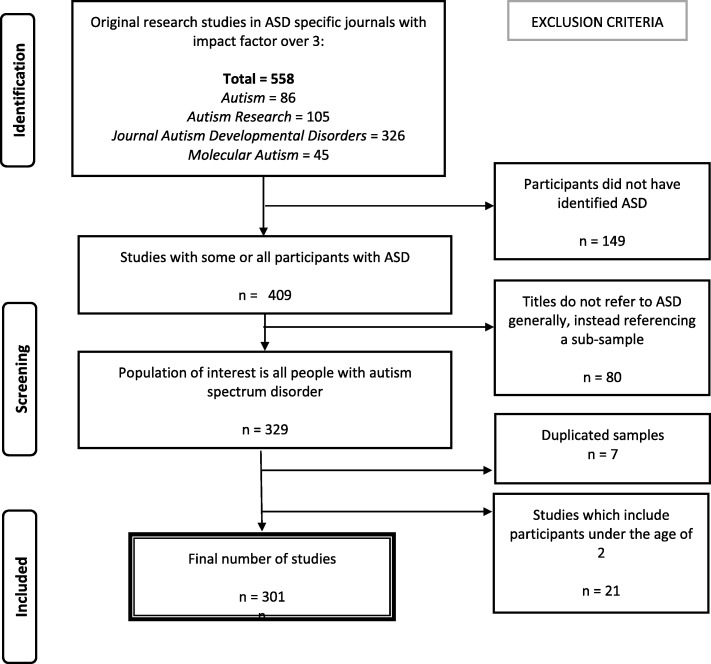
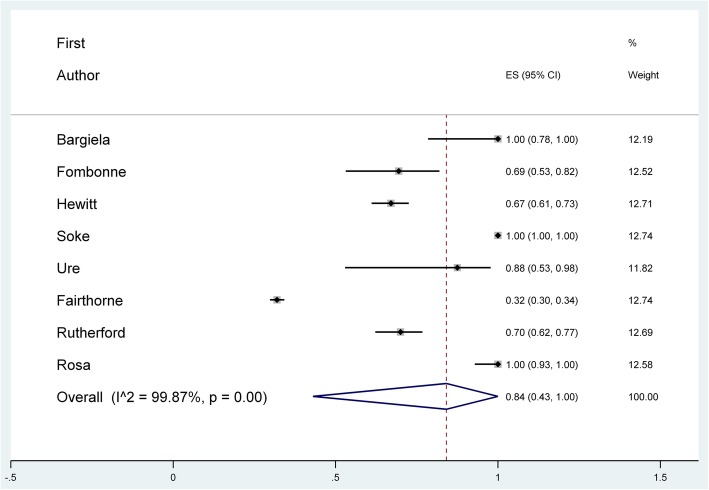
Current global estimates suggest the proportion of the population with autism spectrum disorder (ASD) who have intellectual disability (ID) is approximately 50%. Our objective was to ascertain the existence of selection bias due to under-inclusion of populations with ID across all fields of autism research. A sub-goal was to evaluate inconsistencies in reporting of findings. This review covers all original research published in 2016 in autism-specific journals with an impact factor greater than 3. Across 301 included studies, 100,245 participants had ASD. A random effects meta-analysis was used to estimate the proportion of participants without ID. Selection bias was defined as where more than 75% of participants did not have ID. Meta-analysis estimated 94% of all participants identified as being on the autism spectrum in the studies reviewed did not have ID (95% CI 0.91–0.97). Eight out of ten studies demonstrated selection bias against participants with ID. The reporting of participant characteristics was generally poor: information about participants’ intellectual ability was absent in 38% of studies ( n = 114). Where there was selection bias on ID, only 31% of studies mentioned lack of generalisability as a limitation. We found selection bias against ID throughout all fields of autism research. We recommend transparent reporting about ID and strategies for inclusion for this much marginalised group.
Overview
The claims and statistics of this paper haven’t been checked yet.
Free: it reads the open-access text and checks the first 5 claims that cite a source we can check. Create a free account to check every claim.
Integrity signals
Registry
Cites
Statistics
Figures
Verification
Claims the paper makes
The claims and statistics of this paper haven’t been checked yet.
Free: it reads the open-access text and checks the first 5 claims that cite a source we can check. Create a free account to check every claim.
Claims other papers make about this one
Each is checked against this paper’s own text: does it say what the citing paper says it does?
The source backs part of the claim, not all of it — or backs it for a different population, condition or comparison.
In the citing paper
“Russell et al. (2019), examining autism research papers published in 2016, covering 301 studies and more than 100,000 participants, estimated that 94% of all ASD participants had IQ in the average range, and 80% of studies showed selection bias against participants with intellectual disability.”
From Annual Research Review: Looking back to look forward – changes in the concept of autism and implications for future research (2020) · cites this paper as Russell et al. (2019)
Experimental — accuracy not yet measuredThe cited source says what the claim attributes to it.
In the citing paper
“Beyond specific genetic syndromes (for example, FXS), there is little research on sex/gender effects in intellectual disabilities, which is also reflected in the autism literature insofar as autistic people with intellectual disabilities are disproportionately under-represented304,305.”
From Sex and gender in neurodevelopmental conditions (2023) · cites this paper as [304]
The cited source says what the claim attributes to it.
In the citing paper
“The authors contrast this with an estimated 50 -55% of the autistic population that have intellectual disability.”
From Annual Research Review: Looking back to look forward – changes in the concept of autism and implications for future research (2020) · cites this paper as Russell et al. (2019)
Self-check
Percentages, sums and reported differences re-computed from the paper’s own numbers.
The self-check needs the paper’s full text.
Citations
Cites
Baio, J., Wiggins, L., Christensen, D. L., Maenner, M. J., Daniels, J., Warren, Z., Kurzius-Spencer, M., Zahorodny, W., Robinson, C., Rosenberg, et al. (2018) · MMWR. Surveillance Summaries · doi:10.15585/mmwr.ss6706a1 · Cited by 6,078
What Is the Male-to-Female Ratio in Autism Spectrum Disorder? A Systematic Review and Meta-Analysis
Loomes, R., Hull, L., & Mandy, W. P. L. (2017) · Journal of the American Academy of Child & Adolescent Psychiatry · doi:10.1016/j.jaac.2017.03.013 · Cited by 2,804
Self-citationGlobal Prevalence of Autism and Other Pervasive Developmental Disorders
Elsabbagh, M., Divan, G., Koh, Y., Kim, Y. S., Kauchali, S., Marcín, C., Montiel‐Nava, C., Patel, V., Paula, C. S., Wang, C., et al. (2012) · Autism Research · doi:10.1002/aur.239 · Cited by 2,636
Autism spectrum disorders: developmental disconnection syndromes
Geschwind, D. H., & Levitt, P. (2007) · Current Opinion in Neurobiology · doi:10.1016/j.conb.2007.01.009 · Cited by 1,411
Naarden Braun, K. V., Lopez, M., White, T., et al. (2023) · Carolina Digital Repository (University of North Carolina at Chapel Hill) · doi:10.17615/y3kk-5x30 · Cited by 1,381
The Epidemiology of Autism Spectrum Disorders
Newschaffer, C. J., Croen, L. A., Daniels, J., Giarelli, E., Grether, J. K., Levy, S. E., Mandell, D. S., Miller, L. A., Pinto-Martin, J., Reaven, J., et al. (2007) · Annual Review of Public Health · doi:10.1146/annurev.publhealth.28.021406.144007 · Cited by 1,228
A Systematic Review of Early Intensive Intervention for Autism Spectrum Disorders
Warren, Z., McPheeters, M. L., Sathe, N., Foss-Feig, J. H., Glasser, A., & Veenstra-VanderWeele, J. (2011) · Pediatrics · doi:10.1542/peds.2011-0426 · Cited by 790
IQ in children with autism spectrum disorders: Data from the special needs and autism project (SNAP)
Charman, T., Pickles, A., Simonoff, E., Chandler, S., Loucas, T., & Baird, G. (2011) · Psychological Medicine · doi:10.1017/s0033291710000991 · Cited by 599
“We’re tired, not sad”: Benefits and burdens of mothering a child with a disability
Green, S. E. (2007) · Social Science & Medicine · doi:10.1016/j.socscimed.2006.08.025 · Cited by 542
Cited by
Items 201–300 of 438
Simpson, K., Adams, D., Manokara, V., & Malone, S. A. (2022) · Journal of Policy and Practice in Intellectual Disabilities · doi:10.1111/jppi.12403 · Cited by 8
Understanding Atypical Social Behaviour Using Social Cognitive Theory: Lessons from Autism
Livingston, L. A., & Happe, F. G. E. (2021) · Oxford University Press eBooks · doi:10.1093/oso/9780198843290.003.0007 · Cited by 8
Trajectories of Competitive Employment of Autistic Adults through Late Midlife
Hickey, E., DaWalt, L. S., Hong, J., Taylor, J. L., & Seltzer, M. M. (2024) · Healthcare · doi:10.3390/healthcare12020265 · Cited by 8
Oxytocin in autism: Rethinking treatment and research through a neurodivergent perspective
Phan, J., Dwyer, P. S. R., Elsherif, M. M., Friedel, E., & Kapp, S. K. (2024) · Psychoneuroendocrinology · doi:10.1016/j.psyneuen.2024.107220 · Cited by 8
Social attention patterns of autistic and non-autistic adults when viewing real versus reel people
López, B., Gregory, N. J., & Freeth, M. (2023) · Autism · doi:10.1177/13623613231162156 · Cited by 8
“In a recent review, Russell et al. (2019) estimated that 94% of autistic participants in research studies published in the top 4 autism journals did not have LD.”
BackgroundWhat is autism? Identity in jeopardy and the collaborative way ahead
Alexandrovsky, M., Frayne, M., & Lai, M. (2025) · Autism · doi:10.1177/13623613251371485 · Cited by 8
“Paradoxi cally, this population has been proportionally increasingly excluded from research over the past three decades (Russell, Mandy, et al., 2019).”
Inclusion Must Be Global, Decolonized, Culturally and Linguistically Diverse, and Anti‐Normative
Srinivasan, H., Chan, T., Kim, S. Y., Obeid, R., Jones, D. R., Botha, M., Onaiwu, M. G., Tan, D. W., Waisman, T., Kapp, S. K., et al. (2025) · Journal of Social Issues · doi:10.1111/josi.70045 · Cited by 7
Saul, J., Cooke, M., Munaweera, S., & Matthews, D. E. (2026) · Molecular Autism · doi:10.1186/s13229-026-00701-8 · Cited by 7
Khudiakova, V., Sin, J., Suzuki, M., & Barnicot, K. (2026) · Journal of Developmental and Physical Disabilities · doi:10.1007/s10882-026-10055-x · Cited by 7
“Our findings are, most likely, limited by self-selection effects, echoing broader concerns about selective representation in autism research (Russell et al., 2019).”
Advancing health-care equity for autistic people: mental health as a key priority
Wechsler, D. L., Mandy, W., Lai, M., Boyd, B. A., Goodwin, M. S., Divan, G., & Leno, V. C. (2025) · The Lancet · doi:10.1016/s0140-6736(25)00667-1 · Cited by 8
Self-citationReuben, K. E., Arias, J. J., Self‐Brown, S., & Thomas, E. V. (2025) · Journal of Autism and Developmental Disorders · doi:10.1007/s10803-025-06905-w · Cited by 7
“Researchers can also seek information from both the autistic individual and an informant to ensure accuracy and completeness (Russell et al., 2019; Nicolaidis et al., 2019).”
InfluentialWolfer, P., Baumeister, F., Rudelli, N., Corrigan, G., Naigles, L., & Durrleman, S. (2024) · Journal of Autism and Developmental Disorders · doi:10.1007/s10803-024-06569-y · Cited by 7
“Consequently, only a few participants in our sample presented an intellectual impairment, resulting in a possible selection bias, a common issue ubiquitous in autism research (Russell et al., 2019).”
An investigation of autistic opinions about autism-related genomic research
Ellis, R., & Asbury, K. (2024) · Neurodiversity · doi:10.1177/27546330241287317 · Cited by 7
“We hope to conduct an equivalent study of other sub-groups within the community including Autistic people with learning dif fi culties, which is an under-represented group within autism research (Russell et al., 2019).”
Lung, S. L. M., & Bertone, A. (2021) · Journal of Autism and Developmental Disorders · doi:10.1007/s10803-021-05134-1 · Cited by 7
McKechanie, A. G., Lawrie, S. M., Whalley, H. C., & Stanfield, A. C. (2021) · Psychiatry Research Neuroimaging · doi:10.1016/j.pscychresns.2021.111426 · Cited by 7
“…have a co-occurring intellectual disability, very few of the studies investigating autism either include, or focus on, these individuals; with a recent meta-analysis estimating that only 6% of participants in the autism studies they examined had an intellectual disability (Russell et al., 2019).”
Randomized Study of Survey Recruitment Strategies for Parents of Autistic Children
Bhakta, B. B., Coleman, K. J., & Choi, K. R. (2022) · Journal of Pediatric Health Care · doi:10.1016/j.pedhc.2022.05.008 · Cited by 7
“, communication differences, social function, disability status) can lead to overt exclusion from some types of studies, whereas other exclusions may occur because of stigma (Cascio, Weiss, & Racine, 2021; Russell et al., 2019).”
BackgroundUmagami, K. (2023) · UCL Discovery (University College London) · Cited by 7
Kim, S., & Jeon, B. (2025) · Scientific Reports · doi:10.1038/s41598-025-94874-6 · Cited by 6
“Autism, often referred to as ASD, is a developmental disorder characterized by challenges in interpersonal communication 38 .”
Karwankar, A., Ruggiero, E., Lipkin, Z., Iyer, M. K., Brugel, S., Khatiwada, P., Stevens, D. B., & Mauriello, M. L. (2025) · ACM International Conference on Interaction Design and Children (IDC) · doi:10.1145/3713043.3727053 · Cited by 6
“Recruitment was not restricted by sex/gender and followed a first-come, first-served approach due to challenges in recruiting families with neurodivergent children [54].”
Edwards, C., Cai, R. Y., Love, A. M. A., White, L. M., Harris, K., Brooker, K., Kendall, E. A., & Gibbs, V. (2025) · Advances in Autism · doi:10.1108/aia-06-2025-0053 · Cited by 6
Parsons, S., & Kovshoff, H. (2025) · International Journal of Qualitative Methods · doi:10.1177/16094069251355986 · Cited by 6
“The consequence is widespread exclusion in the autism research literature of the voices of younger children (Parsons et al., 2021, 2022), people with an intellectual disability (Russell et al., 2019), and those who are ‘ unvoiced or differently voiced ’ (Ashby, 2011, n.p.n).”
Messer, D. J., Henry, L. A., & Danielsson, H. (2023) · Brain Sciences · doi:10.3390/brainsci13101377 · Cited by 6
“For example, 18–50% of autistic children have an additional intellectual disability [30–32], and other co-occurring conditions such as ADHD are very common [33].”
BackgroundAdapting individual placement and support for unemployed adults with autism spectrum disorder
Florence, A. C., Elwyn, G. J., Mueser, K. T., McGurk, S. R., Liebmann, E. P., McLaren, J., & Drake, R. E. (2025) · Journal of Vocational Rehabilitation · doi:10.1177/10522263241310028 · Cited by 6
“…Studies estimate that up to 30 – 40% of individuals diagnosed with ASD have co-occurring intellectual disability (Amaral et al., 2019; Centers for Disease Control and Prevention, 2007; Duvall et al., 2020; Maenner et al., 2021; Patrick et al., 2021; Russell et al., 2019; Shaw et al., 2023).”
Lazzaro, G., Passarini, S., Battisti, A., Costanzo, F., Garone, G., Mercier, M., D’Aiello, B., Rossi, P. D., Valeri, G., Guerrera, S., et al. (2025) · BMC Psychiatry · doi:10.1186/s12888-025-06506-y · Cited by 6
“Specifically, there is a paucity of randomized clinical trials involving autistic scholars and focusing on interventions [132, 133].”
DeMayo, M. M., Pokorski, I., Song, Y. J. C., Thapa, R., Patel, S., Ambarchi, Z., Soligo, D. J., Sadeli, I., Thomas, E. E., Hickie, I. B., et al. (2021) · Journal of Autism and Developmental Disorders · doi:10.1007/s10803-021-05028-2 · Cited by 6
Embracing Complexity in Research on Neurodevelopmental Conditions and Mental Health
Sapiets, S. J. (2021) · Kent Academic Repository (University of Kent) · doi:10.13140/rg.2.2.18241.89445 · Cited by 6
Doyle, K., & Kim, L. E. (2025) · Thinking Skills and Creativity · doi:10.1016/j.tsc.2025.101835 · Cited by 5
Erb, E. M., & Lee, G. T. (2025) · British Journal of Special Education · doi:10.1111/1467-8578.70036 · Cited by 5
Socially Assistive Robotic Instruction for Children With Autism Spectrum Disorder
Jürgensen, M., & Kubina, R. M. (2025) · Journal of Special Education Technology · doi:10.1177/01626434251372933 · Cited by 5
“A meta-analysis of 301 studies found that 94% of participants either had no intellectual disabilities or lacked IQ data (Russell et al., 2019), raising concerns about sampling bias and generalizability (Rødgaard et al., 2022).”
Vidal, O., Merino, D., Fernandez, A., Mercery, M., Herbreteau, L., Askenazy-Gittard, F., Zuluaga, M. A., Ismailova, E., Douet, V., & Thümmler, S. (2025) · Neuroscience & Biobehavioral Reviews · doi:10.1016/j.neubiorev.2025.106496 · Cited by 5
Beyond Common Reassurances of “It’s OK”—The Reality of Anxiety in Autism
Srinivasan, H. (2025) · Autism in Adulthood · doi:10.1177/25739581251366856 · Cited by 5
Promoting Health Equity for People With Intellectual and Developmental Disabilities Through Research
Christakis, D., & Diekema, D. S. (2026) · JAMA Internal Medicine · doi:10.1001/jamainternmed.2025.7419 · Cited by 5
The exclusively inclusive landscape of autism research
Jenner, L., & Moss, J. F. (2024) · Nature Reviews Psychology · doi:10.1038/s44159-024-00343-8 · Cited by 5
A Systematic Review and Meta-analysis of Empirical Evidence for the Simple Bayesian Model of Autism
Cui, K., Lin, X., Gao, R., Jing, S., Luo, F., & Wang, J. (2025) · Neuropsychology Review · doi:10.1007/s11065-025-09672-8 · Cited by 5
“Additionally, most of the individuals included in this meta-analysis were autistic individuals whose language abilities and intellectual functioning were matched to those of non-autistic individuals (Russell et al., 2019); we may have under-sampled individuals with other levels of symptomatology.”
Caplan, B., Blacher, J., Eisenhower, A., Baker, B. L., & Lee, S. S. (2021) · Developmental Psychobiology · doi:10.1002/dev.22095 · Cited by 5
Noyek, S. E., Davies, T. C., Champagne, M., Batorowicz, B., & Fayed, N. (2022) · Developmental Neurorehabilitation · doi:10.1080/17518423.2022.2099997 · Cited by 5
“Selection bias may have been introduced in this study, the full representation of children and youth with SMCI could not be achieved on some key demographic characteristics.(66,166) It cannot be assumed that all families of children and youth with SMCI have access to social media platforms, however our recruitment”
BackgroundGirolamo, T. M., Ghali, S., & Larson, C. (2024) · Journal of Speech Language and Hearing Research · doi:10.1044/2024_jslhr-24-00028 · Cited by 5
Roberto Canitano, Y. B., Canitano, R., Bozzi, Y., & Dhossche, D. (2020) · Frontiers research topics · doi:10.3389/978-2-88963-869-7 · Cited by 5
The Sensory Observation Autism Rating Scale (SOAR): Developed using the PROMIS ® framework
Unwin, K. L., Barbaro, J., Uljarević, M., Hussain, A., Chetcuti, M., & Lane, A. E. (2022) · Autism Research · doi:10.1002/aur.2881 · Cited by 5
“Indeed, those with behavioral difficulties or who have lower intellectually ability are excluded from research (Russell et al., 2019).”
BackgroundDonald, S., Sutherland, H., & Fletcher‐Watson, S. (2025) · Autism · doi:10.1177/13623613251390277 · Cited by 5
“However, autistic people with CSN have been disproportionately left out of autism research (Russell et al., 2019) – due in part to the methodological difficulties (McKinney et al., 2021), but due also to the challenges of doing research in the services that support them – and acknowledging the…”
Ng‐Cordell, E., Pickard, H., Bedford, R., Richard, A., Zaidman‐Zait, A., Zwaigenbaum, L., Duku, E., Bennett, T. A., Georgiades, S., Smith, I. M., et al. (2024) · Autism · doi:10.1177/13623613241296589 · Cited by 4
“…our sample included youth with no more than mild cognitive or communicative impairments, and findings may not apply to those with moderate to severe intellectual disability, who represent a considerable minority of autistic children yet are often underrepresented in research (Russell et al., 2019).”
Fiori, S., Strong, G., & Dukes, J. (2025) · Koli Calling International Conference on Computing Education Research · doi:10.1145/3769994.3770013 · Cited by 4
“Similarly, another study [38] emphasized that most autism research fails to specify whether participants have co-occurring intellectual disability, which significantly limits the interpretability of findings.”
Petreca, V. G., Barros, J. T., & Harding, S. (2025) · Journal of the American Psychiatric Nurses Association · doi:10.1177/10783903251404481 · Cited by 3
“Cultural factors also influence presentation, with some groups exhibiting less emphasis on eye contact or social reciprocity due to cultural norms, which can mask or mimic autistic traits (Lai & Baron-Cohen, 2015; Russell et al., 2020).”
InfluentialDescribing the communication of autistic people during experiences of distress: A scoping review
Oldenburg, K., Gibbons, T., Welch, C., Tint, A., & Albin, M. (2026) · Autism · doi:10.1177/13623613261417933 · Cited by 4
“…should be considered for any studies collecting data from autistic participants and the results of any literature review within the broader landscape of who is typically included, or left out, of autism research (Lovelace et al., 2021; Malone et al., 2022; Maye et al., 2022; Russell et al., 2019).”
Maggio, R., Turriziani, L., Campestre, C., Cara, M. D., Tripodi, E., Impallomeni, C., Quartarone, A., Passantino, C., & Cucinotta, F. (2023) · Frontiers in Psychiatry · doi:10.3389/fpsyt.2023.1225236 · Cited by 4
Bias, Ethical concerns, and explainable decision-making in medical imaging research
Aktar, S. F., & Andrei, Ş. (2023) · Springer eBooks · doi:10.1007/978-3-031-47772-0_9 · Cited by 4
Lee, D., KENNEDY, J. M., Cothran, D. J., Shih, P. C., Dickinson, S., Golzarri‐Arroyo, L., & Frey, G. C. (2025) · Research in Developmental Disabilities · doi:10.1016/j.ridd.2025.104980 · Cited by 4
Rinaldo, E., & Perry, A. (2023) · Research in Autism · doi:10.1016/j.rasd.2023.102246 · Cited by 4
The home literacy environment of school‐age autistic children with high support needs
Westerveld, M. F., Malone, S. A., Clendon, S. A., Bowen, R., Hayley, G., & Paynter, J. M. (2024) · Journal of Applied Research in Intellectual Disabilities · doi:10.1111/jar.13284 · Cited by 4
Goldman, S. E., & Preece, K. N. (2023) · Review Journal of Autism and Developmental Disorders · doi:10.1007/s40489-023-00416-z · Cited by 4
“This is an ongoing issue, with autistic individuals who have co-occurring ID excluded from much research (Russell et al., 2019).”
Mead, J., Lee, T.-J., & Bullot, A. (2024) · Journal of Autism and Developmental Disorders · doi:10.1007/s10803-024-06606-w · Cited by 4
“…is grounded in the need to consider the unique strengths and challenges of autistic children with high support needs, a group that is often understudied despite their considerable developmental and educational vulnerabilities (Jack & Pelphrey, 2017 ; Russell et al., 2019 ; Stedman et al., 2019).”
Reflective Practitioners and Participant Observers in Autism Services
Long, J. J. (2020) · Anthropology in Action · doi:10.3167/aia.2020.270104 · Cited by 4
Hofer, J., Tillmann, J., Salzmann, J. A., Bölte, S., Fellinger, J., & Holzinger, D. (2022) · Research in Developmental Disabilities · doi:10.1016/j.ridd.2021.104167 · Cited by 4
Influence of technology on social interaction and play in autistic children
Laurie, M. (2020) · ERA · doi:10.7488/era/373 · Cited by 4
Social Prescribing for Autistic Adults
Featherstone, C. (2024) · PEARL (University of Plymouth) · doi:10.24382/5131 · Cited by 4
Kapp, S. K. (2020) · Autistic Community and the Neurodiversity Movement · doi:10.1007/978-981-13-8437-0_22 · Cited by 3
Latent trajectories in autistic individuals: A systematic review
Hiralal, K. R., Dieleman, G. C., Kok, B. R., Diederen, L. D., Duman, R. P., Hillegers, M. H. J., & Mous, S. E. (2025) · Autism · doi:10.1177/13623613251370818 · Cited by 3
One Size Doesn’t Fit All: Variability in Autistic Children’s Response to Pivotal Response Treatment
Schuck, R. K., Jevtić, E., Ferguson, E. F., Millan, M. E., Slap, D. M., Uljarević, M., Phillips, J. M., Hardan, A. Y., & Gengoux, G. W. (2025) · Behavioral Sciences · doi:10.3390/bs15121629 · Cited by 3
“…non-speaking/minimally speaking autistic children are recruited in future studies, predictors of responsivity in this understudied group (Russell et al., 2019; Tager-Flusberg & Kasari, 2013) could be investigated to inform the development of more effective interventions tailored to…”
Kaplan‐Kahn, E. A., Benecke, R. M., Holmes, L. G., & Miller, J. S. (2025) · Autism · doi:10.1177/13623613251394995 · Cited by 3
“Participants are commonly excluded from research based on language level or IQ (Russell et al., 2019).”
Perceptions of Teachers of Students with ASD on Transition Services in Saudi Arabia
Almughyiri, S. (2024) · Education and Training in Autism and Developmental Disabilities · doi:10.1177/215416472405900308 · Cited by 3
“…globally, biased research practices, unequal access to resources, and lack of standardization impact access to transition planning and favorable life outcomes for students with ASD (Khan et al., 2020; Lambe et al., 2020; Oakley et al., 2021; Russell et al, 2019; Rus-sell, 2020; Sala et al., 2020;).”
Wolfer, P., Tselekidou, F., Baumeister, F., Gagarina, N. V., & Durrleman, S. (2025) · Journal of Communication Disorders · doi:10.1016/j.jcomdis.2025.106611 · Cited by 3
Wolfer, P., Baumeister, F., & Durrleman, S. (2025) · Autism Research · doi:10.1002/aur.70173 · Cited by 3
Clarke, E. M., Lord, C., & Bal, V. H. (2026) · Journal of Child Psychology and Psychiatry · doi:10.1111/jcpp.70124 · Cited by 4
“U.S. prevalence estimates indicate almost 40% of autistic individuals have co-occurring intellectual disability (ID; Shaw, 2025), yet this subgroup remains under-represented in research (Russell et al., 2019).”
School Anxiety Experienced by Autistic Children: A Systematic Review of Contributing Factors
Fisher, E., Rob, P., MacLennan, K., Mullally, S. L., Rodgers, J., & Tzemou, E. (2026) · School Mental Health · doi:10.1007/s12310-026-09852-8 · Cited by 3
“Across the broader field, nearly 80% of studies disproportionately exclude Autistic CYP with intellectual disabilities due to inaccessible methodologies (Catala, 2020; Mingins et al., 2021; Russell et al., 2019 ).”
Brede, J., Loomes, R., & Mandy, W. (2026) · Review Journal of Autism and Developmental Disorders · doi:10.1007/s40489-026-00562-0 · Cited by 3
Self-citationSingal, D., Enns, J. E., Friesen, K. J., Piroddi, N., Cameranesi, M., Lai, J., Nickel, N. C., Shooshtari, S., Zwaigenbaum, L., Brownell, M. D., et al. (2026) · The Lancet Regional Health - Americas · doi:10.1016/j.lana.2026.101505 · Cited by 3
“28,29 Our findings are consistent with this literature and contribute new population-based estimates using administrative health data from a universal healthcare system.”
Fok, M., DeLucia, E. A., Andrzejewski, T. M., McDonnell, C. G., & Scarpa, A. (2023) · Research in Autism · doi:10.1016/j.rasd.2023.102249 · Cited by 3
United by Neurodiversity: Postgraduate Research in a Neurodiverse Context
van Ommen, A. L., Cundill, H., Waldock, K. E., Tryfona, C., Macaskill, G., Barber, C. F., Douglas, S., Fowler, B. W., Gibbins, H., Lasch, I., et al. (2023) · Journal of Disability & Religion · doi:10.1080/23312521.2023.2276112 · Cited by 3
“…people do not use spoken language as their primary way of communication (i.e., they are non-or minimally speaking; see Norrelgen et al., 2015; Russell et al., 2019) the perspective of this autistic sub-group provides yet another important angle from which to consider the (theological)…”
BackgroundBarron, C., Parsons, S., & Kovshoff, H. (2024) · British Journal of Learning Disabilities · doi:10.1111/bld.12585 · Cited by 3
Salabura, C., Sourty, A., Bat‐Pitault, F., Regnery, K., Mayen, S., & Colson, S. (2024) · L Encéphale · doi:10.1016/j.encep.2024.04.007 · Cited by 3
Vassall, S. G., Shragge, I., Srinivasan, H., Quackenbush, W. J., & Wallace, M. T. (2025) · Journal of Autism and Developmental Disorders · doi:10.1007/s10803-025-07022-4 · Cited by 3
Understanding eye care access for autistic adults and families: A convergent mixed-methods study
Edwards, C., Love, A. M. A., Cai, R. Y., Constable, P. A., Love, D. C., Parmar, K. R., Gowen, E., & Gibbs, V. (2025) · Autism · doi:10.1177/13623613251371509 · Cited by 3
“…with intellectual disability or high support needs, groups whose experiences may differ substantially and remain underrepresented in research (Gibbs et al., 2024; Russell et al., 2019) and may also have limited the depth of individual responses compared to more interactive qualitative methods.”
Crane, L. (2023) · Psychology of Education Review · doi:10.53841/bpsper.2023.47.1.39 · Cited by 3
Towards Biomarkers for Autism Spectrum Disorder: Contributions of Magnetoencephalography (MEG)
Roberts, T. P. L., Gaetz, W. C., Birnbaum, C., Bloy, L., & Berman, J. (2024) · Advances in neurobiology · doi:10.1007/978-3-031-69491-2_16 · Cited by 3
Autism Spectrum Disorder Versus Intellectual Disability
Blacher, J., Baker, B. L., & Moody, C. T. (2022) · Oxford University Press eBooks · doi:10.1093/med-psych/9780197516881.003.0002 · Cited by 4
Effects of Cognition and Age on Assessment of Autism and Pervasive Developmental Disabilities
Thurm, A. E., Bishop, S. L., & Giserman‐Kiss, I. (2022) · Autism and child psychopathology series · doi:10.1007/978-3-030-88538-0_12 · Cited by 3
The social motivation theory of autism spectrum disorder: Exploring mechanisms and interventions
Kou, J., Mengyuan, Y. A. N. G., Zijie, W. E. I., & Lei, Y. (2022) · Advances in Psychological Science · doi:10.3724/sp.j.1042.2023.00020 · Cited by 3
Brouche, S., Cazalis, F., & Rigal, N. (2024) · Neuropsychiatrie de l Enfance et de l Adolescence · doi:10.1016/j.neurenf.2024.07.004 · Cited by 3
Reward Devaluation in Autistic Children and Adolescents with Complex Needs: A Feasibility Study
Lambrechts, A., Cook, J. L., Ludvig, E. A., Alonso, E., Anns, S., Taylor, M., & Gaigg, S. (2020) · Autism Research · doi:10.1002/aur.2388 · Cited by 3
“The selection bias against autistic individuals with learning disabilities is widespread in the literature [Russell et al., 2019] and it is critical to rectify it because such individuals with complex needs have the greatest need for support that should come in the form of evidence-based practices.”
BackgroundMillington, E., & Simmons, D. R. (2024) · OSF Preprints (OSF Preprints) · doi:10.31219/osf.io/caf67 · Cited by 3
Millington, E. (2024) · Enlighten: Theses (The University of Glasgow) · doi:10.5525/gla.thesis.84280 · Cited by 3
Neurobiological Factors of Executive Dysfunction in Autism Spectrum Disorders
Kozunova, G. L., Zakirov, F., Rytikova, A. M., Stroganova, T. A., & Chernyshev, B. (2023) · Neuroscience and Behavioral Physiology · doi:10.1007/s11055-023-01512-7 · Cited by 2
“Thus, more than half of children with autism have intellectual disabilities and delayed speech development [Russell et al., 2019].”
BackgroundCharalampopoulou, Μ., Ibrahim, A. T., Prime, H., Eddy, N., Panetta, L., Brown, H. M., Desai, S., Gray, K. M., Lai, M., Langdon, P. E., et al. (2025) · Autism · doi:10.1177/13623613251359196 · Cited by 2
“…to address this limitation is important as the exclusion of people with intellectual disability in autism research has contributed to a misrepresentation of the heterogeneity of the autistic community and is associated with several ethical concerns (Cascio et al., 2021; Russell et al., 2019).”
Benign External Hydrocephalus in a Subgroup of Autistic Children Prior to Autism Diagnosis
Ben‐Arie, G., Shelef, I., Meiri, G., Menashe, I., Dinstein, I., & Arazi, A. (2025) · Autism Research · doi:10.1002/aur.70104 · Cited by 2
Ward, O. F., Brennan, J., & Tomeny, T. S. (2025) · Research in Autism · doi:10.1016/j.reia.2025.202706 · Cited by 2
Bauer, V., Gianotti, M., Garzotto, F., & Foley, H. (2025) · Biannual Conference of the Italian SIGCHI Chapter (CHItaly) · doi:10.1145/3750069.3750399 · Cited by 2
“The latter population is little represented in current research [21], despite their prevalence.”
Richards, E. J., Hansen, B. D., Gabrielsen, T. P., Sabey, C. V., & Caldarella, P. (2025) · Journal of Teaching in Physical Education · doi:10.1123/jtpe.2024-0067 · Cited by 2
Samelson, D., Pfingston, B., & Sneed, L. (2026) · Journal of Autism and Developmental Disorders · doi:10.1007/s10803-025-07203-1 · Cited by 2
Magnacca, C., Carrier, C., Esteves, J., & Perry, A. (2026) · Journal of Applied Research in Intellectual Disabilities · doi:10.1111/jar.70189 · Cited by 2
Halkowski, M., Kubina, R. M., Leitao, N. D. L., & Winn, K. (2026) · International Journal of Social Robotics · doi:10.1007/s12369-026-01380-4 · Cited by 2
“Furthermore, autism researchers should consider including participants with limited verbal abilities and intellectual disabilities to help minimize selection bias in the field [ 38, 39].”
Transition Out of School for Autistic Young People: An Umbrella Review
Richards, N., Pellicano, E., Han, E. K. L., Spiegler, J., & Crane, L. (2026) · Review of Educational Research · doi:10.3102/00346543261442123 · Cited by 2
Côté, A., Gregoire, P., & Courchesne, V. (2026) · Santé mentale au Québec · doi:10.7202/1125484ar · Cited by 2
Khudiakova, V., Sin, J., Bhattacharya, P., & Barnicot, K. (2026) · Research in Neurodiversity · doi:10.1016/j.rin.2026.100058 · Cited by 2
Assessment of Factors Causing Bias in Marketing- Related Publications
Morkūnas, M., Rudienė, E., Giriūnas, L., & Daučiūnienė, L. (2020) · Publications · doi:10.3390/publications8040045 · Cited by 2
“This process involved identification, screening and inclusion and exclusion criteria [8].”
MethodDo All Children Have the Right to Express Views?
Doak, L. (2023) · Routledge eBooks · doi:10.4324/9781003056737-22 · Cited by 3
Lerner, J. E., Schiltz, H. K., Schisterman, N., Ziegler, S. M. T., & Lord, C. (2025) · Journal of Autism and Developmental Disorders · doi:10.1007/s10803-025-06800-4 · Cited by 2
“Further, individuals with lower cognitive and language abilities are generally underrepresented in the autism research literature (Russell et al., 2019; Stedman et al., 2018).”
Nieto, C., Gandía-Abellán, H., Sorrel, M. Á., & Garrido-Salcedo, M. (2025) · Journal of Intellectual & Developmental Disability · doi:10.3109/13668250.2025.2546162 · Cited by 2
“…the autism spectrum (Tager-Flusberg & Kasari, 2013) yet are frequently excluded from research due to their limited communication abilities and the multiple challenges involved in studying this population (Flynn et al., 2017; Hossain et al., 2020; Russell et al., 2019; Thiele-Swift & Dorstyn, 2024).”
Autism Spectrum Disorder: Cognition
Kelley, E. A., & Dodwell, A. (2023) · Springer eBooks · doi:10.1007/978-3-031-20792-1_15 · Cited by 2
Lund-Petersen, M., & Bertelsen, P. (2023) · Nordic Psychology · doi:10.1080/19012276.2023.2199135 · Cited by 2
“Most studies focus on individuals with cognitively high-functioning autism spectrum disorders (Russell et al., 2019), although they only make up half of the spectrum (Charman et al., 2011).”
Facing phonological complexity as an autistic adult: An exploratory study
Manenti, M., Prévost, P., Houy‐Durand, E., Bonnet‐Brilhault, F., & Ferré, S. (2025) · Autism & Developmental Language Impairments · doi:10.1177/23969415251322751 · Cited by 2
“Most autism studies, including the only adult study on phonology reviewed in this section, involve autistic individuals with average or above average intelligence (Russell et al., 2019), which limits the possibility of exploring the impact of NV intelligence on language development.”
Metadata
- Authors
- Russell, G., Mandy, W., Elliott, D., White, R., Pittwood, T., & Ford, T.
- Affiliations
- University of Exeter (GB)
- University College London (GB)
- Corresponding author
- Russell, Ginny
- Venue
- Molecular Autism
- Published
- 2019-03-01
- Volume
- 10
- Issue
- 1
- Pages
- 9-9
- ISSN
- 2040-2392 (ISSN-L)
- PMC
- PMC6397505
- OpenAlex
- W2927010782
- Semantic Scholar
- 8e09807ae6e9ca212c20c28b4b8b4ee1ae9485da
- Cited by
- 366
- References
- 50
- Citations by year
- 2026: 47 · 2025: 60 · 2024: 56 · 2023: 52 · 2022: 57 · 2021: 44 · 2020: 38 · 2019: 11
- FWCI
- 4.75
- Type
- journal article
- Language
- en
- Open access
- gold
- doi.org
- Licence
- cc-by
- creativecommons.org/licenses/by/4.0/ (tdm)
- Locations
- Molecular Autism (publishedVersion, cc-by)
- Europe PMC (PubMed Central) (publishedVersion, cc-by)
- PubMed Central (publishedVersion, cc-by)
- PubMed (publishedVersion)
- DOAJ (DOAJ: Directory of Open Access Journals) (submittedVersion)
- UCL Discovery (University College London) (submittedVersion)
- Figshare (submittedVersion, cc-by)
- Open Research Exeter (University of Exeter) (submittedVersion, cc-by)
- Funders
- Wellcome Trust (108676/Z/1 SfZ)
- Topics
- Life Sciences › Neuroscience › Cognitive Neuroscience › Autism Spectrum Disorder Research
- Social Sciences › Decision Sciences › Statistics, Probability and Uncertainty › Meta-analysis and systematic reviews
- Health Sciences › Medicine › Public Health, Environmental and Occupational Health › Down syndrome and intellectual disability research
- Keywords
- autism spectrum disorder, intellectual disability, selection bias, underrepresentation in research, research generalisability, marginalised populations
- MeSH terms
- Autism Spectrum Disorder, Humans, Intellectual Disability, Selection Bias, Patient Selection, Biomedical Research
About these checks
Registry, retraction, Cites and statistics results are computed, not judged, with one exception: a printed reference that no index lists is read once by a model before it counts as a citation error. Claims are extracted by a model and kept only when their quote appears verbatim in the text; each cited source is then checked, with a model’s help, for whether it says what the claim relies on. Those verdicts can be wrong — read the claim’s quote and the cited source before relying on one.
Statistics and arithmetic are recomputed, not judged.
Confidence bands are shown only for fields calibrated on our annotated test set. None is calibrated yet, so no band is shown.
What counts as a claim ›How we measure confidence ›How we check this ›
Are you an author, or do you see a problem with this page? Request a review
Data sources
Bibliographic data: Semantic Scholar, OpenAlex, Crossref.
Contains information from the Semantic Scholar Academic Graph Datasets, made available under the ODC Attribution License (ODC-BY 1.0).
Semantic Scholar’s data is described in: Kinney, R., et al. (2023). The Semantic Scholar Open Data Platform. arXiv:2301.10140.
