

Predicting emotional valence in autism: a preregistered study in the Bayesian Brain framework
Open accessThe DOI matches its Crossref record; 46 of the 47 references it cites were found in a registry or an index; 35 of the 46 sources its claims cite were checked for support.
Abstract
BACKGROUND: Autism spectrum disorder (ASD) affects social interaction, communication and behavioural flexibility. Recent theories grounded in the Bayesian Brain Framework propose that autistic individuals process environmental uncertainty differently, overweighting volatility when updating predictions about the world. However, the robustness of these predictive processing differences and their relevance to core symptoms remains unclear. METHODS: Lawson and colleagues [1] reported a tendency to overestimate environmental volatility in autistic adults based on belief states extracted using a Hierarchical Gaussian Filter. We extended their paradigm to a domain central to the autistic experience: rather than distinguishing houses from faces, participants detected valence in emotional facial expressions. Preregistered hypotheses were evaluated using Bayesian linear mixed models based on data of 22 autistic and 22 non-autistic participants. RESULTS: Despite using an identical computational model to extract belief states, we did not find robust differences between autistic and non-autistic adults, though autistic participants showed a non-credible trend towards increased processing of phasic volatility. Largely comparable probabilistic associative learning was also reflected in response times and pupil sizes. LIMITATIONS: While participants reacted faster to expected than unexpected trials in the beginning, this effect decreased over the course of the experiment; thus, possibly indicating that the individual blocks of stable cue-outcome associations were too short. CONCLUSIONS: We were unable to find credible differences in environmental volatility and learning rate updates using a task designed to probe a key autistic difficulty, facial emotion recognition. The current results call into question the generalisability and clinical relevance of prior findings.
Overview
CoChat Summary
## TL;DR
This preregistered study tested whether previously reported Bayesian Brain differences in autism would replicate in a socio-emotional emotion-recognition task with 22 autistic and 22 non-autistic adults. The authors found no credible group differences in tonic volatility, reaction times, or pupil sizes, with only suggestive but inconclusive evidence for higher phasic volatility in autistic adults.
## Key findings
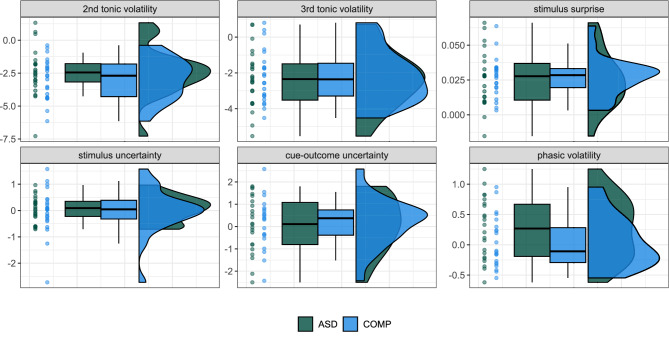
- In the preregistered HGF analyses, there was no credible difference between autistic and comparison adults in phasic volatility: estimate = -0.1 [-0.22, 0.01], posterior probability = 92.54%.
- There was no evidence for higher environmental tonic volatility in autistic adults: estimate = 0.03 [-0.24, 0.31], posterior probability = 41.61%.
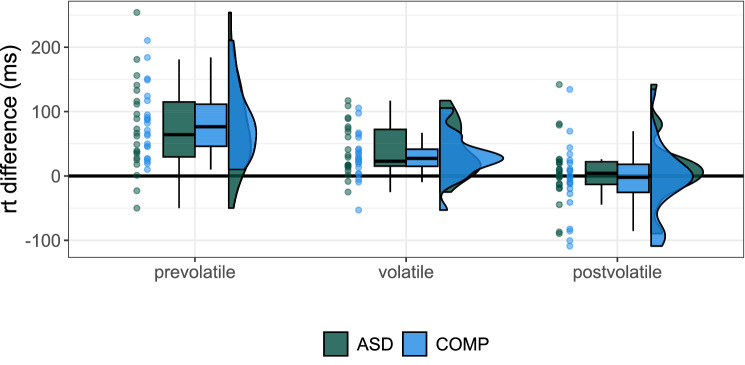
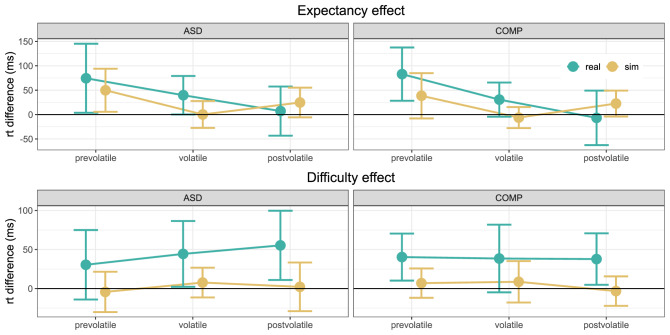
- For reaction times, there was no credible evidence for group differences in Expectancy or transition effects; however, across groups, expected trials were faster than unexpected trials (estimate = -0.07 [-0.1, -0.05]) and easy trials were faster than hard trials (estimate = -0.07 [-0.09, -0.04]), both with posterior probability = 100%.
- Accuracy was high overall (90.8%); exploratory analysis found lower accuracy in the autistic group (88.7 ± 14.2%) than the comparison group (92.9 ± 11.1%), and in unexpected versus expected trials (89.3 ± 15.7% vs 92.3 ± 9.2%).
## Methods
- Design: Preregistered Bayesian study extending Lawson et al.’s probabilistic associative learning paradigm to facial emotion recognition; participants judged whether emotional faces were positive (happy) or negative (fearful) while cues varied in volatility and expectancy.
- Sample/data: Final analyzed sample was 22 autistic and 22 comparison participants; pupil-size analyses used 18 per group due to missing/technical issues. The task used 336 trials, with analysis of reaction times, accuracies, and pupil sizes.
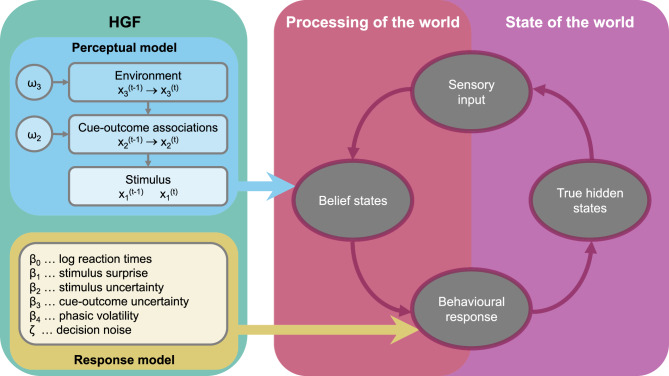
- Main analysis: Reaction times were modeled with a three-level Hierarchical Gaussian Filter (oHGF/eHGF) and compared with a Rescorla-Wagner model; hypotheses were tested using Bayesian linear/mixed models in brms, with posterior predictive checks, simulation-based calibration, and ROPE/HDI-based inference.
## Limitations
- The paper states that the block structure may have been too short, because the expected-vs-unexpected effect diminished over the course of the experiment; this may mean participants did not form strong enough stable cue-outcome associations.
- The authors note that although the sample reached the preregistered target size, the analysis differed from the power analysis, so the group sizes may have been insufficient to detect subtle differences.
- They also state that the valence decision was very simple, producing a ceiling effect in accuracy that limits interpretation. Evident from the text: pupil data were only available for 18 per group and the HGF model showed suboptimal fit for some effects, so conclusions about pupillometry and model-specific parameters should be cautious.
Model-written summary. Check it against the paper before relying on it.
Integrity signals
Registry
Cites
Statistics
Figures
Verification
Claims the paper makes
16 Valid · 11 Not valid · 4 Not checked · 74 Own results and interpretations
The cited sources support only part of this claim — read each source’s verdict below.
In the paper
“Nonetheless, some evidence for group differences does exist [9], [16], experiment [1]”
§ Predicting emotional valence in autism: a preregistered study in the Bayesian Brain framework > Discussion > Tonic volatility: accumulating evidence for similarity The current findings strengthen the emerging evidence for comparable tonic volatility estimates in autistic and non-autistic adults. Multiple studies using the HGF have now documented this similarity: probabilistic associative learning tasks [13, 14], the Wisconsin Card-Sorting task measuring cognitive flexibility and set-shifting [15] and a size-illusion task [16], experiment [9]. Nonetheless, some evidence for group differences does exist [9], [16], experiment [1], and these studies also found differences in learning rates or their updates, while others found comparable learning rates in autistic and non-autistic adults [15], [16], experiment [9]. The mixed results regarding tonic volatility differences are especially puzzling, since there is no clear pattern emerging regarding possible task specifications driving the differences. In fact, studies using the same computational models based on data from similar tasks have produced both evidence for and against differences, for example the current study and Lawson et al. [9]. The difference in results between the current study and Lawson et al. [9] could be due to the varying learning context (socio-emotional versus non-social stimuli), but based on the symptom profile of ASD, it is unlikely that the socio-emotional context reduces differences between autistic and non-autistic adults. Thus, the current corpus of literature does not support a general modification of tonic volatility in autism, suggesting that generalised precision regulation accounts seem to be less robustly replicable than previously thought.
What the sources say
- Could not verifycites [9] Mathys CD, Lomakina EI, Daunizeau J, Iglesias S, Brodersen KH, Friston KJ et al. Uncertainty in perception and the Hierarchical Gaussian Filter. Front Hum Neurosci [Internet]. 2014 [cited 2024 Jan 30];8. Available from: https://www.frontiersin.org/articles/10.3389/fnhum.2014.00825 PMC4237059 25477800 sourceExperimental — accuracy not yet measured
The Discussion (page unavailable) defines tonic volatility and says the HGF could be used to study individual differences, but it does not report evidence of group differences in tonic volatility. The inversion example estimates tonic volatility for a subject, not a comparison between groups. Searches for group differences, patient–control comparisons, and individual differences found no such result in our copy. (LLM, conf=0.76)
- Not matchedcites [16] Niehaus H, Stroth S, Kamp-Becker I, Endres DM. Modeling aberrant volatility estimates in Autism Spectrum Disorder. Proc Annu Meet Cogn Sci Soc [Internet]. 2022 [cited 2025 Mar 18];44(44). Available from: https://escholarship.org/uc/item/9084q9jj
We searched by its title and found no matching paper.
- Supportedcites [1] Lawson RP, Mathys CD, Rees G. Adults with autism overestimate the volatility of the sensory environment. Nat Neurosci. 2017;20(9):1293–9. 10.1038/nn.4615. PubMed PMID: 28758996. 28758996 PMC5578436 source
The Results (Computational Modelling; page not provided) report that third-level tonic volatility (ω3) significantly predicted ASD versus neurotypical group status (P=0.024). The paper states that ω3 values were higher in the ASD group, supporting the claim that some evidence for group differences exists. (LLM, conf=0.93)
plain- Asserted: passes — The authors put it forward as true.
- Checkable: passes — It can be checked against evidence.
- Load-bearing: unclear — It is unclear whether the paper’s conclusions depend on it.
- Based: passes — The paper gives a reason why it holds.
- Could not verify
The cited sources that could be checked couldn’t confirm or dispute this claim.
In the paper
“This pattern of results indicates that the original findings by Lawson et al. [9] are less robust than previously assumed, even in the context of socio-emotional stimuli which arguably should even increase group differences between autistic and non-autistic adults.”
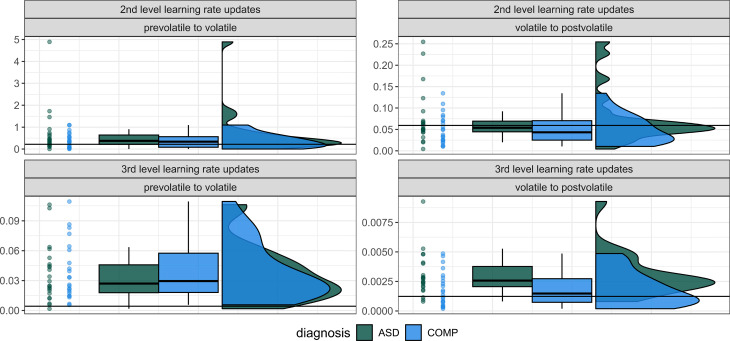
§ Predicting emotional valence in autism: a preregistered study in the Bayesian Brain framework > Discussion > What is learned: from visual categories to socio-emotional states The current task had the same trial structure and underlying probabilities as the task used in Lawson et al. [9]. However, both the stimuli and the decision differed between the two studies. Where Lawson and colleagues used house and face stimuli asking participants to decide which category of stimulus was presented, we chose to use only face stimuli which were varying in emotional valence. Participants were asked to determine whether the facial expression of the faces were associated with positive or negative emotions. We adjusted the Lawson paradigm to this socio-emotional context based on the core symptoms of autism [7], hoping to tie differences in predictive processes to common deficits in emotion recognition in autism [12, 33]. However, the current data provide less robust evidence for differences between autistic and non-autistic adults in probabilistic associative learning in a socio-emotional context with some evidence for differences in HGF parameters but no evidence for differences on reaction times, accuracies or pupil sizes. This pattern of results indicates that the original findings by Lawson et al. [9] are less robust than previously assumed, even in the context of socio-emotional stimuli which arguably should even increase group differences between autistic and non-autistic adults. While the task may lack sensitivity in the socio-emotional domain because the valence decision was too easy, this would have made the current task functionally even more similar to the original house/face categorisation. Thus, we would still expect a similar pattern as in the original findings, which is not supported by the current results. In the following paragraphs, we individually discuss the findings regarding phasic and tonic volatility as well as learning rate updates in more detail.
What the sources say
- Could not verifycites [9] Mathys CD, Lomakina EI, Daunizeau J, Iglesias S, Brodersen KH, Friston KJ et al. Uncertainty in perception and the Hierarchical Gaussian Filter. Front Hum Neurosci [Internet]. 2014 [cited 2024 Jan 30];8. Available from: https://www.frontiersin.org/articles/10.3389/fnhum.2014.00825 PMC4237059 25477800 sourceExperimental — accuracy not yet measured
Split into 2 atoms — 0 confirmed, 0 partially supported, 0 disputed, 0 misattributed, 2 unverifiable. Expand the claim to see per-atom verdicts.
hedged- Asserted: passes — The authors put it forward as true.
- Checkable: passes — It can be checked against evidence.
- Load-bearing: passes — The paper’s conclusions depend on it.
- Based: passes — The paper gives a reason why it holds.
- Rests on an assumption not shown here.
- Could not verify
Every source the paper cites for this claim was checked and supports it.
In the paper
“While associations between spatial side and valence have been reported which differ between handedness [37], the equal distribution of handedness and spatial side corresponding to positive in the current sample make influences on group differences unlikely.”
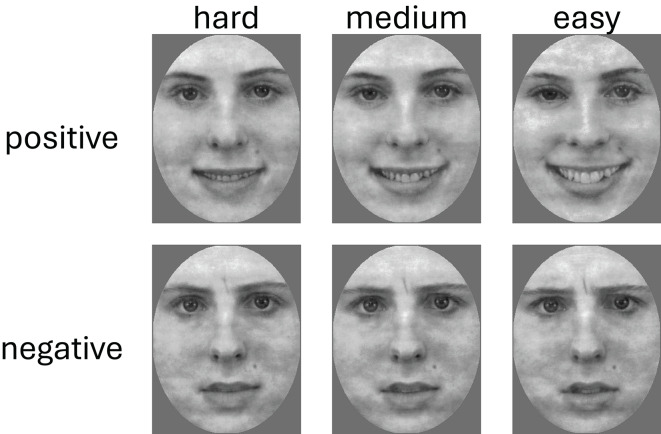
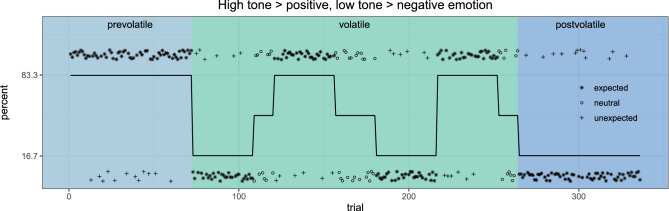
§ Predicting emotional valence in autism: a preregistered study in the Bayesian Brain framework > Method > Probabilistic associative learning task: emotion recognition This task was adapted from Lawson et al. [17]. Participants encountered 336 faces in a two-alternative emotional valence recognition task, each of which was presented in the centre of the screen (3.46 degrees wide and 4.72 degrees high). They were asked to decide as fast and accurately as possible whether the valence of the portrayed emotion is positive (happy) or negative (fearful). Answers were logged using two keys in one row of an external numpad which participants were allowed to position in a comfortable way. Whether the left or the right key corresponded to positive was counterbalanced across participants. While associations between spatial side and valence have been reported which differ between handedness [37], the equal distribution of handedness and spatial side corresponding to positive in the current sample make influences on group differences unlikely. Trials had the following structure: a fixation cross was presented in the middle of the screen while a tone was played for 300ms followed by the presentation of the face for 150ms and then a response window during which a fixation cross was presented again but without the tone (jittered duration, uniform distribution, range = 1500 to 1800ms). The tone was predictive of the valence of the emotion portrayed in the following facial expression and served as a cue for the following outcome. The association of cue-outcome changed over the course of the task as shown in Fig. 2. Specifically, the task manipulated the following within-participant factors: Phase of the task (stable, prevolatile; volatile; stable, postvolatile), Expectancy (expected cue-outcome association, unexpected cue-outcome association), Difficulty of the decision (hard, medium, easy), Valence (negative: fear, positive: happiness) and Tone (high, low). Whether trials were classified as an expected or an unexpected cue-outcome association was determined on the predominant association within blocks of 36 or 72 trials. Additionally, there were two blocks of 12 and one block of 24 trials with neutral probability (0.50) which were dropped from the analysis. Longer blocks with 72 trials of the same cue-outcome probabilities were considered stable compared to the more volatile phase where cue-outcome probabilities changed at least each 36 trials. Over the course of the task, all combinations of the within-participant factors were equally likely. Participants performed eight practice trials before the task, and the total task duration was 12 min. All participants encountered the same trial order.
What the sources say
- Supportedcites [37] Casasanto D. Embodiment of abstract concepts: Good and bad in right- and left-handers. J Exp Psychol Gen. 2009;138(3):351–67. 10.1037/a0015854. 19653795 source
The Results and Discussion report that right-handers tended to associate positive responses with the right side, while left-handers tended to associate them with the left. Citation [37] supports that first clause. The statement about equal distribution in the citing paper’s current sample is the citing authors’ own inference, not a finding attributed to this source. (LLM, conf=0.94)
hedged- Asserted: passes — The authors put it forward as true.
- Checkable: passes — It can be checked against evidence.
- Load-bearing: unclear — It is unclear whether the paper’s conclusions depend on it.
- Based: passes — The paper gives a reason why it holds.
- Supported
The sources with a verdict support this claim; the rest weren’t checked yet, have no full text we could read, or their verdicts aren’t rated yet.
In the paper
“Multiple studies using the HGF have now documented this similarity: probabilistic associative learning tasks [13, 14], the Wisconsin Card-Sorting task measuring cognitive flexibility and set-shifting [15] and a size-illusion task [16], experiment [9].”
§ Predicting emotional valence in autism: a preregistered study in the Bayesian Brain framework > Discussion > Tonic volatility: accumulating evidence for similarity The current findings strengthen the emerging evidence for comparable tonic volatility estimates in autistic and non-autistic adults. Multiple studies using the HGF have now documented this similarity: probabilistic associative learning tasks [13, 14], the Wisconsin Card-Sorting task measuring cognitive flexibility and set-shifting [15] and a size-illusion task [16], experiment [9]. Nonetheless, some evidence for group differences does exist [9], [16], experiment [1], and these studies also found differences in learning rates or their updates, while others found comparable learning rates in autistic and non-autistic adults [15], [16], experiment [9]. The mixed results regarding tonic volatility differences are especially puzzling, since there is no clear pattern emerging regarding possible task specifications driving the differences. In fact, studies using the same computational models based on data from similar tasks have produced both evidence for and against differences, for example the current study and Lawson et al. [9]. The difference in results between the current study and Lawson et al. [9] could be due to the varying learning context (socio-emotional versus non-social stimuli), but based on the symptom profile of ASD, it is unlikely that the socio-emotional context reduces differences between autistic and non-autistic adults. Thus, the current corpus of literature does not support a general modification of tonic volatility in autism, suggesting that generalised precision regulation accounts seem to be less robustly replicable than previously thought.
What the sources say
- Not checked — no full text of the sourcecites [13] Yeung MK. A systematic review and meta-analysis of facial emotion recognition in autism spectrum disorder: The specificity of deficits and the role of task characteristics. Neurosci Biobehav Rev. 2022;133(June 2021):104518. 10.1016/j.neubiorev.2021.104518 PubMed PMID: 34974069. 34974069 source
- Not checked — no full text of the sourcecites [14] Sapey-Triomphe LA, Weilnhammer VA, Wagemans J. Associative learning under uncertainty in adults with autism: Intact learning of the cue-outcome contingency, but slower updating of priors. Autism. 2022;26(5):1216–28. doi:10.1177/13623613211045026 PubMed PMID: 34533061. 34533061 source
- Supportedcites [15] Sapey-Triomphe LA, Pattyn L, Weilnhammer V, Sterzer P, Wagemans J. Neural correlates of hierarchical predictive processes in autistic adults. Nat Commun. 2023;14(1):3640. 10.1038/s41467-023-38580-9. 37336874 PMC10279690 source
The Methods describe an HGF model of autistic and non-autistic adults performing a probabilistic associative-learning task. The Results (Behavioral modeling; page unavailable) report no significant group difference in either the second- or third-level ω learning-rate estimates. This confirms the similarity attributed to this experiment; the other tasks in the citing sentence have separate citations. (LLM, conf=0.85)
- Not matchedcites [16] Niehaus H, Stroth S, Kamp-Becker I, Endres DM. Modeling aberrant volatility estimates in Autism Spectrum Disorder. Proc Annu Meet Cogn Sci Soc [Internet]. 2022 [cited 2025 Mar 18];44(44). Available from: https://escholarship.org/uc/item/9084q9jj
We searched by its title and found no matching paper.
boosted- Asserted: passes — The authors put it forward as true.
- Checkable: passes — It can be checked against evidence.
- Load-bearing: passes — The paper’s conclusions depend on it.
- Based: passes — The paper gives a reason why it holds.
The cited sources support only part of this claim — read each source’s verdict below.
In the paper
“Alterations in the way priors are iteratively updated [5, 58] may hold greater promise for understanding autism-related differences in predictive processing.”
§ Predicting emotional valence in autism: a preregistered study in the Bayesian Brain framework > Conclusions
What the sources say
- Partly supportedcites [5] Pellicano E, Burr D. When the world becomes ‘too real’: A Bayesian explanation of autistic perception. Trends Cogn Sci. 2012;16(10):504–10. 10.1016/j.tics.2012. 08.009 PubMed PMID: 22959875. 22959875 sourceExperimental — accuracy not yet measured
The Conclusion (page not available) identifies learning and generating new priors as a possible locus of autistic perceptual differences, alongside applying priors. It does not say that iterative updating is more promising than those alternatives; it leaves the question for future work. (LLM, conf=0.84)
- Supportedcites [58] Allenmark F, Shi Z, Pistorius RL, Theisinger LA, Koutsouleris N, Falkai P, et al. Acquisition and Use of ‘Priors’ in Autism: Typical in Deciding Where to Look, Atypical in Deciding What Is There. J Autism Dev Disord. 2021;51(10):3744–58. 10.1007/s10803-020-04828-2. PubMed PMID: 33373014. 33373014 PMC8460564 source
The General Discussion reports that participants with ASD learned the distractor-location prior as efficiently as typically developing participants, but may overreact to unexpected events. It concludes that undue adjustment of prior beliefs might help explain autism-related sensory differences within predictive coding, supporting the claim's tentative emphasis on how priors are updated. (LLM, conf=0.91)
hedgedstates a possible cause- Asserted: passes — The authors put it forward as true.
- Checkable: unclear — It is unclear whether it could be checked against evidence.
- Load-bearing: passes — The paper’s conclusions depend on it.
- Based: passes — The paper gives a reason why it holds.
- Partly supported
42 more claims
Create a free account to see all 105 claims and every source verdict.
- It may state two separate claims as one. 40
- Probably not a substantial claim. 30
- The quote only partly states this claim. 1
Citations
Cites
Brainard, D. H. (1997) · Spatial Vision · doi:10.1163/156856897x00357 · Cited by 19,702 · cited 1×
“The paradigm was programmed in Psychtoolbox-3 [26, 27].”
Random effects structure for confirmatory hypothesis testing: Keep it maximal
Barr, D. J., Levy, R., Scheepers, C., & Tily, H. J. (2013) · Journal of Memory and Language · doi:10.1016/j.jml.2012.11.001 · Cited by 10,328 · cited 1×
“Maximal slopes for the group-level were added, where possible [47, 48].”
brms : An R Package for Bayesian Multilevel Models Using Stan
Bürkner, P.-C. (2017) · Journal of Statistical Software · doi:10.18637/jss.v080.i01 · Cited by 9,476 · cited 2×
“HGF parameters and behavioural responses were analysed with Bayesian models as implemented in brms [44].”
InfluentialKarolinska Directed Emotional Faces
Lundqvist, D., Flykt, A., & Öhman, A. (2015) · PsycTESTS Dataset · doi:10.1037/t27732-000 · Cited by 1,313
When the world becomes ‘too real’: a Bayesian explanation of autistic perception
Pellicano, E., & Burr, D. (2012) · Trends in Cognitive Sciences · doi:10.1016/j.tics.2012.08.009 · Cited by 1,156 · cited 5×
“Alterations in the way priors are iteratively updated [5, 58] may hold greater promise for understanding autism-related differences in predictive processing.”
InfluentialPrecise minds in uncertain worlds: Predictive coding in autism.
Van de Cruys, S., Evers, K., Van der Hallen, R., Van Eylen, L., Boets, B., de-Wit, L., & Wagemans, J. (2014) · Psychological Review · doi:10.1037/a0037665 · Cited by 885 · cited 3×
“Applications of the framework to Autism Spectrum Disorder (ASD) have been very promising [3–7].”
Embodiment of abstract concepts: Good and bad in right- and left-handers.
Casasanto, D. (2009) · Journal of Experimental Psychology: General · doi:10.1037/a0015854 · Cited by 871
Random effects structure for testing interactions in linear mixed-effects models
Barr, D. J. (2013) · Frontiers in Psychology · doi:10.3389/fpsyg.2013.00328 · Cited by 782 · cited 1×
“Maximal slopes for the group-level were added, where possible [47, 48].”
Rejecting or Accepting Parameter Values in Bayesian Estimation
Kruschke, J. K. (2018) · Advances in Methods and Practices in Psychological Science · doi:10.1177/2515245918771304 · Cited by 734 · cited 1×
“Additionally, we used the region of practical equivalence (ROPE), capturing outcome values between ± 0.1 for standardised parameters, and the highest density interval (HDI) to assess evidence for equivalence [49].”
InfluentialBayesian WorkflowPreprint
Gelman, A., Vehtari, A., Simpson, D., Margossian, C. C., Carpenter, B., Yao, Y., Kennedy, L., Gabry, J., Bürkner, P., & Modrák, M. (2020) · arXiv (Cornell University) · doi:10.48550/arxiv.2011.01808 · Cited by 710
A Bayesian foundation for individual learning under uncertainty
Mathys, C. (2011) · Frontiers in Human Neuroscience · doi:10.3389/fnhum.2011.00039 · Cited by 655
An aberrant precision account of autism
Lawson, R. P., Rees, G., & Friston, K. J. (2014) · Frontiers in Human Neuroscience · doi:10.3389/fnhum.2014.00302 · Cited by 641
Effect Sizes in Cluster-Randomized Designs
Hedges, L. V. (2007) · Journal of Educational and Behavioral Statistics · doi:10.3102/1076998606298043 · Cited by 567 · cited 1×
“We computed effect sizes δ by dividing the effect by the square root of the sum of all squared variances of the respective model [50].”
A Conceptual Introduction to Hamiltonian Monte Carlo
Betancourt, M. (2017) · arXiv (Cornell University) · doi:10.48550/arxiv.1701.02434 · Cited by 509
Adults with autism overestimate the volatility of the sensory environment
Lawson, R. P., Mathys, C., & Rees, G. (2017) · Nature Neuroscience · doi:10.1038/nn.4615 · Cited by 470 · cited 10×
“Sapey-Tri-omphe and colleagues [14, 15] also used a probabilistic associative learning task but found no differences in the levels of tonic volatility parameters extracted with the HGF between autistic and non-autistic adults, at odds with Lawson et al. [1].”
InfluentialUncertainty in perception and the Hierarchical Gaussian Filter
Mathys, C. D., Lomakina, E. I., Daunizeau, J., Iglesias, S., Brodersen, K. H., Friston, K. J., & Stephan, K. E. (2014) · Frontiers in Human Neuroscience · doi:10.3389/fnhum.2014.00825 · Cited by 465 · cited 10×
“Since our autistic sample involved 50% women and the sample in Lawson et al. [9]involved only 25% women, we visually and statistically explored gender effects which revealed neither effects of gender nor credible interactions between gender and group (see S9).”
InfluentialVBA: A Probabilistic Treatment of Nonlinear Models for Neurobiological and Behavioural Data
Daunizeau, J., Adam, V., & Rigoux, L. (2014) · PLoS Computational Biology · doi:10.1371/journal.pcbi.1003441 · Cited by 385 · cited 1×
“…of empirical priors from a combination of our pilot data and the data shared from Lawson et al. [17], parameter recovery and model identifiability based on simulated data, posterior predictive checks and random-effect analysis Bayesian model comparison as implemented in the VBA toolbox [41].”
Bayesian approaches to autism: Towards volatility, action, and behavior.
Palmer, C. J., Lawson, R. P., & Hohwy, J. (2017) · Psychological Bulletin · doi:10.1037/bul0000097 · Cited by 307 · cited 3×
“This mismatch results in a prediction error weighted by the estimated precision of the input, determining the extent to which predictions are updated [2].”
InfluentialToward a principled Bayesian workflow in cognitive science.
Schad, D. J., Betancourt, M., & Vasishth, S. (2021) · Psychological Methods · doi:10.1037/met0000275 · Cited by 252 · cited 3×
“Models were evaluated using prior predictive checks, simulation-based calibration and posterior predictive checks [20, 45, 46].”
Methods in cognitive pupillometry: Design, preprocessing, and statistical analysis
Mathôt, S., & Vilotijević, A. (2022) · Behavior Research Methods · doi:10.3758/s13428-022-01957-7 · Cited by 235 · cited 2×
“We preprocessed the data following the recommendations published in Mathôt and Vilotijević [39] and using the DataMatrix package (for details see S2.”
(2007) · Perception · doi:10.1177/03010066070360s101 · Cited by 214
Jenkinson, R., Milne, E., & Thompson, A. (2020) · Autism · doi:10.1177/1362361320932437 · Cited by 205 · cited 1×
“This interpretation would also fit with the elevated intolerance of uncertainty consistently reported in ASD [53].”
Yeung, M. K. (2022) · Neuroscience & Biobehavioral Reviews · doi:10.1016/j.neubiorev.2021.104518 · Cited by 187 · cited 5×
“They found an initial underweighting of priors in autistic adults, resonating with some previous findings indicating atypical priors [13, 56], which normalised by the end of the task, resonating with contrasting previous findings of intact priors in ASD [57].”
InfluentialAlternative Bayesian accounts of autistic perception: Comment on Pellicano and Burr
Brock, J. (2012) · Trends in Cognitive Sciences · doi:10.1016/j.tics.2012.10.005 · Cited by 173 · cited 2×
“In response, Brock [3] noted that this pattern could be explained by both top-down influences, i.e., hypo-priors, or bottom-up influences like reduced sensory noise resulting in an increased weight attributed to sensory input.”
TAPAS: An Open-Source Software Package for Translational Neuromodeling and Computational Psychiatry
Frässle, S., Aponte, E. A., Bollmann, S., Brodersen, K. H., Do, C. T., Harrison, O. K., Harrison, S. J., Heinzle, J., Iglesias, S., Kasper, L., et al. (2021) · Frontiers in Psychiatry · doi:10.3389/fpsyt.2021.680811 · Cited by 169 · cited 1×
“0.2 [40].”
InfluentialOn hyperpriors and hypopriors: comment on Pellicano and Burr
Friston, K. J., Lawson, R., & Frith, C. D. (2013) · Trends in Cognitive Sciences · doi:10.1016/j.tics.2012.11.003 · Cited by 151
Publication guidelines and recommendations for pupillary measurement in psychophysiological studies
Steinhauer, S. R., Bradley, M. M., Siegle, G. J., Roecklein, K. A., & Dix, A. (2022) · Psychophysiology · doi:10.1111/psyp.14035 · Cited by 137 · cited 2×
“However, overlap values are higher for parameter estimates regarding the predictor group and interactions with group (mean = 63.29 [38.54, 91.42], for all values see Table S3).”
InfluentialCentral tendency effects in time interval reproduction in autism
Karaminis, T., Cicchini, G. M., Neil, L., Cappagli, G., Aagten-Murphy, D., Burr, D., & Pellicano, E. (2016) · Scientific Reports · doi:10.1038/srep28570 · Cited by 112 · cited 1×
“They found an initial underweighting of priors in autistic adults, resonating with some previous findings indicating atypical priors [13, 56], which normalised by the end of the task, resonating with contrasting previous findings of intact priors in ASD [57].”
10 years of Bayesian theories of autism: A comprehensive review
Angeletos Chrysaitis, N., & Seriès, P. (2023) · Neuroscience & Biobehavioral Reviews · doi:10.1016/j.neubiorev.2022.105022 · Cited by 92 · cited 4×
“These results show a mixed picture of tonic volatility modifications in autism, possibly due to the differences in models and tasks [11].”
InfluentialLawson, R. P., Bisby, J., Nord, C. L., Burgess, N., & Rees, G. (2021) · Current Biology · doi:10.1016/j.cub.2020.10.043 · Cited by 90 · cited 4×
“In their binary classification task, participants had to differentiate between a house or a human face (see also [12]).”
InfluentialThe Rescorla-Wagner model, prediction error, and fear learning
Yau, J. O.-Y., & McNally, G. P. (2023) · Neurobiology of Learning and Memory · doi:10.1016/j.nlm.2023.107799 · Cited by 54
Sapey-Triomphe, L.-A., Weilnhammer, V. A., & Wagemans, J. (2022) · Autism · doi:10.1177/13623613211045026 · Cited by 45 · cited 3×
“Similar to the current findings, Sapey-Triomphe and colleagues reported a comparable perception of tonic volatility combined with altered response model parameters [13] and modified neural correlates of prediction [14] in a probabilistic associative learning task.”
Neural correlates of hierarchical predictive processes in autistic adults
Sapey-Triomphe, L.-A., Pattyn, L., Weilnhammer, V., Sterzer, P., & Wagemans, J. (2023) · Nature Communications · doi:10.1038/s41467-023-38580-9 · Cited by 35 · cited 4×
“Nonetheless, some evidence for group differences does exist [9], [16], experiment [1], and these studies also found differences in learning rates or their updates, while others found comparable learning rates in autistic and non-autistic adults [15], [16], experiment [9].”
InfluentialAllenmark, F., Shi, Z., Pistorius, R. L., Theisinger, L. A., Koutsouleris, N., Falkai, P., Müller, H. J., & Falter-Wagner, C. M. (2021) · Journal of Autism and Developmental Disorders · doi:10.1007/s10803-020-04828-2 · Cited by 27
Self-citationPredictive Processing in Autism Spectrum Disorder: The Atypical Iterative Prior Updating Account
Shi, Z., Allenmark, F., Theisinger, L. A., Pistorius, R. L., Glasauer, S., Müller, H. J., & Falter, C. M. (2025) · Biological Psychiatry Global Open Science · doi:10.1016/j.bpsgos.2025.100468 · Cited by 27
Self-citationLacroix, A., Dutheil, F., Logemann, A., Cserjesi, R., Peyrin, C., Biro, B., Gomot, M., & Mermillod, M. (2022) · Autism · doi:10.1177/13623613211062776 · Cited by 21 · cited 2×
“In light of evidence for sex differences in flexibility in emotional tasks and prediction errors of faces in autism [51, 52], this difference in sample composition may have contributed to the differences in results.”
Investigating how Explicit Contextual Cues Affect Predictive Sensorimotor Control in Autistic Adults
Arthur, T., Brosnan, M., Harris, D., Buckingham, G., Wilson, M., Williams, G., & Vine, S. (2023) · Journal of Autism and Developmental Disorders · doi:10.1007/s10803-022-05718-5 · Cited by 20 · cited 5×
“The perceptual and response model are fitted in an iterative process to determine the most probable parameter values given sensory inputs and observed responses [9, 17, 20].”
InfluentialReduced Context Updating but Intact Visual Priors in Autism
Randeniya, R., Vilares, I., Mattingley, J. B., & Garrido, M. I. (2021) · Computational Psychiatry · doi:10.5334/cpsy.69 · Cited by 17 · cited 1×
“They found an initial underweighting of priors in autistic adults, resonating with some previous findings indicating atypical priors [13, 56], which normalised by the end of the task, resonating with contrasting previous findings of intact priors in ASD [57].”
Sex modulation of faces prediction error in the autistic brain
Lacroix, A., Harquel, S., Mermillod, M., Garrido, M., Barbosa, L., Vercueil, L., Aleysson, D., Dutheil, F., Kovarski, K., & Gomot, M. (2024) · Communications Biology · doi:10.1038/s42003-024-05807-4 · Cited by 12 · cited 2×
“In light of evidence for sex differences in flexibility in emotional tasks and prediction errors of faces in autism [51, 52], this difference in sample composition may have contributed to the differences in results.”
Sapey-Triomphe, L.-A., Sanchez, G., Hénaff, M.-A., Sonié, S., Schmitz, C., & Mattout, J. (2023) · npj Science of Learning · doi:10.1038/s41539-023-00207-5 · Cited by 11 · cited 2×
“Using a tactile learning task, Sapey-Triomphe and colleagues [54] found no differences in prior adjustment between autistic and non-autistic adults but did observe context-dependent adaptation differences — pointing to altered learning rather than altered perception.”
Bayesian Workflow for Generative Modeling in Computational Psychiatry
Hess, A. J., Iglesias, S., Köchli, L., Marino, S., Müller-Schrader, M., Rigoux, L., Mathys, C., Harrison, O. K., Heinzle, J., Frässle, S., et al. (2025) · Computational Psychiatry · doi:10.5334/cpsy.116 · Cited by 10 · cited 3×
“To assess these models, we adapted the workflow presented by Hess and colleagues [19].”
Rausch, J., Fangmeier, T., Falter-Wagner, C. M., Ackermann, H., Espelöer, J., Hölzel, L. P., Riedel, A., Ritvo, A., Vogeley, K., & van Elst, L. T. (2025) · European Archives of Psychiatry and Clinical Neuroscience · doi:10.1007/s00406-024-01894-w · Cited by 7 · cited 1×
“R, [31]) as well as a questionnaire assessing ASD symptom severity (RADS-R, [32]).”
Liu, W., Shah, N., Ma, I., & Rosenblau, G. (2024) · Developmental Science · doi:10.1111/desc.13463 · Cited by 6 · cited 1×
“Similarly, Liu et al.[55] found that autistic and non-autistic adolescents showed comparable prior uncertainty in a social trust game, even though their prior beliefs about a partner’s trustworthiness differed.”
Are prediction error modifications domain specific in autism but domain general in ADHD?
Plank, I. S., Yurova, A., Pior, A., Nowak, J., Bierlich, A. M., Papazov, B., Shi, Z., & Falter-Wagner, C. M. (2025) · Imaging neuroscience · doi:10.1162/imag.a.942 · Cited by 3 · cited 1×
“The behavioural tasks were followed by 60 min in the MRI scanner to collect structural and functional neuroimaging data reported elsewhere [35].”
Self-citationComparison of face attention bias in adults with ASD, ADHD, or comorbid ADHD+ASD
Plank, I. S., Nowak, J., Pior, A., & Falter, C. M. (2025) · Social Cognitive and Affective Neuroscience · doi:10.1093/scan/nsaf112 · Cited by 3 · cited 1×
“The results of all tasks but the probabilistic learning task as well as questionnaires relating to those other tasks are reported elsewhere [21, 33, 34].”
Self-citationBayesian Brain in ADHD: potential catecholaminergic pathway of volatility estimationPreprint
Plank, I. S., Yurova, A., Pior, A., et al. (2025) · doi:10.31234/osf.io/yajsb_v1 · Cited by 2
Self-citationNo added cost: Emotion recognition in co‐occurring ADHD and ASD
Plank, I. S., Krasniqi, K., Pior, A., Nowak, J., & Falter, C. M. (2026) · British Journal of Clinical Psychology · doi:10.1111/bjc.70056 · Cited by 2 · cited 3×
“IQ = intelligence quotient; RADS-R = Ritvo autism diagnostic scale-revised reported in Plank et al. [33].”
Self-citation
Research works printed but not linked: 1
- Hautzinger M, Bailer M, Worall H, Keller F. Beck-depressions-inventar (BDI). Bern: Huber; 1994.
Cited by
Comparison of face attention bias in adults with ASD, ADHD, or comorbid ADHD+ASD
Plank, I. S., Nowak, J., Pior, A., & Falter, C. M. (2025) · Social Cognitive and Affective Neuroscience · doi:10.1093/scan/nsaf112 · Cited by 3
Self-citationNo added cost: Emotion recognition in co‐occurring ADHD and ASD
Plank, I. S., Krasniqi, K., Pior, A., Nowak, J., & Falter, C. M. (2026) · British Journal of Clinical Psychology · doi:10.1111/bjc.70056 · Cited by 2
Self-citation
Metadata
- Authors
- Plank, I. S., Pior, A., Yurova, A., Nowak, J., Shi, Z., & Falter-Wagner, C. M.
- Affiliations
- LMU Klinikum (DE)
- University of Groningen (NL)
- Ludwig-Maximilians-Universität München (DE)
- Corresponding author
- Plank, Irene Sophia
- ORCID
- Venue
- Molecular Autism
- Published
- 2026-07-21
- Volume
- 17
- Issue
- 1
- ISSN
- 2040-2392 (ISSN-L)
- PMC
- PMC13435570
- OpenAlex
- W7169849249
- Cited by
- 2
- References
- 44
- Citations by year
- 2026: 1
- FWCI
- 4.11
- Type
- journal article
- Language
- en
- Open access
- gold
- doi.org
- Licence
- cc-by
- creativecommons.org/licenses/by/4.0 (tdm)
- creativecommons.org/licenses/by/4.0 (vor, 14 d)
- Locations
- Molecular Autism (publishedVersion, cc-by)
- PubMed (publishedVersion)
- PubMed Central (publishedVersion, cc-by)
- DOAJ (DOAJ: Directory of Open Access Journals) (submittedVersion)
- PsyArXiv (OSF Preprints) (submittedVersion, cc-by)
- Funders
- Klinikum der Universität München
- Topics
- Life Sciences › Neuroscience › Cognitive Neuroscience › Autism Spectrum Disorder Research
- Life Sciences › Neuroscience › Cognitive Neuroscience › Face Recognition and Perception
- Social Sciences › Psychology › Social Psychology › Action Observation and Synchronization
- Keywords
- autism spectrum disorder, predictive processing, emotional valence, facial emotion recognition, environmental volatility, belief states, hierarchical Gaussian filter, pupil size, learning rate
- MeSH terms
- Autism Spectrum Disorder, Adult, Autistic Disorder, Bayes Theorem, Brain, Emotions, Facial Expression, Female, Humans, Male, Reaction Time, Young Adult
About these checks
Registry, retraction, Cites and statistics results are computed, not judged, with one exception: a printed reference that no index lists is read once by a model before it counts as a citation error. Claims are extracted by a model and kept only when their quote appears verbatim in the text; each cited source is then checked, with a model’s help, for whether it says what the claim relies on. Those verdicts can be wrong — read the claim’s quote and the cited source before relying on one.
The claim verdicts this report counts are experimental: their accuracy is not yet measured.
A language model drew the claims from the paper on 2026-10-11, under version 3 of the claim definition (model deepseek-v4.1-flash, prompt extract-v3).
A second model labelled each claim on 2026-10-11 (model jev-1.13-20260917, definition revision gold-guideline-v0.2).
Cited sources are checked with a language model’s help (gpt-6-sol).
Statistics and arithmetic are recomputed, not judged.
Confidence bands are shown only for fields calibrated on our annotated test set. None is calibrated yet, so no band is shown.
What counts as a claim ›How we measure confidence ›How we check this ›
Are you an author, or do you see a problem with this page? Request a review
Data sources
Bibliographic data: Semantic Scholar, OpenAlex, Crossref.
Contains information from the Semantic Scholar Academic Graph Datasets, made available under the ODC Attribution License (ODC-BY 1.0).
Semantic Scholar’s data is described in: Kinney, R., et al. (2023). The Semantic Scholar Open Data Platform. arXiv:2301.10140.
