

The protective role of estrogen and estrogen receptors in cardiovascular disease and the controversial use of estrogen therapy
Open accessThe DOI matches its Crossref record; 140 of the 140 references it cites were found in a registry or an index.
Abstract
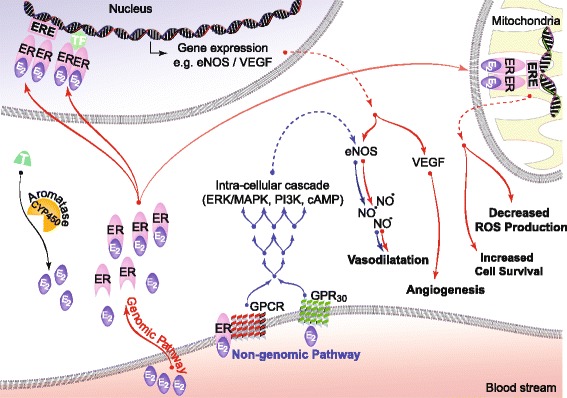
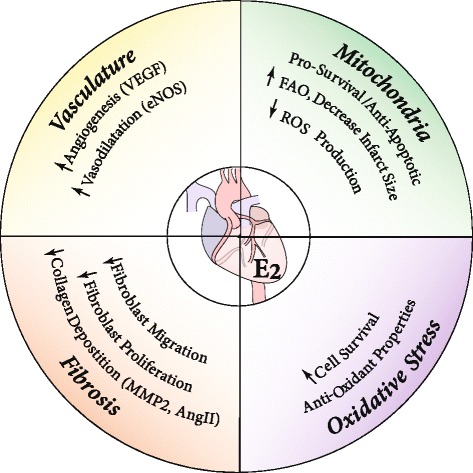
Epidemiologic studies have previously suggested that premenopausal females have reduced incidence of cardiovascular disease (CVD) when compared to age-matched males, and the incidence and severity of CVD increases postmenopause. The lower incidence of cardiovascular disease in women during reproductive age is attributed at least in part to estrogen (E2). E2 binds to the traditional E2 receptors (ERs), estrogen receptor alpha (ERα), and estrogen receptor beta (ERβ), as well as the more recently identified G-protein-coupled ER (GPR30), and can exert both genomic and non-genomic actions. This review summarizes the protective role of E2 and its receptors in the cardiovascular system and discusses its underlying mechanisms with an emphasis on oxidative stress, fibrosis, angiogenesis, and vascular function. This review also presents the sexual dimorphic role of ERs in modulating E2 action in cardiovascular disease. The controversies surrounding the clinical use of exogenous E2 as a therapeutic agent for cardiovascular disease in women due to the possible risks of thrombotic events, cancers, and arrhythmia are also discussed. Endogenous local E2 biosynthesis from the conversion of testosterone to E2 via aromatase enzyme offers a novel therapeutic paradigm. Targeting specific ERs in the cardiovascular system may result in novel and possibly safer therapeutic options for cardiovascular protection.
Overview
The claims and statistics of this paper haven’t been checked yet.
Free: it reads the open-access text and checks the first 5 claims that cite a source we can check. Create a free account to check every claim.
Integrity signals
Registry
Cites
Statistics
Figures
Verification
Claims the paper makes
The claims and statistics of this paper haven’t been checked yet.
Free: it reads the open-access text and checks the first 5 claims that cite a source we can check. Create a free account to check every claim.
Claims other papers make about this one
Each is checked against this paper’s own text: does it say what the citing paper says it does?
The source backs part of the claim, not all of it — or backs it for a different population, condition or comparison.
In the citing paper
“Through these receptors, estrogen promotes vasodilation, modulates nitric oxide pathways, and limits vascular inflammation, reducing the risk of endothelial dysfunction, arterial stiffness, and atherosclerosis.”
From Endometriosis and Cardiovascular Disease: Exploring Pathophysiological Interconnections and Risk Mechanisms (2025) · cites this paper as [14]
Experimental — accuracy not yet measuredThe source backs part of the claim, not all of it — or backs it for a different population, condition or comparison.
In the citing paper
“In women, estrogen protects cardiovascular safety by maintaining endothelial protective effects via estrogen receptor action, such as Erα, ERβ, and GPR30, reducing oxidative stress and influencing the lipid profile.”
From Endometriosis and Cardiovascular Disease: Exploring Pathophysiological Interconnections and Risk Mechanisms (2025) · cites this paper as [14]
Experimental — accuracy not yet measuredThe source backs part of the claim, not all of it — or backs it for a different population, condition or comparison.
In the citing paper
“The role of E2 has been well established to play a regulatory metabolic role via ERα in peripheral tissues such as skeletal muscle and WAT (130, 160–162)”
From Metabolic impact of endogenously produced estrogens by adipose tissue in females and males across the lifespan (2025) · cites this paper as [160]
Experimental — accuracy not yet measuredThe cited source says what the claim attributes to it.
In the citing paper
“These benefits are diminished with lower estrogen levels in postmenopausal women, contributing to a higher CVD risk (Figure 1).”
From Endometriosis and Cardiovascular Disease: Exploring Pathophysiological Interconnections and Risk Mechanisms (2025) · cites this paper as [14]
Self-check
Percentages, sums and reported differences re-computed from the paper’s own numbers.
The self-check needs the paper’s full text.
Citations
Cites
1 retracted
Retracted Article: Anti-Thrombotic Effects of Selective Estrogen Receptor Modulator Tamoxifen
Nayak, M. K., Singh, S. K., Roy, A., Prakash, V., Kumar, A. A., & Dash, D. (2011) · Thrombosis and Haemostasis · doi:10.1160/th11-03-0178 · Cited by 14
RetractedHeart Disease and Stroke Statistics—2016 Update: A Report From the American Heart Association
Mozaffarian, D., Benjamin, E. J., Go, A. S., Arnett, D. K., Blaha, M. J., Cushman, M., Das, S. R., de Ferranti, S., Després, J.-P., Fullerton, H. J., et al. (2016) · Circulation · doi:10.1161/cir.0000000000000350 · Cited by 6,596 · cited 1×
“It is well-known that the incidence of cardiovascular events is significantly lower in women when compared to age-matched men even following menopause [109].”
BackgroundHulley, S. (1998) · JAMA · doi:10.1001/jama.280.7.605 · Cited by 6,216
Endothelial dysfunction in cardiovascular diseases: the role of oxidant stress
Cai, H., & Harrison, D. G. (2000) · Circulation Research · doi:10.1161/01.res.87.10.840 · Cited by 3,839 · cited 1×
“E2 failed to increase homing of EPCs to the injured myocardium in eNOS-null mice [68].”
The mitochondrial permeability transition
Zoratti, M., & Szabò, I. (1995) · Biochimica et Biophysica Acta (BBA) - Reviews on Biomembranes · doi:10.1016/0304-4157(95)00003-a · Cited by 2,401
Grady, D., Herrington, D., Bittner, V., Blumenthal, R., Davidson, M., Hlatky, M., Hsia, J., Hulley, S., Herd, A., Khan, S., et al. (2002) · JAMA · doi:10.1001/jama.288.1.49 · Cited by 1,930
Molecular Mechanisms of Myocardial Remodeling
SWYNGHEDAUW, B. (1999) · Physiological Reviews · doi:10.1152/physrev.1999.79.1.215 · Cited by 1,460 · cited 1×
“myocyte hypertrophy, fibroblast proliferation, fibrosis, an accumulation of fibrillar collagens, and myocyte apoptosis [33].”
BackgroundEndothelial dysfunction: cardiovascular risk factors, therapy, and outcome.
Hadi, H. A. R., Carr, C. S., & Suwaidi, J. M. S. A. (2005) · PubMed Central · Cited by 1,078
Shiojima, I. (2005) · Journal of Clinical Investigation · doi:10.1172/jci24682 · Cited by 939 · cited 1×
“Increased cardiac angiogenesis is necessary to maintain LV function during adaptive hypertrophy and compensated heart hypertrophy as the larger LV has an obvious need for more blood vessels [56, 57].”
BackgroundSources of estrogen and their importance
Simpson, E. R. (2003) · The Journal of Steroid Biochemistry and Molecular Biology · doi:10.1016/s0960-0760(03)00360-1 · Cited by 936 · cited 2×
“This extragonadal E2 production plays an important role, as it remains the only source of endogenous E2 production in postmenopausal women and men [10].”
Background
Cited by
Cardiovascular Risks Associated with Gender and Aging
Rodgers, J. L., Jones, J., Bolleddu, S. I., Vanthenapalli, S., Rodgers, L. E., Shah, K., Karia, K., & Panguluri, S. K. (2019) · Journal of Cardiovascular Development and Disease · doi:10.3390/jcdd6020019 · Cited by 1,024
“However, to da e, the effects of estrogen replac ment on cardiovascul r he lt is still large y controversial [8].”
BackgroundResultInfluentialEstrogen receptor signaling mechanisms
(2019) · Advances in Protein Chemistry and Structural Biology · doi:10.1016/bs.apcsb.2019.01.001 · Cited by 988
“However, it has been found that these compounds can affect cellular and molecular processes leading to severe effects on health, and their use in medical therapeutics remains controversial (Aravindakshan, Gregory, Marcogliese, Fournier, & Cyr, 2004; Aravindakshan, Paquet, et al., 2004; Arukwe, Celius, Walther, & Goksø…”
BackgroundRole of estrogen receptors in health and disease
Chen, P., Li, B., & Ou-Yang, L. (2022) · Frontiers in Endocrinology · doi:10.3389/fendo.2022.839005 · Cited by 339
Protective Effects of Estrogen on Cardiovascular Disease Mediated by Oxidative Stress
Xiang, D., Liu, Y., Zhou, S., Zhou, E., & Wang, Y. (2021) · Oxidative Medicine and Cellular Longevity · doi:10.1155/2021/5523516 · Cited by 286
“The classic mode of estrogen action is the genomic effect mechanism in which estrogen enters the nucleus and combines with nuclear ERs to form a dimer, and then the estrogen-receptor complex binds to estrogen response elements and further regulates the gene expression and corresponding proteins, which triggers a serie…”
BackgroundSex differences in mechanisms of arterial stiffness
DuPont, J. J., Kenney, R. M., Patel, A. R., & Jaffe, I. Z. (2019) · British Journal of Pharmacology · doi:10.1111/bph.14624 · Cited by 290
“These receptors mediate the actions of steroid hormones through both genomic and rapid non‐ genomic actions, which have been previously reviewed and are outside the scope of this review (Iorga et al., 2017; Mendelsohn & Karas, 1999, 2005).”
BackgroundCiumărnean, L., Milaciu, M. V., Negrean, V., Orășan, O. H., Vesa, S. C., Sălăgean, O., Iluţ, S., & Vlaicu, S. I. (2021) · International Journal of Environmental Research and Public Health · doi:10.3390/ijerph19010207 · Cited by 229
“The aforementioned risk factors can be influenced and act differently depending on the distinct genetic profile of the individuals and their age; thus, in some individuals, the risk of developing cardiovascular diseases is much higher [17].”
BackgroundMenopause and women’s cardiovascular health: is it really an obvious relationship?
Ryczkowska, K., Adach, W., Janikowski, K., Banach, M., & Bielecka-Dabrowa, A. (2023) · Archives of Medical Science · doi:10.5114/aoms/157308 · Cited by 233
“E2 is principally synthesized by ovaries, corpus luteum and placenta but it is also produced by other tissues such as the brain, adipose tissue, bone, vascular endothelium, and aortic smooth muscle cells [5].”
InfluentialThe Role of Estrogen Receptors in Cardiovascular Disease
Aryan, L., Younessi, D., Zargari, M., Banerjee, S., Agopian, J., Rahman, S., Borna, R., Ruffenach, G., Umar, S., & Eghbali, M. (2020) · International Journal of Molecular Sciences · doi:10.3390/ijms21124314 · Cited by 201
“Such effects are associated with reduced fibrosis, reduced oxidative stress, improved mitochondrial function, attenuation of cardiac hypertrophy, and stimulation of angiogenesis and vasodilation [3,11].”
BackgroundSelf-citationRahman, A., Jackson, H., Hristov, H., Isaacson, R. S., Saif, N., Shetty, T., Etingin, O., Henchcliffe, C., Brinton, R. D., & Mosconi, L. (2019) · Frontiers in Aging Neuroscience · doi:10.3389/fnagi.2019.00315 · Cited by 187
“, 2006) exerts a protective role by increasing angiogenesis (new blood vessels formation from older vessels), improving mitochondrial activity and reducing oxidative stress and fibrosis (Iorga et al., 2017).”
BackgroundEndothelial Dysfunction Driven by Hypoxia—The Influence of Oxygen Deficiency on NO Bioavailability
Janaszak-Jasiecka, A., Siekierzycka, A., Płoska, A., Dobrucki, I. T., & Kalinowski, L. (2021) · Biomolecules · doi:10.3390/biom11070982 · Cited by 186
“High estrogen levels in women reduce the risk of cardiovascular disease, but the risk dramatically increases after menopause [56].”
BackgroundWu, S., Zhang, Y., Lin, Z., & Wei, M. (2025) · BMC Cancer · doi:10.1186/s12885-025-15138-0 · Cited by 158
“While the gap was modest before age 40, it diverged sharply thereafter—a phenomenon potentially driven by hormonal differences (e.g., estrogen’s protective effects), male-predominant risk behaviors, and gender-specific screening disparities [34, 35].”
Sex differences in frailty: Comparisons between humans and preclinical models
Kane, A. E., & Howlett, S. E. (2021) · Mechanisms of Ageing and Development · doi:10.1016/j.mad.2021.111546 · Cited by 156
Momtazmanesh, S., Moghaddam, S. S., Rad, E. M., Azadnajafabad, S., Ebrahimi, N., Mohammadi, E., Rouhifard, M., Rezaei, N., Masinaei, M., Rezaei, N., et al. (2021) · European Journal of Preventive Cardiology · doi:10.1093/eurjpc/zwab211 · Cited by 143
Gender Differences in the Pathogenesis and Risk Factors of Hepatocellular Carcinoma
Nevola, R., Tortorella, G., Rosato, V., Rinaldi, L., Imbriani, S., Perillo, P., Mastrocinque, D., Montagna, M. L., Russo, A., Lorenzo, G. D., et al. (2023) · Biology · doi:10.3390/biology12070984 · Cited by 158
Unique cardiovascular risk factors in women
Young, L. D., & Cho, L. (2019) · Heart · doi:10.1136/heartjnl-2018-314268 · Cited by 139
Cardiovascular disease in transgender people: a systematic review and meta-analysis
van Zijverden, L. M., Wiepjes, C. M., van Diemen, J. J. K., Thijs, A., & den Heijer, M. (2024) · European Journal of Endocrinology · doi:10.1093/ejendo/lvad170 · Cited by 134
Kim, J.-E., Chang, J.-H., Jeong, M.-J., Choi, J., Park, J., Baek, C., Shin, A., Park, S. M., Kang, D., & Choi, J. (2020) · Scientific Reports · doi:10.1038/s41598-020-77534-9 · Cited by 124
Sexual dimorphism in COVID-19: potential clinical and public health implications
Bechmann, N., Barthel, A., Schedl, A., Herzig, S., Varga, Z., Gebhard, C., Mayr, M., Hantel, C., Beuschlein, F., Wolfrum, C., et al. (2022) · The Lancet Diabetes & Endocrinology · doi:10.1016/s2213-8587(21)00346-6 · Cited by 123
Risk Factors of Severe COVID-19: A Review of Host, Viral and Environmental Factors
Zsichla, L., & Müller, V. (2023) · Viruses · doi:10.3390/v15010175 · Cited by 138
Gender and CVD- Does It Really Matters?
Suman, S., Pravalika, J., Manjula, P., & Farooq, U. (2023) · Current Problems in Cardiology · doi:10.1016/j.cpcardiol.2023.101604 · Cited by 134
Estrogen and the Vascular Endothelium: The Unanswered Questions
SenthilKumar, G., Katunaric, B., Bordas-Murphy, H., Sarvaideo, J. L., & Freed, J. K. (2023) · Endocrinology · doi:10.1210/endocr/bqad079 · Cited by 121
Ottolini, M., Hong, K., Cope, E. L., Daneva, Z., DeLalio, L. J., Sokolowski, J. D., Marziano, C., Nguyen, N. Y., Altschmied, J., Haendeler, J., et al. (2020) · Circulation · doi:10.1161/circulationaha.119.043385 · Cited by 108
Estrogen and cardiovascular disease
Gersh, F. L., O’Keefe, J. H., Elagizi, A., Lavie, C. J., & Laukkanen, J. A. (2024) · Progress in Cardiovascular Diseases · doi:10.1016/j.pcad.2024.01.015 · Cited by 121
Cardiovascular Disease in Women: From Pathophysiology to Novel and Emerging Risk Factors
Geraghty, L. E., Figtree, G. A., Schutte, A. E., Patel, S., Woodward, M., & Arnott, C. G. (2020) · Heart Lung and Circulation · doi:10.1016/j.hlc.2020.05.108 · Cited by 110
Sex-Related Differences in Contemporary Biomarkers for Heart Failure: A Review
Suthahar, N., Meems, L. M. G., Ho, J. E., & de Boer, R. A. (2020) · European Journal of Heart Failure · doi:10.1002/ejhf.1771 · Cited by 112
Unraveling female reproductive senescence to enhance healthy longevity
Dong, L., Teh, D. B. L., Kennedy, B. K., & Huang, Z. (2023) · Cell Research · doi:10.1038/s41422-022-00718-7 · Cited by 101
Xu, C., Liang, J., Xu, S., Liu, Q., Xu, J., & Gu, A. (2020) · Journal of Hazardous Materials · doi:10.1016/j.jhazmat.2020.123134 · Cited by 101
Sex differences in the blood–brain barrier and neurodegenerative diseases
Weber, C. M., & Clyne, A. M. (2021) · APL Bioengineering · doi:10.1063/5.0035610 · Cited by 91
Wang, L., Lee, Y., Wu, Y., Zhang, X., Jin, C., Huang, Z., Wang, Y., Wang, Z., Kris‐Etherton, P. M., Wu, S., et al. (2020) · American Journal of Clinical Nutrition · doi:10.1093/ajcn/nqaa331 · Cited by 100
Sex differences in survival after out-of-hospital cardiac arrest: a meta-analysis
Lei, H., Hu, J., Liu, L., & Xu, D. (2020) · Critical Care · doi:10.1186/s13054-020-03331-5 · Cited by 95
Gender-Related Differences in Heart Failure Biomarkers
Cediel, G., Codina, P., Spitaleri, G., Domingo, M., Santiago‐Vacas, E., Lupón, J., & Bayés‐Genís, A. (2021) · Frontiers in Cardiovascular Medicine · doi:10.3389/fcvm.2020.617705 · Cited by 100
Auditory function and dysfunction: estrogen makes a difference
Delhez, A., Lefebvre, P. P., Péqueux, C., Malgrange, B., & Delacroix, L. (2019) · Cellular and Molecular Life Sciences · doi:10.1007/s00018-019-03295-y · Cited by 100
Liao, M., Braunstein, Z., & Rao, X. (2023) · The Science of The Total Environment · doi:10.1016/j.scitotenv.2023.163803 · Cited by 93
A roadmap for sex- and gender-disaggregated health research
Peters, S. A. E., & Woodward, M. (2023) · BMC Medicine · doi:10.1186/s12916-023-03060-w · Cited by 91
“To date, most research has focused on the role of oestrogen, which is thought to have an important role in the cardiovascular system, as it has vasodilator effects and reduces or prevents platelet activation [69].”
BackgroundRole of diet and exercise in aging, Alzheimer’s disease, and other chronic diseases
Khemka, S., Reddy, A., Garcia, R. I., Jacobs, M., Reddy, R. P., Roghani, A. K., Pattoor, V., Basu, T., Sehar, U., & Reddy, P. H. (2023) · Ageing Research Reviews · doi:10.1016/j.arr.2023.102091 · Cited by 88
Genes that escape X chromosome inactivation modulate sex differences in valve myofibroblasts
Aguado, B. A., Walker, C. J., Grim, J. C., Schroeder, M. E., Batan, D., Vogt, B. J., Rodriguez, A. G., Schwisow, J. A., Moulton, K. S., Weiss, R. M., et al. (2022) · Circulation · doi:10.1161/circulationaha.121.054108 · Cited by 87
Kodogo, V., Azibani, F., & Sliwa, K. S. (2019) · Clinical Research in Cardiology · doi:10.1007/s00392-019-01441-x · Cited by 94
Sex-Specific Features of Calcific Aortic Valve Disease
Summerhill, V. I., Moschetta, D., Orekhov, A. N., Poggio, P., & Myasoedova, V. A. (2020) · International Journal of Molecular Sciences · doi:10.3390/ijms21165620 · Cited by 83
“The following cardioprotective actions of estrogen were extensively reviewed, and the major effects were the increment of angiogenesis and vasodilation and the decrease of the production of reactive oxygen species, oxidative stress, and fibrosis [47].”
BackgroundPuranik, N. V., Srivastava, P., Bhatt, G., Mary, D. J. S. J., Limaye, A. M., & Jayanthi, S. (2019) · Scientific Reports · doi:10.1038/s41598-019-43768-5 · Cited by 84
Titin mutations and muscle disease
Kellermayer, D., Smith, J. E., & Granzier, H. L. M. (2019) · Pflügers Archiv - European Journal of Physiology · doi:10.1007/s00424-019-02272-5 · Cited by 86
Understanding sex differences in the regulation of cancer-induced muscle wasting
Montalvo, R. N., Counts, B. R., & Carson, J. A. (2018) · Current Opinion in Supportive and Palliative Care · doi:10.1097/spc.0000000000000380 · Cited by 81
Sex related differences in the pathogenesis of organ fibrosis
Garate‐Carrillo, A., Gonzalez, J., Ceballos, G. M., Ramírez‐Sánchez, I., & Villarreal, F. J. (2020) · Translational research · doi:10.1016/j.trsl.2020.03.008 · Cited by 79
De Matteis, C., Cariello, M., Graziano, G., Battaglia, S., Suppressa, P., Piazzolla, G., Sabbà, C., & Moschetta, A. (2021) · Scientific Reports · doi:10.1038/s41598-021-94277-3 · Cited by 71
Functional Hypothalamic Amenorrhea: Recognition and Management of a Challenging Diagnosis
Saadedine, M., Kapoor, E., & SHUFELT, C. L. (2023) · Mayo Clinic Proceedings · doi:10.1016/j.mayocp.2023.05.027 · Cited by 84
Sexual differentiation of brain and other tissues: Five questions for the next 50 years
Arnold, A. P. (2020) · Hormones and Behavior · doi:10.1016/j.yhbeh.2020.104691 · Cited by 83
Aging conundrum: A perspective for ovarian aging
Wu, J., Liu, Y., Song, Y., Wang, L., Ai, J., & Li, K. (2022) · Frontiers in Endocrinology · doi:10.3389/fendo.2022.952471 · Cited by 73
“In the cardiovascular system, estrogen deficiency can downregulate the production of nitric oxide, reduce endothelial-dependent vascular function and adversely affect cytokine-mediated cell adhesion and antiatherosclerosis activity (116).”
BackgroundGender-dependent radiotherapy: The next step in personalised medicine?
Courcy, L. D., Bezak, E., & Marcu, L. G. (2020) · Critical Reviews in Oncology/Hematology · doi:10.1016/j.critrevonc.2020.102881 · Cited by 83
Estrogens as regulator of hematopoietic stem cell, immune cells and bone biology
Kumar, R. S., & Goyal, N. (2021) · Life Sciences · doi:10.1016/j.lfs.2021.119091 · Cited by 79
Sex steroids receptors, hypertension, and vascular ageing
Connelly, P. J., Casey, H., Montezano, A. C. I., Touyz, R. M., & Delles, C. (2021) · Journal of Human Hypertension · doi:10.1038/s41371-021-00576-7 · Cited by 82
Lipid metabolism in women: A review
van Oortmerssen, J. A. E., Mulder, J. W. C. M., Kavousi, M., & van Lennep, J. E. R. (2025) · Atherosclerosis · doi:10.1016/j.atherosclerosis.2025.119213 · Cited by 83
Antza, C., Gallo, A., Boutari, C., Ershova, A. I., Gürses, K. M., Lewek, J., Mirmaksudov, M., Silbernagel, G., Sandstedt, J., & Lebedeva, А. (2023) · Atherosclerosis · doi:10.1016/j.atherosclerosis.2023.117272 · Cited by 110
Estrogen and calcium handling proteins: new discoveries and mechanisms in cardiovascular diseases
Jiao, L., Machuki, J. O., Wu, Q., Shi, M., Fu, L., Adekunle, A. O., Tao, X., Xu, C., Hu, X., Yin, Z., et al. (2020) · American Journal of Physiology-Heart and Circulatory Physiology · doi:10.1152/ajpheart.00734.2019 · Cited by 78
“E2 is synthesized and secreted mainly by ovaries in premenopausal women (51).”
BackgroundSexual Dimorphism in Cardiovascular Biomarkers: Clinical and Research Implications
Lau, E. S., Binek, A., Parker, S. J., Shah, S. H., Zanni, M. V., Eyk, J. E. V., & Ho, J. E. (2022) · Circulation Research · doi:10.1161/circresaha.121.319916 · Cited by 67
Khan, N. A., Javed, Z., Acquah, I., Hagan, K., Khan, M., Elizondo, J. V., Chang, R. P., Javed, U., Taha, M. B., Blaha, M. J., et al. (2023) · BMC Public Health · doi:10.1186/s12889-023-15621-y · Cited by 73
“Sex differences in education-mortality association may be explained by sex-related risk factors such as pregnancy or hormonal influences, which may affect CV physiology [32, 33] and variable health behaviors, screening practices, and presentations of ASCVD in men and women that may alter diagnosis and management, cont…”
BackgroundFrom physiology to pathology: Emerging roles of GPER in cardiovascular disease
Wang, Z., Liu, J., Chen, Y., Tang, Y., Chen, T., Zhou, C. S., Wang, S., Chang, R., Chen, Z., Yang, W., et al. (2025) · Pharmacology & Therapeutics · doi:10.1016/j.pharmthera.2025.108801 · Cited by 67
Jarman, A. F., Mumma, B. E., Singh, K. S., Nowadly, C. D., & Maughan, B. C. (2021) · Journal of the American College of Emergency Physicians Open · doi:10.1002/emp2.12378 · Cited by 74
Niță, A.-R., Knock, G. A., & Heads, R. J. (2021) · Current Research in Physiology · doi:10.1016/j.crphys.2021.03.003 · Cited by 66
Chen, J., Zhao, R., Wang, Y., Han, X., Lin, W. Y., Diao, M., He, S., Mei, P., & Liao, Y. (2024) · Molecular Medicine · doi:10.1186/s10020-023-00763-x · Cited by 67
“In addition, estrogen abnormalities may contribute to the development of diseases related to the cardio-vascular and digestive systems (Chen et al. 2022; Iorga et al. 2017).”
BackgroundDiabetic Cardiomyopathy: Impact of Biological Sex on Disease Development and Molecular Signatures
Toedebusch, R. G., Belenchia, A. M., & Pulakat, L. (2018) · Frontiers in Physiology · doi:10.3389/fphys.2018.00453 · Cited by 70
“Two more recent reports (Jensen et al., 2014; Suran et al., 2016) using echocardiography evaluation of T1DM patients without known CVD, reported the presence of diastolic dysfunction.”
ResultTransthyretin amyloid cardiomyopathy in women: frequency, characteristics, and diagnostic challenges
Bruno, M., Castaño, A., Burton, A., & Grodin, J. L. (2020) · Heart Failure Reviews · doi:10.1007/s10741-020-10010-8 · Cited by 64
Evaluation of the Interaction of Sex Hormones and Cardiovascular Function and Health
Willemars, M. M. A., Nabben, M., Verdonschot, J. A. J., & Hoes, M. F. (2022) · Current Heart Failure Reports · doi:10.1007/s11897-022-00555-0 · Cited by 70
Pott, J., Bae, Y. J., Horn, K., Teren, A., Kühnapfel, A., Kirsten, H., Ceglarek, U., Loeffler, M., Thiery, J., Kratzsch, J., et al. (2019) · The Journal of Clinical Endocrinology & Metabolism · doi:10.1210/jc.2019-00757 · Cited by 59
Estrogen and Bisphenol A in Hypertension
Wehbe, Z., Nasser, S. A., EL‐Yazbi, A. F., Nasreddine, S., & Eid, A. H. (2020) · Current Hypertension Reports · doi:10.1007/s11906-020-1022-z · Cited by 63
Regulatory Actions of Estrogen Receptor Signaling in the Cardiovascular System
Ueda, K., Adachi, Y., Liu, P., Fukuma, N., & Takimoto, E. (2020) · Frontiers in Endocrinology · doi:10.3389/fendo.2019.00909 · Cited by 60
“These recent clinical findings encourage researchers to further investigate molecular and physiological function of ERmediated signaling in the cardiovascular system (12, 13), which provides meaningful steps forward to the development of a next generation of HT for women that capture the beneficial cardiovascular effe…”
BackgroundThe Role of G Protein-Coupled Estrogen Receptor (GPER) in Vascular Pathology and Physiology
Xu, F., Ma, J., Wang, X., Wang, X., Fang, W., Sun, J., Li, Z., & Liu, J. (2023) · Biomolecules · doi:10.3390/biom13091410 · Cited by 61
“…is lower in premenopausal women than in age-matched men but sharply increases in postmenopausal women [4–6], implying that estrogen provides a protective effect and that the increased cardiovascular risk in women after menopause is related to the loss of the protective effect of estrogen [7,8].”
BackgroundMolecular Mechanisms of Neuroimmune Crosstalk in the Pathogenesis of Stroke
Choi, Y. H., Laaker, C. J., Hsu, M., Cismaru, P., Sándor, M., & Fábry, Z. (2021) · International Journal of Molecular Sciences · doi:10.3390/ijms22179486 · Cited by 65
Sex Differences in Cardiac Troponin Trajectories Over the Life Course
de Bakker, M., Anand, A., Shipley, M. J., Fujisawa, T., Shah, A. S. V., Kardys, I., Boersma, E. H., Brunner, E. J., Mills, N. L., & Kimenai, D. M. (2023) · Circulation · doi:10.1161/circulationaha.123.064386 · Cited by 60
“22 23–25 More-over, the testosterone to estradiol ratio, rather than the individual sex hormones, has been previously associated with increased risk of cardiovascular events in men.”
BackgroundNoah, M. L. N., Adzika, G. K., Mprah, R., Adekunle, A. O., Adu‐Amankwaah, J., & Sun, H. (2021) · Frontiers in Cardiovascular Medicine · doi:10.3389/fcvm.2021.639946 · Cited by 63
Xu, J., Lin, C., Wang, T., Zhang, P., Liu, Z., & Lu, C. (2018) · Cellular Physiology and Biochemistry · doi:10.1159/000491887 · Cited by 58
RetractedTeachers' Perceptions and Experiences of Menstrual Cycle Education and Support in UK Schools
Brown, N., Williams, R., Bruinvels, G., Piasecki, J., & Forrest, L. J. (2022) · Frontiers in Global Women s Health · doi:10.3389/fgwh.2022.827365 · Cited by 61
“In particular, estrogen is a key regulator of bone formation (5) and also has a cardioprotective role (6).”
BackgroundMunteanu, C., Onose, G., Rotariu, M., Poştaru, M., Turnea, M. A., & Galaction, A. (2024) · Biomedicines · doi:10.3390/biomedicines12122670 · Cited by 63
“…plaque formation in arteries, is linked to gut microbiota dysbiosis and altered microbial metabolite production, including H 2 S. Increased H 2 S levels contribute to systemic inflammation and endothelial dysfunction, promoting plaque instability and increasing the risk of cardiovascular events.”
17β‐estradiol reduces SARS‐CoV‐2 infection in vitro
Lemes, R. M. R., Costa, A. J., Bartolomeo, C. S., Bassani, T. B., Nishino, M. S., Pereira, G. J. S., Smaili, S. S., Maciel, R. M. B., Braconi, C. T., da Cruz, E. F., et al. (2021) · Physiological Reports · doi:10.14814/phy2.14707 · Cited by 61
“These pathways have been associated with several anabolic protective actions in different organs, including lungs (for review see [Tofovic & Jackson, 2019]), cardiovascular system (for review see [Iorga et al., 2017]) and immune responses course (Di Florio et al., 2020).”
BackgroundAge at menopause and mortality in Taiwan: A cohort analysis
Shen, T.-Y., Strong, C., & Yu, T. (2020) · Maturitas · doi:10.1016/j.maturitas.2020.04.008 · Cited by 59
Zhou, X., Chen, Q., Targher, G., Byrne, C. D., Mantzoros, C. S., Zhang, H., Lonardo, A., Lip, G. Y. H., Porta, G., Misra, A., et al. (2024) · Clinical Nutrition · doi:10.1016/j.clnu.2024.11.016 · Cited by 57
Campbell, C. M., LoRusso, S. J., Dispenzieri, A. A., Kristen, A. V., Maurer, M. S., Rapezzi, C., Lairez, O., Drachman, B. M., García‐Pavía, P., Grogan, M. A., et al. (2022) · Cardiology and Therapy · doi:10.1007/s40119-022-00265-7 · Cited by 52
“For example, estrogen has been shown to have cardioprotective effects [18] and could be a factor in the imbalance of ATTRwt amyloidosis between men and women.”
BackgroundWomen’s health: optimal nutrition throughout the lifecycle
Feskens, E. J. M., Bailey, R. L., Bhutta, Z. A., Biesalski, H. K., Eicher‐Miller, H. A., Krämer, K., Pan, W., & Griffiths, J. C. (2022) · European Journal of Nutrition · doi:10.1007/s00394-022-02915-x · Cited by 64
“Estrogen has been recognized as an agent which protects women against the risk of many non-communicable diseases (NCDs) [86].”
BackgroundWoolf, E. K., Terwoord, J. D., Litwin, N. S., Vazquez, A. R., Lee, S. Y., Ghanem, N., Michell, K. A., Smith, B. T., Grabos, L. E., Ketelhut, N. B., et al. (2023) · Food & Function · doi:10.1039/d3fo00157a · Cited by 54
Sex, hormones and cerebrovascular function: from development to disorder
Collignon, A., Dion‐Albert, L., Ménard, C., & Coelho‐Santos, V. (2024) · Fluids and Barriers of the CNS · doi:10.1186/s12987-023-00496-3 · Cited by 56
“Estrogen, in particular, is widely recognized for its protective effects on the vasculature, especially while estrogen levels are high during the reproductive years ([85, 86], see [87, 88] for review).”
BackgroundTherapeutic Perspectives on the Modulation of G-Protein Coupled Estrogen Receptor, GPER, Function
Rouhimoghadam, M., Lu, A. S., Salem, A. K., & Filardo, E. J. (2020) · Frontiers in Endocrinology · doi:10.3389/fendo.2020.591217 · Cited by 52
“However, no single method for reducing estrogen is failproof and each of these approaches induces premature menopause, which is associated with long-term mortality risks, including increased risk of cardiovascular disease (75) and loss of bone density (76), as well as menopausal symptoms that can impact on quality of…”
BackgroundMei, Y., Williams, J. S., Webb, E. K., Shea, A. K., MacDonald, M. J., & Al‐Khazraji, B. K. (2022) · Frontiers in Rehabilitation Sciences · doi:10.3389/fresc.2022.825147 · Cited by 57
“Estradiol plays a cardioprotective role in improving vascular function as highlighted by studies using cell, animal and human models (15, 67).”
BackgroundResultOestrogenic Regulation of Mitochondrial Dynamics
Kalkhoran, S. B., & Kararigas, G. (2022) · International Journal of Molecular Sciences · doi:10.3390/ijms23031118 · Cited by 54
Bisphenol A (BPA) and Cardiovascular or Cardiometabolic Diseases
Kang, J., Asai, D., & Toita, R. (2023) · Journal of Xenobiotics · doi:10.3390/jox13040049 · Cited by 70
“Additionally, the identification of cardiovascular or cardiometabolic disease-related genes, lipids, and proteins in the urine and blood of patients with elevated BPA concentrations would help to gain a deeper understanding of the mechanism underlying the response to BPA.”
BackgroundSex-Based Differences in Risk Factors and Complications of Chronic Kidney Disease
Wyld, M. L. R., Mata, N. L. D. L., Viecelli, A. K., Swaminathan, R., O’Sullivan, K. M., O’Lone, E., Rowlandson, M., Francis, A., Wyburn, K., & Webster, A. C. (2022) · Seminars in Nephrology · doi:10.1016/j.semnephrol.2022.04.006 · Cited by 54
The hypertensive potential of estrogen: An untold story
Fardoun, M., Dehaini, H., Shaito, A. A., Mesmar, J. E., EL‐Yazbi, A. F., Badran, A., Beydoun, E., & Eid, A. H. (2019) · Vascular Pharmacology · doi:10.1016/j.vph.2019.106600 · Cited by 48
Metabolic Dysfunction in Hutchinson–Gilford Progeria Syndrome
Kreienkamp, R., & Gonzalo, S. (2020) · Cells · doi:10.3390/cells9020395 · Cited by 45
“Given the importance of estrogen to cardiovascular health in women [40], understanding these parameters have far reaching ramifications.”
BackgroundGoto, Y., Funada, A., Maeda, T., Okada, H., & Goto, Y. N. (2019) · Critical Care · doi:10.1186/s13054-019-2547-x · Cited by 45
Pathophysiological effects of androgens on the female vascular system
Stone, T. M., & Stachenfeld, N. S. (2020) · Biology of Sex Differences · doi:10.1186/s13293-020-00323-6 · Cited by 48
Vahidinia, Z., Karimian, M., & Joghataei, M. T. (2020) · Pharmacological Research · doi:10.1016/j.phrs.2020.105163 · Cited by 46
Effect of natural leaf extracts as phytomedicine in curing geriatrics
Bhattacharya, T., Dey, P. S., Akter, R., Kabir, M. T., Rahman, M. H., & Rauf, A. (2021) · Experimental Gerontology · doi:10.1016/j.exger.2021.111352 · Cited by 47
Sex Differences of the Diabetic Heart
Fourny, N., Beauloye, C., Bernard, M., Horman, S., Desrois, M., & Bertrand, L. (2021) · Frontiers in Physiology · doi:10.3389/fphys.2021.661297 · Cited by 51
Estrogen signaling as a bridge between the nucleus and mitochondria in cardiovascular diseases
Guajardo-Correa, E., Silva-Agüero, J. F., Calle, X., Chiong, M., Henríquez, M., García‐Rivas, G., Latorre, M., & Parra, V. (2022) · Frontiers in Cell and Developmental Biology · doi:10.3389/fcell.2022.968373 · Cited by 47
“The possible mechanisms through which E2 generates these protective effects have been reviewed recently (Iorga et al., 2017).”
BackgroundInfluentialGeorge, K. M., Maillard, P., Gilsanz, P., Fletcher, E., Peterson, R. L., Fong, J., Mayeda, E. R., Mungas, D., Barnes, L. L., Glymour, M. M., et al. (2023) · JAMA Network Open · doi:10.1001/jamanetworkopen.2023.6431 · Cited by 44
Zhang, S., Ren, H., Du, R.-X., Sun, W.-L., Fu, M.-L., & Zhang, X.-C. (2023) · BMC Public Health · doi:10.1186/s12889-023-16130-8 · Cited by 53
“The contribution of sex in different age groups was as similar as that of all ages however the gender difference of ASMR and ASDR held a different trend, which is particularly marked in females up to the age of 59 years, nevertheless this gender advantage is abruptly weakened while after 59 years, reflecting the remar…”
BackgroundSund, M., Garcia‐Argibay, M., Garmo, H., Ahlgren, J., Wennstig, A.-K., Fredriksson, I., Lindman, H., & Valachis, A. (2021) · The Breast · doi:10.1016/j.breast.2021.07.004 · Cited by 45
“The observed increased risk for ischemic heart disease and arrythmia in patients treated with at least four years of AIs is plausible from a biological perspective [28] and it is also supported by some indirect evidence where sequential treatment with AI and Tam did not seem to be associated with increased risk for CV…”
ResultChang, Y.-C., Han, Z., Zhang, Y., Zhou, Y., Feng, Z., Chen, L., Li, X., Li, L., & Si, J. (2019) · Biomedicine & Pharmacotherapy · doi:10.1016/j.biopha.2019.108666 · Cited by 42
Sueldo, M. D., Rivera, M. A. M., Sanchez-Zambrano, M. B., Zilberman, J. M., Múnera, A. G., Paniagua, M., Campos-Alcántara, L., Almonte, C., Paix-Gonzales, A., Anchique-Santos, C. V., et al. (2022) · Archivos de cardiología de México · doi:10.24875/acm.22000071 · Cited by 59
Phua, T. J. (2021) · Medicines · doi:10.3390/medicines8060030 · Cited by 44
Bruinvels, G., Goldsmith, E., Blagrove, R. C., Martin, D., Shaw, L., & Piasecki, J. (2022) · International Journal of Environmental Research and Public Health · doi:10.3390/ijerph192013622 · Cited by 42
“In particular, oestrogen is a key regulator of bone resorption [2] and also has a cardioprotective role [3].”
BackgroundCardiovascular disease in transgender individuals
Murphy, C. N., Delles, C., Davies, E., & Connelly, P. J. (2023) · Atherosclerosis · doi:10.1016/j.atherosclerosis.2023.117282 · Cited by 42
“In addition, NHRs can also indirectly regulate gene expression via interaction with other transcription factors, such as activator protein 1 and specificity protein-1, on the promotor of sex hormone responsive genes [45].”
BackgroundDifferences in Risk Factors for Coronary Atherosclerosis According to Sex
Kim, H. (2024) · Journal of Lipid and Atherosclerosis · doi:10.12997/jla.2024.13.2.97 · Cited by 51
Metadata
- Authors
- Iorga, A., Cunningham, C. M., Moazeni, S., Ruffenach, G., Umar, S., & Eghbali, M.
- Affiliations
- University of Southern California (US)
- University of California, Los Angeles (US)
- Corresponding author
- Eghbali, Mansoureh
- Venue
- Biology of Sex Differences
- Published
- 2017-10-24
- Volume
- 8
- Issue
- 1
- Pages
- 33-33
- ISSN
- 2042-6410 (ISSN-L)
- PMC
- PMC5655818
- OpenAlex
- W2766043255
- Cited by
- 914
- References
- 140
- Citations by year
- 2026: 91 · 2025: 157 · 2024: 156 · 2023: 143 · 2022: 114 · 2021: 113 · 2020: 88 · 2019: 38 · 2018: 12 · 2017: 2
- FWCI
- 4.91
- Type
- journal article
- Language
- en
- Open access
- gold
- doi.org
- Licence
- cc-by
- creativecommons.org/licenses/by/4.0/ (tdm)
- creativecommons.org/licenses/by/4.0/ (vor)
- Locations
- Biology of Sex Differences (publishedVersion, cc-by)
- Europe PMC (PubMed Central) (publishedVersion, cc-by)
- PubMed Central (publishedVersion, cc-by)
- PubMed (publishedVersion)
- DOAJ (DOAJ: Directory of Open Access Journals) (submittedVersion, cc-by-sa)
- eScholarship (California Digital Library) (submittedVersion)
- Funders
- American Heart Association (AHA-17PRE33420159, AHA16GRANT27760058)
- National Institutes of Health (R01HL131182-01A1, T32-GM065823, HD00722)
- Topics
- Life Sciences › Biochemistry, Genetics and Molecular Biology › Endocrinology › Estrogen and related hormone effects
- Health Sciences › Medicine › Endocrinology, Diabetes and Metabolism › Menopause: Health Impacts and Treatments
- Health Sciences › Nursing › Nutrition and Dietetics › Phytoestrogen effects and research
- Keywords
- estrogen, estrogen receptor, estrogen receptor alpha, estrogen receptor beta, GPR30, cardiovascular disease, postmenopause, sex differences, oxidative stress, fibrosis, angiogenesis, vascular function, aromatase, thrombosis risk, cardioprotection
- MeSH terms
- Animals, Cardiovascular Agents, Cardiovascular Diseases, Estrogens, Humans, Receptors, Estrogen
About these checks
Registry, retraction, Cites and statistics results are computed, not judged, with one exception: a printed reference that no index lists is read once by a model before it counts as a citation error. Claims are extracted by a model and kept only when their quote appears verbatim in the text; each cited source is then checked, with a model’s help, for whether it says what the claim relies on. Those verdicts can be wrong — read the claim’s quote and the cited source before relying on one.
Statistics and arithmetic are recomputed, not judged.
Confidence bands are shown only for fields calibrated on our annotated test set. None is calibrated yet, so no band is shown.
What counts as a claim ›How we measure confidence ›How we check this ›
Are you an author, or do you see a problem with this page? Request a review
Data sources
Bibliographic data: Semantic Scholar, OpenAlex, Crossref.
Contains information from the Semantic Scholar Academic Graph Datasets, made available under the ODC Attribution License (ODC-BY 1.0).
Semantic Scholar’s data is described in: Kinney, R., et al. (2023). The Semantic Scholar Open Data Platform. arXiv:2301.10140.
