

The protective role of estrogen and estrogen receptors in cardiovascular disease and the controversial use of estrogen therapy
Open accessThe DOI matches its Crossref record; 140 of the 140 references it cites were found in a registry or an index.
Abstract
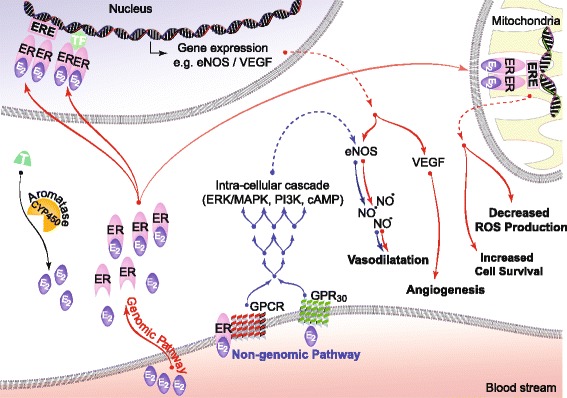
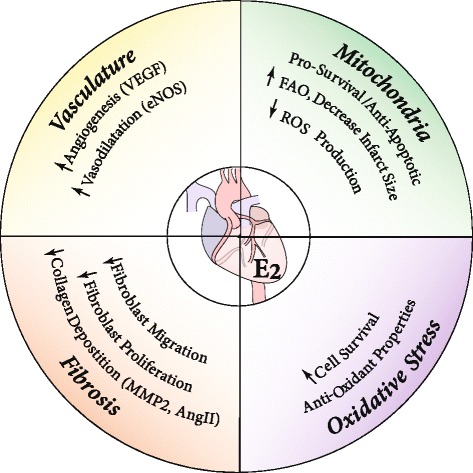
Epidemiologic studies have previously suggested that premenopausal females have reduced incidence of cardiovascular disease (CVD) when compared to age-matched males, and the incidence and severity of CVD increases postmenopause. The lower incidence of cardiovascular disease in women during reproductive age is attributed at least in part to estrogen (E2). E2 binds to the traditional E2 receptors (ERs), estrogen receptor alpha (ERα), and estrogen receptor beta (ERβ), as well as the more recently identified G-protein-coupled ER (GPR30), and can exert both genomic and non-genomic actions. This review summarizes the protective role of E2 and its receptors in the cardiovascular system and discusses its underlying mechanisms with an emphasis on oxidative stress, fibrosis, angiogenesis, and vascular function. This review also presents the sexual dimorphic role of ERs in modulating E2 action in cardiovascular disease. The controversies surrounding the clinical use of exogenous E2 as a therapeutic agent for cardiovascular disease in women due to the possible risks of thrombotic events, cancers, and arrhythmia are also discussed. Endogenous local E2 biosynthesis from the conversion of testosterone to E2 via aromatase enzyme offers a novel therapeutic paradigm. Targeting specific ERs in the cardiovascular system may result in novel and possibly safer therapeutic options for cardiovascular protection.
Overview
The claims and statistics of this paper haven’t been checked yet.
Free: it reads the open-access text and checks the first 5 claims that cite a source we can check. Create a free account to check every claim.
Integrity signals
Registry
Cites
Statistics
Figures
Verification
Claims the paper makes
The claims and statistics of this paper haven’t been checked yet.
Free: it reads the open-access text and checks the first 5 claims that cite a source we can check. Create a free account to check every claim.
Claims other papers make about this one
Each is checked against this paper’s own text: does it say what the citing paper says it does?
The source backs part of the claim, not all of it — or backs it for a different population, condition or comparison.
In the citing paper
“Through these receptors, estrogen promotes vasodilation, modulates nitric oxide pathways, and limits vascular inflammation, reducing the risk of endothelial dysfunction, arterial stiffness, and atherosclerosis.”
From Endometriosis and Cardiovascular Disease: Exploring Pathophysiological Interconnections and Risk Mechanisms (2025) · cites this paper as [14]
Experimental — accuracy not yet measuredThe source backs part of the claim, not all of it — or backs it for a different population, condition or comparison.
In the citing paper
“In women, estrogen protects cardiovascular safety by maintaining endothelial protective effects via estrogen receptor action, such as Erα, ERβ, and GPR30, reducing oxidative stress and influencing the lipid profile.”
From Endometriosis and Cardiovascular Disease: Exploring Pathophysiological Interconnections and Risk Mechanisms (2025) · cites this paper as [14]
Experimental — accuracy not yet measuredThe source backs part of the claim, not all of it — or backs it for a different population, condition or comparison.
In the citing paper
“The role of E2 has been well established to play a regulatory metabolic role via ERα in peripheral tissues such as skeletal muscle and WAT (130, 160–162)”
From Metabolic impact of endogenously produced estrogens by adipose tissue in females and males across the lifespan (2025) · cites this paper as [160]
Experimental — accuracy not yet measuredThe cited source says what the claim attributes to it.
In the citing paper
“These benefits are diminished with lower estrogen levels in postmenopausal women, contributing to a higher CVD risk (Figure 1).”
From Endometriosis and Cardiovascular Disease: Exploring Pathophysiological Interconnections and Risk Mechanisms (2025) · cites this paper as [14]
Self-check
Percentages, sums and reported differences re-computed from the paper’s own numbers.
The self-check needs the paper’s full text.
Citations
Cites
1 retracted
Retracted Article: Anti-Thrombotic Effects of Selective Estrogen Receptor Modulator Tamoxifen
Nayak, M. K., Singh, S. K., Roy, A., Prakash, V., Kumar, A. A., & Dash, D. (2011) · Thrombosis and Haemostasis · doi:10.1160/th11-03-0178 · Cited by 14
RetractedHeart Disease and Stroke Statistics—2016 Update: A Report From the American Heart Association
Mozaffarian, D., Benjamin, E. J., Go, A. S., Arnett, D. K., Blaha, M. J., Cushman, M., Das, S. R., de Ferranti, S., Després, J.-P., Fullerton, H. J., et al. (2016) · Circulation · doi:10.1161/cir.0000000000000350 · Cited by 6,596 · cited 1×
“It is well-known that the incidence of cardiovascular events is significantly lower in women when compared to age-matched men even following menopause [109].”
BackgroundHulley, S. (1998) · JAMA · doi:10.1001/jama.280.7.605 · Cited by 6,216
Endothelial dysfunction in cardiovascular diseases: the role of oxidant stress
Cai, H., & Harrison, D. G. (2000) · Circulation Research · doi:10.1161/01.res.87.10.840 · Cited by 3,839 · cited 1×
“E2 failed to increase homing of EPCs to the injured myocardium in eNOS-null mice [68].”
The mitochondrial permeability transition
Zoratti, M., & Szabò, I. (1995) · Biochimica et Biophysica Acta (BBA) - Reviews on Biomembranes · doi:10.1016/0304-4157(95)00003-a · Cited by 2,401
Grady, D., Herrington, D., Bittner, V., Blumenthal, R., Davidson, M., Hlatky, M., Hsia, J., Hulley, S., Herd, A., Khan, S., et al. (2002) · JAMA · doi:10.1001/jama.288.1.49 · Cited by 1,930
Molecular Mechanisms of Myocardial Remodeling
SWYNGHEDAUW, B. (1999) · Physiological Reviews · doi:10.1152/physrev.1999.79.1.215 · Cited by 1,460 · cited 1×
“myocyte hypertrophy, fibroblast proliferation, fibrosis, an accumulation of fibrillar collagens, and myocyte apoptosis [33].”
BackgroundEndothelial dysfunction: cardiovascular risk factors, therapy, and outcome.
Hadi, H. A. R., Carr, C. S., & Suwaidi, J. M. S. A. (2005) · PubMed Central · Cited by 1,078
Shiojima, I. (2005) · Journal of Clinical Investigation · doi:10.1172/jci24682 · Cited by 939 · cited 1×
“Increased cardiac angiogenesis is necessary to maintain LV function during adaptive hypertrophy and compensated heart hypertrophy as the larger LV has an obvious need for more blood vessels [56, 57].”
BackgroundSources of estrogen and their importance
Simpson, E. R. (2003) · The Journal of Steroid Biochemistry and Molecular Biology · doi:10.1016/s0960-0760(03)00360-1 · Cited by 936 · cited 2×
“This extragonadal E2 production plays an important role, as it remains the only source of endogenous E2 production in postmenopausal women and men [10].”
Background
Cited by
Items 901–1,000 of 1,000
Zhang, P. (2025) · Journal of Biomedical Research & Environmental Sciences · doi:10.37871/jbres2222
Meghana, S. (2025) · Indian Journal of Preventive & Social Medicine · doi:10.5281/zenodo.18046590
Hubungan Kadar HDL dan LDL dengan Pasien Kanker Payudara yang Telah Menjalani Terapi Hormonal
Salsabil, Soewoto, W., & Pakha, D. N. (2025) · Plexus Medical Journal · doi:10.20961/plexus.v4i5.2264
“Penelitian telah menunjukkan bahwa penurunan kadar estrogen dalam waktu lama dapat memicu dislipidemia, sehingga meningkatkan kerentanan terhadap penyakit kardiovaskular (Lorga et al ., 2017).”
HEART RATE VARIABILITY ANALYSIS: PREDICTOR OF THE CARDIOVASCULAR RISKS IN OLDER ADULTS
Давронович, Б. Ф., ODINAEV, S. F., Umarov, A. A., SHARIFOVA, N. D., & SULAYMONOVA, S. A. (2025) · Avicenna Bulletin · doi:10.25005/2074-0581-2025-27-4-941-951
Zhang, B., Zhang, Y., Zhou, C., Zheng, R., Zhang, Y., & Wang, L. (2026) · Frontiers in Cardiovascular Medicine · doi:10.3389/fcvm.2025.1737368 · Cited by 1
Chen, H., Huang, N., Huang, Y., Chen, J., & Luo, X. W. (2026) · BMC Cardiovascular Disorders · doi:10.1186/s12872-026-05539-9
“This difference may be biologically explained, for example, by the cardio-vascular protective effects of estrogen in females, which improves endothelial function, modulates lipid metabolism, and suppresses inflammation, thereby lowering CVD risk [39].”
Slebonick, A. M., & Ryczak, K. (2025) · Harvard Medical Student Review · doi:10.65539/h26n0a63
Grief‐Related Chest Pain: A Review, Conceptual Analysis, and Integrative Model
Evstigneev, S. R., Wilhelm, F. H., Slavich, G. M., Blum, D., & Seiler, A. (2026) · Psychophysiology · doi:10.1111/psyp.70248
Chen, J. (2026) · International Journal of Social Sciences and Public Administration · doi:10.62051/ijsspa.v10n1.09
“Both prior [11] and current studies [8] illustrate the distinctive roles played by the estrogen receptors in these phenomena.”
Enríquez-Vázquez, D., Barge‐Caballero, G., Porto-Souto, M., López-Pérez, M., López‐López, A., González‐Babarro, E., Gutiérrez-Feijoo, M., Bilbao-Quesada, R., Otero, I. G., Roman, A. V., et al. (2026) · Medicina Clínica (English Edition) · doi:10.1016/j.medcle.2026.107242
Khan, J., Raza, S., Nishtar, S., Hadi, N., Rauf, M. A., & Saleem, A. (2026) · Cureus · doi:10.7759/cureus.103193
“The relative protection conferred by endogenous estrogen in premenopausal women diminishes with menopause, resulting in increased susceptibility to ischemic heart disease [3].”
Zhou, X., Ruan, W., Zhang, J., Liu, H., Wang, T., & Li, J. (2026) · Obesity · doi:10.1002/oby.70143
Epigenetic regulation of cardiac physiology and pathophysiology: biological sex matters
Tavakoli‐Rouzbehani, O. M., Szulik, M. W., Gwynn, C., Stephens, S. L., Porter, R. W., Cobo, I., Rosa‐Garrido, M., Franklin, S., & Boudina, S. (2026) · The Journal of Cardiovascular Aging · doi:10.20517/jca.2025.36
“Conversely, estrogen enhances TET2 activity in females, promoting demethylation and upregulation of cardioprotective genes, resulting in smaller infarcts [77,144,213] .”
Estrogen as a therapeutic agent: Targeting endotheliopathy and coagulopathy in trauma
Raghavan, N., Patel, M., Cotton, B. A., Coleman, J. R., & Jenkins, D. H. (2026) · Transfusion · doi:10.1111/trf.70107
“7 The influence of endothelial damage on coagulation is also illustrated by studies in peripheral vascular disease (PVD) by Dua et al. 22,23 Their group identified sex-based differences in outcomes for patients treated for PVD, with increasing rates of restenosis at the area of intervention observed in females.”
InfluentialSex differences in the development of CKD complications
Lombardi, G., Tomi, E. D., Lenoci, C., Gambaro, G., & Ferraro, P. M. (2026) · Nephrology Dialysis Transplantation · doi:10.1093/ndt/gfag035
Wu, J., He, X., Ying, Y., Peng, J., & Luo, H. (2026) · Research Square · doi:10.21203/rs.3.rs-8810312/v1
Mačytė, I. (2024) · Lithuanian University of Health Sciences
Calderon, A. C. I. (2025) · Universidad Peruana Cayetano Heredia Institutional Repository
Lv, L., Gao, X., Li, J. V., Wang, H., Zhang, H., Qian, S., & Li, H. (2026) · BMC Cardiovascular Disorders · doi:10.1186/s12872-026-05656-5
“Estrogen has protective effects on vascular biology, including anti-inflammatory actions, improved endothelial function, and reduced extracellular matrix degradation, which are believed to contribute to lower AD susceptibility in females [52].”
Kujawska‐Danecka, H., Wizner, B., Mossakowska, M., Chudek, J., & Puzianowska‐Kuźnicka, M. (2026) · GeroScience · doi:10.1007/s11357-026-02182-2
Sex Differences in Cardiovascular Disease Outcomes After Traumatic Brain Injury
Balke, J. E., Stewart, I. J., Amuan, M. E., Howard, J. T., Brown, J. E., Kennedy, E., Haigney, M. C., & Pugh, M. J. (2026) · JACC Advances · doi:10.1016/j.jacadv.2026.102658
Prevalence and predictors of high blood pressure among postmenopausal women in Bangladesh
Barua, L., Omi, F. R., Bhuiyan, R., Zaman, M. S., Faruque, M., & Rahman, M. A. (2026) · Discover Public Health · doi:10.1186/s12982-026-01741-4
Fredericksen, F., Aliaga-Tobar, V., Aedo-Cares, S., Torres, J., Leiva‐Navarrete, S., Parra-Cofré, D., Uribe, D., Raya, Á., Genova, A. D., Troncoso, R., et al. (2026) · Frontiers in Cell and Developmental Biology · doi:10.3389/fcell.2026.1759901
“Estrogens, which bind ESR1, are known to confer cardioprotection by enhancing mitochondrial biogenesis, reducing oxidative stress, and limiting fibrosis (Iorga et al., 2017; Guajardo-Correa et al., 2022; Tham et al., 2023).”
The Impact of Menopause Hormone Therapy on Women’s Health and Employment
Frasele, L. T. (2026) · MUNI ECON Working Papers · doi:10.5817/wp_muni_econ_2026-01
Spry, E. R., Strcula, H., Mascoli, G. A., Sobejana, C. P., Zingales, M., Krieger, M. H., Salerno, A. G., & Wanschel, A. C. B. A. (2026) · bioRxiv (Cold Spring Harbor Laboratory) · doi:10.64898/2026.03.30.715353
Predicting the risk of cardiovascular disease using non-clinical data through latent class analysis
Lan, Y. (2026) · e-space (Manchester Metropolitan University) · doi:10.83056/mmu.32557437
Association of Menopause and Hormone Replacement Therapy with Hearing Loss
Hsu, J. Z., Gu, K., Nguyen, B., & Choi, J. S. (2026) · Annals of Otology Rhinology & Laryngology · doi:10.1177/00034894261435259
Sadiqbasha, M. F., Gunasekaran, A., Thirulochandar, J. C., & Sundararajan, S. (2026) · Scientific Reports · doi:10.1038/s41598-026-45870-x
“Strong binding capacity (-8.3 kcal/mol) of Desidustat to ESR1 indicates the possibility of altering estrogen-dependent cardioprotective mechanisms 34,35 , which may be of particular interest in terms of cardiovascular failure disparities between communities of women before and after menopause.”
InfluentialEarly in, early out: reproductive lifespan timing and cardiometabolic risk in women
Calcaterra, V., Nappi, R. E., Cucinella, L., Scavone, I. A. M., Parrotta, G. E., & Zuccotti, G. (2026) · Journal of Endocrinological Investigation · doi:10.1007/s40618-026-02890-8
“Estrogens, particularly estradiol (E2), have a profound protective action in cardiovascular health, targeting a pleth - ora of biomarkers throughout genomic and non-genomic pathways [ 31, 32 ].”
Lifestyle choices influence the susceptibility towards Essential Hypertension.
Poonam, P., Kumar, B. K. B., & Chaudhary, S. (2026) · Indian Journal of Public Health Research & Development · doi:10.37506/fmm0jk93
Turan, Ş., Babischkin, J. S., Aberdeen, G. W., Pepe, G. J., & Albrecht, E. D. (2026) · Journal of Medical Primatology · doi:10.1111/jmp.70076
“Healthy premenopausal women have a lower risk of cardiovascular disease than post-menopausal women and estrogen replacement in postmenopausal women is cardioprotective in restoring ejection fraction and aspects of diastolic and systolic function [59, 61–63].”
Kaorop, W., Maneechote, C., Pratchayasakul, W., Kumfu, S., Arunsak, B., Kongkaew, A., Chattipakorn, S. C., & Chattipakorn, N. (2026) · Scientific Reports · doi:10.1038/s41598-026-49273-w
Guo, Q., Li, J., Li, X., Sun, K., Liu, L., & Zhang, W. (2026) · Journal of Clinical Nursing · doi:10.1111/jocn.70334
Sex determines cardiac and renal Vulnerability to chronic hemoglobin toxicity
Lucas, D., Munoz, C., Palmer, A. F., & Cabrales, P. (2026) · Biomedicine & Pharmacotherapy · doi:10.1016/j.biopha.2026.119439
Latest Research Advances on Estradiol in Sepsis and Sepsis-Related Organ Dysfunction
谷, 立. (2026) · Advances in Clinical Medicine · doi:10.12677/acm.2026.1641759
Han, R., He, Y., Liu, F., Wang, T. T., Wang, Q., Chen, W., Bai, D., & Guo, Y. (2026) · Journal of Molecular Histology · doi:10.1007/s10735-026-10810-6
“…a transcription factor, but also interacts with mechanoresponsive pathways such as IGF and Wnt/β-catenin signaling to mediate osteogenic responses (Iorga et al. 2017; Losel and Wehling 2003; Vrtacnik et al. 2014; Nilsson et al. 2001; Klein-Nulend et al. 2015; Lee and Lanyon 2004; Zhang et al.…”
Varghese, L. N. (2026) · Otago University Research Archive (University of Otago) · doi:10.82348/our-archive.00122
Vascular Changes During Menopause
Pollak, A. W. (2026) · Springer eBooks · doi:10.1007/978-3-032-18203-6_9
Early and Premature Menopause as Cardiovascular Disease Risk-Enhancing Factors
Rana, M., Kapoor, E., & Honigberg, M. C. (2026) · Springer eBooks · doi:10.1007/978-3-032-18203-6_6
Rivera, R., Castaneda, R., Sobel, T., & Andrade, M. D. H. (2026) · Springer eBooks · doi:10.1007/978-3-032-18203-6_8 · Cited by 3
Thia, B. W. Q., Tan, D. Y. Z., Wong, B. W. X., Shen, L., Gong, L., Ling, L., Chen, C. L., & Yong, E. (2026) · Pulse · doi:10.1159/000552328
Guoping, G., Yang, P., & Li, Y. (2026) · medRxiv · doi:10.64898/2026.04.29.26352089
Moon, R. A., Fais, R. S., Kim, M., Vogel, N. T., Mendelson, J. B., Hartweck, L. M., Carney, J. P., Gardner, M. K., Prins, S., Prisco, S. Z., et al. (2026) · Journal of Clinical Investigation · doi:10.1172/jci201385
Life’s Essential 8: Cardiovascular Health Assessment Among Brazilian University Workers
Pagamicce, L. T., Andrechuk, C. R. S., Neves, M. L. D. S., Araujo, E. M. S., Neto, D. H., Oliveira, H. C., Trevisane, R. C. G., Leme, P. A. F., Alexandre, N. M. C., Ceolim, M. F., et al. (2026) · Workplace Health & Safety · doi:10.1177/21650799261440278
“The cardioprotective effects associated with estrogen are known to decline after menopause, contributing to an increased risk of cardiovascular disease among older women (Iorga et al., 2017).”
Walras modulates sex-dependent endoplasmic reticulum stress in cardiomyopathy
Martínez-Amaro, F. J., García‐Padilla, C., Bonet, F., Alonso-Villa, E., Toro, R., Daimi, H., Vargas, E., Hernández, I., Vilaplana‐Martí, B., de Castro, I. P., et al. (2026) · Frontiers in Physiology · doi:10.3389/fphys.2026.1740128
Chen, L., Zhou, X., Ran, M., Shu, S., Zhang, T., Zhao, J., & Yu, Y. (2026) · Chinese general practice journal. · doi:10.1016/j.cgpj.2026.100102
Menopause and Andropause: A Literature Review
Akinola Ajoke, B., & I., U. E. N. (2026) · African Journal of Health Nursing and Midwifery · doi:10.52589/ajhnm-ow8xcert
Zheng, L., Zhao, K., Wang, X., Feng, T., Liu, N., Li, L., Zhu, L., & Wei, X. (2026) · MedScience · doi:10.1007/s11684-026-1204-4
Sex-specific differences in clinical characteristics and organ damage in Hypertensive Urgencies
Fanelli, E., Vallelonga, F., Sanapo, M., Cesareo, M., Colombo, B. M., Maloberti, A., Fucile, I., Totaro, S., Aggiusti, C., Salvetti, M., et al. (2026) · Internal and Emergency Medicine · doi:10.1007/s11739-026-04354-6
“They were also significantly older, reflecting the protective effect of endogenous oestrogens prior to menopause and the delayed onset of cardiovascular diseases in female group [28, 29].”
Kurniawati, V. D., & Gayatri, D. (2026) · Jurnal Sains dan Kesehatan · doi:10.57151/jsika.v5i1.1696
“Namun, penurunan kadar hormon estrogen pada perempuan yang memasuki masa menopause menyebabkan berkurangnya efek protektif pada pembuluh darah, sehingga risiko hipertensi pada perempuan meningkat (Iorga et al., 2017).”
Kim, L. Y., Yuk, J., & Kim, B. G. (2026) · European Heart Journal · doi:10.1093/eurheartj/ehag380
Sex-Based Insights into Aortic Valve Disease and Scaffold Design
Suresh, J., Ibrahim, N., & Masters, K. S. B. (2026) · Springer eBooks · doi:10.1007/978-3-032-10745-9_17
Wang, W. E. N. T. I. N., Zhu, L., Qi, M., & Yu, J. I. N. G. (2026) · Reviews in Cardiovascular Medicine · doi:10.31083/rcm47678
“In these stages, moderately higher estradiol levels may offer protection by improving endothelial function, promoting vasodilation, optimizing lipid metabolism, and suppressing inflammation [69–71].”
Sex differences in blood pressure and hypertension through adulthood
Thompson, C., Klopp, A., Dreher, L., Kylies, D., Zeller, T., Munzinger, J., Twerenbold, R., Blankenberg, S., Huber, T. B., Seeland, U., et al. (2026) · Clinical Kidney Journal · doi:10.1093/ckj/sfag180
Implications of sex differences in arginine kinetics for individualized treatment of hypertension
Chapple, B. E., Palygin, O., & Ilatovskaya, D. V. (2026) · American Journal of Hypertension · doi:10.1093/ajh/hpag053
Li, Y., Zhang, S., Díaz-Sánchez, D., Wolf, K., Rückert‐Eheberg, I., Kääb, S., Schmidt, G., Strom, A., Peters, A., Schneider, A. E., et al. (2026) · International Journal of Hygiene and Environmental Health · doi:10.1016/j.ijheh.2026.114850
Cozier, Y. C., Dehara, M., Cafferky, V., Vagts, C., & Arkema, E. V. (2026) · Elsevier eBooks · doi:10.1016/b978-0-443-45863-7.00081-0
Yuviana, Y. (2026) · Digilib Repository Unila (Lampung University)
Ayu, W. G., Athiyah, U., Gunawan, C. A., & Zairina, E. (2026) · 老年心脏病学杂志:英文版 · doi:10.26599/1671-5411.2026.05.002
Pulente, S. M., Fong-McMaster, C., Trzaskalski, N. A., Ngou, E., Oh, Y., Kwon, S., Stoppenbrink, E. G., Sebastian, M., Haggerty, T., Tripathi, I., et al. (2026) · Journal of Molecular and Cellular Cardiology · doi:10.1016/j.yjmcc.2026.06.012
Wrba, T., Kucera², M., Vondrová, D., Babjaková, J., Jurkovičová, J., Filová, A., & Argalášová, Ľ. (2026) · Bratislavské lekárske listy/Bratislava medical journal · doi:10.1007/s44411-026-00843-4
EPIDEMIOLOŠKA OBILJEŽJA KARDIOVASKULARNIH BOLESTI U GRADU SINJU
Jukić, S., & Šušnjara, I. M. (2026) · Hrvatski časopis zdravstvenih znanosti · doi:10.48188/hczz.6.1.2
Predictive Accuracy of the Framingham Risk Score in the Republic of Korea
Park, S.-Y., Ratcliffe, S. J., Bowles, K. H., & Ulrich, C. M. (2026) · Nursing Research · doi:10.1097/nnr.0000000000000929
Heart Failure in Menopause: An Emerging Cardiovascular Challenge
Khanna, S., & Arnott, C. G. (2026) · Heart Lung and Circulation · doi:10.1016/j.hlc.2026.06.002
Lai-yi¹, D. U., & Jie², H. (2026) · Research Square · doi:10.21203/rs.3.rs-10452939/v1
Campbell, A. K., Beaumont, A. J., Gardner, D., Herbert, P. N., Hayes, L., & Sculthorpe, N. F. (2026) · European Journal of Applied Physiology · doi:10.1007/s00421-026-06390-8
Vascular Involvement in Cognitive Impairment: Sex Differences
Griffin, A., Bhopatkar, A. A., Butler, K. R., Williams, J. M., Hinton, A., & Wallace, K. L. (2026) · Physiology in health and disease · doi:10.1007/978-3-032-26472-5_23
Yu, J., Quzhen, D., Quzhen, L., Gao, P., Ciren, J., Fu, X., Zhu, J., Yang, Z., & Dong, G. (2026) · Journal of Cardiovascular Development and Disease · doi:10.3390/jcdd13080372
“…cardioprotective effects, including ameliorating vascular endothelial function, inhibiting lipid peroxidation, reducing the secretion of inflammatory cytokines and suppressing platelet aggregation, thereby markedly lowering the risk of formation and rupture of early atherosclerotic plaques [18].”
Hormone replacement therapy and its association with LATE‐NC in older adults
Kim, Y. M., Colcord, K. A., Sajjadi, S. A., Andrews, E. J., Schneider, J. A., Kawas, C. H., & Corrada, M. M. (2026) · Alzheimer s & Dementia · doi:10.1002/alz.71730
Gómez, D. P. (2021) · Knowledge UdeS (Institutional Deposit of the University of Sherbrooke)
The Association of Sex Hormones with Incident Stroke in the UK Biobank
Cook, M., Rye, K., Patel, S., Cochran, B. J., Ong, K. L., & Tucker, B. (2026) · Endocrines · doi:10.3390/endocrines7030046
“Endogenous oestradiol is thought to be cardioprotective via beneficial effects on the vascular system, blood pressure and lipid profile [34].”
Zhen, H., Gong, H., Chen, L., Liu, C., Wang, S., Zhou, J., Zaitoun, M., Tong, J., Gao, G., Wu, X., et al. (2026) · Environmental Research · doi:10.1016/j.envres.2026.125481
The impact of acute heat exposure on the heat shock response (HSR) between males and females
Andrade, M. J. (2026) · Brock University Digital Repository (Brock University)
Naidoo, M. (2025) · University of the Witwatersrand, Johannesburg Institutional Repository on DSpace (University of the Witwatersrand, Johannesburg)
Zhou, W., Wang, F., Wang, S., Wang, L.-G., Chen, A., Tang, H., Chen, Y.-P., Zhang, H., Gao, X.-F., Zhang, J., et al. (2026) · Molecular Biomedicine · doi:10.1186/s43556-026-00563-9
“Nota-bly, compared with that in age-matched men, the lower incidence of heart failure in postmenopausal women suggesting a cardioprotective role for estrogen [31].”
Benedetto, C., Gulati, M., Khadilkar, S. S., Maas, A. H. E. M., Frezet, F., de Oliveira, G. M. M., Genazzani, A. R., Divakar, H., & Poppas, A. (2026) · Global Heart · doi:10.5334/gh.1576
Benedetto, C., Gulati, M., Khadilkar, S. S., Maas, A. H. E. M., Frezet, F., de Oliveira, G. M. M., Genazzani, A. R., Divakar, H., Poppas, A., & the World Heart Federation (WHF) and the International Federation of Gynecology and Obstetrics (FIGO) (2026) · International Journal of Gynecology & Obstetrics · doi:10.1002/ijgo.71356
Impact d'une exposition chronique à la TCDD sur le système cardiovasculaire chez la souris obèse
Berge, G. (2026) · theses.fr (ABES) · doi:10.70675/c153e9c1z5efez4627zab18z00da226308ec
Zhang, C., Deng, W., Yao, B., Dong, J., Wang, H., Xu, X., Ruiyun, P., & Zhang, J. (2026) · Ecotoxicology and Environmental Safety · doi:10.1016/j.ecoenv.2026.120830
Maqsood, K., Shahid, M., Maqbool, M. F., Fatima, M., & Beg, Z. A. (2026) · Journal of Umm Al-Qura University for Medical Sciences · doi:10.1007/s44361-026-00054-0
“Post menopause, the reduction in estrogen levels contributes to endothelial dysfunction and accelerates atherosclerosis, thereby elevating PAD risk [ 46 , 47 ].”
Futhey, N. C., Bird, J. D., Neumar, R. W., Robba, C., Olasveengen, T. M., Steele, A. R., Cembrowski, M. S., Hirsch‐Reinshagen, V., & Sekhon, M. S. (2026) · Resuscitation · doi:10.1016/j.resuscitation.2026.111336
INTERDISCIPLINARY RESEARCH: TRENDS, SYNERGIES, AND PRACTICAL APPLICATIONS
Трофименко, В. В., Сівак, П. М., & Візір, М. О. (. ). (2026) · doi:10.46299/isg.2026.2.4
Al-Reshawee, F., & Alburkat, H. (2026) · Journal of Personalized Medicine · doi:10.3390/jpm16100514
Fonseca, L. M. D. L. T., Wang, L., Pazos, A. M., Sifontes, L. A. E., & Moliner, K. J. (2023) · Acta Médica del Centro
Distribución de los factores de riesgo según las formas de presentación del síndrome coronario agudo
Fonseca, L. M. D. L. T., Wang, L., Pazos, A. M., Fernández, A. P., & Sifontes, L. A. E. (2022) · CorSalud
ปัจจัยทำนายความร่วมมือในการใช้ยาในผู้ป่วยความดันโลหิตสูงชนิดไม่ทราบสาเหตุ
Tanukaew, D., Watanakijkrilert, D., Sriyuktasuth, A., & Chattranukulchai, P. (2022) · Thai Red Cross Nursing Journal
Ruiz-Núñez, J., Ramos-Sánchez, R. Y., Rivera-Ferrer, M. D., Vélez-Mojica, K., Sánchez, V. J. C., Vélez, Y. N., Crespo, E., Rosa-Colón, J. G., Ruiz-Oquendo, B. M., Yambó-Chévere, Y., et al. (2026) · Journal of Craniofacial Surgery · doi:10.1097/scs.0000000000013426
Post-Discharge Ambient Sulfur Dioxide Exposure and Stroke Recurrence After Acute Ischemic Stroke
Lee, K., Hwang, J., Kim, S.-E., Kim, B. J., Moon-Ku, H., Kim, H., Kim, J.-T., Choi, K.-H., Yum, K. S., Shin, D., et al. (2026) · Journal of Stroke · doi:10.5853/jos.2026.03265
Nogueira, T. G. S., Carvalho, K. F. S., de Lima, J. F., Alves, J. V., & da Costa, R. M. (2026) · European Journal of Pharmacology · doi:10.1016/j.ejphar.2026.179402
Investigating changes in Plasma Lipids in Female Athletes with REDs
Kinder, A. (2025) · Otago University Research Archive (University of Otago)
Does Balance Vary Across the Menstrual Cycle?: A Meta-Analysis with Implications for Women’s HealthPreprint
Robles-Cerdas, V., Turner, C. G., Brush, C. J., McGill, J. M., Skaarer, A. M., Baweja, N., & Baweja, H. S. (2026) · bioRxiv (Cold Spring Harbor Laboratory) · doi:10.64898/2026.10.07.757426
Gorashi, R. M., Baddour, T., Richter, K., Nguyen, A. K., Faust, M. N., Loud, M. C., Broders, S. L., Zheng, Q., Graner, L., Chen, X., et al. (2026) · bioRxiv (Cold Spring Harbor Laboratory) · doi:10.64898/2026.10.13.758988
Kruijt, M., de Mutsert, R., Vlieg, A. V. H., Rosendaal, F. R., Hillebrand, J. J., den Heijer, M., & Heijboer, A. C. (2026) · European Journal of Endocrinology · doi:10.1093/ejendo/lvag194
Aguinaldo, S. M. A. P., Panjarwanto, D. A., Sutrisno, S., & Dewi, R. K. (2026) · ASIAN JOURNAL OF FERTILITY ENDOCRINOLOGY AND REPRODUCTION · doi:10.66060/ajfer.v1i4.88
Parten, A. L., & Rowe, G. C. (2026) · Physiological Reports · doi:10.14814/phy2.71155
“Estradiol has been widely described as “cardioprotec-tive” due to its systemic interactions with the cardiovascular system (Iorga et al., 2017).”
Loss of Female Cardiovascular Protection in Diabetes: From Mechanisms to Intervention
Gady, J. P., Akter, S., VandeWiele, M., & Dong, F. (2026) · Cells · doi:10.3390/cells15211972
Folahan, J. T., Olorundare, O. E., Atolanı, O., Adeneye, A. A., & Soyemi, S. S. (2026) · Physiologia · doi:10.3390/physiologia6040063
Metadata
- Authors
- Iorga, A., Cunningham, C. M., Moazeni, S., Ruffenach, G., Umar, S., & Eghbali, M.
- Affiliations
- University of Southern California (US)
- University of California, Los Angeles (US)
- Corresponding author
- Eghbali, Mansoureh
- Venue
- Biology of Sex Differences
- Published
- 2017-10-24
- Volume
- 8
- Issue
- 1
- Pages
- 33-33
- ISSN
- 2042-6410 (ISSN-L)
- PMC
- PMC5655818
- OpenAlex
- W2766043255
- Cited by
- 914
- References
- 140
- Citations by year
- 2026: 91 · 2025: 157 · 2024: 156 · 2023: 143 · 2022: 114 · 2021: 113 · 2020: 88 · 2019: 38 · 2018: 12 · 2017: 2
- FWCI
- 4.91
- Type
- journal article
- Language
- en
- Open access
- gold
- doi.org
- Licence
- cc-by
- creativecommons.org/licenses/by/4.0/ (tdm)
- creativecommons.org/licenses/by/4.0/ (vor)
- Locations
- Biology of Sex Differences (publishedVersion, cc-by)
- Europe PMC (PubMed Central) (publishedVersion, cc-by)
- PubMed Central (publishedVersion, cc-by)
- PubMed (publishedVersion)
- DOAJ (DOAJ: Directory of Open Access Journals) (submittedVersion, cc-by-sa)
- eScholarship (California Digital Library) (submittedVersion)
- Funders
- American Heart Association (AHA-17PRE33420159, AHA16GRANT27760058)
- National Institutes of Health (R01HL131182-01A1, T32-GM065823, HD00722)
- Topics
- Life Sciences › Biochemistry, Genetics and Molecular Biology › Endocrinology › Estrogen and related hormone effects
- Health Sciences › Medicine › Endocrinology, Diabetes and Metabolism › Menopause: Health Impacts and Treatments
- Health Sciences › Nursing › Nutrition and Dietetics › Phytoestrogen effects and research
- Keywords
- estrogen, estrogen receptor, estrogen receptor alpha, estrogen receptor beta, GPR30, cardiovascular disease, postmenopause, sex differences, oxidative stress, fibrosis, angiogenesis, vascular function, aromatase, thrombosis risk, cardioprotection
- MeSH terms
- Animals, Cardiovascular Agents, Cardiovascular Diseases, Estrogens, Humans, Receptors, Estrogen
About these checks
Registry, retraction, Cites and statistics results are computed, not judged, with one exception: a printed reference that no index lists is read once by a model before it counts as a citation error. Claims are extracted by a model and kept only when their quote appears verbatim in the text; each cited source is then checked, with a model’s help, for whether it says what the claim relies on. Those verdicts can be wrong — read the claim’s quote and the cited source before relying on one.
Statistics and arithmetic are recomputed, not judged.
Confidence bands are shown only for fields calibrated on our annotated test set. None is calibrated yet, so no band is shown.
What counts as a claim ›How we measure confidence ›How we check this ›
Are you an author, or do you see a problem with this page? Request a review
Data sources
Bibliographic data: Semantic Scholar, OpenAlex, Crossref.
Contains information from the Semantic Scholar Academic Graph Datasets, made available under the ODC Attribution License (ODC-BY 1.0).
Semantic Scholar’s data is described in: Kinney, R., et al. (2023). The Semantic Scholar Open Data Platform. arXiv:2301.10140.
