

The protective role of estrogen and estrogen receptors in cardiovascular disease and the controversial use of estrogen therapy
Open accessThe DOI matches its Crossref record; 140 of the 140 references it cites were found in a registry or an index.
Abstract
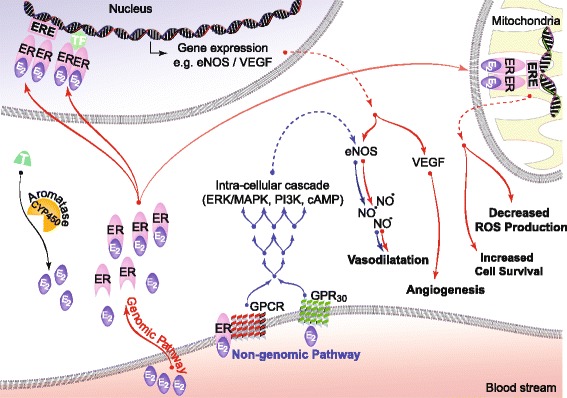
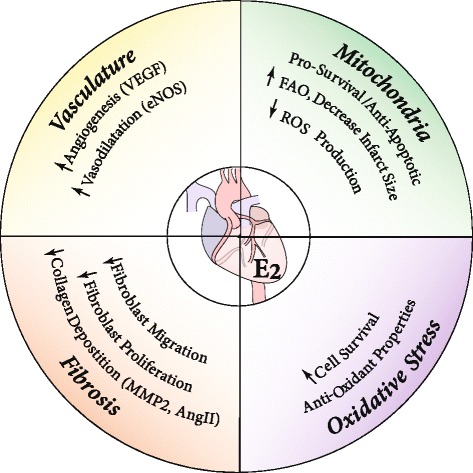
Epidemiologic studies have previously suggested that premenopausal females have reduced incidence of cardiovascular disease (CVD) when compared to age-matched males, and the incidence and severity of CVD increases postmenopause. The lower incidence of cardiovascular disease in women during reproductive age is attributed at least in part to estrogen (E2). E2 binds to the traditional E2 receptors (ERs), estrogen receptor alpha (ERα), and estrogen receptor beta (ERβ), as well as the more recently identified G-protein-coupled ER (GPR30), and can exert both genomic and non-genomic actions. This review summarizes the protective role of E2 and its receptors in the cardiovascular system and discusses its underlying mechanisms with an emphasis on oxidative stress, fibrosis, angiogenesis, and vascular function. This review also presents the sexual dimorphic role of ERs in modulating E2 action in cardiovascular disease. The controversies surrounding the clinical use of exogenous E2 as a therapeutic agent for cardiovascular disease in women due to the possible risks of thrombotic events, cancers, and arrhythmia are also discussed. Endogenous local E2 biosynthesis from the conversion of testosterone to E2 via aromatase enzyme offers a novel therapeutic paradigm. Targeting specific ERs in the cardiovascular system may result in novel and possibly safer therapeutic options for cardiovascular protection.
Overview
The claims and statistics of this paper haven’t been checked yet.
Free: it reads the open-access text and checks the first 5 claims that cite a source we can check. Create a free account to check every claim.
Integrity signals
Registry
Cites
Statistics
Figures
Verification
Claims the paper makes
The claims and statistics of this paper haven’t been checked yet.
Free: it reads the open-access text and checks the first 5 claims that cite a source we can check. Create a free account to check every claim.
Claims other papers make about this one
Each is checked against this paper’s own text: does it say what the citing paper says it does?
The source backs part of the claim, not all of it — or backs it for a different population, condition or comparison.
In the citing paper
“Through these receptors, estrogen promotes vasodilation, modulates nitric oxide pathways, and limits vascular inflammation, reducing the risk of endothelial dysfunction, arterial stiffness, and atherosclerosis.”
From Endometriosis and Cardiovascular Disease: Exploring Pathophysiological Interconnections and Risk Mechanisms (2025) · cites this paper as [14]
Experimental — accuracy not yet measuredThe source backs part of the claim, not all of it — or backs it for a different population, condition or comparison.
In the citing paper
“In women, estrogen protects cardiovascular safety by maintaining endothelial protective effects via estrogen receptor action, such as Erα, ERβ, and GPR30, reducing oxidative stress and influencing the lipid profile.”
From Endometriosis and Cardiovascular Disease: Exploring Pathophysiological Interconnections and Risk Mechanisms (2025) · cites this paper as [14]
Experimental — accuracy not yet measuredThe source backs part of the claim, not all of it — or backs it for a different population, condition or comparison.
In the citing paper
“The role of E2 has been well established to play a regulatory metabolic role via ERα in peripheral tissues such as skeletal muscle and WAT (130, 160–162)”
From Metabolic impact of endogenously produced estrogens by adipose tissue in females and males across the lifespan (2025) · cites this paper as [160]
Experimental — accuracy not yet measuredThe cited source says what the claim attributes to it.
In the citing paper
“These benefits are diminished with lower estrogen levels in postmenopausal women, contributing to a higher CVD risk (Figure 1).”
From Endometriosis and Cardiovascular Disease: Exploring Pathophysiological Interconnections and Risk Mechanisms (2025) · cites this paper as [14]
Self-check
Percentages, sums and reported differences re-computed from the paper’s own numbers.
The self-check needs the paper’s full text.
Citations
Cites
1 retracted
Retracted Article: Anti-Thrombotic Effects of Selective Estrogen Receptor Modulator Tamoxifen
Nayak, M. K., Singh, S. K., Roy, A., Prakash, V., Kumar, A. A., & Dash, D. (2011) · Thrombosis and Haemostasis · doi:10.1160/th11-03-0178 · Cited by 14
RetractedHeart Disease and Stroke Statistics—2016 Update: A Report From the American Heart Association
Mozaffarian, D., Benjamin, E. J., Go, A. S., Arnett, D. K., Blaha, M. J., Cushman, M., Das, S. R., de Ferranti, S., Després, J.-P., Fullerton, H. J., et al. (2016) · Circulation · doi:10.1161/cir.0000000000000350 · Cited by 6,596 · cited 1×
“It is well-known that the incidence of cardiovascular events is significantly lower in women when compared to age-matched men even following menopause [109].”
BackgroundHulley, S. (1998) · JAMA · doi:10.1001/jama.280.7.605 · Cited by 6,216
Endothelial dysfunction in cardiovascular diseases: the role of oxidant stress
Cai, H., & Harrison, D. G. (2000) · Circulation Research · doi:10.1161/01.res.87.10.840 · Cited by 3,839 · cited 1×
“E2 failed to increase homing of EPCs to the injured myocardium in eNOS-null mice [68].”
The mitochondrial permeability transition
Zoratti, M., & Szabò, I. (1995) · Biochimica et Biophysica Acta (BBA) - Reviews on Biomembranes · doi:10.1016/0304-4157(95)00003-a · Cited by 2,401
Grady, D., Herrington, D., Bittner, V., Blumenthal, R., Davidson, M., Hlatky, M., Hsia, J., Hulley, S., Herd, A., Khan, S., et al. (2002) · JAMA · doi:10.1001/jama.288.1.49 · Cited by 1,930
Molecular Mechanisms of Myocardial Remodeling
SWYNGHEDAUW, B. (1999) · Physiological Reviews · doi:10.1152/physrev.1999.79.1.215 · Cited by 1,460 · cited 1×
“myocyte hypertrophy, fibroblast proliferation, fibrosis, an accumulation of fibrillar collagens, and myocyte apoptosis [33].”
BackgroundEndothelial dysfunction: cardiovascular risk factors, therapy, and outcome.
Hadi, H. A. R., Carr, C. S., & Suwaidi, J. M. S. A. (2005) · PubMed Central · Cited by 1,078
Shiojima, I. (2005) · Journal of Clinical Investigation · doi:10.1172/jci24682 · Cited by 939 · cited 1×
“Increased cardiac angiogenesis is necessary to maintain LV function during adaptive hypertrophy and compensated heart hypertrophy as the larger LV has an obvious need for more blood vessels [56, 57].”
BackgroundSources of estrogen and their importance
Simpson, E. R. (2003) · The Journal of Steroid Biochemistry and Molecular Biology · doi:10.1016/s0960-0760(03)00360-1 · Cited by 936 · cited 2×
“This extragonadal E2 production plays an important role, as it remains the only source of endogenous E2 production in postmenopausal women and men [10].”
Background
Cited by
Items 101–200 of 1,000
Chung, G. E., Yu, S. J., Yoo, J., Cho, Y., Lee, K., Shin, D. W., Kim, Y. J., Yoon, J., Han, K., & Cho, E. J. (2025) · Scientific Reports · doi:10.1038/s41598-025-89293-6 · Cited by 42
Gender-specific therapeutic approach in arterial hypertension – Challenges ahead
Tadić, M., Cuspidi, C., Grassi, G. M., & Ivanović, B. (2018) · Pharmacological Research · doi:10.1016/j.phrs.2018.12.021 · Cited by 42
Jarman, A. F., Mumma, B. E., Perman, S. M., Kotini‐Shah, P., & McGregor, A. J. (2019) · Clinical Therapeutics · doi:10.1016/j.clinthera.2019.03.015 · Cited by 42
Ogawa, Y., Shobako, N., Fukuhara, I., Satoh, H., Kobayashi, E., Kusakari, T., Suwa, M., Matsumoto, M., & Ishikado, A. (2019) · Nutrients · doi:10.3390/nu11040726 · Cited by 43
Sexual Dimorphism of the Heart: Genetics, Epigenetics, and Development
Deegan, D. F., Nigam, P., & Engel, N. (2021) · Frontiers in Cardiovascular Medicine · doi:10.3389/fcvm.2021.668252 · Cited by 41
“To identify and manage the potential risks facing these patients, studies with animal models administering estrogen in males and androgens in females have been performed (125).”
BackgroundBourgonje, M. F., Bourgonje, A. R., Abdulle, A. E., Kieneker, L. M., Gemert, S. L. B., Gansevoort, R. T., Bakker, S. J. L., Mulder, D. J., Pasch, A., Saleh, J., et al. (2021) · Frontiers in Cardiovascular Medicine · doi:10.3389/fcvm.2021.630543 · Cited by 40
“, atherosclerosis, hypertension, myocardial infarction and stroke), independent from other traditional risk factors (8, 12, 36).”
BackgroundSkubic, C., Drakulić, Ž., & Rozman, D. (2018) · Expert Opinion on Drug Metabolism & Toxicology · doi:10.1080/17425255.2018.1492552 · Cited by 41
“Estrogens activate ER, which dissociate from their chaperone molecules called heat-shock proteins and form dimers which then bind directly to estrogen response elements or indirectly to activator protein-1 and specificity protein-1 on target genes’ promotor sites [61,66].”
BackgroundNguyen, D. H., Cunningham, J. T., & Sumien, N. (2020) · GeroScience · doi:10.1007/s11357-020-00263-4 · Cited by 38
Zhang, S., Liu, W., Xu, B., Wang, S., Du, Z., & Cheng, W. (2024) · Cardiovascular Diabetology · doi:10.1186/s12933-024-02275-2 · Cited by 36
“However, postmenopausal declines in oestrogen levels weaken this protection, increasing IR risk in women [53].”
BackgroundSelected Sex Related Differences in Pathophysiology of Cardiovascular System
Kittnar, O. (2020) · Physiological Research · doi:10.33549/physiolres.934068 · Cited by 40
In vitro modelling of the physiological and diseased female reproductive system
Stejskalová, A., Vankelecom, H. E. J., Sourouni, M., Ho, M. Y., Götte, M., & Almquist, B. D. (2021) · Acta Biomaterialia · doi:10.1016/j.actbio.2021.04.032 · Cited by 40
Yu, Q., Xu, Y., Yu, E., & Zheng, Z. (2022) · Journal of Clinical Pharmacy and Therapeutics · doi:10.1111/jcpt.13598 · Cited by 36
“Similarly, Iorga et al. (2017)52 suggested that, while estrogen is known to promote angiogenesis, reduce levels of reactive oxygen species, fibrosis and oxidative stress, decrease in estrogen levels can limit its ability to promote cardiac hypertrophy and facilitate cardiac remodeling instead.”
BackgroundOlaniyi, K. S., & Areloegbe, S. E. J. (2022) · Life Sciences · doi:10.1016/j.lfs.2022.120560 · Cited by 38
Sex- and gender-related disparities in chest pain syndromes: the feminine mystique of chest pain
Angeli, F., Ricci, F., Moscucci, F., Sciomer, S., Bucciarelli, V., Bianco, F., Mattioli, A. V., Pizzi, C., & Gallina, S. (2024) · Current Problems in Cardiology · doi:10.1016/j.cpcardiol.2024.102457 · Cited by 39
Health of adipose tissue: oestrogen matters
Vieira‐Potter, V. J., Mishra, G., & Townsend, K. L. (2025) · Nature Reviews Endocrinology · doi:10.1038/s41574-025-01180-2 · Cited by 36
“Whereas young, healthy women are protected against the development of cardiovascular disease compared with age-matched men 54,55 , in one study, women with diabetes mellitus had an increased risk of cardiometabolic complications compared with age-matched men with diabetes mellitus 56 .”
Heart Failure with Reduced Ejection Fraction—Does Sex Matter?
Swaraj, S., Kozor, R., Arnott, C. G., Bartolo, B. A. D., & Figtree, G. A. (2021) · Current Heart Failure Reports · doi:10.1007/s11897-021-00533-y · Cited by 36
“Furthermore, the recent genetic variant analysis revealed the positive association between endogenous testosterone and HF [19, 20].”
BackgroundMechanisms and implications of sex differences in cardiac aging
Yusifov, A., Woulfe, K. C., & Bruns, D. R. (2022) · The Journal of Cardiovascular Aging · doi:10.20517/jca.2022.01 · Cited by 41
“A wealth of data has demonstrated beneficial effects of E2 treatment on the heart, including reduced fibrosis, attenuated oxidative stress, improved mitochondrial function, and attenuation of cardiac hypertrophy[74].”
BackgroundType 1 Diabetes and the Menstrual Cycle: Where/How Does Exercise Fit in?
Toor, S., Yardley, J. E., & Momeni, Z. (2023) · International Journal of Environmental Research and Public Health · doi:10.3390/ijerph20042772 · Cited by 37
“Within the cardiovascular system, it mediates cardioprotection by increasing angiogenesis, nitric oxide production and vasodilation, while decreasing reactive oxygen species, oxidative stress, and fibrosis [7,8].”
BackgroundTargeting estrogen receptor signaling for treating heart failure
Qian, C., Liu, J., & Liu, H. (2023) · Heart Failure Reviews · doi:10.1007/s10741-023-10356-9 · Cited by 38
“…system, such as antioxidative [5] and anti-inflammatory [7] activities, as well as being able to prevent atherogenesis [8], thrombosis [8], and cell proliferation [2]; it exerts cardiovascular protective effect mainly by inhibiting the proliferation of vascular smooth muscle cells [9].”
BackgroundLi, N., Li, X., Liu, M., Wang, Y., & Wang, J. (2023) · BMC Pulmonary Medicine · doi:10.1186/s12890-023-02771-3 · Cited by 34
“…status, BMI, smoking status, FEV1% predicted and prevalent comorbidities (including hypertension, congestive heart failure, coronary heart disease, angina pectoris, heart attack, stroke, dyslipidemia, diabetes, gout, asthma, arthritis, anemia, cancer or malignancy and sleep disorder) [22].”
BackgroundBasurto, L., Gregory, M. A., Barrera-Hernández, S., Sánchez-Huerta, L., Martínez, A. D., Apolinar, L. M., Avelar‐Garnica, F. J., Alonso, L. A. M., & Sánchez‐Arenas, R. (2019) · Experimental Gerontology · doi:10.1016/j.exger.2019.05.013 · Cited by 35
Romance, R., Vargas-Molina, S., Espinar, S., Petro, J. L., Bonilla, D. A., Schoenfeld, B. J., Kreider, R. B., & Benítez‐Porres, J. (2019) · International Journal of Sports Medicine · doi:10.1055/a-0985-4373 · Cited by 36
“Thus, the conversion of endogenous testosterone into estrogens, through the aromatase enzyme, is being investigated as a possible replacement therapy that may offer greater safety [34].”
BackgroundLymphatic Function and Dysfunction in the Context of Sex Differences
Trincot, C. E., & Caron, K. M. (2019) · ACS Pharmacology & Translational Science · doi:10.1021/acsptsci.9b00051 · Cited by 37
Cardiovascular comorbidities in psoriasis (Review)
Branisteanu, D. E., Nicolescu, A. C., Brănişteanu, D. C., Branisteanu, C., Dragoi, A., Bogdănici, C. M., Toader, M. P., Tucaliuc, A., Dimitriu, A., Daogaru, D., et al. (2021) · Experimental and Therapeutic Medicine · doi:10.3892/etm.2021.11075 · Cited by 34
“This is mainly explained by the hormonal status of the woman in the fertile period, estrogens having a potentially protective role on cardio‐ vascular disease and metabolic syndrome (19).”
BackgroundSex differences underlying preexisting cardiovascular disease and cardiovascular injury in COVID-19
Medzikovic, L., Cunningham, C. M., Li, M., Amjedi, M., Hong, J. S., Ruffenach, G., & Eghbali, M. (2020) · Journal of Molecular and Cellular Cardiology · doi:10.1016/j.yjmcc.2020.08.007 · Cited by 36
“by enhancing endothelial nitric oxide synthase (eNOS) expression while testosterone has opposite effects [24].”
InfluentialSelf-citationRecovery of menses after functional hypothalamic amenorrhoea: if, when and why
Pape, J., Herbison, A. E., & Leeners, B. (2020) · Human Reproduction Update · doi:10.1093/humupd/dmaa032 · Cited by 40
ET-1 as a Sex-Specific Mechanism Impacting Age-Related Changes in Vascular Function
Kuczmarski, A. V., Welti, L. M., Moreau, K. L., & Wenner, M. M. (2021) · Frontiers in Aging · doi:10.3389/fragi.2021.727416 · Cited by 36
Lee, A. A., & Den Hartigh, L. J. (2025) · Frontiers in Endocrinology · doi:10.3389/fendo.2025.1682231 · Cited by 32
Dehydroepiandrosterone on metabolism and the cardiovascular system in the postmenopausal period
Teixeira, C. J., Veras, K. M. D. A., & Carvalho, C. R. D. O. (2019) · Journal of Molecular Medicine · doi:10.1007/s00109-019-01842-5 · Cited by 33
Adekunle, A. O., Adzika, G. K., Mprah, R., Noah, M. L. N., Adu‐Amankwaah, J., Rizvi, R., Akhter, N., & Sun, H. (2021) · Frontiers in Cell and Developmental Biology · doi:10.3389/fcell.2021.685996 · Cited by 36
The Role of Estrogens and Vitamin D in Cardiomyocyte Protection: A Female Perspective
Crescioli, C. (2021) · Biomolecules · doi:10.3390/biom11121815 · Cited by 33
“Treatment with estrogens can normalize the cardiac function in male mice with HF, induced by aromatase activity suppression [32]; in line with this experimental observation, a reduced risk of CVD events from endogenous estrogens is reported in elder men [33].”
ResultGlobal coagulation assays in hypercoagulable states
Lim, H. Y., Donnan, G. A., Nandurkar, H. H., & Ho, P. W. (2022) · Journal of Thrombosis and Thrombolysis · doi:10.1007/s11239-021-02621-1 · Cited by 34
Estrogen mediated differential protein regulation and signal transduction in rheumatoid arthritis
Chakraborty, D., Sarkar, A., Mann, S., Monu, M., Agnihotri, P., Saquib, M., Malik, S., Kumavat, R., Mathur, A., & Biswas, S. (2022) · Journal of Molecular Endocrinology · doi:10.1530/jme-22-0010 · Cited by 32
Michońska, I., Łuszczki, E., Zielińska, M., Oleksy, Ł., Stolarczyk, A., & Dereń, K. (2022) · Nutrients · doi:10.3390/nu14204422 · Cited by 38
“Recent studies confirm, among other things, the protective effect of estrog in the context of cardi vascul r disease, as well [60,61].”
ResultMenopause and hormone replacement therapy in the 21st century
Gersh, F. L., & Lavie, C. J. (2020) · Heart · doi:10.1136/heartjnl-2019-315898 · Cited by 32
Pezel, T., Ambale‐Venkatesh, B., Vasconcellos, H. D. D., Kato, Y., Post, W. S., Wu, C. O., Heckbert, S. R., Bluemke, D. A., Solal, A. C., Logeart, D., et al. (2022) · Archives of cardiovascular diseases · doi:10.1016/j.acvd.2022.04.011 · Cited by 31
Sudden Cardiac Death in the Young
Bagnall, R. D., Singer, E. S., & Tfelt‐Hansen, J. (2019) · Heart Lung and Circulation · doi:10.1016/j.hlc.2019.11.007 · Cited by 31
Sex, Endothelial Cell Functions, and Peripheral Artery Disease
Cartland, S. P., Stanley, C. P., Bursill, C. A., Passam, F. H., Figtree, G. A., Patel, S., Loa, J., Golledge, J., Robinson, D. A., Aitken, S., et al. (2023) · International Journal of Molecular Sciences · doi:10.3390/ijms242417439 · Cited by 33
“Female platelets show consistently higher aggregation in response to agonists, such as arachidonic acid, collagen, and adenosine diphosphate (ADP) [57].”
BackgroundPregnancy as a susceptible state for thrombotic microangiopathies
Frimat, M., Gnemmi, V., Stichelbout, M., Provôt, F., & Fakhouri, F. (2024) · Frontiers in Medicine · doi:10.3389/fmed.2024.1343060 · Cited by 33
Meng, Q., Li, J., Chao, Y., Bi, Y., Zhang, W., Zhang, Y., Ji, T., Fu, Y., Chen, Q., Zhang, Q., et al. (2020) · Biochemical Pharmacology · doi:10.1016/j.bcp.2020.114134 · Cited by 30
Considering Cause and Effect of Immune Cell Aging on Cardiac Repair after Myocardial Infarction
Tobin, S. W., Alibhai, F. J., Weisel, R. D., & Li, R. (2020) · Cells · doi:10.3390/cells9081894 · Cited by 35
Sex Differences in Inflammation During Venous Remodeling of Arteriovenous Fistulae
Chan, S. M., Weininger, G., Langford, J. T., Jane‐wit, D., & Dardik, A. (2021) · Frontiers in Cardiovascular Medicine · doi:10.3389/fcvm.2021.715114 · Cited by 30
Mitropoulos, A., Anifanti, M., Koukouvou, G., Ntovoli, A., Alexandris, K., & Kouidi, E. J. (2024) · Frontiers in Cardiovascular Medicine · doi:10.3389/fcvm.2024.1410616 · Cited by 32
The effect of estrogen in coronavirus disease 2019
Ma, Q., Hao, Z., & Wang, Y. (2021) · American Journal of Physiology-Lung Cellular and Molecular Physiology · doi:10.1152/ajplung.00332.2020 · Cited by 30
Menopause Is Associated With Immune Activation in Women With HIV
Peters, B. A., Xue, X., Sheira, L. A., Qi, Q., Sharma, A., Santoro, N. F., Alcaide, M. L., Ofotokun, I., Adimora, A. A., McKay, H., et al. (2021) · The Journal of Infectious Diseases · doi:10.1093/infdis/jiab341 · Cited by 32
Immuno-Endocrinology of COVID-19: The Key Role of Sex Hormones
Tramontana, F., Battisti, S., Napoli, N., & Strollo, R. (2021) · Frontiers in Endocrinology · doi:10.3389/fendo.2021.726696 · Cited by 30
Role of Biological Sex in the Cardiovascular-Gut Microbiome Axis
Li, S., & Kararigas, G. (2022) · Frontiers in Cardiovascular Medicine · doi:10.3389/fcvm.2021.759735 · Cited by 29
Association Between Sex-Specific Risk Factors and Risk of New-Onset Atrial Fibrillation Among Women
Lu, Z., Aribas, E., Geurts, S., van Lennep, J. E. R., Ikram, M. A., Bos, M. M., de Groot, N. M. S., & Kavousi, M. (2022) · JAMA Network Open · doi:10.1001/jamanetworkopen.2022.29716 · Cited by 33
Medzikovic, L., Azem, T., Sun, W., Rejali, P., Esdin, L., Rahman, S., Dehghanitafti, A., Aryan, L., & Eghbali, M. (2023) · Cells · doi:10.3390/cells12162077 · Cited by 29
“Enrichment of mitochondria-related genes was observed in cardiomyocytes from female GPR30 knockout mice versus WT mice, but not in male mice [43].”
BackgroundInfluentialSelf-citationThe Menstrual Cycle’s Influence on Sleep Duration and Cardiovascular Health: A Comprehensive Review
Rugvedh, P., Gundreddy, P., & Wandile, B. V. (2023) · Cureus · doi:10.7759/cureus.47292 · Cited by 42
“Notably, during the follicular phase of the menstrual cycle, when estrogen levels rise, these cardioprotective effects may be more pronounced, potentially contributing to enhanced cardiovascular well-being [28].”
BackgroundComparison of Patients with Acute Myocardial Infarction According to Age
Džubur, A., Gacic, E., & Mekic, N. (2019) · Medical Archives · doi:10.5455/medarh.2019.73.23-27 · Cited by 28
“DISCUSSION When we talk about AMI in young people we are mainly thinking on males, but due to the increasing prevalence of cigarette consumption in the female population, the number of women who experience AMI in the younger age is progressively increasing (nicotine decreases the protective effect of estrogen on the b…”
BackgroundEye care utilization pattern in South Africa: results from SANHANES-1
Akuffo, K. O., Sewpaul, R., Dukhi, N., Asare, A. K., Kumah, D. B., Addo, E. K., Agyei‐Manu, E., & Reddy, P. S. (2020) · BMC Health Services Research · doi:10.1186/s12913-020-05621-8 · Cited by 30
GPER: An Estrogen Receptor Key in Metastasis and Tumoral Microenvironments
Tirado-Garibay, A. C., Falcón-Ruiz, E. A., Ochoa‐Zarzosa, A., & López-Meza, J. E. (2023) · International Journal of Molecular Sciences · doi:10.3390/ijms241914993 · Cited by 29
“…that GPER is expressed in monocytic cells, such as CD14+ monocytes, in vitro di ff erentiated macrophages, and tissue-resident macrophages [40]. cardiovascular diseases, mainly in pre-menopausal females [88], diminishing the inflammation and the NO production mediated in endothelial cells [99].”
Age and sex differences in microvascular responses during reactive hyperaemia
Citherlet, T., Raberin, A., Manferdelli, G., da Mota, G. R., & Millet, G. P. (2024) · Experimental Physiology · doi:10.1113/ep091652 · Cited by 28
“…dysfunction and macrovascular risks (Gutterman et al., 2016), along with the evidence of greater endothelial function measured by FMD (Holder et al., 2019) and lower incidence of cardiovascular events in women (Iorga et al., 2017), we observed diminished microvascular responses in women.”
BackgroundThe Role of DNMT and HDACs in the Fetal Programming of Hypertension by Glucocorticoids
LaMothe, J. M., Khurana, S., Tharmalingam, S., Williamson, C., Byrne, C. J., Khaper, N., Mercier, S., & Tai, T. C. (2020) · Oxidative Medicine and Cellular Longevity · doi:10.1155/2020/5751768 · Cited by 29
“Furthermore, estrogen plays a protective role on the cardiovascular system via its ability to reduce ROS production and increase antioxidant enzyme levels [41].”
BackgroundBehboudi‐Gandevani, S., Moe, C. F., Skjesol, I., Arntzen, E. C., & Yarandi, R. B. (2024) · Scientific Reports · doi:10.1038/s41598-024-53011-5 · Cited by 30
“In this respect, it is reported that estrogen, particularly estradiol (E2), acts as a mediator in CVD protection by promoting angiogenesis, vasodilation and decreasing reactive oxygen species, oxidative stress, and fibrosis 71,72 .”
BackgroundVascular dysfunction and oxidative stress caused by acute formaldehyde exposure in female adults
Augenreich, M. A., Stickford, J. L., Stute, N. L., Koontz, L. K., Cope, J. M., Bennett, C., & Ratchford, S. M. (2020) · American Journal of Physiology-Heart and Circulatory Physiology · doi:10.1152/ajpheart.00605.2020 · Cited by 30
Chang, Y., Chen, Y., & Kang, H. (2021) · International Journal of Molecular Sciences · doi:10.3390/ijms22168776 · Cited by 29
“A specific ER subtype is also involved in VCI treatment and prevention [6].”
BackgroundSørensen, M., Poulsen, A. H., Hvidtfeldt, U. A., Christensen, J. H., Brandt, J. G., Frohn, L. M., Ketzel, M., Andersen, C., Valencia, V. H., Lassen, C. F., et al. (2023) · Environmental Health Perspectives · doi:10.1289/ehp11347 · Cited by 27
“52,53 It is therefore possible that men due to inherent sex-related physiological di ff erences are more susceptible to the hazardous e ff ects of air pollution.”
Chen, X., Zhao, Y., Sun, J., Jiang, Y., & Tang, Y. (2024) · Nutrition & Metabolism · doi:10.1186/s12986-024-00864-2 · Cited by 32
“…during which decreased estrogen levels result in a shift in fat storage from subcutaneous to visceral fat [52], it is important to note that reduced estrogen also contributes to increased components of MetS, such as elevated blood pressure, blood glucose, and blood lipid levels [54–56].”
Żabińska, M., Wiśniewska, K., Węgrzyn, G., & Pierzynowska, K. (2024) · Psychoneuroendocrinology · doi:10.1016/j.psyneuen.2024.107070 · Cited by 29
“GPER also modulated coronary tone, as inhibition of its function led to increases in coronary perfusion pressure in both male and female rats (Fredette et al., 2020; Iorga et al., 2017; Luo et al., 2017; Rocca et al., 2018).”
BackgroundGirl Power in Glaucoma: The Role of Estrogen in Primary Open Angle Glaucoma
Fotesko, K., Thomsen, B. S. V., Kolko, M., & Vohra, R. (2020) · Cellular and Molecular Neurobiology · doi:10.1007/s10571-020-00965-5 · Cited by 28
Targeting Aquaporins in Novel Therapies for Male and Female Breast and Reproductive Cancers
Khan, S., Ricciardelli, C., & Yool, A. J. (2021) · Cells · doi:10.3390/cells10020215 · Cited by 27
Postmenopausal hormone therapy for cardiovascular health: the evolving data
Gersh, F. L., O’Keefe, J. H., & Lavie, C. J. (2021) · Heart · doi:10.1136/heartjnl-2019-316323 · Cited by 28
Ferrari, S., & Pesce, M. (2022) · Frontiers in Cardiovascular Medicine · doi:10.3389/fcvm.2021.791646 · Cited by 28
“, estrogen) against insurgence of atherosclerosis (118), or the higher mechanical load experienced by the leaflets in relationship with the bigger body surface area and cross-sectional area of the aortic annulus in men vs.”
BackgroundAssociation of menopause with risk of carotid artery atherosclerosis
Li, Y., Zhao, D. H., Wang, M., Sun, J., Liu, J., Qi, Y., Hao, Y., Deng, Q., Liu, J., Liu, J., et al. (2020) · Maturitas · doi:10.1016/j.maturitas.2020.10.007 · Cited by 31
Sun, W., Han, Y., & Gu, S. (2024) · PeerJ · doi:10.7717/peerj.17621 · Cited by 26
Extracellular Vesicles as Mediators of Endothelial Dysfunction in Cardiovascular Diseases
Jimenez‐Trinidad, F. R., Calvo-Gomez, S., Sabaté, M., Brugaletta, S., Campuzano, V., Egea, G., & Dantas, A. P. (2025) · International Journal of Molecular Sciences · doi:10.3390/ijms26031008 · Cited by 27
Cardiovascular contributions to dementia: Examining sex differences and female‐specific factors
Alexander, M. W., Paterson, J., Arvanitakis, Z., Black, S. E., Casaletto, K. B., Christakis, M. K., Einstein, G., Galea, L. A. M., Harwood, L., Kirkham, A. A., et al. (2025) · Alzheimer s & Dementia · doi:10.1002/alz.70610 · Cited by 29
“165,167 In the brain, estradiol supports synaptogenesis, facilitates neural repair, and exerts anti-inflammatory and antioxidant effects.”
Farahmand, M., Tehrani, F. R., Khalili, D., Cheraghi, L., Khomami, M. B., & Azizi, F. (2019) · Life Sciences · doi:10.1016/j.lfs.2019.02.020 · Cited by 25
Yue, J., Wang, X., Feng, B., Hu, L., Yang, L.-K., Lu, L., Zhang, K., Wang, Y., & Liu, S. (2019) · ACS Chemical Neuroscience · doi:10.1021/acschemneuro.9b00287 · Cited by 27
Parameters of Oxidative Stress in Reproductive and Postmenopausal Mexican Women
Montoya-Estrada, A., Velázquez-Yescas, K. G., Veruete-Bedolla, D., Ruiz-Herrera, J. D., Villarreal-Barranca, A., Romo‐Yáñez, J., Ortíz-Luna, G. F., Arellano‐Eguiluz, A., Solis‐Paredes, J. M., Pliego, A. F., et al. (2020) · International Journal of Environmental Research and Public Health · doi:10.3390/ijerph17051492 · Cited by 25
“Several studies proposed that a supplementary diet with antioxidants could decrease levels of OS markers, and thus, the incidence of comorbidities [33,39].”
BackgroundCollins, L. F., Sheth, A. N., Mehta, C. C., Naggie, S., Golub, E. T., Anastos, K., French, A. L., Kassaye, S., Taylor, T., Fischl, M. A., et al. (2020) · Clinical Infectious Diseases · doi:10.1093/cid/ciaa1928 · Cited by 26
ChemBioSim: Enhancing Conformal Prediction of In Vivo Toxicity by Use of Predicted Bioactivities
de Lomana, M. G., Morger, A., Norinder, U., Buesen, R., Landsiedel, R., Volkamer, A., Kirchmair, J., & Mathea, M. (2021) · Journal of Chemical Information and Modeling · doi:10.1021/acs.jcim.1c00451 · Cited by 25
The impact of female sex hormones on cardiovascular disease: from mechanisms to hormone therapy
Kan, Y., Peng, Y., Zhao, Z.-H., Dong, S., Xu, Y.-X., Ma, X., Liu, X., Liu, Y., & Yu-Jie, Z. H. O. U. (2024) · 老年心脏病学杂志:英文版 · doi:10.26599/1671-5411.2024.06.003 · Cited by 28
Comparing right- and left sided injection-drug related infective endocarditis
Clarelin, A., Rasmussen, M., Olaison, L., & Ragnarsson, S. (2021) · Scientific Reports · doi:10.1038/s41598-020-80869-y · Cited by 25
Morfoisse, F., Zamora, A., Marchaud, E., Nougué, M., Diallo, L. H., David, F., Roussel, É., Lacazette, É., Prats, A., Tatin, F., et al. (2021) · Cancers · doi:10.3390/cancers13030530 · Cited by 25
“A protective role is reported on inflammation, vascular function, fibrosis, and oxidative stress in diseases related mice models such as atherogenic lesions and cardiac ischemia [39].”
BackgroundBérczi, B., Farkas, N., Hegyi, P. J., Tóth, B., Csupor, D., Németh, B., Lukács, A., Czumbel, L. M., Kerémi, B., Kiss, I., et al. (2024) · Journal of Clinical Medicine · doi:10.3390/jcm13061818 · Cited by 27
“These findings have been supported by the elimination of dyslipidemia with estrogen replacement [7–14].”
BackgroundBatinac, T., Batičić, L., Kršek, A., Knežević, D., Marcucci, E., Tokmadžić, V. S., & Ćurko‐Cofek, B. (2024) · Journal of Cardiovascular Development and Disease · doi:10.3390/jcdd11120408 · Cited by 31
“The influence of hormones such as insulin, thyroid hormones, and estrogen on eNOS expression [59,215,216] may partly explain the differences in the incidence of cardiovascular disease between men and women.”
Lalik, A., Szreder, J., Grymel, M., Żabczyński, S., Bajkacz, S., Pielok, M., Cieślik, M., Kicińska, A., & Wawrzkiewicz–Jałowiecka, A. (2025) · Analytical Chemistry · doi:10.1021/acs.analchem.4c06796 · Cited by 28
Kolonics-Farkas, A. M., Šterclová, M., Moğulkoç, N., Kuś, J., Hájková, M., Müller, V., Jovanović, D. M., Tekavec-Trkanjec, J., Littnerová, S., Hejduk, K., et al. (2020) · Drug Safety · doi:10.1007/s40264-020-00978-5 · Cited by 27
Modulation of heroin intake by ovarian hormones in gonadectomized and intact female rats
Smith, M. A., Ethridge, S. B., Pearson, T., Zhang, H., Marcus, M. M., Ballard, S. L., Casimir, A. T., Potter, K. M., Schmidt, K. T., Sharp, J. L., et al. (2021) · Psychopharmacology · doi:10.1007/s00213-020-05743-1 · Cited by 24
Estrogen and Cardiovascular Health
den Ruijter, H. M., & Kararigas, G. (2022) · Frontiers in Cardiovascular Medicine · doi:10.3389/fcvm.2022.886592 · Cited by 24
Seo, E., Jung, S. J., Lee, H., & Kim, H. C. (2022) · Korean Circulation Journal · doi:10.4070/kcj.2021.0347 · Cited by 24
Estrogen receptor-mediated health benefits of phytochemicals: a review
Li, J., Yu, J., Zou, H., Zhang, J., & Ren, L. (2023) · Food & Function · doi:10.1039/d3fo04702d · Cited by 29
Sex-Related Effects on Cardiac Development and Disease
Siokatas, G., Papatheodorou, I., Daiou, A., Lazou, A., Hatzistergos, K. E., & Kararigas, G. (2022) · Journal of Cardiovascular Development and Disease · doi:10.3390/jcdd9030090 · Cited by 27
Carrick-Ranson, G., Howden, E. J., Brazile, T. L., Levine, B. D., & Reading, S. A. (2023) · Journal of Applied Physiology · doi:10.1152/japplphysiol.00798.2022 · Cited by 23
Zhakhina, G., Gaipov, A., Salustri, A., Gusmanov, A., Sakko, Y., Yerdessov, S., Bekbossynova, M. S., Abbay, A., Sarría‐Santamera, A., & Akbilgiç, O. (2022) · Frontiers in Cardiovascular Medicine · doi:10.3389/fcvm.2023.1127320 · Cited by 25
“The lower risk of AMI in young women can be attributed to their pre- and peri-menopausal state and higher estrogen levels (15).”
BackgroundZangeneh, F. Z., & Shoushtari, M. S. (2021) · Journal of Family & Reproductive Health · doi:10.18502/jfrh.v15i3.7132 · Cited by 25
“These signaling pathways are linked to anabolic defensive effects in the lungs (20), cardiovascular system (21) and immune system (22).”
BackgroundSexual dimorphism in cardiac remodeling: the molecular mechanisms ruled by sex hormones in the heart
Ferreira, C., Trindade, F., Ferreira, R. M., Neves, J. S., Leite-Moreira, A. F., Amado, F. M. L., Santos, M., & Nogueira‐Ferreira, R. (2021) · Journal of Molecular Medicine · doi:10.1007/s00109-021-02169-w · Cited by 23
“Controversial data exists regarding hormone replacement therapy (HRT) in humans [25].”
BackgroundWang, Y., Wu, C., Zhou, J., Fang, H., & Wang, J. (2022) · BMC Pharmacology and Toxicology · doi:10.1186/s40360-022-00617-y · Cited by 23
“E2 binds to the traditional E2 receptors (ERs), including estrogen receptor alpha (ERα), and estrogen receptor beta (ERβ), as well as the more recently identified G-protein-coupled ER1 (GPER1, also known as GPR30), and exerts both genomic and non-genomic actions [4].”
BackgroundCharles, D. A., & Prince, S. E. (2024) · Heliyon · doi:10.1016/j.heliyon.2024.e28917 · Cited by 23
“Estrogen, a pivotal hormone in human physiology, plays a vital role in cardioprotection, as corroborated by Iorga et al. (2017) [35].”
BackgroundXu, J., Wang, F., Li, Y., Li, P., Zhang, Y., Xu, G., & Sun, K. (2024) · Molecular Medicine Reports · doi:10.3892/mmr.2024.13246 · Cited by 27
“Therefore, the use of E2 in the form of hormone replacement therapy in humans has been controversial, and the associated major controversies include the inconsistent efficacy of hormone replacement therapy and the risk of thrombotic events, cancer and arrhythmia (39).”
BackgroundOestradiol and the risk of myocardial infarction in women: a cohort study of UK Biobank participants
Peters, S. A. E., & Woodward, M. (2020) · International Journal of Epidemiology · doi:10.1093/ije/dyaa284 · Cited by 23
O’Kennedy, N., Duss, R., & Duttaroy, A. K. (2021) · Nutrients · doi:10.3390/nu13072184 · Cited by 26
Jeong, S., Yoo, J. E., Jeon, K. H., Han, K., Lee, H., Lee, D., & Shin, D. W. (2023) · BMC Medicine · doi:10.1186/s12916-023-02757-2 · Cited by 23
“There is abundant evidence that estrogen protects against atherosclerosis by promoting vasodilation, reducing fibrosis, and improving mitochondrial function and anti-oxidant activity [4].”
BackgroundHarris, K., Peters, S. A. E., & Woodward, M. (2023) · Biology of Sex Differences · doi:10.1186/s13293-023-00546-3 · Cited by 25
“One school of thought suggests higher levels of oestrogen might be associated with a lower risk of cardiovascular disease, such that oestrogen is thought to have a cardioprotective effect [14].”
BackgroundDing, H., Jiang, M., Chan, A. M.-L., Xia, Y. Y., Ronald, C. W., Yao, X., Wang, L., & Huang, Y. (2024) · British Journal of Pharmacology · doi:10.1111/bph.17307 · Cited by 22
“To avoid any confounding effects of sex differences (Iorga et al., 2017), we used only male mice aged 8 – 10 weeks in our study.”
Gonadal hormones and stroke risk: PCOS as a case study
Stewart, C. E., & Sohrabji, F. (2020) · Frontiers in Neuroendocrinology · doi:10.1016/j.yfrne.2020.100853 · Cited by 24
Sex differences in coronary atherogenesis: a narrative review
Kim, H. (2024) · Ewha Medical Journal · doi:10.12771/emj.2024.e15 · Cited by 25
“Overall, estrogen exerts cardioprotective effects by mitigating the risk of atherosclerosis, hypertension, and thrombosis, thereby reducing the likelihood of CVDs such as heart attack and stroke [22,23].”
Background
Metadata
- Authors
- Iorga, A., Cunningham, C. M., Moazeni, S., Ruffenach, G., Umar, S., & Eghbali, M.
- Affiliations
- University of Southern California (US)
- University of California, Los Angeles (US)
- Corresponding author
- Eghbali, Mansoureh
- Venue
- Biology of Sex Differences
- Published
- 2017-10-24
- Volume
- 8
- Issue
- 1
- Pages
- 33-33
- ISSN
- 2042-6410 (ISSN-L)
- PMC
- PMC5655818
- OpenAlex
- W2766043255
- Cited by
- 914
- References
- 140
- Citations by year
- 2026: 91 · 2025: 157 · 2024: 156 · 2023: 143 · 2022: 114 · 2021: 113 · 2020: 88 · 2019: 38 · 2018: 12 · 2017: 2
- FWCI
- 4.91
- Type
- journal article
- Language
- en
- Open access
- gold
- doi.org
- Licence
- cc-by
- creativecommons.org/licenses/by/4.0/ (tdm)
- creativecommons.org/licenses/by/4.0/ (vor)
- Locations
- Biology of Sex Differences (publishedVersion, cc-by)
- Europe PMC (PubMed Central) (publishedVersion, cc-by)
- PubMed Central (publishedVersion, cc-by)
- PubMed (publishedVersion)
- DOAJ (DOAJ: Directory of Open Access Journals) (submittedVersion, cc-by-sa)
- eScholarship (California Digital Library) (submittedVersion)
- Funders
- American Heart Association (AHA-17PRE33420159, AHA16GRANT27760058)
- National Institutes of Health (R01HL131182-01A1, T32-GM065823, HD00722)
- Topics
- Life Sciences › Biochemistry, Genetics and Molecular Biology › Endocrinology › Estrogen and related hormone effects
- Health Sciences › Medicine › Endocrinology, Diabetes and Metabolism › Menopause: Health Impacts and Treatments
- Health Sciences › Nursing › Nutrition and Dietetics › Phytoestrogen effects and research
- Keywords
- estrogen, estrogen receptor, estrogen receptor alpha, estrogen receptor beta, GPR30, cardiovascular disease, postmenopause, sex differences, oxidative stress, fibrosis, angiogenesis, vascular function, aromatase, thrombosis risk, cardioprotection
- MeSH terms
- Animals, Cardiovascular Agents, Cardiovascular Diseases, Estrogens, Humans, Receptors, Estrogen
About these checks
Registry, retraction, Cites and statistics results are computed, not judged, with one exception: a printed reference that no index lists is read once by a model before it counts as a citation error. Claims are extracted by a model and kept only when their quote appears verbatim in the text; each cited source is then checked, with a model’s help, for whether it says what the claim relies on. Those verdicts can be wrong — read the claim’s quote and the cited source before relying on one.
Statistics and arithmetic are recomputed, not judged.
Confidence bands are shown only for fields calibrated on our annotated test set. None is calibrated yet, so no band is shown.
What counts as a claim ›How we measure confidence ›How we check this ›
Are you an author, or do you see a problem with this page? Request a review
Data sources
Bibliographic data: Semantic Scholar, OpenAlex, Crossref.
Contains information from the Semantic Scholar Academic Graph Datasets, made available under the ODC Attribution License (ODC-BY 1.0).
Semantic Scholar’s data is described in: Kinney, R., et al. (2023). The Semantic Scholar Open Data Platform. arXiv:2301.10140.
