

The protective role of estrogen and estrogen receptors in cardiovascular disease and the controversial use of estrogen therapy
Open accessThe DOI matches its Crossref record; 140 of the 140 references it cites were found in a registry or an index.
Abstract
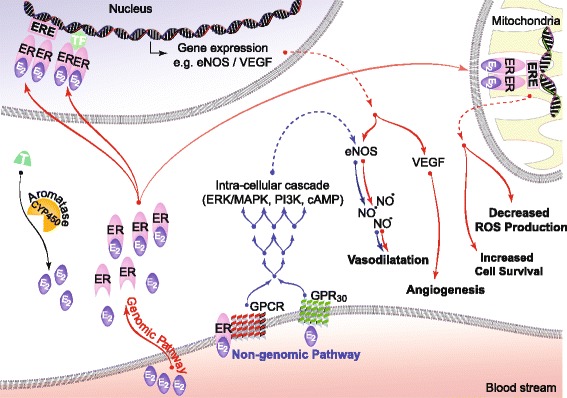
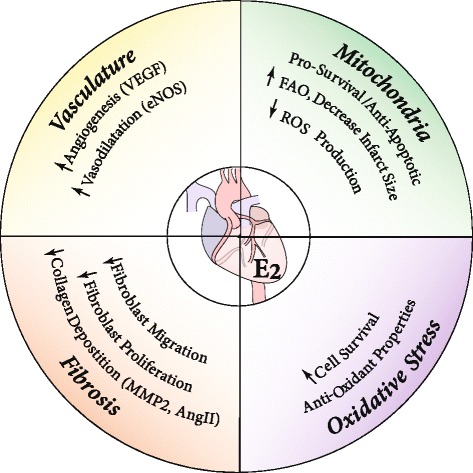
Epidemiologic studies have previously suggested that premenopausal females have reduced incidence of cardiovascular disease (CVD) when compared to age-matched males, and the incidence and severity of CVD increases postmenopause. The lower incidence of cardiovascular disease in women during reproductive age is attributed at least in part to estrogen (E2). E2 binds to the traditional E2 receptors (ERs), estrogen receptor alpha (ERα), and estrogen receptor beta (ERβ), as well as the more recently identified G-protein-coupled ER (GPR30), and can exert both genomic and non-genomic actions. This review summarizes the protective role of E2 and its receptors in the cardiovascular system and discusses its underlying mechanisms with an emphasis on oxidative stress, fibrosis, angiogenesis, and vascular function. This review also presents the sexual dimorphic role of ERs in modulating E2 action in cardiovascular disease. The controversies surrounding the clinical use of exogenous E2 as a therapeutic agent for cardiovascular disease in women due to the possible risks of thrombotic events, cancers, and arrhythmia are also discussed. Endogenous local E2 biosynthesis from the conversion of testosterone to E2 via aromatase enzyme offers a novel therapeutic paradigm. Targeting specific ERs in the cardiovascular system may result in novel and possibly safer therapeutic options for cardiovascular protection.
Overview
The claims and statistics of this paper haven’t been checked yet.
Free: it reads the open-access text and checks the first 5 claims that cite a source we can check. Create a free account to check every claim.
Integrity signals
Registry
Cites
Statistics
Figures
Verification
Claims the paper makes
The claims and statistics of this paper haven’t been checked yet.
Free: it reads the open-access text and checks the first 5 claims that cite a source we can check. Create a free account to check every claim.
Claims other papers make about this one
Each is checked against this paper’s own text: does it say what the citing paper says it does?
The source backs part of the claim, not all of it — or backs it for a different population, condition or comparison.
In the citing paper
“Through these receptors, estrogen promotes vasodilation, modulates nitric oxide pathways, and limits vascular inflammation, reducing the risk of endothelial dysfunction, arterial stiffness, and atherosclerosis.”
From Endometriosis and Cardiovascular Disease: Exploring Pathophysiological Interconnections and Risk Mechanisms (2025) · cites this paper as [14]
Experimental — accuracy not yet measuredThe source backs part of the claim, not all of it — or backs it for a different population, condition or comparison.
In the citing paper
“In women, estrogen protects cardiovascular safety by maintaining endothelial protective effects via estrogen receptor action, such as Erα, ERβ, and GPR30, reducing oxidative stress and influencing the lipid profile.”
From Endometriosis and Cardiovascular Disease: Exploring Pathophysiological Interconnections and Risk Mechanisms (2025) · cites this paper as [14]
Experimental — accuracy not yet measuredThe source backs part of the claim, not all of it — or backs it for a different population, condition or comparison.
In the citing paper
“The role of E2 has been well established to play a regulatory metabolic role via ERα in peripheral tissues such as skeletal muscle and WAT (130, 160–162)”
From Metabolic impact of endogenously produced estrogens by adipose tissue in females and males across the lifespan (2025) · cites this paper as [160]
Experimental — accuracy not yet measuredThe cited source says what the claim attributes to it.
In the citing paper
“These benefits are diminished with lower estrogen levels in postmenopausal women, contributing to a higher CVD risk (Figure 1).”
From Endometriosis and Cardiovascular Disease: Exploring Pathophysiological Interconnections and Risk Mechanisms (2025) · cites this paper as [14]
Self-check
Percentages, sums and reported differences re-computed from the paper’s own numbers.
The self-check needs the paper’s full text.
Citations
Cites
1 retracted
Retracted Article: Anti-Thrombotic Effects of Selective Estrogen Receptor Modulator Tamoxifen
Nayak, M. K., Singh, S. K., Roy, A., Prakash, V., Kumar, A. A., & Dash, D. (2011) · Thrombosis and Haemostasis · doi:10.1160/th11-03-0178 · Cited by 14
RetractedHeart Disease and Stroke Statistics—2016 Update: A Report From the American Heart Association
Mozaffarian, D., Benjamin, E. J., Go, A. S., Arnett, D. K., Blaha, M. J., Cushman, M., Das, S. R., de Ferranti, S., Després, J.-P., Fullerton, H. J., et al. (2016) · Circulation · doi:10.1161/cir.0000000000000350 · Cited by 6,596 · cited 1×
“It is well-known that the incidence of cardiovascular events is significantly lower in women when compared to age-matched men even following menopause [109].”
BackgroundHulley, S. (1998) · JAMA · doi:10.1001/jama.280.7.605 · Cited by 6,216
Endothelial dysfunction in cardiovascular diseases: the role of oxidant stress
Cai, H., & Harrison, D. G. (2000) · Circulation Research · doi:10.1161/01.res.87.10.840 · Cited by 3,839 · cited 1×
“E2 failed to increase homing of EPCs to the injured myocardium in eNOS-null mice [68].”
The mitochondrial permeability transition
Zoratti, M., & Szabò, I. (1995) · Biochimica et Biophysica Acta (BBA) - Reviews on Biomembranes · doi:10.1016/0304-4157(95)00003-a · Cited by 2,401
Grady, D., Herrington, D., Bittner, V., Blumenthal, R., Davidson, M., Hlatky, M., Hsia, J., Hulley, S., Herd, A., Khan, S., et al. (2002) · JAMA · doi:10.1001/jama.288.1.49 · Cited by 1,930
Molecular Mechanisms of Myocardial Remodeling
SWYNGHEDAUW, B. (1999) · Physiological Reviews · doi:10.1152/physrev.1999.79.1.215 · Cited by 1,460 · cited 1×
“myocyte hypertrophy, fibroblast proliferation, fibrosis, an accumulation of fibrillar collagens, and myocyte apoptosis [33].”
BackgroundEndothelial dysfunction: cardiovascular risk factors, therapy, and outcome.
Hadi, H. A. R., Carr, C. S., & Suwaidi, J. M. S. A. (2005) · PubMed Central · Cited by 1,078
Shiojima, I. (2005) · Journal of Clinical Investigation · doi:10.1172/jci24682 · Cited by 939 · cited 1×
“Increased cardiac angiogenesis is necessary to maintain LV function during adaptive hypertrophy and compensated heart hypertrophy as the larger LV has an obvious need for more blood vessels [56, 57].”
BackgroundSources of estrogen and their importance
Simpson, E. R. (2003) · The Journal of Steroid Biochemistry and Molecular Biology · doi:10.1016/s0960-0760(03)00360-1 · Cited by 936 · cited 2×
“This extragonadal E2 production plays an important role, as it remains the only source of endogenous E2 production in postmenopausal women and men [10].”
Background
Cited by
Items 201–300 of 1,000
Huynh, E., Wiley, E., Noguchi, K. S., Fang, H., Beauchamp, M., MacDonald, M. J., & Tang, A. (2024) · Women s Health · doi:10.1177/17455057241290889 · Cited by 31
Mo, Q., Deng, X., Zhou, Z., & Yin, L. (2025) · International Journal of Molecular Sciences · doi:10.3390/ijms26104777 · Cited by 23
“…antioxidant defenses through two synergistic mechanisms: (1) upregulating cys-tathionine gamma-lyase expression and activating extracellular regulated kinase 1/2-NF-κ B signaling to boost SOD/GPx/CAT activity [105–107] and (2) preserving mitochondrial integrity to suppress ROS generation [97].”
Kurmann, L., Okoniewski, M. J., & Dubey, R. K. (2021) · Cells · doi:10.3390/cells10092314 · Cited by 24
“associated with coronary artery disease and endothelial injury [3,4].”
BackgroundEbada, M. A., Mostafa, A., Gadallah, A.-H. A., Alkanj, S., Alghamdi, B. S. A., Ashraf, G. M., Abuzenadah, A. M., Alserihi, R. F., Wadaa-Allah, A., & Salama, M. (2023) · Brain Sciences · doi:10.3390/brainsci13020243 · Cited by 23
Unique cardiometabolic factors in women that contribute to modified cardiovascular disease risk
Hetherington, K., Thomas, J., Nicholls, S. J., Barsha, G., & Bubb, K. J. (2024) · European Journal of Pharmacology · doi:10.1016/j.ejphar.2024.177031 · Cited by 24
Moldogazieva, N. T., Ostroverkhova, D. S., Kuzmich, N. N., Kadochnikov, V. V., Terentiev, A. A., & Porozov, Y. B. (2020) · International Journal of Molecular Sciences · doi:10.3390/ijms21030893 · Cited by 21
Sex and ethnic differences in the cardiovascular complications of type 2 diabetes
Yeo, J. L., Brady, E. M., McCann, G. P., & Gulsin, G. S. (2021) · Therapeutic Advances in Endocrinology and Metabolism · doi:10.1177/20420188211034297 · Cited by 22
Wang, X., Ma, J., Zhang, S., Li, Z., Hong, Z., Jiang, L., Duan, W., & Liu, J. (2021) · Frontiers in Pharmacology · doi:10.3389/fphar.2021.731609 · Cited by 24
“Clinical studies revealed that the incidence of cardiovascular diseases was much lower in premenopausal women than in age-matched men (Iorga et al., 2017), whereas women at age of 50 years have high cardiovascular risk as compared to men at age of 70 years (Lloyd-Jones et al.”
BackgroundNovel Phenotyping for Acute Heart Failure—Unsupervised Machine Learning-Based Approach
Urban, S., Błaziak, M., Jura, M., Iwanek, G., Zdanowicz-Ratajczyk, A., Guzik, M., Borkowski, A., Gajewski, P., Biegus, J., Siennicka, A. E., et al. (2022) · Biomedicines · doi:10.3390/biomedicines10071514 · Cited by 22
Alam, N., Najnin, H., Islam, M., Shakya, S., Khan, I. M., & Zaidi, R. (2021) · Drug and Chemical Toxicology · doi:10.1080/01480545.2021.2015243 · Cited by 21
“By contrast, large numbers of animal studies supported the beneficial cardio-protective effect of estrogen (Iorga et al. 2017), but clinical trials of Women’s Health Initiative (WHI) and Heart and Estrogen/progestin Replacement Study (HERS) were both failed to reduce the cardiovascular diseases…”
ResultSimon, A. B., Derella, C. C., Blackburn, M., Thomas, J., Layman, L. C., Nicholson, M. S., Waller, J. L., Elmarakby, A. A., Saad, K. M., & Harris, R. A. (2023) · Cardiovascular Diabetology · doi:10.1186/s12933-023-01966-6 · Cited by 22
“The cardiovascular protection observed in healthy pre-menopausal women has been linked, in part, to the vascular protective properties of circulating concentrations of estrogens [5].”
BackgroundAromatase enzyme: Paving the way for exploring aromatization for cardio-renal protection
Eissa, M., & Gohar, E. Y. (2023) · Biomedicine & Pharmacotherapy · doi:10.1016/j.biopha.2023.115832 · Cited by 21
Lipid changes during endocrine therapy in early-stage breast cancer patients: A real-world study
Li, Y., Deng, Z., Wang, Y., & Shen, S. (2024) · Lipids in Health and Disease · doi:10.1186/s12944-024-02002-6 · Cited by 20
Chronic intermittent hypoxia-induced hypertension: the impact of sex hormones
Appiah, C. B., Gardner, J. J., Farmer, G. E., Cunningham, R. L., & Cunningham, J. T. (2024) · American Journal of Physiology-Regulatory, Integrative and Comparative Physiology · doi:10.1152/ajpregu.00258.2023 · Cited by 20
Recent advances in surface functionalization of cardiovascular stents
Wang, C., Lv, J., Yang, M., Fu, Y., Wang, W., Li, X., Yang, Z., & Lü, J. (2024) · Bioactive Materials · doi:10.1016/j.bioactmat.2024.10.025 · Cited by 43
“It has been noted that estrogens have a natural protective effect on the cardiovascular system [214], particularly through estrogen receptor (ER)-mediated signaling pathways and/or direct effects on cellular oxidative processes to protect cells from oxidative stress [215,216].”
Contreras-Zarate, M. J., & Cittelly, D. M. (2020) · Cancer Reports · doi:10.1002/cnr2.1241 · Cited by 23
Sex Differences in Carotid Plaque Composition in Patients With Embolic Stroke of Undetermined Source
Song, J. W., Cao, Q., Siegler, J. E., Thon, J. M., Woo, J. H., & Cucchiara, B. L. (2021) · Journal of the American Heart Association · doi:10.1161/jaha.120.020143 · Cited by 21
He, W., Tang, Y., Li, C., Zhang, X., Huang, S., Tan, B., & Yang, Z. (2021) · Frontiers in Physiology · doi:10.3389/fphys.2021.739485 · Cited by 21
Davis, G. K., Newsome, A. D., Cole, A. B., Ojeda, N. B., & Alexander, B. T. (2019) · Hypertension · doi:10.1161/hypertensionaha.118.12379 · Cited by 20
The Effect of Estrogen on Intracellular Ca2+ and Na+ Regulation in Heart Failure
Firth, J. M., Yang, H., Francis, A. J., Islam, N., & MacLeod, K. T. (2020) · JACC Basic to Translational Science · doi:10.1016/j.jacbts.2020.06.013 · Cited by 23
“The role of estrogen in arrhythmias is controversial (49), but this result indicates that estrogen alters the function of ion channels that control cardiac excitation and repolarization.”
BackgroundLaban, D., Kattan, A., Ait-Abdellah, L., Krishna, H., Master, E. L., & Levitan, I. (2025) · Frontiers in Physiology · doi:10.3389/fphys.2025.1579885 · Cited by 19
Xiao, Y., Gong, B., Li, J., & Xu, N. (2025) · Frontiers in Immunology · doi:10.3389/fimmu.2025.1640904 · Cited by 25
Fouda, M. A., & Ruben, P. C. (2021) · Frontiers in Pharmacology · doi:10.3389/fphar.2021.668657 · Cited by 19
Kim, H., Kim, H., Kim, M., Park, S. M., Yoon, H. J., Byun, Y. S., Park, S. M., Shin, M. S., Hong, K.-S., & Kim, M. (2022) · Biology of Sex Differences · doi:10.1186/s13293-021-00411-1 · Cited by 21
“Cardiovascular system protection by female sex hormone may be a commonly proposed reason for lower risk profiles in women [28].”
BackgroundZhou, Y., Yan, H., Liu, W., Hu, C., Zhou, Y., Sun, R., Tang, Y., Zheng, C., Yang, J., & Cui, Q. (2022) · Frontiers in Cell and Developmental Biology · doi:10.3389/fcell.2022.983712 · Cited by 20
“However, our results also underline the importance of progesterone because quite a few tissues, especially heart and vein, which have been shown to bear risks in estrogen-centric HT researches (Straczek et al., 2005; Manson et al., 2013; Iorga et al., 2017), are more protected by the progesterone-abundant diestrus.”
BackgroundResultLamberto, F., Shashikadze, B., Elkhateib, R., Lombardo, S. D., Horánszky, A., Balogh, A., Kistamás, K., Zana, M., Menche, J., Fröhlich, T., et al. (2023) · Environmental Pollution · doi:10.1016/j.envpol.2023.122359 · Cited by 20
Tschiderer, L., Peters, S. A. E., van der Schouw, Y. T., van Westing, A. C., Tong, T. Y. N., Willeit, P., Seekircher, L., Moreno‐Iribas, C., Huerta, J. M., Crous‐Bou, M., et al. (2023) · Journal of the American Heart Association · doi:10.1161/jaha.123.030280 · Cited by 19
“One frequently 477 discussed factor that has been speculated to have a cardioprotective effect in 478 premenopausal women is estrogen.(36) However, it has been shown that the association 479 between estradiol and risk of myocardial infarction attenuated upon adjustment of age 480 and other cardiovascular risk factors.”
BackgroundSadeghian, R., Shahidi, ., Komaki, A., Habibi, P., Ahmadiasl, N., Yousefi, H., & Daghigh, F. (2021) · Life Sciences · doi:10.1016/j.lfs.2021.119931 · Cited by 22
Sex-Specific Causal Relations between Steroid Hormones and Obesity—A Mendelian Randomization Study
Pott, J., Horn, K., Zeidler, R. B., Kirsten, H., Ahnert, P., Kratzsch, J., Loeffler, M., Isermann, B., Ceglarek, U., & Scholz, M. R. (2021) · Metabolites · doi:10.3390/metabo11110738 · Cited by 19
Li, J., Feng, L., Shui, X., Deng, C., & Hu, A. (2023) · Patient Preference and Adherence · doi:10.2147/ppa.s419796 · Cited by 22
“The lower proportion of female patients may be attributed to the cardiovascular protective effect of estrogen.(31) Conversely, women had a relatively healthy lifestyle and focused more on the prevention of heart failure.”
BackgroundHealth burden of unbalanced fatty acids intake from 1990 to 2019: A global analysis
Hu, J., Dong, Y., Ding, R., Yang, J.-C., Odkhuu, E., Zhang, L., & Ye, D.-W. (2023) · Med · doi:10.1016/j.medj.2023.08.002 · Cited by 20
Kim, H., & Kim, M. (2023) · Korean Circulation Journal · doi:10.4070/kcj.2023.0205 · Cited by 21
“124) Lifestyle behaviors, such as diet and exercise, could also affect the earlier onset of CAD in men, as men typically have higher rates of physical inactivity and unhealthy eating habits.”
BackgroundPrmt7 regulates the JAK/STAT/Socs3 signaling pathway in postmenopausal cardiomyopathy
Ahn, B.-Y., Zhang, Y., Wei, S., Jeong, Y., Park, D.-H., Lee, S.-J., Leem, Y.-E., & Kang, J. (2024) · Experimental & Molecular Medicine · doi:10.1038/s12276-024-01193-3 · Cited by 19
“To date, multiple studies have been conducted to investigate the protective mechanism of E2 against cardiovascular diseases 6 .”
Oestrogens in oral contraception: considerations for tailoring prescription to women’s needs
Fruzzetti, F., Fidecicchi, T., & Gambacciani, M. (2024) · The European Journal of Contraception & Reproductive Health Care · doi:10.1080/13625187.2024.2334350 · Cited by 18
“…on the cardiovascular system. it is involved in maintaining healthy blood vessels by promoting vasodilation and influencing blood pressure control [15]. e2 also leads to higher levels of high-density lipoprotein (HDl) and lower levels of low-density lipoprotein (lDl) cholesterol, respectively.…”
BackgroundIn-Hospital Mortality in Patients With Acute Myocardial Infarction: A Literature Overview
Alnemer, K. (2024) · Cureus · doi:10.7759/cureus.66729 · Cited by 21
“It is hypothesized that estrogen confers cardio-protection, resulting in a lower incidence of AMI in premenopausal women compared to men of the same age [24].”
BackgroundSex differences in biomarkers and biologic mechanisms in psoriatic diseases and spondyloarthritis
Dang, S., Wither, J., Jurišica, I., Chandran, V., & Eder, L. (2025) · Journal of Autoimmunity · doi:10.1016/j.jaut.2025.103394 · Cited by 19
Caiazzo, E., Bilancia, R., Rossi, A., Ialenti, A., & Cicala, C. (2020) · Frontiers in Pharmacology · doi:10.3389/fphar.2019.01689 · Cited by 18
Gardini, E., Chen, G. G., Fiacco, S., Mernone, L., Willi, J., Turecki, G., & Ehlert, U. (2020) · International Journal of Molecular Sciences · doi:10.3390/ijms21103654 · Cited by 19
Liu, X., Xiao, Y., Zhu, Q., Cui, Y., Hao, H., Wang, M., Cowan, P. J., Korthuis, R. J., Li, G., Sun, Q., et al. (2021) · International Journal of Molecular Sciences · doi:10.3390/ijms22137200 · Cited by 19
“However, the Heart and Estrogen/Progestin Replacement Study (HERS), conducted in postmenopausal women with pre-existing CVDs (44–79 years old), showed that female hormone replacement therapy had no beneficial effect on primary or secondary cardiovascular outcomes [44].”
BackgroundQiu, Y., Wang, Y., Shen, N., Wang, Q., Chai, L., Wang, J., Zhang, Q., Chen, Y., Liu, J., Li, D., et al. (2022) · Canadian Respiratory Journal · doi:10.1155/2022/5618376 · Cited by 21
“We suspected that the reason may be related to the levels of specific hormones in women, such as estrogen, which has a certain degree of cardiovascular protection [18].”
BackgroundSex Hormones, the Stool Microbiome, and Subclinical Atherosclerosis in Women With and Without HIV
Peters, B. A., Hanna, D. B., Wang, Y., Weber, K. M., Topper, E., Appleton, A. A., Sharma, A., Hodis, H. N., Santoro, N. F., Guillemette, C., et al. (2023) · The Journal of Clinical Endocrinology & Metabolism · doi:10.1210/clinem/dgad510 · Cited by 19
Maleki, N., Ravesh, R. K., Salehiyeh, S., Faiz, A. F., Ebrahimi, M., Sharbati, A., Panji, M., Khiyav, H. A., Safizadeh, F., Abbasi, M., et al. (2022) · Gene · doi:10.1016/j.gene.2022.146365 · Cited by 17
Rohani, C., Jafarpoor, H., Mortazavi, Y., Esbakian, B., & Gholinia, H. (2022) · PubMed Central · doi:10.48305/arya.v18i0.2427 · Cited by 26
Delgado, J. C. S., Hortúa, A. M. J., Uribe-Sarmiento, O. M., Philbois, S. V., Pereira, A. C., Rodrigues, K. P., & de Souza, H. C. D. (2023) · Brazilian Journal of Medical and Biological Research · doi:10.1590/1414-431x2023e12241 · Cited by 20
“These effects may be reinforced and/or complemented by HRT, potentiating mitochondrial function (49) and favoring endothelial homeostasis and nitric oxide-mediated vasodilation (59,60).”
BackgroundKwak, S., Lee, H., Kim, S. Y., Park, J., Lee, S., Kim, H., & Kim, Y.-J. (2023) · Scientific Reports · doi:10.1038/s41598-023-36450-4 · Cited by 21
“Estrogen plays an important role in the maintenance of cardiac structure and function by reducing oxidative stress, preserving endothelial function, and preventing the accumulation of myocardial fibrosis 36 .”
BackgroundBehboudi‐Gandevani, S., Arntzen, E. C., Normann, B., Haugan, T., & Yarandi, R. B. (2023) · Reviews in Cardiovascular Medicine · doi:10.31083/j.rcm2407193 · Cited by 19
“This hormone, as the main sex steroid hormone, has some cardio-protective mechanisms such as increased angiogenesis, and vasodilatation and also may reduce fibroblast proliferation and antiapoptotic properties [14].”
BackgroundChen, P., Wu, S., He, J., Sui, Y., Li, K., & Fang, A. (2023) · European Journal of Preventive Cardiology · doi:10.1093/eurjpc/zwad244 · Cited by 17
Yang, J., Shangguan, Q., Xie, G., Yang, M., & Sheng, G. (2024) · Diabetes Obesity and Metabolism · doi:10.1111/dom.15541 · Cited by 17
“Smoking, excessive alcohol consumption and sedentary lifestyles are more prevalent in men, which may increase the risk of CVD. Conversely, women tend to have healthier lifestyles.”
BackgroundRzemieniec, J., Castiglioni, L., Gelosa, P., Muluhie, M., Mercuriali, B., & Sironi, L. (2021) · International Journal of Molecular Sciences · doi:10.3390/ijms222212326 · Cited by 17
Sex-Dependent Mechanisms of Cell Death Modalities in Cardiovascular Disease
Horvath, C. G., & Kararigas, G. (2022) · Canadian Journal of Cardiology · doi:10.1016/j.cjca.2022.09.015 · Cited by 21
Kim, M. T., Lee, J., Carpena, N. T., Lee, M. Y., Chung, P., & Jung, J. Y. (2020) · Clinical and Experimental Otorhinolaryngology · doi:10.21053/ceo.2019.01662 · Cited by 17
“Estrogen can increase the production of the powerful antioxidants superoxide dismutase 2 and hydrogen sulfide, conferring protection against oxidative stress and decreasing the production of reactive oxygen species [18,19].”
BackgroundCardiac aging: Molecular mechanisms and therapeutic interventions
Li, X., Pang, X., Sun, H., Zhang, B., Wang, H., Wu, N., & Yang, L. (2025) · Pharmacological Research · doi:10.1016/j.phrs.2025.107954 · Cited by 21
Olubiyi, O. A., Rotimi, B. F., Afolayan, M. A., Alatishe-Muhammad, B. W., Olubiyi, O. M., & Balami, A. D. (2022) · BMC Public Health · doi:10.1186/s12889-022-13044-9 · Cited by 16
Hogwood, A. C., de Zevallos, J. O., Weeldreyer, N. R., Clark, J. R., Mazzella, V., Cain, L., Myaing, D., Love, K. M., WELTMAN, A. L., & Allen, J. D. (2023) · Journal of Applied Physiology · doi:10.1152/japplphysiol.00559.2023 · Cited by 16
Zhang, R., Wang, H., Cheng, X., Fan, K., Gao, T., Qi, X., Gao, S., Zheng, G., & Dong, H. (2024) · Aging · doi:10.18632/aging.205904 · Cited by 16
“However, the effects of estrogen on blood vessels are contradictory and controversial [29, 30].”
BackgroundSiddiqui, H., Imran, Z., Ali, D., Sajid, M., Khan, T. M., Salim, H., Uddin, M. S., Qureshi, S., Farhan, M., & Waqas, S. A. (2025) · Clinical Cardiology · doi:10.1002/clc.70167 · Cited by 16
“Sex hormones play a key role, as estrogen provides protective cardiovascular effects in premenopausal women, improving endothelial function and reducing blood pressure [52, 53].”
Gender gap in health condition and quality of life at advanced age
Raczkiewicz, D., Bejga, P., Owoc, J., Witczak, M., & Bojar, I. (2020) · Annals of Agricultural and Environmental Medicine · doi:10.26444/aaem/125753 · Cited by 17
Querio, G., Antoniotti, S., Geddo, F., Tullio, F., Penna, C. R. R., Pagliaro, P., & Gallo, M. P. (2021) · Vascular Pharmacology · doi:10.1016/j.vph.2021.106921 · Cited by 19
Sex Difference in Cisplatin-Induced Nephrotoxicity: Laboratory and Clinical Findings
Eshraghi-Jazi, F., & Nematbakhsh, M. (2022) · Journal of Toxicology · doi:10.1155/2022/3507721 · Cited by 15
“It is known that endogenous estrogen hormone has a protective role in females, and it decreases the prevalence of cardiovascular diseases in females [23].”
BackgroundObesity in Caucasian Seniors on the Rise: Is It Truly Harmful? Results of the PolSenior2 Study
Puzianowska‐Kuźnicka, M., Kuryłowicz, A., Wierucki, Ł., Owczarek, A. J., Jagiełło, K., Mossakowska, M., Zdrojewski, T. R., & Chudek, J. T. (2022) · Nutrients · doi:10.3390/nu14214621 · Cited by 15
“Therefore, in individuals with excess fat, higher levels of circulating estrogens and locally produced estrogens may have a stronger protective effect on numerous tissues than in slim individuals [65,66].”
BackgroundPezel, T., Michos, E. D., Varadarajan, V., Shabani, M., Ambale‐Venkatesh, B., Vaidya, D. M., Kato, Y., Vasconcellos, H. D. D., Heckbert, S. R., Wu, C. O., et al. (2022) · Frontiers in Cardiovascular Medicine · doi:10.3389/fcvm.2022.1066849 · Cited by 15
“In CVD pathophysiology, specific biological mechanisms have been described in women due to the role of endogenous sex hormones (1, 5, 6, 8, 30).”
BackgroundCardio-Metabolic Health and HRT in Menopause: Novel Insights in Mitochondrial Biogenesis and RAAS
Renke, G., Kemen, E., Scalabrin, P., Braz, C., Baesso, T., & Pereira, M. B. (2023) · Current Cardiology Reviews · doi:10.2174/1573403x19666230206130205 · Cited by 17
“The KEEPS study showed that HRT improved mood, sleep, vasomotor symptoms, and bone density without increasing CV adverse events, suggesting that there may be non-cardiac benefits and safety in using HRT in recently postmenopausal women [3].”
BackgroundResultInfluentialde Bakker, M., Petersen, T. B., Akkerhuis, K. M., Harakaľová, M., Umans, V. A. W. M., Germans, T., Çalişkan, K., Katsikis, P. D., van der Spek, P. J., Suthahar, N., et al. (2023) · Biology of Sex Differences · doi:10.1186/s13293-023-00516-9 · Cited by 15
“role of sex hormones or sex hormone receptors [26], the presence of extracellular matrix organization- or apoptosis-related genes on the sex chromosomes [27] and/or sex differences in cardiovascular epigenetics [28], although the exact mechanisms are not completely understood.”
BackgroundSun, Y., Wang, M., Wang, Y., Liu, X., Fang, J., Chen, R., Kan, H., Chen, D., & Li, T. (2023) · The Innovation Medicine · doi:10.59717/j.xinn-med.2023.100042 · Cited by 15
Gender Influence on XOR Activities and Related Pathologies: A Narrative Review
Bolognesi, A., Bortolotti, M., Battelli, M. G., & Polito, L. (2024) · Antioxidants · doi:10.3390/antiox13020211 · Cited by 17
“Finally, estrogens have a downregulating effect on the angiotensin-converting enzyme [54].”
BackgroundWon, J., Maillard, P., Shan, K., Ashley, J., Cardim, D., Zhu, D. C., & Zhang, R. (2024) · Hypertension · doi:10.1161/hypertensionaha.123.22337 · Cited by 15
“58,59”
Oral hormonal contraceptives and cardiovascular risks in females
Bhullar, S. K., Rabinovich-Nikitin, I., & Kirshenbaum, L. A. (2024) · Canadian Journal of Physiology and Pharmacology · doi:10.1139/cjpp-2024-0041 · Cited by 17
Dahou, A., Awasthi, V., Bkhache, M., Djellal, M., Yang, X., Wang, H., & Bouchareb, R. (2024) · Journal of Clinical Medicine · doi:10.3390/jcm13216359 · Cited by 16
“This disparity narrows and even reverses after menopause, suggesting a protective role of estrogen during reproductive years [17,18] (Figure 2).”
BackgroundWang, Z., Li, X., Liu, X., Yang, Y., Yan, Y., Cui, D., Meng, C., Ali, M. I., Zhang, J., Yao, Z., et al. (2025) · The Journal of Steroid Biochemistry and Molecular Biology · doi:10.1016/j.jsbmb.2025.106701 · Cited by 15
Katuwal, S., Jousilahti, P., & Pukkala, E. (2021) · International Journal of Cancer · doi:10.1002/ijc.33607 · Cited by 17
“Some previous studies have indicated a protective role of endogenous hormones as well as hormonal replacement therapy against cardiovascular disease.(49,50) Conversely, lobular breast cancer is more strongly associated with increased exposure to endogenous oestrogens such as early menarche, late menopause and exogenou…”
BackgroundDinh, Q. N., Vinh, A., Arumugam, T. V., Drummond, G. R., & Sobey, C. G. (2021) · British Journal of Pharmacology · doi:10.1111/bph.15521 · Cited by 16
Converse, A., & Thomas, P. (2021) · Molecular and Cellular Endocrinology · doi:10.1016/j.mce.2021.111461 · Cited by 16
Factors causing variability in formation of coronary collaterals during coronary artery disease
Balakrishnan, S., & Kumar, B. S. (2022) · Folia Morphologica · doi:10.5603/fm.a2021.0110 · Cited by 16
Mahboobifard, F., Rahmati, M., Niknam, A., Rojhani, E., Momenan, A. A., Azizi, F., & Tehrani, F. R. (2021) · Archives of Medical Research · doi:10.1016/j.arcmed.2021.11.001 · Cited by 19
Special Considerations in the Care of Women With Advanced Heart Failure
Ebong, I., DeFilippis, E. M., Hamad, E. A., Hsich, E., Randhawa, V. K., Billia, F., Kassi, M., Bhardwaj, A., Byku, M., Munagala, M. R., et al. (2022) · Frontiers in Cardiovascular Medicine · doi:10.3389/fcvm.2022.890108 · Cited by 15
“Through these actions, it limits cardiac remodeling and attenuates myocardial hypertrophy (15).”
BackgroundJunzhu, W., Găman, M., Albadawi, N., Salem, A., Kord‐Varkaneh, H., Okunade, K. S., Alomar, O., Al-Badawi, I. A., & Abu‐Zaid, A. (2023) · Clinical Therapeutics · doi:10.1016/j.clinthera.2022.12.009 · Cited by 17
Shay, D. A., Welly, R. J., Givan, S. A., Bivens, N. J., Kanaley, J. A., Marshall, B. L., Lubahn, D. B., Rosenfeld, C. S., & Vieira‐Potter, V. J. (2020) · Hormones and Behavior · doi:10.1016/j.yhbeh.2020.104719 · Cited by 16
Anti-Müllerian hormone in African-American women with systemic lupus erythematosus
Angley, M., Spencer, J. B., Lim, S. S., & Howards, P. P. (2020) · Lupus Science & Medicine · doi:10.1136/lupus-2020-000439 · Cited by 15
“37 38 Women with SLE who are diagnosed at younger ages or have been treated with CYC have been shown to be at risk of early menopause.”
The therapeutic role of exercise training during menopause for reducing vascular disease
Shing, C. L. H., Bond, B., Moreau, K. L., Coombes, J. S., & Taylor, J. L. (2024) · Experimental Physiology · doi:10.1113/ep092191 · Cited by 16
“Hence, prior to menopause, women often have a lower risk of cardiovascular and cerebrovascular disease when compared to age-matched men (Iorga et al., 2017).”
Zhao, Y., Yang, X., Du, Y., Chen, L., Dong, J., Hu, T., Sun, N., Sun, Q., Liang, W., Wei, X., et al. (2025) · BMC Cardiovascular Disorders · doi:10.1186/s12872-025-04724-6 · Cited by 17
“5 pollution in the short term [32].”
Kim, J.-H., Ha, M., Ha, S.-M., & Kim, D. (2021) · Healthcare · doi:10.3390/healthcare9040409 · Cited by 17
“Estradiol, the primary female hormone and the most abundant of the circulating estrogens, is associated with CVD prevention in women through increased angiogenesis and vasodilation, and decreased reactive oxygen species, oxidative stress, and fibrosis [12].”
Tedjawirja, V. N., Nieuwdorp, M., Yeung, K. K., Balm, R., & de Waard, V. (2021) · Frontiers in Endocrinology · doi:10.3389/fendo.2021.726107 · Cited by 14
Than, S., Moran, C., Collyer, T. A., Beare, R. J., Lane, E. M., Vincent, A. J., Wang, W., Callisaya, M. L., Thomson, R., Phan, T. G., et al. (2022) · Neurology · doi:10.1212/wnl.0000000000201028 · Cited by 13
Zhou, K., Xiao, J., Wang, H., Ni, B. J., Huang, J., & Long, X. (2023) · Heliyon · doi:10.1016/j.heliyon.2023.e14305 · Cited by 14
Fuglsang, C. H., Pedersen, L. H., Schmidt, M., Vandenbroucke, J. P., Bøtker, H. E., & Sørensen, H. T. (2023) · PLoS Medicine · doi:10.1371/journal.pmed.1004238 · Cited by 17
“Furthermore, endogenous estrogen is believed to be protective of cardiovascular disease [28].”
BackgroundNia, H. S., Froelicher, E. S., Haghdoost, A. A., Moosazadeh, M., Huak-Chan, Y., Farsavian, A. A., Nazari, R., Yaghoobzadeh, A., & Goudarzian, A. H. (2018) · PubMed Central · doi:10.22122/arya.v14i5.1739 · Cited by 14
Peters, B. A., Xue, X., Wang, Z., Usyk, M., Santoro, N. F., Sharma, A., Anastos, K., Tien, P. C., Golub, E. T., Weber, K. M., et al. (2021) · Menopause The Journal of The North American Menopause Society · doi:10.1097/gme.0000000000001730 · Cited by 15
Arcones, A. C., Martínez-Cignoni, M. R., Vila‐Bedmar, R., Yáñez, C., Lladó, I., Proenza, A. M., Mayor, F., & Murga, C. (2021) · Cells · doi:10.3390/cells10030673 · Cited by 14
“Estrogen levels decline after menopause and constitute the main contributor to the increased CVD risk observed in females with age [12,15,42].”
BackgroundHypertension in Turner syndrome: a review of proposed mechanisms, management and new directions
Jones, L., Blair, J., Hawcutt, D. B., Lip, G. Y. H., & Shantsila, A. (2023) · Journal of Hypertension · doi:10.1097/hjh.0000000000003321 · Cited by 13
“Oestrogen deficiency Women with oestrogen deficiency lose the protective effect of oestrogen on the development of cardiovascular disease [75].”
BackgroundSex Differences in Arteriovenous Fistula Failure: Insights from Bioinformatics Analysis
Hu, K., Li, Y., Guo, Y., Cheng, P., Li, Y., Lu, C., Cai, C., & Wang, W. (2022) · Journal of Cardiovascular Development and Disease · doi:10.3390/jcdd10010003 · Cited by 13
“Women with coronary artery disease had a later onset and correspondingly less severe symptoms [15].”
BackgroundFemale-specific risk factors for cardiovascular disease: an update
Theodorou, A., Karagiannakis, D. S., Stefanaki, K., Kassi, E., Peppa, Μ., Vryonidou, A., & Paschou, S. Α. (2024) · HORMONES · doi:10.1007/s42000-024-00576-5 · Cited by 16
“Specifically, 17β-estradiol (E2), a type of estrogen, has demonstrated its cardioprotective role in and favorable impact on endothelial function, vascular inflammation, and atherosclerosis [4].”
Xia, Z., Xu, G., Zhao, M., Li, Y., Ye, P., Liu, Y., Gaisano, H. Y., & He, Y. L. (2024) · Journal of Neurology Neurosurgery & Psychiatry · doi:10.1136/jnnp-2024-334408 · Cited by 13
“31 Thus, we speculated that oestrogen may compete with TBIL to reduce the adverse effect of diabetes on stroke, therefore weak-ening the potentially protective effect of slightly elevated TBIL.”
The effect of endocrine disruptors on the cardiovascular system: does sex matter?
Assenza, M. R., Gaggi, G., Credico, A. D., Ghinassi, B., & Barbagallo, F. (2025) · Environmental Research · doi:10.1016/j.envres.2025.121612 · Cited by 14
Chen, Y., Bao, S., Ding, Y., Weng, G., Zheng, S., Ge, C., & Zhang, C. (2025) · International Immunopharmacology · doi:10.1016/j.intimp.2025.114732 · Cited by 13
Krantz, D. S., Gabbay, F. H., Belleau, E. A., Aliaga, P. A., Wynn, G. H., Stein, M. B., Ursano, R. J., & Naifeh, J. A. (2025) · Psychosomatic Medicine · doi:10.1097/psy.0000000000001442 · Cited by 13
Martier, A. T., Maurice, Y. V., Conrad, K. M., Carlino, D. A., Mauvais‐Jarvis, F., & Mondrinos, M. J. (2025) · Communications Biology · doi:10.1038/s42003-025-08822-1 · Cited by 13
Effects of Estrogen in Gender-dependent Fetal Programming of Adult Cardiovascular Dysfunction
Chen, Z., Wang, L., Ke, J., & Xiao, D. (2018) · Current Vascular Pharmacology · doi:10.2174/1570161116666180301142453 · Cited by 13
Kauffman, R. P., Young, C., & Castracane, V. D. (2021) · Molecular and Cellular Endocrinology · doi:10.1016/j.mce.2021.111181 · Cited by 13
Major Insights in Dynamics of Host Response to SARS-CoV-2: Impacts and Challenges
Hakim, A., Hasan, M. M., Hasan, M., Lokman, S. M., Azim, K. F., Raihan, T., Chowdhury, P. A., & Azad, A. K. (2021) · Frontiers in Microbiology · doi:10.3389/fmicb.2021.637554 · Cited by 15
Heart development and regeneration—a multi‐organ effort
Filosa, A., & Sawamiphak, S. (2021) · FEBS Journal · doi:10.1111/febs.16319 · Cited by 15
Metadata
- Authors
- Iorga, A., Cunningham, C. M., Moazeni, S., Ruffenach, G., Umar, S., & Eghbali, M.
- Affiliations
- University of Southern California (US)
- University of California, Los Angeles (US)
- Corresponding author
- Eghbali, Mansoureh
- Venue
- Biology of Sex Differences
- Published
- 2017-10-24
- Volume
- 8
- Issue
- 1
- Pages
- 33-33
- ISSN
- 2042-6410 (ISSN-L)
- PMC
- PMC5655818
- OpenAlex
- W2766043255
- Cited by
- 914
- References
- 140
- Citations by year
- 2026: 91 · 2025: 157 · 2024: 156 · 2023: 143 · 2022: 114 · 2021: 113 · 2020: 88 · 2019: 38 · 2018: 12 · 2017: 2
- FWCI
- 4.91
- Type
- journal article
- Language
- en
- Open access
- gold
- doi.org
- Licence
- cc-by
- creativecommons.org/licenses/by/4.0/ (tdm)
- creativecommons.org/licenses/by/4.0/ (vor)
- Locations
- Biology of Sex Differences (publishedVersion, cc-by)
- Europe PMC (PubMed Central) (publishedVersion, cc-by)
- PubMed Central (publishedVersion, cc-by)
- PubMed (publishedVersion)
- DOAJ (DOAJ: Directory of Open Access Journals) (submittedVersion, cc-by-sa)
- eScholarship (California Digital Library) (submittedVersion)
- Funders
- American Heart Association (AHA-17PRE33420159, AHA16GRANT27760058)
- National Institutes of Health (R01HL131182-01A1, T32-GM065823, HD00722)
- Topics
- Life Sciences › Biochemistry, Genetics and Molecular Biology › Endocrinology › Estrogen and related hormone effects
- Health Sciences › Medicine › Endocrinology, Diabetes and Metabolism › Menopause: Health Impacts and Treatments
- Health Sciences › Nursing › Nutrition and Dietetics › Phytoestrogen effects and research
- Keywords
- estrogen, estrogen receptor, estrogen receptor alpha, estrogen receptor beta, GPR30, cardiovascular disease, postmenopause, sex differences, oxidative stress, fibrosis, angiogenesis, vascular function, aromatase, thrombosis risk, cardioprotection
- MeSH terms
- Animals, Cardiovascular Agents, Cardiovascular Diseases, Estrogens, Humans, Receptors, Estrogen
About these checks
Registry, retraction, Cites and statistics results are computed, not judged, with one exception: a printed reference that no index lists is read once by a model before it counts as a citation error. Claims are extracted by a model and kept only when their quote appears verbatim in the text; each cited source is then checked, with a model’s help, for whether it says what the claim relies on. Those verdicts can be wrong — read the claim’s quote and the cited source before relying on one.
Statistics and arithmetic are recomputed, not judged.
Confidence bands are shown only for fields calibrated on our annotated test set. None is calibrated yet, so no band is shown.
What counts as a claim ›How we measure confidence ›How we check this ›
Are you an author, or do you see a problem with this page? Request a review
Data sources
Bibliographic data: Semantic Scholar, OpenAlex, Crossref.
Contains information from the Semantic Scholar Academic Graph Datasets, made available under the ODC Attribution License (ODC-BY 1.0).
Semantic Scholar’s data is described in: Kinney, R., et al. (2023). The Semantic Scholar Open Data Platform. arXiv:2301.10140.
