

The protective role of estrogen and estrogen receptors in cardiovascular disease and the controversial use of estrogen therapy
Open accessThe DOI matches its Crossref record; 140 of the 140 references it cites were found in a registry or an index.
Abstract
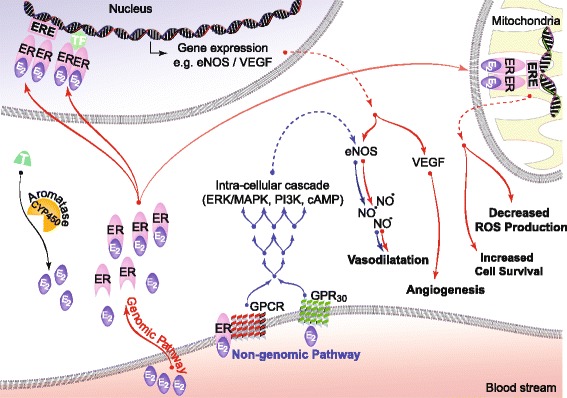
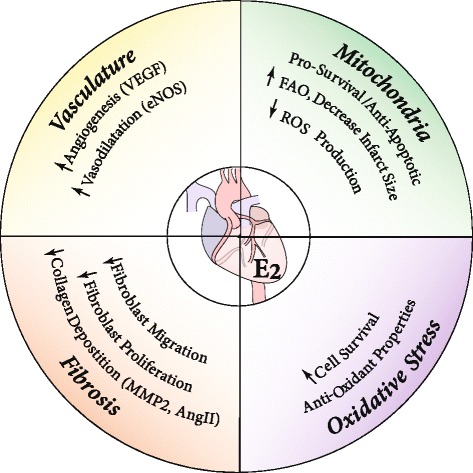
Epidemiologic studies have previously suggested that premenopausal females have reduced incidence of cardiovascular disease (CVD) when compared to age-matched males, and the incidence and severity of CVD increases postmenopause. The lower incidence of cardiovascular disease in women during reproductive age is attributed at least in part to estrogen (E2). E2 binds to the traditional E2 receptors (ERs), estrogen receptor alpha (ERα), and estrogen receptor beta (ERβ), as well as the more recently identified G-protein-coupled ER (GPR30), and can exert both genomic and non-genomic actions. This review summarizes the protective role of E2 and its receptors in the cardiovascular system and discusses its underlying mechanisms with an emphasis on oxidative stress, fibrosis, angiogenesis, and vascular function. This review also presents the sexual dimorphic role of ERs in modulating E2 action in cardiovascular disease. The controversies surrounding the clinical use of exogenous E2 as a therapeutic agent for cardiovascular disease in women due to the possible risks of thrombotic events, cancers, and arrhythmia are also discussed. Endogenous local E2 biosynthesis from the conversion of testosterone to E2 via aromatase enzyme offers a novel therapeutic paradigm. Targeting specific ERs in the cardiovascular system may result in novel and possibly safer therapeutic options for cardiovascular protection.
Overview
The claims and statistics of this paper haven’t been checked yet.
Free: it reads the open-access text and checks the first 5 claims that cite a source we can check. Create a free account to check every claim.
Integrity signals
Registry
Cites
Statistics
Figures
Verification
Claims the paper makes
The claims and statistics of this paper haven’t been checked yet.
Free: it reads the open-access text and checks the first 5 claims that cite a source we can check. Create a free account to check every claim.
Claims other papers make about this one
Each is checked against this paper’s own text: does it say what the citing paper says it does?
The source backs part of the claim, not all of it — or backs it for a different population, condition or comparison.
In the citing paper
“Through these receptors, estrogen promotes vasodilation, modulates nitric oxide pathways, and limits vascular inflammation, reducing the risk of endothelial dysfunction, arterial stiffness, and atherosclerosis.”
From Endometriosis and Cardiovascular Disease: Exploring Pathophysiological Interconnections and Risk Mechanisms (2025) · cites this paper as [14]
Experimental — accuracy not yet measuredThe source backs part of the claim, not all of it — or backs it for a different population, condition or comparison.
In the citing paper
“In women, estrogen protects cardiovascular safety by maintaining endothelial protective effects via estrogen receptor action, such as Erα, ERβ, and GPR30, reducing oxidative stress and influencing the lipid profile.”
From Endometriosis and Cardiovascular Disease: Exploring Pathophysiological Interconnections and Risk Mechanisms (2025) · cites this paper as [14]
Experimental — accuracy not yet measuredThe source backs part of the claim, not all of it — or backs it for a different population, condition or comparison.
In the citing paper
“The role of E2 has been well established to play a regulatory metabolic role via ERα in peripheral tissues such as skeletal muscle and WAT (130, 160–162)”
From Metabolic impact of endogenously produced estrogens by adipose tissue in females and males across the lifespan (2025) · cites this paper as [160]
Experimental — accuracy not yet measuredThe cited source says what the claim attributes to it.
In the citing paper
“These benefits are diminished with lower estrogen levels in postmenopausal women, contributing to a higher CVD risk (Figure 1).”
From Endometriosis and Cardiovascular Disease: Exploring Pathophysiological Interconnections and Risk Mechanisms (2025) · cites this paper as [14]
Self-check
Percentages, sums and reported differences re-computed from the paper’s own numbers.
The self-check needs the paper’s full text.
Citations
Cites
1 retracted
Retracted Article: Anti-Thrombotic Effects of Selective Estrogen Receptor Modulator Tamoxifen
Nayak, M. K., Singh, S. K., Roy, A., Prakash, V., Kumar, A. A., & Dash, D. (2011) · Thrombosis and Haemostasis · doi:10.1160/th11-03-0178 · Cited by 14
RetractedHeart Disease and Stroke Statistics—2016 Update: A Report From the American Heart Association
Mozaffarian, D., Benjamin, E. J., Go, A. S., Arnett, D. K., Blaha, M. J., Cushman, M., Das, S. R., de Ferranti, S., Després, J.-P., Fullerton, H. J., et al. (2016) · Circulation · doi:10.1161/cir.0000000000000350 · Cited by 6,596 · cited 1×
“It is well-known that the incidence of cardiovascular events is significantly lower in women when compared to age-matched men even following menopause [109].”
BackgroundHulley, S. (1998) · JAMA · doi:10.1001/jama.280.7.605 · Cited by 6,216
Endothelial dysfunction in cardiovascular diseases: the role of oxidant stress
Cai, H., & Harrison, D. G. (2000) · Circulation Research · doi:10.1161/01.res.87.10.840 · Cited by 3,839 · cited 1×
“E2 failed to increase homing of EPCs to the injured myocardium in eNOS-null mice [68].”
The mitochondrial permeability transition
Zoratti, M., & Szabò, I. (1995) · Biochimica et Biophysica Acta (BBA) - Reviews on Biomembranes · doi:10.1016/0304-4157(95)00003-a · Cited by 2,401
Grady, D., Herrington, D., Bittner, V., Blumenthal, R., Davidson, M., Hlatky, M., Hsia, J., Hulley, S., Herd, A., Khan, S., et al. (2002) · JAMA · doi:10.1001/jama.288.1.49 · Cited by 1,930
Molecular Mechanisms of Myocardial Remodeling
SWYNGHEDAUW, B. (1999) · Physiological Reviews · doi:10.1152/physrev.1999.79.1.215 · Cited by 1,460 · cited 1×
“myocyte hypertrophy, fibroblast proliferation, fibrosis, an accumulation of fibrillar collagens, and myocyte apoptosis [33].”
BackgroundEndothelial dysfunction: cardiovascular risk factors, therapy, and outcome.
Hadi, H. A. R., Carr, C. S., & Suwaidi, J. M. S. A. (2005) · PubMed Central · Cited by 1,078
Shiojima, I. (2005) · Journal of Clinical Investigation · doi:10.1172/jci24682 · Cited by 939 · cited 1×
“Increased cardiac angiogenesis is necessary to maintain LV function during adaptive hypertrophy and compensated heart hypertrophy as the larger LV has an obvious need for more blood vessels [56, 57].”
BackgroundSources of estrogen and their importance
Simpson, E. R. (2003) · The Journal of Steroid Biochemistry and Molecular Biology · doi:10.1016/s0960-0760(03)00360-1 · Cited by 936 · cited 2×
“This extragonadal E2 production plays an important role, as it remains the only source of endogenous E2 production in postmenopausal women and men [10].”
Background
Cited by
Items 801–900 of 1,000
Associations between live birth and cardiometabolic disease in Southwest Chinese women
Sasmita, B. R., Sumayyah, G., Huang, B., Luo, S., & Liu, G. (2024) · BMC Endocrine Disorders · doi:10.1186/s12902-024-01706-1 · Cited by 1
“…effect of estrogen levels on cardiovascular diseases in women results in lower incidence among young women without a history of pregnancy [16]; hence, to prevent those possible biases in this study, we only included women: (1) over 30 years old with a history of previous pregnancy; (2)…”
Lymphatic System and Dysfunctions in the Context of Male and Female
Deshmukh, A. B., & Patel, J. K. (2024) · Springer eBooks · doi:10.1007/978-3-031-64828-1_10
Noshadi, N., Bonyadian, A., Zarian, S., Kazemi, F., Darzi, M., Tabib, F. A., Farhangi, M. A., Alipour, B., & Aghili, S. (2024) · Prostaglandins & Other Lipid Mediators · doi:10.1016/j.prostaglandins.2024.106912
Lawal, B. A. S., & Odoala, F. K. (2024) · Tropical Journal of Phytochemistry and Pharmaceutical Sciences · doi:10.26538/tjpps/v3i6.5
“23 It appears reasonable to suggest that the phytoestrogens in the seeds of AM acted on oestrogen receptors: GPCRs of membrane-bound estrogen receptors, ERα, and ERβ to induce the production of copious amounts of NO in the smooth muscle tissues as well as in the endothelial cells leading to the…”
BackgroundBledzka, K. M., Manaserh, I. H., Ifft, A., Rennison, J. H., Bohacek, M., Vasiliauskas, K. M., Grondolsky, J., Ampong, I., Wagoner, D. R. V., & Schumacher, S. M. (2024) · bioRxiv (Cold Spring Harbor Laboratory) · doi:10.1101/2024.10.14.618348
Évaluation du couplage auriculo-ventriculaire gauche par imagerie cardiovasculaire multimodale
Pezel, T. (2023) · theses.fr (ABES) · doi:10.70675/1ede6917zd2e5z4659z8c6cze0c4ed593c6a
Jung, E., Kim, D. K., Ryu, S. J., & Ryu, H. H. (2024) · Biological Research For Nursing · doi:10.1177/10998004241295360
“Estrogen has been shown to enhance calcium absorption and retention, as well as provide a protective effect on the endothelium, reducing the risk of atherosclerosis (Iorga et al., 2017).”
Exposition hormonale et performances physiques chez les femmes françaises en population générale
Noan‐Lainé, M. L. (2022) · theses.fr (ABES) · doi:10.70675/8a477ab1z59fez481ez84c8z7d64ac712f7d
Cell death in acetaminophen (APAP) toxicity
Shojaie, L., Alavifard, H., & Dara, L. (2024) · Elsevier eBooks · doi:10.1016/b978-0-443-15877-3.00011-9 · Cited by 1
Sex-biased mechanisms of metabolic syndrome-induced cardiovascular and retinal complications
García‐Llorca, A., & Kararigas, G. (2024) · Elsevier eBooks · doi:10.1016/b978-0-443-22266-5.00008-2
Zheng, Z., Lin, X., & Pan, Y. (2024) · Research Square · doi:10.21203/rs.3.rs-5198670/v1
Pulmonary embolism in young women: statement of problem in internist’s point of view
Malchevska, T., & Plenova, O. (2024) · Ukrainian Scientific Medical Youth Journal · doi:10.32345/usmyj.4(150).2024.109-119
Combined Molecular Toxicity Mechanism of Flame Retardant Mixtures
Li, X., & Luan, T. (2025) · Wiley eBooks · doi:10.1002/9781394158355.ch15
Diagnosis of Turner syndrome after presenting with ischemic cardiomyopathy: A case report
Zheng, H., Guo, L., Wei, Y., Zhang, Y., & Guan, Y. (2025) · SAGE Open Medical Case Reports · doi:10.1177/2050313x251318519
“11 After communication with the patient, we administered treatment using complex packing estradiol tablets/estradiol and dydrogesterone tablets, to be continued until she reaches the age of 50–55 years.”
Utilizing Artificial Intelligence to Analyze Gender Differences in Hypertension Risk Factors
Khuluq, H., Widiastuti, T. C., Hamdi, L. F., & Winarno, T. (2024) · Indonesian Journal of Global Health Research · doi:10.37287/ijghr.v7i1.4929
“Estrogen has a protective effect on blood pressure (Iorga et al., 2017), and salt sensitivity in women is influenced by genetic factors (Manosroi et al., 2017).”
An observational study of intergenerational sex differences in mortality in Aotearoa New Zealand
Campbell, M. H., Hobbs, M., Mathias, K. R., & Eggleton, P. (2025) · Social Science & Medicine · doi:10.1016/j.socscimed.2025.117947
Pleşa, C., Arsene, E. A., Pleșa, A., Bucurica, S., Anghel, D. N., Sîrbu, C. A., Ţânţu, M. M., Badea, A. A., Vasiliu, O., & Munteanu, A. E. (2025) · Journal of Clinical Medicine · doi:10.3390/jcm14062001
“Although men are generally considered to have a higher cardiovascular risk, certain life stages in women, such as pregnancy and menopause, along with hormone replacement therapies and pregnancy-related pathologies, can temporarily increase the risk of major cardiovascular diseases [13,14].”
Sun, R., Zhao, C., He, L., Qin, Y., Wu, P., Zhu, Y., Cui, L., Shi, C., Ma, L., & Yu, B. (2025) · Research Square · doi:10.21203/rs.3.rs-5965842/v1
Половозрастные особенности патофизиологии когнитивных нарушений: взгляд на молекулярные механизмы
Duboshinskii, R. I., Kicherova, O. A., Ахмадеева, Л. Р., Рейхерт, Л. И., Доян, Ю. И., & Ахмадеева, Э. Н. (2025) · Неврология и нейрохирургия Восточная Европа · doi:10.34883/pi.2025.15.1.057
Jerončić, B., Jelovica, L., Starčević-Klasan, G., Zulle, K., Jovanović, Ž., & Miletić, B. (2025) · Acta Medica Academica · doi:10.5644/ama2006-124.471
“A higher number of men was certainly to be expected, as numerous studies to date have shown a higher prevalence of CVD in men than in women, especially in younger age groups, where the protective role of estrogen in the development of CVD has been confirmed (11, 12).”
Liu, R., Xu, F., Liu, T., Zhou, Y., & Wu, X. (2025) · BMC Women s Health · doi:10.1186/s12905-025-03721-3
Advances in targeting the estrogen receptor in breast cancer
Scott, J. S., Hayhow, T. G., Morrow, C. J., Robb, G. R., & Klinowska, T. C. M. (2025) · Elsevier eBooks · doi:10.1016/b978-0-443-29808-0.00003-0
Wild-type Cardiac Amyloidosis due to Transthyretin Protein — A Review
Shehzad, M., Hasan, M., Shehzad, D., Akram, M. S., Akram, M. F., Khan, D., Maqsood, M., Ahmed, M., & Younis, H. (2025) · Journal of Community Hospital Internal Medicine Perspectives · doi:10.55729/2000-9666.1485 · Cited by 35
Aksoy, Z. B., Aydos, D., Kocakaya, E., Uyar, R., Turan, B., & Bitirim, C. V. (2025) · bioRxiv (Cold Spring Harbor Laboratory) · doi:10.1101/2025.05.12.653385
Heart Attacks are Gender and Race Biased
Gupta, P. (2025) · doi:10.61440/jcc.2025.v3.28
Kandybko, I. (2025) · ScienceRise Medical Science · doi:10.15587/2519-4798.2025.329568
Sex-Specific Differences in Cardiogenic Shock: Does It Still Matter?
Lee, N., & Park, H. (2025) · Korean Circulation Journal · doi:10.4070/kcj.2025.0162
Menopause and Cardiovascular Disease: A Guide for Gynecologists. A review of Literature
Abdelhafez, M. M., Ahmed, K. A., Than, W. W., Jeffree, M. S., Baharuddin, D. M. P., Sumpat, D., Ahmed, N. A., Ismail, M. H., Daud, M. N. M., Amri, M. F., et al. (2025) · Journal of South Asian Federation of Obstetrics and Gynaecology · doi:10.5005/jp-journals-10006-2561
Yamada, M., Nakadate, Y., Oguchi, T., Omiya, K., Abe, M., & Inomata, S. (2025) · International Journal of Peptide Research and Therapeutics · doi:10.1007/s10989-025-10737-8
“First, we used only male rats to exclude hormone fluctuations because estrogen provides cardioprotective effects through PI3K/Akt acti - vation (Iorga et al. 2017 ; Wang et al. 2024 ).”
Liu, L., Shao, C., Li, L., & Wu, N. (2025) · Clinical and Experimental Obstetrics & Gynecology · doi:10.31083/ceog38505
Xu, Y.-J., Snider, J., & Bersi, M. (2025) · bioRxiv · doi:10.1101/2025.07.23.666477
“Estrogen's vasoprotective effects, including suppression of vascular inflammation and oxidative stress, likely mask, or at least mitigate, immune-driven remodeling responses in females 44,45 .”
Panchal, K., Lawson, C. A., Shabnam, S., Khunti, K., & Zaccardi, F. (2025) · Diabetes/Metabolism Research and Reviews · doi:10.1002/dmrr.70072
“While the cardioprotective effects of oestrogen could be one potential mechanism underpinning the lower risk of cardiovascular diseases in women [24–26], our findings might also reflect differences in comorbidity profiles between men and women [27] or the under‐, late‐, or misdiagnosis of ischaemic…”
Sex- and gender-specific medicine: why it's a man's business too.
Artiles, R. F., Regitz-Zagrosek, V., & Buch, T. (2025) · Swiss medical weekly · doi:10.57187/s.4098
Ko, J.-H., Moon, S. J., Han, K., Kwon, H. M., Park, S.-E., Rhee, E.-J., & Lee, W. (2025) · Diabetes & Metabolism Journal · doi:10.4093/dmj.2024.0487
“In contrast, premenopausal women did not show a significant MI risk reduction with PA. Premenopausal women benefit from the cardioprotective effects of estrogen [38].”
FUNKCINĖ HIPOTALAMINĖ AMENORĖJA IR JOS POVEIKIS MOTERS SVEIKATAI
Andreičik, J., & Kairytė, A. (2025) · Health Sciences · doi:10.35988/sm-hs.2025.260
Østergaard, A. M., Sønderbæk, R. L., Vrist, M. H., Rosenbæk, J. B., Mose, F. H., & Bech, J. N. (2025) · Physiological Reports · doi:10.14814/phy2.70512
“…due to the protective effects of estrogen, including enhanced eNOS activation and maybe an increased engagement of the alternative pathway (Bailey & Dhaun, 2024; Brinson et al., 2014; Chambliss & Shaul, 2002; Iorga et al., 2017; O'Donnell et al., 2014; Pilic et al., 2016; Visniauskas et al., 2023).”
The sex of your cells matters when it comes to heart disease
Aguado, B. A. (2022) · The Conversation · doi:10.64628/aai.gqn9uf5wk
Long‐Term Blood Pressure Variability and Physical Performance in Older Adults
Sheets, K. M., Webb, K. L., Woods, R. L., Orchard, S. G., Beilin, L. J., Fravel, M. A., Reid, C. M., Polkinghorne, K. R., Wolfe, R. S., Zhou, Z., et al. (2025) · Journal of Clinical Hypertension · doi:10.1111/jch.70139
Aspects of Sex and Gender in Disease
Gong, J. (2025) · Springer eBooks · doi:10.1007/978-3-031-73363-5_120
Why men need more exercise than women to see the same heart benefits
McNamara, J. (2025) · The Conversation · doi:10.64628/ab.vedwfeuyf
Abdeen, H. A. A., Guirguis, S. A., Taha, M. M., ElMeligie, M. M., Sweify, Y., Marqués‐Sulé, E., Moreno‐Segura, N., & Atef, H. (2025) · Artery Research · doi:10.1007/s44200-025-00091-x
Sex-dependent modulation of PCB-mediated toxicity from a proteomic and microbiome perspective
Singhal, R. A., Qaissi, Z., Zheng, H., Hua, Y., Hardesty, J., Rouchka, E. C., Merchant, M. L., Kong, M., & Wahlang, B. (2025) · Scientific Reports · doi:10.1038/s41598-025-23603-w
“…effects of this particular PCB mixture in females that fueled their sensitivity to metabolic disruption 16 given that estrogens and hepatic estrogen receptor (ER) alpha expression play critical roles in maintenance of insulin sensitivity 45 , lipid homeostasis 46 and oxidative stress responses 47 .”
Sertraline exposure during development may impact post‐myocardial infarction survival in adult mice
Lu, Y., Kenkel, E. J., Zimmerman, K., Weiss, R. M., Roghair, R. D., & Haskell, S. E. (2025) · Physiological Reports · doi:10.14814/phy2.70662
Magalhães, R. A., Fontana, A. P., & Barreto, P. A. (2025) · Research Society and Development · doi:10.33448/rsd-v14i11.50144
Kumar, V., Goyal, G., & Taleuzzaman, M. (2025) · Current Chemical Biology · doi:10.2174/0122127968399346251106205550
Kapar, A., Gu, X., Liang, F., Hu, X., & Tang, D. (2025) · Frontiers in Cardiovascular Medicine · doi:10.3389/fcvm.2025.1686845
Zhang, B., Lu, Z., Liu, D., Ren, J., Xu, C., Xu, A., Guo, X., & Fang, L. (2025) · Scientific Reports · doi:10.1038/s41598-025-31766-9
Pavlega, H., Gozhenko, A., & Zukow, W. (2025) · Journal of Education Health and Sport · doi:10.12775/jehs.2025.86.67646
Damare, M. I. (2024) · Carolina Digital Repository (University of North Carolina at Chapel Hill) · doi:10.17615/84r5-7082
Zhang, S., Ren, H.-F., Du, R., Sun, W.-L., Fu, M.-L., & Zhang, X.-C. (2023) · Figshare · doi:10.6084/m9.figshare.23573662
Li, Y., Deng, Z., Wang, Y., & 沈松杰 (2024) · Figshare · doi:10.6084/m9.figshare.24965907
Wang, S., Shi, H., Luo, L., & He, H. (2024) · Figshare · doi:10.6084/m9.figshare.24934109
Cui, Y., Zhan, Z., Ma, Y., Huang, K., Liang, C., Mao, X., Zhang, Y., Ren, X., Lei, J., Chen, Y., et al. (2022) · Figshare · doi:10.6084/m9.figshare.19166006
Zhang, S., Ren, H.-F., Du, R., Sun, W.-L., Fu, M.-L., & Zhang, X.-C. (2023) · Figshare · doi:10.6084/m9.figshare.23573659
Khan, N., Javed, Z., Acquah, I., Hagan, K., Khan, M., Elizondo, J. V., Chang, R., Javed, U., Taha, M. B., Blaha, M. J., et al. (2024) · Figshare · doi:10.6084/m9.figshare.26589852
Zhang, S., Ren, H.-F., Du, R., Sun, W.-L., Fu, M.-L., & Zhang, X.-C. (2023) · Figshare · doi:10.6084/m9.figshare.23573644
Liu, Y. (2024) · University Libraries (University of Maryland) · doi:10.13016/mxf6-j6dz
Targeting the angiotensin type 2 receptor to maintain cardiovascular protection in aging females
Barsha, G. (2021) · Figshare · doi:10.26180/14544501
Zhang, S., Ren, H.-F., Du, R., Sun, W.-L., Fu, M.-L., & Zhang, X.-C. (2023) · Figshare · doi:10.6084/m9.figshare.23573650
Lei, H., Hu, J., Liu, L., & Xu, D. (2020) · Figshare · doi:10.6084/m9.figshare.13115037
Zhang, S., Ren, H.-F., Du, R., Sun, W.-L., Fu, M.-L., & Zhang, X.-C. (2023) · Figshare · doi:10.6084/m9.figshare.23573665
Li, Y., Deng, Z., Wang, Y., & 沈松杰 (2024) · Figshare · doi:10.6084/m9.figshare.24966049
Li, Y., Deng, Z., Wang, Y., & 沈松杰 (2024) · Figshare · doi:10.6084/m9.figshare.26664949
Olubiyi, O. A., Rotimi, B. F., Afolayan, M. A., Alatishe-Muhammad, B. W., Olubiyi, O. M., & Balami, A. D. (2022) · Figshare · doi:10.6084/m9.figshare.19669990
Zhang, S., Ren, H.-F., Du, R., Sun, W.-L., Fu, M.-L., & Zhang, X.-C. (2023) · Figshare · doi:10.6084/m9.figshare.23573653
Lei, H., Hu, J., Liu, L., & Xu, D. (2020) · Figshare · doi:10.6084/m9.figshare.13115031
Zhang, S., Ren, H.-F., Du, R., Sun, W.-L., Fu, M.-L., & Zhang, X.-C. (2023) · Figshare · doi:10.6084/m9.figshare.23573668
Foroughinia, F., Dehghani, P., Dianatpour, M., Amiri, A., Jamhiri, I., & Ghasemiyeh, P. (2021) · Figshare · doi:10.6084/m9.figshare.14736941
Lei, H., Hu, J., Liu, L., & Xu, D. (2020) · Figshare · doi:10.6084/m9.figshare.13115034
Li, Y., Deng, Z., Wang, Y., & 沈松杰 (2024) · Figshare · doi:10.6084/m9.figshare.26664952
Zhang, S., Liu, W., Xu, B., Wang, S., Du, Z., & Cheng, W. (2024) · Figshare · doi:10.6084/m9.figshare.26722626
Lei, H., Hu, J., Liu, L., & Xu, D. (2020) · Figshare · doi:10.6084/m9.figshare.13115025
Zhang, S., Ren, H.-F., Du, R., Sun, W.-L., Fu, M.-L., & Zhang, X.-C. (2023) · Figshare · doi:10.6084/m9.figshare.23573647
Harris, K., Peters, S. A. E., & Woodward, M. (2024) · Figshare · doi:10.6084/m9.figshare.26618551
Chen, J., Zhao, R., Yangwei, W., Xiao, H., Lin, W., Diao, M., He, S., Mei, P., & Liao, Y. (2024) · Figshare · doi:10.6084/m9.figshare.26683840
Lei, H., Hu, J., Liu, L., & Xu, D. (2020) · Figshare · doi:10.6084/m9.figshare.13115028
Zhang, S., Ren, H.-F., Du, R., Sun, W.-L., Fu, M.-L., & Zhang, X.-C. (2023) · Figshare · doi:10.6084/m9.figshare.23573641
Naz, M. S. G., Mousavi, M., Noroozzadeh, M., Farahmand, M., Azizi, F., & Ramezani Tehrani, F. (2024) · Figshare · doi:10.6084/m9.figshare.26682769
Kong, L., Lu, Y., Han, D., Liu, T., & Bai, Y. (2024) · Figshare · doi:10.6084/m9.figshare.26122638
Jeong, S.-M., Yoo, J. E., Jeon, K. H., Han, K., Lee, H., Lee, D.-Y., & Shin, D. W. (2023) · Figshare · doi:10.6084/m9.figshare.22603588
Kim, H.-L., Kim, H.-J., Kim, M., Park, S. M., Yoon, H. J., Byun, Y. S., Park, S. M., Shin, M. S., 홍경순, & Kim, M.-A. (2022) · Figshare · doi:10.6084/m9.figshare.17798367
Zhang, S., Ren, H.-F., Du, R., Sun, W.-L., Fu, M.-L., & Zhang, X.-C. (2023) · Figshare · doi:10.6084/m9.figshare.23573656
Olubiyi, O. A., Rotimi, B. F., Afolayan, M. A., Alatishe-Muhammad, B. W., Olubiyi, O. M., & Balami, A. D. (2022) · Figshare · doi:10.6084/m9.figshare.19669993
Jeong, S.-M., Yoo, J. E., Jeon, K. H., Han, K., Lee, H., Lee, D.-Y., & Shin, D. W. (2023) · Figshare · doi:10.6084/m9.figshare.22603597
de Bakker, M., Petersen, T. B., Akkerhuis, K. M., Harakaľová, M., Umans, V. A. W. M., Germans, T., Caliskan, K., Katsikis, P. D., van der Spek, P. J., Suthahar, N., et al. (2023) · Figshare · doi:10.6084/m9.figshare.22914478
Jeong, S.-M., Yoo, J. E., Jeon, K. H., Han, K., Lee, H., Lee, D.-Y., & Shin, D. W. (2023) · Figshare · doi:10.6084/m9.figshare.22603600
Jeong, S.-M., Yoo, J. E., Jeon, K. H., Han, K., Lee, H., Lee, D.-Y., & Shin, D. W. (2023) · Figshare · doi:10.6084/m9.figshare.22603594
Kujala, I. (2024) · UTUPub (University of Turku)
Functional analysis of the FLNC W2164c missense variant associated with hypertrophic cardiomyopathy
Azad, A. J. (2023) · University of Birmingham Institutional Research Archive (University of Birmingham)
Vývoj metody pro voltametrické stanovení estrogenů ve vodách
Měchová, N. (2024) · Digital library - University of Pardubice (University of Pardubice)
Effects of the menstrual cycle on physiological responses to high-altitude in eumenorrheic women
Tagliapietra, G. (2024) · SERVAL (Université de Lausanne)
Miller, C. E. (2023) · WakeSpace Scholarship (Wake Forest University)
Enright, S. (2023) · MacSphere (McMaster University) · doi:10.71548/20311
Fernández-Calero, T. (2020) · LA Referencia (Red Federada de Repositorios Institucionales de Publicaciones Científicas)
Ruiz, M. A. T. G. (2023) · RiuNet (Universitat Politècnica de València)
Huynh, E. (2023) · MacSphere (McMaster University) · doi:10.71548/15139 · Cited by 1
Wickham, K. A. (2023) · Brock University Digital Repository (Brock University)
Saad, R. A., Hasan, R. A., Qutob, H. M., Ali, H. S., Elayate, W. M., & Saad, D. A. (2025) · Journal of Evolutionary Biochemistry and Physiology · doi:10.1134/s1234567825600191
“The incidence of cardiovascular diseases is increased in postmenopausal women due to low estrogen levels that correlate with coronary artery disease [1].”
Metadata
- Authors
- Iorga, A., Cunningham, C. M., Moazeni, S., Ruffenach, G., Umar, S., & Eghbali, M.
- Affiliations
- University of Southern California (US)
- University of California, Los Angeles (US)
- Corresponding author
- Eghbali, Mansoureh
- Venue
- Biology of Sex Differences
- Published
- 2017-10-24
- Volume
- 8
- Issue
- 1
- Pages
- 33-33
- ISSN
- 2042-6410 (ISSN-L)
- PMC
- PMC5655818
- OpenAlex
- W2766043255
- Cited by
- 914
- References
- 140
- Citations by year
- 2026: 91 · 2025: 157 · 2024: 156 · 2023: 143 · 2022: 114 · 2021: 113 · 2020: 88 · 2019: 38 · 2018: 12 · 2017: 2
- FWCI
- 4.91
- Type
- journal article
- Language
- en
- Open access
- gold
- doi.org
- Licence
- cc-by
- creativecommons.org/licenses/by/4.0/ (tdm)
- creativecommons.org/licenses/by/4.0/ (vor)
- Locations
- Biology of Sex Differences (publishedVersion, cc-by)
- Europe PMC (PubMed Central) (publishedVersion, cc-by)
- PubMed Central (publishedVersion, cc-by)
- PubMed (publishedVersion)
- DOAJ (DOAJ: Directory of Open Access Journals) (submittedVersion, cc-by-sa)
- eScholarship (California Digital Library) (submittedVersion)
- Funders
- American Heart Association (AHA-17PRE33420159, AHA16GRANT27760058)
- National Institutes of Health (R01HL131182-01A1, T32-GM065823, HD00722)
- Topics
- Life Sciences › Biochemistry, Genetics and Molecular Biology › Endocrinology › Estrogen and related hormone effects
- Health Sciences › Medicine › Endocrinology, Diabetes and Metabolism › Menopause: Health Impacts and Treatments
- Health Sciences › Nursing › Nutrition and Dietetics › Phytoestrogen effects and research
- Keywords
- estrogen, estrogen receptor, estrogen receptor alpha, estrogen receptor beta, GPR30, cardiovascular disease, postmenopause, sex differences, oxidative stress, fibrosis, angiogenesis, vascular function, aromatase, thrombosis risk, cardioprotection
- MeSH terms
- Animals, Cardiovascular Agents, Cardiovascular Diseases, Estrogens, Humans, Receptors, Estrogen
About these checks
Registry, retraction, Cites and statistics results are computed, not judged, with one exception: a printed reference that no index lists is read once by a model before it counts as a citation error. Claims are extracted by a model and kept only when their quote appears verbatim in the text; each cited source is then checked, with a model’s help, for whether it says what the claim relies on. Those verdicts can be wrong — read the claim’s quote and the cited source before relying on one.
Statistics and arithmetic are recomputed, not judged.
Confidence bands are shown only for fields calibrated on our annotated test set. None is calibrated yet, so no band is shown.
What counts as a claim ›How we measure confidence ›How we check this ›
Are you an author, or do you see a problem with this page? Request a review
Data sources
Bibliographic data: Semantic Scholar, OpenAlex, Crossref.
Contains information from the Semantic Scholar Academic Graph Datasets, made available under the ODC Attribution License (ODC-BY 1.0).
Semantic Scholar’s data is described in: Kinney, R., et al. (2023). The Semantic Scholar Open Data Platform. arXiv:2301.10140.
