

The protective role of estrogen and estrogen receptors in cardiovascular disease and the controversial use of estrogen therapy
Open accessThe DOI matches its Crossref record; 140 of the 140 references it cites were found in a registry or an index.
Abstract
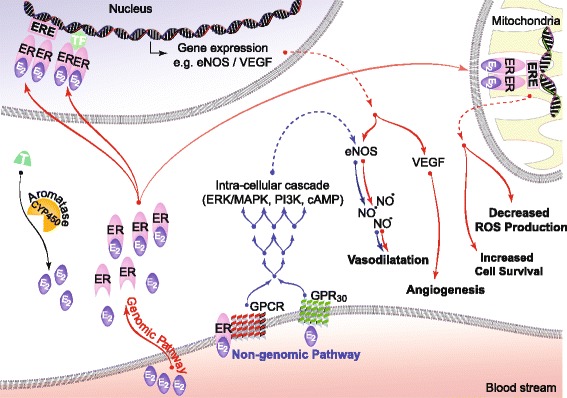
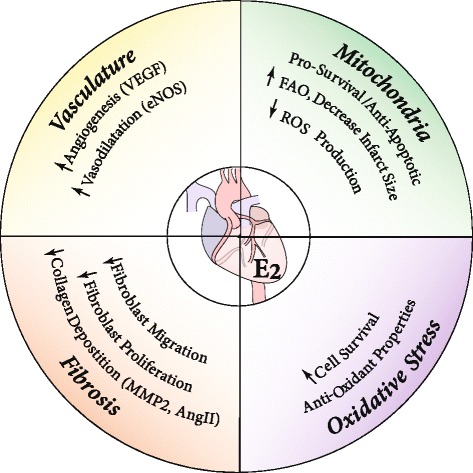
Epidemiologic studies have previously suggested that premenopausal females have reduced incidence of cardiovascular disease (CVD) when compared to age-matched males, and the incidence and severity of CVD increases postmenopause. The lower incidence of cardiovascular disease in women during reproductive age is attributed at least in part to estrogen (E2). E2 binds to the traditional E2 receptors (ERs), estrogen receptor alpha (ERα), and estrogen receptor beta (ERβ), as well as the more recently identified G-protein-coupled ER (GPR30), and can exert both genomic and non-genomic actions. This review summarizes the protective role of E2 and its receptors in the cardiovascular system and discusses its underlying mechanisms with an emphasis on oxidative stress, fibrosis, angiogenesis, and vascular function. This review also presents the sexual dimorphic role of ERs in modulating E2 action in cardiovascular disease. The controversies surrounding the clinical use of exogenous E2 as a therapeutic agent for cardiovascular disease in women due to the possible risks of thrombotic events, cancers, and arrhythmia are also discussed. Endogenous local E2 biosynthesis from the conversion of testosterone to E2 via aromatase enzyme offers a novel therapeutic paradigm. Targeting specific ERs in the cardiovascular system may result in novel and possibly safer therapeutic options for cardiovascular protection.
Overview
The claims and statistics of this paper haven’t been checked yet.
Free: it reads the open-access text and checks the first 5 claims that cite a source we can check. Create a free account to check every claim.
Integrity signals
Registry
Cites
Statistics
Figures
Verification
Claims the paper makes
The claims and statistics of this paper haven’t been checked yet.
Free: it reads the open-access text and checks the first 5 claims that cite a source we can check. Create a free account to check every claim.
Claims other papers make about this one
Each is checked against this paper’s own text: does it say what the citing paper says it does?
The source backs part of the claim, not all of it — or backs it for a different population, condition or comparison.
In the citing paper
“Through these receptors, estrogen promotes vasodilation, modulates nitric oxide pathways, and limits vascular inflammation, reducing the risk of endothelial dysfunction, arterial stiffness, and atherosclerosis.”
From Endometriosis and Cardiovascular Disease: Exploring Pathophysiological Interconnections and Risk Mechanisms (2025) · cites this paper as [14]
Experimental — accuracy not yet measuredThe source backs part of the claim, not all of it — or backs it for a different population, condition or comparison.
In the citing paper
“In women, estrogen protects cardiovascular safety by maintaining endothelial protective effects via estrogen receptor action, such as Erα, ERβ, and GPR30, reducing oxidative stress and influencing the lipid profile.”
From Endometriosis and Cardiovascular Disease: Exploring Pathophysiological Interconnections and Risk Mechanisms (2025) · cites this paper as [14]
Experimental — accuracy not yet measuredThe source backs part of the claim, not all of it — or backs it for a different population, condition or comparison.
In the citing paper
“The role of E2 has been well established to play a regulatory metabolic role via ERα in peripheral tissues such as skeletal muscle and WAT (130, 160–162)”
From Metabolic impact of endogenously produced estrogens by adipose tissue in females and males across the lifespan (2025) · cites this paper as [160]
Experimental — accuracy not yet measuredThe cited source says what the claim attributes to it.
In the citing paper
“These benefits are diminished with lower estrogen levels in postmenopausal women, contributing to a higher CVD risk (Figure 1).”
From Endometriosis and Cardiovascular Disease: Exploring Pathophysiological Interconnections and Risk Mechanisms (2025) · cites this paper as [14]
Self-check
Percentages, sums and reported differences re-computed from the paper’s own numbers.
The self-check needs the paper’s full text.
Citations
Cites
1 retracted
Retracted Article: Anti-Thrombotic Effects of Selective Estrogen Receptor Modulator Tamoxifen
Nayak, M. K., Singh, S. K., Roy, A., Prakash, V., Kumar, A. A., & Dash, D. (2011) · Thrombosis and Haemostasis · doi:10.1160/th11-03-0178 · Cited by 14
RetractedHeart Disease and Stroke Statistics—2016 Update: A Report From the American Heart Association
Mozaffarian, D., Benjamin, E. J., Go, A. S., Arnett, D. K., Blaha, M. J., Cushman, M., Das, S. R., de Ferranti, S., Després, J.-P., Fullerton, H. J., et al. (2016) · Circulation · doi:10.1161/cir.0000000000000350 · Cited by 6,596 · cited 1×
“It is well-known that the incidence of cardiovascular events is significantly lower in women when compared to age-matched men even following menopause [109].”
BackgroundHulley, S. (1998) · JAMA · doi:10.1001/jama.280.7.605 · Cited by 6,216
Endothelial dysfunction in cardiovascular diseases: the role of oxidant stress
Cai, H., & Harrison, D. G. (2000) · Circulation Research · doi:10.1161/01.res.87.10.840 · Cited by 3,839 · cited 1×
“E2 failed to increase homing of EPCs to the injured myocardium in eNOS-null mice [68].”
The mitochondrial permeability transition
Zoratti, M., & Szabò, I. (1995) · Biochimica et Biophysica Acta (BBA) - Reviews on Biomembranes · doi:10.1016/0304-4157(95)00003-a · Cited by 2,401
Grady, D., Herrington, D., Bittner, V., Blumenthal, R., Davidson, M., Hlatky, M., Hsia, J., Hulley, S., Herd, A., Khan, S., et al. (2002) · JAMA · doi:10.1001/jama.288.1.49 · Cited by 1,930
Molecular Mechanisms of Myocardial Remodeling
SWYNGHEDAUW, B. (1999) · Physiological Reviews · doi:10.1152/physrev.1999.79.1.215 · Cited by 1,460 · cited 1×
“myocyte hypertrophy, fibroblast proliferation, fibrosis, an accumulation of fibrillar collagens, and myocyte apoptosis [33].”
BackgroundEndothelial dysfunction: cardiovascular risk factors, therapy, and outcome.
Hadi, H. A. R., Carr, C. S., & Suwaidi, J. M. S. A. (2005) · PubMed Central · Cited by 1,078
Shiojima, I. (2005) · Journal of Clinical Investigation · doi:10.1172/jci24682 · Cited by 939 · cited 1×
“Increased cardiac angiogenesis is necessary to maintain LV function during adaptive hypertrophy and compensated heart hypertrophy as the larger LV has an obvious need for more blood vessels [56, 57].”
BackgroundSources of estrogen and their importance
Simpson, E. R. (2003) · The Journal of Steroid Biochemistry and Molecular Biology · doi:10.1016/s0960-0760(03)00360-1 · Cited by 936 · cited 2×
“This extragonadal E2 production plays an important role, as it remains the only source of endogenous E2 production in postmenopausal women and men [10].”
Background
Cited by
Items 601–700 of 1,000
Han, W., Gu, J., Qian, Y., Zhao, J., Shao, X., Lyu, J., Liu, Y., Wang, H., & Chen, G. (2025) · Journal of the American Heart Association · doi:10.1161/jaha.125.043102 · Cited by 2
“35,36 Estrogen increases vasodilatation, 37 inhibits the response of blood vessels to injury, and delays the development of atherosclerosis.”
Bauzon, J. S., Romero-Vélez, G., Ramchand, J., Ramchand, S. K., SIPERSTEIN, A. E., & Jin, J. (2025) · Endocrine Practice · doi:10.1016/j.eprac.2025.11.014 · Cited by 2
Chueva, K. A., Tatarskiy, R. B., Lebedev, D. S., Pervunina, T. M., & Vasichkina, E. S. (2026) · European Journal of Pediatrics · doi:10.1007/s00431-026-06750-8 · Cited by 2
Sex-specific cardiac responses to subacute exposure to tributyltin in rats
Mendes, A. B. A., Motta, N. A. V., Lima, G. F., Autran, L. J., Brazão, S. C., Pereira, N. C. D. A., de Souza, A. R. D. S., Alexandre‐Santos, B., Magliano, D. C., Miranda‐Alves, L., et al. (2026) · Chemico-Biological Interactions · doi:10.1016/j.cbi.2026.112000 · Cited by 2
Depression, Anxiety, and Bipolar Disorder and Atherosclerosis
Otobo, E. O., Nguyen, J. D., Saeed, F. U., Rivers, M. T., Sinnott, S. M., Mehta, P. K., Seligowski, A. V., Abohashem, S., & Osborne, M. T. (2026) · Current Atherosclerosis Reports · doi:10.1007/s11883-026-01415-1 · Cited by 2
Sex and Age Specific Genetic Risk Across the Dilated and Arrhythmogenic Cardiomyopathy Spectrum
Stroeks, S. L. V. M., Bart, N., Rossano, J. W., Claggett, B. L., Beelen, N. J., Buchan, R. J., Day, S. M., Fornaro, A., Halliday, B. P., Wheeler, M. T., et al. (2026) · Journal of the American College of Cardiology · doi:10.1016/j.jacc.2026.03.054 · Cited by 2
Tumors modulate fenestrated vascular beds and host endocrine status
Hargreaves, A., Barry, S. T., Bigley, A. L., Kendrew, J., & Price, S. (2021) · Journal of Applied Toxicology · doi:10.1002/jat.4176 · Cited by 2
“…association between ER activation and the promotion of angiogenesis, and/or enhanced blood flow, within many physiological and pathological disease states, including cancer (Groothuis et al., 2005; Iorga et al., 2017; Krause et al., 2006; Losordo & Isner, 2001; Seo et al., 2004; Sohrabji, 2015).”
BackgroundNutrition and Weight Management in Midlife
Feller, M. (2021) · Springer eBooks · doi:10.1007/978-3-030-85484-3_12 · Cited by 2
Nyandra, M., Widhiantara, I. G., & Wiradana, P. A. (2022) · World s Veterinary Journal · doi:10.54203/scil.2022.wvj1 · Cited by 2
Anil Kumar, M. S., Kumar, R., Mujtaba, M., Ahmed, R., Rahooja, K., Rasool, G., Talpur, M. F. H., Ali, A., Basit, A., Samad, M., et al. (2022) · Pakistan Heart Journal · doi:10.47144/phj.v55i3.2306 · Cited by 2
“This effect is partially associated with estrogen, a sex hormone, which has a cardioprotective mechanism.(2,3) On one hand, the development and progression of diseases are relatively low, on the other hand, the female gender is believed to be an independent predictor of poor prognosis following a cardiovascular event.”
BackgroundParing It Down: Parity, Sex Hormones, and Cardiovascular Risk
Gulamhusein, N., Dumanski, S. M., & Ahmed, S. B. (2022) · Canadian Journal of Cardiology · doi:10.1016/j.cjca.2022.10.003 · Cited by 2
Doolub, G., Tonino, P. A. L., Kedev, S. A., Monségu, J., Paradies, V., Austin, D., Spanó, F., Roffi, M., Fröbert, O., von Birgelen, C., et al. (2022) · The American Journal of Cardiology · doi:10.1016/j.amjcard.2022.10.023 · Cited by 2
刘, 林. (2023) · Traditional Chinese Medicine · doi:10.12677/tcm.2023.122061 · Cited by 2
Pournajaf, A., Halaji, M., Sadeghi, F., Chehrazi, M., Javanian, M., Bayani, M., Zavareh, M. S. H., Shokri, M., Mohammadi, M., Jafaripour, I., et al. (2023) · Ethiopian Journal of Health Sciences · doi:10.4314/ejhs.v33i1.2 · Cited by 2
Approach to Imaging Ischemia in Women
Parwani, P. J., Mohammad, A., Liberman, Y., & Litmanovich, D. E. (2023) · Journal of Thoracic Imaging · doi:10.1097/rti.0000000000000719 · Cited by 3
RISK DETERMINANTS THAT ESCALATE CARDIO VASCULAR DISORDERS
Sajed, A. N. (2023) · Pakistan Journal of Science · doi:10.57041/pjs.v74i4.770 · Cited by 3
“incidence of cardio vascular diseases in premenopausal females, as compared with same aged males (Villa et al., 2015; Iorga et al., 2017).”
BackgroundPublic health challenges in post-soviet countries during and beyond COVID-19
(2023) · Frontiers research topics · doi:10.3389/978-2-8325-3780-0 · Cited by 2
Impact of Sex and Gender Differences on Heart Failure, Especially in Elderly Patients
Cocco, G., Hofmann, H. P., & Pandolfi, S. (2024) · OBM Geriatrics · doi:10.21926/obm.geriatr.2401273 · Cited by 2
Contribution of systemic factors on macular vessel density: a sex-specific population-based study
Chan, W. C. F., Zhu, M., Choy, B. N. K., Chan, J. C. H., Ng, A. L. K., Shih, K. C., Cheung, J. J. C., Wong, J. K. W., Shum, J. W. H., Ni, M. Y., et al. (2024) · Japanese Journal of Ophthalmology · doi:10.1007/s10384-024-01053-7 · Cited by 2
“These sex difference could be explained by the protective role of estrogen [13].”
Psychological Capital, Emotional Labour, and Burnout among Malaysian Workers
Wahid, A.-S. A., Omar, M. K., & Mohd, I. H. (2024) · Evolutionary Studies in Imaginative Culture · doi:10.70082/esiculture.vi.811 · Cited by 2
“Some scholars argue that burnout syndrome might occur when there is a lack of experience in a specific field (Iorga et al., 2017; Kutluturkan et al., 2016; McKinley et al., 2017).”
BackgroundShakil, R., Rashid, A. M., NASAR, M. H., Mirza, M. O., Sattar, M. A., Ahad, T. A., Duaa, S. U., Anwar, R. U., & Perswani, P. (2024) · Archives of Gerontology and Geriatrics Plus · doi:10.1016/j.aggp.2024.100085 · Cited by 2
Vegetable and Fruit Intake and LOX-Index in Japanese Municipal Workers
SAKANARI, M., Ohta, M., Nagano, M., Umeki, Y., & Nanri, A. (2024) · Journal of Nutritional Science and Vitaminology · doi:10.3177/jnsv.70.396 · Cited by 2
Phuong, L. M., Burggren, W. W., & Martínez-Bautista, G. (2024) · Fish Physiology and Biochemistry · doi:10.1007/s10695-024-01411-9 · Cited by 2
“…that the increased tolerance could be associated with the gravid state and estrogen production, which has been associated with cardiovascular protection (Iorga et al. 2017; Knowl-ton & Lee 2012), especially considering that estrogens are highly conserved across vertebrates (Nelson & Habibi 2013).”
Ebong, I., Wilson, M., Racette, S. B., Appiah, D., Schreiner, P. J., Allison, M., Watson, K., Bertoni, A. G., & Michos, E. D. (2025) · Journal of Women s Health · doi:10.1089/jwh.2024.0508 · Cited by 2
“35 The apparent higher levels of estradiol seen among women with early menopause was explained by the confounding effects of reproductive risk factors, insulin resistance and in fl ammation.”
Ning, S., Li, J., He, M., Yu, Y., & Guo, Z. (2025) · Free Radical Biology and Medicine · doi:10.1016/j.freeradbiomed.2025.02.010 · Cited by 2
Sun, W., Wu, J., Shan, S., Hou, L., Luo, Z., Zhou, J., & Song, P. (2025) · BMC Medicine · doi:10.1186/s12916-025-03976-5 · Cited by 3
“The reproductive lifespan of women is marked by a series of biological and physiological events, including menarche, pregnancy, delivery, breastfeeding, and menopause [5, 6], which contribute to the development of cardio-cerebrovascular diseases, including stroke [7].”
Mehrazin, H., Sakha, M., & Safi, S. (2025) · Veterinary Medicine and Science · doi:10.1002/vms3.70202 · Cited by 2
“However, it is important to consider the cardio protective effects of oestrogens, which can suppress cardiomyocyte apoptosis, as well as the potential role of testosterone in promoting cardiomyocyte hypertrophy and apoptosis (Papamitsou et al. 2011; Liu, Pedram, and Kim 2011; Iorga et al. 2017).”
A phenome-wide association study of uterine fibroids reveals a marked burden of comorbidities
Jasper, E. A., Mautz, B. S., Hellwege, J. N., Piekos, J. A., Jones, S. H., Zhang, Y., Torstenson, E. S., Pendergrass, S. A., Lee, M. T. M., Edwards, T. L., et al. (2025) · Communications Medicine · doi:10.1038/s43856-025-00884-w · Cited by 3
“Estrogen, which has been associated with fi broid development, has known protective effects for cardiovascular disease 57 .”
Monocyte to HDL cholesterol ratio predicts obesity-associated cardiac dysfunction
Zhao, C., Liu, J., Zhao, J., Wang, C., Bai, H., Yang, Q., Ben, J., Zhu, X., Li, X., Jiang, B., et al. (2025) · Journal of Biomedical Research · doi:10.7555/jbr.38.20240432 · Cited by 4
Bistué‐Rovira, À., Solé, M., Anguera-Tejedor, M., Pérez, B., García-Tercero, L., Díaz-Pérez, A., Benítez, Z. M., Delgado, R., & Jiménez‐Altayó, F. (2025) · Toxicological Sciences · doi:10.1093/toxsci/kfaf086 · Cited by 2
Atherosclerotic Cardiovascular Disease in Gulf War Veterans in Relation to Deployment Exposures
Ahmed, S. T., Li, R., Steele, L., Richardson, P., Sims, K. J., Quaden, R. M., Harrington, K. M., Nambi, V., Gaziano, J. M., Morgan, R. O., et al. (2025) · Cardiovascular Toxicology · doi:10.1007/s12012-025-10013-7 · Cited by 2
“There is an earlier onset and a higher risk of coronary artery disease among males until the onset of menopause in females [27].”
Atherosclerotic Cardiovascular Disease Risk Assessment in the Age of PREVENT
Brar, S., Chakrabarti, A., & Yang, E. (2025) · Current Epidemiology Reports · doi:10.1007/s40471-025-00371-9 · Cited by 2
“Estrogen confers cardiovascular protection through multiple mechanisms, including promotion of angiogenesis, enhancement of endothelial function via vasodilation, and attenuation of adverse cardiac remodeling [52 ].”
Heart Failure With Preserved Ejection Fraction
Khalid, U., & Deswal, A. M. (2017) · Elsevier eBooks · doi:10.1016/b978-0-323-47870-0.00023-4 · Cited by 2
Heartbeat: focus on heart disease in women
Otto, C. M. (2020) · Heart · doi:10.1136/heartjnl-2020-316802 · Cited by 2
Köprülü, D., & Taşcanov, M. B. (2020) · Harran Üniversitesi Tıp Fakültesi Dergisi · doi:10.35440/hutfd.671941 · Cited by 2
Examining the safe and effective use of estrogen replacement for menopausal women
Stengler, M. (2019) · Endocrinology&Metabolism International Journal · doi:10.15406/emij.2019.07.00266 · Cited by 2
Evidence-based Management of Arrhythmogenic Right Ventricular Cardiomyopathy in Pregnancy
Khosla, J., Golamari, R. R., Cai, A., Benson, J., Aronow, W. S., Jain, R., & Jain, R. (2020) · Future Cardiology · doi:10.2217/fca-2020-0127 · Cited by 2
Fenotip equol-producer dan hubungannya dengan asupan isoflavon dan kesehatan
Herwana, E. (2020) · Jurnal Biomedika dan Kesehatan · doi:10.18051/jbiomedkes.2020.v3.159-165 · Cited by 2
Halațiu, V.-B., Balan, A. I., Cozac, D. A., Bobarnac, R., Perian, M., Şerban, R. C., & Scridon, A. (2021) · Romanian Journal of Cardiology · doi:10.47803/rjc.2021.31.3.587 · Cited by 2
Winterhalter, P. R., Wirkner, M., Bartling, B., Wächter, K., Уразова, А. Н., Großkopf, A., Diez, C., Szabo, G. B., & Simm, A. (2022) · Mechanisms of Ageing and Development · doi:10.1016/j.mad.2022.111635 · Cited by 2
Heart Failure With Preserved Ejection Fraction
Mohammed, S. F., Aggarwal, N. R., Nair, A. P., & Deswal, A. M. (2021) · Elsevier eBooks · doi:10.1016/b978-0-12-819369-3.00019-8 · Cited by 2
Sex-Based Difference in Clinical Presentation and Outcomes—A Single-Center Experience
Anandan, H., Maharajan, R., Begam, S., & Victor, S. M. (2022) · Indian Journal of Cardiovascular Disease in Women · doi:10.1055/s-0041-1742210 · Cited by 2
Dovom, M. R., Noroozzadeh, M., Mosaffa, N., Piryaei, A., Zadevakili, A., Abdollahifar, M., & Tehrani, F. R. (2022) · International Journal of Reproductive BioMedicine (IJRM) · doi:10.18502/ijrm.v20i4.10904 · Cited by 3
Geschlechtersensible medizinische Ansätze in der Kardiologie
Seeland, U. (2023) · DMW - Deutsche Medizinische Wochenschrift · doi:10.1055/a-1892-4687 · Cited by 2
Asadi, R., Sarshoori, J. R., Ghorbani, M., & Mofid, M. (2023) · Journal of Advances in Medical and Biomedical Research · doi:10.30699/jambs.31.145.197 · Cited by 2
Afaghi, S., Esmaeili, F., Azizi, F., & Hadaegh, F. (2023) · Nutrition Metabolism and Cardiovascular Diseases · doi:10.1016/j.numecd.2023.07.023 · Cited by 2
Drug from Marine Sampling to Factory
El‐Nashar, H. A. S., Kocaeli, S., Abdallah, M., & El‐Shazly, M. (2023) · Marine ecology · doi:10.2174/9789815051995123030013 · Cited by 2
Karim, H., Ali, R., Hamza, A., Muhammad, M., Zahid, H. M. A., & Malik, M. A. B. A. (2024) · doi:10.53555/jptcp.v31i4.5534 · Cited by 2
Kazybay, B., & Xie, Y. (2021) · European Urology · doi:10.1016/j.eururo.2021.08.004 · Cited by 2
“Similarly, use of high-dose estrogen in severe COVID-19 cases is also controversial, as several studies indicate that it has prothrombotic and procoagulation effects, with possible links to ventricular arrhythmias and sudden cardiac arrest [4].”
Patil, A. L., & Daniel, H. (2024) · Springer eBooks · doi:10.1007/978-3-031-08956-5_64-1 · Cited by 2
Marcella, B. M., Geromella, M. S., Mohammad, A., Sweezey‐Munroe, J., MacPherson, R. E. K., & Fajardo, V. A. (2022) · Muscles · doi:10.3390/muscles1030016 · Cited by 2
“However, this advantage disappears following menopause as the risk for CVD increases substantially [1,2,4,6].”
BackgroundInfluentialSex steroids have opposing effects on heart rate of juveniles, Gambusia holbrooki
Mousavi, S. E., Razmi, K., & Patil, J. G. (2023) · Journal of Molecular Endocrinology · doi:10.1530/jme-23-0021 · Cited by 1
Lubis, A. P., Irina, R. S., & Ginting, A. S. (2023) · ABDIMAS TALENTA Jurnal Pengabdian Kepada Masyarakat · doi:10.32734/abdimastalenta.v8i1.13575 · Cited by 1
Saidullah, S., Ahmad, B. A., Waqas, M., Fatima, A., Khan, M. H. U. H., Khiyam, U., & Malik, J. (2024) · International Journal of Arrhythmia · doi:10.1186/s42444-023-00108-z · Cited by 1
Peng, Z., Lüdke, A., Wu, J., Li, S., Alibhai, F. J., Zhang, Y., Fan, Y., Song, H., he, S. T., Xie, J., et al. (2024) · Stem Cells · doi:10.1093/stmcls/sxae008 · Cited by 1
Zhang, L., Chen, S., Cao, X., Yu, J., Yang, Z., Abdelrahman, Z., Yang, G., Wang, L., Zhang, X., Zhu, Y., et al. (2024) · Nutrients · doi:10.3390/nu16050704 · Cited by 1
“The potential reason for this phenomenon could be attributed to the reduction of estrogen’s protective effects on females [29,30].”
BackgroundSex-specific response to A1BG loss results in female dilated cardiomyopathy
Emerson, J. I., Shi, W., & Conlon, F. L. (2025) · Biology of Sex Differences · doi:10.1186/s13293-025-00713-8 · Cited by 1
“As estrogen protects against various cardiovascular diseases, including DCM, by influencing cardiac metabolism, gene expression, and structural integrity [14, 28–30, 73, 74], we propose that A1BG acts downstream or in parallel to estrogen signaling.”
Liao, X., Deng, J., Du, L., Hernández‐Wolters, B., Prabahar, K., & Kord‐Varkaneh, H. (2024) · Clinical Therapeutics · doi:10.1016/j.clinthera.2024.07.008 · Cited by 1
Gorbenko, N., Kiprych, T., Ivanova, O., Borikov, O. Y., Misiura, K. V., & Taran, K. (2024) · PROBLEMS OF ENDOCRINE PATHOLOGY · doi:10.21856/j-pep.2024.3.05 · Cited by 1
Hormone Replacement Therapy (And Other Options to Treat Menopausal Symptoms)
Lambrinoudaki, I. V., Armeni, E., & Silionga, E. (2024) · Springer eBooks · doi:10.1007/978-3-031-65952-2_12 · Cited by 2
Wijaya, D., Syarifuddin, S., Habibah, A. N., Nafisah, F. S., Rahmadanita, F. F., Mutiah, R., & Maimunah, S. (2024) · Pharmacy Education · doi:10.46542/pe.2024.243.412417 · Cited by 1
Moldovan, R., Ichim, V. A., Pufu, G. A., & Beliș, V. (2024) · Romanian Medical Journal · doi:10.37897/rmj.2024.3.1 · Cited by 1
“The male predominance in SCD can be attributed to various factors such as unhealthy lifestyles, high-stress levels, increased workloads, poor dietary habits, genetic predisposition, and the protective effects of estrogen well-known in the female population [23, 24].”
BackgroundShakoor, E., Qassemian, A., Shams, S., & Amani-Shalamzari, S. (2024) · Comparative Exercise Physiology · doi:10.1163/17552559-00001065 · Cited by 1
Kim, M., & Shin, D. (2024) · Antioxidants · doi:10.3390/antiox13121556 · Cited by 2
Duration of aromatase inhibitor use and long-term cardiovascular risk in breast cancer survivors
Huang, Y., Kwan, M. L., Heckbert, S. R., Smith, N. L., Othus, M. K. D., Laurent, C. A., Roh, J. M., Rillamas‐Sun, E., Lee, V. S., Kolevska, T., et al. (2025) · JNCI Cancer Spectrum · doi:10.1093/jncics/pkaf009 · Cited by 2
Qu, X., Bai, M., Lyu, J., Yin, L., Zhang, J., Zhao, E., & Mei, L. (2025) · Frontiers in Medicine · doi:10.3389/fmed.2025.1525334 · Cited by 1
“In addition, although postmenopausal women have a higher risk of CVD than premenopausal women, the incidence of CVD in postmenopausal women is still lower than that in age-matched men (27).”
Biomarkers of vascular well-being as risk factors for rosacea in perimenopausal women
Kovaleva, J. S., Nikolaeva, M. G., & Reshetova, S. V. (2025) · Meditsinskiy sovet = Medical Council · doi:10.21518/ms2025-056 · Cited by 1
Xiong, X., Huang, W., Yang, X., Wang, X., Wu, B., & Li, D. (2025) · Frontiers in Pharmacology · doi:10.3389/fphar.2025.1607349 · Cited by 1
“Estrogen may protect the cardiovascular system through promoting vasodilation, reducing LDL cholesterol, and maintaining endothelial function (Iorga et al., 2017).”
Effect of Pituitary-Target Gland Axis on RAAS in the Context of COVID-19
Wu, B., Li, R., Liu, Q., Jin, S., Wei, H., Xu, M., Zhang, Y., & Liu, Y. (2025) · International Journal of Medical Sciences · doi:10.7150/ijms.114924 · Cited by 1
“Estrogen therapy Anti-inflammatory effects [122-124] Endothelial protection and vasodilation [125] Immunoresistance and immunomodulation [124, 126-128] Antioxidant [129] Antiviral effects [130, 131] Thrombosis [132, 133] Impaired glucose regulation [134, 135] Progesterone therapy Regulation of…”
Sex-specific glomerular filtration rate changes in response to acute hemoglobin exposure
Lucas, D., Muller, C. R., Munoz, C. J., O’Boyle, Q., Palmer, A. F., & Cabrales, P. (2025) · Biomedicine & Pharmacotherapy · doi:10.1016/j.biopha.2025.118461 · Cited by 1
“The current literature highlights estrogen’s nephroprotective and cardioprotective properties [29,32,33,42,43].”
Liu, H., He, S., Xue, T., Wen, S., & Zhu, Y. (2025) · Phytotherapy Research · doi:10.1002/ptr.70082 · Cited by 1
Chen, S., Zhao, Y., Fan, Y., & Zhou, M. (2025) · Translational Oncology · doi:10.1016/j.tranon.2025.102527 · Cited by 1
“Epidemiology shows that the incidence rate of CVD in premenopausal women is lower than that in men, at the same time, compared with age matched men, CVD occurs 10 years later in women than in men [17].”
Samra, D. A., Hanafi, I., Samra, D. A., Ahmad, N., & Dayyoub, A. (2025) · Cardiovascular Toxicology · doi:10.1007/s12012-025-10059-7 · Cited by 1
“[31] Furthermore, ER/PR-negative breast cancer is often more aggressive and more likely to require intensified treatment regimens, including anthracyclines in combination with Trastuzumab, both of which carry independent risks of cardiotoxicity.”
Chen, T.-Y., Kek, H.-P., Koh, W.-H., Lin, I.-C., Lin, L.-W., Lin, T.-I., Chang, L.-C., Wu, M., Chen, H., Yang, S., et al. (2025) · Scientific Reports · doi:10.1038/s41598-025-20988-6 · Cited by 1
“ERα and ERβ modulate vascular tone, oxidative stress, and fibrotic remodelling, and are considered protective in cardiovascular disease 22 .”
Female Cardioprotection in a Mouse Model of Alcohol-Associated Cardiomyopathy
Edavettal, J. M., Donovan, M. E., Harris, N. R., Chapa‐Dubocq, X. R., Rodríguez‐Graciani, K. M., Pálóczi, J., Simon, L., Chandrasekar, B., & Gardner, J. D. (2025) · Cells · doi:10.3390/cells14211682 · Cited by 1
“Furthermore, estrogen signaling has a significant impact on bioenergetics; estrogen reduces oxidative stress and stabilizes mitochondrial activity [15].”
Cardiovascular morbidity following epilepsy: A nationwide retrospective cohort study in South Korea
Bae, Y., Kang, C., Lee, Y., Cho, H., Jung, H., & Lee, S. W. (2025) · Epilepsia Open · doi:10.1002/epi4.70185 · Cited by 1
“48 Future research will require precise analysis with thorough adjustment for confounders to more accurately understand CVD risk by sex.”
Mechanism of acorn ellagitannin regulating rodent population quantity
Jiang, Y., Li, J., Zhang, P., Huo, X., & Yu, F. (2025) · Oecologia · doi:10.1007/s00442-025-05825-x · Cited by 1
“…were more sensitive to changes in the ET content and their mortality rate was higher than females, which was partly due to hormone fluctuations in the female physiological cycle and the interference effect of estrogen providing protection to female animals (Iorga et al. 2017; Métivier et al. 2003).”
Khan, N. M., Vyas, A. K., Ghasemzadeh‐Hasankolaei, M., Padmanabhan, V., Evans, N. P., & Bellingham, M. (2025) · Environmental Toxicology and Pharmacology · doi:10.1016/j.etap.2025.104869 · Cited by 2
Ferreira, M. J., Shimojo, G. L., Stoyell‐Conti, F. F., Barboza, C. D. A., Sartori, M., Sanches, Í. C., Irigoyen, M. C., & Angelis, K. D. (2025) · Physiological Reports · doi:10.14814/phy2.70685 · Cited by 1
“Furthermore, accumulating evidence indicates an estrogenic protective role in cardiovascular disorders (Flues et al., 2010; Iorga et al., 2017).”
Huynh, E., Wiley, E., Moncion, K., Beauchamp, M., MacDonald, M. J., & Tang, A. (2025) · Applied Physiology, Nutrition, and Metabolism · doi:10.1139/apnm-2025-0208 · Cited by 1
Epidemiology and outcomes of myocardial infarction in young adults in Morocco
Sennani, S., Hami, H., Houmadi, H., Elaatmani, K., Erraji, M., Hmimou, S., Hami, H., & Erefai, O. (2025) · BIO Web of Conferences · doi:10.1051/bioconf/202520001013 · Cited by 1
Stroke Increases Neuromuscular Fatigability in Females but not Males during Isometric Exercise
Zhou, Z., Schmit, B. D., Durand, M. J., Hunter, S. K., & Hyngstrom, A. S. (2025) · Medicine & Science in Sports & Exercise · doi:10.1249/mss.0000000000003914 · Cited by 1
Gärtner, C., ten Haaf, M. E., Akkerhuis, K. M., Oemrawsingh, R. M., van Schaik, R. H., de Rijke, Y. B., Kardys, I., Appelman, Y., & Boersma, E. H. (2025) · Scientific Reports · doi:10.1038/s41598-025-30969-4 · Cited by 1
Muerte súbita cardíaca: Análisis de tendencia según sexo y edad, Chile 2010 a 2020
Vergara, M., Paulo Valderrama, E., González, Á., Páez, S., García, A., & Carolina Nazzal, N. (2025) · Revista médica de Chile · doi:10.4067/s0034-98872025001100760 · Cited by 1
Menopausal Status Associated With Docetaxel-Induced Vascular Dysfunction in Breast Cancer Patients
Szczepaniak, P., Mikolajczyk, T. P., Józefczuk, E., Hodorowicz-Zaniewska, D. M., Streb, J., Jurczyk, J., Nosalski, R., Siedliński, M., Sajdak, P., Brzuszkiewicz, K., et al. (2026) · Journal of the American College of Cardiology · doi:10.1016/j.jacc.2025.10.077 · Cited by 1
Smith, J., Smith, S., Jones, K., Castillo, A., Bolton, J. L., Howard, A., Colón-Pérez, L. M., Femi-Ogunyemi, F., Burkes, A., & Cunningham, M. (2026) · Biology of Sex Differences · doi:10.1186/s13293-026-00842-8 · Cited by 1
“Several studies show that estrogen and/or estrogen receptor activation, in premenopausal women, reduces the production of reactive oxygen species, lowers inflammation, increases antioxidant capacity, and enhances NO production [31, 34, 98, 99].”
McLaughlin, M., Spencer, R., Deligiannidis, K. M., Nah, G., Divanji, P., Sobhani, N., Agarwal, A., Velez, J. M. G., & Parikh, N. I. (2026) · Women s Health Reports · doi:10.1177/26884844261420629 · Cited by 1
Zhang, X.-D., Zhang, Q., Deng, B., Zhijian, P., Song, Y.-Z., & Tang, Y. (2026) · Scientific Reports · doi:10.1038/s41598-026-45165-1 · Cited by 1
Faizan, M., Singh, P., Haleem, S. M., Zaman, A., Humayun, M. A., Mubariz, M., Faisal, A. R., Akhtar, F. N., Laiba, F., Maity, R., et al. (2026) · Journal of International Medical Research · doi:10.1177/03000605261417063 · Cited by 1
“23 Reduced estrogen levels increase susceptibility to endothelial damage and promote atherosclerotic plaque formation, leading to a loss of elasticity and stiffening of the vessel walls.”
GPR30-mediated NETs degradation via Trex1 in heart failure of aged female mice
Zhang, S., Li, Z., Wang, X., Wang, X., Du, J., Liu, J., Cheng, Z., Zhao, D., 段维勋, Ma, J., et al. (2026) · Journal of Translational Medicine · doi:10.1186/s12967-026-08088-z · Cited by 1
“The subsequent studies showed that the both nuclear estrogen receptors ERα, ERβ and non-nuclear estrogen receptor G protein coupled receptor 30 (GPR30) participated in the protection of hearts in postmenopausal women [4, 5].”
Abu-Moch, M., Azab, A. N., Yousef, M., & Agam, G. (2026) · Biomedicine & Pharmacotherapy · doi:10.1016/j.biopha.2026.119356 · Cited by 1
Cardiovascular diseases burden attributable to dietary risk factors in 204 countries and territories
Mei, Y., Wang, X., Xu, H., Yin, P., Xu, X., Zhou, M., & Feng, G. (2026) · The Innovation Nutrition · doi:10.59717/j.xinn-nutri.2026.100015 · Cited by 1
Atighetchi, S., Pilgrim, T., Yilmaz, B., Suc, G., Ureña, M., Döring, Y., & Chong-Nguyen, C. (2026) · Biology of Sex Differences · doi:10.1186/s13293-026-00932-7 · Cited by 1
“Estrogen, which is more prominent in women, has protective effects on cardiovascular health [57] and may modulate the gut microbiota in ways that reduce the production of harmful metabolites, such as TMAO.”
Exploring sex differences in frailty and hospitalization among older adults with diabetes in Vietnam
Nguyen, T. T., Truong, D. N., Wong, W. J., Woodward, M., & Nguyen, T. N. (2026) · The Journal of Frailty & Aging · doi:10.1016/j.tjfa.2026.100168 · Cited by 1
“These sex differences may also be partly due to the loss of estrogen ’ s cardioprotective effects in older women with diabetes [45 – 47].”
Khorasani, N., Morotti, S., Saucerman, J. J., Dobrev, D., & Grandi, E. (2026) · American Journal of Physiology-Heart and Circulatory Physiology · doi:10.1152/ajpheart.00249.2026 · Cited by 1
Zhakhina, G., Akhmedullin, R., Abbay, A., Iskandirova, E., Glushkova, N., Rsaliyeva, Z., Oshibayeva, A., Nuskabayeva, G. N., Farajov, E., Aljofan, M., et al. (2026) · Epidemiology and Health Data Insights · doi:10.63946/ehdi/18794 · Cited by 1
Gonçalves, L. L., Vieira-Alves, I., NICOLI, E. F., Lima, D. S. S., Lemos, V. S., Peluso, A. A., Endlich, P. W., de Almeida, S. A., & Abreu, G. R. (2026) · Journal of Cellular and Molecular Medicine · doi:10.1111/jcmm.71262 · Cited by 1
Tang, S., Ji, J., Gulati, A., Man, Y., Belgur, C., Junaid, A., & Ingber, D. E. (2026) · Frontiers in Global Women s Health · doi:10.3389/fgwh.2026.1878598 · Cited by 1
“Similarly, sex hormones modulate intestinal barrier function in inflammatory bowel disease (IBD) (8 – 11), and dictate cardiovascular risk, where premenopausal estrogen confers endothelial nitric oxide synthase (eNOS)- mediated vasoprotection that is lost post-menopause (12 – 14).”
Roy, A.-S., Jolicoeur, M. E., Bérubé, L., Forcillo, J., Pacheco, C., Potter, B. J., Pelletier‐Galarneau, M., & Bouabdallaoui, N. (2026) · Heart Failure Reviews · doi:10.1007/s10741-026-10661-z · Cited by 2
Li, J., Gao, D.-D., Li, J., Cao, L., Du, Y., Xiong, M., Chu, X., Lei, W., Ye, W.-D., Xu, G., et al. (2026) · Nature Aging · doi:10.1038/s43587-026-01180-5 · Cited by 1
“More importantly, our nonlinear trajectory analysis uncovered two critical, sex-specific midlife transition windows: a male-dominated ‘metabolic dysregulation’ phase at age 35–45, and a female ‘endocrine-metabolic remodeling’ phase centered on menopause.”
Metadata
- Authors
- Iorga, A., Cunningham, C. M., Moazeni, S., Ruffenach, G., Umar, S., & Eghbali, M.
- Affiliations
- University of Southern California (US)
- University of California, Los Angeles (US)
- Corresponding author
- Eghbali, Mansoureh
- Venue
- Biology of Sex Differences
- Published
- 2017-10-24
- Volume
- 8
- Issue
- 1
- Pages
- 33-33
- ISSN
- 2042-6410 (ISSN-L)
- PMC
- PMC5655818
- OpenAlex
- W2766043255
- Cited by
- 914
- References
- 140
- Citations by year
- 2026: 91 · 2025: 157 · 2024: 156 · 2023: 143 · 2022: 114 · 2021: 113 · 2020: 88 · 2019: 38 · 2018: 12 · 2017: 2
- FWCI
- 4.91
- Type
- journal article
- Language
- en
- Open access
- gold
- doi.org
- Licence
- cc-by
- creativecommons.org/licenses/by/4.0/ (tdm)
- creativecommons.org/licenses/by/4.0/ (vor)
- Locations
- Biology of Sex Differences (publishedVersion, cc-by)
- Europe PMC (PubMed Central) (publishedVersion, cc-by)
- PubMed Central (publishedVersion, cc-by)
- PubMed (publishedVersion)
- DOAJ (DOAJ: Directory of Open Access Journals) (submittedVersion, cc-by-sa)
- eScholarship (California Digital Library) (submittedVersion)
- Funders
- American Heart Association (AHA-17PRE33420159, AHA16GRANT27760058)
- National Institutes of Health (R01HL131182-01A1, T32-GM065823, HD00722)
- Topics
- Life Sciences › Biochemistry, Genetics and Molecular Biology › Endocrinology › Estrogen and related hormone effects
- Health Sciences › Medicine › Endocrinology, Diabetes and Metabolism › Menopause: Health Impacts and Treatments
- Health Sciences › Nursing › Nutrition and Dietetics › Phytoestrogen effects and research
- Keywords
- estrogen, estrogen receptor, estrogen receptor alpha, estrogen receptor beta, GPR30, cardiovascular disease, postmenopause, sex differences, oxidative stress, fibrosis, angiogenesis, vascular function, aromatase, thrombosis risk, cardioprotection
- MeSH terms
- Animals, Cardiovascular Agents, Cardiovascular Diseases, Estrogens, Humans, Receptors, Estrogen
About these checks
Registry, retraction, Cites and statistics results are computed, not judged, with one exception: a printed reference that no index lists is read once by a model before it counts as a citation error. Claims are extracted by a model and kept only when their quote appears verbatim in the text; each cited source is then checked, with a model’s help, for whether it says what the claim relies on. Those verdicts can be wrong — read the claim’s quote and the cited source before relying on one.
Statistics and arithmetic are recomputed, not judged.
Confidence bands are shown only for fields calibrated on our annotated test set. None is calibrated yet, so no band is shown.
What counts as a claim ›How we measure confidence ›How we check this ›
Are you an author, or do you see a problem with this page? Request a review
Data sources
Bibliographic data: Semantic Scholar, OpenAlex, Crossref.
Contains information from the Semantic Scholar Academic Graph Datasets, made available under the ODC Attribution License (ODC-BY 1.0).
Semantic Scholar’s data is described in: Kinney, R., et al. (2023). The Semantic Scholar Open Data Platform. arXiv:2301.10140.
