

The protective role of estrogen and estrogen receptors in cardiovascular disease and the controversial use of estrogen therapy
Open accessThe DOI matches its Crossref record; 140 of the 140 references it cites were found in a registry or an index.
Abstract
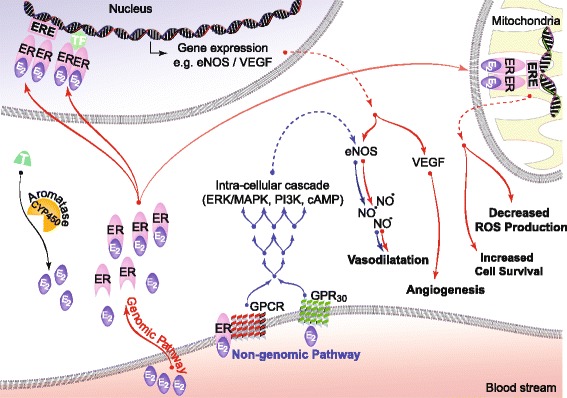
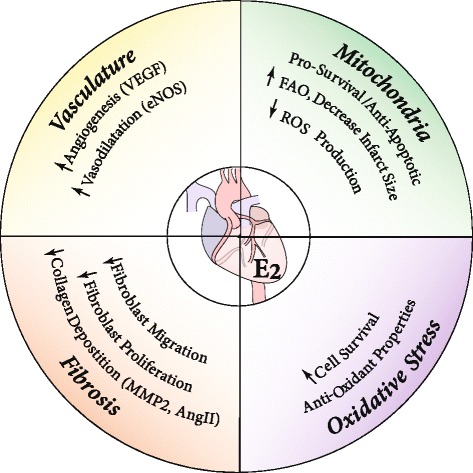
Epidemiologic studies have previously suggested that premenopausal females have reduced incidence of cardiovascular disease (CVD) when compared to age-matched males, and the incidence and severity of CVD increases postmenopause. The lower incidence of cardiovascular disease in women during reproductive age is attributed at least in part to estrogen (E2). E2 binds to the traditional E2 receptors (ERs), estrogen receptor alpha (ERα), and estrogen receptor beta (ERβ), as well as the more recently identified G-protein-coupled ER (GPR30), and can exert both genomic and non-genomic actions. This review summarizes the protective role of E2 and its receptors in the cardiovascular system and discusses its underlying mechanisms with an emphasis on oxidative stress, fibrosis, angiogenesis, and vascular function. This review also presents the sexual dimorphic role of ERs in modulating E2 action in cardiovascular disease. The controversies surrounding the clinical use of exogenous E2 as a therapeutic agent for cardiovascular disease in women due to the possible risks of thrombotic events, cancers, and arrhythmia are also discussed. Endogenous local E2 biosynthesis from the conversion of testosterone to E2 via aromatase enzyme offers a novel therapeutic paradigm. Targeting specific ERs in the cardiovascular system may result in novel and possibly safer therapeutic options for cardiovascular protection.
Overview
The claims and statistics of this paper haven’t been checked yet.
Free: it reads the open-access text and checks the first 5 claims that cite a source we can check. Create a free account to check every claim.
Integrity signals
Registry
Cites
Statistics
Figures
Verification
Claims the paper makes
The claims and statistics of this paper haven’t been checked yet.
Free: it reads the open-access text and checks the first 5 claims that cite a source we can check. Create a free account to check every claim.
Claims other papers make about this one
Each is checked against this paper’s own text: does it say what the citing paper says it does?
The source backs part of the claim, not all of it — or backs it for a different population, condition or comparison.
In the citing paper
“Through these receptors, estrogen promotes vasodilation, modulates nitric oxide pathways, and limits vascular inflammation, reducing the risk of endothelial dysfunction, arterial stiffness, and atherosclerosis.”
From Endometriosis and Cardiovascular Disease: Exploring Pathophysiological Interconnections and Risk Mechanisms (2025) · cites this paper as [14]
Experimental — accuracy not yet measuredThe source backs part of the claim, not all of it — or backs it for a different population, condition or comparison.
In the citing paper
“In women, estrogen protects cardiovascular safety by maintaining endothelial protective effects via estrogen receptor action, such as Erα, ERβ, and GPR30, reducing oxidative stress and influencing the lipid profile.”
From Endometriosis and Cardiovascular Disease: Exploring Pathophysiological Interconnections and Risk Mechanisms (2025) · cites this paper as [14]
Experimental — accuracy not yet measuredThe source backs part of the claim, not all of it — or backs it for a different population, condition or comparison.
In the citing paper
“The role of E2 has been well established to play a regulatory metabolic role via ERα in peripheral tissues such as skeletal muscle and WAT (130, 160–162)”
From Metabolic impact of endogenously produced estrogens by adipose tissue in females and males across the lifespan (2025) · cites this paper as [160]
Experimental — accuracy not yet measuredThe cited source says what the claim attributes to it.
In the citing paper
“These benefits are diminished with lower estrogen levels in postmenopausal women, contributing to a higher CVD risk (Figure 1).”
From Endometriosis and Cardiovascular Disease: Exploring Pathophysiological Interconnections and Risk Mechanisms (2025) · cites this paper as [14]
Self-check
Percentages, sums and reported differences re-computed from the paper’s own numbers.
The self-check needs the paper’s full text.
Citations
Cites
1 retracted
Retracted Article: Anti-Thrombotic Effects of Selective Estrogen Receptor Modulator Tamoxifen
Nayak, M. K., Singh, S. K., Roy, A., Prakash, V., Kumar, A. A., & Dash, D. (2011) · Thrombosis and Haemostasis · doi:10.1160/th11-03-0178 · Cited by 14
RetractedHeart Disease and Stroke Statistics—2016 Update: A Report From the American Heart Association
Mozaffarian, D., Benjamin, E. J., Go, A. S., Arnett, D. K., Blaha, M. J., Cushman, M., Das, S. R., de Ferranti, S., Després, J.-P., Fullerton, H. J., et al. (2016) · Circulation · doi:10.1161/cir.0000000000000350 · Cited by 6,596 · cited 1×
“It is well-known that the incidence of cardiovascular events is significantly lower in women when compared to age-matched men even following menopause [109].”
BackgroundHulley, S. (1998) · JAMA · doi:10.1001/jama.280.7.605 · Cited by 6,216
Endothelial dysfunction in cardiovascular diseases: the role of oxidant stress
Cai, H., & Harrison, D. G. (2000) · Circulation Research · doi:10.1161/01.res.87.10.840 · Cited by 3,839 · cited 1×
“E2 failed to increase homing of EPCs to the injured myocardium in eNOS-null mice [68].”
The mitochondrial permeability transition
Zoratti, M., & Szabò, I. (1995) · Biochimica et Biophysica Acta (BBA) - Reviews on Biomembranes · doi:10.1016/0304-4157(95)00003-a · Cited by 2,401
Grady, D., Herrington, D., Bittner, V., Blumenthal, R., Davidson, M., Hlatky, M., Hsia, J., Hulley, S., Herd, A., Khan, S., et al. (2002) · JAMA · doi:10.1001/jama.288.1.49 · Cited by 1,930
Molecular Mechanisms of Myocardial Remodeling
SWYNGHEDAUW, B. (1999) · Physiological Reviews · doi:10.1152/physrev.1999.79.1.215 · Cited by 1,460 · cited 1×
“myocyte hypertrophy, fibroblast proliferation, fibrosis, an accumulation of fibrillar collagens, and myocyte apoptosis [33].”
BackgroundEndothelial dysfunction: cardiovascular risk factors, therapy, and outcome.
Hadi, H. A. R., Carr, C. S., & Suwaidi, J. M. S. A. (2005) · PubMed Central · Cited by 1,078
Shiojima, I. (2005) · Journal of Clinical Investigation · doi:10.1172/jci24682 · Cited by 939 · cited 1×
“Increased cardiac angiogenesis is necessary to maintain LV function during adaptive hypertrophy and compensated heart hypertrophy as the larger LV has an obvious need for more blood vessels [56, 57].”
BackgroundSources of estrogen and their importance
Simpson, E. R. (2003) · The Journal of Steroid Biochemistry and Molecular Biology · doi:10.1016/s0960-0760(03)00360-1 · Cited by 936 · cited 2×
“This extragonadal E2 production plays an important role, as it remains the only source of endogenous E2 production in postmenopausal women and men [10].”
Background
Cited by
Items 401–500 of 1,000
Sjúrðarson, T., Kyhl, K., Nordsborg, N. B., Kollslíð, R., Andersen, L. J., Krustrup, P., & Mohr, M. (2024) · European Journal of Applied Physiology · doi:10.1007/s00421-023-05399-7 · Cited by 9
“…amongst women, epidemiological studies have shown that premenopausal women are somewhat protected against developing CVD compared to males, which is demonstrated by a delayed presentation of CVD (Rosano et al. 2007; Vitale et al. 2009; Khoudary et al. 2020; Kannel et al. 1976; Iorga et al. 2017).”
BackgroundWang, Y.-H., Sun, L., Li, S., Wang, C., Pan, X.-F., Liu, Y., Wu, J., Guan, X.-P., Zhang, S., Zuo, P.-F., et al. (2024) · International Journal of Cardiology · doi:10.1016/j.ijcard.2024.131886 · Cited by 9
Baranauskas, M. N., Altherr, C. A., Gruber, A. H., Coggan, A. R., Raglin, J. S., Gupta, S. K., & Carter, S. J. (2020) · Contemporary Clinical Trials Communications · doi:10.1016/j.conctc.2020.100693 · Cited by 8
Protective Effects of A. sativa against Oxidative Stress‐Induced Liver Damage in Ovariectomized Mice
Ltaif, M., Gargouri, M., & Soussi, A. (2021) · BioMed Research International · doi:10.1155/2021/5577498 · Cited by 10
“It is well known that postmenopausal women who have a decrease in the concentration of estrogen in circulation express disorders in the function of many vital organs such as uterine and hepatic tissue [49].”
BackgroundChoi, H. Z., Chang, H., Ko, S. H., & Kim, M. C. (2022) · PLoS ONE · doi:10.1371/journal.pone.0258673 · Cited by 9
Aromatase inhibition increases blood pressure and markers of renal injury in female rats
Almutlaq, R. N., Newell‐Fugate, A. E., Evans, L. C., Fatima, H., & Gohar, E. Y. (2022) · American Journal of Physiology-Renal Physiology · doi:10.1152/ajprenal.00055.2022 · Cited by 8
Cordeiro, E. R., Filetti, F. M., Simões, M. R., & Vassallo, D. V. (2019) · Toxicology and Applied Pharmacology · doi:10.1016/j.taap.2019.114710 · Cited by 8
Oliveira, P. W. C., Couto, M. R., de Sousa, G. J., Peixoto, P., Moraes, F. S. A., de Andrade, T. U., & Bissoli, N. S. (2020) · Current Pharmaceutical Design · doi:10.2174/1381612826666200331084338 · Cited by 8
Determinants of change in blood pressure in Ghana: Longitudinal data from WHO-SAGE Waves 1–3
Menyanu, E. K., Corso, B., Minicuci, N., Rocco, I., Russell, J. C., Ware, L. J., Chidumwa, G., Naidoo, N., Biritwum, R. B., Kowal, P. R., et al. (2021) · PLoS ONE · doi:10.1371/journal.pone.0244807 · Cited by 11
Szpila, G., Szczotka, J., Suchodolski, A., & Szulik, M. (2025) · Diagnostics · doi:10.3390/diagnostics15121458 · Cited by 7
“This antioxidant action mitigates the oxidative damage often exacerbated in cardiovascular and metabolic diseases, a pathway also relevant in endometriosis, where increased oxidative stress and inflammation drive disease progression [13,14].”
Cross Talks between CNS and CVS Diseases: An Alliance to Annihilate
Chib, S., Devi, S., Chalotra, R., Mittal, N., Singh, T. G., Kumar, P., & Singh, R. (2024) · Current Cardiology Reviews · doi:10.2174/011573403x278550240221112636 · Cited by 7
Campbell, A.-C., Kuonqui, K. G., Ashokan, G., Rubin, J., Shin, J., Pollack, B. L., Roberts, A., Sarker, A., Park, H. J., Kataru, R. P., et al. (2024) · Frontiers in Physiology · doi:10.3389/fphys.2024.1510389 · Cited by 7
Li, Y., & Bai, L. (2025) · Journal of clinical lipidology · doi:10.1016/j.jacl.2025.05.017 · Cited by 7
Wei, J., Xu, Y., & Liu, Y. (2025) · Maturitas · doi:10.1016/j.maturitas.2025.108753 · Cited by 7
Sex Differences in Dilated Cardiomyopathy
Stroeks, S. L. V. M., Oko-Osi, S., Arasu, A., Hirst, J. E., & Tayal, U. (2025) · Journal of the American College of Cardiology · doi:10.1016/j.jacc.2025.09.1603 · Cited by 9
Luo, Y., Yu, Y., Zeng, Z., Chen, Y., Yi, Y., Lu, Z., Zeng, F., Xu, P., Luo, D., Chen, L., et al. (2026) · Advanced Science · doi:10.1002/advs.202519216 · Cited by 7
“The apparent attenuation of acute mortality and the preservation of body weight in female mice after combined radioimmunotherapy may reflect the cardioprotective effects of ovarian estrogens [ 13 ].”
Arullampalam, P., Essers, M. C., Boukenna, M., Guichard, S., Rougier, J., & Abriel, H. (2023) · Physiological Reports · doi:10.14814/phy2.15783 · Cited by 7
Lebreton, O., Fels, A., Compagnon, A., Lazareth, I., Ghaffari, P., Châtellier, G., Emmerich, J., Michon-Pasturel, U., Priollet, P., & Yannoutsos, A. (2023) · JMV-Journal de Médecine Vasculaire · doi:10.1016/j.jdmv.2023.10.002 · Cited by 7
Banack, H. R., Cook, C. E., Grandi, S. M., Scime, N. V., Andary, R., Follis, S., Allison, M., Manson, J. E., Jung, S. Y., Wild, R. A., et al. (2024) · Human Reproduction · doi:10.1093/humrep/deae118 · Cited by 8
Sung, C., Chang, H.-C., Fan, C., Chen, C., Huang, E. P., & Chen, L. (2024) · Preventive Medicine · doi:10.1016/j.ypmed.2024.108102 · Cited by 7
Kositanurit, W., Siritaweechai, N., Varachotisate, P., Burana, C., Sukswai, N., Surintrspanont, J., Siriviriyakul, P., Kaikaew, K., & Werawatganon, D. (2024) · Frontiers in Endocrinology · doi:10.3389/fendo.2024.1392866 · Cited by 7
Fan, M., Song, S., Chu, T., Li, R., Yue, M., Li, X., & Yang, J. (2024) · Frontiers in Endocrinology · doi:10.3389/fendo.2024.1458039 · Cited by 7
Zhang, W., Su, X., Liu, S., Tong, Y. A., Tu, Z., Zhang, H., Li, C., Yao, H., Wang, J., Zheng, X., et al. (2025) · Acta Diabetologica · doi:10.1007/s00592-025-02447-w · Cited by 7
“Estrogen typically promotes favorable lipid profiles by increasing HDL-C and decreasing LDL-C levels, thereby reducing arterial fat and cholesterol accumulation [38, 39].”
Wang, Y., Ruan, Y., & Wu, S. (2020) · Annals of Translational Medicine · doi:10.21037/atm-20-6560 · Cited by 7
“As a classic nuclear receptor, ERβ is a key regulator of growth and differentiation in various tissues, and has a wide and important physiological role (18).”
BackgroundThe “Hitchhiker’s Guide to the Galaxy” of Endothelial Dysfunction Markers in Human Fertility
Santi, D., Spaggiari, G., Greco, C., Lazzaretti, C., Paradiso, E., Casarini, L., Potì, F., Brigante, G., & Simoni, M. (2021) · International Journal of Molecular Sciences · doi:10.3390/ijms22052584 · Cited by 9
Yuan, Y. E., Haas, A. V., ROSNER, B. A., Adler, G. K., & Williams, G. H. (2023) · The Journal of Clinical Endocrinology & Metabolism · doi:10.1210/clinem/dgad512 · Cited by 7
Dash, M., Mahajan, B., Dar, G. M., Sahu, P., & Saluja, S. S. (2024) · The International Journal of Biochemistry & Cell Biology · doi:10.1016/j.biocel.2024.106555 · Cited by 7
Effects of a Global Rab27a Null Mutation on Murine PVAT and Cardiovascular Function
Soucy, A. N., Potts, C. M., Kaija, A., Harrington, A. N., McGilvrey, M. I., Sutphin, G. L., Korstanje, R., Tero, B. W., Seeker, J., Pinz, I. M., et al. (2024) · Arteriosclerosis Thrombosis and Vascular Biology · doi:10.1161/atvbaha.124.320969 · Cited by 8
Epidemiology, risk factors and mechanism of breast cancer and atrial fibrillation
Guo, X., Zuo, Z., Wang, X., Sun, Y., Xu, D., Liu, G., Tong, Y., & Zhang, Z. (2024) · Cardio-Oncology · doi:10.1186/s40959-024-00298-y · Cited by 8
“These receptors also block the pro-fibrotic signaling pathways induced by Ang II and endothelin-1 (ET-1), further reducing the incidence of atrial fibrosis and thus exerting a cardioprotective effect [52].”
Estrous cycle phase affects myocardial infarction through reactive oxygen species and nitric oxide
Ramírez‐Hernández, D., López‐Sánchez, P., Rosales‐Hernández, M. C., Fonseca-Coronado, S., & Flores‐Monroy, J. (2021) · Frontiers in Bioscience-Landmark · doi:10.52586/5037 · Cited by 7
“This marked difference is attributed mostly to the role of sex hormones [5].”
BackgroundRiesgo cardiovascular durante la menopausia: una visión del cardiólogo y del ginecólogo
Hurtado-Martínez, L., Saldarriaga, C., Jaramillo, L. I. J., & Hormaza-Ángel, M. P. (2022) · Revista Colombiana de Cardiología · doi:10.24875/rccar.21000101 · Cited by 7
González-Ramírez, J., Martínez-Coronilla, G., López-Rocha, L. D., Leija-Montoya, A. G., Hernández-Díazcouder, A., Garcia, Z. F., Silva-Mancilla, M., & Sánchez‐Muñoz, F. (2022) · Applied Sciences · doi:10.3390/app12063131 · Cited by 7
“Moreover, estrogens play a role in several metabolic factors by regulating lipids, inflammatory markers, and coagulation [26] as well as promoting a direct vasodilator effect through alpha and beta receptor activation in the vessel wall, which stimulates angiogenesis and decreases oxidative stress [25].”
BackgroundCircadian regulation of genetic and hormonal risk factors of cardiovascular disease in women
Rabinovich-Nikitin, I., Crandall, M., & Kirshenbaum, L. A. (2022) · Canadian Journal of Physiology and Pharmacology · doi:10.1139/cjpp-2022-0222 · Cited by 9
Shi, J., Fan, D., & Li, M. (2023) · Nutrients · doi:10.3390/nu15214604 · Cited by 7
“Estrogen exerts its cardioprotective effect by reducing oxidative stress and fibrosis and increasing angiogenesis and vasodilation [35–38].”
BackgroundQu, J., Liu, F., Zhang, X., & Wang, J. (2020) · Evidence-based Complementary and Alternative Medicine · doi:10.1155/2020/9257950 · Cited by 7
“It has been known for many years that exogenous estrogen exerts protective effects on the vasculature in premenopausal women receiving estrogen replacement therapy [1].”
Park, S. K., Oh, C., Kang, J., Seok, H. S., & Jung, J. Y. (2020) · Nutrition Metabolism and Cardiovascular Diseases · doi:10.1016/j.numecd.2020.08.009 · Cited by 8
A Virtual Group Consultation Model of Care for Menopause Treatment
Gibson, H., Huang, D. R., Hayhoe, B. W. J., & El-Osta, A. A. R. (2022) · NEJM Catalyst · doi:10.1056/cat.22.0041 · Cited by 7
Yin, H., Lu, Z., Deng, Y., Tian, X., & Gong, Q. (2026) · Ageing Research Reviews · doi:10.1016/j.arr.2025.102952 · Cited by 6
de Carvalho, V. M. F., de Oliveira, P. S. S., Albuquerque, A. P. D. B., Rêgo, M. J. B. D. M., da Rosa, M. M., de Oliveira, D. C., Pereira, M. C., & Pitta, M. G. D. R. (2023) · Arquivos Brasileiros de Cardiologia · doi:10.36660/abc.20220326 · Cited by 7
Qi, J., Zhu, R., Mao, J., Wang, X., Xu, H., & Guo, L. (2024) · Journal of the Academy of Nutrition and Dietetics · doi:10.1016/j.jand.2024.02.006 · Cited by 6
Tan, J. T. M., Cheney, C. V., Bamhare, N. E. S., Hossin, T., Bilu, C., Sandeman, L., Nankivell, V. A., Solly, E. L., Kronfeld‐Schor, N., & Bursill, C. A. (2024) · International Journal of Molecular Sciences · doi:10.3390/ijms25137265 · Cited by 7
Kheradkhah, G., Sheibani, M., Kianfar, T., Toreyhi, Z., & Azizi, Y. (2024) · Cardio-Oncology · doi:10.1186/s40959-024-00293-3 · Cited by 7
Hormonal and neuronal interactions shaping the brain metastatic microenvironment
Shovlin, S., Young, L. S., & Varešlija, D. (2025) · Cancer Letters · doi:10.1016/j.canlet.2025.217739 · Cited by 6
Marrone, A., Bartolo, A. D., Rago, V., Conforti, F., Urlandini, L., Angelone, T., Mazza, R., Mandalà, M., & Rocca, C. (2025) · Antioxidants · doi:10.3390/antiox14070863 · Cited by 10
“Growing evidence supports the concept that these diseases may have their roots during embryonic development, a sensitive time-window during which genetic predispositions and environmental factors converge to shape the future cardiovascular health [50,51].”
Zarricueta, M. L., Fagundes, F. L., Pereira, Q. C., Pantaleão, S. Q., & dos Santos, R. D. C. (2022) · Pharmaceutics · doi:10.3390/pharmaceutics14030565 · Cited by 7
“Studies have shown that estrogen has an anti-ulcer activity, because it maintains the integrity of the mucus in the stomach wall and has a protective effect, due to its antioxidant properties, vasodilator action, and increased angiogenesis [70,71].”
BackgroundZhao, W., Shan, X., Li, X., Lu, S., Xia, L., Chen, H., Zhang, C., Guo, W., Xu, M. G., Lü, R., et al. (2023) · Chemico-Biological Interactions · doi:10.1016/j.cbi.2023.110728 · Cited by 6
Wright, M. E., & Murphy, K. (2023) · Frontiers in Human Neuroscience · doi:10.3389/fnhum.2023.1303871 · Cited by 7
Estepa, M., Niehues, M. H., Vakhrusheva, O., Haritonow, N., Ladilov, Y. V., Barcena, M. L., & Regitz‐Zagrosek, V. (2024) · International Journal of Molecular Sciences · doi:10.3390/ijms25179666 · Cited by 8
“The cardioprotective effects observed in young women are attributed to estrogen and estrogen receptors [9].”
BackgroundAkhtar, M., Dawood, M. H., Khan, M., Raza, M. R., Akhtar, M., Jahan, S., Bates, M. G. D., Challa, A., Ahmed, R., Naveed, A. K., et al. (2025) · The American Journal of the Medical Sciences · doi:10.1016/j.amjms.2025.03.011 · Cited by 6
The Relationship Between CYP7A1 Polymorphisms, Coronary Artery Disease & Serum Lipid Markers
Iwanicki, T., Balcerzyk, A., Niemiec, P., Trautsolt, W., Grzeszczak, W., Ochalska-Tyka, A., Krauze, J., Nowak, T., & Żak, I. (2019) · Biomarkers in Medicine · doi:10.2217/bmm-2018-0462 · Cited by 6
Sapp, R. M., Landers‐Ramos, R. Q., Shill, D. D., Springer, C. B., & Hagberg, J. M. (2020) · Journal of Applied Physiology · doi:10.1152/japplphysiol.00292.2020 · Cited by 9
“Estrogen exerts both genomic and nongenomic effects that are anti-inflammatory and antioxidant, also promoting vasodilation, endothelial repair, and angiogenesis (9, 11, 14, 45).”
BackgroundAlencar, A. K. N., Wang, H., de Oliveira, G. M. M., Sun, X., Zapata‐Sudo, G., & Groban, L. (2021) · Arquivos Brasileiros de Cardiologia · doi:10.36660/abc.20200855 · Cited by 15
Hypertension in Women: The Current Understanding and Future Goals
Goyal, P., Chhabra, S. T., & Jyotsna, M. (2022) · Indian Journal of Cardiovascular Disease in Women · doi:10.25259/mm_ijcdw_476 · Cited by 6
Doolub, G., Iannaccone, M., Rab, T., Routledge, H., Aminian, A., Chevalier, B., Hildick‐Smith, D., Jacobs, L., Kobo, O. M., Roguin, A., et al. (2023) · Catheterization and Cardiovascular Interventions · doi:10.1002/ccd.30770 · Cited by 6
“onset of coronary artery disease in women who may generally benefit from the protective effects of oestrogen up to the menopause.(21,22) Sex‐based stent strategy has not previously been explored in bifurcation studies.”
BackgroundLaser Doppler Fluximetry in Cutaneous Vasculature: Methods for Data Analyses
Huang, S. J. Y., Wang, X., Halvorson, B. D., Bao, Y., Frisbee, S. J., Frisbee, J. C., & Goldman, D. (2024) · Journal of Vascular Research · doi:10.1159/000538718 · Cited by 6
Dasare, A. P., Gondaliya, P., Srivastava, A., & Kalia, K. (2019) · Journal of Diabetes & Metabolic Disorders · doi:10.1007/s40200-019-00409-y · Cited by 7
Cassidy, F. C., Lafferty, S., & Coleman, C. M. (2021) · IntechOpen eBooks · doi:10.5772/intechopen.94271 · Cited by 6
Afaque, S. M., Muhammad, A. S., Kumar, M., Aamir, K. F., Ahmed, A., Soomro, N. A., Karim, M., & Ashraf, T. (2021) · Pakistan Heart Journal · doi:10.47144/phj.v54i3.2167 · Cited by 6
Avecilla, V., Doke, M., Appunni, S., Rubens, M., Ramamoorthy, V., & Das, J. K. (2024) · Medical Sciences · doi:10.3390/medsci13010002 · Cited by 5
Sun, C., Zhang, L., Zhang, M., Wang, J., Rong, S., Lu, W., & Dong, H. (2023) · Biochemical Pharmacology · doi:10.1016/j.bcp.2023.115828 · Cited by 5
Santos, M., Sousa‐Uva, M., Namorado, S., Gonçalves, T., Dias, C. M., & Gaio, V. (2024) · Acta Médica Portuguesa · doi:10.20344/amp.21376 · Cited by 5
de Moraes, F. C. A., Moro, L. D., Souza, M. E. C., Rodrigues, A. L. S. D. O., Sano, V. K. T., Barbosa, B. F., Pacheco, L. G., Cunha, D. F., de Queiroz, O. L., de Souza, D. D. S. M., et al. (2024) · Familial Cancer · doi:10.1007/s10689-024-00431-x · Cited by 6
“Premature ovarian failure results in decreased estrogen (E2) levels, heightened oxidative stress, and diminished cardioprotective effects of E2 [ 55 ].”
Mice develop obesity and lose myocardial metabolic flexibility months after exertional heat stroke
Alzahrani, J. M., Smuder, A. J., Gambino, B. J., Delgado, C., Rua, M. T., Montalvo, R. N., Fitton, F. P., Morse, D. A., & Clanton, T. L. (2025) · Communications Biology · doi:10.1038/s42003-025-07484-3 · Cited by 5
Association between socio-demographic factors and reasons for medical care in Mexican adults
Cureño-Díaz, M. A., Hernández-Mariano, J. Á., Zamora, E. G., & Zavala, V. J. G. (2025) · Journal of Family Medicine and Primary Care · doi:10.4103/jfmpc.jfmpc_1427_24 · Cited by 6
“[26] Furthermore, epidemiological studies show that men tend to be more frequently exposed to cardiovascular risk factors such as obesity, and alcohol and tobacco use.”
Wu, F., Yang, J., Liu, Y., & Zhang, Y. (2025) · International Journal of Women s Health · doi:10.2147/ijwh.s504664 · Cited by 5
“6 12 The excessive and persistent expression of inflammatory cytokines is strongly linked to a wide range of adverse health outcomes.”
Pérez-Robles, M., Campos-Perez, W. Y., Godinez-Mora, S., Lopez-Alvarez, V., Ramos-Villalobos, L. E., Corona-Ruiz, F., Armendáriz‐Borunda, J., & Martínez‐López, E. (2025) · Healthcare · doi:10.3390/healthcare13121426 · Cited by 5
“As a result, premenopausal women exhibit lower susceptibility to CAD [31,32].”
Sheng, J., Lin, Q., Sun, Y., Meng, Y., Hu, S., Cao, H., Fang, L., Zhu, Y., Peng, L., & Li, L. (2025) · Advanced Science · doi:10.1002/advs.202507365 · Cited by 7
Battillo, D. J., & Malin, S. K. (2025) · Experimental Physiology · doi:10.1113/ep092550 · Cited by 5
Chen, C., Hua, X., Hu, R., Wan, J., You, Y. H., & Yang, M. (2025) · Frontiers in Cardiovascular Medicine · doi:10.3389/fcvm.2025.1663408 · Cited by 5
Sex differences in macro- and microvascular reactivity – a systematic review and meta-analysis
Fekete, Á., Horváth, D., Kreuter, P., Martineková, P., Szalai, E. Á., Agócs, G., Sótonyi, P., Varga, G., Hegyi, P., Kerémi, B., et al. (2025) · American Journal of Preventive Cardiology · doi:10.1016/j.ajpc.2025.101335 · Cited by 5
Sainath, P., Satyam, S. M., Bharati, S., Shetty, P., Rehman, A., El‐Tanani, M., Bairy, L. K., Ahmed, A. Z., Densil, T., Fathima, S., et al. (2025) · Scientific Reports · doi:10.1038/s41598-025-26559-z · Cited by 5
Singh, P., Hu, T., Hoori, A. O., Al-Kindi, S. G., Wilson, D. L., & Rajagopalan, S. (2025) · American Journal of Preventive Cardiology · doi:10.1016/j.ajpc.2025.101367 · Cited by 7
“…coronary artery disease, with several unique female-specific risk factors including sex hormone differences, altered immune signaling, adipose tissue characteristics and intrinsic plaque characteristics, that influence the development, progression and manifestations of ASCVD [1 – 6].”
Endocrine Challenges in Patients with Continuous-Flow Left Ventricular Assist Devices
Martucci, G., Pappalardo, F., Subramanian, H., Ingoglia, G., Conoscenti, E., & Arcadipane, A. F. (2021) · Nutrients · doi:10.3390/nu13030861 · Cited by 6
“The biochemical process by which these hormones exert these effects on the cardiovascular system has been hypothesized to be via an increase in angiogenesis via VEGF, decrease in reactive oxygen species production, reduction of fibrosis by reducing fibroblast proliferation, migration, and decreased collagen deposition…”
BackgroundSex Influences the Safety and Therapeutic Efficacy of Cardiac Nanomedicine Technologies
Lin, Z., Jiwani, Z., Serpooshan, V., Aghaverdi, H., Yang, P. C.-M., Aguirre, A., Wu, J. C., & Mahmoudi, M. (2023) · Small · doi:10.1002/smll.202305940 · Cited by 6
Wang, S., Shi, H., Luo, L.-Y., & He, H. (2024) · BMC Cardiovascular Disorders · doi:10.1186/s12872-023-03597-x · Cited by 5
Jover, E., Martín‐Núñez, E., Garaikoetxea, M., Matilla, L., Blanco‐Colio, L. M., Pérez‐Sáez, J. M., Navarro, A., Fernández‐Celis, A., Gainza, A., Álvarez, V., et al. (2024) · The FASEB Journal · doi:10.1096/fj.202301832rr · Cited by 7
“57 Hence, sex-dependent signaling of estrogen toward ERs could, at least in part, explain the different effects of estrogen on LGALS1 promotor and Gal-1 secretion.”
BackgroundKarbasion, N., Xu, Y., Snider, J. C., & Bersi, M. R. (2024) · Journal of Biomechanical Engineering · doi:10.1115/1.4064965 · Cited by 5
Pal, P., Maranon, R. O., Gonzales, O. J. R., Speed, J. S., & Janorkar, A. V. (2024) · Molecular and Cellular Endocrinology · doi:10.1016/j.mce.2024.112249 · Cited by 5
Имаева, А. Э., Shalnova, S. A., Balanova, Y. А., Владимировна, К. А., Kutsenko, V. A., Imaeva, N. A., Назаров, Б. М., & Школьников, В. М. (2024) · Arterial’naya Gipertenziya (Arterial Hypertension) · doi:10.18705/1607-419x-2024-2402 · Cited by 5
Dewangga, M. W., Susilo, T. E., Cahyadi, M. M., Saputra, H., Furqony, I. Y., Putra, Z. Y., Wilger, R. V., Candrika, A. A., & Rosyid, F. N. (2024) · doi:10.56984/8zg5608x8s · Cited by 5
He, L., Li, X., Shen, E., & He, Y. (2024) · Frontiers in Endocrinology · doi:10.3389/fendo.2024.1411803 · Cited by 6
Sjúrðarson, T., Nordsborg, N. B., Kristiansen, J., Andersen, L. J., Krustrup, P., Kyhl, K., & Mohr, M. (2024) · Physiological Reports · doi:10.14814/phy2.70116 · Cited by 5
“Although women reportedly demonstrate a delayed onset of CVD (El Khoudary et al., 2020; Iorga et al., 2017; Kannel et al., 1976; Rosano et al., 2007; Vitale et al., 2009) and CVD has traditionally been considered a men's disease, there are more women than men dying from CVD (Townsend et al., 2022).”
BackgroundNovel Insights into the Mode of Action of Vasorelaxant Synthetic Polyoxygenated Chalcones
Legeay, S., Trân, K., Abatuci, Y., Faure, S., & Hélesbeux, J. (2020) · International Journal of Molecular Sciences · doi:10.3390/ijms21051609 · Cited by 5
“ERα has already been identified as a target for chalcones, especially in the field of cancer [17,33] and it is now well accepted that estrogens can protect against cardiovascular diseases [11,34,35].”
BackgroundHigh dietary daidzein intake lowers cholesterol levels among post-menopausal women
Herwana, E., Pusparini, P., & Graciela, A. (2020) · Universa Medicina · doi:10.18051/univmed.2020.v39.47-54 · Cited by 5
“The possibility of estrogen being associated with prothrombotic effects is still a subject of controversy and is as yet incompletely understood.(7) A study conducted by the Women’s Health Initiative (WHI) that evaluated and compared the effects of conjugated equine estrogens (CEE), singly or concurrently with medroxyp…”
ResultLi, Y., Cheng, W., Zhao, B., Ma, D., Wei, X., & Zhang, S. (2021) · Cardiovascular journal of South Africa/Cardiovascular journal of Southern Africa · doi:10.5830/cvja-2021-012 · Cited by 5
“vasodilation, improved mitochondrial function and reduced oxidative stress.(6) Many of these oestrogen effects have been associated with local EAT aromatase and atherosclerosis, arrhythmia and ischaemia–reperfusion injury.”
BackgroundOld Age and Myocardial Injury in ST-Segment Elevation Myocardial Infarction
Park, I. H., Cho, H. K., Oh, J. H., Chun, W. J., Park, Y. H., Song, Y. B., Hahn, J., Choi, S., Lee, S., Gwon, H., et al. (2021) · The American Journal of the Medical Sciences · doi:10.1016/j.amjms.2021.06.023 · Cited by 5
Kaya, S. T., Ağan, K., Ağan, A. F., Yoldaş, P. A., Özarslan, T. O., Kekeçoğlu, M., & Kaya, A. (2022) · Journal of Food Biochemistry · doi:10.1111/jfbc.14109 · Cited by 5
Xie, M., Zhu, S., Liu, G., Wu, Y., Zhou, W., Yu, D., Wan, J., Xing, S., Wang, S., Gan, L., et al. (2023) · Journal of Cardiovascular Translational Research · doi:10.1007/s12265-023-10395-5 · Cited by 8
Gender Disparities in Hypertensive Emergency Admissions: A National Retrospective Cohort Study
Francis-Morel, G., Guevara, N., Malik, M., & Sotello, D. (2023) · Cureus · doi:10.7759/cureus.40287 · Cited by 5
“Stimulating estrogen receptors have also been shown to attenuate hypertension by reducing the expression of angiotensin-converting enzyme, levels of angiotensin II, and vasoconstriction [10].”
BackgroundPannexin1 deletion in lymphatic endothelium affects lymphatic function in a sex‐dependent manner
Ehrlich, A., Pelli, G., Pick, R., Clochard, L., Molica, F., & Kwak, B. R. (2024) · Physiological Reports · doi:10.14814/phy2.16170 · Cited by 6
“Furthermore, since males have lower levels of estradiol (Iorga et al., 2017), they do not experience this ZO-1 reduction (Zhou et al., 2017), resulting in a larger impact on drainage function when the Panx1 protein is deleted.”
BackgroundZalghout, S., Kaplan, A., Abidi, E., El‐Achkar, G. A., Nour‐Eldine, W., Khalil, A. A., Kobeissy, F. H., Husari, A. W., Habib, A., Zouein, F. A., et al. (2019) · Journal of Cellular Physiology · doi:10.1002/jcp.29075 · Cited by 5
Cardiovascular disease risk factors among transgender women in Chiang Mai, Thailand.
Kulprachakarn, K., Ounjaijean, S., Rerkasem, K., Molinsky, R. L., & Demmer, R. T. (2020) · PubMed · Cited by 5
Heras-Molina, A., Pacheco, J. L. P., Vázquez-Gómez, M., García-Contreras, C., Astiz, S., Isabel, B., & Gonzalez‐Bulnes, A. (2020) · Biology · doi:10.3390/biology9090284 · Cited by 5
“Estrogen-based replacement therapies in postmenopausal women reduce the incidence of T2D [9,10], but their role in preventing CVD, and their own security, remains highly controversial [5].”
BackgroundForoughinia, F., Dehghani, P., Dianatpour, M., Amiri, A., Jamhiri, I., & Ghasemiyeh, P. (2021) · BMC Cardiovascular Disorders · doi:10.1186/s12872-021-02088-1 · Cited by 6
Bourscheid, G., Just, K. R., Costa, R. R., Petry, T., Danzmann, L. C., Pereira, A. H., Pereira, A. A., Franzoni, L. T., & Garcia, E. L. (2021) · Jornal Vascular Brasileiro · doi:10.1590/1677-5449.210056 · Cited by 11
Aghajani, M. H., Asadpoordezaki, Z., Haghighi, M., Pourhosseingoli, A., Taherpour, N., Toloui, A., & Sistanizad, M. (2021) · Archives of Academic Emergency Medicine · doi:10.22037/aaem.v9i1.1363 · Cited by 7
Pallottini, V., Segatto, M., Acconcia, F., Fiocchetti, M., & Marino, M. (2022) · International Journal of Molecular Sciences · doi:10.3390/ijms232415809 · Cited by 7
“Women also have decreased CVD-associated morbidity compared to age-matched men and develop CVD 10 years later than men [15].”
BackgroundChoradia, A., Bai, K., Soni, S., Nguyen, N. M. T., Adhikari, S., Rahul, D. K., & Gupta, R. K. (2023) · Biomolecules and Biomedicine · doi:10.17305/bb.2023.9535 · Cited by 6
Rathod, M. B., Moukthika, S., Karikunnel, A. J., Harika, K., Talla, P., & Jalakam, M. (2024) · Cureus · doi:10.7759/cureus.58026 · Cited by 4
“This could explain why women with diabetes tend to have different risk factors for heart disease compared to men [17].”
BackgroundZhao, Y., Chen, L., Dong, J., Yang, X., Hu, T., Sun, N., Sun, Q., Liang, W., Wei, X., & Zhang, Z. (2025) · Nutrition Metabolism and Cardiovascular Diseases · doi:10.1016/j.numecd.2025.104030 · Cited by 4
Metadata
- Authors
- Iorga, A., Cunningham, C. M., Moazeni, S., Ruffenach, G., Umar, S., & Eghbali, M.
- Affiliations
- University of Southern California (US)
- University of California, Los Angeles (US)
- Corresponding author
- Eghbali, Mansoureh
- Venue
- Biology of Sex Differences
- Published
- 2017-10-24
- Volume
- 8
- Issue
- 1
- Pages
- 33-33
- ISSN
- 2042-6410 (ISSN-L)
- PMC
- PMC5655818
- OpenAlex
- W2766043255
- Cited by
- 914
- References
- 140
- Citations by year
- 2026: 91 · 2025: 157 · 2024: 156 · 2023: 143 · 2022: 114 · 2021: 113 · 2020: 88 · 2019: 38 · 2018: 12 · 2017: 2
- FWCI
- 4.91
- Type
- journal article
- Language
- en
- Open access
- gold
- doi.org
- Licence
- cc-by
- creativecommons.org/licenses/by/4.0/ (tdm)
- creativecommons.org/licenses/by/4.0/ (vor)
- Locations
- Biology of Sex Differences (publishedVersion, cc-by)
- Europe PMC (PubMed Central) (publishedVersion, cc-by)
- PubMed Central (publishedVersion, cc-by)
- PubMed (publishedVersion)
- DOAJ (DOAJ: Directory of Open Access Journals) (submittedVersion, cc-by-sa)
- eScholarship (California Digital Library) (submittedVersion)
- Funders
- American Heart Association (AHA-17PRE33420159, AHA16GRANT27760058)
- National Institutes of Health (R01HL131182-01A1, T32-GM065823, HD00722)
- Topics
- Life Sciences › Biochemistry, Genetics and Molecular Biology › Endocrinology › Estrogen and related hormone effects
- Health Sciences › Medicine › Endocrinology, Diabetes and Metabolism › Menopause: Health Impacts and Treatments
- Health Sciences › Nursing › Nutrition and Dietetics › Phytoestrogen effects and research
- Keywords
- estrogen, estrogen receptor, estrogen receptor alpha, estrogen receptor beta, GPR30, cardiovascular disease, postmenopause, sex differences, oxidative stress, fibrosis, angiogenesis, vascular function, aromatase, thrombosis risk, cardioprotection
- MeSH terms
- Animals, Cardiovascular Agents, Cardiovascular Diseases, Estrogens, Humans, Receptors, Estrogen
About these checks
Registry, retraction, Cites and statistics results are computed, not judged, with one exception: a printed reference that no index lists is read once by a model before it counts as a citation error. Claims are extracted by a model and kept only when their quote appears verbatim in the text; each cited source is then checked, with a model’s help, for whether it says what the claim relies on. Those verdicts can be wrong — read the claim’s quote and the cited source before relying on one.
Statistics and arithmetic are recomputed, not judged.
Confidence bands are shown only for fields calibrated on our annotated test set. None is calibrated yet, so no band is shown.
What counts as a claim ›How we measure confidence ›How we check this ›
Are you an author, or do you see a problem with this page? Request a review
Data sources
Bibliographic data: Semantic Scholar, OpenAlex, Crossref.
Contains information from the Semantic Scholar Academic Graph Datasets, made available under the ODC Attribution License (ODC-BY 1.0).
Semantic Scholar’s data is described in: Kinney, R., et al. (2023). The Semantic Scholar Open Data Platform. arXiv:2301.10140.
