

Effects of age and feeding protocols on the metabolic and physiological condition of unweaned calves during and after long-distance transport
Open accessThe DOI matches its Crossref record; 60 of the 60 references it cites were found in a registry or an index; 42 of the 78 sources its claims cite were checked for support.
Abstract
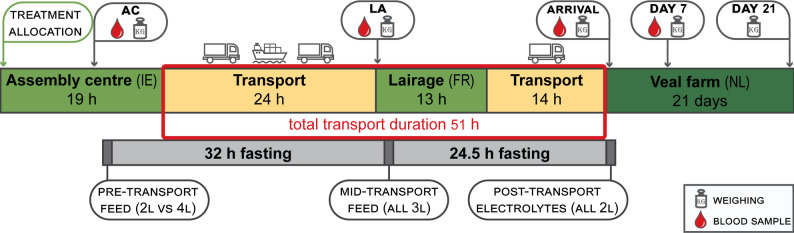
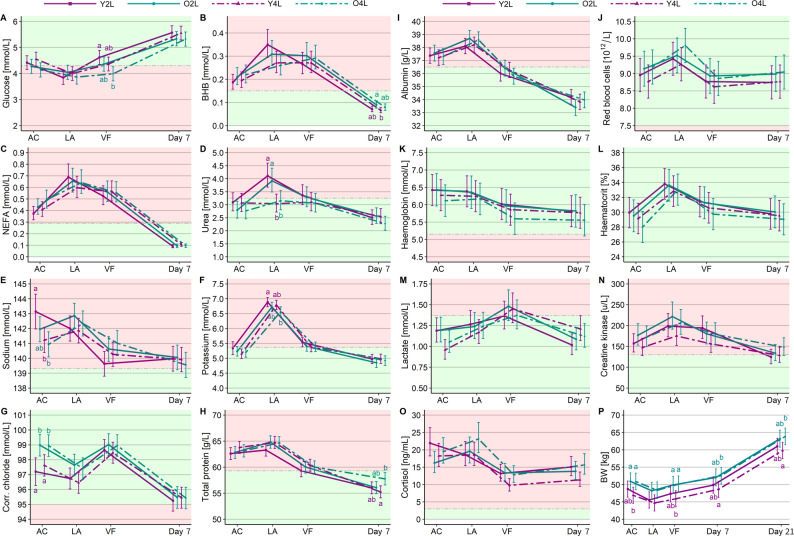
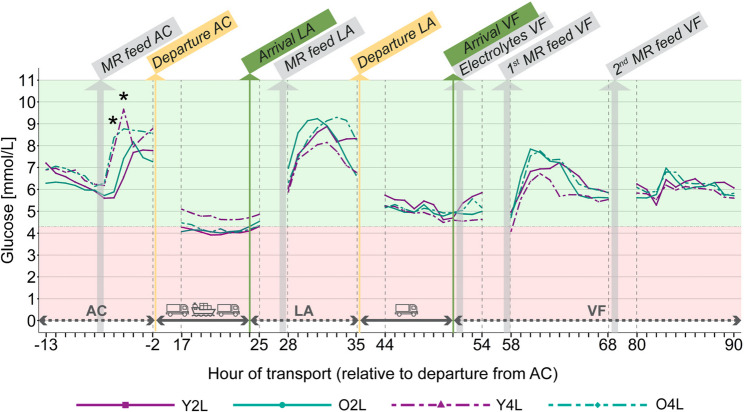
BACKGROUND: Long-distance transport and associated extended fasting periods challenge the physiological state of young calves, leading to energy loss, dehydration, and potentially hunger and exhaustion. Older calves with greater body reserves may better withstand fasting, while providing larger volumes of milk replacer pre-transport could help sustain energy balance and hydration. The aim of this study was to investigate how calf age and pre-transport feeding protocols affect the physiological status of unweaned calves during and after long-distance road and ferry transport. RESULTS: We followed a commercial shipment of 138 male dairy calves from an assembly centre (AC) in Ireland via road and roll-on-roll-off ferry to a lairage in France and then via road to a veal farm in the Netherlands (total transport duration 51 h). Study design was a 2 × 2 factorial with factors calf age (2–3 or 4–5 weeks) and pre-transport feeding protocol (2–4 L of milk replacer). We collected four blood samples (AC, lairage, arrival, Day 7 post-transport) and analysed them for 15 variables indicating energy balance, hydration status, muscle fatigue, and physiological stress responses. Twenty calves were fitted with continuous glucose monitors (CGMs) to measure interstitial glucose from 13 h before to 90 h after departure. Body weight was recorded at AC, lairage, arrival, Day 7 and 21 post-transport. The effects of age and feeding protocol on physiological responses were assessed using linear mixed models with repeated measures and random effects for calf and farm of origin. Younger calves weighed less than older calves overall (49.8 vs. 53.0 kg, P = 0.004) and at all sampling moments; they had higher plasma glucose concentrations than older calves overall (4.61 vs. 4.42 mmol/L, P = 0.038) and at all sampling moments except lairage, lower sodium concentrations at arrival (139.9 vs. 140.8 mmol/L, P = 0.034) and lower chloride concentrations at AC (97.4 vs. 99.0 mmol/L, P < 0.001) and lairage (96.6 vs. 97.5 mmol/L, P = 0.009). Calves fed 2 L pre-transport had lower CGM glucose readings for two hours after feeding at AC and higher urea concentrations at lairage (4.01 vs. 3.10 mmol/L, P < 0.001) than calves fed 4 L. CONCLUSION: Although feeding 4 L compared to 2 L before transport had some positive effects on calf energy balance and hydration, our findings suggest that pre-transport feeding has only limited capacity to alleviate the negative impacts of transport and prolonged fasting on the physiological status of calves, especially during multi-day transport. Effects of age on calf resilience were few and inconclusive, and further research should include a larger age range.
Overview
CoChat Summary
TL;DR
This commercial shipment study followed 138 male calves on a 51 h Ireland-to-Netherlands transport and found that long-distance transport and fasting substantially worsened calves’ physiological status regardless of age or pre-transport feeding. Feeding 4 L of milk replacer instead of 2 L before departure helped only briefly, mainly improving glucose immediately after feeding and lowering urea at lairage/arrival.
Key findings
- The final study included 138 male Holstein-Friesian and Friesian crossbred calves (after excluding 2 unfit calves), split across Y2L, O2L, Y4L, and O4L treatments; the commercial shipment lasted 51 h.
- Calves fed 4 L vs 2 L before transport had higher CGM glucose for 2 h post-feeding at the assembly centre and lower urea at lairage (4.01 vs 3.10 mmol/L, P < 0.001); the authors say these benefits were short-lived.
- Younger calves (2–3 weeks) were lighter overall than older calves (49.8 vs 53.0 kg, P = 0.004) and had higher plasma glucose overall (4.61 vs 4.42 mmol/L, P = 0.038), but the age effects were few and “inconclusive.”
- Transport effects were large: the paper states most blood variables were outside normal reference ranges at numerous time points, with the worst status after the ferry journey; by Day 7 many values had normalized, but sodium, CK, and cortisol were noted as remaining above upper reference limits throughout transport.
Methods
- Design: Commercial, 2 × 2 factorial study with factors age (2–3 vs 4–5 weeks) and pre-transport feeding (2 L vs 4 L MR); calves were followed from an assembly centre in Ireland to a veal farm in the Netherlands and for 3 weeks post-transport.
- Sample/data: 138 calves from 19 dairy farms; 4 blood sampling points (AC, lairage, arrival, Day 7), BW at 5 time points (including Day 21), and CGM glucose in a subset of 17 calves for repeated continuous measurements.
- Analysis: Linear mixed models with repeated measures and random effects for calf and farm of origin; fixed effects included age, feeding protocol, time, and interactions, with baseline covariates used for some pre-treatment differences.
Limitations
- The paper explicitly states a key limitation: only one transport journey was studied, so there was no replication at the journey level, increasing the risk of pseudoreplication and limiting generalizability.
- The paper also states that the age range was narrow (average difference about 10 days), which may have reduced detectable age effects and is one reason the authors call for studies including calves older than 28 days.
- Evident from the text: the CGM subset was small (n = 17) and had data gaps/faulty devices, so continuous glucose findings are less generalizable than the blood-data results.
Model-written summary. Check it against the paper before relying on it.
Integrity signals
Registry
Cites
Statistics
Figures
Verification
Claims the paper makes
27 Valid · 3 Not valid · 11 Not checked · 124 Own results and interpretations
Every source the paper cites for this claim was checked and supports it.
In the paper
“Prolonged fasting during transport is a recognized welfare risk for young calves [5].”
§ Effects of age and feeding protocols on the metabolic and physiological condition of unweaned calves during and after long-distance transport > Background
What the sources say
- Supportedcites [5] Roadknight N, Mansell P, Jongman E, Courtman N, Fisher A. Invited review: the welfare of young calves transported by road. J Dairy Sci. 2021;104(6):6343–57. 10.3168/jds.2020-19346. 33714583 source
The Fasting section identifies hunger and energy depletion from feed deprivation during transport as welfare concerns for young calves. It also says longer fasting can cause hypoglycemia and recommends keeping fasting below 24 hours to maintain metabolic stability. (LLM, conf=0.94)
plainstates a cause- Asserted: passes — The authors put it forward as true.
- Checkable: passes — It can be checked against evidence.
- Load-bearing: passes — The paper’s conclusions depend on it.
- Based: passes — The paper gives a reason why it holds.
- Supported
The cited sources support only part of this claim — read each source’s verdict below.
In the paper
“At approximately 2–3 weeks of age calves experience an “immunity gap”, during which maternal antibodies acquired by transfer of passive immunity via colostrum decline before the calf’s active immune system is fully functional, leaving them particularly susceptible disease [20, 21].”
§ Effects of age and feeding protocols on the metabolic and physiological condition of unweaned calves during and after long-distance transport > Background
What the sources say
- Not checked yetcites [20] Hulbert LE, Moisá SJ. Stress, immunity, and the management of calves. J Dairy Sci. 2016;99(4):3199–216. 10.3168/jds.2015-10198. 26805993 source
Checked before — its earlier verdict is held back until a new check runs.
- Partly supportedcites [21] Chase CCL, Hurley DJ, Reber AJ. Neonatal immune development in the calf and its impact on vaccine response. Vet Clin North Am Food Anim Pract. 2008;24(1):87–104. 10.1016/j.cvfa.2007.11.001. 18299033 PMC7127081 sourceExperimental — accuracy not yet measured
Split into 2 atoms — 0 confirmed, 2 partially supported, 0 disputed, 0 misattributed, 0 unverifiable. Expand the claim to see per-atom verdicts.
plainstates a cause- Asserted: passes — The authors put it forward as true.
- Checkable: passes — It can be checked against evidence.
- Load-bearing: unclear — It is unclear whether the paper’s conclusions depend on it.
- Based: passes — The paper gives a reason why it holds.
- Not checked yet
The cited sources support only part of this claim — read each source’s verdict below.
In the paper
“Several studies have shown that calves fed electrolyte solutions before transport [12, 56, 57] or during rest-stops [58] instead of more nutrient- and energy-rich MR are more likely to rely on metabolising body fat reserves to maintain energy balance and lose more weight during subsequent transport.”
§ Effects of age and feeding protocols on the metabolic and physiological condition of unweaned calves during and after long-distance transport > Discussion > Effects of feeding protocol
What the sources say
- Partly supportedcites [12] Marcato F, van den Brand H, Kemp B, Engel B, Wolthuis-Fillerup M, van Reenen K. Effects of pretransport diet, transport duration, and type of vehicle on physiological status of young veal calves. J Dairy Sci. 2020;103(4):3505–20. 10.3168/jds.2019-17445. 32037174 sourceExperimental — accuracy not yet measured
The Results report that after 6 hours of transport, electrolyte-fed calves had higher NEFA concentrations, consistent with greater fat mobilization, and lost weight while milk-fed calves gained weight. The claim omits the duration qualifier: after 18 hours, the groups did not significantly differ in NEFA concentrations, and both lost weight. This paper tests feeding before transport, not feeding during rest-stops, which the citing sentence attributes to a different reference. (LLM, conf=0.88)
- Partly supportedcites [56] Pisoni L, Devant M, Blanch M, Pastor JJ, Marti S. Simulation of feed restriction and fasting: effects on animal recovery and gastrointestinal permeability in unweaned angus-Holstein calves. J Dairy Sci. 2022;105(3):2572–86. 10.3168/jds.2021-20878. 35086712 sourceExperimental — accuracy not yet measured
Split into 2 atoms — 1 confirmed, 1 partially supported, 0 disputed, 0 misattributed, 0 unverifiable. Expand the claim to see per-atom verdicts.
- Partly supportedcites [57] Pisoni L, Devant M, Bassols AM, Saco Y, Pato R, Pujols J, et al. The effects of colostrum consumption and feed restriction during marketing and transportation of male dairy beef calves: impact on pre-transport nutritional status and on farm recovery. J Dairy Sci. 2023;106(12):9304–22. 10.3168/jds.2023-23374. 37641290 sourceExperimental — accuracy not yet measured
Split into 2 atoms — 1 confirmed, 1 partially supported, 0 disputed, 0 misattributed, 0 unverifiable. Expand the claim to see per-atom verdicts.
- Not checked yetcites [58] Bajus A, Creutzinger KC, Cantor MC, Wilms JN, Gomez Nieto DE, Steele MA, et al. Investigating nutritional strategies during a rest period to improve health, growth, and behavioral outcomes of transported surplus dairy calves. J Dairy Sci. 2024;107(7):4895–914. 10.3168/jds.2023-23973. 38310959 source
Checked before — its earlier verdict is held back until a new check runs.
hedgedstates a cause- Asserted: passes — The authors put it forward as true.
- Checkable: passes — It can be checked against evidence.
- Load-bearing: passes — The paper’s conclusions depend on it.
- Based: passes — The paper gives a reason why it holds.
- Partly supported
Every source the paper cites for this claim was checked and supports it.
In the paper
“However, substantial variability in metabolic outcomes has been observed between shipments of calves transported along the same route under similar conditions [47].”
§ Effects of age and feeding protocols on the metabolic and physiological condition of unweaned calves during and after long-distance transport > Discussion > Effects of feeding protocol
What the sources say
- Supportedcites [47] van Dijk LL, Siegmann S, Field NL, Sugrue K, van Reenen CG, Bokkers EAM, et al. Effect of source and journey on physiological variables in calves transported by road and ferry between Ireland and the Netherlands. Front Vet Sci. 2023;10:1238734. 10.3389/fvets.2023.1238734. 37829357 PMC10566621 source
The Discussion (§4.2) reports significant journey-to-journey variation in calves’ physiology, including differences in metabolic indicators BHB and L-lactate. The Conclusion (§4.5) describes definite differences between consignments transported on a similar journey. (LLM, conf=0.90)
plain- Asserted: passes — The authors put it forward as true.
- Checkable: passes — It can be checked against evidence.
- Load-bearing: passes — The paper’s conclusions depend on it.
- Based: passes — The paper gives a reason why it holds.
- Supported
A result the paper reports from its own data — it cites no other source for it, so there is none to check. The quote shows it is in the paper.
In the paper
“Calves fed 4 L had higher CGM glucose concentrations than calves fed 2 L 6 h (8.12 [7.12, 9.27] vs. 5.75 [5.09, 6.49], P < 0.001)”
§ Effects of age and feeding protocols on the metabolic and physiological condition of unweaned calves during and after long-distance transport > Results > Effects of age, feeding protocol, and time
plainstates an association- Asserted: passes — The authors put it forward as true.
- Checkable: passes — It can be checked against evidence.
- Load-bearing: unclear — It is unclear whether the paper’s conclusions depend on it.
- Based: passes — The paper gives a reason why it holds.
72 more claims
Create a free account to see all 165 claims and to verify the 11 references still open.
- It may state two separate claims as one. 79
- Probably not a substantial claim. 32
- The quote only partly states this claim. 1
Citations
Cites
R: A Language and Environment for Statistical Computing
R Core Team (2025) · doi:10.32614/r.manuals · Cited by 352,181
Fitting Linear Mixed-Effects Models Using lme4
Bates, D., Mächler, M., Bolker, B., & Walker, S. (2015) · Journal of Statistical Software · doi:10.18637/jss.v067.i01 · Cited by 86,835
Statistical power analyses using G∗Power 3.1: tests for correlation and regression analyses
Faul, F., Erdfelder, E., Buchner, A., & Lang, A.-G. (2009) · Behavior Research Methods · doi:10.3758/brm.41.4.1149 · Cited by 37,615 · cited 1×
“Sample size was calculated using the program G*Power [32], with a focus on one of the main treatment factors, calf age, and one of the main outcomes of interest, plasma glucose concentrations.”
A general and simple method for obtaining R 2 from generalized linear mixed‐effects models
Nakagawa, S., & Schielzeth, H. (2013) · Methods in Ecology and Evolution · doi:10.1111/j.2041-210x.2012.00261.x · Cited by 10,356
emmeans: Estimated Marginal Means, aka Least-Squares Means
Lenth, R. V., & Piaskowski, J. (2017) · CRAN: Contributed Packages · doi:10.32614/cran.package.emmeans · Cited by 8,143
performance: An R Package for Assessment, Comparison and Testing of Statistical Models
Lüdecke, D., Ben-Shachar, M., Patil, I., Waggoner, P., & Makowski, D. (2021) · Journal of Open Source Software · doi:10.21105/joss.03139 · Cited by 5,836
Neonatal Immune Development in the Calf and Its Impact on Vaccine Response
Chase, C. C. L., Hurley, D. J., & Reber, A. J. (2008) · Veterinary Clinics of North America: Food Animal Practice · doi:10.1016/j.cvfa.2007.11.001 · Cited by 482
Mohri, M., Sharifi, K., & Eidi, S. (2007) · Research in Veterinary Science · doi:10.1016/j.rvsc.2006.10.017 · Cited by 379
Stress, immunity, and the management of calves
Hulbert, L. E., & Moisá, S. J. (2016) · Journal of Dairy Science · doi:10.3168/jds.2015-10198 · Cited by 370 · cited 1×
“At approximately 2–3 weeks of age calves experience an “immunity gap”, during which maternal antibodies acquired by transfer of passive immunity via colostrum decline before the calf’s active immune system is fully functional, leaving them particularly susceptible disease [20, 21].”
Changes in the blood biochemical and haematological profile of neonatal calves with age
Knowles, T. G., Edwards, J. E., Bazeley, K. J., Brown, S. N., Butterworth, A., & Warriss, P. D. (2000) · Veterinary Record · doi:10.1136/vr.147.21.593 · Cited by 275 · cited 4×
“…fed more also had significantly lower concentrations of urea at the lairage than calves fed less and remained within normal reference ranges throughout transport (2.5–3.25 mmol/L) [43], while 2 L calves exceeded the upper reference limit for urea at the lairage and at arrival at the veal farm.”
InfluentialRisk factors associated with mortality at a milk-fed veal calf facility: A prospective cohort study
Renaud, D. L., Duffield, T. F., LeBlanc, S. J., Ferguson, S., Haley, D. B., & Kelton, D. F. (2018) · Journal of Dairy Science · doi:10.3168/jds.2017-13581 · Cited by 118 · cited 1×
“Higher BW is associated with decreased mortality [48, 49] and infection risk [25, 50, 51], as well as higher growth rates [52, 53].”
Stanley, C. C., Williams, C. C., Jenny, B. F., Fernandez, J. M., Bateman, H. G., Nipper, W. A., Lovejoy, J. C., Gantt, D. T., & Goodier, G. E. (2002) · Journal of Dairy Science · doi:10.3168/jds.s0022-0302(02)74313-0 · Cited by 117 · cited 1×
“…glucose concentrations for 2 h post-feeding, which was to be expected, as plasma glucose in unweaned Holstein calves peaks around 30 min after feeding [59], and a slight time lag between plasma and CGM-recorded interstitial glucose concentrations has been reported in several species [60, 61].”
Pardon, B., Alliët, J., Boone, R., Roelandt, S., Valgaeren, B., & Deprez, P. (2015) · Preventive Veterinary Medicine · doi:10.1016/j.prevetmed.2015.04.009 · Cited by 116 · cited 2×
“This increased vulnerability is reflected in the high rates of morbidity and mortality reported in young calves following transport, during and after which calves from multiple source farms are mixed and exposed to novel pathogens [22, 25, 26].”
Prevalence of respiratory disorders in veal calves and potential risk factors
Brscic, M., Leruste, H., Heutinck, L. F. M., Bokkers, E. A. M., Wolthuis-Fillerup, M., Stockhofe, N., Gottardo, F., Lensink, B. J., Cozzi, G., & Van Reenen, C. G. (2012) · Journal of Dairy Science · doi:10.3168/jds.2011-4699 · Cited by 114 · cited 1×
“Higher BW is associated with decreased mortality [48, 49] and infection risk [25, 50, 51], as well as higher growth rates [52, 53].”
Self-citationCalf management risk factors on dairy farms associated with male calf mortality on veal farms
Renaud, D. L., Kelton, D. F., LeBlanc, S. J., Haley, D. B., & Duffield, T. F. (2018) · Journal of Dairy Science · doi:10.3168/jds.2017-13578 · Cited by 99 · cited 1×
“Farm-specific factors that can affect calf health and susceptibility to infection include colostrum management, access to veterinary care and vaccinations, and housing conditions including hygiene practices [57, 68, 69].”
(1982) · PubMed · Cited by 83
Yu, K., Canalias, F., Solà-Oriol, D., Arroyo, L., Pato, R., Saco, Y., Terré, M., & Bassols, A. (2019) · Frontiers in Veterinary Science · doi:10.3389/fvets.2019.00123 · Cited by 82 · cited 4×
“In fact, BHB (> 0.15 mmol/L) [43] and NEFA concentrations (> 0.29 mmol/L) [42] were elevated above upper reference limits throughout transport in all treatments, indicating the mobilisation of body fat for energy gain in the absence of food [5].”
InfluentialMortality risk factors for calves entering a multi-location white veal farm in Ontario, Canada
Winder, C. B., Kelton, D. F., & Duffield, T. F. (2016) · Journal of Dairy Science · doi:10.3168/jds.2016-11345 · Cited by 79 · cited 1×
“Higher BW is associated with decreased mortality [48, 49] and infection risk [25, 50, 51], as well as higher growth rates [52, 53].”
Evaluating potential biomarkers of health and performance in veal calves
Marcato, F., van den Brand, H., Kemp, B., & van Reenen, K. (2018) · Frontiers in Veterinary Science · doi:10.3389/fvets.2018.00133 · Cited by 76 · cited 1×
“Elevated urea concentrations are an indicator of dehydration, but also protein catabolism as a response to prolonged fasting [62].”
Effects of food withdrawal and transport on 5- to 10 day-old calves
TODD, S. E., MELLOR, D. J., STAFFORD, K. J., GREGORY, N. G., BRUCE, R. A., & WARD, R. N. (2000) · Research in Veterinary Science · doi:10.1053/rvsc.1999.0345 · Cited by 73 · cited 1×
“Young calves possess limited body fat reserves to cope with energy depletion through fasting [16, 17] and to regulate their body temperature in cold transport conditions [18, 19].”
Grigor, P. N., Cockram, M. S., Steele, W. B., Le Sueur, C. J., Forsyth, R. E., Guthrie, J. A., Johnson, A. K., Sandilands, V., Reid, H. W., Sinclair, C., et al. (2001) · Animal Science · doi:10.1017/s135772980005832x · Cited by 65 · cited 1×
“Elevated electrolyte and protein concentrations reflect a reduction in plasma volume and are often reported as the result of long periods without water or food during transport [18, 46, 47].”
Establishing blood gas ranges in healthy bovine neonates differentiated by age, sex, and breed type
Dillane, P., Krump, L., Kennedy, A., Sayers, R. G., & Sayers, G. P. (2018) · Journal of Dairy Science · doi:10.3168/jds.2017-13445 · Cited by 65 · cited 7×
“Despite these differences, both age groups were within normal reference ranges for corrected chloride at the AC and lairage (95–103 mmol/L) [41] and for TP on Day 7 (39.4–59.3 g/L) [42], while sodium concentrations were above the upper reference limit for both age groups the entire study period (>…”
InfluentialSelf-citationWelfare of cattle during transport
(AHAW), E. P. O. A. H. A. W., Nielsen, S. S., Alvarez, J., Bicout, D. J., Calistri, P., Canali, E., Drewe, J. A., Garin‐Bastuji, B., Gonzales Rojas, J. L., Gortázar Schmidt, C., et al. (2022) · EFSA Journal · doi:10.2903/j.efsa.2022.7442 · Cited by 64
Invited review: The welfare of young calves transported by road
Roadknight, N., Mansell, P., Jongman, E., Courtman, N., & Fisher, A. (2021) · Journal of Dairy Science · doi:10.3168/jds.2020-19346 · Cited by 63 · cited 3×
“In fact, BHB (> 0.15 mmol/L) [43] and NEFA concentrations (> 0.29 mmol/L) [42] were elevated above upper reference limits throughout transport in all treatments, indicating the mobilisation of body fat for energy gain in the absence of food [5].”
InfluentialMarcato, F., van den Brand, H., Kemp, B., Engel, B., Wolthuis-Fillerup, M., & van Reenen, K. (2020) · Journal of Dairy Science · doi:10.3168/jds.2019-17445 · Cited by 62 · cited 2×
“…a 6 h journey maintained higher plasma glucose concentrations and had lower cortisol concentrations upon arrival, indicating that a more nutritious pre-transport diet can mitigate the negative effects of transport on energy balance and the physiological stress response to some extent [12, 13].”
Fisher, A. D., Stevens, B. H., Conley, M. J., Jongman, E. C., Lauber, M. C., Hides, S. J., Anderson, G. A., Duganzich, D. M., & Mansell, P. D. (2014) · Journal of Dairy Research · doi:10.1017/s0022029914000193 · Cited by 53 · cited 1×
“Dehydration, weight loss, energy depletion, and exhaustion are commonly reported outcomes of long-distance transport (reviewed by [5, 8]) and are accompanied by negative affective states such as hunger and thirst [9, 10].”
Bernardini, D., Gerardi, G., Peli, A., Nanni Costa, L., Amadori, M., & Segato, S. (2012) · Journal of Animal Science · doi:10.2527/jas.2011-4113 · Cited by 53
Scott, K., Kelton, D. F., Duffield, T. F., & Renaud, D. L. (2019) · Journal of Dairy Science · doi:10.3168/jds.2019-16829 · Cited by 52
Preparing Male Dairy Calves for the Veal and Dairy Beef Industry
Renaud, D., & Pardon, B. (2022) · Veterinary Clinics of North America: Food Animal Practice · doi:10.1016/j.cvfa.2021.11.006 · Cited by 45 · cited 3×
“…by various other factors, including calf breed, health, BW at birth and prior to transport, which is dependent on feeding and management practices on the farm of origin, and the conditions of transport itself such as the season, temperature, duration, feeding protocols and fasting periods [8, 54].”
Renaud, D. L., Overton, M. W., Kelton, D. F., LeBlanc, S. J., Dhuyvetter, K. C., & Duffield, T. F. (2018) · Journal of Dairy Science · doi:10.3168/jds.2018-14960 · Cited by 44 · cited 1×
“Higher BW is associated with decreased mortality [48, 49] and infection risk [25, 50, 51], as well as higher growth rates [52, 53].”
Losses in Young Calves after Transportation
Staples, G. E., & Haugse, C. N. (1974) · British Veterinary Journal · doi:10.1016/s0007-1935(17)35841-4 · Cited by 42 · cited 1×
“Most of the available research on the impact of transport on calves of different ages is based on experimental or observational data and focuses on young calves aged less than 28 days [28–31].”
Renaud, D. L., Waalderbos, K. M., Beavers, L., Duffield, T. F., Leslie, K. E., & Windeyer, M. C. (2020) · Journal of Dairy Science · doi:10.3168/jds.2019-17397 · Cited by 42 · cited 1×
“Moreover, failure of passive transfer of immunity has been reported to occur disproportionately often in male and non-replace-ment dairy calves, mostly due to inadequate colostrum management on the farm of birth [22–24].”
Barry, J., Bokkers, E. A. M., de Boer, I. J. M., & Kennedy, E. (2020) · Animal · doi:10.1017/s1751731120001615 · Cited by 38
Self-citationGoetz, H. M., Kelton, D. F., Costa, J. H. C., Winder, C. B., & Renaud, D. L. (2021) · Journal of Dairy Science · doi:10.3168/jds.2020-18729 · Cited by 37 · cited 1×
“Higher BW is associated with decreased mortality [48, 49] and infection risk [25, 50, 51], as well as higher growth rates [52, 53].”
Baldo, F. D., Fracassi, F., Pires, J., Tardo, A. M., Malerba, E., Manassero, E., & Gilor, C. (2021) · Journal of Veterinary Internal Medicine · doi:10.1111/jvim.16122 · Cited by 37
Marcato, F., van den Brand, H., Kemp, B., Engel, B., Schnabel, S. K., Hoorweg, F. A., Wolthuis-Fillerup, M., & van Reenen, K. (2022) · Journal of Dairy Science · doi:10.3168/jds.2021-20637 · Cited by 35 · cited 2×
“Consequently, we found only few effects of age on physiological status, whereas previous research suggested that older calves are better able to cope with transport challenges [29, 30, 64].”
Characterizing the literature surrounding transportation of young dairy calves: A scoping review
Goetz, H. M., Winder, C. B., Costa, J. H. C., Creutzinger, K. C., Uyama, T., Kelton, D. F., Dunn, J., & Renaud, D. L. (2022) · Journal of Dairy Science · doi:10.3168/jds.2021-21211 · Cited by 32 · cited 1×
“Despite these concerns, only few studies have examined how the age of calves may affect their physiological response to transport [27].”
Current Knowledge on the Transportation by Road of Cattle, including Unweaned Calves
Buckham-Sporer, K., Earley, B., & Marti, S. (2023) · Animals · doi:10.3390/ani13213393 · Cited by 31 · cited 1×
“Young calves possess limited body fat reserves to cope with energy depletion through fasting [16, 17] and to regulate their body temperature in cold transport conditions [18, 19].”
Goetz, H. M., Creutzinger, K. C., Kelton, D. F., Costa, J. H. C., Winder, C. B., & Renaud, D. L. (2023) · Journal of Dairy Science · doi:10.3168/jds.2022-22366 · Cited by 29 · cited 2×
“Evidence from transport studies [58, 63, 64] shows that feeding young calves within a shorter interval (e.g., within 1 h of loading) is generally well tolerated, although some guidelines recommend feeding calves at least 3 h before departure to allow for digestion and minimize risk of diarrhoea [7,…”
Veal calf health on the day of arrival at growers in Ohio 1,2
Pempek, J., Trearchis, D., Masterson, M., Habing, G., & Proudfoot, K. (2017) · Journal of Animal Science · doi:10.2527/jas.2017.1642 · Cited by 28
Blood parameters of young calves at abattoirs are related to distance transported and farm of origin
Roadknight, N., Mansell, P., Jongman, E., Courtman, N., McGill, D., Hepworth, G., & Fisher, A. (2021) · Journal of Dairy Science · doi:10.3168/jds.2020-19729 · Cited by 26 · cited 1×
“The feeding regimen on the dairy farm, e.g., the frequency, amount, and type of feed (MR or electro-lytes), and the time between the last meal and departure, naturally play a large part in the calves’ growth and ability to maintain their energy balance at the AC and during later transport [67].”
The physical state and plasma biochemical profile of young calves on arrival at a slaughter plant
Stafford, K., Mellor, D. J., Todd, S., Gregory, N., Bruce, R., & Ward, R. (2001) · New Zealand Veterinary Journal · doi:10.1080/00480169.2001.36222 · Cited by 25 · cited 1×
“Young calves possess limited body fat reserves to cope with energy depletion through fasting [16, 17] and to regulate their body temperature in cold transport conditions [18, 19].”
Marcato, F., van den Brand, H., Kemp, B., Engel, B., Schnabel, S. K., Jansen, C. A., Rutten, V. P. M. G., Koets, A. P., Hoorweg, F. A., de Vries-Reilingh, G., et al. (2022) · Journal of Dairy Science · doi:10.3168/jds.2021-20636 · Cited by 24 · cited 1×
“Most of the available research on the impact of transport on calves of different ages is based on experimental or observational data and focuses on young calves aged less than 28 days [28–31].”
Pisoni, L., Devant, M., Blanch, M., Pastor, J. J., & Marti, S. (2022) · Journal of Dairy Science · doi:10.3168/jds.2021-20878 · Cited by 24 · cited 1×
“Several studies have shown that calves fed electrolyte solutions before transport [12, 56, 57] or during rest-stops [58] instead of more nutrient-and energy-rich MR are more likely to rely on metabolising body fat reserves to maintain energy balance and lose more weight during subsequent transport.”
The effect of milk quantity and feeding frequency on calf growth and behaviour
Jongman, E. C., Conley, M. J., Borg, S., Butler, K. L., & Fisher, A. D. (2020) · Animal Production Science · doi:10.1071/an19049 · Cited by 23 · cited 1×
“Dehydration, weight loss, energy depletion, and exhaustion are commonly reported outcomes of long-distance transport (reviewed by [5, 8]) and are accompanied by negative affective states such as hunger and thirst [9, 10].”
Marcato, F., van den Brand, H., Jansen, C. A., Rutten, V. P. M. G., Kemp, B., Engel, B., Wolthuis-Fillerup, M., & van Reenen, K. (2021) · PLOS ONE · doi:10.1371/journal.pone.0246959 · Cited by 21 · cited 1×
“…a 6 h journey maintained higher plasma glucose concentrations and had lower cortisol concentrations upon arrival, indicating that a more nutritious pre-transport diet can mitigate the negative effects of transport on energy balance and the physiological stress response to some extent [12, 13].”
Rot, C., Creutzinger, K., Goetz, H., Winder, C., Morrison, J., Conboy, M., Bajus, A., & Renaud, D. L. (2022) · Preventive Veterinary Medicine · doi:10.1016/j.prevetmed.2022.105630 · Cited by 21 · cited 1×
“…by various other factors, including calf breed, health, BW at birth and prior to transport, which is dependent on feeding and management practices on the farm of origin, and the conditions of transport itself such as the season, temperature, duration, feeding protocols and fasting periods [8, 54].”
Goetz, H. M., Creutzinger, K. C., Kelton, D. F., Costa, J. H. C., Winder, C. B., Gomez, D. E., & Renaud, D. L. (2023) · Journal of Dairy Science · doi:10.3168/jds.2022-22367 · Cited by 20 · cited 1×
“Consequently, we found only few effects of age on physiological status, whereas previous research suggested that older calves are better able to cope with transport challenges [29, 30, 64].”
Blood Gases, Acid-Base Status And Plasma Lactate Concentrations In Calves With Respiratory Diseases
Helena, Š., Oskar, N., Csilla, T., Iveta, P., & Herbert, S. (2015) · Acta Veterinaria · doi:10.1515/acve-2015-0009 · Cited by 18
Condition of bob veal calves on arrival at an abattoir in Ohio
England, Z. A., Maggard, H. L., Fisher, A. D., Roadknight, N. W., & Pempek, J. A. (2023) · Animal Welfare · doi:10.1017/awf.2022.8 · Cited by 15
van Dijk, L. L., Siegmann, S., Field, N. L., Sugrue, K., van Reenen, C. G., Bokkers, E. A. M., Sayers, G., & Conneely, M. (2023) · Frontiers in Veterinary Science · doi:10.3389/fvets.2023.1238734 · Cited by 10
Self-citationGoetz, H. M., & Renaud, D. L. (2024) · Journal of Dairy Science · doi:10.3168/jds.2024-25011 · Cited by 9 · cited 1×
“Evidence from transport studies [58, 63, 64] shows that feeding young calves within a shorter interval (e.g., within 1 h of loading) is generally well tolerated, although some guidelines recommend feeding calves at least 3 h before departure to allow for digestion and minimize risk of diarrhoea [7,…”
Bajus, A., Creutzinger, K. C., Cantor, M. C., Wilms, J. N., Gomez Nieto, D. E., Steele, M. A., Kelton, D. F., & Renaud, D. L. (2024) · Journal of Dairy Science · doi:10.3168/jds.2023-23973 · Cited by 8 · cited 3×
“Evidence from transport studies [58, 63, 64] shows that feeding young calves within a shorter interval (e.g., within 1 h of loading) is generally well tolerated, although some guidelines recommend feeding calves at least 3 h before departure to allow for digestion and minimize risk of diarrhoea [7,…”
Siegmann, S., van Dijk, L. L., Field, N. L., Sayers, G., Sugrue, K., Gort, G., van Reenen, C. G., Bokkers, E. A. M., & Conneely, M. (2025) · Journal of Dairy Science · doi:10.3168/jds.2024-26219 · Cited by 6 · cited 3×
“In a previous study [14] we found that feeding calves 3 L of MR twice at an Irish assembly centre prior to international transport (the evening before and on the morning of transport) instead of the standard 2 L the morning of transport improved their physiological state during the ferry journey.”
InfluentialSelf-citationPisoni, L., Devant, M., Bassols, A. M., Saco, Y., Pato, R., Pujols, J., & Marti, S. (2023) · Journal of Dairy Science · doi:10.3168/jds.2023-23374 · Cited by 6 · cited 2×
“Several studies have shown that calves fed electrolyte solutions before transport [12, 56, 57] or during rest-stops [58] instead of more nutrient-and energy-rich MR are more likely to rely on metabolising body fat reserves to maintain energy balance and lose more weight during subsequent transport.”
Use of FreeStyle Libre for continuous glucose monitoring in adult horses
Françoso, R., Baccarin, R. Y. A., de Siqueira, R. F., & Belli, C. B. (2024) · Journal of Veterinary Emergency and Critical Care · doi:10.1111/vec.13367 · Cited by 6 · cited 1×
“…glucose concentrations for 2 h post-feeding, which was to be expected, as plasma glucose in unweaned Holstein calves peaks around 30 min after feeding [59], and a slight time lag between plasma and CGM-recorded interstitial glucose concentrations has been reported in several species [60, 61].”
Evaluation of a continuous glucose monitoring system in healthy dairy calves and adult goats
Brobst, M. N., Abi-Nader, B. A., Blasczynski, S. J., & Chigerwe, M. (2024) · American Journal of Veterinary Research · doi:10.2460/ajvr.24.03.0076 · Cited by 6 · cited 4×
“(Although this reference range applies to plasma glucose, Brobst et al. [34] found that CGM-measured interstitial glucose differs from plasma glucose by only 0.1 mmol/L in hypoglycaemic calves.)”
InfluentialPempek, J. A., England, Z., Habing, G. G., & Niehaus, A. (2024) · Journal of Animal Science · doi:10.1093/jas/skae011 · Cited by 5 · cited 1×
“…(more fat mobilisation, worse energy balance) when calves were fed electrolytes compared to MR after transport at a rest stop, and Pempek et al. [66] found that feeding calves electrolyte solution for 0–3 days post-transport (additionally to MR) had very limited positive effects on re-hydration…”
Bergevoet, R. H. M., Marcato, F., van Reenen, C. G., van Wagenberg, C. P. A., Cozzi, G., Lora, I., Texeiria, D., Rörvang, M. V., Marti, S., & Velarde, A. (2022) · Wageningen University & Research Publications · doi:10.2875/072915 · Cited by 5
(2020) · PubMed Central
Cited by
Siegmann, S., van Dijk, L. L., Field, N. L., Sayers, G., Sugrue, K., van Reenen, C. G., Bokkers, E. A. M., & Conneely, M. (2026) · Applied Animal Behaviour Science · doi:10.1016/j.applanim.2026.107136
Self-citation
Metadata
- Authors
- Siegmann, S., van Dijk, L. L., Field, N. L., Sayers, G., Sugrue, K., van Reenen, C. G., Bokkers, E. A. M., & Conneely, M.
- Affiliations
- Teagasc - The Irish Agriculture and Food Development Authority (IE)
- Munster Technological University (IE)
- Wageningen University & Research (NL)
- Corresponding author
- Siegmann, Susanne
- Conneely, Muireann
- ORCID
- Venue
- Irish Veterinary Journal
- Published
- 2026-03-27
- Volume
- 79
- Issue
- 1
- ISSN
- 0368-0762 (ISSN-L)
- 2046-0481
- PMC
- PMC13147793
- OpenAlex
- W7141715052
- Cited by
- 2
- References
- 56
- Citations by year
- 2026: 2
- FWCI
- 15.07
- Type
- journal article
- Language
- en
- Open access
- gold
- doi.org
- Licence
- cc-by
- creativecommons.org/licenses/by/4.0 (tdm)
- creativecommons.org/licenses/by/4.0 (vor, 40 d)
- Locations
- Irish Veterinary Journal (publishedVersion, cc-by)
- PubMed (publishedVersion)
- PubMed Central (publishedVersion, cc-by)
- Socio-Environmental Systems Modeling (acceptedVersion, cc-by)
- DOAJ (DOAJ: Directory of Open Access Journals) (submittedVersion, cc-by-sa)
- Funders
- Teagasc Walsh Scholarship programme
- Topics
- Life Sciences › Agricultural and Biological Sciences › Animal Science and Zoology › Animal health and immunology
- Life Sciences › Agricultural and Biological Sciences › Animal Science and Zoology › Animal Behavior and Welfare Studies
- Life Sciences › Agricultural and Biological Sciences › Animal Science and Zoology › Effects of Environmental Stressors on Livestock
- Keywords
- pre-weaned calves, long-distance transport, calf age, milk replacer, energy balance, hydration status, muscle fatigue, physiological stress, plasma glucose, continuous glucose monitoring, urea, electrolytes, serum biochemistry, road transport, dairy calves, veal calves, body weight, lairage, stress hormones, cortisol
About these checks
Registry, retraction, Cites and statistics results are computed, not judged, with one exception: a printed reference that no index lists is read once by a model before it counts as a citation error. Claims are extracted by a model and kept only when their quote appears verbatim in the text; each cited source is then checked, with a model’s help, for whether it says what the claim relies on. Those verdicts can be wrong — read the claim’s quote and the cited source before relying on one.
The claim verdicts this report counts are experimental: their accuracy is not yet measured.
A language model drew the claims from the paper on 2026-10-11, under version 3 of the claim definition (model deepseek-v4.1-flash, prompt extract-v3).
A second model labelled each claim on 2026-10-11 (model jev-1.13-20260917, definition revision gold-guideline-v0.2).
Cited sources are checked with a language model’s help (gpt-6-sol).
Statistics and arithmetic are recomputed, not judged.
Confidence bands are shown only for fields calibrated on our annotated test set. None is calibrated yet, so no band is shown.
What counts as a claim ›How we measure confidence ›How we check this ›
Are you an author, or do you see a problem with this page? Request a review
Data sources
Bibliographic data: Semantic Scholar, OpenAlex, Crossref.
Contains information from the Semantic Scholar Academic Graph Datasets, made available under the ODC Attribution License (ODC-BY 1.0).
Semantic Scholar’s data is described in: Kinney, R., et al. (2023). The Semantic Scholar Open Data Platform. arXiv:2301.10140.
