

Microbiota Transfer Therapy alters gut ecosystem and improves gastrointestinal and autism symptoms: an open-label study
Open accessThe DOI matches its Crossref record; 80 of the 81 references it cites were found in a registry or an index.
Abstract
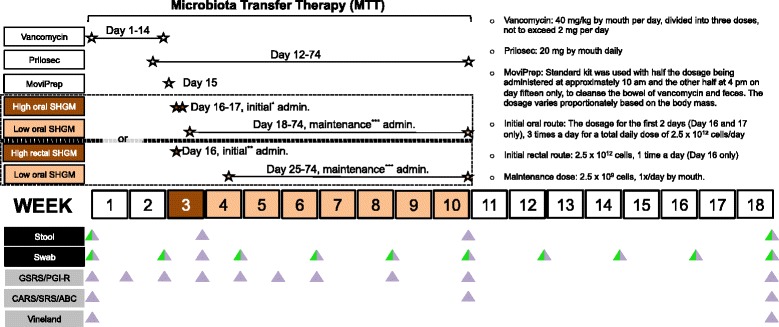
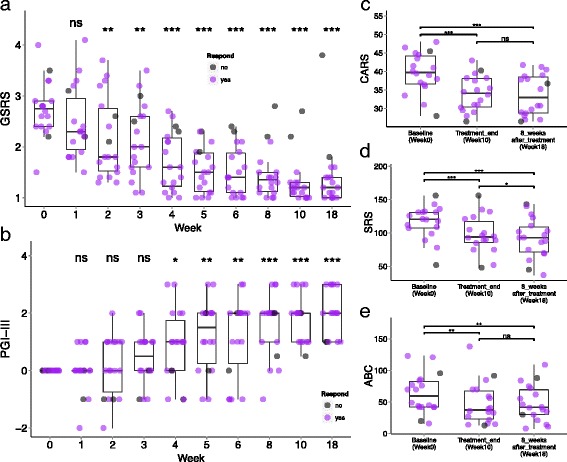
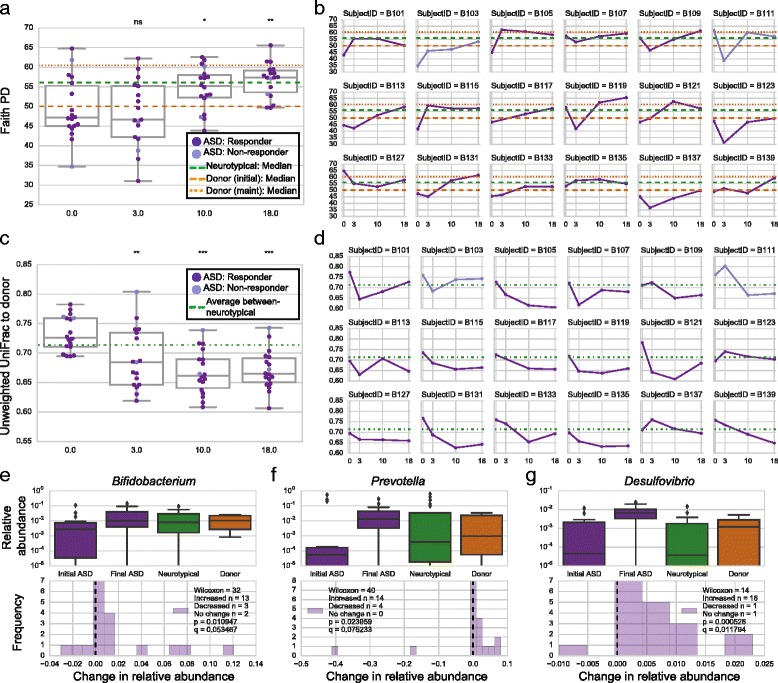
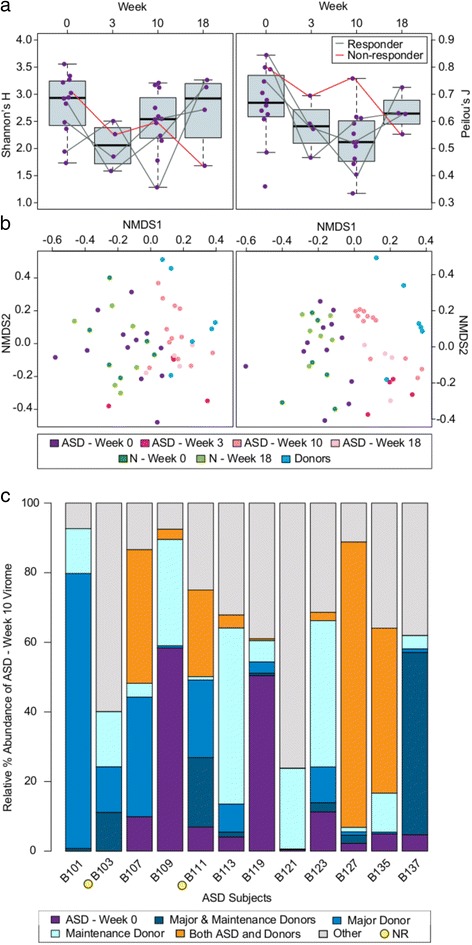
BACKGROUND: bacteria in the human intestines, have been implicated because children with ASD often suffer gastrointestinal (GI) problems that correlate with ASD severity. Several previous studies have reported abnormal gut bacteria in children with ASD. The gut microbiome-ASD connection has been tested in a mouse model of ASD, where the microbiome was mechanistically linked to abnormal metabolites and behavior. Similarly, a study of children with ASD found that oral non-absorbable antibiotic treatment improved GI and ASD symptoms, albeit temporarily. Here, a small open-label clinical trial evaluated the impact of Microbiota Transfer Therapy (MTT) on gut microbiota composition and GI and ASD symptoms of 18 ASD-diagnosed children. RESULTS: MTT involved a 2-week antibiotic treatment, a bowel cleanse, and then an extended fecal microbiota transplant (FMT) using a high initial dose followed by daily and lower maintenance doses for 7-8 weeks. The Gastrointestinal Symptom Rating Scale revealed an approximately 80% reduction of GI symptoms at the end of treatment, including significant improvements in symptoms of constipation, diarrhea, indigestion, and abdominal pain. Improvements persisted 8 weeks after treatment. Similarly, clinical assessments showed that behavioral ASD symptoms improved significantly and remained improved 8 weeks after treatment ended. Bacterial and phagedeep sequencing analyses revealed successful partial engraftment of donor microbiota and beneficial changes in the gut environment. Specifically, overall bacterial diversity and the abundance of Bifidobacterium, Prevotella, and Desulfovibrio among other taxa increased following MTT, and these changes persisted after treatment stopped (followed for 8 weeks). CONCLUSIONS: This exploratory, extended-duration treatment protocol thus appears to be a promising approach to alter the gut microbiome and virome and improve GI and behavioral symptoms of ASD. Improvements in GI symptoms, ASD symptoms, and the microbiome all persisted for at least 8 weeks after treatment ended, suggesting a long-term impact. TRIAL REGISTRATION: This trial was registered on the ClinicalTrials.gov, with the registration number NCT02504554.
Overview
The claims and statistics of this paper haven’t been checked yet.
Free: it reads the open-access text and checks the first 5 claims that cite a source we can check. Create a free account to check every claim.
Integrity signals
Registry
Cites
Statistics
Figures
Verification
Claims the paper makes
The claims and statistics of this paper haven’t been checked yet.
Free: it reads the open-access text and checks the first 5 claims that cite a source we can check. Create a free account to check every claim.
Claims other papers make about this one
Each is checked against this paper’s own text: does it say what the citing paper says it does?
The source backs part of the claim, not all of it — or backs it for a different population, condition or comparison.
In the citing paper
“Following the successful use of FMT in the treatment of refractory or recurrent Clostridium difficile infection, several studies have been conducted to explore FMT as a therapeutic strategy for a wide range of neurological disorders, including multiple sclerosis, epilepsy, ASD, Tourette syndrome, diabetic neuropathy, AD and PD, with promising preclinical and clinical data [30,465,466,467,468].”
From The Interplay between Gut Microbiota and Parkinson’s Disease: Implications on Diagnosis and Treatment (2022) · cites this paper as [466]
Experimental — accuracy not yet measuredThe source backs part of the claim, not all of it — or backs it for a different population, condition or comparison.
In the citing paper
“Among the seven [31, 36, 40–42, 48, 50] papers that reported on beta diversity, four [31, 40, 41, 50] papers showed significant differences in beta diversity between ASD and SIB/HC while the rest did not (Additional file 1: Table S2).”
From Gut microbiota changes in children with autism spectrum disorder: a systematic review (2020) · cites this paper as [40]
Experimental — accuracy not yet measuredThe source backs part of the claim, not all of it — or backs it for a different population, condition or comparison.
In the citing paper
“Further analysis of the alterations of genus and species in ASD, four studies consistently demonstrated a significantly decrease of Bifidobacterium in patients with ASD relative to HCs19,23,27,30.”
From Altered composition and function of intestinal microbiota in autism spectrum disorders: A systematic review (2019) · cites this paper as [19]
Experimental — accuracy not yet measuredThe source backs part of the claim, not all of it — or backs it for a different population, condition or comparison.
In the citing paper
“Among them, three studies18,19,22 indicated the functional modules of gut microbiota in ASD patients were substantially different from that in HCs (Fig. 2).”
From Altered composition and function of intestinal microbiota in autism spectrum disorders: A systematic review (2019) · cites this paper as [19]
Experimental — accuracy not yet measuredThe source backs part of the claim, not all of it — or backs it for a different population, condition or comparison.
In the citing paper
“Although the single study evaluating GI and behavioral outcomes after fecal transplant in ASD was highly successful [94]”
From Serotonin as a link between the gut-brain-microbiome axis in autism spectrum disorders (2018) · cites this paper as [94]
Experimental — accuracy not yet measured
21 more claims about this paper
Create a free account to see every claim other papers make about this one.
Self-check
Percentages, sums and reported differences re-computed from the paper’s own numbers.
The self-check needs the paper’s full text.
Citations
Cites
Trimmomatic: a flexible trimmer for Illumina sequence data
Bolger, A. M., Lohse, M., & Usadel, B. (2014) · Bioinformatics · doi:10.1093/bioinformatics/btu170 · Cited by 65,548 · cited 3×
“The quality control was performed on sequence reads using Trimmomatic [50] to remove adaptors, trim lowquality ends of reads (reads were cut as soon as the base”
MethodInfluentialFast gapped-read alignment with Bowtie 2
Langmead, B., & Salzberg, S. L. (2012) · Nature Methods · doi:10.1038/nmeth.1923 · Cited by 56,400 · cited 2×
“A contig was considered as detected in a sample if covered by reads on more than 75% of its length, and its abundance was computed as the contig average coverage (number of base pairs mapped to the contig divided by contig length) normalized by the total number of base pairs sequenced in the metagenome [56].”
MethodQIIME allows analysis of high-throughput community sequencing data
Caporaso, J. G., Kuczynski, J., Stombaugh, J., Bittinger, K., Bushman, F. D., Costello, E. K., Fierer, N., Peña, A. G., Goodrich, J. K., Gordon, J. I., et al. (2010) · Nature Methods · doi:10.1038/nmeth.f.303 · Cited by 34,887
Self-citationvegan: Community Ecology Package
Oksanen, J., Simpson, G. L., Blanchet, F. G., Kindt, R., Legendre, P., Minchin, P. R., O'Hara, R. B., Solymos, P., Stevens, M. H. H., Szoecs, E., et al. (2001) · CRAN: Contributed Packages · doi:10.32614/cran.package.vegan · Cited by 22,615
Structure, function and diversity of the healthy human microbiome
The Human Microbiome Project Consortium (2012) · Nature · doi:10.1038/nature11234 · Cited by 11,726 · cited 1×
“from FMT efficacy, since inter-individual gut bacterial [77] and viral [47] community variation is high.”
BackgroundA human gut microbial gene catalogue established by metagenomic sequencing
MetaHIT Consortium, Qin, J., Li, R., Raes, J., Arumugam, M., Burgdorf, K. S., Manichanh, C., Nielsen, T., Pons, N., Levenez, F., et al. (2010) · Nature · doi:10.1038/nature08821 · Cited by 11,624 · cited 1×
“Higher gut bacterial diversity and richness are commonly associated with healthy status, presumably due to resilience afforded by higher functional redundancy [62].”
BackgroundCd-hit: a fast program for clustering and comparing large sets of protein or nucleotide sequences
Li, W., & Godzik, A. (2006) · Bioinformatics · doi:10.1093/bioinformatics/btl158 · Cited by 11,410
Lord, C., Rutter, M., & Le Couteur, A. (1994) · Journal of Autism and Developmental Disorders · doi:10.1007/bf02172145 · Cited by 9,065 · cited 1×
“It is not designed to be a measure of autism severity but higher scores are generally consistent with more severe symptoms [39].”
BackgroundUltra-high-throughput microbial community analysis on the Illumina HiSeq and MiSeq platforms
Caporaso, J. G., Lauber, C. L., Walters, W. A., Berg-Lyons, D., Huntley, J., Fierer, N., Owens, S. M., Betley, J., Fraser, L., Bauer, M., et al. (2012) · The ISME Journal · doi:10.1038/ismej.2012.8 · Cited by 8,839
Self-citationConservation evaluation and phylogenetic diversity
Faith, D. P. (1992) · Biological Conservation · doi:10.1016/0006-3207(92)91201-3 · Cited by 5,693
Cited by
Items 501–600 of 1,000
Gut Microbiota and Disorders of the Central Nervous System
Vuotto, C., Battistini, L., Caltagirone, C., & Borsellino, G. (2020) · The Neuroscientist · doi:10.1177/1073858420918826 · Cited by 37
Interventions on Microbiota: Where Do We Stand on a Gut–Brain Link in Autism? A Systematic Review
Prosperi, M., Santocchi, E., Guiducci, L., Frinzi, J., Morales, M. A., Tancredi, R., Muratori, F., & Calderoni, S. (2022) · Nutrients · doi:10.3390/nu14030462 · Cited by 31
Li, H., Wang, Y., Zhao, C., Liu, J., Zhang, L., & Li, A. (2022) · Chinese Medical Journal · doi:10.1097/cm9.0000000000001885 · Cited by 37
Serra, D., Henriques, J. F., Sousa, F. J., Laranjo, M., Resende, R., Ferreira‐Marques, M., de Freitas, V. A. P., Silva, G., Peça, J., Dinis, T. C. P., et al. (2022) · International Journal of Molecular Sciences · doi:10.3390/ijms23169259 · Cited by 37
The gut microbiome and heart failure
Ahmad, A. F., Ward, N. C., & Dwivedi, G. (2018) · Current Opinion in Cardiology · doi:10.1097/hco.0000000000000598 · Cited by 37
Palmer, J. K., van der Pols, J. C., Sullivan, K. A., Staudacher, H. M., & Byrne, R. (2024) · Journal of Autism and Developmental Disorders · doi:10.1007/s10803-024-06239-z · Cited by 36
Nutraceuticals in Psychiatric Disorders: A Systematic Review
Bozzatello, P., Novelli, R., Montemagni, C., Rocca, P., & Bellino, S. (2024) · International Journal of Molecular Sciences · doi:10.3390/ijms25094824 · Cited by 38
Fecal microbiota transplantation alters gut phage communities in a clinical trial for obesity
Zuppi, M., Vatanen, T., Wilson, B. C., Golovina, E., Portlock, T., Cutfield, W. S., Vickers, M. H., & O'Sullivan, J. M. (2024) · Microbiome · doi:10.1186/s40168-024-01833-w · Cited by 36
A review of engraftment assessments following fecal microbiota transplant
Herman, C., Barker, B. M., Bartelli, T. F., Chandra, V., Krajmalnik‐Brown, R., Jewell, M., Li, L., Liao, C., McAllister, F. M., Nirmalkar, K., et al. (2025) · Gut Microbes · doi:10.1080/19490976.2025.2525478 · Cited by 36
Self-citationTherapeutic Potential of the Microbiome in the Treatment of Neuropsychiatric Disorders
Evrensel, A., Ünsalver, B. Ö., & Ceylan, M. E. (2019) · Medical Sciences · doi:10.3390/medsci7020021 · Cited by 36
Roles of Chinese Medicine and Gut Microbiota in Chronic Constipation
Xu, Z., Liu, T., Zhou, Q., Chen, J., Yuan, J., & Yang, Z. (2019) · Evidence-based Complementary and Alternative Medicine · doi:10.1155/2019/9372563 · Cited by 36
Does the Gut Microbiota Modulate Host Physiology through Polymicrobial Biofilms?
Yang, J., Yang, Y., Ishii, M., Nagata, M., Aw, W., Obana, N., Tomita, M., Nomura, N., & Fukuda, S. (2020) · Microbes and Environments · doi:10.1264/jsme2.me20037 · Cited by 36
Quagliariello, A., CHIERICO, F. D., Reddel, S., Russo, A., Muda, A. O., D’Argenio, P., Angelino, G., Romeo, E. F., Dall’Oglio, L., Angelis, P. D., et al. (2020) · Microorganisms · doi:10.3390/microorganisms8101486 · Cited by 36
Żebrowska-Różańska, P., Łaczmańska, I., & Łaczmański, Ł. (2021) · Frontiers in Cellular and Infection Microbiology · doi:10.3389/fcimb.2021.630052 · Cited by 36
Sociability in a non-captive macaque population is associated with beneficial gut bacteria
Johnson, K. V. ‐., Watson, K. K., Dunbar, R., & Burnet, P. W. J. (2022) · Frontiers in Microbiology · doi:10.3389/fmicb.2022.1032495 · Cited by 36
Faecal microbiota transplantations and the role of bacteriophages
Liu, Q., Xu, Z., Dai, M. Q., Su, Q., Chan, F. K. L., & Ng, S. C. (2022) · Clinical Microbiology and Infection · doi:10.1016/j.cmi.2022.11.012 · Cited by 36
Disarm The Bacteria: What Temperate Phages Can Do
Zhou, S., Liu, Z., Song, J., & Chen, Y. (2023) · Current Issues in Molecular Biology · doi:10.3390/cimb45020076 · Cited by 37
Increased stool immunoglobulin A level in children with autism spectrum disorders
Zhou, J., He, F., Yang, F., Yang, Z., Xie, Y., Zhou, S., Liang, J., Xu, R., Wang, Y., Guo, H., et al. (2017) · Research in Developmental Disabilities · doi:10.1016/j.ridd.2017.10.009 · Cited by 36
Combatting Antibiotic Resistance: Leveraging Fecal Microbial Transplantation for Gut Health
Upreti, P., Devhare, L., Abdulmageed, L. H., Kumar, Y. G., Kumar, R., & Dharmamoorthy, G. (2024) · Springer eBooks · doi:10.1007/978-981-97-5272-0_10 · Cited by 35
Li, Y., Hu, W., Lin, B., Ma, T., Zhang, Z., Hu, W., Zhou, R., Kwok, L. Y., Sun, Z., Zhu, C., et al. (2024) · Gut Microbes · doi:10.1080/19490976.2024.2434675 · Cited by 35
Conceptual and methodological flaws undermine claims of a link between the gut microbiome and autism
Mitchell, K. J., Dahly, D. L., & Bishop, D. (2025) · Neuron · doi:10.1016/j.neuron.2025.10.006 · Cited by 35
Cruz, N., Abernathy, G. A., Dichosa, A. E. K., & Kumar, A. (2022) · Infection and Immunity · doi:10.1128/iai.00589-21 · Cited by 36
Prenatal Zinc Deficient Mice as a Model for Autism Spectrum Disorders
Sauer, A. K., Hagmeyer, S., & Grabrucker, A. M. (2022) · International Journal of Molecular Sciences · doi:10.3390/ijms23116082 · Cited by 35
Zhang, Y.-T., Zhang, J., Pan, Z.-Y., & He, X. (2022) · Neuropsychiatric Disease and Treatment · doi:10.2147/ndt.s355233 · Cited by 35
Zou, B., Liu, S., Li, X., He, J., Dong, C., Ruan, M.-L., Xu, L., Bai, T., Huang, Z., & Shu, S. (2022) · Frontiers in Pediatrics · doi:10.3389/fped.2022.964154 · Cited by 36
Altered Gut Microbiota as Potential Biomarkers for Autism Spectrum Disorder in Early Childhood
Zhao, Y., Wang, Y., Meng, F., Chen, X., Chang, T., Huang, H., He, F., & Zheng, Y. (2023) · Neuroscience · doi:10.1016/j.neuroscience.2023.04.029 · Cited by 35
Cracking Brain Diseases from Gut Microbes-Mediated Metabolites for Precise Treatment
Gong, Y., Chen, A., Zhang, G., Shen, Q., Zou, L., Li, J., Miao, Y., & Liu, W. (2023) · International Journal of Biological Sciences · doi:10.7150/ijbs.85259 · Cited by 35
Zare, A., Johansson, A., Karlsson, E., Delhomme, N., & Stenberg, P. (2018) · FEBS Letters · doi:10.1002/1873-3468.13278 · Cited by 35
Microglia as possible therapeutic targets for autism spectrum disorders
Andoh, M., Ikegaya, Y., & Koyama, R. (2019) · Progress in molecular biology and translational science · doi:10.1016/bs.pmbts.2019.06.012 · Cited by 35
q2-longitudinal: a QIIME 2 plugin for longitudinal and paired-sample analyses of microbiome dataPreprint
Bokulich, N. A., Zhang, Y., Dillon, M. R., Rideout, J. R., Bolyen, E. K., Li, H., Albert, P. S., & Caporaso, J. G. (2017) · bioRxiv (Cold Spring Harbor Laboratory) · doi:10.1101/223974 · Cited by 35
Self-citationEffect of Microgravity on the Gut Microbiota Bacterial Composition in a Hindlimb Unloading Model
Siddiqui, R., Qaisar, R., Khan, N. A., Alharbi, A. M., Alfahemi, H. H., & Elmoselhi, A. B. (2022) · Life · doi:10.3390/life12111865 · Cited by 34
Gut microbiota and autism spectrum disorders: a bidirectional Mendelian randomization study
Li, Z., Liu, S., Liu, F., Dai, N., Liang, R., Lv, S., & Bao, L. (2023) · Frontiers in Cellular and Infection Microbiology · doi:10.3389/fcimb.2023.1267721 · Cited by 34
Lin, C.-H., Zeng, T., Lu, C.-W., Li, D.-Y., Liu, Y.-Y., Li, B., Chen, S., & Deng, Y. (2024) · Frontiers in Nutrition · doi:10.3389/fnut.2024.1447059 · Cited by 34
Thapa, R., Magar, A. T., Shrestha, J., Panth, N., Idrees, S., Sadaf, T., Bashyal, S., Elwakil, B. H., Sugandhi, V. V., Rojekar, S. V., et al. (2024) · MedComm · doi:10.1002/mco2.70018 · Cited by 34
Key Insights into Gut Alterations in Metabolic Syndrome
Boicean, A., Ichim, C., Sasu, S.-M., & Todor, S. B. (2025) · Journal of Clinical Medicine · doi:10.3390/jcm14082678 · Cited by 34
Shahid, U. (2025) · The Journal of Precision Medicine Health and Disease · doi:10.1016/j.premed.2025.100018 · Cited by 35
Prebiotics, probiotics and fecal microbiota transplantation in autism: A systematic review
Martínez‐González, A. E., & Andreo‐Martínez, P. (2020) · Revista de Psiquiatría y Salud Mental (English Edition) · doi:10.1016/j.rpsmen.2020.09.001 · Cited by 34
Vasiliu, O. (2022) · Current Medical Research and Opinion · doi:10.1080/03007995.2022.2124071 · Cited by 34
Dooling, S. W., Sgritta, M., Wang, I.-C., Duque, A. L. R. F., & Costa‐Mattioli, M. (2022) · mSystems · doi:10.1128/msystems.00358-22 · Cited by 34
Wang, H., Liu, S., Xie, L., & Wang, J. (2023) · BMC Pediatrics · doi:10.1186/s12887-023-04292-8 · Cited by 34
Qin, X., Nong, K., Liu, Z., Fang, X., Zhang, B., Chen, W., Wang, Z., Wu, Y., Shi, H., Wang, X., et al. (2023) · International Journal of Biological Macromolecules · doi:10.1016/j.ijbiomac.2023.128887 · Cited by 34
Zheng, L., Jiao, Y., Zhong, H., Tan, Y., Yin, Y., Liu, Y., Liu, D., Wu, M., Wang, G., Huang, J., et al. (2024) · mSystems · doi:10.1128/msystems.00257-24 · Cited by 34
Human microbiote: how a new scientific paradigm changes medical practice
Харитонова, Л. А., Grigoriev, K. I., & Николаевна, Б. С. (2019) · Экспериментальная и клиническая гастроэнтерология · doi:10.31146/1682-8658-ecg-161-1-55-63 · Cited by 34
Prince, N., Marzal, L. N. P., Markidi, A., Ahmed, S., Adolfs, Y., Pasterkamp, R. J., Kumar, H., Roeselers, G., Garssen, J., Kraneveld, A. D., et al. (2024) · Acta Pharmacologica Sinica · doi:10.1038/s41401-024-01268-x · Cited by 33
Długosz, A., Wróblewski, M., Błaszak, B., & Szulc, J. (2025) · International Journal of Molecular Sciences · doi:10.3390/ijms26020808 · Cited by 36
Ugwu, O. P.-C., Okon, M. B., Alum, E. U., Ugwu, C. N., Anyanwu, G. E., Basajja, M., Ogenyi, F. C., Eze, V. H. U., Anyanwu, C. N., Ezeonwumelu, J. O. C., et al. (2025) · Medicine · doi:10.1097/md.0000000000043542 · Cited by 33
Gut Mycobiota and Fungal Metabolites in Human Homeostasis
Mogilnicka, I., & Ufnal, M. (2018) · Current Drug Targets · doi:10.2174/1389450119666180724125020 · Cited by 33
Serra, D., Almeida, L. M., & Dinis, T. C. P. (2019) · Neuroscience & Biobehavioral Reviews · doi:10.1016/j.neubiorev.2019.05.010 · Cited by 33
The Gut-Microbiota-Brain Axis in Autism Spectrum Disorder
Wong, G. C., Montgomery, J. M., & Taylor, M. W. (2021) · Exon Publications eBooks · doi:10.36255/exonpublications.autismspectrumdisorders.2021.gutmicrobiota · Cited by 34
The effect of probiotic, prebiotic and gut microbiota on ASD: A review and future perspectives
Şanlıer, N., & Kocabaş, Ş. (2021) · Critical Reviews in Food Science and Nutrition · doi:10.1080/10408398.2021.1973957 · Cited by 33
Cristiano, C., Hoxha, E., Lippiello, P., Balbo, I., Russo, R., Tempia, F., & Miniaci, M. C. (2022) · Biomedicine & Pharmacotherapy · doi:10.1016/j.biopha.2022.113870 · Cited by 34
Inchingolo, A. M., Patano, A., Piras, F., Mancini, A., Inchingolo, A. D., Paduanelli, G., Inchingolo, F., Palermo, A., Dipalma, G., & Malcangi, G. (2023) · Microorganisms · doi:10.3390/microorganisms11061477 · Cited by 33
Advances in the Treatment of Autism Spectrum Disorder: Current and Promising Strategies
Yenkoyan, K. B., Ounanian, Z., Mirumyan, M., Hayrapetyan, L., Zakaryan, N., Sahakyan, R., & Bjørklund, G. (2023) · Current Medicinal Chemistry · doi:10.2174/0109298673252910230920151332 · Cited by 33
Fecal Microbiota Transplantation: Beyond Clostridium difficile
Millan, B., Laffin, M., & Madsen, K. L. (2017) · Current Infectious Disease Reports · doi:10.1007/s11908-017-0586-5 · Cited by 33
Yu, R., Hafeez, R., Ibrahim, M. K., Alonazi, W. B., & Li, B. (2024) · Behavioural Brain Research · doi:10.1016/j.bbr.2024.115177 · Cited by 33
Using Animal Models to Study the Role of the Gut–Brain Axis in Autism
Nithianantharajah, J., Balasuriya, G. K., Franks, A. E., & Hill‐Yardin, E. L. (2017) · Current Developmental Disorders Reports · doi:10.1007/s40474-017-0111-4 · Cited by 33
Are There Potential Applications of Fecal Microbiota Transplantation beyond Intestinal Disorders?
Zhou, Y., Xu, H., Huang, H., Li, Y., Chen, H., He, J., Du, Y., Chen, Y., Zhou, Y., & Nie, Y. (2019) · BioMed Research International · doi:10.1155/2019/3469754 · Cited by 34
Isaksson, J., Pettersson, E., Kostrzewa, E., Diaz Heijtz, R., & Bölte, S. (2017) · Journal of Autism and Developmental Disorders · doi:10.1007/s10803-017-3169-2 · Cited by 31
“Furthermore, an altered gut microbial composition has been described in children with ASD, with lower gut bacterial diversity and an underrepresentation of potentially beneficial bacteria, such as Bifidobacterium, Prevotella and Desulfovibrio, as well as a reduction of short-chain fatty acids (Vuong and Hsiao 2017; Ka…”
Fecal Microbiota Transplantation in Gastrointestinal and Extraintestinal Disorders
Ianiro, G., Segal, J. P., Mullish, B. H., Quraishi, M. N., Porcari, S., Fabiani, G., Gasbarrini, A., & Cammarota, G. (2020) · Future Microbiology · doi:10.2217/fmb-2020-0061 · Cited by 31
Material Engineering in Gut Microbiome and Human Health
Yang, L., Hung, L. Y., Zhu, Y., Ding, S., Margolis, K. G., & Leong, K. W. (2022) · Research · doi:10.34133/2022/9804014 · Cited by 31
Li, Y., Yu, Z., Li, A., & Ren, Z. (2022) · World Journal of Gastroenterology · doi:10.3748/wjg.v28.i28.3555 · Cited by 31
Characterization of the human gut virome in metabolic and autoimmune diseases
Fujimoto, K., Miyaoka, D., & Uematsu, S. (2022) · Inflammation and Regeneration · doi:10.1186/s41232-022-00218-6 · Cited by 31
Lactobacillus reuteri normalizes altered fear memory in male Cntnap4 knockout mice
Zhang, W., Huang, J., Gao, F., You, Q.-L., Ding, L., Gong, J., Zhang, M., Ma, R., Zheng, S., Sun, X., et al. (2022) · EBioMedicine · doi:10.1016/j.ebiom.2022.104323 · Cited by 31
Autism spectrum disorder research: knowledge mapping of progress and focus between 2011 and 2022
Jiang, M., Lu, T., Yang, K., Li, X., Zhao, L., Zhang, D., Li, J., & Wang, L. (2023) · Frontiers in Psychiatry · doi:10.3389/fpsyt.2023.1096769 · Cited by 33
Probiotics and Prebiotics in the Treatment of Autism Spectrum Disorder: A Narrative Review
Zhang, S., Han, F., Wang, Q., & Fan, F. (2024) · Journal of Integrative Neuroscience · doi:10.31083/j.jin2301020 · Cited by 31
Zou, M., Sun, C., Liang, S., Sun, Y., Li, D., Li, L., Fan, L., Wu, L., & Xia, W. T. (2018) · The Journal of Nutritional Biochemistry · doi:10.1016/j.jnutbio.2018.09.023 · Cited by 31
The microbiota–gut–brain axis: A promising avenue to foster healthy developmental outcomes
Brett, B. E., & de Weerth, C. (2019) · Developmental Psychobiology · doi:10.1002/dev.21824 · Cited by 32
Salia, S., Burke, F. F., Hinks, M., Randell, A. M., Matheson, M. A., Walling, S. G., & Swift‐Gallant, A. (2024) · Brain Behavior and Immunity · doi:10.1016/j.bbi.2024.10.030 · Cited by 31
Mirizzi, P., Esposito, M., Ricciardi, O., Bove, D., Fadda, R., Caffò, A. O., Mazza, M., & Valenti, M. (2025) · Nutrients · doi:10.3390/nu17172798 · Cited by 34
Dziedziak, M., Mytych, A., Szyller, H. P., Lasocka, M., Augustynowicz, G., Szydziak, J., Hrapkowicz, A., Dyda, M., Braksator, J., & Pytrus, T. (2025) · Biomedicines · doi:10.3390/biomedicines13092104 · Cited by 31
Impact of time and temperature on gut microbiota and SCFA composition in stool samples
Cunningham, J. L., Bramstång, L., Singh, A., Jayarathna, S., Rasmusson, A. J., Moazzami, A. A., & Müller, B. (2020) · PLoS ONE · doi:10.1371/journal.pone.0236944 · Cited by 30
Living Therapeutics: The Next Frontier of Precision Medicine
Kelly, V. W., Liang, B. K., & Sirk, S. J. (2020) · ACS Synthetic Biology · doi:10.1021/acssynbio.0c00444 · Cited by 31
Lipták, R., Gromová, B., & Gardlík, R. (2021) · Frontiers in Medicine · doi:10.3389/fmed.2021.665520 · Cited by 30
Lee, A., Lee, J. Y., Jung, S.-W., Shin, S. Y., Ryu, H. S., Jang, S.-H., Kwon, J. G., & Kim, Y. S. (2023) · Korean Journal of Gastroenterology · doi:10.4166/kjg.2023.028 · Cited by 30
Olaguez-Gonzalez, J. M., Chaírez, I., Bretón‐Deval, L., & Alfaro-Ponce, M. (2023) · Biomedicines · doi:10.3390/biomedicines11102633 · Cited by 30
Rahim, F., Toguzbaeva, K., Qasim, N. H., Dzhusupov, K. O., Zhumagaliuly, A., & Khozhamkul, R. (2023) · Frontiers in Nutrition · doi:10.3389/fnut.2023.1294089 · Cited by 31
A Novel and Reliable Rat Model of Autism
Qi, Z., Lyu, M., Yang, L., Yuan, H., Cao, Y., Zhai, L., Dang, W., Liu, J., Yang, F., & Li, Y. (2021) · Frontiers in Psychiatry · doi:10.3389/fpsyt.2021.549810 · Cited by 30
Mitchell, L. K., & Davies, P. S. W. (2021) · European Journal of Clinical Nutrition · doi:10.1038/s41430-021-01027-9 · Cited by 30
Jagadapillai, R., Qiu, X., Ojha, K., Li, Z., El-Baz, A. S., Zou, S., Gozal, E., & Barnes, G. N. (2022) · Cells · doi:10.3390/cells11142211 · Cited by 30
Review of Elevated Para-Cresol in Autism and Possible Impact on Symptoms
Flynn, C. K., Adams, J. B., Krajmalnik‐Brown, R., Khoruts, A., Sadowsky, M. J., Nirmalkar, K., Takyi, E., & Whiteley, P. (2025) · International Journal of Molecular Sciences · doi:10.3390/ijms26041513 · Cited by 29
Self-citationCollinet, A., Grimm, P., Julliand, S., & Julliand, V. (2021) · Frontiers in Microbiology · doi:10.3389/fmicb.2021.646294 · Cited by 32
Human gut homeostasis and regeneration: the role of the gut microbiota and its metabolites
Gómez, C. M. A., García-Gutiérrez, E., Escobar, J. S., & Cotter, P. D. (2022) · Critical Reviews in Microbiology · doi:10.1080/1040841x.2022.2142088 · Cited by 29
Vendrik, K. E. W., Chernova, V. O., Kuijper, E. J., Terveer, E. M., van Hilten, J. J., & Contarino, M. F. (2023) · BMJ Open · doi:10.1136/bmjopen-2023-071766 · Cited by 29
Turicibacter and Catenibacterium as potential biomarkers in autism spectrum disorders
Gerges, P., Bangarusamy, D. K., Bitar, T., Alameddine, A., Nemer, G. M., & Hleihel, W. (2024) · Scientific Reports · doi:10.1038/s41598-024-73700-5 · Cited by 29
Rapidly Processed Stool Swabs Approximate Stool Microbiota Profiles
Bokulich, N. A., Maldonado, J., Kang, D., Krajmalnik‐Brown, R., & Caporaso, J. G. (2019) · mSphere · doi:10.1128/msphere.00208-19 · Cited by 30
Self-citationPanjwani, A. A., Cowan, A., Jun, S., & Bailey, R. L. (2020) · The Journal of Pediatrics · doi:10.1016/j.jpeds.2020.12.021 · Cited by 28
Schmidt, E. K. A., Raposo, P. J. F., Madsen, K. L., Fenrich, K. K., Kabarchuk, G., & Fouad, K. (2021) · Biology · doi:10.3390/biology10040254 · Cited by 28
Psychobiotics: Evolution of Novel Antidepressants
Dinan, T. G., Butler, M. I., & Cryan, J. F. (2021) · Modern Trends in Psychiatry · doi:10.1159/000510424 · Cited by 24
Fecal Microbiota Transplant for Hematologic and Oncologic Diseases: Principle and Practice
Zerdan, M. B., Niforatos, S., Nasr, S., Nasr, D., Ombada, M., John, S., Dutta, D., & Lim, S. H. (2022) · Cancers · doi:10.3390/cancers14030691 · Cited by 28
Liu, Q., Zuo, T., Lu, W., Yeoh, Y. K., Su, Q., Xu, Z., Tang, W., Yang, K., Zhang, F., Lau, L. H. S., et al. (2022) · mSystems · doi:10.1128/msystems.01510-21 · Cited by 28
Machine Learning and Canine Chronic Enteropathies: A New Approach to Investigate FMT Effects
Innocente, G., Patuzzi, I., Furlanello, T., Camillo, B. D., Bargelloni, L., Giron, M. C., Facchin, S., Savarino, E. V., Azzolin, M., & Simionati, B. (2022) · Veterinary Sciences · doi:10.3390/vetsci9090502 · Cited by 28
Leonario-Rodriguez, M., & Vargas, D. D. (2022) · Nutrición Hospitalaria · doi:10.20960/nh.04155 · Cited by 28
The role of the gut microbiota and fecal microbiota transplantation in neuroimmune diseases
Wu, N., Li, X., Ma, H., Zhang, X., Liu, B., Yuan, W., Zheng, Q., & Fan, X. (2023) · Frontiers in Neurology · doi:10.3389/fneur.2023.1108738 · Cited by 29
Common Genetic Variants Link the Abnormalities in the Gut-Brain Axis in Prematurity and Autism
Sajdel-Sulkowska, E. M., Makowska‐Zubrycka, M., Czarzasta, K., Kasarełło, K., Aggarwal, V., Biały, M., Szczepanska‐Sadowska, E. K., & Cudnoch‐Jędrzejewska, A. (2018) · The Cerebellum · doi:10.1007/s12311-018-0970-1 · Cited by 28
Health Impact and Therapeutic Manipulation of the Gut Microbiome
Daliri, E. B., Ofosu, F. K., Chelliah, R., Lee, B. H., & Oh, D. (2020) · Microarrays · doi:10.3390/ht9030017 · Cited by 28
Minich, D. J., Madden, C. C., Evans, M. V., Ballash, G. A., Barr, D. J., Poulsen, K. P., Dennis, P. M., & Hale, V. L. (2021) · Scientific Reports · doi:10.1038/s41598-021-89896-9 · Cited by 28
Cui, J., Wang, W., Tang, Y., Feng, S., Liu, H., & Hao, Z. (2025) · Interdisciplinary medicine · doi:10.1002/inmd.20240041 · Cited by 27
Maternal-infant probiotic transmission mitigates early-life stress-induced autism in mice
Qing, L., Qian, X., Zhu, H., Wang, J., Sun, J., Jin, Z., Tang, X., Zhao, Y., Wang, G., Zhao, J., et al. (2025) · Gut Microbes · doi:10.1080/19490976.2025.2456584 · Cited by 27
Hetta, H. F., Alanazi, F. E., Alqifari, S. F., Ali, M. A. S., Albalwi, M. A., Albalawi, A. A., & Ramadan, Y. N. (2025) · Molecular Neurobiology · doi:10.1007/s12035-025-05321-6 · Cited by 28
Gut Microbiota Is the Key to the Antidepressant Effect of Chaihu-Shu-Gan-San
Yu, M., Jia, H., Zhang, T., Shang, H., Zhang, H., Ma, L.-Y., & Zou, Z. (2020) · Metabolites · doi:10.3390/metabo10020063 · Cited by 27
Metadata
- Authors
- Kang, D.-W., Adams, J. B., Gregory, A. C., Borody, T., Chittick, L., Fasano, A., Khoruts, A., Geis, E., Maldonado, J., McDonough-Means, S., Pollard, E. L., Roux, S., Sadowsky, M. J., Lipson, K. S., Sullivan, M. B., Caporaso, J. G., & Krajmalnik-Brown, R.
- Affiliations
- Arizona State University (US)
- University of Arizona (US)
- Centre For Digestive Diseases (AU)
- Massachusetts General Hospital (US)
- University of Minnesota (US)
- Northern Arizona University (US)
- Corresponding author
- Sullivan, Matthew B.
- Caporaso, J. Gregory
- ORCID
- Venue
- Microbiome
- Published
- 2017-01-23
- Volume
- 5
- Issue
- 1
- Pages
- 10-10
- ISSN
- 2049-2618 (ISSN-L)
- PMC
- PMC5264285
- OpenAlex
- W2581406049
- Cited by
- 1,391
- References
- 81
- Citations by year
- 2026: 114 · 2025: 173 · 2024: 153 · 2023: 154 · 2022: 177 · 2021: 156 · 2020: 165 · 2019: 147 · 2018: 103 · 2017: 47
- FWCI
- 51.58
- Type
- journal article
- Language
- en
- Open access
- gold
- doi.org
- Licence
- cc-by
- Locations
- Microbiome (publishedVersion, cc-by)
- Europe PMC (PubMed Central) (publishedVersion, cc-by)
- PubMed Central (publishedVersion, cc-by)
- PubMed (publishedVersion)
- Arizona State University Library Digital Repository (Arizona State University) (submittedVersion, cc-by)
- eScholarship (California Digital Library) (submittedVersion)
- Funders
- Arizona Board of Regents
- Gordon and Betty Moore Foundation grant (#3790)
- Topics
- Life Sciences › Biochemistry, Genetics and Molecular Biology › Molecular Biology › Gut microbiota and health
- Health Sciences › Medicine › Gastroenterology › Gastrointestinal motility and disorders
- Life Sciences › Neuroscience › Cognitive Neuroscience › Autism Spectrum Disorder Research
- Keywords
- autism spectrum disorder, gut microbiota, fecal microbiota transplantation, gastrointestinal symptoms, constipation, diarrhea, Bifidobacterium, Prevotella, Desulfovibrio, antibiotic therapy, children
- MeSH terms
- Autism Spectrum Disorder, Gastrointestinal Microbiome, Fecal Microbiota Transplantation, Adolescent, Anti-Bacterial Agents, Bacteriophages, Bifidobacterium, Child, Constipation, Desulfovibrio, Diarrhea, DNA, Viral, Female, Gastrointestinal Diseases, Humans, Infant, Male, Abdominal Pain, Prevotella, Probiotics, Gastrointestinal Tract, High-Throughput Nucleotide Sequencing
About these checks
Registry, retraction, Cites and statistics results are computed, not judged, with one exception: a printed reference that no index lists is read once by a model before it counts as a citation error. Claims are extracted by a model and kept only when their quote appears verbatim in the text; each cited source is then checked, with a model’s help, for whether it says what the claim relies on. Those verdicts can be wrong — read the claim’s quote and the cited source before relying on one.
Statistics and arithmetic are recomputed, not judged.
Confidence bands are shown only for fields calibrated on our annotated test set. None is calibrated yet, so no band is shown.
What counts as a claim ›How we measure confidence ›How we check this ›
Are you an author, or do you see a problem with this page? Request a review
Data sources
Bibliographic data: Semantic Scholar, OpenAlex, Crossref.
Contains information from the Semantic Scholar Academic Graph Datasets, made available under the ODC Attribution License (ODC-BY 1.0).
Semantic Scholar’s data is described in: Kinney, R., et al. (2023). The Semantic Scholar Open Data Platform. arXiv:2301.10140.
