

Microbiota Transfer Therapy alters gut ecosystem and improves gastrointestinal and autism symptoms: an open-label study
Open accessThe DOI matches its Crossref record; 80 of the 81 references it cites were found in a registry or an index.
Abstract
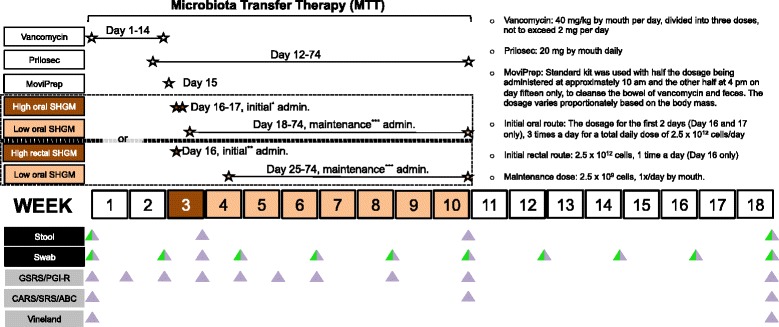
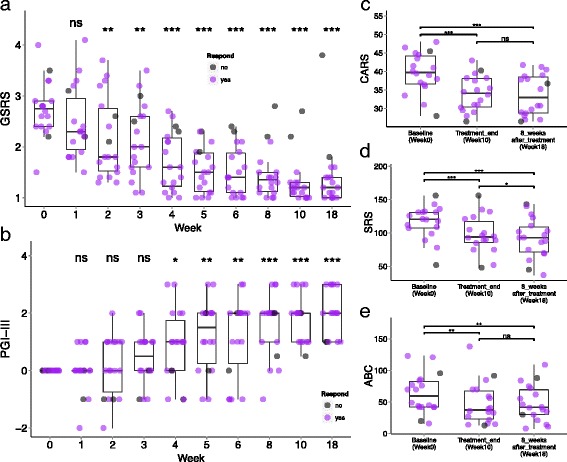
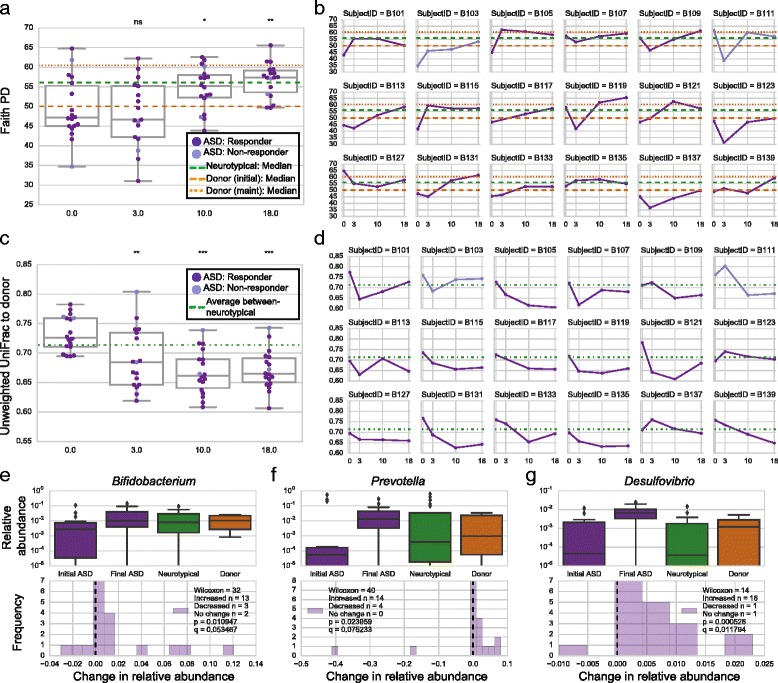
BACKGROUND: bacteria in the human intestines, have been implicated because children with ASD often suffer gastrointestinal (GI) problems that correlate with ASD severity. Several previous studies have reported abnormal gut bacteria in children with ASD. The gut microbiome-ASD connection has been tested in a mouse model of ASD, where the microbiome was mechanistically linked to abnormal metabolites and behavior. Similarly, a study of children with ASD found that oral non-absorbable antibiotic treatment improved GI and ASD symptoms, albeit temporarily. Here, a small open-label clinical trial evaluated the impact of Microbiota Transfer Therapy (MTT) on gut microbiota composition and GI and ASD symptoms of 18 ASD-diagnosed children. RESULTS: MTT involved a 2-week antibiotic treatment, a bowel cleanse, and then an extended fecal microbiota transplant (FMT) using a high initial dose followed by daily and lower maintenance doses for 7-8 weeks. The Gastrointestinal Symptom Rating Scale revealed an approximately 80% reduction of GI symptoms at the end of treatment, including significant improvements in symptoms of constipation, diarrhea, indigestion, and abdominal pain. Improvements persisted 8 weeks after treatment. Similarly, clinical assessments showed that behavioral ASD symptoms improved significantly and remained improved 8 weeks after treatment ended. Bacterial and phagedeep sequencing analyses revealed successful partial engraftment of donor microbiota and beneficial changes in the gut environment. Specifically, overall bacterial diversity and the abundance of Bifidobacterium, Prevotella, and Desulfovibrio among other taxa increased following MTT, and these changes persisted after treatment stopped (followed for 8 weeks). CONCLUSIONS: This exploratory, extended-duration treatment protocol thus appears to be a promising approach to alter the gut microbiome and virome and improve GI and behavioral symptoms of ASD. Improvements in GI symptoms, ASD symptoms, and the microbiome all persisted for at least 8 weeks after treatment ended, suggesting a long-term impact. TRIAL REGISTRATION: This trial was registered on the ClinicalTrials.gov, with the registration number NCT02504554.
Overview
The claims and statistics of this paper haven’t been checked yet.
Free: it reads the open-access text and checks the first 5 claims that cite a source we can check. Create a free account to check every claim.
Integrity signals
Registry
Cites
Statistics
Figures
Verification
Claims the paper makes
The claims and statistics of this paper haven’t been checked yet.
Free: it reads the open-access text and checks the first 5 claims that cite a source we can check. Create a free account to check every claim.
Claims other papers make about this one
Each is checked against this paper’s own text: does it say what the citing paper says it does?
The source backs part of the claim, not all of it — or backs it for a different population, condition or comparison.
In the citing paper
“Following the successful use of FMT in the treatment of refractory or recurrent Clostridium difficile infection, several studies have been conducted to explore FMT as a therapeutic strategy for a wide range of neurological disorders, including multiple sclerosis, epilepsy, ASD, Tourette syndrome, diabetic neuropathy, AD and PD, with promising preclinical and clinical data [30,465,466,467,468].”
From The Interplay between Gut Microbiota and Parkinson’s Disease: Implications on Diagnosis and Treatment (2022) · cites this paper as [466]
Experimental — accuracy not yet measuredThe source backs part of the claim, not all of it — or backs it for a different population, condition or comparison.
In the citing paper
“Among the seven [31, 36, 40–42, 48, 50] papers that reported on beta diversity, four [31, 40, 41, 50] papers showed significant differences in beta diversity between ASD and SIB/HC while the rest did not (Additional file 1: Table S2).”
From Gut microbiota changes in children with autism spectrum disorder: a systematic review (2020) · cites this paper as [40]
Experimental — accuracy not yet measuredThe source backs part of the claim, not all of it — or backs it for a different population, condition or comparison.
In the citing paper
“Further analysis of the alterations of genus and species in ASD, four studies consistently demonstrated a significantly decrease of Bifidobacterium in patients with ASD relative to HCs19,23,27,30.”
From Altered composition and function of intestinal microbiota in autism spectrum disorders: A systematic review (2019) · cites this paper as [19]
Experimental — accuracy not yet measuredThe source backs part of the claim, not all of it — or backs it for a different population, condition or comparison.
In the citing paper
“Among them, three studies18,19,22 indicated the functional modules of gut microbiota in ASD patients were substantially different from that in HCs (Fig. 2).”
From Altered composition and function of intestinal microbiota in autism spectrum disorders: A systematic review (2019) · cites this paper as [19]
Experimental — accuracy not yet measuredThe source backs part of the claim, not all of it — or backs it for a different population, condition or comparison.
In the citing paper
“Although the single study evaluating GI and behavioral outcomes after fecal transplant in ASD was highly successful [94]”
From Serotonin as a link between the gut-brain-microbiome axis in autism spectrum disorders (2018) · cites this paper as [94]
Experimental — accuracy not yet measured
21 more claims about this paper
Create a free account to see every claim other papers make about this one.
Self-check
Percentages, sums and reported differences re-computed from the paper’s own numbers.
The self-check needs the paper’s full text.
Citations
Cites
Trimmomatic: a flexible trimmer for Illumina sequence data
Bolger, A. M., Lohse, M., & Usadel, B. (2014) · Bioinformatics · doi:10.1093/bioinformatics/btu170 · Cited by 65,548 · cited 3×
“The quality control was performed on sequence reads using Trimmomatic [50] to remove adaptors, trim lowquality ends of reads (reads were cut as soon as the base”
MethodInfluentialFast gapped-read alignment with Bowtie 2
Langmead, B., & Salzberg, S. L. (2012) · Nature Methods · doi:10.1038/nmeth.1923 · Cited by 56,400 · cited 2×
“A contig was considered as detected in a sample if covered by reads on more than 75% of its length, and its abundance was computed as the contig average coverage (number of base pairs mapped to the contig divided by contig length) normalized by the total number of base pairs sequenced in the metagenome [56].”
MethodQIIME allows analysis of high-throughput community sequencing data
Caporaso, J. G., Kuczynski, J., Stombaugh, J., Bittinger, K., Bushman, F. D., Costello, E. K., Fierer, N., Peña, A. G., Goodrich, J. K., Gordon, J. I., et al. (2010) · Nature Methods · doi:10.1038/nmeth.f.303 · Cited by 34,887
Self-citationvegan: Community Ecology Package
Oksanen, J., Simpson, G. L., Blanchet, F. G., Kindt, R., Legendre, P., Minchin, P. R., O'Hara, R. B., Solymos, P., Stevens, M. H. H., Szoecs, E., et al. (2001) · CRAN: Contributed Packages · doi:10.32614/cran.package.vegan · Cited by 22,615
Structure, function and diversity of the healthy human microbiome
The Human Microbiome Project Consortium (2012) · Nature · doi:10.1038/nature11234 · Cited by 11,726 · cited 1×
“from FMT efficacy, since inter-individual gut bacterial [77] and viral [47] community variation is high.”
BackgroundA human gut microbial gene catalogue established by metagenomic sequencing
MetaHIT Consortium, Qin, J., Li, R., Raes, J., Arumugam, M., Burgdorf, K. S., Manichanh, C., Nielsen, T., Pons, N., Levenez, F., et al. (2010) · Nature · doi:10.1038/nature08821 · Cited by 11,624 · cited 1×
“Higher gut bacterial diversity and richness are commonly associated with healthy status, presumably due to resilience afforded by higher functional redundancy [62].”
BackgroundCd-hit: a fast program for clustering and comparing large sets of protein or nucleotide sequences
Li, W., & Godzik, A. (2006) · Bioinformatics · doi:10.1093/bioinformatics/btl158 · Cited by 11,410
Lord, C., Rutter, M., & Le Couteur, A. (1994) · Journal of Autism and Developmental Disorders · doi:10.1007/bf02172145 · Cited by 9,065 · cited 1×
“It is not designed to be a measure of autism severity but higher scores are generally consistent with more severe symptoms [39].”
BackgroundUltra-high-throughput microbial community analysis on the Illumina HiSeq and MiSeq platforms
Caporaso, J. G., Lauber, C. L., Walters, W. A., Berg-Lyons, D., Huntley, J., Fierer, N., Owens, S. M., Betley, J., Fraser, L., Bauer, M., et al. (2012) · The ISME Journal · doi:10.1038/ismej.2012.8 · Cited by 8,839
Self-citationConservation evaluation and phylogenetic diversity
Faith, D. P. (1992) · Biological Conservation · doi:10.1016/0006-3207(92)91201-3 · Cited by 5,693
Cited by
Items 901–1,000 of 1,000
Fecal Microbiota Transplantation Research over the Past Decade: Current Status and Trends
Hao, S., Yang, S., Zhang, N., & Cheng, H.-J. (2023) · Canadian Journal of Infectious Diseases and Medical Microbiology · doi:10.1155/2023/6981721 · Cited by 8
Tartaglione, A. M., Pazienza, V., Calamandrei, G., & Ricceri, L. (2023) · Neuroscience & Biobehavioral Reviews · doi:10.1016/j.neubiorev.2023.105105 · Cited by 8
An Overview of Gastrointestinal Dysfunction in Parkinsonian Syndromes
Talman, L. S., & Safarpour, D. (2023) · Seminars in Neurology · doi:10.1055/s-0043-1771461 · Cited by 8
Gong, X.-R., You, X.-R., Guo, M.-R., Ding, X., & Ma, B. (2023) · Medicine · doi:10.1097/md.0000000000036794 · Cited by 8
Trasplante de microbiota fecal: una revisión
Solano, L. M. L., Niño, C. E. V., Rodríguez, D. C. V., & López, L. X. R. (2020) · Revista Colombiana de Gastroenterología · doi:10.22516/25007440.486 · Cited by 8
Modulation of gut microbiota in autism spectrum disorders: a systematic review
Lasheras, I., Gracia‐García, P., & Santabárbara, J. (2021) · The European Journal of Psychiatry · doi:10.1016/j.ejpsy.2020.12.003 · Cited by 8
Eitan, S., Madison, C. A., & Kuempel, J. (2021) · Neuroscience & Biobehavioral Reviews · doi:10.1016/j.neubiorev.2021.04.019 · Cited by 9
Gastrointestinal disorders in children with autism: Could artificial intelligence help?
Al‐Beltagi, M., Saeed, N. K., & Qaraghuli, S. (2022) · Artificial Intelligence in Gastroenterology · doi:10.35712/aig.v3.i1.1 · Cited by 8
Jensen, E. T., Yi, J., Jackson, W., Singh, R., Joseph, R. M., Kuban, K., Msall, M. E., Washburn, L. K., Fry, R. C., South, A. M., et al. (2022) · JAMA Network Open · doi:10.1001/jamanetworkopen.2022.41943 · Cited by 8
Wan, M., Liu, W., Liu, Y., Jiang, X., Jiang, S., & Duan, J. (2025) · Pathology - Research and Practice · doi:10.1016/j.prp.2025.156236 · Cited by 7
Wu, C., Li, X., Wang, H., Xiao-ya, Y., & Liu, Z. (2025) · Frontiers in Immunology · doi:10.3389/fimmu.2025.1680179 · Cited by 7
He, J., Lin, Z., Lin, X., Wang, C., Cao, M., Xia, R., & Hong, W. (2025) · Brain Behavior and Immunity · doi:10.1016/j.bbi.2025.106162 · Cited by 7
Fan, Y., Xiao, B., Zhou, H., Liu, Z., Wang, L., Jin, W., Yin, Y., & Mao, X. (2025) · Pharmacological Research · doi:10.1016/j.phrs.2025.108031 · Cited by 7
Varnas, D., Kunevičius, A., Burokas, A., & Urbonas, V. (2025) · Medicina · doi:10.3390/medicina62010065 · Cited by 7
Gut microbiota: origin or panacea for all ills? Gut microbiota and systemic diseases
Colica, C., Vecchio, I., Aiello, E., Abenavoli, L., Scarlata, G. G. M., & Aiello, V. (2026) · Microbial Pathogenesis · doi:10.1016/j.micpath.2026.108299 · Cited by 9
Feng, C., He, Q., Kwok, L. Y., & Sun, Z. (2026) · Trends in Food Science & Technology · doi:10.1016/j.tifs.2026.105818 · Cited by 8
Oh, L., Rahman, S. A., Dubinsky, K., Azanan, M. S., & Ariffin, H. (2023) · Technology in Cancer Research & Treatment · doi:10.1177/15330338221149799 · Cited by 7
Tweedie‐Cullen, R. Y., Leong, K. S. W., Wilson, B. C., Derraik, J. G. B., Albert, B. B., Monk, R., Vatanen, T., Creagh, C., Depczynski, M., Edwards, T., et al. (2024) · BMJ Open · doi:10.1136/bmjopen-2023-074625 · Cited by 8
Xiao, H., Zhu, H., Zeng, T.-A., Xu, F., Yu, S.-H., & Yang, C.-J. (2025) · Neuroscience · doi:10.1016/j.neuroscience.2025.01.010 · Cited by 7
Berbé, L., Machouart, M., Luc, A., Albuisson, É., Strazielle, C., & Bisson, C. (2025) · Frontiers in Microbiology · doi:10.3389/fmicb.2025.1552656 · Cited by 7
Emerging autism and Fragile X syndrome treatments
Parkhill, M., Salmaso, N., D’Angiulli, A., Lee, V., & Aguilar‐Valles, A. (2025) · Trends in Pharmacological Sciences · doi:10.1016/j.tips.2025.02.004 · Cited by 7
The relationship between neurodevelopmental disorders (NDDs) and NLRP3 inflammasome
Shahi, A., Firoozi, Z., Al‐Awsi, G. R. L., Mirzaei, E., Shahbazi, H., Rezaee, Z., Mohammadisoleimani, E., Mansoori, Y., & Moravej, A. (2025) · Inflammation Research · doi:10.1007/s00011-025-02052-1 · Cited by 7
Xiao, M., Wan, Z., Lin, X., Wang, D., Chen, Z., Gu, Y., Ding, S., Zheng, S., & Li, Q. (2022) · Journal of Clinical Medicine · doi:10.3390/jcm12010141 · Cited by 7
Gastrointestinal Tract Symptomatology in Adults with Pica and Autism
Alexander, D. D., Lunde, S. E., & Berger, D. E. (2020) · Autism and Developmental Disorders · doi:10.17759/autdd.2020180401 · Cited by 7
Fecal Microbiota and Human Intestinal Fluid Transplantation: Methodologies and Outlook
Chen, Y., Lin, Z., Jiaqu, C., Lv, X., Zhang, S., Ma, C., Yan, Y., Bo, Y., Di, Z., Hongliang, T., et al. (2022) · Frontiers in Medicine · doi:10.3389/fmed.2022.830004 · Cited by 7
The interaction of gut microbiota, genetic variation, and diet in autism spectrum disorder
Liu, X. (2022) · mLife · doi:10.1002/mlf2.12024 · Cited by 7
Ciccia, F., & Gandolfo, S. (2022) · Clinical Immunology · doi:10.1016/j.clim.2022.109096 · Cited by 7
Lee, G. A., Zhao, H.-W., Chang, Y.-W., Lee, C., Yang, Y. S. H., Wu, Y.-C., Lin, W., Liu, Y., Deshan, N., & Tseng, S. (2022) · Frontiers in Pharmacology · doi:10.3389/fphar.2022.964255 · Cited by 7
Harnessing the microbiota to treat neurologicaldiseases
Surana, N. K. (2019) · Dialogues in Clinical Neuroscience · doi:10.31887/dcns.2019.21.2/nsurana · Cited by 7
Evaluation of metabolites levels in feces of patients with inflammatory bowel diseases
Zhgun, E. S., Kislun, Y. V., Калачнюк, Т. Н., Veselovsky, V. A., Urban, A., Tikhonova, P., Pavlenko, A. V., Ilchenko, G. N., & Ilina, E. N. (2020) · Biomeditsinskaya Khimiya · doi:10.18097/pbmc20206603233 · Cited by 7
Relationships between Gut Microbiota and Autism Spectrum Disorders: Development and Treatment
Poupard, L., Page, G., Thoreau, V., & Kaouah, Z. (2024) · Clinical Psychopharmacology and Neuroscience · doi:10.9758/cpn.24.1179 · Cited by 6
“After vancomycin treatment to eliminate some of the GM already present [73], FMT was administered for 4 or 8 weeks.”
BackgroundMethodMicrobiome depiction through user-adapted bioinformatic pipelines and parameters
Nayman, E. I., Schwartz, B. A., Polanco, F. C., Firek, A. K., Gumabong, A. C., Hofstee, N. J., Narasimhan, G., Cickovski, T., & Mathee, K. (2023) · Journal of Medical Microbiology · doi:10.1099/jmm.0.001756 · Cited by 6
Suárez‐Jaramillo, A., Cifuentes, S. G., Baldeon, M. E., & Cárdenas, P. (2025) · Metabolites · doi:10.3390/metabo15040213 · Cited by 6
Nohesara, S., Abdolmaleky, H. M., Dickerson, F., Pinto‐Tomás, A. A., Jeste, D. V., & Thiagalingam, S. (2025) · Neuroscience & Biobehavioral Reviews · doi:10.1016/j.neubiorev.2025.106208 · Cited by 6
Jankowski, W., Mizielińska, M., & Nawrotek, P. (2025) · Applied Sciences · doi:10.3390/app15105330 · Cited by 6
Maniscalco, I., Bartochowski, P., Priori, V., Iancau, S. P., Francesco, M. D., Innamorati, M., Jagodzinska, N., Giupponi, G., Masucci, L., Conca, A., et al. (2025) · Microorganisms · doi:10.3390/microorganisms13061290 · Cited by 6
Shin, M. K., Son, Y., Yon, D. K., & Lee, J. (2025) · World Journal of Pediatrics · doi:10.1007/s12519-025-00924-4 · Cited by 6
Zheng, Y.-M., Ye, M.-M., Zhang, H., Luo, D.-P., Liu, T., He, X., Chen, X.-Y., & Wu, L. (2025) · Frontiers in Cellular and Infection Microbiology · doi:10.3389/fcimb.2025.1606417 · Cited by 6
Mavridou, M., Kyriazidi, M. A., Varlamis, S., Skepastianos, P., Mitka, S., Papaliagkas, V. T., & Chatzidimitriou, M. (2025) · Acta Microbiologica et Immunologica Hungarica · doi:10.1556/030.2025.02663 · Cited by 6
Gut: The gate and key to brain
Zhang, X., & Yang, Y. (2025) · Chinese Medical Journal · doi:10.1097/cm9.0000000000003767 · Cited by 6
Personalized Nutrition in Pediatric Chronic Diseases
Escobedo-Monge, M. F., Lustig, R. H., Suchkov, S. V., Blokh, S. P., Andronova, N., Goryacheva, O., Moyseyak, M. B., Vlasov, T. D., Solís, H. A., Polyakova, V., et al. (2025) · Metabolites · doi:10.3390/metabo15100653 · Cited by 6
Ziaka, M. (2025) · Pathogens · doi:10.3390/pathogens14121206 · Cited by 6
Liu, G., Chen, L., Guan, M., & Xiao, N. (2026) · Frontiers in Neuroscience · doi:10.3389/fnins.2026.1607951 · Cited by 6
Marsh, E. B., Lavretsky, H., Kasparian, N. A., Pike, N. A., Doyle, K. P., Aggarwal, N. T., Fullerton, H. J., Ivy, A. S., & Dlamini, N. (2026) · Stroke · doi:10.1161/str.0000000000000518 · Cited by 7
Alexander, J. L., Mullish, B. H., Thomas, L., Weersma, R. K., Sokol, H., Roberts, L. A., Edwards, L. A., Emmanuel, A. V., Gerasimidis, K., Hall, L. J., et al. (2026) · Gut · doi:10.1136/gutjnl-2026-338252 · Cited by 6
Treating autism spectrum disorder by intervening with gut microbiota
Tu, T., & Zhao, C. (2021) · Journal of Medical Microbiology · doi:10.1099/jmm.0.001469 · Cited by 7
Modify gut microbiome in autism: a promising strategy?
Demarquoy, J., Othman, H. E., & Demarquoy, C. (2023) · Exploration of neuroscience · doi:10.37349/en.2023.00018 · Cited by 6
Yang, X., Li, H., Yang, C., & Ge, J. (2024) · International Journal of Developmental Neuroscience · doi:10.1002/jdn.10354 · Cited by 6
Awareness and acceptability of gut microbiome transfer
Tweedie‐Cullen, R. Y., Wilson, B. C., Derraik, J. G. B., Albert, B. B., Opai, K., Edwards, T., O'Sullivan, J. M., & Cutfield, W. S. (2024) · Frontiers in Gastroenterology · doi:10.3389/fgstr.2024.1411898 · Cited by 6
He, Y., He, Y., & Cheng, B. (2025) · Pharmacogenomics and Personalized Medicine · doi:10.2147/pgpm.s494126 · Cited by 6
Koh, H., Kim, J., & Jang, H. (2025) · BioData Mining · doi:10.1186/s13040-025-00422-3 · Cited by 6
Metagenomic source tracking after microbiota transplant therapy
Hoops, S., Moutsoglou, D., Vaughn, B. P., Khoruts, A., & Knights, D. (2025) · Gut Microbes · doi:10.1080/19490976.2025.2487840 · Cited by 6
Self-citationFaysal, M. F., Zehravi, M., Amin, M. A., Rab, S. O., Jahnavi, P., Arjun, U. V. N. V., Gupta, J. K., Billah, A. A. M., Vodeti, R., Prasad, P. D., et al. (2025) · Pathology - Research and Practice · doi:10.1016/j.prp.2025.156090 · Cited by 7
Wpływ mikrobiomu jelitowego na mózg i psychikę
Żakowicz, J., Bramorska, A., Zarzycka, W., Kovbasiuk, A., Kuć, K., & Brzezicka, A. (2020) · Kosmos · doi:10.36921/kos.2020_2634 · Cited by 6
Das Darmmikrobiom und seine klinischen Implikationen im Kontext der Anorexia nervosa
Trinh, S., Keller, L., & Seitz, J. (2021) · Zeitschrift für Kinder- und Jugendpsychiatrie und Psychotherapie · doi:10.1024/1422-4917/a000830 · Cited by 6
Recent progress in gut microbiota
Cheng, D., & Xing, H. (2023) · Gastroenterology & Endoscopy · doi:10.1016/j.gande.2022.11.001 · Cited by 6
Sideraki, A., & Drigas, A. S. (2023) · World Journal of Biology Pharmacy and Health Sciences · doi:10.30574/wjbphs.2023.14.3.0253 · Cited by 7
Gündoğdu, B. S., Gaitanis, J. N., Adams, J. B., Rossignol, D. A., & Frye, R. E. (2023) · Journal of Personalized Medicine · doi:10.3390/jpm13071167 · Cited by 6
Self-citationGut Microbes: The Gut Brain Connection
Lynch, C. M. K., O’Riordan, K. J., Clarke, G. A., & Cryan, J. F. (2023) · Springer eBooks · doi:10.1007/978-3-031-46712-7_4 · Cited by 6
Aldegheri, L., Kharrat, F., Conti, A., Monica, F., Busa, F., Campisciano, G., Zanotta, N., Cason, C., & Comar, M. (2024) · Microorganisms · doi:10.3390/microorganisms12081625 · Cited by 7
[Anatomy of the external saphenous vein].
Payen, B. (1985) · PubMed · Cited by 6
Pacini, S., & Ruggiero, M. (2019) · bioRxiv (Cold Spring Harbor Laboratory) · doi:10.1101/714154 · Cited by 6
Fecal microbiota transplants in pediatric autism: opportunities and challenges
Wang, J., Yang, R., Zhong, H., & Liu, Y.-J. (2024) · World Journal of Pediatrics · doi:10.1007/s12519-024-00855-6 · Cited by 6
Trinh, S., Keller, L., Herpertz‐Dahlmann, B., & Seitz, J. (2023) · Zeitschrift für Kinder- und Jugendpsychiatrie und Psychotherapie · doi:10.1024/1422-4917/a000928 · Cited by 5
Hu, X., Ma, C., & Kong, X. (2024) · Cancer Screening and Prevention · doi:10.14218/csp.2024.00017 · Cited by 5
The role of secondary genomes in neurodevelopment and co-evolutionary dynamics
Singh, S., Saini, V., & Jha, H. C. (2025) · International review of neurobiology · doi:10.1016/bs.irn.2025.03.008 · Cited by 5
Yu, Y., Wang, Y., Zhang, J., Li, S., Wang, Y., You, X., Chen, X., Du, M., Xie, L., & Liu, S. (2025) · Frontiers in Microbiology · doi:10.3389/fmicb.2025.1640149 · Cited by 6
Microbiome, Exposome, and Cognitive Development: The Known Unknowns
Aburto, M. R., Nagpal, J. K., Majumdar, A., O’Riordan, K. J., Clarke, G. A., & Cryan, J. F. (2025) · Annual Review of Developmental Psychology · doi:10.1146/annurev-devpsych-111323-120638 · Cited by 5
Lin, Z., Tang, H., Che, L., Chen, M., Ye, Z., Yang, X., Sun, L., Mayo, K. H., Tai, G., Cui, L., et al. (2025) · Carbohydrate Polymers · doi:10.1016/j.carbpol.2025.124566 · Cited by 5
Zhu, Y., Chen, X., & Song, G. (2025) · European Journal of Nutrition · doi:10.1007/s00394-025-03826-3 · Cited by 5
Wang, M., Liang, Z., Zhuang, H., Cao, X., Ma, G., Sun, Y., Yan, X., Ran, X., Guan, H., & Shen, L. (2025) · Molecular Neurobiology · doi:10.1007/s12035-025-05567-0 · Cited by 5
Applying biologically anchored subtypes to advance precision medicine in autism spectrum disorder
Choi, T.-Y., Gunawan, A., Seo, D., Park, J., Ahn, E. H., Suh, S. W., Fuccillo, M. V., & Choi, K. (2025) · Neurobiology of Disease · doi:10.1016/j.nbd.2025.107219 · Cited by 5
Zhang, Y., Chen, L., Jin, J., Xin, Y., Wang, J., & Zhang, A. (2025) · Experimental Neurology · doi:10.1016/j.expneurol.2025.115631 · Cited by 5
Yang, Z., Chen, X., Li, Y., Feng, Y., Lin, L., & Hou, X. (2026) · Brain Behavior & Immunity - Health · doi:10.1016/j.bbih.2026.101189 · Cited by 5
AlKhaldi, S. S., Mohamed, M., Alyahya, R. A., Al-Azzawi, O. M., Karmy, H. M., Shehata, A. I., Alnefaie, R., Attia, O. A., Abdelmonaem, N., Mansour, R. M., et al. (2026) · World Academy of Sciences Journal · doi:10.3892/wasj.2026.464 · Cited by 5
Advances and challenges in microbiome transplantation
Sen, P., Kaulmann, D., Youngster, I., Abdeen, S. K., & Elinav, E. (2026) · Cell Host & Microbe · doi:10.1016/j.chom.2026.06.006 · Cited by 5
Suleymanova, Z. Y., Ustinova, N. V., & Turti, T. V. (2022) · Педиатрическая фармакология · doi:10.15690/pf.v19i2.2397 · Cited by 5
Dietert, R. R., & Dietert, J. M. (2023) · American Journal of Biomedical Science & Research · doi:10.34297/ajbsr.2023.20.002708 · Cited by 5
Nejadghaderi, S. A., & Chu, A. L. (2024) · Medical Hypotheses · doi:10.1016/j.mehy.2024.111396 · Cited by 5
Gut Microbiota Modulation of Dementia Related Complications
Su, X., Chen, Y., & Yuan, X. (2025) · Aging and Disease · doi:10.14336/ad.2025.0108 · Cited by 5
Zhang, Y., Xu, Y., Dong, C., Zhang, M., Guan, Q., Chang, H., Hang, B., Mao, J., Snijders, A. M., & Xia, Y. (2025) · Environmental Science & Technology · doi:10.1021/acs.est.4c11640 · Cited by 5
Damiani, F., Giuliano, M. G., Cornuti, S., Putignano, E., Tognozzi, A., Suckow, V., Kalscheuer, V. M., Pizzorusso, T., & Tognini, P. (2025) · Cell Reports · doi:10.1016/j.celrep.2025.115546 · Cited by 5
Human-microbes symbiosis in health and disease, on earth and beyond planetary boundaries
Dore, J. M., & Ugalde, S. O. (2023) · Frontiers in Astronomy and Space Sciences · doi:10.3389/fspas.2023.1180522 · Cited by 5
Zhu, B., Yang, J., Fan, R., Song, H., Zhong, L., Zeng, T., Long, R., Wan, X., Li, Q., Liu, L., et al. (2025) · Cell Reports · doi:10.1016/j.celrep.2025.115857 · Cited by 5
Cope, E. K. (2018) · mSystems · doi:10.1128/msystems.00158-17 · Cited by 5
Cordell, B., Kanodia, A. K., & Miller, G. K. (2021) · F1000Research · doi:10.12688/f1000research.52743.1 · Cited by 5
Small molecule modulation of microbiota: a systems pharmacology perspective
Liu, Q., Lee, B., & Xie, L. (2022) · BMC Bioinformatics · doi:10.1186/s12859-022-04941-2 · Cited by 5
Stefanaki, C. (2019) · Elsevier eBooks · doi:10.1016/b978-0-12-815249-2.00003-8 · Cited by 5
Towards a rational design of faecal transplant analogues
Larsen, O. F. A., Koning, A. H. J., van der Spek, P. J., & Claassen, E. (2019) · Scientific Reports · doi:10.1038/s41598-019-42043-x · Cited by 5
Neonate gut colonization: The rise of a social brain
Karaivazoglou, K., Konstantakis, C., Assimakopoulos, S. F., & Triantos, C. K. (2019) · Neurogastroenterology & Motility · doi:10.1111/nmo.13767 · Cited by 5
Targeting gut microbiota as a possible therapeutic intervention in autism
El-Ansary, A. K., & Bhat, R. S. (2020) · Elsevier eBooks · doi:10.1016/b978-0-12-818466-0.00017-4 · Cited by 5
Fecal microbiome change in patients with ulcerative colitis after fecal microbiota transplantation
Tikunov, A. Y., Morozov, V. V., Shvalov, А. N., Bardasheva, A. V., Shrainer, E., Maksimova, O. A., Волошина, И. О., Morozova, V. V., Vlassov, V. V., & Викторовна, Т. Н. (2020) · Vavilov Journal of Genetics and Breeding · doi:10.18699/vj20.610 · Cited by 5
Sealschott, S. D., Pickler, R. H., Fortney, C. A., & Bailey, M. T. (2020) · Nursing Research · doi:10.1097/nnr.0000000000000452 · Cited by 5
Neurological disorders associated with impaired gut microbiota
Kanhere, H. S., Rahangdale, Y. U., Bodele, A. S., Wadhwani, D. I., Ghoshewar, A. R., & Karande, S. P. (2021) · GSC Biological and Pharmaceutical Sciences · doi:10.30574/gscbps.2021.15.2.0121 · Cited by 5
Szablewski, L. (2021) · Elsevier eBooks · doi:10.1016/b978-0-12-819265-8.00065-6 · Cited by 5
A pilot study to investigate the alteration of gut microbial profile in Dip2a knockout mice
Zhang, Y., Qu, Y., Yang, J., Liu, J., Li, S., & He, X. (2021) · International Microbiology · doi:10.1007/s10123-021-00211-y · Cited by 5
Immunomodulatory effects of parasites on autoimmunity
Abdoli, A., Badirzadeh, A., Mojtabavi, N., Meamar, A. R., & Falak, R. (2022) · Elsevier eBooks · doi:10.1016/b978-0-12-824390-9.00005-0 · Cited by 5
Wu, C., Zhang, J., Jia, Y., Wang, X., Li, Q.-H., Su, H., & Sun, X. (2021) · Research Square · doi:10.21203/rs.3.rs-643967/v1 · Cited by 5
Nirmalkar, K., Qureshi, F. A., Kang, D., Muchapothula, M., Takyi, E., Dirks, B., Flynn, C. K., Hahn, J., Adams, J. B., & Krajmalnik‐Brown, R. (2024) · bioRxiv (Cold Spring Harbor Laboratory) · doi:10.1101/2024.12.16.628826 · Cited by 5
Self-citationThe challenges and opportunities in the expanding horizons of microbiota transplant therapies
Khoruts, A. (2025) · Gut Microbes · doi:10.1080/19490976.2025.2559032 · Cited by 5
Self-citation
Metadata
- Authors
- Kang, D.-W., Adams, J. B., Gregory, A. C., Borody, T., Chittick, L., Fasano, A., Khoruts, A., Geis, E., Maldonado, J., McDonough-Means, S., Pollard, E. L., Roux, S., Sadowsky, M. J., Lipson, K. S., Sullivan, M. B., Caporaso, J. G., & Krajmalnik-Brown, R.
- Affiliations
- Arizona State University (US)
- University of Arizona (US)
- Centre For Digestive Diseases (AU)
- Massachusetts General Hospital (US)
- University of Minnesota (US)
- Northern Arizona University (US)
- Corresponding author
- Sullivan, Matthew B.
- Caporaso, J. Gregory
- ORCID
- Venue
- Microbiome
- Published
- 2017-01-23
- Volume
- 5
- Issue
- 1
- Pages
- 10-10
- ISSN
- 2049-2618 (ISSN-L)
- PMC
- PMC5264285
- OpenAlex
- W2581406049
- Cited by
- 1,391
- References
- 81
- Citations by year
- 2026: 114 · 2025: 173 · 2024: 153 · 2023: 154 · 2022: 177 · 2021: 156 · 2020: 165 · 2019: 147 · 2018: 103 · 2017: 47
- FWCI
- 51.58
- Type
- journal article
- Language
- en
- Open access
- gold
- doi.org
- Licence
- cc-by
- Locations
- Microbiome (publishedVersion, cc-by)
- Europe PMC (PubMed Central) (publishedVersion, cc-by)
- PubMed Central (publishedVersion, cc-by)
- PubMed (publishedVersion)
- Arizona State University Library Digital Repository (Arizona State University) (submittedVersion, cc-by)
- eScholarship (California Digital Library) (submittedVersion)
- Funders
- Arizona Board of Regents
- Gordon and Betty Moore Foundation grant (#3790)
- Topics
- Life Sciences › Biochemistry, Genetics and Molecular Biology › Molecular Biology › Gut microbiota and health
- Health Sciences › Medicine › Gastroenterology › Gastrointestinal motility and disorders
- Life Sciences › Neuroscience › Cognitive Neuroscience › Autism Spectrum Disorder Research
- Keywords
- autism spectrum disorder, gut microbiota, fecal microbiota transplantation, gastrointestinal symptoms, constipation, diarrhea, Bifidobacterium, Prevotella, Desulfovibrio, antibiotic therapy, children
- MeSH terms
- Autism Spectrum Disorder, Gastrointestinal Microbiome, Fecal Microbiota Transplantation, Adolescent, Anti-Bacterial Agents, Bacteriophages, Bifidobacterium, Child, Constipation, Desulfovibrio, Diarrhea, DNA, Viral, Female, Gastrointestinal Diseases, Humans, Infant, Male, Abdominal Pain, Prevotella, Probiotics, Gastrointestinal Tract, High-Throughput Nucleotide Sequencing
About these checks
Registry, retraction, Cites and statistics results are computed, not judged, with one exception: a printed reference that no index lists is read once by a model before it counts as a citation error. Claims are extracted by a model and kept only when their quote appears verbatim in the text; each cited source is then checked, with a model’s help, for whether it says what the claim relies on. Those verdicts can be wrong — read the claim’s quote and the cited source before relying on one.
Statistics and arithmetic are recomputed, not judged.
Confidence bands are shown only for fields calibrated on our annotated test set. None is calibrated yet, so no band is shown.
What counts as a claim ›How we measure confidence ›How we check this ›
Are you an author, or do you see a problem with this page? Request a review
Data sources
Bibliographic data: Semantic Scholar, OpenAlex, Crossref.
Contains information from the Semantic Scholar Academic Graph Datasets, made available under the ODC Attribution License (ODC-BY 1.0).
Semantic Scholar’s data is described in: Kinney, R., et al. (2023). The Semantic Scholar Open Data Platform. arXiv:2301.10140.
