

Microbiota Transfer Therapy alters gut ecosystem and improves gastrointestinal and autism symptoms: an open-label study
Open accessThe DOI matches its Crossref record; 80 of the 81 references it cites were found in a registry or an index.
Abstract
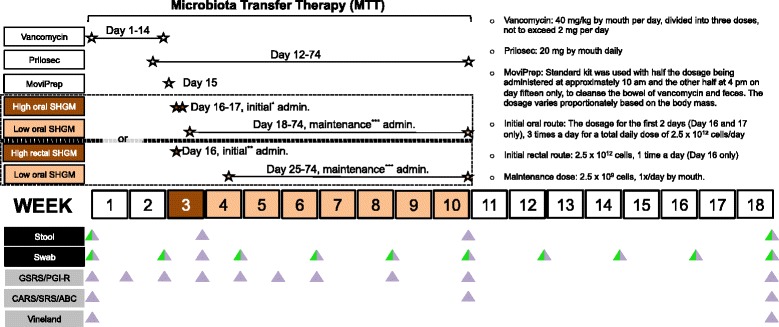
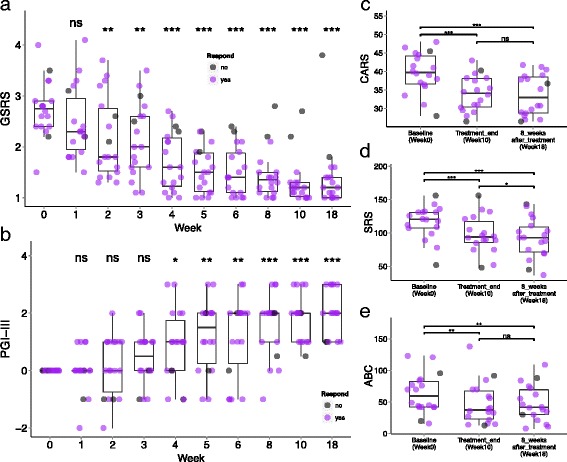
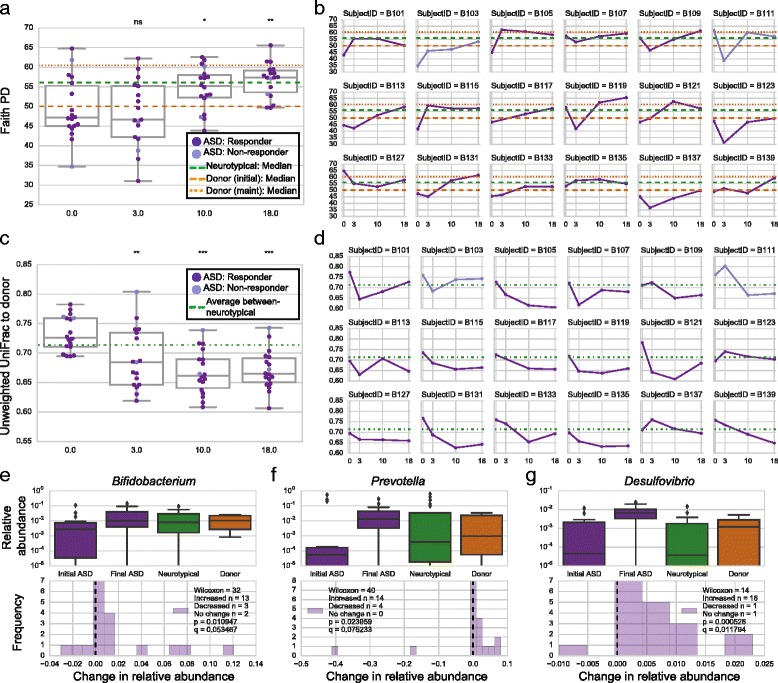
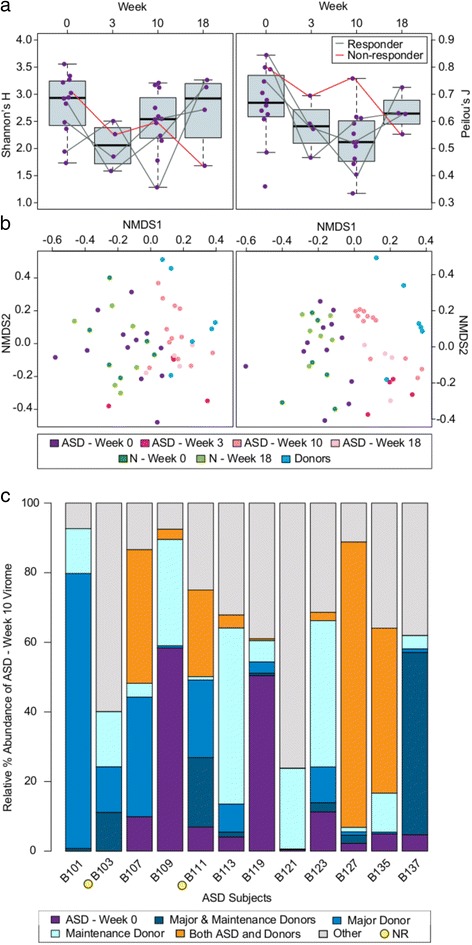
BACKGROUND: bacteria in the human intestines, have been implicated because children with ASD often suffer gastrointestinal (GI) problems that correlate with ASD severity. Several previous studies have reported abnormal gut bacteria in children with ASD. The gut microbiome-ASD connection has been tested in a mouse model of ASD, where the microbiome was mechanistically linked to abnormal metabolites and behavior. Similarly, a study of children with ASD found that oral non-absorbable antibiotic treatment improved GI and ASD symptoms, albeit temporarily. Here, a small open-label clinical trial evaluated the impact of Microbiota Transfer Therapy (MTT) on gut microbiota composition and GI and ASD symptoms of 18 ASD-diagnosed children. RESULTS: MTT involved a 2-week antibiotic treatment, a bowel cleanse, and then an extended fecal microbiota transplant (FMT) using a high initial dose followed by daily and lower maintenance doses for 7-8 weeks. The Gastrointestinal Symptom Rating Scale revealed an approximately 80% reduction of GI symptoms at the end of treatment, including significant improvements in symptoms of constipation, diarrhea, indigestion, and abdominal pain. Improvements persisted 8 weeks after treatment. Similarly, clinical assessments showed that behavioral ASD symptoms improved significantly and remained improved 8 weeks after treatment ended. Bacterial and phagedeep sequencing analyses revealed successful partial engraftment of donor microbiota and beneficial changes in the gut environment. Specifically, overall bacterial diversity and the abundance of Bifidobacterium, Prevotella, and Desulfovibrio among other taxa increased following MTT, and these changes persisted after treatment stopped (followed for 8 weeks). CONCLUSIONS: This exploratory, extended-duration treatment protocol thus appears to be a promising approach to alter the gut microbiome and virome and improve GI and behavioral symptoms of ASD. Improvements in GI symptoms, ASD symptoms, and the microbiome all persisted for at least 8 weeks after treatment ended, suggesting a long-term impact. TRIAL REGISTRATION: This trial was registered on the ClinicalTrials.gov, with the registration number NCT02504554.
Overview
The claims and statistics of this paper haven’t been checked yet.
Free: it reads the open-access text and checks the first 5 claims that cite a source we can check. Create a free account to check every claim.
Integrity signals
Registry
Cites
Statistics
Figures
Verification
Claims the paper makes
The claims and statistics of this paper haven’t been checked yet.
Free: it reads the open-access text and checks the first 5 claims that cite a source we can check. Create a free account to check every claim.
Claims other papers make about this one
Each is checked against this paper’s own text: does it say what the citing paper says it does?
The source backs part of the claim, not all of it — or backs it for a different population, condition or comparison.
In the citing paper
“Following the successful use of FMT in the treatment of refractory or recurrent Clostridium difficile infection, several studies have been conducted to explore FMT as a therapeutic strategy for a wide range of neurological disorders, including multiple sclerosis, epilepsy, ASD, Tourette syndrome, diabetic neuropathy, AD and PD, with promising preclinical and clinical data [30,465,466,467,468].”
From The Interplay between Gut Microbiota and Parkinson’s Disease: Implications on Diagnosis and Treatment (2022) · cites this paper as [466]
Experimental — accuracy not yet measuredThe source backs part of the claim, not all of it — or backs it for a different population, condition or comparison.
In the citing paper
“Among the seven [31, 36, 40–42, 48, 50] papers that reported on beta diversity, four [31, 40, 41, 50] papers showed significant differences in beta diversity between ASD and SIB/HC while the rest did not (Additional file 1: Table S2).”
From Gut microbiota changes in children with autism spectrum disorder: a systematic review (2020) · cites this paper as [40]
Experimental — accuracy not yet measuredThe source backs part of the claim, not all of it — or backs it for a different population, condition or comparison.
In the citing paper
“Further analysis of the alterations of genus and species in ASD, four studies consistently demonstrated a significantly decrease of Bifidobacterium in patients with ASD relative to HCs19,23,27,30.”
From Altered composition and function of intestinal microbiota in autism spectrum disorders: A systematic review (2019) · cites this paper as [19]
Experimental — accuracy not yet measuredThe source backs part of the claim, not all of it — or backs it for a different population, condition or comparison.
In the citing paper
“Among them, three studies18,19,22 indicated the functional modules of gut microbiota in ASD patients were substantially different from that in HCs (Fig. 2).”
From Altered composition and function of intestinal microbiota in autism spectrum disorders: A systematic review (2019) · cites this paper as [19]
Experimental — accuracy not yet measuredThe source backs part of the claim, not all of it — or backs it for a different population, condition or comparison.
In the citing paper
“Although the single study evaluating GI and behavioral outcomes after fecal transplant in ASD was highly successful [94]”
From Serotonin as a link between the gut-brain-microbiome axis in autism spectrum disorders (2018) · cites this paper as [94]
Experimental — accuracy not yet measured
21 more claims about this paper
Create a free account to see every claim other papers make about this one.
Self-check
Percentages, sums and reported differences re-computed from the paper’s own numbers.
The self-check needs the paper’s full text.
Citations
Cites
Trimmomatic: a flexible trimmer for Illumina sequence data
Bolger, A. M., Lohse, M., & Usadel, B. (2014) · Bioinformatics · doi:10.1093/bioinformatics/btu170 · Cited by 65,548 · cited 3×
“The quality control was performed on sequence reads using Trimmomatic [50] to remove adaptors, trim lowquality ends of reads (reads were cut as soon as the base”
MethodInfluentialFast gapped-read alignment with Bowtie 2
Langmead, B., & Salzberg, S. L. (2012) · Nature Methods · doi:10.1038/nmeth.1923 · Cited by 56,400 · cited 2×
“A contig was considered as detected in a sample if covered by reads on more than 75% of its length, and its abundance was computed as the contig average coverage (number of base pairs mapped to the contig divided by contig length) normalized by the total number of base pairs sequenced in the metagenome [56].”
MethodQIIME allows analysis of high-throughput community sequencing data
Caporaso, J. G., Kuczynski, J., Stombaugh, J., Bittinger, K., Bushman, F. D., Costello, E. K., Fierer, N., Peña, A. G., Goodrich, J. K., Gordon, J. I., et al. (2010) · Nature Methods · doi:10.1038/nmeth.f.303 · Cited by 34,887
Self-citationvegan: Community Ecology Package
Oksanen, J., Simpson, G. L., Blanchet, F. G., Kindt, R., Legendre, P., Minchin, P. R., O'Hara, R. B., Solymos, P., Stevens, M. H. H., Szoecs, E., et al. (2001) · CRAN: Contributed Packages · doi:10.32614/cran.package.vegan · Cited by 22,615
Structure, function and diversity of the healthy human microbiome
The Human Microbiome Project Consortium (2012) · Nature · doi:10.1038/nature11234 · Cited by 11,726 · cited 1×
“from FMT efficacy, since inter-individual gut bacterial [77] and viral [47] community variation is high.”
BackgroundA human gut microbial gene catalogue established by metagenomic sequencing
MetaHIT Consortium, Qin, J., Li, R., Raes, J., Arumugam, M., Burgdorf, K. S., Manichanh, C., Nielsen, T., Pons, N., Levenez, F., et al. (2010) · Nature · doi:10.1038/nature08821 · Cited by 11,624 · cited 1×
“Higher gut bacterial diversity and richness are commonly associated with healthy status, presumably due to resilience afforded by higher functional redundancy [62].”
BackgroundCd-hit: a fast program for clustering and comparing large sets of protein or nucleotide sequences
Li, W., & Godzik, A. (2006) · Bioinformatics · doi:10.1093/bioinformatics/btl158 · Cited by 11,410
Lord, C., Rutter, M., & Le Couteur, A. (1994) · Journal of Autism and Developmental Disorders · doi:10.1007/bf02172145 · Cited by 9,065 · cited 1×
“It is not designed to be a measure of autism severity but higher scores are generally consistent with more severe symptoms [39].”
BackgroundUltra-high-throughput microbial community analysis on the Illumina HiSeq and MiSeq platforms
Caporaso, J. G., Lauber, C. L., Walters, W. A., Berg-Lyons, D., Huntley, J., Fierer, N., Owens, S. M., Betley, J., Fraser, L., Bauer, M., et al. (2012) · The ISME Journal · doi:10.1038/ismej.2012.8 · Cited by 8,839
Self-citationConservation evaluation and phylogenetic diversity
Faith, D. P. (1992) · Biological Conservation · doi:10.1016/0006-3207(92)91201-3 · Cited by 5,693
Cited by
Items 101–200 of 1,000
Gialloreti, L. E., Mazzone, L., Benvenuto, A., Fasano, A., García-Alcón, A., Kraneveld, A. D., Moavero, R., Raz, R., Riccio, M. P., Siracusano, M., et al. (2019) · Journal of Clinical Medicine · doi:10.3390/jcm8020217 · Cited by 194
Self-citationFrye, R. E. (2018) · CNS Drugs · doi:10.1007/s40263-018-0556-y · Cited by 151
Harnessing Gut Microbes for Mental Health: Getting From Here to There
Bruce-Keller, A. J., Salbaum, J. M., & Berthoud, H.-R. (2018) · Biological Psychiatry · doi:10.1016/j.biopsych.2017.08.014 · Cited by 189
Li, N., Chen, H., Cheng, Y., Xu, F., Ruan, G., Ying, S., Tang, W., Chen, L., Chen, M., Lv, L., et al. (2021) · Frontiers in Cellular and Infection Microbiology · doi:10.3389/fcimb.2021.759435 · Cited by 188
Green, J. E., Davis, J. A., Berk, M., Hair, C., Loughman, A., Castle, D., Athan, E., Nierenberg, A. A., Cryan, J. F., Jacka, F., et al. (2020) · Gut Microbes · doi:10.1080/19490976.2020.1854640 · Cited by 155
Ashique, S., Mohanto, S., Ahmed, M. G., Mishra, N., Garg, A., Chellappan, D. K., Omara, T., Iqbal, S., & Kahwa, I. (2024) · Heliyon · doi:10.1016/j.heliyon.2024.e34092 · Cited by 185
“Research indicates that children with ASD often have distinct gut microbiota profiles compared to neurotypical children, which may influence neurodevelopment and behavior through the production of neuroactive metabolites [18].”
BackgroundRetractedProcedures for Fecal Microbiota Transplantation in Murine Microbiome Studies
Bokoliya, S. C., Dorsett, Y., Panier, H., & Zhou, Y. (2021) · Frontiers in Cellular and Infection Microbiology · doi:10.3389/fcimb.2021.711055 · Cited by 185
Fecal Microbiota Transplantation as New Therapeutic Avenue for Human Diseases
Biazzo, M., & Deidda, G. (2022) · Journal of Clinical Medicine · doi:10.3390/jcm11144119 · Cited by 185
Association between the gut microbiota and mineral metabolism
Skrypnik, K., & Suliburska, J. (2018) · Journal of the Science of Food and Agriculture · doi:10.1002/jsfa.8724 · Cited by 182
Development of Gut Microbiota in the First 1000 Days after Birth and Potential Interventions
Pantazi, A. C., Bălașa, A. L., Mihai, C. M., Chisnoiu, T., Lupu, V. V., Kassim, M. A. K., Mihai, L., Frecuș, C. E., Chirila, S. I., Lupu, A., et al. (2023) · Nutrients · doi:10.3390/nu15163647 · Cited by 184
Wang, M., Wan, J., Rong, H., He, F., Wang, H., Zhou, J., Cai, C., Wang, Y., Xu, R., Yin, Z., et al. (2019) · mSystems · doi:10.1128/msystems.00321-18 · Cited by 181
Review article: the future of microbiome‐based therapeutics
Gulliver, E. L., Young, R. B., Chonwerawong, M., D'Adamo, G. L., Thomason, T., Widdop, J. T., Rutten, E. L., Rossetto Marcelino, V., Bryant, R. V., Costello, S. P., et al. (2022) · Alimentary Pharmacology & Therapeutics · doi:10.1111/apt.17049 · Cited by 180
Evaluation of fecal microbiota transplantation in Parkinson's disease patients with constipation
Kuai, X.-Y., Yao, X.-H., Xu, L.-J., Zhou, Y.-Q., Zhang, L.-P., Liu, Y., Pei, S.-F., & Zhou, C.-L. (2021) · Microbial Cell Factories · doi:10.1186/s12934-021-01589-0 · Cited by 179
Intestinal Microbiota Influences Non-intestinal Related Autoimmune Diseases
Opazo, M. C., Ortega-Rocha, E. M., Coronado-Arrázola, I., Bonifaz, L. C., Boudin, H., Neunlist, M., Bueno, S. M., Kalergis, A. M., & Riedel, C. A. (2018) · Frontiers in Microbiology · doi:10.3389/fmicb.2018.00432 · Cited by 179
“…10 March 2018 | Volume 9 | Article 432 a clinical trial based on microbiota transfer of healthy donors in 7–16 years old children with ASD showed improvements in GI symptoms and in social and communication skills that are associated with bacterial community changes (Kang et al., 2017).”
BackgroundMhanna, A., Martini, N., Hmaydoosh, G., Hamwi, G., Jarjanazi, M., Zaifah, G., Kazzazo, R., Mohamad, A. H., & Alshehabi, Z. (2024) · Medicine · doi:10.1097/md.0000000000037114 · Cited by 180
Tye, C., Runicles, A. K., Whitehouse, A. J. O., & Alvares, G. A. (2019) · Frontiers in Psychiatry · doi:10.3389/fpsyt.2018.00751 · Cited by 177
“In a recent open-label trial, microbiota transfer therapy incurred an 80% reduction in GI symptoms, including a significant improvement in symptoms such as constipation and abdominal pain that persisted after 8 weeks, in addition to ASD symptoms (145).”
Microbiota-gut brain axis involvement in neuropsychiatric disorders
Iannone, L. F., Preda, A., Blottière, H. M., Clarke, G., Albani, D., Belcastro, V., Carotenuto, M., Cattaneo, A., Citraro, R., Ferraris, C., et al. (2019) · Expert Review of Neurotherapeutics · doi:10.1080/14737175.2019.1638763 · Cited by 177
“a decrease in behavioral and gastrointestinal symptoms for 8 weeks after a treatment with vancomycin for twoweeks followed by FMT [175].”
BackgroundInfluentialCowan, C. S. M., Dinan, T. G., & Cryan, J. F. (2020) · Journal of Child Psychology and Psychiatry · doi:10.1111/jcpp.13156 · Cited by 176
Huttner, B. D., de Lastours, V., Wassenberg, M., Maharshak, N., Mauris, A., Galperine, T., Zanichelli, V., Kapel, N., Bellanger, A., Olearo, F., et al. (2019) · Clinical Microbiology and Infection · doi:10.1016/j.cmi.2018.12.009 · Cited by 174
Leonardi, I., Paramsothy, S., Doron, I., Semon, A., Kaakoush, N. O., Clemente, J. C., Faith, J. J., Borody, T. J., Mitchell, H. M., Colombel, J.-F., et al. (2020) · Cell Host & Microbe · doi:10.1016/j.chom.2020.03.006 · Cited by 174
“The positive outcomes of several pilot- and larger-scale clinical studies highlight the increasing promise of FMT for the treatment of diseases with complex etiology such as IBD, IBS, immune checkpoint inhibitor-associated colitis, metabolic, liver and neurological diseases(Allegretti et al., 2019; Imdad et al., 2018;…”
BackgroundSelf-citationCommunity ecology as a framework for human microbiome research
Gilbert, J. A., & Lynch, S. V. (2019) · Nature Medicine · doi:10.1038/s41591-019-0464-9 · Cited by 157
The gut vascular barrier: a new player in the gut–liver–brain axis
Brescia, P., & Rescigno, M. (2021) · Trends in Molecular Medicine · doi:10.1016/j.molmed.2021.06.007 · Cited by 175
Murine colitis reveals a disease-associated bacteriophage community
Duerkop, B. A., Kleiner, M., Paez-Espino, D., Zhu, W., Bushnell, B., Hassell, B., Winter, S. E., Kyrpides, N. C., & Hooper, L. V. (2018) · Nature Microbiology · doi:10.1038/s41564-018-0210-y · Cited by 172
Dash, S., Syed, Y. A., & Khan, M. R. (2022) · Frontiers in Cell and Developmental Biology · doi:10.3389/fcell.2022.880544 · Cited by 171
“MTT in a clinical trial has been reported to improve GI symptoms such as indigestion, abdominal pain, constipation, and diarrhea and symptoms related to ASD and normalized any alteration in the gut microbiota in ASD patients (D.”
BackgroundInfant microbes and metabolites point to childhood neurodevelopmental disorders
Ahrens, A. P., Hyötyläinen, T., Petrone, J. R., Igelström, K. M., George, C. D., Garrett, T. J., Orešič, M., Triplett, E. W., & Ludvigsson, J. (2024) · Cell · doi:10.1016/j.cell.2024.02.035 · Cited by 173
The contribution of the gut microbiome to neurodevelopment and neuropsychiatric disorders
Warner, B. B. (2019) · Pediatric Research · doi:10.1038/s41390-018-0191-9 · Cited by 168
Microbiota changes and intestinal microbiota transplantation in liver diseases and cirrhosis
Bajaj, J. S., & Khoruts, A. (2020) · Journal of Hepatology · doi:10.1016/j.jhep.2020.01.017 · Cited by 167
Self-citationGut microbiota changes in patients with autism spectrum disorders
Ding, X., Xu, Y., Zhang, X., Zhang, L., Duan, G., Song, C., Li, Z., Yang, Y., Wang, Y., Wang, X., et al. (2020) · Journal of Psychiatric Research · doi:10.1016/j.jpsychires.2020.06.032 · Cited by 166
Huang, D., Yu, P., Ye, M., Schwarz, C., Jiang, X., & Alvarez, P. J. J. (2021) · Microbiome · doi:10.1186/s40168-021-01074-1 · Cited by 165
Dutta, S. K., Verma, S., Jain, V., Surapaneni, B. K., Vinayek, R., Phillips, L., & Nair, P. P. (2019) · Journal of Neurogastroenterology and Motility · doi:10.5056/jnm19044 · Cited by 149
Exercise immunology: Future directions
Nieman, D. C., & Pence, B. D. (2020) · Journal of Sport and Health Science · doi:10.1016/j.jshs.2019.12.003 · Cited by 140
Fecal microbiota transplantation beyond Clostridioides difficile infections
Wortelboer, K., Nieuwdorp, M., & Herrema, H. (2019) · eBioMedicine · doi:10.1016/j.ebiom.2019.05.066 · Cited by 163
“To this day, one openlabel study has explored the effect of FMT on GI and ASD symptoms in children aged 7–16 years [74].”
BackgroundAutism Spectrum Disorder as a Brain-Gut-Microbiome Axis Disorder
Saurman, V., Margolis, K. G., & Luna, R. A. (2020) · Digestive Diseases and Sciences · doi:10.1007/s10620-020-06133-5 · Cited by 137
The Contribution of Gut Microbiota–Brain Axis in the Development of Brain Disorders
Maiuolo, J., Gliozzi, M., Musolino, V., Carresi, C., Scarano, F., Nucera, S., Scicchitano, M., Oppedisano, F., Bosco, F., Ruga, S., et al. (2021) · Frontiers in Neuroscience · doi:10.3389/fnins.2021.616883 · Cited by 165
Li, N., Yang, J., Zhang, J., Liang, C., Wang, Y., Chen, B., Zhao, C., Wang, J., Zhang, G., Zhao, D., et al. (2019) · Genomics, Proteomics & Bioinformatics · doi:10.1016/j.gpb.2019.01.002 · Cited by 132
Gheorghe, C. E., Ritz, N. L., Martin, J. A., Wardill, H. R., Cryan, J. F., & Clarke, G. (2021) · Gut Microbes · doi:10.1080/19490976.2021.1941711 · Cited by 148
Abdelli, L. S., Samsam, A., & Naser, S. A. (2019) · Scientific Reports · doi:10.1038/s41598-019-45348-z · Cited by 144
Gastrointestinal Issues and Autism Spectrum Disorder
Madra, M., Ringel, R., & Margolis, K. G. (2020) · Child and Adolescent Psychiatric Clinics of North America · doi:10.1016/j.chc.2020.02.005 · Cited by 159
Gut-Brain Axis: Role of Microbiome, Metabolomics, Hormones, and Stress in Mental Health Disorders
Verma, A., Inslicht, S. S., & Bhargava, A. (2024) · Cells · doi:10.3390/cells13171436 · Cited by 163
Kang, D.-W., Adams, J. B., Vargason, T., Santiago, M., Hahn, J., & Krajmalnik-Brown, R. (2020) · mSphere · doi:10.1128/msphere.00314-20 · Cited by 144
Self-citationMicrobiota‐gut‐brain axis as a regulator of reward processes
García‐Cabrerizo, R., Carbia, C., O´Riordan, K. J., Schellekens, H., & Cryan, J. F. (2021) · Journal of Neurochemistry · doi:10.1111/jnc.15284 · Cited by 144
Gut Microbiota: A Perspective for Psychiatrists
Rea, K., Dinan, T. G., & Cryan, J. F. (2020) · Neuropsychobiology · doi:10.1159/000504495 · Cited by 141
Recipient factors in faecal microbiota transplantation: one stool does not fit all
Danne, C., Rolhion, N., & Sokol, H. (2021) · Nature Reviews Gastroenterology & Hepatology · doi:10.1038/s41575-021-00441-5 · Cited by 154
Studying the gut virome in the metagenomic era: challenges and perspectives
Garmaeva, S., Sinha, T., Kurilshikov, A., Fu, J., Wijmenga, C., & Zhernakova, A. (2019) · BMC Biology · doi:10.1186/s12915-019-0704-y · Cited by 142
Li, Y., Luo, Z.-Y., Hu, Y.-Y., Bi, Y.-W., Yang, J.-M., Zou, W.-J., Song, Y.-L., Li, S., Shen, T., Li, S.-J., et al. (2020) · Microbiome · doi:10.1186/s40168-020-00884-z · Cited by 146
Role of the gut microbiome in three major psychiatric disorders
Borkent, J., Ioannou, M., Laman, J. D., Haarman, B. C. M., & Sommer, I. E. (2022) · Psychological Medicine · doi:10.1017/s0033291722000897 · Cited by 155
Fusobacterium and Colorectal Cancer
Zhou, Z., Chen, J., Yao, H., & Hu, H. (2018) · Frontiers in Oncology · doi:10.3389/fonc.2018.00371 · Cited by 153
Gut microbiota changes in children with autism spectrum disorder: a systematic review
Ho, L. K. H., Tong, V. J. W., Syn, N., Nagarajan, N., Tham, E. H., Tay, S. K., Shorey, S., Tambyah, P. A., & Law, E. C. N. (2020) · Gut Pathogens · doi:10.1186/s13099-020-0346-1 · Cited by 149
The Human Gut Microbiome as a Potential Factor in Autism Spectrum Disorder
Alharthi, A., Alhazmi, S., Alburae, N., & Bahieldin, A. (2022) · International Journal of Molecular Sciences · doi:10.3390/ijms23031363 · Cited by 98
Biomarkers in autism spectrum disorders: Current progress
Shen, L., Liu, X., Zhang, H., Lin, J., Feng, C., & Iqbal, J. (2020) · Clinica Chimica Acta · doi:10.1016/j.cca.2019.12.009 · Cited by 121
Bicknell, B. T., Liebert, A. D., Borody, T. J., Herkes, G., McLachlan, C. S., & Kiat, H. (2023) · International Journal of Molecular Sciences · doi:10.3390/ijms24119577 · Cited by 148
Self-citationTan, Q., Orsso, C. E., Deehan, E. C., Kung, J. Y. C., Tun, H. M., Wine, E., Madsen, K. L., Zwaigenbaum, L., & Haqq, A. M. (2021) · Autism Research · doi:10.1002/aur.2560 · Cited by 146
Causal effects of the microbiota on immune-mediated diseases
Round, J. L., & Palm, N. W. (2018) · Science Immunology · doi:10.1126/sciimmunol.aao1603 · Cited by 122
The gut microbiome in social anxiety disorder: evidence of altered composition and function
Butler, M., Bastiaanssen, T. F. S., Long-Smith, C. M., Mörkl, S., Berding, K., Ritz, N. L., Strain, C., Patangia, D. V., Patel, S. H., Stanton, C., et al. (2023) · Translational Psychiatry · doi:10.1038/s41398-023-02325-5 · Cited by 141
Targeting gut microbiome: a novel and potential therapy for autism
Yang, Y., Tian, J., & Yang, B. (2018) · Life Sciences · doi:10.1016/j.lfs.2017.12.027 · Cited by 140
Davidovics, Z. H., Michail, S., Nicholson, M. R., Kociolek, L. K., Pai, N., Hansen, R., Schwerd, T., Maspons, A., Shamir, R., Szajewska, H., et al. (2019) · Journal of Pediatric Gastroenterology and Nutrition · doi:10.1097/mpg.0000000000002205 · Cited by 126
Fecal Microbiota Transplantation: Screening and Selection to Choose the Optimal Donor
Bibbò, S., Settanni, C. R., Porcari, S., Bocchino, E., Ianiro, G., Cammarota, G., & Gasbarrini, A. (2020) · Journal of Clinical Medicine · doi:10.3390/jcm9061757 · Cited by 142
Zhu, F., Tu, H., & Chen, T. (2022) · Nutrients · doi:10.3390/nu14102081 · Cited by 141
The Role of Microbiome in Brain Development and Neurodegenerative Diseases
Nandwana, V., Nandwana, N. K., Das, Y., Saito, M., Panda, T., Das, S., Almaguel, F. A., Hosmane, N. S., & Das, B. C. (2022) · Molecules · doi:10.3390/molecules27113402 · Cited by 140
Bundgaard-Nielsen, C., Knudsen, J., Leutscher, P. D. C., Lauritsen, M. B., Nyegaard, M., Hagstrøm, S., & Sørensen, S. (2020) · Gut Microbes · doi:10.1080/19490976.2020.1748258 · Cited by 117
Autism spectrum disorder: pathogenesis, biomarker, and intervention therapy
Zhuang, H., Liang, Z., Ma, G., Qureshi, A., Ran, X., Feng, C., Liu, X., Yan, X., & Shen, L. (2024) · MedComm · doi:10.1002/mco2.497 · Cited by 140
The role of the microbiome in the neurobiology of social behaviour
Sarkar, A., Harty, S., Johnson, K. V. ‐., Moeller, A. H., Carmody, R. N., Lehto, S. M., Erdman, S. E., Dunbar, R. I. M., & Burnet, P. W. J. (2020) · Biological Reviews · doi:10.1111/brv.12603 · Cited by 135
Engineering the microbiome for animal health and conservation
Song, S. J., Woodhams, D. C., Martino, C., Allaband, C., Mu, A., Javorschi-Miller-Montgomery, S., Suchodolski, J. S., & Knight, R. D. (2019) · Experimental Biology and Medicine · doi:10.1177/1535370219830075 · Cited by 137
The Gut-Microglia Connection: Implications for Central Nervous System Diseases
Wang, Y., Wang, Z., Wang, Y., Li, F., Jia, J., Song, X., Qin, S., Wang, R., Jin, F., Kitazato, K., et al. (2018) · Frontiers in Immunology · doi:10.3389/fimmu.2018.02325 · Cited by 125
Emerging Evidence for the Widespread Role of Glutamatergic Dysfunction in Neuropsychiatric Diseases
McGrath, T., Baskerville, R., Rogero, M. M., & Castell, L. M. (2022) · Nutrients · doi:10.3390/nu14050917 · Cited by 135
García-Gutiérrez, E., Narbad, A., & Rodríguez, J. M. (2020) · Frontiers in Neuroscience · doi:10.3389/fnins.2020.578666 · Cited by 136
The gut microbiota–brain axis in neurological disorders
You, M., Chen, N., Yang, Y., Cheng, L., He, H., Cai, Y., Liu, Y., Liu, H., & Hong, G. (2024) · MedComm · doi:10.1002/mco2.656 · Cited by 136
Inflammatory Mediators in Mood Disorders: Therapeutic Opportunities
Pfau, M. L., Ménard, C., & Russo, S. J. (2018) · Annual Review of Pharmacology and Toxicology · doi:10.1146/annurev-pharmtox-010617-052823 · Cited by 115
Gut Microbiota, Inflammation, and Probiotics on Neural Development in Autism Spectrum Disorder
Doenyas, C. (2018) · Neuroscience · doi:10.1016/j.neuroscience.2018.01.060 · Cited by 131
Implications of Diet and The Gut Microbiome in Neuroinflammatory and Neurodegenerative Diseases
Hirschberg, S., Gisevius, B., Duscha, A., & Haghikia, A. (2019) · International Journal of Molecular Sciences · doi:10.3390/ijms20123109 · Cited by 117
Sun, L., Zhang, H., Cao, Y., Wang, C., Zhao, C., Wang, H., Cui, G., Wang, M., Pan, Y., Shi, Y., et al. (2019) · International Journal of Medical Sciences · doi:10.7150/ijms.37322 · Cited by 127
“Gut microbiota is implicated in the manifestation and etiopathogenesis of neurodegenerative and neural diseases, such as Parkinson’s disease [4], Alzheimer’s disease [5], autism [6] and depression [7].”
BackgroundInchingolo, F., Inchingolo, A. D., Palumbo, I., Trilli, I., Guglielmo, M., Mancini, A., Palermo, A., Inchingolo, A. M., & Dipalma, G. (2024) · International Journal of Molecular Sciences · doi:10.3390/ijms25021055 · Cited by 127
Gut-brain axis metabolic pathway regulates antidepressant efficacy of albiflorin
Zhao, Z.-X., Fu, J., Ma, S.-R., Peng, R., Yu, J.-B., Cong, L., Pan, L.-B., Zhang, Z.-G., Tian, H., Che, C.-T., et al. (2018) · Theranostics · doi:10.7150/thno.28068 · Cited by 126
Shobeiri, P., Kalantari, A., Teixeira, A. L., & Rezaei, N. (2022) · Biology of Sex Differences · doi:10.1186/s13293-022-00422-6 · Cited by 125
Gut microbiota and Autism Spectrum Disorder: From pathogenesis to potential therapeutic perspectives
Mehra, A., Arora, G., Sahni, G., Kaur, M., Singh, H. B., Singh, B., & Kaur, S. (2022) · Journal of Traditional and Complementary Medicine · doi:10.1016/j.jtcme.2022.03.001 · Cited by 127
Serotonin as a link between the gut-brain-microbiome axis in autism spectrum disorders
Israelyan, N., & Margolis, K. G. (2018) · Pharmacological Research · doi:10.1016/j.phrs.2018.03.020 · Cited by 122
The gut microbiota — brain axis of insects
Liberti, J., & Engel, P. (2020) · Current Opinion in Insect Science · doi:10.1016/j.cois.2020.01.004 · Cited by 123
Gut Microbiota Implications for Health and Welfare in Farm Animals: A Review
Chen, S., Luo, S., & Yan, C. (2021) · Animals · doi:10.3390/ani12010093 · Cited by 124
Lefter, R., Ciobica, A., Timofte, D., Stanciu, C., & Trifan, A. (2019) · Medicina · doi:10.3390/medicina56010011 · Cited by 120
Impact of gut microbiota on neurological diseases: Diet composition and novel treatments
Larroya-García, A., Navas-Carrillo, D., & Orenes-Piñero, E. (2019) · Critical Reviews in Food Science and Nutrition · doi:10.1080/10408398.2018.1484340 · Cited by 99
Campbell, A. S., Needham, B. D., Meyer, C. R., Tan, J. H. J., Conrad, M. C., Preston, G. M., Bolognani, F., Rao, S. G., Heussler, H., Griffith, R., et al. (2022) · Nature Medicine · doi:10.1038/s41591-022-01683-9 · Cited by 123
The Developing Microbiome From Birth to 3 Years: The Gut-Brain Axis and Neurodevelopmental Outcomes
Laue, H. E., Coker, M. O., & Madan, J. C. (2022) · Frontiers in Pediatrics · doi:10.3389/fped.2022.815885 · Cited by 120
Wang, Y., Zhang, S., Borody, T. J., & Zhang, F. (2022) · Chinese Medical Journal · doi:10.1097/cm9.0000000000002339 · Cited by 120
Self-citationBorrego-Ruiz, A., & Borrego, J. J. (2023) · Progress in Neuro-Psychopharmacology and Biological Psychiatry · doi:10.1016/j.pnpbp.2023.110861 · Cited by 122
Multikingdom and functional gut microbiota markers for autism spectrum disorder
Su, Q., Wong, O. W. H., Lu, W., Wan, Y., Zhang, L., Xu, W., Li, M., Liu, C., Cheung, C. P., Ching, J. Y., et al. (2024) · Nature Microbiology · doi:10.1038/s41564-024-01739-1 · Cited by 122
Mazzone, L., Dooling, S. W., Volpe, E., Uljarević, M., Waters, J. L., Sabatini, A., Arturi, L., Abate, R., Riccioni, A., Siracusano, M., et al. (2023) · Cell Host & Microbe · doi:10.1016/j.chom.2023.11.021 · Cited by 121
The Human Gut Phageome: Origins and Roles in the Human Gut Microbiome
Townsend, E. M., Kelly, L., Muscatt, G., Box, J. D., Hargraves, N., Lilley, D., & Jameson, E. (2021) · Frontiers in Cellular and Infection Microbiology · doi:10.3389/fcimb.2021.643214 · Cited by 120
Gutsy Moves: The Amygdala as a Critical Node in Microbiota to Brain Signaling
Cowan, C. S. M., Hoban, A. E., Ventura‐Silva, A. P., Dinan, T. G., Clarke, G., & Cryan, J. F. (2018) · BioEssays · doi:10.1002/bies.201700172 · Cited by 109
The Perturbance of Microbiome and Gut-Brain Axis in Autism Spectrum Disorders
Fowlie, G., Cohen, N., & Ming, X. (2018) · International Journal of Molecular Sciences · doi:10.3390/ijms19082251 · Cited by 101
Mitochondrial function and abnormalities implicated in the pathogenesis of ASD
Castora, F. J. (2018) · Progress in Neuro-Psychopharmacology and Biological Psychiatry · doi:10.1016/j.pnpbp.2018.12.015 · Cited by 119
Settanni, C. R., Ianiro, G., Bibbò, S., Cammarota, G., & Gasbarrini, A. (2021) · Progress in Neuro-Psychopharmacology and Biological Psychiatry · doi:10.1016/j.pnpbp.2021.110258 · Cited by 102
Butler, M., Mörkl, S., Sandhu, K. V., Cryan, J. F., & Dinan, T. G. (2019) · The Canadian Journal of Psychiatry · doi:10.1177/0706743719874168 · Cited by 121
End-to-end design of ingestible electronics
Abdigazy, A., Arfan, M., Lazzi, G., Sideris, C., Abramson, A., & Khan, Y. (2024) · Nature Electronics · doi:10.1038/s41928-024-01122-2 · Cited by 115
Zurita, M. F., Cárdenas, P., Sandoval, M. E., Peña, M. C., Fornasini, M., Flores, N., Monaco, M. H., Berding, K., Donovan, S. M., Kuntz, T. M., et al. (2019) · Gut Microbes · doi:10.1080/19490976.2019.1662260 · Cited by 114
The Next Generation Fecal Microbiota Transplantation: To Transplant Bacteria or Virome
Yu, Y., Wang, W., & Zhang, F. (2023) · Advanced Science · doi:10.1002/advs.202301097 · Cited by 113
Du, D., Tang, W., Zhou, C., Sun, X., Wei, Z., Zhong, J., & Huang, Z. (2021) · Oxidative Medicine and Cellular Longevity · doi:10.1155/2021/5816837 · Cited by 111
Microbiota in Autism Spectrum Disorder: A Systematic Review
Lewandowska, Z., Figlerowicz, M., & Mazur‐Melewska, K. (2023) · International Journal of Molecular Sciences · doi:10.3390/ijms242316660 · Cited by 112
Probiotic, Prebiotic, and Brain Development
Cerdó, T., Ruíz, A., Suárez, A., & Campoy, C. (2017) · Nutrients · doi:10.3390/nu9111247 · Cited by 92
Metaproteomics: A strategy to study the taxonomy and functionality of the gut microbiota
Wang, Y., Zhou, Y., Xiao, X., Zheng, J., & Zhou, H. (2020) · Journal of Proteomics · doi:10.1016/j.jprot.2020.103737 · Cited by 90
Mangalea, M. R., Páez-Espino, D., Kieft, K., Chatterjee, A., Chriswell, M. E., Seifert, J. A., Feser, M. L., Demoruelle, M. K., Sakatos, A., Anantharaman, K., et al. (2021) · Cell Host & Microbe · doi:10.1016/j.chom.2021.03.020 · Cited by 110
Metadata
- Authors
- Kang, D.-W., Adams, J. B., Gregory, A. C., Borody, T., Chittick, L., Fasano, A., Khoruts, A., Geis, E., Maldonado, J., McDonough-Means, S., Pollard, E. L., Roux, S., Sadowsky, M. J., Lipson, K. S., Sullivan, M. B., Caporaso, J. G., & Krajmalnik-Brown, R.
- Affiliations
- Arizona State University (US)
- University of Arizona (US)
- Centre For Digestive Diseases (AU)
- Massachusetts General Hospital (US)
- University of Minnesota (US)
- Northern Arizona University (US)
- Corresponding author
- Sullivan, Matthew B.
- Caporaso, J. Gregory
- ORCID
- Venue
- Microbiome
- Published
- 2017-01-23
- Volume
- 5
- Issue
- 1
- Pages
- 10-10
- ISSN
- 2049-2618 (ISSN-L)
- PMC
- PMC5264285
- OpenAlex
- W2581406049
- Cited by
- 1,391
- References
- 81
- Citations by year
- 2026: 114 · 2025: 173 · 2024: 153 · 2023: 154 · 2022: 177 · 2021: 156 · 2020: 165 · 2019: 147 · 2018: 103 · 2017: 47
- FWCI
- 51.58
- Type
- journal article
- Language
- en
- Open access
- gold
- doi.org
- Licence
- cc-by
- Locations
- Microbiome (publishedVersion, cc-by)
- Europe PMC (PubMed Central) (publishedVersion, cc-by)
- PubMed Central (publishedVersion, cc-by)
- PubMed (publishedVersion)
- Arizona State University Library Digital Repository (Arizona State University) (submittedVersion, cc-by)
- eScholarship (California Digital Library) (submittedVersion)
- Funders
- Arizona Board of Regents
- Gordon and Betty Moore Foundation grant (#3790)
- Topics
- Life Sciences › Biochemistry, Genetics and Molecular Biology › Molecular Biology › Gut microbiota and health
- Health Sciences › Medicine › Gastroenterology › Gastrointestinal motility and disorders
- Life Sciences › Neuroscience › Cognitive Neuroscience › Autism Spectrum Disorder Research
- Keywords
- autism spectrum disorder, gut microbiota, fecal microbiota transplantation, gastrointestinal symptoms, constipation, diarrhea, Bifidobacterium, Prevotella, Desulfovibrio, antibiotic therapy, children
- MeSH terms
- Autism Spectrum Disorder, Gastrointestinal Microbiome, Fecal Microbiota Transplantation, Adolescent, Anti-Bacterial Agents, Bacteriophages, Bifidobacterium, Child, Constipation, Desulfovibrio, Diarrhea, DNA, Viral, Female, Gastrointestinal Diseases, Humans, Infant, Male, Abdominal Pain, Prevotella, Probiotics, Gastrointestinal Tract, High-Throughput Nucleotide Sequencing
About these checks
Registry, retraction, Cites and statistics results are computed, not judged, with one exception: a printed reference that no index lists is read once by a model before it counts as a citation error. Claims are extracted by a model and kept only when their quote appears verbatim in the text; each cited source is then checked, with a model’s help, for whether it says what the claim relies on. Those verdicts can be wrong — read the claim’s quote and the cited source before relying on one.
Statistics and arithmetic are recomputed, not judged.
Confidence bands are shown only for fields calibrated on our annotated test set. None is calibrated yet, so no band is shown.
What counts as a claim ›How we measure confidence ›How we check this ›
Are you an author, or do you see a problem with this page? Request a review
Data sources
Bibliographic data: Semantic Scholar, OpenAlex, Crossref.
Contains information from the Semantic Scholar Academic Graph Datasets, made available under the ODC Attribution License (ODC-BY 1.0).
Semantic Scholar’s data is described in: Kinney, R., et al. (2023). The Semantic Scholar Open Data Platform. arXiv:2301.10140.
