

Microbiota Transfer Therapy alters gut ecosystem and improves gastrointestinal and autism symptoms: an open-label study
Open accessThe DOI matches its Crossref record; 80 of the 81 references it cites were found in a registry or an index.
Abstract
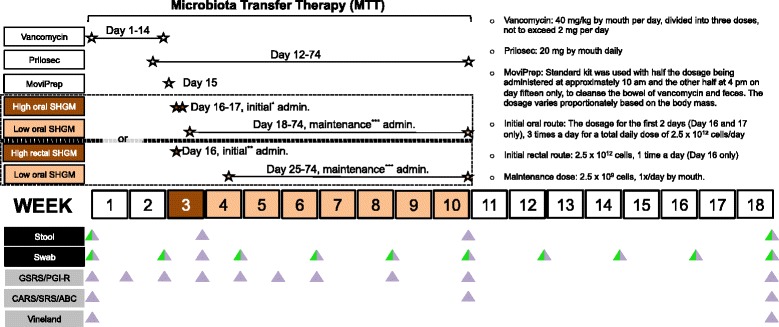
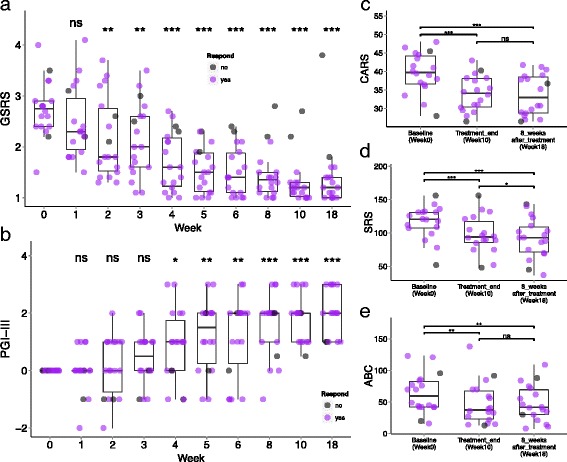
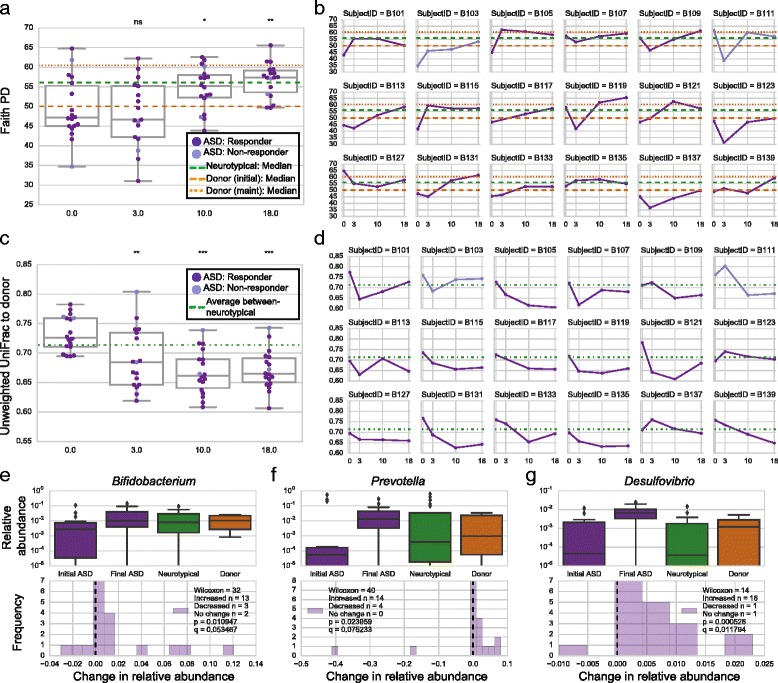
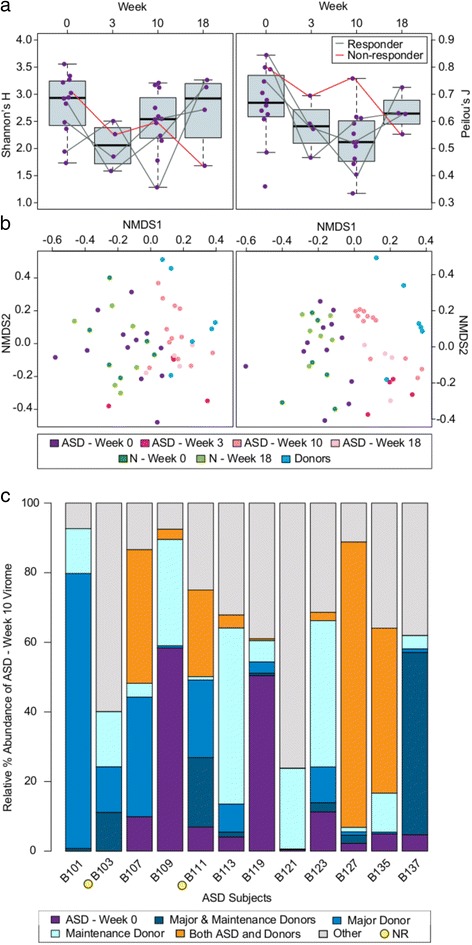
BACKGROUND: bacteria in the human intestines, have been implicated because children with ASD often suffer gastrointestinal (GI) problems that correlate with ASD severity. Several previous studies have reported abnormal gut bacteria in children with ASD. The gut microbiome-ASD connection has been tested in a mouse model of ASD, where the microbiome was mechanistically linked to abnormal metabolites and behavior. Similarly, a study of children with ASD found that oral non-absorbable antibiotic treatment improved GI and ASD symptoms, albeit temporarily. Here, a small open-label clinical trial evaluated the impact of Microbiota Transfer Therapy (MTT) on gut microbiota composition and GI and ASD symptoms of 18 ASD-diagnosed children. RESULTS: MTT involved a 2-week antibiotic treatment, a bowel cleanse, and then an extended fecal microbiota transplant (FMT) using a high initial dose followed by daily and lower maintenance doses for 7-8 weeks. The Gastrointestinal Symptom Rating Scale revealed an approximately 80% reduction of GI symptoms at the end of treatment, including significant improvements in symptoms of constipation, diarrhea, indigestion, and abdominal pain. Improvements persisted 8 weeks after treatment. Similarly, clinical assessments showed that behavioral ASD symptoms improved significantly and remained improved 8 weeks after treatment ended. Bacterial and phagedeep sequencing analyses revealed successful partial engraftment of donor microbiota and beneficial changes in the gut environment. Specifically, overall bacterial diversity and the abundance of Bifidobacterium, Prevotella, and Desulfovibrio among other taxa increased following MTT, and these changes persisted after treatment stopped (followed for 8 weeks). CONCLUSIONS: This exploratory, extended-duration treatment protocol thus appears to be a promising approach to alter the gut microbiome and virome and improve GI and behavioral symptoms of ASD. Improvements in GI symptoms, ASD symptoms, and the microbiome all persisted for at least 8 weeks after treatment ended, suggesting a long-term impact. TRIAL REGISTRATION: This trial was registered on the ClinicalTrials.gov, with the registration number NCT02504554.
Overview
The claims and statistics of this paper haven’t been checked yet.
Free: it reads the open-access text and checks the first 5 claims that cite a source we can check. Create a free account to check every claim.
Integrity signals
Registry
Cites
Statistics
Figures
Verification
Claims the paper makes
The claims and statistics of this paper haven’t been checked yet.
Free: it reads the open-access text and checks the first 5 claims that cite a source we can check. Create a free account to check every claim.
Claims other papers make about this one
Each is checked against this paper’s own text: does it say what the citing paper says it does?
The source backs part of the claim, not all of it — or backs it for a different population, condition or comparison.
In the citing paper
“Following the successful use of FMT in the treatment of refractory or recurrent Clostridium difficile infection, several studies have been conducted to explore FMT as a therapeutic strategy for a wide range of neurological disorders, including multiple sclerosis, epilepsy, ASD, Tourette syndrome, diabetic neuropathy, AD and PD, with promising preclinical and clinical data [30,465,466,467,468].”
From The Interplay between Gut Microbiota and Parkinson’s Disease: Implications on Diagnosis and Treatment (2022) · cites this paper as [466]
Experimental — accuracy not yet measuredThe source backs part of the claim, not all of it — or backs it for a different population, condition or comparison.
In the citing paper
“Among the seven [31, 36, 40–42, 48, 50] papers that reported on beta diversity, four [31, 40, 41, 50] papers showed significant differences in beta diversity between ASD and SIB/HC while the rest did not (Additional file 1: Table S2).”
From Gut microbiota changes in children with autism spectrum disorder: a systematic review (2020) · cites this paper as [40]
Experimental — accuracy not yet measuredThe source backs part of the claim, not all of it — or backs it for a different population, condition or comparison.
In the citing paper
“Further analysis of the alterations of genus and species in ASD, four studies consistently demonstrated a significantly decrease of Bifidobacterium in patients with ASD relative to HCs19,23,27,30.”
From Altered composition and function of intestinal microbiota in autism spectrum disorders: A systematic review (2019) · cites this paper as [19]
Experimental — accuracy not yet measuredThe source backs part of the claim, not all of it — or backs it for a different population, condition or comparison.
In the citing paper
“Among them, three studies18,19,22 indicated the functional modules of gut microbiota in ASD patients were substantially different from that in HCs (Fig. 2).”
From Altered composition and function of intestinal microbiota in autism spectrum disorders: A systematic review (2019) · cites this paper as [19]
Experimental — accuracy not yet measuredThe source backs part of the claim, not all of it — or backs it for a different population, condition or comparison.
In the citing paper
“Although the single study evaluating GI and behavioral outcomes after fecal transplant in ASD was highly successful [94]”
From Serotonin as a link between the gut-brain-microbiome axis in autism spectrum disorders (2018) · cites this paper as [94]
Experimental — accuracy not yet measured
21 more claims about this paper
Create a free account to see every claim other papers make about this one.
Self-check
Percentages, sums and reported differences re-computed from the paper’s own numbers.
The self-check needs the paper’s full text.
Citations
Cites
Trimmomatic: a flexible trimmer for Illumina sequence data
Bolger, A. M., Lohse, M., & Usadel, B. (2014) · Bioinformatics · doi:10.1093/bioinformatics/btu170 · Cited by 65,548 · cited 3×
“The quality control was performed on sequence reads using Trimmomatic [50] to remove adaptors, trim lowquality ends of reads (reads were cut as soon as the base”
MethodInfluentialFast gapped-read alignment with Bowtie 2
Langmead, B., & Salzberg, S. L. (2012) · Nature Methods · doi:10.1038/nmeth.1923 · Cited by 56,400 · cited 2×
“A contig was considered as detected in a sample if covered by reads on more than 75% of its length, and its abundance was computed as the contig average coverage (number of base pairs mapped to the contig divided by contig length) normalized by the total number of base pairs sequenced in the metagenome [56].”
MethodQIIME allows analysis of high-throughput community sequencing data
Caporaso, J. G., Kuczynski, J., Stombaugh, J., Bittinger, K., Bushman, F. D., Costello, E. K., Fierer, N., Peña, A. G., Goodrich, J. K., Gordon, J. I., et al. (2010) · Nature Methods · doi:10.1038/nmeth.f.303 · Cited by 34,887
Self-citationvegan: Community Ecology Package
Oksanen, J., Simpson, G. L., Blanchet, F. G., Kindt, R., Legendre, P., Minchin, P. R., O'Hara, R. B., Solymos, P., Stevens, M. H. H., Szoecs, E., et al. (2001) · CRAN: Contributed Packages · doi:10.32614/cran.package.vegan · Cited by 22,615
Structure, function and diversity of the healthy human microbiome
The Human Microbiome Project Consortium (2012) · Nature · doi:10.1038/nature11234 · Cited by 11,726 · cited 1×
“from FMT efficacy, since inter-individual gut bacterial [77] and viral [47] community variation is high.”
BackgroundA human gut microbial gene catalogue established by metagenomic sequencing
MetaHIT Consortium, Qin, J., Li, R., Raes, J., Arumugam, M., Burgdorf, K. S., Manichanh, C., Nielsen, T., Pons, N., Levenez, F., et al. (2010) · Nature · doi:10.1038/nature08821 · Cited by 11,624 · cited 1×
“Higher gut bacterial diversity and richness are commonly associated with healthy status, presumably due to resilience afforded by higher functional redundancy [62].”
BackgroundCd-hit: a fast program for clustering and comparing large sets of protein or nucleotide sequences
Li, W., & Godzik, A. (2006) · Bioinformatics · doi:10.1093/bioinformatics/btl158 · Cited by 11,410
Lord, C., Rutter, M., & Le Couteur, A. (1994) · Journal of Autism and Developmental Disorders · doi:10.1007/bf02172145 · Cited by 9,065 · cited 1×
“It is not designed to be a measure of autism severity but higher scores are generally consistent with more severe symptoms [39].”
BackgroundUltra-high-throughput microbial community analysis on the Illumina HiSeq and MiSeq platforms
Caporaso, J. G., Lauber, C. L., Walters, W. A., Berg-Lyons, D., Huntley, J., Fierer, N., Owens, S. M., Betley, J., Fraser, L., Bauer, M., et al. (2012) · The ISME Journal · doi:10.1038/ismej.2012.8 · Cited by 8,839
Self-citationConservation evaluation and phylogenetic diversity
Faith, D. P. (1992) · Biological Conservation · doi:10.1016/0006-3207(92)91201-3 · Cited by 5,693
Cited by
Items 401–500 of 1,000
Bennett (2023) · doi:10.1097/yco.0000000000000775 · Cited by 51
“Examples include faecal microbiota transplant [81], and pioglitazone (which has anti-”
BackgroundKwak, M., Kim, S. H., Kim, H. H., Tanpure, R. S., Kim, J. I., Jeon, B., & Park, H. (2023) · Frontiers in Cellular and Infection Microbiology · doi:10.3389/fcimb.2023.1238005 · Cited by 52
García-Gutiérrez, E., O’Mahony, A. K., dos Santos, R. S., Marroquí, L., & Cotter, P. D. (2024) · Gut Microbes · doi:10.1080/19490976.2024.2401654 · Cited by 52
Harness the functions of gut microbiome in tumorigenesis for cancer treatment
Lee, M. (2021) · Cancer Communications · doi:10.1002/cac2.12200 · Cited by 50
Chen, Q., Wu, C., Xu, J., Ye, C., Chen, X., Tian, H., Zong, N., Zhang, S., Li, L., Gao, Y., et al. (2024) · Cell Host & Microbe · doi:10.1016/j.chom.2024.01.013 · Cited by 51
Is adolescence the missing developmental link in Microbiome–Gut–Brain axis communication?
Flannery, J., Callaghan, B., Sharpton, T., Fisher, P., & Pfeifer, J. (2019) · Developmental Psychobiology · doi:10.1002/dev.21821 · Cited by 44
Kilinçarslan, S., & Evrensel, A. (2020) · Actas Españolas de Psiquiatría · Cited by 51
Spinal cord injury and gut microbiota: A review
Jing, Y., Bai, F., & Yu, Y. (2020) · Life Sciences · doi:10.1016/j.lfs.2020.118865 · Cited by 50
Bacterial Translocation in Gastrointestinal Cancers and Cancer Treatment
Kouzu, K., Tsujimoto, H., Kishi, Y., Ueno, H., & Shinomiya, N. (2022) · Biomedicines · doi:10.3390/biomedicines10020380 · Cited by 50
Regulation of microglial physiology by the microbiota
Cook, J., & Prinz, M. (2022) · Gut Microbes · doi:10.1080/19490976.2022.2125739 · Cited by 49
Zhou, S., Guo, Z., Yang, Y., Qu, Y., & Jin, H. (2023) · Frontiers in Neuroscience · doi:10.3389/fnins.2023.1081347 · Cited by 49
Borgiani, G., Possidente, C., Fabbri, C., Oliva, V., Bloemendaal, M., Vásquez, A. A., Dinan, T. G., Vieta, E., Menchetti, M., Ronchi, D. D., et al. (2024) · International Clinical Psychopharmacology · doi:10.1097/yic.0000000000000533 · Cited by 49
Rubas, N. C., Torres, A., & Maunakea, A. K. (2025) · International Journal of Molecular Sciences · doi:10.3390/ijms26178658 · Cited by 49
Contemporary Applications of Fecal Microbiota Transplantation to Treat Intestinal Diseases in Humans
Staley, C. M., Khoruts, A., & Sadowsky, M. J. (2017) · Archives of Medical Research · doi:10.1016/j.arcmed.2017.11.006 · Cited by 50
Self-citationSmoking is associated with quantifiable differences in the human lung DNA virome and metabolome
Gregory, A. C., Sullivan, M. B., Segal, L. N., & Keller, B. C. (2018) · Respiratory Research · doi:10.1186/s12931-018-0878-9 · Cited by 46
Self-citationMicrobiota transplant therapy and autism: lessons for the clinic
Adams, J. B., Borody, T. J., Kang, D., Khoruts, A., Krajmalnik‐Brown, R., & Sadowsky, M. J. (2019) · Expert Review of Gastroenterology & Hepatology · doi:10.1080/17474124.2019.1687293 · Cited by 49
Self-citationThe link between autism spectrum disorder and gut microbiota: A scoping review
Nitschke, A. S., Deonandan, R., & Konkle, A. T. M. (2020) · Autism · doi:10.1177/1362361320913364 · Cited by 51
Gut instincts: vitamin D/vitamin D receptor and microbiome in neurodevelopment disorders
Ogbu, D., Xia, E., & Sun, J. (2020) · Open Biology · doi:10.1098/rsob.200063 · Cited by 52
Liver Cirrhosis and Sarcopenia from the Viewpoint of Dysbiosis
Nishikawa, H., Enomoto, H., Nishiguchi, S., & Iijima, H. (2020) · International Journal of Molecular Sciences · doi:10.3390/ijms21155254 · Cited by 49
Chen, Z., Shi, K., Liu, X., Dai, Y., Liu, Y., Zhang, L., Du, X., Zhu, T., Yu, J., Fang, S., et al. (2021) · Frontiers in Psychiatry · doi:10.3389/fpsyt.2021.789864 · Cited by 49
Abujamel, T. S., Al-Otaibi, N. M., Abuaish, S., Alharbi, R. H., Assas, M. B., Alzahrani, S. A., Alotaibi, S. M., El-Ansary, A. K., & Aabed, K. (2022) · Nutrients · doi:10.3390/nu14030608 · Cited by 48
Nirmalkar, K., Qureshi, F. A., Kang, D., Hahn, J., Adams, J. B., & Krajmalnik‐Brown, R. (2022) · International Journal of Molecular Sciences · doi:10.3390/ijms232113481 · Cited by 48
Self-citationThe Evolving Landscape of Fecal Microbial Transplantation
Shao, T., Hsu, R., Hacein-Bey, C., Zhang, W., Gao, L., Kurth, M. J., Zhao, H., Shuai, Z., & Leung, P. S. C. (2023) · Clinical Reviews in Allergy & Immunology · doi:10.1007/s12016-023-08958-0 · Cited by 48
Smog induces oxidative stress and microbiota disruption
Wong, T.-Y. (2017) · Journal of Food and Drug Analysis · doi:10.1016/j.jfda.2017.02.003 · Cited by 49
Evolution of fecal microbiota transplantation in methodology and ethical issues
Zhang, F., Zhang, T., Zhu, H., & Borody, T. J. (2019) · Current Opinion in Pharmacology · doi:10.1016/j.coph.2019.04.004 · Cited by 48
Self-citationChen, Y., Fang, H., Li, C., Wu, G., Xu, T., Yang, X., Zhao, L., Ke, X., & Zhang, C. (2020) · mSphere · doi:10.1128/msphere.01044-20 · Cited by 37
Adverse events of fecal microbiota transplantation: a metaanalysis of high-quality studies
Michailidis, L., Currier, A. C., Le, M., & Flomenhoft, D. R. (2021) · Annals of Gastroenterology · doi:10.20524/aog.2021.0655 · Cited by 48
Microbiota and epigenetics: promising therapeutic approaches?
El-Sayed, A., Aleya, L., & Kamel, M. S. (2021) · Environmental Science and Pollution Research · doi:10.1007/s11356-021-15623-6 · Cited by 47
Rasmussen, T. S., Mentzel, C. M. J., Danielsen, M. R., Jakobsen, R. R., Zachariassen, L. F., Castro-Mejía, J. L., Brunse, A., Hansen, L. H., Hansen, C. H. F., Hansen, A. K., et al. (2023) · Gut Microbes · doi:10.1080/19490976.2023.2208504 · Cited by 46
Delaune, V., Orci, L. A., Lacotte, S., Peloso, A., Schrenzel, J., Lazarević, V., & Toso, C. (2018) · Expert Opinion on Biological Therapy · doi:10.1080/14712598.2018.1518424 · Cited by 46
A Role for Gut Microbiome Fermentative Pathways in Fatty Liver Disease Progression
Iruzubieta, P., Medina, J. M., Fernández-López, R., Crespo, J., & de la Cruz, F. (2020) · Journal of Clinical Medicine · doi:10.3390/jcm9051369 · Cited by 47
The Development of Early Life Microbiota in Human Health and Disease
Lv, H., Zhang, L., Han, Y., Wu, L. M., & Wang, B. (2021) · Engineering · doi:10.1016/j.eng.2020.12.014 · Cited by 47
Altered Gut Microbiota in Korean Children with Autism Spectrum Disorders
Ha, S., Oh, D., Lee, S., Park, J., Ahn, J., Choi, S., & Cheon, K.-A. A. (2021) · Nutrients · doi:10.3390/nu13103300 · Cited by 46
Wong, G. C., Montgomery, J. M., & Taylor, M. W. (2021) · Exon Publications eBooks · doi:10.36255/exonpublications.autismspectrumdisorders.2021 · Cited by 48
Béopoulos, A., Géa, M., Fasano, A., & Iris, F. (2021) · Nutrients · doi:10.3390/nu14010065 · Cited by 45
Self-citationPhan, J. L., Calvo, D. C., Nair, D., Jain, S., Montagne, T., Corbitt, J., Blanchard, K., Treadwell, S. M., Adams, J. B., & Krajmalnik‐Brown, R. (2024) · mSystems · doi:10.1128/msystems.00503-24 · Cited by 45
Self-citationTakyi, E., Nirmalkar, K., Adams, J. B., & Krajmalnik‐Brown, R. (2025) · Gut Microbes · doi:10.1080/19490976.2025.2499580 · Cited by 45
Self-citationMicrobiome programming of brain development: implications for neurodevelopmental disorders
Forssberg, H. (2019) · Developmental Medicine & Child Neurology · doi:10.1111/dmcn.14208 · Cited by 46
Nettleton, J. E., Klančič, T., Schick, A., Choo, A. C., Cheng, N., Shearer, J., Borgland, S. L., Rho, J. M., & Reimer, R. A. (2021) · Microorganisms · doi:10.3390/microorganisms9091833 · Cited by 45
Quan, L., Yi, J., Zhao, Y., Zhang, F., Shi, X.-T., Feng, Z., & Miller, H. L. (2020) · NeuroToxicology · doi:10.1016/j.neuro.2019.10.012 · Cited by 44
Between Dysbiosis, Maternal Immune Activation and Autism: Is There a Common Pathway?
Suprunowicz, M., Tomaszek, N., Urbaniak, A., Zackiewicz, K., Modzelewski, S., & Waszkiewicz, N. (2024) · Nutrients · doi:10.3390/nu16040549 · Cited by 44
“Furthermore, there was a major reduction in behavioral symptoms of ASD, and the gut microbiome was affected, in particular, increased Bifidobacteria , Pre-votella , and Desulvovibrio [294].”
BackgroundDe Sales-Millán, A., Aguirre-Garrido, J. F., González-Cervantes, R. M., & Velázquez-Aragón, J. A. (2023) · doi:10.20944/preprints202305.1223.v1 · Cited by 44
The Gut–Brain–Microbiota Connection and Its Role in Autism Spectrum Disorders
Młynarska, E., Barszcz, E., Budny, E., Gajewska, A., Kopeć, K., Wasiak, J., Rysz, J., & Franczyk, B. (2025) · Nutrients · doi:10.3390/nu17071135 · Cited by 44
“Sequencing analyses revealed the partial engraftment of donor microbiota, increased bacterial diversity, and higher levels of beneficial taxa such as Bifidobacterium , Prevotella , and Desulfovibrio , which persisted following the intervention [134].”
Gene × environment interactions in autism spectrum disorders
Keil, K. P., & Lein, P. J. (2022) · Current topics in developmental biology/Current Topics in Developmental Biology · doi:10.1016/bs.ctdb.2022.11.001 · Cited by 44
Inferring microbial co-occurrence networks from amplicon data: a systematic evaluation
Kishore, D., Bîrzu, G., Hu, Z., DeLisi, C., Korolev, K. S., & Segrè, D. (2023) · mSystems · doi:10.1128/msystems.00961-22 · Cited by 46
Gut microbiota, metabolism and psychopathology: A critical review and novel perspectives
Groen, R. N., de Clercq, N. C., Nieuwdorp, M., Hoenders, H. J. R., & Groen, A. K. (2018) · Critical Reviews in Clinical Laboratory Sciences · doi:10.1080/10408363.2018.1463507 · Cited by 40
Relation Between Infant Microbiota and Autism? Results from a National Cohort Sibling Design Study
Axelsson, P., Clausen, T. D., Petersen, A. H., Hageman, I., Pinborg, A. B., Kessing, L. V., Bergholt, T., Rasmussen, S. C., Keiding, N., & Løkkegaard, E. (2018) · Epidemiology · doi:10.1097/ede.0000000000000928 · Cited by 44
Lin, C., Wan, J., Su, Y., & Zhu, W. (2018) · Metabolites · doi:10.3390/metabo8040089 · Cited by 44
McSweeney, B., Allegretti, J. R., Fischer, M., Xu, H., Goodman, K. J., Monaghan, T. M., McLeod, C. M., Mullish, B. H., Petrof, E. O., Phelps, E. L., et al. (2019) · Gut Microbes · doi:10.1080/19490976.2019.1611153 · Cited by 44
Effect of Microgravity Environment on Gut Microbiome and Angiogenesis
Siddiqui, R., Qaisar, R., Goswami, N., Khan, N. A., & Elmoselhi, A. (2021) · Life · doi:10.3390/life11101008 · Cited by 38
Zhang, Y., Luo, H., Niu, Y., Yang, X., Li, Z., Wang, K., Bi, H.-J., & Pang, X. (2022) · Sleep Medicine · doi:10.1016/j.sleep.2022.02.003 · Cited by 44
Altered human gut virome in patients undergoing antibiotics therapy for Helicobacter pylori
Wang, L., Yao, H., Morgan, D. C., Lau, K. S., Leung, S. Y., Ho, J. W. K., & Leung, W. K. (2023) · Nature Communications · doi:10.1038/s41467-023-37975-y · Cited by 44
Avolio, E., Olivito, I., Rosina, E., Romano, L., Angelone, T., Bartolo, A. D., Scimeca, M., Bellizzi, D., D’Aquila, P., Passarino, G., et al. (2022) · Neuroscience · doi:10.1016/j.neuroscience.2022.06.038 · Cited by 43
From isoniazid to psychobiotics: the gut microbiome as a new antidepressant target
Butler, M. I., Sandhu, K., Cryan, J. F., & Dinan, T. G. (2019) · British Journal of Hospital Medicine · doi:10.12968/hmed.2019.80.3.139 · Cited by 32
Liu, J., Wan, G., Huang, M.-S., Agyapong, G., Zou, T.-L., Zhang, X., Liu, Y.-W., Song, Y., Tsai, Y.-C., & Kong, X. (2019) · Current Medical Science · doi:10.1007/s11596-019-2016-4 · Cited by 44
Current and future applications of fecal microbiota transplantation for children
Chen, C.-C., & Chiu, C. (2021) · Biomedical Journal · doi:10.1016/j.bj.2021.11.004 · Cited by 44
The Many Faces of Microbiota-Gut-Brain Axis in Autism Spectrum Disorder
Gonçalves, C. L., Doifode, T., Rezende, V. L., Costa, M. A., Rhoads, J. M., & Soutullo, C. A. (2024) · Life Sciences · doi:10.1016/j.lfs.2023.122357 · Cited by 42
Microbes and mental health: Can the microbiome help explain clinical heterogeneity in psychiatry?
Hayes, C. L., Peters, B. J., & Foster, J. A. (2020) · Frontiers in Neuroendocrinology · doi:10.1016/j.yfrne.2020.100849 · Cited by 42
IUPHAR review: Microbiota-gut-brain axis and its role in neuropsychiatric disorders
Lee, S.-H., Han, C., & Shin, C. (2025) · Pharmacological Research · doi:10.1016/j.phrs.2025.107749 · Cited by 42
Unraveling the Interplay Between Metabolism and Neurodevelopment in Health and Disease
He, Y., Xie, K., Yang, K., Wang, N., & Zhang, L. (2025) · CNS Neuroscience & Therapeutics · doi:10.1111/cns.70427 · Cited by 44
Early childhood antibiotics use and autism spectrum disorders: a population-based cohort study
Hamad, A. F., Alessi‐Severini, S., Mahmud, S. M., Brownell, M. D., & Kuo, I. F. (2018) · International Journal of Epidemiology · doi:10.1093/ije/dyy162 · Cited by 42
Microbiome modulation to correct uremic toxins and to preserve kidney functions
Caggiano, G., Cosola, C., Leo, V. D., Gesualdo, M., & Gesualdo, L. (2019) · Current Opinion in Nephrology & Hypertension · doi:10.1097/mnh.0000000000000565 · Cited by 42
Lamy, M., Pedapati, E. V., Dominick, K. C., Wink, L. K., & Erickson, C. A. (2020) · Pediatric Drugs · doi:10.1007/s40272-020-00408-0 · Cited by 44
Chen, H., Zeng, Y.-B., Zhang, Z., Kong, C., Zhang, S., Li, Z., Huang, J., Xu, Y., Mao, Y., Cai, P., et al. (2021) · Journal of Inflammation Research · doi:10.2147/jir.s337031 · Cited by 42
Potential Associations Between Microbiome and COVID-19
Wang, H., Wang, H., Sun, Y., Ren, Z., Zhu, W., Li, A., & Cui, G. (2021) · Frontiers in Medicine · doi:10.3389/fmed.2021.785496 · Cited by 42
Guzmán‐Salas, S., Weber, A., Malci, A., Lin, X., Herrera‐Molina, R., Cerpa, W. F., Dorador, C., Signorelli, J. R., & Zamorano, P. L. (2022) · Journal of Neurochemistry · doi:10.1111/jnc.15604 · Cited by 42
Caputi, V., Hill, L., Figueiredo, M., Popov, J., Hartung, E., Margolis, K. G., Baskaran, K., Joharapurkar, P., Moshkovich, M., & Pai, N. (2024) · Frontiers in Neuroscience · doi:10.3389/fnins.2024.1341656 · Cited by 41
Cao, T., Wang, S., Pan, Y., Guo, F., Wu, B., Zhang, Y., Wang, Y., Tian, J., Xing, Q., & Liu, X. (2023) · Frontiers in Microbiology · doi:10.3389/fmicb.2023.1182320 · Cited by 41
Novau-Ferré, N., Papandreou, C., Rojo-Marticella, M., Canals, J., & Bulló, M. (2025) · Research in Developmental Disabilities · doi:10.1016/j.ridd.2025.105003 · Cited by 41
The role of microbiota in autism spectrum disorders
Campion, D., Ponzo, P., Alessandria, C., Saracco, G. M., & Balzola, F. A. (2018) · Minerva Gastroenterologica e Dietologica · doi:10.23736/s1121-421x.18.02493-5 · Cited by 41
Species Designations Belie Phenotypic and Genotypic Heterogeneity in Oral Streptococci
Velsko, I. M., Chakraborty, B., Nascimento, M. M., Burne, R. A., & Richards, V. P. (2018) · mSystems · doi:10.1128/msystems.00158-18 · Cited by 42
Wang, M., Doenyas, C., Wan, J., Zeng, S., Cai, C., Zhou, J., Liu, Y., Yin, Z., & Zhou, W. (2020) · Computational and Structural Biotechnology Journal · doi:10.1016/j.csbj.2020.12.012 · Cited by 41
Zhao, H.-J., Luo, X., Shi, Y.-C., Li, J.-F., Pan, F., Ren, R.-R., Peng, L.-H., Shi, X.-Y., Yang, G., Wang, J., et al. (2020) · Frontiers in Psychiatry · doi:10.3389/fpsyt.2020.554441 · Cited by 39
Healing autism spectrum disorder with cannabinoids: a neuroinflammatory story
Carbone, E., Manduca, A., Cacchione, C., Vicari, S., & Trezza, V. (2020) · Neuroscience & Biobehavioral Reviews · doi:10.1016/j.neubiorev.2020.12.009 · Cited by 43
David, M. M., Tataru, C. A., Daniels, J., Schwartz, J. N., Keating, J., Hampton‐Marcell, J., Gottel, N., Gilbert, J. A., & Wall, D. P. (2021) · mSystems · doi:10.1128/msystems.00193-20 · Cited by 42
Current Status and Future Therapeutic Options for Fecal Microbiota Transplantation
Ткач, С. М., Dorofeyev, A., Kuzenko, I., Boyko, N., Falalyeyeva, T. M., Boccuto, L., Scarpellini, E., Kobyliak, N. M., & Abenavoli, L. (2022) · Medicina · doi:10.3390/medicina58010084 · Cited by 41
Ross, F. C., Mayer, D. E., Gupta, A., Gill, C. I. R., Rio, D. D., Cryan, J. F., Lavelle, A., Ross, R. P., Stanton, C., & Mayer, E. A. (2023) · Biological Psychiatry · doi:10.1016/j.biopsych.2023.10.018 · Cited by 41
Li, Y., Xiao, P. G., Cao, R., Le, J., Xu, Q., Xiao, F., Ye, L., Wang, X., Wang, Y., & Zhang, T. (2024) · Frontiers in Pediatrics · doi:10.3389/fped.2024.1369823 · Cited by 41
Human intestinal microbiome: Role in health and disease
Cantón, R., Ramos, P. D. L., Botella, A. G., García‐Lledó, A., Hernández‐Sampelayo, T., Gómez‐Pavón, J., del Castillo, J. M. G., Martín-Delgado, M. C., Martín‐Sánchez, F. J., Martínez‐Sellés, M., et al. (2024) · Revista Española de Quimioterapia · doi:10.37201/req/056.2024 · Cited by 40
Wan, L., Wang, H., Liang, Y., Zhang, X., Yao, X., Zhu, G., Cai, J., Liu, G., Liu, X., Niu, Q., et al. (2024) · Clinical and Translational Medicine · doi:10.1002/ctm2.70006 · Cited by 40
Osama, A., Anwar, A. M., Ezzeldin, S., Ahmed, E., Mahgoub, S., Ibrahim, O., Ibrahim, S., Abdelhamid, I. A., Bakry, U., Diab, A. A., et al. (2025) · Journal of Advanced Research · doi:10.1016/j.jare.2025.01.036 · Cited by 42
Cuomo, A., Maina, G., Rosso, G., Crescenzi, B. B., Bolognesi, S., Muro, A. D., Giordano, N. G., Goracci, A., Neal, S. M., Nitti, M. P., et al. (2018) · Frontiers in Pharmacology · doi:10.3389/fphar.2018.01040 · Cited by 41
Qureshi, F. A., Adams, J. B., Hanagan, K., Kang, D., Krajmalnik‐Brown, R., & Hahn, J. (2020) · Journal of Personalized Medicine · doi:10.3390/jpm10040152 · Cited by 41
Self-citationAdvancing human disease research with fish evolutionary mutant models
Beck, E. A., Healey, H. M., Small, C. M., Currey, M. C., Desvignes, T., Cresko, W. A., & Postlethwait, J. H. (2021) · Trends in Genetics · doi:10.1016/j.tig.2021.07.002 · Cited by 40
Interaction of Heavy Metal Lead with Gut Microbiota: Implications for Autism Spectrum Disorder
Tizabi, Y., Bennani, S., Kouhen, N. E., Getachew, B., & Aschner, M. (2023) · Biomolecules · doi:10.3390/biom13101549 · Cited by 40
Mental Disorders Linked to Crosstalk between The Gut Microbiome and The Brain
Choi, T.-Y., Choi, Y. P., & Koo, J. W. (2020) · Experimental Neurobiology · doi:10.5607/en20047 · Cited by 39
Lin, P., Zhang, Q., Sun, J., Li, Q., Li, D., Zhu, M., Fu, X., Zhao, L., Wang, M., Lou, X., et al. (2024) · Frontiers in Psychiatry · doi:10.3389/fpsyt.2023.1318637 · Cited by 39
Gut–brain axis in the executive function of austism spectrum disorder
Román, P., Rueda‐Ruzafa, L., Cardona, D., & Cortés‐Rodríguez, A. E. (2018) · Behavioural Pharmacology · doi:10.1097/fbp.0000000000000428 · Cited by 39
Troisi, J., Autio, R., Beopoulos, T., Bravaccio, C., Carraturo, F., Corrivetti, G., Cunningham, S., Devane, S., Fallin, M. D., Fetissov, S. O., et al. (2020) · Brain Sciences · doi:10.3390/brainsci10100743 · Cited by 39
Self-citationBenefits of fecal microbiota transplantation: A comprehensive review
Ademe, M. (2020) · The Journal of Infection in Developing Countries · doi:10.3855/jidc.12780 · Cited by 39
Guo, M., Li, R., Wang, Y., Ma, S., Zhang, Y., Li, S., Zhang, H., Liu, Z., You, C., & Zheng, H. (2022) · Physiology & Behavior · doi:10.1016/j.physbeh.2022.113965 · Cited by 39
Dovrolis, N., Kolios, G. C., Spyrou, G. M., & Maroulakou, I. G. (2017) · Briefings in Bioinformatics · doi:10.1093/bib/bbx154 · Cited by 39
Murakami, Y., Imamura, Y., Kasahara, Y., Yoshida, C., Momono, Y., Fang, K., Sakai, D., Konishi, Y., & Nishiyama, T. (2023) · Cells · doi:10.3390/cells12071087 · Cited by 39
FORMATION OF THE INTESTINAL MICROBIOTA OF CHILDREN AND THE FACTORS THAT INFLUENCE THIS PROCESS
Nikolaeva, I. V., Царегородцев, А. Д., & Shaikhieva, G. S. (2018) · Rossiyskiy Vestnik Perinatologii i Pediatrii (Russian Bulletin of Perinatology and Pediatrics) · doi:10.21508/1027-4065-2018-63-3-13-18 · Cited by 38
Bashir, Y., & Khan, A. U. (2022) · Frontiers in Neuroscience · doi:10.3389/fnins.2022.1030694 · Cited by 38
Fecal Microbiota Transplantation in Autism Spectrum Disorder
Li, Y., Wang, Y., & Zhang, T. (2022) · Neuropsychiatric Disease and Treatment · doi:10.2147/ndt.s382571 · Cited by 38
Wang, L., Yu, Y.-M., Zhang, Y.-Q., Zhang, J., Lu, N., & Liu, N. (2017) · European Child & Adolescent Psychiatry · doi:10.1007/s00787-017-1039-2 · Cited by 39
Jing, Y., Bai, F., Wang, L., Yang, D., Yan, Y., Wang, Q., Zhu, Y., Yu, Y., & Chen, Z. (2022) · Microbiology Spectrum · doi:10.1128/spectrum.00177-22 · Cited by 37
The gut-immune-brain axis in neurodevelopment and neurological disorders
Park, J. C., & Im, S. (2022) · Microbiome Research Reports · doi:10.20517/mrr.2022.11 · Cited by 40
Attention Deficit Hyperactivity Disorder (ADHD) and the gut microbiome: An ecological perspective
Cickovski, T., Mathee, K., Aguirre, G., Tatke, G., Hermida, A., Narasimhan, G., & Stollstorff, M. (2023) · PLoS ONE · doi:10.1371/journal.pone.0273890 · Cited by 37
Metadata
- Authors
- Kang, D.-W., Adams, J. B., Gregory, A. C., Borody, T., Chittick, L., Fasano, A., Khoruts, A., Geis, E., Maldonado, J., McDonough-Means, S., Pollard, E. L., Roux, S., Sadowsky, M. J., Lipson, K. S., Sullivan, M. B., Caporaso, J. G., & Krajmalnik-Brown, R.
- Affiliations
- Arizona State University (US)
- University of Arizona (US)
- Centre For Digestive Diseases (AU)
- Massachusetts General Hospital (US)
- University of Minnesota (US)
- Northern Arizona University (US)
- Corresponding author
- Sullivan, Matthew B.
- Caporaso, J. Gregory
- ORCID
- Venue
- Microbiome
- Published
- 2017-01-23
- Volume
- 5
- Issue
- 1
- Pages
- 10-10
- ISSN
- 2049-2618 (ISSN-L)
- PMC
- PMC5264285
- OpenAlex
- W2581406049
- Cited by
- 1,391
- References
- 81
- Citations by year
- 2026: 114 · 2025: 173 · 2024: 153 · 2023: 154 · 2022: 177 · 2021: 156 · 2020: 165 · 2019: 147 · 2018: 103 · 2017: 47
- FWCI
- 51.58
- Type
- journal article
- Language
- en
- Open access
- gold
- doi.org
- Licence
- cc-by
- Locations
- Microbiome (publishedVersion, cc-by)
- Europe PMC (PubMed Central) (publishedVersion, cc-by)
- PubMed Central (publishedVersion, cc-by)
- PubMed (publishedVersion)
- Arizona State University Library Digital Repository (Arizona State University) (submittedVersion, cc-by)
- eScholarship (California Digital Library) (submittedVersion)
- Funders
- Arizona Board of Regents
- Gordon and Betty Moore Foundation grant (#3790)
- Topics
- Life Sciences › Biochemistry, Genetics and Molecular Biology › Molecular Biology › Gut microbiota and health
- Health Sciences › Medicine › Gastroenterology › Gastrointestinal motility and disorders
- Life Sciences › Neuroscience › Cognitive Neuroscience › Autism Spectrum Disorder Research
- Keywords
- autism spectrum disorder, gut microbiota, fecal microbiota transplantation, gastrointestinal symptoms, constipation, diarrhea, Bifidobacterium, Prevotella, Desulfovibrio, antibiotic therapy, children
- MeSH terms
- Autism Spectrum Disorder, Gastrointestinal Microbiome, Fecal Microbiota Transplantation, Adolescent, Anti-Bacterial Agents, Bacteriophages, Bifidobacterium, Child, Constipation, Desulfovibrio, Diarrhea, DNA, Viral, Female, Gastrointestinal Diseases, Humans, Infant, Male, Abdominal Pain, Prevotella, Probiotics, Gastrointestinal Tract, High-Throughput Nucleotide Sequencing
About these checks
Registry, retraction, Cites and statistics results are computed, not judged, with one exception: a printed reference that no index lists is read once by a model before it counts as a citation error. Claims are extracted by a model and kept only when their quote appears verbatim in the text; each cited source is then checked, with a model’s help, for whether it says what the claim relies on. Those verdicts can be wrong — read the claim’s quote and the cited source before relying on one.
Statistics and arithmetic are recomputed, not judged.
Confidence bands are shown only for fields calibrated on our annotated test set. None is calibrated yet, so no band is shown.
What counts as a claim ›How we measure confidence ›How we check this ›
Are you an author, or do you see a problem with this page? Request a review
Data sources
Bibliographic data: Semantic Scholar, OpenAlex, Crossref.
Contains information from the Semantic Scholar Academic Graph Datasets, made available under the ODC Attribution License (ODC-BY 1.0).
Semantic Scholar’s data is described in: Kinney, R., et al. (2023). The Semantic Scholar Open Data Platform. arXiv:2301.10140.
