

Microbiota Transfer Therapy alters gut ecosystem and improves gastrointestinal and autism symptoms: an open-label study
Open accessThe DOI matches its Crossref record; 80 of the 81 references it cites were found in a registry or an index.
Abstract
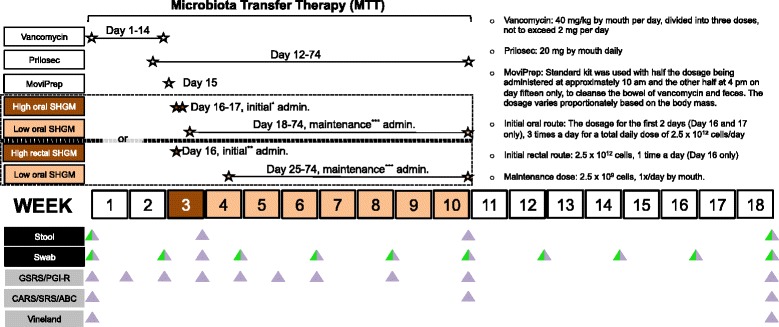
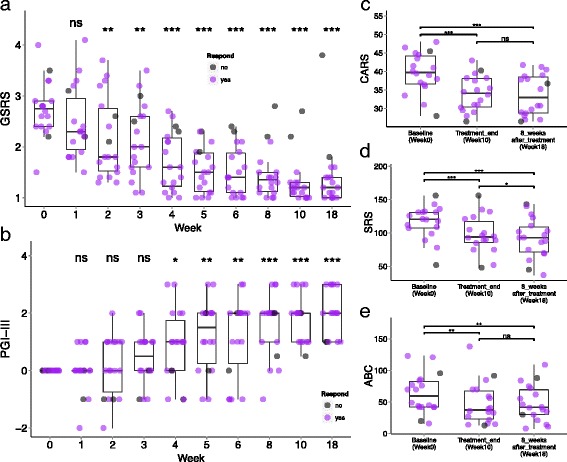
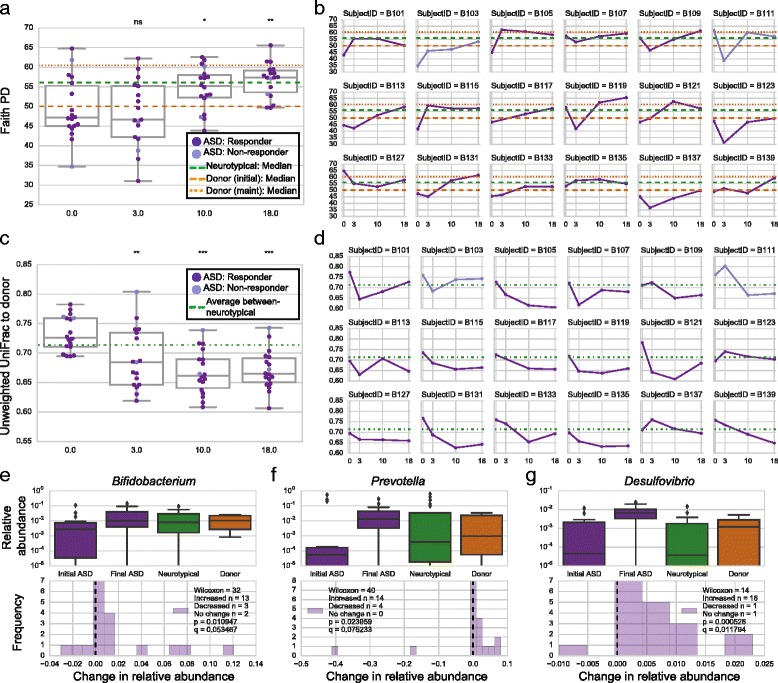
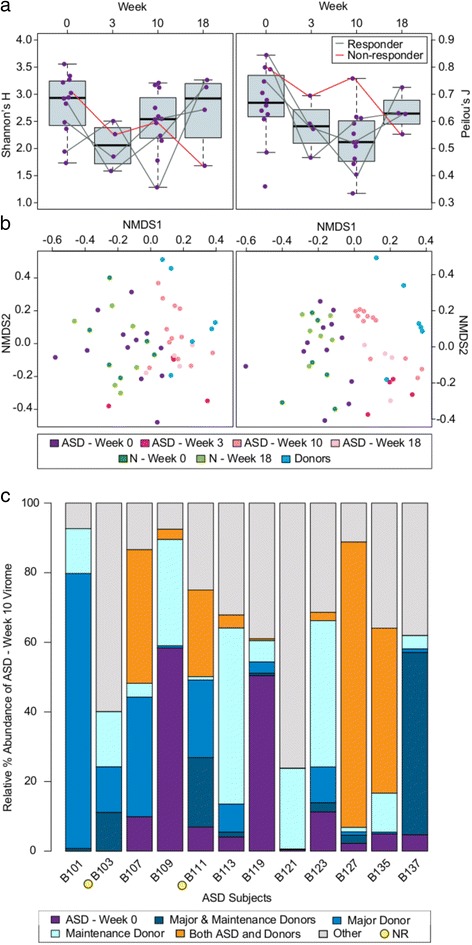
BACKGROUND: bacteria in the human intestines, have been implicated because children with ASD often suffer gastrointestinal (GI) problems that correlate with ASD severity. Several previous studies have reported abnormal gut bacteria in children with ASD. The gut microbiome-ASD connection has been tested in a mouse model of ASD, where the microbiome was mechanistically linked to abnormal metabolites and behavior. Similarly, a study of children with ASD found that oral non-absorbable antibiotic treatment improved GI and ASD symptoms, albeit temporarily. Here, a small open-label clinical trial evaluated the impact of Microbiota Transfer Therapy (MTT) on gut microbiota composition and GI and ASD symptoms of 18 ASD-diagnosed children. RESULTS: MTT involved a 2-week antibiotic treatment, a bowel cleanse, and then an extended fecal microbiota transplant (FMT) using a high initial dose followed by daily and lower maintenance doses for 7-8 weeks. The Gastrointestinal Symptom Rating Scale revealed an approximately 80% reduction of GI symptoms at the end of treatment, including significant improvements in symptoms of constipation, diarrhea, indigestion, and abdominal pain. Improvements persisted 8 weeks after treatment. Similarly, clinical assessments showed that behavioral ASD symptoms improved significantly and remained improved 8 weeks after treatment ended. Bacterial and phagedeep sequencing analyses revealed successful partial engraftment of donor microbiota and beneficial changes in the gut environment. Specifically, overall bacterial diversity and the abundance of Bifidobacterium, Prevotella, and Desulfovibrio among other taxa increased following MTT, and these changes persisted after treatment stopped (followed for 8 weeks). CONCLUSIONS: This exploratory, extended-duration treatment protocol thus appears to be a promising approach to alter the gut microbiome and virome and improve GI and behavioral symptoms of ASD. Improvements in GI symptoms, ASD symptoms, and the microbiome all persisted for at least 8 weeks after treatment ended, suggesting a long-term impact. TRIAL REGISTRATION: This trial was registered on the ClinicalTrials.gov, with the registration number NCT02504554.
Overview
The claims and statistics of this paper haven’t been checked yet.
Free: it reads the open-access text and checks the first 5 claims that cite a source we can check. Create a free account to check every claim.
Integrity signals
Registry
Cites
Statistics
Figures
Verification
Claims the paper makes
The claims and statistics of this paper haven’t been checked yet.
Free: it reads the open-access text and checks the first 5 claims that cite a source we can check. Create a free account to check every claim.
Claims other papers make about this one
Each is checked against this paper’s own text: does it say what the citing paper says it does?
The source backs part of the claim, not all of it — or backs it for a different population, condition or comparison.
In the citing paper
“Following the successful use of FMT in the treatment of refractory or recurrent Clostridium difficile infection, several studies have been conducted to explore FMT as a therapeutic strategy for a wide range of neurological disorders, including multiple sclerosis, epilepsy, ASD, Tourette syndrome, diabetic neuropathy, AD and PD, with promising preclinical and clinical data [30,465,466,467,468].”
From The Interplay between Gut Microbiota and Parkinson’s Disease: Implications on Diagnosis and Treatment (2022) · cites this paper as [466]
Experimental — accuracy not yet measuredThe source backs part of the claim, not all of it — or backs it for a different population, condition or comparison.
In the citing paper
“Among the seven [31, 36, 40–42, 48, 50] papers that reported on beta diversity, four [31, 40, 41, 50] papers showed significant differences in beta diversity between ASD and SIB/HC while the rest did not (Additional file 1: Table S2).”
From Gut microbiota changes in children with autism spectrum disorder: a systematic review (2020) · cites this paper as [40]
Experimental — accuracy not yet measuredThe source backs part of the claim, not all of it — or backs it for a different population, condition or comparison.
In the citing paper
“Further analysis of the alterations of genus and species in ASD, four studies consistently demonstrated a significantly decrease of Bifidobacterium in patients with ASD relative to HCs19,23,27,30.”
From Altered composition and function of intestinal microbiota in autism spectrum disorders: A systematic review (2019) · cites this paper as [19]
Experimental — accuracy not yet measuredThe source backs part of the claim, not all of it — or backs it for a different population, condition or comparison.
In the citing paper
“Among them, three studies18,19,22 indicated the functional modules of gut microbiota in ASD patients were substantially different from that in HCs (Fig. 2).”
From Altered composition and function of intestinal microbiota in autism spectrum disorders: A systematic review (2019) · cites this paper as [19]
Experimental — accuracy not yet measuredThe source backs part of the claim, not all of it — or backs it for a different population, condition or comparison.
In the citing paper
“Although the single study evaluating GI and behavioral outcomes after fecal transplant in ASD was highly successful [94]”
From Serotonin as a link between the gut-brain-microbiome axis in autism spectrum disorders (2018) · cites this paper as [94]
Experimental — accuracy not yet measured
21 more claims about this paper
Create a free account to see every claim other papers make about this one.
Self-check
Percentages, sums and reported differences re-computed from the paper’s own numbers.
The self-check needs the paper’s full text.
Citations
Cites
Trimmomatic: a flexible trimmer for Illumina sequence data
Bolger, A. M., Lohse, M., & Usadel, B. (2014) · Bioinformatics · doi:10.1093/bioinformatics/btu170 · Cited by 65,548 · cited 3×
“The quality control was performed on sequence reads using Trimmomatic [50] to remove adaptors, trim lowquality ends of reads (reads were cut as soon as the base”
MethodInfluentialFast gapped-read alignment with Bowtie 2
Langmead, B., & Salzberg, S. L. (2012) · Nature Methods · doi:10.1038/nmeth.1923 · Cited by 56,400 · cited 2×
“A contig was considered as detected in a sample if covered by reads on more than 75% of its length, and its abundance was computed as the contig average coverage (number of base pairs mapped to the contig divided by contig length) normalized by the total number of base pairs sequenced in the metagenome [56].”
MethodQIIME allows analysis of high-throughput community sequencing data
Caporaso, J. G., Kuczynski, J., Stombaugh, J., Bittinger, K., Bushman, F. D., Costello, E. K., Fierer, N., Peña, A. G., Goodrich, J. K., Gordon, J. I., et al. (2010) · Nature Methods · doi:10.1038/nmeth.f.303 · Cited by 34,887
Self-citationvegan: Community Ecology Package
Oksanen, J., Simpson, G. L., Blanchet, F. G., Kindt, R., Legendre, P., Minchin, P. R., O'Hara, R. B., Solymos, P., Stevens, M. H. H., Szoecs, E., et al. (2001) · CRAN: Contributed Packages · doi:10.32614/cran.package.vegan · Cited by 22,615
Structure, function and diversity of the healthy human microbiome
The Human Microbiome Project Consortium (2012) · Nature · doi:10.1038/nature11234 · Cited by 11,726 · cited 1×
“from FMT efficacy, since inter-individual gut bacterial [77] and viral [47] community variation is high.”
BackgroundA human gut microbial gene catalogue established by metagenomic sequencing
MetaHIT Consortium, Qin, J., Li, R., Raes, J., Arumugam, M., Burgdorf, K. S., Manichanh, C., Nielsen, T., Pons, N., Levenez, F., et al. (2010) · Nature · doi:10.1038/nature08821 · Cited by 11,624 · cited 1×
“Higher gut bacterial diversity and richness are commonly associated with healthy status, presumably due to resilience afforded by higher functional redundancy [62].”
BackgroundCd-hit: a fast program for clustering and comparing large sets of protein or nucleotide sequences
Li, W., & Godzik, A. (2006) · Bioinformatics · doi:10.1093/bioinformatics/btl158 · Cited by 11,410
Lord, C., Rutter, M., & Le Couteur, A. (1994) · Journal of Autism and Developmental Disorders · doi:10.1007/bf02172145 · Cited by 9,065 · cited 1×
“It is not designed to be a measure of autism severity but higher scores are generally consistent with more severe symptoms [39].”
BackgroundUltra-high-throughput microbial community analysis on the Illumina HiSeq and MiSeq platforms
Caporaso, J. G., Lauber, C. L., Walters, W. A., Berg-Lyons, D., Huntley, J., Fierer, N., Owens, S. M., Betley, J., Fraser, L., Bauer, M., et al. (2012) · The ISME Journal · doi:10.1038/ismej.2012.8 · Cited by 8,839
Self-citationConservation evaluation and phylogenetic diversity
Faith, D. P. (1992) · Biological Conservation · doi:10.1016/0006-3207(92)91201-3 · Cited by 5,693
Cited by
Items 301–400 of 1,000
Microbial exposure and human health
Sharma, A., & Gilbert, J. A. (2018) · Current Opinion in Microbiology · doi:10.1016/j.mib.2018.08.003 · Cited by 72
Tomizawa, Y., Kurokawa, S., Ishii, D., Miyaho, K., Ishii, C., Sanada, K., Fukuda, S., Mimura, M., & Kishimoto, T. (2020) · The International Journal of Neuropsychopharmacology · doi:10.1093/ijnp/pyaa070 · Cited by 72
Gregory, A., Gerhardt, K., Zhong, Z.-P., Bolduc, B., Temperton, B., Konstantinidis, K. T., & Sullivan, M. B. (2022) · Microbiome · doi:10.1186/s40168-022-01231-0 · Cited by 75
Self-citationGut Microbiota Modulation as a Novel Therapeutic Strategy in Cardiometabolic Diseases
Mutalub, Y. B., Abdulwahab, M., Mohammed, A., Yahkub, A. M., Al-Mhanna, S. B., Yusof, W., Tang, S. P., Rasool, A. H. G., & Mokhtar, S. S. (2022) · Foods · doi:10.3390/foods11172575 · Cited by 72
Tryptophan status in autism spectrum disorder and the influence of supplementation on its level
Kałużna-Czaplińska, J., Jóźwik-Pruska, J., Chirumbolo, S., & Bjørklund, G. (2017) · Metabolic Brain Disease · doi:10.1007/s11011-017-0045-x · Cited by 65
Kigerl, K. A., Zane, K., Adams, K., Sullivan, M. B., & Popovich, P. G. (2019) · Experimental Neurology · doi:10.1016/j.expneurol.2019.113085 · Cited by 72
Self-citationGubert, C., Choo, J. M., Love, C. J., Kodikara, S., Masson, B. A., Liew, J. J. M., Wang, Y., Kong, G., Narayana, V. K., Renoir, T., et al. (2022) · Brain Communications · doi:10.1093/braincomms/fcac205 · Cited by 71
Roussin, L., Prince, N., Perez‐Pardo, P., Kraneveld, A. D., Rabot, S., & Naudon, L. (2020) · Microorganisms · doi:10.3390/microorganisms8091369 · Cited by 75
The Gut-Brain-Immune Axis in Autism Spectrum Disorders: A State-of-Art Report
Puricelli, C., Rolla, R., Gigliotti, C. L., Boggio, E. M., Beltrami, E., Dianzani, U., & Keller, R. (2022) · Frontiers in Psychiatry · doi:10.3389/fpsyt.2021.755171 · Cited by 72
The role of the gut microbiome in opioid use
Ren, M., & Lotfipour, S. (2020) · Behavioural Pharmacology · doi:10.1097/fbp.0000000000000538 · Cited by 68
Gut bacterial dysbiosis in children with intractable epilepsy
Lee, K., Kim, N., Shim, J. O., & Kim, G.-H. (2020) · Journal of Clinical Medicine · doi:10.3390/jcm10010005 · Cited by 70
Immunological Dysfunction in Autism Spectrum Disorder: A Potential Target for Therapy
Marchezan, J., Winkler dos Santos, E. G. A., Deckmann, I., & Riesgo, R. D. S. (2018) · Neuroimmunomodulation · doi:10.1159/000492225 · Cited by 70
Lee, Y., Park, J. Y., Lee, E. H., Yang, J., Jeong, B.-R., Kim, Y., Seoh, J., Lee, S., Han, P., & Kim, E. (2017) · Experimental Neurobiology · doi:10.5607/en.2017.26.5.307 · Cited by 70
Lahtinen, P., Mattila, E. J., Anttila, V., Tillonen, J., Teittinen, M., Nevalainen, P. I., Salminen, S., Satokari, R. M., & Arkkila, P. E. T. (2017) · World Journal of Gastroenterology · doi:10.3748/wjg.v23.i39.7174 · Cited by 69
The effect of fecal microbiota transplantation on autistic-like behaviors in Fmr1 KO mice
Goo, N., Bae, H. J., Park, K., Kim, J., Jeong, Y., Cai, M., Cho, K., Jung, S. Y., Kim, D.-H., & Ryu, J. H. (2020) · Life Sciences · doi:10.1016/j.lfs.2020.118497 · Cited by 69
Beversdorf, D. Q., Stevens, H. E., Margolis, K. G., & de Water, J. V. (2019) · Current Pharmaceutical Design · doi:10.2174/1381612825666191119093335 · Cited by 71
Role of the Microbiome in Interstitial Lung Diseases
Chioma, O. S., Hesse, L. E., Chapman, A., & Drake, W. P. (2021) · Frontiers in Medicine · doi:10.3389/fmed.2021.595522 · Cited by 69
Understanding autism spectrum disorders with animal models: Applications, insights, and perspectives
Li, Z., 昆明650500,中国, 云., Institute of Biomedical Research, Y. U., Zhu, Y.-X., Gu, L.-J., & Cheng, Y. (2021) · Zoological Research · doi:10.24272/j.issn.2095-8137.2021.251 · Cited by 68
The Role of Gut Microbiota in Gastrointestinal Symptoms of Children with ASD
Martínez-González, A. E., & Andreo-Martínez, P. (2019) · Medicina · doi:10.3390/medicina55080408 · Cited by 67
“[18] reported improvements in the microbiome and both GI and ASD symptoms in American ASD children with GI symptoms after MTT.”
BackgroundMicrobiota transplantation: Targeting cancer treatment
Wu, X., Zhang, T., Chen, X., Ji, G., & Zhang, F. (2019) · Cancer Letters · doi:10.1016/j.canlet.2019.03.010 · Cited by 67
Davies, C., Mishra, D., Eshraghi, R. S., Mittal, J., Sinha, R., Bulut, E., Mittal, R., & Eshraghi, A. A. (2021) · Neuroscience & Biobehavioral Reviews · doi:10.1016/j.neubiorev.2021.07.001 · Cited by 67
Gut microbiome therapy: fecal microbiota transplantation vs live biotherapeutic products
Kim, D.-Y., Lee, S.-Y., Lee, J., Whon, T. W., Lee, J., Jeon, C. O., & Bae, J. (2024) · Gut Microbes · doi:10.1080/19490976.2024.2412376 · Cited by 67
Needham, B. D., Tang, W., & Wu, W. (2018) · Developmental Neurobiology · doi:10.1002/dneu.22581 · Cited by 58
Zhong, Z., Chen, W., Gao, H., Che, N., Xu, M., Yang, L., Zhang, Y., & Ye, M. (2021) · Neurochemical Research · doi:10.1007/s11064-021-03411-0 · Cited by 66
Can fecal microbiota transplantation cure irritable bowel syndrome?
Halkjær, S. I., Boolsen, A. W., Günther, S., Christensen, A. H., & Petersen, A. M. (2017) · World Journal of Gastroenterology · doi:10.3748/wjg.v23.i22.4112 · Cited by 59
Gut Microbiota and Neuroplasticity
Murciano-Brea, J., García-Montes, M. E., Geuna, S., & Herrera‐Rincon, C. (2021) · Cells · doi:10.3390/cells10082084 · Cited by 68
The human gut virome databasePreprint
Gregory, A., Zablocki, O., Howell, A., Bolduc, B., & Sullivan, M. B. (2019) · bioRxiv (Cold Spring Harbor Laboratory) · doi:10.1101/655910 · Cited by 66
Self-citationAir Pollution, Early Life Microbiome, and Development
Vallès, Y., & Francino, M. P. (2018) · Current Environmental Health Reports · doi:10.1007/s40572-018-0215-y · Cited by 65
“More recently, Kang et al. (2017) demonstrated that microbiota transfer therapy (MTT) with a standardized human gut microbiota, after 14 days of vancomycin treatment followed by 12–24-h fasting with bowel cleansing, was able to alter the gut microbiome and virome of children with ASD and to improve…”
BackgroundGut microbiota and neuropsychiatric disorders: Implications for neuroendocrine-immune regulation
Ge, T., Yao, X., Zhao, H., Yang, W., Zou, X., Peng, F., Li, B., & Cui, R. (2021) · Pharmacological Research · doi:10.1016/j.phrs.2021.105909 · Cited by 65
Zeibich, L., Koebele, S. V., Bernaud, V. E., Ilhan, Z. E., Dirks, B., Northup-Smith, S. N., Neeley, R., Maldonado, J., Nirmalkar, K., Files, J. A., et al. (2021) · Frontiers in Cellular and Infection Microbiology · doi:10.3389/fcimb.2021.702628 · Cited by 65
Self-citationGut microbiome–immune system interaction in reptiles
Siddiqui, R., Maciver, S. K., & Khan, N. A. (2022) · Journal of Applied Microbiology · doi:10.1111/jam.15438 · Cited by 65
Beneficial Effects of Repeated Washed Microbiota Transplantation in Children With Autism
Pan, Z.-Y., Zhong, H., Huang, D., Wu, L., & He, X. (2022) · Frontiers in Pediatrics · doi:10.3389/fped.2022.928785 · Cited by 66
Cristiano, C., Lama, A., Lembo, F., Mollica, M. P., Calignano, A., & Mattace Raso, G. (2018) · Frontiers in Physiology · doi:10.3389/fphys.2018.00184 · Cited by 58
The Brain–Gut–Microbiome Axis in Psychiatry
Jang, S.-H., Woo, Y. S., Lee, S.-Y., & Bahk, W. (2020) · International Journal of Molecular Sciences · doi:10.3390/ijms21197122 · Cited by 65
Lee, G. A., Lin, Y., Lai, J.-H., Lo, Y., Yang, Y. S. H., Ye, S.-Y., Lee, C., Wang, C., Chiang, Y. H., & Tseng, S. (2021) · Brain Sciences · doi:10.3390/brainsci11081085 · Cited by 65
The Gut Microbiome in Autism: Study-Site Effects and Longitudinal Analysis of Behavior Change
Fouquier, J., Huizar, N. M., Donnelly, J., Glickman, C. M., Kang, D., Maldonado, J., Jones, R. A., Johnson, K. A., Adams, J. B., Krajmalnik‐Brown, R., et al. (2021) · mSystems · doi:10.1128/msystems.00848-20 · Cited by 64
Self-citationPhages to shape the gut microbiota?
Dahlman, S., Avellaneda-Franco, L., & Barr, J. J. (2020) · Current Opinion in Biotechnology · doi:10.1016/j.copbio.2020.09.016 · Cited by 63
Abuaish, S., Al-Otaibi, N. M., Abujamel, T. S., Alzahrani, S. A., Alotaibi, S. M., Alshawakir, Y. A., Aabed, K., & El-Ansary, A. K. (2021) · Brain Sciences · doi:10.3390/brainsci11081038 · Cited by 63
Microbiota and COVID-19: Long-term and complex influencing factors
Gang, J., Wang, H., Xue, X., & Zhang, S. J. (2022) · Frontiers in Microbiology · doi:10.3389/fmicb.2022.963488 · Cited by 65
Genetic Approaches Using Zebrafish to Study the Microbiota–Gut–Brain Axis in Neurological Disorders
Lee, J. G., Cho, H.-J., Jeong, Y.-M., & Lee, J.-S. (2021) · Cells · doi:10.3390/cells10030566 · Cited by 62
Guidetti, C., Salvini, E., Viri, M., Deidda, F., Amoruso, A., Visciglia, A., Drago, L., Calgaro, M., Vitulo, N., Pane, M., et al. (2022) · Journal of Clinical Medicine · doi:10.3390/jcm11185263 · Cited by 63
Wang, J., Cao, Y., Hou, W., Bi, D., Yin, F., Gao, Y., Huang, D., Li, Y., Cao, Z., Yan, Y., et al. (2023) · Translational Psychiatry · doi:10.1038/s41398-023-02307-7 · Cited by 64
Lu, S., Na, K., Wei, J., Tao, T., Zhang, L., Fang, Y. Z., Li, X., & Guo, X. (2023) · Carbohydrate Polymers · doi:10.1016/j.carbpol.2023.120806 · Cited by 62
Freitag, T. L., Hartikainen, A. K., Jouhten, H., Sahl, C., Meri, S., Anttila, V.-J., Mattila, E. J., Arkkila, P., Jalanka, J., & Satokari, R. M. (2019) · Frontiers in Microbiology · doi:10.3389/fmicb.2019.02685 · Cited by 62
Eshraghi, R. S., Davies, C., Iyengar, R., Perez, L., Mittal, R., & Eshraghi, A. A. (2020) · Journal of Clinical Medicine · doi:10.3390/jcm10010027 · Cited by 62
Lu, G., Wang, W., Li, P., Wen, Q., Cui, B., & Zhang, F. (2022) · Microbial Biotechnology · doi:10.1111/1751-7915.14074 · Cited by 63
Aberrant enteric neuromuscular system and dysbiosis in amyotrophic lateral sclerosis
Zhang, Y., Ogbu, D., Garrett, S., Xia, Y., & Sun, J. (2021) · Gut Microbes · doi:10.1080/19490976.2021.1996848 · Cited by 61
Kazemian, N., Ramezankhani, M., Sehgal, A., Khalid, F. M., Kalkhoran, A. H. Z., Narayan, A., Wong, G. K.-S., Kao, D., & Pakpour, S. (2020) · Scientific Reports · doi:10.1038/s41598-020-75162-x · Cited by 61
van de Wouw, M., Walsh, C. J., Vigano, G. M. D., Lyte, J. M., Boehme, M., Gual‐Grau, A., Crispie, F., Walsh, A. M., Clarke, G. A., Dinan, T. G., et al. (2021) · Brain Behavior and Immunity · doi:10.1016/j.bbi.2021.07.004 · Cited by 61
Bhattarai, Y. (2018) · Neurogastroenterology & Motility · doi:10.1111/nmo.13366 · Cited by 59
Melatonin and Comorbidities in Children with Autism Spectrum Disorder
Gagnon, K., & Godbout, R. (2018) · Current Developmental Disorders Reports · doi:10.1007/s40474-018-0147-0 · Cited by 61
Oral Microbiota Transplant: A Potential New Therapy for Oral Diseases
Nascimento, M. M. (2017) · Journal of the California Dental Association · doi:10.1080/19424396.2017.12222506 · Cited by 61
Coupling mechanism of green building industry innovation ecosystem based on blockchain smart city
Jiang, Y., & Zheng, W. (2021) · Journal of Cleaner Production · doi:10.1016/j.jclepro.2021.126766 · Cited by 61
Ye, F., Gao, X., Wang, Z., Cao, S., Liang, G., He, D., Lv, Z., Wang, L., Xu, P., & Zhang, Q. (2021) · Synthetic and Systems Biotechnology · doi:10.1016/j.synbio.2021.03.003 · Cited by 62
Carpita, B., Marazziti, D., Palego, L., Giannaccini, G., Betti, L., & Dell’Osso, L. (2019) · Current Medicinal Chemistry · doi:10.2174/0929867326666190328151539 · Cited by 60
The psychopharmacology of autism spectrum disorder and Rett syndrome
Persico, A. M., Ricciardello, A., & Cucinotta, F. (2019) · Handbook of clinical neurology · doi:10.1016/b978-0-444-64012-3.00024-1 · Cited by 61
Dietary Intake Mediates Ethnic Differences in Gut Microbial Composition
Borrello, K., Lim, U., Park, S., Monroe, K. R., Maskarinec, G., Boushey, C. J., Wilkens, L. R., Randolph, T. W., Marchand, L. L., Hullar, M. A. J., et al. (2022) · Nutrients · doi:10.3390/nu14030660 · Cited by 60
The gut-brain axis in ischemic stroke: its relevance in pathology and as a therapeutic target
Benakis, C., & Liesz, A. (2022) · Neurological Research and Practice · doi:10.1186/s42466-022-00222-8 · Cited by 61
Fecal microbiota transplantation in non-communicable diseases: Recent advances and protocols
Hamamah, S., Gheorghita, R. E., Lobiuc, A., Sîrbu, I. O., & Covașă, M. (2022) · Frontiers in Medicine · doi:10.3389/fmed.2022.1060581 · Cited by 61
Wadan, A.-H. S., El‐Aziz, M. K. A., & Ellakwa, D. E. (2025) · Naunyn-Schmiedeberg s Archives of Pharmacology · doi:10.1007/s00210-025-04155-2 · Cited by 61
The Impact of Starvation on the Microbiome and Gut-Brain Interaction in Anorexia Nervosa
Seitz, J., Belheouane, M., Schulz, N., Dempfle, A., Baines, J. F., & Herpertz‐Dahlmann, B. (2019) · Frontiers in Endocrinology · doi:10.3389/fendo.2019.00041 · Cited by 63
Yang, Z., Bu, C., Yuan, W., Shen, Z., Quan, Y., Wu, S., Zhu, C., & Wang, X. (2019) · Digestive Diseases and Sciences · doi:10.1007/s10620-019-05751-y · Cited by 60
Alteration of Gut Microbiota in Autism Spectrum Disorder: An Overview
Oh, D., & Cheon, K.-A. A. (2020) · Journal of korean Academy of Child and Adolescent Psychiatry · doi:10.5765/jkacap.190039 · Cited by 60
Ávila, P. R. M., Fiorot, M., Michels, M., Dominguini, D., Abatti, M. R., Vieira, A. A. D. S., de Moura, A. B., Behenck, J. P., Borba, L. A., Botelho, M. E. M., et al. (2020) · Journal of Affective Disorders · doi:10.1016/j.jad.2020.08.013 · Cited by 60
Chakraborty, P., Carpenter, K. L. H., Major, S. T., Deaver, M., Vermeer, S., Herold, B., Franz, L., Howard, J., & Dawson, G. (2020) · Autism · doi:10.1177/1362361320959503 · Cited by 63
The chemistry of gut microbiome in health and diseases
Lau, A., Tan, L. T., Mutalib, N. A., Wong, S. H., Letchumanan, V., & Lee, L. (2021) · Progress In Microbes & Molecular Biology · doi:10.36877/pmmb.a0000175 · Cited by 59
Dietary interventions for autism spectrum disorder: New perspectives from the gut-brain axis
Doenyas, C. (2018) · Physiology & Behavior · doi:10.1016/j.physbeh.2018.07.014 · Cited by 45
Dohlman, A. B., & Shen, X. (2019) · Experimental Biology and Medicine · doi:10.1177/1535370219836771 · Cited by 60
Lian, X., Zhu, Q., Li, S., & Cheng, Y. (2021) · Frontiers in Systems Neuroscience · doi:10.3389/fnsys.2021.655695 · Cited by 59
Goldenberg, S. D., Batra, R., Beales, I., Digby-Bell, J. L., Irving, P. M., Kellingray, L., Narbad, A., & Franslem-Elumogo, N. (2018) · Infectious Diseases and Therapy · doi:10.1007/s40121-018-0189-y · Cited by 56
Treatment of childhood constipation: a synthesis of systematic reviews and meta-analyses
Southwell, B. R. (2020) · Expert Review of Gastroenterology & Hepatology · doi:10.1080/17474124.2020.1733974 · Cited by 58
Gut Microbiome and Neurodevelopmental Disorders: A Link Yet to Be Disclosed
Iliodromiti, Z., Triantafyllou, A., Tsaousi, M., Pouliakis, A., Petropoulou, C., Sokou, R., Volaki, P., Boutsikou, Τ., & Iacovidou, N. M. (2023) · Microorganisms · doi:10.3390/microorganisms11020487 · Cited by 57
Shabani, M., Ghoshehy, A., Mottaghi, A. M., Chegini, Z., Kerami, A., Shariati, A., & Moghadam, M. T. (2025) · Frontiers in Cellular and Infection Microbiology · doi:10.3389/fcimb.2025.1516010 · Cited by 58
The Effect of Fecal Microbiota Transplantation on a Child with Tourette Syndrome
Zhao, H., Shi, Y., Luo, X., Peng, L., Yang, Y., & Zou, L. (2017) · Case Reports in Medicine · doi:10.1155/2017/6165239 · Cited by 58
A systematic review of gut‐immune‐brain mechanisms in Autism Spectrum Disorder
Azhari, A., Azizan, F., & Esposito, G. (2018) · Developmental Psychobiology · doi:10.1002/dev.21803 · Cited by 57
A Systematic Review of the Microbiome in Children With Neurodevelopmental Disorders
Lacorte, E., Gervasi, G., Bacigalupo, I., Vanacore, N., Raucci, U., & Parisi, P. (2019) · Frontiers in Neurology · doi:10.3389/fneur.2019.00727 · Cited by 57
Chen, K., Fu, Y., Wang, Y., Liao, L., Xu, H., Zhang, A., Zhang, J., Fan, L., Ren, J., & Fang, B. (2020) · Microbial Ecology · doi:10.1007/s00248-020-01494-w · Cited by 57
Zhong, J., Lan, W.-T., Feng, Y., Li, Y., Shen, Y.-Y., Gong, J.-H., Zou, Z., & Hou, X. (2023) · Frontiers in Physiology · doi:10.3389/fphys.2023.1077821 · Cited by 57
Mukherjee, S., Chopra, A., Karmakar, S., & Bhat, G. S. (2024) · Critical Reviews in Microbiology · doi:10.1080/1040841x.2024.2339260 · Cited by 57
Targeting Gut Microbiota Dysbiosis: Potential Intervention Strategies for Neurological Disorders
Wu, W., Kong, Q., Tian, P., Zhai, Q., Wang, G., Liu, X., Zhao, J., Zhang, H., Lee, Y. K., & Chen, W. (2020) · Engineering · doi:10.1016/j.eng.2019.07.026 · Cited by 57
The human microbiome in clinical translation: from bench to bedside
Bautista, J., Echeverría, C. E., Maldonado-Noboa, I., Ojeda-Mosquera, S., Hidalgo-Tinoco, C., & López-Cortés, A. (2025) · Frontiers in Microbiology · doi:10.3389/fmicb.2025.1632435 · Cited by 55
Stripling, J., & Rodriguez, M. (2018) · The American Journal of the Medical Sciences · doi:10.1016/j.amjms.2018.08.010 · Cited by 48
Diagnostic and Severity-Tracking Biomarkers for Autism Spectrum Disorder
Bjørklund, G., Meguid, N. A., El-Ansary, A. K., El‐Bana, M. A., Dadar, M., Aaseth, J., Hemimi, M., Osredkar, J., & Chirumbolo, S. (2018) · Journal of Molecular Neuroscience · doi:10.1007/s12031-018-1192-1 · Cited by 55
Prebióticos, probióticos y trasplante de microbiota fecal en el autismo: una revisión sistemática
Martínez‐González, A. E., & Andreo‐Martínez, P. (2020) · Revista de Psiquiatría y Salud Mental · doi:10.1016/j.rpsm.2020.06.002 · Cited by 55
Novel treatments for autism spectrum disorder based on genomics and systems biology
Baribeau, D. A., & Anagnostou, E. A. (2021) · Pharmacology & Therapeutics · doi:10.1016/j.pharmthera.2021.107939 · Cited by 56
An update on fecal microbiota transplantation for the treatment of gastrointestinal diseases
Waller, K. M. J., Leong, R. W. L., & Paramsothy, S. (2021) · Journal of Gastroenterology and Hepatology · doi:10.1111/jgh.15731 · Cited by 56
A Gut Feeling in Amyotrophic Lateral Sclerosis: Microbiome of Mice and Men
Martin, S., Battistini, C., & Sun, J. (2022) · Frontiers in Cellular and Infection Microbiology · doi:10.3389/fcimb.2022.839526 · Cited by 54
Gut microbiota affects brain development and behavior
Kim, G.-H., & Shim, J. O. (2022) · Korean Journal of Pediatrics · doi:10.3345/cep.2021.01550 · Cited by 54
Bendriss, G., MacDonald, R. S., & McVeigh, C. (2023) · International Journal of Molecular Sciences · doi:10.3390/ijms241511978 · Cited by 55
The role of the gut microbiota in schizophrenia: Current and future perspectives
Rodrígues-Amorím, D., Baltanás, T. R., Regueiro, B. J., Spuch, C., Heras, M. E. D. L., Méndez, R. V.-N., Nieto-Araujo, M., Barreiro-Villar, C., Olivares, J. M., & Agís‐Balboa, R. C. (2018) · The World Journal of Biological Psychiatry · doi:10.1080/15622975.2018.1433878 · Cited by 54
Fecal microbiota transplantation: great potential with many challenges
Kellermayer, R. (2019) · Translational Gastroenterology and Hepatology · doi:10.21037/tgh.2019.05.10 · Cited by 54
The gut microbiome in psychiatry: A primer for clinicians
Ameringen, M. V., Turna, J., Patterson, B. A., Pipe, A., Mao, R. Q., Anglin, R., & Surette, M. G. (2019) · Depression and Anxiety · doi:10.1002/da.22936 · Cited by 54
Gut Microbiota Ecology and Inferred Functions in Children With ASD Compared to Neurotypical Subjects
Vernocchi, P., Ristori, M. V., Guerrera, S., Guarrasi, V., Conte, F., Russo, A., Lupi, E., Albitar-Nehme, S., Gardini, S., Paci, P., et al. (2022) · Frontiers in Microbiology · doi:10.3389/fmicb.2022.871086 · Cited by 44
Wang, D., Jiang, Y., Jiang, J. W., Pan, Y., Yang, Y., Fang, X., Liang, L., Li, H., Dong, Z., Fan, S., et al. (2025) · Cell Reports Medicine · doi:10.1016/j.xcrm.2024.101919 · Cited by 54
Human microbiome restoration and safety
Daliri, E. B.-M., Tango, C. N., Lee, B. H., & Oh, D.-H. (2018) · International Journal of Medical Microbiology · doi:10.1016/j.ijmm.2018.05.002 · Cited by 48
Gan, H., Su, Y., Zhang, L., Huang, G., Lai, C., Lv, Y. H., & Li, Y. (2023) · Frontiers in Pediatrics · doi:10.3389/fped.2023.1120728 · Cited by 53
Yadav, H., Jaldhi, Bhardwaj, R., Anamika, A., Bakshi, A., Gupta, S., & Maurya, S. K. (2023) · Life Sciences · doi:10.1016/j.lfs.2023.122022 · Cited by 53
Gut microbiome and serum amino acid metabolome alterations in autism spectrum disorder
Chang, X., Zhang, Y., Chen, X., Li, S., Mei, H., Xiao, H., Ma, X., Liu, Z., & Li, R. (2024) · Scientific Reports · doi:10.1038/s41598-024-54717-2 · Cited by 53
Gesù, C. M. D., Matz, L. M., & Buffington, S. A. (2021) · Neuroscience Research · doi:10.1016/j.neures.2021.05.003 · Cited by 53
Relationships between Brain Activity, Tryptophan-Related Gut Metabolites, and Autism Symptomatology
Aziz-Zadeh, L., Ringold, S. M., Jayashankar, A., Kilroy, E., Butera, C., Jacobs, J. P., Tanartkit, S., Mahurkar-Joshi, S., Bhatt, R. R., Dapretto, M., et al. (2025) · Nature Communications · doi:10.1038/s41467-025-58459-1 · Cited by 51
Metadata
- Authors
- Kang, D.-W., Adams, J. B., Gregory, A. C., Borody, T., Chittick, L., Fasano, A., Khoruts, A., Geis, E., Maldonado, J., McDonough-Means, S., Pollard, E. L., Roux, S., Sadowsky, M. J., Lipson, K. S., Sullivan, M. B., Caporaso, J. G., & Krajmalnik-Brown, R.
- Affiliations
- Arizona State University (US)
- University of Arizona (US)
- Centre For Digestive Diseases (AU)
- Massachusetts General Hospital (US)
- University of Minnesota (US)
- Northern Arizona University (US)
- Corresponding author
- Sullivan, Matthew B.
- Caporaso, J. Gregory
- ORCID
- Venue
- Microbiome
- Published
- 2017-01-23
- Volume
- 5
- Issue
- 1
- Pages
- 10-10
- ISSN
- 2049-2618 (ISSN-L)
- PMC
- PMC5264285
- OpenAlex
- W2581406049
- Cited by
- 1,391
- References
- 81
- Citations by year
- 2026: 114 · 2025: 173 · 2024: 153 · 2023: 154 · 2022: 177 · 2021: 156 · 2020: 165 · 2019: 147 · 2018: 103 · 2017: 47
- FWCI
- 51.58
- Type
- journal article
- Language
- en
- Open access
- gold
- doi.org
- Licence
- cc-by
- Locations
- Microbiome (publishedVersion, cc-by)
- Europe PMC (PubMed Central) (publishedVersion, cc-by)
- PubMed Central (publishedVersion, cc-by)
- PubMed (publishedVersion)
- Arizona State University Library Digital Repository (Arizona State University) (submittedVersion, cc-by)
- eScholarship (California Digital Library) (submittedVersion)
- Funders
- Arizona Board of Regents
- Gordon and Betty Moore Foundation grant (#3790)
- Topics
- Life Sciences › Biochemistry, Genetics and Molecular Biology › Molecular Biology › Gut microbiota and health
- Health Sciences › Medicine › Gastroenterology › Gastrointestinal motility and disorders
- Life Sciences › Neuroscience › Cognitive Neuroscience › Autism Spectrum Disorder Research
- Keywords
- autism spectrum disorder, gut microbiota, fecal microbiota transplantation, gastrointestinal symptoms, constipation, diarrhea, Bifidobacterium, Prevotella, Desulfovibrio, antibiotic therapy, children
- MeSH terms
- Autism Spectrum Disorder, Gastrointestinal Microbiome, Fecal Microbiota Transplantation, Adolescent, Anti-Bacterial Agents, Bacteriophages, Bifidobacterium, Child, Constipation, Desulfovibrio, Diarrhea, DNA, Viral, Female, Gastrointestinal Diseases, Humans, Infant, Male, Abdominal Pain, Prevotella, Probiotics, Gastrointestinal Tract, High-Throughput Nucleotide Sequencing
About these checks
Registry, retraction, Cites and statistics results are computed, not judged, with one exception: a printed reference that no index lists is read once by a model before it counts as a citation error. Claims are extracted by a model and kept only when their quote appears verbatim in the text; each cited source is then checked, with a model’s help, for whether it says what the claim relies on. Those verdicts can be wrong — read the claim’s quote and the cited source before relying on one.
Statistics and arithmetic are recomputed, not judged.
Confidence bands are shown only for fields calibrated on our annotated test set. None is calibrated yet, so no band is shown.
What counts as a claim ›How we measure confidence ›How we check this ›
Are you an author, or do you see a problem with this page? Request a review
Data sources
Bibliographic data: Semantic Scholar, OpenAlex, Crossref.
Contains information from the Semantic Scholar Academic Graph Datasets, made available under the ODC Attribution License (ODC-BY 1.0).
Semantic Scholar’s data is described in: Kinney, R., et al. (2023). The Semantic Scholar Open Data Platform. arXiv:2301.10140.
