

Microbiota Transfer Therapy alters gut ecosystem and improves gastrointestinal and autism symptoms: an open-label study
Open accessThe DOI matches its Crossref record; 80 of the 81 references it cites were found in a registry or an index.
Abstract
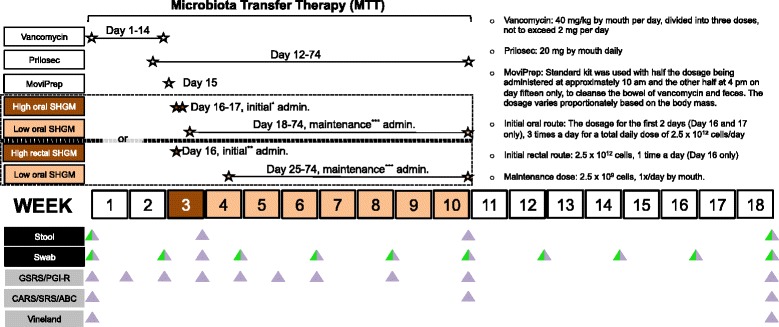
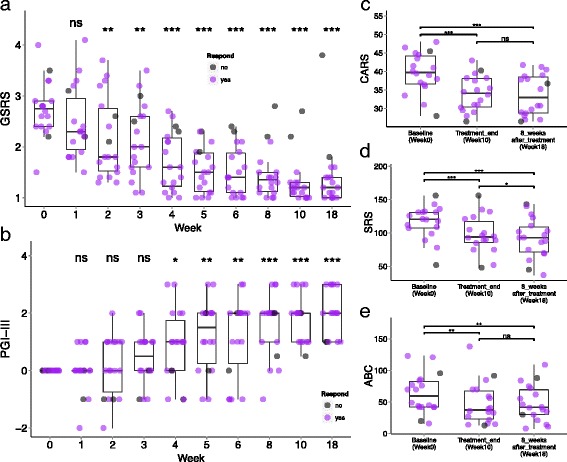
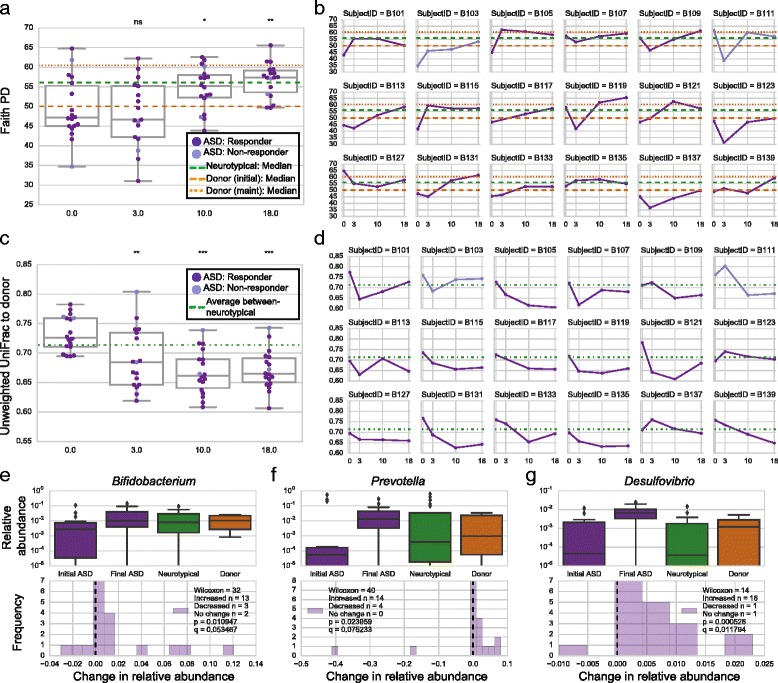
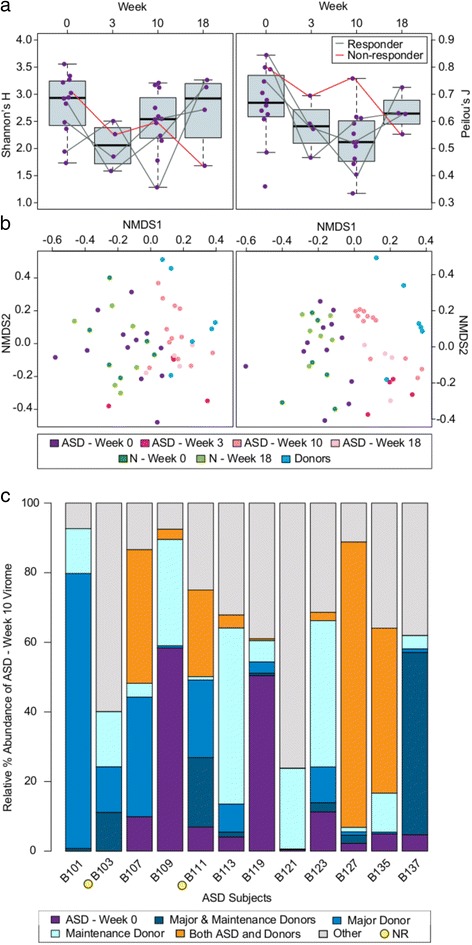
BACKGROUND: bacteria in the human intestines, have been implicated because children with ASD often suffer gastrointestinal (GI) problems that correlate with ASD severity. Several previous studies have reported abnormal gut bacteria in children with ASD. The gut microbiome-ASD connection has been tested in a mouse model of ASD, where the microbiome was mechanistically linked to abnormal metabolites and behavior. Similarly, a study of children with ASD found that oral non-absorbable antibiotic treatment improved GI and ASD symptoms, albeit temporarily. Here, a small open-label clinical trial evaluated the impact of Microbiota Transfer Therapy (MTT) on gut microbiota composition and GI and ASD symptoms of 18 ASD-diagnosed children. RESULTS: MTT involved a 2-week antibiotic treatment, a bowel cleanse, and then an extended fecal microbiota transplant (FMT) using a high initial dose followed by daily and lower maintenance doses for 7-8 weeks. The Gastrointestinal Symptom Rating Scale revealed an approximately 80% reduction of GI symptoms at the end of treatment, including significant improvements in symptoms of constipation, diarrhea, indigestion, and abdominal pain. Improvements persisted 8 weeks after treatment. Similarly, clinical assessments showed that behavioral ASD symptoms improved significantly and remained improved 8 weeks after treatment ended. Bacterial and phagedeep sequencing analyses revealed successful partial engraftment of donor microbiota and beneficial changes in the gut environment. Specifically, overall bacterial diversity and the abundance of Bifidobacterium, Prevotella, and Desulfovibrio among other taxa increased following MTT, and these changes persisted after treatment stopped (followed for 8 weeks). CONCLUSIONS: This exploratory, extended-duration treatment protocol thus appears to be a promising approach to alter the gut microbiome and virome and improve GI and behavioral symptoms of ASD. Improvements in GI symptoms, ASD symptoms, and the microbiome all persisted for at least 8 weeks after treatment ended, suggesting a long-term impact. TRIAL REGISTRATION: This trial was registered on the ClinicalTrials.gov, with the registration number NCT02504554.
Overview
The claims and statistics of this paper haven’t been checked yet.
Free: it reads the open-access text and checks the first 5 claims that cite a source we can check. Create a free account to check every claim.
Integrity signals
Registry
Cites
Statistics
Figures
Verification
Claims the paper makes
The claims and statistics of this paper haven’t been checked yet.
Free: it reads the open-access text and checks the first 5 claims that cite a source we can check. Create a free account to check every claim.
Claims other papers make about this one
Each is checked against this paper’s own text: does it say what the citing paper says it does?
The source backs part of the claim, not all of it — or backs it for a different population, condition or comparison.
In the citing paper
“Following the successful use of FMT in the treatment of refractory or recurrent Clostridium difficile infection, several studies have been conducted to explore FMT as a therapeutic strategy for a wide range of neurological disorders, including multiple sclerosis, epilepsy, ASD, Tourette syndrome, diabetic neuropathy, AD and PD, with promising preclinical and clinical data [30,465,466,467,468].”
From The Interplay between Gut Microbiota and Parkinson’s Disease: Implications on Diagnosis and Treatment (2022) · cites this paper as [466]
Experimental — accuracy not yet measuredThe source backs part of the claim, not all of it — or backs it for a different population, condition or comparison.
In the citing paper
“Among the seven [31, 36, 40–42, 48, 50] papers that reported on beta diversity, four [31, 40, 41, 50] papers showed significant differences in beta diversity between ASD and SIB/HC while the rest did not (Additional file 1: Table S2).”
From Gut microbiota changes in children with autism spectrum disorder: a systematic review (2020) · cites this paper as [40]
Experimental — accuracy not yet measuredThe source backs part of the claim, not all of it — or backs it for a different population, condition or comparison.
In the citing paper
“Further analysis of the alterations of genus and species in ASD, four studies consistently demonstrated a significantly decrease of Bifidobacterium in patients with ASD relative to HCs19,23,27,30.”
From Altered composition and function of intestinal microbiota in autism spectrum disorders: A systematic review (2019) · cites this paper as [19]
Experimental — accuracy not yet measuredThe source backs part of the claim, not all of it — or backs it for a different population, condition or comparison.
In the citing paper
“Among them, three studies18,19,22 indicated the functional modules of gut microbiota in ASD patients were substantially different from that in HCs (Fig. 2).”
From Altered composition and function of intestinal microbiota in autism spectrum disorders: A systematic review (2019) · cites this paper as [19]
Experimental — accuracy not yet measuredThe source backs part of the claim, not all of it — or backs it for a different population, condition or comparison.
In the citing paper
“Although the single study evaluating GI and behavioral outcomes after fecal transplant in ASD was highly successful [94]”
From Serotonin as a link between the gut-brain-microbiome axis in autism spectrum disorders (2018) · cites this paper as [94]
Experimental — accuracy not yet measured
21 more claims about this paper
Create a free account to see every claim other papers make about this one.
Self-check
Percentages, sums and reported differences re-computed from the paper’s own numbers.
The self-check needs the paper’s full text.
Citations
Cites
Trimmomatic: a flexible trimmer for Illumina sequence data
Bolger, A. M., Lohse, M., & Usadel, B. (2014) · Bioinformatics · doi:10.1093/bioinformatics/btu170 · Cited by 65,548 · cited 3×
“The quality control was performed on sequence reads using Trimmomatic [50] to remove adaptors, trim lowquality ends of reads (reads were cut as soon as the base”
MethodInfluentialFast gapped-read alignment with Bowtie 2
Langmead, B., & Salzberg, S. L. (2012) · Nature Methods · doi:10.1038/nmeth.1923 · Cited by 56,400 · cited 2×
“A contig was considered as detected in a sample if covered by reads on more than 75% of its length, and its abundance was computed as the contig average coverage (number of base pairs mapped to the contig divided by contig length) normalized by the total number of base pairs sequenced in the metagenome [56].”
MethodQIIME allows analysis of high-throughput community sequencing data
Caporaso, J. G., Kuczynski, J., Stombaugh, J., Bittinger, K., Bushman, F. D., Costello, E. K., Fierer, N., Peña, A. G., Goodrich, J. K., Gordon, J. I., et al. (2010) · Nature Methods · doi:10.1038/nmeth.f.303 · Cited by 34,887
Self-citationvegan: Community Ecology Package
Oksanen, J., Simpson, G. L., Blanchet, F. G., Kindt, R., Legendre, P., Minchin, P. R., O'Hara, R. B., Solymos, P., Stevens, M. H. H., Szoecs, E., et al. (2001) · CRAN: Contributed Packages · doi:10.32614/cran.package.vegan · Cited by 22,615
Structure, function and diversity of the healthy human microbiome
The Human Microbiome Project Consortium (2012) · Nature · doi:10.1038/nature11234 · Cited by 11,726 · cited 1×
“from FMT efficacy, since inter-individual gut bacterial [77] and viral [47] community variation is high.”
BackgroundA human gut microbial gene catalogue established by metagenomic sequencing
MetaHIT Consortium, Qin, J., Li, R., Raes, J., Arumugam, M., Burgdorf, K. S., Manichanh, C., Nielsen, T., Pons, N., Levenez, F., et al. (2010) · Nature · doi:10.1038/nature08821 · Cited by 11,624 · cited 1×
“Higher gut bacterial diversity and richness are commonly associated with healthy status, presumably due to resilience afforded by higher functional redundancy [62].”
BackgroundCd-hit: a fast program for clustering and comparing large sets of protein or nucleotide sequences
Li, W., & Godzik, A. (2006) · Bioinformatics · doi:10.1093/bioinformatics/btl158 · Cited by 11,410
Lord, C., Rutter, M., & Le Couteur, A. (1994) · Journal of Autism and Developmental Disorders · doi:10.1007/bf02172145 · Cited by 9,065 · cited 1×
“It is not designed to be a measure of autism severity but higher scores are generally consistent with more severe symptoms [39].”
BackgroundUltra-high-throughput microbial community analysis on the Illumina HiSeq and MiSeq platforms
Caporaso, J. G., Lauber, C. L., Walters, W. A., Berg-Lyons, D., Huntley, J., Fierer, N., Owens, S. M., Betley, J., Fraser, L., Bauer, M., et al. (2012) · The ISME Journal · doi:10.1038/ismej.2012.8 · Cited by 8,839
Self-citationConservation evaluation and phylogenetic diversity
Faith, D. P. (1992) · Biological Conservation · doi:10.1016/0006-3207(92)91201-3 · Cited by 5,693
Cited by
Items 201–300 of 1,000
Interactions between central nervous system and peripheral metabolic organs
Zeng, W., Yang, F., Shen, W. L., Zhan, C., Zheng, P., & Hu, J. (2022) · Science China Life Sciences · doi:10.1007/s11427-021-2103-5 · Cited by 110
Liu, R., Kang, J. D., Sartor, R. B., Sikaroodi, M., Fagan, A., Gavis, E. A., Zhou, H., Hylemon, P. B., Herzog, J., Li, X., et al. (2019) · Hepatology · doi:10.1002/hep.30827 · Cited by 110
Eltokhi, A., Janmaat, I. E., Genedi, M., Haarman, B. C. M., & Sommer, I. E. C. (2020) · Journal of Neuroscience Research · doi:10.1002/jnr.24616 · Cited by 98
Fecal Microbial Transplantation for Diseases Beyond Recurrent Clostridium Difficile Infection
D’Haens, G. R., & Jobin, C. (2019) · Gastroenterology · doi:10.1053/j.gastro.2019.04.053 · Cited by 98
Başpınar, B., & Yardımcı, H. (2020) · Eurasian Journal of Medicine · doi:10.5152/eurasianjmed.2020.19230 · Cited by 112
Social interaction-induced activation of RNA splicing in the amygdala of microbiome-deficient mice
Stilling, R. M., Moloney, G. M., Ryan, F. J., Hoban, A. E., Bastiaanssen, T. F., Shanahan, F., Clarke, G., Claesson, M. J., Dinan, T. G., & Cryan, J. F. (2018) · eLife · doi:10.7554/elife.33070 · Cited by 106
Autism Spectrum Disorder and the Gut Microbiota in Children: A Systematic Review
Bezawada, N., Phang, T. H., Hold, G. L., & Hansen, R. (2020) · Annals of Nutrition and Metabolism · doi:10.1159/000505363 · Cited by 95
Microbial Population Changes and Their Relationship with Human Health and Disease
Álvarez‐Mercado, A. I., Navarro-Oliveros, M., Robles-Sánchez, C., Plaza‐Díaz, J., Sáez‐Lara, M. J., Muñoz‐Quezada, S., Fontana, L., & Abadía‐Molina, F. (2019) · Microorganisms · doi:10.3390/microorganisms7030068 · Cited by 105
Role of gastrointestinal health in managing children with autism spectrum disorder
Al‐Beltagi, M., Saeed, N. K., Bediwy, A. S., Elbeltagi, R. M., & Alhawamdeh, R. (2023) · World Journal of Clinical Pediatrics · doi:10.5409/wjcp.v12.i4.171 · Cited by 106
Anorexia nervosa: Gut microbiota-immune-brain interactions
Roubalová, R., Procházková, P., Papežová, H., Smitka, K., Bilej, M., & Tlaskalová-Hogenová, H. (2020) · Clinical Nutrition · doi:10.1016/j.clnu.2019.03.023 · Cited by 95
Fecal Microbial Transplantation and Its Potential Application in Cardiometabolic Syndrome
Leshem, A., Horesh, N., & Elinav, E. (2019) · Frontiers in Immunology · doi:10.3389/fimmu.2019.01341 · Cited by 104
Gut microbiome and human health under the space environment
Siddiqui, R., Akbar, N., & Khan, N. A. (2021) · Journal of Applied Microbiology · doi:10.1111/jam.14789 · Cited by 98
The Brain-Gut-Microbiome System: Pathways and Implications for Autism Spectrum Disorder
Chernikova, M. A., Flores, G. D., Kilroy, E., Labus, J. S., Mayer, E. A., & Aziz-Zadeh, L. (2021) · Nutrients · doi:10.3390/nu13124497 · Cited by 85
Potential roles of gut microbiota and microbial metabolites in Parkinson’s disease
Zheng, S.-Y., Li, H.-X., Xu, R.-C., Miao, W.-T., Dai, M.-Y., Ding, S.-T., & Liu, H.-D. (2021) · Ageing Research Reviews · doi:10.1016/j.arr.2021.101347 · Cited by 101
Microbiota–drug interactions: Impact on metabolism and efficacy of therapeutics
Wilkinson, E. M., Ilhan, Z. E., & Herbst‐Kralovetz, M. M. (2018) · Maturitas · doi:10.1016/j.maturitas.2018.03.012 · Cited by 102
Lombardi, V. C., Meirleir, K. L. D., Subramanian, K., Nourani, S. M., Dagda, R. K., Delaney, S. L., & Palotás, A. (2018) · The Journal of Nutritional Biochemistry · doi:10.1016/j.jnutbio.2018.04.004 · Cited by 103
Interactions between the microbiota and enteric nervous system during gut-brain disorders
Fried, S. G., Wemelle, E., Cani, P. D., & Knauf, C. (2021) · Neuropharmacology · doi:10.1016/j.neuropharm.2021.108721 · Cited by 102
Reprint of: Serotonin as a link between the gut-brain-microbiome axis in autism spectrum disorders
Israelyan, N., & Margolis, K. G. (2019) · Pharmacological Research · doi:10.1016/j.phrs.2018.12.023 · Cited by 100
Gut-brain axis: A matter of concern in neuropsychiatric disorders…!
Naveed, M., Zhou, Q.-G., Chu, X., Taleb, A., Meng, F. J., Ahmed, B., Zhang, Y., Fukunaga, K., & Han, F. (2020) · Progress in Neuro-Psychopharmacology and Biological Psychiatry · doi:10.1016/j.pnpbp.2020.110051 · Cited by 106
Gut microbiota, kynurenine pathway and mental disorders – Review
Więdłocha, M., Marcinowicz, P., Janoska-Jaździk, M., & Szulc, A. (2020) · Progress in Neuro-Psychopharmacology and Biological Psychiatry · doi:10.1016/j.pnpbp.2020.110145 · Cited by 100
Green, J. E., Berk, M., Mohebbi, M., Loughman, A., McGuinness, A. J., Castle, D. J., Chatterton, M. L., Perez, J., Strandwitz, P., Athan, E., et al. (2023) · The Canadian Journal of Psychiatry · doi:10.1177/07067437221150508 · Cited by 102
The microbiota–microglia axis in central nervous system disorders
Mossad, O., & Erny, D. (2020) · Brain Pathology · doi:10.1111/bpa.12908 · Cited by 98
Dargenio, V. N., Dargenio, C., Castellaneta, S., De Giacomo, A., Laguardia, M., Schettini, F., Francavilla, R., & Cristofori, F. (2023) · Nutrients · doi:10.3390/nu15071620 · Cited by 98
“It was found in a study that children with autism experience a significantly shorter breastfeeding period [116].”
BackgroundGastrointestinal involvement of autism spectrum disorder: focus on gut microbiota
Settanni, C. R., Bibbò, S., Ianiro, G., Rinninella, E., Cintoni, M., Mele, M. C., Cammarota, G., & Gasbarrini, A. (2021) · Expert Review of Gastroenterology & Hepatology · doi:10.1080/17474124.2021.1869938 · Cited by 98
“The results were encouraging, but limitations included the absence of placebo group, an open label design, the antibiotic pre-treatment, a small sample size and a poorly homogeneous cohort[159].”
Martin, C. R., & Mayer, E. A. (2017) · Nestlé Nutrition Institute Workshop Series · doi:10.1159/000461732 · Cited by 83
Exploring the microbiome in health and disease: Implications for toxicology
Scotti, E., Boué, S., Sasso, G. L., Zanetti, F., Belcastro, V., Poussin, C., Sierro, N., Battey, J. N. D., Gimalac, A., Ivanov, N. V., et al. (2017) · Toxicology Research and Application · doi:10.1177/2397847317741884 · Cited by 97
Oral microbiome activity in children with autism spectrum disorder
Hicks, S. D., Uhlig, R., Afshari, P., Williams, J. R., Chroneos, M. Z., Tierney‐Aves, C., Wagner, K. E., & Middleton, F. A. (2018) · Autism Research · doi:10.1002/aur.1972 · Cited by 97
Microbiota and Microglia Interactions in ASD
Davoli-Ferreira, M., Thomson, C. A., & McCoy, K. D. (2021) · Frontiers in Immunology · doi:10.3389/fimmu.2021.676255 · Cited by 88
Abnormalities in microbiota/butyrate/FFAR3 signaling in aging gut impair brain function
Mishra, S. P., Jain, S., Wang, B., Wang, S., Miller, B. C., Lee, J.-Y., Borlongan, C. V., Jiang, L., Pollak, J., Taraphder, S., et al. (2024) · JCI Insight · doi:10.1172/jci.insight.168443 · Cited by 98
Hung, L. Y., & Margolis, K. G. (2024) · Nature Reviews Gastroenterology & Hepatology · doi:10.1038/s41575-023-00857-1 · Cited by 96
Mohammadkhah, A. I., Simpson, E. B., Patterson, S. G., & Ferguson, J. F. (2018) · Children · doi:10.3390/children5120160 · Cited by 95
Zhang, J., Bi, J., Guo, G., Yang, L., Zhu, B., Zhan, G., Li, S., Huang, N., Hashimoto, K., Yang, C., et al. (2019) · CNS Neuroscience & Therapeutics · doi:10.1111/cns.13103 · Cited by 95
Review of microbiota gut brain axis and innate immunity in inflammatory and infective diseases
Yuan, C., He, Y., Xie, K., Feng, L., Gao, S., & Cai, L. (2023) · Frontiers in Cellular and Infection Microbiology · doi:10.3389/fcimb.2023.1282431 · Cited by 96
Reciprocal Interactions Between Gut Microbiota and Host Social Behavior
Münger, E., Montiel-Castro, A. J., Langhans, W., & Pacheco-López, G. (2018) · Frontiers in Integrative Neuroscience · doi:10.3389/fnint.2018.00021 · Cited by 86
Therapies to modulate gut microbiota: Past, present and future
Gupta, A., Saha, S., & Khanna, S. (2020) · World Journal of Gastroenterology · doi:10.3748/wjg.v26.i8.777 · Cited by 94
Yang, J., Fu, X. B., Liao, X., & Li, Y. (2020) · Psychiatry Research · doi:10.1016/j.psychres.2020.113471 · Cited by 94
Gut microbiome determines therapeutic effects of OCA on NAFLD by modulating bile acid metabolism
Liu, J., Sun, J., Yu, J., Chen, H., Zhang, D., Zhang, T., Ma, Y., Zou, C., Zhang, Z., Ma, L., et al. (2023) · npj Biofilms and Microbiomes · doi:10.1038/s41522-023-00399-z · Cited by 94
Long-term impact of fecal transplantation in healthy volunteers
Goloshchapov, O. V., Olekhnovich, E. I., Sv, S., Moiseev, I., Kucher, М. A., Fedorov, D. E., Pavlenko, A. V., Manolov, A. I., Валерьевич, Г. В., Veselovsky, V. A., et al. (2019) · BMC Microbiology · doi:10.1186/s12866-019-1689-y · Cited by 94
Zuffa, S., Schimmel, P., Gonzalez-Santana, A., Belzer, C., Knol, J., Bölte, S., Falck‐Ytter, T., Forssberg, H., Swann, J. R., & Heijtz, R. D. (2023) · Translational Psychiatry · doi:10.1038/s41398-023-02556-6 · Cited by 93
Protection of Fecal Microbiota Transplantation in a Mouse Model of Multiple Sclerosis
Li, K., Wei, S., Hu, L., Yin, X., Mai, Y., Jiang, C., Peng, X., Cao, X., Huang, Z., Zhou, H., et al. (2020) · Mediators of Inflammation · doi:10.1155/2020/2058272 · Cited by 92
Maternal Immune Activation and Related Factors in the Risk of Offspring Psychiatric Disorders
Conway, F., & Brown, A. S. (2019) · Frontiers in Psychiatry · doi:10.3389/fpsyt.2019.00430 · Cited by 92
Chen, X., Li, H., Hu, X., Zhang, Y., & Zhang, S. (2019) · Chinese Medical Journal · doi:10.1097/cm9.0000000000000330 · Cited by 92
Ocansey, D. K. W., Wang, L., Wang, J., Yan, Y., Qian, H., Zhang, X., Xu, W., & Mao, F. (2019) · Clinical and Translational Medicine · doi:10.1186/s40169-019-0251-8 · Cited by 93
Melatonin Treatment Alleviates Spinal Cord Injury-Induced Gut Dysbiosis in Mice
Jing, Y., Yang, D., Bai, F., Zhang, C., Qin, C., Li, D., Wang, L., Yang, M., Chen, Z., & Li, J. (2019) · Journal of Neurotrauma · doi:10.1089/neu.2018.6012 · Cited by 88
Doreswamy, S., Bashir, A., Castillo, J. E. G., Lahori, S., Baig, A. S., Narra, L. R., Patel, P. A., & Heindl, S. E. (2020) · Cureus · doi:10.7759/cureus.12222 · Cited by 90
Microbiota and Phage Therapy: Future Challenges in Medicine
Paule, A., Frezza, D., & Edeas, M. A. (2018) · Medical Sciences · doi:10.3390/medsci6040086 · Cited by 91
Mechanisms of the intestinal and urinary microbiome in kidney stone disease
Miller, A. W., Penniston, K. L., Fitzpatrick, K., Agudelo, J., Tasian, G., & Lange, D. (2022) · Nature Reviews Urology · doi:10.1038/s41585-022-00647-5 · Cited by 89
Gargiullo, L., CHIERICO, F. D., D’Argenio, P., & Putignani, L. (2019) · Frontiers in Microbiology · doi:10.3389/fmicb.2019.01704 · Cited by 89
Functional Restoration of Bacteriomes and Viromes by Fecal Microbiota Transplantation
Fujimoto, K., Kimura, Y., Allegretti, J. R., Yamamoto, M., Zhang, Y., Katayama, K., Tremmel, G., Kawaguchi, Y., Shimohigoshi, M., Hayashi, T., et al. (2021) · Gastroenterology · doi:10.1053/j.gastro.2021.02.013 · Cited by 89
Varesi, A., Campagnoli, L. I. M., Fahmideh, F., Pierella, E., Romeo, M., Ricevuti, G., Nicoletta, M., Chirumbolo, S., & Pascale, A. (2022) · International Journal of Molecular Sciences · doi:10.3390/ijms232012289 · Cited by 88
Chains of evidence from correlations to causal molecules in microbiome-linked diseases
Chaudhari, S. N., McCurry, M. D., & Devlin, A. S. (2021) · Nature Chemical Biology · doi:10.1038/s41589-021-00861-z · Cited by 88
He, J., Gong, X., Hu, B., Lin, L., Lin, X., Gong, W., Zhang, B., Cao, M., Xu, Y., Xia, R., et al. (2023) · Scientific Reports · doi:10.1038/s41598-023-46566-2 · Cited by 89
Embodied fortitude: An introduction to the Finnish construct of sisu
Lahti, E. E. (2019) · International Journal of Wellbeing · doi:10.5502/ijw.v9i1.672 · Cited by 92
Shan, B., Ai, Z., Zeng, S., Song, Y., Song, J., Zeng, Q., Liao, Z., Wang, T., Huang, C. C., & Su, D. (2020) · Psychoneuroendocrinology · doi:10.1016/j.psyneuen.2020.104699 · Cited by 87
Tesei, D., Jewczynko, A., Lynch, A., & Urbaniak, C. (2022) · Life · doi:10.3390/life12040495 · Cited by 88
Gut Microbiome: Profound Implications for Diet and Disease
Hills, R. D., Pontefract, B., Mishcon, H. R., Black, C. A., Sutton, S. C., & Theberge, C. R. (2022) · Kompass Nutrition & Dietetics · doi:10.1159/000523712 · Cited by 87
Zhong, H., Xu, J., Yang, M., Hussain, M., Liu, X., Feng, F., & Guan, R. (2023) · Nutrients · doi:10.3390/nu15030496 · Cited by 88
He, Y., Wang, K., Su, N., Yuan, C., Zhang, N., Hu, X., Fu, Y., & Zhao, F. (2024) · Journal of Cellular and Molecular Medicine · doi:10.1111/jcmm.70099 · Cited by 88
Fujimoto, K., Kimura, Y., Shimohigoshi, M., Satoh, T., Sato, S., Tremmel, G., Uematsu, M., Kawaguchi, Y., Usui, Y., Nakano, Y., et al. (2020) · Cell Host & Microbe · doi:10.1016/j.chom.2020.06.005 · Cited by 87
Gastrointestinal Issues and Autism Spectrum Disorder
Madra, M., Ringel, R., & Margolis, K. G. (2021) · Psychiatric Clinics of North America · doi:10.1016/j.psc.2020.11.006 · Cited by 67
Microbial treatment in chronic constipation
Huang, L., Zhu, Q. R., Qu, X., & Qin, H. (2018) · Science China Life Sciences · doi:10.1007/s11427-017-9220-7 · Cited by 86
Integrating Viral Metagenomics into an Ecological Framework
Sommers, P. N., Chatterjee, A., Varsani, A., & Trubl, G. (2021) · Annual Review of Virology · doi:10.1146/annurev-virology-010421-053015 · Cited by 85
Alteration of Gut Microbiota: New Strategy for Treating Autism Spectrum Disorder
Liu, J., Gao, Z., Chuanqi, L., Liu, T., Gao, J., Cai, Y., & Fan, X. (2022) · Frontiers in Cell and Developmental Biology · doi:10.3389/fcell.2022.792490 · Cited by 87
Faith, D. P. (2018) · Springer eBooks · doi:10.1007/978-3-319-93145-6_1 · Cited by 84
Patusco, R., & Ziegler, J. (2018) · Advances in Nutrition · doi:10.1093/advances/nmy031 · Cited by 75
Skott, E., Yang, L. L., Stiernborg, M., Söderström, Å., Rȕegg, J., Schalling, M., Forsell, Y., Giacobini, M., & Lavebratt, C. (2020) · Brain, Behavior, and Immunity · doi:10.1016/j.bbi.2020.05.056 · Cited by 73
Fecal Microbiota Transplantation: The Evolving Risk Landscape
Gupta, S., Mullish, B. H., & Allegretti, J. R. (2021) · The American Journal of Gastroenterology · doi:10.14309/ajg.0000000000001075 · Cited by 84
Guo, Q., Lin, H., Chen, P., Tan, S., Wen, Z., Lin, L., He, J., Wen, J., & Lu, S. (2021) · Bioengineered · doi:10.1080/21655979.2021.1999374 · Cited by 85
Defect Engineering of 2D Materials for Electrochemical Energy Storage
Liu, H., Lei, W., Tong, Z., Li, X., Wu, Z., Jia, Q., Zhang, S., & Zhang, H. (2020) · Advanced Materials Interfaces · doi:10.1002/admi.202000494 · Cited by 83
New insights into irritable bowel syndrome: from pathophysiology to treatment
Hadjivasilis, A., Tsioutis, C., Michalinos, A., Ntourakis, D., Christodoulou, D. K., & Agouridis, A. P. (2019) · Annals of Gastroenterology · doi:10.20524/aog.2019.0428 · Cited by 84
Rose, S., Bennuri, S. C., Murray, K. F., Buie, T., Winter, H., & Frye, R. E. (2017) · PLOS ONE · doi:10.1371/journal.pone.0186377 · Cited by 82
Autism spectrum disorder (ASD): Disturbance of the melatonin system and its implications
Wu, Z., Huang, S., Zou, J.-J., Wang, Q.-X., Naveed, M., Bao, H.-N., Wang, W., Fukunaga, K., & Han, F. (2020) · Biomedicine & Pharmacotherapy · doi:10.1016/j.biopha.2020.110496 · Cited by 83
Kong, Q., Wang, B., Tian, P., Li, X., Zhao, J., Zhang, H., Chen, W., & Wang, G. (2021) · Food & Function · doi:10.1039/d0fo02375b · Cited by 78
Impact of gut microbiota on gut‐distal autoimmunity: a focus on T cells
Sprouse, M. L., Bates, N. A., Felix, K. M., & Wu, H.-J. J. (2019) · Immunology · doi:10.1111/imm.13037 · Cited by 83
The Gut Microbiota and Oxidative Stress in Autism Spectrum Disorders (ASD)
Hu, T., Dong, Y., He, C., Zhao, M., & He, Q. (2020) · Oxidative Medicine and Cellular Longevity · doi:10.1155/2020/8396708 · Cited by 84
An approach to gut microbiota profile in children with autism spectrum disorder
Andreo‐Martínez, P., García-Martínez, N., Sánchez‐Samper, E. P., & Martínez‐González, A. E. (2019) · Environmental Microbiology Reports · doi:10.1111/1758-2229.12810 · Cited by 81
AL-Ayadhi, L. Y., Zayed, N., Bhat, R. S., Moubayed, N., Al-Muammar, M. N., & El-Ansary, A. (2021) · Gut Pathogens · doi:10.1186/s13099-021-00448-y · Cited by 81
Welcome, M. O. (2019) · NeuroMolecular Medicine · doi:10.1007/s12017-019-08547-5 · Cited by 83
Oral microbiota and autism spectrum disorder (ASD)
Olsen, I., & Hicks, S. D. (2019) · Journal of Oral Microbiology · doi:10.1080/20002297.2019.1702806 · Cited by 80
The Mechanisms of CHD8 in Neurodevelopment and Autism Spectrum Disorders
Weissberg, O., & Elliott, E. (2021) · Genes · doi:10.3390/genes12081133 · Cited by 80
Mathee, K., Cickovski, T., Deoraj, A., Stollstorff, M., & Narasimhan, G. (2020) · Journal of Medical Microbiology · doi:10.1099/jmm.0.001112 · Cited by 69
Encapsulated Fecal Microbiota Transplantation: Development, Efficacy, and Clinical Application
Halaweish, H., Boatman, S. M., & Staley, C. M. (2022) · Frontiers in Cellular and Infection Microbiology · doi:10.3389/fcimb.2022.826114 · Cited by 78
Huang, H., Jiang, J., Wang, X., Jiang, K., & Cao, H. (2024) · EClinicalMedicine · doi:10.1016/j.eclinm.2024.102428 · Cited by 78
Gut, Microbiome, and Brain Regulatory Axis: Relevance to Neurodegenerative and Psychiatric Disorders
Stefano, G. B., Pilonis, N., Ptacek, R., Raboch, J., Vnukova, M., & Kream, R. M. (2018) · Cellular and Molecular Neurobiology · doi:10.1007/s10571-018-0589-2 · Cited by 70
Alteration of gut microbiota-associated epitopes in children with autism spectrum disorders
Wang, M., Zhou, J., He, F., Cai, C., Wang, H., Wang, Y., Lin, Y., Rong, H., Cheng, G., Xu, R., et al. (2019) · Brain, Behavior, and Immunity · doi:10.1016/j.bbi.2018.10.006 · Cited by 77
Wu, J., Li, J., Chhetri, G., Muhammad, U., Chen, Y., Li, X., Chen, J., & Wang, Z. (2021) · General Psychiatry · doi:10.1136/gpsych-2021-100529 · Cited by 77
Bundgaard‐Nielsen, C., Lauritsen, M. B., Knudsen, J. K., Rold, L. S., Larsen, M. H., Hindersson, P., Villadsen, A. B., Leutscher, P. D. C., Hagstrøm, S., Nyegaard, M., et al. (2023) · Gut Microbes · doi:10.1080/19490976.2023.2211923 · Cited by 77
Association between gut microbiota and psychiatric disorders: a systematic review
Valle, C. G.-D., Fernández, J., Solá, E., Montoya‐Castilla, I., Morillas, C., & Bañuls, C. (2023) · Frontiers in Psychology · doi:10.3389/fpsyg.2023.1215674 · Cited by 78
The human microbiome in health and disease: hype or hope
Falony, G., Vandeputte, D., Caenepeel, C., Vieira‐Silva, S., Daryoush, T., Vermeire, S., & Raes, J. (2019) · Acta Clinica Belgica · doi:10.1080/17843286.2019.1583782 · Cited by 80
Gastrointestinal alterations in autism spectrum disorder: What do we know?
Bjørklund, G., Pivina, L. M., Dadar, M., Meguid, N. A., Semenova, Y. M., Anwar, M., & Chirumbolo, S. (2020) · Neuroscience & Biobehavioral Reviews · doi:10.1016/j.neubiorev.2020.06.033 · Cited by 77
The Impact of Gut Microbiota-Derived Metabolites in Autism Spectrum Disorders
Marzal, L. N. P., Prince, N., Bajić, D., Roussin, L., Naudon, L., Rabot, S., Garssen, J., Kraneveld, A. D., & Perez‐Pardo, P. (2021) · International Journal of Molecular Sciences · doi:10.3390/ijms221810052 · Cited by 78
Podlesny, D., Arze, C., Dörner, E., Verma, S., Dutta, S., Walter, J., & Fricke, W. F. (2022) · Microbiome · doi:10.1186/s40168-022-01251-w · Cited by 73
Multi-kingdom gut microbiota analyses define COVID-19 severity and post-acute COVID-19 syndrome
Liu, Q., Su, Q., Zhang, F., Tun, H. M., Mak, J. W. Y., Lui, G. C.-Y., Ng, S. S., Ching, J. Y. L., Lu, W., Lu, W., et al. (2022) · Nature Communications · doi:10.1038/s41467-022-34535-8 · Cited by 77
Aljeradat, B., Kumar, D., Abdulmuizz, S., Kundu, M., Almealawy, Y. F., Batarseh, D. R., Atallah, O., Ennabe, M., Alsarafandi, M., Alan, A., et al. (2024) · Pathophysiology · doi:10.3390/pathophysiology31020019 · Cited by 78
Hollander, J. A., Cory-Slechta, D. A., Jacka, F. N., Szabo, S. T., Guilarte, T. R., Bilbo, S. D., Mattingly, C. J., Moy, S. S., Haroon, E., Hornig, M., et al. (2020) · Neuropsychopharmacology · doi:10.1038/s41386-020-0648-5 · Cited by 69
Kandeel, W. A., Meguid, N. A., Bjørklund, G., Eid, E. M., Farid, M. N., Mohamed, S. K., Wakeel, K. E., Chirumbolo, S., Elsaeid, A., & Hammad, D. Y. (2020) · Journal of Molecular Neuroscience · doi:10.1007/s12031-020-01482-2 · Cited by 77
Du, J., Zayed, A. A., Kigerl, K. A., Zane, K., Sullivan, M. B., & Popovich, P. G. (2021) · mSystems · doi:10.1128/msystems.01356-20 · Cited by 76
Self-citationA Revolutionizing Approach to Autism Spectrum Disorder Using the Microbiome
Johnson, D., Letchumanan, V., Thurairajasingam, S., & Lee, L. (2020) · Nutrients · doi:10.3390/nu12071983 · Cited by 77
Stability of the human gut virome and effect of gluten-free diet
Garmaeva, S., Gulyaeva, A. A., Sinha, T., Shkoporov, A. N., Clooney, A. G., Stockdale, S. R., Spreckels, J. E., Sutton, T., Draper, L. A., Dutilh, B. E., et al. (2021) · Cell Reports · doi:10.1016/j.celrep.2021.109132 · Cited by 74
Zhang, J., Zhu, G., Wan, L., Liang, Y., Liu, X., Yan, H., Zhang, B., & Yang, G. (2023) · Frontiers in Psychiatry · doi:10.3389/fpsyt.2023.1123658 · Cited by 53
Metadata
- Authors
- Kang, D.-W., Adams, J. B., Gregory, A. C., Borody, T., Chittick, L., Fasano, A., Khoruts, A., Geis, E., Maldonado, J., McDonough-Means, S., Pollard, E. L., Roux, S., Sadowsky, M. J., Lipson, K. S., Sullivan, M. B., Caporaso, J. G., & Krajmalnik-Brown, R.
- Affiliations
- Arizona State University (US)
- University of Arizona (US)
- Centre For Digestive Diseases (AU)
- Massachusetts General Hospital (US)
- University of Minnesota (US)
- Northern Arizona University (US)
- Corresponding author
- Sullivan, Matthew B.
- Caporaso, J. Gregory
- ORCID
- Venue
- Microbiome
- Published
- 2017-01-23
- Volume
- 5
- Issue
- 1
- Pages
- 10-10
- ISSN
- 2049-2618 (ISSN-L)
- PMC
- PMC5264285
- OpenAlex
- W2581406049
- Cited by
- 1,391
- References
- 81
- Citations by year
- 2026: 114 · 2025: 173 · 2024: 153 · 2023: 154 · 2022: 177 · 2021: 156 · 2020: 165 · 2019: 147 · 2018: 103 · 2017: 47
- FWCI
- 51.58
- Type
- journal article
- Language
- en
- Open access
- gold
- doi.org
- Licence
- cc-by
- Locations
- Microbiome (publishedVersion, cc-by)
- Europe PMC (PubMed Central) (publishedVersion, cc-by)
- PubMed Central (publishedVersion, cc-by)
- PubMed (publishedVersion)
- Arizona State University Library Digital Repository (Arizona State University) (submittedVersion, cc-by)
- eScholarship (California Digital Library) (submittedVersion)
- Funders
- Arizona Board of Regents
- Gordon and Betty Moore Foundation grant (#3790)
- Topics
- Life Sciences › Biochemistry, Genetics and Molecular Biology › Molecular Biology › Gut microbiota and health
- Health Sciences › Medicine › Gastroenterology › Gastrointestinal motility and disorders
- Life Sciences › Neuroscience › Cognitive Neuroscience › Autism Spectrum Disorder Research
- Keywords
- autism spectrum disorder, gut microbiota, fecal microbiota transplantation, gastrointestinal symptoms, constipation, diarrhea, Bifidobacterium, Prevotella, Desulfovibrio, antibiotic therapy, children
- MeSH terms
- Autism Spectrum Disorder, Gastrointestinal Microbiome, Fecal Microbiota Transplantation, Adolescent, Anti-Bacterial Agents, Bacteriophages, Bifidobacterium, Child, Constipation, Desulfovibrio, Diarrhea, DNA, Viral, Female, Gastrointestinal Diseases, Humans, Infant, Male, Abdominal Pain, Prevotella, Probiotics, Gastrointestinal Tract, High-Throughput Nucleotide Sequencing
About these checks
Registry, retraction, Cites and statistics results are computed, not judged, with one exception: a printed reference that no index lists is read once by a model before it counts as a citation error. Claims are extracted by a model and kept only when their quote appears verbatim in the text; each cited source is then checked, with a model’s help, for whether it says what the claim relies on. Those verdicts can be wrong — read the claim’s quote and the cited source before relying on one.
Statistics and arithmetic are recomputed, not judged.
Confidence bands are shown only for fields calibrated on our annotated test set. None is calibrated yet, so no band is shown.
What counts as a claim ›How we measure confidence ›How we check this ›
Are you an author, or do you see a problem with this page? Request a review
Data sources
Bibliographic data: Semantic Scholar, OpenAlex, Crossref.
Contains information from the Semantic Scholar Academic Graph Datasets, made available under the ODC Attribution License (ODC-BY 1.0).
Semantic Scholar’s data is described in: Kinney, R., et al. (2023). The Semantic Scholar Open Data Platform. arXiv:2301.10140.
