

Microbiota Transfer Therapy alters gut ecosystem and improves gastrointestinal and autism symptoms: an open-label study
Open accessThe DOI matches its Crossref record; 80 of the 81 references it cites were found in a registry or an index.
Abstract
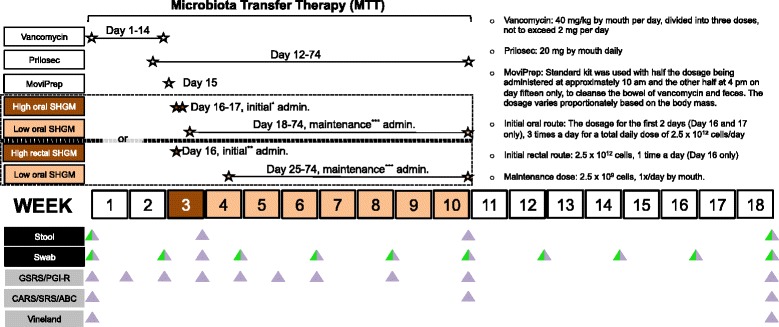
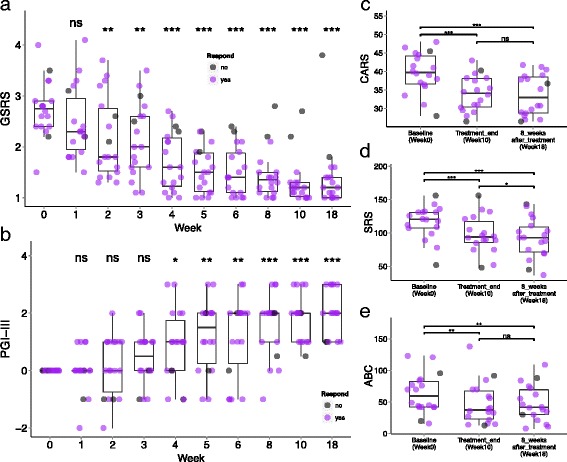
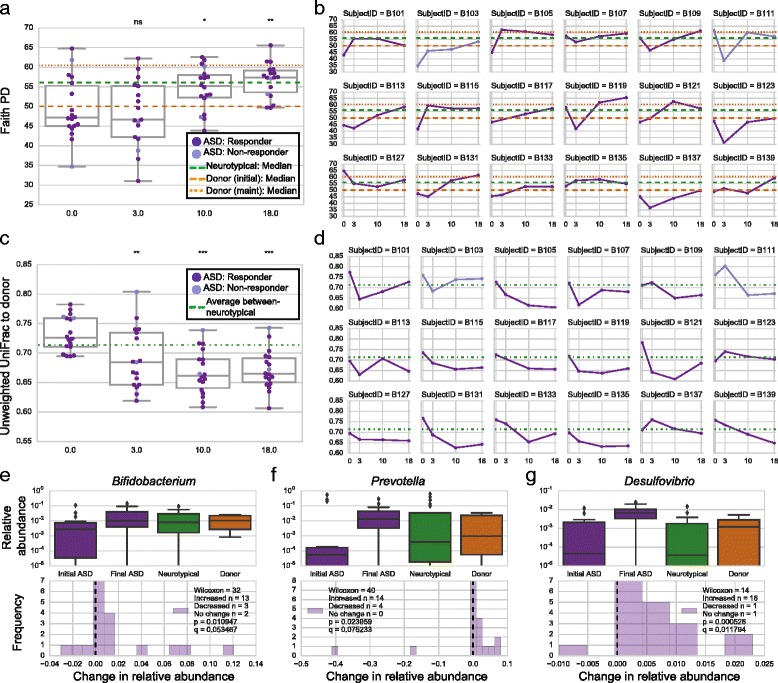
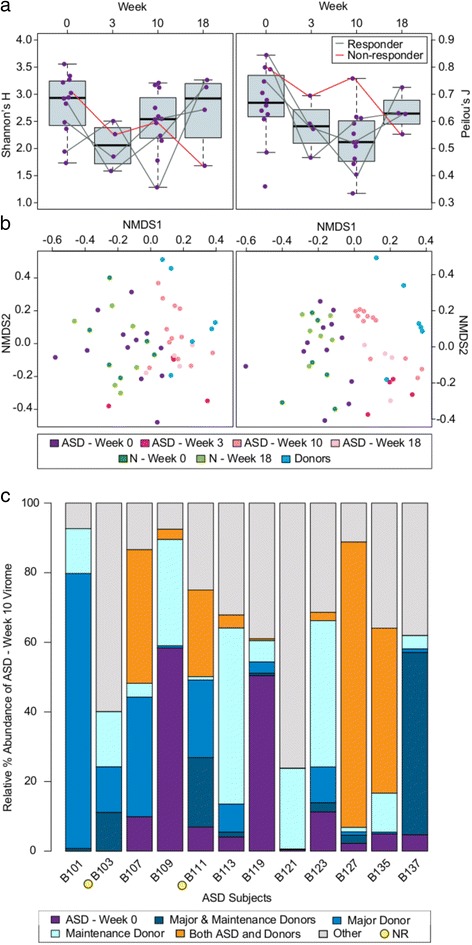
BACKGROUND: bacteria in the human intestines, have been implicated because children with ASD often suffer gastrointestinal (GI) problems that correlate with ASD severity. Several previous studies have reported abnormal gut bacteria in children with ASD. The gut microbiome-ASD connection has been tested in a mouse model of ASD, where the microbiome was mechanistically linked to abnormal metabolites and behavior. Similarly, a study of children with ASD found that oral non-absorbable antibiotic treatment improved GI and ASD symptoms, albeit temporarily. Here, a small open-label clinical trial evaluated the impact of Microbiota Transfer Therapy (MTT) on gut microbiota composition and GI and ASD symptoms of 18 ASD-diagnosed children. RESULTS: MTT involved a 2-week antibiotic treatment, a bowel cleanse, and then an extended fecal microbiota transplant (FMT) using a high initial dose followed by daily and lower maintenance doses for 7-8 weeks. The Gastrointestinal Symptom Rating Scale revealed an approximately 80% reduction of GI symptoms at the end of treatment, including significant improvements in symptoms of constipation, diarrhea, indigestion, and abdominal pain. Improvements persisted 8 weeks after treatment. Similarly, clinical assessments showed that behavioral ASD symptoms improved significantly and remained improved 8 weeks after treatment ended. Bacterial and phagedeep sequencing analyses revealed successful partial engraftment of donor microbiota and beneficial changes in the gut environment. Specifically, overall bacterial diversity and the abundance of Bifidobacterium, Prevotella, and Desulfovibrio among other taxa increased following MTT, and these changes persisted after treatment stopped (followed for 8 weeks). CONCLUSIONS: This exploratory, extended-duration treatment protocol thus appears to be a promising approach to alter the gut microbiome and virome and improve GI and behavioral symptoms of ASD. Improvements in GI symptoms, ASD symptoms, and the microbiome all persisted for at least 8 weeks after treatment ended, suggesting a long-term impact. TRIAL REGISTRATION: This trial was registered on the ClinicalTrials.gov, with the registration number NCT02504554.
Overview
The claims and statistics of this paper haven’t been checked yet.
Free: it reads the open-access text and checks the first 5 claims that cite a source we can check. Create a free account to check every claim.
Integrity signals
Registry
Cites
Statistics
Figures
Verification
Claims the paper makes
The claims and statistics of this paper haven’t been checked yet.
Free: it reads the open-access text and checks the first 5 claims that cite a source we can check. Create a free account to check every claim.
Claims other papers make about this one
Each is checked against this paper’s own text: does it say what the citing paper says it does?
The source backs part of the claim, not all of it — or backs it for a different population, condition or comparison.
In the citing paper
“Following the successful use of FMT in the treatment of refractory or recurrent Clostridium difficile infection, several studies have been conducted to explore FMT as a therapeutic strategy for a wide range of neurological disorders, including multiple sclerosis, epilepsy, ASD, Tourette syndrome, diabetic neuropathy, AD and PD, with promising preclinical and clinical data [30,465,466,467,468].”
From The Interplay between Gut Microbiota and Parkinson’s Disease: Implications on Diagnosis and Treatment (2022) · cites this paper as [466]
Experimental — accuracy not yet measuredThe source backs part of the claim, not all of it — or backs it for a different population, condition or comparison.
In the citing paper
“Among the seven [31, 36, 40–42, 48, 50] papers that reported on beta diversity, four [31, 40, 41, 50] papers showed significant differences in beta diversity between ASD and SIB/HC while the rest did not (Additional file 1: Table S2).”
From Gut microbiota changes in children with autism spectrum disorder: a systematic review (2020) · cites this paper as [40]
Experimental — accuracy not yet measuredThe source backs part of the claim, not all of it — or backs it for a different population, condition or comparison.
In the citing paper
“Further analysis of the alterations of genus and species in ASD, four studies consistently demonstrated a significantly decrease of Bifidobacterium in patients with ASD relative to HCs19,23,27,30.”
From Altered composition and function of intestinal microbiota in autism spectrum disorders: A systematic review (2019) · cites this paper as [19]
Experimental — accuracy not yet measuredThe source backs part of the claim, not all of it — or backs it for a different population, condition or comparison.
In the citing paper
“Among them, three studies18,19,22 indicated the functional modules of gut microbiota in ASD patients were substantially different from that in HCs (Fig. 2).”
From Altered composition and function of intestinal microbiota in autism spectrum disorders: A systematic review (2019) · cites this paper as [19]
Experimental — accuracy not yet measuredThe source backs part of the claim, not all of it — or backs it for a different population, condition or comparison.
In the citing paper
“Although the single study evaluating GI and behavioral outcomes after fecal transplant in ASD was highly successful [94]”
From Serotonin as a link between the gut-brain-microbiome axis in autism spectrum disorders (2018) · cites this paper as [94]
Experimental — accuracy not yet measured
21 more claims about this paper
Create a free account to see every claim other papers make about this one.
Self-check
Percentages, sums and reported differences re-computed from the paper’s own numbers.
The self-check needs the paper’s full text.
Citations
Cites
Trimmomatic: a flexible trimmer for Illumina sequence data
Bolger, A. M., Lohse, M., & Usadel, B. (2014) · Bioinformatics · doi:10.1093/bioinformatics/btu170 · Cited by 65,548 · cited 3×
“The quality control was performed on sequence reads using Trimmomatic [50] to remove adaptors, trim lowquality ends of reads (reads were cut as soon as the base”
MethodInfluentialFast gapped-read alignment with Bowtie 2
Langmead, B., & Salzberg, S. L. (2012) · Nature Methods · doi:10.1038/nmeth.1923 · Cited by 56,400 · cited 2×
“A contig was considered as detected in a sample if covered by reads on more than 75% of its length, and its abundance was computed as the contig average coverage (number of base pairs mapped to the contig divided by contig length) normalized by the total number of base pairs sequenced in the metagenome [56].”
MethodQIIME allows analysis of high-throughput community sequencing data
Caporaso, J. G., Kuczynski, J., Stombaugh, J., Bittinger, K., Bushman, F. D., Costello, E. K., Fierer, N., Peña, A. G., Goodrich, J. K., Gordon, J. I., et al. (2010) · Nature Methods · doi:10.1038/nmeth.f.303 · Cited by 34,887
Self-citationvegan: Community Ecology Package
Oksanen, J., Simpson, G. L., Blanchet, F. G., Kindt, R., Legendre, P., Minchin, P. R., O'Hara, R. B., Solymos, P., Stevens, M. H. H., Szoecs, E., et al. (2001) · CRAN: Contributed Packages · doi:10.32614/cran.package.vegan · Cited by 22,615
Structure, function and diversity of the healthy human microbiome
The Human Microbiome Project Consortium (2012) · Nature · doi:10.1038/nature11234 · Cited by 11,726 · cited 1×
“from FMT efficacy, since inter-individual gut bacterial [77] and viral [47] community variation is high.”
BackgroundA human gut microbial gene catalogue established by metagenomic sequencing
MetaHIT Consortium, Qin, J., Li, R., Raes, J., Arumugam, M., Burgdorf, K. S., Manichanh, C., Nielsen, T., Pons, N., Levenez, F., et al. (2010) · Nature · doi:10.1038/nature08821 · Cited by 11,624 · cited 1×
“Higher gut bacterial diversity and richness are commonly associated with healthy status, presumably due to resilience afforded by higher functional redundancy [62].”
BackgroundCd-hit: a fast program for clustering and comparing large sets of protein or nucleotide sequences
Li, W., & Godzik, A. (2006) · Bioinformatics · doi:10.1093/bioinformatics/btl158 · Cited by 11,410
Lord, C., Rutter, M., & Le Couteur, A. (1994) · Journal of Autism and Developmental Disorders · doi:10.1007/bf02172145 · Cited by 9,065 · cited 1×
“It is not designed to be a measure of autism severity but higher scores are generally consistent with more severe symptoms [39].”
BackgroundUltra-high-throughput microbial community analysis on the Illumina HiSeq and MiSeq platforms
Caporaso, J. G., Lauber, C. L., Walters, W. A., Berg-Lyons, D., Huntley, J., Fierer, N., Owens, S. M., Betley, J., Fraser, L., Bauer, M., et al. (2012) · The ISME Journal · doi:10.1038/ismej.2012.8 · Cited by 8,839
Self-citationConservation evaluation and phylogenetic diversity
Faith, D. P. (1992) · Biological Conservation · doi:10.1016/0006-3207(92)91201-3 · Cited by 5,693
Cited by
Items 801–900 of 1,000
Ahmadi, S., Hasani, A., Khabbaz, A., Poortahmasebi, V., Hosseini, S., Yasdchi, M., Mehdizadehfar, E., Mousavi, Z. B., Hasani, R., Nabizadeh, E., et al. (2024) · Biogerontology · doi:10.1007/s10522-024-10136-4 · Cited by 13
Relationship between T cells and microbiota in health and disease
Kageyama, T., Matsuo, T., Kurakake, R., & Sano, T. (2020) · Progress in molecular biology and translational science · doi:10.1016/bs.pmbts.2020.03.007 · Cited by 13
Banerjee, A., Pradhan, L. K., Sahoo, P. K., Jena, K. K., Chauhan, N. R., Chauhan, S., & Das, S. K. (2021) · Archives of Microbiology · doi:10.1007/s00203-021-02276-9 · Cited by 14
Lombardi, M., & Troisi, J. (2021) · Nutrients · doi:10.3390/nu13103492 · Cited by 13
Liu, Y., Ou, Y., Zhao, J., & Guo, W. (2021) · Journal of Psychiatric Research · doi:10.1016/j.jpsychires.2021.10.016 · Cited by 13
Overview of prospects for inflammation pathways in autism spectrum disorders
Turbé, H., Waeckel, L., & Déchelotte, B. (2019) · L Encéphale · doi:10.1016/j.encep.2019.09.006 · Cited by 13
A reappraisal on amyloid cascade hypothesis: The role of chronic infection in Alzheimer’s disease
Phuna, Z. X., & Madhavan, P. (2023) · International Journal of Neuroscience · doi:10.1080/00207454.2022.2045290 · Cited by 12
The Role of Gut Microbiota in Neuromyelitis Optica Spectrum Disorder
Yao, S., Yang, X., Cen, L., & Tan, S. (2024) · International Journal of Molecular Sciences · doi:10.3390/ijms25063179 · Cited by 13
Wu, X., Cao, T., Ye, J., Shi, R., Bao, X., Ge, Y., Li, D., Hao, S., Liu, F., & Liu, X. (2025) · Journal of Agricultural and Food Chemistry · doi:10.1021/acs.jafc.5c01184 · Cited by 12
Li, T., Chen, J., Mi, K., Lei, J., Ning, Z., Lu, L., Su, Z., Zhu, Q., Lin, M., Wang, Y., et al. (2025) · Molecular Psychiatry · doi:10.1038/s41380-025-03164-0 · Cited by 12
Probiotics, gut microbiota, and brain health: Exploring therapeutic pathways.
Vijayaram, S., Mahendran, K., Razafindralambo, H. L., Ringø, E., Kannan, S., & Sun, Y. (2025) · Europe PMC (PubMed Central) · doi:10.3934/microbiol.2025022 · Cited by 12
Emerging roles for microglia and microbiota in the development of social circuits
Smith, C. J. W. (2021) · Brain Behavior & Immunity - Health · doi:10.1016/j.bbih.2021.100296 · Cited by 13
Li, K., Hu, Z., Ou, J., & Xia, K. (2019) · Global Clinical and Translational Research · doi:10.36316/gcatr.01.0006 · Cited by 12
Characteristics of the Gut Microbiota in Young Adults with Autism Spectrum Disorder
Pang, X., Zhang, Q., Wang, Y., Zhan, Y., Guo, M., Chen, B., Quan, L., & Zheng, H. (2023) · Journal of Integrative Neuroscience · doi:10.31083/j.jin2206141 · Cited by 12
The role and impact of abnormal vitamin levels in autism spectrum disorders
Cui, J., Zhai, Z., Wang, S., Song, X., Qiu, T., Yu, L., Zhai, Q., & Zhang, H. (2024) · Food & Function · doi:10.1039/d3fo03735e · Cited by 12
Hazan, S., Haroon, J. M., Jordan, S., & Walker, S. J. (2024) · Journal of Medical Cases · doi:10.14740/jmc4209 · Cited by 12
Thakur, P., Baraskar, K., Shrivastava, V. K., & Medhi, B. (2024) · Brain Research · doi:10.1016/j.brainres.2024.149176 · Cited by 12
Gut-Microbiota-Brain Axis and Depression
Evrensel, A., & Ceylan, M. E. (2017) · Springer eBooks · doi:10.1007/978-981-10-6580-4_17 · Cited by 12
Diet, microbe, and autism: Cause or consequence?
Li, G., Song, B., Wang, C., Tang, D., Li, K., He, X., & Cao, Y. (2022) · Cell Host & Microbe · doi:10.1016/j.chom.2021.12.018 · Cited by 12
Faecal microbiota transplantation: indications, evidence and safety
Soo, W. T., Bryant, R. V., & Costello, S. P. (2020) · Australian Prescriber · doi:10.18773/austprescr.2020.014 · Cited by 12
Mishra, S. P., Wang, B., Wang, S., Nagpal, R., Miller, B. C., Jain, S., Lee, J.-Y., Borlongan, C. V., Taraphdar, S., Rane, S. G., et al. (2021) · bioRxiv (Cold Spring Harbor Laboratory) · doi:10.1101/2021.08.18.456856 · Cited by 12
Clostridioides difficile and neurological disorders: new perspectives
Biazzo, M., Allegra, M., & Deidda, G. (2022) · Frontiers in Neuroscience · doi:10.3389/fnins.2022.946601 · Cited by 11
Qin, B., Li, Z., Zhu, Q., Chen, T., Lan, W., Cui, Y., Azad, M. A. K., & Kong, X. (2024) · Animals · doi:10.3390/ani14192786 · Cited by 11
Indoxyl Sulfate and Autism Spectrum Disorder: A Literature Review
Hill, Z. R., Flynn, C. K., & Adams, J. B. (2024) · International Journal of Molecular Sciences · doi:10.3390/ijms252312973 · Cited by 11
Self-citationHarigai, W., Mikami, K., Choudhury, M. E., Yamauchi, H., Yajima, C., Shimizu, S., Miyaue, N., Nagai, M., Kubo, M., Tanaka, J., et al. (2025) · Journal of Pharmacological Sciences · doi:10.1016/j.jphs.2025.01.007 · Cited by 11
Zhang, Y., Li, H., Li, B., Li, Y., Chai, X., Li, S., Xia, X., Li, H., Zhao, Y., Tang, Y., et al. (2025) · Frontiers in Microbiology · doi:10.3389/fmicb.2025.1535451 · Cited by 11
Biegańska, E. A., Kosinski, P. D., & Wolski, M. (2025) · Biomedicines · doi:10.3390/biomedicines13061393 · Cited by 11
Obesity and cancer: unravelling the microbiome’s hidden role
Gaskell, C., MacDonald, R. S., Aleem, E. A., & Bendriss, G. (2025) · Frontiers in Nutrition · doi:10.3389/fnut.2025.1602603 · Cited by 11
Zhong, H., Pan, Z.-Y., Wei, Y.-F., Yu, Q., Wu, L., Hong Kui, W. E. I., & He, X. (2025) · Journal of Translational Medicine · doi:10.1186/s12967-025-06846-z · Cited by 12
Sun, W., Ma, L., Feng, X., Fan, Y., Cai, Y., & Li, X. (2025) · Psychology Health & Medicine · doi:10.1080/13548506.2025.2565181 · Cited by 11
Mallaret, G., Canaguier, J., Callebert, J., Caramello, N., Fabregat‐Safont, D., Glaichenhaus, N., Pozo, Ó. J., Launay, J., & Davidovic, L. (2025) · Communications Biology · doi:10.1038/s42003-025-09207-0 · Cited by 11
Nayak, A., Bera, S., Purohit, S., & Jain, C. K. (2025) · Behavioural Brain Research · doi:10.1016/j.bbr.2025.116019 · Cited by 11
Microbiota–Gut–Brain Axis: Pathophysiological Mechanism in Neuropsychiatric Disorders
Shin, C., & Kim, Y. (2023) · Advances in experimental medicine and biology · doi:10.1007/978-981-19-7376-5_2 · Cited by 11
Can we model autism using zebrafish?
Washbourne, P. (2023) · Development Growth & Differentiation · doi:10.1111/dgd.12888 · Cited by 11
Ferina, J., Kruger, M., Krüger, U., Ryan, D., Anderson, C., Foster, J., Hamlin, T., & Hahn, J. (2023) · Journal of Personalized Medicine · doi:10.3390/jpm13101513 · Cited by 11
The gut microbiome and sociability
Weber, K. T., Varian, B. J., & Erdman, S. E. (2024) · Frontiers in Neuroscience · doi:10.3389/fnins.2024.1372274 · Cited by 11
Khajah, M. A. (2017) · Scandinavian Journal of Gastroenterology · doi:10.1080/00365521.2017.1347812 · Cited by 11
Specialized Diet Therapies: Exploration for Improving Behavior in Autism Spectrum Disorder (ASD)
Bjørklund, G., Meguid, N. A., Dadar, M., Pivina, L. M., Kałużna‐Czaplińska, J., Jóźwik-Pruska, J., Aaseth, J., Chartrand, M. S., Waly, M. I., Al-Farsi, Y. M., et al. (2020) · Current Medicinal Chemistry · doi:10.2174/0929867327666200217101908 · Cited by 11
Immune Modulatory Treatments for Autism Spectrum Disorder
Thom, R. P., & McDougle, C. J. (2020) · Seminars in Pediatric Neurology · doi:10.1016/j.spen.2020.100836 · Cited by 12
Effects of delivery mode on behavior in mouse offspring
Zachariassen, L. F., Sørensen, D. B., Krych, Ł., Hansen, A. K., & Hansen, C. H. F. (2020) · Physiology & Behavior · doi:10.1016/j.physbeh.2020.113285 · Cited by 11
Saposnik, F., & Huber, J. F. (2020) · JMIR Pediatrics and Parenting · doi:10.2196/20913 · Cited by 12
Zheng, Y., Prince, N., van Hattem, C., Garssen, J., Perez‐Pardo, P., & Kraneveld, A. D. (2022) · Molecular and Cellular Neuroscience · doi:10.1016/j.mcn.2022.103805 · Cited by 11
Neurosains Spiritual: Hubungan Manusia, Alam, dan Tuhan
Pasiak, T. F. (2023) · Penerbit BRIN eBooks · doi:10.55981/brin.594 · Cited by 11
Gut Microbiome and Sex Bias in Autism Spectrum Disorders
El-Ansary, A. K., Bhat, R. S., & Zayed, N. (2020) · Current Behavioral Neuroscience Reports · doi:10.1007/s40473-020-00197-3 · Cited by 11
Skonieczna‐Żydecka, K., Łoniewski, I., Maciejewska, D., & Marlicz, W. M. (2017) · Aktualności Neurologiczne · doi:10.15557/an.2017.0020 · Cited by 11
Hu, D.-X., Lu, C.-M., Si, X.-Y., Wu, Q.-T., Wu, L.-H., Zhong, H.-J., & He, X.-X. (2025) · Frontiers in Pediatrics · doi:10.3389/fped.2025.1528167 · Cited by 10
Siddiqui, R., Lloyd, D., Maciver, S. K., & Khan, N. A. (2025) · Discover Medicine · doi:10.1007/s44337-025-00490-8 · Cited by 10
Villagomez, P. E., Hinojosa-Figueroa, M. S., Vallejo, P., Pérez, F., Burneo, G., Villarreal, C., Rodas, J. A., & León-Rojas, J. E. (2026) · Frontiers in Neuroscience · doi:10.3389/fnins.2026.1728473 · Cited by 10
Nanjing Consensus II on Washed Microbiota Transplantation: Statements From the CHINAGUT Conference
Zhang, F., Wong, H. S., Lu, G., Pi, Z., Zhang, T., Yu, H. H., Bu, N., Chen, X., Cui, B., Dafa, D., et al. (2026) · Microbiota Medicine Research · doi:10.1002/mmr3.70006 · Cited by 10
Akasaka, K., Akasaka, F., Akasaka, T., Okada, K., & Sadahiro, S. (2022) · Medicine · doi:10.1097/md.0000000000030369 · Cited by 10
Exercise Changes Gut Microbiota: A New Idea to Explain that Exercise Improves Autism
Xue, Y., An, S., Qiu, W., Zhang, W., Li-min, F., & Zhen, Z. (2023) · International Journal of Sports Medicine · doi:10.1055/a-2018-2477 · Cited by 11
Sadowsky, M. J., Matson, M., Mathai, P. P., Pho, M., Staley, C. M., Evert, C., Weldy, M., & Khoruts, A. (2024) · Digestive Diseases and Sciences · doi:10.1007/s10620-024-08351-7 · Cited by 10
Self-citationMoutsoglou, D., Syal, A., Lopez, S., Nelson, E. C., Chen, L., Kabage, A. J., Fischer, M., Khoruts, A., Vaughn, B. P., & Staley, C. M. (2024) · Journal of Crohn s and Colitis · doi:10.1093/ecco-jcc/jjae142 · Cited by 10
Self-citationFood and the gut: relevance to some of the autisms
Whiteley, P. (2017) · Proceedings of The Nutrition Society · doi:10.1017/s0029665117002798 · Cited by 10
Abdominal Pain in Children and Adolescents with Autism Spectrum Disorder: a Systematic Review
Lanyi, J., Flynn, C., Mannion, A., Maher, L., Naughton, K., & Leader, G. (2021) · Review Journal of Autism and Developmental Disorders · doi:10.1007/s40489-021-00257-8 · Cited by 10
Purushotham, S. S., Reddy, N. M. N., D’Souza, M. N., Choudhury, N. R., Ganguly, A., Gopalakrishna, N., Muddashetty, R. S., & Clement, J. P. (2022) · Experimental Brain Research · doi:10.1007/s00221-022-06448-x · Cited by 10
Donovan, M. L., Mackey, C. S., Lynch, M. D. J., Platt, G. N., Brown, A. N., Washburn, B. K., Trickey, D. J., Curtis, J. T., Liu, Y., Charles, T. C., et al. (2023) · Frontiers in Microbiology · doi:10.3389/fmicb.2023.1015666 · Cited by 10
Evolving Technologies in Gastrointestinal Microbiome Era and Their Potential Clinical Applications
Ajayi, A., Jolaiya, T. F., & Smith, S. I. (2020) · Journal of Clinical Medicine · doi:10.3390/jcm9082565 · Cited by 10
Bermudez-Martin, P., Becker, J. A. J., Caramello, N., Fernandez, S. P., Campos, R. C., Canaguier, J., Barbosa, S., Martinez-Gili, L., Myridakis, A., Dumas, M., et al. (2020) · bioRxiv (Cold Spring Harbor Laboratory) · doi:10.1101/2020.05.18.101147 · Cited by 10
Multi-omic analysis along the gut-brain axis points to a functional architecture of autismPreprint
Morton, J. T., Jin, D.-M., Mills, R. H., Shao, Y., Rahman, G., McDonald, D. T., Berding, K., Needham, B. D., Zurita, M. F., David, M. M., et al. (2022) · bioRxiv (Cold Spring Harbor Laboratory) · doi:10.1101/2022.02.25.482050 · Cited by 10
Chavira, A., Wang, E. H.-J., & Mills, R. H. (2022) · bioRxiv (Cold Spring Harbor Laboratory) · doi:10.1101/2022.03.18.484910 · Cited by 10
Cui, J., Wang, S., Zhai, Z., Song, X., Qiu, T., Yu, L., Zhai, Q., & Zhang, H. (2024) · Food & Function · doi:10.1039/d4fo00279b · Cited by 9
Diagnosing and engineering gut microbiomes
Barazzone, E. C., Diard, M., Hug, I., Larsson, L., & Slack, E. M. C. (2024) · EMBO Molecular Medicine · doi:10.1038/s44321-024-00149-4 · Cited by 9
Effect of maternal diet on gut bacteria and autism spectrum disorder in offspring
Chen, Z., Wang, X., Hu, Y., Zhang, S., & Han, F. (2025) · Frontiers in Cellular Neuroscience · doi:10.3389/fncel.2025.1623576 · Cited by 9
Zhang, F., Xu, W., Tang, Q., & Huang, J. (2025) · Scientific Reports · doi:10.1038/s41598-025-15921-w · Cited by 9
Tian, C., Yang, M., Chen, K., Luo, D., Yue, N.-N., Zhao, H., Zhang, Y., Lu, J., Liang, Y.-J., Song, Y., et al. (2025) · Journal of Inflammation Research · doi:10.2147/jir.s514838 · Cited by 9
Twnbiome: a public database of the healthy Taiwanese gut microbiome
Chattopadhyay, A. S., Lee, C., Lee, Y., Liu, C.-L., Chen, H.-K., Li, Y.-H., Lai, L., Tsai, M., Ni, Y., Chiu, H., et al. (2023) · BMC Bioinformatics · doi:10.1186/s12859-023-05585-6 · Cited by 9
Zhang, F., Yang, X., Jiang, Y., Mao, X., Liu, H., Yang, Y., Chen, J., Chen, Z., Li, H., Zhang, X., et al. (2024) · Frontiers in Microbiology · doi:10.3389/fmicb.2024.1331130 · Cited by 9
The Systematics and Phylogeny of Myxomycetes: Yesterday, Today, and Tomorrow
Мороз, Е. Л., Gmoshinskiy, V. I., Shchepin, O. N., & Novozhilov, Y. K. (2024) · Doklady Biological Sciences · doi:10.1134/s0012496624701242 · Cited by 9
Kabage, A. J., Haselhorst, P. J., & Khoruts, A. (2025) · Gut Microbes · doi:10.1080/19490976.2025.2508950 · Cited by 9
Self-citationMicrobiome and Diseases: Neurological Disorders
Slingerland, A. E., & Stein‐Thoeringer, C. K. (2018) · Springer eBooks · doi:10.1007/978-3-319-90545-7_18 · Cited by 9
Kim, M., Chung, S., Yang, J.-C., Park, J., Nam, S. H., & Park, T. W. (2020) · Journal of korean Academy of Child and Adolescent Psychiatry · doi:10.5765/jkacap.200013 · Cited by 9
Zhang, X., Liu, L., Bai, W., Han, Y., & Hou, X. (2021) · Frontiers in Pediatrics · doi:10.3389/fped.2021.690339 · Cited by 9
Cauli, O., Guevara-González, J., Guevara-Campos, J., & González, L. (2021) · Current Clinical Pharmacology · doi:10.2174/2772432816666210805141257 · Cited by 9
Tataru, C. A., Martin, A., Dunlap, K., Peras, M., Chrisman, B., Rutherford, E. M., Deitzler, G. E., Phillips, A., Yin, X., Sabino, K., et al. (2021) · ISME Communications · doi:10.1038/s43705-021-00080-6 · Cited by 10
Lee, Y.-F., Wu, M., Sheng‐Kai, K., Huang, J., & Wei, J. C. (2023) · Frontiers in Psychiatry · doi:10.3389/fpsyt.2023.1116239 · Cited by 9
Comprehensive microbiome causal mediation analysis using MiMed on user-friendly web interfaces
Jang, H., Park, S., & Koh, H. (2023) · Biology Methods and Protocols · doi:10.1093/biomethods/bpad023 · Cited by 9
Could Gut Modulation through Probiotic Supplementation Be Beneficial in Autism Spectrum Disorder?
Khatib, R. E., Karam‐Sarkis, D., Waligora‐Dupriet, A., & Butel, M. (2020) · IntechOpen eBooks · doi:10.5772/intechopen.89375 · Cited by 9
Qureshi, F. A., Adams, J. B., AUDHYA, T. K., & Hahn, J. (2022) · Journal of Personalized Medicine · doi:10.3390/jpm12060923 · Cited by 9
Self-citationCongenital Infection Influence on Early Brain Development Through the Gut-Brain Axis
Kirschen, G. W., Panda, S., & Burd, I. D. (2022) · Frontiers in Neuroscience · doi:10.3389/fnins.2022.894955 · Cited by 9
Bibliometric and visual analysis of fecal microbiota transplantation research from 2012 to 2021
Zhang, F., Yang, P., Chen, Y., Wang, R., Liu, B., Wang, J., Yuan, M., & Zhang, L. (2022) · Frontiers in Cellular and Infection Microbiology · doi:10.3389/fcimb.2022.1057492 · Cited by 9
Camargo, L. O. S. (2025) · Jornal Brasileiro de Psiquiatria · doi:10.1590/0047-2085-2024-0044 · Cited by 8
Zheng, P., Zhao, H., Zhang, X., Wu, Q., Zheng, Z., & Liu, S. (2025) · Frontiers in Nutrition · doi:10.3389/fnut.2025.1643147 · Cited by 8
Ferina, J., Dando, E., Anderson, C., Foster, J., Lantz, J. F., Hamlin, T., & Hahn, J. (2025) · Journal of Personalized Medicine · doi:10.3390/jpm15100453 · Cited by 8
Flynn, C. K., Carr, K., Whiteley, P., Nirmalkar, K., Bellinghiere, A., Hahn, J., Liu, H., Arici, H., Hewitson, L. C., Devlin, M., et al. (2026) · Molecular Psychiatry · doi:10.1038/s41380-026-03620-5 · Cited by 8
Self-citationDiet and gut microbiota during depression and stress
Khazaei, M., Bahar, A., Arabestani, M. R., & Tahmasebi, H. (2026) · Discover Food · doi:10.1007/s44187-026-00846-8 · Cited by 8
Psychobiotics and the microbiota–gut–brain axis: Emerging paradigms in mental health modulation
Ghahari, A., Nourizadeh, M., SalekShahabi, M., Davari, S., & Mounesyar, S. M. (2026) · Experimental Physiology · doi:10.1113/ep093301 · Cited by 8
Gut barrier dysfunction and type 2 immunity: Implications for compulsive behavior
Fields, C. T., Chassaing, B., & Vries, G. J. D. (2022) · Medical Hypotheses · doi:10.1016/j.mehy.2022.110799 · Cited by 8
Role of the gut microbiome in multiple sclerosis: From etiology to therapeutics
Shahi, S. K., Yadav, M., Ghimire, S., & Mangalam, A. K. (2022) · International review of neurobiology · doi:10.1016/bs.irn.2022.06.001 · Cited by 9
The Relationship Between Gut Microbiome and Ophthalmologic Diseases: A Comprehensive Review
Barrientos, J. L., Huerta, A. R., Mendoza, A. A. P., Lopez, B. A. A., Vargas, V. P. S., González, O. Y. G., Ruiz, M. A. S., Diarte, E., & Sarria, A. J. T. (2024) · Cureus · doi:10.7759/cureus.66808 · Cited by 8
Mihailovich, M., Bajić, S. S., Dinić, M., Đokić, J., Živković, M., Radojević, D., & Golić, N. (2024) · International Journal of Molecular Sciences · doi:10.3390/ijms251810156 · Cited by 8
Sopel, A., Szczuciński, W., Gosiewski, T., & Salamon, D. (2024) · Gastroenterology Review · doi:10.5114/pg.2024.146118 · Cited by 7
Saeedi, N., Pourabdolhossein, F., Dadashi, M., suha, A. J., Janahmadi, M., Behzadi, G., & Hosseinmardi, N. (2025) · Addiction Biology · doi:10.1111/adb.70034 · Cited by 8
Association between Prenatal Particulate Matter Exposure and Neuropsychiatric Disorders Development
Bae, H. J., Mony, T. J., & Park, S. J. (2025) · Biomolecules & Therapeutics · doi:10.4062/biomolther.2025.031 · Cited by 9
Microbial therapeutic tools for human brain disorders: A current overview
Borrego-Ruiz, A., & Borrego, J. J. (2025) · Brain Disorders · doi:10.1016/j.dscb.2025.100262 · Cited by 8
(2019) · Global Clinical and Translational Research · doi:10.20900/gctr20190004 · Cited by 8
Pacini, S., & Marco Ruggiero, S. (2020) · Journal of Neurology & Stroke · doi:10.15406/jnsk.2020.10.00416 · Cited by 8
Brzóska‐Konkol, E., Remberk, B., & Papasz‐Siemieniuk, A. (2022) · Postępy Psychiatrii i Neurologii · doi:10.5114/ppn.2022.115244 · Cited by 8
Kim, A. J. H., Zisman, C. R., & Holingue, C. (2022) · Current topics in behavioral neurosciences · doi:10.1007/7854_2022_371 · Cited by 8
Evolutionary Insights Into Microbiota Transplantation in Inflammatory Bowel Disease
Wang, X., Zhao, J., Feng, Y., Feng, Z., Ye, Y., Liu, L., Kang, G., & Cao, X. (2022) · Frontiers in Cellular and Infection Microbiology · doi:10.3389/fcimb.2022.916543 · Cited by 8
Metadata
- Authors
- Kang, D.-W., Adams, J. B., Gregory, A. C., Borody, T., Chittick, L., Fasano, A., Khoruts, A., Geis, E., Maldonado, J., McDonough-Means, S., Pollard, E. L., Roux, S., Sadowsky, M. J., Lipson, K. S., Sullivan, M. B., Caporaso, J. G., & Krajmalnik-Brown, R.
- Affiliations
- Arizona State University (US)
- University of Arizona (US)
- Centre For Digestive Diseases (AU)
- Massachusetts General Hospital (US)
- University of Minnesota (US)
- Northern Arizona University (US)
- Corresponding author
- Sullivan, Matthew B.
- Caporaso, J. Gregory
- ORCID
- Venue
- Microbiome
- Published
- 2017-01-23
- Volume
- 5
- Issue
- 1
- Pages
- 10-10
- ISSN
- 2049-2618 (ISSN-L)
- PMC
- PMC5264285
- OpenAlex
- W2581406049
- Cited by
- 1,391
- References
- 81
- Citations by year
- 2026: 114 · 2025: 173 · 2024: 153 · 2023: 154 · 2022: 177 · 2021: 156 · 2020: 165 · 2019: 147 · 2018: 103 · 2017: 47
- FWCI
- 51.58
- Type
- journal article
- Language
- en
- Open access
- gold
- doi.org
- Licence
- cc-by
- Locations
- Microbiome (publishedVersion, cc-by)
- Europe PMC (PubMed Central) (publishedVersion, cc-by)
- PubMed Central (publishedVersion, cc-by)
- PubMed (publishedVersion)
- Arizona State University Library Digital Repository (Arizona State University) (submittedVersion, cc-by)
- eScholarship (California Digital Library) (submittedVersion)
- Funders
- Arizona Board of Regents
- Gordon and Betty Moore Foundation grant (#3790)
- Topics
- Life Sciences › Biochemistry, Genetics and Molecular Biology › Molecular Biology › Gut microbiota and health
- Health Sciences › Medicine › Gastroenterology › Gastrointestinal motility and disorders
- Life Sciences › Neuroscience › Cognitive Neuroscience › Autism Spectrum Disorder Research
- Keywords
- autism spectrum disorder, gut microbiota, fecal microbiota transplantation, gastrointestinal symptoms, constipation, diarrhea, Bifidobacterium, Prevotella, Desulfovibrio, antibiotic therapy, children
- MeSH terms
- Autism Spectrum Disorder, Gastrointestinal Microbiome, Fecal Microbiota Transplantation, Adolescent, Anti-Bacterial Agents, Bacteriophages, Bifidobacterium, Child, Constipation, Desulfovibrio, Diarrhea, DNA, Viral, Female, Gastrointestinal Diseases, Humans, Infant, Male, Abdominal Pain, Prevotella, Probiotics, Gastrointestinal Tract, High-Throughput Nucleotide Sequencing
About these checks
Registry, retraction, Cites and statistics results are computed, not judged, with one exception: a printed reference that no index lists is read once by a model before it counts as a citation error. Claims are extracted by a model and kept only when their quote appears verbatim in the text; each cited source is then checked, with a model’s help, for whether it says what the claim relies on. Those verdicts can be wrong — read the claim’s quote and the cited source before relying on one.
Statistics and arithmetic are recomputed, not judged.
Confidence bands are shown only for fields calibrated on our annotated test set. None is calibrated yet, so no band is shown.
What counts as a claim ›How we measure confidence ›How we check this ›
Are you an author, or do you see a problem with this page? Request a review
Data sources
Bibliographic data: Semantic Scholar, OpenAlex, Crossref.
Contains information from the Semantic Scholar Academic Graph Datasets, made available under the ODC Attribution License (ODC-BY 1.0).
Semantic Scholar’s data is described in: Kinney, R., et al. (2023). The Semantic Scholar Open Data Platform. arXiv:2301.10140.
