

Microbiota Transfer Therapy alters gut ecosystem and improves gastrointestinal and autism symptoms: an open-label study
Open accessThe DOI matches its Crossref record; 80 of the 81 references it cites were found in a registry or an index.
Abstract
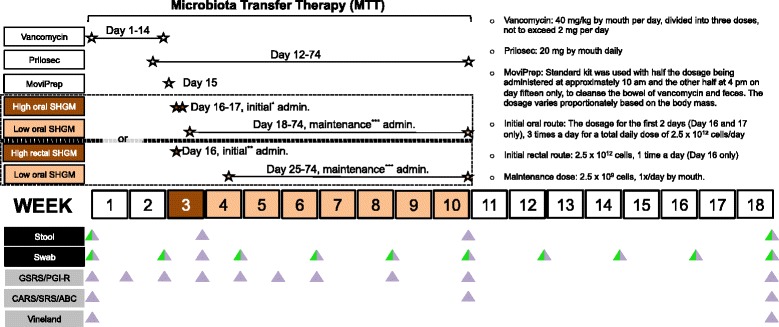
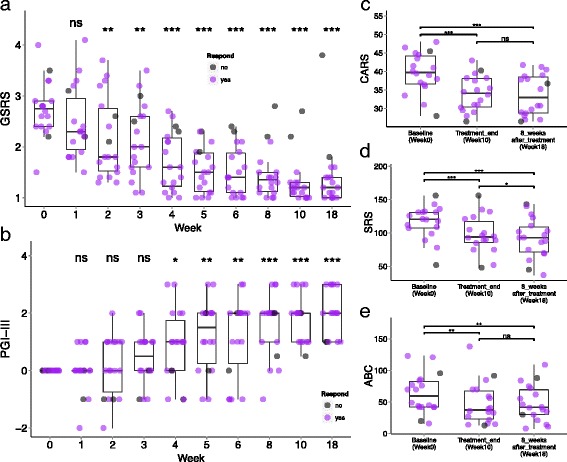
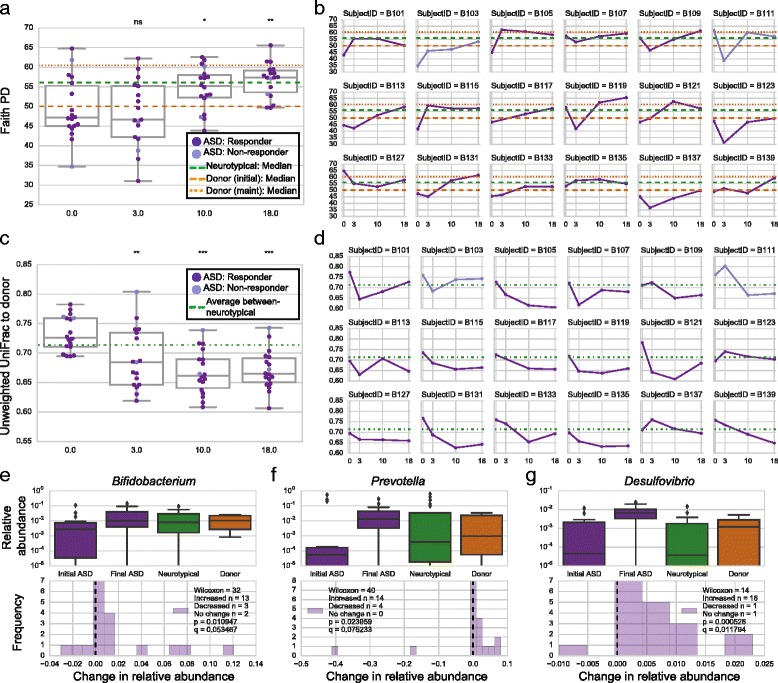
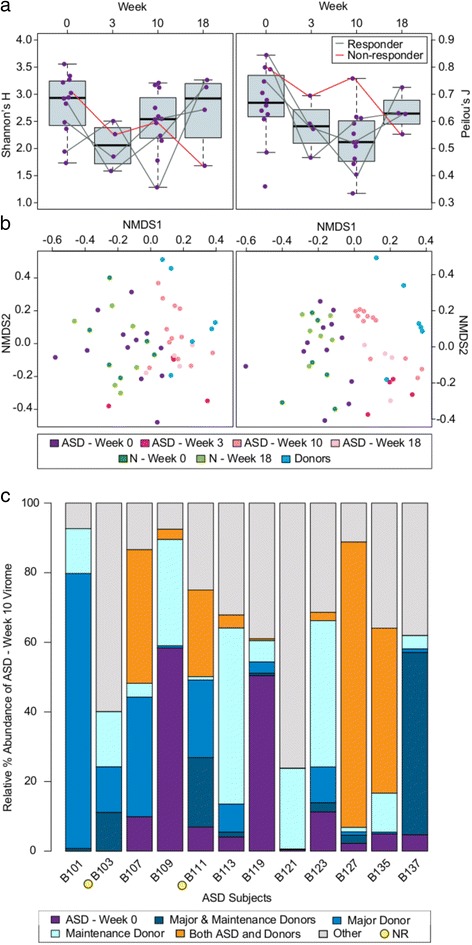
BACKGROUND: bacteria in the human intestines, have been implicated because children with ASD often suffer gastrointestinal (GI) problems that correlate with ASD severity. Several previous studies have reported abnormal gut bacteria in children with ASD. The gut microbiome-ASD connection has been tested in a mouse model of ASD, where the microbiome was mechanistically linked to abnormal metabolites and behavior. Similarly, a study of children with ASD found that oral non-absorbable antibiotic treatment improved GI and ASD symptoms, albeit temporarily. Here, a small open-label clinical trial evaluated the impact of Microbiota Transfer Therapy (MTT) on gut microbiota composition and GI and ASD symptoms of 18 ASD-diagnosed children. RESULTS: MTT involved a 2-week antibiotic treatment, a bowel cleanse, and then an extended fecal microbiota transplant (FMT) using a high initial dose followed by daily and lower maintenance doses for 7-8 weeks. The Gastrointestinal Symptom Rating Scale revealed an approximately 80% reduction of GI symptoms at the end of treatment, including significant improvements in symptoms of constipation, diarrhea, indigestion, and abdominal pain. Improvements persisted 8 weeks after treatment. Similarly, clinical assessments showed that behavioral ASD symptoms improved significantly and remained improved 8 weeks after treatment ended. Bacterial and phagedeep sequencing analyses revealed successful partial engraftment of donor microbiota and beneficial changes in the gut environment. Specifically, overall bacterial diversity and the abundance of Bifidobacterium, Prevotella, and Desulfovibrio among other taxa increased following MTT, and these changes persisted after treatment stopped (followed for 8 weeks). CONCLUSIONS: This exploratory, extended-duration treatment protocol thus appears to be a promising approach to alter the gut microbiome and virome and improve GI and behavioral symptoms of ASD. Improvements in GI symptoms, ASD symptoms, and the microbiome all persisted for at least 8 weeks after treatment ended, suggesting a long-term impact. TRIAL REGISTRATION: This trial was registered on the ClinicalTrials.gov, with the registration number NCT02504554.
Overview
The claims and statistics of this paper haven’t been checked yet.
Free: it reads the open-access text and checks the first 5 claims that cite a source we can check. Create a free account to check every claim.
Integrity signals
Registry
Cites
Statistics
Figures
Verification
Claims the paper makes
The claims and statistics of this paper haven’t been checked yet.
Free: it reads the open-access text and checks the first 5 claims that cite a source we can check. Create a free account to check every claim.
Claims other papers make about this one
Each is checked against this paper’s own text: does it say what the citing paper says it does?
The source backs part of the claim, not all of it — or backs it for a different population, condition or comparison.
In the citing paper
“Following the successful use of FMT in the treatment of refractory or recurrent Clostridium difficile infection, several studies have been conducted to explore FMT as a therapeutic strategy for a wide range of neurological disorders, including multiple sclerosis, epilepsy, ASD, Tourette syndrome, diabetic neuropathy, AD and PD, with promising preclinical and clinical data [30,465,466,467,468].”
From The Interplay between Gut Microbiota and Parkinson’s Disease: Implications on Diagnosis and Treatment (2022) · cites this paper as [466]
Experimental — accuracy not yet measuredThe source backs part of the claim, not all of it — or backs it for a different population, condition or comparison.
In the citing paper
“Among the seven [31, 36, 40–42, 48, 50] papers that reported on beta diversity, four [31, 40, 41, 50] papers showed significant differences in beta diversity between ASD and SIB/HC while the rest did not (Additional file 1: Table S2).”
From Gut microbiota changes in children with autism spectrum disorder: a systematic review (2020) · cites this paper as [40]
Experimental — accuracy not yet measuredThe source backs part of the claim, not all of it — or backs it for a different population, condition or comparison.
In the citing paper
“Further analysis of the alterations of genus and species in ASD, four studies consistently demonstrated a significantly decrease of Bifidobacterium in patients with ASD relative to HCs19,23,27,30.”
From Altered composition and function of intestinal microbiota in autism spectrum disorders: A systematic review (2019) · cites this paper as [19]
Experimental — accuracy not yet measuredThe source backs part of the claim, not all of it — or backs it for a different population, condition or comparison.
In the citing paper
“Among them, three studies18,19,22 indicated the functional modules of gut microbiota in ASD patients were substantially different from that in HCs (Fig. 2).”
From Altered composition and function of intestinal microbiota in autism spectrum disorders: A systematic review (2019) · cites this paper as [19]
Experimental — accuracy not yet measuredThe source backs part of the claim, not all of it — or backs it for a different population, condition or comparison.
In the citing paper
“Although the single study evaluating GI and behavioral outcomes after fecal transplant in ASD was highly successful [94]”
From Serotonin as a link between the gut-brain-microbiome axis in autism spectrum disorders (2018) · cites this paper as [94]
Experimental — accuracy not yet measured
21 more claims about this paper
Create a free account to see every claim other papers make about this one.
Self-check
Percentages, sums and reported differences re-computed from the paper’s own numbers.
The self-check needs the paper’s full text.
Citations
Cites
Trimmomatic: a flexible trimmer for Illumina sequence data
Bolger, A. M., Lohse, M., & Usadel, B. (2014) · Bioinformatics · doi:10.1093/bioinformatics/btu170 · Cited by 65,548 · cited 3×
“The quality control was performed on sequence reads using Trimmomatic [50] to remove adaptors, trim lowquality ends of reads (reads were cut as soon as the base”
MethodInfluentialFast gapped-read alignment with Bowtie 2
Langmead, B., & Salzberg, S. L. (2012) · Nature Methods · doi:10.1038/nmeth.1923 · Cited by 56,400 · cited 2×
“A contig was considered as detected in a sample if covered by reads on more than 75% of its length, and its abundance was computed as the contig average coverage (number of base pairs mapped to the contig divided by contig length) normalized by the total number of base pairs sequenced in the metagenome [56].”
MethodQIIME allows analysis of high-throughput community sequencing data
Caporaso, J. G., Kuczynski, J., Stombaugh, J., Bittinger, K., Bushman, F. D., Costello, E. K., Fierer, N., Peña, A. G., Goodrich, J. K., Gordon, J. I., et al. (2010) · Nature Methods · doi:10.1038/nmeth.f.303 · Cited by 34,887
Self-citationvegan: Community Ecology Package
Oksanen, J., Simpson, G. L., Blanchet, F. G., Kindt, R., Legendre, P., Minchin, P. R., O'Hara, R. B., Solymos, P., Stevens, M. H. H., Szoecs, E., et al. (2001) · CRAN: Contributed Packages · doi:10.32614/cran.package.vegan · Cited by 22,615
Structure, function and diversity of the healthy human microbiome
The Human Microbiome Project Consortium (2012) · Nature · doi:10.1038/nature11234 · Cited by 11,726 · cited 1×
“from FMT efficacy, since inter-individual gut bacterial [77] and viral [47] community variation is high.”
BackgroundA human gut microbial gene catalogue established by metagenomic sequencing
MetaHIT Consortium, Qin, J., Li, R., Raes, J., Arumugam, M., Burgdorf, K. S., Manichanh, C., Nielsen, T., Pons, N., Levenez, F., et al. (2010) · Nature · doi:10.1038/nature08821 · Cited by 11,624 · cited 1×
“Higher gut bacterial diversity and richness are commonly associated with healthy status, presumably due to resilience afforded by higher functional redundancy [62].”
BackgroundCd-hit: a fast program for clustering and comparing large sets of protein or nucleotide sequences
Li, W., & Godzik, A. (2006) · Bioinformatics · doi:10.1093/bioinformatics/btl158 · Cited by 11,410
Lord, C., Rutter, M., & Le Couteur, A. (1994) · Journal of Autism and Developmental Disorders · doi:10.1007/bf02172145 · Cited by 9,065 · cited 1×
“It is not designed to be a measure of autism severity but higher scores are generally consistent with more severe symptoms [39].”
BackgroundUltra-high-throughput microbial community analysis on the Illumina HiSeq and MiSeq platforms
Caporaso, J. G., Lauber, C. L., Walters, W. A., Berg-Lyons, D., Huntley, J., Fierer, N., Owens, S. M., Betley, J., Fraser, L., Bauer, M., et al. (2012) · The ISME Journal · doi:10.1038/ismej.2012.8 · Cited by 8,839
Self-citationConservation evaluation and phylogenetic diversity
Faith, D. P. (1992) · Biological Conservation · doi:10.1016/0006-3207(92)91201-3 · Cited by 5,693
Cited by
Items 601–700 of 1,000
A Healthy Gut for a Healthy Brain: Preclinical, Clinical and Regulatory Aspects
Petrella, C., Vecchioli, S. F., Cisale, G. Y., Strimpakos, G., Borg, J.-J., Ceccanti, M., Fiore, M., Monteleone, G., & Nisticò, R. (2020) · Current Neuropharmacology · doi:10.2174/1570159x18666200730111528 · Cited by 27
Zhong, M., Buch, H., Wen, Q., Long, C., Cui, B., & Zhang, F. (2021) · Gastroenterology Research and Practice · doi:10.1155/2021/6676962 · Cited by 27
Changes to the Gut Microbiome in Young Children Showing Early Behavioral Signs of Autism
Jones, J. C., Reinke, S. N., Mousavi‐Derazmahalleh, M., Palmer, D. J., & Christophersen, C. T. (2022) · Frontiers in Microbiology · doi:10.3389/fmicb.2022.905901 · Cited by 27
Goodkin, K., Evering, T. H., Anderson, A. M. L., Ragin, A. B., Monaco, C. L., Gavegnano, C., Avery, R. J., Rourke, S. B., Cysique, L. A., & Brew, B. J. (2023) · Frontiers in Cellular Neuroscience · doi:10.3389/fncel.2023.1130938 · Cited by 27
Andersen‐Civil, A. I. S., Sawale, R. A., & Vanwalleghem, G. C. (2023) · Brain Behavior and Immunity · doi:10.1016/j.bbi.2023.06.001 · Cited by 29
Investigational drugs in early-stage clinical trials for autism spectrum disorder
Hong, M. P., & Erickson, C. A. (2019) · Expert Opinion on Investigational Drugs · doi:10.1080/13543784.2019.1649656 · Cited by 27
Jurek, L., Sevil, M., Jay, A., Schroder, C. M., Baghdadli, A., Héry-Arnaud, G., & Geoffray, M. (2020) · European Child & Adolescent Psychiatry · doi:10.1007/s00787-020-01544-1 · Cited by 27
Karczewski, J., Zielińska, A., Staszewski, R., Eder, P., Dobrowolska, A., & Souto, E. B. (2022) · International Journal of Molecular Sciences · doi:10.3390/ijms23116145 · Cited by 26
Fecal microbiota transplantation in childhood: past, present, and future
Gu, X., Chen, Z.-H., & Zhang, S. (2022) · World Journal of Pediatrics · doi:10.1007/s12519-022-00655-w · Cited by 26
Liu, Y.-W., Wang, J.-E., Sun, F., Huang, Y., & Chen, H.-J. (2023) · Research in Autism · doi:10.1016/j.rasd.2023.102256 · Cited by 26
Shi, E., Nie, M., Wang, X., Jing, H., Feng, L., Xu, Y., Zhang, Z., Zhang, G., Li, D., & Dai, Z. (2023) · Food Research International · doi:10.1016/j.foodres.2023.113592 · Cited by 26
Gut flora in multiple sclerosis: implications for pathogenesis and treatment
Zhang, W., Wang, Y., Zhu, M., Liu, K., & Zhang, H. (2023) · Neural Regeneration Research · doi:10.4103/1673-5374.387974 · Cited by 26
Fecal Microbiota Transplantation: Indications, Methods, and Challenges
Lee, J. Y., Kim, Y., Kim, J., & Kim, J. K. (2024) · The Journal of Microbiology · doi:10.1007/s12275-024-00184-3 · Cited by 27
Lebovitz, Y., Ringel-Scaia, V. M., Allen, I. C., & Theus, M. H. (2018) · Frontiers in Immunology · doi:10.3389/fimmu.2018.01993 · Cited by 27
The Microbiota/Microbiome and the Gut–Brain Axis: How Much Do They Matter in Psychiatry?
Marazziti, D., Buccianelli, B., Palermo, S., Parra, E., Arone, A., Beatino, M. F., Massa, L., Carpita, B., Barberi, F. M., Mucci, F., et al. (2021) · Life · doi:10.3390/life11080760 · Cited by 27
Hajjeh, O., Rajab, I. M., Bdair, M., Saife, S., Zahran, A., Nazzal, I., AbuZahra, M. I., Jallad, H., Abukhalil, M. M., Hallak, M., et al. (2025) · Neuroscience · doi:10.1016/j.neuroscience.2025.03.015 · Cited by 25
Gut Feelings: How Microbes, Diet, and Host Immunity Shape Disease
Theis, B. F., Park, J. S., Kim, J. S., Zeydabadinejad, S., Vijay–Kumar, M., Yeoh, B. S., & Saha, P. (2025) · Biomedicines · doi:10.3390/biomedicines13061357 · Cited by 25
Kittana, M., Ahmadani, A., Al-Marzooq, F. I., & Attlee, A. (2021) · Nutrients · doi:10.3390/nu13113818 · Cited by 25
Could Candida Overgrowth Be Involved in the Pathophysiology of Autism?
Herman, A., & Herman, A. P. (2022) · Journal of Clinical Medicine · doi:10.3390/jcm11020442 · Cited by 25
Gut Microbiome and the Role of Metabolites in the Study of Graves’ Disease
Liu, H., Liu, H., Liu, C., Shang, M., Wei, T., & Yin, P. (2022) · Frontiers in Molecular Biosciences · doi:10.3389/fmolb.2022.841223 · Cited by 25
Li, H., Huang, S.-Y., Xiong, R.-G., Wu, S.-X., Zhou, D.-D., Saimaiti, A., Luo, M., Zhu, H.-L., & Li, H. (2022) · Foods · doi:10.3390/foods11193000 · Cited by 26
Hrnčiarová, J., Kubelková, K., Boštíková, V., Rychlík, I., Karasová, D., Babák, V., Datkova, M., Simackova, K., & Macela, A. (2024) · Nutrients · doi:10.3390/nu16131988 · Cited by 25
More than just a number: the gut microbiota and brain function across the extremes of life
Nuzum, N. D., Deady, C., Kittel‐Schneider, S., Cryan, J. F., O’Mahony, S. M., & Clarke, G. A. (2024) · Gut Microbes · doi:10.1080/19490976.2024.2418988 · Cited by 25
Host–Microbiota Mutualism in Metabolic Diseases
Fabbiano, S., Suárez-Zamorano, N., & Trajkovski, M. (2017) · Frontiers in Endocrinology · doi:10.3389/fendo.2017.00267 · Cited by 26
Wu, X., Dai, M., Buch, H., Bai, J., Long, W.-W., Long, C., Tang, X., Tu, H., Zhang, R., Zhu, C., et al. (2019) · Therapeutic Advances in Gastroenterology · doi:10.1177/1756284819869144 · Cited by 25
The gut microbiome: what every gastroenterologist needs to know
Mullish, B. H., Quraishi, M. N., Segal, J. P., Ianiro, G., & Iqbal, T. H. (2020) · Frontline Gastroenterology · doi:10.1136/flgastro-2019-101376 · Cited by 25
Reyes, R. E., Omran, A. J. A., Davies, D. L., & Asatryan, L. (2020) · Brain Research · doi:10.1016/j.brainres.2020.147067 · Cited by 25
A Computational Framework for Studying Gut-Brain Axis in Autism Spectrum Disorder
Mohammad, F. K., Palukuri, M. V., Shivakumar, S., Rengaswamy, R., & Sahoo, S. (2022) · Frontiers in Physiology · doi:10.3389/fphys.2022.760753 · Cited by 25
Recent advances in the treatment of C. difficile using biotherapeutic agents
Giau, V. V., Lee, H., An, S. S. A., & Hulme, J. (2019) · Infection and Drug Resistance · doi:10.2147/idr.s207572 · Cited by 25
Sales-Millán, A. D., Reyes-Ferreira, P., Garrido, J. F. A., Guillé, I. C., Barrientos-Ríos, R., & Velázquez-Aragón, J. A. (2024) · International Journal of Molecular Sciences · doi:10.3390/ijms25126701 · Cited by 24
Turriziani, L., Ricciardello, A., Cucinotta, F., Bellomo, F., Turturo, G., Boncoddo, M., Mirabelli, S., Scattoni, M. L., Rossi, M., & Persico, A. M. (2021) · Autism Research · doi:10.1002/aur.2639 · Cited by 25
Zeng, J., Liang, Y., Sun, R., Huang, S., Wang, Z., Xiao, L., Lu, J., Yu, H. Y., & Yao, P. (2022) · Annals of the New York Academy of Sciences · doi:10.1111/nyas.14766 · Cited by 24
The Role of the Gut Microbiome in Health and Disease in the Elderly
Chen, L. A., & Boyle, K. (2024) · Current Gastroenterology Reports · doi:10.1007/s11894-024-00932-w · Cited by 24
The Brain, the Eating Plate, and the Gut Microbiome: Partners in Migraine Pathogenesis
Gazerani, P., Papetti, L., Dalkara, T., Cook, C. L., Webster, C., & Bai, J. (2024) · Nutrients · doi:10.3390/nu16142222 · Cited by 24
Microbiota and Autism: A Review on Oral and Gut Microbiome Analysis Through 16S rRNA Sequencing
Anaclerio, F., Minelli, M., Antonucci, I., Gatta, V., & Stuppia, L. (2024) · Biomedicines · doi:10.3390/biomedicines12122686 · Cited by 24
Fecal Microbiota Transplantation in Children with Autism
Li, Y., Xiao, P. G., Ding, H., Wang, H., Xu, Q., Wang, R., Zheng, L., Song, X., Wang, Y., & Zhang, T. (2024) · Neuropsychiatric Disease and Treatment · doi:10.2147/ndt.s488001 · Cited by 24
A Gut Feeling: The Importance of the Intestinal Microbiota in Psychiatric Disorders
Ochoa‐Repáraz, J., Ramelow, C. C., & Kasper, L. H. (2020) · Frontiers in Immunology · doi:10.3389/fimmu.2020.510113 · Cited by 24
Novel Mechanisms and Therapeutic Targets for Ischemic Stroke: A Focus on Gut Microbiota
Bao, Z., Zhang, Z., Zhou, G., Zhang, A., Shao, A., & Zhou, F. (2022) · Frontiers in Cellular Neuroscience · doi:10.3389/fncel.2022.871720 · Cited by 24
What does immunology have to do with brain development and neuropsychiatric disorders?
Leckman, J. F., de Alvarenga, P. G., Salto, A. B. R., & Johnson, I. N. S. (2019) · Revista de Medicina · doi:10.11606/issn.1679-9836.v98i4p241-253 · Cited by 23
Kurokawa, S., 野村, 健., Sanada, K., Miyaho, K., Ishii, C., Fukuda, S., Iwamoto, C., Naraoka, M., Yoneda, S., Imafuku, M., et al. (2024) · Journal of Child Psychology and Psychiatry · doi:10.1111/jcpp.13962 · Cited by 23
The gut microbiome shapes social behaviour across animal species
Griffiths, J. A., Nirmalkar, K., Wu, W., Krajmalnik‐Brown, R., & Mazmanian, S. K. (2025) · Nature Reviews Microbiology · doi:10.1038/s41579-025-01262-y · Cited by 23
Self-citationMenden, A., Hall, D., Hahn-Townsend, C., Broedlow, C. A., Joshi, U., Pearson, A., Crawford, F., Evans, J. E., Klatt, N. R., Crynen, S., et al. (2022) · Scientific Reports · doi:10.1038/s41598-022-08840-7 · Cited by 23
Green, J. E., McGuinness, A. J., Berk, M., Castle, D. J., Athan, E., Hair, C., Strandwitz, P., Loughman, A., Nierenberg, A. A., Cryan, J. F., et al. (2023) · Pilot and Feasibility Studies · doi:10.1186/s40814-023-01235-z · Cited by 23
Host–diet–microbiota interplay in intestinal nutrition and health
Ignatiou, A., & Pitsouli, C. (2024) · FEBS Letters · doi:10.1002/1873-3468.14966 · Cited by 23
Gut-immune-brain dysfunction in Autism: Importance of sex
Kopec, A. M., Fiorentino, M. R., & Bilbo, S. D. (2018) · Brain Research · doi:10.1016/j.brainres.2018.01.009 · Cited by 23
Selenium and Autism Spectrum Disorder
Skalny, A. V., Геннадиевна, С. М., Bjørklund, G., Гриценко, В. А., Aaseth, J., & Tinkov, A. A. (2018) · Molecular and integrative toxicology · doi:10.1007/978-3-319-95390-8_10 · Cited by 23
Fecal microbiota transplantation in children: current concepts
Gurram, B., & Sue, P. K. (2019) · Current Opinion in Pediatrics · doi:10.1097/mop.0000000000000787 · Cited by 23
Forsyth, A., Raslan, K., Lyashenko, C., Bona, S., Snow, M., Khor, B., Herrman, E., Ortiz, S., Choi, D., Maier, T., et al. (2019) · Human Microbiome Journal · doi:10.1016/j.humic.2019.100066 · Cited by 23
Role of microbes in the pathogenesis of neuropsychiatric disorders
Goswami, A., Wendt, F. R., Pathak, G. A., Tylee, D. S., Angelis, F. D., Lillo, A. D., & Polimanti, R. A. (2021) · Frontiers in Neuroendocrinology · doi:10.1016/j.yfrne.2021.100917 · Cited by 23
The microbiome, guard or threat to infant health
Castellanos, M. W., & Claud, E. C. (2021) · Trends in Molecular Medicine · doi:10.1016/j.molmed.2021.08.002 · Cited by 23
Peng, Z., Hou, T., Yang, K., Zhang, J., Mao, Y.-H., & Hou, X. (2025) · Nutrients · doi:10.3390/nu17111769 · Cited by 22
Ji, S., Ahmad, F., Peng, B., Yang, Y., Su, M., Zhao, X., & Vatanen, T. (2025) · Microbiome · doi:10.1186/s40168-025-02046-5 · Cited by 22
Molecular Mechanisms of Aberrant Neuroplasticity in Autism Spectrum Disorders (Review)
Anashkina, A. A., & Erlykina, E. I. (2021) · Современные технологии в медицине · doi:10.17691/stm2021.13.1.10 · Cited by 22
Al‐Ali, D., Ahmed, A., Shafiq, A., McVeigh, C., Châari, A., Zakaria, D., & Bendriss, G. (2021) · Qatar medical journal · doi:10.5339/qmj.2021.5 · Cited by 22
Ye, C., Zhang, X., Jiaqu, C., Qiyi, C., Qin, H., Li, N., Du, Y., Xiaoxin, Z., Yang, R., Lu, J. B., et al. (2022) · BMJ Open · doi:10.1136/bmjopen-2021-051613 · Cited by 22
Patel, M., Atluri, L. M., Gonzalez, N. A., Sakhamuri, N., Athiyaman, S., Randhi, B., Gutlapalli, S. D., Pu, J., Zaidi, M. F., & Khan, S. (2022) · Cureus · doi:10.7759/cureus.32313 · Cited by 23
Wang, Y., He, Y., Liang, Y., Liu, H., Chen, X., Kulyar, M. F., Shahzad, A., Wei, K., & Li, K. (2023) · Microbial Cell Factories · doi:10.1186/s12934-023-02027-z · Cited by 22
Lactiplantibacillus plantarum N-1 improves autism-like behavior and gut microbiota in mouse
Qiu, Z., Luo, D., Yin, H., Chen, Y., Zhou, Z., Zhang, J., Zhang, L., Xia, J., Xie, J., Sun, Q., et al. (2023) · Frontiers in Microbiology · doi:10.3389/fmicb.2023.1134517 · Cited by 23
Dossaji, Z., Khattak, A., Tun, K. M., Hsu, M., Batra, K., & Hong, A. S. (2023) · Microorganisms · doi:10.3390/microorganisms11030806 · Cited by 22
Autism Spectrum Disorder and Complementary-Integrative Medicine
Vandana, P., Simkin, D. R., Hendren, R. L., & Arnold, L. E. (2023) · Child and Adolescent Psychiatric Clinics of North America · doi:10.1016/j.chc.2022.08.004 · Cited by 22
Intestinal microbiome dysbiosis in alcohol-dependent patients and its effect on rat behaviors
Wang, C., Yan, J., Du, K., Liu, S., Wang, J., Wang, Q., Zhao, H., Li, M., Yan, D., Zhang, R., et al. (2023) · mBio · doi:10.1128/mbio.02392-23 · Cited by 22
Tao, W., Zhang, Y., Wang, B., Nie, S., Li, F., Xiao, J., & Wu, Y. (2024) · Journal of Advanced Research · doi:10.1016/j.jare.2024.03.023 · Cited by 22
Jyonouchi, H. (2024) · Frontiers in Psychiatry · doi:10.3389/fpsyt.2024.1333717 · Cited by 22
Mottawea, W., Sultan, S., Landau, K., Bordenave, N., & Hammami, R. (2020) · Nutrients · doi:10.3390/nu12092669 · Cited by 22
Wei, P., Hung, C.-S., Kao, Y., Lin, Y., Lee, C., Chang, T., Shia, B., & Lin, J.-C. (2020) · Genes · doi:10.3390/genes11111374 · Cited by 22
Welcome, M. O. (2018) · Dementia and Geriatric Cognitive Disorders Extra · doi:10.1159/000492491 · Cited by 22
Hassib, L., Kanashiro, A., Pedrazzi, J. F. C., Vercesi, B. F., Higa, S., Arruda, Í., Soares, Y., de Souza, A. P., Barichello, T., Guimarães, F. S., et al. (2025) · Progress in Neuro-Psychopharmacology and Biological Psychiatry · doi:10.1016/j.pnpbp.2025.111385 · Cited by 22
Gut microbiota, metabolites, and pulmonary hypertension: Mutual regulation and potential therapies
Yang, J., Liu, J., Gu, H., Song, W., Zhang, H., Wang, J., & Yang, P. (2025) · Microbiological Research · doi:10.1016/j.micres.2025.128245 · Cited by 21
Mechanistic Links Between Gut Dysbiosis, Insulin Resistance, and Autism Spectrum Disorder
Guevara‐Ramírez, P., Tamayo‐Trujillo, R., Ruiz‐Pozo, V. A., Cadena-Ullauri, S., Paz‐Cruz, E., & Zambrano, A. K. (2025) · International Journal of Molecular Sciences · doi:10.3390/ijms26136537 · Cited by 21
The microbiome-gut-brain axis in nutritional neuroscience
Schellekens, H., Ribeiro, G., Cuesta‐Marti, C., & Cryan, J. F. (2022) · Nutritional Neuroscience · doi:10.1080/1028415x.2022.2128007 · Cited by 21
An Update on Microbial Interventions in Autism Spectrum Disorder with Gastrointestinal Symptoms
Moreno, R. J., & Ashwood, P. (2024) · International Journal of Molecular Sciences · doi:10.3390/ijms252313078 · Cited by 21
Do Alarmins Have a Potential Role in Autism Spectrum Disorders Pathogenesis and Progression?
Salvo, E. D., Casciaro, M., Quartuccio, S., Genovese, L., & Gangemi, S. (2018) · Biomolecules · doi:10.3390/biom9010002 · Cited by 21
Ismaeil, H., Abdo, W. S., Amer, S., Tahoun, A. A. E., Massoud, D., Zanaty, E. M., Bin-Jumah, M. N., & Mahmoud, A. M. (2020) · Processes · doi:10.3390/pr8020225 · Cited by 21
Bendriss, G., Al‐Ali, D., Shafiq, A., Laswi, I., Mhaimeed, N., Salameh, M. A., Burney, Z. A., Pillai, K. V., Châari, A., Zakaria, D., et al. (2020) · Qatar medical journal · doi:10.5339/qmj.2020.47 · Cited by 21
Alghamdi, M. A., AL-Ayadhi, L. Y., Hassan, W. M., Bhat, R. S., Alonazi, M. A., & El-Ansary, A. K. (2022) · Metabolites · doi:10.3390/metabo12060562 · Cited by 21
Faecal microbiota transplants for depression – Who gives a crapsule?
Green, J., Castle, D., Berk, M., Hair, C., Loughman, A., Cryan, J., Nierenberg, A., Athan, E., & Jacka, F. (2019) · Australian & New Zealand Journal of Psychiatry · doi:10.1177/0004867419839776 · Cited by 18
Advances in capsule-based fecal microbiota transplantation: clinical applications and innovations
He, Y., Zhang, Y., Yang, D., Luo, H., & Zhou, Y. (2025) · Journal of Translational Medicine · doi:10.1186/s12967-025-07407-0 · Cited by 20
Szala‐Rycaj, J., Szewczyk, A., Zagaja, M. P., Kaczmarczyk‐Ziemba, A., Maj, M., & Andres‐Mach, M. (2023) · Nutrients · doi:10.3390/nu15092041 · Cited by 20
Xu, K., Li, Z., Qiao, J.-C., Wang, S., Xie, P., Zong, Z., & Hu, C. (2023) · Environmental Pollution · doi:10.1016/j.envpol.2023.122439 · Cited by 20
Varian, B. J., Weber, K. T., & Erdman, S. E. (2023) · Comprehensive Psychoneuroendocrinology · doi:10.1016/j.cpnec.2023.100205 · Cited by 20
Wu, D., Liang, S., Du, X., Xiao, J., Feng, H., Ren, Z., Yang, X., & Yang, X. (2023) · Poultry Science · doi:10.1016/j.psj.2023.103316 · Cited by 20
Wu, Y., & Su, Q. (2024) · Nutrients · doi:10.3390/nu16152382 · Cited by 20
Autism Spectrum Disorder, Oral Implications, and Oral Microbiota
D’Angelo, E., Fiori, F., Ferraro, G. A., Tessitore, A., Nazzaro, L., Serpico, R., & Contaldo, M. (2025) · Children · doi:10.3390/children12030368 · Cited by 20
Social dynamics modeling of chrono-nutrition
Stefano, A. D., Scatà, M., Vijayakumar, S., Angione, C., Corte, A. L., & Lió, P. (2019) · PLoS Computational Biology · doi:10.1371/journal.pcbi.1006714 · Cited by 20
Steady-state reduction of generalized Lotka-Volterra systems in the microbiome
Jones, E. W., & Carlson, J. M. (2019) · Physical review. E · doi:10.1103/physreve.99.032403 · Cited by 20
The efficacy of fecal microbiota transplantation for patients with chronic pouchitis: A case series
Nishida, A., Imaeda, H., Inatomi, O., Bamba, S., Sugimoto, M., & Andoh, A. (2019) · Clinical Case Reports · doi:10.1002/ccr3.2096 · Cited by 20
Effects of Limosilactobacillus fermentum CCFM1139 on experimental periodontitis in rats
Zhang, Q., Xu, W., Xu, X., Lu, W., Zhao, J., Zhang, H., & Chen, W. (2021) · Food & Function · doi:10.1039/d1fo00409c · Cited by 20
Food Allergy-Induced Autism-Like Behavior is Associated with Gut Microbiota and Brain mTOR Signaling
Cao, L., He, H.-J., Zhao, Y., Wang, Z., Jia, X.-Y., Srivastava, K. D., Miao, M., & Li, X.-M. (2022) · Journal of Asthma and Allergy · doi:10.2147/jaa.s348609 · Cited by 20
Olavarría‐Ramírez, L., Cooney-Quane, J., Murphy, G., McCafferty, C. P., Cryan, J. F., & Dockray, S. (2022) · Neuroscience & Biobehavioral Reviews · doi:10.1016/j.neubiorev.2022.105013 · Cited by 20
Dai, K., Ding, L., Yang, X., Wang, S., & Rong, Z. (2025) · Microorganisms · doi:10.3390/microorganisms13092213 · Cited by 21
Gastrointestinal disorder biomarkers
Ranjbar, R., Ghasemian, M., Maniati, M., Khatami, S. H., Jamali, N., & Taheri‐Anganeh, M. (2022) · Clinica Chimica Acta · doi:10.1016/j.cca.2022.02.013 · Cited by 19
Mancini, V. O., Brook, J., Hernandez, C., Strickland, D. H., Christophersen, C. T., D’Vaz, N., Silva, D. T., Prescott, S. L., Callaghan, B. L., Downs, J. A., et al. (2023) · Developmental Psychobiology · doi:10.1002/dev.22360 · Cited by 19
Mohamed, D. I., Nahas, H. H. A., Elshaer, A. M., El-Waseef, D. A. E.-D. A., El-Kharashi, O. A., Mohamed, S. M. Y., Sabry, Y. G., Almaimani, R. A., Almasmoum, H. A., Altamimi, A. S. A., et al. (2023) · Frontiers in Cellular Neuroscience · doi:10.3389/fncel.2023.1268126 · Cited by 19
Just a gut feeling: Faecal microbiota transplant for treatment of depression – A mini-review
Chang, M., Chang, K. T., & Chang, F. (2024) · Journal of Psychopharmacology · doi:10.1177/02698811241240308 · Cited by 19
Brown, D. G., Murphy, M. A., Cadeddu, R., Bell, R. S., Weis, A. M., Chiaro, T. R., Klag, K. A., Morgan, J., Coon, H. H., Stephens, W. Z., et al. (2024) · Nature Communications · doi:10.1038/s41467-024-46733-7 · Cited by 19
Food, nutrition, and autism: from soil to fork
Maitin‐Shepard, M., O’Tierney-Ginn, P., Kraneveld, A. D., Lyall, K., Fallin, M. D., Arora, M., Fasano, A., Mueller, N. T., Wang, X., Caulfield, L. E., et al. (2024) · American Journal of Clinical Nutrition · doi:10.1016/j.ajcnut.2024.04.020 · Cited by 20
Self-citationAlam, K., Nair, L. S., Mukherjee, S., Kaur, K., Singh, M., Kaity, S., Ravichandiran, V., Banerjee, S., & Roy, S. (2024) · Bio-Design and Manufacturing · doi:10.1007/s42242-024-00282-6 · Cited by 19
The early life exposome and autism risk: a role for the maternal microbiome?
Gesù, C. M. D., & Buffington, S. A. (2024) · Gut Microbes · doi:10.1080/19490976.2024.2385117 · Cited by 21
Davidson, E. A., Monteverde, D. R., & Semrau, J. D. (2024) · Communications Earth & Environment · doi:10.1038/s43247-024-01656-5 · Cited by 19
The Microbiome–Genetics Axis in Autism Spectrum Disorders: A Probiotic Perspective
Mihailovich, M., Tolinački, M., Bajić, S. S., Leštarević, S., Pejovic-Milovancevic, M., & Golić, N. (2024) · International Journal of Molecular Sciences · doi:10.3390/ijms252212407 · Cited by 20
Metadata
- Authors
- Kang, D.-W., Adams, J. B., Gregory, A. C., Borody, T., Chittick, L., Fasano, A., Khoruts, A., Geis, E., Maldonado, J., McDonough-Means, S., Pollard, E. L., Roux, S., Sadowsky, M. J., Lipson, K. S., Sullivan, M. B., Caporaso, J. G., & Krajmalnik-Brown, R.
- Affiliations
- Arizona State University (US)
- University of Arizona (US)
- Centre For Digestive Diseases (AU)
- Massachusetts General Hospital (US)
- University of Minnesota (US)
- Northern Arizona University (US)
- Corresponding author
- Sullivan, Matthew B.
- Caporaso, J. Gregory
- ORCID
- Venue
- Microbiome
- Published
- 2017-01-23
- Volume
- 5
- Issue
- 1
- Pages
- 10-10
- ISSN
- 2049-2618 (ISSN-L)
- PMC
- PMC5264285
- OpenAlex
- W2581406049
- Cited by
- 1,391
- References
- 81
- Citations by year
- 2026: 114 · 2025: 173 · 2024: 153 · 2023: 154 · 2022: 177 · 2021: 156 · 2020: 165 · 2019: 147 · 2018: 103 · 2017: 47
- FWCI
- 51.58
- Type
- journal article
- Language
- en
- Open access
- gold
- doi.org
- Licence
- cc-by
- Locations
- Microbiome (publishedVersion, cc-by)
- Europe PMC (PubMed Central) (publishedVersion, cc-by)
- PubMed Central (publishedVersion, cc-by)
- PubMed (publishedVersion)
- Arizona State University Library Digital Repository (Arizona State University) (submittedVersion, cc-by)
- eScholarship (California Digital Library) (submittedVersion)
- Funders
- Arizona Board of Regents
- Gordon and Betty Moore Foundation grant (#3790)
- Topics
- Life Sciences › Biochemistry, Genetics and Molecular Biology › Molecular Biology › Gut microbiota and health
- Health Sciences › Medicine › Gastroenterology › Gastrointestinal motility and disorders
- Life Sciences › Neuroscience › Cognitive Neuroscience › Autism Spectrum Disorder Research
- Keywords
- autism spectrum disorder, gut microbiota, fecal microbiota transplantation, gastrointestinal symptoms, constipation, diarrhea, Bifidobacterium, Prevotella, Desulfovibrio, antibiotic therapy, children
- MeSH terms
- Autism Spectrum Disorder, Gastrointestinal Microbiome, Fecal Microbiota Transplantation, Adolescent, Anti-Bacterial Agents, Bacteriophages, Bifidobacterium, Child, Constipation, Desulfovibrio, Diarrhea, DNA, Viral, Female, Gastrointestinal Diseases, Humans, Infant, Male, Abdominal Pain, Prevotella, Probiotics, Gastrointestinal Tract, High-Throughput Nucleotide Sequencing
About these checks
Registry, retraction, Cites and statistics results are computed, not judged, with one exception: a printed reference that no index lists is read once by a model before it counts as a citation error. Claims are extracted by a model and kept only when their quote appears verbatim in the text; each cited source is then checked, with a model’s help, for whether it says what the claim relies on. Those verdicts can be wrong — read the claim’s quote and the cited source before relying on one.
Statistics and arithmetic are recomputed, not judged.
Confidence bands are shown only for fields calibrated on our annotated test set. None is calibrated yet, so no band is shown.
What counts as a claim ›How we measure confidence ›How we check this ›
Are you an author, or do you see a problem with this page? Request a review
Data sources
Bibliographic data: Semantic Scholar, OpenAlex, Crossref.
Contains information from the Semantic Scholar Academic Graph Datasets, made available under the ODC Attribution License (ODC-BY 1.0).
Semantic Scholar’s data is described in: Kinney, R., et al. (2023). The Semantic Scholar Open Data Platform. arXiv:2301.10140.
