

The DOI matches its Crossref record; 154 of the 154 references it cites were found in a registry or an index.
A critical assessment of the “sterile womb” and “in utero colonization” hypotheses: implications for research on the pioneer infant microbiome
Open accessAbstract
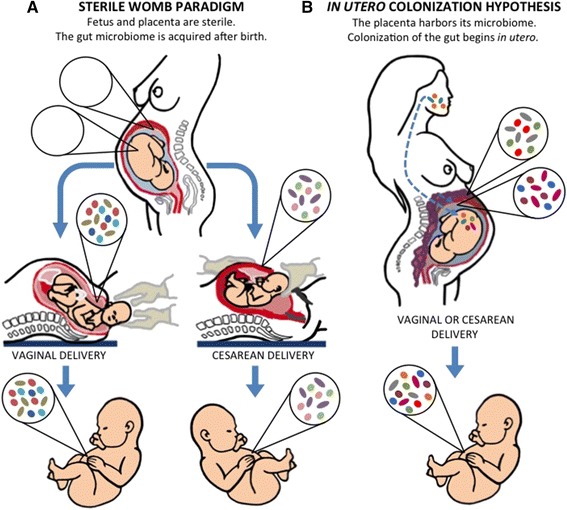
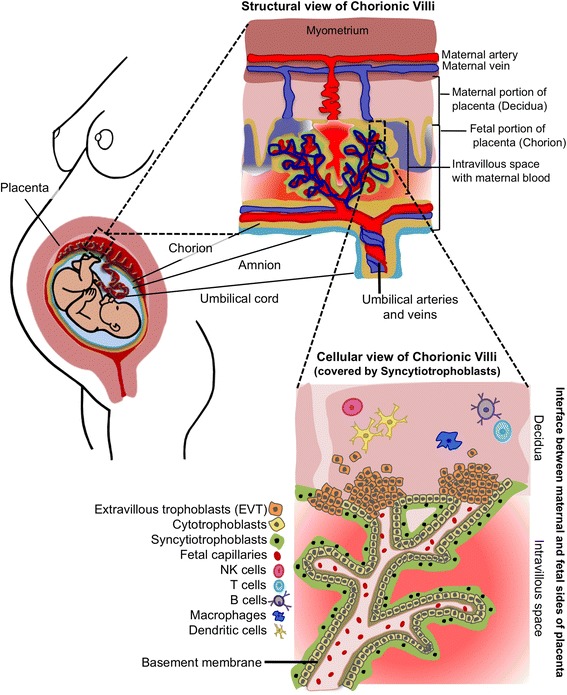
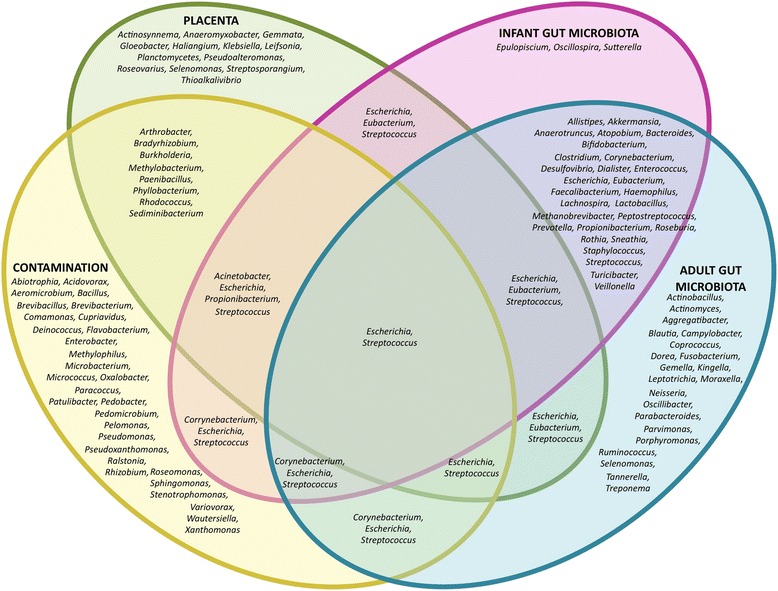
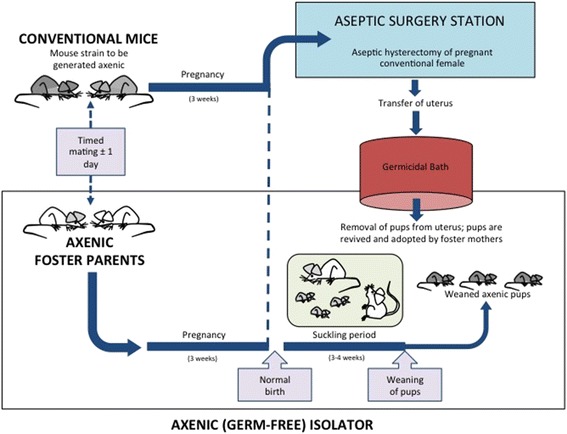
After more than a century of active research, the notion that the human fetal environment is sterile and that the neonate's microbiome is acquired during and after birth was an accepted dogma. However, recent studies using molecular techniques suggest bacterial communities in the placenta, amniotic fluid, and meconium from healthy pregnancies. These findings have led many scientists to challenge the "sterile womb paradigm" and propose that microbiome acquisition instead begins in utero, an idea that would fundamentally change our understanding of gut microbiota acquisition and its role in human development. In this review, we provide a critical assessment of the evidence supporting these two opposing hypotheses, specifically as it relates to (i) anatomical, immunological, and physiological characteristics of the placenta and fetus; (ii) the research methods currently used to study microbial populations in the intrauterine environment; (iii) the fecal microbiome during the first days of life; and (iv) the generation of axenic animals and humans. Based on this analysis, we argue that the evidence in support of the "in utero colonization hypothesis" is extremely weak as it is founded almost entirely on studies that (i) used molecular approaches with an insufficient detection limit to study "low-biomass" microbial populations, (ii) lacked appropriate controls for contamination, and (iii) failed to provide evidence of bacterial viability. Most importantly, the ability to reliably derive axenic animals via cesarean sections strongly supports sterility of the fetal environment in mammals. We conclude that current scientific evidence does not support the existence of microbiomes within the healthy fetal milieu, which has implications for the development of clinical practices that prevent microbiome perturbations after birth and the establishment of future research priorities.
Overview
The claims and statistics of this paper haven’t been checked yet.
Run the check — free, no account needed. It reads the open-access text and checks the sources it cites.
Integrity signals
Registry
Cites
Statistics
Figures
Verification
Claims the paper makes
The claims and statistics of this paper haven’t been checked yet.
Run the check — free, no account needed. It reads the open-access text and checks the sources it cites.
Claims other papers make about this one
Each is checked against this paper’s own text: does it say what the citing paper says it does?
The source backs part of the claim, not all of it — or backs it for a different population, condition or comparison.
In the citing paper
“However, oral bacteria have been detected at various sites within the uterus.110, 111”
From The oral microbiome: Role of key organisms and complex networks in oral health and disease (2021) · cites this paper as [110]
Experimental — accuracy not yet measuredIn the citing paper
“Conversely, but equally important, the infant gut is largely thought to be sterile in utero and colonized during birth and postnatally with a trajectory toward an adult-like complexity taking approximately 3 years (Clarke et al., 2014a;Perez-Munoz et al., 2017).”
From Gut reactions: Breaking down xenobiotic–microbiome interactions (2019) · cites this paper as Perez-Munoz et al., 2017
In the citing paper
“Current research findings suggest that the prenatal oral cavity is sterile until birth after which colonization with microorganisms occurs upon exposure to the external environment.110”
From The oral microbiome: Role of key organisms and complex networks in oral health and disease (2021) · cites this paper as [110]
Self-check
Percentages, sums and reported differences re-computed from the paper’s own numbers.
The self-check needs the paper’s full text.
Citations
Cites
Structure, function and diversity of the healthy human microbiome
The Human Microbiome Project Consortium (2012) · Nature · doi:10.1038/nature11234 · Cited by 11,726
Dominguez-Bello, M. G., Costello, E. K., Contreras, M., Magris, M., Hidalgo, G., Fierer, N., & Knight, R. (2010) · Proceedings of the National Academy of Sciences · doi:10.1073/pnas.1002601107 · Cited by 4,774
Conjectures and Refutations: The Growth of Scientific Knowledge.
HESSE, M. B., & Popper, K. R. (1965) · The Philosophical Quarterly · doi:10.2307/2218271 · Cited by 4,213
The Sociology of Science: Theoretical and Empirical Investigations
Kaplan, N. M., Merton, R. Κ., & Storer, N. W. (1974) · Technology and Culture · doi:10.2307/3102264 · Cited by 4,030
Reagent and laboratory contamination can critically impact sequence-based microbiome analyses
Salter, S. J., Cox, M. J., Turek, E. M., Calus, S. T., Cookson, W. O., Moffatt, M. F., Turner, P., Parkhill, J., Loman, N. J., & Walker, A. W. (2014) · BMC Biology · doi:10.1186/s12915-014-0087-z · Cited by 3,463
Dynamics and Stabilization of the Human Gut Microbiome during the First Year of Life
Bäckhed, F., Roswall, J., Peng, Y., Feng, Q., Jia, H., Kovatcheva-Datchary, P., Li, Y., Xia, Y., Xie, H., Zhong, H., et al. (2015) · Cell Host & Microbe · doi:10.1016/j.chom.2015.04.004 · Cited by 3,315
The Placenta Harbors a Unique Microbiome
Aagaard, K., Ma, J., Antony, K. M., Ganu, R., Petrosino, J., & Versalovic, J. (2014) · Science Translational Medicine · doi:10.1126/scitranslmed.3008599 · Cited by 2,494
Akkermansia muciniphila gen. nov., sp. nov., a human intestinal mucin-degrading bacterium
Derrien, M., Vaughan, E. E., Plugge, C. M., & de Vos, W. M. (2004) · International Journal of Systematic and Evolutionary Microbiology · doi:10.1099/ijs.0.02873-0 · Cited by 2,094
Early infancy microbial and metabolic alterations affect risk of childhood asthma
Arrieta, M., Stiemsma, L. T., Dimitriu, P. A., Thorson, L., Russell, S., Yurist‐Doutsch, S., Kuzeljevic, B., Gold, M. J., Britton, H. M., Lefebvre, D. L., et al. (2015) · Science Translational Medicine · doi:10.1126/scitranslmed.aab2271 · Cited by 1,832
Antibiotics, birth mode, and diet shape microbiome maturation during early life
Bokulich, N. A., Chung, J., Battaglia, T., Henderson, N., Jay, M., Li, H., D. Lieber, A., Wu, F., Perez-Perez, G. I., Chen, Y., et al. (2016) · Science Translational Medicine · doi:10.1126/scitranslmed.aad7121 · Cited by 1,469
REVIEW ARTICLE: The Immune System in Pregnancy: A Unique Complexity
Mor, G., & Cardenas, I. (2010) · American Journal of Reproductive Immunology · doi:10.1111/j.1600-0897.2010.00836.x · Cited by 1,431
The maternal microbiota drives early postnatal innate immune development
Gomez de Agüero, M., Ganal-Vonarburg, S. C., Fuhrer, T., Rupp, S., Uchimura, Y., Li, H., Steinert, A., Heikenwalder, M., Hapfelmeier, S., Sauer, U., et al. (2016) · Science · doi:10.1126/science.aad2571 · Cited by 1,231
Collado, M. C., Rautava, S., Aakko, J., Isolauri, E., & Salminen, S. (2016) · Scientific Reports · doi:10.1038/srep23129 · Cited by 1,098
Segata, N., Haake, S. K., Mannon, P., Lemon, K. P., Waldron, L., Gevers, D., Huttenhower, C., & Izard, J. (2012) · Genome Biology · doi:10.1186/gb-2012-13-6-r42 · Cited by 1,076
Partial restoration of the microbiota of cesarean-born infants via vaginal microbial transfer
Dominguez-Bello, M. G., De Jesus-Laboy, K. M., Shen, N., Cox, L. M., Amir, A., Gonzalez, A., Bokulich, N. A., Song, S. J., Hoashi, M., Rivera-Vinas, J. I., et al. (2016) · Nature Medicine · doi:10.1038/nm.4039 · Cited by 1,014
Is meconium from healthy newborns actually sterile?
Jiménez, E., Marín, M. L., Martı́n, R., Odriozola, J. M., Olivares, M. M., Xaus, J., Fernández, L., & Rodríguez, J. M. (2008) · Research in Microbiology · doi:10.1016/j.resmic.2007.12.007 · Cited by 944
The infant microbiome development: Mom matters
Mueller, N. T., Bakacs, E., Combellick, J., Grigoryan, Z., & Dominguez-Bello, M. G. (2015) · Trends in Molecular Medicine · doi:10.1016/j.molmed.2014.12.002 · Cited by 943
A complex journey: transmission of microbial symbionts.
Bright, M., & Bulgheresi, S. (2010) · Nature Reviews Microbiology · doi:10.1038/nrmicro2262 · Cited by 894 · cited 1×
“strictly vertical (maternal) to horizontal (transmission between members of the same species or the environment) [5].”
BackgroundMom Knows Best: The Universality of Maternal Microbial Transmission
Funkhouser-Jones, L. J., & Bordenstein, S. R. (2013) · PLoS Biology · doi:10.1371/journal.pbio.1001631 · Cited by 837
DiGiulio, D. B., Romero, R. J., Amogan, H., Kusanovic, J. P., Bik, E. M., Gotsch, F., Kim, C. J., Erez, O., Edwin, S. S., & Relman, D. A. (2008) · PLoS ONE · doi:10.1371/journal.pone.0003056 · Cited by 808
A meta‐analysis of the association between Caesarean section and childhood asthma
Thavagnanam, S., Fleming, J., Bromley, A., Shields, M. D., & Cardwell, C. R. (2008) · Clinical & Experimental Allergy · doi:10.1111/j.1365-2222.2007.02780.x · Cited by 651
Cardwell, C. R., Stene, L. C., Joner, G., Cinek, O., Svensson, J., Goldacre, M. J., Parslow, R. C., Pozzilli, P., Brigis, G., Stoyanov, D., et al. (2008) · Diabetologia · doi:10.1007/s00125-008-0941-z · Cited by 590
Lauder, A. P., Roche, A. M., Sherrill-Mix, S., Bailey, A., Laughlin, A. L., Bittinger, K., Leite, R., Elovitz, M. A., Parry, S., & Bushman, F. D. (2016) · Microbiome · doi:10.1186/s40168-016-0172-3 · Cited by 539
Bergström, A., Skov, T. H., Bahl, M. I., Roager, H. M., Christensen, L. B., Ejlerskov, K. T., Mølgaard, C., Michaelsen, K. F., & Licht, T. R. (2014) · Applied and Environmental Microbiology · doi:10.1128/aem.00342-14 · Cited by 532
Diet and the development of the human intestinal microbiome
Voreades, N., Kozil, A., & Weir, T. L. (2014) · Frontiers in Microbiology · doi:10.3389/fmicb.2014.00494 · Cited by 519
Host–Bacterial Symbiosis in Health and Disease
Chow, J., Lee, S. M., Shen, Y. L., Khosravi, A., & Mazmanian, S. K. (2010) · Advances in immunology · doi:10.1016/b978-0-12-381300-8.00008-3 · Cited by 485
DiGiulio, D. B., Romero, R. J., Kusanovic, J. P., Gómez, R., Kim, C. J., Seok, K. S., Gotsch, F., Mazaki‐Tovi, S., Vaisbuch, E., Sanders, K. M., et al. (2010) · American Journal of Reproductive Immunology · doi:10.1111/j.1600-0897.2010.00830.x · Cited by 466
Meconium Microbiome Analysis Identifies Bacteria Correlated with Premature Birth
Ardissone, A. N., de la Cruz, D., Davis‐Richardson, A. G., Rechcigl, K. T., Li, N., Drew, J. C., Torrazza, R. J. M., Sharma, R. R., Hudak, M. L., Triplett, E. W., et al. (2014) · PLoS ONE · doi:10.1371/journal.pone.0090784 · Cited by 460
Cesarean Delivery May Affect the Early Biodiversity of Intestinal Bacteria1,
Biasucci, G., Benenati, B., Morelli, L., Bessi, E., & Boehm, G. (2008) · The Journal of Nutrition · doi:10.1093/jn/138.9.1796s · Cited by 458 · cited 1×
“Several studies have reported significant differences in the diversity and composition between vaginally versus C-section-delivered infants [101, 105, 106, 108], with vaginally born infants harboring an early microbiome that resemble that of the vagina, while the microbiomes of C-section infants reflect those of the h…”
BackgroundPreterm Labor Associated With Subclinical Amniotic Fluid Infection and With Bacterial Vaginosis
Gravett, M. G., Hummel, D., Eschenbach, D. A., & Holmes, K. K. (1986) · Obstetrics and Gynecology · doi:10.1097/00006250-198602000-00013 · Cited by 454
Gosalbes, M. J., Llop, S., Vallès, Y., Moyá, A., Ballester, F., & Francino, M. P. (2012) · Clinical & Experimental Allergy · doi:10.1111/cea.12063 · Cited by 399
Colonization of the upper genital tract by vaginal bacterial species in nonpregnant women
Mitchell, C. M., Haick, A. K., Nkwopara, E., Garcia, R. L., Rendi, M. H., Agnew, K. J., Fredricks, D. N., & Eschenbach, D. A. (2014) · American Journal of Obstetrics and Gynecology · doi:10.1016/j.ajog.2014.11.043 · Cited by 396
Stout, M. J., Conlon, B., Landeau, M., Lee, I., Bower, C., Zhao, Q., Roehl, K. A., Nelson, D. M., Macones, G. A., & Mysorekar, I. U. (2013) · American Journal of Obstetrics and Gynecology · doi:10.1016/j.ajog.2013.01.018 · Cited by 389
Diversity of microbes in amniotic fluid
DiGiulio, D. B. (2011) · Seminars in Fetal and Neonatal Medicine · doi:10.1016/j.siny.2011.10.001 · Cited by 371
Intestinal Microbial Ecology in Premature Infants Assessed with Non–Culture-Based Techniques
Mshvildadze, M., Neu, J., Shuster, J. J., Theriaque, D. W., Li, N., & Mai, V. (2009) · The Journal of Pediatrics · doi:10.1016/j.jpeds.2009.06.063 · Cited by 367
The development of the bacterial flora in normal neonates
Rotimi, V. O., & Duerden, B. I. (1981) · Journal of Medical Microbiology · doi:10.1099/00222615-14-1-51 · Cited by 362
Mode of Delivery – Effects on Gut Microbiota and Humoral Immunity
Huurre, A., Kalliomäki, M. A., Rautava, S., Rinne, M., Salminen, S., & Isolauri, E. (2007) · Neonatology · doi:10.1159/000111102 · Cited by 354
Verstraelen, H., Vilchez‐Vargas, R., Desimpel, F., Jáuregui, R., Vankeirsbilck, N., Weyers, S., Verhelst, R., Sutter, P. D., Pieper, D. H., & de Wiele, T. V. (2016) · PeerJ · doi:10.7717/peerj.1602 · Cited by 318
Bacteria and inflammatory cells in fetal membranes do not always cause preterm labor
Steel, J. H., Malatos, S., Kennea, N., Edwards, A. D., Miles, L., Duggan, P., Reynolds, P. R., Feldman, R. G., & Sullivan, M. H. F. (2005) · Pediatric Research · doi:10.1203/01.pdr.0000153869.96337.90 · Cited by 317
The placenta: transcriptional, epigenetic, and physiological integration during development
Maltepe, E., Bakardjiev, A. I., & Fisher, S. J. (2010) · Journal of Clinical Investigation · doi:10.1172/jci41211 · Cited by 316
Bifidobacterium and Lactobacillus DNA in the human placenta
Satokari, R. M., Grönroos, T., Laitinen, K., Salminen, S., & Isolauri, E. (2008) · Letters in Applied Microbiology · doi:10.1111/j.1472-765x.2008.02475.x · Cited by 304
Establishment of the intestinal microbiota and its role for atopic dermatitis in early childhood
Penders, J., Gerhold, K., Stobberingh, E. E., Thijs, C. T., Zimmermann, K., Lau, S., & Hamelmann, E. H. (2013) · Journal of Allergy and Clinical Immunology · doi:10.1016/j.jaci.2013.05.043 · Cited by 304
Makino, H., Kushiro, A., Ishikawa, E., Kubota, H., Gawad, A., Sakai, T., Oishi, K., Martı́n, R., Amor, K. B., Knol, J., et al. (2013) · PLoS ONE · doi:10.1371/journal.pone.0078331 · Cited by 304
Rautava, S., Collado, M. C., Salminen, S., & Isolauri, E. (2012) · Neonatology · doi:10.1159/000339182 · Cited by 297
Divergent Trophoblast Responses to Bacterial Products Mediated by TLRs
Abrahams, V. M., Aldo, P. B., Kim, Y. M., Chavez, S. L., Chaiworapongsa, T., Romero, R. J., & Mor, G. (2004) · The Journal of Immunology · doi:10.4049/jimmunol.173.7.4286 · Cited by 278
Tanner, M. A., Goebel, B. M., Dojka, M. A., & Pace, N. R. (1998) · Applied and Environmental Microbiology · doi:10.1128/aem.64.8.3110-3113.1998 · Cited by 270
Diversified Microbiota of Meconium Is Affected by Maternal Diabetes Status
Hu, J., Nomura, Y., Bashir, A., Fernandez-Hernandez, H., Itzkowitz, S. H., Pei, Z., Stone, J. L., Loudon, H., & Peter, I. (2013) · PLoS ONE · doi:10.1371/journal.pone.0078257 · Cited by 265
Pathogens and the placental fortress
Robbins, J. R., & Bakardjiev, A. I. (2011) · Current Opinion in Microbiology · doi:10.1016/j.mib.2011.11.006 · Cited by 264
Hedrich, H. J. (2012) · doi:10.1016/c2009-0-60982-x · Cited by 260
Couturier‐Tarrade, A., Lai–Kuen, R., Malassiné, A., Tricottet, V., Blain, P. L., Vidaud, M., & Evain‐Brion, D. (2001) · Laboratory Investigation · doi:10.1038/labinvest.3780334 · Cited by 259
A microbial perspective of human developmental biology
Charbonneau, M. R., Blanton, L. V., DiGiulio, D. B., Relman, D. A., Lebrilla, C. B., Mills, D. A., & Gordon, J. I. (2016) · Nature · doi:10.1038/nature18845 · Cited by 251
Cassell, G. H., Davis, R. O., Waites, K. B., Brown, M. B., Marriott, P. A., Stagno, S., & Davis, J. K. (1983) · PubMed · Cited by 235
Isolation of vaginal lactobacilli and characterization of anti-candida activity
Parolin, C., Marangoni, A., Laghi, L., Foschi, C., Ñahui Palomino, R. A., Calonghi, N., Cevenini, R., & Vitali, B. (2015) · PLOS ONE · doi:10.1371/journal.pone.0131220 · Cited by 228
Aime, V. L., Winkle, S. M., & Herbst‐Kralovetz, M. M. (2014) · Human Reproduction Update · doi:10.1093/humupd/dmu065 · Cited by 219
The preterm placental microbiome varies in association with excess maternal gestational weight gain
Antony, K. M., Ma, J., Mitchell, K. B., Racusin, D., Versalovic, J. A., & Aagaard, K. M. (2015) · American Journal of Obstetrics and Gynecology · doi:10.1016/j.ajog.2014.12.041 · Cited by 215
Ureaplasma urealyticum, Mycoplasma hominis and adverse pregnancy outcomes
Capoccia, R., Greub, G., & Baud, D. (2013) · Current Opinion in Infectious Diseases · doi:10.1097/qco.0b013e328360db58 · Cited by 215
Robbins, J. R., Skrzypczynska, K. M., Zeldovich, V. B., Kapidzic, M., & Bakardjiev, A. I. (2010) · PLoS Pathogens · doi:10.1371/journal.ppat.1000732 · Cited by 212
Hansen, R., Scott, K. P., Khan, S., Martin, J. C., Berry, S. H., Stevenson, M. D., Augusta, O., Munro, M. J., & Hold, G. L. (2015) · PLoS ONE · doi:10.1371/journal.pone.0133320 · Cited by 194
Wang, X., Buhimschi, C. S., Témoin, S., Bhandari, V., Han, Y. W., & Buhimschi, I. A. (2013) · PLoS ONE · doi:10.1371/journal.pone.0056131 · Cited by 188
Espinoza, J., Chaiworapongsa, T., Romero, R. J., Edwin, S. S., Rathnasabapathy, C., Gómez, R., Bujold, E., Camacho, N., Kim, Y. M., Hassan, S. S., et al. (2003) · The Journal of Maternal-Fetal & Neonatal Medicine · doi:10.1080/jmf.13.1.2.21 · Cited by 186
Preterm birth due to maternal infection: causative pathogens and modes of prevention
Pararas, M. V., Skevaki, C. L., & Kafetzis, D. A. (2006) · European Journal of Clinical Microbiology & Infectious Diseases · doi:10.1007/s10096-006-0190-3 · Cited by 183
Martínez, I., Muller, C. E., & Walter, J. (2013) · PLoS ONE · doi:10.1371/journal.pone.0069621 · Cited by 181
Self-citationUnderstanding how Listeria monocytogenes targets and crosses host barriers
Lecuit, M. (2005) · Clinical Microbiology and Infection · doi:10.1111/j.1469-0691.2005.01146.x · Cited by 180
Defective antigen-presenting cell function in human neonates
Velilla, P. A., Rugeles, M. T., & Chougnet, C. (2006) · Clinical Immunology · doi:10.1016/j.clim.2006.08.010 · Cited by 175
Intestinal permeability in relation to birth weight and gestational and postnatal age
van Elburg, R. M., Fetter, W. P. F., Bunkers, C. M., & Heymans, H. S. A. (2002) · Archives of Disease in Childhood Fetal & Neonatal · doi:10.1136/fn.88.1.f52 · Cited by 170
Identification of oral bacterial species associated with halitosis
Haraszthy, V. I., Zambon, J. J., Sreenivasan, P. K., Zambon, M., Gerber, D., Rêgo, R. O., & Parker, C. J. (2007) · The Journal of the American Dental Association · doi:10.14219/jada.archive.2007.0325 · Cited by 167
Martius, J., & Eschenbach, D. A. (1990) · Archives of Gynecology and Obstetrics · doi:10.1007/bf02390649 · Cited by 164
Is a foetus developing in a sterile environment?
Wassenaar, T. M., & Panigrahi, P. (2014) · Letters in Applied Microbiology · doi:10.1111/lam.12334 · Cited by 157
Doyle, R., Alber, D., Jones, H. E., Harris, K., Fitzgerald, F., Peebles, D., & Klein, N. J. (2014) · Placenta · doi:10.1016/j.placenta.2014.10.007 · Cited by 153
Amarasekara, R., Jayasekara, R. W., Senanayake, H. M., & Dissanayake, V. H. W. (2014) · Journal of obstetrics and gynaecology research · doi:10.1111/jog.12619 · Cited by 152
Nagpal, R., Tsuji, H., Takahashi, T., Kawashima, K., Nagata, S., Nomoto, K., & Yamashiro, Y. (2016) · Frontiers in Microbiology · doi:10.3389/fmicb.2016.01997 · Cited by 148
Concepts and Mechanisms: Crossing Host BarriersPreprint
Doran, K. S., Banerjee, A., Disson, O., & Lecuit, M. (2013) · Cold Spring Harbor Perspectives in Medicine · doi:10.1101/cshperspect.a010090 · Cited by 146
Grahn, N., Olofsson, M., Ellnebo‐Svedlund, K., Monstein, H.-J. ⁄. R., & Jonasson, J. (2003) · FEMS Microbiology Letters · doi:10.1016/s0378-1097(02)01190-4 · Cited by 143
The first microbial environment of infants born by C-section: the operating room microbes
Shin, H., Pei, Z., Martinez, K. A., Rivera-Viñas, J. I., Méndez, K., Cavallín, H., & Domínguez-Bello, M. G. (2015) · Microbiome · doi:10.1186/s40168-015-0126-1 · Cited by 141
Infection of the amniotic cavity with Ureaplasma urealyticum in the midtrimester of pregnancy.
Horowitz, S., Mazor, M., Romero, R. J., Horowitz, J., & Glezerman, M. (1995) · PubMed · Cited by 140
Schelonka, R. L., & Infante, A. J. (1998) · Seminars in Perinatology · doi:10.1016/s0146-0005(98)80003-7 · Cited by 140
Zoetendal, E. G., Amor, K. B., Akkermans, A. D. L., Abee, T., & de Vos, W. M. (2001) · Systematic and Applied Microbiology · doi:10.1078/0723-2020-00060 · Cited by 137
Mycoplasma,Ureaplasma, and Adverse Pregnancy Outcomes: A Fresh Look
Larsen, B., & Hwang, J. K. (2010) · Infectious Diseases in Obstetrics and Gynecology · doi:10.1155/2010/521921 · Cited by 136
The Intestinal Bacteria of the Neonate and Breast-Fed Infant
Escherich, T. (1988) · Clinical Infectious Diseases · doi:10.1093/clinids/10.6.1220 · Cited by 132
The Human Microbiome before Birth
Blaser, M. J., & Domínguez-Bello, M. G. (2016) · Cell Host & Microbe · doi:10.1016/j.chom.2016.10.014 · Cited by 131
Microbial programming of health and disease starts during fetal life
Koleva, P. T., Kim, J., Scott, J. A., & Kozyrskyj, A. L. (2015) · Birth Defects Research Part C Embryo Today Reviews · doi:10.1002/bdrc.21117 · Cited by 130
Jones, H. E., Harris, K., Azizia, M., Bank, L., Carpenter, B., Hartley, J. C., Klein, N. J., & Peebles, D. (2009) · PLoS ONE · doi:10.1371/journal.pone.0008205 · Cited by 128
Patni, S., Wynen, L. P., Seager, A. L., Morgan, G., WHITE, J. O., & Thornton, C. A. (2008) · Biology of Reproduction · doi:10.1095/biolreprod.108.069252 · Cited by 128
Placental Syncytium Forms a Biophysical Barrier against Pathogen Invasion
Zeldovich, V. B., Clausen, C. H., Bradford, E., Fletcher, D. A., Maltepe, E., Robbins, J. R., & Bakardjiev, A. I. (2013) · PLoS Pathogens · doi:10.1371/journal.ppat.1003821 · Cited by 113
Fernandez-Feo, M., Wei, G., Blumenkranz, G., Dewhirst, F. E., Schuppan, D., Oppenheim, F. G., & Helmerhorst, E. J. (2013) · Clinical Microbiology and Infection · doi:10.1111/1469-0691.12249 · Cited by 109
Mühl, H., Kochem, A.-J., Disqué, C., & Sakka, S. G. (2008) · Diagnostic Microbiology and Infectious Disease · doi:10.1016/j.diagmicrobio.2008.07.011 · Cited by 106
Elevated Levels of IL-10 and G-CSF Associated with Asymptomatic Malaria in Pregnant Women
Wilson, N. O., Bythwood, T., Solomon, W., Jolly, P. E., Yatich, N., Jiang, Y., Shuaib, F. M. B., Adjei, A. A., Anderson, W. A., & Stiles, J. K. (2010) · Infectious Diseases in Obstetrics and Gynecology · doi:10.1155/2010/317430 · Cited by 105
Barros, F. C., Matijasevich, A., Hallal, P. C., Horta, B. L., Barros, A. J. D., Menezes, A. B., Santos, I. S., Gigante, D. P., & Victora, C. G. (2012) · American Journal of Clinical Nutrition · doi:10.3945/ajcn.111.026401 · Cited by 103
Rate of establishing the gut microbiota in infancy has consequences for future health
Dogra, S. K., Sakwińska, O., Soh, S., Ngom‐Bru, C., Brück, W. M., Berger, B. W., Brüssow, H., Karnani, N., Lee, Y. S., Yap, F. K. P., et al. (2015) · Gut Microbes · doi:10.1080/19490976.2015.1078051 · Cited by 95
DiGiulio, D. B., Gervasi, M.-T., Romero, R. J., Mazaki‐Tovi, S., Vaisbuch, E., Kusanovic, J. P., Seok, K. S., Gómez, R., Mittal, P., Gotsch, F., et al. (2010) · Journal of Perinatal Medicine · doi:10.1515/jpm.2010.078 · Cited by 89
Microbial invasion of the amniotic cavity in pregnancies with small-for-gestational-age fetuses
DiGiulio, D. B., Gervasi, M. T., Romero, R. J., Vaisbuch, E., Mazaki‐Tovi, S., Kusanovic, J. P., Seok, K. S., Gómez, R., Mittal, P., Gotsch, F., et al. (2010) · Journal of Perinatal Medicine · doi:10.1515/jpm.2010.076 · Cited by 87
Milani, C., Lugli, G. A., Turroni, F., Mancabelli, L., Duranti, S., Viappiani, A., Mangifesta, M., Segata, N., van Sinderen, D., & Ventura, M. (2014) · FEMS Microbiology Ecology · doi:10.1111/1574-6941.12410 · Cited by 87
Lactoferrin in intrauterine infection, human parturition, and rupture of fetal membranes
Pacora, P., Maymon, E., Gervasi, M.-T., Gómez, R., Edwin, S. S., Yoon, B. H., & Romero, R. J. (2000) · American Journal of Obstetrics and Gynecology · doi:10.1067/mob.2000.108882 · Cited by 81
Khoury, K. A., Floch, M. H., & Hersh, T. (1969) · The Journal of Experimental Medicine · doi:10.1084/jem.130.3.659 · Cited by 78
The Intestinal Bacteria of the Neonate and Breast-Fed Infant
Escherich, T. (1989) · Clinical Infectious Diseases · doi:10.1093/clinids/11.2.352 · Cited by 78
Comment on “The placenta harbors a unique microbiome”
Kliman, H. J. (2014) · Science Translational Medicine · doi:10.1126/scitranslmed.3009864 · Cited by 77
van der Zee, A., Peeters, M. F., de Jong, C., Verbakel, H., Crielaard, J. W., Claas, E. C. J., & Templeton, K. E. (2002) · Journal of Clinical Microbiology · doi:10.1128/jcm.40.3.1128.2002 · Cited by 76
Mycoplasma hominis in mid-trimester amniotic fluid: relation to pregnancy outcome
Nguyen, D. P., Gerber, S., Hohlfeld, P., Sandrine, G., & Witkin, S. S. (2004) · Journal of Perinatal Medicine · doi:10.1515/jpm.2004.060 · Cited by 75
Ureaplasma/Mycoplasma-Infected Amniotic Fluid: Pregnancy Outcome in Treated and Nontreated Patients
Berg, T. G., Philpot, K. L., Welsh, M. S., Sanger, W. G., & Smith, C. V. (1999) · Journal of Perinatology · doi:10.1038/sj.jp.7200185 · Cited by 66
Rearing germ-free albino rats.
REYNIERS, J. A., Pc, T., & Ervin, R. F. (1946) · PubMed · Cited by 65
The bacterial content of the uterus at cesarean section
Harris, J. W., & Brown, J. H. (1927) · American Journal of Obstetrics and Gynecology · doi:10.1016/s0002-9378(27)90506-7 · Cited by 63
Gustafsson, B. (2008) · Cells Tissues Organs · doi:10.1159/000140222 · Cited by 61
Johnson, P. M., Natvig, J. B., Ystehede, U. A., & Faulk, W. P. (1977) · PubMed Central · Cited by 59
Contamination of Qiagen DNA Extraction Kits with Legionella DNA
Evans, G. E., Murdoch, D. R., Anderson, T. P., Potter, H. C., George, P. M., & Chambers, S. T. (2003) · Journal of Clinical Microbiology · doi:10.1128/jcm.41.7.3452-3453.2003 · Cited by 58
Premature rupture of the membranes and ascending infection
Evaldson, G. R., Malmborg, A., & Nord, C. E. (1982) · BJOG An International Journal of Obstetrics & Gynaecology · doi:10.1111/j.1471-0528.1982.tb05028.x · Cited by 58
Immunoelectron microscopy localization of immunoglobulin G in human placenta.
Lin, C. (1980) · Journal of Histochemistry & Cytochemistry · doi:10.1177/28.4.6768794 · Cited by 56
Subchorionic Fibrin Cultures for Bacteriologic Study of the Placenta
Aquino, T. I., Zhang, J., Kraus, F. T., Knefel, R., & Taff, T. A. (1984) · American Journal of Clinical Pathology · doi:10.1093/ajcp/81.4.482 · Cited by 53
Burton, G. J., & Watson, A. L. (1997) · Reviews in Medical Virology · doi:10.1002/(sici)1099-1654(199712)7:4 · Cited by 52
Gregory, K. E., LaPlante, R. D., Shan, G., Kumar, D. V., & Gregas, M. (2015) · Advances in Neonatal Care · doi:10.1097/anc.0000000000000237 · Cited by 51
Bacterial Communities in Neonatal Feces are Similar to Mothers’ Placentae
Dong, X., Li, X., Luan, J.-J., Liu, X.-F., Peng, J., Luo, Y., & Liu, C. (2015) · Canadian Journal of Infectious Diseases and Medical Microbiology · doi:10.1155/2015/737294 · Cited by 50
Regulation and Signal Transduction of Toll‐Like Receptors in Human Chorioncarcinoma Cell Lines
Klaffenbach, D., Rascher, W., Röllinghoff, M., Dötsch, J., Meißner, U., & Schnare, M. (2005) · American Journal of Reproductive Immunology · doi:10.1111/j.1600-0897.2004.00247.x · Cited by 49
Kai-Larsen, Y., Gudmundsson, G. H., & Agerberth, B. (2014) · Acta Paediatrica · doi:10.1111/apa.12700 · Cited by 47
Bacterial invasion of amniotic cavity during pregnancy and labor.
Cn, P., Strigou-Charalabis, E., & Db, K. (1971) · PubMed · Cited by 43
Characterization of functional properties of Enterococcus faecium strains isolated from human gut
İspirli, H., Demirbaş, F., & Dertli̇, E. (2015) · Canadian Journal of Microbiology · doi:10.1139/cjm-2015-0446 · Cited by 42
Evaluation of Amniotic Fluid for Aerobic and Anaerobic Bacteria
Lewis, J. F., Johnson, P., & Miller, P. H. (1976) · American Journal of Clinical Pathology · doi:10.1093/ajcp/65.1.58 · Cited by 39
Microorganisms and amniotic fluid.
Hj, H., Iuppa, J. B., & Fr, F. (1969) · PubMed · Cited by 38
BACTERIAL FLORA OF FIRST SPECIMENS OF MECONIUM PASSED BY FIFTY NEW-BORN INFANTS
Hall, I. C. (1934) · Archives of Pediatrics and Adolescent Medicine · doi:10.1001/archpedi.1934.01960130103007 · Cited by 37
Isolation of pathogenic bacteria in the amniotic fluid during pregnancy and labor
Prevedourakis, C., Papadimitriou, G. N., & Ioannidou, A. (1970) · American Journal of Obstetrics and Gynecology · doi:10.1016/0002-9378(70)90365-0 · Cited by 35
Prohić, A., Šimić, D., Sadiković, T. J., & Krupalija‐Fazlic, M. (2014) · Europe PMC (PubMed Central) · Cited by 35
Pérez, A., Bellón, J. M., Gurbindo, M. D., & Muñoz‐Fernández, M. Á. (2009) · Human Immunology · doi:10.1016/j.humimm.2009.11.011 · Cited by 31
Yagnik, B., Padh, H., & Desai, P. N. (2015) · Microbes and Infection · doi:10.1016/j.micinf.2015.11.006 · Cited by 30
Greig, P. C. (1998) · Clinical Obstetrics & Gynecology · doi:10.1097/00003081-199812000-00009 · Cited by 30
Barnes, R. D., Fairweather, D. V. I., Holliday, J., Keane, C., Piesowicz, A. T., Soothill, J. F., & Tuffrey, M. A. (1969) · The Lancet · doi:10.1016/s0140-6736(69)91187-8 · Cited by 29
The bacterial content of the uterus at cesarean section. II
Harris, J. W., & Brown, J. H. (1928) · American Journal of Obstetrics and Gynecology · doi:10.1016/s0002-9378(28)90975-8 · Cited by 28
BACTERIAL INVASION OF AMNIOTIC CAVITY DURING PREGNANCY AND LABOR
Prevedourakis, C., Strigou-Charalabis, E., & Kaskarélis, D. (1971) · Obstetrical & Gynecological Survey · doi:10.1097/00006254-197108000-00008 · Cited by 26
Ben‐Hur, H., Gurevich, P., Berman, V., Tchanyshev, R., Gurevich, E., & Zusman, I. (2001) · PubMed · Cited by 25
A selective medium for the isolation of Corynebacterium species in oral cavities
Tsuzukibashi, O., Uchibori, S., Shinozaki‐Kuwahara, N., Kobayashi, T., Takada, K., & Hirasawa, M. (2014) · Journal of Microbiological Methods · doi:10.1016/j.mimet.2014.06.005 · Cited by 25
Gurevich, P., Elhayany, A., Ben‐Hur, H., Moldavsky, M., Szvalb, S., Zandbank, J., Shperling, I. D., & Zusman, I. (2003) · American Journal of Reproductive Immunology · doi:10.1034/j.1600-0897.2003.01201.x · Cited by 23
AMNIOTIC FLUID INFECTION AND THE INTACT FETAL MEMBRANE
Stroup, P. E. (1962) · Obstetrical & Gynecological Survey · doi:10.1097/00006254-196212000-00010 · Cited by 21
Štëpánková, R., Klepalová, J., & Kruml, J. (1972) · Folia Microbiologica · doi:10.1007/bf02872736 · Cited by 19
Rodent models to study the relationships between mammals and their bacterial inhabitants
Bibiloni, R. (2012) · Gut Microbes · doi:10.4161/gmic.21905 · Cited by 18
Technique for rearing gnotobiotic pigs.
Waxler, G. L., Da, S., & Ck, W. (1966) · PubMed · Cited by 17
Beitrag zur Lehre von der puerperalen Infection der Neugeborenen
Küstner, O. (1877) · Archives of Gynecology and Obstetrics · doi:10.1007/bf01845161 · Cited by 16
Patni, S., Bryant, A. H., Wynen, L. P., Seager, A. L., Morgan, G., & Thornton, C. A. (2015) · Placenta · doi:10.1016/j.placenta.2015.06.017 · Cited by 16
THE USE OF GERMFREE ANIMALS AND TECHNIQUES IN THE SEARCH FOR UNKNOWN ETIOLOGICAL AGENTS
Reyniers, J. A., & Sacksteder, M. R. (1958) · Annals of the New York Academy of Sciences · doi:10.1111/j.1749-6632.1959.tb40807.x · Cited by 13
A TECHNIQUE FOR THE DELIVERY OF A GERMFREE CHILD
Barnes, R. D., Fairweather, D. V. I., Reynolds, E. O. R., Tuffrey, M. A., & Holliday, J. (1968) · BJOG An International Journal of Obstetrics & Gynaecology · doi:10.1111/j.1471-0528.1968.tb01544.x · Cited by 12
Techniques for obtaining, fistulization and rearing of axenic or gnotoxenic lambs, kids and calves.
Riou, Y., Gouet, P., Dubourguier, H. C., Contrepois, M., Dardillat, C., & Lefaivre, J. (1977) · PubMed · Cited by 12
Care and observation of a germ-free neonate.
Barnes, R. D., Bentovim, A., Hensman, S., & Piesowicz, A. T. (1969) · Archives of Disease in Childhood · doi:10.1136/adc.44.234.211 · Cited by 10
A rationale for the development of gnotobiotics
Trexler, P. C. (1978) · Laboratory Animals · doi:10.1258/002367778781088422 · Cited by 10
Germfree guinea pig delivery by hysterectomy.
Jj, L., Yerasimides, T. G., Jh, G., & Bausor, S. C. (1960) · PubMed · Cited by 10
REECENT DEVELOPMENTS IN INTESTINAL BACTERIOLOGY
KENDALL, A. I. (1918) · The American Journal of the Medical Sciences · doi:10.1097/00000441-191808000-00001 · Cited by 9
Ovalle, A., Martínez, M. A., Kakarieka, E., Gómez, R., Torres, J., Fuentes, A., Ruiz, M., & Angel, R. Z. M. (1998) · PubMed · Cited by 9
Malinak, L. R., Wilson, R., South, M. A., Montgomery, J. R., Mumford, D. M., & Flowers, C. E. (1973) · American Journal of Obstetrics and Gynecology · doi:10.1016/0002-9378(73)91051-x · Cited by 8
[The origins of the gnotobiotic technic--Küster/Nuttall/Schottelius/ Thierfelder].
Heinecke, H. (1990) · PubMed · Cited by 7
Revised Surgical Procedure for the Derivation of Gnotobiotic Dogs
Krakowka, S. G., Austin, N. J., Long, D. J., & Helphrey, M. L. (1981) · American Journal of Veterinary Research · doi:10.2460/ajvr.1981.42.01.149 · Cited by 6
Foster nursing of germfree mice.
Pilgrim, H. I., & Parks, R. C. (1968) · PubMed · Cited by 5
Microbial flora found in the products of conception in spontaneous abortions.
Bartizal, F. J., Pacheco, J. C., Malkasian, G. D., & Washington, J. A. (1974) · PubMed · Cited by 5
Eichberg, J. W., Moore, G. T., Kalter, S. S., Rodriguez, A. R., & Ml, B. (1979) · Journal of Medical Primatology · doi:10.1159/000460180 · Cited by 5
Wilson, R., & Mastromarino, A. J. (1977) · American Journal of Clinical Nutrition · doi:10.1093/ajcn/30.11.1896 · Cited by 5
Bacterial flora of meconium and faeces during the first year of life
Sunderarajan, K., & Kelkar, S. S. (1979) · The Indian Journal of Pediatrics · doi:10.1007/bf02827357 · Cited by 3
Maszkiewicz, W., Rzeszutko-Adamiczka, D., & Kaliński, R. (1993) · PubMed · Cited by 3
Travnicek, J., & Mandel, L. (1987) · Food / Nahrung · doi:10.1002/food.19870310583 · Cited by 2
Germfree technique for the rearing of kittens--a research tool.
Fletcher, A. M., Hoskins, J. D., & Ad, E. (1991) · PubMed · Cited by 2
Research works printed but not linked: 1
- Burrage S. Bacteria in the supposedly sterile meconium. J Bacteriol. 1927;13:47.
Cited by
Sorted by citations
Cryan, J. F., O'Riordan, K. J., Cowan, C. S. M., Sandhu, K. V., Bastiaanssen, T. F. S., Boehme, M., Codagnone, M. G., Cussotto, S., Fulling, C., Golubeva, A. V., et al. (2019) · Physiological Reviews · doi:10.1152/physrev.00018.2018 · Cited by 5,286
Davis, N. M., Proctor, D. M., Holmes, S. P., Relman, D. A., & Callahan, B. J. (2018) · Microbiome · doi:10.1186/s40168-018-0605-2 · Cited by 3,493
Milani, C., Duranti, S., Bottacini, F., Casey, E., Turroni, F., Mahony, J., Belzer, C., Delgado Palacio, S., Arboleya Montes, S., Mancabelli, L., et al. (2017) · Microbiology and Molecular Biology Reviews · doi:10.1128/mmbr.00036-17 · Cited by 1,950
An insight into gut microbiota and its functionalities
Adak, A., & Khan, M. R. (2019) · Cellular and Molecular Life Sciences · doi:10.1007/s00018-018-2943-4 · Cited by 1,485
Ferretti, P., Pasolli, E., Tett, A., Asnicar, F., Gorfer, V., Fedi, S., Armanini, F., Truong, D. T., Manara, S., Zolfo, M., et al. (2018) · Cell Host & Microbe · doi:10.1016/j.chom.2018.06.005 · Cited by 1,292
Metadata
- Authors
- Perez-Muñoz, M. E., Arrieta, M.-C., Ramer-Tait, A. E., & Walter, J.
- Affiliations
- University of Calgary (CA)
- University of Alberta (CA)
- Corresponding author
- Walter, Jens
- Venue
- Microbiome
- Published
- 2017-04-28
- Volume
- 5
- Issue
- 1
- Pages
- 48-48
- ISSN
- 2049-2618 (ISSN-L)
- PMC
- PMC5410102
- OpenAlex
- W2609646274
- Cited by
- 1,096
- References
- 154
- Citations by year
- 2026: 56 · 2025: 81 · 2024: 108 · 2023: 116 · 2022: 140 · 2021: 154 · 2020: 167 · 2019: 117 · 2018: 104 · 2017: 52
- FWCI
- 11.25
- Type
- journal article
- Language
- en
- Open access
- gold
- doi.org
- Licence
- cc-by
- Locations
- Microbiome (publishedVersion, cc-by)
- Europe PMC (PubMed Central) (publishedVersion, cc-by)
- PubMed Central (publishedVersion, cc-by)
- PubMed (publishedVersion)
- Lincoln (University of Nebraska) (submittedVersion, cc-by)
- DOAJ (DOAJ: Directory of Open Access Journals) (submittedVersion, cc-by-sa)
- Libraries and Cultural Resources (University of Calgary) (submittedVersion)
- Funders
- Crohn's and Colitis Foundation of America
- University of Nebraska-Lincoln
- University of Calgary
- Crohn's and Colitis Foundation
- Nebraska Corn Board
- University of Alberta
- Alberta Innovates
- National Institutes of Health
- Directorate for Biological Sciences
- National Institute of General Medical Sciences (P20GM104320, R01GM099525)
- Topics
- Life Sciences › Biochemistry, Genetics and Molecular Biology › Molecular Biology › Gut microbiota and health
- Health Sciences › Nursing › Nutrition and Dietetics › Infant Nutrition and Health
- Physical Sciences › Environmental Science › Ecology › Microbial Community Ecology and Physiology
- Keywords
- neonatal gut microbiota, placenta, amniotic fluid, meconium, cesarean section, contamination control, bacterial viability
- MeSH terms
- Gastrointestinal Microbiome, Animals, Female, Fetus, Humans, Infant, Infant, Newborn, Pregnancy, Uterus, Microbiota
About these checks
Registry, retraction, Cites and statistics results are computed, not judged, with one exception: a printed reference that no index lists is read once by a model before it counts as a citation error. Claims are extracted by a model and kept only when their quote appears verbatim in the text; each cited source is then checked, with a model’s help, for whether it says what the claim relies on. Those verdicts can be wrong — read the claim’s quote and the cited source before relying on one.
Statistics and arithmetic are recomputed, not judged.
Confidence bands are shown only for fields calibrated on our annotated test set. None is calibrated yet, so no band is shown.
What counts as a claim ›How we measure confidence ›How we check this ›
Are you an author, or do you see a problem with this page? Request a review
