

The DOI matches its Crossref record; 154 of the 154 references it cites were found in a registry or an index.
A critical assessment of the “sterile womb” and “in utero colonization” hypotheses: implications for research on the pioneer infant microbiome
Open accessAbstract
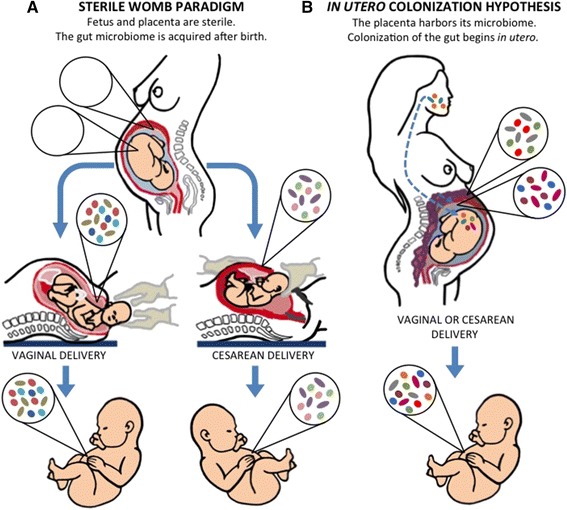
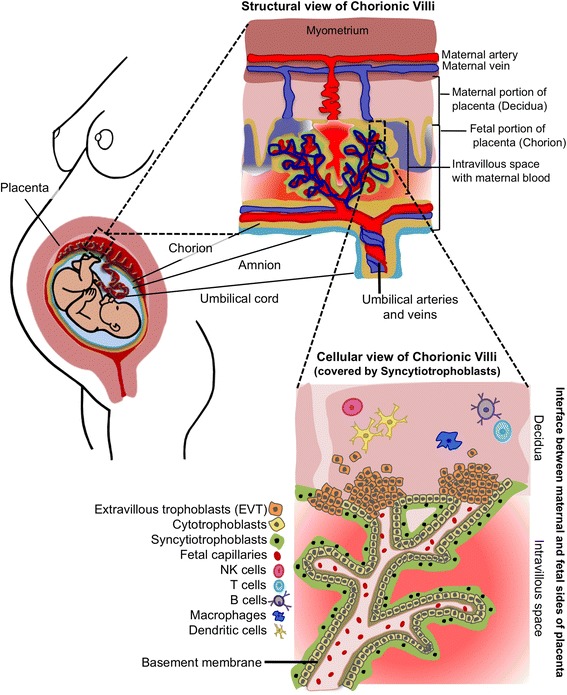
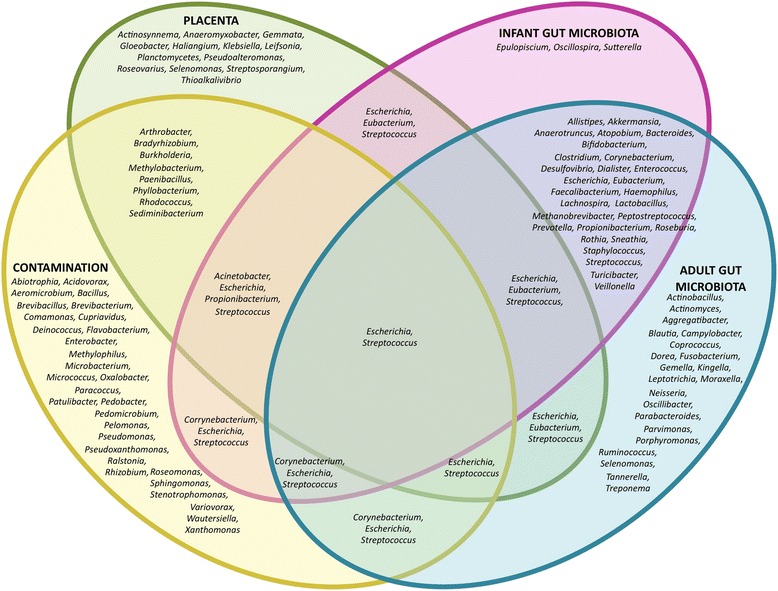
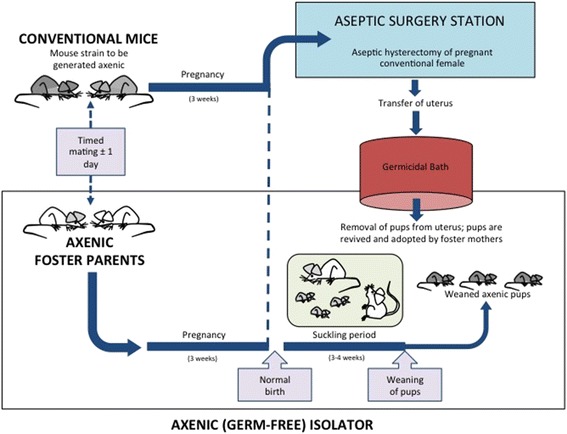
After more than a century of active research, the notion that the human fetal environment is sterile and that the neonate's microbiome is acquired during and after birth was an accepted dogma. However, recent studies using molecular techniques suggest bacterial communities in the placenta, amniotic fluid, and meconium from healthy pregnancies. These findings have led many scientists to challenge the "sterile womb paradigm" and propose that microbiome acquisition instead begins in utero, an idea that would fundamentally change our understanding of gut microbiota acquisition and its role in human development. In this review, we provide a critical assessment of the evidence supporting these two opposing hypotheses, specifically as it relates to (i) anatomical, immunological, and physiological characteristics of the placenta and fetus; (ii) the research methods currently used to study microbial populations in the intrauterine environment; (iii) the fecal microbiome during the first days of life; and (iv) the generation of axenic animals and humans. Based on this analysis, we argue that the evidence in support of the "in utero colonization hypothesis" is extremely weak as it is founded almost entirely on studies that (i) used molecular approaches with an insufficient detection limit to study "low-biomass" microbial populations, (ii) lacked appropriate controls for contamination, and (iii) failed to provide evidence of bacterial viability. Most importantly, the ability to reliably derive axenic animals via cesarean sections strongly supports sterility of the fetal environment in mammals. We conclude that current scientific evidence does not support the existence of microbiomes within the healthy fetal milieu, which has implications for the development of clinical practices that prevent microbiome perturbations after birth and the establishment of future research priorities.
Overview
The claims and statistics of this paper haven’t been checked yet.
Run the check — free, no account needed. It reads the open-access text and checks the sources it cites.
Integrity signals
Registry
Cites
Statistics
Figures
Verification
Claims the paper makes
The claims and statistics of this paper haven’t been checked yet.
Run the check — free, no account needed. It reads the open-access text and checks the sources it cites.
Claims other papers make about this one
Each is checked against this paper’s own text: does it say what the citing paper says it does?
The source backs part of the claim, not all of it — or backs it for a different population, condition or comparison.
In the citing paper
“However, oral bacteria have been detected at various sites within the uterus.110, 111”
From The oral microbiome: Role of key organisms and complex networks in oral health and disease (2021) · cites this paper as [110]
Experimental — accuracy not yet measuredIn the citing paper
“Conversely, but equally important, the infant gut is largely thought to be sterile in utero and colonized during birth and postnatally with a trajectory toward an adult-like complexity taking approximately 3 years (Clarke et al., 2014a;Perez-Munoz et al., 2017).”
From Gut reactions: Breaking down xenobiotic–microbiome interactions (2019) · cites this paper as Perez-Munoz et al., 2017
In the citing paper
“Current research findings suggest that the prenatal oral cavity is sterile until birth after which colonization with microorganisms occurs upon exposure to the external environment.110”
From The oral microbiome: Role of key organisms and complex networks in oral health and disease (2021) · cites this paper as [110]
Self-check
Percentages, sums and reported differences re-computed from the paper’s own numbers.
The self-check needs the paper’s full text.
Citations
Cites
Structure, function and diversity of the healthy human microbiome
The Human Microbiome Project Consortium (2012) · Nature · doi:10.1038/nature11234 · Cited by 11,726
Dominguez-Bello, M. G., Costello, E. K., Contreras, M., Magris, M., Hidalgo, G., Fierer, N., & Knight, R. (2010) · Proceedings of the National Academy of Sciences · doi:10.1073/pnas.1002601107 · Cited by 4,774
Conjectures and Refutations: The Growth of Scientific Knowledge.
HESSE, M. B., & Popper, K. R. (1965) · The Philosophical Quarterly · doi:10.2307/2218271 · Cited by 4,213
The Sociology of Science: Theoretical and Empirical Investigations
Kaplan, N. M., Merton, R. Κ., & Storer, N. W. (1974) · Technology and Culture · doi:10.2307/3102264 · Cited by 4,030
Reagent and laboratory contamination can critically impact sequence-based microbiome analyses
Salter, S. J., Cox, M. J., Turek, E. M., Calus, S. T., Cookson, W. O., Moffatt, M. F., Turner, P., Parkhill, J., Loman, N. J., & Walker, A. W. (2014) · BMC Biology · doi:10.1186/s12915-014-0087-z · Cited by 3,463
Dynamics and Stabilization of the Human Gut Microbiome during the First Year of Life
Bäckhed, F., Roswall, J., Peng, Y., Feng, Q., Jia, H., Kovatcheva-Datchary, P., Li, Y., Xia, Y., Xie, H., Zhong, H., et al. (2015) · Cell Host & Microbe · doi:10.1016/j.chom.2015.04.004 · Cited by 3,315
The Placenta Harbors a Unique Microbiome
Aagaard, K., Ma, J., Antony, K. M., Ganu, R., Petrosino, J., & Versalovic, J. (2014) · Science Translational Medicine · doi:10.1126/scitranslmed.3008599 · Cited by 2,494
Akkermansia muciniphila gen. nov., sp. nov., a human intestinal mucin-degrading bacterium
Derrien, M., Vaughan, E. E., Plugge, C. M., & de Vos, W. M. (2004) · International Journal of Systematic and Evolutionary Microbiology · doi:10.1099/ijs.0.02873-0 · Cited by 2,094
Early infancy microbial and metabolic alterations affect risk of childhood asthma
Arrieta, M., Stiemsma, L. T., Dimitriu, P. A., Thorson, L., Russell, S., Yurist‐Doutsch, S., Kuzeljevic, B., Gold, M. J., Britton, H. M., Lefebvre, D. L., et al. (2015) · Science Translational Medicine · doi:10.1126/scitranslmed.aab2271 · Cited by 1,832
Antibiotics, birth mode, and diet shape microbiome maturation during early life
Bokulich, N. A., Chung, J., Battaglia, T., Henderson, N., Jay, M., Li, H., D. Lieber, A., Wu, F., Perez-Perez, G. I., Chen, Y., et al. (2016) · Science Translational Medicine · doi:10.1126/scitranslmed.aad7121 · Cited by 1,469
Research works printed but not linked: 1
- Burrage S. Bacteria in the supposedly sterile meconium. J Bacteriol. 1927;13:47.
Cited by
Sorted by citations
Cryan, J. F., O'Riordan, K. J., Cowan, C. S. M., Sandhu, K. V., Bastiaanssen, T. F. S., Boehme, M., Codagnone, M. G., Cussotto, S., Fulling, C., Golubeva, A. V., et al. (2019) · Physiological Reviews · doi:10.1152/physrev.00018.2018 · Cited by 5,286
Davis, N. M., Proctor, D. M., Holmes, S. P., Relman, D. A., & Callahan, B. J. (2018) · Microbiome · doi:10.1186/s40168-018-0605-2 · Cited by 3,493
Milani, C., Duranti, S., Bottacini, F., Casey, E., Turroni, F., Mahony, J., Belzer, C., Delgado Palacio, S., Arboleya Montes, S., Mancabelli, L., et al. (2017) · Microbiology and Molecular Biology Reviews · doi:10.1128/mmbr.00036-17 · Cited by 1,950
An insight into gut microbiota and its functionalities
Adak, A., & Khan, M. R. (2019) · Cellular and Molecular Life Sciences · doi:10.1007/s00018-018-2943-4 · Cited by 1,485
Ferretti, P., Pasolli, E., Tett, A., Asnicar, F., Gorfer, V., Fedi, S., Armanini, F., Truong, D. T., Manara, S., Zolfo, M., et al. (2018) · Cell Host & Microbe · doi:10.1016/j.chom.2018.06.005 · Cited by 1,292
The gut microbiome in neurological disorders
Cryan, J. F., O'Riordan, K. J., Sandhu, K., Peterson, V., & Dinan, T. G. (2020) · The Lancet Neurology · doi:10.1016/s1474-4422(19)30356-4 · Cited by 1,336
Contamination in Low Microbial Biomass Microbiome Studies: Issues and Recommendations
Eisenhofer, R., Minich, J. J., Marotz, C., Cooper, A., Knight, R., & Weyrich, L. S. (2019) · Trends in Microbiology · doi:10.1016/j.tim.2018.11.003 · Cited by 1,146
The microbiota-gut-brain axis: from motility to mood
Margolis, K. G., Cryan, J. F., & Mayer, E. A. (2021) · Gastroenterology · doi:10.1053/j.gastro.2020.10.066 · Cited by 999
Microbiota-Brain-Gut Axis and Neurodegenerative Diseases
Quigley, E. M. M. (2017) · Current Neurology and Neuroscience Reports · doi:10.1007/s11910-017-0802-6 · Cited by 804
The Human Microbiome and Child Growth – First 1000 Days and Beyond
Robertson, R. C., Manges, A. R., Finlay, B. B., & Prendergast, A. J. (2019) · Trends in Microbiology · doi:10.1016/j.tim.2018.09.008 · Cited by 793
Impact of antibiotics on the human microbiome and consequences for host health
Patangia, D. V., Ryan, C. A., Dempsey, E. M., Ross, R. P., & Stanton, C. (2022) · MicrobiologyOpen · doi:10.1002/mbo3.1260 · Cited by 861
The oral microbiome: Role of key organisms and complex networks in oral health and disease
Sedghi, L., DiMassa, V., Harrington, A., Lynch, S. V., & Kapila, Y. L. (2021) · Periodontology 2000 · doi:10.1111/prd.12393 · Cited by 755
Human placenta has no microbiome but can contain potential pathogens
de Goffau, M. C., Lager, S., Sovio, U., Gaccioli, F., Cook, E., Peacock, S. J., Parkhill, J., Charnock-Jones, D. S., & Smith, G. C. S. (2019) · Nature · doi:10.1038/s41586-019-1451-5 · Cited by 691
The role of goblet cells and mucus in intestinal homeostasis
Gustafsson, J. K., & Johansson, M. (2022) · Nature Reviews Gastroenterology & Hepatology · doi:10.1038/s41575-022-00675-x · Cited by 721
Our gut microbiome: The evolving inner self
Kundu, P., Blacher, E., Elinav, E., & Pettersson, S. (2017) · Cell · doi:10.1016/j.cell.2017.11.024 · Cited by 633
The role of the gut microbiome and its metabolites in metabolic diseases
Wu, J., Wang, K., Wang, X., Pang, Y., & Jiang, C. (2020) · Protein & Cell · doi:10.1007/s13238-020-00814-7 · Cited by 592
Intergenerational and transgenerational epigenetic inheritance in animals
Perez, M. F., & Lehner, B. (2019) · Nature Cell Biology · doi:10.1038/s41556-018-0242-9 · Cited by 528
Mailing, L. J., Allen, J. M., Buford, T. W., Fields, C. J., & Woods, J. A. (2019) · Exercise and Sport Sciences Reviews · doi:10.1249/jes.0000000000000183 · Cited by 521
Gut microbiota and dysbiosis in Alzheimer's disease: Implications for pathogenesis and treatment
Liu, S., Gao, J., Zhu, M., Liu, K., & Zhang, H.-L. (2020) · Molecular Neurobiology · doi:10.1007/s12035-020-02073-3 · Cited by 516
“Initial colonization of the GI tract by gut microbiota is thought to commence at birth when the infant becomes exposed to maternal microbiota and other environmental factors during birth [24].”
BackgroundAnalysis of Gut Microbiota in Patients with Parkinson’s Disease
Petrov, V. A., Saltykova, I. V., Zhukova, I. A., Alifirova, V. M., Zhukova, N. G., Dorofeeva, Y. B., Tyakht, A. V., Kovarsky, B. A., Alekseev, D. G., Kostryukova, E. S., et al. (2017) · Bulletin of Experimental Biology and Medicine · doi:10.1007/s10517-017-3700-7 · Cited by 487
The oralome and its dysbiosis: New insights into oral microbiome-host interactions
Radaic, A., & Kapila, Y. L. (2021) · Computational and Structural Biotechnology Journal · doi:10.1016/j.csbj.2021.02.010 · Cited by 510
Dysbiosis of maternal and neonatal microbiota associated with gestational diabetes mellitus
Wang, J., Zheng, J., Shi, W., Du, N., Xu, X., Zhang, Y., Ji, P., Zhang, F., Jia, Z., Wang, Y., et al. (2018) · Gut · doi:10.1136/gutjnl-2018-315988 · Cited by 452
The microbiome and gynaecological cancer development, prevention and therapy
Łaniewski, P., Ilhan, Z. E., & Herbst‐Kralovetz, M. M. (2020) · Nature Reviews Urology · doi:10.1038/s41585-020-0286-z · Cited by 484
Strain-Level Analysis of Mother-to-Child Bacterial Transmission during the First Few Months of Life
Yassour, M., Jason, E., Hogstrom, L. J., Arthur, T. D., Tripathi, S., Siljander, H., Selvenius, J., Oikarinen, S., Hyöty, H., Virtanen, S. M., et al. (2018) · Cell Host & Microbe · doi:10.1016/j.chom.2018.06.007 · Cited by 455
DNA metabarcoding—Need for robust experimental designs to draw sound ecological conclusions
Zinger, L., Bonin, A., Alsos, I. G., Bálint, M., Bik, H. M., Boyer, F., Chariton, A. A., Creer, S., Coissac, É., Deagle, B. E., et al. (2019) · Molecular Ecology · doi:10.1111/mec.15060 · Cited by 477
The Super-Donor Phenomenon in Fecal Microbiota Transplantation
Wilson, B. C., Vatanen, T., Cutfield, W. S., & O'Sullivan, J. M. (2019) · Frontiers in Cellular and Infection Microbiology · doi:10.3389/fcimb.2019.00002 · Cited by 442
Precision Nutrition and the Microbiome, Part I: Current State of the Science
Mills, S., Stanton, C., Lane, J. A., Smith, G., & Ross, R. P. (2019) · Nutrients · doi:10.3390/nu11040923 · Cited by 426
Uterine Microbiota: Residents, Tourists, or Invaders?
Baker, J. M., Chase, D. M., & Herbst‐Kralovetz, M. M. (2018) · Frontiers in Immunology · doi:10.3389/fimmu.2018.00208 · Cited by 400
The Not-so-Sterile Womb: Evidence That the Human Fetus Is Exposed to Bacteria Prior to Birth
Stinson, L. F., Boyce, M. C., Payne, M. S., & Keelan, J. A. (2019) · Frontiers in Microbiology · doi:10.3389/fmicb.2019.01124 · Cited by 412
Questioning the fetal microbiome illustrates pitfalls of low-biomass microbial studies
Kennedy, K. M., de Goffau, M. C., Pérez-Muñoz, M. E., Arrieta, M., Bäckhed, F., Bork, P., Braun, T., Bushman, F. D., Dore, J. M., de Vos, W. M., et al. (2023) · Nature · doi:10.1038/s41586-022-05546-8 · Cited by 415
The Role of the Microbiome in the Developmental Origins of Health and Disease
Stiemsma, L. T., & Michels, K. B. (2018) · PEDIATRICS · doi:10.1542/peds.2017-2437 · Cited by 370
Prescott, S. L., Larcombe, D.-L., Logan, A. C., West, C., Burks, W., Caraballo, L., Levin, M., Etten, E. V., Horwitz, P., Kozyrskyj, A., et al. (2017) · World Allergy Organization Journal · doi:10.1186/s40413-017-0160-5 · Cited by 347
Gut reactions: Breaking down xenobiotic–microbiome interactions
Clarke, G., Sandhu, K. V., Griffin, B. T., Dinan, T. G., Cryan, J. F., & Hyland, N. P. (2019) · Pharmacological Reviews · doi:10.1124/pr.118.015768 · Cited by 319
Exploring the emerging role of the microbiome in cancer immunotherapy
Fessler, J. L., Matson, V. Z., & Gajewski, T. F. (2019) · Journal for ImmunoTherapy of Cancer · doi:10.1186/s40425-019-0574-4 · Cited by 325
Heiss, C. N., & Olofsson, L. E. (2019) · Journal of Neuroendocrinology · doi:10.1111/jne.12684 · Cited by 304
Gut Microbiota Dysbiosis: Pathogenesis, Diseases, Prevention, and Therapy
Shen, Y., Fan, N., Ma, S., Cheng, X., Yang, X., & Wang, G. (2025) · MedComm · doi:10.1002/mco2.70168 · Cited by 404
Not all animals need a microbiome
Hammer, T. J., Sanders, J. G., & Fierer, N. (2019) · FEMS Microbiology Letters · doi:10.1093/femsle/fnz117 · Cited by 315
Wampach, L., Heintz-Buschart, A., Fritz, J. V., Ramiro-Garcia, J., Habier, J., Herold, M., Narayanasamy, S., Kaysen, A., Hogan, A. H., Bindl, L., et al. (2018) · Nature Communications · doi:10.1038/s41467-018-07631-x · Cited by 292
How uterine microbiota might be responsible for a receptive, fertile endometrium
Benner, M., Ferwerda, G., Joosten, I., & Molen, R. G. V. D. (2018) · Human Reproduction Update · doi:10.1093/humupd/dmy012 · Cited by 314
Microbial exposure during early human development primes fetal immune cells
Mishra, A., Lai, G. C., Leong, J. Y., Aung, T. T., Shental, N., Rotter-Maskowitz, A., Shepherdson, E., Singh, G. S. N., Pai, R., Shanti, A., et al. (2021) · Cell · doi:10.1016/j.cell.2021.04.039 · Cited by 309
The microbiome beyond the horizon of ecological and evolutionary theory
Koskella, B. L., Hall, L. J., & Metcalf, C. J. E. (2017) · Nature Ecology & Evolution · doi:10.1038/s41559-017-0340-2 · Cited by 292
McBurney, M. I., Davis, C. D., Fraser, C. M., Schneeman, B. O., Huttenhower, C., Verbeke, K., Walter, J., & Latulippe, M. E. (2019) · Journal of Nutrition · doi:10.1093/jn/nxz154 · Cited by 296
Schloss, P. D. (2018) · mBio · doi:10.1128/mbio.00525-18 · Cited by 298
Salliss, M. E., Farland, L. V., Mahnert, N. D., & Herbst‐Kralovetz, M. M. (2021) · Human Reproduction Update · doi:10.1093/humupd/dmab035 · Cited by 298
Lack of detection of a human placenta microbiome in samples from preterm and term deliveries
Leiby, J. S., McCormick, K., Sherrill-Mix, S. A., Clarke, E., Kessler, L. R., Taylor, L. J., Hofstaedter, C. E., Roche, A. M., Mattei, L. M., Bittinger, K. L., et al. (2018) · Microbiome · doi:10.1186/s40168-018-0575-4 · Cited by 278
Temporal development of the infant gut microbiome
Moore, R. E., & Townsend, S. D. (2019) · Open Biology · doi:10.1098/rsob.190128 · Cited by 272
Ma, Z., Zuo, T., Frey, N., & Rangrez, A. Y. (2024) · Signal Transduction and Targeted Therapy · doi:10.1038/s41392-024-01946-6 · Cited by 322
Obrenovich, M. E. (2018) · Microorganisms · doi:10.3390/microorganisms6040107 · Cited by 277
Theis, K. R., Romero, R. J., Winters, A. D., Greenberg, J. M., Gomez‐Lopez, N., Alhousseini, A., Bieda, J., Maymon, E., Pacora, P., Fettweis, J. M., et al. (2019) · American Journal of Obstetrics and Gynecology · doi:10.1016/j.ajog.2018.10.018 · Cited by 264
Feed, Microbiota, and Gut Immunity: Using the Zebrafish Model to Understand Fish Health
Nadal, A. L., Ikeda‐Ohtsubo, W., Sipkema, D., Peggs, D., McGurk, C., Forlenza, M., Wiegertjes, G. F., & Brugman, S. (2020) · Frontiers in Immunology · doi:10.3389/fimmu.2020.00114 · Cited by 265
Factors affecting early-life intestinal microbiota development
Vandenplas, Y., Carnielli, V. P., Ksiazyk, J., Luna, M. S., Migacheva, N., Mosselmans, J. M., Picaud, J. C., Possner, M., Singhal, A., & Wabitsch, M. (2020) · Nutrition · doi:10.1016/j.nut.2020.110812 · Cited by 247
Maternal vertical transmission affecting early-life microbiota development
Wang, S., Ryan, C. A., Boyaval, P., Dempsey, E. M., Ross, R. P., & Stanton, C. (2020) · Trends in Microbiology · doi:10.1016/j.tim.2019.07.010 · Cited by 243
Amabebe, E., & Anumba, D. O. C. (2020) · Frontiers in Immunology · doi:10.3389/fimmu.2020.02184 · Cited by 247
Probiotics and Preterm Infants
van den Akker, C. H. P., van Goudoever, J. B., Shamir, R., Domellöf, M., Embleton, N. D., Hojsak, I., Lapillonne, A., Mihatsch, W., Canani, R. B., Bronský, J., et al. (2020) · Journal of Pediatric Gastroenterology and Nutrition · doi:10.1097/mpg.0000000000002655 · Cited by 239
Maternal-fetal immune responses in pregnant women infected with SARS-CoV-2
Garcia‐Flores, V., Romero, R. J., Xu, Y., Theis, K. R., Arenas‐Hernandez, M., Miller, D., Peyvandipour, A., Bhatti, G., Galaz, J., Gershater, M., et al. (2022) · Nature Communications · doi:10.1038/s41467-021-27745-z · Cited by 234
The changing metabolic landscape of bile acids – keys to metabolism and immune regulation
Mohanty, I., Allaband, C., Mannochio-Russo, H., Abiead, Y. E., Hagey, L. R., Knight, R. D., & Dorrestein, P. C. (2024) · Nature Reviews Gastroenterology & Hepatology · doi:10.1038/s41575-024-00914-3 · Cited by 236
Epigenetic Matters: The Link between Early Nutrition, Microbiome, and Long-term Health Development
Indrio, F., Martini, S., Francavilla, R., Corvaglia, L., Cristofori, F., Mastrolia, S. A., Neu, J., Rautava, S., Spena, G. R., Raimondi, F., et al. (2017) · Frontiers in Pediatrics · doi:10.3389/fped.2017.00178 · Cited by 253
The multifaceted roles of breast milk antibodies
Atyeo, C. G., & Alter, G. (2021) · Cell · doi:10.1016/j.cell.2021.02.031 · Cited by 242
Making Sense of … the Microbiome in Psychiatry
Bastiaanssen, T. F. S., Cowan, C. S. M., Claesson, M. J., Dinan, T. G., & Cryan, J. F. (2018) · The International Journal of Neuropsychopharmacology · doi:10.1093/ijnp/pyy067 · Cited by 234
The human microbiome in disease and pathology
Manos, J. (2022) · Apmis · doi:10.1111/apm.13225 · Cited by 252
Intestinal microbiota in early life and its implications on childhood health
Zhuang, L., Chen, H., Zhang, S., Zhuang, J., Li, Q., & Feng, Z. (2019) · Genomics, Proteomics & Bioinformatics · doi:10.1016/j.gpb.2018.10.002 · Cited by 219
The composition of the perinatal intestinal microbiota in cattle
Alipour, M. J., Jalanka, J., Pessa‐Morikawa, T., Kokkonen, T., Satokari, R. M., Hynönen, U., Iivanainen, A., & Niku, M. (2018) · Scientific Reports · doi:10.1038/s41598-018-28733-y · Cited by 229
Chlamydia trachomatis: the Persistent Pathogen
Witkin, S. S., Minis, E. E., Athanasiou, A. V., Leizer, J. M., & Linhares, I. M. (2017) · Clinical and Vaccine Immunology · doi:10.1128/cvi.00203-17 · Cited by 207
Early life colonization of the human gut: microbes matter everywhere
Korpela, K., & de Vos, W. M. (2018) · Current Opinion in Microbiology · doi:10.1016/j.mib.2018.06.003 · Cited by 211
Sasso, J. M., Ammar, R. M., Tenchov, R., Lemmel, S. A., Kelber, O., Grieswelle, M., & Zhou, Q. A. (2023) · ACS Chemical Neuroscience · doi:10.1021/acschemneuro.3c00127 · Cited by 229
Development of the Pediatric Gut Microbiome: Impact on Health and Disease
Ihekweazu, F. D., & Versalovic, J. A. (2018) · The American Journal of the Medical Sciences · doi:10.1016/j.amjms.2018.08.005 · Cited by 205
Martínez, I., Maldonado-Gomez, M. X., Gomes-Neto, J. C., Kittana, H., Ding, H., Schmaltz, R., Joglekar, P., Cardona, R. J., Marsteller, N. L., Kembel, S. W., et al. (2018) · eLife · doi:10.7554/elife.36521 · Cited by 199
Self-citationInvolvement of Probiotics and Postbiotics in the Immune System Modulation
Yeşilyurt, N., Yılmaz, B., Ağagündüz, D., & Capasso, R. (2021) · Biologics · doi:10.3390/biologics1020006 · Cited by 222
Programming Bugs: Microbiota and the Developmental Origins of Brain Health and Disease
Codagnone, M. G., Spichak, S., O’Mahony, S. M., O’Leary, O. F., Clarke, G., Stanton, C., Dinan, T. G., & Cryan, J. F. (2019) · Biological Psychiatry · doi:10.1016/j.biopsych.2018.06.014 · Cited by 198
The Skin Microbiome: Current Landscape and Future Opportunities
Smythe, P., & Wilkinson, H. N. (2023) · International Journal of Molecular Sciences · doi:10.3390/ijms24043950 · Cited by 218
Neonatal gut microbiome and immunity
Sanidad, K. Z., & Zeng, M. Y. (2020) · Current Opinion in Microbiology · doi:10.1016/j.mib.2020.05.011 · Cited by 205
One health, fermented foods and gut microbiota
Bell, V., Ferrão, J., Pimentel, L., Pintado, M., & Fernandes, T. (2018) · Foods · doi:10.3390/foods7120195 · Cited by 188
Early-Life Formation of the Microbial and Immunological Environment of the Human Airways
Pattaroni, C., Watzenboeck, M. L., Schneidegger, S., Kieser, S., Wong, N. C., Bernasconi, E., Pernot, J., Mercier, L., Knapp, S., Nicod, L. P., et al. (2018) · Cell Host & Microbe · doi:10.1016/j.chom.2018.10.019 · Cited by 183
Hackam, D. J., & Sodhi, C. P. (2018) · Cellular and Molecular Gastroenterology and Hepatology · doi:10.1016/j.jcmgh.2018.04.001 · Cited by 191
Maternal exposures and the infant gut microbiome: a systematic review with meta-analysis
Grech, A. M., Collins, C. E., Holmes, A. J., Lal, R., Duncanson, K., Taylor, R., & Gordon, A. (2021) · Gut Microbes · doi:10.1080/19490976.2021.1897210 · Cited by 198
Gomez‐Lopez, N., Galaz, J., Miller, D., Farías, M., Liu, Z., Arenas‐Hernandez, M., Garcia‐Flores, V., Shaffer, Z., Greenberg, J. M., Theis, K. R., et al. (2022) · Reproduction · doi:10.1530/rep-22-0046 · Cited by 194
Milk Microbiota: What Are We Exactly Talking About?
Oikonomou, G., Addis, M. F., Chassard, C., Nader-Macı́as, M. E., Grant, I. R., Delbès, C., Bogni, C. I., Loir, Y. L., & Even, S. (2020) · Frontiers in Microbiology · doi:10.3389/fmicb.2020.00060 · Cited by 192
Priming for Life: Early Life Nutrition and the Microbiota-Gut-Brain Axis
Ratsika, A., Codagnone, M. G., O’Mahony, S. M., Stanton, C., & Cryan, J. F. (2021) · Nutrients · doi:10.3390/nu13020423 · Cited by 194
The developing gut microbiota and its consequences for health
Butel, M.-J., Waligora-Dupriet, A.-J., & Wydau-Dematteis, S. (2018) · Journal of Developmental Origins of Health and Disease · doi:10.1017/s2040174418000119 · Cited by 182
Laforest‐Lapointe, I., & Arrieta, M. (2017) · Frontiers in Immunology · doi:10.3389/fimmu.2017.00788 · Cited by 195
Berger, B. W., Porta, N., Foata, F., Grathwohl, D., Delley, M., Moine, D., Charpagne, A., Siegwald, L., Descombes, P., Alliet, P. L., et al. (2020) · mBio · doi:10.1128/mbio.03196-19 · Cited by 185
Do bacteria shape our development? Crosstalk between intestinal microbiota and HPA axis
de Weerth, C. (2017) · Neuroscience & Biobehavioral Reviews · doi:10.1016/j.neubiorev.2017.09.016 · Cited by 189
Cowan, C. S. M., Dinan, T. G., & Cryan, J. F. (2020) · Journal of Child Psychology and Psychiatry · doi:10.1111/jcpp.13156 · Cited by 176
Reitmeier, S., Hitch, T. C. A., Treichel, N. S., Fikas, N., Hausmann, B., Ramer‐Tait, A. E., Neuhaus, K., Berry, D., Haller, D., Lagkouvardos, I., et al. (2021) · ISME Communications · doi:10.1038/s43705-021-00033-z · Cited by 195
Health Benefits of Prebiotics, Probiotics, Synbiotics, and Postbiotics
Al-Habsi, N. A., Al‐Khalili, M., Haque, S. A., Elias, M., Olqi, N. A., & Uraimi, T. A. (2024) · Nutrients · doi:10.3390/nu16223955 · Cited by 204
Microbial transmission, colonisation and succession: from pregnancy to infancy
Xiao, L., & Zhao, F. (2023) · Gut · doi:10.1136/gutjnl-2022-328970 · Cited by 191
β-Defensins: Farming the Microbiome for Homeostasis and Health
Meade, K. G., & O’Farrelly, C. (2019) · Frontiers in Immunology · doi:10.3389/fimmu.2018.03072 · Cited by 173
Amniotic fluid from healthy term pregnancies does not harbor a detectable microbial community
Lim, E. S., Rodríguez, C., & Holtz, L. R. (2018) · Microbiome · doi:10.1186/s40168-018-0475-7 · Cited by 170
Psychotropics and the Microbiome: a Chamber of Secrets…
Cussotto, S., Clarke, G. A., Dinan, T. G., & Cryan, J. F. (2019) · Psychopharmacology · doi:10.1007/s00213-019-5185-8 · Cited by 176
Fetal exposure to the maternal microbiota in humans and mice
Younge, N. E., McCann, J. R., Ballard, J., Plunkett, C. H., Akhtar, S., Araújo-Pérez, F., Murtha, A. P., Brandon, D., & Seed, P. C. (2019) · JCI Insight · doi:10.1172/jci.insight.127806 · Cited by 171
The Relationship Between Breast Milk Components and the Infant Gut Microbiota
Boudry, G., Charton, E., Huërou‐Luron, I. L., Ferret‐Bernard, S., Gall, S. L., Even, S., & Blat, S. (2021) · Frontiers in Nutrition · doi:10.3389/fnut.2021.629740 · Cited by 165
Disruption of maternal gut microbiota during gestation alters offspring microbiota and immunity
Nyangahu, D. D., Lennard, K. S., Brown, B. P., Darby, M., Wendoh, J. M., Havyarimana, E., Smith, P., Butcher, J., Stintzi, A., Mulder, N., et al. (2018) · Microbiome · doi:10.1186/s40168-018-0511-7 · Cited by 173
A clinician's guide to microbiome analysis
Claesson, M. J., Clooney, A. G., & O'Toole, P. W. (2017) · Nature Reviews Gastroenterology & Hepatology · doi:10.1038/nrgastro.2017.97 · Cited by 153
Epigenetic Mechanisms Link Maternal Diets and Gut Microbiome to Obesity in the Offspring
Li, Y. (2018) · Frontiers in Genetics · doi:10.3389/fgene.2018.00342 · Cited by 156
Development of Gut Microbiota in the First 1000 Days after Birth and Potential Interventions
Pantazi, A. C., Bălașa, A. L., Mihai, C. M., Chisnoiu, T., Lupu, V. V., Kassim, M. A. K., Mihai, L., Frecuș, C. E., Chirila, S. I., Lupu, A., et al. (2023) · Nutrients · doi:10.3390/nu15163647 · Cited by 166
Deep microbial analysis of multiple placentas shows no evidence for a placental microbiome
Kuperman, A., Zimmerman, A., Hamadia, S., Ziv, O., Gurevich, V, Fichtman, B., Gavert, N., Straussman, R., Rechnitzer, H., Barzilay, M., et al. (2020) · BJOG: An International Journal of Obstetrics & Gynaecology · doi:10.1111/1471-0528.15896 · Cited by 143
Microbiota‐gut‐brain axis as a regulator of reward processes
García‐Cabrerizo, R., Carbia, C., O’Riordan, K. J., Schellekens, H., & Cryan, J. F. (2020) · Journal of Neurochemistry · doi:10.1111/jnc.15284 · Cited by 150
The Evolving Microbiome from Pregnancy to Early Infancy: A Comprehensive Review
Mesa, M. D., Loureiro, B., Iglesia, I., Gonzalez, S. F., Llurba, E., García‐Algar, Ó., Solana, M. J., Cabero-Pérez, M. J., Sainz, T., Martínez, L., et al. (2020) · Nutrients · doi:10.3390/nu12010133 · Cited by 151
Factors influencing the gut microbiome in children: from infancy to childhood
Kumbhare, S. V., Patangia, D. V., Patil, R. H., Shouche, Y. S., & Patil, N. P. (2019) · Journal of Biosciences · doi:10.1007/s12038-019-9860-z · Cited by 143
Acquisition and establishment of the oral microbiota
Kaan, A. M., Kahharova, D., & Zaura, E. (2021) · Periodontology 2000 · doi:10.1111/prd.12366 · Cited by 155
Metadata
- Authors
- Perez-Muñoz, M. E., Arrieta, M.-C., Ramer-Tait, A. E., & Walter, J.
- Affiliations
- University of Calgary (CA)
- University of Alberta (CA)
- Corresponding author
- Walter, Jens
- Venue
- Microbiome
- Published
- 2017-04-28
- Volume
- 5
- Issue
- 1
- Pages
- 48-48
- ISSN
- 2049-2618 (ISSN-L)
- PMC
- PMC5410102
- OpenAlex
- W2609646274
- Cited by
- 1,096
- References
- 154
- Citations by year
- 2026: 56 · 2025: 81 · 2024: 108 · 2023: 116 · 2022: 140 · 2021: 154 · 2020: 167 · 2019: 117 · 2018: 104 · 2017: 52
- FWCI
- 11.25
- Type
- journal article
- Language
- en
- Open access
- gold
- doi.org
- Licence
- cc-by
- Locations
- Microbiome (publishedVersion, cc-by)
- Europe PMC (PubMed Central) (publishedVersion, cc-by)
- PubMed Central (publishedVersion, cc-by)
- PubMed (publishedVersion)
- Lincoln (University of Nebraska) (submittedVersion, cc-by)
- DOAJ (DOAJ: Directory of Open Access Journals) (submittedVersion, cc-by-sa)
- Libraries and Cultural Resources (University of Calgary) (submittedVersion)
- Funders
- Crohn's and Colitis Foundation of America
- University of Nebraska-Lincoln
- University of Calgary
- Crohn's and Colitis Foundation
- Nebraska Corn Board
- University of Alberta
- Alberta Innovates
- National Institutes of Health
- Directorate for Biological Sciences
- National Institute of General Medical Sciences (P20GM104320, R01GM099525)
- Topics
- Life Sciences › Biochemistry, Genetics and Molecular Biology › Molecular Biology › Gut microbiota and health
- Health Sciences › Nursing › Nutrition and Dietetics › Infant Nutrition and Health
- Physical Sciences › Environmental Science › Ecology › Microbial Community Ecology and Physiology
- Keywords
- neonatal gut microbiota, placenta, amniotic fluid, meconium, cesarean section, contamination control, bacterial viability
- MeSH terms
- Gastrointestinal Microbiome, Animals, Female, Fetus, Humans, Infant, Infant, Newborn, Pregnancy, Uterus, Microbiota
About these checks
Registry, retraction, Cites and statistics results are computed, not judged, with one exception: a printed reference that no index lists is read once by a model before it counts as a citation error. Claims are extracted by a model and kept only when their quote appears verbatim in the text; each cited source is then checked, with a model’s help, for whether it says what the claim relies on. Those verdicts can be wrong — read the claim’s quote and the cited source before relying on one.
Statistics and arithmetic are recomputed, not judged.
Confidence bands are shown only for fields calibrated on our annotated test set. None is calibrated yet, so no band is shown.
What counts as a claim ›How we measure confidence ›How we check this ›
Are you an author, or do you see a problem with this page? Request a review
