

Commensal microbe-derived acetate suppresses NAFLD/NASH development via hepatic FFAR2 signalling in mice
Open accessThe DOI matches its Crossref record; 58 of the 58 references it cites were found in a registry or an index.
Abstract
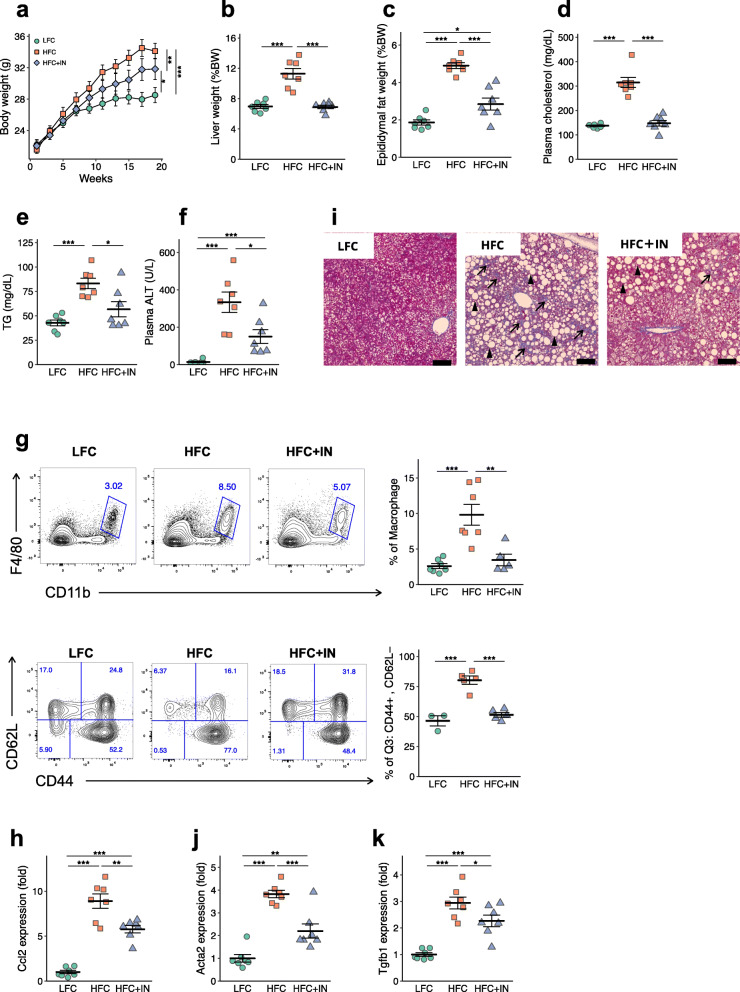
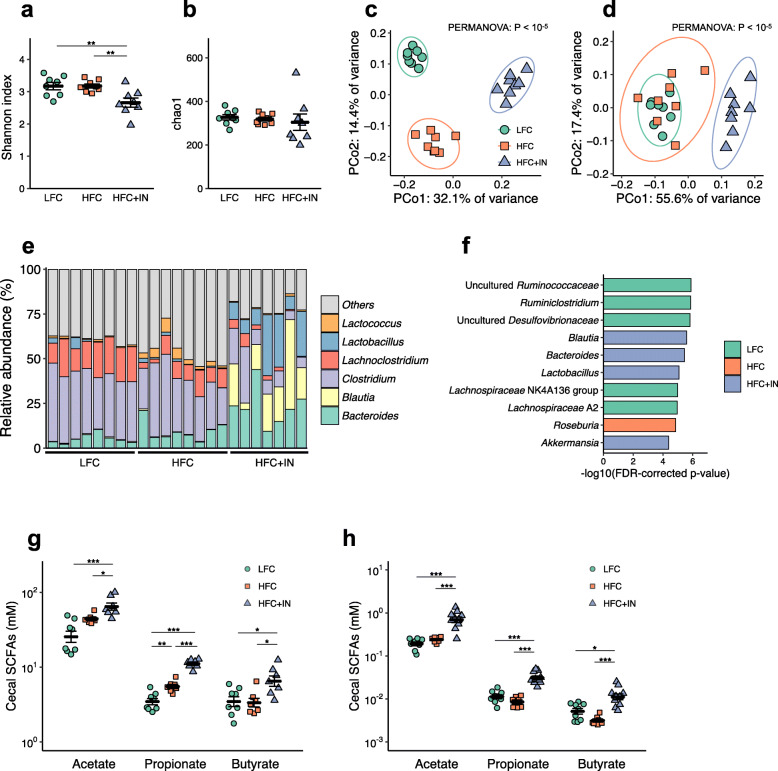
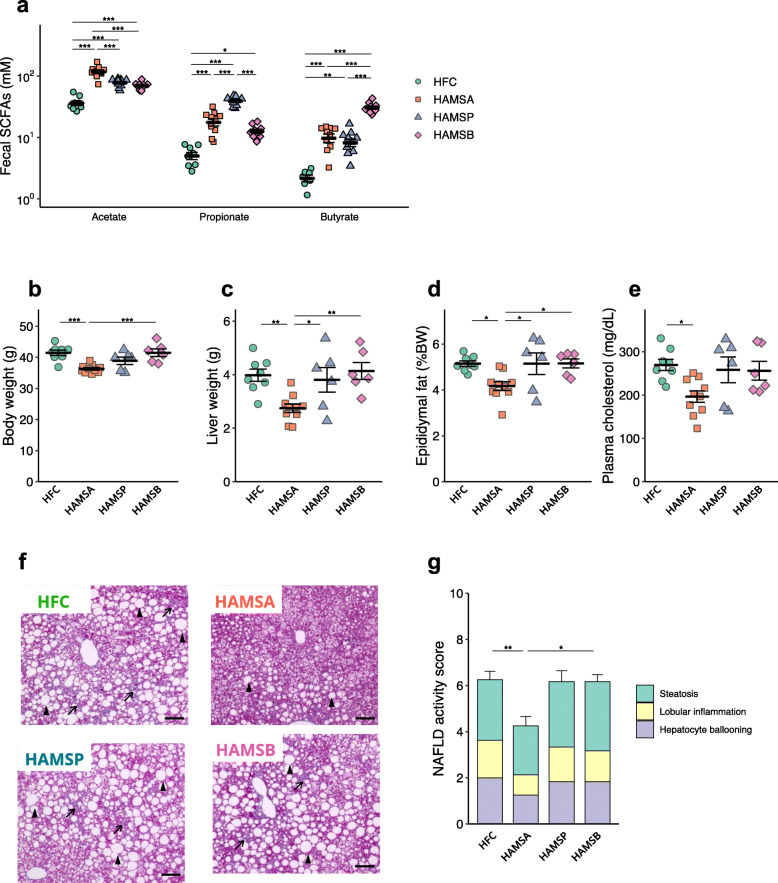
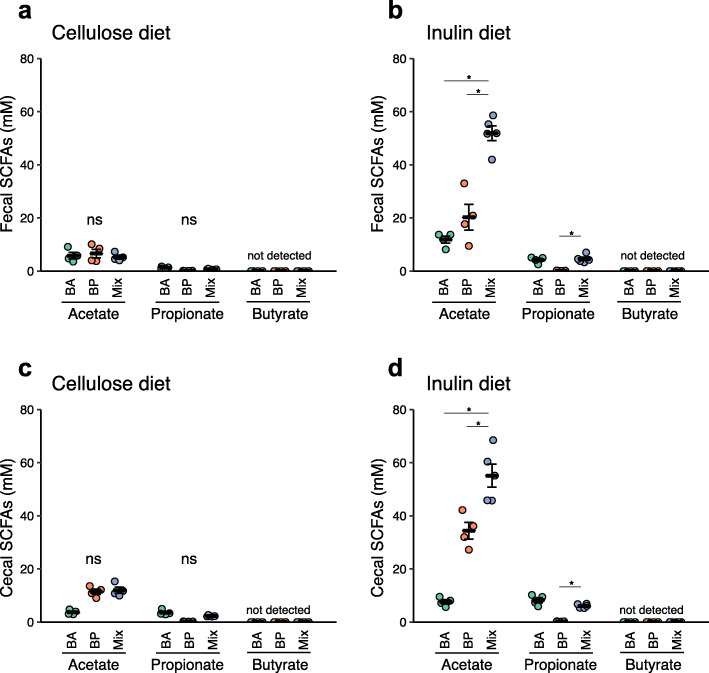
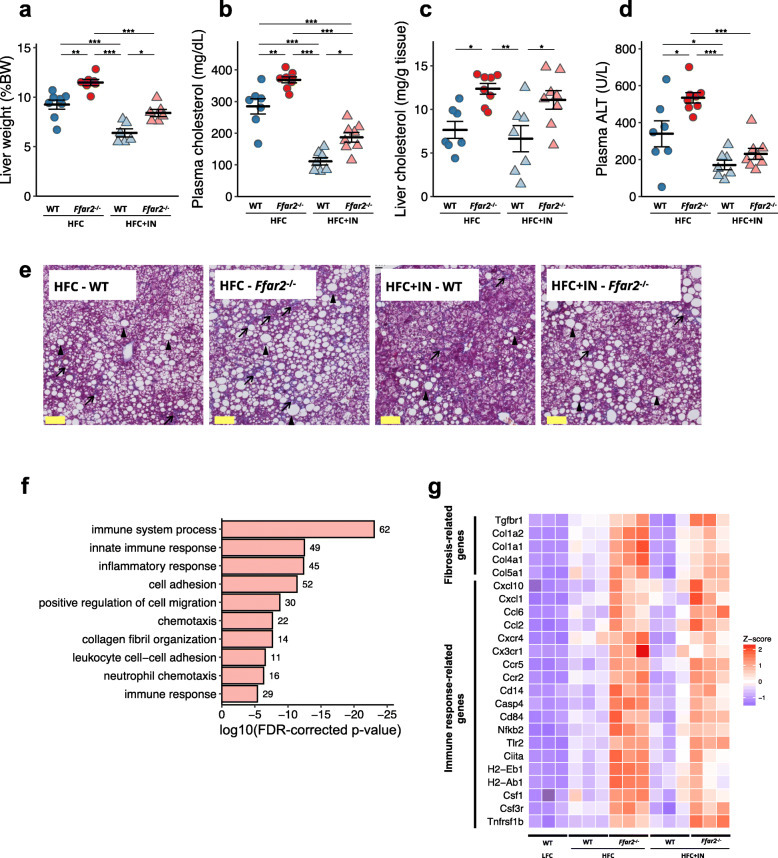
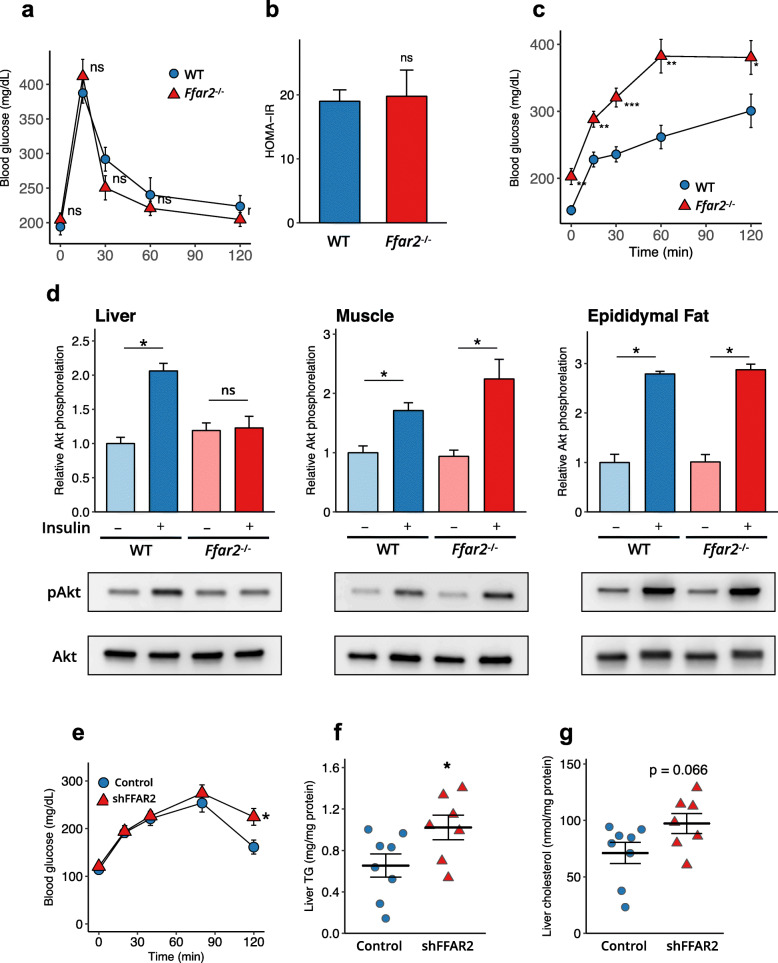
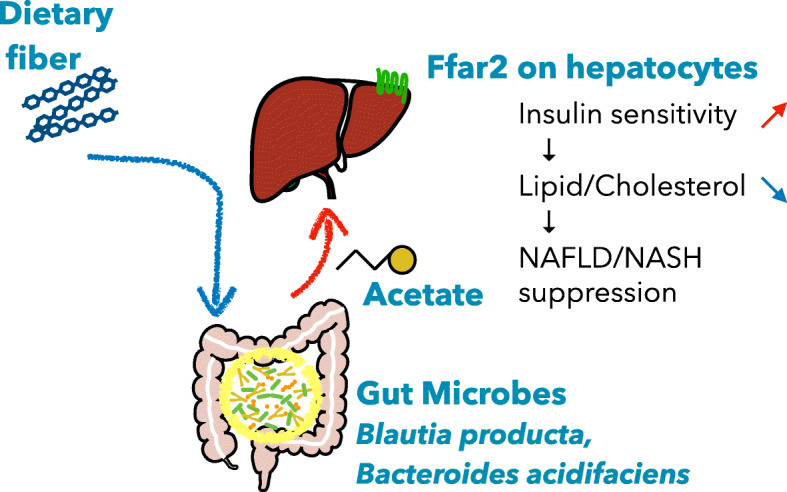
Background: Non-alcoholic liver disease (NAFLD) is the hepatic manifestation of metabolic syndrome, and it can progress to non-alcoholic steatohepatitis (NASH). Alterations in the gut microbiome have been implicated in the development of NAFLD/NASH, although the underlying mechanisms remain unclear. Results: We found that the consumption of the prebiotic inulin markedly ameliorated the phenotype of NAFLD/NASH, including hepatic steatosis and fibrosis, in mice. Inulin consumption resulted in global changes in the gut microbiome, including concomitant enrichment of the genera Bacteroides and Blautia, and increased concentrations of short-chain fatty acids, particularly acetate, in the gut lumen and portal blood. The consumption of acetate-releasing resistant starch protected against NAFLD development. Colonisation by Bacteroides acidifaciens and Blautia producta in germ-free mice resulted in synergetic effects on acetate production from inulin. Furthermore, the absence of free fatty acid receptor 2 (FFAR2), an acetate receptor, abolished the protective effect of inulin, as indicated by the more severe liver hypertrophy, hypercholesterolaemia and inflammation. These effects can be attributed to an exacerbation of insulin resistance in the liver, but not in muscle or adipose tissue. Conclusion: These findings demonstrated that the commensal microbiome–acetate–FFAR2 molecular circuit improves insulin sensitivity in the liver and prevents the development of NAFLD/NASH.
Overview
The claims and statistics of this paper haven’t been checked yet.
Free: it reads the open-access text and checks the first 5 claims that cite a source we can check. Create a free account to check every claim.
Integrity signals
Registry
Cites
Statistics
Figures
Verification
Claims the paper makes
The claims and statistics of this paper haven’t been checked yet.
Free: it reads the open-access text and checks the first 5 claims that cite a source we can check. Create a free account to check every claim.
Claims other papers make about this one
Each is checked against this paper’s own text: does it say what the citing paper says it does?
The cited source says what the claim attributes to it.
In the citing paper
“Microbial acetate on the other hand, is protective against MASH fibrosis through activation of the free fatty acid receptor 2 (FFAR2) receptor on hepatocytes and modulation of lipid metabolism (208).”
From Found in translation—Fibrosis in metabolic dysfunction–associated steatohepatitis (MASH) (2023) · cites this paper as [208]
Self-check
Percentages, sums and reported differences re-computed from the paper’s own numbers.
The self-check needs the paper’s full text.
Citations
Cites
A RAPID METHOD OF TOTAL LIPID EXTRACTION AND PURIFICATION
Bligh, E. G., & Dyer, W. J. (1959) · Canadian Journal of Biochemistry and Physiology · doi:10.1139/o59-099 · Cited by 54,751 · cited 1×
“The hepatic lipid fraction was extracted from liver homogenates using the Bligh and Dyer method [54].”
MethodMEGA6: Molecular Evolutionary Genetics Analysis Version 6.0
Tamura, K., Stecher, G., Peterson, D., Filipski, A., & Kumar, S. (2013) · Molecular Biology and Evolution · doi:10.1093/molbev/mst197 · Cited by 47,205
Systematic and integrative analysis of large gene lists using DAVID bioinformatics resources
Huang, D. W., Sherman, B. T., & Lempicki, R. A. (2009) · Nature Protocols · doi:10.1038/nprot.2008.211 · Cited by 35,890 · cited 1×
“8) [53] on genes that with significantly differential expression.”
BackgroundCutadapt removes adapter sequences from high-throughput sequencing reads
Martin, M. (2011) · EMBnet.journal · doi:10.14806/ej.17.1.200 · Cited by 33,889 · cited 1×
“After trimming both primer sequences using cutadapt [40], following chimera detection using the USEARCH de novo method, the sequences were assigned to OTUs using the UCLUST algorithm with a sequence identity threshold of 97%.”
MethodThe SILVA ribosomal RNA gene database project: improved data processing and web-based tools
Quast, C., Pruesse, E., Yilmaz, P., Gerken, J., Schweer, T., Yarza, P., Peplies, J., & Glöckner, F. O. (2012) · Nucleic Acids Research · doi:10.1093/nar/gks1219 · Cited by 33,055 · cited 1×
“Taxonomic assignments for each OTU were made via similarity searching against the SILVA 16S rRNA gene sequence reference database (v132) [41] using blastn (v2.”
MethodBLAST+: architecture and applications
Camacho, C., Coulouris, G., Avagyan, V., Ma, N., Papadopoulos, J., Bealer, K., & Madden, T. L. (2009) · BMC Bioinformatics · doi:10.1186/1471-2105-10-421 · Cited by 22,074
Lane, D. (1991) · Medical Entomology and Zoology · Cited by 12,696
Kim, D., Pertea, G., Trapnell, C., Pimentel, H., Kelley, R., & Salzberg, S. L. (2013) · Genome Biology · doi:10.1186/gb-2013-14-4-r36 · Cited by 12,668
Trapnell, C., Roberts, A., Goff, L., Pertea, G., Kim, D., Kelley, D. R., Pimentel, H., Salzberg, S. L., Rinn, J. L., & Pachter, L. (2012) · Nature Protocols · doi:10.1038/nprot.2012.016 · Cited by 12,116
Design and validation of a histological scoring system for nonalcoholic fatty liver disease†
Kleiner, D. E., Brunt, E. M., Van Natta, M., Behling, C., Contos, M. J., Cummings, O. W., Ferrell, L. D., Liu, Y., Torbenson, M. S., Unalp‐Arida, A., et al. (2005) · Hepatology · doi:10.1002/hep.20701 · Cited by 10,791 · cited 1×
“The NAFLD activity score was determined as described elsewhere [55, 56].”
MethodNucleic acid techniques in bacterial systematics
Stackebrandt, E. S., & Goodfellow, M. (1991) · Wiley eBooks · Cited by 9,460
From Dietary Fiber to Host Physiology: Short-Chain Fatty Acids as Key Bacterial Metabolites
Koh, A., De Vadder, F., Kovatcheva-Datchary, P., & Bäckhed, F. (2016) · Cell · doi:10.1016/j.cell.2016.05.041 · Cited by 7,070
Commensal microbe-derived butyrate induces the differentiation of colonic regulatory T cells
Furusawa, Y., Obata, Y., Fukuda, S., Endo, T. A., Nakato, G., Takahashi, D., Nakanishi, Y., Uetake, C., Kato, K., Kato, T., et al. (2013) · Nature · doi:10.1038/nature12721 · Cited by 5,549 · cited 12×
“We next focused on the changes in SCFA levels because the dominant metabolites of Bacteroides and Blautia are SCFAs [19–22].”
MethodSelf-citationChalasani, N., Younossi, Z., Lavine, J. E., Diehl, A. M., Brunt, E. M., Cusi, K., Charlton, M., & Sanyal, A. J. (2012) · Hepatology · doi:10.1002/hep.25762 · Cited by 3,803 · cited 1×
“The NAFLD activity score was determined as described elsewhere [55, 56].”
Gut Microbiota from Twins Discordant for Obesity Modulate Metabolism in Mice
Ridaura, V. K., Faith, J. J., Rey, F. E., Cheng, J., Duncan, A. E., Kau, A. L., Griffin, N. W., Lombard, V., Henrissat, B., Bain, J. R., et al. (2013) · Science · doi:10.1126/science.1241214 · Cited by 3,788 · cited 1×
“The impairment in hepatic insulin signalling causes de novo lipogenesis, which accelerates lipid deposition and the development of NAFLD [36].”
Microbial degradation of complex carbohydrates in the gut
Flint, H. J., Scott, K. P., Duncan, S. H., Louis, P., & Forano, E. (2012) · Gut Microbes · doi:10.4161/gmic.19897 · Cited by 2,331 · cited 1×
“The genus Bacteroides is known to degrade a wide variety of complex carbohydrates [29], and several Bacteroides species can use inulin as a carbon source [30].”
BackgroundThe role of the gut microbiota in nutrition and health
Flint, H. J., Scott, K. P., Louis, P., & Duncan, S. H. (2012) · Nature Reviews Gastroenterology & Hepatology · doi:10.1038/nrgastro.2012.156 · Cited by 2,182
Chalasani, N., Younossi, Z., Lavine, J. E., Diehl, A. M., Brunt, E. M., Cusi, K., Charlton, M., & Sanyal, A. J. (2012) · Gastroenterology · doi:10.1053/j.gastro.2012.04.001 · Cited by 1,775 · cited 2×
“higher in patients with NAFLD/NASH [3, 9, 10], and NASH has also been associated with changes in the pro-”
BackgroundKimura, I., Ozawa, K., Inoue, D., Imamura, T., Kimura, K., Maeda, T., Terasawa, K., Kashihara, D., Hirano, K., Tani, T., et al. (2013) · Nature Communications · doi:10.1038/ncomms2852 · Cited by 1,512 · cited 6×
“FFAR2 deficiency exacerbates NAFLD/NASH Acetate is well known to serve as a ligand for FFAR3 and FFAR2 [16, 26].”
BackgroundMethodResultSelf-citationFernandes, A. D., Reid, J. N., Macklaim, J. M., McMurrough, T. A., Edgell, D. R., & Gloor, G. B. (2014) · Microbiome · doi:10.1186/2049-2618-2-15 · Cited by 1,329 · cited 4×
“Notably, bacterial differential abundance analysis using ALDEx2 demonstrated overrepresentation of the genera Bacteroides, Blautia and Lactobacillus in the HFC+IN-associated microbiome, with the lowest FDR-corrected p values (Fig.”
MethodInfluentialClustal Omega, Accurate Alignment of Very Large Numbers of Sequences
Sievers, F., & Higgins, D. G. (2014) · Methods in Molecular Biology · doi:10.1007/978-1-62703-646-7_6 · Cited by 1,247
Comparison of Sequencing Utility Programs
Aronesty, E. (2013) · The Open Bioinformatics Journal · doi:10.2174/1875036201307010001 · Cited by 1,150 · cited 1×
“Pairedend sequences were joined using the fastq-join tool in the ea-utils software package [39].”
MethodThe role of hepatic lipids in hepatic insulin resistance and type 2 diabetes
Perry, R. J., Samuel, V. T., Petersen, K. F., & Shulman, G. I. (2014) · Nature · doi:10.1038/nature13478 · Cited by 1,136 · cited 1×
“Hepatic insulin resistance is closely associated with the development of NAFLD [35].”
BackgroundLoomba, R., Seguritan, V., Li, W., Long, T., Klitgord, N., Bhatt, A., Dulai, P. S., Caussy, C., Bettencourt, R., Highlander, S. K., et al. (2017) · Cell Metabolism · doi:10.1016/j.cmet.2017.04.001 · Cited by 1,123
Kimura, I., Inoue, D., Maeda, T., Hara, T., Ichimura, A., Miyauchi, S., Kobayashi, M., Hirasawa, A., & Tsujimoto, G. (2011) · Proceedings of the National Academy of Sciences · doi:10.1073/pnas.1016088108 · Cited by 1,106 · cited 3×
“Acetate is well known to serve as a ligand for FFAR3 and FFAR2 [16, 26].”
BackgroundSelf-citationDonohoe, D. R., Collins, L. B., Wali, A., Bigler, R., Sun, W., & Bultman, S. J. (2012) · Molecular Cell · doi:10.1016/j.molcel.2012.08.033 · Cited by 993 · cited 1×
“SCFAs, especially butyrate, are efficiently used by the colonic epithelium as energy sources [15].”
BackgroundANOVA-Like Differential Expression (ALDEx) Analysis for Mixed Population RNA-Seq
Fernandes, A. D., Macklaim, J. M., Linn, T. G., Reid, G., & Gloor, G. B. (2013) · PLoS ONE · doi:10.1371/journal.pone.0067019 · Cited by 876 · cited 4×
“Notably, bacterial differential abundance analysis using ALDEx2 demonstrated overrepresentation of the genera Bacteroides, Blautia and Lactobacillus in the HFC+IN-associated microbiome, with the lowest FDR-corrected p values (Fig.”
MethodInfluentialThe Concise Guide to PHARMACOLOGY 2015/16: G protein‐coupled receptors
Alexander, S. P., Davenport, A. P., Kelly, E., Marrion, N., Peters, J. A., Benson, H. E., Faccenda, E., Pawson, A. J., Sharman, J. L., Southan, C., et al. (2015) · British Journal of Pharmacology · doi:10.1111/bph.13348 · Cited by 851 · cited 1×
“Although all of the SCFAs are ligands of FFAR2, the EC50s of acetate, propionate and butyrate are in the low-millimolar range [33].”
BackgroundMicrobially Produced Imidazole Propionate Impairs Insulin Signaling through mTORC1
Koh, A., Molinaro, A., Ståhlman, M., Khan, M. T., Schmidt, C., Mannerås-Holm, L., Wu, H., Carreras, A., Jeong, H., Olofsson, L. E., et al. (2018) · Cell · doi:10.1016/j.cell.2018.09.055 · Cited by 824 · cited 2×
“insulin resistance in hepatocytes [11].”
BackgroundModulation of the fecal bile acid profile by gut microbiota in cirrhosis
Kakiyama, G., Pandak, W. M., Gillevet, P. M., Hylemon, P. B., Heuman, D. M., Daita, K., Takei, H., Muto, A., Nittono, H., Ridlon, J. M., et al. (2013) · Journal of Hepatology · doi:10.1016/j.jhep.2013.01.003 · Cited by 781 · cited 1×
“files of the bile acids, 3-(4-hydroxyphenyl)lactate and phenylacetic acid [6, 7, 11, 12].”
BackgroundSonnenburg, E. D., Zheng, H., Joglekar, P., Higginbottom, S. K., Firbank, S. J., Bolam, D. N., & Sonnenburg, J. L. (2010) · Cell · doi:10.1016/j.cell.2010.05.005 · Cited by 748 · cited 1×
“The genus Bacteroides is known to degrade a wide variety of complex carbohydrates [29], and several Bacteroides species can use inulin as a carbon source [30].”
BackgroundMolecular phenomics and metagenomics of hepatic steatosis in non-diabetic obese women
Hoyles, L., Fernández-Real, J.-M., Federici, M., Serino, M., Abbott, J., Charpentier, J., Heymes, C., Luque, J. L., Anthony, E., Barton, R. H., et al. (2018) · Nature Medicine · doi:10.1038/s41591-018-0061-3 · Cited by 720 · cited 1×
“files of the bile acids, 3-(4-hydroxyphenyl)lactate and phenylacetic acid [6, 7, 11, 12].”
BackgroundWolf, M. J., Adili, A., Piotrowitz, K., Abdullah, Z., Boege, Y., Stemmer, K., Ringelhan, M., Simonavicius, N., Egger, M., Wohlleber, D., et al. (2014) · Cancer Cell · doi:10.1016/j.ccell.2014.09.003 · Cited by 678 · cited 1×
“Furthermore, inulin consumption significantly reduced the number of liver-infiltrating CD8 T cells with the effector/memory phenotype, which plays a role in the development of NASH [18] (Fig.”
BackgroundHepatokines: Linking nonalcoholic fatty liver disease and insulin resistance
Meex, R. C. R., & Watt, M. J. (2017) · Nature Reviews Endocrinology · doi:10.1038/nrendo.2017.56 · Cited by 631 · cited 1×
“Consumption of a high-fat, high-fructose diet is known to induce insulin resistance in both muscle and the liver, which has been implicated in the development of NAFLD [27].”
BackgroundChalasani, N., Younossi, Z., Lavine, J. E., Diehl, A. M., Brunt, E. M., Cusi, K., Charlton, M., & Sanyal, A. J. (2012) · American Journal of Gastroenterology · doi:10.1038/ajg.2012.128 · Cited by 585
Prevalence of and risk factors for fatty liver in a general population of Shanghai, China
Fan, J.-G., Zhu, J., Li, X.-J., Chen, L., Li, L., Dai, F., Li, F., & Chen, S.-Y. (2005) · Journal of Hepatology · doi:10.1016/j.jhep.2005.02.042 · Cited by 404 · cited 3×
“Non-alcoholic fatty liver disease (NAFLD) affects ≥ 25% of the general population in the USA and East Asia [1, 2].”
BackgroundLiu, C., Finegold, S. M., Song, Y., & Lawson, P. A. (2008) · INTERNATIONAL JOURNAL OF SYSTEMATIC AND EVOLUTIONARY MICROBIOLOGY · doi:10.1099/ijs.0.65208-0 · Cited by 358
Imajo, K., Fujita, K., Yoneda, M., Nozaki, Y., Ogawa, Y., Shinohara, Y., Kato, S., Mawatari, H., Shibata, W., Kitani, H., et al. (2012) · Cell Metabolism · doi:10.1016/j.cmet.2012.05.012 · Cited by 341 · cited 1×
“LPS activated Toll-like receptors and caused hepatic inflammation in an experimental model of NASH [8].”
BackgroundANZAI, Y., KUDO, Y., & OYAIZU, H. (1997) · International Journal of Systematic Bacteriology · doi:10.1099/00207713-47-2-249 · Cited by 271 · cited 1×
“16S rRNA genes of the isolated strains were sequenced using sequencing primers (27F, 518F, 800R and 1492R) [45, 46].”
MethodVolynets, V., Küper, M. A., Strahl, S., Maier, I. B., Spruss, A., Wagnerberger, S., Königsrainer, A., Bischoff, S. C., & Bergheim, I. (2012) · Digestive Diseases and Sciences · doi:10.1007/s10620-012-2112-9 · Cited by 268 · cited 1×
“higher in patients with NAFLD/NASH [3, 9, 10], and NASH has also been associated with changes in the pro-”
BackgroundPathway engineering and synthetic biology using acetogens
Schiel-Bengelsdorf, B., & Dürre, P. (2012) · FEBS Letters · doi:10.1016/j.febslet.2012.04.043 · Cited by 265 · cited 1×
“The genus Blautia is well known to produce acetate (it is an ‘acetogen’) via the Wood–Ljungdahl pathway, in addition to glycolysis [31].”
BackgroundPathway of Succinate and Propionate Formation in Bacteroides fragilis
Macy, J. M., Ljungdahl, L. G., & Gottschalk, G. (1978) · Journal of Bacteriology · doi:10.1128/jb.134.1.84-91.1978 · Cited by 260
Letexier, D., Diraison, F., & Beylot, M. (2003) · The American Journal of Clinical Nutrition · doi:10.1093/ajcn/77.3.559 · Cited by 235 · cited 1×
“Several clinical studies revealed that prebiotic supplementation reduces hepatic lipogenesis and prevents the development of NAFLD in humans [13, 14], although the molecular mechanisms of the host–microbe interactions affecting the susceptibility to NASH remain to be fully determined.”
BackgroundAoki, R., Kamikado, K., Suda, W., Takii, H., Mikami, Y., Suganuma, N., Hattori, M., & Koga, Y. (2017) · Scientific Reports · doi:10.1038/srep43522 · Cited by 225 · cited 1×
“Portal blood and caecal SCFA concentrations in inulinfed mice were quantified via chromatography as described previously [49].”
MethodSelf-citationGPR43 Potentiates β-Cell Function in Obesity
McNelis, J. C., Lee, Y. S., Mayoral, R., van der Kant, R., Johnson, A. M. F., Wollam, J., & Olefsky, J. M. (2015) · Diabetes · doi:10.2337/db14-1938 · Cited by 224
Caussy, C., Hsu, C., Lo, M., Liu, A., Bettencourt, R., Ajmera, V. H., Bassirian, S., Hooker, J., Sy, E., Richards, L., et al. (2018) · Hepatology · doi:10.1002/hep.29892 · Cited by 205
Daubioul, C. A., Horsmans, Y., Lambert, P., Danse, E., & Delzenne, N. M. (2005) · European Journal of Clinical Nutrition · doi:10.1038/sj.ejcn.1602127 · Cited by 202 · cited 1×
“Several clinical studies revealed that prebiotic supplementation reduces hepatic lipogenesis and prevents the development of NAFLD in humans [13, 14], although the molecular mechanisms of the host–microbe interactions affecting the susceptibility to NASH remain to be fully determined.”
BackgroundAutophagy Regulates the Liver Clock and Glucose Metabolism by Degrading CRY1
Toledo, M., Batista-Gonzalez, A., Merheb, E., Aoun, M. L., Tarabra, E., Feng, D., Sarparanta, J., Merlo, P., Botrè, F., Schwartz, G. J., et al. (2018) · Cell Metabolism · doi:10.1016/j.cmet.2018.05.023 · Cited by 167 · cited 1×
“The adenoviral vector exhibits a preferential tropism for hepatocytes [28].”
BackgroundSmits, M. M., Ioannou, G. N., Boyko, E. J., & Utzschneider, K. M. (2013) · Journal of Gastroenterology and Hepatology · doi:10.1111/jgh.12106 · Cited by 143 · cited 2×
“Non-alcoholic fatty liver disease (NAFLD) affects ≥ 25% of the general population in the USA and East Asia [1, 2].”
BackgroundMoreau, N. M., Goupry, S., Antignac, J., Monteau, F., Bizec, B. L., Champ, M. M. J., MARTIN, L., & DUMON, H. (2003) · Journal of Chromatography B · doi:10.1016/s1570-0232(02)00827-9 · Cited by 138
Ramnani, P., Gaudier, E., Bingham, M., van Bruggen, P., Tuohy, K. M., & Gibson, G. R. (2010) · British Journal of Nutrition · doi:10.1017/s000711451000036x · Cited by 121
Gut microbiota and liver disease
Goel, A., Gupta, M., & Aggarwal, R. (2014) · Journal of Gastroenterology and Hepatology · doi:10.1111/jgh.12556 · Cited by 112
Clarke, J. M., Topping, D. L., Bird, A. R., Young, G. P., & Cobiac, L. (2008) · Carcinogenesis · doi:10.1093/carcin/bgn192 · Cited by 109 · cited 12×
“We next focused on the changes in SCFA levels because the dominant metabolites of Bacteroides and Blautia are SCFAs [19–22].”
MethodSelf-citationShort chain fatty acids exchange: Is the cirrhotic, dysfunctional liver still able to clear them?
Bloemen, J. G., Damink, S. W. M. O., Venema, K., Buurman, W. A., Jalan, R., & Dejong, C. H. C. (2009) · Clinical Nutrition · doi:10.1016/j.clnu.2009.10.002 · Cited by 97
Gut microbiota, fatty liver disease, and hepatocellular carcinoma
Chu, H., Williams, B., & Schnabl, B. (2018) · Liver Research · doi:10.1016/j.livres.2017.11.005 · Cited by 84 · cited 1×
“higher in patients with NAFLD/NASH [3, 9, 10], and NASH has also been associated with changes in the pro-”
BackgroundBacteroides acidifaciens sp. nov., isolated from the caecum of mice.
Miyamoto, Y., & Itoh, K. (2000) · INTERNATIONAL JOURNAL OF SYSTEMATIC AND EVOLUTIONARY MICROBIOLOGY · doi:10.1099/00207713-50-1-145 · Cited by 76
Ishizuka, A., Tomizuka, K., Aoki, R., Nishijima, T., Saito, Y., Inoue, R., Ushida, K., Mawatari, T., & Ikeda, T. (2012) · Journal of Bioscience and Bioengineering · doi:10.1016/j.jbiosc.2011.12.016 · Cited by 73 · cited 1×
“Bacterial DNA was extracted from caecal contents as described previously [38].”
MethodSelf-citationAmiya, T., Nakamoto, N., Chu, P., Teratani, T., Nakajima, H., Fukuchi, Y., Taniki, N., Yamaguchi, A., Shiba, S., Miyake, R., et al. (2016) · Scientific Reports · doi:10.1038/srep35146 · Cited by 31
Self-citation
Cited by
Ney, L.-M., Wipplinger, M., Grossmann, M., Engert, N., Wegner, V. D., & Mosig, A. S. (2023) · Open Biology · doi:10.1098/rsob.230014 · Cited by 315
Updated mechanisms of MASLD pathogenesis
Li, Y., Yang, P., Ye, J., Xu, Q., Wu, J., & Wang, Y. (2024) · Lipids in Health and Disease · doi:10.1186/s12944-024-02108-x · Cited by 300
“For example, recent studies have evinced that commensal microbe-derived acetate moderates the development of MASLD through the free fatty acid receptor 2 (FFAR2) signaling pathway in mouse models [117].”
BackgroundSong, Q., Zhang, X., Liu, W., Wei, H., Liang, W., Zhou, Y., Ding, Y., Ji, F., Ho-Kwan Cheung, A., Wong, N., et al. (2023) · Journal of Hepatology · doi:10.1016/j.jhep.2023.07.005 · Cited by 293
Ikeda, T., Nishida, A., Yamano, M., & Kimura, I. (2022) · Pharmacology & Therapeutics · doi:10.1016/j.pharmthera.2022.108273 · Cited by 271
Self-citationWei, W., Wong, C. C., Jia, Z., Liu, W., Liu, C., Ji, F., Pan, Y., Wang, F., Wang, G., Zhao, L., et al. (2023) · Nature Microbiology · doi:10.1038/s41564-023-01418-7 · Cited by 248
Metadata
- Authors
- Aoki, R., Onuki, M., Hattori, K., Ito, M., Yamada, T., Kamikado, K., Kim, Y.-G., Nakamoto, N., Kimura, I., Clarke, J. M., Kanai, T., & Hase, K.
- Affiliations
- Keio University (JP)
- Ezaki Glico (Japan) (JP)
- Tokyo University of Agriculture and Technology (JP)
- CSIRO Health and Biosecurity (AU)
- Corresponding author
- Hase, Koji
- Venue
- Microbiome
- Published
- 2021-09-16
- Volume
- 9
- Issue
- 1
- Pages
- 188-188
- ISSN
- 2049-2618 (ISSN-L)
- PMC
- PMC8447789
- OpenAlex
- W3200935965
- Cited by
- 167
- References
- 58
- Citations by year
- 2026: 27 · 2025: 44 · 2024: 48 · 2023: 30 · 2022: 15 · 2021: 2
- FWCI
- 7.45
- Type
- journal article
- Language
- en
- Open access
- gold
- doi.org
- Licence
- cc-by
- creativecommons.org/licenses/by/4.0 (tdm)
- creativecommons.org/licenses/by/4.0 (vor)
- Locations
- Microbiome (publishedVersion, cc-by)
- Europe PMC (PubMed Central) (publishedVersion, other-oa)
- PubMed Central (publishedVersion, cc-by)
- PubMed (publishedVersion)
- DOAJ (DOAJ: Directory of Open Access Journals) (submittedVersion)
- Funders
- japan society for the promotion of science (20H00509, 20H05876 and JPJSBP120207405)
- KMEC (FY2015-FY2019)
- Japan Agency for Medical Research and Development (18gm1010004h0103, 19gm1010004s0104, and 20gm1010004h0105)
- japan science and technology agency (Moonshot R&D JPMJMS2025)
- Topics
- Life Sciences › Biochemistry, Genetics and Molecular Biology › Molecular Biology › Gut microbiota and health
- Health Sciences › Medicine › Hepatology › Liver Disease Diagnosis and Treatment
- Health Sciences › Nursing › Nutrition and Dietetics › Microbial Metabolites in Food Biotechnology
- Keywords
- non-alcoholic fatty liver disease, nonalcoholic steatohepatitis, acetate, FFAR2, gut microbiota, inulin, prebiotics, short-chain fatty acids, resistant starch, Bacteroides acidifaciens, Blautia producta, hepatic insulin resistance, hepatic steatosis, liver fibrosis, germ-free mice, hypercholesterolemia
- MeSH terms
- Eubacteriales, Acetates, Animals, Bacteroides, Receptors, G-Protein-Coupled, Mice, Non-alcoholic Fatty Liver Disease
About these checks
Registry, retraction, Cites and statistics results are computed, not judged, with one exception: a printed reference that no index lists is read once by a model before it counts as a citation error. Claims are extracted by a model and kept only when their quote appears verbatim in the text; each cited source is then checked, with a model’s help, for whether it says what the claim relies on. Those verdicts can be wrong — read the claim’s quote and the cited source before relying on one.
Statistics and arithmetic are recomputed, not judged.
Confidence bands are shown only for fields calibrated on our annotated test set. None is calibrated yet, so no band is shown.
What counts as a claim ›How we measure confidence ›How we check this ›
Are you an author, or do you see a problem with this page? Request a review
Data sources
Bibliographic data: Semantic Scholar, OpenAlex, Crossref.
Contains information from the Semantic Scholar Academic Graph Datasets, made available under the ODC Attribution License (ODC-BY 1.0).
Semantic Scholar’s data is described in: Kinney, R., et al. (2023). The Semantic Scholar Open Data Platform. arXiv:2301.10140.
