

Race and gender differences in how sense of belonging influences decisions to major in STEM
Open accessThe DOI matches its Crossref record; 28 of the 30 references it cites were found in a registry or an index; none of the 25 sources its claims cite is checked for support yet.
Abstract
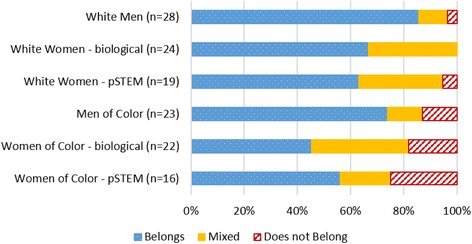
BACKGROUND: Women and students of color are widely underrepresented in most STEM fields. In order to investigate this underrepresentation, we interviewed 201 college seniors, primarily women and people of color, who either majored in STEM or started but dropped a STEM major. Here we discuss one section of the longer interview that focused on students' sense of belonging, which has been found to be related to retention. In our analysis, we examine the intersections of race and gender with students' sense of belonging, a topic largely absent from the current literature. RESULTS: We found that white men were most likely to report a sense of belonging whereas women of color were the least likely. Further, we found that representation within one's STEM sub-discipline, namely biology versus the physical sciences, impacts sense of belonging for women. Four key factors were found to contribute to sense of belonging for all students interviewed: interpersonal relationships, perceived competence, personal interest, and science identity. CONCLUSIONS: Our findings indicate that students who remain in STEM majors report a greater sense of belonging than those who leave STEM. Additionally, we found that students from underrepresented groups are less likely to feel they belong. These findings highlight structural and cultural features of universities, as well as STEM curricula and pedagogy, that continue to privilege white males.
Overview
CoChat Summary
TL;DR
This interview study of 201 college seniors examines how sense of belonging in STEM varies by race, gender, and their intersections, comparing STEM majors and leavers. It finds white men most likely and women of color least likely to report belonging, with belonging linked to interpersonal relationships, competence, interest, and science identity.
Key findings
- White men were the most likely to report a sense of belonging compared with all other students (Z = 2.37, p ≤ 0.01), while women of color were the least likely (Z = 3.62, p ≤ 0.01).
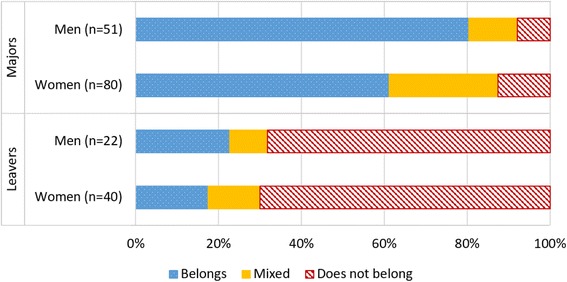
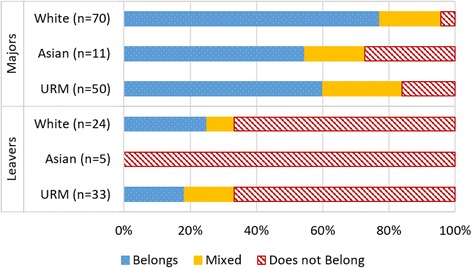
- Female STEM majors were significantly less likely than male majors to report belonging (Z = 2.41, p ≤ 0.01), and students of color who majored in STEM were significantly less likely than white majors to report belonging (Z = 2.23, p ≤ 0.01); leavers across demographic groups were more likely to report not belonging.
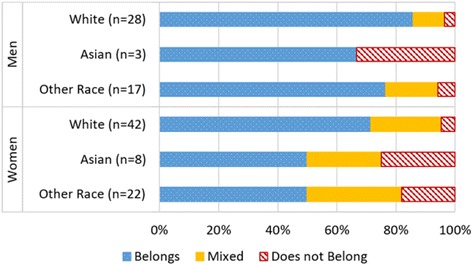
- Representation in a STEM subfield mattered: women of color in physical sciences (pSTEM), where they are highly underrepresented, reported belonging significantly less frequently than white men (Z = 2.17, p ≤ 0.05).
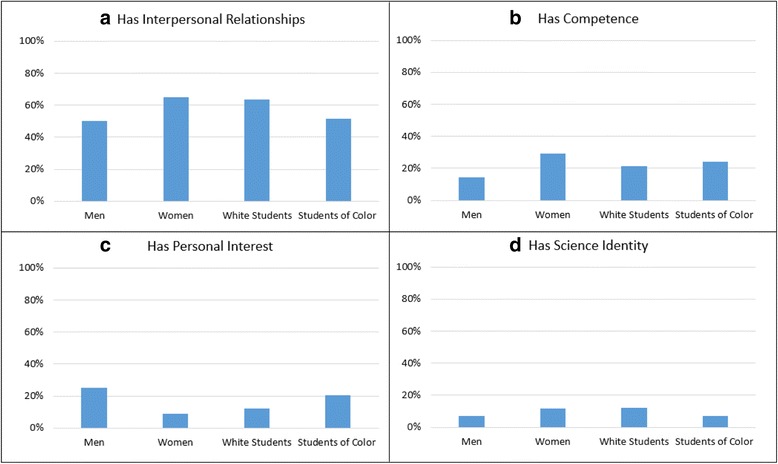
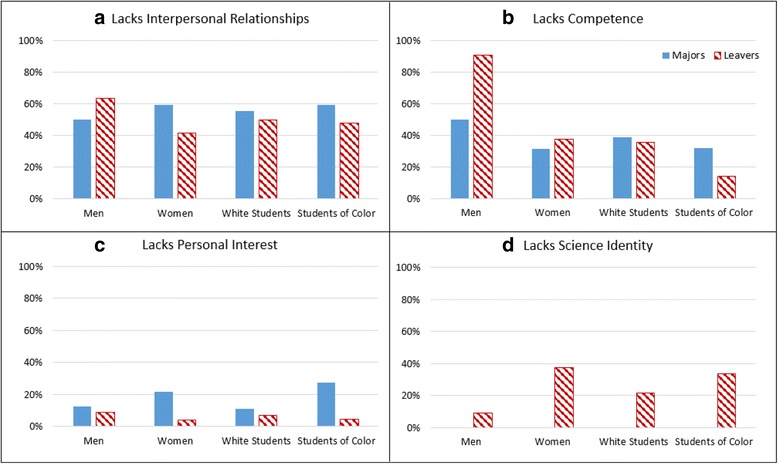
- Four themes explained belonging or lack of belonging: interpersonal relationships, perceived competence, personal interest, and science identity. Interpersonal relationships were the largest factor cited for each demographic group; competence was second. No majors cited a lack of science identity as a reason for not belonging, whereas approximately one quarter of leavers did.
Methods
- Qualitative interview study using a subset of 201 interviews from the larger Roots of STEM Success Project, which conducted more than 300 interviews with college seniors in 2013. Participants attended 1 of the 16 public University of North Carolina campuses, had attended North Carolina public school, were younger than 30, and were either STEM majors or STEM leavers.
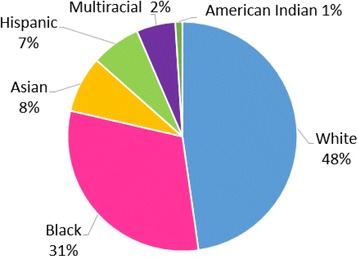
- The purposive sample oversampled students underrepresented in STEM: 66% women and 34% men; 48% white and 52% students of color. Students were recruited via email survey and interviewed for 30–60 min by Skype, phone, or in person.
- Analysis used a partial grounded theory approach: two researchers independently coded interviews, compared codes, and resolved discrepancies through discussion. Belonging explanations were coded into interpersonal relationships, science identity, personal interest, and competence; comparisons used tests of proportions and Z-scores.
Limitations
- The paper states the sample is self-selected and purposive, limited to college seniors in North Carolina who graduated from a North Carolina high school and attended one of the 16 UNC campuses, so findings are not generalizable beyond the sample. It also states only two axes of identity—race and gender—could be investigated.
- The paper acknowledges small subsample sizes, cautioning that some comparisons should be made with caution, and notes debate about using quantitative tests on qualitative data.
- Evident from the text: Asian students were collapsed with other students of color because of low numbers; competence was based on students’ self-perception, not actual grades or course performance; and the data are correlational, so causal direction cannot be determined.
Model-written summary. Check it against the paper before relying on it.
Integrity signals
Registry
Cites
Statistics
Figures
Verification
Claims the paper makes
0 Valid · 0 Not valid · 14 Not checked · 107 Own results and interpretations
A result the paper reports from its own data — it cites no other source for it, so there is none to check. The quote shows it is in the paper.
In the paper
“We find that women of color in pSTEM, where they are highly underrepresented, report belonging significantly less frequently than white men (Z = 2.17, p ≤ 0.05).”
§ Race and gender differences in how sense of belonging influences decisions to major in STEM > Results > The intersection of race and gender in students’ sense of belonging
plainstates an association- Asserted: passes — The authors put it forward as true.
- Checkable: passes — It can be checked against evidence.
- Load-bearing: passes — The paper’s conclusions depend on it.
- Based: passes — The paper gives a reason why it holds.
A result the paper reports from its own data — it cites no other source for it, so there is none to check. The quote shows it is in the paper.
In the paper
“We found that female majors were significantly less likely than male majors to report they felt they belonged in STEM (Z = 2.41, p ≤ 0.01)”
§ Race and gender differences in how sense of belonging influences decisions to major in STEM > Results > The intersection of race and gender in students’ sense of belonging
plainstates an associationn = 51 ·- Asserted: passes — The authors put it forward as true.
- Checkable: passes — It can be checked against evidence.
- Load-bearing: passes — The paper’s conclusions depend on it.
- Based: passes — The paper gives a reason why it holds.
A result the paper reports from its own data — it cites no other source for it, so there is none to check. The quote shows it is in the paper.
In the paper
“we found that students of color who major in STEM are significantly less likely to report a sense of belonging than white majors (Z = 2.23, p ≤ 0.01)”
§ Race and gender differences in how sense of belonging influences decisions to major in STEM > Results > The intersection of race and gender in students’ sense of belonging
plainstates an association- Asserted: passes — The authors put it forward as true.
- Checkable: passes — It can be checked against evidence.
- Load-bearing: passes — The paper’s conclusions depend on it.
- Based: passes — The paper gives a reason why it holds.
A result the paper reports from its own data — it cites no other source for it, so there is none to check. The quote shows it is in the paper.
In the paper
“white men were the most likely to report a sense of belonging when compared to all other students (Z = 2.37, p ≤ 0.01)”
- Also stated in: § Results · plain
“white men were most likely to report a sense of belonging”
§ Race and gender differences in how sense of belonging influences decisions to major in STEM > Results > The intersection of race and gender in students’ sense of belonging
plainstates an association- Asserted: passes — The authors put it forward as true.
- Checkable: passes — It can be checked against evidence.
- Load-bearing: passes — The paper’s conclusions depend on it.
- Based: passes — The paper gives a reason why it holds.
- Also stated in: § Results · plain
A result the paper reports from its own data — it cites no other source for it, so there is none to check. The quote shows it is in the paper.
In the paper
“the patterns for Asian students match those of URMs’ more closely than those of white students”
§ Race and gender differences in how sense of belonging influences decisions to major in STEM > Results > The intersection of race and gender in students’ sense of belonging
plainstates an association- Asserted: passes — The authors put it forward as true.
- Checkable: passes — It can be checked against evidence.
- Load-bearing: passes — The paper’s conclusions depend on it.
- Based: passes — The paper gives a reason why it holds.
87 more claims
Create a free account to see all 121 claims and to verify the 25 references still open.
- The quote only partly states this claim. 2
- It may state two separate claims as one. 18
- Probably not a substantial claim. 14
Claims other papers make about this one
Each is checked against this paper’s own text: does it say what the citing paper says it does?
The source backs part of the claim, not all of it — or backs it for a different population, condition or comparison.
In the citing paper
“In a qualitative study contrasting students that persisted with those who left STEM, Rainey etal. (2018) found that while all students expressed the importance of sense of belonging, those that left their STEM major were lacking science identity.”
From "It Just Makes It Feel Like You're Not Alone": A Qualitative Study of a Social Support Group for High-Achieving, Low-Income STEM Majors (2024) · cites this paper as Rainey et al., 2018
Experimental — accuracy not yet measuredThe source backs part of the claim, not all of it — or backs it for a different population, condition or comparison.
In the citing paper
“More recent research focused specifically on STEM students suggests that institutional practices that promote STEM students' interpersonal relationships, perceived competence, personal interest, and science identity contribute to feelings of belonging (Rainey et al., 2018).”
From The Importance of STEM Sense of Belonging and Academic Hope in Enhancing Persistence for Low-Income, Underrepresented STEM Students (2024) · cites this paper as Rainey et al., 2018
Experimental — accuracy not yet measuredThe source backs part of the claim, not all of it — or backs it for a different population, condition or comparison.
In the citing paper
“Understanding representation matters and youth need to see people that look like them in leadership roles in science in order for them to visualize themselves in these fields (Indian University 2019; Rainey et al. 2018).”
From Creating Community and Engaging Community: The Foundations of the Estate Little Princess Archaeology Project in St. Croix, United States Virgin Islands (2022) · cites this paper as Rainey et al. 2018
Experimental — accuracy not yet measuredThe cited source says what the claim attributes to it.
In the citing paper
“Additionally, in their qualitative investigation, Rainey et al. found that STEM students' perceptions of sense of belonging affected their decisions to persist or withdraw from their STEM major.”
From The Importance of STEM Sense of Belonging and Academic Hope in Enhancing Persistence for Low-Income, Underrepresented STEM Students (2024) · cites this paper as Rainey et al., 2018
Self-check
Percentages, sums and reported differences re-computed from the paper’s own numbers.
Each contradiction between two passages listed here was confirmed by an independent check.
Rated minor: it would not touch a result — a value no result rests on, a p-value that stays on the same side of the significance level, or a conflict that is clerical, resolved elsewhere in the paper, or outside its own findings.
In the paper
§ Race and gender differences in how sense of belonging influences decisions to major in STEM > Results > The intersection of race and gender in students’ sense of belonging
“We have responses from 22 men and 40 women who were leavers.”
§ Race and gender differences in how sense of belonging influences decisions to major in STEM > Results > The intersection of race and gender in students’ sense of belonging
“We have responses from 24 white students, 5 Asian students, and 35 URMs who were leavers.”
Citations
Cites
Mapping the Margins: Intersectionality, Identity Politics, and Violence against Women of Color
Crenshaw, K. (1991) · Stanford Law Review · doi:10.2307/1229039 · Cited by 32,792 · cited 5×
“Intersectionality refers to the idea that aspects of one’s identity (e.g., race, gender, class, sexual orientation) are not unitary and mutually exclusive, but instead interact to construct one’s identity (Crenshaw 1991; Collins 2015).”
InfluentialThe Journal of College Science Teaching
(1971) · Journal of Chemical Education · doi:10.1021/ed048p284 · Cited by 3,332
Women, Minorities, and Persons with Disabilities in Science and Engineering: 2013: (558442013-001)
(2013) · PsycEXTRA Dataset · doi:10.1037/e558442013-001 · Cited by 2,471
Carlone, H. B., & Johnson, A. (2007) · Journal of Research in Science Teaching · doi:10.1002/tea.20237 · Cited by 2,433 · cited 5×
“There exist other intersectional works that investigate women of color’s experiences (e.g., Carlone and Johnson 2007; Crenshaw 1991), but we had difficulty finding literature that focused on women of color’s sense of belonging.”
InfluentialIntersectionality's Definitional Dilemmas
Collins, P. H. (2015) · Annual Review of Sociology · doi:10.1146/annurev-soc-073014-112142 · Cited by 2,419
Mattley, C., Strauss, A., & Corbin, J. (1999) · Contemporary Sociology · doi:10.2307/2655359 · Cited by 2,408 · cited 1×
“Using a partial grounded theory approach to qualitative data analysis (Strauss and Corbin 1997), two researchers independently read the responses and coded under broad categories, some of which were determined a priori and others that emerged from the data.”
A question of belonging: Race, social fit, and achievement.
Walton, G. M., & Cohen, G. L. (2007) · Journal of Personality and Social Psychology · doi:10.1037/0022-3514.92.1.82 · Cited by 2,163
Bowleg, L. (2008) · Sex Roles · doi:10.1007/s11199-008-9400-z · Cited by 2,004 · cited 1×
“For example, considering race and gender as single axes of identity without analysis of the intersections of those groups can lead to the erasure of some identities, such as for women of color (Bowleg 2008; Crenshaw 1991).”
A Brief Social-Belonging Intervention Improves Academic and Health Outcomes of Minority Students
Walton, G. M., & Cohen, G. L. (2011) · Science · doi:10.1126/science.1198364 · Cited by 1,992
Classroom Belonging among Early Adolescent Students: Relationships to Motivation and Achievement
Goodenow, C. (1993) · The Journal of Early Adolescence · doi:10.1177/0272431693013001002 · Cited by 1,614 · cited 1×
“Sense of belonging refers to “students’ sense of being accepted, valued, included, and encouraged by others (teachers and peers) in the academic classroom setting and of feeling oneself to be an important part of the life and activity of the class” (Goodenow 1993, p. 80).”
Research works printed but not linked: 6
- Meiners, E., Fuller, L., McCullough, L., Newell, D., Bartsch, I., & Daly, C. (2004). Special Issue: Women in Science Vol. 5,# 4, May 2004 Editor, Heidi Fencl, University of Wisconsin Green Bay, Department of Physics. Journal of International Women’s Studies, 5, 1.
- Mickelson RA Parker A Stearns E Moller S Dancy M Ruiz-Smith Lawson Clark S Family matters: familial support and African American female success Contemporary African American families: achievements, challenges, and empowerment strategies in the 21st century 2015 New York Routledge-Taylor & Francis
- National Research Council (2013). Seeking solutions: maximizing American talent by advancing women of color in academia: summary of a conference. Washington: National Academies Press.
- National Science Foundation National Center for Science and Engineering Statistics Women, minorities, and persons with disabilities in science and engineering: 2017 2017 Arlington Special Report NSF 17–310
- Shain, C. H. (2002). Revisiting the problem of engineering school persistence in African-American women students. Doctoral dissertation. Retrieved from ProQuest Dissertations and Theses database. (Publication No. 304798888).
- Valenzuela, Y. (2006). Mi fuerza/my strength. The academic and personal experiences of Chicana/Latina transfer students in math and science. Doctoral dissertation. Retrieved from Pro-Quest Dissertation and Theses database. (Publication No. 304916976).
Cited by
Items 101–200 of 708
The ties that belong: Tie formation in preservice teacher identification networks
Björklund, P., & Daly, A. J. (2020) · Teaching and Teacher Education · doi:10.1016/j.tate.2020.103223 · Cited by 33
A systematic literature review: Recent techniques of predicting STEM stream students
Ismail, N., & Yusof, U. K. (2023) · Computers and Education Artificial Intelligence · doi:10.1016/j.caeai.2023.100141 · Cited by 39
Casey, J. R., Supriya, K., Shaked, S., Caram, J. R., Russell, A. A., & Courey, A. J. (2023) · Journal of Chemical Education · doi:10.1021/acs.jchemed.2c01253 · Cited by 28
Lahdenperä, J., & Nieminen, J. H. (2020) · International Journal of Research in Undergraduate Mathematics Education · doi:10.1007/s40753-020-00118-5 · Cited by 42
“The four categories set by Rainey et al. (2018) for student perceptions of belonging or not belonging were used as a frame for the analysis and it consisted of four categories: Interpersonal relationships, Science identity, Personal interest, and Competence.”
BackgroundMethodResultInfluentialPromoting Achievement for Community College STEM Students through Equity-Minded Practices
Varty, A. K. (2022) · CBE—Life Sciences Education · doi:10.1187/cbe.21-09-0237 · Cited by 24
Sense of Belonging and Retention in Higher Education: an Empirical Study across Chinese Universities
Rehman, N., Mahmood, A., Andleeb, I., Iqbal, M., & Huang, X. (2024) · Cadernos de Educação Tecnologia e Sociedade · doi:10.14571/brajets.v16.n4.1067-1082 · Cited by 31
Derricks, V. S., & Sekaquaptewa, D. (2021) · Psychology of Women Quarterly · doi:10.1177/03616843211005447 · Cited by 33
“The previous studies examined the effect of social comparison perceptions specifically on belonging given that belonging is a particularly robust predictor of retention in one’s field (Murphy et al., 2020; Rainey et al., 2018).”
BackgroundWhat Does It Mean to Think Like a Chemist?
Vincent‐Ruz, P. (2020) · ACS symposium series · doi:10.1021/bk-2020-1365.ch005 · Cited by 28
STEM and gender at university: focusing on Irish undergraduate female students’ perceptions
Kelly, R., McGarr, O., Lehane, L., & Erduran, S. (2019) · Journal of Applied Research in Higher Education · doi:10.1108/jarhe-07-2018-0127 · Cited by 33
York, A. M., Fink, A., Stoen, S. M., Walck-Shannon, E. M., Wally, C. M., Luo, J., Young, J. D., & Frey, R. F. (2021) · Physical Review Physics Education Research · doi:10.1103/physrevphyseducres.17.020140 · Cited by 27
Alderfer, S. A., McMillan, R., Murphy, K., & Kelp, N. (2023) · Frontiers in Education · doi:10.3389/feduc.2023.1173661 · Cited by 24
The Effect of Social Belonging on Persistence to General Chemistry 2
Edwards, J. D., Torres, H. L., & Frey, R. F. (2023) · Journal of Chemical Education · doi:10.1021/acs.jchemed.2c01048 · Cited by 26
Public Engagement with Science: Defining the Project
Potochnik, A., & Jacquart, M. (2025) · Cambridge University Press eBooks · doi:10.1017/9781009475105 · Cited by 26
Self-efficacy, Interest, and Belongingness – URM Students’ Momentary Experiences in CS1
Lishinski, A., Narvaiz, S., & Rosenberg, J. M. (2022) · ACM Conference on International Computing Education Research (ICER) · doi:10.1145/3501385.3543958 · Cited by 28
“Many researchers have found that students’ psychological factors, their “academic mindset,” is an important factor for students to persist in the STEM field [80, 100], including feeling accepted in their academic environment [42, 78].”
BackgroundInfluentialSolas, E. C., & Kamalodeen, V. J. (2022) · Canadian Journal of Science Mathematics and Technology Education · doi:10.1007/s42330-022-00236-z · Cited by 31
“, 2020; Krugly-Smolska, 1996), feelings of exclusion (Rainey et al., 2018), and even curriculum ambiguities 797”
BackgroundGrigorian, K., Östberg, V., Raninen, J., & Låftman, S. B. (2024) · BMC Public Health · doi:10.1186/s12889-024-18059-y · Cited by 27
“…are examined throughout, since previous studies showed that self-reported loneliness and psychosomatic complaints are gendered (in that girls tend to report higher levels of loneliness [19, 20, 34] and psychosomatic complaints than boys [19, 34]), while findings on belonging are mixed [36, 37].”
ResultCritical Mentorship in Undergraduate Research Experience BUILDs Science Identity and Self-Efficacy
Moon, S., Guan, S. A., Vargas, J. H., Lin, J. C. P., Kwan, P. P., Saetermoe, C. L., Flores, G. E., & Chavira, G. (2024) · International Journal of Science and Mathematics Education · doi:10.1007/s10763-024-10476-0 · Cited by 41
Agustian, H. Y., Gammelgaard, B., Rangkuti, M. A., & Niemann, J. (2024) · Science Education · doi:10.1002/sce.21933 · Cited by 27
Dowling, T., Metzger, M., & Kools, S. M. (2021) · Journal of Professional Nursing · doi:10.1016/j.profnurs.2021.07.010 · Cited by 32
Belonging and Global Citizenship in a STEM University
Viola, J. K. (2021) · Education Sciences · doi:10.3390/educsci11120803 · Cited by 31
Chronic Codeswitching: Shaping Black/White Multiracial Student Sense of Belonging
Wright, N. L., Longerbeam, S. D., & Alagaraja, M. (2022) · Genealogy · doi:10.3390/genealogy6030075 · Cited by 30
Eitel, K. B., Wheeler, A., Seven, K., Pinkham, J. B., Cohn, T. C., Uh, C., Temple, E. W., Davis, M., McFarland, J., Eitel, J. U. H., et al. (2023) · Journal of Geoscience Education · doi:10.1080/10899995.2023.2228170 · Cited by 22
“Integral to this identity is finding personal and cultural relevance in STEM settings, an understanding of the way that STEM can benefit the students’ community, and a sense of belonging (Rainey et al., 2018).”
BackgroundZahner, D. G. H., & Harper, R. P. (2022) · Journal of College Student Retention Research Theory & Practice · doi:10.1177/15210251221146119 · Cited by 24
“While this emphasis is appropriate in countering the general neglect of faculty members ’ roles in student success in previous studies (Barnett, 2011), experiences of validation and invalidation among students in STEM majors may be broader and more complex and may coincide with additional context-speci fi c factors tha…”
InfluentialReznik, G., Massarani, L., & Barton, A. C. (2023) · Cultural Studies of Science Education · doi:10.1007/s11422-023-10149-4 · Cited by 28
Factors that predict adolescents' engagement with STEM in and out of school
Mulvey, K. L., Cerda‐Smith, J., Joy, A., Mathews, C. J., & Ozturk, E. (2023) · Psychology in the Schools · doi:10.1002/pits.22946 · Cited by 24
Godwin, A., Perkins, H., DeAngelo, L., McChesney, E., Kaufman-Ortiz, K. J., Dorvè‐Lewis, G., & Conrique, B. G. (2023) · IEEE Transactions on Education · doi:10.1109/te.2023.3312628 · Cited by 24
“Belonging differences by race and gender exist across STEM broadly and engineering in particular [38], [39], [40].”
BackgroundJamorabo, D. S., Chen, R., Gurm, H., Jahangir, M., Briggs, W. M., Mohanty, S. R., & Renelus, B. D. (2021) · Annals of Gastroenterology · doi:10.20524/aog.2021.0597 · Cited by 28
Engineering Students’ Perceptions of Belongingness in Civil Engineering
Benson, L., Bolding, C. W., Ogle, J., Spence, C. M., Murphy, J., & Lanning, R. (2020) · ASEE Annual Conference & Exposition · doi:10.18260/1-2--32737 · Cited by 21
“Research has shown that females and underrepresented minority students exit STEM programs more often if they have a low sense of belonging (Corbett and Hill, 2015; Rainey, Dancy, Mickelson, Stearns, and Moller, 2018).”
BackgroundResultSalehi, S., Berk, S., Brunelli, R., Cotner, S. H., Creech, C., Drake, A. G., Fagbodun, S., Hall, C. L., Hebert, S. L., Hewlett, J., et al. (2021) · CBE—Life Sciences Education · doi:10.1187/cbe.21-01-0012 · Cited by 23
“Also, other social psychological measures (e.g., sense of belonging; Lewis et al., 2016; Rainey et al., 2018; Binning et al., 2019) and their contribution to student performance should be explored.”
BackgroundKhan, M., Siddiqui, M. A., & Malone, K. L. (2022) · International Journal of Science Education · doi:10.1080/09500693.2022.2097331 · Cited by 22
“They have less sense of belonging in STEM (Rainey et al., 2018), fewer positive experiences during physics lessons (Mujtaba & Reiss, 2013a), a lower rate of interest in physics (BaramTsabari & Yarden, 2008), and less participation in physics (Cooper & Berry, 2020).”
BackgroundFink, A., Young, J. D., Vuppala, N. K., & Frey, R. F. (2023) · Chemistry Education Research and Practice · doi:10.1039/d2rp00166g · Cited by 24
Clarke, N., Mondisa, J., Packard, B. W., Queener, C., Tuladhar, A., & Gosha, K. (2023) · Journal of Computing in Higher Education · doi:10.1007/s12528-023-09375-0 · Cited by 22
“Research on science identity reports that students feel that science was a part of their life (Rainey et al., 2018).”
Adapting guided inquiry learning worksheets for emergency remote learning
Howley, I. K. (2020) · Information and Learning Sciences · doi:10.1108/ils-04-2020-0086 · Cited by 27
Six years of development in promoting identity formation of STEM education as a distinct field
Li, Y. (2020) · International Journal of STEM Education · doi:10.1186/s40594-020-00257-w · Cited by 22
An Analysis of Women’s Underrepresentation in Undergraduate Economics
Gartner, H. L., & Schneebaum, A. (2023) · Review of Political Economy · doi:10.1080/09538259.2023.2183672 · Cited by 19
“At the same time, same-gender peer interaction and support have been shown to improve the cultural climate for women, increasing the probability of female students to persist in STEM (Rainey et al. 2018).”
BackgroundYang, Y., & Gentry, M. (2022) · Gifted Child Quarterly · doi:10.1177/00169862221119208 · Cited by 21
Starr, C. R., & Leaper, C. (2022) · Group Processes & Intergroup Relations · doi:10.1177/13684302221128235 · Cited by 21
“However, it is also important to note that other studies have found that racially minoritized women indicated higher threat in STEM when compared to other groups (Casad et al., 2019; Rainey et al., 2018).”
ResultKüçükaydın, M. A., & Ulum, H. (2025) · Journal for STEM Education Research · doi:10.1007/s41979-025-00146-3 · Cited by 21
“Accordingly, a sense of belonging in a discipline feeds career interest in that discipline (Rainey et al., 2018).”
Promoting Inclusive and Culturally Responsive Teaching Using Co-classes for General Chemistry
Ortiz-Rodríguez, J. C., Brinkman, H. F., Nglankong, L., Enderle, B., & Velázquez, J. M. (2021) · Journal of Chemical Education · doi:10.1021/acs.jchemed.1c00339 · Cited by 23
Impact of Argumentation-Based STEM Activities on Ongoing STEM Motivation
Dönmez, İ., Gülen, S., & Ayaz, M. (2021) · Journal for STEM Education Research · doi:10.1007/s41979-021-00062-2 · Cited by 19
“Students’ motivation for STEM disciplines increases by way of active participation (Chacko et al., 2015; Rainey et al., 2018).”
BackgroundDunn, A. L., Decker, D. M., Cartaya-Marin, C. P., Cooley, J. A., Finster, D. C., Hunter, K. P., Jacques, D. R. N., Kimble-Hill, A. C., Maclachlan, J. L., Redden, P. A., et al. (2023) · Journal of the American Chemical Society · doi:10.1021/jacs.3c03627 · Cited by 20
Siwale, K., & Mwalemba, G. (2022) · The Electronic Journal of Information Systems in Developing Countries · doi:10.1002/isd2.12259 · Cited by 28
Mears, M. (2019) · Physical Review Physics Education Research · doi:10.1103/physrevphyseducres.15.020135 · Cited by 17
“It may be that different levels of male and female attrition or study participation may introduce a sampling bias or that after three months female students have developed more of a sense of belonging which is known to affect attainment and engagement [46].”
BackgroundFuller, K. S., & Rivera, C. T. (2021) · Frontiers in Microbiology · doi:10.3389/fmicb.2020.577852 · Cited by 23
Acevedo, N., Nunez-Rivera, S., Casas, Y., Cruz, E. E. C., & Rivera, P. V. (2021) · Journal of Women and Gender in Higher Education · doi:10.1080/26379112.2021.1891928 · Cited by 19
“Such hostile contexts often influence the decision to leave STEM (Rainey et al., 2018).”
BackgroundResultInfluentialTuladhar, A., Queener, C., Mondisa, J., & Okwudire, C. E. (2021) · International Journal of Mentoring and Coaching in Education · doi:10.1108/ijmce-06-2020-0032 · Cited by 16
Seijo, D., Vázquez, M. J., Pérez, M. N., & Rivera, F. F. (2023) · Educación XX1 · doi:10.5944/educxx1.31818 · Cited by 27
Wu, S. H., & Corpus, J. H. (2023) · International Journal of Educational Research Open · doi:10.1016/j.ijedro.2023.100229 · Cited by 25
“At the same time, STEM domains may be costly in unique ways: They are often perceived to be quite difficult, incompatible with work-life balance, and unwelcoming to minoritized groups (see Eccles & Wang, 2016; Rainey et al., 2018).”
BackgroundMajor transitions: how college students interpret the process of changing fields of study
Silver, B. R. (2023) · Higher Education · doi:10.1007/s10734-023-01050-8 · Cited by 24
“Racial, gender, and socioeconomic inequality in experiences within various majors are well documented (DiPrete & Buchmann, 2013; Rainey et al., 2018).”
Resilience in Action through Culture: Latinas Successfully Navigating STEM Spaces at an HSI
Perez, E. C., y González, E. M. G., & Hernandez, I. S. (2024) · Education Sciences · doi:10.3390/educsci14080848 · Cited by 18
Fredricks, J. A., Cotter, D. A., & Lafontant, D. (2024) · Journal of Research in Science Teaching · doi:10.1002/tea.22002 · Cited by 11
Analysis of instruments focused on gender gap in STEM education
Verdugo-Castro, S., García‐Holgado, A., & Gómez, M. C. S. (2019) · Ninth International Conference on Technological Ecosystems for Enhancing Multiculturality (TEEM'21) · doi:10.1145/3362789.3362922 · Cited by 20
“The stereotypes surrounding the choice of higher education are marked by gender roles, among other conditions, such as belonging to ethnic and racial minorities [29], as they also indicate [32] when speaking of double discrimination in some cases because they are black women.”
BackgroundSandtank-ML: An Educational Tool at the Interface of Hydrology and Machine Learning
Gallagher, L. K., Williams, J. M., Lazzeri, D., Chennault, C., Jourdain, S., O’Leary, P., Condon, L. E., & Maxwell, R. M. (2021) · Water · doi:10.3390/w13233328 · Cited by 16
Harry, D. T., Crawford, A., Pamintuan, C., Singh, A., Thomas, D., Cooke, N. K., Oliver, C., Gordy, C. L., & Lubischer, J. L. (2024) · CBE—Life Sciences Education · doi:10.1187/cbe.24-02-0055 · Cited by 18
“…and cultures were established and remain heavily influenced by the norms and values of the dominant white, masculine, cis -heteronormative, abled, afflu-ent culture (Lee, 2016; Kim et al. , 2018; Rainey et al. , 2018; Banchefsky et al. , 2019; Aramati Casper et al. , 2022; Morton et al. , 2023).”
Chiu, Y.-L. T., Wong, B., Murray, Ó. M., Horsburgh, J., & Copsey-Blake, M. (2025) · Higher Education · doi:10.1007/s10734-025-01469-1 · Cited by 19
“Rainey et al. (2018) found that amongst US undergraduate STEM students, white men were most likely to discuss a sense of belonging and minority ethnic women were least likely, based on four key factors: interpersonal relationships with peers and faculty, perceived competence in their discipline,…”
The impact of the pandemic and school closures on non-cognitive characteristics: Evidence from PISA
Pena, J. W. Q., Volante, L., & Witte, K. D. (2025) · International Journal of Educational Research Open · doi:10.1016/j.ijedro.2025.100489 · Cited by 18
Cultivating scientific literacy and a sense of place through course‐based urban ecology research
Valliere, J. M. (2022) · Ecology and Evolution · doi:10.1002/ece3.8985 · Cited by 19
Nelson, K., Honoré, M., Crist, R., Zell, A., Lindwall, J., & Keller, T. E. (2023) · Journal for STEM Education Research · doi:10.1007/s41979-022-00083-5 · Cited by 15
“These students also report regular and persistent experiences with stereotype threat, discrimination, bias, and microaggressions in STEM environments (Beasley & Fischer, 2012; Griffith et al., 2019; Rainey et al., 2018).”
BackgroundBottía, M. C., Mickelson, R. A., & Stearns, E. (2023) · Science Education · doi:10.1002/sce.21797 · Cited by 17
Self-citationInvisible women: Gender representation in high school science courses across Australia
Ross, K., Galaudage, S., Clark, T., Lowson, N., Battisti, A. J., Adam, H., Ross, A. K., & Sweaney, N. (2023) · Australian Journal of Education · doi:10.1177/00049441231197245 · Cited by 17
“Unfortunately, women are more likely to experience a weaker sense of community relative to men within STEM fi elds, ultimately contributing to the gender gap in STEM fi elds (Lewis et al., 2017; Master & Meltzoff, 2020; Rainey et al., 2018).”
BackgroundChoji, T. T., Cobo, M. J., & Moral-Muñoz, J. A. (2024) · Scientometrics · doi:10.1007/s11192-024-05005-3 · Cited by 17
“This perpetuation of stereotypes can influence women’s experience within the education system and affect their sense of belonging in specific academic and professional environments (Casad et al., 2021; Rainey et al., 2018; Spoon et al., 2023; Wright et al., 2007).”
Chase, L., McMurray, M. S., Stavnezer, A. J., Buffalari, D. M., Fernandes, J. J., Lom, B., & Morrison, M. E. (2020) · PubMed Central · Cited by 20
Zuckerman, A. L., Hardesty, R. A., Denaro, K., Lo, S. M., & Owens, M. T. (2021) · Journal of Microbiology and Biology Education · doi:10.1128/jmbe.v22i1.2293 · Cited by 16
Cox, C. T., Stepovich, N., Bennion, A., Fauconier, J., & Izquierdo, N. (2021) · Education Sciences · doi:10.3390/educsci11090549 · Cited by 19
“Because of restrictions in collecting data, only data for students residing in the United States at the time of the survey were included in the data analysis.”
BackgroundInfluentialBright, T. J., Williams, K. S., Rajamani, S., Tiase, V. L., Senathirajah, Y., Hebert, C. L., & McCoy, A. B. (2021) · Journal of the American Medical Informatics Association · doi:10.1093/jamia/ocab246 · Cited by 15
Justice through the lens of calculus: Framing new possibilities for diversity, equity, and inclusionPreprint
Voigt, M., Hagman, J. E., Gehrtz, J., Ratliff, B. C., Alexander, N., & Levy, R. (2021) · arXiv (Cornell University) · doi:10.48550/arxiv.2111.11486 · Cited by 16
How to belong: Inclusive pedagogical practices for beginning instructors of economics
Lopez, M., & Wandschneider, K. (2023) · The Journal of Economic Education · doi:10.1080/00220485.2023.2258876 · Cited by 15
“Rainey et al. (2018) discuss how peer interactions and interpersonal relationships are important for creating a sense of belonging.”
BackgroundMor, K., Gündemir, S., & van der Toorn, J. (2024) · Journal of Business and Psychology · doi:10.1007/s10869-024-09975-2 · Cited by 21
“Similarly, a sense of belonging, a central component of identity safety, is a critical correlate of intentions to stay in work domains where minorities are underrepresented (Rainey et al., 2018).”
Hiwatig, B. M., Roehrig, G., & Rouleau, M. D. (2024) · Disciplinary and Interdisciplinary Science Education Research · doi:10.1186/s43031-024-00108-6 · Cited by 25
“This illustrates that iSTEM has the potential to eradicate existing racial disparity in student attitudes toward STEM (Rainey et al., 2018; Wiebe et al., 2018).”
BackgroundPayne, M. R., LaDue, N., Dugas, D., Winitkun, D., & Schmidt, S. (2024) · Journal of Research in Science Teaching · doi:10.1002/tea.21977 · Cited by 17
Intersectional perspectives on the university belonging of international STEM students
Preuß, J. S., Zimmermann, J., & Jonkmann, K. (2025) · Social Psychology of Education · doi:10.1007/s11218-025-10017-9 · Cited by 19
“For example, Rainey et al.’s (2018) results showed that students who belonged to multiple underrepresented groups (e.g., were black and female) feel lower levels of belonging in STEM than white students and male black students.”
Imparting Scientific Literacy through an Online Materials Chemistry General Education Course
Ramachandran, R., Bernier, N. A., Mavilian, C. M., Izad, T., Thomas, L. C., & Spokoyny, A. M. (2021) · Journal of Chemical Education · doi:10.1021/acs.jchemed.1c00138 · Cited by 16
Jantzer, J., Kirkman, T. W., & Furniss, K. L. (2021) · Journal of Microbiology and Biology Education · doi:10.1128/jmbe.00176-21 · Cited by 16
“Research about minoritized and first-generation (FG) students in STEM courses has primarily been done at large, typically urban R1 institutions and community colleges (10, 20, 39).”
BackgroundEngagement patterns with female and male scientists on Facebook
Dalyot, K., Rozenblum, Y., & Baram‐Tsabari, A. (2022) · Public Understanding of Science · doi:10.1177/09636625221092696 · Cited by 16
“Furthermore, despite advances in women’s representation in many STEM fields, they are still largely excluded from many other fields (Rainey et al., 2018).”
BackgroundEdwards, J. D., Sickle, L. L. V., Barthelemy, R. S., Grandi, C. D., & Frey, R. F. (2022) · Physical Review Physics Education Research · doi:10.1103/physrevphyseducres.18.020150 · Cited by 19
Halliwell, P., Whipple, S. E., Hassell, K. N., Bowser, G., Husic, D. W., & Brown, M. A. (2020) · Bulletin of the Ecological Society of America · doi:10.1002/bes2.1664 · Cited by 14
Bahnson, M., Godwin, A., Schunn, C. D., McChesney, E., & DeAngelo, L. (2025) · International Journal of STEM Education · doi:10.1186/s40594-025-00530-w · Cited by 19
Johns, B., Thomas, D., Lundgren, L. M., Larson, L. R., & Cooper, C. B. (2021) · Citizen Science Theory and Practice · doi:10.5334/cstp.419 · Cited by 16
Barrett, A. A., Smith, C. T., Hafen, C. H., Severe, E., & Bailey, E. G. (2022) · Computer Science Education · doi:10.1080/08993408.2022.2160144 · Cited by 16
“Rainey et al. (2018) found that white men find the most belonging in STEM majors and minority females find the least belonging, and this belonging is a predictor of retention.”
BackgroundWheeler, L. B., Thompson, K. V., Marbach‐Ad, G., Sheehan, P., Bortiatynski, J. L., & Ghent, C. (2023) · CBE—Life Sciences Education · doi:10.1187/cbe.22-06-0101 · Cited by 16
“This finding is surprising, given the body of literature demonstrating differences in undergraduate STEM students’ experiences and outcomes based on their race and gender (e.g., Rainey et al., 2018; Witherspoon and Schunn, 2019) and the motivational literature (e.g., Roksa and Whitley, 2018).”
BackgroundResultInfluentialHorne, L., Manzanares, A. D., Babin, N. L., Royse, E. A., Arakawa, L., Blavascunas, E., Doner, L. A., Druckenbrod, D. L., Fairchild, E., Jarchow, M. E., et al. (2023) · Journal of Geoscience Education · doi:10.1080/10899995.2023.2187680 · Cited by 13
“Gaps between student interests and materials used for instruction can lead to dissatisfaction and reduced enrollment, particularly among students who come from communities that have been underrepresented in STEM fields (Rainey et al., 2018; Sexton et al., 2018).”
BackgroundYang, Y., Xu, C., Karatas, T., Glass, T. E., & Maeda, Y. (2024) · Journal of College Student Retention Research Theory & Practice · doi:10.1177/15210251231219933 · Cited by 18
“This lack of belonging can further isolate them and lead to a feeling of not being a valued member of the academic community, contributing to a higher likelihood of considering alternating major choices (Rainey et al., 2018).”
Few LGBTQ+ Science and Engineering Instructors Come Out to Students, Despite Potential Benefits
Busch, C. A., Bhanderi, P. B., Cooper, K. M., & Brownell, S. E. (2024) · CBE—Life Sciences Education · doi:10.1187/cbe.23-10-0181 · Cited by 16
“Prior work has shown that undergraduates with the same identity as instructors can have improved sense of belonging (Rosenthal et al. , 2013; Linley et al. , 2016; Harmsen, 2018; Rainey et al. , 2018) and self-efficacy (Cotner et al. , 2011; Stout et al. , 2011; Shin et al. , 2016).”
A reflexive thematic analysis exploring the experiences of undergraduate women in STEM in Bangladesh
Rahman, P. (2024) · Discover Education · doi:10.1007/s44217-024-00185-9 · Cited by 15
“Additionally, multiple studies reported that positive reinforcement from role models such as female professors and more representation encouraged women’s STEM participation [5, 6].”
Baylor, M.-E., Hoehn, J. R., & Finkelstein, N. D. (2022) · The Physics Teacher · doi:10.1119/5.0032998 · Cited by 13
Gray, M. J., Gunarathne, S. A., Nguyen, N. N., & Shortlidge, E. E. (2022) · CBE—Life Sciences Education · doi:10.1187/cbe.21-09-0261 · Cited by 16
“…the literature that these constructs are important characteristics for STEM students’ persistence (Estrada et al. , 2011, 2018; Simon et al. , 2015; Rainey et al. , 2018; Strayhorn, 2018), and we wanted to explore what they mean to students in this study; the focus group questions were therefore…”
BackgroundInfluentialGender Complexity and Experience of Women Undergraduate Students within the Engineering Domain
Hardtke, M. J., Khanjaninejad, L., Lang, C. I., & Nasiri, N. (2022) · Sustainability · doi:10.3390/su15010467 · Cited by 20
In Search of Belonging Online: Achieving Equity through Transformative Professional Development
Pacansky-Brock, M., Smedshammer, M., & Vincent-Layton, K. (2023) · Journal of Educational Research and Practice · doi:10.5590/jerap.2022.12.0.04 · Cited by 16
Davis, R. D., & Wilson-Kennedy, Z. S. (2023) · Education Sciences · doi:10.3390/educsci13090888 · Cited by 17
Hirst, R. A., Anderson, K. L., Packard, B. W., Liotta, L. J., Bleakley, B. H., Lombardi, P. J., & Burkholder, K. C. (2021) · The journal of college science teaching · doi:10.1080/0047231x.2021.12290530 · Cited by 13
Young people’s tech identity performances: why materiality matters
Godec, S., Patel, U., Archer, L., & Dawson, E. (2020) · International Journal of STEM Education · doi:10.1186/s40594-020-00249-w · Cited by 16
Sense of belonging in undergraduate computing students: A scoping review
Runa, S. N., McCartan, A., Du, Y., Becker, B. A., & Mooney, C. (2025) · Educational Research Review · doi:10.1016/j.edurev.2025.100683 · Cited by 16
Mickelson, R. A., Mikkelsen, I., Dorodchi, M., Čukić, B., & Horn, T. (2022) · Journal of College Student Retention Research Theory & Practice · doi:10.1177/15210251221086928 · Cited by 16
“The sense of belonging associated with a strong science identity is a key factor in females ’ STEM retention (Rainey et al., 2018).”
Self-citationSpicer, H., Nadolny, D., & Fraser, E. E. (2020) · Citizen Science Theory and Practice · doi:10.5334/cstp.275 · Cited by 14
“…findings we’ve already discussed, scholars have identified other key predictors of students’ future engagement with science, such as “Science capital” (e.g., Archer et al. 2015), “Science Identity” (Stets et al. 2017), and potential issues with feelings of belonging in STEM (Rainey et al. 2018).”
BackgroundStudents as Partners: Co-creation of Online Learning to Deliver High Quality, Personalized Content
Curtin, A. L., & Sarju, J. P. (2021) · ACS symposium series · doi:10.1021/bk-2021-1389.ch010 · Cited by 17
Shaulskiy, S., Jolley, A., & O’Connell, K. B. (2022) · CBE—Life Sciences Education · doi:10.1187/cbe.21-08-0201 · Cited by 15
“…campuses for achievement and motivation in understanding science (Freeman et al., 2007; Zumbrunn et al., 2014) and is especially important given that a common reason students choose to leave STEM fields is due to perceived lack of competence or understanding of content (Rainey et al., 2018).”
BackgroundInfluentialValdéz-Ward, E., Ulrich, R. N., Bennett, N., Martinez-Maldonado, E., Mattheis, A., Treseder, K. K., Takahashi, B., & Menezes, S. (2024) · Journal of Science Communication · doi:10.22323/2.23040201 · Cited by 14
Pai, G., Silberberg, E., & Wamba, N. (2024) · Journal for STEM Education Research · doi:10.1007/s41979-024-00127-y · Cited by 14
Narla, A. V., Edwards, M. M., Bullard, E. M., Petrie, K. L., & Heinrichsen, E. T. (2024) · Journal for STEM Education Research · doi:10.1007/s41979-024-00135-y · Cited by 12
“…of student attrition, motivation, and performance, which especially impacts women and students of color in STEM who generally report lower levels of SoB (Fink et al., 2020; Gallup & Lumina Foundation, 2024; Good et al., 2012; Hansen et al., 2024; Pedler et al., 2022; Rainey et al., 2018).”
Metadata
- Authors
- Rainey, K., Dancy, M., Mickelson, R., Stearns, E., & Moller, S.
- Affiliations
- University of Colorado Boulder (US)
- University of North Carolina at Charlotte (US)
- Corresponding author
- Rainey, Katherine
- Venue
- International Journal of STEM Education
- Published
- 2018-04-10
- Volume
- 5
- Issue
- 1
- Pages
- 10-10
- ISSN
- 2196-7822 (ISSN-L)
- PMC
- PMC6310405
- OpenAlex
- W2806119487
- Semantic Scholar
- e9675f21bd5a9f5ad7b5e612848342ead1fe76f3
- Cited by
- 681
- References
- 30
- Citations by year
- 2026: 75 · 2025: 118 · 2024: 141 · 2023: 109 · 2022: 84 · 2021: 74 · 2020: 61 · 2019: 16 · 2018: 2
- FWCI
- 76.00
- Type
- journal article
- Language
- en
- Open access
- gold
- doi.org
- Licence
- cc-by
- creativecommons.org/licenses/by/4.0 (tdm)
- creativecommons.org/licenses/by/4.0 (vor)
- Locations
- International Journal of STEM Education (publishedVersion, cc-by)
- Europe PMC (PubMed Central) (publishedVersion, cc-by)
- PubMed Central (publishedVersion, cc-by)
- PubMed (publishedVersion)
- DOAJ (DOAJ: Directory of Open Access Journals) (submittedVersion, cc-by-sa)
- Funders
- National Science Foundation (0969286)
- Topics
- Social Sciences › Psychology › Applied Psychology › Career Development and Diversity
- Social Sciences › Education › Higher Education Research Studies
- Social Sciences › Sociology and Political Science › Critical Race Theory in Education
- Keywords
- sense of belonging, STEM major choice, underrepresentation in STEM, women in STEM, students of color, gender and race intersection, STEM retention, science identity, perceived competence, interpersonal relationships, college seniors
About these checks
Registry, retraction, Cites and statistics results are computed, not judged, with one exception: a printed reference that no index lists is read once by a model before it counts as a citation error. Claims are extracted by a model and kept only when their quote appears verbatim in the text; each cited source is then checked, with a model’s help, for whether it says what the claim relies on. Those verdicts can be wrong — read the claim’s quote and the cited source before relying on one.
A language model drew the claims from the paper on 2026-10-05, under version 3 of the claim definition (model deepseek-v4.1-flash, prompt extract-v3).
A second model labelled each claim on 2026-10-05 (model jev-1.13-20260917, definition revision gold-guideline-v0.2).
Statistics and arithmetic are recomputed, not judged.
Confidence bands are shown only for fields calibrated on our annotated test set. None is calibrated yet, so no band is shown.
What counts as a claim ›How we measure confidence ›How we check this ›
Are you an author, or do you see a problem with this page? Request a review
Data sources
Bibliographic data: Semantic Scholar, OpenAlex, Crossref.
Contains information from the Semantic Scholar Academic Graph Datasets, made available under the ODC Attribution License (ODC-BY 1.0).
Semantic Scholar’s data is described in: Kinney, R., et al. (2023). The Semantic Scholar Open Data Platform. arXiv:2301.10140.
