

Seborrheic Dermatitis and Dandruff: A Comprehensive Review
Open accessThe DOI matches its Crossref record; 134 of the 138 references it cites were found in a registry or an index; 38 of the 218 sources its claims cite were checked for support.
Abstract
EU-Russian relations have been a defining parameter of European security during the post- Cold War era. The axis of cooperation has been defined not only by EU-Russian common goals but also the ability of the US to derail this emerging partnership. The recent crisis in Georgia has illustrated Russia's
Overview
CoChat Summary
TL;DR
This comprehensive review argues that seborrheic dermatitis (SD) and dandruff represent a continuous spectrum of the same disease, differing mainly by location and severity, with multifactorial pathogenesis involving Malassezia, sebaceous activity, barrier/immune factors, and genetics. It summarizes epidemiology, burden, clinical diagnosis, treatment, and pathophysiologic mechanisms, noting that etiology remains incompletely understood.
Key findings
- SD and dandruff combined are estimated to affect half of the adult population; dandruff affects approximately 50% of adults worldwide and is more prevalent in males. SD incidence is 1–3% of the general adult population, up to 42% in infants ≤3 months, and 30–83% among HIV patients.
- Dandruff prevalence varies by ethnicity: 81–95% in African Americans, 66–82% in Caucasians, and 30–42% in Chinese.
- Burden estimates include at least 50 million Americans with dandruff spending $300 million annually on over-the-counter products; SD direct costs were estimated at $179 million plus $51 million indirect costs, with willingness to pay $1.2 billion for symptom relief.
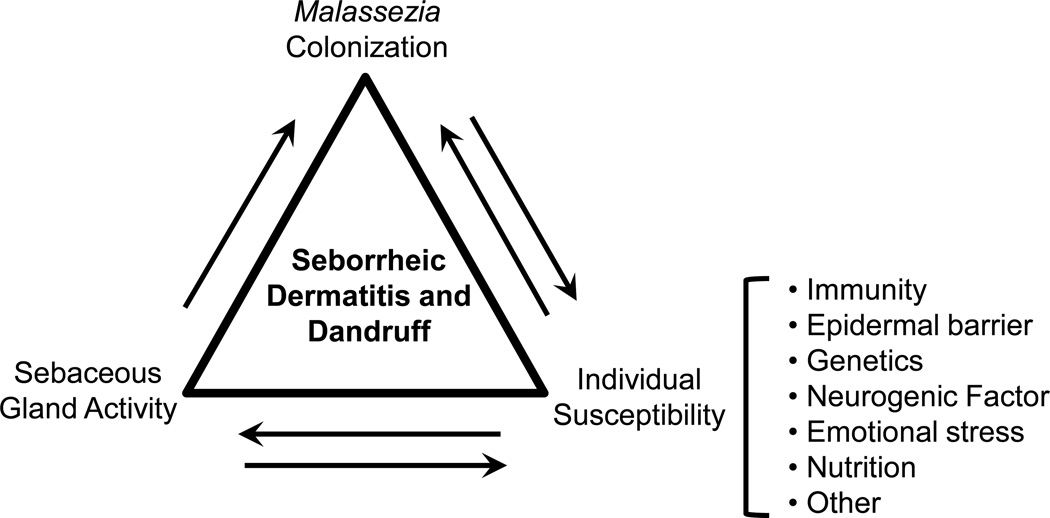
- Pathogenesis involves Malassezia (higher numbers of M. globosa and M. restricta correlate with SD appearance/severity), sebaceous gland activity, epidermal barrier disruption, immune response, genetic factors (e.g., MPZL3, ZNF750), and neurogenic/emotional stress; treatment mainly uses topical antifungal and anti-inflammatory agents.
Methods
- Narrative review of current knowledge on SD and dandruff; no primary data collection, sample, or systematic search/analysis is described.
- Covers epidemiology, burden of disease, clinical presentations and diagnosis, treatment, genetic studies in humans and animal models, and predisposing factors.
Limitations
- Stated: pathogenesis of SD and dandruff is not well understood; the specific role of lymphocyte activity remains controversial; efficacy of immune modulators such as topical calcineurin inhibitors and metronidazole remains controversial; the mutation underlying inherited seborrheic dermatitis (seb) mice remains unidentified.
- Evident: as a narrative review, it does not report a systematic search strategy, inclusion criteria, or quality appraisal.
- Evident: Tables 1–4 and Figure 1 are referenced for clinical presentations, differential diagnosis, treatment, and pathogenesis but are not included in the supplied text, so those details cannot be verified here.
Model-written summary. Check it against the paper before relying on it.
Integrity signals
Registry
Cites
Statistics
Figures
Verification
Claims the paper makes
30 Valid · 4 Not valid · 67 Not checked · 6 Own results and interpretations
At least one cited source doesn’t support this claim or points to a different paper, and none confirmed it — see the verdicts below.
In the paper
“Its incidence peaks during three age periods - in the first three months of life, during puberty, and in adulthood with an apex at 40 to 60 years of age [1–4].”
§ Seborrheic Dermatitis and Dandruff: A Comprehensive Review > Epidemiology
What the sources say
- Not checked — no full text of the sourcecites [1] Gupta AK Madzia SE Batra R Etiology and management of Seborrheic dermatitis Dermatology 2004 208 89 93 15056994 source
- Not checked — no full text of the sourcecites [2] Del Rosso JQ Adult seborrheic dermatitis: a status report on practical topical management J Clin Aesthet Dermatol 2011 4 32 38 21607192 PMC3100109
- Disputedcites [3] Sampaio AL Mameri AC Vargas TJ Ramos-e-Silva M Nunes AP Seborrheic dermatitis An Bras Dermatol 2011 86 1061 1071 22281892 sourceExperimental — accuracy not yet measured
The paper’s Abstract (page unavailable) states that seborrheic dermatitis has two incidence peaks, not three: one in the first three months of life and a second beginning at puberty that reaches its apex at ages 40–60. It does not describe puberty and adulthood as separate peaks. (LLM, conf=0.90)
Checked by a reasoning model — may be wrong.
- Not checked — no full text of the sourcecites [4] Schwartz RA Janusz CA Janniger CK Seborrheic dermatitis: an overview Am Fam Physician 2006 74 125 130 16848386
plainstates an association- Asserted: passes — The authors put it forward as true.
- Checkable: passes — It can be checked against evidence.
- Load-bearing: unclear — It is unclear whether the paper’s conclusions depend on it.
- Based: passes — The paper gives a reason why it holds.
The sources with a verdict support this claim; the rest weren’t checked yet, have no full text we could read, or their verdicts aren’t rated yet.
In the paper
“These observations suggest that immunological defects may play a role in SD.”
§ Seborrheic Dermatitis and Dandruff: A Comprehensive Review > Epidemiology
What the sources say
- Supportedcites [3] Sampaio AL Mameri AC Vargas TJ Ramos-e-Silva M Nunes AP Seborrheic dermatitis An Bras Dermatol 2011 86 1061 1071 22281892 source
The IMUNOGENÉTICA section (page not supplied) reports altered cellular immunity in people with seborrheic dermatitis. The paper also identifies an individual's immunological profile as a contributing factor, supporting the cautious claim that immunological defects may play a role. (LLM, conf=0.92)
- Not checked — no full text of the sourcecites [14] Nnoruka EN Chukwuka JC Anisuiba B Correlation of mucocutaneous manifestations of HIV/AIDS infection with CD4 counts and disease progression Int J Dermatol 2007 46 Suppl 2 14 18 17958624 source
- Not checked — no full text of the sourcecites [15] Ramos-E-Silva M Sampaio AL Carneiro S Red face revisited: Endogenous dermatitis in the form of atopic dermatitis and seborrheic dermatitis Clin Dermatol 2014 32 109 115 24314384 source
hedgedstates a possible cause- Asserted: passes — The authors put it forward as true.
- Checkable: passes — It can be checked against evidence.
- Load-bearing: unclear — It is unclear whether the paper’s conclusions depend on it.
- Based: passes — The paper gives a reason why it holds.
- Supported
The cited sources that could be checked couldn’t confirm or dispute this claim.
In the paper
“Men are affected more frequently than women (3.0% vs. 2.6%) in all age groups, suggesting that SD may be associated with sex hormones such as androgens [1,3,8].”
§ Seborrheic Dermatitis and Dandruff: A Comprehensive Review > Epidemiology
What the sources say
- Not checked — no full text of the sourcecites [1] Gupta AK Madzia SE Batra R Etiology and management of Seborrheic dermatitis Dermatology 2004 208 89 93 15056994 source
- Could not verifycites [3] Sampaio AL Mameri AC Vargas TJ Ramos-e-Silva M Nunes AP Seborrheic dermatitis An Bras Dermatol 2011 86 1061 1071 22281892 sourceExperimental — accuracy not yet measured
The Abstract (page unavailable) gives an overall prevalence of 1–3% and describes age-related incidence, but does not compare men with women. Searches of the indexed full text for sex-specific prevalence, 3.0%, and 2.6% did not locate the claimed comparison across all age groups. (LLM, conf=0.69)
- Not checked — no full text of the sourcecites [8] Naldi L Rebora A Clinical practice. Seborrheic dermatitis N Engl J Med 2009 360 387 396 19164189 source
plainstates an association- Asserted: passes — The authors put it forward as true.
- Checkable: passes — It can be checked against evidence.
- Load-bearing: unclear — It is unclear whether the paper’s conclusions depend on it.
- Based: passes — The paper gives a reason why it holds.
The cited sources support only part of this claim — read each source’s verdict below.
In the paper
“Men are affected more frequently than women (3.0% vs. 2.6%) in all age groups, suggesting that SD may be associated with sex hormones such as androgens [1,3,8].”
§ Seborrheic Dermatitis and Dandruff: A Comprehensive Review > Epidemiology
What the sources say
- Not checked — no full text of the sourcecites [1] Gupta AK Madzia SE Batra R Etiology and management of Seborrheic dermatitis Dermatology 2004 208 89 93 15056994 source
- Partly supportedcites [3] Sampaio AL Mameri AC Vargas TJ Ramos-e-Silva M Nunes AP Seborrheic dermatitis An Bras Dermatol 2011 86 1061 1071 22281892 sourceExperimental — accuracy not yet measured
In the paper’s continuing-education questions (section labeled “Medicações tópicas,” page unavailable), an item links seborrheic dermatitis with sex hormones, citing its occurrence in newborns and return in adolescence. The copy does not specifically identify androgens as the hormones involved; its treatment discussion mentions antiandrogenic effects of antifungals only as a debated possibility. (LLM, conf=0.82)
- Not checked — no full text of the sourcecites [8] Naldi L Rebora A Clinical practice. Seborrheic dermatitis N Engl J Med 2009 360 387 396 19164189 source
hedgedstates an association- Asserted: passes — The authors put it forward as true.
- Checkable: passes — It can be checked against evidence.
- Load-bearing: unclear — It is unclear whether the paper’s conclusions depend on it.
- Based: passes — The paper gives a reason why it holds.
The cited sources support only part of this claim — read each source’s verdict below.
In the paper
“SD is more prevalent in immune-compromised patients such as HIV/AIDS patients [7,10], organ transplant recipients [11,12], and patients with lymphoma [13].”
§ Seborrheic Dermatitis and Dandruff: A Comprehensive Review > Epidemiology
What the sources say
- Not checked — no full text of the sourcecites [7] Clark GW Pope SM Jaboori KA Diagnosis and treatment of seborrheic dermatitis Am Fam Physician 2015 91 185 190 25822272
- Supportedcites [10] Dunic I Vesic S Jevtovic DJ Oral candidiasis and seborrheic dermatitis in HIV-infected patients on highly active antiretroviral therapy HIV Med 2004 5 50 54 14731170 source
The Introduction describes seborrheic dermatitis as a common condition among HIV-infected people, with a reported prevalence of 7–50%, and links it to reduced immune function. The transplant and lymphoma portions of the citing sentence have separate citations and are not attributed to this source. (LLM, conf=0.88)
- Not checked — no full text of the sourcecites [11] Lally A Casabonne D Newton R Wojnarowska F Seborrheic dermatitis among Oxford renal transplant recipients J Eur Acad Dermatol Venereol 2010 24 561 564 19888944 source
- Not checked — no full text of the sourcecites [12] Ozcan D Seckin D Ada S Haberal M Mucocutaneous disorders in renal transplant recipients receiving sirolimus-based immunosuppressive therapy: a prospective, case-control study Clin Transplant 2013 27 742 748 23991694 source
- Partly supportedcites [13] Okada K Endo Y Fujisawa A Tanioka M Kabashima K Refractory seborrheic dermatitis of the head in a patient with malignant lymphoma Case Rep Dermatol 2014 6 279 282 25566053 PMC4280471 sourceExperimental — accuracy not yet measured
The Case Report describes an SD-like eruption in a patient diagnosed with lymphoma, and the Discussion notes a few published cases involving lymphoma. These passages support an association in individual cases, but do not establish that SD is more prevalent among patients with lymphoma. This citation is attached only to the lymphoma portion of the sentence, not the HIV/AIDS or transplant portions. (LLM, conf=0.87)
plainstates an association- Asserted: passes — The authors put it forward as true.
- Checkable: passes — It can be checked against evidence.
- Load-bearing: unclear — It is unclear whether the paper’s conclusions depend on it.
- Based: passes — The paper gives a reason why it holds.
48 more claims · 13 with their cited sources checked
Create a free account to see all 107 claims and to verify the 14 references still open.
- Probably not a substantial claim. 10
- It may state two separate claims as one. 45
Citations
Cites
Schweiger, D., Baufeld, C., Drescher, P., Oltrogge, B., Höpfner, S., Mess, A., Lüttke, J., Rippke, F., Filbry, A., & Max, H. (2013) · Skin Pharmacology and Physiology · doi:10.1159/000348473 · Cited by 1,346
Lisnevskaia, L., Murphy, G., & Isenberg, D. (2014) · The Lancet · doi:10.1016/s0140-6736(14)60128-8 · Cited by 752
Bickers (2006) · doi:10.1016/j.jaad.2006.05.048 · Cited by 741
The Malassezia Genus in Skin and Systemic Diseases
Gaitanis, G., Magiatis, P., Hantschke, M., Bassukas, I. D., & Velegraki, A. (2012) · Clinical Microbiology Reviews · doi:10.1128/cmr.00021-11 · Cited by 642 · cited 1×
“Several lines of evidence suggest a pathogenic role for yeasts of the genus Malassezia in SD and dandruff [42-46].”
The stratum corneum: structure and function in health and disease
Harding, C. R. (2004) · Dermatologic Therapy · doi:10.1111/j.1396-0296.2004.04s1001.x · Cited by 362
THE AETIOLOGY OF DANDRUFF AND THE MODE OF ACTION OF THERAPEUTIC AGENTS
SHUSTER, S. (1984) · British Journal of Dermatology · doi:10.1111/j.1365-2133.1984.tb04050.x · Cited by 308 · cited 1×
“Several lines of evidence suggest a pathogenic role for yeasts of the genus Malassezia in SD and dandruff [42-46].”
DeAngelis, Y. M., Gemmer, C. M., Kaczvinsky, J. R., Kenneally, D. C., Schwartz, J. R., & Dawson, T. L. (2005) · Journal of Investigative Dermatology Symposium Proceedings · doi:10.1111/j.1087-0024.2005.10119.x · Cited by 289 · cited 5×
“These observations are suggestive of intrinsic epidermal barrier defects in the pathogenesis of SD and dandruff [48].”
InfluentialRo, B. I., & Dawson, T. L. (2005) · Journal of Investigative Dermatology Symposium Proceedings · doi:10.1111/j.1087-0024.2005.10104.x · Cited by 286
Seborrheic dermatitis: Etiology, risk factors, and treatments:
Dessinioti, C., & Katsambas, A. (2013) · Clinics in Dermatology · doi:10.1016/j.clindermatol.2013.01.001 · Cited by 285 · cited 8×
“SD is also more commonly seen in depressive disorders and emotional stress [5,16].”
InfluentialA review of applications of tea tree oil in dermatology
Pazyar, N., Yaghoobi, R., Bagherani, N., & Kazerouni, A. (2013) · International Journal of Dermatology · doi:10.1111/j.1365-4632.2012.05654.x · Cited by 252 · cited 1×
“Alternative therapies have been reported as well, such as tea tree oil [40,41].”
Research works printed but not linked: 2
- [38]Reider N Fritsch PO Bolognia JL Jorizzo JL Schaffer JV Other eczematous eruptions Dermatology 2012 UK Elsevier Health Sciences 219 221
- [62]Strauss JS Downing DT Ebling FJ Goldsmith LA Sebaceous glands Biochemistry and physiology of skin 1983 New York Oxford University Press 569 595
Cited by
De Pessemier, B., Grine, L., Debaere, M., Maes, A., Paetzold, B., & Callewaert, C. (2021) · Microorganisms · doi:10.3390/microorganisms9020353 · Cited by 628
The Role of Moisturizers in Addressing Various Kinds of Dermatitis: A Review
Purnamawati, S., Indrastuti, N., Danarti, R., & Saefudin, T. (2017) · Clinical Medicine & Research · doi:10.3121/cmr.2017.1363 · Cited by 340
Gut microbiota dysbiosis in a cohort of patients with psoriasis
Hidalgo‐Cantabrana, C., Gómez, J., Delgado, S., Requena‐López, S., Queiro‐Silva, R., Margolles, A., Coto, E., Sánchez, B., & Coto‐Segura, P. (2019) · British Journal of Dermatology · doi:10.1111/bjd.17931 · Cited by 236
Treatment of seborrheic dermatitis: a comprehensive review
Borda, L. J., Perper, M., & Keri, J. E. (2019) · Journal of Dermatological Treatment · doi:10.1080/09546634.2018.1473554 · Cited by 167
“Systemic therapy may also be used, mainly in cases of widespread SD and/or refractory to topical treatment (1,4,5).”
BackgroundInfluentialSelf-citationFace Mask-induced Itch: A Self-questionnaire Study of 2,315 Responders During the COVID-19 Pandemic
Szepietowski, J. C., Matusiak, Ł., Szepietowska, M., Krajewski, P. K., & Białynicki‐Birula, R. (2020) · Acta Dermato Venereologica · doi:10.2340/00015555-3536 · Cited by 156
The world’s ten most feared fungi
Hyde, K. D., Al‐Hatmi, A. M. S., Andersen, B., Boekhout, T., Buzina, W., Dawson, T. L., Eastwood, D. C., Jones, E. B. G., de Hoog, S., Kang, Y., et al. (2018) · Fungal Diversity · doi:10.1007/s13225-018-0413-9 · Cited by 168
Cutaneous Malassezia: Commensal, Pathogen, or Protector?
Vijaya Chandra, S. H., Srinivas, R., Dawson, T. L., & Common, J. E. (2021) · Frontiers in Cellular and Infection Microbiology · doi:10.3389/fcimb.2020.614446 · Cited by 151
An Overview of the Diagnosis and Management of Seborrheic Dermatitis
Dall’Oglio, F., Nasca, M. R., Gerbino, C., & Micali, G. (2022) · Clinical Cosmetic and Investigational Dermatology · doi:10.2147/ccid.s284671 · Cited by 197
Skin microbiome alterations in seborrheic dermatitis and dandruff: A systematic review
Tao, R., Li, R., & Wang, R. (2021) · Experimental Dermatology · doi:10.1111/exd.14450 · Cited by 126
Passeron, T., Zouboulis, C. C., Tan, J., Andersen, M. L., Katta, R., Lyu, X., Aguilar, L., Kerob, D., Morita, A., Krutmann, J., et al. (2021) · Journal of the European Academy of Dermatology and Venereology · doi:10.1111/jdv.17432 · Cited by 118
Rashed, A. A., Rathi, D.-N. G., Nasir, N. A. H. A., & Rahman, A. Z. A. (2021) · Molecules · doi:10.3390/molecules26041093 · Cited by 151
Malassezia and Staphylococcus dominate scalp microbiome for seborrheic dermatitis
Lin, Q., Panchamukhi, A., Li, P., Wang, S., Zhou, H., Hou, L., & Chen, W. (2020) · Bioprocess and Biosystems Engineering · doi:10.1007/s00449-020-02333-5 · Cited by 130
Zinc-Based Metal-Organic Frameworks in Drug Delivery, Cell Imaging, and Sensing
Ali, R. S., Meng, H., & Li, Z. (2021) · Molecules · doi:10.3390/molecules27010100 · Cited by 108
Phylogenomics, divergence times and notes of orders in Basidiomycota
He, M.-Q., Cao, B., Liu, F., Boekhout, T., Denchev, T. T., Schoutteten, N., Denchev, C. M., Kemler, M., Gorjón, S. P., Begerow, D., et al. (2024) · Fungal Diversity · doi:10.1007/s13225-024-00535-w · Cited by 123
Unmet needs for patients with seborrheic dermatitis
Jackson, J. M., Alexis, A. F., Zirwas, M., & Taylor, S. C. (2022) · Journal of the American Academy of Dermatology · doi:10.1016/j.jaad.2022.12.017 · Cited by 91
Nanomaterials in Hair Care and Treatment: Current Advances and Future Perspectives
Pereira‐Silva, M., Martins, A. M., Sousa‐Oliveira, I., Ribeiro, H. M., Veiga, F., Marto, J. M., & Paiva‐Santos, A. C. (2021) · Acta Biomaterialia · doi:10.1016/j.actbio.2022.02.025 · Cited by 88
Antifungal activity of different essential oils against Malassezia pathogenic species
Donato, R., Sacco, C., Pini, G., & Bilia, A. R. (2019) · Journal of Ethnopharmacology · doi:10.1016/j.jep.2019.112376 · Cited by 86
Topographic Differential Diagnosis of Chronic Plaque Psoriasis: Challenges and Tricks
Gisondi, P., Bellinato, F., & Girolomoni, G. (2020) · Journal of Clinical Medicine · doi:10.3390/jcm9113594 · Cited by 70
Malassezia and Parkinson's Disease
Laurence, M., Benito‐León, J., & Calon, F. (2019) · Frontiers in Neurology · doi:10.3389/fneur.2019.00758 · Cited by 70
Darier and Hailey‐Hailey disease: update 2021
Rogner, D. F., Lammer, J., Zink, A., & Hamm, H. (2021) · JDDG Journal der Deutschen Dermatologischen Gesellschaft · doi:10.1111/ddg.14619 · Cited by 65
The Global Prevalence of Seborrheic Dermatitis: A Systematic Review and Meta-Analysis
Polaskey, M. T., Chang, C. H., Daftary, K., Fakhraie, S., Miller, C. H., & Chovatiya, R. (2024) · JAMA Dermatology · doi:10.1001/jamadermatol.2024.1987 · Cited by 86
Paulino, L. C. (2017) · European Journal of Dermatology · doi:10.1684/ejd.2017.3038 · Cited by 59
Zander, N., Sommer, R., Schäfer, I., Reinert, R., Kirsten, N., Zyriax, B., Maul, J., & Augustin, M. (2019) · British Journal of Dermatology · doi:10.1111/bjd.17826 · Cited by 64
What are the 100 most cited fungal genera?
Bhunjun, C. S., Chen, Y. J., Phukhamsakda, C., Boekhout, T., Groenewald, J. Z., McKenzi, E. H. C., Francisco, E. C., Frisvad, J. C., Groenewald, M., Hurdeal, V. G., et al. (2024) · Studies in Mycology · doi:10.3114/sim.2024.108.01 · Cited by 88
Topical Non-Pharmacological Treatment for Facial Seborrheic Dermatitis
Piquero‐Casals, J., Hexsel, D. M., Mir‐Bonafé, J. F., & Rozas‐Muñoz, E. (2019) · Dermatology and Therapy · doi:10.1007/s13555-019-00319-0 · Cited by 61
Validating Differential Volatilome Profiles in Parkinson’s Disease
Sinclair, E., Walton‐Doyle, C., Sarkar, D., Hollywood, K. A., Milne, J., Lim, S. H., Kunath, T., Rijs, A. M., de Bie, R. M. A., Silverdale, M., et al. (2021) · ACS Central Science · doi:10.1021/acscentsci.0c01028 · Cited by 46
The genetic basis of seborrhoeic dermatitis: a review
Karakadze, M. A., Hirt, P. A., & Wikramanayake, T. C. (2017) · Journal of the European Academy of Dermatology and Venereology · doi:10.1111/jdv.14704 · Cited by 52
Self-citationAn, Q., Sun, M., Qi, R., Zhang, L., Zhai, J.-L., Hong, Y., Song, B., Chen, H., & Gao, X. (2017) · Chinese Medical Journal · doi:10.4103/0366-6999.209895 · Cited by 45
Seborrheic dermatitis: topical therapeutics and formulation design
Mangion, S. E., Mackenzie, L., Roberts, M. S., & Holmes, A. M. (2023) · European Journal of Pharmaceutics and Biopharmaceutics · doi:10.1016/j.ejpb.2023.01.023 · Cited by 46
The Skin and Natural Cannabinoids–Topical and Transdermal Applications
Filipiuc, S. I., Neagu, A.-N., Urîtu, C. M., Tamba, B.-I., Filipiuc, L.-E., Tudorancea, I. M., Boca, A. N., Hâncu, M. F., Porumb, V., & Bild, W. (2023) · Pharmaceuticals · doi:10.3390/ph16071049 · Cited by 54
Vincenzi, C., & Tosti, A. (2020) · Skin Appendage Disorders · doi:10.1159/000510896 · Cited by 40
Longitudinal study of the scalp microbiome suggests coconut oil to enrich healthy scalp commensals
Saxena, R., Mittal, P., Clavaud, C., Dhakan, D. B., Roy, N., Breton, L., Misra, N., & Sharma, V. K. (2021) · Scientific Reports · doi:10.1038/s41598-021-86454-1 · Cited by 52
Rousel, J., Nădăban, A., Saghari, M., Pagan, L., Zhuparris, A., Theelen, B., Gambrah, T., van der Wall, H. E. C., Vreeken, R. J., Feiss, G. L., et al. (2023) · Experimental Dermatology · doi:10.1111/exd.14952 · Cited by 47
Celis, A. M., Vos, A. M., Triana, S., Medina, C. A., Escobar, N., Restrepo, S., Wösten, H. A. B., & de Cock, H. (2017) · Journal of Microbiological Methods · doi:10.1016/j.mimet.2017.01.001 · Cited by 37
Truglio, M., Sivori, F., Cavallo, I., Abril, E., Licursi, V., Fabrizio, G., Cardinali, G., Pignatti, M., Toma, L., Valensise, F., et al. (2024) · Scientific Reports · doi:10.1038/s41598-024-53016-0 · Cited by 86
Suchonwanit, P., Triyangkulsri, K., Ploydaeng, M., & Leerunyakul, K. (2019) · BioMed Research International · doi:10.1155/2019/5128376 · Cited by 45
Studies on stratum corneum metabolism: function, molecular mechanism and influencing factors
Jiao, Q., Yue, L., Zhi, L., Qi, Y., Yang, J., Zhou, C., & Jia, Y. (2022) · Journal of Cosmetic Dermatology · doi:10.1111/jocd.15000 · Cited by 38
No skin off your back: the sampling and extraction of sebum for metabolomics
Géhin, C., Tokarska, J., Fowler, S. J., Barran, P. E., & Trivedi, D. K. (2023) · Metabolomics · doi:10.1007/s11306-023-01982-3 · Cited by 41
The Role of Sex and Gender in Dermatology - From Pathogenesis to Clinical Implications
Lagacé, F., D’Aguanno, K., Prosty, C. J., Laverde‐Saad, A., Cattelan, L., Ouchene, L., Oliel, S., Genest, G., Doiron, P., Richer, V., et al. (2023) · Journal of Cutaneous Medicine and Surgery · doi:10.1177/12034754231177582 · Cited by 51
Targeting Malassezia species for Novel Synthetic and Natural Antidandruff Agents
Angiolella, L., Carradori, S., Maccallini, C., Giusiano, G., & Supuran, C. T. (2017) · Current Medicinal Chemistry · doi:10.2174/0929867324666170404110631 · Cited by 48
Seborrheic Dermatitis in Older Adults: Pathogenesis and Treatment Options
Sowell, J., Pena, S. M., & Elewski, B. E. (2022) · Drugs & Aging · doi:10.1007/s40266-022-00930-5 · Cited by 46
Increased Prevalence of Face Mask—Induced Itch in Health Care Workers
Krajewski, P. K., Matusiak, Ł., Szepietowska, M., Białynicki‐Birula, R., & Szepietowski, J. C. (2020) · Biology · doi:10.3390/biology9120451 · Cited by 34
The Sebaceous Gland: A Key Player in the Balance Between Homeostasis and Inflammatory Skin Diseases
Mosca, S., Ottaviani, M., Briganti, S., Nardo, A. D., & Flori, E. (2025) · Cells · doi:10.3390/cells14100747 · Cited by 44
Investigation of the relationship between seborrheic dermatitis and metabolic syndrome parameters
Akbaş, A., Kılınç, F., Şener, S., & Hayran, Y. (2022) · Journal of Cosmetic Dermatology · doi:10.1111/jocd.15121 · Cited by 33
Anti-Malassezia Drug Candidates Based on Virulence Factors of Malassezia-Associated Diseases
Billamboz, M., & Jawhara, S. (2023) · Microorganisms · doi:10.3390/microorganisms11102599 · Cited by 38
Loss of MPZL 3 function causes seborrhoeic dermatitis‐like phenotype in mice
Wikramanayake, T. C., Borda, L. J., Kirsner, R. S., Wang, Y., Duffort, S., Reyes‐Capo, A., Barsam, A., Urbieta, M., & Perez, V. L. (2016) · Experimental Dermatology · doi:10.1111/exd.13150 · Cited by 26
Self-citationWang, J., Zhang, Y., Li, B., Zhao, Z., Huang, C., Zhang, X., Deng, Q., Lu, C., Qian, H., Yang, X., et al. (2021) · Indoor Air · doi:10.1111/ina.12918 · Cited by 29
Liu-Walsh, F., Tierney, N. K., Hauschild, J., Rush, A. K., Masucci, J. A., Leo, G. C., & Capone, K. A. (2021) · Clinical Cosmetic and Investigational Dermatology · doi:10.2147/ccid.s253386 · Cited by 35
Advances in nanotechnology‐based hair care products applied to hair shaft and hair scalp disorders
Santos, J. S., Barradas, T. N., & Tavares, G. D. (2022) · International Journal of Cosmetic Science · doi:10.1111/ics.12780 · Cited by 27
Serum zinc levels in seborrheic dermatitis: a case-control study
Karabay, E. A., & Çerman, A. A. (2019) · TURKISH JOURNAL OF MEDICAL SCIENCES · doi:10.3906/sag-1906-72 · Cited by 29
Seborrhoeic dermatitis and sebopsoriasis developing in patients on dupilumab: Two case reports
Al‐Janabi, A., & Marsland, A. M. (2020) · Clinical Case Reports · doi:10.1002/ccr3.2871 · Cited by 25
Nutrition, Obesity, and Seborrheic Dermatitis: Systematic Review
Woolhiser, E. G., Keime, N., Patel, A., Weber, I., Adelman, M. J., & Dellavalle, R. P. (2024) · JMIR Dermatology · doi:10.2196/50143 · Cited by 36
Prete, S. D., Angeli, A., Ghobril, C., Hitce, J., Clavaud, C., Marat, X., Supuran, C. T., & Capasso, C. (2020) · Metabolites · doi:10.3390/metabo10010039 · Cited by 30
Malassezia virulence factors and their role in dermatological disorders
Kurniadi, I., Wijaya, W. H., & Timotius, K. H. (2022) · Acta Dermatovenerologica Alpina Pannonica et Adriatica · doi:10.15570/actaapa.2022.8 · Cited by 44
Ramzan, M., Kaur, G., Trehan, S., Agrewala, J. N., Michniak‐Kohn, B. B., Hussain, A., Mahdi, W. A., Gulati, J. S., & Kaur, I. P. (2021) · Journal of Drug Delivery Science and Technology · doi:10.1016/j.jddst.2021.102743 · Cited by 29
Microbiome-Based Products: Therapeutic Potential for Inflammatory Skin Diseases
Rušanac, A., Škibola, Z., Matijašić, M., Paljetak, H. Č., & Perić, M. (2025) · International Journal of Molecular Sciences · doi:10.3390/ijms26146745 · Cited by 32
More yeast, more problems?: reevaluating the role of Malassezia in seborrheic dermatitis
Chang, C. H., & Chovatiya, R. (2024) · Archives of Dermatological Research · doi:10.1007/s00403-024-02830-7 · Cited by 32
Malassezia spp. beyond The Mycobiota
Celis, A. M., Wösten, H. A. B., Triana, S., Restrepo, S., & de Cock, H. (2017) · SM Dermatology Journal · doi:10.36876/smdj.1019 · Cited by 30
Bax, C. E., Khurana, M. C., Treat, J. R., Castelo‐Soccio, L. A., Rubin, A. I., & McMahon, P. J. (2021) · Pediatric Dermatology · doi:10.1111/pde.14499 · Cited by 23
Ruiz‐Arriaga, L. F., Arenas, R., Vega-Sánchez, D. C., Asz‐Sigall, D., & Martínez‐Velasco, M. A. (2019) · Skin Appendage Disorders · doi:10.1159/000497782 · Cited by 22
Isolation of Malassezia spp. in HIV-positive patients with and without seborrheic dermatitis
Moreno‐Coutiño, G., Cárdenas, C. D. S., Bello‐Hernández, Y., Fernández‐Martínez, R., Arroyo‐Escalante, S., & Arenas, R. (2019) · Anais Brasileiros de Dermatologia · doi:10.1016/j.abd.2019.09.012 · Cited by 24
Joly, P., Tejedor, I., Tétart, F., Cailleux, H. C., Barrel, A., Preville, P. A. D., Mion-Mouton, N., Gabison, G., Baricault, S., Tordeur, C. G., et al. (2020) · Journal of the American Academy of Dermatology · doi:10.1016/j.jaad.2020.09.055 · Cited by 25
Buja, A., Miatton, A., Cozzolino, C., Monasta, L., Grada, A. A., Karimkhani, C., Naghavi, M., & Damiani, G. B. (2022) · Archives of Dermatological Research · doi:10.1007/s00403-022-02469-2 · Cited by 23
Applicability of trichoscopy in scalp seborrheic dermatitis
(2019) · doi:10.4103/ijt.ijt_86_18 · Cited by 21
Barak‐Shinar, D., & Green, L. J. (2018) · PubMed · Cited by 22
Rietcheck, H. R., Maghfour, J., Rundle, C. W., Husayn, S. S., Presley, C. L., Sillau, S., Liu, Y., Leehey, M. A., Dunnick, C. A., & Dellavalle, R. P. (2020) · Dermatology · doi:10.1159/000512189 · Cited by 23
Ni, G., Liu, X., Li, H., Fogarty, C. E., Chen, S., Zhang, P., Liu, Y., Wu, X., Wei, M. Q., Chen, G., et al. (2021) · Frontiers in Oncology · doi:10.3389/fonc.2021.754770 · Cited by 19
DIFFERENTIAL DIAGNOSIS OF ATOPIC DERMATITIS
(1954) · doi:10.1097/00007611-195406000-00018 · Cited by 20
Ketoconazole 2% cream alters the skin fungal microbiome in seborrhoeic dermatitis: a cohort study
Tao, R., Wang, R., Wan, Z., Song, Y., Wu, Y., & Li, R. (2022) · Clinical and Experimental Dermatology · doi:10.1111/ced.15115 · Cited by 25
Serum Levels of 25‐Hydroxyvitamin D in Patients with Seborrheic Dermatitis: A Case‐Control Study
Rahimi, S., Nemati, N., & Shafaei-Tonekaboni, S. S. (2021) · Dermatology Research and Practice · doi:10.1155/2021/6623271 · Cited by 18
Limbu, S. L., Purba, T. S., Harries, M. J., Wikramanayake, T. C., Miteva, M. I., Bhogal, R. K., O’Neill, C. A., & Paus, R. (2021) · BioEssays · doi:10.1002/bies.202100005 · Cited by 24
Self-citationMalassezia restricta-mediated Lipoperoxidation: A Novel Trigger in Dandruff
Jourdain, R., Moga, A., Magiatis, P., Fontanié, M., Velegraki, A., Papadimou, C., Rahoul, V., Guéniche, A., Chopra, T., & Gaitanis, G. (2023) · Acta Dermato Venereologica · doi:10.2340/actadv.v103.4808 · Cited by 21
Filatov, V. A., Kulyak, O. Y., & Каленикова, Е. И. (2023) · Pharmaceuticals · doi:10.3390/ph16030328 · Cited by 23
Puviani, M., Campione, E., Offidani, A. M., Grandi, R. D., Bianchi, L., Bobyr, I., Giannoni, M., Campanati, A., Bottagisio, M., Bidossi, A., et al. (2019) · Clinical Cosmetic and Investigational Dermatology · doi:10.2147/ccid.s205904 · Cited by 17
Chen, G., Ji, C., Miao, M., Yang, K., Luo, Y., Hoptroff, M., Collins, L. Z., & Janssen, H. (2017) · Journal of Pharmaceutical and Biomedical Analysis · doi:10.1016/j.jpba.2017.05.031 · Cited by 21
New Insights into the Etiopathogenesis of Seborrheic Dermatitis
Bakardzhiev, I. (2017) · Journal of Clinical Research in Dermatology · doi:10.15226/2378-1726/4/1/00152 · Cited by 26
Wang, L., Tao, Y., Zhu, Y., Luo, Y., Dong, F., Lin, X., Zhao, W., He, Z., Hu, S., & Dong, Z. (2022) · BMC Genomics · doi:10.1186/s12864-022-08534-4 · Cited by 21
Galizia, G., Fortina, A. B., & Semenzato, A. (2024) · Cosmetics · doi:10.3390/cosmetics11060208 · Cited by 31
Clinical recognition and management of alopecia in women of color,
Raffi, J., Suresh, R., & Agbai, O. N. (2019) · International Journal of Women’s Dermatology · doi:10.1016/j.ijwd.2019.08.005 · Cited by 17
Pityriasis capitis: Causes, pathophysiology, current modalities, and future approach
Sheth, U., & Dande, P. R. (2020) · Journal of Cosmetic Dermatology · doi:10.1111/jocd.13488 · Cited by 31
Paichitrojjana, A., & Chalermchai, T. (2022) · Clinical Cosmetic and Investigational Dermatology · doi:10.2147/ccid.s395654 · Cited by 18
Leong, C., Schmid, B., Buttafuoco, A., Glatz, M., & Bosshard, P. P. (2019) · International Journal of Cosmetic Science · doi:10.1111/ics.12525 · Cited by 52
Innovating Leishmaniasis Treatment: A Critical Chemist’s Review of Inorganic Nanomaterials
Bessa, I. A. A., D'Amato, D. L., Souza, A. B. C., Levita, D. P., de Mello, C. C., Silva, A. F. M. D., dos Santos, T. C., & Ronconi, C. M. (2024) · ACS Infectious Diseases · doi:10.1021/acsinfecdis.4c00231 · Cited by 24
Needling revision with subconjunctival 5-fluorouracil in failing filtering blebs.
Chang, S. H. L., & Hou, C. (2002) · PubMed · Cited by 16
Triviño, F. J. N., Amador, J. P. V., & Ruiz, I. R. (2025) · Biomedicines · doi:10.3390/biomedicines13102458 · Cited by 34
Diagnosing Disorders of Facial Erythema
(2023) · doi:10.1016/j.det.2023.02.004 · Cited by 15
Rosemary and neem: an insight into their combined anti-dandruff and anti-hair loss efficacy
Hashem, M. M., Attia, D. A., Hashem, Y. A., Hendy, M. S., AbdelBasset, S., Adel, F., & Salama, M. M. (2024) · Scientific Reports · doi:10.1038/s41598-024-57838-w · Cited by 17
Jesus, G. F. A., Rossetto, M. P., Voytena, A. P. L., Feder, B., Borges, H. D. M., Borges, G. D. C., Feuser, Z. P., DalBó, S., & Michels, M. (2023) · International Journal of Cosmetic Science · doi:10.1111/ics.12850 · Cited by 18
Efficacy of probiotics in hair growth and dandruff control: A systematic review and meta-analysis
Yin, C.-S., Nguyen, T. T. M., Yi, E.-J., Zheng, S., Bellere, A. D., Zheng, Q., Jin, X., Kim, M., Park, S., Oh, S., et al. (2024) · Heliyon · doi:10.1016/j.heliyon.2024.e29539 · Cited by 25
Hu, P., Henry, J., Tiesman, J. P., Parlov, M., Bacon, R., Charbonneau, D. L., Venkataraman, A., Locker, K. C. S., Krigbaum, H., & Schwartz, J. R. (2024) · International Journal of Cosmetic Science · doi:10.1111/ics.12933 · Cited by 24
Establishment of clinical evaluation criteria for scalp seborrheic dermatitis
Zhang, F., Li, Y.-H., Ren, W., & Li, S. (2023) · Journal of Cosmetic Dermatology · doi:10.1111/jocd.15804 · Cited by 16
Godse, G., & Godse, K. V. (2024) · Cureus · doi:10.7759/cureus.57148 · Cited by 19
Differential diagnosis of red scalp: the importance of trichoscopy
Waśkiel‐Burnat, A., Czuwara, J., Blicharz, L., Olszewska, M., & Rudnicka, L. (2023) · Clinical and Experimental Dermatology · doi:10.1093/ced/llad366 · Cited by 15
Rousel, J., Saghari, M., Pagan, L., Nădăban, A., Gambrah, T., Theelen, B., de Kam, M. L., Haakman, J., van der Wall, H. E. C., Feiss, G. L., et al. (2023) · International Journal of Molecular Sciences · doi:10.3390/ijms241814315 · Cited by 19
A study of skin disease spectrum occurring in Angola phototype V– VI population in Luanda
Luca, D. A. D., Maianski, Z., & Averbukh, M. (2018) · International Journal of Dermatology · doi:10.1111/ijd.13958 · Cited by 18
Filatov, V. A., Ilin, E. A., Kulyak, O. Y., & Каленикова, Е. И. (2023) · Antibiotics · doi:10.3390/antibiotics12101558 · Cited by 17
Warshaw, E. M., Kullberg, S. A., DeKoven, J. G., Maibach, H. I., Belsito, D. V., Silverberg, J. I., Fowler, J. F., Atwater, A. R., Sasseville, D., Reeder, M. J., et al. (2020) · Journal of the American Academy of Dermatology · doi:10.1016/j.jaad.2020.08.046 · Cited by 14
Seborrheic dermatitis: current ideas of the etiology, pathogenesis, and treatment approaches
Polonskaia, A. S., Шатохина, Е. А., & Kruglova, L. S. (2020) · Russian Journal of Clinical Dermatology and Venereology · doi:10.17116/klinderma202019041451 · Cited by 22
Metadata
- Authors
- Borda, L. J., & Wikramanayake, T. C.
- Affiliations
- University of Miami (US)
- Venue
- Journal of Clinical and Investigative Dermatology
- Publisher
- Avens Publishing Group
- Published
- 2015
- Volume
- 3
- Issue
- 2
- ISSN
- 2373-1044 (ISSN-L)
- PMC
- PMC4852869
- OpenAlex
- W2345819870
- Cited by
- 398
- References
- 138
- Citations by year
- 2026: 21 · 2025: 52 · 2024: 55 · 2023: 44 · 2022: 51 · 2021: 55 · 2020: 42 · 2019: 41 · 2018: 13 · 2017: 17 · 2016: 3 · 2015: 1
- FWCI
- 8.89
- Type
- journal article
- Language
- en
- Open access
- diamond
- doi.org
- Licence
- cc-by
- Locations
- Journal of Clinical and Investigative Dermatology (publishedVersion, cc-by)
- PubMed (publishedVersion)
- PubMed Central (acceptedVersion, cc-by)
- Funders
- National Institutes of Health
- National Institute of Arthritis and Musculoskeletal and Skin Diseases (R03AR059907)
- Topics
- Health Sciences › Medicine › Dermatology › Nail Diseases and Treatments
- Health Sciences › Medicine › Dermatology › Dermatology and Skin Diseases
- Health Sciences › Medicine › Dermatology › Hair Growth and Disorders
- Keywords
- seborrheic dermatitis, dandruff, sebaceous secretion, Malassezia, fungal colonization, pruritus, pathogenesis, genetic susceptibility, animal models, disease burden, diagnosis, treatment
About these checks
Registry, retraction, Cites and statistics results are computed, not judged, with one exception: a printed reference that no index lists is read once by a model before it counts as a citation error. Claims are extracted by a model and kept only when their quote appears verbatim in the text; each cited source is then checked, with a model’s help, for whether it says what the claim relies on. Those verdicts can be wrong — read the claim’s quote and the cited source before relying on one.
The claim verdicts this report counts are experimental: their accuracy is not yet measured.
A language model drew the claims from the paper on 2026-10-10, under version 3 of the claim definition (model deepseek-v4.1-flash, prompt extract-v3).
A second model labelled each claim on 2026-10-10 (model jev-1.13-20260917, definition revision gold-guideline-v0.2).
Cited sources are checked with a language model’s help (gpt-6-sol).
Statistics and arithmetic are recomputed, not judged.
Confidence bands are shown only for fields calibrated on our annotated test set. None is calibrated yet, so no band is shown.
What counts as a claim ›How we measure confidence ›How we check this ›
Are you an author, or do you see a problem with this page? Request a review
Data sources
Bibliographic data: Semantic Scholar, OpenAlex, Crossref.
Contains information from the Semantic Scholar Academic Graph Datasets, made available under the ODC Attribution License (ODC-BY 1.0).
Semantic Scholar’s data is described in: Kinney, R., et al. (2023). The Semantic Scholar Open Data Platform. arXiv:2301.10140.
