

Hierarchical Models in the Brain
Open accessThe DOI matches its Crossref record; 95 of the 102 references it cites were found in a registry or an index; 10 of the 81 sources its claims cite were checked for support.
Abstract
This paper describes a general model that subsumes many parametric models for continuous data. The model comprises hidden layers of state-space or dynamic causal models, arranged so that the output of one provides input to another. The ensuing hierarchy furnishes a model for many types of data, of arbitrary complexity. Special cases range from the general linear model for static data to generalised convolution models, with system noise, for nonlinear time-series analysis. Crucially, all of these models can be inverted using exactly the same scheme, namely, dynamic expectation maximization. This means that a single model and optimisation scheme can be used to invert a wide range of models. We present the model and a brief review of its inversion to disclose the relationships among, apparently, diverse generative models of empirical data. We then show that this inversion can be formulated as a simple neural network and may provide a useful metaphor for inference and learning in the brain.
Overview
CoChat Summary
## TL;DR
This paper presents hierarchical dynamic models (HDMs) as a very general framework that contains many familiar static and dynamic statistical models as special cases, all invertible with the same dynamic expectation maximization (DEM) scheme. It argues that the same inversion can be written as a simple neural network and may serve as a metaphor for inference and learning in the brain.
## Key findings
- HDMs “subsum[e] many parametric models for continuous data,” ranging from the general linear model for static data to generalized convolution models with system noise for nonlinear time-series analysis.
- The paper claims that these diverse models can all be inverted using the same scheme, dynamic expectation maximization (DEM), under a Laplace/mean-field variational approximation.
- In the results, the author shows that HDMs encompass standard tools including the general linear model, expectation maximization (EM), restricted maximum likelihood (ReML), covariance component estimation, Gaussian process models, PCA, factor analysis, ICA, sparse coding, deconvolution, and state-space filtering.
- A worked example is described in which DEM converged in “about sixteen iterations” using embedding order “n = 6” and roughness hyperparameter “γ = 4,” with the text stating that the recovered states, parameters, and hyperparameters closely matched the true values and that the true values lay largely within the 90% confidence intervals.
## Methods
- The paper develops a hierarchical dynamic model in generalized coordinates of motion, with hidden states and causes organized across levels; the model includes Gaussian priors and Gaussian assumptions about fluctuations, and uses prediction errors at each level.
- Inversion is based on variational Bayes under mean-field and Laplace approximations, optimizing free energy / variational action with a dynamic expectation maximization scheme that separates D-step (states), E-step (parameters), and M-step (hyperparameters).
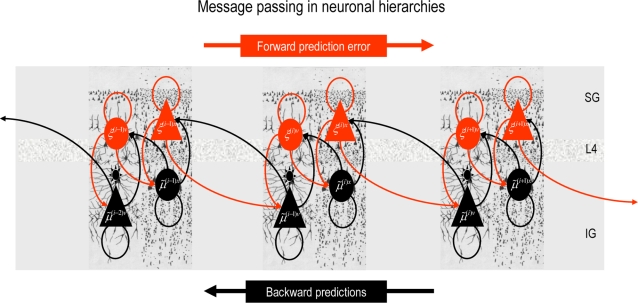
- The paper then maps this inversion scheme onto a neural-network-like message-passing architecture and illustrates the framework with analytic special cases and a simulation example.
## Limitations
- The paper states that the Laplace/Gaussian approximation “restrict[s] recognition to unimodal probabilistic representations,” though it frames this as a practical simplification.
- The text makes evident that many claims are theoretical and illustrative rather than empirically validated in this paper; it says the neuronal implementation “calls for an enormous amount of empirical verification and hypothesis testing” (evident in the text).
- The paper also makes evident that the examples and special-case derivations cover only a “partial list” of possible models, so the treatment is not exhaustive (evident in the text).
Model-written summary. Check it against the paper before relying on it.
Integrity signals
Registry
Cites
Statistics
Figures



Verification
Claims the paper makes
9 Valid · 2 Not valid · 48 Not checked · 185 Own results and interpretations
The cited sources support only part of this claim — read each source’s verdict below.
In the paper
“There is a key functional asymmetry between forward and backward connections that renders backward connections more modulatory or nonlinear in their effects on neuronal responses (e.g., [44]; see also Hupe et al. [47]).”
§ Hierarchical Models in the Brain > Results > Neuronal Implementation
What the sources say
- Partly supportedcites [44] SM Sherman, 1998, On the actions that one nerve cell can have on another: distinguishing “drivers” from “modulators”., Proc Natl Acad Sci U S A sourceExperimental — accuracy not yet measured
In the paper’s discussion of lateral geniculate inputs (indexed as Abstract; page unavailable), retinal inputs are treated as drivers, while inputs from cortex are described as modulators. That supports a forward-versus-backward distinction for this thalamic relay, but the Conclusions say that classifying corticocortical pathways remains largely untested; the paper does not establish the claimed general asymmetry or characterize backward effects as nonlinear. (LLM, conf=0.84)
- Not checked — no full text of the sourcecites Hupe et al. [47] JM Hupe, 1998, Cortical feedback improves discrimination between figure and background by V1, V2 and V3 neurons., Nature source
plainstates a cause- Asserted: passes — The authors put it forward as true.
- Checkable: passes — It can be checked against evidence.
- Load-bearing: passes — The paper’s conclusions depend on it.
- Based: passes — The paper gives a reason why it holds.
- Partly supported
The sources with a verdict support this claim; the rest weren’t checked yet, have no full text we could read, or their verdicts aren’t rated yet.
In the paper
“This selective modulation of afferents mirrors the gain-control mechanisms invoked for attention; e.g., [58],[59].”
§ Hierarchical Models in the Brain > Results > Neuronal Implementation
What the sources say
- Not checked — no full text of the sourcecites [58] S Treue, 1996, Attentional modulation of visual motion processing in cortical areas MT and MST., Nature source
- Supportedcites [59] JC Martinez-Trujillo, 2004, Feature-based attention increases the selectivity of population responses in primate visual cortex., Curr Biol source
The Conclusions (page unavailable) state that feature-based attention multiplicatively modulates neuronal responses in line with a feature-similarity gain model. This supports the cited comparison to attentional gain control; the sentence does not attribute the modulation of afferents themselves to this paper. (LLM, conf=0.88)
plainstates an association- Asserted: passes — The authors put it forward as true.
- Checkable: passes — It can be checked against evidence.
- Load-bearing: passes — The paper’s conclusions depend on it.
- Based: passes — The paper gives a reason why it holds.
The cited sources support only part of this claim — read each source’s verdict below.
In the paper
“Functional asymmetries in forwards (linear) and backwards (nonlinear) connections may reflect their distinct roles in recognition (c.f., [44]).”
§ Hierarchical Models in the Brain > Results > Neuronal Implementation
What the sources say
- Partly supportedcites [44] SM Sherman, 1998, On the actions that one nerve cell can have on another: distinguishing “drivers” from “modulators”., Proc Natl Acad Sci U S A sourceExperimental — accuracy not yet measured
The paper distinguishes driver inputs, which transmit receptive-field properties, from modulator inputs, which alter transmission (Abstract; page unavailable). It also discusses different possible roles for thalamocortical and corticothalamic pathways. It does not characterize forward connections as linear or backward connections as nonlinear, or link those properties to recognition; the Conclusions say corticocortical pathway classifications remain largely untested. (LLM, conf=0.76)
hedgedstates a possible cause- Asserted: passes — The authors put it forward as true.
- Checkable: passes — It can be checked against evidence.
- Load-bearing: unclear — It is unclear whether the paper’s conclusions depend on it.
- Based: passes — The paper gives a reason why it holds.
- Partly supported
Every source the paper cites for this claim was checked and supports it.
In the paper
“Arguments like this suggest that free-form approximations and their attending sampling schemes are not really viable in a neuronal context (although they have been considered; see [86] and above)”
§ Hierarchical Models in the Brain > Discussion
What the sources say
- Supportedcites [86] TS Lee, 2003, Hierarchical Bayesian inference in the visual cortex., J Opt Soc Am A source
The citation is attached to the parenthetical point that sampling-based approximations have been considered in a neuronal context, not to the citing authors’ conclusion that they are unviable. In “Particle Filtering and Bayesian Belief Propagation,” Lee and Mumford discuss weighted samples as an approximation to perceptual probability distributions; the Introduction proposes particle filtering as a possible cortical algorithm. The source does not endorse the unviability conclusion. (LLM, conf=0.92)
hedgedstates a cause- Asserted: passes — The authors put it forward as true.
- Checkable: passes — It can be checked against evidence.
- Load-bearing: passes — The paper’s conclusions depend on it.
- Based: passes — The paper gives a reason why it holds.
- Supported
The cited sources that could be checked couldn’t confirm or dispute this claim.
In the paper
“Lateral interactions may encode the relative precision of prediction errors and change in a way that is consistent with classical neuromodulation (c.f., [63],[71]).”
§ Hierarchical Models in the Brain > Results > Neuronal Implementation
What the sources say
- Not checked — no full text of the sourcecites [63] AJ Yu, 2005, Uncertainty, neuromodulation and attention., Neuron source
- Could not verifycites [71] Y Niv, 2005, Dopamine, uncertainty and TD learning., Behav Brain Funct sourceExperimental — accuracy not yet measured
The Discussion (page unavailable) addresses asymmetric dopamine coding of prediction errors and mentions a possible opponent neurotransmitter. Searches for lateral interactions, relative precision, and neuromodulation found no passage saying that lateral interactions encode precision or change in the claimed way. (LLM, conf=0.76)
hedgedstates a possible cause- Asserted: passes — The authors put it forward as true.
- Checkable: passes — It can be checked against evidence.
- Load-bearing: passes — The paper’s conclusions depend on it.
- Based: passes — The paper gives a reason why it holds.
122 more claims · 1 with their cited sources checked
Create a free account to see all 244 claims and to verify the 3 references still open.
- Probably not a substantial claim. 65
- It may state two separate claims as one. 65
- The quote only partly states this claim. 1
Claims other papers make about this one
Each is checked against this paper’s own text: does it say what the citing paper says it does?
The source backs part of the claim, not all of it — or backs it for a different population, condition or comparison.
In the citing paper
“This equation says that the contribution of any (angular) frequency ω in the prediction errors (encoded by superficial pyramidal cells) to the expectations (encoded by the deep pyramidal cells) is suppressed in proportion to that frequency (Friston 2008). In other words, high frequencies should be attenuated when passing from superficial to deep pyramidal cells.”
From Canonical Microcircuits for Predictive Coding (2012) · cites this paper as Friston 2008
Experimental — accuracy not yet measuredThe source backs part of the claim, not all of it — or backs it for a different population, condition or comparison.
In the citing paper
“and lies in the integrity of neuromodulatory function (2).”
From A more precise look at context in autism (2015) · cites this paper as [2]
Experimental — accuracy not yet measuredThe source backs part of the claim, not all of it — or backs it for a different population, condition or comparison.
In the citing paper
“its solutions grandfather nearly every known statistical estimation scheme, under parametric assumptions about additive or multiplicative noise (Friston, 2008)”
From The Computational Anatomy of Psychosis (2013) · cites this paper as Friston, 2008
Experimental — accuracy not yet measuredThe source backs part of the claim, not all of it — or backs it for a different population, condition or comparison.
In the citing paper
“Predictive coding is a process theory with a biologically plausible back story and a considerable amount of empirical support [21,22].”
From Active interoceptive inference and the emotional brain (2016) · cites this paper as [21]
Experimental — accuracy not yet measuredThe source backs part of the claim, not all of it — or backs it for a different population, condition or comparison.
In the citing paper
“Cortical bias or gain control is mediated by intrinsic inhibitory connections within cortical sources, which rescale prediction errors, in proportion to their precision, so that as precision increases intrinsic recurrent inhibition decreases (Abbott et al., 1997, Friston, 2008).”
From The functional anatomy of schizophrenia: A dynamic causal modeling study of predictive coding (2014) · cites this paper as Friston, 2008
Experimental — accuracy not yet measured
18 more claims about this paper
Create a free account to see every claim other papers make about this one.
Citations
Cites
Maximum Likelihood from Incomplete Data Via the EM Algorithm
Dempster, A. P., Laird, N. M., & Rubin, D. B. (1977) · Journal of the Royal Statistical Society Series B: Statistical Methodology · doi:10.1111/j.2517-6161.1977.tb01600.x · Cited by 50,444 · cited 1×
“We have discussed static cases of this fixed-form scheme previously and how it reduces to expectation maximisation ( EM ; [17]) and restricted maximum likelihood ( ReML ; [18]) for linear models [15].”
BackgroundA New Approach to Linear Filtering and Prediction Problems
Kalman, R. E. (1960) · Journal of Basic Engineering · doi:10.1115/1.3662552 · Cited by 31,751 · cited 1×
“The conventional approach to online Bayesian tracking of nonlinear or non-Gaussian systems employs extended Kalman filtering [30] or sequential Monte Carlo methods such as particle filtering.”
MethodLearning Internal Representations by Error Propagation
Rumelhart, D. E., Hinton, G. E., & Williams, R. J. (1985) · doi:10.21236/ada164453 · Cited by 16,172
An Information-Maximization Approach to Blind Separation and Blind Deconvolution
Bell, A. J., & Sejnowski, T. J. (1995) · Neural Computation · doi:10.1162/neco.1995.7.6.1129 · Cited by 8,986 · cited 1×
“) decomposes the observed response into a linear mixture of non-Gaussian causes”
Neural Mechanisms of Selective Visual Attention
Desimone, R., & Duncan, J. (1995) · Annual Review of Neuroscience · doi:10.1146/annurev.ne.18.030195.001205 · Cited by 8,388
Distributed hierarchical processing in the primate cerebral cortex
Felleman, D. J., & Van Essen, D. C. (1991) · Cerebral Cortex · doi:10.1093/cercor/1.1.1 · Cited by 7,783 · cited 2×
“This means we would expect to see connections reciprocated in the brain, which is generally the case [39,40].”
BackgroundStochastic Processes and Filtering Theory
(1970) · Mathematics in Science and Engineering · doi:10.1016/s0076-5392(09)x6022-4 · Cited by 7,302
Emergence of simple-cell receptive field properties by learning a sparse code for natural images
Olshausen, B. A., & Field, D. J. (1996) · Nature · doi:10.1038/381607a0 · Cited by 5,694 · cited 1×
“In the same way that factor analysis is a generalisation of PCA to non-Gaussian causes, ICA can be extended to form sparse-coding models of the sort proposed by Olshausen and Fields [37] by allowing observation error.”
MethodRao, R. P. N., & Ballard, D. H. (1999) · Nature Neuroscience · doi:10.1038/4580 · Cited by 5,483 · cited 2×
“The mean-field approximation q ( W )= q ( u ( t )) q ( h ) q ( l ) enables inference about perceptual states, causal regularities and context, without representing the joint distribution explicitly; c.f., [64].”
BackgroundA theory of cortical responses.
Friston, K. (2005) · Philosophical Transactions of the Royal Society B: Biological Sciences · doi:10.1098/rstb.2005.1622 · Cited by 4,578 · cited 2×
“We have laid out the neurobiological and psycho-physical motivation for the neuronal implementation of DEM in [3] and [4].”
MethodSelf-citation
Research works printed but not linked: 4
- DJC MacKay, 1995, Free-energy minimisation algorithm for decoding and cryptoanalysis., Electron Lett, 31, 445
- T Ozaki, 1992, A bridge between nonlinear time-series models and nonlinear stochastic dynamical systems: A local linearization approach., Stat Sin, 2, 113
- ME Tipping, 2001, Sparse Bayesian learning and the Relevance Vector Machine., J Mach Learn Res, 1, 211
- CE Rasmussen, 1996, Evaluation of Gaussian Processes and Other Methods for Nonlinear Regression [PhD thesis]. Toronto, Canada: Department of Computer Science, University of Toronto.
Cited by
Items 301–400 of 975
Neurocomputational Underpinnings of Expected Surprise
Lecaignard, F., Bertrand, O., Caclin, A., & Mattout, J. (2021) · Journal of Neuroscience · doi:10.1523/jneurosci.0601-21.2021 · Cited by 44
Grounding predictive coding models in empirical neuroscience research
Egner, T., & Summerfield, C. (2013) · Behavioral and Brain Sciences · doi:10.1017/s0140525x1200218x · Cited by 36
An Active-Inference Approach to Second-Person Neuroscience
Lehmann, K., Bolis, D., Friston, K. J., Schilbach, L., Ramstead, M. J. D., & Kanske, P. (2023) · Perspectives on Psychological Science · doi:10.1177/17456916231188000 · Cited by 62
“According to the active-inference framework, these predictions are compared with sensory input continuously throughout the hierarchical networks of the brain (Friston, 2005, 2008; Shipp et al., 2013).”
MethodSelf-citationA Computational Theory of Mindfulness Based Cognitive Therapy from the “Bayesian Brain” Perspective
Manjaly, Z., & Iglesias, S. (2020) · Frontiers in Psychiatry · doi:10.3389/fpsyt.2020.00404 · Cited by 51
“First, a hierarchical architecture can not only infer current states of the world, but also forecast future states, for example, by inferring on trajectories of states of the world (88).”
BackgroundLearned uncertainty: The free energy principle in anxiety
McGovern, H. T., De Foe, A., Biddell, H., Leptourgos, P., Corlett, P., Bandara, K., & Hutchinson, B. T. (2022) · Frontiers in Psychology · doi:10.3389/fpsyg.2022.943785 · Cited by 33
“If the prediction cannot sufficiently account for the (bottom-up) signal, the error propagates up the hierarchy and the (top-down) predictive model is revised (Friston, 2008; Friston and Kiebel, 2009; Huang and Rao, 2011; Bastos et al., 2012; Alexander and Brown, 2018).”
MethodVisual Information Is Predictively Encoded in Occipital Alpha/Low-Beta Oscillations
Turner, W., Blom, T., & Hogendoorn, H. (2023) · Journal of Neuroscience · doi:10.1523/jneurosci.0135-23.2023 · Cited by 46
“In the predictive coding literature, the fact that neural signalling takes time has often been overlooked (but see Friston, 2008; Hogendoorn & Burkitt, 2019).”
BackgroundIndividual Differences in Local and Global Perceptual Organization
de‐Wit, L., & Wagemans, J. P. (2014) · Oxford University Press eBooks · doi:10.1093/oxfordhb/9780199686858.013.028 · Cited by 37
Pereira, M. R., Barbosa, F., de Haan, M. D. H., & Ferreira‐Santos, F. (2019) · Developmental Psychology · doi:10.1037/dev0000706 · Cited by 37
Tucker, D. M., & Luu, P. (2023) · Cerebral Cortex · doi:10.1093/cercor/bhad085 · Cited by 33
Wadhera, T., & Kakkar, D. (2021) · Biomedical Signal Processing and Control · doi:10.1016/j.bspc.2021.102556 · Cited by 38
Parras, G. G., Casado-Román, L., Schröger, E., & Malmierca, M. S. (2021) · NeuroImage · doi:10.1016/j.neuroimage.2021.118446 · Cited by 36
“Currently, SSA and MMN are best explained and integrated by the redictive coding framework ( Friston, 2008 , 2005 ; Garrido et al., 2009 ). uring perceptual learning, cortical stations generate predictive modls of repetitive sensory input, which are sent via top-down projections owards lower…”
BackgroundOversampled and undersolved: Depressive rumination from an active inference perspective
Berg, M., Feldmann, M., Kirchner, L., & Κube, T. (2022) · Neuroscience & Biobehavioral Reviews · doi:10.1016/j.neubiorev.2022.104873 · Cited by 38
Recurrent predictive coding models for associative memory employing covariance learning
Tang, M., Salvatori, T., Millidge, B., Song, Y., Lukasiewicz, T., & Bogacz, R. (2023) · PLoS Computational Biology · doi:10.1371/journal.pcbi.1010719 · Cited by 54
Complex Processes from Dynamical Architectures with Time-Scale Hierarchy
Perdikis, D., Huys, R., & Jirsa, V. (2011) · PLoS ONE · doi:10.1371/journal.pone.0016589 · Cited by 36
“A noticeable exception in that regard is the approach developed over the last years by Friston and colleagues [7].”
BackgroundNear-Infrared Spectroscopy Applied to Complex Systems and Human Hyperscanning Networking
Crivelli, D., & Balconi, M. (2017) · Applied Sciences · doi:10.3390/app7090922 · Cited by 33
“To date, similar conceptions have been applied even to study the behavior of complex chaotic systems, such as brains [10,11], in interactions.”
BackgroundConsciousness and Hierarchical Inference
Friston, K. J. (2013) · Neuropsychoanalysis · doi:10.1080/15294145.2013.10773716 · Cited by 33
Self-citationPredictive Coding: Towards a Future of Deep Learning beyond Backpropagation?
Millidge, B., Salvatori, T., Song, Y., Bogacz, R., & Lukasiewicz, T. (2022) · arXiv · doi:10.48550/arxiv.2202.09467 · Cited by 31
Willinger, D., Häberling, I. S., Ilioska, I., Berger, G. E., Walitza, S., & Brem, S. (2024) · Frontiers in Psychiatry · doi:10.3389/fpsyt.2024.1386984 · Cited by 38
“They are thought to support embedding predictions and prediction errors which dynamically adjust the brain ’ s internal generative models based on sensory inputs and prior expectations (6, 7).”
BackgroundImpairment in Mismatch Negativity but not Repetition Suppression in Schizophrenia
Coffman, B. A., Haigh, S. M., Murphy, T. K., & Salisbury, D. F. (2017) · Brain Topography · doi:10.1007/s10548-017-0571-1 · Cited by 32
“As the predictive model is refined with stimulus repetition, prediction error is reduced through plastic alterations in connection strenghts at multiple levels of the heirarchy (Baldeweg 2006; Friston 2008).”
Sauer, A., Zeev‐Wolf, M., Grent‐'t‐Jong, T., Recasens, M., Wacongne, C., Wibral, M., Helbling, S., Peled, A., Grinshpoon, A., Singer, W., et al. (2017) · Human Brain Mapping · doi:10.1002/hbm.23716 · Cited by 31
“From this perspective, internal models that represent the knowledge and beliefs about the outer world are used to generate predictions that are compared with novel incoming inputs [Friston, 2008].”
BackgroundInfluentialPredictions in the eye of the beholder: an active inference account of Watt governors
Baltieri, M., Buckley, C. L., & Bruineberg, J. P. (2020) · Conference on Artificial Life (ALIFE) · doi:10.1162/isal_a_00288 · Cited by 42
“The dynamics described by the generative model are not integrated directly, and are only used to derive a set of equations describing the recognition dynamics as a gradient on variational free energy (Friston, 2008; Buckley et al., 2017) (see equation (10)).”
BackgroundInfluentialVoluntary control of auditory hallucinations: phenomenology to therapeutic implications
Swyer, A., & Powers, A. R. (2020) · Schizophrenia · doi:10.1038/s41537-020-0106-8 · Cited by 32
Sensorimotor theory of consciousness
Degenaar, J., & O'Regan, J. K. (2015) · Scholarpedia · doi:10.4249/scholarpedia.4952 · Cited by 35
Neural substrates of shared visual experiences: a hyperscanning fMRI study
Yoshioka, A., Tanabe, H. C., Sumiya, M., Nakagawa, E., Okazaki, S., Koike, T., & Sadato, N. (2021) · Social Cognitive and Affective Neuroscience · doi:10.1093/scan/nsab082 · Cited by 33
“According to the predictive coding theory, neuronal representations in higher cortical hierarchies predict the representations in lower levels (Mumford, 1992; Rao and Ballard, 1999; Friston, 2008).”
BackgroundCan circular inference relate the neuropathological and behavioral aspects of schizophrenia?
Leptourgos, P., Denève, S., & Jardri, R. (2017) · Current Opinion in Neurobiology · doi:10.1016/j.conb.2017.08.012 · Cited by 33
“The neural level: implementing inhibitory loops Currently, the brain is commonly considered a hierarchical system [23,24].”
BackgroundBlomquist, P., Devor, A., Indahl, U. G., Ulbert, I., Einevoll, G. T., & Dale, A. M. (2009) · PLoS Computational Biology · doi:10.1371/journal.pcbi.1000328 · Cited by 32
“PLoS Comput Biol 5(3): e1000328. doi:10.1371/journal.pcbi.1000328 Editor: Karl J. Friston, University College London, United Kingdom Received October 10, 2008; Accepted February 10, 2009; Published March 27, 2009 Copyright: 2009 Blomquist et al. This is an open-access article distributed under the terms of the Creativ…”
MethodInfluentialRepetition priming and repetition suppression: Multiple mechanisms in need of testing
Gotts, S. J., Chow, C. C., & Martin, A. D. (2012) · Cognitive Neuroscience · doi:10.1080/17588928.2012.697054 · Cited by 34
“Predictive coding relies upon the optimization of topdown predictions—thought to originate in deep pyramidal cells—that try to suppress or explain away prediction errors, encoded by superficial pyramidal cells in lower hierarchical levels (Mumford, 1992; Friston, 2008).”
InfluentialA tutorial on variational Bayes for latent linear stochastic time-series models
Ostwald, D., Kirilina, E. P., Starke, L., & Blankenburg, F. (2014) · Journal of Mathematical Psychology · doi:10.1016/j.jmp.2014.04.003 · Cited by 32
“Joint distributions over observed and unobserved variables are sometimes referred to as ‘‘generative models’’ (Friston, 2008a,b), a conventionwewill followhere.”
BackgroundMethodInfluentialTajadura‐Jiménez, A., Crucianelli, L., Zheng, R., Cheng, C. M., Ley-Flores, J., Mas, M. D. L. M. B., Bianchi‐Berthouze, N., & Fotopoulou, A. (2022) · Scientific Reports · doi:10.1038/s41598-022-24452-7 · Cited by 31
Not what u expect: Effects of prediction errors on item memory.
Ortiz-Tudela, J., Nolden, S., Pupillo, F., Ehrlich, I., Schommartz, I., Turan, G., & Shing, Y. L. (2023) · Journal of Experimental Psychology General · doi:10.1037/xge0001367 · Cited by 38
The hypothesis testing brain: some philosophical applications
Hohwy, J. (2010) · Conference of the Australasian Society for Cognitive Science · doi:10.5096/ascs200922 · Cited by 44
“This hierarchical structure is plausibly borne out anatomically in the brain with time scales getting progressively longer as one moves forwards along cortex from the occipital towards the frontal lobe (Friston 2008; Kiebel, Daunizeau et al. 2008).”
BackgroundPerception is in the details: A predictive coding account of the psychedelic phenomenon
Pink-Hashkes, S., van Rooij, I. J. E. I., & Kwisthout, J. (2017) · eScholarship (California Digital Library) · Cited by 40
Theoretical and empirical advances in understanding musical rhythm, beat and metre
Snyder, J. S., Gordon, R. L., & Hannon, E. E. (2024) · Nature Reviews Psychology · doi:10.1038/s44159-024-00315-y · Cited by 51
“A newer theoretical approach to rhythm, beat and metre is based on predictive-coding theory 127–129 .”
Hinz, N.-A., Lanillos, P., Müller, H. J., & Cheng, G. (2018) · IEEE International Conference on Development and Learning (ICDL) · doi:10.1109/devlrn.2018.8761005 · Cited by 33
“), and under the Laplace approximation [33] and assuming normally distributed noise, we can compute the negative free energy as:”
MethodDeep Active Inference and Scene Construction
Heins, R. C., Mirza, M. B., Parr, T., Friston, K. J., Kagan, I., & Pooresmaeili, A. (2020) · Frontiers in Artificial Intelligence · doi:10.3389/frai.2020.509354 · Cited by 31
“…sort of hierarchical processing entailed by such generative models abounds in the brain, and is the subject of a wealth of empirical and theoretical neuroscience research (Lee and Mumford, 2003; Friston, 2008; Hasson et al., 2008; Friston et al., 2017c; Runyan et al., 2017; Pezzulo et al., 2018).”
BackgroundSelf-citationProactive Action Preparation: Seeing Action Preparation as a Continuous and Proactive Process
Pezzulo, G., & Ognibene, D. (2012) · Motor Control · doi:10.1123/mcj.16.3.386 · Cited by 28
“Hierarchical architectures of brain functioning (Friston, 2008; Rao & Ballard, 1999) suggest that priors can be used as top-down modulatory signals that prepare”
BackgroundMortal computation: a foundation for biomimetic intelligence
Ororbia, A., & Friston, K. (2023) · arXiv · doi:10.48550/arxiv.2311.09589 · Cited by 28
Self-citationMotive control of unconscious inference: The limbic base of adaptive Bayes
Tucker, D. M., & Luu, P. (2021) · Neuroscience & Biobehavioral Reviews · doi:10.1016/j.neubiorev.2021.05.029 · Cited by 32
“In the modern theory of predictive coding (Bastos et al., 2012; Friston, 2008; Rao and Ballard, 1999), the implicit perceptual inference is formulated in a Bayesian model closely aligned with the neocortical architecture of specific areas of the primate visual system.”
BackgroundThe Predictive Brain Must Have a Limitation in Short-Term Memory Capacity
Trapp, S., Parr, T., Friston, K. J., & Schröger, E. (2021) · Current Directions in Psychological Science · doi:10.1177/09637214211029977 · Cited by 34
“…time homologue corresponds to the order of generalized coordinates of motion (effectively, a Taylor series expansion of a trajectory) in continuousstate generative models of the sort used by predictive coding: Generalized motion is usually truncated at about fourth-order motion (Friston, 2008).”
BackgroundMethodSelf-citationCulture, Mind, and Brain: Emerging Concepts, Models, and Applications
(2020) · Cambridge University Press eBooks · doi:10.1017/9781108695374 · Cited by 32
Cope, T., Sohoglu, E., Peterson, K. A., Jones, P. S., Rua, C., Passamonti, L., Sedley, W., Post, B., Coebergh, J. W. W., Butler, C., et al. (2023) · Cell Reports · doi:10.1016/j.celrep.2023.112422 · Cited by 33
Bayesian state estimation using generalized coordinates
Balaji, B., & Friston, K. J. (2011) · Proceedings of SPIE, the International Society for Optical Engineering/Proceedings of SPIE · doi:10.1117/12.883513 · Cited by 28
“It therefore follows that δq(θi)F = 0, (15) = V (θ) − ln q(θ) − lnZ, or”
Self-citationCulture in Mind – An Enactivist Account: Not Cognitive Penetration but Cultural Permeation
Hutto, D. D., Gallagher, S., Ilundáin‐Agurruza, J., & Hipólito, I. (2020) · Cambridge University Press eBooks · doi:10.1017/9781108695374.009 · Cited by 40
The First Prior: from Co-Embodiment to Co-Homeostasis in Early LifePreprint
Ciaunica, A., Constant, A., Preissl, H. T., et al. (2021) · doi:10.31234/osf.io/twubr · Cited by 27
Deep Predictive Learning: A Comprehensive Model of Three Visual Streams
O'Reilly, R. C., Wyatte, D. R., & Rohrlich, J. (2017) · arXiv · doi:10.48550/arxiv.1709.04654 · Cited by 26
“the subsequent popularity of the Bayesian framework, where it has a direct and clear relationship to the key Bayesian twist (e.g., Lee & Mumford, 2003; Friston, 2005; Yuille & Kersten, 2006; Friston, 2008, 2010; Lee, 2015). This Bayesian twist turns a question about how likely various hypotheses (models) are g…”
BackgroundInfluentialGarlichs, A., & Blank, H. (2024) · Nature Communications · doi:10.1038/s41467-024-47749-9 · Cited by 37
“Future research using a higher spatial resolution (e.g., 7T) will enable us to differentiate whether the co-existence of PE and Sharpening in OFA is linked to different types of cortical layers 109 , with super fi cial layers containing bottom-up and deeper layers top-down information 110,111 .”
MethodNeural substrates for sharing intention in action during face-to-face imitation
Miyata, K., Koike, T., Nakagawa, E., Harada, T., Sumiya, M., Yamamoto, T., & Sadato, N. (2021) · NeuroImage · doi:10.1016/j.neuroimage.2021.117916 · Cited by 35
Predictive Coding: Towards a Future of Deep Learning beyond Backpropagation?
Millidge, B., Salvatori, T., Song, Y., Bogacz, R., & Lukasiewicz, T. (2022) · International Joint Conference on Artificial Intelligence · doi:10.24963/ijcai.2022/774 · Cited by 90
“…a single mechanism that can explain many varied perceptual and neurophysiological effects (Auksztulewicz & Friston, 2016; Hohwy, Roepstorff, & Friston, 2008; Lotter, Kreiman, & Cox, 2016), while also postulating a biologically plausible neural dynamics and synaptic update rules (K.…”
BackgroundHierarchical predictive coding in distributed pain circuits
Chen, Z. S. (2023) · Frontiers in Neural Circuits · doi:10.3389/fncir.2023.1073537 · Cited by 39
“Signals descending the hierarchy via backward connections between brain areas are attributed with conveying predictions, whereas signals ascending the hierarchy propagate the PEs (Friston, 2008).”
BackgroundCausal time series analysis of functional magnetic resonance imaging data
Roebroeck, A. F., Seth, A. K., & Valdes-Sosa, P. A. (2009) · Research Publications (Maastricht University) · Cited by 30
Díez, Á., Ranlund, S. M., Pinotsis, D. A., Calafato, S., Shaikh, M., Hall, M., Walshe, M., Nevado, Á., Friston, K. J., Adams, R. A., et al. (2017) · Human Brain Mapping · doi:10.1002/hbm.23588 · Cited by 27
“How do these results relate to predictive coding accounts of psychosis? Predictive coding considers the brain as a hierarchical Bayesian inference engine that optimizes topdown predictions based on prior beliefs of the causes of sensory data by minimizing bottom-up—that is, sensorydriven—prediction errors throughout t…”
InfluentialSelf-citationBrain–computer interfaces for patients with disorders of consciousness
Gibson, R. M., Owen, A. M., & Cruse, D. (2016) · Progress in brain research · doi:10.1016/bs.pbr.2016.04.003 · Cited by 32
Mastrandrea, R., Piras, F., Gabrielli, A., Banaj, N., Caldarelli, G., Spalletta, G., & Gili, T. (2021) · Scientific Reports · doi:10.1038/s41598-021-94825-x · Cited by 32
Language Tasks and the Network Control Role of the Left Inferior Frontal Gyrus
Medaglia, J. D., Harvey, D. Y., Kelkar, A. S., Zimmerman, J. P., Mass, J. A., Bassett, D. S., & Hamilton, R. H. (2021) · eNeuro · doi:10.1523/eneuro.0382-20.2021 · Cited by 30
“Questions remain about the appropriateness of linear approximations (Friston, 2008; Schiff, 2012; Gu et al., 2015), single-node control schemes (Tu et al., 2018; Pasqualetti et al., 2019; Suweis et al., 2019), and the relevance of network-wide estimations to processes involving local (cognitive)…”
BackgroundThe free energy principle induces neuromorphic development
Fields, C., Friston, K. J., Glazebrook, J. F., Levin, M. G., & Marcianò, A. (2022) · Neuromorphic Computing and Engineering · doi:10.1088/2634-4386/aca7de · Cited by 31
“In the current setting, hierarchical predictive coding can be regarded as an implementation of VFE minimization, under hierarchical generative models [216].”
MethodSelf-citationSeeing Is Believing: Brain-Inspired Modular Training for Mechanistic Interpretability
Liu, Z., Gan, E., & Tegmark, M. (2023) · Entropy · doi:10.3390/e26010041 · Cited by 77
Ivković, M., Kuceyeski, A. F., & Raj, A. (2012) · PLoS ONE · doi:10.1371/journal.pone.0035029 · Cited by 25
“Evidence of a highly ordered hierarchical organization might find support from theoretical neuroscience, for instance in models for inference and learning in the brain [33] and large scale associative memories [34].”
BackgroundBeyond the Reward Principle: Consciousness as Precision Seeking
Fotopoulou, A. (2013) · Neuropsychoanalysis · doi:10.1080/15294145.2013.10773715 · Cited by 25
Trujillo, L. T. (2019) · Frontiers in Neuroscience · doi:10.3389/fnins.2019.01292 · Cited by 35
Márton, C. D., Fukushima, M., Camalier, C. R., Schultz, S. R., & Averbeck, B. B. (2019) · eNeuro · doi:10.1523/eneuro.0467-18.2019 · Cited by 30
“Based on the predictive coding framework [Bastos et al., 2012, Friston, 2008], we would expect the phase of the modulating (source) rhythm to be lower in frequency (e.g. θ,α,β) in the top-down direction, and higher in frequency (e.g. γ) in the bottom-up direction.”
BackgroundMethodInteroceptive sensibility predicts the ability to infer others’ emotional states
Hübner, A. M., Trempler, I., Gietmann, C., & Schubotz, R. I. (2021) · PLoS ONE · doi:10.1371/journal.pone.0258089 · Cited by 31
“Thus, highly precise prediction errors relative to prediction gives bias to bottom-up processing, whereas highly precise predictions relative to prediction errors give bias to top-down processing [12, 13].”
BackgroundOrchard, E. R., Voigt, K., Chopra, S., Thapa, T., Ward, P. G. D., Egan, G. F., & Jamadar, S. D. (2023) · Scientific Reports · doi:10.1038/s41598-023-31696-4 · Cited by 34
Hovsepyan, S., Olasagasti, I., & Giraud, A. (2023) · PLoS Computational Biology · doi:10.1371/journal.pcbi.1011595 · Cited by 38
“Compared to existing speech perception models such as TRACE [75], Shortlist [76] and Shortlist B [77] its originality lies in that it combines hierarchical predictive processing [7,33,82] and neural oscillations [13,16,83], two theoretical frameworks playing a key role in speech perception.”
MethodLuu, P., Tucker, D. M., & Friston, K. J. (2023) · Cerebral Cortex · doi:10.1093/cercor/bhad458 · Cited by 27
Self-citationA Free Energy Formulation of Music Generation and Perception: Helmholtz Revisited
Friston, K. J., & Friston, D. (2013) · Current research in systematic musicology · doi:10.1007/978-3-319-00107-4_2 · Cited by 28
“In Friston (2008), we show how these dynamics can be expressed simply in terms of prediction errors on the causes and motion of the hidden states.”
BackgroundInfluentialSelf-citationParallel fast and slow motor inhibition processes in Joint Action coordination
Cardellicchio, P., Dolfini, E., Fadiga, L., & D’Ausilio, A. (2020) · Cortex · doi:10.1016/j.cortex.2020.09.029 · Cited by 23
“Specifically, a joint goal representation might be instantiated as a hierarchical predictive model of the interaction (Friston, 2008; Kilner, Friston, & Frith, 2007) and the computation of prediction errors across all levels might be essential to adjust and adapt to our partner (Pesquita, Whitwell,…”
BackgroundMortal Computation: A Foundation for Biomimetic IntelligencePreprint
Ororbia, A. G., & Friston, K. J. (2023) · OSF Preprints (OSF Preprints) · doi:10.31219/osf.io/epqkg · Cited by 63
Self-citationVillano, W. J., Kraus, N. I., Reneau, T. R., Jaso, B. A., Otto, A. R., & Heller, A. S. (2023) · Science Advances · doi:10.1126/sciadv.add2976 · Cited by 27
“When congruent with reality, expectations for the likely rewards and threats in one ’ s environment prime appropriate behavioral responses and facilitate survival ( 1 , 2 ), even when information is limited ( 3 – 6 ).”
Ellis, G. (2018) · Physics of Life Reviews · doi:10.1016/j.plrev.2018.05.006 · Cited by 32
“The hierarchy of structure for the brain is shown in Table 1 [122,51,44].”
BackgroundSparse random neural networks for online anomaly detection on sensor nodes
Leroux, S., & Simoens, P. (2022) · Future Generation Computer Systems · doi:10.1016/j.future.2022.12.028 · Cited by 23
The Anticipatory Brain: Two Approaches
Bickhard, M. H. (2016) · Synthese Library/Synthese library · doi:10.1007/978-3-319-26485-1_16 · Cited by 31
“The argument for this is that, if ancestral organisms did not expect, thus induce, viable flows of action and inputs, they would have died out, thus extant organisms must " expect " such viable flows (Kiebel, Daunizeau & Friston, 2008; Friston, Samothrakis & Montague, 2012).”
InfluentialInputs to prefrontal cortex support visual recognition in the aging brain
Gilbert, J. R., & Moran, R. (2016) · Scientific Reports · doi:10.1038/srep31943 · Cited by 31
Wang, Y., Wang, Y., & Lui, Y. W. (2018) · NeuroImage · doi:10.1016/j.neuroimage.2018.05.042 · Cited by 23
A Gestalt inference model for auditory scene segregation
Chakrabarty, D., & Elhilali, M. (2019) · PLoS Computational Biology · doi:10.1371/journal.pcbi.1006711 · Cited by 26
Mi, Q., Wang, C., Camerer, C. F., & Zhu, L. (2021) · Science Advances · doi:10.1126/sciadv.abe6276 · Cited by 22
“We do not know, therefore, whether the active prediction process can generalize to other, more naturalistic settings, or whether the brain switches to alternative strategies, such as hierarchical Bayesian (14, 60) or efficient coding (61), to account for neurobiological constraints on communicative systems when confro…”
BackgroundInsight and the selection of ideasPreprint
Laukkonen, R., Webb, M. E., Salvi, C., et al. (2018) · doi:10.31234/osf.io/ez3tn · Cited by 23
A beautiful loop: An active inference theory of consciousness.
Laukkonen, R., Friston, K., & Chandaria, S. (2025) · Neuroscience & Biobehavioral Reviews · doi:10.1016/j.neubiorev.2025.106296 · Cited by 45
“…of binding, i.e., combining priors and sensory evidence into an approximate posterior through a hierarchical generative model, where that perceptual synthesis or combination rest sensitively on the precision or confidence afforded each level of processing (Friston, 2008; Hohwy, 2012; Hohwy, 2013).”
Self-citationPrediction error and event segmentation in episodic memory
Nolden, S., Turan, G., Güler, B., & Günseli, E. (2024) · Neuroscience & Biobehavioral Reviews · doi:10.1016/j.neubiorev.2024.105533 · Cited by 43
A functional theory of bistable perception based on dynamical circular inference
Leptourgos, P., Bouttier, V., Jardri, R., & Denève, S. (2020) · PLoS Computational Biology · doi:10.1371/journal.pcbi.1008480 · Cited by 27
“…dCI, it relies on a message passing algorithm, but instead of belief propagation, it is largely based on a simplified version of predictive coding [28,66,67]—predictive coding postulates that priors explain away sensory inputs while residual prediction error signals are fed-forward to higher…”
Body as First Teacher: The Role of Rhythmic Visceral Dynamics in Early Cognitive Development
Corcoran, A. W., Perrykkad, K., Feuerriegel, D., & Robinson, J. (2023) · Perspectives on Psychological Science · doi:10.1177/17456916231185343 · Cited by 21
“…opening up coherent lines of communication between disparate brain networks (Fries, 2005, 2015; Palva & Palva, 2018), paving the way for hierarchical message passing and model updating (Bastos et al., 2020; Chao et al., 2018; Friston, 2008; Friston, Parr, et al., 2017; Michalareas et al., 2016).”
Hierarchical dynamics of informational patterns and decision-making
Varona, P., & Rabinovich, M. I. (2016) · Proceedings of the Royal Society B Biological Sciences · doi:10.1098/rspb.2016.0475 · Cited by 29
“In turn, mental hierarchical dynamics are generated by the hierarchy of the brain functional networks [1–3].”
BackgroundDynamic Expectation Maximization Algorithm for Estimation of Linear Systems with Colored Noise
Meera, A. A., & Wisse, M. (2021) · Entropy · doi:10.3390/e23101306 · Cited by 28
“Similarities of FEP with reinforcement learning [26], neural networks [21,27], PID controller [28], Kalman Filter [2] and active learning [24] open up possibilities for biologically plausible parameter estimation algorithms.”
BackgroundMillidge, B. (2019) · doi:10.31234/osf.io/kf6wc · Cited by 22
Shusterman, R., Waters, A. C., O’Neill, S. K., Bangs, M., Luu, P., & Tucker, D. M. (2025) · npj Digital Medicine · doi:10.1038/s41746-025-01516-2 · Cited by 32
“The actor role in human cognition operates feed-forward, generating expectations, while the critic role corrects errors through feedback 9,10,15 .”
Alien limb syndrome: A Bayesian account of unwanted actions
Wolpe, N., Hezemans, F. H., & Rowe, J. B. (2020) · Cortex · doi:10.1016/j.cortex.2020.02.002 · Cited by 23
Free Energy Principle Based State and Input Observer Design for Linear Systems with Colored Noise
Meera, A. A., & Wisse, M. (2020) · Proceedings of the ... American Control Conference/Proceedings of the American Control Conference · doi:10.23919/acc45564.2020.9147581 · Cited by 27
“Similarities of FEP with reinforcement learning [12], neural networks [7, 13] and active learning [10] open up possibilities for biologically plausible control system techniques.”
BackgroundReverse-Engineering Neural Networks to Characterize Their Cost Functions
Isomura, T., & Friston, K. J. (2020) · Neural Computation · doi:10.1162/neco_a_01315 · Cited by 25
“Note that because our treatment is predicated on the complete class theorem (Brown, 1981; Wald, 1947), the same conclusions should, in principle, be reached when using continuous state-space models, such as hierarchical predictive coding models (Friston, 2008; Whittington & Bogacz, 2017; Ahmadi & Tani, 2019).”
BackgroundSelf-citationActive inference through whiskers
Mannella, F., Maggiore, F., Baltieri, M., & Pezzulo, G. (2021) · Neural Networks · doi:10.1016/j.neunet.2021.08.037 · Cited by 25
Frith, C., & Frith, U. (2023) · The MIT Press eBooks · doi:10.7551/mitpress/10400.001.0001 · Cited by 40
Najnin, S., & Banerjee, B. (2017) · Speech Communication · doi:10.1016/j.specom.2017.05.002 · Cited by 25
Control of brain network dynamics across diverse scales of space and time
Tang, E., Ju, H., Baum, G. L., Roalf, D. R., Satterthwaite, T. D., Pasqualetti, F., & Bassett, D. S. (2020) · Physical review. E · doi:10.1103/physreve.101.062301 · Cited by 21
Kaminski, J. A., Sterzer, P., & Mishara, A. L. (2019) · Consciousness and Cognition · doi:10.1016/j.concog.2019.05.005 · Cited by 22
Early cortical processing of pitch height and the role of adaptation and musicality
Andermann, M., Günther, M., Patterson, R. D., & Rupp, A. (2020) · NeuroImage · doi:10.1016/j.neuroimage.2020.117501 · Cited by 24
Two neurocomputational building blocks of social norm compliance
Colombo, M. (2013) · Biology & Philosophy · doi:10.1007/s10539-013-9385-z · Cited by 20
“…the cortex learns and infers about the causes of sensory input by implementing Bayesian inference in a multistage processing hierarchy, which allows to incorporate statistical dependencies between stimulus representations at different levels of abstraction (cf. Lee and Mumford 2003; Friston 2008).”
BackgroundImaging deductive reasoning and the new paradigm
Oaksford, M. (2015) · Frontiers in Human Neuroscience · doi:10.3389/fnhum.2015.00101 · Cited by 33
“These unconscious inferential processes are being understood in probabilistic terms in the Bayesian brain hypothesis (Dayan and Hinton, 1996; Friston, 2005, 2008; Clark, 2013).”
BackgroundGendron, M., Mesquita, B., & Barrett, L. F. (2020) · Culture, Mind, and Brain · doi:10.1017/9781108695374.010 · Cited by 20
Quantifying the compressibility of complex networks
Lynn, C. W., & Bassett, D. S. (2021) · Proceedings of the National Academy of Sciences · doi:10.1073/pnas.2023473118 · Cited by 24
“In fact, when encoding information about the world, the brain itself often employs hierarchical representations (40–42).”
A brain-inspired algorithm for training highly sparse neural networks
Atashgahi, Z., Pieterse, J., Liu, S., Mocanu, D. C., Veldhuis, R. N. J., & Pechenizkiy, M. (2022) · Machine Learning · doi:10.1007/s10994-022-06266-w · Cited by 40
“It has been shown that biological brains, especially the human brain, enjoy sparse connections among neurons (Friston, 2008).”
BackgroundFlexible intentions: An Active Inference theory
Priorelli, M., & Stoianov, I. P. (2023) · Frontiers in Computational Neuroscience · doi:10.3389/fncom.2023.1128694 · Cited by 28
“} - called generalized coordinates [43, 44].”
Neuro-Modulated Hebbian Learning for Fully Test-Time Adaptation
Tang, Y., Zhang, C., Xu, H., Chen, S., Cheng, J., Leng, L., Guo, Q., & He, Z. (2023) · IEEE Computer Society Conference on Computer Vision and Pattern Recognition/Proceedings - IEEE Computer Society Conference on Computer Vision and Pattern Recognition/Proceedings · doi:10.1109/cvpr52729.2023.00363 · Cited by 41
“The maximization of the free-energy F can be solved by an active inference process if we consider the adaptation for each batch of test samples as a decision-making step [13].”
Background
Metadata
- Authors
- Friston, K.
- Affiliations
- Wellcome Centre for Human Neuroimaging (GB)
- Corresponding author
- Friston, Karl
- ORCID
- Friston, Karl
- Venue
- PLoS Computational Biology
- Publisher
- Public Library of Science (PLoS)
- Published
- 2008-11-07
- Volume
- 4
- Issue
- 11
- Pages
- e1000211
- ISSN
- 1553-734X (ISSN-L)
- 1553-7358
- PMC
- PMC2570625
- OpenAlex
- W1977628053
- Cited by
- 952
- References
- 102
- Citations by year
- 2026: 53 · 2025: 71 · 2024: 58 · 2023: 79 · 2022: 66 · 2021: 84 · 2020: 106 · 2019: 60 · 2018: 57 · 2017: 55 · 2016: 52 · 2015: 46 · 2014: 38 · 2013: 35 · 2012: 32
- FWCI
- 31.65
- Type
- journal article
- Language
- en
- Open access
- gold
- doi.org
- Licence
- cc-by
- Locations
- PLoS Computational Biology (publishedVersion, cc-by)
- PubMed Central (publishedVersion, cc-by)
- PubMed (publishedVersion)
- RePEc: Research Papers in Economics (submittedVersion)
- DOAJ (DOAJ: Directory of Open Access Journals) (submittedVersion, cc-by-sa)
- UCL Discovery (University College London) (submittedVersion)
- Funders
- Wellcome Trust (088130)
- Topics
- Physical Sciences › Computer Science › Artificial Intelligence › Bayesian Modeling and Causal Inference
- Physical Sciences › Computer Science › Artificial Intelligence › Gaussian Processes and Bayesian Inference
- Physical Sciences › Computer Science › Artificial Intelligence › Neural Networks and Applications
- Keywords
- hierarchical models, state-space model, dynamic causal modeling, model inversion, nonlinear time series analysis, general linear model, neural network inversion, brain learning
- MeSH terms
- Algorithms, Animals, Brain, Humans, Mental Processes, Models, Neurological, Nerve Net, Probability, Linear Models, Neural Networks, Computer, Nonlinear Dynamics
About these checks
Registry, retraction, Cites and statistics results are computed, not judged, with one exception: a printed reference that no index lists is read once by a model before it counts as a citation error. Claims are extracted by a model and kept only when their quote appears verbatim in the text; each cited source is then checked, with a model’s help, for whether it says what the claim relies on. Those verdicts can be wrong — read the claim’s quote and the cited source before relying on one.
The claim verdicts this report counts are experimental: their accuracy is not yet measured.
A language model drew the claims from the paper on 2026-10-10, under version 3 of the claim definition (model deepseek-v4.1-flash, prompt extract-v3).
A second model labelled each claim on 2026-10-10 (model jev-1.13-20260917, definition revision gold-guideline-v0.2).
Cited sources are checked with a language model’s help (gpt-6-sol).
Statistics and arithmetic are recomputed, not judged.
Confidence bands are shown only for fields calibrated on our annotated test set. None is calibrated yet, so no band is shown.
What counts as a claim ›How we measure confidence ›How we check this ›
Are you an author, or do you see a problem with this page? Request a review
Data sources
Bibliographic data: Semantic Scholar, OpenAlex, Crossref.
Contains information from the Semantic Scholar Academic Graph Datasets, made available under the ODC Attribution License (ODC-BY 1.0).
Semantic Scholar’s data is described in: Kinney, R., et al. (2023). The Semantic Scholar Open Data Platform. arXiv:2301.10140.
