

Hierarchical Models in the Brain
Open accessThe DOI matches its Crossref record; 94 of the 102 references it cites were found in a registry or an index; 10 of the 81 sources its claims cite were checked for support.
Abstract
This paper describes a general model that subsumes many parametric models for continuous data. The model comprises hidden layers of state-space or dynamic causal models, arranged so that the output of one provides input to another. The ensuing hierarchy furnishes a model for many types of data, of arbitrary complexity. Special cases range from the general linear model for static data to generalised convolution models, with system noise, for nonlinear time-series analysis. Crucially, all of these models can be inverted using exactly the same scheme, namely, dynamic expectation maximization. This means that a single model and optimisation scheme can be used to invert a wide range of models. We present the model and a brief review of its inversion to disclose the relationships among, apparently, diverse generative models of empirical data. We then show that this inversion can be formulated as a simple neural network and may provide a useful metaphor for inference and learning in the brain.
Overview
CoChat Summary
## TL;DR
This paper presents hierarchical dynamic models (HDMs) as a very general framework that contains many familiar static and dynamic statistical models as special cases, all invertible with the same dynamic expectation maximization (DEM) scheme. It argues that the same inversion can be written as a simple neural network and may serve as a metaphor for inference and learning in the brain.
## Key findings
- HDMs “subsum[e] many parametric models for continuous data,” ranging from the general linear model for static data to generalized convolution models with system noise for nonlinear time-series analysis.
- The paper claims that these diverse models can all be inverted using the same scheme, dynamic expectation maximization (DEM), under a Laplace/mean-field variational approximation.
- In the results, the author shows that HDMs encompass standard tools including the general linear model, expectation maximization (EM), restricted maximum likelihood (ReML), covariance component estimation, Gaussian process models, PCA, factor analysis, ICA, sparse coding, deconvolution, and state-space filtering.
- A worked example is described in which DEM converged in “about sixteen iterations” using embedding order “n = 6” and roughness hyperparameter “γ = 4,” with the text stating that the recovered states, parameters, and hyperparameters closely matched the true values and that the true values lay largely within the 90% confidence intervals.
## Methods
- The paper develops a hierarchical dynamic model in generalized coordinates of motion, with hidden states and causes organized across levels; the model includes Gaussian priors and Gaussian assumptions about fluctuations, and uses prediction errors at each level.
- Inversion is based on variational Bayes under mean-field and Laplace approximations, optimizing free energy / variational action with a dynamic expectation maximization scheme that separates D-step (states), E-step (parameters), and M-step (hyperparameters).
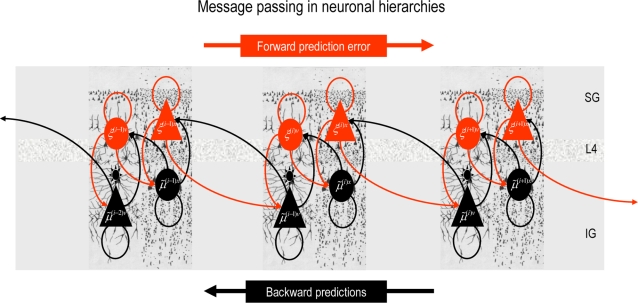
- The paper then maps this inversion scheme onto a neural-network-like message-passing architecture and illustrates the framework with analytic special cases and a simulation example.
## Limitations
- The paper states that the Laplace/Gaussian approximation “restrict[s] recognition to unimodal probabilistic representations,” though it frames this as a practical simplification.
- The text makes evident that many claims are theoretical and illustrative rather than empirically validated in this paper; it says the neuronal implementation “calls for an enormous amount of empirical verification and hypothesis testing” (evident in the text).
- The paper also makes evident that the examples and special-case derivations cover only a “partial list” of possible models, so the treatment is not exhaustive (evident in the text).
Model-written summary. Check it against the paper before relying on it.
Integrity signals
Registry
Cites
Statistics
Figures



Verification
Claims the paper makes
9 Valid · 2 Not valid · 48 Not checked · 185 Own results and interpretations
The cited sources support only part of this claim — read each source’s verdict below.
In the paper
“There is a key functional asymmetry between forward and backward connections that renders backward connections more modulatory or nonlinear in their effects on neuronal responses (e.g., [44]; see also Hupe et al. [47]).”
§ Hierarchical Models in the Brain > Results > Neuronal Implementation
What the sources say
- Partly supportedcites [44] SM Sherman, 1998, On the actions that one nerve cell can have on another: distinguishing “drivers” from “modulators”., Proc Natl Acad Sci U S A sourceExperimental — accuracy not yet measured
In the paper’s discussion of lateral geniculate inputs (indexed as Abstract; page unavailable), retinal inputs are treated as drivers, while inputs from cortex are described as modulators. That supports a forward-versus-backward distinction for this thalamic relay, but the Conclusions say that classifying corticocortical pathways remains largely untested; the paper does not establish the claimed general asymmetry or characterize backward effects as nonlinear. (LLM, conf=0.84)
- Not checked — no full text of the sourcecites Hupe et al. [47] JM Hupe, 1998, Cortical feedback improves discrimination between figure and background by V1, V2 and V3 neurons., Nature source
plainstates a cause- Asserted: passes — The authors put it forward as true.
- Checkable: passes — It can be checked against evidence.
- Load-bearing: passes — The paper’s conclusions depend on it.
- Based: passes — The paper gives a reason why it holds.
- Partly supported
The sources with a verdict support this claim; the rest weren’t checked yet, have no full text we could read, or their verdicts aren’t rated yet.
In the paper
“This selective modulation of afferents mirrors the gain-control mechanisms invoked for attention; e.g., [58],[59].”
§ Hierarchical Models in the Brain > Results > Neuronal Implementation
What the sources say
- Not checked — no full text of the sourcecites [58] S Treue, 1996, Attentional modulation of visual motion processing in cortical areas MT and MST., Nature source
- Supportedcites [59] JC Martinez-Trujillo, 2004, Feature-based attention increases the selectivity of population responses in primate visual cortex., Curr Biol source
The Conclusions (page unavailable) state that feature-based attention multiplicatively modulates neuronal responses in line with a feature-similarity gain model. This supports the cited comparison to attentional gain control; the sentence does not attribute the modulation of afferents themselves to this paper. (LLM, conf=0.88)
plainstates an association- Asserted: passes — The authors put it forward as true.
- Checkable: passes — It can be checked against evidence.
- Load-bearing: passes — The paper’s conclusions depend on it.
- Based: passes — The paper gives a reason why it holds.
The cited sources support only part of this claim — read each source’s verdict below.
In the paper
“Functional asymmetries in forwards (linear) and backwards (nonlinear) connections may reflect their distinct roles in recognition (c.f., [44]).”
§ Hierarchical Models in the Brain > Results > Neuronal Implementation
What the sources say
- Partly supportedcites [44] SM Sherman, 1998, On the actions that one nerve cell can have on another: distinguishing “drivers” from “modulators”., Proc Natl Acad Sci U S A sourceExperimental — accuracy not yet measured
The paper distinguishes driver inputs, which transmit receptive-field properties, from modulator inputs, which alter transmission (Abstract; page unavailable). It also discusses different possible roles for thalamocortical and corticothalamic pathways. It does not characterize forward connections as linear or backward connections as nonlinear, or link those properties to recognition; the Conclusions say corticocortical pathway classifications remain largely untested. (LLM, conf=0.76)
hedgedstates a possible cause- Asserted: passes — The authors put it forward as true.
- Checkable: passes — It can be checked against evidence.
- Load-bearing: unclear — It is unclear whether the paper’s conclusions depend on it.
- Based: passes — The paper gives a reason why it holds.
- Partly supported
Every source the paper cites for this claim was checked and supports it.
In the paper
“Arguments like this suggest that free-form approximations and their attending sampling schemes are not really viable in a neuronal context (although they have been considered; see [86] and above)”
§ Hierarchical Models in the Brain > Discussion
What the sources say
- Supportedcites [86] TS Lee, 2003, Hierarchical Bayesian inference in the visual cortex., J Opt Soc Am A source
The citation is attached to the parenthetical point that sampling-based approximations have been considered in a neuronal context, not to the citing authors’ conclusion that they are unviable. In “Particle Filtering and Bayesian Belief Propagation,” Lee and Mumford discuss weighted samples as an approximation to perceptual probability distributions; the Introduction proposes particle filtering as a possible cortical algorithm. The source does not endorse the unviability conclusion. (LLM, conf=0.92)
hedgedstates a cause- Asserted: passes — The authors put it forward as true.
- Checkable: passes — It can be checked against evidence.
- Load-bearing: passes — The paper’s conclusions depend on it.
- Based: passes — The paper gives a reason why it holds.
- Supported
The cited sources that could be checked couldn’t confirm or dispute this claim.
In the paper
“Lateral interactions may encode the relative precision of prediction errors and change in a way that is consistent with classical neuromodulation (c.f., [63],[71]).”
§ Hierarchical Models in the Brain > Results > Neuronal Implementation
What the sources say
- Not checked — no full text of the sourcecites [63] AJ Yu, 2005, Uncertainty, neuromodulation and attention., Neuron source
- Could not verifycites [71] Y Niv, 2005, Dopamine, uncertainty and TD learning., Behav Brain Funct sourceExperimental — accuracy not yet measured
The Discussion (page unavailable) addresses asymmetric dopamine coding of prediction errors and mentions a possible opponent neurotransmitter. Searches for lateral interactions, relative precision, and neuromodulation found no passage saying that lateral interactions encode precision or change in the claimed way. (LLM, conf=0.76)
hedgedstates a possible cause- Asserted: passes — The authors put it forward as true.
- Checkable: passes — It can be checked against evidence.
- Load-bearing: passes — The paper’s conclusions depend on it.
- Based: passes — The paper gives a reason why it holds.
122 more claims · 1 with their cited sources checked
Create a free account to see all 244 claims and to verify the 3 references still open.
- Probably not a substantial claim. 65
- It may state two separate claims as one. 65
- The quote only partly states this claim. 1
Claims other papers make about this one
Each is checked against this paper’s own text: does it say what the citing paper says it does?
The source backs part of the claim, not all of it — or backs it for a different population, condition or comparison.
In the citing paper
“This equation says that the contribution of any (angular) frequency ω in the prediction errors (encoded by superficial pyramidal cells) to the expectations (encoded by the deep pyramidal cells) is suppressed in proportion to that frequency (Friston 2008). In other words, high frequencies should be attenuated when passing from superficial to deep pyramidal cells.”
From Canonical Microcircuits for Predictive Coding (2012) · cites this paper as Friston 2008
Experimental — accuracy not yet measuredThe source backs part of the claim, not all of it — or backs it for a different population, condition or comparison.
In the citing paper
“and lies in the integrity of neuromodulatory function (2).”
From A more precise look at context in autism (2015) · cites this paper as [2]
Experimental — accuracy not yet measuredThe source backs part of the claim, not all of it — or backs it for a different population, condition or comparison.
In the citing paper
“its solutions grandfather nearly every known statistical estimation scheme, under parametric assumptions about additive or multiplicative noise (Friston, 2008)”
From The Computational Anatomy of Psychosis (2013) · cites this paper as Friston, 2008
Experimental — accuracy not yet measuredThe source backs part of the claim, not all of it — or backs it for a different population, condition or comparison.
In the citing paper
“Predictive coding is a process theory with a biologically plausible back story and a considerable amount of empirical support [21,22].”
From Active interoceptive inference and the emotional brain (2016) · cites this paper as [21]
Experimental — accuracy not yet measuredThe source backs part of the claim, not all of it — or backs it for a different population, condition or comparison.
In the citing paper
“Cortical bias or gain control is mediated by intrinsic inhibitory connections within cortical sources, which rescale prediction errors, in proportion to their precision, so that as precision increases intrinsic recurrent inhibition decreases (Abbott et al., 1997, Friston, 2008).”
From The functional anatomy of schizophrenia: A dynamic causal modeling study of predictive coding (2014) · cites this paper as Friston, 2008
Experimental — accuracy not yet measured
18 more claims about this paper
Create a free account to see every claim other papers make about this one.
Citations
Cites
Maximum Likelihood from Incomplete Data Via the EM Algorithm
Dempster, A. P., Laird, N. M., & Rubin, D. B. (1977) · Journal of the Royal Statistical Society Series B: Statistical Methodology · doi:10.1111/j.2517-6161.1977.tb01600.x · Cited by 50,444 · cited 1×
“We have discussed static cases of this fixed-form scheme previously and how it reduces to expectation maximisation ( EM ; [17]) and restricted maximum likelihood ( ReML ; [18]) for linear models [15].”
BackgroundA New Approach to Linear Filtering and Prediction Problems
Kalman, R. E. (1960) · Journal of Basic Engineering · doi:10.1115/1.3662552 · Cited by 31,751 · cited 1×
“The conventional approach to online Bayesian tracking of nonlinear or non-Gaussian systems employs extended Kalman filtering [30] or sequential Monte Carlo methods such as particle filtering.”
MethodLearning Internal Representations by Error Propagation
Rumelhart, D. E., Hinton, G. E., & Williams, R. J. (1985) · doi:10.21236/ada164453 · Cited by 16,172
An Information-Maximization Approach to Blind Separation and Blind Deconvolution
Bell, A. J., & Sejnowski, T. J. (1995) · Neural Computation · doi:10.1162/neco.1995.7.6.1129 · Cited by 8,986 · cited 1×
“) decomposes the observed response into a linear mixture of non-Gaussian causes”
Neural Mechanisms of Selective Visual Attention
Desimone, R., & Duncan, J. (1995) · Annual Review of Neuroscience · doi:10.1146/annurev.ne.18.030195.001205 · Cited by 8,388
Distributed hierarchical processing in the primate cerebral cortex
Felleman, D. J., & Van Essen, D. C. (1991) · Cerebral Cortex · doi:10.1093/cercor/1.1.1 · Cited by 7,783 · cited 2×
“This means we would expect to see connections reciprocated in the brain, which is generally the case [39,40].”
BackgroundStochastic Processes and Filtering Theory
(1970) · Mathematics in Science and Engineering · doi:10.1016/s0076-5392(09)x6022-4 · Cited by 7,302
Emergence of simple-cell receptive field properties by learning a sparse code for natural images
Olshausen, B. A., & Field, D. J. (1996) · Nature · doi:10.1038/381607a0 · Cited by 5,694 · cited 1×
“In the same way that factor analysis is a generalisation of PCA to non-Gaussian causes, ICA can be extended to form sparse-coding models of the sort proposed by Olshausen and Fields [37] by allowing observation error.”
MethodRao, R. P. N., & Ballard, D. H. (1999) · Nature Neuroscience · doi:10.1038/4580 · Cited by 5,483 · cited 2×
“The mean-field approximation q ( W )= q ( u ( t )) q ( h ) q ( l ) enables inference about perceptual states, causal regularities and context, without representing the joint distribution explicitly; c.f., [64].”
BackgroundA theory of cortical responses.
Friston, K. (2005) · Philosophical Transactions of the Royal Society B: Biological Sciences · doi:10.1098/rstb.2005.1622 · Cited by 4,578 · cited 2×
“We have laid out the neurobiological and psycho-physical motivation for the neuronal implementation of DEM in [3] and [4].”
MethodSelf-citation
Research works printed but not linked: 4
- DJC MacKay, 1995, Free-energy minimisation algorithm for decoding and cryptoanalysis., Electron Lett, 31, 445
- T Ozaki, 1992, A bridge between nonlinear time-series models and nonlinear stochastic dynamical systems: A local linearization approach., Stat Sin, 2, 113
- ME Tipping, 2001, Sparse Bayesian learning and the Relevance Vector Machine., J Mach Learn Res, 1, 211
- CE Rasmussen, 1996, Evaluation of Gaussian Processes and Other Methods for Nonlinear Regression [PhD thesis]. Toronto, Canada: Department of Computer Science, University of Toronto.
Cited by
Items 201–300 of 974
Stefanics, G., & Czigler, I. (2012) · NeuroImage · doi:10.1016/j.neuroimage.2012.06.068 · Cited by 72
“‘predictions’ are coded in nonlinear interactions between levels of the hierarchy (Friston et al., 2006; Friston, 2008).”
What are the contents of representations in predictive processing?
Wiese, W. (2017) · Phenomenology and the Cognitive Sciences · doi:10.1007/s11097-016-9472-0 · Cited by 66
“This gives us the following equation (which is oversimplified, to convey only the essential idea; for a more sophisticated version, see, e.g., Friston 2008, p. 2): sensory signals = deterministic function of hidden causes + noise s = g(c) + ω .”
BackgroundActive inference, eye movements and oculomotor delays
Perrinet, L. U., Adams, R. A., & Friston, K. J. (2014) · Biological Cybernetics · doi:10.1007/s00422-014-0620-8 · Cited by 65
“The equations on the right represent a generalised descent on free energy under the hierarchical model described in the main text—this can be regarded as a generalisation of predictive coding or Kalman filtering: see Friston [2008].”
BackgroundInfluentialSelf-citationCircular inference: mistaken belief, misplaced trust
Denève, S., & Jardri, R. (2016) · Current Opinion in Behavioral Sciences · doi:10.1016/j.cobeha.2016.04.001 · Cited by 65
Aggarwal, A., Brennan, C. M., Luo, J., Chung, H., Contreras, D., Kelz, M. B., & Proekt, A. (2022) · Nature Communications · doi:10.1038/s41467-022-32378-x · Cited by 70
“Formulating predictions about the next sensory stimulus or deciding which stimulus to pay attention to requires temporal integration (Friston, 2008; Bastos et al., 2015; Friston and Buzsáki, 2016; Posner et al., 2018).”
BackgroundTime Scale Hierarchies in the Functional Organization of Complex Behaviors
Perdikis, D., Huys, R., & Jirsa, V. K. (2011) · PLoS Computational Biology · doi:10.1371/journal.pcbi.1002198 · Cited by 62
“In a series of papers, hierarchies of transient dynamics were developed in order to account for brain [88], perceptual [50,51] and behavioral [89] phenomena.”
BackgroundBayesian mechanics for stationary processes
Da Costa, L., Friston, K., Heins, C., & Pavliotis, G. A. (2021) · Proceedings of the Royal Society A: Mathematical, Physical and Engineering Sciences · doi:10.1098/rspa.2021.0518 · Cited by 63
“Note that variational Laplace has been proposed as an implementation of various cognitive processes in biological systems [25,52,58] accounting for several features of the brain’s functional anatomy and neural message passing [53,70,99,102,103].”
BackgroundSelf-citationHierarchical Bayesian models of delusion
Williams, D. (2018) · Consciousness and Cognition · doi:10.1016/j.concog.2018.03.003 · Cited by 74
“…of spatiotemporal scale and abstraction, where hypotheses at one level L+ 1 provide the priors for the level below L and the evidence against which prediction errors are computed for the level above L+ 2 (Friston, 2008; Lee and Mumford, 2003; see Section 4 for more on this concept of a hierarchy).”
InfluentialIn vivo ephaptic coupling allows memory network formation
Pinotsis, D. A., & Miller, E. K. (2023) · Cerebral Cortex · doi:10.1093/cercor/bhad251 · Cited by 62
“The ephaptic model isusedtwicebelow:first,in“Methods,”toderivethemathematical expression of ephaptic coupling and then, in “Results,” to find evidence of ephaptic coupling using BMC.”
InfluentialPredictive coding of natural images by V1 firing rates and rhythmic synchronization
Uran, C., Peter, A., Lazăr, A., Barnes, W., Klon-Lipok, J., Shapcott, K. A., Roese, R., Fries, P., Singer, W., & Vinck, M. A. (2022) · Neuron · doi:10.1016/j.neuron.2022.01.002 · Cited by 81
“We further note that there are different flavors of predictive coding theories (Rao and Ballard, 1999; Friston, 2008; Mumford, 1992; Keller and Mrsic-Flogel, 2018; de Lange et al., 2018; Heeger, 2017; Singer, 2021).”
BackgroundEEG source imaging with spatio‐temporal tomographic nonnegative independent component analysis
Valdes-Sosa, P. A., Vega‐Hernández, M., Sánchez‐Bornot, J. M., Martínez‐Montes, E., & Bobes, M. A. (2009) · Human Brain Mapping · doi:10.1002/hbm.20784 · Cited by 70
“This approach has been followed by other authors [Friston, 2008].”
ResultComputational Resource Demands of a Predictive Bayesian Brain
Kwisthout, J., & van Rooij, I. (2019) · Computational Brain & Behavior · doi:10.1007/s42113-019-00032-3 · Cited by 72
“…the brain as encoding and processing uncertain information using Bayesian mechanisms (Dayan et al. 1995; Knill and Pouget 2004); (3) the view of the brain as a series of hierarchical generative (inverse) models (Friston 2008); and (4) the free energy principle in theoretical biology (Friston 2010).”
BackgroundWhat does the free energy principle tell us about the brain?
Gershman, S. J. (2019) · Neurons Behavior Data analysis and Theory · doi:10.51628/001c.10839 · Cited by 74
Hierarchical models of pain: Inference, information-seeking, and adaptive control.
Seymour, B., & Mancini, F. (2020) · NeuroImage · doi:10.1016/j.neuroimage.2020.117212 · Cited by 64
Object repetition leads to local increases in the temporal coordination of neural responses
Gilbert (2010) · Frontiers in Human Neuroscience · doi:10.3389/fnhum.2010.00030 · Cited by 59
“…to temporal cortex would be consistent with the predictions of a recent Bayesian model of stimulus repetition and learning effects (Henson, 2003; Friston, 2005, 2008), in which suppressive feedback from higher-level cortical areas “predicts” and constrains activity in earlier sensory areas.”
Confidence resets reveal hierarchical adaptive learning in humans
Heilbron, M., & Meyniel, F. (2019) · PLoS Computational Biology · doi:10.1371/journal.pcbi.1006972 · Cited by 62
Expectation violation and attention to pain jointly modulate neural gain in somatosensory cortex
Fardo, F., Auksztulewicz, R., Allen, M., Dietz, M. J., Roepstorff, A., & Friston, K. J. (2017) · NeuroImage · doi:10.1016/j.neuroimage.2017.03.041 · Cited by 59
“At each level of the neural hierarchy, incoming inputs are compared with top-down predictions, with any resulting discrepancy (i.e., error) being passed to higher regions of the hierarchy (Friston, 2008).”
BackgroundSelf-citationChowdhury, A., van Lutterveld, R., Laukkonen, R., Slagter, H. A., Ingram, D. M., & Sacchet, M. D. (2023) · Neuropsychologia · doi:10.1016/j.neuropsychologia.2023.108694 · Cited by 77
“…the hierarchical cognitive processing/representations made by humans, here associated with suppressed alpha oscillations, is a process best described as “ abstraction ” (Badcock et al., 2019; Friston, 2008; Gilead et al., 2020; Huntenburg et al., 2018; Raut et al., 2020; Taylor et al., 2015).”
BackgroundAn Integrated theory of false insights and beliefs under psychedelics
McGovern, H. T., Grimmer, H. J., Doss, M. K., Hutchinson, B. T., Timmermann, C., Lyon, A., Corlett, P. R., & Laukkonen, R. (2024) · Communications Psychology · doi:10.1038/s44271-024-00120-6 · Cited by 84
“Intheeventtheerrorcannotbe explainedatthenextlevel,itascendsallthewayuptothemostcoarse-grainedlevelsuchthattheagent ’ s model is updated to account for this new contingency 67,79 .”
BackgroundInfluentialDisruption of information processing in schizophrenia: The time perspective
Giersch, A., Poncelet, P. E., Capa, R. L., Martin, B., Duval, C. Z., Curzietti, M., Hoonacker, M., van Assche, M., & Lalanne, L. (2015) · Schizophrenia Research: Cognition · doi:10.1016/j.scog.2015.04.002 · Cited by 58
“Predictive coding provides a theoretical framework to account for these abilities (Friston, 2008), by proposing that the brain triggers expectations about future sensory inputs.”
BackgroundPrecision and neuronal dynamics in the human posterior parietal cortex during evidence accumulation
FitzGerald, T. H. B., Moran, R. J., Friston, K. J., & Dolan, R. J. (2015) · NeuroImage · doi:10.1016/j.neuroimage.2014.12.015 · Cited by 58
“Source reconstruction & network selection Source reconstruction showed three bilateral sources with the largest posterior estimates of evoked power (the sum of squared source activity during the time window of interest) (Litvak and Friston, 2008).”
InfluentialSelf-citationHertäg, L., & Clopath, C. (2022) · Proceedings of the National Academy of Sciences · doi:10.1073/pnas.2115699119 · Cited by 69
Ge, T., Feng, J., Grabenhorst, F., & Rolls, E. T. (2011) · NeuroImage · doi:10.1016/j.neuroimage.2011.08.047 · Cited by 62
“DCM is also not well tailored for data without experimentally designed inputs, and requires a strong knowledge of how the observations are caused.”
BackgroundInfluentialNon-invasive laminar inference with MEG: Comparison of methods and source inversion algorithms
Bonaiuto, J. J., Rossiter, H. E., Meyer, S. S., Adams, N., Little, S., Callaghan, M. F., Dick, F., Bestmann, S., & Barnes, G. R. (2018) · NeuroImage · doi:10.1016/j.neuroimage.2017.11.068 · Cited by 57
“Theories of brain organization and function such as predictive coding (Bastos et al., 2012; Friston, 2008), communication through coherence (Fries, 2015, 2009, 2005), gating by inhibition (Jensen and Mazaheri, 2010), and communication through nested oscillations (Bonnefond et al., 2017) ascribe…”
BackgroundThe Human Penguin Project: Climate, Social Integration, and Core Body Temperature
IJzerman, H. R., Lindenberg, S. M., Dalḡar, İ., Weißgerber, S. C., Vergara, R. C., Cairo, A. H., Čolić, M. V., Dursun, P., Frankowska, N., Hadi, R., et al. (2018) · Collabra Psychology · doi:10.1525/collabra.165 · Cited by 63
“, those related to insular cortex activation and monitoring social contact) help foster more efficient activity at lower levels (e.g., regulating temperature and social contact at the hypothalamic level; Clark, 2013; Friston, 2008).”
BackgroundCanolty, R. T., Ganguly, K., & Carmena, J. M. (2012) · PLoS Computational Biology · doi:10.1371/journal.pcbi.1002809 · Cited by 57
“Furthermore, hierarchical predictive coding models suggest that the gamma rhythm is indicative of bottom-up feed-forward processing, while the alpha and beta rhythms serve as signatures of top-down feedback influence [75–78].”
BackgroundYildiz, I. B., von Kriegstein, K., & Kiebel, S. J. (2013) · PLoS Computational Biology · doi:10.1371/journal.pcbi.1003219 · Cited by 55
“These error units can be identified with superficial pyramidal cells as they originate forward connections in the brain which correspond to the bottom-up error messages in our setting [43].”
BackgroundOn the Relationship Between Active Inference and Control as Inference
Millidge, B., Tschantz, A., Seth, A. K., & Buckley, C. L. (2020) · Communications in computer and information science · doi:10.1007/978-3-030-64919-7_1 · Cited by 97
“Active Inference (AIF) is an emerging theory in computational and theoretical neuroscience which posits a unified theory of inference, learning, and control in the brain (K. Friston, 2008; K. Friston, Kilner, & Harrison, 2006; K. J. Friston, Daunizeau, & Kiebel, 2009).”
BackgroundLooking forward: An impaired ability in patients with schizophrenia?
Lalanne, L., van Assche, M., Wang, W., & Giersch, A. (2012) · Neuropsychologia · doi:10.1016/j.neuropsychologia.2012.07.023 · Cited by 58
Ambiguity and invariance: two fundamental challenges for visual processing
Rust, N. C., & Stocker, A. A. (2010) · Current Opinion in Neurobiology · doi:10.1016/j.conb.2010.04.013 · Cited by 63
“How these models might be implemented in the neural architecture of the visual system is an issue that we are just beginning to address [61 ,62].”
MethodAction biases perceptual decisions toward expected outcomes.
Yon, D., Zainzinger, V., de Lange, F. P., Eimer, M., & Press, C. (2020) · Journal of Experimental Psychology General · doi:10.1037/xge0000826 · Cited by 54
“In principle, the architecture of these models can account for the tendency of agents to up- or down-weight perception of predictable action outcomes through changes in the gain or “precision” afforded to sensory evidence (Friston, 2008; Yon, de Lange, & Press, 2019).”
Rethinking delusions: A selective review of delusion research through a computational lens
Ashinoff, B. K., Singletary, N. M., Baker, S. C., & Horga, G. (2021) · Schizophrenia Research · doi:10.1016/j.schres.2021.01.023 · Cited by 64
“Accordingly, modern theories of delusions focus on alterations in hierarchical inference (Adams et al., 2013; Fletcher and Frith, 2009; Friston, 2008; Sterzer et al., 2018).”
BackgroundCollective behavior from surprise minimization
Heins, C., Millidge, B., Da Costa, L., Mann, R. P., Friston, K. J., & Couzin, I. D. (2024) · Proceedings of the National Academy of Sciences · doi:10.1073/pnas.2320239121 · Cited by 55
Self-citationThe neural coding framework for learning generative models
Ororbia, A., & Kifer, D. (2022) · Nature Communications · doi:10.1038/s41467-022-29632-7 · Cited by 57
An Introduction to Predictive Processing Models of Perception and Decision‐Making
Sprevak, M. D., & Smith, R. S. (2023) · Topics in Cognitive Science · doi:10.1111/tops.12704 · Cited by 84
“One popular set of assumptions has been defended by Friston and colleagues (Daunizeau, 2018; Friston, 2005; Friston, 2003; Gershman, 2019; Friston, 2008; Friston & Kiebel, 2009; Friston, Mattout, Trujillo-Barreto, Ashburner, & Penny, 2006).”
BackgroundDynamic Construction of Reduced Representations in the Brain for Perceptual Decision Behavior
Zhan, J., Ince, R. A. A., van Rijsbergen, N. J., & Schyns, P. G. (2019) · Current Biology · doi:10.1016/j.cub.2018.11.049 · Cited by 54
Sequential dynamics of complex networks in mind: Consciousness and creativity
Rabinovich, M. I., Zaks, M. A., & Varona, P. (2020) · Physics Reports · doi:10.1016/j.physrep.2020.08.003 · Cited by 59
HAIR: Hierarchical Visual-Semantic Relational Reasoning for Video Question Answering
Liu, F., Liu, J., Wang, N., & Lu, H. (2021) · IEEE/CVF International Conference on Computer Vision (ICCV) · doi:10.1109/iccv48922.2021.00172 · Cited by 74
“Unlike these works that focus on either frame-level or object-level relational reasoning, our HAIR framework mimics the cognition process of human [10, 23, 39] and performs hierarchical relational reasoning.”
BackgroundHybrid predictive coding: Inferring, fast and slow
Tscshantz, A., Millidge, B., Seth, A. K., & Buckley, C. L. (2023) · PLOS Computational Biology · doi:10.1371/journal.pcbi.1011280 · Cited by 51
“At the same time, the predictive coding architecture has gained prominence as a process theory which could provide a neurobiological implementation of approximate Bayesian inference [8, 31, 37, 42, 84].”
BackgroundToward a Unified Sub-symbolic Computational Theory of Cognition
Butz, M. V. (2016) · Frontiers in Psychology · doi:10.3389/fpsyg.2016.00925 · Cited by 51
“Besides the formulated strict hierarchy of top-down predictive encodings, temporal predictive encodings can be formulated in a similar manner (cf. e.g., Goodwin and Sin, 1984; Friston, 2008; Kneissler et al., 2015).”
BackgroundInfluentialLao-Rodríguez, A. B., Przewrocki, K., Pérez‐González, D., Alishbayli, A., Yılmaz, E. O., Malmierca, M. S., & Englitz, B. (2023) · Science Advances · doi:10.1126/sciadv.abq8657 · Cited by 58
“The omission responses are likely the earliest neuronal correlate underlying the salient perception of omitted stimuli in humans and can be considered to provide additional support for a hierarchical predictive coding framework (1, 37, 39, 42, 43).”
BackgroundThe predictive mind and the experience of visual art work
Kesner, L. (2014) · Frontiers in Psychology · doi:10.3389/fpsyg.2014.01417 · Cited by 64
Murata, S., Yamashita, Y., Arie, H., Ogata, T., Sugano, S., & Tani, J. (2015) · IEEE Transactions on Neural Networks and Learning Systems · doi:10.1109/tnnls.2015.2492140 · Cited by 58
“It can be considered that individuals construct an internal model through perceptual learning [27], [28] by making their own interpretation of perceptual experiences or observed events.”
BackgroundDeep Predictive Coding Networks
Chalasani, R., & Príncipe, J. C. (2013) · arXiv (Cornell University) · doi:10.48550/arxiv.1301.3541 · Cited by 49
“The hidden states, xt, then “mediate the influence of the cause on the output and end ow the system with memory” [10].”
BackgroundMethodInfluentialConsciousness as Generative Entanglement
Clark, A., & Journal of Philosophy Inc. (2019) · The Journal of Philosophy · doi:10.5840/jphil20191161241 · Cited by 50
A Hierarchical Neuronal Model for Generation and Online Recognition of Birdsongs
Yildiz, I. B., & Kiebel, S. J. (2011) · PLoS Computational Biology · doi:10.1371/journal.pcbi.1002303 · Cited by 50
“Here, we describe a potential mapping of this Bayesian inference framework to neuronal dynamics at a population level, see [47,48].”
BackgroundMethodInfluentialEdgeMoE: Empowering Sparse Large Language Models on Mobile Devices
Yi, R., Guo, L., Wei, S., Zhou, A., Wang, S., & Xu, M. (2025) · IEEE Transactions on Mobile Computing · doi:10.1109/tmc.2025.3546466 · Cited by 226
“Intuitively, the sparse activation makes lots of sense as LLMs go larger and serve as a foundation model for various tasks, different tasks or input data could require only a tiny, different portion of the model to work, just as how human brains function [39].”
Is the free-energy principle neurocentric?
Friston, K. (2010) · Nature reviews. Neuroscience · doi:10.1038/nrn2787-c2 · Cited by 63
“Furthermore, its neuronal implementation appeals to large bodies of neurophysiological and anatomical facts that often have to be summarized in table”
BackgroundSelf-citationImplicit Timing as the Missing Link between Neurobiological and Self Disorders in Schizophrenia?
Giersch, A., Lalanne, L., & Isope, P. (2016) · Frontiers in Human Neuroscience · doi:10.3389/fnhum.2016.00303 · Cited by 48
“At a neuroscientific level, predictive coding (Friston, 2008) may be involved in integrating events over time.”
BackgroundResultInfluentialSikkens, T., Bosman, C. A., & Olcese, U. (2019) · Frontiers in Systems Neuroscience · doi:10.3389/fnsys.2019.00031 · Cited by 61
“According to this framework, the decrease in neuronal activation upon repeated stimulation reflects the brain’s ability to predict that stimulus (Friston, 2005, 2008, 2010).”
BackgroundHerzog, P., Κube, T., & Faßbinder, E. (2022) · Psychological Medicine · doi:10.1017/s0033291722002458 · Cited by 63
Perspective: network-guided pattern formation of neural dynamics
Hütt, M. ‐., Kaiser, M., & Hilgetag, C. C. (2014) · Philosophical Transactions of the Royal Society B Biological Sciences · doi:10.1098/rstb.2013.0522 · Cited by 60
“Moreover, hierarchy is linked to aspects of top-down control, regulation, and efficiency (e.g., Barabasi & Oltvai (2004); Yu & Gerstein (2006); Gallos et al. (2007)) and can hint on developmental principles at evolutionary and ontogenetic scales.”
BackgroundGhosh, S., Aswani, K., Singh, S., Sahu, S., Fujita, D., & Bandyopadhyay, A. (2014) · Information · doi:10.3390/info5010028 · Cited by 49
“(ii) NeuBeSet based complete brain model: Based on the behavioral neuroscience reported in the literatures [99,100], we have developed a direct pattern recognition and learning program, which was initially created for visual images.”
MethodModulation of frontal effective connectivity during speech
Holland, R., Leff, A. P., Penny, W. D., Rothwell, J. C., & Crinion, J. (2016) · NeuroImage · doi:10.1016/j.neuroimage.2016.01.037 · Cited by 56
“In predictive coding models of hierarchical inference, the role of forward connections is to transmit prediction error from earlier levels to later levels, whereas the role of backward connections is to transmit predictions from later levels to earlier levels (Rao and Ballard, 1999; Friston, 2008).”
Updating beliefs beyond the here-and-now: the counter-factual self in anosognosia for hemiplegia
Kirsch, L. P., Mathys, C. D., Papadaki, C., Talelli, P., Friston, K. J., Moro, V., & Fotopoulou, A. (2021) · Brain Communications · doi:10.1093/braincomms/fcab098 · Cited by 52
“In such pathologies, precision optimization is regarded as a domain-general ability depending broadly on the functional convergence of various neuromodulatory functions.(49) Yet in the case of AHP, the observed lesions and structural disconnections of the ventral attentional system,(13,50) which have been linked with…”
Self-citationLosing my hand. Body ownership attenuation after virtual lesion of the primary motor cortex
Fossataro, C., Bruno, V., Giurgola, S., Bolognini, N., & Garbarini, F. (2018) · European Journal of Neuroscience · doi:10.1111/ejn.14116 · Cited by 51
“Within the framework provided by predictive coding (Apps & Tsakiris, 2014; Friston, 2008; Friston & Kiebel, 2009; Friston & Stephan, 2007), it has been suggested that the RHI emerges through the attenuation of somatosensory precision (Zeller, Friston, & Classen, 2016).”
MethodInformation Theory and Cognition: A Review
Sayood, K. (2018) · Entropy · doi:10.3390/e20090706 · Cited by 66
“Such predictive coding models have become a popular setting for understanding cognitive function [78,82] or perhaps even consciousness [83].”
BackgroundAffect-biased attention and predictive processing
Ransom, M., Fazelpour, S., Markovic, J., Kryklywy, J. H., Thompson, E. T., & Todd, R. M. (2020) · Cognition · doi:10.1016/j.cognition.2020.104370 · Cited by 50
“While predictive coding needn't invoke BDT (Aitchison & Lengyel, 2017), the view that we focus on in this paper – PP – does (Clark, 2013, 2015; Friston, 2008, 2009; Hohwy, 2012, 2013).”
BackgroundPredictive processing models and affective neuroscience
Lee, K. M., Ferreira‐Santos, F., & Satpute, A. B. (2021) · Neuroscience & Biobehavioral Reviews · doi:10.1016/j.neubiorev.2021.09.009 · Cited by 58
Neurocognitive and Neuroplastic Mechanisms of Novel Clinical Signs in CRPS
Kuttikat, A., Noreika, V., Shenker, N., Chennu, S., Bekinschtein, T. A., & Brown, C. A. (2016) · Frontiers in Human Neuroscience · doi:10.3389/fnhum.2016.00016 · Cited by 47
“Much of this investigation has been based on “Hierarchical Predictive Coding (HPC)” accounts of perception [for example (Rao and Ballard, 1999; Friston, 2005, 2008)] that may shed light on body misperceptions and neuroplasticity in CRPS.”
MethodModel-Based Approaches to Active Perception and Control
Pezzulo, G., Donnarumma, F., Iodice, P., Maisto, D., & Stoianov, I. (2017) · Entropy · doi:10.3390/e19060266 · Cited by 45
“hierarchically—thus forming internal models whose different hierarchical levels capture interactive patterns at different timescales [139].”
BackgroundComparative connectomics of the primate social brain
Yokoyama, C., Autio, J. A., Ikeda, T., Sallet, J., Mars, R. B., Essen, D. C. V., Glasser, M. F., Sadato, N., & Hayashi, T. (2021) · NeuroImage · doi:10.1016/j.neuroimage.2021.118693 · Cited by 47
“This approach prooses that neuronal representations in higher cortical hierarchies preict the representations in lower levels ( Friston, 2008; Mumford, 1992; ao and Ballard, 1999 ).”
BackgroundOn Disturbed Time Continuity in Schizophrenia: An Elementary Impairment in Visual Perception?
Giersch, A., Lalanne, L., van Assche, M., & Elliott, M. A. (2013) · Frontiers in Psychology · doi:10.3389/fpsyg.2013.00281 · Cited by 52
“Feedback loops described in visual perception, predictive coding, or forward models might provide neural bases for these mechanisms (Miall et al., 1993; Wolpert et al., 1998; Elliott and Müller, 2000; Kompass and Elliott, 2001; Friston, 2008).”
Probability Designs: Literature and Predictive Processing
Kukkonen, K. (2019) · doi:10.1093/oso/9780190050955.001.0001 · Cited by 117
Types of approximation for probabilistic cognition: Sampling and variational.
Sanborn, A. N. (2017) · Brain and Cognition · doi:10.1016/j.bandc.2015.06.008 · Cited by 45
“A common choice is to find the Gaussian distribution that is closest to a true distribution because then only the means and variances need to be encoded (Friston, 2008; Hinton & Van Camp, 1993).”
Giersch, A., & Mishara, A. L. (2017) · Frontiers in Psychology · doi:10.3389/fpsyg.2017.01659 · Cited by 50
“Another conceptual model is related to predictive coding (Friston, 2005, 2008).”
BackgroundNetwork dynamics of Broca’s area during word selection
Conner, C. R., Kadipasaoglu, C. M., Shouval, H. Z., Hickok, G., & Tandon, N. (2019) · PLOS ONE · doi:10.1371/journal.pone.0225756 · Cited by 43
“Overall, our data reveal distinct hierarchical stages that have been postulated to occur during cognitive operations[62, 76], and add to a growing body of work supporting the parallelized and distributed behavior of the cortical networks underpinning speech production[27].”
BackgroundStream-specific feedback inputs to the primate primary visual cortex
Federer, F., Ta’afua, S., Merlin, S., Hassanpour, M. S., & Angelucci, A. (2021) · Nature Communications · doi:10.1038/s41467-020-20505-5 · Cited by 54
Prefrontal Goal Codes Emerge as Latent States in Probabilistic Value Learning
Stoianov, I., Genovesio, A., & Pezzulo, G. (2016) · Journal of Cognitive Neuroscience · doi:10.1162/jocn_a_00886 · Cited by 44
“…nonparametric approach has a viable biological implementation, too, and points to hierarchical statistical learning in prefrontal hierarchies (Friston, 2008; Frank and Badre, 2012; Koechlin and Summerfield, 2007) shaped by reinforcement-related signals through prefrontal – (ventral) basal…”
BackgroundInsight and the selection of ideas
Laukkonen, R., Webb, M. E., Salvi, C., Tangen, J. M., Slagter, H. A., & Schooler, J. W. (2023) · Neuroscience & Biobehavioral Reviews · doi:10.1016/j.neubiorev.2023.105363 · Cited by 85
“Crucially, this inferential process is extended deep into the hierarchical structure of the brain, such that prediction-error minimization continues on multiple timescales and levels of processing (Badcock et al., 2019; Friston, 2008).”
BackgroundDynamic causal communication channels between neocortical areas
Javadzadeh, M., & Hofer, S. B. (2022) · Neuron · doi:10.1016/j.neuron.2022.05.011 · Cited by 50
Predictive coding networks for temporal prediction
Millidge, B., Tang, M., Osanlouy, M., Harper, N. S., & Bogacz, R. (2024) · PLOS Computational Biology · doi:10.1371/journal.pcbi.1011183 · Cited by 44
“Mapping of models employing generalized coordinates [35] on a neural circuit would require explicit hard-coding of the expected temporal dependencies between different dynamical orders.”
BackgroundMethodInfluentialColl, M., Whelan, E., Catmur, C., & Bird, G. (2020) · Cognition · doi:10.1016/j.cognition.2020.104236 · Cited by 43
“…signals to an integrated percept of the world is optimized according to the precision of each signal: higher bottomup sensory precision will lead to a percept driven by the sensory input, while a higher precision of topdown predictions will lead to a percept driven by prediction (Friston, 2008).”
BackgroundDynamic primitives of brain network interaction
Schirner, M., Kong, X., Yeo, B. T. T., Deco, G., & Ritter, P. (2022) · NeuroImage · doi:10.1016/j.neuroimage.2022.118928 · Cited by 49
Not so primitive: context-sensitive meta-learning about unattended sound sequences
Todd, J., Provost, A. L., Whitson, L., Cooper, G. J., & Heathcote, A. (2012) · Journal of Neurophysiology · doi:10.1152/jn.00581.2012 · Cited by 47
Modeling enculturated bias in entrainment to rhythmic patterns
Kaplan, T. M., Cannon, J. J., Jamone, L., & Pearce, M. T. (2022) · PLoS Computational Biology · doi:10.1371/journal.pcbi.1010579 · Cited by 43
“This template is combined with the posterior estimate on phase in MPC to calculate a subjective hazard rate (level of anticipation), which is projected to the parietal cortex as a descending prediction for auditory events, as in hierarchical predictive processing [87].”
An active inference model of hierarchical action understanding, learning and imitation
Proietti, R., Pezzulo, G., & Tessari, A. (2023) · Physics of Life Reviews · doi:10.1016/j.plrev.2023.05.012 · Cited by 54
Phenomenal Variability and Introspective Reliability
HOHWY, J. (2011) · Mind & Language · doi:10.1111/j.1468-0017.2011.01418.x · Cited by 42
Safron, A., Klimaj, V., & Hipólito, I. (2022) · Frontiers in Systems Neuroscience · doi:10.3389/fnsys.2021.688424 · Cited by 52
“Brains, as dynamical systems, can be cast as minimizing variational free energy with respect to the sufficient statistics ˜ q of an approximate posterior distribution q ( θ |˜ q ) (Roweis and Ghahramani, 1999; Friston, 2008).”
BackgroundA more precise look at context in autism
Lawson, R. P., Friston, K. J., & Rees, G. (2015) · Proceedings of the National Academy of Sciences · doi:10.1073/pnas.1514212112 · Cited by 41
Self-citationEmbodied inference and spatial cognition
Friston, K. (2012) · Cognitive Processing · doi:10.1007/s10339-012-0519-z · Cited by 40
“The equations represent a generalised descent on free energy under the hierarchical models described in Friston (2008).”
MethodSelf-citationCortical beta oscillations reflect the contextual gating of visual action feedback
Limanowski, J., Litvak, V., & Friston, K. J. (2020) · NeuroImage · doi:10.1016/j.neuroimage.2020.117267 · Cited by 42
Self-citationBayesian reverse-engineering considered as a research strategy for cognitive science
Zednik, C., & Jäkel, F. (2016) · Synthese · doi:10.1007/s11229-016-1180-3 · Cited by 47
“…used for the same purpose, variational inference (Beal 2003), has proven similarly useful for the purposes of Bayesian reverse-engineering (e.g. Friston 2008; Sanborn and Silva 2013). algorithms not only because they are useful tools for approximating optimal Bayesian inference, but also…”
MethodSparse deep predictive coding captures contour integration capabilities of the early visual system
Boutin, V., Franciosini, A., Chavane, F., Ruffier, F., & Perrinet, L. (2021) · PLoS Computational Biology · doi:10.1371/journal.pcbi.1008629 · Cited by 52
“This improvement in contour integration with feedback strength resulted in a better representation when noisy images were presented to the SDPC. Note that the proposed SDPC is a simplified version of perceptual inference models based on free-energy optimization [66, 67].”
Timing and Time Perception: Procedures, Measures, & Applications
Vatakis, A., Balcı, F., Luca, M. D., & Correa, Á. (2018) · BRILL eBooks · doi:10.1163/9789004280205 · Cited by 64
Hein, T. P., & Herrojo Ruiz, M. (2022) · NeuroImage · doi:10.1016/j.neuroimage.2022.118895 · Cited by 37
Model-based spatial navigation in the hippocampus-ventral striatum circuit: A computational analysis
Stoianov, I. P., Pennartz, C. M. A., Lansink, C. S., & Pezzulo, G. (2018) · PLoS Computational Biology · doi:10.1371/journal.pcbi.1006316 · Cited by 44
Bayesian Filtering with Multiple Internal Models: Toward a Theory of Social Intelligence
Isomura, T., Parr, T., & Friston, K. (2019) · Neural Computation · doi:10.1162/neco_a_01239 · Cited by 38
“When u(i) has been optimized, the path of the mode u̇(i) should be equal to the mode of the path Du(i), u̇(i) = Du(i), in addition to minimizing Ui(s̃, u(i),θ(i) ) (see Friston, 2008, and Friston et al., 2008, for details).”
BackgroundMethodInfluentialSelf-citationKnowing when to stop: aberrant precision and evidence accumulation in schizophrenia
Limongi, R., Bohaterewicz, B., Nowicka, M., Plewka, A., & Friston, K. J. (2018) · Schizophrenia Research · doi:10.1016/j.schres.2017.12.018 · Cited by 38
“The basic idea is that people with SZ are unable to attenuate the precision of sensory PEs; thereby exposing themselves to sensory evidence that cannot be ignored.”
BackgroundInfluentialSelf-citationActive Inference and Learning in the Cerebellum
Friston, K., & Herreros, I. (2016) · Neural Computation · doi:10.1162/neco_a_00863 · Cited by 37
“In these schemes, neuronal representations—in higher levels of cortical hierarchies—generate predictions of representations in lower levels (Friston, 2008; Mumford, 1992; Rao & Ballard, 1999).”
BackgroundSelf-citationPredictive Coding, Variational Autoencoders, and Biological Connections
Marino, J. (2021) · Neural Computation · doi:10.1162/neco_a_01458 · Cited by 64
“In this setting, predictive coding tends to model dynamics explicitly, directly modeling orders of motion or generalized coordinates [15].”
BackgroundDo psychedelics change beliefs?
McGovern, H. T., Leptourgos, P., Hutchinson, B. T., & Corlett, P. R. (2022) · Psychopharmacology · doi:10.1007/s00213-022-06153-1 · Cited by 41
“1a, b) (Friston 2002; Friston 2008).”
Spontaneous Activity Patterns in Primary Visual Cortex Predispose to Visual Hallucinations
Pajani, A., Kok, P., Kouider, S., & de Lange, F. P. (2015) · The Journal of Neuroscience · doi:10.1523/jneurosci.1520-15.2015 · Cited by 34
“Strong posterior alpha activity is thought to reflect low gain of the visual stream (Jokisch and Jensen, 2007), which, in the predictive coding framework, is equivalent to low precision of the bottom-up sensory input (Friston, 2008).”
BackgroundThe body as laboratory: Prediction-error minimization, embodiment, and representation
Burr, C., & Jones, M. (2016) · Philosophical Psychology · doi:10.1080/09515089.2015.1135238 · Cited by 39
New Labels for Old Ideas: Predictive Processing and the Interpretation of Neural Signals
Cao, R. (2020) · Review of Philosophy and Psychology · doi:10.1007/s13164-020-00481-x · Cited by 54
“…for example), and neurons at later “higher” stages firing in response to more complex features in the scene (perhaps objects or faces in inferotemporal cortex (IT) and the fusiform face area (FFA)).7 From the perspective of the predictive 1 Friston (2005, 2008, 2009, 2010), Adams et al. (2013).”
BackgroundActive inference leads to Bayesian neurophysiology
Isomura, T. (2021) · Neuroscience Research · doi:10.1016/j.neures.2021.12.003 · Cited by 43
“Detailed correspondences between the canonical microcircuit in the cortex (Haeusler & Maass, 2007) and the hierarchical predictive coding model (Friston, 2008) have been investigated, and testable predictions have been provided from physiological and anatomical viewpoints (Bastos et al., 2012).”
InfluentialAttention in the predictive mind
Ransom, M., Fazelpour, S., & Mole, C. (2016) · Consciousness and Cognition · doi:10.1016/j.concog.2016.06.011 · Cited by 45
“…and Becklen’s experiment are attending to the hand game, they are expecting to see a hand game, and so will increase the probability that they assign to information that is consistent with the 6 The proposed explanation draws on Hohwy, Roepstorff, and Friston (2008) analysis of binocular rivalry.”
InfluentialPropelled: How Boredom, Frustration, and Anticipation Lead Us to the Good Life
Elpidorou, A. (2020) · doi:10.1093/oso/9780190912963.001.0001 · Cited by 57
Dołęga, K., & Dewhurst, J. (2020) · Synthese · doi:10.1007/s11229-020-02548-9 · Cited by 41
Ciaunica, A., Roepstorff, A., Fotopoulou, A., & Petreca, B. B. (2021) · Frontiers in Psychology · doi:10.3389/fpsyg.2021.613587 · Cited by 47
“Perceptions are underpinned at the neural level by dynamically shifting generative models “predicting” what is causing incoming sensory events, based on Bayesian probabilistic “guesses” about the likely causes of any incoming sensory information (Friston, 2008; Hohwy, 2013; Fotopoulou, 2015).”
Background
Metadata
- Authors
- Friston, K.
- Affiliations
- Wellcome Centre for Human Neuroimaging (GB)
- Corresponding author
- Friston, Karl
- ORCID
- Friston, Karl
- Venue
- PLoS Computational Biology
- Publisher
- Public Library of Science (PLoS)
- Published
- 2008-11-07
- Volume
- 4
- Issue
- 11
- Pages
- e1000211
- ISSN
- 1553-734X (ISSN-L)
- 1553-7358
- PMC
- PMC2570625
- OpenAlex
- W1977628053
- Cited by
- 952
- References
- 102
- Citations by year
- 2026: 53 · 2025: 71 · 2024: 58 · 2023: 79 · 2022: 66 · 2021: 84 · 2020: 106 · 2019: 60 · 2018: 57 · 2017: 55 · 2016: 52 · 2015: 46 · 2014: 38 · 2013: 35 · 2012: 32
- FWCI
- 31.65
- Type
- journal article
- Language
- en
- Open access
- gold
- doi.org
- Licence
- cc-by
- Locations
- PLoS Computational Biology (publishedVersion, cc-by)
- PubMed Central (publishedVersion, cc-by)
- PubMed (publishedVersion)
- RePEc: Research Papers in Economics (submittedVersion)
- DOAJ (DOAJ: Directory of Open Access Journals) (submittedVersion, cc-by-sa)
- UCL Discovery (University College London) (submittedVersion)
- Funders
- Wellcome Trust (088130)
- Topics
- Physical Sciences › Computer Science › Artificial Intelligence › Bayesian Modeling and Causal Inference
- Physical Sciences › Computer Science › Artificial Intelligence › Gaussian Processes and Bayesian Inference
- Physical Sciences › Computer Science › Artificial Intelligence › Neural Networks and Applications
- Keywords
- hierarchical models, state-space model, dynamic causal modeling, model inversion, nonlinear time series analysis, general linear model, neural network inversion, brain learning
- MeSH terms
- Algorithms, Animals, Brain, Humans, Mental Processes, Models, Neurological, Nerve Net, Probability, Linear Models, Neural Networks, Computer, Nonlinear Dynamics
About these checks
Registry, retraction, Cites and statistics results are computed, not judged, with one exception: a printed reference that no index lists is read once by a model before it counts as a citation error. Claims are extracted by a model and kept only when their quote appears verbatim in the text; each cited source is then checked, with a model’s help, for whether it says what the claim relies on. Those verdicts can be wrong — read the claim’s quote and the cited source before relying on one.
The claim verdicts this report counts are experimental: their accuracy is not yet measured.
A language model drew the claims from the paper on 2026-10-10, under version 3 of the claim definition (model deepseek-v4.1-flash, prompt extract-v3).
A second model labelled each claim on 2026-10-10 (model jev-1.13-20260917, definition revision gold-guideline-v0.2).
Cited sources are checked with a language model’s help (gpt-6-sol).
Statistics and arithmetic are recomputed, not judged.
Confidence bands are shown only for fields calibrated on our annotated test set. None is calibrated yet, so no band is shown.
What counts as a claim ›How we measure confidence ›How we check this ›
Are you an author, or do you see a problem with this page? Request a review
Data sources
Bibliographic data: Semantic Scholar, OpenAlex, Crossref.
Contains information from the Semantic Scholar Academic Graph Datasets, made available under the ODC Attribution License (ODC-BY 1.0).
Semantic Scholar’s data is described in: Kinney, R., et al. (2023). The Semantic Scholar Open Data Platform. arXiv:2301.10140.
