

The DOI matches its Crossref record; 67 of the 68 references it cites were found in a registry or an index.
The Number of X Chromosomes Causes Sex Differences in Adiposity in Mice
Open accessAbstract
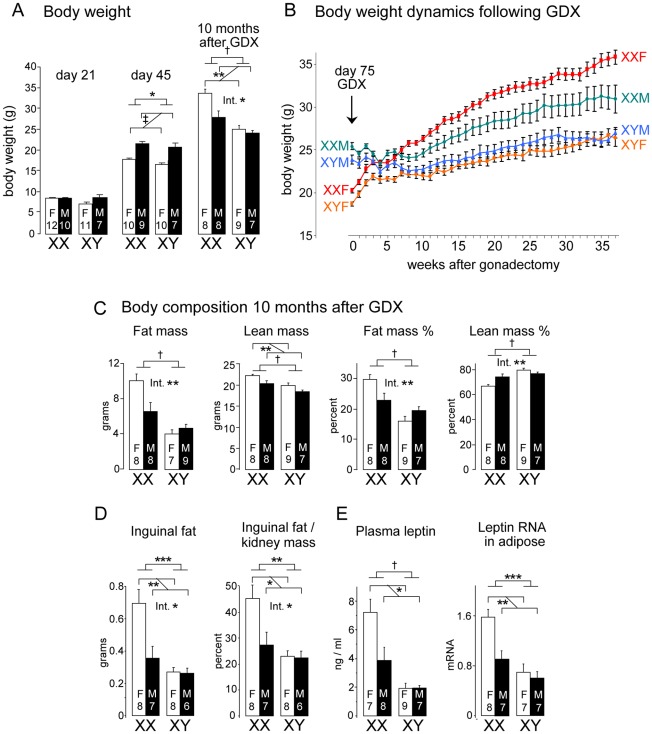
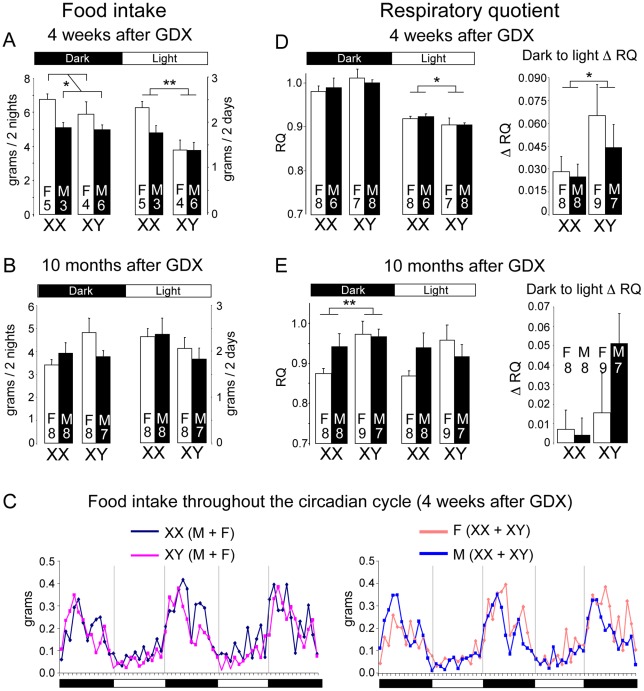
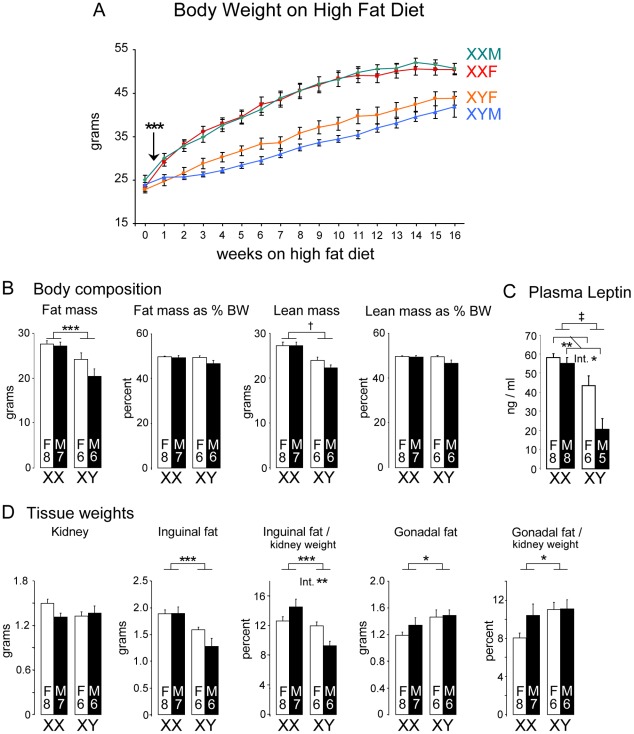
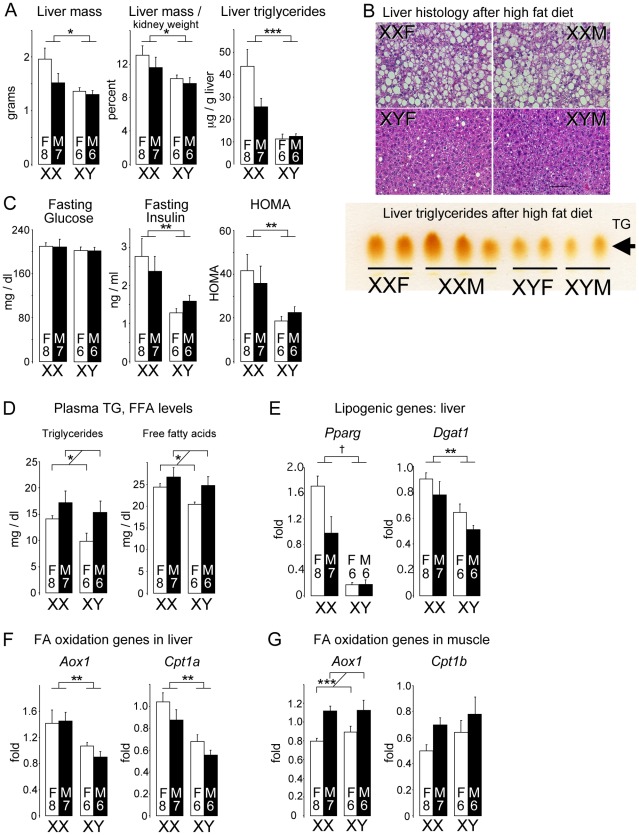
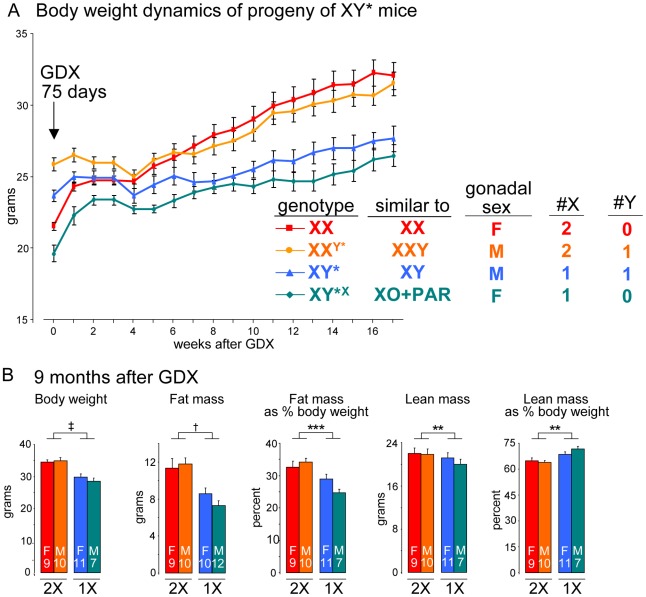
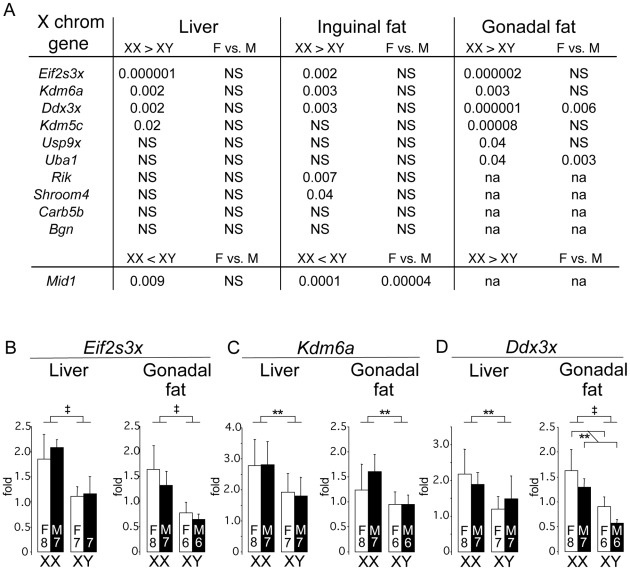
Sexual dimorphism in body weight, fat distribution, and metabolic disease has been attributed largely to differential effects of male and female gonadal hormones. Here, we report that the number of X chromosomes within cells also contributes to these sex differences. We employed a unique mouse model, known as the "four core genotypes," to distinguish between effects of gonadal sex (testes or ovaries) and sex chromosomes (XX or XY). With this model, we produced gonadal male and female mice carrying XX or XY sex chromosome complements. Mice were gonadectomized to remove the acute effects of gonadal hormones and to uncover effects of sex chromosome complement on obesity. Mice with XX sex chromosomes (relative to XY), regardless of their type of gonad, had up to 2-fold increased adiposity and greater food intake during daylight hours, when mice are normally inactive. Mice with two X chromosomes also had accelerated weight gain on a high fat diet and developed fatty liver and elevated lipid and insulin levels. Further genetic studies with mice carrying XO and XXY chromosome complements revealed that the differences between XX and XY mice are attributable to dosage of the X chromosome, rather than effects of the Y chromosome. A subset of genes that escape X chromosome inactivation exhibited higher expression levels in adipose tissue and liver of XX compared to XY mice, and may contribute to the sex differences in obesity. Overall, our study is the first to identify sex chromosome complement, a factor distinguishing all male and female cells, as a cause of sex differences in obesity and metabolism.
Overview
The claims and statistics of this paper haven’t been checked yet.
Run the check — free, no account needed. It reads the open-access text and checks the sources it cites.
Integrity signals
Registry
Cites
Statistics
Figures
Verification
Claims the paper makes
The claims and statistics of this paper haven’t been checked yet.
Run the check — free, no account needed. It reads the open-access text and checks the sources it cites.
Claims other papers make about this one
Each is checked against this paper’s own text: does it say what the citing paper says it does?
The cited source says what the claim attributes to it.
In the citing paper
“the four core genotypes mouse model which incorporates mice with four different combinations of gonads and sex chromosomes [66, 67], has helped identify the influence of sex chromosomes on physical traits, such as obesity and food intake [68, 69].”
From Integrating Transwomen and Female Athletes with Differences of Sex Development (DSD) into Elite Competition: The FIMS 2021 Consensus Statement (2021) · cites this paper as [68]
The cited source says what the claim attributes to it.
In the citing paper
“When placed on a high-fat diet, XX mice gained adiposity and developed fatty liver and insulin resistance regardless of their original gonadal sex.”
From Sex differences in metabolic homeostasis, diabetes, and obesity (2015) · cites this paper as [74]
The cited source says what the claim attributes to it.
In the citing paper
“Using this model, Chen et al. showed that male and female XX mice exhibit increased fat depots and increased food intake compared to XY mice.”
From Sex differences in metabolic homeostasis, diabetes, and obesity (2015) · cites this paper as [74]
Self-check
Percentages, sums and reported differences re-computed from the paper’s own numbers.
The self-check needs the paper’s full text.
Citations
Cites
Subcutaneous and visceral adipose tissue: their relation to the metabolic syndrome
Wajchenberg, B. L. (2000) · Endocrine Reviews · doi:10.1210/edrv.21.6.0415 · Cited by 2,961
Insulin Resistance and the Polycystic Ovary Syndrome: Mechanism and Implications for Pathogenesis
Dunaif, A. E. (1997) · Endocrine Reviews · doi:10.1210/edrv.18.6.0318 · Cited by 2,776
X-inactivation profile reveals extensive variability in X-linked gene expression in females
Carrel, L., & Willard, H. F. (2005) · Nature · doi:10.1038/nature03479 · Cited by 2,097
Human Fatty Liver Disease: Old Questions and New Insights
Cohen, J. C., Horton, J. D., & Hobbs, H. H. (2011) · Science · doi:10.1126/science.1204265 · Cited by 2,089
Circadian integration of metabolism and energetics
Bass, J., & Takahashi, J. S. (2010) · Science · doi:10.1126/science.1195027 · Cited by 1,910
Cnop, M., Havel, P. J., Utzschneider, K. M., Carr, D. B., Sinha, M. K., Boyko, E. J., Retzlaff, B. M., Knopp, R. H., Brunzell, J. D., & Kahn, S. E. (2003) · Diabetologia · doi:10.1007/s00125-003-1074-z · Cited by 1,483
Increased adipose tissue in male and female estrogen receptor-α knockout mice
Heine, P. A., Taylor, J. A., Iwamoto, G. A., Lubahn, D. B., & Cooke, P. S. (2000) · Proceedings of the National Academy of Sciences · doi:10.1073/pnas.97.23.12729 · Cited by 1,282
Diet-Induced Type II Diabetes in C57BL/6J Mice
Surwit, R. S., Kuhn, C. M., Cochrane, C., McCubbin, J. A., & Feinglos, M. N. (1988) · Diabetes · doi:10.2337/diab.37.9.1163 · Cited by 1,211
Insulin Resistance and the Polycystic Ovary Syndrome: Mechanism and Implications for Pathogenesis
Dunaif, A. E. (1997) · Endocrine Reviews · doi:10.1210/er.18.6.774 · Cited by 1,167
Increased visceral fat and decreased energy expenditure during the menopausal transition
Lovejoy, J. C., Champagne, C. M., de Jonge, L., Xie, H., & Smith, S. R. (2008) · International Journal of Obesity · doi:10.1038/ijo.2008.25 · Cited by 1,020 · cited 1×
“In humans and many other mammals, differences exist between males and females in the amounts and anatomical distribution of fat storage [5,6,7,8,9].”
BackgroundCircadian timing of food intake contributes to weight gain
Arble, D. M., Bass, J., Laposky, A. D., Vitaterna, M. H., & Turek, F. W. (2009) · Obesity · doi:10.1038/oby.2009.264 · Cited by 953
Splanchnic lipolysis in human obesity
Nielsen, S., Guo, Z., Johnson, C. M., Hensrud, D. D., & Jensen, M. D. (2004) · Journal of Clinical Investigation · doi:10.1172/jci21047 · Cited by 933
Circadian rhythms, sleep, and metabolism
Huang, W., Ramsey, K. M., Marcheva, B., & Bass, J. T. (2011) · Journal of Clinical Investigation · doi:10.1172/jci46043 · Cited by 749
Power, M. L., & Schulkin, J. A. (2007) · British Journal Of Nutrition · doi:10.1017/s0007114507853347 · Cited by 645
Arnold, A. P., & Chen, X. (2009) · Frontiers in Neuroendocrinology · doi:10.1016/j.yfrne.2008.11.001 · Cited by 587
Self-citationCombs, T. P., Berg, A. H., Rajala, M. W., Klebanov, S., Iyengar, P., Jimenez-Chillaron, J. C., Patti, M. E., Klein, S. L., Weinstein, R. S., & Scherer, P. E. (2003) · Diabetes · doi:10.2337/diabetes.52.2.268 · Cited by 544
De Vries, G. J., Rissman, E. F., Simerly, R. B., Yang, L.-Y., Scordalakes, E. M., Auger, C. J., Swain, A., Lovell-Badge, R., Burgoyne, P. S., & Arnold, A. P. (2002) · The Journal of Neuroscience · doi:10.1523/jneurosci.22-20-09005.2002 · Cited by 509
Self-citationPostmenopausal hormone replacement therapy prevents central distribution of body fat after menopause
Haarbo, J., Marslew, U., Gotfredsen, A., & Christiansen, C. (1991) · Metabolism · doi:10.1016/0026-0495(91)90037-w · Cited by 442
SRY AND SEX DETERMINATION IN MAMMALS
Goodfellow, P. N., & Lovell-Badge, R. H. (1993) · Annual Review of Genetics · doi:10.1146/annurev.ge.27.120193.000443 · Cited by 429
Sex and depot differences in adipocyte insulin sensitivity and glucose metabolism
Macotela, Y., Boucher, J., Tran, T. T., & Kahn, C. R. (2009) · Diabetes · doi:10.2337/db08-1054 · Cited by 401
Dosage compensation is less effective in birds than in mammals
Itoh, Y., Melamed, E., Yang, X., Kampf, K., Wang, S. S.-M., Yehya, N., van Nas, A., Replogle, K. L., Band, M. R., Clayton, D. F., et al. (2007) · Journal of Biology · doi:10.1186/jbiol53 · Cited by 355
Self-citationSexual dimorphism of age-related changes in whole-body fat distribution in the obese
小谷, 一. (1994) · doi:10.11501/3097483 · Cited by 353
Global survey of escape from X inactivation by RNA-sequencing in mouse
Yang, F., Babak, T., Shendure, J., & Disteche, C. M. (2010) · Genome Research · doi:10.1101/gr.103200.109 · Cited by 350
Metabolic syndrome: from epidemiology to systems biology
Lusis, A. J., Attie, A., & Reue, K. (2008) · Nature Reviews Genetics · doi:10.1038/nrg2468 · Cited by 345
Self-citationHuman genetics illuminates the paths to metabolic disease
O’Rahilly, S. (2009) · Nature · doi:10.1038/nature08532 · Cited by 330
Bojesen, A., Kristensen, K., Birkebæk, N., Fedder, J., Mosekilde, L., Bennett, P., Laurberg, P., Frystyk, J., Flyvbjerg, A., Christiansen, J. S., et al. (2006) · Diabetes Care · doi:10.2337/dc06-0145 · Cited by 325
Androgens and body fat distribution
Blouin, K., Boivin, A., & Tchernof, A. (2007) · The Journal of Steroid Biochemistry and Molecular Biology · doi:10.1016/j.jsbmb.2007.09.001 · Cited by 321
Body weight, body fat distribution, and hormonal replacement therapy in early postmenopausal women
Gambacciani, M., Ciaponi, M., Cappagli, B., Piaggesi, L., De Simone, L., Orlandi, R., & Genazzani, A. R. (1997) · The Journal of Clinical Endocrinology & Metabolism · doi:10.1210/jcem.82.2.3735 · Cited by 321
Gender differences in plasma leptin concentrations
Havel, P. J., Kasim-karakas, S., Dubuc, G. R., Muller, W., & Phinney, S. D. (1996) · Nature Medicine · doi:10.1038/nm0996-949b · Cited by 304
(1994) · PubMed · Cited by 293
Lee, C. G., Carr, M. C., Murdoch, S. J., Mitchell, E. S., Woods, N. F., Wener, M. H., Chandler, W. L., Boyko, E. J., & Brunzell, J. D. (2009) · The Journal of Clinical Endocrinology & Metabolism · doi:10.1210/jc.2008-0701 · Cited by 279
Fan, W., Yanase, T., Nomura, M., Okabe, T., Goto, K., Sato, T., Kawano, H., Kato, S., & Nawata, H. (2005) · Diabetes · doi:10.2337/diabetes.54.4.1000 · Cited by 269
Sex differences in sex chromosome gene expression in mouse brain
Xu, J. (2002) · Human Molecular Genetics · doi:10.1093/hmg/11.12.1409 · Cited by 269
Butler, A. A., & Kozak, L. P. (2010) · Diabetes · doi:10.2337/db09-1471 · Cited by 265
Quantitative magnetic resonance (QMR) method for bone and whole-body-composition analysis
Taicher, G. Z., Tinsley, F. C., Reiderman, A., & Heiman, M. L. (2003) · Analytical and Bioanalytical Chemistry · doi:10.1007/s00216-003-2224-3 · Cited by 257
Assessment of Feeding Behavior in Laboratory Mice
Ellacott, K. L. J., Morton, G. J., Woods, S. C., Tso, P., & Schwartz, M. W. (2010) · Cell Metabolism · doi:10.1016/j.cmet.2010.06.001 · Cited by 254
Escape from X inactivation in mice and humans
Berletch, J. B., Yang, F., & Distèche, C. M. (2010) · Genome biology · doi:10.1186/gb-2010-11-6-213 · Cited by 211
A microarray analysis of sexual dimorphism of adipose tissues in high-fat-diet-induced obese mice
Grove, K. L., Fried, S. K., Greenberg, A. S., Xiao, X. Q., & Clegg, D. J. (2010) · International Journal of Obesity · doi:10.1038/ijo.2010.12 · Cited by 208
The end of gonad-centric sex determination in mammals
Arnold, A. P. (2011) · Trends in Genetics · doi:10.1016/j.tig.2011.10.004 · Cited by 198
Self-citationLate onset of obesity in male androgen receptor-deficient (AR KO) mice
Sato, T., Μatsumoto, T., Yamada, T., Watanabe, T., Kawano, H., & Kato, S. (2003) · Biochemical and Biophysical Research Communications · doi:10.1016/s0006-291x(02)02774-2 · Cited by 196
Dose-Dependent Effects of Testosterone on Regional Adipose Tissue Distribution in Healthy Young Men
Woodhouse, L. J., Gupta, N., Bhasin, M., Singh, A. B., Ross, R., Phillips, J., & Bhasin, S. (2004) · The Journal of Clinical Endocrinology & Metabolism · doi:10.1210/jc.2003-031492 · Cited by 173
The genetic basis of XX-XY differences present before gonadal sex differentiation in the mouse
Burgoyne, P. S., Thornhill, A. R., Boudrean, S. K., Darling, S. M., Bishop, C. E., & Evans, E. P. (1995) · Philosophical Transactions of the Royal Society of London. Series B: Biological Sciences · doi:10.1098/rstb.1995.0159 · Cited by 168
Are XX and XY brain cells intrinsically different?
Arnold, A. P., & Burgoyne, P. S. (2003) · Trends in Endocrinology and Metabolism · doi:10.1016/j.tem.2003.11.001 · Cited by 166
Self-citationMetabolic impact of sex hormones on obesity
Brown, L. M., Gent, L. M., Davis, K. E., & Clegg, D. J. (2010) · Brain Research · doi:10.1016/j.brainres.2010.04.056 · Cited by 161
Mouse Models for Evaluating Sex Chromosome Effects that Cause Sex Differences in Non‐Gonadal Tissues
Arnold, A. P. (2009) · Journal of Neuroendocrinology · doi:10.1111/j.1365-2826.2009.01831.x · Cited by 161
Self-citationKaiyala, K. J., & Schwartz, M. W. (2010) · Diabetes · doi:10.2337/db10-0909 · Cited by 159
A stain upon the silence: genes escaping X inactivation
Brown, C. J., & Greally, J. M. (2003) · Trends in Genetics · doi:10.1016/s0168-9525(03)00177-x · Cited by 157
Johnston, C. M., Lovell, F. L., Leongamornlert, D. A., Stranger, B. E., Dermitzakis, E. T., & Ross, M. T. (2005) · PLoS Genetics · doi:10.1371/journal.pgen.0040009 · Cited by 148
Meal fatty acid uptake in adipose tissue: gender effects in nonobese humans
Romanski, S. A., Nelson, R. M., & Jensen, M. D. (2000) · American Journal of Physiology-Endocrinology and Metabolism · doi:10.1152/ajpendo.2000.279.2.e455 · Cited by 136
Lower-Body Adiposity and Metabolic Protection in Postmenopausal Women
Pelt, R. E. V., Jankowski, C. M., Gozansky, W. S., Schwartz, R. S., & Kohrt, W. M. (2005) · The Journal of Clinical Endocrinology & Metabolism · doi:10.1210/jc.2004-1764 · Cited by 131
Agpat6 deficiency causes subdermal lipodystrophy and resistance to obesity
Vergnes, L., Beigneux, A. P., Davis, R., Watkins, S. M., Young, S. G., & Reue, K. (2006) · Journal of Lipid Research · doi:10.1194/jlr.m500553-jlr200 · Cited by 126
Self-citationAdipose tissue in health and disease
Harvey, I. C., Boudreau, A., & Stephens, J. M. (2020) · Open Biology · doi:10.1098/rsob.200291 · Cited by 126
X-chromosome gene dosage and the risk of diabetes in Turner syndrome
Bakalov, V. K., Cheng, C., Zhou, J., & Bondy, C. A. (2009) · The Journal of Clinical Endocrinology & Metabolism · doi:10.1210/jc.2009-0384 · Cited by 118
Nonalcoholic Fatty Liver Disease
Kopec, K. L., & Burns, D. L. (2011) · Nutrition in Clinical Practice · doi:10.1177/0884533611419668 · Cited by 114
Estrogen Regulation of Adipose Tissue Functions: Involvement of Estrogen Receptor Isoforms
Pallottini, V., Bulzomi, P., Galluzzo, P., Martini, C., & Marino, M. (2008) · Infectious Disorders - Drug Targets · doi:10.2174/187152608784139631 · Cited by 112
(2002) · PubMed · Cited by 101
Chen, X., Watkins, R., Délot, E. C., Reliene, R., Schiestl, R. H., Burgoyne, P. S., & Arnold, A. P. (2007) · Developmental Neurobiology · doi:10.1002/dneu.20581 · Cited by 90
Self-citationMonosomy for the X-Chromosome Is Associated with an Atherogenic Lipid Profile
Van, P. L., Bakalov, V. K., & Bondy, C. A. (2006) · The Journal of Clinical Endocrinology & Metabolism · doi:10.1210/jc.2006-0503 · Cited by 89
Human Sexual Size Dimorphism in Early Pregnancy
Bukowski, R., Smith, G. C. S., Malone, F. D., Ball, R. H., Nyberg, D. A., Comstock, C. H., Hankins, G. D. V., Berkowitz, R. L., Gross, S. J., Dugoff, L., et al. (2007) · American Journal of Epidemiology · doi:10.1093/aje/kwm024 · Cited by 89
Prothero, K. E., Stahl, J. M., & Carrel, L. (2009) · Chromosome Research · doi:10.1007/s10577-009-9063-9 · Cited by 78
Insulin resistance and metabolic syndrome in prepubertal boys with Klinefelter syndrome
Bardsley, M. Z., Falkner, B. E., Kowal, K., & ROSS, J. L. (2011) · Acta Paediatrica · doi:10.1111/j.1651-2227.2011.02161.x · Cited by 77
Sexually dimorphic responses to fat loss after caloric restriction or surgical lipectomy
Shi, H., Strader, A. D., Woods, S. C., & Seeley, R. J. (2007) · American Journal of Physiology-Endocrinology and Metabolism · doi:10.1152/ajpendo.00710.2006 · Cited by 67
Lopes, A. M., Burgoyne, P. S., Ojarikre, A., Bauer, J., Sargent, C. A., Amorim, A., & Affara, N. A. (2010) · BMC Genomics · doi:10.1186/1471-2164-11-82 · Cited by 57
Sexually dimorphic expression of Usp9x is related to sex chromosome complement in adult mouse brain
Xu, J., Taya, S., Kaibuchi, K., & Arnold, A. P. (2005) · European Journal of Neuroscience · doi:10.1111/j.1460-9568.2005.04134.x · Cited by 48
Self-citationInvestigation of Mendelian forms of obesity holds out the prospect of personalized medicine
Blakemore, A. I. F., & Froguel, P. (2010) · Annals of the New York Academy of Sciences · doi:10.1111/j.1749-6632.2010.05880.x · Cited by 48
Reue, K., & Péterfy, M. (2000) · Current Atherosclerosis Reports · doi:10.1007/s11883-000-0077-1 · Cited by 32
Self-citationDonkor, J., & Reue, K. (2010) · Wiley eBooks · doi:10.1002/9783527629527.ch21 · Cited by 1
Self-citation
Cited by
Sorted by citations
Sex and Gender Differences in Risk, Pathophysiology and Complications of Type 2 Diabetes Mellitus
Kautzky-Willer, A., Harreiter, J., & Pacini, G. (2016) · Endocrine Reviews · doi:10.1210/er.2015-1137 · Cited by 2,043
Policy: NIH to balance sex in cell and animal studies
Clayton, J. A., & Collins, F. S. (2014) · Nature · doi:10.1038/509282a · Cited by 1,816
Obesity, Adipose Tissue and Vascular Dysfunction
Koenen, M., Hill, M. A., Cohen, P., & Sowers, J. R. (2021) · Circulation Research · doi:10.1161/circresaha.121.318093 · Cited by 979
Animal models of obesity and diabetes mellitus
Kleinert, M., Clemmensen, C., Hofmann, S. M., Moore, M. C., Renner, S., Woods, S. C., Huypens, P., Beckers, J., de Angelis, M. H., Schürmann, A., et al. (2018) · Nature Reviews Endocrinology · doi:10.1038/nrendo.2017.161 · Cited by 893
Sex differences in metabolic homeostasis, diabetes, and obesity
Mauvais-Jarvis, F. (2015) · Biology of Sex Differences · doi:10.1186/s13293-015-0033-y · Cited by 626
“that the X and Y chromosomes program sex differences in metabolic regulation [74].”
Background
Metadata
- Authors
- Chen, X., McClusky, R., Chen, J., Beaven, S. W., Tontonoz, P., Arnold, A. P., & Reue, K.
- Affiliations
- University of California, Los Angeles (US)
- Howard Hughes Medical Institute (US)
- Corresponding author
- Reue, Karen
- Venue
- PLoS Genetics
- Publisher
- Public Library of Science (PLoS)
- Published
- 2012-05-10
- Volume
- 8
- Issue
- 5
- Pages
- e1002709
- ISSN
- 1553-7390 (ISSN-L)
- 1553-7404
- PMC
- PMC3349739
- OpenAlex
- W1978661176
- Cited by
- 326
- References
- 68
- Citations by year
- 2026: 16 · 2025: 21 · 2024: 34 · 2023: 22 · 2022: 42 · 2021: 29 · 2020: 19 · 2019: 25 · 2018: 27 · 2017: 21 · 2016: 14 · 2015: 18 · 2014: 20 · 2013: 17 · 2012: 1
- FWCI
- 10.76
- Type
- journal article
- Language
- en
- Open access
- gold
- doi.org
- Locations
- PLoS Genetics (publishedVersion, cc-by)
- PubMed Central (publishedVersion, cc-by)
- PubMed (publishedVersion)
- DOAJ (DOAJ: Directory of Open Access Journals) (submittedVersion, cc-by-sa)
- eScholarship (California Digital Library) (submittedVersion)
- eScholarship (California Digital Library) (submittedVersion, cc-by)
- Figshare (submittedVersion, cc-by)
- Funders
- Howard Hughes Medical Institute
- National Heart, Lung, and Blood Institute (P01HL090553, P01 HL90553)
- National Institute of General Medical Sciences (GM 007185, T32GM007185)
- National Institute of Diabetes and Digestive and Kidney Diseases (R01 DK83561, R01DK083561)
- National Institute of Neurological Disorders and Stroke (R01NS043196)
- Topics
- Life Sciences › Biochemistry, Genetics and Molecular Biology › Genetics › Genetic and Clinical Aspects of Sex Determination and Chromosomal Abnormalities
- Life Sciences › Neuroscience › Endocrine and Autonomic Systems › Regulation of Appetite and Obesity
- Health Sciences › Medicine › Endocrinology, Diabetes and Metabolism › Sexual Differentiation and Disorders
- Keywords
- sex differences in obesity, X chromosome dosage, sex chromosome complement, adiposity, gonadal hormones, gonadectomy, X chromosome inactivation escape, high-fat diet, hepatic steatosis, insulin, lipid metabolism, dietary intake, adipose tissue, liver
- MeSH terms
- Animals, Female, Gonads, Insulin, Lipids, Male, Obesity, Sex Characteristics, X Chromosome, Y Chromosome, Weight Gain, Sex Determination Processes, Gonadal Hormones, Adiposity, Lipid Metabolism, Mice, Diet, High-Fat
About these checks
Registry, retraction, Cites and statistics results are computed, not judged, with one exception: a printed reference that no index lists is read once by a model before it counts as a citation error. Claims are extracted by a model and kept only when their quote appears verbatim in the text; each cited source is then checked, with a model’s help, for whether it says what the claim relies on. Those verdicts can be wrong — read the claim’s quote and the cited source before relying on one.
Statistics and arithmetic are recomputed, not judged.
Confidence bands are shown only for fields calibrated on our annotated test set. None is calibrated yet, so no band is shown.
What counts as a claim ›How we measure confidence ›How we check this ›
Are you an author, or do you see a problem with this page? Request a review
