

The DOI matches its Crossref record; 4 of the 4 references it cites were found in a registry or an index.
MicroRNAs Located in the Hox Gene Clusters Are Implicated in Huntington's Disease Pathogenesis
Overview
The claims and statistics of this paper haven’t been checked yet.
Run the check — free, no account needed. It reads the open-access text and checks the sources it cites.
Integrity signals
Registry
Cites
Statistics
Figures
Verification
Claims the paper makes
The claims and statistics of this paper haven’t been checked yet.
Run the check — free, no account needed. It reads the open-access text and checks the sources it cites.
Claims other papers make about this one
Each is checked against this paper’s own text: does it say what the citing paper says it does?
The cited source says what the claim attributes to it.
In the citing paper
“support the presence and robust up-regulation of Hox-related miRNAs in HD brain [13].”
From miR-10b-5p expression in Huntington’s disease brain relates to age of onset and the extent of striatal involvement (2015) · cites this paper as [13]
The cited source says what the claim attributes to it.
In the citing paper
“All five miRNAs reported as differentially expressed in our previous study (miR-10b-5p, miR-196a-5p, miR-196b-5p, miR-615-3p and miR-1247-5p) were significantly differentially expressed in this study [13].”
From miR-10b-5p expression in Huntington’s disease brain relates to age of onset and the extent of striatal involvement (2015) · cites this paper as [13]
The cited source says what the claim attributes to it.
In the citing paper
“In HD, the dysregulation of miRNAs has been reported in HD in vitro models, transgenic HD animals and human HD brain [12-24].”
From miR-10b-5p expression in Huntington’s disease brain relates to age of onset and the extent of striatal involvement (2015) · cites this paper as [13]
In the citing paper
“We believe these miRNA signals are not attributed to a change in BA9 architecture, influenced by neuronal cell death or reactive glial response, because cell numbers between HD and controls from the same brain samples were indistinguishable [13,30].”
From miR-10b-5p expression in Huntington’s disease brain relates to age of onset and the extent of striatal involvement (2015) · cites this paper as [13]
In the citing paper
“In addition, previous studies have found no difference in cell counts between HD and controls from similar BA9 brain samples [13,30].”
From miR-10b-5p expression in Huntington’s disease brain relates to age of onset and the extent of striatal involvement (2015) · cites this paper as [13]
In the citing paper
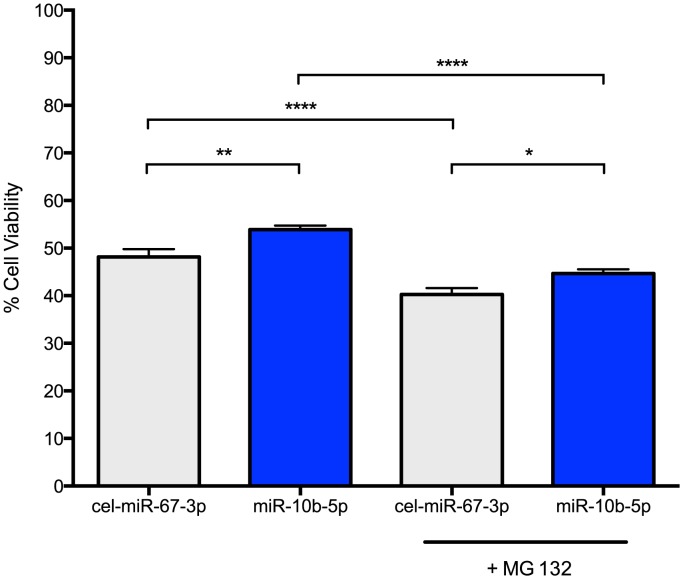
“in Hoss et al. [13], we showed that ectopic expression of miR-10b-5p in PC12 cells expressing a mutant huntingtin fragment enhanced cell survival [13]”
From miR-10b-5p expression in Huntington’s disease brain relates to age of onset and the extent of striatal involvement (2015) · cites this paper as [13]
Self-check
Percentages, sums and reported differences re-computed from the paper’s own numbers.
The self-check needs the paper’s full text.
Citations
Cites
TDP-43 Mutations in Familial and Sporadic Amyotrophic Lateral Sclerosis
Sreedharan, J., Blair, I. P., Tripathi, V. B., Hu, X., Vance, C., Rogelj, B., Ackerley, S., Durnall, J. C., Williams, K. L., Buratti, E., et al. (2008) · Science · doi:10.1126/science.1154584 · Cited by 2,630
The RIN: an RNA integrity number for assigning integrity values to RNA measurements
Schroeder, A., Mueller, O., Stocker, S., Salowsky, R., Leiber, M., Gassmann, M., Lightfoot, S., Menzel, W., Granzow, M., & Ragg, T. (2006) · BMC Molecular Biology · doi:10.1186/1471-2199-7-3 · Cited by 2,623
Regional and progressive thinning of the cortical ribbon in Huntington’s disease
Rosas, H. D., Liu, A. K., Hersch, S., Glessner, M., Ferrante, R. J., Salat, D. H., van der Kouwe, A., Jenkins, B. G., Dale, A. M., & Fischl, B. (2002) · Neurology · doi:10.1212/wnl.58.5.695 · Cited by 1,044
Packer, A. N., Xing, Y., Harper, S. Q., Jones, L., & Davidson, B. L. (2008) · The Journal of Neuroscience · doi:10.1523/jneurosci.2390-08.2008 · Cited by 679
Research works printed but not linked: 73
- 1993, A novel gene containing a trinucleotide repeat that is expanded and unstable on Huntington's disease chromosomes, Cell, 72, 971, 10.1016/0092-8674(93)90585-E · DOI · Paper page
- TC Hadzi, 2012, Assessment of cortical and striatal involvement in 523 Huntington disease brains, Neurology, 79, 1708, 10.1212/WNL.0b013e31826e9a5d · DOI · Paper page
- JP Vonsattel, 1985, Neuropathological classification of Huntington's disease, Journal of neuropathology and experimental neurology, 44, 559, 10.1097/00005072-198511000-00003 · DOI · Paper page
- A Hodges, 2006, Regional and cellular gene expression changes in human Huntington's disease brain, Human molecular genetics, 15, 965, 10.1093/hmg/ddl013 · DOI · Paper page
- JH Cha, 2000, Transcriptional dysregulation in Huntington's disease, Trends in neurosciences, 23, 387, 10.1016/S0166-2236(00)01609-X · DOI
- JH Cha, 2007, Transcriptional signatures in Huntington's disease, Progress in neurobiology, 83, 228, 10.1016/j.pneurobio.2007.03.004 · DOI
- A Lavut, 2012, Sequestration of highly expressed mRNAs in cytoplasmic granules, P-bodies, and stress granules enhances cell viability, PLoS genetics, 8, e1002527, 10.1371/journal.pgen.1002527 · DOI
- E Junn, 2012, MicroRNAs in neurodegenerative diseases and their therapeutic potential, Pharmacology & therapeutics, 133, 142, 10.1016/j.pharmthera.2011.10.002 · DOI · Paper page
- E Marti, 2010, A myriad of miRNA variants in control and Huntington's disease brain regions detected by massively parallel sequencing, Nucleic acids research, 38, 7219, 10.1093/nar/gkq575 · DOI · Paper page
- R Johnson, 2008, A microRNA-based gene dysregulation pathway in Huntington's disease, Neurobiology of disease, 29, 438, 10.1016/j.nbd.2007.11.001 · DOI · Paper page
- M Sinha, 2011, Micro RNA -214,-150,-146a and-125b target Huntingtin gene, RNA biology, 8, 1005, 10.4161/rna.8.6.16035 · DOI · Paper page
- PH Cheng, 2013, miR-196a Ameliorates Phenotypes of Huntington Disease in Cell, Transgenic Mouse, and Induced Pluripotent Stem Cell Models, American journal of human genetics, 93, 306, 10.1016/j.ajhg.2013.05.025 · DOI · Paper page
- ST Lee, 2011, Altered microRNA regulation in Huntington's disease models, Experimental neurology, 227, 172, 10.1016/j.expneurol.2010.10.012 · DOI · Paper page
- J Jin, 2012, Interrogation of brain miRNA and mRNA expression profiles reveals a molecular regulatory network that is perturbed by mutant huntingtin, Journal of neurochemistry, 123, 477, 10.1111/j.1471-4159.2012.07925.x · DOI · Paper page
- A Sotrel, 1993, Evidence for neuronal degeneration and dendritic plasticity in cortical pyramidal neurons of Huntington's disease: a quantitative Golgi study, Neurology, 43, 2088, 10.1212/WNL.43.10.2088 · DOI · Paper page
- M Cudkowicz, 1990, Degeneration of pyramidal projection neurons in Huntington's disease cortex, Annals of neurology, 27, 200, 10.1002/ana.410270217 · DOI
- X Gu, 2005, Pathological cell-cell interactions elicited by a neuropathogenic form of mutant Huntingtin contribute to cortical pathogenesis in HD mice, Neuron, 46, 433, 10.1016/j.neuron.2005.03.025 · DOI
- HD Rosas, 2005, Regional cortical thinning in preclinical Huntington disease and its relationship to cognition, Neurology, 65, 745, 10.1212/01.wnl.0000174432.87383.87 · DOI
- LA Greene, 1976, Establishment of a noradrenergic clonal line of rat adrenal pheochromocytoma cells which respond to nerve growth factor, Proceedings of the National Academy of Sciences of the United States of America, 73, 2424, 10.1073/pnas.73.7.2424 · DOI
- H Kita, 2002, Modulation of polyglutamine-induced cell death by genes identified by expression profiling, Human molecular genetics, 11, 2279, 10.1093/hmg/11.19.2279 · DOI
- A Wyttenbach, 2001, Polyglutamine expansions cause decreased CRE-mediated transcription and early gene expression changes prior to cell death in an inducible cell model of Huntington's disease, Human molecular genetics, 10, 1829, 10.1093/hmg/10.17.1829 · DOI
- S Igarashi, 2003, Inducible PC12 cell model of Huntington's disease shows toxicity and decreased histone acetylation, Neuroreport, 14, 565, 10.1097/00001756-200303240-00007 · DOI
- BL Apostol, 2006, Mutant huntingtin alters MAPK signaling pathways in PC12 and striatal cells: ERK1/2 protects against mutant huntingtin-associated toxicity, Human molecular genetics, 15, 273, 10.1093/hmg/ddi443 · DOI
- KL Sugars, 2004, Decreased cAMP response element-mediated transcription: an early event in exon 1 and full-length cell models of Huntington's disease that contributes to polyglutamine pathogenesis, The Journal of biological chemistry, 279, 4988, 10.1074/jbc.M310226200 · DOI
- X Li, 2010, Inhibiting the ubiquitin-proteasome system leads to preferential accumulation of toxic N-terminal mutant huntingtin fragments, Human molecular genetics, 19, 2445, 10.1093/hmg/ddq127 · DOI
- S Anders, 2010, Differential expression analysis for sequence count data, Genome biology, 11, R106, 10.1186/gb-2010-11-10-r106 · DOI · Paper page
- DP Bartel, 2009, MicroRNAs: target recognition and regulatory functions, Cell, 136, 215, 10.1016/j.cell.2009.01.002 · DOI · Paper page
- H Dweep, 2013, Parallel analysis of mRNA and microRNA microarray profiles to explore functional regulatory patterns in polycystic kidney disease: using PKD/Mhm rat model, PLoS One, 8. 8, e53780, 10.1371/journal.pone.0053780 · DOI
- BJ Swalla, 2006, Building divergent body plans with similar genetic pathways, Heredity (Edinb), 97, 235, 10.1038/sj.hdy.6800872 · DOI
- S Yekta, 2008, MicroRNAs in the Hox network: an apparent link to posterior prevalence, Nat Rev Genet, 9, 789, 10.1038/nrg2400 · DOI
- P Flicek, 2013, Ensembl 2013, Nucleic acids research, 41, D48, 10.1093/nar/gks1236 · DOI
- JL Rinn, 2007, Functional demarcation of active and silent chromatin domains in human HOX loci by noncoding RNAs, Cell, 129, 1311, 10.1016/j.cell.2007.05.022 · DOI
- Y Miyazaki, 2012, Viral delivery of miR-196a ameliorates the SBMA phenotype via the silencing of CELF2, Nature medicine, 18, 1136, 10.1038/nm.2791 · DOI
- PM Gaughwin, 2011, Hsa-miR-34b is a plasma-stable microRNA that is elevated in pre-manifest Huntington's disease, Human molecular genetics, 20, 2225, 10.1093/hmg/ddr111 · DOI · Paper page
- M Sinha, 2010, Altered microRNAs in STHdh(Q111)/Hdh(Q111) cells: miR-146a targets TBP, Biochemical and biophysical research communications, 396, 742, 10.1016/j.bbrc.2010.05.007 · DOI
- C Soldati, 2013, Dysregulation of REST-regulated coding and non-coding RNAs in a cellular model of Huntington's disease, J Neurochem, 124, 418, 10.1111/jnc.12090 · DOI
- JM Woltering, 2008, MiR-10 represses HoxB1a and HoxB3a in zebrafish, PLoS One, 3, e1396, 10.1371/journal.pone.0001396 · DOI
- D Tehler, 2011, The miR-10 microRNA precursor family, RNA Biol, 8, 728, 10.4161/rna.8.5.16324 · DOI
- NH Foley, 2011, MicroRNAs 10a and 10b are potent inducers of neuroblastoma cell differentiation through targeting of nuclear receptor corepressor 2, Cell death and differentiation, 18, 1089, 10.1038/cdd.2010.172 · DOI
- H Huang, 2010, miR-10a contributes to retinoid acid-induced smooth muscle cell differentiation, J Biol Chem, 285, 9383, 10.1074/jbc.M109.095612 · DOI
- S Meseguer, 2011, MicroRNAs-10a and -10b contribute to retinoic acid-induced differentiation of neuroblastoma cells and target the alternative splicing regulatory factor SFRS1 (SF2/ASF), J Biol Chem, 286, 4150, 10.1074/jbc.M110.167817 · DOI · Paper page
- SL Phua, 2011, Nuclear accumulation of an uncapped RNA produced by Drosha cleavage of a transcript encoding miR-10b and HOXD4, PloS one, 6, e25689, 10.1371/journal.pone.0025689 · DOI
- FU Weiss, 2009, Retinoic acid receptor antagonists inhibit miR-10a expression and block metastatic behavior of pancreatic cancer, Gastroenterology, 137, 2136, 10.1053/j.gastro.2009.08.065 · DOI
- D Lemons, 2006, Genomic evolution of Hox gene clusters, Science, 313, 1918, 10.1126/science.1132040 · DOI · Paper page
- JC Pearson, 2005, Modulating Hox gene functions during animal body patterning, Nature reviews Genetics, 6, 893, 10.1038/nrg1726 · DOI · Paper page
- E Wienholds, 2005, MicroRNA expression in zebrafish embryonic development, Science, 309, 310, 10.1126/science.1114519 · DOI · Paper page
- R Diez del Corral, 2004, Opposing FGF and retinoid pathways: a signalling switch that controls differentiation and patterning onset in the extending vertebrate body axis, Bioessays, 26, 857, 10.1002/bies.20080 · DOI
- T Svingen, 2006, Hox transcription factors and their elusive mammalian gene targets, Heredity (Edinb), 97, 88, 10.1038/sj.hdy.6800847 · DOI
- HS Taylor, 1998, HOXA10 is expressed in response to sex steroids at the time of implantation in the human endometrium, J Clin Invest, 101, 1379, 10.1172/JCI1597 · DOI
- B Schuettengruber, 2007, Genome regulation by polycomb and trithorax proteins, Cell, 128, 735, 10.1016/j.cell.2007.02.009 · DOI
- IS Seong, 2010, Huntingtin facilitates polycomb repressive complex 2, Human molecular genetics, 19, 573, 10.1093/hmg/ddp524 · DOI
- S Humbert, 2010, Is Huntington disease a developmental disorder?, EMBO reports, 11, 899, 10.1038/embor.2010.182 · DOI
- SC Kirkwood, 2000, Subtle changes among presymptomatic carriers of the Huntington's disease gene, Journal of neurology, neurosurgery, and psychiatry, 69, 773, 10.1136/jnnp.69.6.773 · DOI
- RH Myers, 1991, Decreased neuronal and increased oligodendroglial densities in Huntington's disease caudate nucleus, J Neuropathol Exp Neurol, 50, 729, 10.1097/00005072-199111000-00005 · DOI
- J Liu, 2005, MicroRNA-dependent localization of targeted mRNAs to mammalian P-bodies, Nature cell biology, 7, 719, 10.1038/ncb1274 · DOI · Paper page
- V Balagopal, 2009, Polysomes, P bodies and stress granules: states and fates of eukaryotic mRNAs, Current opinion in cell biology, 21, 403, 10.1016/j.ceb.2009.03.005 · DOI
- SN Bhattacharyya, 2006, Relief of microRNA-mediated translational repression in human cells subjected to stress, Cell, 125, 1111, 10.1016/j.cell.2006.04.031 · DOI
- N Cougot, 2008, Dendrites of mammalian neurons contain specialized P-body-like structures that respond to neuronal activation, The Journal of neuroscience : the official journal of the Society for Neuroscience, 28, 13793, 10.1523/JNEUROSCI.4155-08.2008 · DOI · Paper page
- M Zeitelhofer, 2008, Dynamic interaction between P-bodies and transport ribonucleoprotein particles in dendrites of mature hippocampal neurons, The Journal of neuroscience : the official journal of the Society for Neuroscience, 28, 7555, 10.1523/JNEUROSCI.0104-08.2008 · DOI
- JN Savas, 2010, A role for huntington disease protein in dendritic RNA granules, The Journal of biological chemistry, 285, 13142, 10.1074/jbc.M110.114561 · DOI
- JN Savas, 2008, Huntington's disease protein contributes to RNA-mediated gene silencing through association with Argonaute and P bodies, Proceedings of the National Academy of Sciences of the United States of America, 105, 10820, 10.1073/pnas.0800658105 · DOI
- TJ Kwiatkowski Jr, 2009, Mutations in the FUS/TLS gene on chromosome 16 cause familial amyotrophic lateral sclerosis, Science, 323, 1205, 10.1126/science.1166066 · DOI
- B Wolozin, 2012, Regulated protein aggregation: stress granules and neurodegeneration, Molecular neurodegeneration, 7, 56, 10.1186/1750-1326-7-56 · DOI
- MP Gantier, 2011, Analysis of microRNA turnover in mammalian cells following Dicer1 ablation, Nucleic acids research, 39, 5692, 10.1093/nar/gkr148 · DOI
- PS Mitchell, 2008, Circulating microRNAs as stable blood-based markers for cancer detection, Proceedings of the National Academy of Sciences of the United States of America, 105, 10513, 10.1073/pnas.0804549105 · DOI · Paper page
- X Chen, 2008, Characterization of microRNAs in serum: a novel class of biomarkers for diagnosis of cancer and other diseases, Cell research, 18, 997, 10.1038/cr.2008.282 · DOI · Paper page
- B Langmead, 2009, Ultrafast and memory-efficient alignment of short DNA sequences to the human genome, Genome Biol, 10, 10.1186/gb-2009-10-3-r25 · DOI · Paper page
- AR Quinlan, 2010, BEDTools: a flexible suite of utilities for comparing genomic features, Bioinformatics, 26, 841, 10.1093/bioinformatics/btq033 · DOI · Paper page
- KJ Livak, 2001, Analysis of relative gene expression data using real-time quantitative PCR and the 2(-Delta Delta C(T)) Method, Methods, 25, 402, 10.1006/meth.2001.1262 · DOI · Paper page
- D Kim, 2013, TopHat2: accurate alignment of transcriptomes in the presence of insertions, deletions and gene fusions, Genome Biol, 14, R36, 10.1186/gb-2013-14-4-r36 · DOI · Paper page
- C Trapnell, 2009, TopHat: discovering splice junctions with RNA-Seq, Bioinformatics, 25, 1105, 10.1093/bioinformatics/btp120 · DOI
- H Li, 2009, The Sequence Alignment/Map format and SAMtools, Bioinformatics, 25, 2078, 10.1093/bioinformatics/btp352 · DOI · Paper page
- A Kasprzyk, 2011, BioMart: driving a paradigm change in biological data management, Database (Oxford) 2011
Cited by
Sorted by citations
Polycomb repressive complex 2 (PRC2) silences genes responsible for neurodegeneration
von Schimmelmann, M., Feinberg, P. A., Sullivan, J. M., Ku, S. M., Badimon, A., Duff, M. K., Wang, Z., Lachmann, A., Dewell, S., Ma'ayan, A., et al. (2016) · Nature Neuroscience · doi:10.1038/nn.4360 · Cited by 225
“The possible link between PRC2 and HD is further supported by the loss of neuronal PRC2/H3K27me3 sites 14 and the up-regulation of some of the PRC2 target genes in the HD affected human brain 14,16,17 .”
Smith, R. G., Hannon, E., De Jager, P. L., Chibnik, L., Lott, S. J., Condliffe, D., Smith, A. R., Haroutunian, V., Troakes, C., Al‐Sarraj, S., et al. (2018) · Alzheimer's & Dementia · doi:10.1016/j.jalz.2018.01.017 · Cited by 184
Hoss, A. G., Labadorf, A., Latourelle, J. C., Kartha, V. K., Hadzi, T. C., Gusella, J. F., MacDonald, M. E., Chen, J.-F., Akbarian, S., Weng, Z., et al. (2015) · BMC Medical Genomics · doi:10.1186/s12920-015-0083-3 · Cited by 151
Self-citationMor, M., Nardone, S., Sams, D. S., & Elliott, E. (2015) · Molecular Autism · doi:10.1186/s13229-015-0040-1 · Cited by 118
Metadata
- Authors
- Hoss, A. G., Kartha, V. K., Dong, X., Latourelle, J. C., Dumitriu, A., Hadzi, T. C., MacDonald, M. E., Gusella, J. F., Akbarian, S., Chen, J.-F., Weng, Z., & Myers, R. H.
- Venue
- PLoS Genetics
- Publisher
- Public Library of Science (PLoS)
- Published
- 2014-02-27
- Volume
- 10
- Issue
- 2
- Pages
- e1004188
- ISSN
- 1553-7404
- PMC
- PMC3937267
- Cited by
- 111
- References
- 4
- Language
- en
About these checks
Registry, retraction, Cites and statistics results are computed, not judged, with one exception: a printed reference that no index lists is read once by a model before it counts as a citation error. Claims are extracted by a model and kept only when their quote appears verbatim in the text; each cited source is then checked, with a model’s help, for whether it says what the claim relies on. Those verdicts can be wrong — read the claim’s quote and the cited source before relying on one.
Statistics and arithmetic are recomputed, not judged.
Confidence bands are shown only for fields calibrated on our annotated test set. None is calibrated yet, so no band is shown.
What counts as a claim ›How we measure confidence ›How we check this ›
Are you an author, or do you see a problem with this page? Request a review
How to cite
Cite CoChat for the checks on this page, and the paper for its own findings.
- This page
- CoChat. (2026). Citation check: MicroRNAs Located in the Hox Gene Clusters Are Implicated in Huntington's Disease Pathogenesis. https://app.cochat.ai/papers/10.1371/journal.pgen.1004188
- The paper
- Hoss, A. G., Kartha, V. K., Dong, X., Latourelle, J. C., Dumitriu, A., Hadzi, T. C., MacDonald, M. E., Gusella, J. F., Akbarian, S., Chen, J.-F., Weng, Z., & Myers, R. H. (2014). MicroRNAs Located in the Hox Gene Clusters Are Implicated in Huntington's Disease Pathogenesis. PLoS Genetics. https://doi.org/10.1371/journal.pgen.1004188
