

Epidemiology and reporting characteristics of systematic reviews.
Open accessThe DOI matches its Crossref record; 36 of the 36 references it cites were found in a registry or an index; none of the 9 sources its claims cite is checked for support yet.
Abstract
BACKGROUND: Systematic reviews (SRs) have become increasingly popular to a wide range of stakeholders. We set out to capture a representative cross-sectional sample of published SRs and examine them in terms of a broad range of epidemiological, descriptive, and reporting characteristics, including emerging aspects not previously examined. METHODS AND FINDINGS: We searched Medline for SRs indexed during November 2004 and written in English. Citations were screened and those meeting our inclusion criteria were retained. Data were collected using a 51-item data collection form designed to assess the epidemiological and reporting details and the bias-related aspects of the reviews. The data were analyzed descriptively. In total 300 SRs were identified, suggesting a current annual publication rate of about 2,500, involving more than 33,700 separate studies including one-third of a million participants. The majority (272 [90.7%]) of SRs were reported in specialty journals. Most reviews (213 [71.0%]) were categorized as therapeutic, and included a median of 16 studies involving 1,112 participants. Funding sources were not reported in more than one-third (122 [40.7%]) of the reviews. Reviews typically searched a median of three electronic databases and two other sources, although only about two-thirds (208 [69.3%]) of them reported the years searched. Most (197/295 [66.8%]) reviews reported information about quality assessment, while few (68/294 [23.1%]) reported assessing for publication bias. A little over half (161/300 [53.7%]) of the SRs reported combining their results statistically, of which most (147/161 [91.3%]) assessed for consistency across studies. Few (53 [17.7%]) SRs reported being updates of previously completed reviews. No review had a registration number. Only half (150 [50.0%]) of the reviews used the term "systematic review" or "meta-analysis" in the title or abstract. There were large differences between Cochrane reviews and non-Cochrane reviews in the quality of reporting several characteristics. CONCLUSIONS: SRs are now produced in large numbers, and our data suggest that the quality of their reporting is inconsistent. This situation might be improved if more widely agreed upon evidence-based reporting guidelines were endorsed and adhered to by authors and journals. These results substantiate the view that readers should not accept SRs uncritically.
Overview
CoChat Summary
TL;DR
This cross-sectional study sampled 300 systematic reviews (SRs) indexed in Medline in November 2004 and found that SRs were being published in large numbers, but reporting quality was inconsistent. Cochrane reviews generally reported methods more completely than non-Cochrane reviews, and the authors argue that stronger reporting guidelines are needed.
Key findings
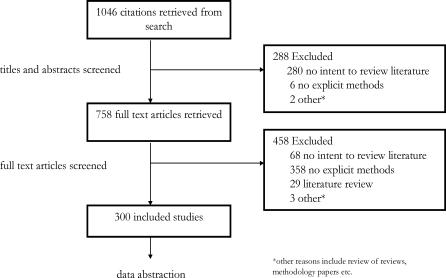
- The search identified 1,046 records; 300 eligible SR reports were included after screening, with excellent inter-reviewer agreement across screening phases (kappa = 0.86).
- The 300 SRs were indexed in Medline in November 2004 and corresponded to an estimated annual publication rate of about 2,500 SRs; Cochrane reviews made up 125/300 (41.7%) of the sample.
- Reporting was often incomplete: 122/300 (40.7%) did not report funding sources, 68/294 (23.1%) reported assessing publication bias, and 0 reviews had a registration number.
- Only 150/300 (50.0%) used the term “systematic review” or “meta-analysis” in the title or abstract; 161/300 (53.7%) reported statistical combination of results, and 197/295 (66.8%) reported quality assessment.
Methods
- Cross-sectional descriptive study of SR reports indexed in Medline during November 2004 and written in English.
- SRs were defined broadly as reports whose stated objective was to summarize evidence from multiple studies and that described explicit methods; 300 eligible reports were retained.
- Data were collected with a 51-item form and analyzed descriptively in SPSS; one a priori subgroup analysis compared Cochrane versus non-Cochrane reviews.
Limitations
- The paper states that it examined only one month from a single database and only English-language publications, so the annual publication estimate is an underestimate of total non-Cochrane SRs.
- The authors note that most of the sample was therapeutic, so findings for other review categories should be interpreted cautiously.
- The study relied on what authors reported in the papers, so incomplete reporting may reflect omission rather than poor conduct; the text says this explicitly.
- The broad SR definition may have included some literature reviews with detailed search methods rather than clearly intended SRs; this is an evident limitation from the text.
Model-written summary. Check it against the paper before relying on it.
Integrity signals
Registry
Cites
Statistics
Figures
Verification
Claims the paper makes
0 Valid · 0 Not valid · 5 Not checked · 41 Own results and interpretations
A result the paper reports from its own data — it cites no other source for it, so there is none to check. The quote shows it is in the paper.
In the paper
“There were large differences between Cochrane reviews and non-Cochrane reviews in the quality of reporting several characteristics.”
§ Epidemiology and Reporting Characteristics of Systematic Reviews > Abstract > Methods and Findings We searched Medline for SRs indexed during November 2004 and written in English. Citations were screened and those meeting our inclusion criteria were retained. Data were collected using a 51-item data collection form designed to assess the epidemiological and reporting details and the bias-related aspects of the reviews. The data were analyzed descriptively. In total 300 SRs were identified, suggesting a current annual publication rate of about 2,500, involving more than 33,700 separate studies including one-third of a million participants. The majority (272 [90.7%]) of SRs were reported in specialty journals. Most reviews (213 [71.0%]) were categorized as therapeutic, and included a median of 16 studies involving 1,112 participants. Funding sources were not reported in more than one-third (122 [40.7%]) of the reviews. Reviews typically searched a median of three electronic databases and two other sources, although only about two-thirds (208 [69.3%]) of them reported the years searched. Most (197/295 [66.8%]) reviews reported information about quality assessment, while few (68/294 [23.1%]) reported assessing for publication bias. A little over half (161/300 [53.7%]) of the SRs reported combining their results statistically, of which most (147/161 [91.3%]) assessed for consistency across studies. Few (53 [17.7%]) SRs reported being updates of previously completed reviews. No review had a registration number. Only half (150 [50.0%]) of the reviews used the term “systematic review” or “meta-analysis” in the title or abstract. There were large differences between Cochrane reviews and non-Cochrane reviews in the quality of reporting several characteristics.
plainstates an association- Asserted: passes — The authors put it forward as true.
- Checkable: passes — It can be checked against evidence.
- Load-bearing: passes — The paper’s conclusions depend on it.
- Based: passes — The paper gives a reason why it holds.
A result the paper reports from its own data — it cites no other source for it, so there is none to check. The quote shows it is in the paper.
In the paper
“Nearly half (134 [44.7%]) of the SRs did not report whether they had eligibility criteria based on language of reports.”
§ Epidemiology and Reporting Characteristics of Systematic Reviews > Results > Reporting Characteristics Related to Potential for Bias
plain- Asserted: passes — The authors put it forward as true.
- Checkable: passes — It can be checked against evidence.
- Load-bearing: unclear — It is unclear whether the paper’s conclusions depend on it.
- Based: passes — The paper gives a reason why it holds.
A result the paper reports from its own data — it cites no other source for it, so there is none to check. The quote shows it is in the paper.
In the paper
“The 300 reviews were published in 132 journals”
§ Epidemiology and Reporting Characteristics of Systematic Reviews > Results > Overall Epidemiology Characteristics
plain- Asserted: passes — The authors put it forward as true.
- Checkable: passes — It can be checked against evidence.
- Load-bearing: unclear — It is unclear whether the paper’s conclusions depend on it.
- Based: passes — The paper gives a reason why it holds.
A result the paper reports from its own data — it cites no other source for it, so there is none to check. The quote shows it is in the paper.
In the paper
“Cochrane reviews contributed nearly half of these reviews (125 [41.7%]).”
§ Epidemiology and Reporting Characteristics of Systematic Reviews > Results > Prevalence of Publishing SRs
hedged- Asserted: passes — The authors put it forward as true.
- Checkable: passes — It can be checked against evidence.
- Load-bearing: unclear — It is unclear whether the paper’s conclusions depend on it.
- Based: passes — The paper gives a reason why it holds.
None of the sources cited for this claim have been checked yet.
In the paper
“publication bias was considered or assessed in only a minority of reports despite much evidence for its existence and potential influence on the results of reviews [20,21].”
§ Epidemiology and Reporting Characteristics of Systematic Reviews > Discussion
What the sources say
- Not checked yetcites [20] Dickersin, 2005, Publication Bias in Meta-Analysis—Prevention, Assessment and Adjustments
- Not checked yetcites [21] Sutton, 2005, Publication Bias in Meta-Analysis—Prevention, Assessment and Adjustments
plain- Asserted: passes — The authors put it forward as true.
- Checkable: passes — It can be checked against evidence.
- Load-bearing: passes — The paper’s conclusions depend on it.
- Based: passes — The paper gives a reason why it holds.
26 more claims
Create a free account to see all 46 claims and to verify the 9 references still open.
- It may state two separate claims as one. 14
- Probably not a substantial claim. 4
Claims other papers make about this one
Each is checked against this paper’s own text: does it say what the citing paper says it does?
The source backs part of the claim, not all of it — or backs it for a different population, condition or comparison.
In the citing paper
“However, conducting a SR is still a complex, challenging and time-consuming process [20, 21]”
From Machine learning computational tools to assist the performance of systematic reviews: A mapping review. (2022) · cites this paper as [21]
Experimental — accuracy not yet measuredThe source backs part of the claim, not all of it — or backs it for a different population, condition or comparison.
In the citing paper
“The Preferred Reporting Items for Systematic reviews and Meta-Analyses (PRISMA) statement published in 2009 (hereafter referred to as PRISMA 2009)[4–10] is a reporting guideline designed to address poor reporting of systematic reviews.[11]”
From The PRISMA 2020 statement: An updated guideline for reporting systematic reviews (2021) · cites this paper as [11]
Experimental — accuracy not yet measuredThe source backs part of the claim, not all of it — or backs it for a different population, condition or comparison.
In the citing paper
“A recent survey found that 50% of 300 authors did not mention the terms “systematic review” or “meta-analysis” in the title or abstract of their systematic review [3].”
From The PRISMA Statement for Reporting Systematic Reviews and Meta-Analyses of Studies That Evaluate Health Care Interventions: Explanation and Elaboration (2009) · cites this paper as [3]
Experimental — accuracy not yet measuredThe source backs part of the claim, not all of it — or backs it for a different population, condition or comparison.
In the citing paper
“However, despite advances, the quality of the conduct and reporting of systematic reviews remains well short of ideal [3],[4],[5],[6].”
From The PRISMA Statement for Reporting Systematic Reviews and Meta-Analyses of Studies That Evaluate Health Care Interventions: Explanation and Elaboration (2009) · cites this paper as [3]
Experimental — accuracy not yet measuredThe source backs part of the claim, not all of it — or backs it for a different population, condition or comparison.
In the citing paper
“In a survey of 300 systematic reviews published in November 2004, funding sources were not reported in 41% of the reviews [3].”
From The PRISMA Statement for Reporting Systematic Reviews and Meta-Analyses of Studies That Evaluate Health Care Interventions: Explanation and Elaboration (2009) · cites this paper as [3]
Experimental — accuracy not yet measured
20 more claims about this paper
Create a free account to see every claim other papers make about this one.
Citations
Cites
Moher, D., Schulz, K. F., & Altman, D. G. (2001) · The Lancet · doi:10.1016/s0140-6736(00)04337-3 · Cited by 5,373
Self-citationMoher, D., Cook, D. J., Eastwood, S., Olkin, I., Rennie, D., & Stroup, D. F. (1999) · The Lancet · doi:10.1016/s0140-6736(99)04149-5 · Cited by 4,826
Self-citationMoher, D., Schulz, K. F., & Altman, D. G. (2001) · BMC Medical Research Methodology · doi:10.1186/1471-2288-1-2 · Cited by 2,755
Self-citationPublication Bias in Meta‐Analysis: Prevention, Assessment and Adjustments
(2005) · doi:10.1002/0470870168 · Cited by 2,368
Pharmaceutical industry sponsorship and research outcome and quality: systematic review
Lexchin, J., Bero, L. A., Djulbegovic, B., & Clark, O. (2003) · BMJ · doi:10.1136/bmj.326.7400.1167 · Cited by 2,147 · cited 1×
“Similarly, very few reviews reported being funded by commercial sources, for which such funding has been associated with bias in the results of clinical trials [19].”
BackgroundChan, A.-W., Hróbjartsson, A., Haahr, M. T., Gøtzsche, P. C., & Altman, D. G. (2004) · JAMA · doi:10.1001/jama.291.20.2457 · Cited by 1,845 · cited 1×
“Strong evidence of outcome reporting bias was recently reported within clinical trials [ 23 ,24].”
ResultSelf-citationEvaluation of the Quality of Prognosis Studies in Systematic Reviews
Hayden, J. A., Côté, P., & Bombardier, C. (2006) · Annals of Internal Medicine · doi:10.7326/0003-4819-144-6-200603210-00010 · Cited by 1,452 · cited 1×
“Typically the focus of such examinations is in specific health care areas [8–11] or type of SR [12,13].”
BackgroundMoher, D., Schulz, K. F., Altman, D. G., & for the CONSORT Group* (2001) · Annals of Internal Medicine · doi:10.7326/0003-4819-134-8-200104170-00011 · Cited by 1,426
Self-citationMeta-Analyses of Randomized Controlled Trials
Sacks, H. S., Berrier, J., Reitman, D., Ancona-Berk, V. A., & Chalmers, T. C. (1987) · New England Journal of Medicine · doi:10.1056/nejm198702193160806 · Cited by 1,250
Clinical Trial Registration: A Statement from the International Committee of Medical Journal Editors
De Angelis, C., Drazen, J. M., Frizelle, F. A., Haug, C., Hoey, J., Horton, R., Kotzin, S., Laine, C., Marusic, A., Overbeke, A. J. P. M., et al. (2004) · New England Journal of Medicine · doi:10.1056/nejme048225 · Cited by 1,241
Research works printed but not linked: 33
- Young, 2005, Lancet, 366, 107
- Sacks, 1987, N Engl J Med, 316, 450
- McAlister, 1999, Ann Intern Med, 131, 947
- Mulrow, 1987, Ann Intern Med, 106, 485
- Jadad, 1996, J Clin Epidemiol, 49, 235
- Shea, 2002, Eval Health Prof, 25, 116
- Jadad, 2000, BMJ, 320, 537
- Delaney, 2005, Crit Care, 9, R575
- Bhandari, 2001, J Bone Joint Surg Am, 83A, 15
- Glenny, 2003, Eur J Oral Sci, 111, 85
- Hayden, 2006, Ann Inter Med, 144, 427
- Whiting, 2005, J Clin Epidemiol, 58, 1
- Montori, 2005, BMJ, 330, 68
- Fritsche, 2004, Am J Transplant, 4, 738
- Mallett, 2002, Int J Technol Assess Health Care, 18, 820
- Chan, 2005, Lancet, 365, 1159
- Moja, 2005, BMJ, 330, 1053
- Lexchin, 2003, BMJ, 326, 1167
- Sutton, 2005, Publication Bias in Meta-Analysis—Prevention, Assessment and Adjustments
- Silagy, 2002, JAMA, 287, 2831
- Chan, 2004, JAMA, 291, 2457
- Chan, 2004, CMAJ, 171, 735
- Moher, 2006, Lancet, 367, 881
- Simes, 1986, J Clin Oncol, 4, 1529
- Whittington, 2004, Lancet, 363, 1341
- De Angelis, 2004, CMAJ, 171, 606
- Plint, 2006, Med J Aust, 185, 263
- Moher, 2001, Ann Intern Med, 134, 657
- Rennie, 1997, JAMA, 276, 649
- Moher, 1999, Lancet, 354, 1896
- Delaney, 2005, Crit Care, 9, R575
- Montori, 2005, BMJ, 330, 68
- Schulman, 2005, BMJ eLetters, 330
Cited by
The PRISMA 2020 statement: An updated guideline for reporting systematic reviews
Page, M. J., McKenzie, J. E., Bossuyt, P. M., Boutron, I., Hoffmann, T. C., Mulrow, C. D., Shamseer, L., Tetzlaff, J. M., Akl, E. A., Brennan, S. E., et al. (2021) · BMJ · doi:10.1136/bmj.n71 · Cited by 108,283
Self-citationPreferred Reporting Items for Systematic Reviews and Meta-Analyses: the PRISMA statement
Moher, D., Liberati, A., Tetzlaff, J., Altman, D. G., & for the PRISMA Group (2009) · BMJ · doi:10.1136/bmj.b2535 · Cited by 83,823
Self-citationPreferred Reporting Items for Systematic Reviews and Meta-Analyses: The PRISMA Statement
Moher, D., Liberati, A., Tetzlaff, J., Altman, D. G., & The PRISMA Group (2009) · PLoS Medicine · doi:10.1371/journal.pmed.1000097 · Cited by 64,042
Self-citationPreferred reporting items for systematic reviews and meta-analyses: the PRISMA Statement.
(2009) · PubMed Central · Cited by 44,859
Self-citationPreferred reporting items for systematic reviews and meta-analyses: The PRISMA statement
Moher, D., Liberati, A., Tetzlaff, J., Altman, D. G., & the PRISMA Group* (2009) · Annals of Internal Medicine · doi:10.7326/0003-4819-151-4-200908180-00135 · Cited by 37,554
Self-citationLiberati, A., Altman, D. G., Tetzlaff, J., Mulrow, C., Gøtzsche, P. C., Ioannidis, J. P. A., Clarke, M., Devereaux, P. J., Kleijnen, J., & Moher, D. (2009) · PLoS Medicine · doi:10.1371/journal.pmed.1000100 · Cited by 28,164
Self-citationPRISMA-P Group, Moher, D., Shamseer, L., Clarke, M., Ghersi, D., Liberati, A., Petticrew, M., Shekelle, P., & Stewart, L. A. (2015) · Systematic Reviews · doi:10.1186/2046-4053-4-1 · Cited by 26,223
Self-citationPreferred Reporting Items for Systematic Reviews and Meta-Analyses: The PRISMA Statement
Moher, D., Liberati, A., Tetzlaff, J., & Altman, D. G. (2009) · Journal of Clinical Epidemiology · doi:10.1016/j.jclinepi.2009.06.005 · Cited by 19,575
“In a recent review of 300 systematic reviews, few authors reported assessing possible publication bias [22], even though there is overwhelming evidence both for its existence [28] and its impact on the results of systematic reviews [29].”
Self-citationWang, G., Ma, R., Qiao, G., Wada, K., Aizawa, Y., & Satoh, T. (2015) · Integrative Medicine International · doi:10.1159/000368408 · Cited by 18,657
Liberati, A., Altman, D. G., Tetzlaff, J., Mulrow, C., Gotzsche, P. C., Ioannidis, J. P. A., Clarke, M., Devereaux, P. J., Kleijnen, J., & Moher, D. (2009) · BMJ · doi:10.1136/bmj.b2700 · Cited by 17,648
Self-citationThe PRISMA 2020 statement: an updated guideline for reporting systematic reviews
Page, M. J., McKenzie, J. E., Bossuyt, P. M., Boutron, I., Hoffmann, T. C., Mulrow, C. D., Shamseer, L., Tetzlaff, J. M., Akl, E. A., Brennan, S. E., et al. (2021) · Systematic Reviews · doi:10.1186/s13643-021-01626-4 · Cited by 13,874
Self-citationShamseer, L., Moher, D., Clarke, M., Ghersi, D., Liberati, A., Petticrew, M., Shekelle, P., Stewart, L. A., & the PRISMA-P Group (2015) · BMJ · doi:10.1136/bmj.g7647 · Cited by 13,120
Self-citationPreferred reporting items for systematic reviews and meta-analyses: The PRISMA statement
Moher, D., Liberati, A., Tetzlaff, J., & Altman, D. G. (2010) · International Journal of Surgery · doi:10.1016/j.ijsu.2010.02.007 · Cited by 12,156
“should have a protocol, only about 10% of systematic reviewers report working from a protocol.(22) Without”
Self-citationThe PRISMA 2020 Statement: An Updated Guideline for Reporting Systematic Reviews
Page, M. J., McKenzie, J. E., Bossuyt, P. M., Boutron, I., Hoffmann, T. C., Mulrow, C. D., Shamseer, L., Tetzlaff, J. M., Akl, E. A., Brennan, S. E., et al. (2021) · International Journal of Surgery · doi:10.1016/j.ijsu.2021.105906 · Cited by 11,748
Self-citationLiberati, A., Altman, D. G., Tetzlaff, J., Mulrow, C., Gøtzsche, P. C., Ioannidis, J. P. A., Clarke, M., Devereaux, P. J., Kleijnen, J., & Moher, D. (2009) · Journal of Clinical Epidemiology · doi:10.1016/j.jclinepi.2009.06.006 · Cited by 10,578
Self-citationLiberati, A., Altman, D. G., Tetzlaff, J., Mulrow, C., Gøtzsche, P. C., Ioannidis, J. P. A., Clarke, M., Devereaux, P. J., Kleijnen, J., & Moher, D. (2009) · Annals of Internal Medicine · doi:10.7326/0003-4819-151-4-200908180-00136 · Cited by 10,349
Self-citationHutton, B., Salanti, G., Caldwell, D. M., Chaimani, A., Schmid, C. H., Cameron, C., Ioannidis, J. P. A., Straus, S., Thorlund, K., Jansen, J. P., et al. (2015) · Annals of Internal Medicine · doi:10.7326/m14-2385 · Cited by 8,269
Self-citationThe PRISMA 2020 statement: An updated guideline for reporting systematic reviews
Page, M. J., McKenzie, J. E., Bossuyt, P. M., Boutron, I., Hoffmann, T. C., Mulrow, C. D., Shamseer, L., Tetzlaff, J. M., Akl, E. A., Brennan, S. E., et al. (2021) · PLoS Medicine · doi:10.1371/journal.pmed.1003583 · Cited by 5,148
“[3] The Preferred Reporting Items for Systematic reviews and Meta-Analyses (PRISMA) statement published in 2009 (hereafter referred to as PRISMA 2009)[4–10] is a reporting guideline designed to address poor reporting of systematic reviews.[11] The PRISMA 2009 statement comprised a checklist of 27 items recommended for…”
MethodSelf-citationThe PRISMA 2020 statement: an updated guideline for reporting systematic reviews
Page, M. J., McKenzie, J., Bossuyt, P., Boutron, I., Hoffmann, T., mulrow, C., Shamseer, L., Tetzlaff, J., Akl, E., Brennan, S. E., et al. (2020) · doi:10.31222/osf.io/v7gm2 · Cited by 5,177
Self-citationThe PRISMA 2020 statement: An updated guideline for reporting systematic reviews
Page, M. J., McKenzie, J. E., Bossuyt, P. M., Boutron, I., Hoffmann, T. C., Mulrow, C. D., Shamseer, L., Tetzlaff, J. M., Akl, E. A., Brennan, S. E., et al. (2021) · Journal of Clinical Epidemiology · doi:10.1016/j.jclinepi.2021.03.001 · Cited by 4,265
Self-citationHaddaway, N. R., Page, M. J., Pritchard, C. C., & McGuinness, L. A. (2022) · Campbell Systematic Reviews · doi:10.1002/cl2.1230 · Cited by 3,486
“The guideline was developed by a 67 consortium of systematic reviewers, methodologists and journal editors to address evidence of 68 incomplete reporting in systematic reviews (6), with recommendations formed largely based 69 on expert consensus obtained via Delphi surveys and consensus meetings.”
BackgroundLiberati, A., Altman, D. G., Tetzlaff, J., Mulrow, C., Gøtzsche, P. C., Ioannidis, J. P. A., Clarke, M., Devereaux, P. J., Kleijnen, J., & Moher, D. (2009) · Italian Journal of Public Health · doi:10.2427/5768 · Cited by 3,374
Self-citationSystematic reviews: CRD's guidance for undertaking reviews in health care
Tacconelli, E. (2010) · The Lancet Infectious Diseases · doi:10.1016/s1473-3099(10)70065-7 · Cited by 3,245
Knowledge translation of research findings
Grimshaw, J. M., Eccles, M. P., Lavis, J. N., Hill, S. J., & Squires, J. E. (2012) · Implementation Science · doi:10.1186/1748-5908-7-50 · Cited by 2,407
“In this section, we summarise the results of key Cochrane EPOC reviews, selected because they are in general of higher quality and more up-to-date than non-Cochrane systematic reviews of similar focus [36].”
BackgroundReprint—Preferred Reporting Items for Systematic Reviews and Meta-Analyses: The PRISMA Statement
Moher, D., Liberati, A., Tetzlaff, J., Altman, D. G., & and the PRISMA Group (2009) · Physical Therapy · doi:10.1093/ptj/89.9.873 · Cited by 2,486
Self-citationA scoping review on the conduct and reporting of scoping reviews
Tricco, A. C., Lillie, E., Zarin, W., O’Brien, K., Colquhoun, H., Kastner, M., Levac, D., Ng, C., Sharpe, J. P., Wilson, K., et al. (2016) · BMC Medical Research Methodology · doi:10.1186/s12874-016-0116-4 · Cited by 2,250
“Use of reporting checklists increases transparency of methods, and allows readers to judge validity and reliability and use research appropriately [9, 10].”
BackgroundSelf-citationDeclaración PRISMA 2020: una guía actualizada para la publicación de revisiones sistemáticas
Page, M. J., McKenzie, J. E., Bossuyt, P. M., Boutron, I., Hoffmann, T. C., Mulrow, C. D., Shamseer, L., Tetzlaff, J. M., Akl, E. A., Brennan, S. E., et al. (2021) · Revista Española de Cardiología · doi:10.1016/j.recesp.2021.06.016 · Cited by 2,095
Self-citationWriting narrative style literature reviews
Ferrari, R. (2015) · Medical Writing · doi:10.1179/2047480615z.000000000329 · Cited by 1,907
Guidance for Developers of Health Research Reporting Guidelines
Moher, D., Schulz, K. F., Simera, I., & Altman, D. G. (2010) · PLoS Medicine · doi:10.1371/journal.pmed.1000217 · Cited by 1,437
“This is just one of numerous examples of a large and disturbing literature indicating the general failure in the quality of reporting health research [2–6].”
BackgroundSelf-citationThe Mass Production of Redundant, Misleading, and Conflicted Systematic Reviews and Meta‐analyses
IOANNIDIS, J. P. A. (2016) · The Milbank Quarterly · doi:10.1111/1468-0009.12210 · Cited by 1,483
Best practice guidance and reporting items for the development of scoping review protocols
Peters, M. D. J., Godfrey, C., McInerney, P., Khalil, H., Larsen, P., Marnie, C., Pollock, D., Tricco, A. C., & Munn, Z. (2022) · JBI Evidence Synthesis · doi:10.11124/jbies-21-00242 · Cited by 1,444
Self-citationUrrútia, G., & Bonfill, X. (2010) · Medicina Clínica · doi:10.1016/j.medcli.2010.01.015 · Cited by 1,369
Declaración PRISMA 2020: una guía actualizada para la publicación de revisiones sistemáticas
Page, M. J., McKenzie, J. E., Bossuyt, P. M., Boutron, I., Hoffmann, T. C., Mulrow, C. D., Shamseer, L., Tetzlaff, J. M., Akl, E. A., Brennan, S. E., et al. (2021) · Revista Española de Cardiología (English Edition) · doi:10.1016/j.rec.2021.07.010 · Cited by 1,313
“The Preferred Reporting Items for Systematic reviews and Meta-Analyses (PRISMA) statement published in 2009 (hereafter referred to as PRISMA 2009) [4–10] is a reporting guideline designed to address poor reporting of systematic reviews [11] .”
MethodSelf-citationMethodology in conducting a systematic review of systematic reviews of healthcare interventions
Smith, V., Devane, D., Begley, C. M., & Clarke, M. (2011) · BMC Medical Research Methodology · doi:10.1186/1471-2288-11-15 · Cited by 1,227
“In recent years however, decision makers who were once overwhelmed by the number of individual studies have become faced by a plethora of reviews [4,5].”
Principais itens para relatar Revisões sistemáticas e Meta-análises: A recomendação PRISMA
(2015) · Epidemiologia e Serviços de Saúde · doi:10.5123/s1679-49742015000200017 · Cited by 1,238
“Com exceção das revisões Cochrane, que devem seguir um protocolo, apenas em torno de 10% dos autores de revisões sistemáticas relatam trabalhar a partir de um protocolo.(22) Sem um protocolo publicamente acessível, é difícil julgar se as modificações são apropriadas ou inapropriadas.”
BackgroundEvidence summaries: the evolution of a rapid review approach
Khangura, S., Konnyu, K., Cushman, R., Grimshaw, J., & Moher, D. (2012) · Systematic Reviews · doi:10.1186/2046-4053-1-10 · Cited by 1,232
“While about half of published systematic reviews include a meta-analysis [11], the KTA evidence summaries do not undertake this level of quantitative synthesis (although we do report the results of included metaanalyses).”
BackgroundSelf-citationSeventy-five trials and eleven systematic reviews a day: how will we ever keep up?
Bastian, H., Glasziou, P., & Chalmers, I. (2010) · PLoS Medicine · doi:10.1371/journal.pmed.1000326 · Cited by 1,188
“variously estimated at between six and 16 (Cochrane reviews now include an average of over 12 trials per review [27,28]; M Clarke, personal communication), but many reviews have covered much the same territory.”
BackgroundKirkham, J. J., Dwan, K. M., Altman, D. G., Gamble, C., Dodd, S., Smyth, R., & Williamson, P. R. (2010) · BMJ · doi:10.1136/bmj.c365 · Cited by 1,133
“Cochrane systematic reviews are internationally recognised as among the best sources, if not the best source, of reliable up to date information on health care.”
BackgroundSelf-citation2010 update of the ASAS/EULAR recommendations for the management of ankylosing spondylitis
Braun, J., van den Berg, R., Baraliakos, X., Boehm, H., Burgos-Vargas, R., Collantes-Estevez, E., Dagfinrud, H., Dijkmans, B., Dougados, M., Emery, P., et al. (2011) · Annals of the Rheumatic Diseases · doi:10.1136/ard.2011.151027 · Cited by 987
Chapter 10: Addressing reporting biases
Egger, M., & Moher, D. (2011) · Cited by 997
Self-citationBrok, J., Thorlund, K., Wetterslev, J., & Gluud, C. (2009) · International Journal of Epidemiology · doi:10.1093/ije/dyn188 · Cited by 917
Smith, M., Hosking, J., Woodward, A., Witten, K., MacMillan, A., Field, A., Baas, P., & Mackie, H. (2017) · International Journal of Behavioral Nutrition and Physical Activity · doi:10.1186/s12966-017-0613-9 · Cited by 888
“, identification of articles, data extraction, quality assessment) were duplicated by a coauthor (JH) with a random selection of 10% of each dataset [47, 48].”
MethodMoher, D. (2009) · Journal of Chinese Integrative Medicine · doi:10.3736/jcim20090918 · Cited by 909
Self-citationInterventions for improving upper limb function after stroke
Pollock, A., Farmer, S. E., Brady, M. C., Langhorne, P., Mead, G. E., Mehrholz, J., & van Wijck, F. (2014) · Cochrane Database of Systematic Reviews · doi:10.1002/14651858.cd010820.pub2 · Cited by 909
Panic, N., Leoncini, E., de Belvis, G., Ricciardi, W., & Boccia, S. (2013) · PLoS ONE · doi:10.1371/journal.pone.0083138 · Cited by 883
How Quickly Do Systematic Reviews Go Out of Date? A Survival Analysis
Shojania, K. G., Sampson, M., Ansari, M. T., Ji, J., Doucette, S., & Moher, D. (2007) · Annals of Internal Medicine · doi:10.7326/0003-4819-147-4-200708210-00179 · Cited by 838
“Finally, Cochrane reviews differ in important respects, such as clinical topic coverage, from other peerreviewed systematic reviews (25).”
BackgroundSelf-citationPage, M. J., & Moher, D. (2017) · Systematic Reviews · doi:10.1186/s13643-017-0663-8 · Cited by 769
“Therefore, transparent reporting of SRs should be considered critically important by authors of SRs [3, 4].”
BackgroundSelf-citationPage, M. J., Shamseer, L., Altman, D. G., Tetzlaff, J., Sampson, M., Tricco, A. C., Catalá-López, F., Li, L., Reid, E. K., Sarkis-Onofre, R., et al. (2016) · PLOS Medicine · doi:10.1371/journal.pmed.1002028 · Cited by 768
“for the 2004 sample (“the authors’ stated objective was to summarize evidence from multiple studies and the article described explicit methods, regardless of the details provided”) [6] ignores the evolution of SR terminology over time.”
BackgroundMethodResultInfluentialSelf-citationExpediting systematic reviews: methods and implications of rapid reviews
Ganann, R., Ciliska, D., & Thomas, H. (2010) · Implementation Science · doi:10.1186/1748-5908-5-56 · Cited by 752
“found that the quality of systematic reviews themselves are inconsistent, thereby blurring lines further between systematic review and rapid review methods [49].”
BackgroundSystematic reviews and meta-analysis: Understanding the best evidence in primary healthcare
Ganeshkumar, P., & Gopalakrishnan, S. (2013) · Journal of Family Medicine and Primary Care · doi:10.4103/2249-4863.109934 · Cited by 743
A systematic review and meta-analysis of the Brief Illness Perception Questionnaire
Broadbent, E., Wilkes, C., Koschwanez, H., Weinman, J., Norton, S., & Petrie, K. J. (2015) · Psychology & Health · doi:10.1080/08870446.2015.1070851 · Cited by 706
Hutton, B., Catalá-López, F., & Moher, D. (2016) · Medicina Clínica · doi:10.1016/j.medcli.2016.02.025 · Cited by 591
Self-citationSimera, I., Moher, D., Hirst, A., Hoey, J., Schulz, K. F., & Altman, D. G. (2010) · BMC Medicine · doi:10.1186/1741-7015-8-24 · Cited by 590
Self-citationExternal Validation of a Measurement Tool to Assess Systematic Reviews (AMSTAR)
Shea, B. J., Bouter, L. M., Peterson, J., Boers, M., Andersson, N., Ortiz, Z., Ramsay, T., Bai, A., Shukla, V. K., & Grimshaw, J. M. (2007) · PLoS ONE · doi:10.1371/journal.pone.0001350 · Cited by 569
“…to further explore the impact of the following items on the construct validity of AMSTAR: a) Cochrane systematic review vs. non-Cochrane systematic reviews [59], [60], b) journal type [61], c) year of publication [62], d) conflict of interest [63], e) impact factor [64], and number of pages [64].”
BackgroundSchmolzer, G. M., Kumar, M., Pichler, G., Aziz, K., O'Reilly, M., & Cheung, P.-Y. (2013) · BMJ · doi:10.1136/bmj.f5980 · Cited by 543
Registration of systematic reviews in PROSPERO: 30,000 records and counting
Page, M. J., Shamseer, L., & Tricco, A. C. (2018) · Systematic Reviews · doi:10.1186/s13643-018-0699-4 · Cited by 509
“Yet these organisations produce a minority of all published SRs [1, 2], so most would only become known at the time the SR was completed and published.”
BackgroundSelf-citationAn international registry of systematic-review protocols
Booth, A., Clarke, M., Ghersi, D., Moher, D., Petticrew, M., & Stewart, L. (2011) · The Lancet · doi:10.1016/s0140-6736(10)60903-8 · Cited by 512
Self-citationChecking reference lists to find additional studies for systematic reviews
Horsley, T., Dingwall, O., & Sampson, M. (2011) · Cochrane Database of Systematic Reviews · doi:10.1002/14651858.mr000026.pub2 · Cited by 443
Self-citationAnstey, K. J., Mack, H. A., & Cherbuin, N. (2009) · The American Journal of Geriatric Psychiatry · doi:10.1097/jgp.0b013e3181a2fd07 · Cited by 452
“The selection criteria guidelines were parallel with the Cochrane Collaboration recommended search strategy.(16,17) Retrieved articles were examined by at least two of the authors and rated against the selection criteria.”
MethodHarrison, H., Griffin, S. J., Kuhn, I., & Usher-Smith, J. A. (2020) · BMC Medical Research Methodology · doi:10.1186/s12874-020-0897-3 · Cited by 449
Effectiveness of manual therapies: the UK evidence report
Bronfort, G., Haas, M., Evans, R., Leininger, B., & Triano, J. (2010) · Chiropractic & Osteopathy · doi:10.1186/1746-1340-18-3 · Cited by 434
“Systematic reviews and clinical guidelines can differ widely in methodologic quality and risk of bias [322].”
BackgroundEvolution of Heterogeneity (I2) Estimates and Their 95% Confidence Intervals in Large Meta-Analyses
Thorlund, K., Imberger, G., Johnston, B. C., Walsh, M., Awad, T., Thabane, L., Gluud, C., Devereaux, P. J., & Wetterslev, J. (2012) · PLoS ONE · doi:10.1371/journal.pone.0039471 · Cited by 423
“, meta-analyses published in paper journals are more likely to present statistically significant findings) [15,16].”
BackgroundA declaração PRISMA 2020: diretriz atualizada para relatar revisões sistemáticas
Page, M. J., McKenzie, J. E., Bossuyt, P. M., Boutron, I., Hoffmann, T. C., Mulrow, C. D., Shamseer, L., Tetzlaff, J. M., Akl, E. A., Brennan, S. E., et al. (2022) · Revista Panamericana de Salud Pública · doi:10.26633/rpsp.2022.112 · Cited by 433
Self-citationDavey, J., Turner, R. M., Clarke, M. J., & Higgins, J. P. (2011) · BMC Medical Research Methodology · doi:10.1186/1471-2288-11-160 · Cited by 404
“[5] examined a cross-sectional sample of 300 systematic reviews (Cochrane and non-Cochrane) published in one month, and focused on their quality and reporting characteristics.”
Halter, M., Boiko, O., Pelone, F., Beighton, C., Harris, R., Gale, J., Gourlay, S., & Drennan, V. (2017) · BMC Health Services Research · doi:10.1186/s12913-017-2707-0 · Cited by 366
“Using Medline alone at this stage we identified a large body of reviews relevant to the study’s objectives that indicated that nurse and human resource managers would be faced by a plethora of reviews [29, 30], many of which were not conducted according to reviews guidance [26].”
BackgroundWhy prospective registration of systematic reviews makes sense
Stewart, L., Moher, D., & Shekelle, P. (2012) · Systematic Reviews · doi:10.1186/2046-4053-1-7 · Cited by 375
“Although protocol development is integral to systematic reviews carried out or funded by many organizations, authors of only about half of all reviews report having worked on the basis of a protocol [8].”
BackgroundSelf-citationVideo Improves Learning in Higher Education: A Systematic Review
Noetel, M., Griffith, S., Delaney, O., Sanders, T., Parker, P., del Pozo Cruz, B., & Lonsdale, C. (2021) · Review of Educational Research · doi:10.3102/0034654321990713 · Cited by 378
“The standards also guide reviewers toward critical components that are often neglected in systematic reviews, such as publication bias (Moher et al., 2007).”
BackgroundGe, L., Tian, J.-H., Li, Y.-N., Pan, J.-X., Li, G., Wei, D., Xing, X., Pan, B., Chen, Y.-L., Song, F.-J., et al. (2018) · Journal of Clinical Epidemiology · doi:10.1016/j.jclinepi.2017.10.012 · Cited by 322
“Cochrane reviews have higher reporting and methodological quality than systematic reviews published in journals [3,19].”
BackgroundBiological invasions: a field synopsis, systematic review, and database of the literature
Lowry, E., Rollinson, E. J., Laybourn, A. J., Scott, T. E., Aiello‐Lammens, M. E., Gray, S. M., Mickley, J., & Gurevitch, J. (2013) · Ecology and Evolution · doi:10.1002/ece3.431 · Cited by 332
“About 2500 formal systematic reviews are published in the medical literature each year, and that number is accelerating (Moher et al. 2007).”
BackgroundRethlefsen, M. L., Farrell, A. M., Osterhaus Trzasko, L. C., & Brigham, T. J. (2015) · Journal of Clinical Epidemiology · doi:10.1016/j.jclinepi.2014.11.025 · Cited by 331
PRISMA 2020 statement: What's new and the importance of reporting guidelines
Sohrabi, C., Franchi, T., Mathew, G., Kerwan, A., Nicola, M., Griffin, M., Agha, M., & Agha, R. (2021) · International Journal of Surgery · doi:10.1016/j.ijsu.2021.105918 · Cited by 329
Systematic review adherence to methodological or reporting quality
Pussegoda, K., Turner, L., Garritty, C., Mayhew, A., Skidmore, B., Stevens, A., Boutron, I., Sarkis-Onofre, R., Bjerre, L. M., Hróbjartsson, A., et al. (2017) · Systematic Reviews · doi:10.1186/s13643-017-0527-2 · Cited by 322
“Our study, like others, shows that reporting of review protocols is poorly reported [2, 24].”
InfluentialSelf-citationKung, J. (2010) · The Open Dentistry Journal · doi:10.2174/1874210601004020084 · Cited by 329
“Consequently, while systematic reviews provide, in principle, the most highly rated recommendations for evidencebased health care, it is now evident that, in actuality, not all systematic reviews are equally as reliable and of sufficient quality to minimize bias satisfactorily [5].”
BackgroundPage, M. J., McKenzie, J. E., Kirkham, J., Dwan, K., Kramer, S., Green, S., & Forbes, A. (2014) · Cochrane Database of Systematic Reviews · doi:10.1002/14651858.mr000035.pub2 · Cited by 281
Hoffmann, F., Allers, K., Rombey, T., Helbach, J., Hoffmann, A., Mathes, T., & Pieper, D. (2021) · Journal of Clinical Epidemiology · doi:10.1016/j.jclinepi.2021.05.022 · Cited by 278
Ryan, R. E., Santesso, N., Lowe, D., Hill, S., Grimshaw, J. M., Prictor, M., Kaufman, C., Cowie, G., & Taylor, M. (2014) · Cochrane Database of Systematic Reviews · doi:10.1002/14651858.cd007768.pub3 · Cited by 273
Quintana, D. S. (2015) · Frontiers in Psychology · doi:10.3389/fpsyg.2015.01549 · Cited by 260
“While there may be other unidentified sources of study heterogeneity, the data indicate that controlling for variables within studies contributes to the overall observed heterogeneity.”
BackgroundDobrescu, A., Nussbaumer-Streit, B., Klerings, I., Wagner, G., Persad, E., Sommer, I., Herkner, H., & Gartlehner, G. (2021) · Journal of Clinical Epidemiology · doi:10.1016/j.jclinepi.2021.04.012 · Cited by 265
Overlapping meta-analyses on the same topic: survey of published studies
Siontis, K. C., Hernandez-Boussard, T., & Ioannidis, J. P. A. (2013) · BMJ · doi:10.1136/bmj.f4501 · Cited by 248
Prediction of Postoperative Pain: A Systematic Review of Predictive Experimental Pain Studies
Werner, M. U., Mjöbo, H. N., Nielsen, P. R., Rudin, Å., & Warner, D. S. (2010) · Anesthesiology · doi:10.1097/aln.0b013e3181dcd5a0 · Cited by 262
“More than 2,500 new systematic reviews are indexed annually in PubMed.50 Although elaborate reporting guidance exists for randomized controlled trials, the Consolidated Standards of Reporting Trials statements,51 and for reporting of meta-analysis of randomized controlled trials,52 the Quality of Reporting of Meta-ana…”
BackgroundMethodThe methodological and reporting quality of systematic reviews from China and the USA are similar
Tian, J., Zhang, J., Ge, L., Yang, K., & Song, F. (2017) · Journal of Clinical Epidemiology · doi:10.1016/j.jclinepi.2016.12.004 · Cited by 248
“The reporting quality of a systematic review refers to the clarity and transparency of its reporting, and poor reporting reduces the value and usefulness of systematic reviews [22].”
BackgroundInterventions for improving upper limb function after stroke
Pollock, A., Farmer, S. E., Brady, M. C., Langhorne, P., Mead, G. E., Mehrholz, J., & van Wijck, F. (2013) · Cochrane Database of Systematic Reviews · doi:10.1002/14651858.cd010820 · Cited by 239
PRISMA Reporting Guidelines for Meta-analyses and Systematic Reviews
Arya, S., Kaji, A. H., & Boermeester, M. A. (2021) · JAMA Surgery · doi:10.1001/jamasurg.2021.0546 · Cited by 248
Stevens, A., Shamseer, L., Weinstein, E., Yazdi, F., Turner, L., Thielman, J., Altman, D. G., Hirst, A., Hoey, J., Palepu, A., et al. (2014) · BMJ · doi:10.1136/bmj.g3804 · Cited by 242
Self-citationQuality of reporting in systematic reviews of adverse events: systematic review
Zorzela, L., Golder, S., Liu, Y., Pilkington, K., Hartling, L., Joffe, A., Loke, Y., & Vohra, S. (2014) · BMJ · doi:10.1136/bmj.f7668 · Cited by 217
Meta‐research: The art of getting it wrong
Ioannidis, J. P. A. (2010) · Research Synthesis Methods · doi:10.1002/jrsm.19 · Cited by 227
“The number of available trials and the total sample size is a bit larger than the average seen in current medical meta-analyses (Moher et al., 2007), but not by a lot.”
BackgroundÍtems de referencia para publicar Revisiones Sistemáticas y Metaanálisis: La Declaración PRISMA
Moher, D., Liberati, A., Tetzlaff, J., Altman, D. G., & PRISMA Group, T. (2014) · Revista Española de Nutrición Humana y Dietética · doi:10.14306/renhyd.18.3.114 · Cited by 224
Self-citationSalerno, F., Navickis, R. J., & Wilkes, M. M. (2013) · Clinical Gastroenterology and Hepatology · doi:10.1016/j.cgh.2012.11.007 · Cited by 220
Not all systematic reviews are created equal: Considerations for appraisal
Schlosser, R. W., Wendt, O., & Sigafoos, J. (2007) · Evidence-Based Communication Assessment and Intervention · doi:10.1080/17489530701560831 · Cited by 223
“Moher et al. (2007) found that 72% of systematic reviews reported study-design eligibility criteria.”
BackgroundInfluentialPND at 25: Past, Present, and Future Trends in Summarizing Single-Subject Research
Scruggs, T. E., & Mastropieri, M. A. (2013) · Remedial and Special Education · doi:10.1177/0741932512440730 · Cited by 219
Overviews of reviews often have limited rigor: a systematic review
Pieper, D., Buechter, R., Jerinic, P., & Eikermann, M. (2012) · Journal of Clinical Epidemiology · doi:10.1016/j.jclinepi.2012.06.015 · Cited by 213
Kuss, O. (2015) · Statistics in Medicine · doi:10.1002/sim.6383 · Cited by 206
“[46] reporting on 88 systematic reviews evaluating therapeutic interventions that were published outside the Cochrane library.”
BackgroundInvited review: Effect of udder health management practices on herd somatic cell count
Dufour, S., Fréchette, A., Barkema, H. W., Mussell, A., & Scholl, D. T. (2011) · Journal of Dairy Science · doi:10.3168/jds.2010-3715 · Cited by 204
“Linguistic limitations are a common feature of most published systematic reviews (Moher et al., 2007).”
Are systematic reviews up-to-date at the time of publication?
Beller, E. M., Chen, J. K.-H., Wang, U. L.-H., & Glasziou, P. P. (2013) · Systematic Reviews · doi:10.1186/2046-4053-2-36 · Cited by 196
“the authors’ stated objective was to summarize evidence from multiple studies, and the article described explicit methods, regardless of the details provided’ [12].”
BackgroundErrors in search strategies used in systematic reviews and their effects on information retrieval
Salvador-Oliván, J. A., Marco-Cuenca, G., & Arquero-Avilés, R. (2019) · Journal of the Medical Library Association · doi:10.5195/jmla.2019.567 · Cited by 199
The art and science of knowledge synthesis
Tricco, A. C., Tetzlaff, J., & Moher, D. (2011) · Journal of Clinical Epidemiology · doi:10.1016/j.jclinepi.2009.11.007 · Cited by 195
“Recent evidence suggests that systematic review reporting is suboptimal [70].”
BackgroundSelf-citationA Systematic Review of Behavioral Interventions to Promote Intake of Fruit and Vegetables
Thomson, C. A., & Ravia, J. (2011) · Journal of the American Dietetic Association · doi:10.1016/j.jada.2011.07.013 · Cited by 193
Pollock, M., Fernandes, R. M., Becker, L. A., Featherstone, R., & Hartling, L. (2016) · Systematic Reviews · doi:10.1186/s13643-016-0367-5 · Cited by 195
“Lastly, including SRs published outside of the CDSR can increase the complexity of the latter stages of the overview process due to greater variation in the methods and reporting of non-Cochrane SRs [22, 23] and the potential for topic overlap across multiple similar SRs [24].”
BackgroundManchikanti, L. (2009) · Pain Physician · doi:10.36076/ppj.2009/12/35 · Cited by 190
Tugwell, P., Petticrew, M., Kristjansson, E., Welch, V., Ueffing, E., Waters, E., Bonnefoy, J., Morgan, A., Doohan, E., & Kelly, M. P. (2010) · BMJ · doi:10.1136/bmj.c4739 · Cited by 178
“The limitations of our approach include the focus on Cochrane and Campbell reviews, which comprise only 20% of published systematic reviews.”
Method
Metadata
- Authors
- Moher, D., Tetzlaff, J., Tricco, A. C., Sampson, M., & Altman, D. G.
- Affiliations
- University of Ottawa (CA)
- Children's Hospital of Eastern Ontario (CA)
- University of Oxford (GB)
- Corresponding author
- Moher, David
- Venue
- PLoS Medicine
- Publisher
- Public Library of Science (PLoS)
- Published
- 2007-03-27
- Volume
- 4
- Issue
- 3
- Pages
- e78
- ISSN
- 1549-1277 (ISSN-L)
- 1549-1676
- PMC
- PMC1831728
- OpenAlex
- W2066896354
- Semantic Scholar
- e545753c909f6720973dfbda956821e441c3a38a
- Cited by
- 891
- References
- 36
- Citations by year
- 2026: 14 · 2025: 22 · 2024: 41 · 2023: 27 · 2022: 42 · 2021: 65 · 2020: 50 · 2019: 35 · 2018: 35 · 2017: 57 · 2016: 56 · 2015: 58 · 2014: 62 · 2013: 58 · 2012: 67
- FWCI
- 10.29
- Type
- journal article
- Language
- en
- Open access
- gold
- doi.org
- Locations
- PLoS Medicine (publishedVersion, cc-by)
- PubMed Central (publishedVersion, cc-by)
- PubMed (publishedVersion)
- RePEc: Research Papers in Economics (publishedVersion)
- DOAJ (DOAJ: Directory of Open Access Journals) (submittedVersion, cc-by-sa)
- Funders
- University of Ottawa
- Cancer Research UK
- National Institutes of Health
- U.S. Public Health Service (MZ402054)
- Canadian Institutes of Health Research
- U.S. National Library of Medicine
- Topics
- Social Sciences › Decision Sciences › Statistics, Probability and Uncertainty › Meta-analysis and systematic reviews
- Social Sciences › Library and Information Sciences › scientometrics and bibliometrics research
- Health Sciences › Medicine › Public Health, Environmental and Occupational Health › Clinical practice guidelines implementation
- Keywords
- systematic reviews, reporting quality, reporting guidelines, publication bias, funding disclosure, quality assessment, meta-analysis, research registration, evidence-based medicine, research transparency, publication rates, study heterogeneity
- MeSH terms
- Epidemiology, Health Services, Health Services Research, Humans, Periodicals as Topic, Research Design, Review Literature as Topic, Bias, Outcome Assessment, Health Care, Evidence-Based Medicine, Biomedical Research
About these checks
Registry, retraction, Cites and statistics results are computed, not judged, with one exception: a printed reference that no index lists is read once by a model before it counts as a citation error. Claims are extracted by a model and kept only when their quote appears verbatim in the text; each cited source is then checked, with a model’s help, for whether it says what the claim relies on. Those verdicts can be wrong — read the claim’s quote and the cited source before relying on one.
A language model drew the claims from the paper on 2026-10-11, under version 3 of the claim definition (model deepseek-v4.1-flash, prompt extract-v3).
A second model labelled each claim on 2026-10-11 (model jev-1.13-20260917, definition revision gold-guideline-v0.2).
Statistics and arithmetic are recomputed, not judged.
Confidence bands are shown only for fields calibrated on our annotated test set. None is calibrated yet, so no band is shown.
What counts as a claim ›How we measure confidence ›How we check this ›
Are you an author, or do you see a problem with this page? Request a review
Data sources
Bibliographic data: Semantic Scholar, OpenAlex, Crossref.
Contains information from the Semantic Scholar Academic Graph Datasets, made available under the ODC Attribution License (ODC-BY 1.0).
Semantic Scholar’s data is described in: Kinney, R., et al. (2023). The Semantic Scholar Open Data Platform. arXiv:2301.10140.
