

The Impact of eHealth on the Quality and Safety of Health Care: A Systematic Overview
Open accessThe DOI matches its Crossref record; 165 of the 168 references it cites were found in a registry or an index; 4 of the 32 sources its claims cite were checked for support.
Abstract
BACKGROUND: There is considerable international interest in exploiting the potential of digital solutions to enhance the quality and safety of health care. Implementations of transformative eHealth technologies are underway globally, often at very considerable cost. In order to assess the impact of eHealth solutions on the quality and safety of health care, and to inform policy decisions on eHealth deployments, we undertook a systematic review of systematic reviews assessing the effectiveness and consequences of various eHealth technologies on the quality and safety of care. METHODS AND FINDINGS: We developed novel search strategies, conceptual maps of health care quality, safety, and eHealth interventions, and then systematically identified, scrutinised, and synthesised the systematic review literature. Major biomedical databases were searched to identify systematic reviews published between 1997 and 2010. Related theoretical, methodological, and technical material was also reviewed. We identified 53 systematic reviews that focused on assessing the impact of eHealth interventions on the quality and/or safety of health care and 55 supplementary systematic reviews providing relevant supportive information. This systematic review literature was found to be generally of substandard quality with regards to methodology, reporting, and utility. We thematically categorised eHealth technologies into three main areas: (1) storing, managing, and transmission of data; (2) clinical decision support; and (3) facilitating care from a distance. We found that despite support from policymakers, there was relatively little empirical evidence to substantiate many of the claims made in relation to these technologies. Whether the success of those relatively few solutions identified to improve quality and safety would continue if these were deployed beyond the contexts in which they were originally developed, has yet to be established. Importantly, best practice guidelines in effective development and deployment strategies are lacking. CONCLUSIONS: There is a large gap between the postulated and empirically demonstrated benefits of eHealth technologies. In addition, there is a lack of robust research on the risks of implementing these technologies and their cost-effectiveness has yet to be demonstrated, despite being frequently promoted by policymakers and "techno-enthusiasts" as if this was a given. In the light of the paucity of evidence in relation to improvements in patient outcomes, as well as the lack of evidence on their cost-effectiveness, it is vital that future eHealth technologies are evaluated against a comprehensive set of measures, ideally throughout all stages of the technology's life cycle. Such evaluation should be characterised by careful attention to socio-technical factors to maximise the likelihood of successful implementation and adoption.
Overview
CoChat Summary
TL;DR
This systematic overview of 108 reviews found that the empirical evidence for most common eHealth technologies’ benefits on quality and safety is weak, inconsistent, or absent. The paper argues that large-scale eHealth investments should not be justified by assumed gains alone, because patient-level and cost-effectiveness benefits were rarely demonstrated.
Key findings
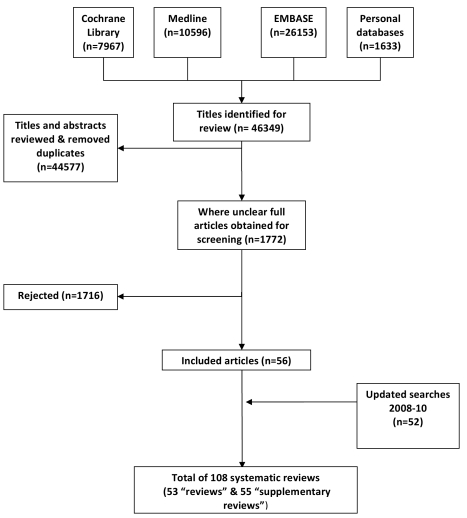
- The searches retrieved 46,349 references, and the authors included 108 reviews: 53 as the main empirical evidence base and 55 supplementary reviews for context.
- For EHRs, the paper found only weak evidence for benefits in time efficiency and data quality (legibility, completeness, comprehensiveness), while risks such as time costs, increased costs, and reduced patient-centeredness were mostly anecdotal.
- For PACS, there were only 3 reviews; evidence for improved organizational efficiency was weak, and overall cost-effectiveness could not be determined because economic findings were often contradictory and of poor quality.
- For CPOE and ePrescribing, the review reports moderate evidence for some organizational/practitioner benefits, but weak or inconsistent evidence for patient-level outcomes; for ePrescribing, there was no clear evidence of patient outcome benefit outside prescribing, and medication-error reductions were not clearly linked to patient harm reduction.
Methods
- Systematic overview of systematic reviews focused on clinician-oriented eHealth technologies related to storage/retrieval of data and support for clinical decision making; patient-focused interventions were excluded.
- Searched PubMed/MEDLINE, EMBASE, and the Cochrane Library for secondary research reports published from 1997 to 2007, with no language restrictions; searches were updated through end of April 2010.
- Performed dual-reviewer screening and critical appraisal (with arbitration by a third reviewer), then used narrative synthesis because the literature was too diverse for quantitative pooling; evidence was classified using a modified WHO Health Evidence Network approach as strong, moderate, or weak.
Limitations
- The paper states that poor indexing, reliance on English-language databases, and a novel multimethod approach meant some reviews may have been missed and the synthesis was “less rigorous” than a conventional systematic review because individual primary studies were not appraised.
- The authors note that they had to adapt the critical appraisal instrument, and that overlap in reviews plus inconsistent terminology required judgment calls about which reviews and primary studies mapped to which interventions.
- Evident from the text: the overview covers mostly economically developed country settings and clinician-orientated information systems, so the findings may not generalize well to patient-oriented technologies or other contexts.
Model-written summary. Check it against the paper before relying on it.
Integrity signals
Registry
Cites
Statistics
Figures
Verification
Claims the paper makes
4 Valid · 0 Not valid · 24 Not checked · 67 Own results and interpretations
Every source the paper cites for this claim was checked and supports it.
In the paper
“NHS Connecting for Health's difficulties with the implementation of EHRs into hospitals in England is a prime example of the challenges that can ensue if such socio-technical factors are given insufficient attention [148].”
§ The Impact of eHealth on the Quality and Safety of Health Care: A Systematic Overview > Discussion
What the sources say
- Supportedcites [148] Robertson AR Cresswell K Takian A Petrakaki D 2010 Prospective evaluation of the implementation and adoption of NHS Connecting for Health's electronic health record in secondary care in England: interim results from a national evaluation. BMJ 341 c4564 20813822 PMC2933355 source
The Methods (Data analysis; page not specified) explicitly frame implementation as a socio-technical process in which organisational, human, and technical factors shape one another. The Results (Trusts want systems that are tailored; page not specified) describe implementation difficulties caused by a centrally conceived standardised system that did not meet end users’ needs. This supports the citing sentence’s use of the programme as an example of challenges arising when those factors receive insufficient attention. (LLM, conf=0.90)
plainstates a cause- Asserted: passes — The authors put it forward as true.
- Checkable: passes — It can be checked against evidence.
- Load-bearing: unclear — It is unclear whether the paper’s conclusions depend on it.
- Based: passes — The paper gives a reason why it holds.
- Supported
The cited sources support only part of this claim — read each source’s verdict below.
In the paper
“Additionally, it is not unusual for insufficient time and effort to be devoted to the all-important customisation process [147].”
§ The Impact of eHealth on the Quality and Safety of Health Care: A Systematic Overview > Discussion
What the sources say
- Partly supportedcites [147] Pollock N Williams R Procter R 2003 Fitting standard software packages to non-standard organizations: the “biography' of an enterprise-wide system. Tech Anal Strat Manag 15 317 sourceExperimental — accuracy not yet measured
In “Building a Global Product” (pp. 16–17), the paper reports that the supplier had more requests for changes than resources and was pruning what it would deliver for a pilot site. This supports a resource constraint on adaptation in that case, but the paper does not establish that insufficient time and effort are often devoted to customisation across commercial systems. (LLM, conf=0.82)
plain- Asserted: passes — The authors put it forward as true.
- Checkable: passes — It can be checked against evidence.
- Load-bearing: unclear — It is unclear whether the paper’s conclusions depend on it.
- Based: passes — The paper gives a reason why it holds.
- Partly supported
The cited sources support only part of this claim — read each source’s verdict below.
In the paper
“Also of note is that we found virtually no evidence in support of the cost-effectiveness claims (Tables 2– 11) that are frequently being made by policy makers when constructing business cases to raise funding for the large-scale eHealth deployments that are now taking place in many parts of the world [1].”
§ The Impact of eHealth on the Quality and Safety of Health Care: A Systematic Overview > Discussion
What the sources say
- Partly supportedcites [1] Catwell L Sheikh A 2009 Evaluating eHealth interventions. PLoS Med 6 e1000126 doi: 10.1371/journal.pmed.1000126 19688038 PMC2719100 sourceExperimental — accuracy not yet measured
The ‘Recognising the Risk of Harm’ section says governments around the world are undertaking large eHealth rollouts, and the Conclusions call for scientific evidence to inform policy decisions. The paper does not specifically document frequent cost-effectiveness claims in policymakers’ funding business cases. The citing authors’ statement that ‘we found virtually no evidence’ refers to their own findings, not a finding attributed to this source. (LLM, conf=0.79)
plain- Asserted: passes — The authors put it forward as true.
- Checkable: passes — It can be checked against evidence.
- Load-bearing: passes — The paper’s conclusions depend on it.
- Based: passes — The paper gives a reason why it holds.
- Partly supported
A result the paper reports from its own data — it cites no other source for it, so there is none to check. The quote shows it is in the paper.
In the paper
“We found only anecdotal evidence of the fundamental expected benefits and risks relating to the organisational efficiency resulting from the storage and management facilities within the EHR and thus the potential for secondary uses (Table 2).”
§ The Impact of eHealth on the Quality and Safety of Health Care: A Systematic Overview > Results > Data Storage, Management, and Retrieval Systems
plain- Asserted: passes — The authors put it forward as true.
- Checkable: passes — It can be checked against evidence.
- Load-bearing: unclear — It is unclear whether the paper’s conclusions depend on it.
- Based: passes — The paper gives a reason why it holds.
In the paper
“Our final selection of 53 reviews provided the main empirical evidence base in relation to assessing the impact of the selected eHealth technologies (see Table 1 for our critical appraisal of these studies) [15]–[67], full details of which can be found in Table S2.”
§ The Impact of eHealth on the Quality and Safety of Health Care: A Systematic Overview > Results
What the sources say
- Not checked yetcites [15]–[67]
plain- Asserted: passes — The authors put it forward as true.
- Checkable: passes — It can be checked against evidence.
- Load-bearing: passes — The paper’s conclusions depend on it.
- Based: passes — The paper gives a reason why it holds.
41 more claims
Create a free account to see all 95 claims and to verify the 28 references still open.
- Probably not a substantial claim. 27
- It may state two separate claims as one. 28
Claims other papers make about this one
Each is checked against this paper’s own text: does it say what the citing paper says it does?
The source backs part of the claim, not all of it — or backs it for a different population, condition or comparison.
In the citing paper
“While such technologies can be effective [1,2], one of the main problems is that users’ adoption and long-term use remains lower than expected [3-5].”
From Opening the Black Box of Electronic Health: Collecting, Analyzing, and Interpreting Log Data (2017) · cites this paper as [5]
Experimental — accuracy not yet measuredThe cited source says what the claim attributes to it.
In the citing paper
“overall effectiveness in clinical practice is unclear.14”
From ‘Too much, too late’: mixed methods multi-channel video recording study of computerized decision support systems and GP prescribing (2013) · cites this paper as [14]
The cited source says what the claim attributes to it.
In the citing paper
“Several authors [1,2,4,6,62,76-87] note that a broader view is needed to assess the overall impact on health care.”
From A Holistic Framework to Improve the Uptake and Impact of eHealth Technologies (2011) · cites this paper as [2]
The cited source says what the claim attributes to it.
In the citing paper
“The foundation of the framework is based on the aforementioned principles, reviews in the field of eHealth [2,3,22,96-99], progressive insights from eHealth research (see Multimedia Appendix 4), and multidisciplinary theories from psychology, communication, and human–computer interaction design.”
From A Holistic Framework to Improve the Uptake and Impact of eHealth Technologies (2011) · cites this paper as [2]
The check wasn’t confident either way, so it gives no verdict — never disputed.
In the citing paper
“The scale, volume of data obtained, and real time nature of this evaluation of the implementation of electronic health records in English secondary healthcare settings are strengths of our work.1”
From Implementation and adoption of nationwide electronic health records in secondary care in England: final qualitative results from prospective national evaluation in early adopter hospitals (2011) · cites this paper as [1]
Experimental — accuracy not yet measured
5 more claims about this paper
Create a free account to see every claim other papers make about this one.
Citations
Cites
Older Adults' Reasons for Using Technology while Aging in Place
Peek, S. T. M., Luijkx, K. G., Rijnaard, M. D., Nieboer, M. E., van der Voort, C. S., Aarts, S., van Hoof, J., Vrijhoef, H. J. M., & Wouters, E. J. M. (2016) · Gerontology · doi:10.1159/000430949 · Cited by 19,690
To Err Is Human: Building a Safer Health System
(2000) · National Academies Press eBooks · doi:10.17226/9728 · Cited by 14,044
Crossing the Quality Chasm: A New Health System for the 21st Century
Baker, A. (2001) · BMJ · doi:10.1136/bmj.323.7322.1192 · Cited by 10,736
Wall, A. (2000) · British Journal of Healthcare Management · doi:10.12968/bjhc.2000.6.9.19311 · Cited by 5,903
Crossing the Quality Chasm: A New Health System for the 21st Century
Bloom, B. S. (2002) · JAMA: The Journal of the American Medical Association · doi:10.1001/jama.287.5.646-a · Cited by 3,726
Chaudhry, B., Wang, J., Wu, S., Maglione, M., Mojica, W., Roth, E., Morton, S. C., & Shekelle, P. G. (2006) · Annals of Internal Medicine · doi:10.7326/0003-4819-144-10-200605160-00125 · Cited by 3,159 · cited 2×
“Three related reviews – an update, a fuller report, and its more concise counterpart – were an exception due to the complementary nature of the reports rather than these being duplicative [22,55,56].”
BackgroundGarg, A. X., Adhikari, N. K. J., McDonald, H., Rosas-Arellano, M. P., Devereaux, P. J., Beyene, J., Sam, J., & Haynes, R. B. (2005) · JAMA · doi:10.1001/jama.293.10.1223 · Cited by 2,936 · cited 1×
“Evidence of the beneficial impact of such systems is limited, however, to a few academic clinical centres of excellence where the systems were developed in house, undergoing extensive evaluation with continual improvement, supported by a strong sense of local ownership by their clinical users [31,56].”
BackgroundKawamoto, K., Houlihan, C. A., Balas, E. A., & Lobach, D. F. (2005) · BMJ · doi:10.1136/bmj.38398.500764.8f · Cited by 2,703
The Technology Acceptance Model: Its past and its future in health care
Holden, R. J., & Karsh, B.-T. (2010) · Journal of Biomedical Informatics · doi:10.1016/j.jbi.2009.07.002 · Cited by 2,669
Critical appraisal skills programme
Singh, J. (2013) · Journal of Pharmacology and Pharmacotherapeutics · doi:10.4103/0976-500x.107697 · Cited by 2,556
Research works printed but not linked: 4
- Institute of Medicine 2007 Preventing medication errors. Washington (D.C.) National Academy Press
- Pagliari C Sloan D Gregor P Sullivan F Kahan JP 2004 EH1 E-Health scoping exercise. Review of wider Web-based information sources. Dundee University of Dundee
- Pagliari C Sloan D Gregor P Sullivan F Kahan JP 2004 EH1 E-Health scoping exercise. Review of the traditional research literature. Dundee University of Dundee
- Shekelle PG Goldzweig CL 2009 Costs and benefits of health technology information: an updated systematic review. Available: http://www.health.org.uk/public/cms/75/76/313/564/Costs%20and%20benefits%20of%20health%20information%20technology.pdf?realName=urByVX.pdf. Accessed 3 December 2010 19174390
Cited by
Items 901–1,000 of 1,002
Bennett, P., & Hardiker, N. R. (2016) · Studies in health technology and informatics · doi:10.3233/978-1-61499-658-3-53 · Cited by 7
“Methods for evaluating CCDSSs are varied; the predominant design identified in multiple reviews is quasi-experimental (Hunt, D. et al., 1998; Kaplan, 2001; Garg et al., 2005; Sanders & Aronsky, 2006; Black et al., 2011; Lobach et al., 2012).”
BackgroundMethodInfluentialAdherence factors to paperless primary healthcare: a focus group study
Iljaž, R. J., Meglič, M., Petek, D., Kolšek, M., & Susič, T. P. (2013) · Slovenian Journal of Public Health · doi:10.2478/sjph-2014-0006 · Cited by 6
“legibility concerns, can be a significant time saver (particularly for repeat prescriptions) and offers the potential to make use of decision-support capabilities (8, 13, 57-59).”
BackgroundMethodInfluentialCost-benefit evaluation of e-health services: acceptance and value creation are interactive forces
Myreteg, G. (2015) · Health Systems · doi:10.1057/hs.2015.10 · Cited by 5
Supreme Court decision on the Affordable Care Act
Jones, E. (2013) · Neurology Clinical Practice · doi:10.1212/cpj.0b013e318283ffb9 · Cited by 5
Richardson, J., & McDonald, J. (2016) · BJPsych Bulletin · doi:10.1192/pb.bp.115.052191 · Cited by 5
Identifying the Adoption Process for Electronic Health Services: A Qualitative Study
Ramtohul, I. (2016) · Springer eBooks · doi:10.1007/978-3-662-49012-9_15 · Cited by 7
Cresswell, K. M., Slee, A., & Sheikh, A. (2017) · Journal of Innovation in Health Informatics · doi:10.14236/jhi.v23i4.904 · Cited by 8
“3 Introduction eHealth functionalities associated with prescribing and medicines administration have been shown to improve the safety and quality of care, and also to contribute to increasing healthcare efficiency.(1) These systems therefore play an essential part in international efforts to modernise health systems.”
BackgroundSelf-citationAdverse drug reactions in primary care: a scoping review protocol
Khalil, H., & Kirschbaum, M. (2018) · The JBI Database of Systematic Reviews and Implementation Reports · doi:10.11124/jbisrir-2017-003471 · Cited by 5
Berut, C., & Saurugger, S. (2018) · Gouvernement et action publique · doi:10.3917/gap.183.0009 · Cited by 12
Scott, P., Nakkas, H., & Roderick, P. J. (2019) · BMJ Open · doi:10.1136/bmjopen-2018-023712 · Cited by 5
Digital Transformation Challenges for the Implementation of Quality Electronic Medical Records
Katehakis, D. G., & Kouroubali, A. (2019) · Advances in medical diagnosis, treatment, and care (AMDTC) book series · doi:10.4018/978-1-7998-2390-2.ch003 · Cited by 5
A clinical decision support framework for automatic disease diagnoses
Comito, C., Forestiero, A., & Papuzzo, G. (2019) · IEEE/ACM International Conference on Advances in Social Networks Analysis and Mining (ASONAM) · doi:10.1145/3341161.3343509 · Cited by 5
“…that provide diagnosis, personalized medical measurement, treatment and relevant knowledge, would be helpful to the physicians by way of providing them with specific knowledge, patients information and intelligent applications, which can improve the efficiency of their decision-making processes [2].”
BackgroundMorquin, D. (2020) · La Revue de Médecine Interne · doi:10.1016/j.revmed.2020.03.011 · Cited by 5
Evolution of the Health Record as a Communication Tool to Support Patient Safety
Kemp, T., Butler-Henderson, K. A., Allen, P., & Ayton, J. E. (2020) · Advances in library and information science (ALIS) book series · doi:10.4018/978-1-7998-6618-3.ch008 · Cited by 6
Human Factors Issues in the Intensive Care Unit
Harder, K. A., & Marc, D. T. (2013) · AACN Advanced Critical Care · doi:10.1097/nci.0b013e3182a92657 · Cited by 9
Ford, E. W., Huerta, T. R., Thompson, M. A., & Patry, R. A. (2011) · INQUIRY The Journal of Health Care Organization Provision and Financing · doi:10.5034/inquiryjrnl_48.04.04 · Cited by 8
Sarma, S., Hajizadeh, M., Thind, A., & Chan, R. (2013) · Healthcare policy · doi:10.12927/hcpol.2013.23467 · Cited by 7
Usability Evaluation of Digital Dictation Procedure - An Interaction Analysis Approach
Viitanen, J., & Nieminen, M. (2011) · Lecture notes in computer science · doi:10.1007/978-3-642-25364-5_13 · Cited by 5
“Recent literature reviews have indicated numerous barriers concerning the uptake of healthcare IT interventions, and few of their results indicate any benefit from the systems [1,2].”
BackgroundTaylor, R., & Guest, C. S. (2013) · Oxford University Press eBooks · doi:10.1093/med/9780199586301.003.0018 · Cited by 5
A Standardized SOA for Clinical Data Sharing to Support Acute Care, Telemedicine and Clinical Trials
Gazzarata, R., & Giacomini, M. L. (2016) · European Journal for Biomedical Informatics · doi:10.24105/ejbi.2016.12.1.9 · Cited by 5
Evaluation of User Experience of New Defense Medical Information System
Ryu, H., & Kim, J. (2019) · Healthcare Informatics Research · doi:10.4258/hir.2019.25.2.73 · Cited by 5
Kawale, P., Grant, L., & Pagliari, C. (2020) · Journal of Global Health Reports · doi:10.29392/001c.12258 · Cited by 10
Self-citationEkezue, B. F., Bushelle-Edghill, J. H., Adıvar, B., Dong, S., & Brown, J. (2019) · Health Policy and Technology · doi:10.1016/j.hlpt.2019.07.005 · Cited by 6
A Structured Evidence-Based Literature Review on Discharge, Referral and Admission
Cummings, E. A., Showell, C., Roehrer, E., Churchill, B., Turner, B., Yee, K., Wong, M., & Turner, P. A. (2010) · UTAS Research Repository · Cited by 11
Electronic health records: research into design and implementation
Greenhalgh, T. (2011) · British Journal of General Practice · doi:10.3399/bjgp11x613016 · Cited by 5
Sieverink, F. (2017) · doi:10.3990/1.9789036544177 · Cited by 8
Archambault, P. M., van de Belt, T. H., Faber, M. J., Plaisance, A., Kuziemsky, C. E., Gagnon, M., Turgeon, A. F., Aubin, K., Poitras, J., Horsley, T., et al. (2014) · Cochrane Database of Systematic Reviews · doi:10.1002/14651858.cd011388 · Cited by 5
Amin, Z. A., Cholil, W., Herdiansyah, M. I., & Negara, E. S. (2021) · POSITIF Jurnal Sistem dan Teknologi Informasi · doi:10.31961/positif.v7i2.1140 · Cited by 4
Portia Grace Marcelo, M., Tulisana, M. L., Gaspar, M. J. P., Amoranto, A. J., Sunga, M., & Fullante, P. (2023) · Acta Medica Philippina · doi:10.47895/amp.v57i9.4984 · Cited by 4
Landazábal, D. C., Vargas, Í., & Vázquez, M. L. (2024) · Digital Health · doi:10.1177/20552076241271854 · Cited by 7
“29 There are also assessments of the impact of EHR 30 and decision support systems 14 on patient safety and privacy.”
BackgroundAdvances in Wearable Electronics, M-IoT, and Artificial Intelligence for Medical and Healthcare
Abadi, A. S. S., Koguciuk, A., Jangas, M., Korycki, P., Tylicka, K., & Targos, P. (2025) · Journal of Electronic & Information Systems · doi:10.30564/jeis.v7i1.9352 · Cited by 4
“For now, the impact of most eHealth technologies is either negligible or, at best, modest [74] .”
Rigo, D., Fehring, L., Mortsiefer, A., & Meister, S. (2025) · JMIR Formative Research · doi:10.2196/68276 · Cited by 8
Can internet usage reduce health inequality among rural residents? Evidence from China
Peng, Y., & Deng, J. (2026) · Frontiers in Public Health · doi:10.3389/fpubh.2025.1743477 · Cited by 4
“Research has also found that the internet improves healthcare affordability for low-income groups (29), and that online appointment systems reduce healthcare costs for vulnerable populations (30, 31).”
A user-centred approach to reducing sedentary behaviour
Dobbins, C., Merabti, M., Fergus, P., & Llewellyn-Jones, D. (2014) · IEEE Consumer Communications and Networking Conference · doi:10.1109/ccnc.2014.6866645 · Cited by 4
“eHealth, a term often used to describe the use of digital technologies in the administration and communication of healthcare, is growing at a rapid rate [3].”
BackgroundInfluentialCoordination of care for patients with COPD: Clinical points of interest
Kasteleyn, M. J., Bonten, T. N., Taube, C., & Chavannes, N. H. (2015) · International Journal of Care Coordination · doi:10.1177/2053434515620223 · Cited by 6
“On the other hand, evidence for many eHealth technologies and their cost-effectiveness is lacking.(38) Also actual implementation remains low.”
BackgroundLorenzo, R. B., & Lago, X. M. M. (2013) · Gestión y Política Pública · Cited by 9
End-User Participation in Health IT Development: The EUPHIT Method
Høstgaard, A. M. B. (2012) · IGI Global eBooks · doi:10.4018/978-1-4666-0170-3.ch016 · Cited by 6
Health systems interoperability : analysis and comparison
Guédria, W., Lamine, E., & Pingaud, H. (2014) · HAL · Cited by 4
Simon, A. (2016) · Springer eBooks · doi:10.1007/978-3-662-49504-9_6 · Cited by 4
A Mobile Brain-Computer Interface for Clinical Applications: From the Lab to the Ubiquity
Minguillón, J., López-Gordo, M. A., Morillas, C. A., & Pelayo, F. J. (2017) · Lecture notes in computer science · doi:10.1007/978-3-319-59773-7_8 · Cited by 6
Muralidharan, S., Acharya, A. K., Margabandu, S., Purushotaman, S., Kannan, R., Mahendrakar, S., & Kulkarni, D. (2017) · The Journal of Contemporary Dental Practice · doi:10.5005/jp-journals-10024-2123 · Cited by 4
Sosin, D. M., & Hopkins, R. S. (2013) · Oxford University Press eBooks · doi:10.1093/med/9780199586301.003.0014 · Cited by 4
Improving Patient Access to Hospital Pharmacists Using eConsults: Retrospective Descriptive Study
Weinberg, V., van Haren, E., & Handoko, K. B. (2022) · JMIR Formative Research · doi:10.2196/38518 · Cited by 5
“Even though earlier research showed that eConsults will lead to fewer in-person referrals and may lead to reduced quality of these consults, this would not affect pharmacist-patient consults because there is no direct contact between patient and JMIR Form Res 2023 | vol. 7 | e38518 | p. 6https://formative.jmir.org/202…”
BackgroundInfluentialDavoody, N., Eghdam, A., Koch, S., & Hägglund, M. (2023) · JMIR Human Factors · doi:10.2196/43861 · Cited by 6
“Therefore, evaluation of HISs and eHealth services is recommended [24,25].”
BackgroundCAR-based Personalized Learning Activity Recommendations for Medical Interns
Liou, C., & Chen, H.-S. (2014) · doi:10.1145/2617848.2617854 · Cited by 4
“…Chuen-He Liou Hsing-Shun Chen Graduate Institute of Health Allied Education, National Department of Radiology, Taipei University of Nursing and Health Sciences Far Eastern Memorial Hospital Taipei, Taiwan Taipei, Taiwan chliou@ntunhs.edu.tw yuanpeishunz@gmail.com ABSTRACT Clinical education…”
BackgroundQuality Improvement in Vascular Access Care Through the Use of Electronic Health Records
Strudwick, G., & Booth, R. G. (2016) · Journal of the Association for Vascular Access · doi:10.1016/j.java.2015.11.004 · Cited by 5
Using smartphones to improve interdisciplinary collaboration
Brown‐Manhertz, D. (2017) · The Nurse Practitioner · doi:10.1097/01.npr.0000513341.77191.03 · Cited by 4
“A 2011 systematic review assessed the effectiveness and consequences of different healthcare technologies to enhance quality and safety and showed that further research is needed.(7)”
BackgroundPerrin, C., Hounga, L. A., & Geissbühler, A. (2018) · BMJ Open · doi:10.1136/bmjopen-2018-022262 · Cited by 5
Liu, S., Gnjidic, D., Patanwala, A. E., RUBIN, G. L., Nielsen, M., & Penm, J. H.-D. (2020) · International Journal of Medical Informatics · doi:10.1016/j.ijmedinf.2020.104172 · Cited by 5
THE POSSIBILITY OF USING ELECTRONIC MEDICAL RECORDS FOR CLINICAL OBSERVATION
Kurbanov, R. D., & Хусаиновна, Т. Р. (2021) · Eurasian heart journal · doi:10.38109/2225-1685-2021-2-78-82 · Cited by 4
Importance and Opportunities of Telemedicine in Resource-Poor Countries during Epidemic Situation
Alshakka, M. A., Badulla, W. F. S., Al-Abd, N., & Ibrahim, M. I. M. (2021) · Current Journal of Applied Science and Technology · doi:10.9734/cjast/2021/v40i3331559 · Cited by 4
“On the flip side, some articles revealed no pivotal indication of costeffective or encouraging clinical outcomes in applying telemedicine to the clinical field [31-34].”
BackgroundThe Quality of E-Health: First Steps on How to Implement and Evaluate Digitalization in Health
Agata, T.-B. L. (2022) · Turk Turizm Arastirmalari Dergisi · doi:10.26677/tr1010.2022.1062 · Cited by 4
eHealth: easing the transitions in healthcare
Geissbühler, A. (2012) · Swiss Medical Weekly · doi:10.4414/smw.2012.13599 · Cited by 10
“Still, the last stage of this cycle, known as the “plateau of productivity”, has not been reached yet, as reflected when surveying the existing literature for strong evidence of the impact of eHealth [12].”
BackgroundTsang, C., Majeed, A., & Aylin, P. P. (2012) · JRSM Short Reports · doi:10.1258/shorts.2011.011104 · Cited by 6
Self-citationRaptis, D. A., Graf, R., Peck, J., Mouzaki, K., Patel, V., Skipworth, J. R. A., Oberkofler, C. E., & Boulos, P. B. (2011) · Informatics for Health and Social Care · doi:10.3109/17538157.2010.520420 · Cited by 4
Kulyk, O., den Akker, R. O., Klaassen, R., & van Gemert‐Pijnen, J. E. W. C. (2014) · University of Twente Research Information · Cited by 8
Abbas, M. J., Ward, T., Peivandi, M. H., McKenzie, E., Kujawska-Debiec, K., & Hills, A. (2015) · Irish Journal of Psychological Medicine · doi:10.1017/ipm.2014.95 · Cited by 4
“Electronic records have the potential to improve efficiency and the quality of patient care; however, this has not always been reliably demonstrated in previous systematic reviews (Black et al. 2011).”
Gesundheitsinformationen im Internet: Bestandsaufnahme und Analyse
Rosenkranz, N., Eckhardt, A., Kühne, M., & Rosenkranz, C. (2013) · WIRTSCHAFTSINFORMATIK · doi:10.1007/s11576-013-0369-z · Cited by 4
Sakariyau, O. B., & Latip, H. B. A. (2015) · International Journal of Research Studies in Management · doi:10.5861/ijrsm.2015.1333 · Cited by 4
Identification of EMR Hardware and Space Design Requirements using Human Factors Analyses
Campbell, C., Kramer, C., Kelsey, S., & King, W. J. (2014) · Proceedings of the International Symposium on Human Factors and Ergonomics in Health Care · doi:10.1177/2327857914031007 · Cited by 4
Coordination of Discharge Practices for Elderly Patients in Light of a Norwegian Healthcare Reform
Nedreskår, H. H., & Storm, M. (2016) · CRC Press eBooks · doi:10.1201/9781315605609-13 · Cited by 4
McCrabb, S., Baker, A., Attia, J. R., Balogh, Z. J., Lott, N. J., Palazzi, K. L., Naylor, J., Harris, I. A., Doran, C. M., George, J., et al. (2017) · JMIR Mental Health · doi:10.2196/mental.7435 · Cited by 4
“Reviews on the effectiveness of eHealth interventions for health behavior change have found a mixed effect, stating that more research is needed in this area [14-17].”
A Technological Framework for EHR Interoperability: Experiences from Italy
Ciampi, M., Sicuranza, M., Esposito, A., Guarasci, R., & Pietro, G. D. (2017) · Communications in computer and information science · doi:10.1007/978-3-319-62704-5_6 · Cited by 4
Exploiting Awareness for the Development of Collaborative Rehabilitation Systems
Teruel, M. Á., Navarro, E., & González, P. (2017) · Mobile Information Systems · doi:10.1155/2017/4714328 · Cited by 4
“[2] eHealth technologies can be categorized into three main areas: “(1) storing, managing, and transmission of data; (2) clinical decision support; and (3) facilitating care from a distance.”
BackgroundSalahuddin, L. B., Ismail, Z., & . (2018) · International Journal of Engineering & Technology · doi:10.14419/ijet.v7i2.29.14274 · Cited by 5
“Among the benefits of HIS include increased accessibility, legibility, time savings, continuity of care, ability to remotely access clinical data, and facilitated searching, sharing, and protection of electronic data [8].”
BackgroundRomig, M. C., Carolan, H. T., Ravitz, A., Schell-Chaple, H. M., Yoon, E., Dwyer, C., Thornton, K. C., Gropper, M. A., Pronovost, P. J., & Sapirstein, A. (2018) · Health Informatics Journal · doi:10.1177/1460458218796638 · Cited by 4
Cultivating eHealth evaluation leadership
Lau, F. (2019) · Healthcare Management Forum · doi:10.1177/0840470418806534 · Cited by 4
Effective implementation of electronic medical records and health information technologies.
Khatri, N. (2015) · Europe PMC (PubMed Central) · Cited by 4
Abouzahra, M., & Tan, J. (2014) · AIS Electronic Library (AISeL) · Cited by 5
Augusto, V., Rejeb, O., Xie, X., Aloui, S., Lionel Perrier, A., Biron, P., & Durand, T. (2015) · Winter Simulation Conference · doi:10.1109/wsc.2015.7408272 · Cited by 4
“In recent years, there have been substantial developments in information technology and there is now considerable international interest in exploiting the potential of information and communication solutions to enhance the quality and safety of health-care (Huckvale et al. 2010, Black et al. 2011).”
BackgroundMethodImplementing clinical decision support for primary care professionals - the process
Kortteisto, T., Komulainen, J., Kunnamo, I., Mākelä, M., & Kaila, M. (2012) · Finnish Journal of eHealth and eWelfare · Cited by 4
Development of a Smart e-Health Portal for Chronic Disease Management
Haddad, M., & Chetty, G. (2012) · Lecture notes in computer science · doi:10.1007/978-3-642-33065-0_30 · Cited by 6
Tambo, E., Xia, S., Xin-Yu, F., & Zhou, X. (2018) · Journal of Infectious Diseases and Epidemiology · doi:10.23937/2474-3658/1510056 · Cited by 4
Tactics for Constructing Visions about Electronic Health Records (EHRs)
Boulus-Rødje, N. (2019) · Canadian Journal of Communication · doi:10.22230/cjc.2019v44n1a2961 · Cited by 4
Electronic Medical Record Implementation Challenges for the National Health System in Greece
Katehakis, D. G. (2019) · IGI Global eBooks · doi:10.4018/978-1-7998-1204-3.ch072 · Cited by 4
Inhaltliche Kriterien für eine gute Verordnung bei Kindern
Neubert, A. C., & Wimmer, S. J. (2014) · Therapeutische Umschau · doi:10.1024/0040-5930/a000523 · Cited by 4
Does Meaningful Use of Electronic Health Records Improve Quality of Care?Preprint
Lin, Y.-K., Lin, M., & Chen, H. (2014) · SSRN Electronic Journal · doi:10.2139/ssrn.2444054 · Cited by 4
“More importantly, studies have found mixed evidence on whether the adoption of EHR improves quality of care (Black et al. 2011; Himmelstein et al. 2010), which further casts doubt on the benefits of adopting EHR.”
Opportunities and Challenges for Electronic Health Record
Jacquinet, M., & Curado, H. (2016) · IGI Global eBooks · doi:10.4018/978-1-4666-9978-6.ch075 · Cited by 4
Chong, V. W. T., Lim, M. H., & Rodricks, R. M. (2012) · DR-NTU (Nanyang Technological University) · Cited by 6
Huygens, M. (2018) · Research Publications (Maastricht University) · doi:10.26481/dis.20180111mh · Cited by 5
eHealth-as-a-Service: A Service Based Design Approach for Large Scale eHealth Architecture
Black, A. S. (2018) · Queensland University of Technology · doi:10.5204/thesis.eprints.119154 · Cited by 4
Self-citationSocial Organisation of the Work of Maternity Clinicians Related to a Central Fetal Monitoring System
Small, K. (2020) · Griffith Research Online · doi:10.25904/1912/2613 · Cited by 7
The impact of the implementation of electronic ordering on hospital pathology services
Georgiou, A., Vecellio, E., Toouli, G., Eigenstetter, A., Li, L., Wilson, R., & Westbrook, J. I. (2012) · UNSWorks (University of New South Wales, Sydney, Australia) · doi:10.26190/unsworks/35 · Cited by 8
Chauvette, A. (2021) · ERA: Education and Research Archive (University of Alberta) · doi:10.7939/r3-4j7n-3p09 · Cited by 5
Lozano‐Lozano, M., López-Garzón, M., Cuadrado-Guerrero, P., Postigo-Martín, P., Fernández‐Lao, C., Martín, I. T., & Galiano‐Castillo, N. (2025) · Health and Quality of Life Outcomes · doi:10.1186/s12955-025-02347-1 · Cited by 4
“This has led to obvious benefits that complement traditional health-care [6, 7] such as facilitating patient-professional communication, implementation of treatment, symptom assessment and follow-up, and access to healthcare information [8–10].”
Huang, Y., Wen, W., Dong, S., & Li, J. (2025) · Digital Health · doi:10.1177/20552076251384135 · Cited by 5
“57 Following the stages of the patient journey, 58 these 12 services were categorized into three types: information-based eHealth services, treatment intermediary services and treat-ment services, as detailed in Table 1.”
Evaluation of Biomedical and Health Information Resources
Friedman, C. P., & Wyatt, J. C. (2021) · Springer eBooks · doi:10.1007/978-3-030-58721-5_13 · Cited by 4
ŞAHİN, D., Kurutkan, M. N., & ARSLAN, T. (2024) · Journal of Science and Technology Policy Management · doi:10.1108/jstpm-10-2023-0174 · Cited by 3
THE EFFECTIVENESS OF PATIENT EDUCATION IN IMPROVING HEALTH OUTCOMES
Alhassoon, B. S. F., Alhayyaf, H. H., Alhajji, R. A. M., Asiri, F. H., Alomani, F. M., Alsharari, F. H. A., Alsamaeel, S. H., Almosfer, F. S. F., Alghasham Qismah Ahmed, E., Alethan, H. A. R. A., et al. (2022) · Journal of Population Therapeutics and Clinical Pharmacology · doi:10.53555/jptcp.v29i04.5308 · Cited by 8
Robertson, S. T., Brauer, S., Burton‐Jones, A., Grimley, R., & Rosbergen, I. C. M. (2024) · Digital Health · doi:10.1177/20552076241279208 · Cited by 7
Managing medication information with electronic patient records – a Finnish clinicians’ perspective
Heiro, E., & Mäntymäki, M. (2012) · Health and Technology · doi:10.1007/s12553-012-0025-4 · Cited by 3
“remain to be proven [4].”
Wills, J., & Hurley, K. F. (2012) · Conference proceedings - Canadian Conference on Electrical and Computer Engineering · doi:10.1109/ccece.2012.6334950 · Cited by 3
“Although the studies report reductions in task-completion time on systems that have been modified after usability testing, rigorous original research that supports this theory is sparse.”
BackgroundEkong, I., Esan, O. T., Chukwu, E., & Kawu, M. (2020) · International Journal of Information Technology and Web Engineering · doi:10.4018/ijitwe.2020040105 · Cited by 3
Design and evaluation of a web-based electronic health record for amblyopia
Naemi, R., Akbarian, M., Ebrahimi, M., Shahmoradi, L., Masoomian, B., & Rezayi, S. (2024) · Frontiers in Medicine · doi:10.3389/fmed.2024.1322821 · Cited by 3
“Timely access to reliable information improves the quality of service delivery and treatment processes and speeds up decision-making, implementation of preventive activities, monitoring of the disease process, early detection of complications, and timely treatment (22, 23).”
BackgroundBerger, J., Bruthans, J., Vojtěch, A., & Kofránek, J. (2024) · Health Informatics Journal · doi:10.1177/14604582241270902 · Cited by 3
“Although this implementation is consistent with the basic EPS de fi nition, 3 it lacked advanced features such as lists of dispensed medication or even checking for adverse drug interactions.”
Anarbaeva, A., & Garst, J. (2024) · Meditari Accountancy Research · doi:10.1108/medar-02-2024-2387 · Cited by 4
E-Sağlık Uygulamalarının Değerlendirilmesi
İmamoğlu, Ö. P., & Pekkaya, M. (2025) · Bartın Üniversitesi İktisadi ve İdari Bilimler Fakültesi Dergisi · doi:10.47129/bartiniibf.1607392 · Cited by 3
Torri, M. C. (2014) · International Journal of Health Promotion and Education · doi:10.1080/14635240.2014.890346 · Cited by 3
Attitudes toward biomedical technology and products in South Korea
Park, E., Kim, K. J., & Kwon, S. J. (2015) · Health and Technology · doi:10.1007/s12553-015-0120-4 · Cited by 4
“Previous studies have investigated public attitudes toward biomedical technology (including healthcare technology) as well as public perceptions of the benefits and risks of these technologies [19, 20].”
BackgroundDevelopment of eHealth in Slovenia - Critical Issues and Future Directions
Stanimirović, D. (2014) · Central European Public Administration Review · doi:10.17573/ipar.2014.4.a01 · Cited by 5
“Gaining internatio - nal recognition in the last decade (Black et al., 2011; Gillies & Howard, 2011), definitions of eHealth are normally derived from the classifications of IS with the addition of certain features which are associated with the specific nature of health care services and health…”
Background
Metadata
- Authors
- Black, A. D., Car, J., Pagliari, C., Anandan, C., Cresswell, K., Bokun, T., McKinstry, B., Procter, R., Majeed, A., & Sheikh, A.
- Affiliations
- Imperial College London (GB)
- University of Edinburgh (GB)
- University of Manchester (GB)
- Corresponding author
- Sheikh, Aziz
- ORCID
- Venue
- PLoS Medicine
- Publisher
- Public Library of Science (PLoS)
- Published
- 2011-01-18
- Volume
- 8
- Issue
- 1
- Pages
- e1000387
- ISSN
- 1549-1277 (ISSN-L)
- 1549-1676
- PMC
- PMC3022523
- OpenAlex
- W2002144979
- Semantic Scholar
- 8989e6727eab5d5fc760d0c7a63fb3864fe49a4f
- Cited by
- 1,442
- References
- 168
- Citations by year
- 2026: 23 · 2025: 26 · 2024: 44 · 2023: 46 · 2022: 55 · 2021: 81 · 2020: 94 · 2019: 102 · 2018: 109 · 2017: 110 · 2016: 129 · 2015: 109 · 2014: 126 · 2013: 207 · 2012: 111
- FWCI
- 24.19
- Type
- journal article
- Language
- en
- Open access
- gold
- doi.org
- Locations
- PLoS Medicine (publishedVersion, cc-by)
- PubMed Central (publishedVersion, cc-by)
- PubMed (publishedVersion)
- RePEc: Research Papers in Economics (publishedVersion)
- Warwick Research Archive Portal (University of Warwick) (acceptedVersion)
- Research Publications (Maastricht University) (submittedVersion, cc-by)
- DOAJ (DOAJ: Directory of Open Access Journals) (submittedVersion, cc-by-sa)
- Figshare (submittedVersion, cc-by)
- Research Explorer (The University of Manchester) (submittedVersion)
- Edinburgh Research Explorer (University of Edinburgh) (submittedVersion, cc-by)
- Spiral (Imperial College London) (submittedVersion, other-oa)
- Research Publications (Maastricht University) (submittedVersion, other-oa)
- Funders
- Economic and Social Research Council
- Topics
- Health Sciences › Health Professions › Health Information Management › Electronic Health Records Systems
- Health Sciences › Medicine › Public Health, Environmental and Occupational Health › Telemedicine and Telehealth Implementation
- Health Sciences › Medicine › Public Health, Environmental and Occupational Health › Technology and Human Factors in Education and Health
- Keywords
- e-health, quality of care, patient safety, clinical decision support, telemedicine, health data management, digital health technologies, cost-effectiveness, evidence gaps, health policy
- MeSH terms
- Cost-Benefit Analysis, Delivery of Health Care, Health Policy, Medical Informatics, Quality of Health Care, Radiology Information Systems, Review Literature as Topic, Efficiency, Organizational, Electronic Prescribing, Electronic Health Records
About these checks
Registry, retraction, Cites and statistics results are computed, not judged, with one exception: a printed reference that no index lists is read once by a model before it counts as a citation error. Claims are extracted by a model and kept only when their quote appears verbatim in the text; each cited source is then checked, with a model’s help, for whether it says what the claim relies on. Those verdicts can be wrong — read the claim’s quote and the cited source before relying on one.
The claim verdicts this report counts are experimental: their accuracy is not yet measured.
A language model drew the claims from the paper on 2026-10-11, under version 3 of the claim definition (model deepseek-v4.1-flash, prompt extract-v3).
A second model labelled each claim on 2026-10-11 (model jev-1.13-20260917, definition revision gold-guideline-v0.2).
Cited sources are checked with a language model’s help (gpt-6-sol).
Statistics and arithmetic are recomputed, not judged.
Confidence bands are shown only for fields calibrated on our annotated test set. None is calibrated yet, so no band is shown.
What counts as a claim ›How we measure confidence ›How we check this ›
Are you an author, or do you see a problem with this page? Request a review
Data sources
Bibliographic data: Semantic Scholar, OpenAlex, Crossref.
Contains information from the Semantic Scholar Academic Graph Datasets, made available under the ODC Attribution License (ODC-BY 1.0).
Semantic Scholar’s data is described in: Kinney, R., et al. (2023). The Semantic Scholar Open Data Platform. arXiv:2301.10140.
